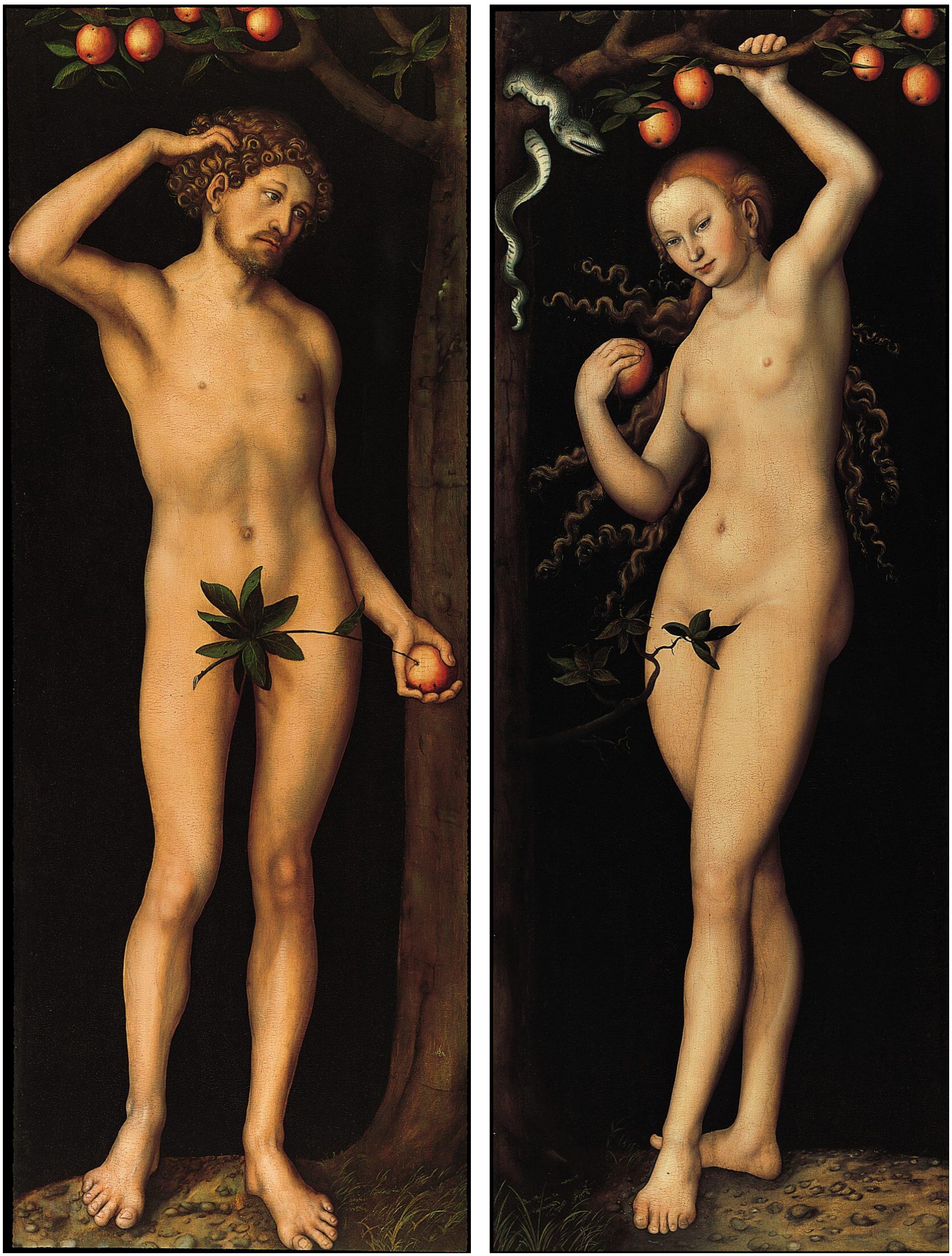
Adam and Eve
c. 1530 · Oil on panel
Norton Simon Museum, Pasadena, California.
Museum · Founded 1922
Open, admission and hours confirmed 13 August 2026 · 36 sources
About 12,000 objects assembled by one collector, Norton Simon, in roughly thirty years of buying. The strength most visitors come for is European: Old Masters from Botticelli to Goya, the only Raphael on the West Coast, three Rembrandts, six Van Goghs, and an Impressionist and Post-Impressionist collection built around more than 100 works by Degas, including the unique set of 69 modele bronzes cast directly from his own wax originals. The Museum's other great strength is South and Southeast Asian sculpture: more than thirty Chola-period bronzes from Tamil Nadu, Kushan and Gupta stone carving from north India, and material from Nepal, Tibet, Cambodia and Thailand spanning over 2,000 years. That second strength was built the fastest, in the 1970s, and it is shadowed by the decade's own record: a Chola bronze bought in 1972 and returned to India in 1976 after litigation, a Cambodian temple guardian bought in 1976 and returned in 2014, and Norton Simon's own on-the-record admission in 1973 that he knew much of what he was buying was smuggled.
| Kind | Museum |
|---|---|
| Founded | 1922 as the Pasadena Art Institute; the present building by Ladd and Kelsey opened in 1969; renamed the Norton Simon Museum in October 1975 |
| City and country |  Pasadena, United States Pasadena, United States |
| Address | 411 West Colorado Boulevard, Pasadena, California 91105 |
| Website | nortonsimon.org |
| Status | Open, confirmed 13 August 2026 |
| Record last verified | 13 August 2026 |
Prices and hours change. We take them from the institution's own pages and print the day we read them, and you can check the current position at the source we used. Confirm before you travel.
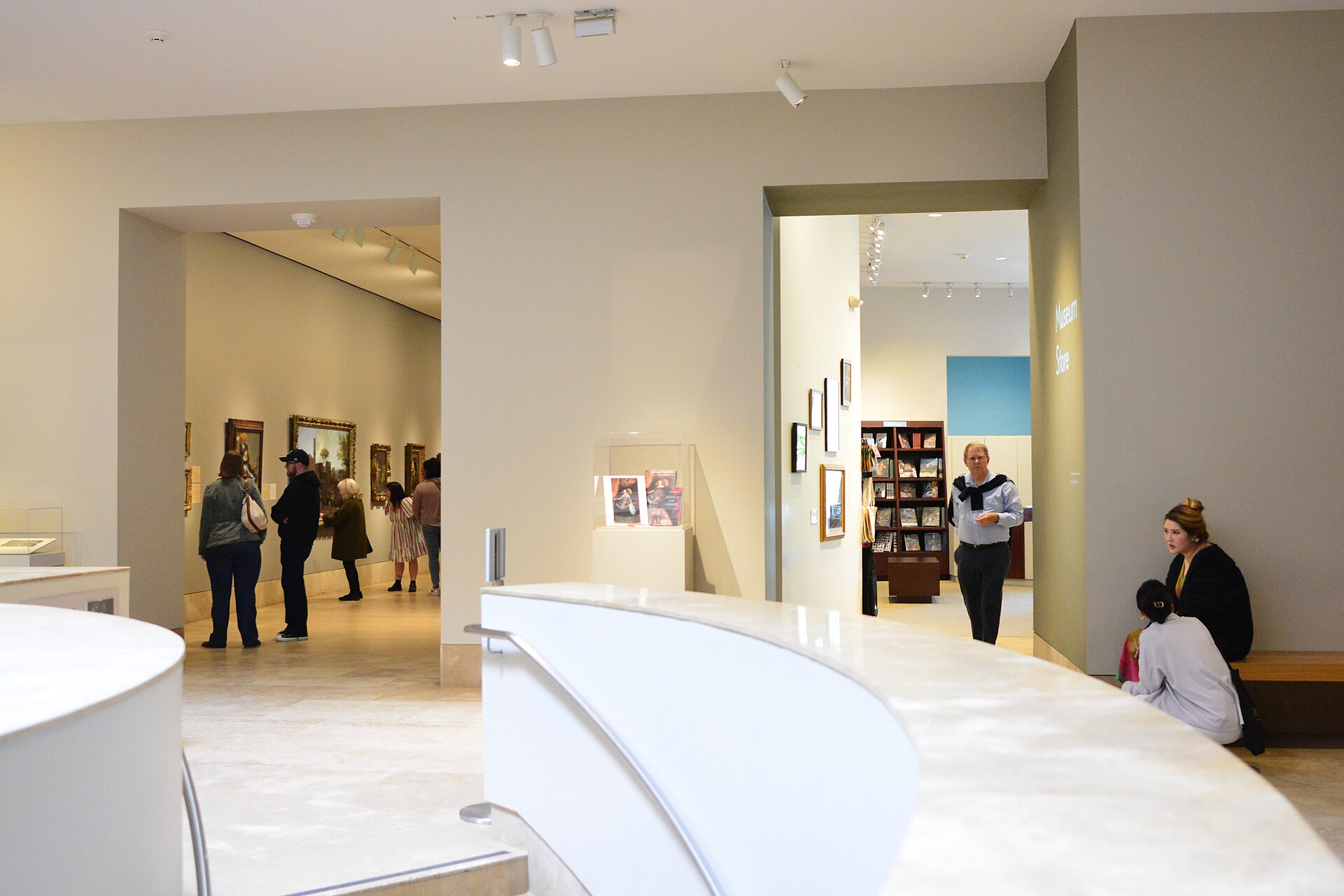
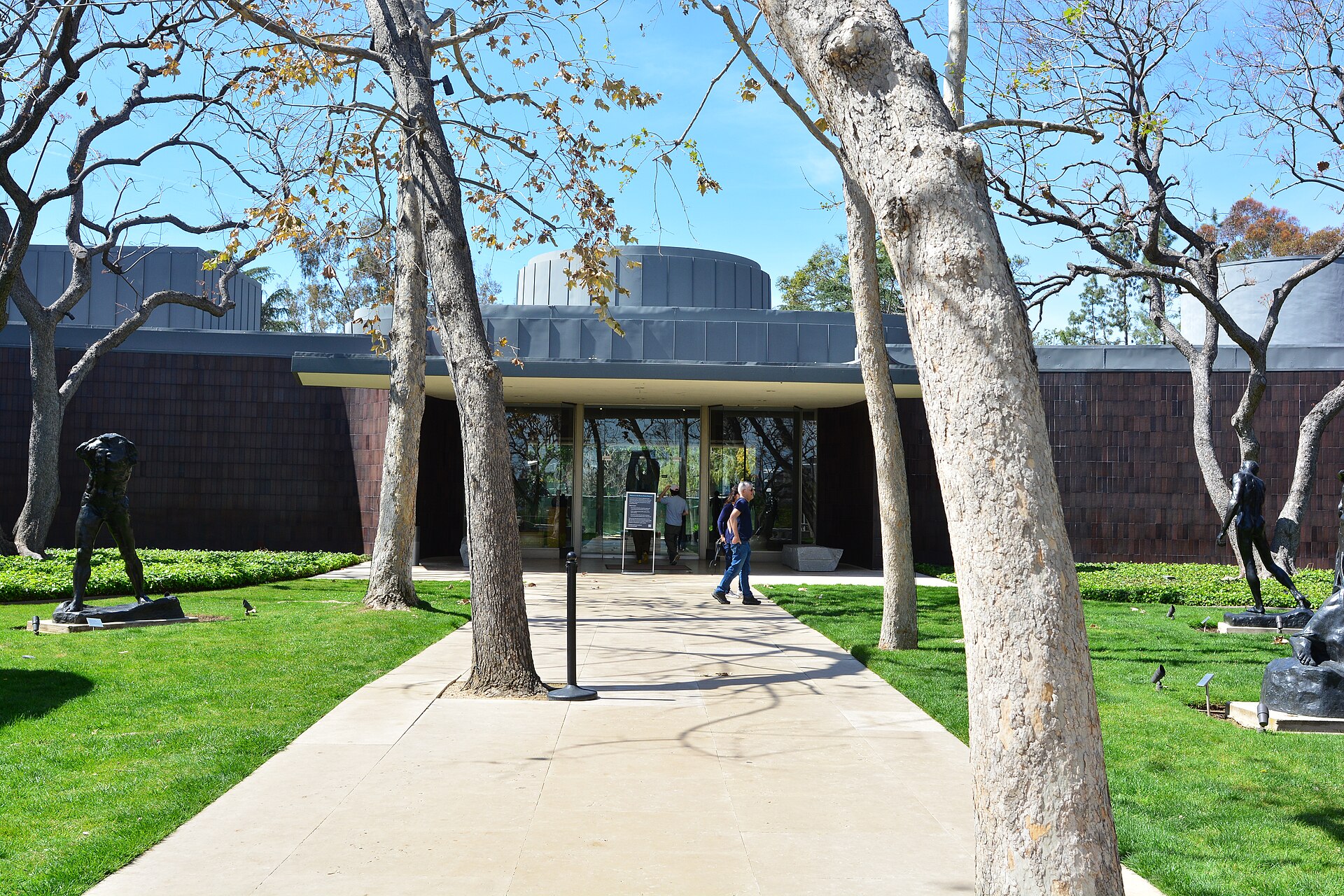
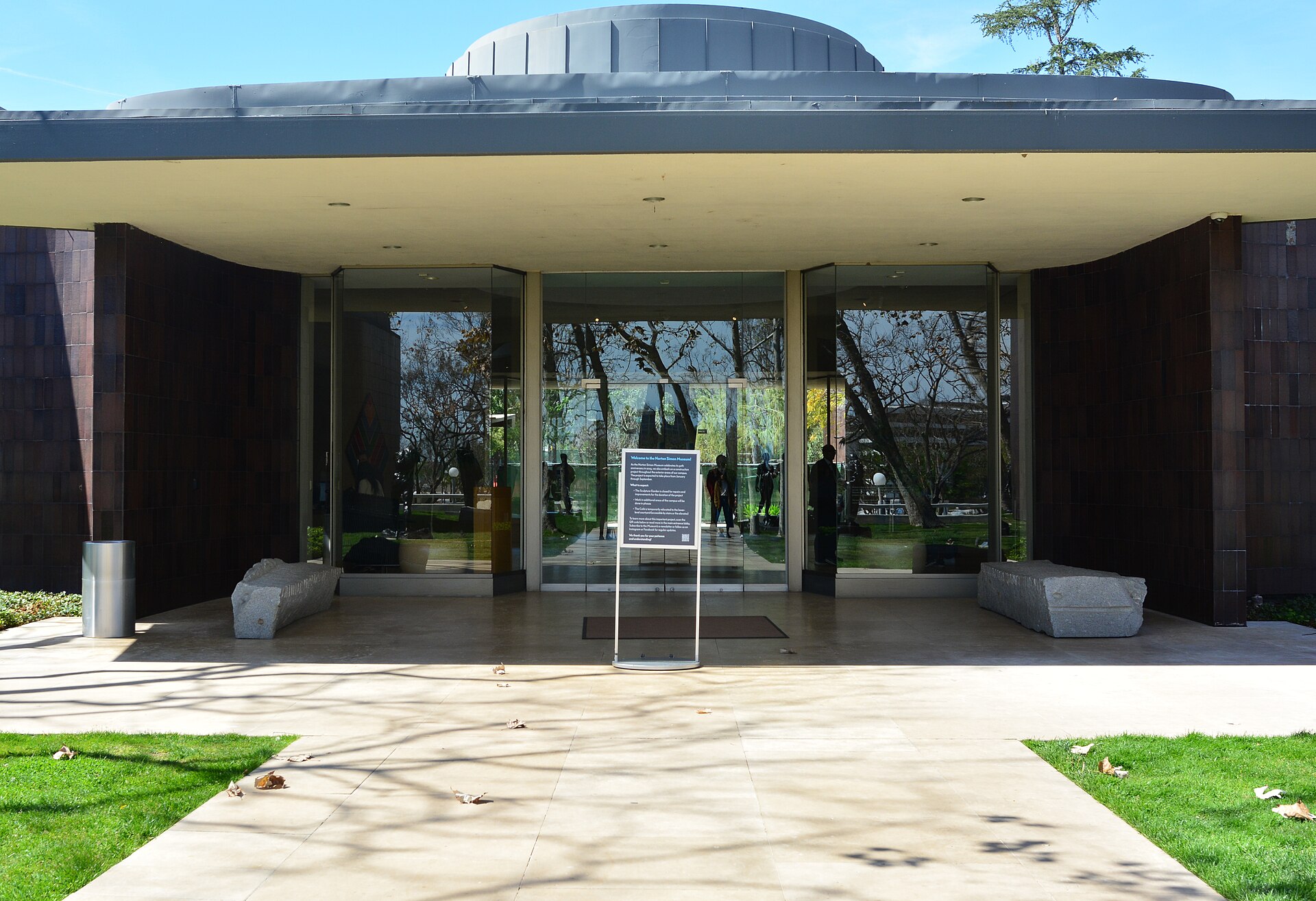
The low glass-walled pavilion beneath the grey drum skylight is the 1969 Ladd and Kelsey entrance, opening onto the travertine rotunda where the Museum Store and coat check now sit and where the two levels of the building meet by elevator and stairs.
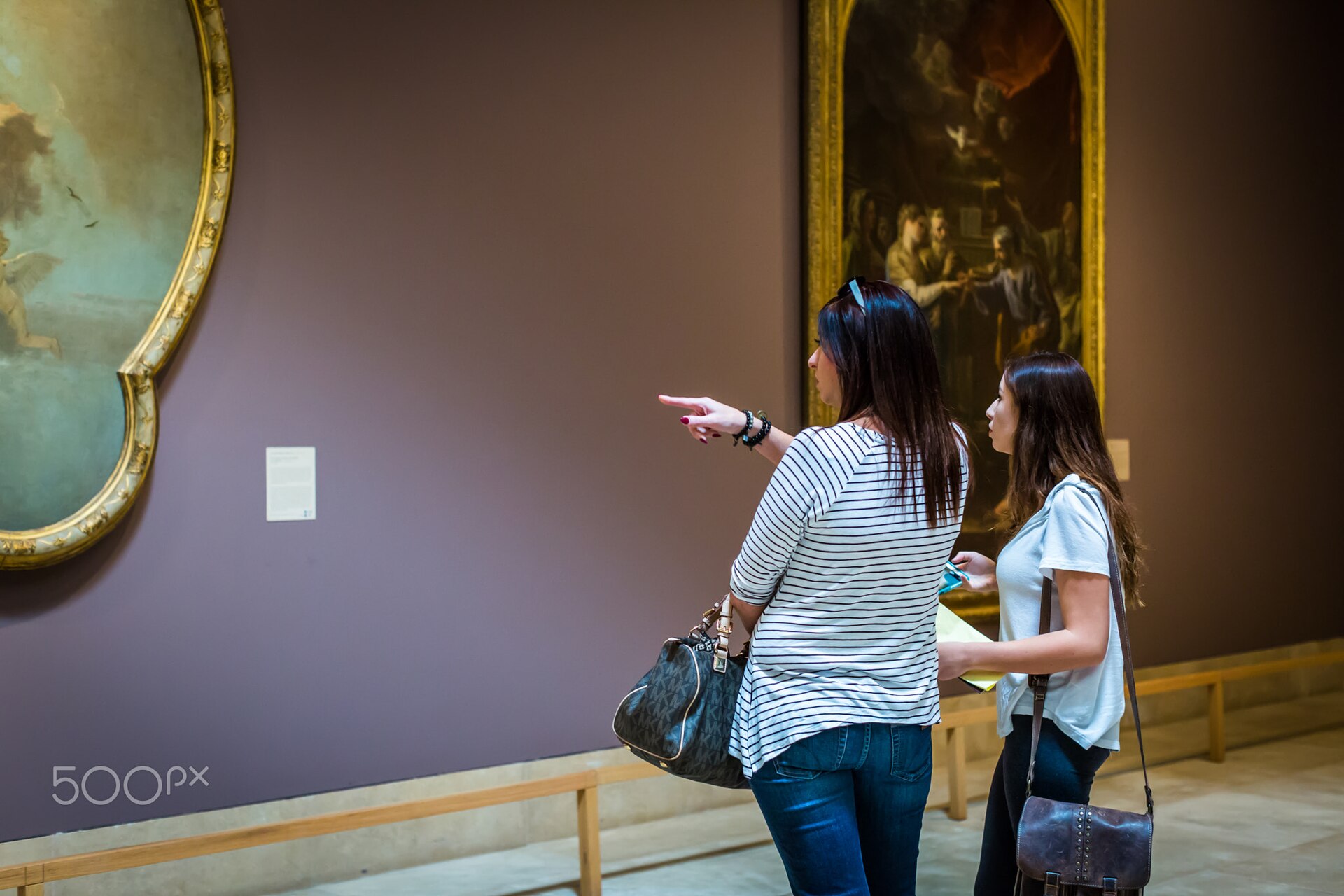
Renaissance and Baroque rooms holding the Museum's Botticelli, Giorgione and Raphael, whose Madonna and Child with Book of about 1502-03 is the only painting by Raphael on the West Coast, alongside Zurbaran's Still Life with Lemons, Oranges and a Rose of 1633 and three Rembrandt portraits, including the Self-Portrait of about 1639 and Portrait of a Boy of 1655-60.
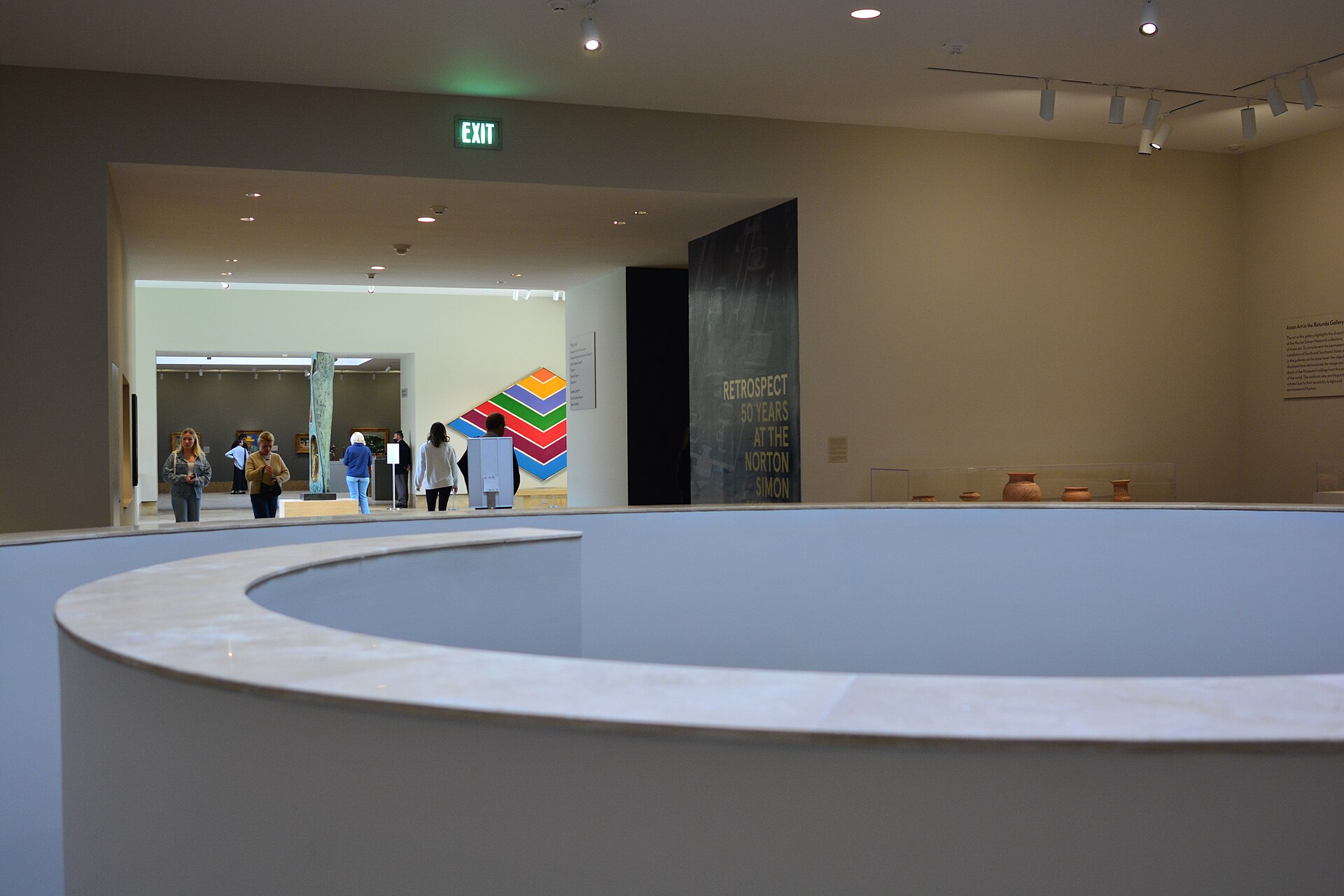
A circular basin at the center of the entry level, ringed by the Museum's changing program of temporary shows. It is pictured here during Retrospect: 50 Years at the Norton Simon, the exhibition that marked the institution's own half-century as the Norton Simon Museum in 2025. The rotunda's next scheduled exhibition, announced on the Museum's own site as of this update, is The Art of Kandy: Sri Lanka's Last Kingdom (1469-1815), running 4 September 2026 to 8 February 2027.
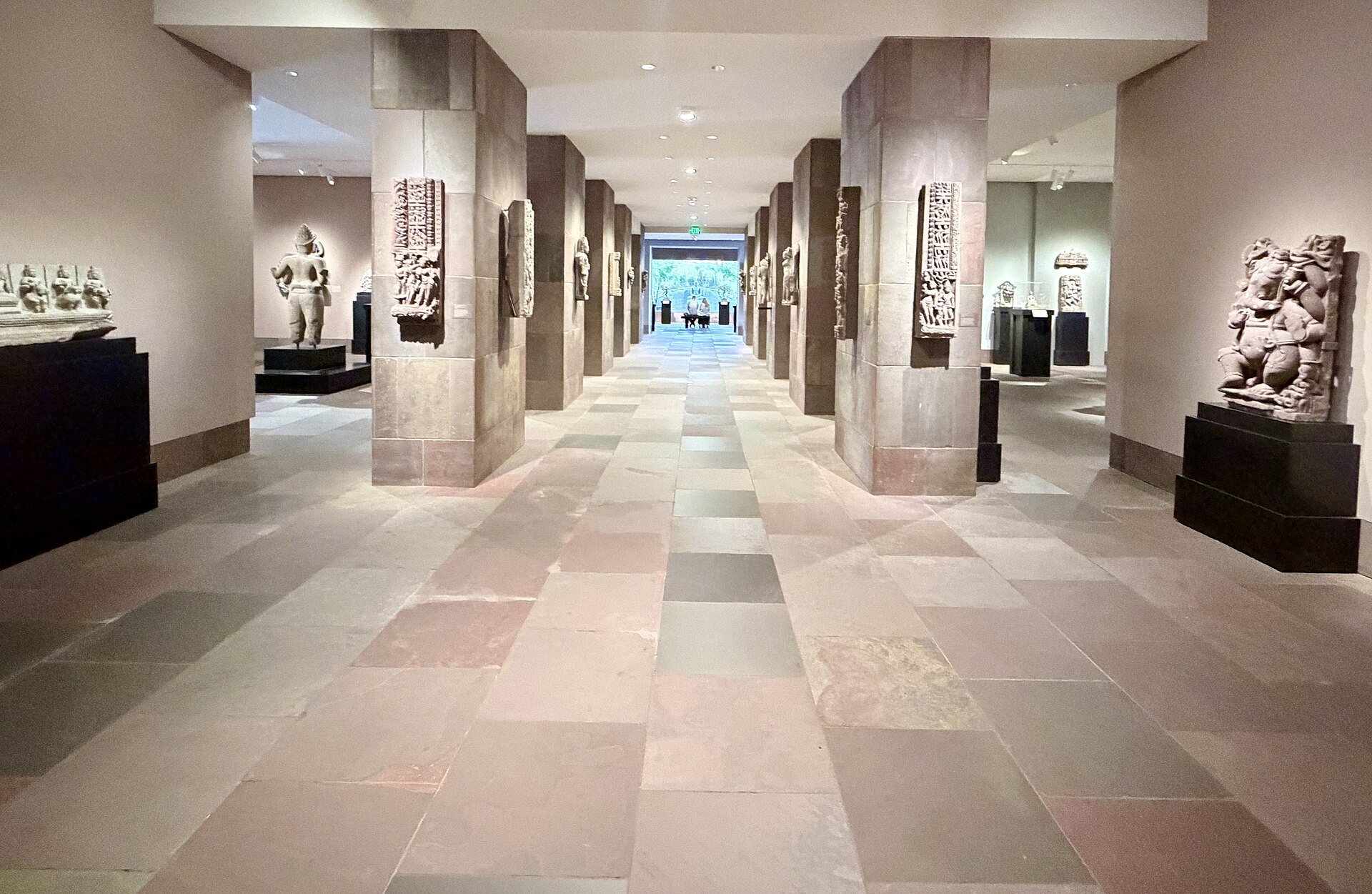
Stone and bronze sculpture from India, Pakistan, Nepal, Tibet, Cambodia and Thailand spanning more than 2,000 years, including more than thirty Chola-period bronzes from Tamil Nadu and monumental Kushan and Gupta stone carving. This is the area Norton Simon pursued hardest and fastest in the 1970s, and the one that produced the two restitutions this record describes below.
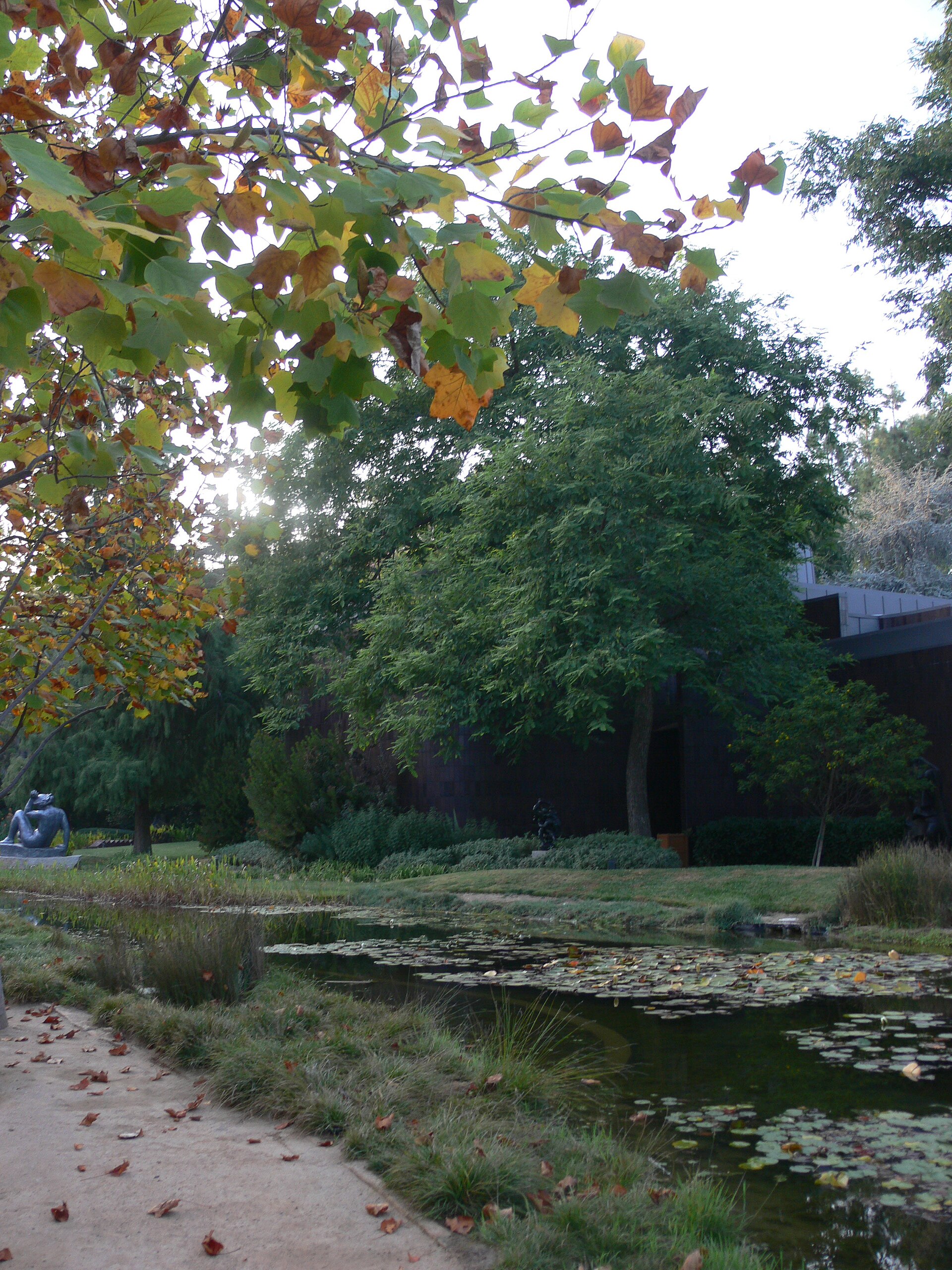
Redesigned in the late 1990s by the landscape architect Nancy Goslee Power at the request of Jennifer Jones Simon, who asked for something "just like Monet's Giverny": a lily pond bordered by daylilies and bog plants, ringed by Rodin's Burghers of Calais, The Thinker and Monument to Balzac, and by Moore, Maillol, Hepworth and Lipchitz. The garden closed for ten months from January 2025 for a rebuild of the pond, paths and perimeter wall, and reopened to the public in November 2025; the Museum's own garden page, re-read 13 August 2026, describes the rebuilt garden as open and unchanged since.
A dozen stone sculptures set among the plantings at the garden's edge: Tamil Nadu images of Vishnu, Shiva and Uma dated as early as about 850, a bull with a Shivalingam probably from Rajasthan, and two Angkor-period lingams from Cambodia. No free-licence photograph specifically of this corner of the garden could be verified, so it is not illustrated here; the general Sculpture Garden photograph above does not show it.
The two panels this archive holds a record of, and the object around which twelve years of Nazi-era restitution litigation, Von Saher v. Norton Simon Museum, turned before ending in the Museum's favor in 2019. See the criticism section below. Both panels are confirmed ON VIEW on the Museum's own object pages as of 13 August 2026.13
Full record in this archiveA devotional meditation piece rather than a simple portrait group: the inscription in the book the Madonna and Child hold together introduces the Nones of the Canonical Offices, the hour commemorating Christ's Crucifixion and Death, and the Christ Child's eyes are already lifted toward His own sacrifice, by the Museum's own description of the painting.25
Rembrandt portrays himself in the beret that had marked the artistic milieu since the 16th century and a chain of the kind a noble patron awarded an artist as a mark of prestige, at a moment, the Museum's own account says, when artists were only beginning to claim their standing among the creative elite.26
Left visibly unfinished, which the Museum's own account says is exactly what makes it valuable as a record of the artist's method: the face and eyes fully modeled and finished while the collar, hair and costume are indicated only in a few broad, sure brushstrokes over a dark ground.27
Painted at the asylum in Saint-Remy-de-Provence where Van Gogh had committed himself that spring, in the vigorous late brushwork that the Museum says turns the canvas surface into a kind of bas-relief; Van Gogh told his siblings in letters that he considered it his most successful treatment of the subject.28
A portrait of Picasso's lover Marie-Therese Walter that the Museum's own account frames as homage to Jean-Auguste-Dominique Ingres, whose Portrait of Madame Moitessier Picasso had first encountered in 1921; where Ingres gave his sitter a fan, Picasso gives his the fluttering pages of a book, and the profile reflected in the mirror at right may be an abstracted Picasso self-portrait.29
Degas alone is represented by more than 100 works here, spanning paintings, pastels, drawings, prints and sculpture in nearly every medium he worked in except photography - the second-largest such holding assembled by a single collector anywhere, after the Havemeyer collection at the Metropolitan Museum of Art, by the Museum's own account - including the modele-cast bronzes and a cast of the Little Dancer, Aged Fourteen.30
The centerpiece of the walk from the parking lot into the Museum: six men with nooses around their necks, commemorating the citizens of Calais who offered their own lives to save their city in 1347. Full-size studies of the individual figures surround it.11
One of the earliest and, by the Museum's own account, most remarkable Chola sculptures in the collection, and the piece that showed Norton Simon what these bronzes could do; he compared their command of dynamic posture to Degas's sculpture.10
Acquired in the 1970s, the same decade in which Norton Simon bought and then, under legal pressure, returned a fifth Nataraja to India. The four that remain are part of a Chola-bronze holding of more than thirty pieces, one of the largest outside India. See the criticism section below for the one that did not stay.10
The ground the Museum stands on was a private garden before it was anything else. Jeanne Carr bought the tract in 1877 and made it into an estate she called Carmelita, one of the most admired gardens in the area; the land passed through several owners before it was deeded to the City of Pasadena in 1941 on condition that part of it be kept for the city's art institute. That institute, the Pasadena Art Institute, had been founded in 1922 and incorporated in 1924, and for its first two decades it had no building of its own on the site: it merged in 1942 with the one-year-old Pasadena Museum of Art and set up its headquarters in Grace Nicholson's Chinese House on North Los Robles Avenue, now the Pacific Asia Museum.
In 1953 the institute received almost 500 works from the estate of Galka Scheyer, the dealer and champion of Kandinsky, Klee, Jawlensky and Feininger, known collectively as the Blue Four; the gift, and the archive of correspondence that came with it, was announced as making the institute one of the richest collections of modern art of its kind anywhere. The following year it renamed itself the Pasadena Art Museum and turned toward acquiring and exhibiting 20th-century art in earnest, staging the first Marcel Duchamp retrospective, with Duchamp in attendance, along with early Warhol and Oldenburg shows and a landmark Bauhaus exhibition. In 1964 the museum commissioned the Pasadena firm of Ladd and Kelsey to design a new 85,000-square-foot building on the Carmelita site, and on 24 November 1969 the new Pasadena Art Museum opened.
It did not have long to enjoy the new building. Renamed the Pasadena Museum of Modern Art in 1973, the institution carried debts from the construction that its trustees could not resolve, and by 1974 it faced bankruptcy.
Norton Simon was a businessman before he was a collector: born in Portland, Oregon in 1907, he built a sheet-metal distribution business in Los Angeles in the 1920s, turned a $7,000 investment in a struggling juice bottler into Hunt Foods, and assembled, through mergers and acquisitions, the conglomerate Norton Simon Inc., which came to include Hunt-Wesson, McCall's, Canada Dry, Max Factor and Avis. His collecting began in the 1950s with Degas, Renoir, Gauguin and Cezanne; by the 1960s he was buying Old Masters as well, starting with the 1964 purchase of the remaining inventory of the New York dealers Duveen Brothers, and he was an early trustee whose push to separate the art and science functions of the Los Angeles County Museum of History, Science and Art helped bring the Los Angeles County Museum of Art into being.
His marriage to the actress Jennifer Jones in 1971 redirected his collecting. Until then his purchases had been almost entirely European; on their honeymoon in India that summer he began buying Indian art, starting with a Mughal ivory chess set, and South and Southeast Asian sculpture occupied a large part of his attention for the rest of his life. By early 1974 he was looking for a permanent home for a collection that had outgrown his self-described 'museum without walls' of long-term loans to institutions worldwide, and he took over the financially failing Pasadena Museum of Modern Art in exchange for assuming its debts. The museum closed for renovation on 24 June 1974 and reopened on 1 March 1975 with the Pasadena and Simon collections combined; in October 1975 it took the name it has kept since, the Norton Simon Museum of Art at Pasadena. Simon continued to oversee it after being diagnosed with Guillain-Barre syndrome in 1984, made his last acquisition, Courbet's Peasant Girl with a Scarf, on 22 December 1989, and died on 2 June 1993.
The same decade that built the Museum's Asian holdings produced its clearest documented case of the trade Norton Simon was buying into. In 1972 he paid the New York dealer Ben Heller for a tenth-century bronze Nataraja, Shiva as Lord of Dance, that Heller had bought from the Bombay dealer Boman Behram; two secondary accounts of the case put the price at 900,000 dollars, but Simon himself, in the New York Times interview quoted below, said he had paid 1 million dollars, and this record does not resolve the conflict. The bronze had been legitimately excavated near Sivapuram, Tamil Nadu in the early 1950s and placed under court order in the local Sivagurunathaswamy temple; sometime between 1956 and 1965, while it was supposedly with a craftsman for restoration, it was replaced with a copy and the original left the country. The story broke on 12 May 1973, when the New York Times, whose reporter David L. Shirey had reached Simon by telephone, ran the story on its front page under the headline 'Norton Simon Bought Smuggled Idol', the same week the Metropolitan Museum of Art announced it would exhibit the piece. Asked whether it had been smuggled, Simon answered on the record: 'Hell, yes, it was smuggled,' said Mr. Simon in a telephone interview. 'I spent between $15-million and $16-million over the last two years on Asian art, and most of it was smuggled. I don't know whether it was stolen.' The Indian government sued in Los Angeles; the statue, by then shipped to the British Museum for restoration, was impounded there by Scotland Yard; and the case settled out of court in 1976 with the Nataraja returned to India, where it is now kept in the Kapaleeswarar temple in Chennai. Simon later disputed having made the statement, but the Times's own contemporaneous report, read via an archive.org mirror after nytimes.com refused direct access, confirms the quotation exactly as printed above, as do two independent secondary accounts that also examined it.
The admission did not end the buying. The Museum's own published account of its South Indian bronzes states that its holdings include four further images of Shiva as Nataraja, two of them dated to the 11th century, among more than thirty Chola-period bronzes bought in the same general period as the one that was returned. In 1976, the same year the Nataraja went back to India, the Museum bought a tenth-century sandstone temple guardian, since called the Bhima or 'Temple Wrestler,' from a New York dealer. It had almost certainly been looted around 1972 from the Prasat Chen shrine at Koh Ker in Cambodia amid the disorder of the Khmer Rouge period, one of a set of related guardian figures that also passed through the Metropolitan Museum, Sotheby's and Christie's, all of whom eventually returned their pieces. The Norton Simon Museum announced in May 2014 that it would return the Bhima to Cambodia after nearly four decades on display; its outside counsel stated publicly that the Museum believed it held strong legal grounds to keep the statue but judged a gift more appropriate given its relationship with Cambodia, a framing that provenance researchers covering the return pointed out sat uneasily next to Simon's own 1973 statement about what he knew he was buying. Cambodia agreed in return to periodically loan other ancient sculpture to Pasadena.
The Museum's other major restitution case concerns two panels this archive holds a record of, Lucas Cranach the Elder's Adam and Eve of about 1530. They belonged to Jacques Goudstikker, the Amsterdam Jewish dealer who fled the Nazi invasion of the Netherlands in May 1940 and died on the ship out; his firm and its stock, including these panels, passed to Hermann Goering through a series of agreements the Ninth Circuit later described as uncontested by every party to have been forced. The Allies recovered the paintings after the war and returned them to the Dutch government in 1946. In 1966 the Dutch government sold them to George Stroganoff-Sherbatoff, who claimed a family connection to the works, and Stroganoff sold them on to the Norton Simon Museum in 1971 for 800,000 dollars.
Goudstikker's heir by marriage, Marei von Saher, petitioned the Dutch government for restoration of rights in the late 1990s; a Dutch appellate court denied her petition. She sued the Norton Simon Museum in a California federal court in 2007. In 2014 a Ninth Circuit panel let her claim proceed, on the ground that it did not conflict with any settled federal policy toward foreign restitution proceedings, since the paintings had never actually been through one. On remand, the district court granted summary judgment for the Museum in 2016, holding that under the relevant Dutch postwar decrees the forced transaction had remained legally effective because nobody in the Goudstikker line had taken the formal step needed to nullify it. On 30 July 2018 a Ninth Circuit panel affirmed that judgment, but on different and narrower grounds: the act of state doctrine, which bars a United States court from declaring the sovereign acts of a foreign government, performed within its own territory, invalid. To rule for von Saher, the panel held, a court would have to invalidate at least three official Dutch acts in sequence: the 1966 conveyance to Stroganoff, the Dutch appellate court's later refusal to restore her rights, and the Dutch state's own statement that her claim to these two paintings had been settled. The Supreme Court denied her petition for certiorari on 20 May 2019, ending twelve years of litigation. The Museum said afterward that it was pleased the case was finally over, that the Ninth Circuit's decision confirmed the Norton Simon Art Foundation's title, and that it looked forward to continuing to show the paintings as it had for nearly fifty years. The ruling turned on a doctrine about the finality of foreign sovereign acts, not on a finding that the wartime forced sale was anything other than what both sides agreed it was. Both panels remain on view at the Museum, confirmed on the Museum's own object pages for Adam and for Eve as of 13 August 2026.
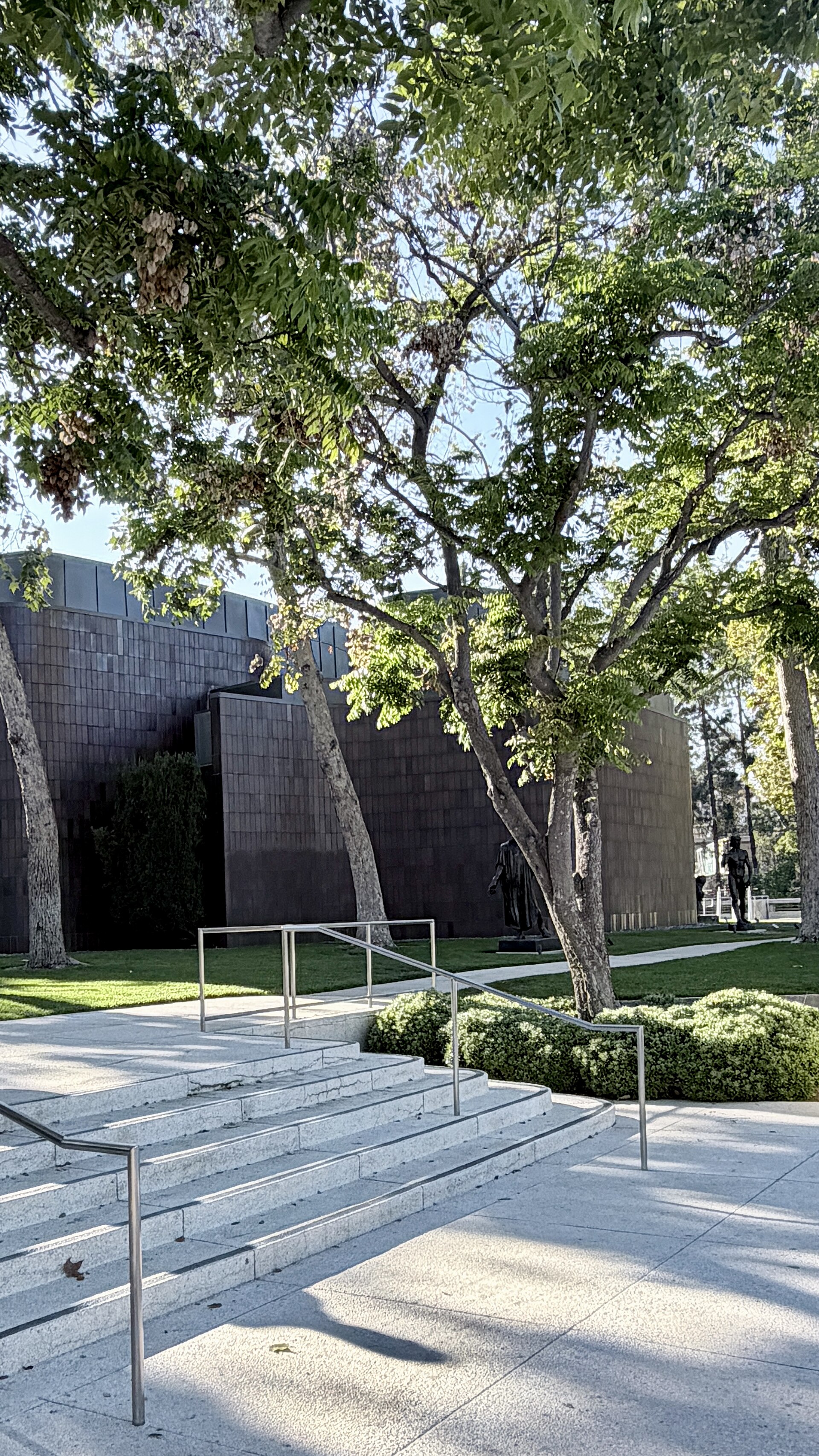
The building itself is Ladd and Kelsey's, from 1969, a low curvilinear structure clad in roughly 115,000 hand-crafted ceramic tiles designed by the ceramicist Edith Heath, 1911-2005, in a dark reddish-brown glaze that reads almost black from the street. After Norton Simon's death in 1993, his widow Jennifer Jones Simon, then chairperson of the board, commissioned a renovation of the galleries by Frank Gehry, carried out from 1996 to 1999, and a new Sculpture Garden from the landscape designer Nancy Goslee Power, who replaced Ladd and Kelsey's rectilinear reflecting pool with a naturally shaped lily pond at Jennifer Jones Simon's request for something 'just like Monet's Giverny.' Arthur Gensler's firm completed the sequence by remodeling the Museum's theater in 2000.
The tiles themselves became the subject of a fresh, and considerably larger, restoration in 2025. A conservation study begun in 2023 found the original glaze formula unreproducible because it contained lead, so the Museum worked with Heath Ceramics to hand-cast about 3,000 replacement tiles to a new, lead-free formula matched by eye to the original tone and texture, accounting for roughly 12 percent shrinkage in firing. That tile work was one part of a 15-million-dollar, nine-to-ten-month Exterior Improvement Project that began on 7 January 2025, the same week wildfires broke out at Pacific Palisades and Altadena elsewhere in the county: the Sculpture Garden's pond was drained, reduced in size and rebuilt in concrete with a new biofiltration system; its gravel paths were replaced with a permeable, all-weather surface; a new perimeter wall was built to cut traffic noise from Colorado and Orange Grove Boulevards; a rebuilt, ADA-compliant pedestrian path and new signage were added along Colorado Boulevard, aimed explicitly at drivers who the Museum's own project materials say routinely miss what the building holds; and Rodin's The Thinker, previously facing the boulevard from the south lawn, was moved to stand beside the front steps among the Museum's other Rodin casts. The garden reopened in November 2025, in the year the Museum marked fifty years under Norton Simon's name.
We publish no visitor-review prose and no single aggregate score as fact; what follows is drawn from the Museum's own published material and the named press coverage in our sources. The collection is repeatedly framed, by the Museum and by outside coverage alike, as large in quality and small in footprint: built by one collector across roughly thirty years, displayable in an afternoon rather than a full day, and easy to underestimate from Colorado Boulevard, which is the stated reason the Museum spent part of a 2025 renovation on street-facing signage and a new pedestrian entrance.
Google: 4.8 from 3,441 ratings, read 6 August 2026
A platform average is a tertiary source: it moves, it is not audited, and we quote no visitor's words.
411 West Colorado Boulevard, Pasadena, California 91105.
Adult: USD 20; Senior, 62 and above: USD 15; Children, 18 and under: free; Students with valid ID: free; Norton Simon Museum Members: free. As confirmed 13 August 2026.
Monday 12:00-17:00; Thursday 12:00-17:00; Friday 12:00-19:00; Saturday 12:00-19:00; Sunday 12:00-17:00. Closed: Tuesday and Wednesday, every week. The cafe and store close 15 minutes before the Museum closes. As confirmed 13 August 2026.
Bus: Pasadena Transit lines 10 and 33 stop in front of the Museum; Metro Local Line 180 also stops in front; Rail: Metro A Line, Memorial Park Station at 125 E. Holly St. and Arroyo Parkway, the closest Metro Rail stop to the Museum; Car: The Museum's own parking lot, upper and lower, is free of charge; limited free parking is also available on adjacent streets. Accessible spaces are provided in both lots.
Adam and Eve (Lucas Cranach the Elder, c. 1530); Madonna and Child with Book (Raphael, c. 1502-03); Self-Portrait (Rembrandt van Rijn, c. 1639); Portrait of a Boy in a Fancy Costume, formerly known as Titus (Rembrandt van Rijn, 1655-60); The Mulberry Tree (Vincent van Gogh, October 1889); Woman with a Book (Pablo Picasso, 1932).
One artwork and its story every Tuesday, with the picture: who owned it, what it made, and what closes soon in the exhibition calendar. No promotion, and nothing we cannot cite.
We send one email to confirm the address and keep nothing else. Every letter carries a one-click unsubscribe. How we handle your data.