Sofonisba Anguissola
 1532-1625
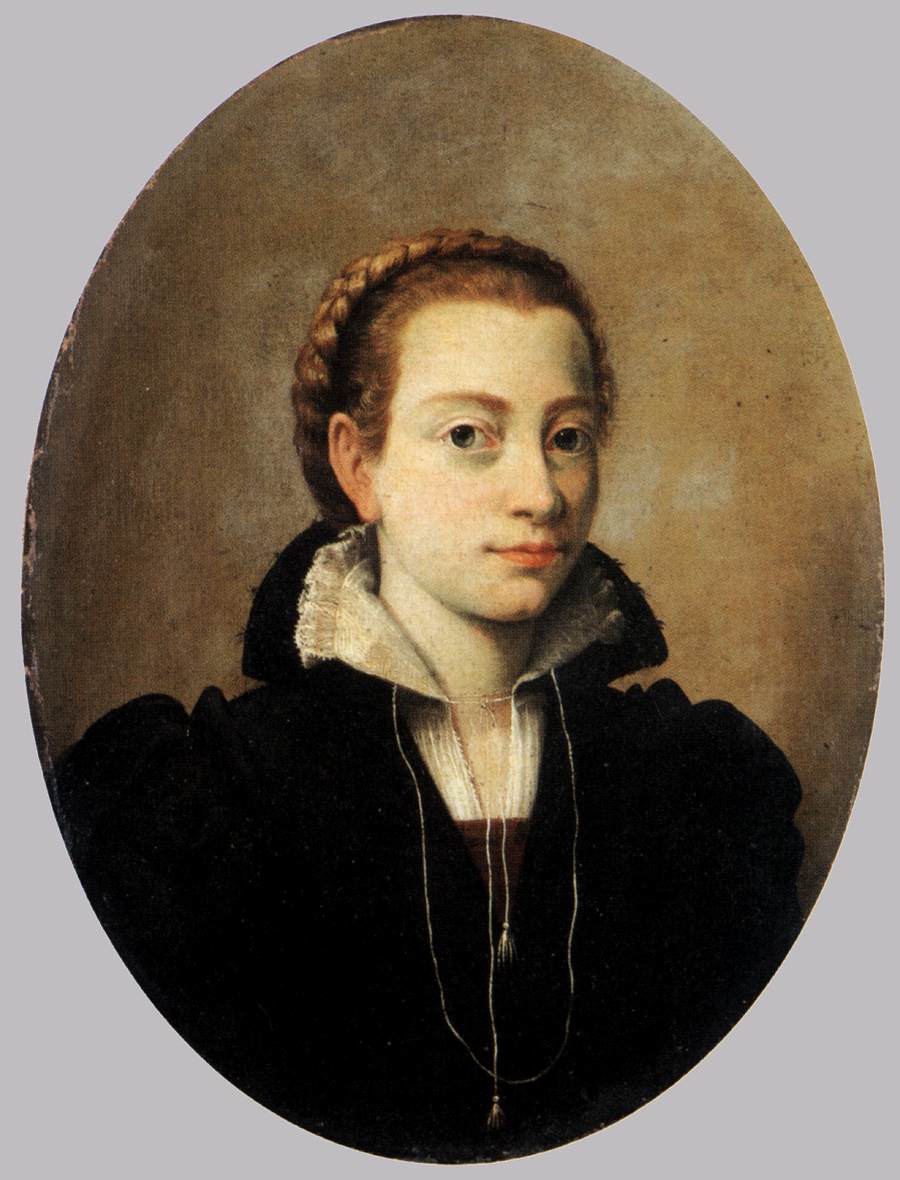
Self-Portrait, signed and dated 1554, Kunsthistorisches Museum, Vienna. The signature is as secure as any in this record: the artist signed and dated the work herself on the open book she holds. Adolfo Venturi connected it in 1885 to a March 1556 letter from her father Amilcare to Duke Ercole II d'Este describing a gift painting for the duke's daughter Lucrezia, a long-accepted art-historical inference rather than a documented chain of ownership; the museum's own provenance record does not confirm this link and begins later, with the picture in the collection of Rudolf II by 1604.
Kunsthistorisches Museum, Vienna| Worked as | Painter, Court painter, Draughtswoman |
|---|---|
| Born | c. 1532 (no baptismal record has been located · Cremona, Duchy of Milan |
| Died | 16 or 19 November 1625 (sources disagree on the exact day) · Palermo, Kingdom of Sicily |
| Nationality | Italian (Cremonese by birth |
| Movement | Late Renaissance, Lombard training, Spanish court portraiture |
| Sources | 24 cited |
| Last verified |
About this page Last verified · 24 sources cited
On this page 12 sections
ContentsClose
Sofonisba Anguissola painted more self-portraits than any European artist of her era before Rembrandt. At least a dozen are recorded across a documented career of roughly seventy years, from a teenager in Cremona experimenting with a mirror to a woman past ninety in Palermo giving the young Anthony van Dyck advice on how to light an old face. That run of self-portraits is also, without much competition, the fullest visual autobiography that survives from any woman working before 1600. It is also unfinished business rather than a closed file: a portrait catalogued for generations as a minor Roman painter's picture of Socrates was reattributed to Sofonisba or her sister Lucia only in 2024 and 2025.
Much of her later work is not where the public record has long said it is. She stopped signing her paintings once she reached the Spanish court in 1559, and a large share of what she painted there was filed for centuries under the name of the court's official portraitist, Alonso Sanchez Coello, or under whichever famous man a later dealer thought would sell better; one of her earliest surviving pictures, a 1551 portrait of her sister, was catalogued as a Titian until an inscription on the back of the panel said otherwise. The attribution work is not finished and it does not run only in her favour: a painting sold in 2006 as Circle of Sofonisba Anguissola, and still cited as her auction record in places, has since been given in full to Federico Zuccaro.
She also worked inside a family workshop of painting sisters, staged at least one picture that is a considered argument about who gets credit for a painting and why, and left behind, through Van Dyck's own notebook, one of the only first-hand accounts in existence of a Renaissance woman artist describing her own working method in her own words.
Images
Chronology
- c. 1532
Born in Cremona, eldest of seven children of Amilcare Anguissola and Bianca Ponzoni.113
- 1546
Sent with her sister Elena, aged fourteen, to study under the painter Bernardino Campi in Cremona.1
- c. 1550-1553
Continues training under Bernardino Gatti, called Il Sojaro, after Campi's move to Milan.1
- 1551
Paints the portrait of her sister Elena as a Dominican novice, later misattributed to Titian and only corrected by an inscription on the panel's reverse.1112
- 1554
Travels to Rome and is introduced to Michelangelo; paints the signed and dated self-portrait now in Vienna's Kunsthistorisches Museum.14
- 1555
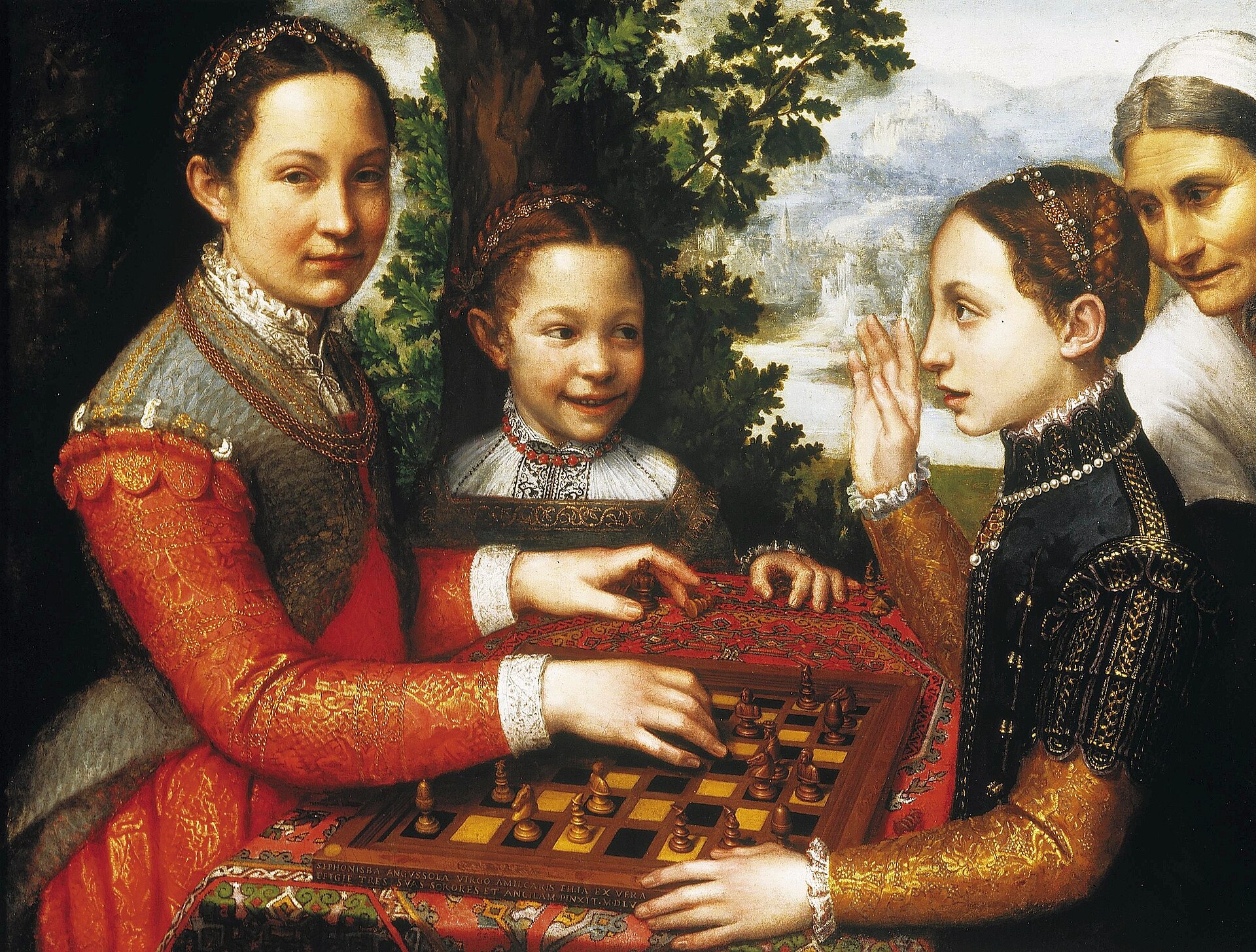
Paints The Game of Chess, signed and dated on the edge of the chessboard.7
- c. 1556
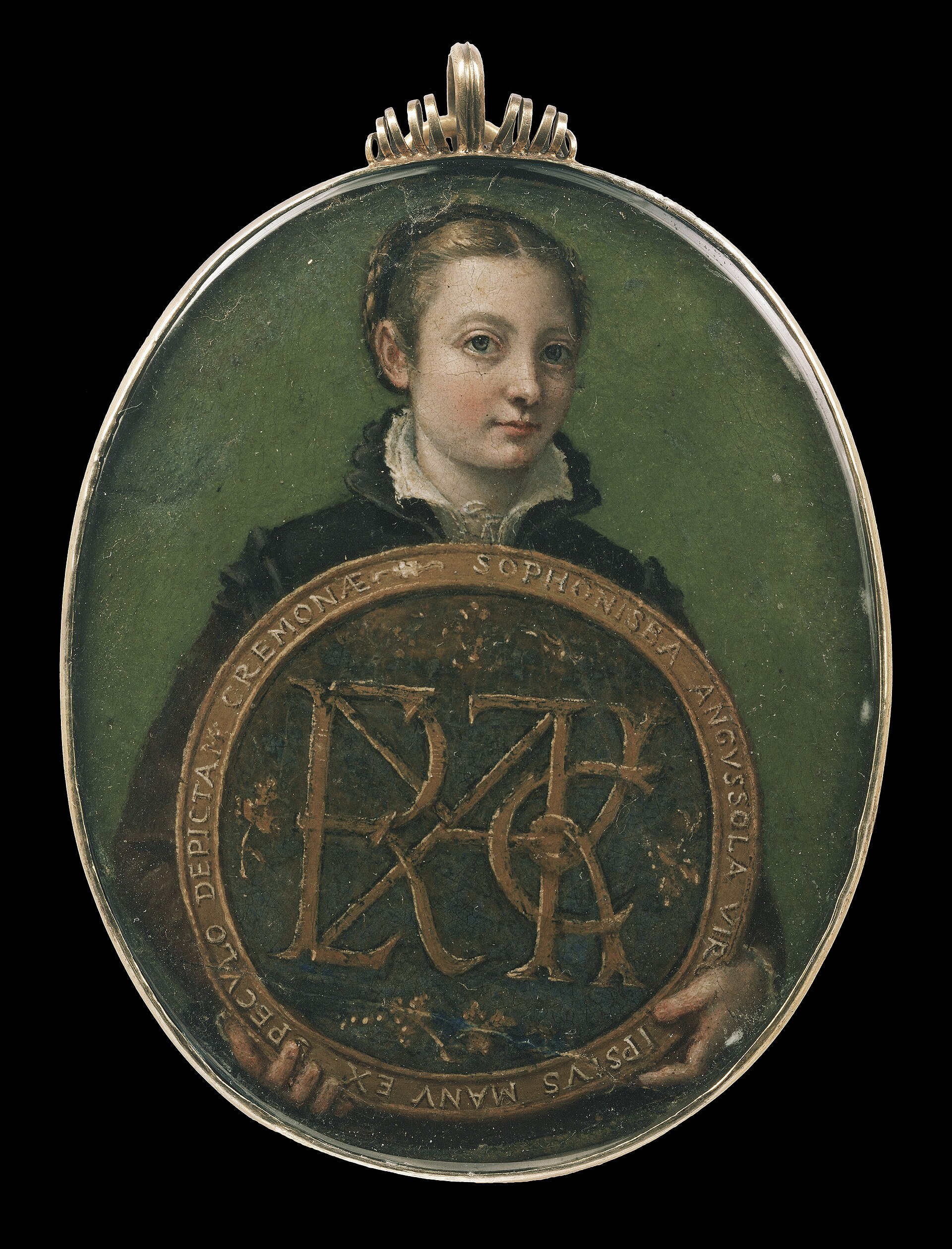
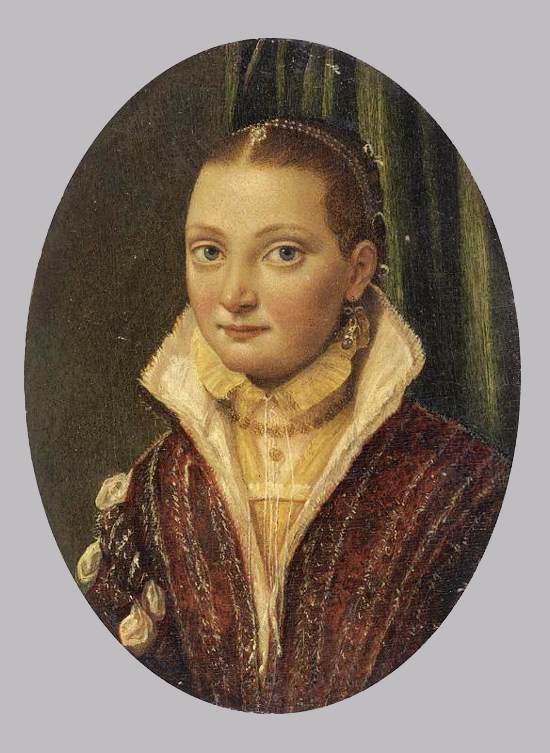
Paints Self-Portrait at an Easel (now Lancut Castle, Poland) and the miniature self-portrait now in the Museum of Fine Arts, Boston.824
- 1559 (c.)
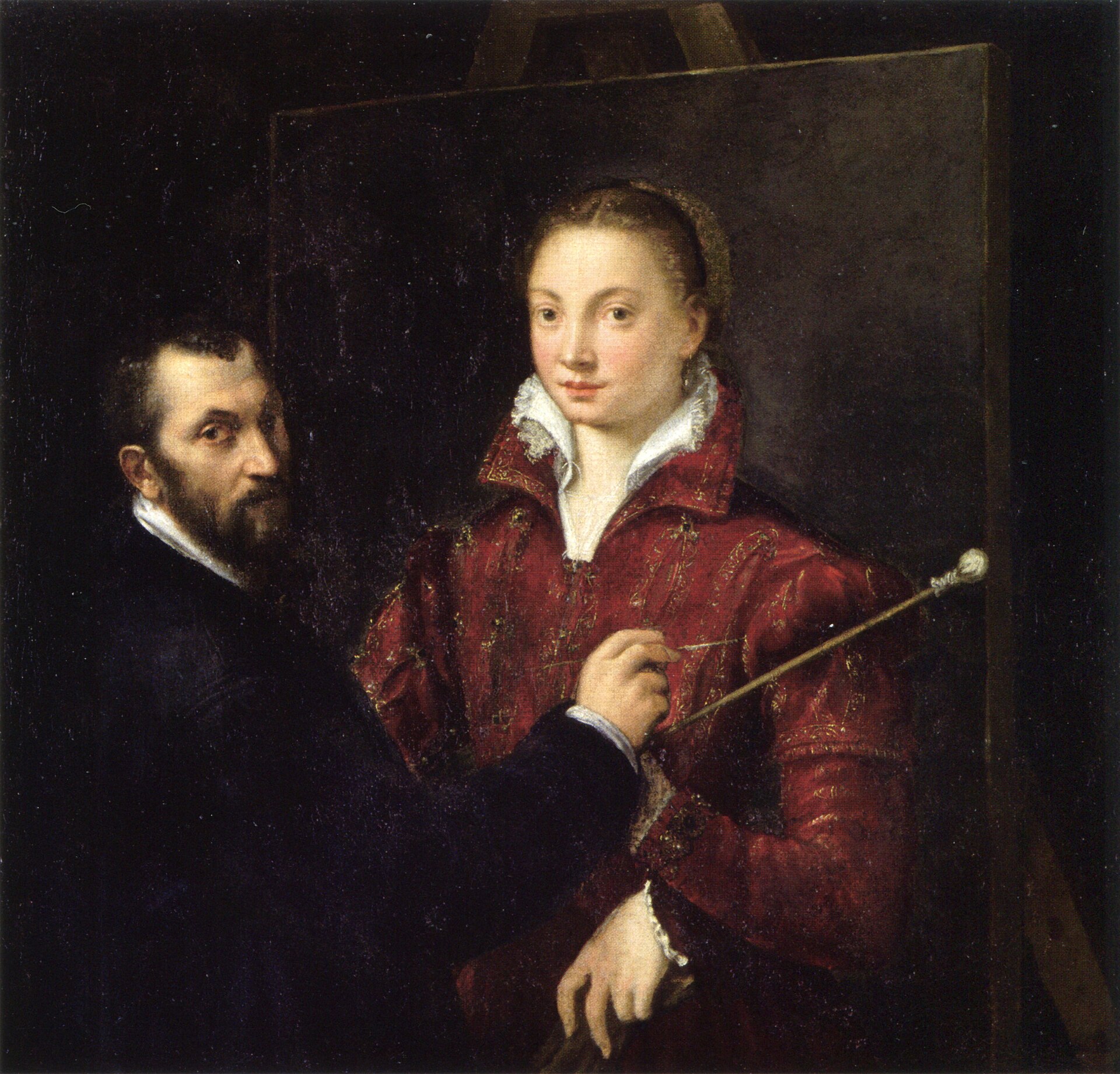
Paints Self-Portrait with Bernardino Campi shortly before her departure for Spain.3
- 1559-1560
Travels to Madrid to serve as lady-in-waiting and drawing tutor to Queen Elisabeth of Valois at the court of Philip II.1
- c. 1565
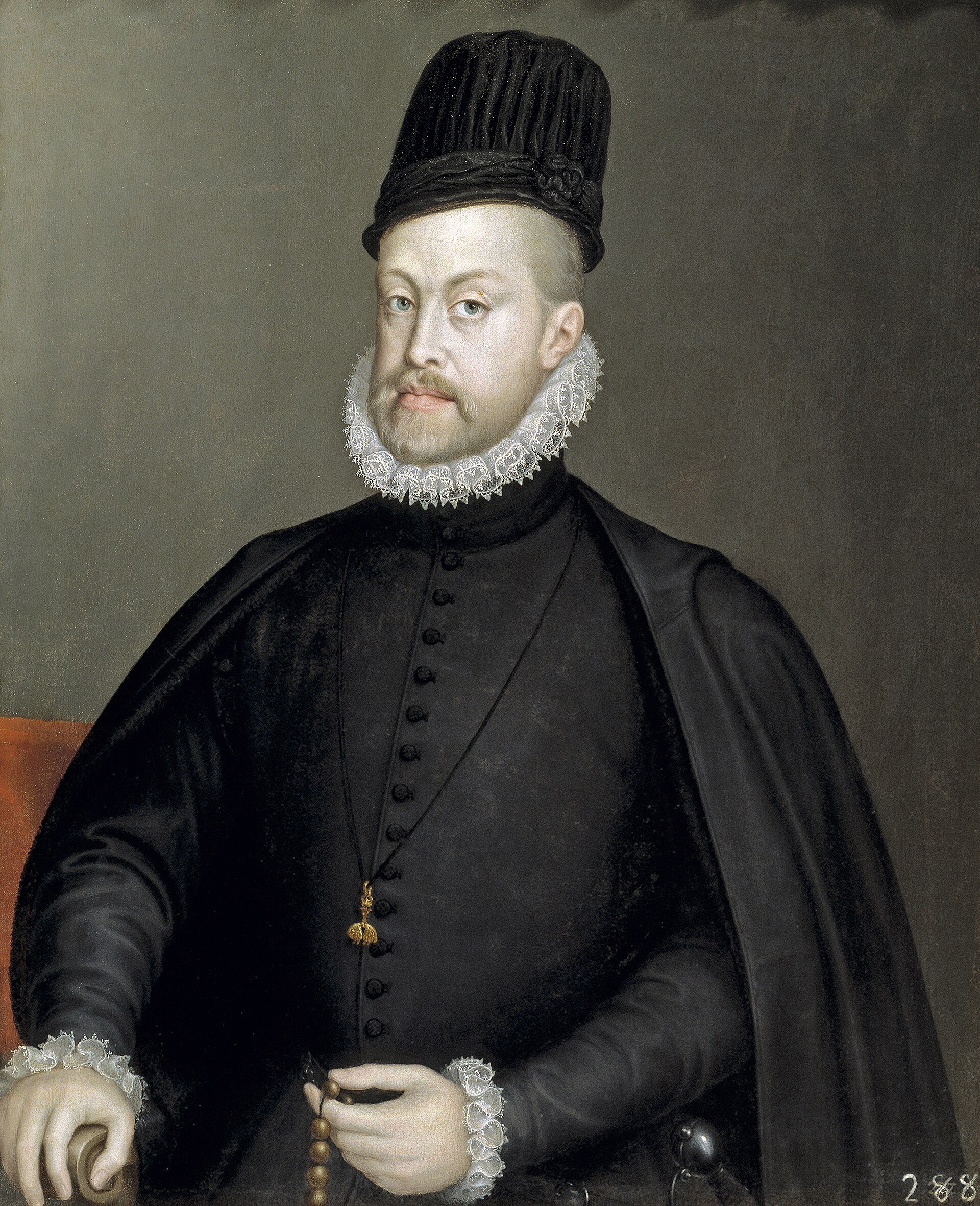
Paints portraits of Philip II and Elisabeth of Valois, among the few Spanish-court works securely identified as hers.1
- 1571
Marries the Sicilian nobleman Fabrizio Moncada Pignatelli, arranged by Philip II, with a dowry provided by the crown.113
- 1578 or 1579
Fabrizio Moncada is killed, according to secondary sources, in a pirate attack near Capri; no primary record was located.1
- 1584
Marries the Genoese merchant captain Orazio Lomellino in Pisa on 24 December.1
- c. 1615
Settles in Palermo.13
- 1624
Visited in Palermo on 12 July by the young Anthony van Dyck, who sketches her in his Italian notebook and records her advice on lighting an old face.113141516
- 1625
Dies in Palermo, on 16 or 19 November depending on the source, aged about ninety-three.11321
- 1992
Maria Kusche reattributes the Prado's Portrait of the Infanta Isabella Clara Eugenia from Alonso Sanchez Coello to Anguissola.510
- 2019-2020
The Museo del Prado stages A Tale of Two Women Painters, pairing Anguissola with Lavinia Fontana.1420
- 2024-2025
Emanuele Lugli identifies a portrait in the Art Museum of Ravenna, previously catalogued as a minor painter's depiction of Socrates, as the work of Sofonisba or Lucia Anguissola, published in The Burlington Magazine.19
The market
Anguissola's market is smaller and more confused than her reputation would suggest, and the confusion is the story. The price most often repeated as her auction record, GBP 478,400 at Christie's in 2006, was paid for a picture that was never catalogued as more than Circle of Sofonisba Anguissola and has since been fully reattributed to Federico Zuccaro; it is not an Anguissola price at all. The best-supported price for a work catalogued directly to her is EUR 283,300, paid at Dorotheum in Vienna in 2011 for a Portrait of Archduchess Johanna of Austria, a record for the artist at the time. Both figures are reported in the sources consulted without a stated split between hammer price and buyer's premium, which should be confirmed against the auction houses' own records before either is quoted as a precise hammer figure. A useful comparison point from outside the auction room: the Museum of Fine Arts, Boston, paid F. Kleinberger Galleries USD 3,000 for its small, securely inscribed miniature self-portrait in 1960, a figure that reflects how modestly even an undisputed autograph work was valued before the recent surge of market and museum interest in women Old Masters.
| Date | Sale | Work | Result | Note |
|---|---|---|---|---|
| 12 October 2011 | Dorotheum | Portrait of Archduchess Johanna of Austria | Hammer not stated separately in the sources consulted With premium EUR 283,300 (total price reported; unclear if hammer or premium-inclusive) EUR | Reported by the house as a new auction record for the artist; awarded to a proxy bidder. This is the best-supported price for a work catalogued directly and fully to Anguissola in the sources consulted for this record. |
| 7 December 2006 | Christie's, London | Portrait of Margherita of Savoy (sold as Circle of Sofonisba Anguissola) | Hammer not stated separately in the sources consulted With premium GBP 478,400 (approx. USD 940,000 at the time; unclear if hammer or premium-inclusive) GBP | Widely repeated as an Anguissola auction record, but the work was never catalogued as more than Circle of and has since been fully reattributed to Federico Zuccaro by Diana Scarisbrick and Daniele Sanguineti. This record does not treat it as an Anguissola price. |
| 1960 | F. Kleinberger Galleries (private sale to museum) | Miniature Self-Portrait (c. 1556) | Hammer n/a, not an auction With premium USD 3,000 USD | Purchase price paid by the Museum of Fine Arts, Boston, for a small, inscribed and securely autograph self-portrait; included here as a documented historical valuation rather than an auction result. |
Hammer is the price at which the bidding stopped; with premium adds the fee the house charges the buyer on top. Hammer price and buyer's premium in the glossary.
Where to see the work
| Institution | City | Holdings | Note |
|---|---|---|---|
| Kunsthistorisches Museum | Vienna | Signed and dated Self-Portrait, 1554 | The most securely documented of her self-portraits; provenance traced by Adolfo Venturi in 1885 to a gift recorded in a letter from Anguissola's father. |
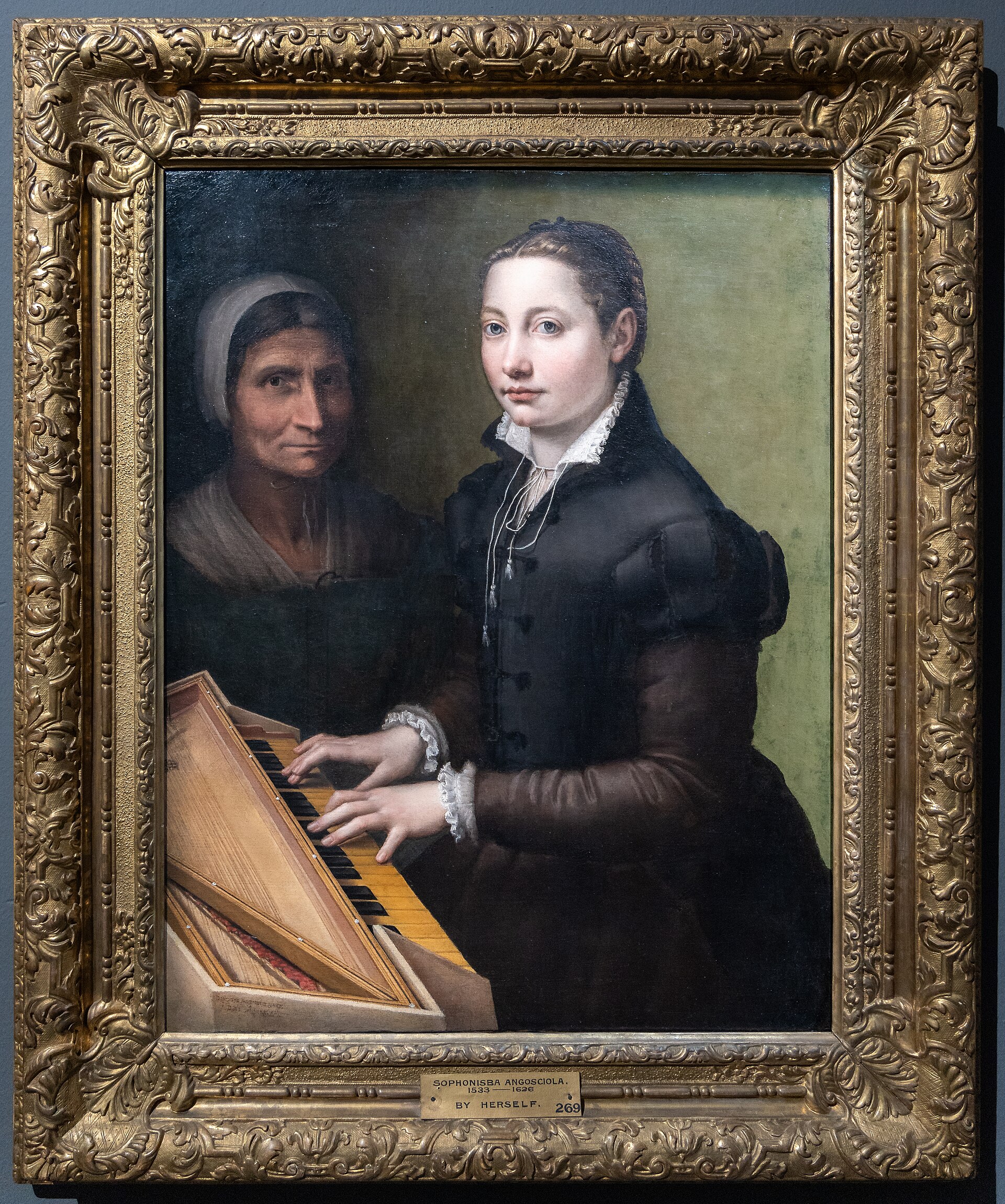
| Museo e Real Bosco di Capodimonte | Naples | Self-Portrait at a Spinet, c. 1555 | From the Fulvio Orsini and later Farnese collections. |
| Lancut Castle Museum | Lancut, Poland | Self-Portrait at an Easel, 1556 | |
| Museum of Fine Arts | Boston | Miniature Self-Portrait, c. 1556 | Purchased from F. Kleinberger Galleries in 1960. |
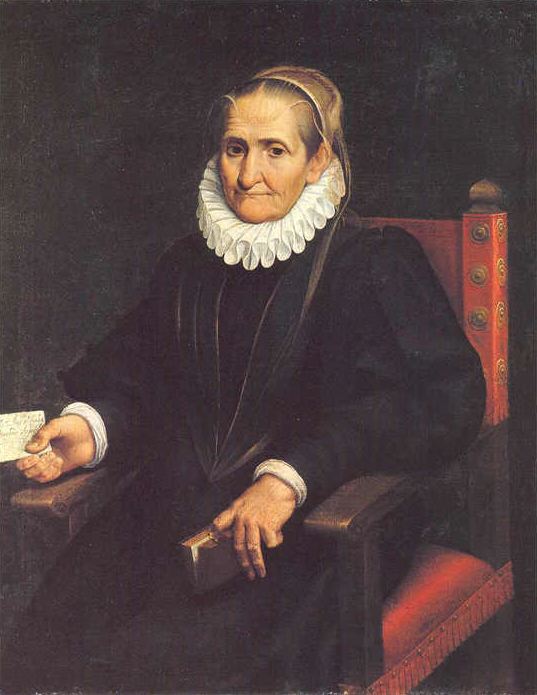
| Kunstmuseum Bern (Gottfried Keller Foundation) | Bern | Self-Portrait, 1610 | A late self-portrait, painted when the artist was in her late seventies. |
| National Museum in Poznan | Poznan, Poland | The Game of Chess, 1555 | Passed through the Orsini, Farnese, Bourbon and Lucien Bonaparte collections before reaching Poznan. |
| Pinacoteca Nazionale | Siena | Self-Portrait with Bernardino Campi, late 1550s | |
| Museo Nacional del Prado | Madrid (displayed at the Spanish Embassy, Paris) | Portrait of Philip II, c. 1565; Portrait of the Infanta Isabella Clara Eugenia, 1599 | The Isabella Clara Eugenia portrait was reattributed from Alonso Sanchez Coello to Anguissola by Maria Kusche in 1992. |
| Southampton City Art Gallery | Southampton | Portrait of Elena Anguissola in the Garb of a Nun, 1551 | Anguissola's earliest known work; formerly attributed to Titian. |
| Knole (National Trust) | Sevenoaks, Kent | Portrait of Sofonisba Anguissola, attributed to Anthony van Dyck, 1624 | Acquired by the National Trust in 2012 through the Acceptance in Lieu scheme, offsetting inheritance tax. Previously catalogued under a different sitter's name. |
| British Museum | London | Anthony van Dyck, Italian Sketchbook, including the drawing and notes made from the 12 July 1624 sitting | |
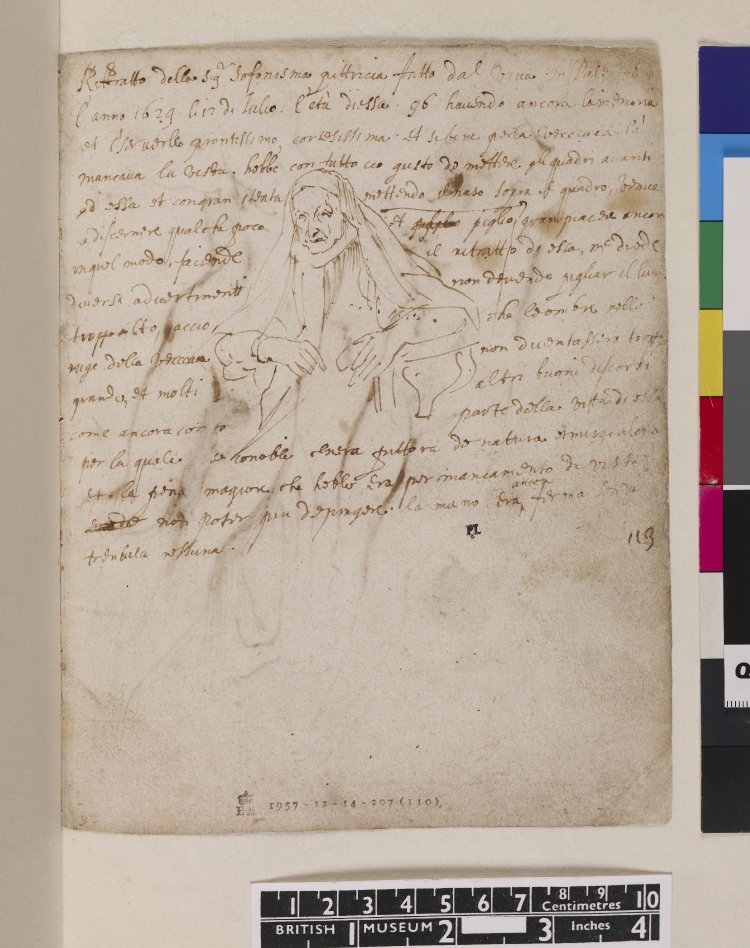
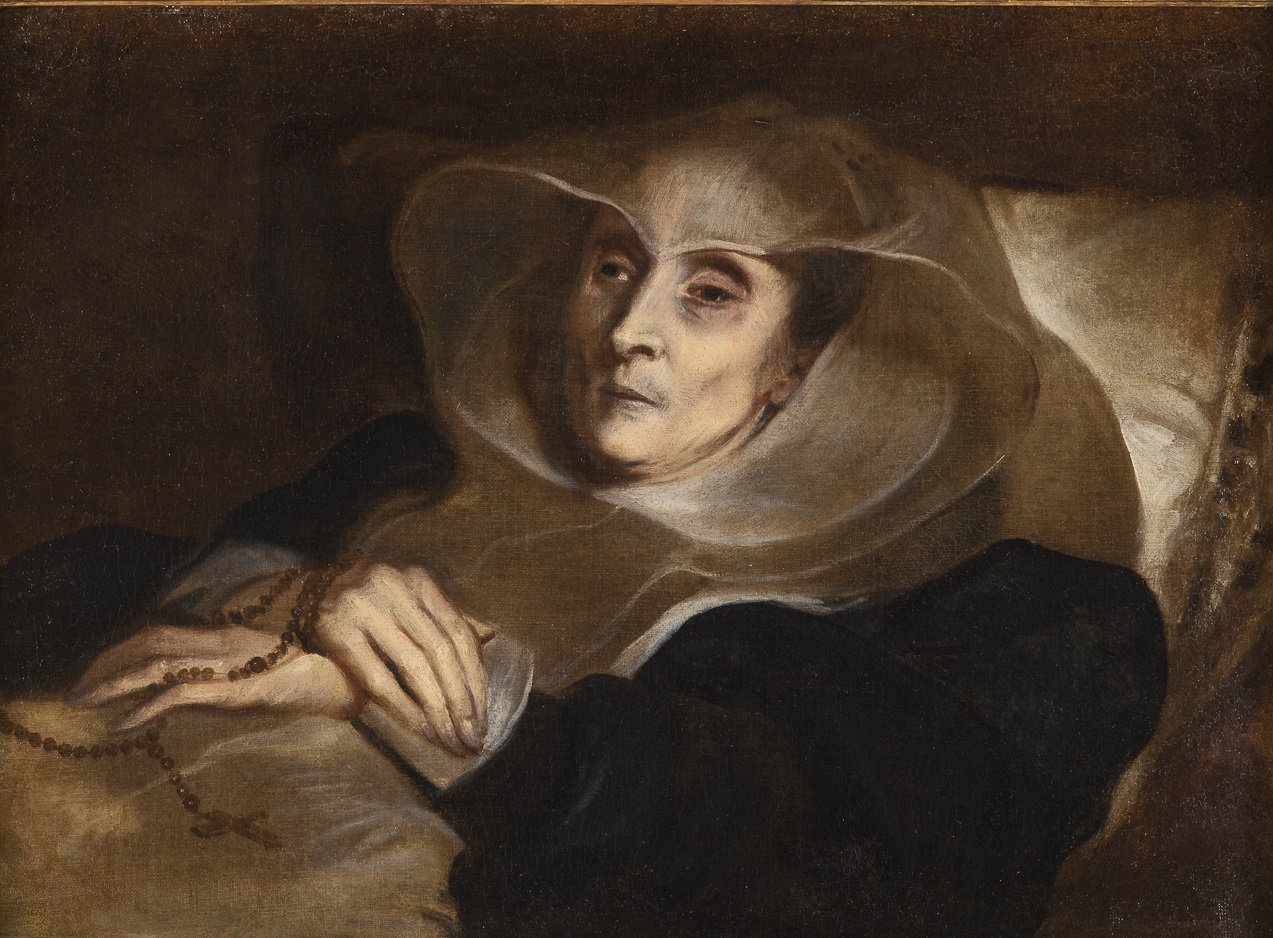
| Musei Reali | Turin | Sofonisba Anguissola morente (Sofonisba Anguissola dying), attributed to Anthony van Dyck, c. 1625 | A separate, posthumous or near-posthumous image; not to be confused with the 1624 sketchbook drawing. |
| Art Museum of Ravenna | Ravenna | Portrait of a man with a cup and snake, mid-1550s | Reattributed from a minor Roman painter's Socrates to Sofonisba or Lucia Anguissola by Emanuele Lugli, 2024-2025; restoration and public display had not taken place as of the sources consulted. |
The essay
Chapter 1A corpus nobody has finished counting
Modern surveys credit Anguissola with at least twelve self-portraits, of which as many as seven are untraced or presumed lost; the figure is repeated across current popular and museum scholarship...
Modern surveys credit Anguissola with at least twelve self-portraits, of which as many as seven are untraced or presumed lost; the figure is repeated across current popular and museum scholarship, which describes her surviving self-portrait series as larger than either Durer's or Rembrandt's before Rembrandt himself painted his own long run. No single peer-reviewed catalogue number for the self-portraits alone was located in the sources consulted for this record, and the editor should check the claim directly against Joanna Woods-Marsden's study of Renaissance self-portraiture and against Leticia Ruiz Gomez's catalogue essay for the Prado's 2019 exhibition, the two places the claim is most likely to have been established with a precise count.
The wider painted corpus is also still moving. English-language reference lists put the number of paintings generally accepted as autograph at roughly fifty to seventy, drawing on a 1994 Cremona exhibition catalogue and later scholarship; the Prado's 2019 joint exhibition with Lavinia Fontana catalogued sixty works across both artists. In 2024, the Stanford art historian Emanuele Lugli identified a mid-1550s portrait of a bearded man holding a cup with a snake, sitting unrecognised in the storage of the Art Museum of Ravenna and catalogued there as a minor Roman painter's depiction of Socrates, as the work of Sofonisba or her sister Lucia; the essay, published in The Burlington Magazine, argues for one of three possible sitters and ties the picture to the Anguissola family's connections among the apothecaries of northern Italy. A corpus that can still gain a picture in an Italian museum's attic in 2024 is not a closed file, and this record treats it as an open one.
Chapter 2A name that stopped being attached to her own work
The pattern has a documented, specific cause rather than a vague one.
The pattern has a documented, specific cause rather than a vague one. Anguissola signed her early Cremonese pictures prominently and in Latin; the chessboard in her 1555 Game of Chess carries a full signed inscription naming herself, her father and her subjects. Once she reached the Spanish court in 1559 she stopped signing her work, in keeping with the conventions of court portraiture, and a large share of her Madrid-period output was later catalogued under the name of Alonso Sanchez Coello, the court's official painter, whose workshop she worked alongside. The Prado's Portrait of the Infanta Isabella Clara Eugenia is a documented example: it appears in an 1865 catalogue as Coello's work, and it was the art historian Maria Kusche who reattributed it to Anguissola in a 1992 article, one of a series of such reattributions she made over the following decade.
Some of the confusion runs in more than one direction at once. The Lady in a Fur Wrap, in the Stirling Maxwell collection at Pollok House, Glasgow, was attributed to El Greco from the time it entered the French royal collections in the nineteenth century. Kusche later argued it was by Anguissola, a portrait of Catalina Micaela of Spain. A joint investigation by the Museo del Prado, Glasgow Museums and the University of Glasgow subsequently moved the painting away from El Greco but settled it on Sanchez Coello rather than on Anguissola, so a single picture has now carried three different attributions inside little more than a century, none of them settled beyond dispute.
The earliest documented case predates the Spanish court entirely. Anguissola's 1551 portrait of her sister Elena, shown as a Dominican novice under the name Sister Minerva and now in the Southampton City Art Gallery, was for a period attributed to Titian; only an inscription on the back of the panel, giving Anguissola's name and the date, corrected the record. Southampton's own account of the picture notes plainly that once she fell out of fashion after her death, several of her paintings were reassigned to more famous men, and names Giovanni Battista Moroni, Alonso Sanchez Coello and Francisco de Zurbaran alongside Titian as men whose names have at different times been put on her work.
Chapter 3Painting her own authority: the picture of Bernardino Campi
Self-Portrait with Bernardino Campi, now in the Pinacoteca Nazionale in Siena and dated to the late 1550s, shows Anguissola's own teacher, Bernardino Campi, apparently at work on a portrait of her.
Self-Portrait with Bernardino Campi, now in the Pinacoteca Nazionale in Siena and dated to the late 1550s, shows Anguissola's own teacher, Bernardino Campi, apparently at work on a portrait of her. It is a picture inside a picture: Campi holds the brush, but the painted image of Anguissola he is supposedly completing is larger and more prominent than his own figure, and it is Anguissola, not Campi, who meets the viewer's eye.
Art historians read the composition as a deliberate argument rather than a decorative conceit. Mary Garrard has described it as the first instance of a woman artist consciously reversing the usual subject-object relationship between painter and sitter, using the picture to assert that she is the one with authorship and artistic authority even though her own teacher is shown holding the brush; Whitney Chadwick makes the same point in similar terms. A separate reading, advanced by Claire Sandberg, treats the picture instead as a piece of self-promotion made shortly before Anguissola's 1559 departure for Spain, in which the costly red velvet and gold embroidery of her painted dress, unlike the plainer clothes she wears in most of her self-portraits, signals the rank and marriageability of a woman about to enter a royal court. The two readings are not mutually exclusive, and this record gives both rather than choosing between them.
Chapter 4A workshop of sisters
Anguissola was the eldest of seven children born to Amilcare Anguissola and Bianca Ponzoni, six of them daughters, and her father had at least five of them trained in painting alongside a humanist...
Anguissola was the eldest of seven children born to Amilcare Anguissola and Bianca Ponzoni, six of them daughters, and her father had at least five of them trained in painting alongside a humanist education. Her sister Lucia, born around 1536 to 1538 and dead by her late twenties, is generally regarded as the most talented of the group after Sofonisba herself; Vasari wrote that Lucia's death left her no less famous than Sofonisba's own reputation. Lucia's only fully signed work, a portrait of the physician Pietro Manna now in the Prado, carries a Latin inscription naming her explicitly as its maker and as a young woman when she painted it.
The closeness of the sisters' training has left a genuine, still-argued attribution problem rather than a settled one. A Portrait of a Woman in the Galleria Borghese in Rome, inscribed on the reverse as a work by Sofonisba, was rejected as hers as early as 1897 by the connoisseur Giovanni Morelli, who proposed instead that it shows Sofonisba, painted by one of her sisters, probably Lucia. The dispute over who painted it and who sits in it has continued in the literature since. The 1994 Cremona exhibition that first assembled a fuller list of Anguissola's works was itself titled Sofonisba Anguissola e le sue sorelle - Sofonisba Anguissola and her sisters - an acknowledgement built into the title that this is a family workshop history and not a single-hand one, and Lugli's 2024 Ravenna reattribution again names Sofonisba or Lucia as the two candidates rather than settling on one.
Chapter 5Cremona to Rome: training and Michelangelo
Amilcare Anguissola sent Sofonisba and her sister Elena, aged fourteen, to study with Bernardino Campi, a respected portrait and religious painter of the Lombard school working in Cremona.
Amilcare Anguissola sent Sofonisba and her sister Elena, aged fourteen, to study with Bernardino Campi, a respected portrait and religious painter of the Lombard school working in Cremona. When Campi relocated to Milan around 1550, she continued her training with Bernardino Gatti, called Il Sojaro, a pupil of Correggio, until about 1551 to 1553. Her father then put her work in front of the courts at Ferrara and Mantua and before patrons in Parma and Rome.
In Rome, at about the age of twenty-two, Anguissola was introduced to Michelangelo, who set her the challenge of drawing a weeping boy. She responded instead with a drawing of her young brother Asdrubale being bitten by a crayfish, a subject chosen, by the traditional account, to demonstrate that a convincing expression of pain did not require an invented subject. Michelangelo is said to have sent her further drawings from his own sketchbooks for informal study over roughly the next two years. No formal apprenticeship or workshop record survives for this period; the relationship is documented mainly through later biographical accounts rather than a contract or a dated letter, and this record treats it accordingly.
Chapter 6The chessboard as an argument
The Game of Chess, also known as Portrait of the Artist's Sisters Playing Chess, is signed and dated 1555 in a Latin inscription on the edge of the chessboard itself, naming Anguissola as Amilcare's...
The Game of Chess, also known as Portrait of the Artist's Sisters Playing Chess, is signed and dated 1555 in a Latin inscription on the edge of the chessboard itself, naming Anguissola as Amilcare's virgin daughter and identifying her three sitters, her sisters Lucia, Europa and Minerva, plus an unnamed household maid, as painted from life. It shows the sisters engaged in a game that mid-sixteenth-century convention treated as a demanding, largely male intellectual pursuit, rather than in needlework, music or any of the more conventionally feminine pastimes usually given to young women in portraiture of the period.
Giorgio Vasari saw the picture or heard a strong account of it and praised it after visiting the Anguissola household; his account is the earliest documented reference to the work. The painting passed from the family home in Cremona into the collection of the humanist Fulvio Orsini in Rome, then to Cardinal Odoardo Farnese, into the House of Bourbon and later to Lucien Bonaparte, before reaching the National Museum in Poznan, where it now hangs; it has undergone visible repainting over its history, and at least three period engravings after it are known, which is itself early evidence of the picture's independent circulation and reputation separate from its owner at any given time.
Chapter 7Court painter to Philip II: what she was actually there to do
Anguissola left Cremona for Madrid in the winter of 1559 to 1560, appointed to the court of Philip II of Spain as lady-in-waiting to his new queen, Elisabeth of Valois, and as her drawing and...
Anguissola left Cremona for Madrid in the winter of 1559 to 1560, appointed to the court of Philip II of Spain as lady-in-waiting to his new queen, Elisabeth of Valois, and as her drawing and painting tutor. She held no formal salaried post as a painter as such; her position was structured as a lady-in-waiting who happened to paint, which is also why so much of her Spanish-period work went unsigned and, later, unrecognised as hers. She remained at the Spanish court for fourteen years, from 1559 to 1573.
Among the small number of Spanish-period works securely identified as hers are portraits of Philip II and of Elisabeth of Valois, both usually dated to around 1565. She worked in this period in close proximity to Alonso Sanchez Coello, the court's official portraitist, adapting her Italian training to the codified formulas of Habsburg court portraiture; it is precisely that closeness in style, combined with the absence of a signature, that has made so much of her Madrid output difficult to separate from his.
Chapter 8Marriage, a dowry from the crown and a return by sea
In 1571 Philip II arranged Anguissola's marriage to the Sicilian nobleman Fabrizio Moncada Pignatelli, son of the Prince of Paterno and Viceroy of Sicily, and provided a dowry from the crown as part...
In 1571 Philip II arranged Anguissola's marriage to the Sicilian nobleman Fabrizio Moncada Pignatelli, son of the Prince of Paterno and Viceroy of Sicily, and provided a dowry from the crown as part of the arrangement. Secondary biographical sources give conflicting figures for the dowry, some putting it at around 12,000 scudi and others at closer to 20,000, alongside reports of an annual royal pension that is variously given as 100 or 1,000 ducats; no primary court document setting out the exact terms was located in the sources consulted, and the figures should be treated as approximate until checked against a documentary source such as the Spanish royal accounts. The couple is generally placed in Paterno, near Catania, until Fabrizio's death; secondary sources report that he was killed in a pirate attack near Capri, commonly dated to 1578 or 1579, though again no primary record was located.
Widowed, Anguissola travelled toward Genoa by sea not long afterward and, according to the traditional account, fell in love during the voyage with the ship's captain, the Genoese merchant Orazio Lomellino. The couple married in Pisa on 24 December 1584. They settled first in Genoa and later, from around 1615, in Palermo, where Anguissola spent her final years received by visiting painters and other admirers who came to discuss art with her directly.
Chapter 9The last sitting: Van Dyck's visit and a working artist's own words
On 12 July 1624 the twenty-five-year-old Anthony van Dyck, in Sicily to paint the Spanish viceroy and delayed there for months by an outbreak of plague, visited the elderly Anguissola in Palermo and...
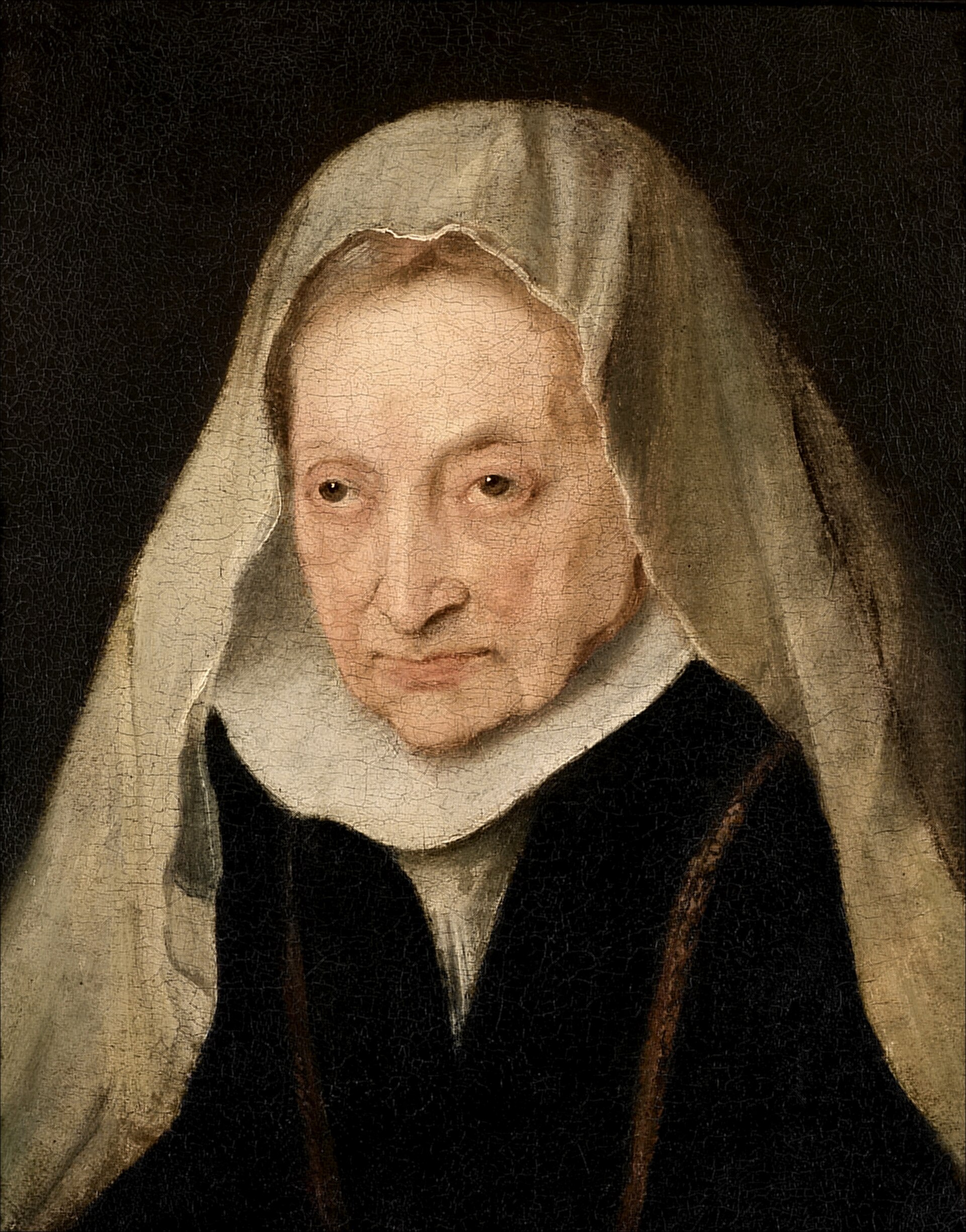
On 12 July 1624 the twenty-five-year-old Anthony van Dyck, in Sicily to paint the Spanish viceroy and delayed there for months by an outbreak of plague, visited the elderly Anguissola in Palermo and sketched her. The encounter is recorded in his own hand in his Italian sketchbook, now in the British Museum, in one of the few entries in that notebook that Van Dyck wrote about at any length. He believed her to be ninety-six; she was in fact about ninety-two, and died a little over a year later. Despite her age, he recorded that her hands did not tremble and her memory remained sharp, though her eyesight had failed to the point that she could no longer paint; she nonetheless gave him practical advice on lighting an elderly sitter's face: not to raise the light too high, so that shadows would not accentuate the wrinkles of old age. The Knole portrait, discussed below, shows a notable absence of such shadows on her face, consistent with Van Dyck having taken the advice. Van Dyck is widely quoted as saying afterward that he received more useful advice from the words of a blind woman than from the finished works of well-known painters. This is one of the only surviving first-hand accounts, in an artist's own working notebook, of a Renaissance woman painter describing her own method in her own voice, rather than being described by someone else.
Van Dyck appears to have developed a painted portrait from the same sitting, close in likeness to the sketchbook drawing; a version in oil on panel is now at Knole in Kent, held by the National Trust, which acquired it in 2012 through the Acceptance in Lieu scheme, offsetting inheritance tax against the picture's value. Before that identification, the same panel had at one point been catalogued under an entirely different sitter's name, as a portrait of Catherine Fitzgerald, Countess of Desmond, which is itself a small further instance of the same pattern that runs through Anguissola's own output: a woman's portrait, misdescribed and only later put right. A separate and later picture, Sofonisba Anguissola morente - Sofonisba Anguissola dying - now in the Musei Reali in Turin and generally dated to around 1625, shows her on her deathbed; it is a distinct, posthumous or near-posthumous image and should not be confused with the life sketch made the previous year.
The 1624 date for this visit, taken from the sketchbook and followed throughout this record as the mainstream, institutionally supported reading, has been challenged in a 2025-2026 paleographic reassessment by Carla Rossi, which argues the date is a misreading of 1629 and, with it, that Anguissola died in 1629 or 1630 rather than November 1625. The challenge rests on a notarial deed showing her husband had remarried by 26 November 1630, and remains contested rather than accepted; the National Trust and this record both keep the 1624/1625 dating, but a future editor should watch whether the institutional consensus shifts.
Chapter 10Forgotten, then rediscovered
Anguissola's reputation faded substantially after her death, along with that of most women painters of her period, and she was not treated as a major figure in general art-historical writing for...
Anguissola's reputation faded substantially after her death, along with that of most women painters of her period, and she was not treated as a major figure in general art-historical writing for roughly three centuries. Modern scholarship generally places her serious rediscovery in the wave of feminist-informed art history of the 1970s, the same period in which Linda Nochlin's essay questioning why art history recognised no great women artists reframed the field's attention to painters like her. The 2019 to 2020 Prado exhibition pairing her with Lavinia Fontana, curated by Leticia Ruiz Gomez, marked a further, more institutional stage of that recovery: the first exhibition a major national museum had devoted specifically to historic women painters in that context. The 2024 to 2025 Ravenna reattribution shows the process is still active rather than complete.
Chapter 11What the market has actually paid, and for what
The figure most often repeated as Anguissola's auction record, a Christie's London sale of 7 December 2006 at GBP 478,400 (then roughly USD 940,000), was for a picture catalogued at the time only as...
The figure most often repeated as Anguissola's auction record, a Christie's London sale of 7 December 2006 at GBP 478,400 (then roughly USD 940,000), was for a picture catalogued at the time only as Circle of Sofonisba Anguissola, meaning it was never offered as her own autograph work even at the point of sale. That picture, a portrait of Margherita of Savoy, has since been independently identified by Diana Scarisbrick and Daniele Sanguineti as the work of Federico Zuccaro, on the strength of comparison with other portraits and documentary evidence including Zuccaro's own diary and his recorded travels to Savoy in July 1605. It should not be counted as an Anguissola price at all, and this record does not treat it as her market record.
The best-supported price for a work catalogued to Anguissola herself is a Dorotheum sale in Vienna on 12 October 2011, where a Portrait of Archduchess Johanna of Austria was awarded to a proxy bidder for EUR 283,300, described by the house as a new world record for the artist. The sources consulted for this record did not separate the hammer price from any buyer's premium in either the 2011 or the 2006 case, and that distinction should be confirmed against the auction houses' own lot records before this section is relied on for a precise hammer figure. By way of an earlier and very different kind of valuation, the small, securely inscribed miniature self-portrait now in the Museum of Fine Arts, Boston, passed through several nineteenth and twentieth century owners and two intervening sales before F. Kleinberger Galleries sold it to the museum in 1960 for USD 3,000, a figure that says more about how modestly a documented, autograph Anguissola was valued before the recent market interest in women Old Masters than any single modern auction result does.
What is documented
Technique
The surviving work
- What is accepted
- No single figure commands consensus. English-language reference lists put the paintings generally accepted as autograph at roughly fifty to seventy; the Prado's 2019 joint exhibition catalogue with Lavinia Fontana entered sixty works across both artists. Self-portraits specifically are put at a dozen or more, of which as many as seven are untraced or presumed lost, a figure repeated across current popular and museum-adjacent scholarship but not traced in this record to a single peer-reviewed source with a precise count.
- What is contested
- A strict count of securely autograph, fully documented work shrinks considerably once the disputed Spanish-court output is set aside. Alonso Sanchez Coello absorbed a large share of her unsigned Madrid-period portraits until Maria Kusche began reversing individual attributions from 1992 onward. The correction also runs the other way: the Lady in a Fur Wrap moved from an El Greco attribution to a Kusche-proposed Anguissola attribution, and a subsequent joint investigation by the Museo del Prado, Glasgow Museums and the University of Glasgow settled it on Sanchez Coello instead of either. In 2006 Christie's sold a Portrait of Margherita of Savoy as Circle of Sofonisba Anguissola; it has since been fully reattributed to Federico Zuccaro. The corpus has grown in some places and shrunk in others across the same three decades.
- Who rules on attribution
- No catalogue raisonne in the closed, numbered sense exists and no standing authentication board rules on her work. Attribution is argued case by case in peer-reviewed venues (Kusche's articles from the 1990s onward; Lugli in The Burlington Magazine, 2024-2025) and by the specialist departments of the museums and auction houses holding or selling individual pictures. The closest thing to a current consensus stocktake is the Prado's 2019-2020 exhibition catalogue.
Catalogue raisonne
- Ilya Sandra Perlingieri, Sofonisba Anguissola: The First Great Woman Artist of the Renaissance (Rizzoli, New York, 1992; French edition Sofonisba Anguissola: femme peintre de la Renaissance, trans. Michelle Herpe-Voslinsky) The first full-length monograph in English; foundational to the modern revival of interest but not a closed, numbered catalogue raisonne, and now over three decades old.13
- Sylvia Ferino-Pagden and Maria Kusche, Sofonisba Anguissola: A Renaissance Woman (National Museum of Women in the Arts, Washington DC, 1995) Exhibition catalogue that consolidated much of the modern scholarly corpus and Kusche's Spanish-court reattributions.10
- Leticia Ruiz Gomez, ed., with Michael Cole and Almudena Perez de Tudela, A Tale of Two Women Painters: Sofonisba Anguissola and Lavinia Fontana (Museo Nacional del Prado, Madrid, 2019) The most recent joint scholarly catalogue; entered sixty works for the exhibition marking the Prado's bicentenary.1420
- Cecilia Gamberini, Sofonisba Anguissola (2024) Most recent single-author monograph noted in current bibliography; not examined directly for this record and flagged for the editor to consult.13
Questions about Sofonisba Anguissola
Who was Sofonisba Anguissola?
Painter; Court painter; Draughtswoman. c. 1532-1625.
When did Sofonisba Anguissola live?
Born c. 1532 (no baptismal record has been located; a minority of sources give c. 1535), Cremona, Duchy of Milan; died 16 or 19 November 1625 (sources disagree on the exact day), Palermo, Kingdom of Sicily.
Where can you see work by Sofonisba Anguissola?
Kunsthistorisches Museum (Vienna); Museo e Real Bosco di Capodimonte (Naples); Lancut Castle Museum (Lancut, Poland); Museum of Fine Arts (Boston); Kunstmuseum Bern (Gottfried Keller Foundation) (Bern); National Museum in Poznan (Poznan, Poland).
What does the market for Sofonisba Anguissola look like?
Anguissola's market is smaller and more confused than her reputation would suggest, and the confusion is the story. The price most often repeated as her auction record, GBP 478,400 at Christie's in 2006, was paid for a picture that was never catalogued as more than Circle of Sofonisba Anguissola and has since been fully reattributed to Federico Zuccaro; it is not an Anguissola price at all.
What is still unresolved about Sofonisba Anguissola?
The precise, peer-reviewed count of her self-portraits (repeatedly given as at least twelve, with seven presumed lost) was not traced in this record to a single named catalogue; it needs checking directly against Woods-Marsden and against the Prado's 2019 catalogue essay.
Open questions
- The precise, peer-reviewed count of her self-portraits (repeatedly given as at least twelve, with seven presumed lost) was not traced in this record to a single named catalogue; it needs checking directly against Woods-Marsden and against the Prado's 2019 catalogue essay.
- Her exact birth year: most sources give c. 1532, a minority c. 1535, and no baptismal record was located in the sources consulted.
- The exact day of her death: secondary sources split between 16 and 19 November 1625.
- The exact dowry and pension figures for her first marriage: secondary sources give 12,000 or 20,000 scudi for the dowry and either 100 or 1,000 ducats for the annual pension, and no primary court document was located to settle the figures.
- Whether her studio contents, drawings or any will survive from her death in Palermo in 1625: no estate inventory or will was located in the sources consulted.
- Whether the Ravenna portrait identified in 2024-2025 is by Sofonisba or by Lucia: Lugli's own published essay offers three candidate sitters and does not settle the hand between the two sisters.
- Whether the Knole panel attributed to Van Dyck is fully autograph or a workshop or studio version: the National Trust's own record attributes it to Van Dyck directly, but no independent technical or connoisseurship literature confirming that attribution was located in the sources consulted.
- Whether the hammer price and buyer's premium can be separated for either the 2011 Dorotheum or 2006 Christie's sale discussed in the market section: the sources consulted gave only a single reported total in each case.
Sources
- 1Wikipedia, 'Sofonisba Anguissola'. en.wikipedia.org/wiki/...
- 2Wikipedia, 'Lucia Anguissola'. en.wikipedia.org/wiki/...
- 3Wikipedia, 'Portrait of Bernardino Campi Painting Sofonisba Anguissola', citing Mary D. Garrard (1994), Whitney Chadwick, and Claire Sandberg (2020). en.wikipedia.org/wiki/...
- 4Wikipedia, 'Self-Portrait (Sofonisba Anguissola)', citing Adolfo Venturi (1885). en.wikipedia.org/wiki/...
- 5Wikipedia, 'Portrait of Infanta Isabella Clara Eugenia (Anguissola)', citing Maria Kusche, 'Sofonisba Anguissola retratista de la corte espanola', Paragone, n. 509-511 (1992). en.wikipedia.org/wiki/...
- 6Wikipedia, 'Lady in a Fur Wrap'. en.wikipedia.org/wiki/...
- 7Wikipedia, 'The Game of Chess (Sofonisba Anguissola)'. en.wikipedia.org/wiki/...
- 8Wikipedia, 'List of paintings by Sofonisba Anguissola', citing the 1994 Cremona exhibition catalogue Sofonisba Anguissola e le sue sorelle. en.wikipedia.org/wiki/...
- 9Wikipedia, 'Self-Portrait at a Spinet'. en.wikipedia.org/wiki/...
- 10Wikipedia, 'Maria Kusche'. en.wikipedia.org/wiki/...
- 11Wikipedia, 'Elena Anguissola'. en.wikipedia.org/wiki/...
- 12Southampton City Art Gallery, object record for 'The Artist's Sister in the Garb of a Nun' (Portrait of Elena Anguissola), 1551. southamptoncityartgallery.com/object/...
- 13AWARE (Archives of Women Artists, Research and Exhibitions), 'Sofonisba Anguissola'. awarewomenartists.com/en/...
- 14DailyArt Magazine, 'Sofonisba Anguissola: The Rule-Breaker', citing Leticia Ruiz Gomez and Linda Nochlin. dailyartmagazine.com/sofonisba-painter
- 15DailyArt Magazine, 'Masterpiece Story: Portrait of Sofonisba Anguissola by Anthony van Dyck'. dailyartmagazine.com/portrait-of-sofonisba-anguissola-by-...
- 16National Trust Collections, object 129883, 'Sofonisba Anguissola (Cremona ?1530/6-1625)', attributed to Anthony van Dyck. nationaltrustcollections.org.uk/object/...
- 17Dorotheum, 'World Record for Renaissance Painter Sofonisba Anguissola at the Dorotheum'. Direct automated fetch returned an access error; content confirmed via cached search retrieval and should be re-verified against the live page. dorotheum.com/en/...
- 18Historical Portraits (dealer), Federico Zuccaro, 'Portrait of Margherita of Savoy (1589-1655), c. 1605', citing the reattribution by Diana Scarisbrick and Daniele Sanguineti. historicalportraits.com/artists/...
- 19Stanford School of Humanities and Sciences, 'Stanford art historian uncovers portrait linked to famed female Renaissance painter' (on Emanuele Lugli's Burlington Magazine essay). humsci.stanford.edu/feature/...
- 20Museo Nacional del Prado, exhibition page, 'A Tale of Two Women Painters: Sofonisba Anguissola and Lavinia Fontana'. Direct automated fetch returned an access error; content confirmed via cached search retrieval and should be re-verified against the live page. museodelprado.es/en/...
- 21Italian Art Society (Anne Leader), post on the disputed date of Anguissola's death. italianartsociety.tumblr.com/post/...
- 22British Museum, collection record for the Italian Sketchbook of Anthony van Dyck, object 1957,1214.207.110. Direct automated fetch returned an access error; the object's identity was confirmed instead via Wikimedia Commons file metadata and corroborating secondary sources. britishmuseum.org/collection/...
- 23Wikimedia Commons, file description pages and API metadata () for the images used in this record, consulted directly for licence verification. commons.wikimedia.org/wiki/...
- 24Wikipedia, 'Miniature Self-Portrait (Anguissola, Boston)'. en.wikipedia.org/wiki/...
Last verified