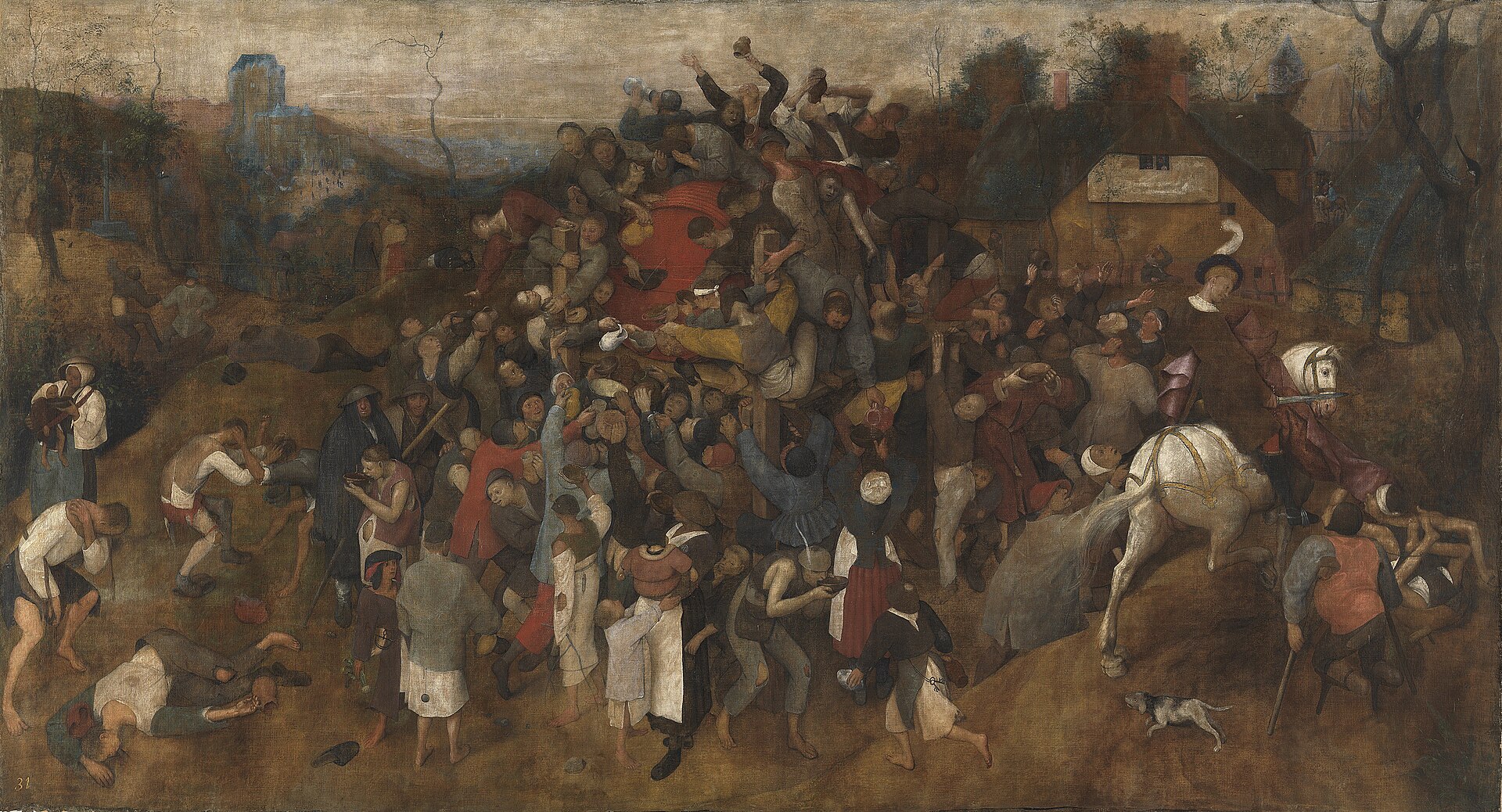
The Wine of Saint Martin's Day
c. 1565-1568 · Glue-size tempera
Museo Nacional del Prado, Madrid
Museum · Founded 1819
Open, admission and hours confirmed 11 September 2026 · 26 sources
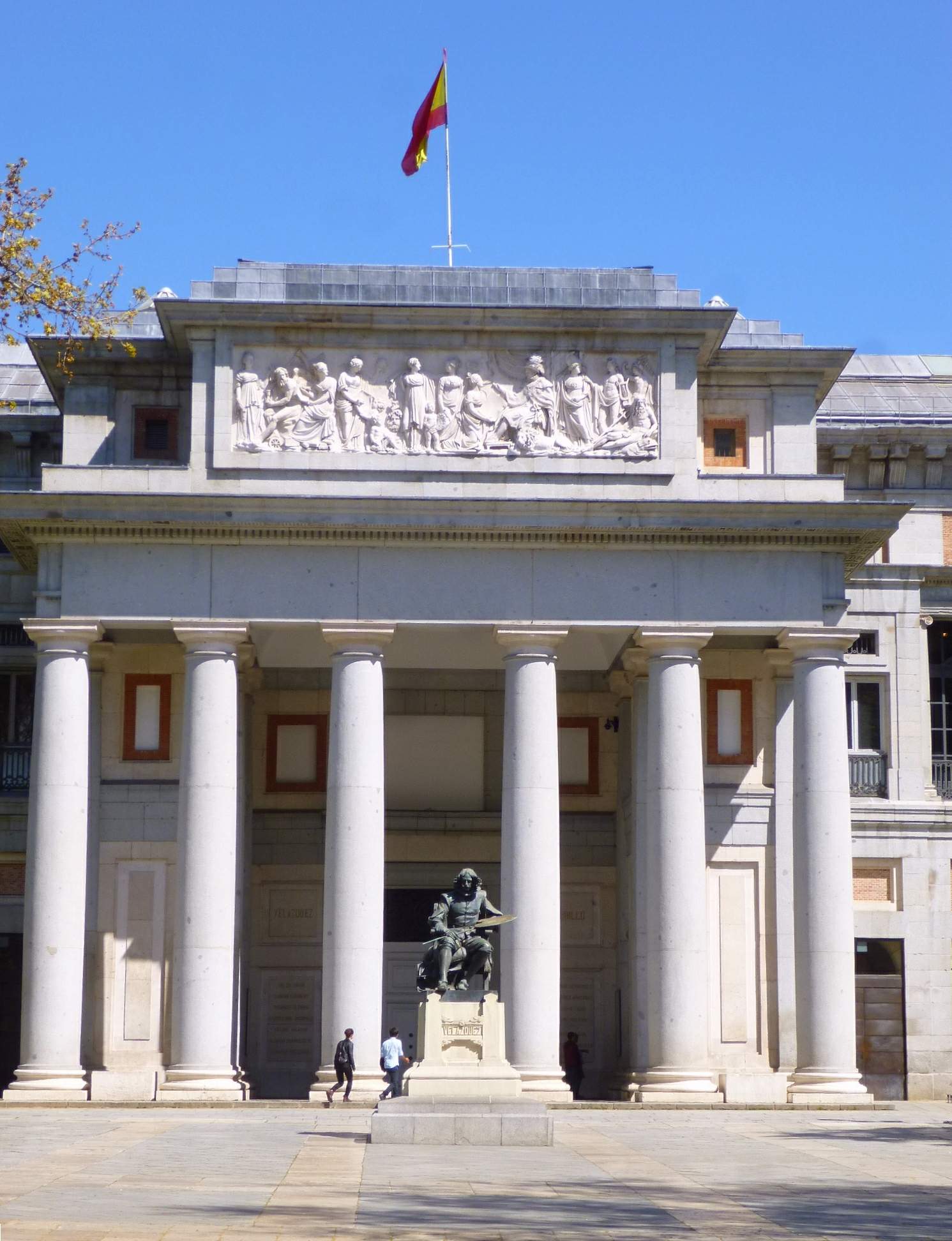
The Prado is built on the deepest single-artist holdings of any museum in the world rather than on encyclopaedic range: the largest collections anywhere of Bosch, Titian, El Greco, Rubens, Velazquez and Goya, several running past a hundred works each. Its Flemish and Northern holdings alone run to nearly a thousand paintings, one of the finest and largest such collections in existence, and its sculpture and decorative arts run to almost a thousand further works, from the Dauphin's Treasure to Roman marbles, far less known than the picture galleries above them. Across more than 19,000 digitised works, the Museum's own account of its collection closes its narrative in 1881, the year of Picasso's birth: this is fundamentally a museum of the royal collection and its long nineteenth-century afterlife, not a survey that continues into the twentieth century.
| Kind | Museum |
|---|---|
| Founded | 1819 |
| City and country |  Madrid, Spain Madrid, Spain |
| Address | Paseo del Prado, 28014 Madrid, Spain |
| Website | museodelprado.es/en |
| Status | Open, confirmed 11 September 2026 |
| Record last verified | 11 September 2026 |
Prices and hours change. We take them from the institution's own pages and print the day we read them, and you can check the current position at the source we used. Confirm before you travel.
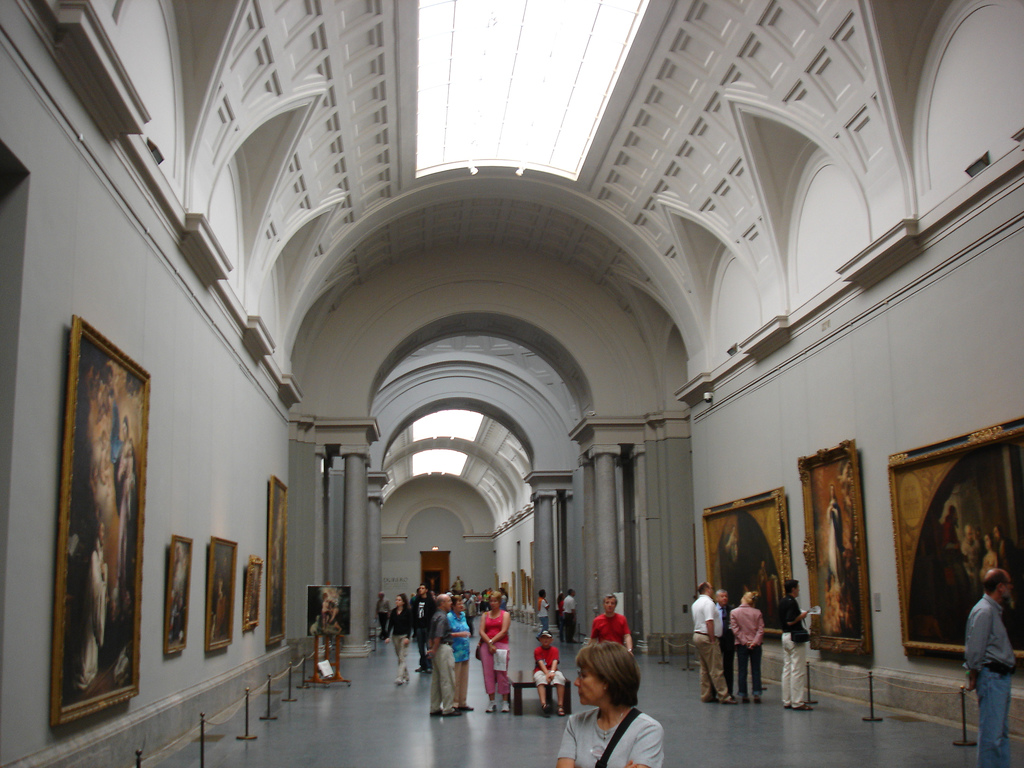
The main top-lit gallery of the Villanueva building, a barrel-vaulted spine running the length of the first floor that most visitors cross to reach the Velazquez, Goya and Rubens rooms. It has carried large-scale paintings since the Museum's earliest hangs and its scale is part of what makes the Prado feel like a building designed around its pictures rather than around visitor flow.
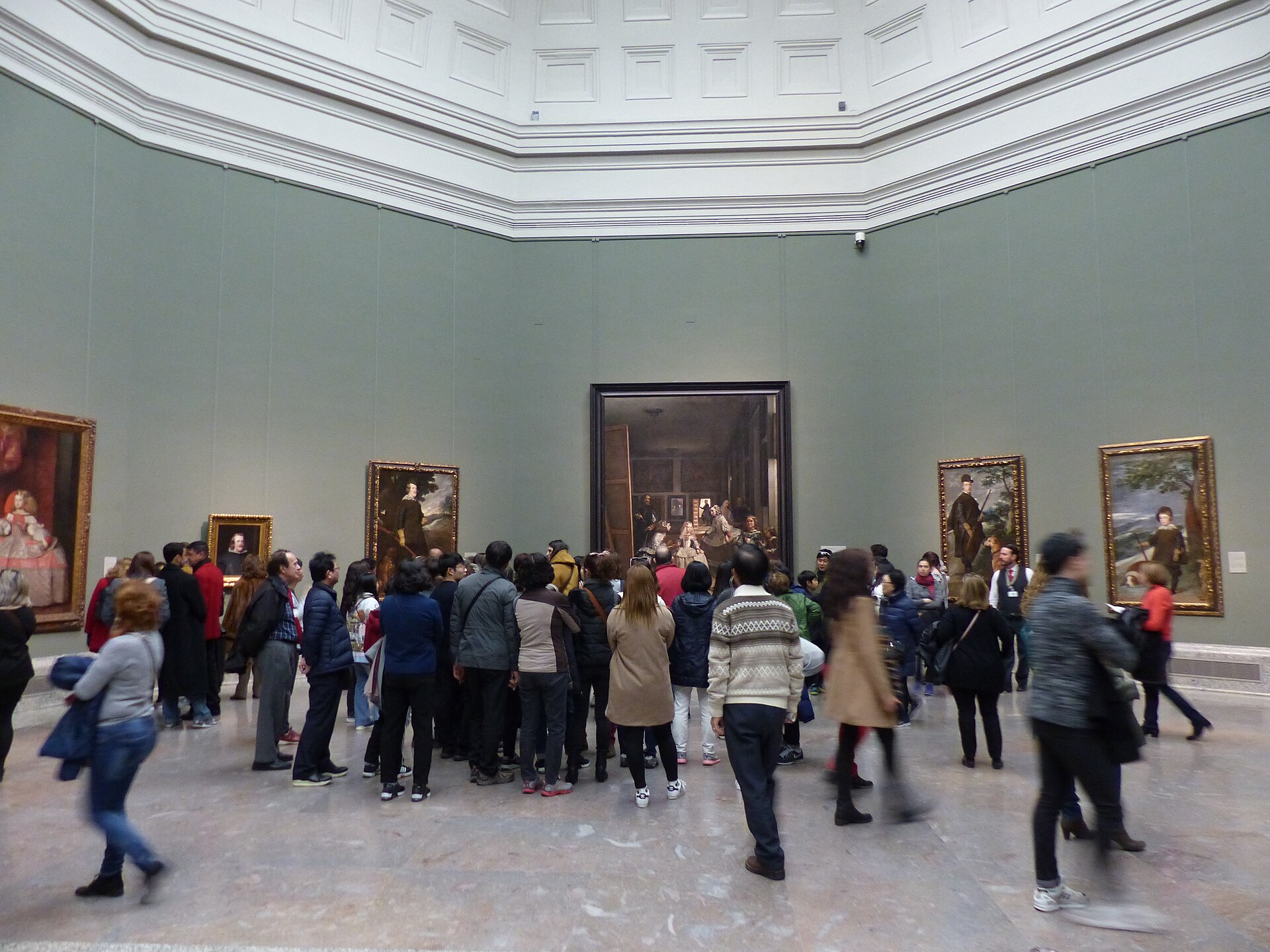
The suite built around Las Meninas of 1656, hung with the royal portraits Velazquez painted as court painter to Philip IV across more than three decades. The room where Las Meninas hangs alone on its end wall, ringed by other Velazquez portraits, is consistently the most crowded space in the building.
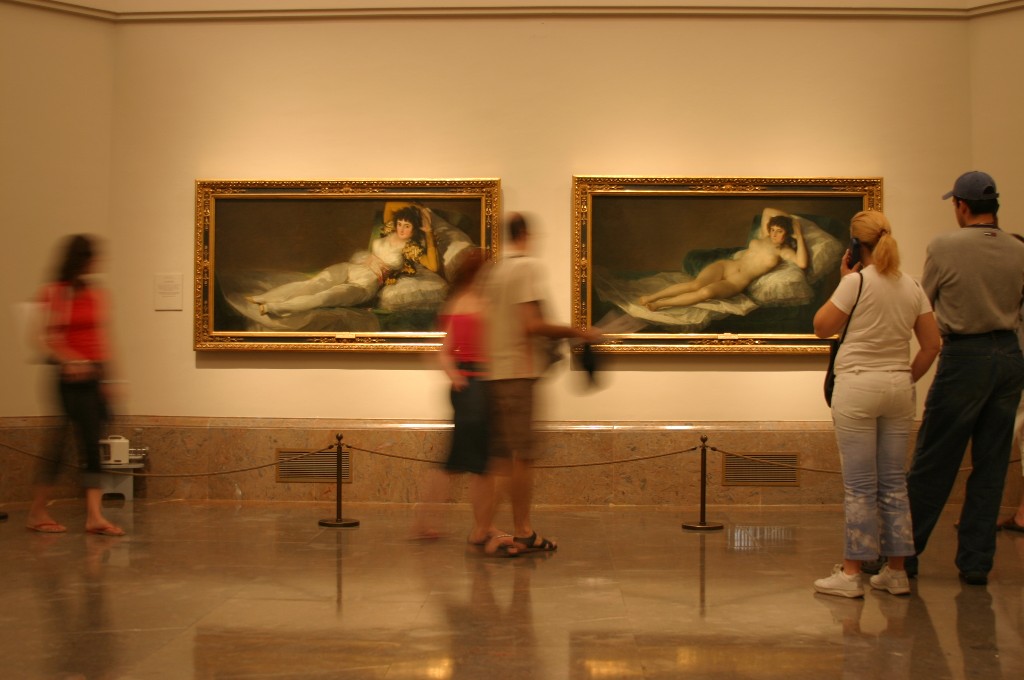
Rooms holding the Museum's Goya collection, the largest anywhere: court portraits, the Second and Third of May 1808, and the two Majas, clothed and nude, hung side by side. The Naked Maja is first documented in November 1800 in the palace of the prime minister Manuel Godoy, where a visiting engraver recorded seeing it hung among other reclining nudes.
The fourteen murals Goya painted directly onto the walls of his own house, the Quinta del Sordo, in his old age and near-total deafness, transferred to canvas and given to the Museum by Baron Emile d'Erlanger in 1881. They include Saturn Devouring his Son and are the darkest and least commissioned work Goya made.
Room 56A of the Villanueva building, redisplayed with new lighting, supports and a large screen showing enlarged details, houses the Museum's Bosch triptychs including The Garden of Earthly Delights. The Prado holds the largest Bosch collection of any museum, assembled by Philip II's own taste for early Netherlandish painting.
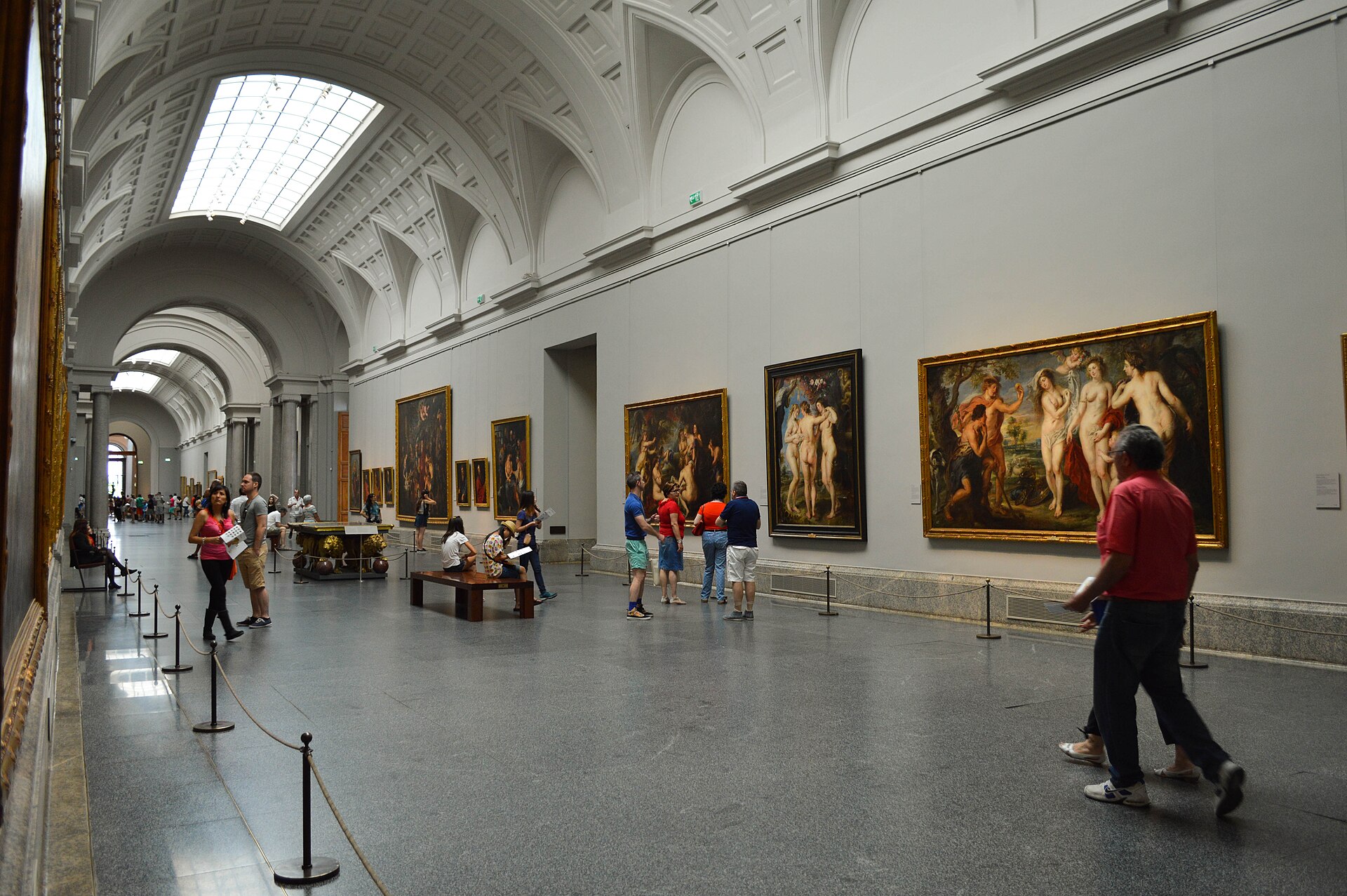
A top-lit gallery in the Central Gallery run holding large Rubens canvases, including The Three Graces, from one of the finest Flemish collections in existence at close to a thousand paintings. Philip IV was Rubens's most important royal patron and the Flemish rooms are built around what he commissioned and bought.
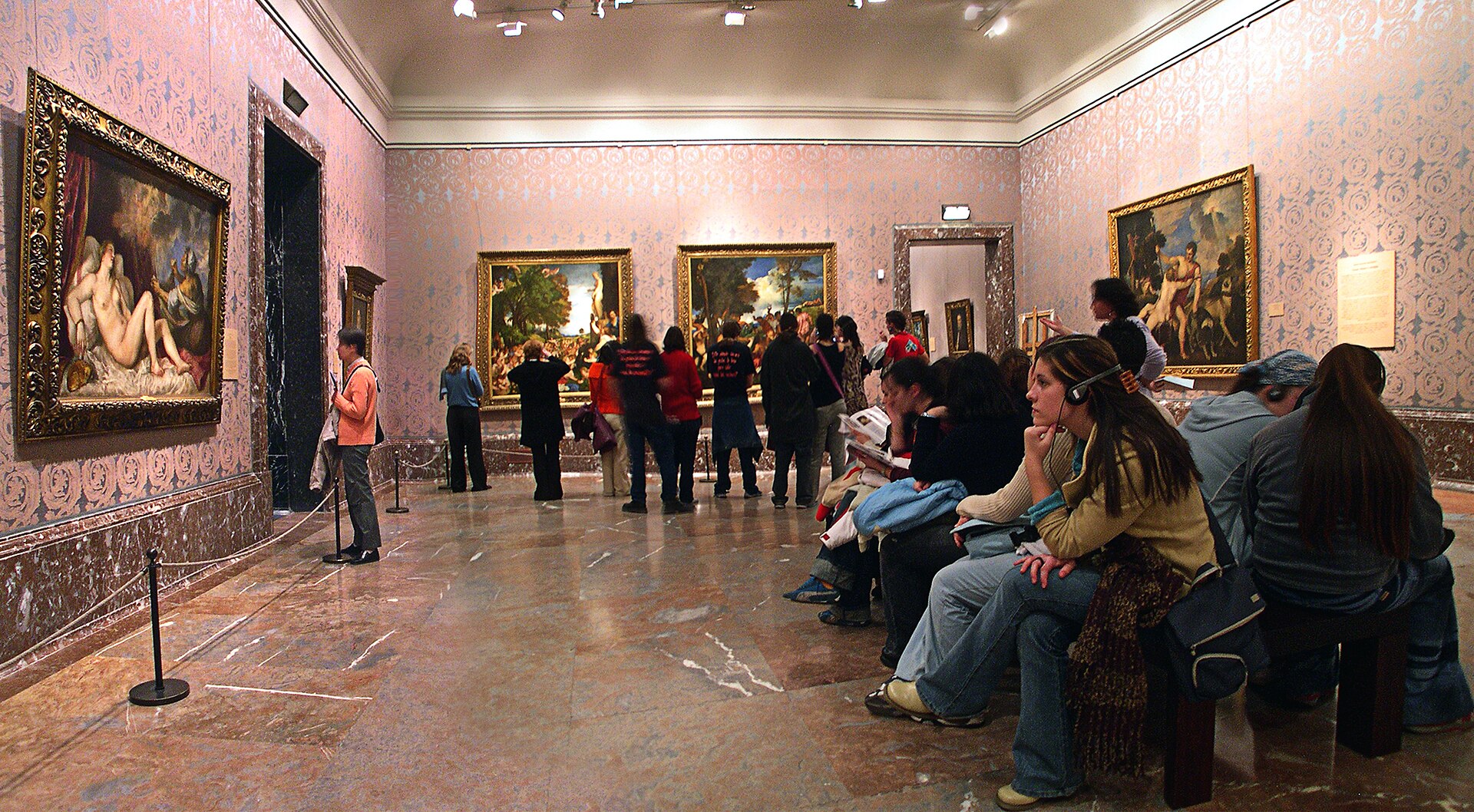
Rooms hung in a patterned rose wall covering with large mythological and portrait canvases by Titian, the first painter the Spanish monarchs collected in depth and the artist on whom the whole royal collection was built, alongside Veronese and Tintoretto. Charles V's equestrian portrait by Titian hangs here.
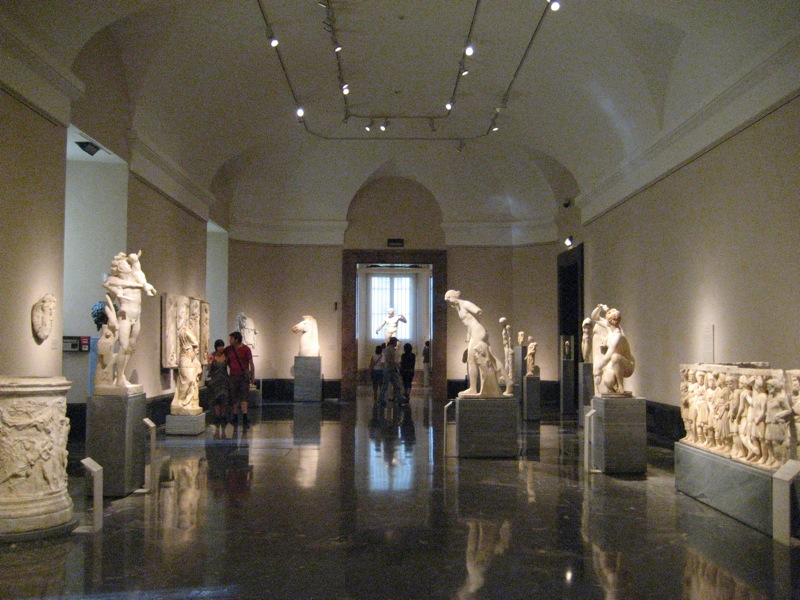
Ground-floor galleries of the Villanueva building holding Roman and Graeco-Roman marbles, including carved sarcophagi and puteals, from the royal collection of classical antiquities formed alongside the paintings. The sculpture holdings across the Museum run to almost a thousand works, far less known than the picture galleries above them.
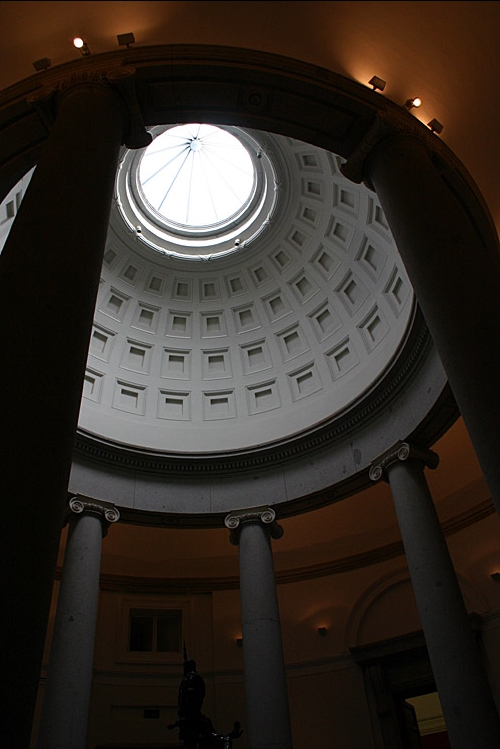
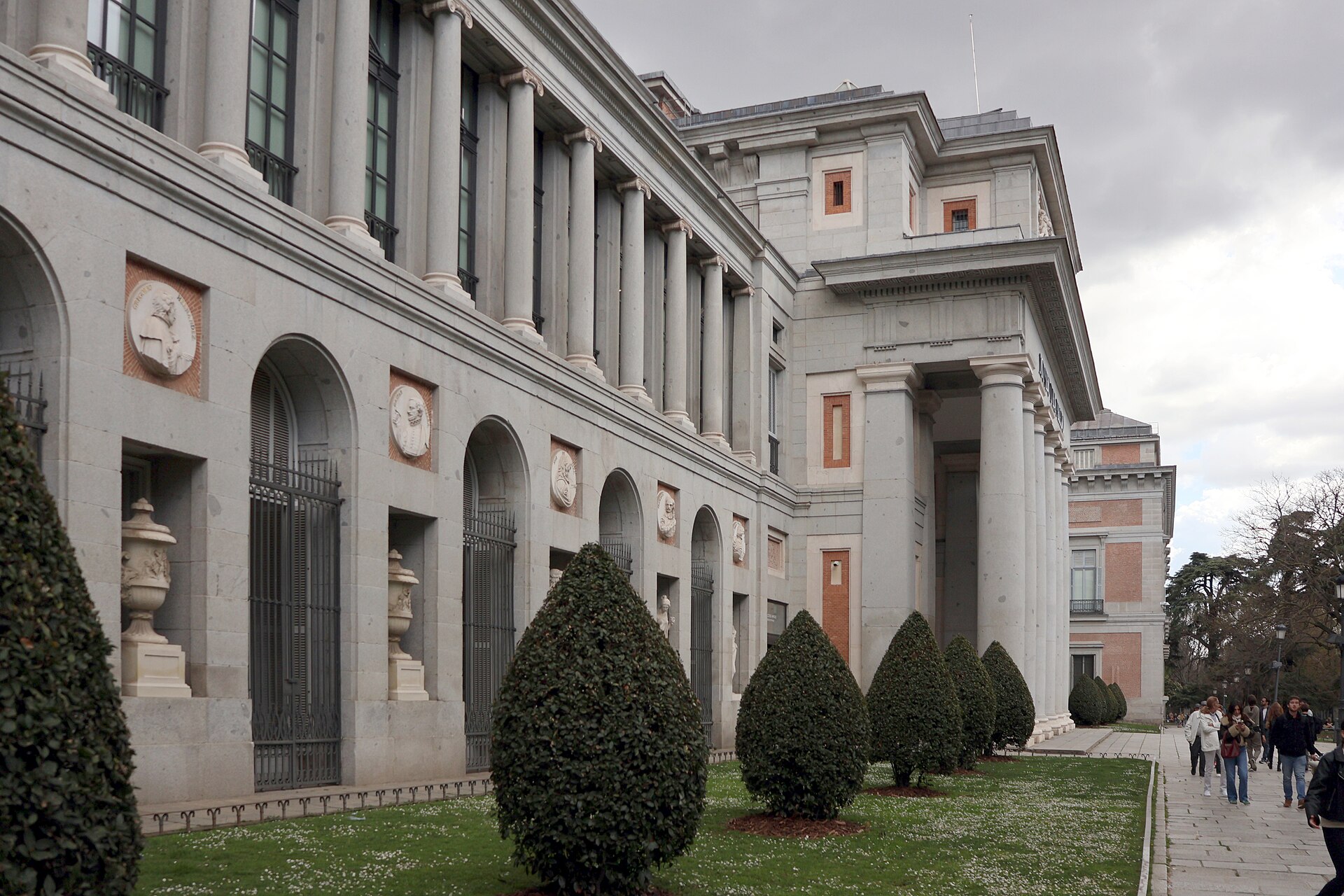
The domed vestibule inside Villanueva's west portico, the Puerta de Velazquez, lit by a glazed oculus and ringed by an Ionic colonnade. It is the space a visitor entering through the main door passes through before reaching the picture galleries, part of Villanueva's original neoclassical design of 1785.
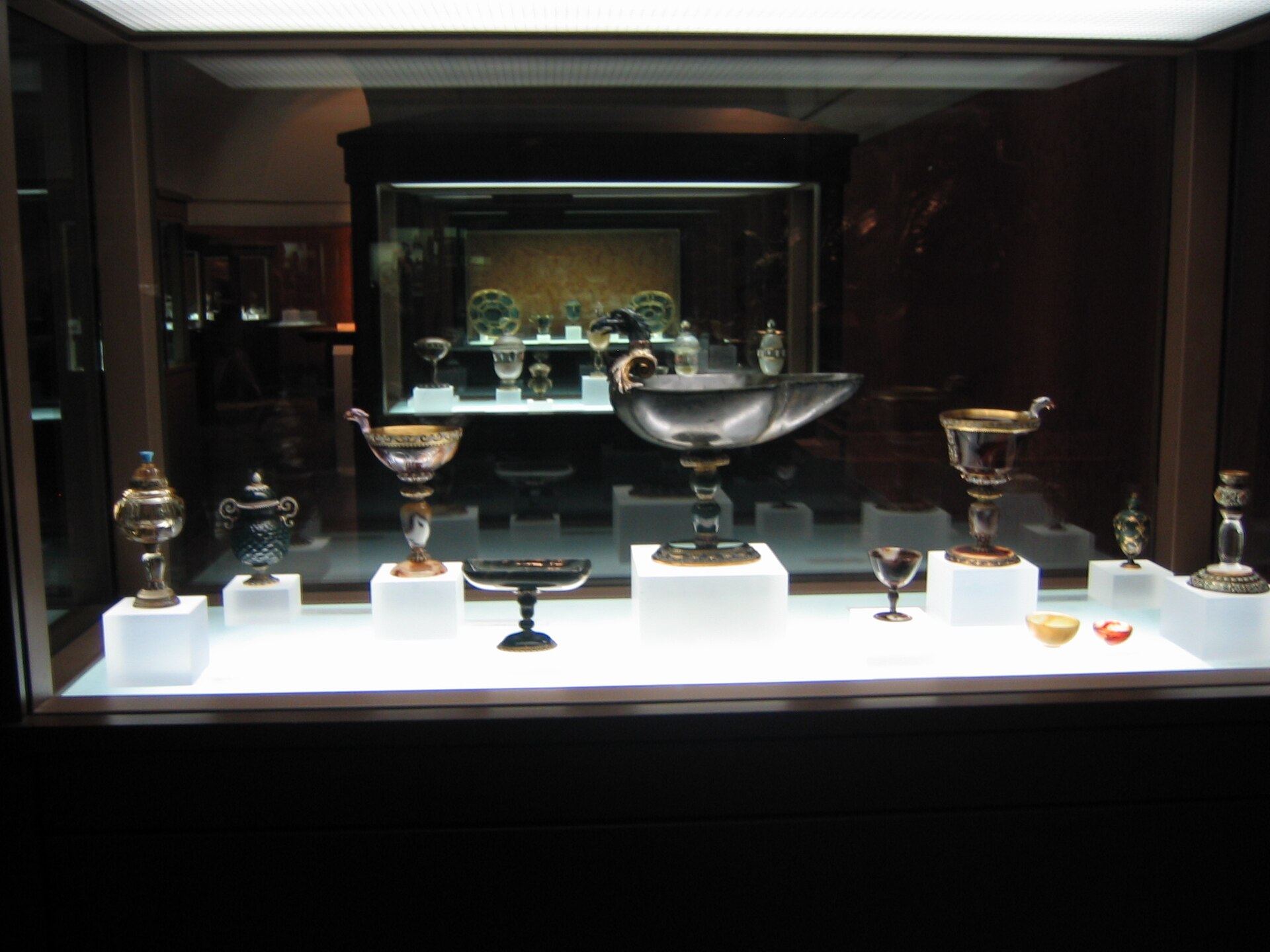
A lit vitrine of rock-crystal, agate and hardstone vessels mounted in gold and enamel, part of the collection assembled by the French Dauphin Louis, Grand Dauphin, and brought to Spain by Philip V, the first Bourbon king, at the start of the eighteenth century. It is the Museum's principal holding of royal decorative arts rather than painting.
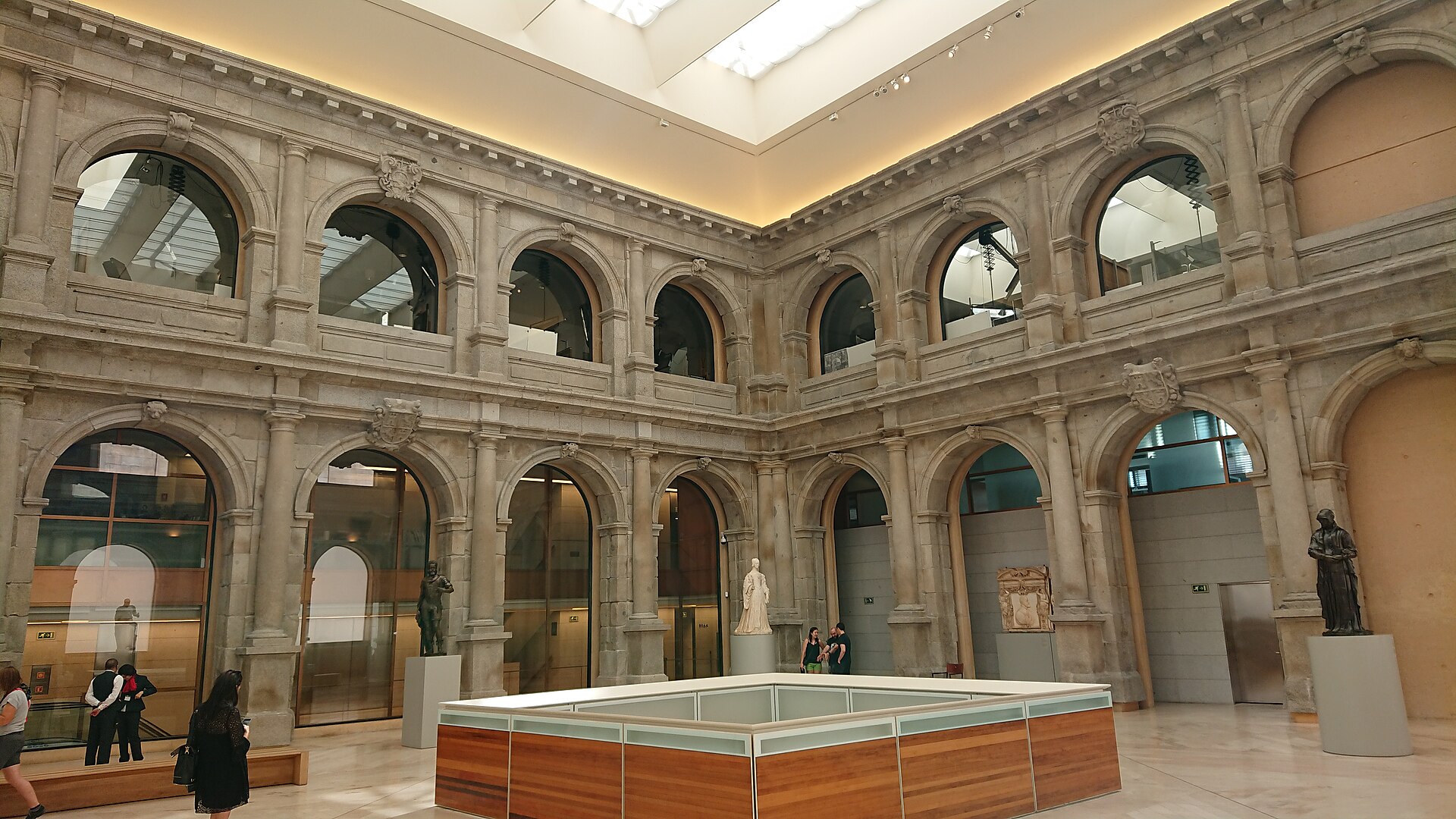
The reconstructed Baroque cloister of the monastery of San Jeronimo el Real, designed by Fray Lorenzo de San Nicolas after the Renaissance cloister it replaced, glazed and enclosed as part of Rafael Moneo's extension. Before restoration the structure was close to a ruin after more than fifty years of neglect; its stone was consolidated and the arcading dismantled and reinstalled inside the new building.
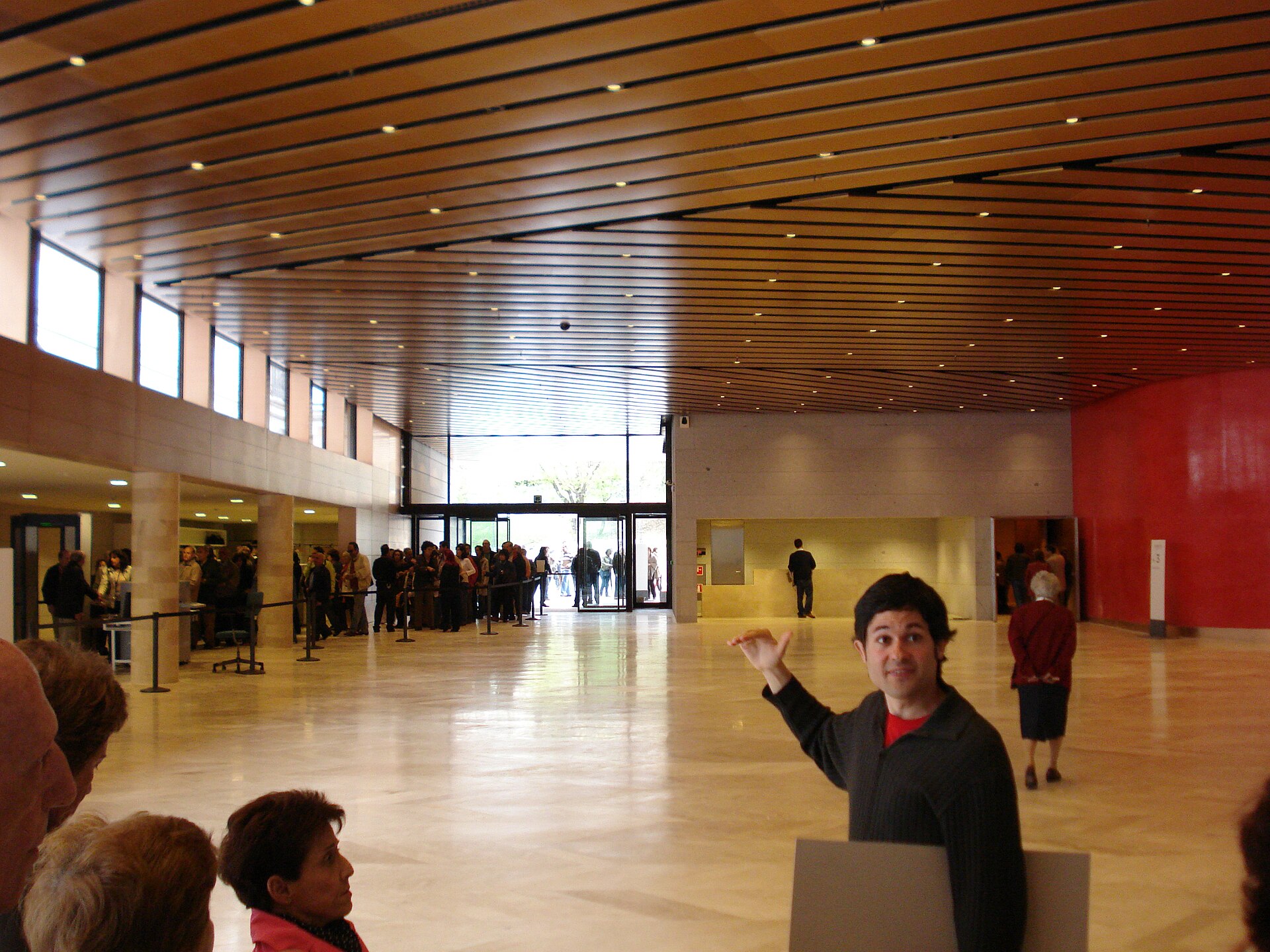
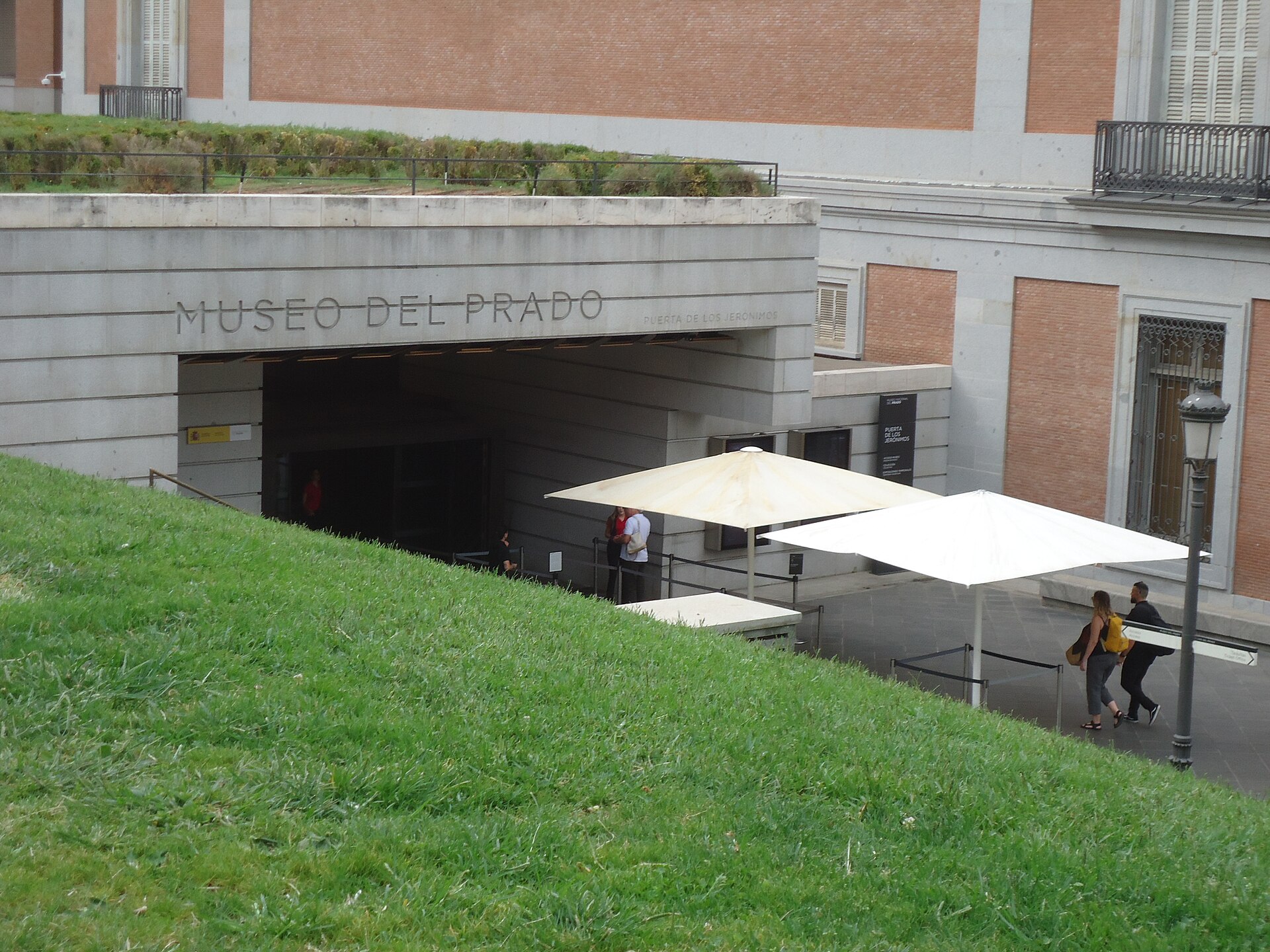
The entrance most visitors now use, cut into the granite base of Rafael Moneo's extension and connected by an underground link to the historic Villanueva building. Moneo's design, completed in 2007, added more than 22,000 square metres, over half again the Museum's previous size, entered through bronze doors made by the sculptor Cristina Iglesias.
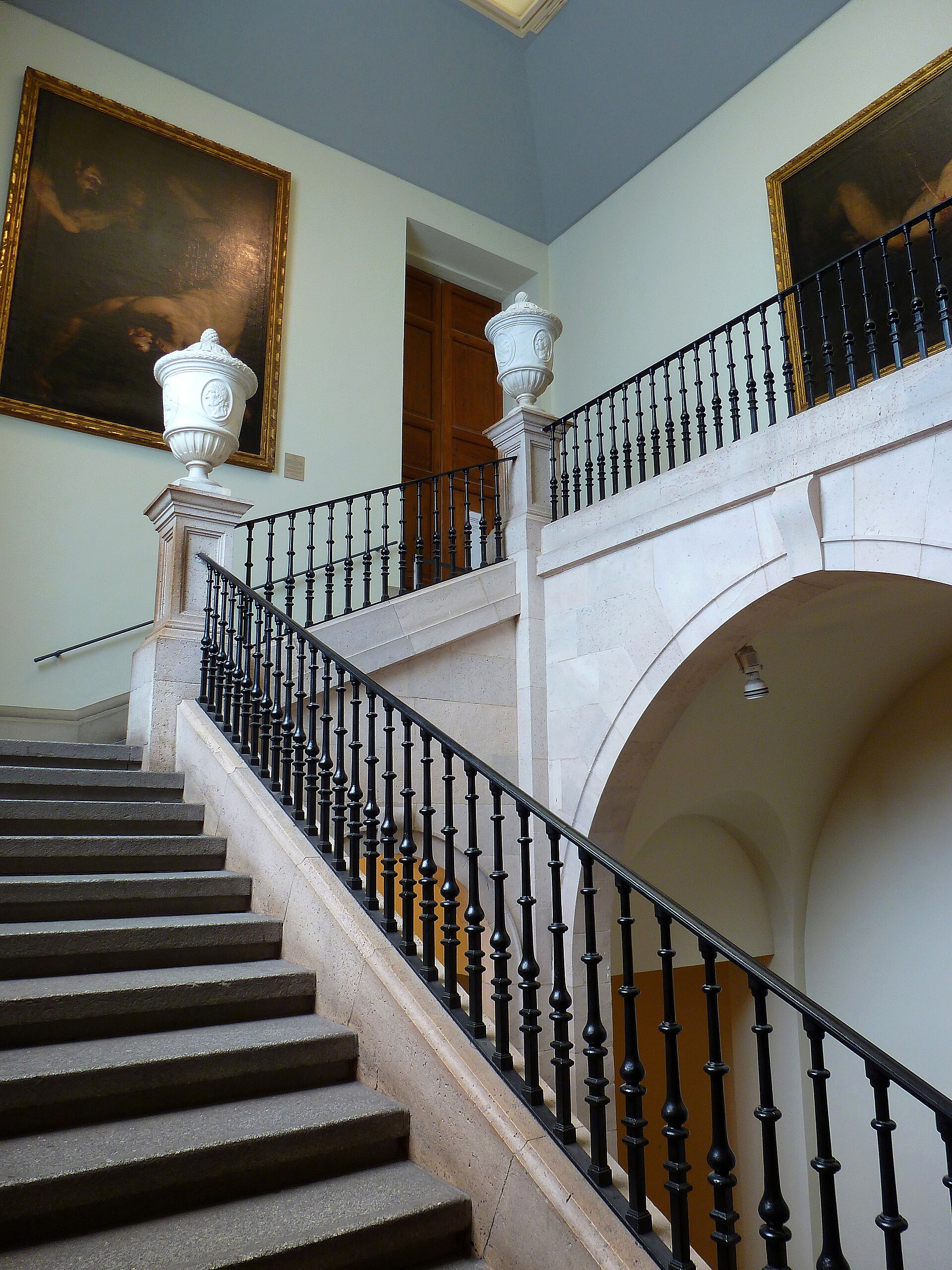
The stone staircases of the original 1785 building, with cast-iron balustrades, carved marble urns on the landings and dark old-master paintings hung the full height of the stairwell walls, connecting the ground-floor sculpture galleries to the picture galleries above.
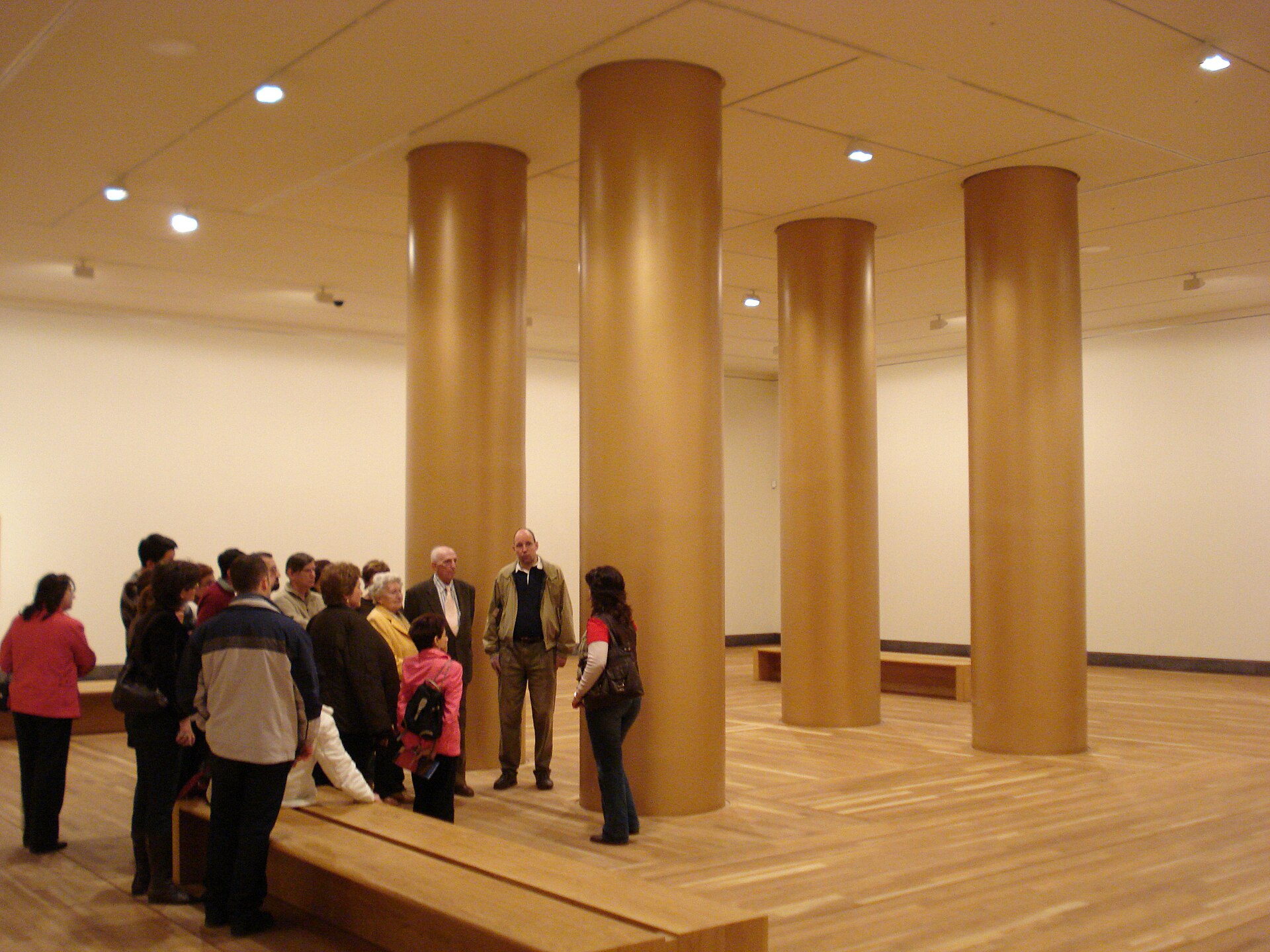
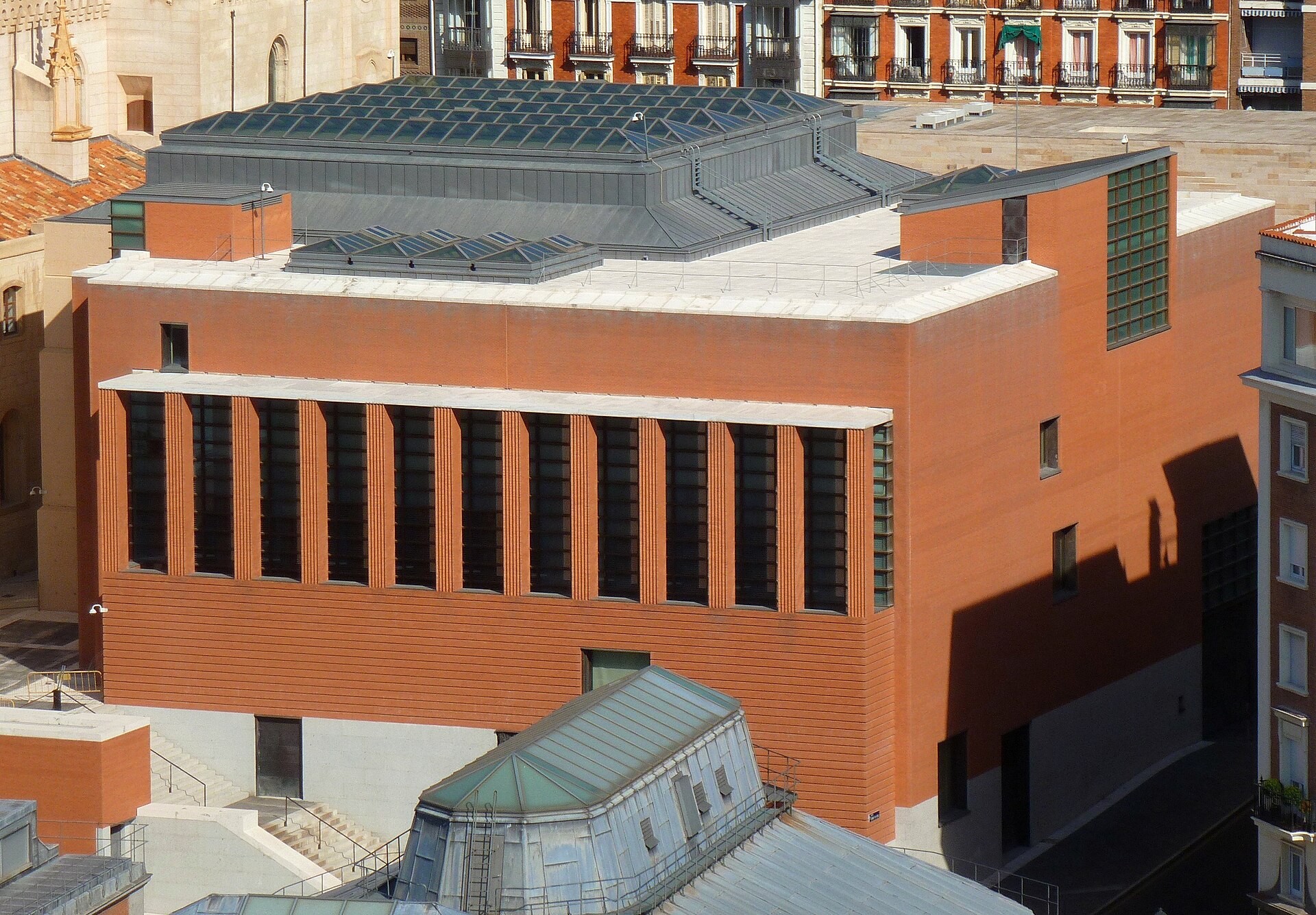
Column-lined galleries with oak parquet floors in the Moneo extension, used for the Museum's temporary exhibition programme rather than the permanent collection. They are part of the more than 22,000 square metres the 2007 extension added, freeing the historic Villanueva building to be seen closer to how it was originally designed.
The single painting the Velazquez rooms are built around, hung alone on the end wall of a rotunda that is consistently the most crowded room in the building.7
The centrepiece of the redisplayed Bosch room and part of the largest Bosch holding in any museum, assembled through Philip II's own taste for early Netherlandish painting.7
Goya's account of the executions that followed the anti-Napoleonic uprising in Madrid, one of the fifteen works the Museum itself names as its defining masterpieces.7
Shown side by side as they have long been hung; the Naked Maja is first documented in November 1800 hanging in the private rooms of the prime minister Manuel Godoy, whose collection was seized in 1808 after his fall from power.13
The centrepiece of the Rubens and Flemish gallery, from a Flemish holding of nearly a thousand paintings built up under Rubens's most important royal patron, Philip IV.7
The equestrian portrait anchoring the Venetian rooms; Charles V made Titian the first painter the Spanish crown collected in depth, a choice that shaped the whole royal collection that followed.7
One of the Museum's own fifteen listed masterpieces and among the earliest Netherlandish paintings in the collection, acquired through Philip II's taste for Flemish primitives.7
The Museum's principal holding of royal decorative arts rather than painting, assembled by Louis, the Grand Dauphin of France, and inherited after his death by his son Philip V, the first Spanish Bourbon; the collection entered the Museum's display in 1839.24
A Roman marble the Museum lists among its fifteen defining masterpieces, from classical sculpture rooms formed alongside the royal painting collection rather than as an afterthought to it.7
One of the earliest Northern self-portraits in any public collection, and the work the Museum uses to represent Durer among its fifteen defining masterpieces.7
The building that holds the Museo Nacional del Prado was not designed as a museum. Juan de Villanueva drew it in 1785 on the orders of Charles III, to house a Natural History Cabinet on the Paseo del Prado. Construction dragged through the Napoleonic Wars and the building sat unfinished and threatened with demolition for years afterward. It was Charles III's grandson, Ferdinand VII, encouraged by his wife Maria Isabel de Braganza, who redirected the half-built cabinet toward a different purpose: a public museum for the royal collection of paintings and sculpture.
The Royal Museum of Paintings and Sculptures opened on the Paseo del Prado in November 1819. Its first catalogue listed 311 pictures on view, drawn from a royal holding that then stood at just over 1,510 paintings scattered across the various royal residences, the Reales Sitios. The institution was renamed within years, first the National Museum of Painting and Sculpture and eventually the Museo Nacional del Prado, but the founding act did not create a collection: it gathered one that three centuries of Habsburg and Bourbon kings had already assembled for themselves, and put it in front of the public for the first time.
The Museum's own director, Miguel Falomir, describes the Prado as a museum of painters rather than of paintings, and the collection bears that out. Royal collecting before 1819 did not aim at covering every school or period. It aimed at owning as much as possible by a small number of favoured artists, which is why the Prado can claim the largest holdings anywhere of Bosch, Titian, El Greco, Rubens, Velazquez and Goya, several of them running past a hundred works each, while other schools are represented thinly or not at all.
The pattern starts with Charles V, the first Spanish monarch to collect in depth, who chose Titian over the Florentine and Roman painters who prized draughtsmanship above colour. That choice pulled Spanish royal taste toward the Venetian, emotional register of painting rather than the Roman intellectual one, and it is the reason Velazquez, a century later, painted the way he did. Philip II's own fondness for fifteenth-century Flemish painting brought van der Weyden, Memling and, decisively, Bosch into the collection. Philip IV went further still, commissioning directly from Rubens, Velazquez and van Dyck, buying from Jose de Ribera, and importing Nicolas Poussin, Claude Lorrain, Raphael, Parmigianino and Correggio to close gaps in a collection he judged, by the end of his reign, the finest in Europe. The Bourbon eighteenth century brought French and then Italian painters to Madrid, including the rival court commissions given to Giovanni Battista Tiepolo and Anton Raphael Mengs under Charles III, before Goya restored a Spaniard to the centre of the collection at the century's end.
The Museum states plainly that this kind of collecting, built on royal enthusiasm rather than encyclopaedic ambition, left real gaps: Italian primitives were of no interest to the collecting kings, and seventeenth-century Dutch painting is thin for reasons of politics rather than taste. A visitor expecting a survey of European art will not find one here. What is here is a set of the deepest single-artist holdings in the world, assembled for reasons that had nothing to do with completeness.
When the Spanish Civil War broke out in 1936, the Republican government's Artistic Heritage Council began evacuating art under threat, including the Prado's own collection, from Madrid to Valencia and on through Barcelona to Figueres as the front collapsed. In early February 1939, over five days broken by a two-day halt when Franco's forces bombed the area, seventy-one lorries carried around 600 Prado paintings, alongside work from other museums, churches and private collections, across the border into France and on to Geneva. The International Committee for the Safeguarding of Spanish Art Treasures, a wartime alliance that brought together the Louvre, London's National Gallery and Tate, the Rijksmuseum, Belgium's Royal Museums of Fine Arts and New York's Metropolitan Museum, inventoried the collection, and most of it returned to Madrid in May and June 1939. A group of 174 Prado paintings and 21 tapestries, selected once Franco's forces controlled the operation, stayed on for a public exhibition at Geneva's Musee d'Art et d'Histoire that closed only hours before the Second World War broke out; the train carrying them home ran through France in darkness for fear of attack, reaching Madrid on 9 September 1939. Picasso, in exile, held the Prado's honorary directorship for the Republican government throughout this same period, from 1936 to 1939 - a fact that surfaces in outside journalism marking the museum's own exhibition history rather than on the Museum's own institutional history page.
The evacuation is the part of this history the Prado has always told. What it did not tell for decades is what happened to everything the same Republican board requisitioned from private collections, parishes and other institutions, and what became of it after Franco's victory. The historian Arturo Colorado Castellary, a professor emeritus at Madrid's Complutense University, began untangling that history in 2008 while researching the Geneva evacuation itself, and found the confiscations reached far beyond the Prado's own walls. He has since identified more than 26,000 confiscated objects nationally, of which roughly a third were never returned to their owners; over 3,300 remain missing outright, and he attributes much of that loss to the internal corruption of the Franco regime rather than to the destruction of war.
Colorado Castellary published his research in 2021. The Prado, contacted directly, opened its own internal investigation, and the following year Spain passed the Democratic Memory Law, which for the first time ordered public institutions to investigate seized artworks in their keeping. The Prado was the first public institution to comply, and has identified 166 confiscated works in its own collection, including paintings by Joaquin Sorolla and Pedro Atanasio Bocanegra. In 2026 the Museum returned two confiscated panel paintings to the parishes of Yebes and Pareja in Castilla-La Mancha; one of them, Christ before Pilate by the Maestro de Lupiana, had been hanging in the Prado's own Spanish Gothic rooms.
What the 2022 law does not do is create any legal mechanism for restitution - it orders investigation, not return. The claim by the family of Pedro Rico, Madrid's mayor at the outbreak of the Civil War, exiled and stripped of his art collection by the Franco regime, proceeded without any statutory process to follow, resting instead on what his grandchildren's lawyer has called the museums' own goodwill. Seven paintings from Rico's collection were returned across several Spanish museums, the Prado among them; ten more are still missing. That is the state of this record as it stands: a museum that has published its own inventory of what it took in and led the return of some of it, inside a country that still has no law compelling anyone to give the rest back.
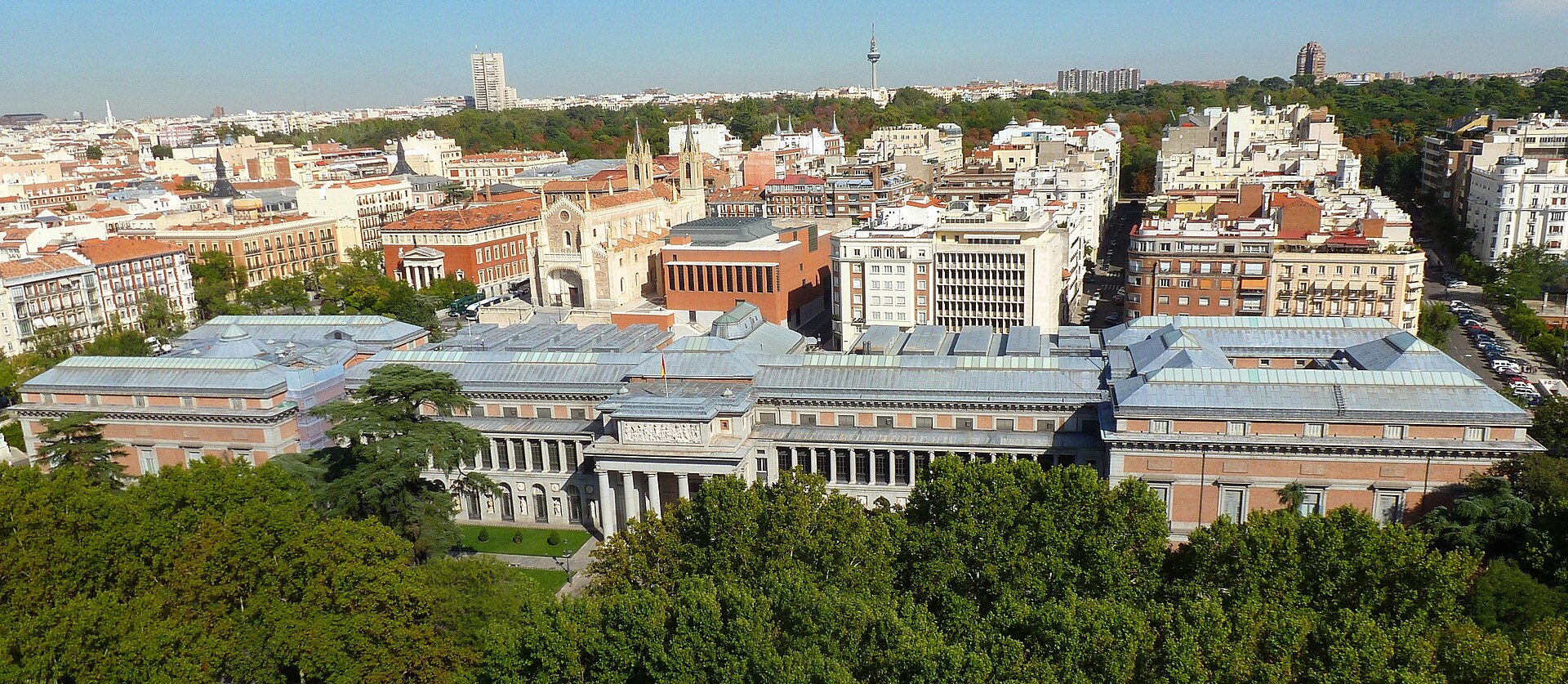
The Villanueva building was extended piecemeal through the nineteenth and twentieth centuries as the collection and its visitors grew, until no further intervention was possible without damaging Villanueva's original design. The solution, reached after two architectural competitions, was to build outward rather than further into the historic building: a new structure facing the east facade, linked to it from within. Rafael Moneo won the second competition in 1998, and construction began in February 2002 under the Ministry of Culture's supervision.
Moneo's extension, finished in 2007, added more than 22,000 square metres, over half again the Museum's previous size, built around the ruined Baroque cloister of the monastery of San Jeronimo el Real. That cloister, designed in the seventeenth century by Fray Lorenzo de San Nicolas to replace an earlier Renaissance one, had survived more than fifty years of neglect and was close to a ruin by the time restoration began; its stonework was consolidated, dismantled and reinstalled inside the new building, its arcading left visible from the street through monumental bronze doors made for Moneo by the sculptor Cristina Iglesias. The design deliberately conceals the join between old and new behind a planted platform of box hedges, freeing the historic Villanueva building to be read, once again, the way Villanueva intended it.
The campus is still growing. Foster and Partners, working with the Madrid firm Rubio Arquitectura, won the competition to remodel the Salon de Reinos, the last surviving fragment of the old Buen Retiro Palace next door, stripping back later alterations to expose its original seventeenth-century facade and building a new top-floor gallery above it. That project was still under way at the time of writing and is not yet open to visitors.
In October 2016, the Prado mounted The Art of Clara Peeters, a one-room show of fifteen still-life paintings by the seventeenth-century Flemish painter. It was the first solo exhibition the Museum had given to a woman in its nearly two-hundred-year history. Reporting on the show, The Art Newspaper's Hannah McGivern established that Peeters was then one of only 41 women represented anywhere in the Prado's collection, against holdings of more than 5,000 male artists, and that a survey of the previous thirteen years of exhibitions found six devoted to Goya, four to El Greco and three each to Velazquez, Titian and Picasso, with every one of the Museum's contemporary-art solo shows in the same period given to a man.
The Museum's second attempt at the subject, Uninvited Guests in October 2020, set out to survey the situation of women in Spanish art between 1833 and 1931 across 133 paintings, sixty of them by women artists. It ran into trouble before its criticism could even land: one of the paintings included was withdrawn after art-historical evidence showed it had been made by a male artist, Adolfo Sanchez Megias, and not by the woman, Concepcion Mejia de Salvador, to whom it had been attributed. Eight women arts professionals then published an open letter to Spain's culture ministry arguing the show recapitulated the misogyny of the century it claimed to examine rather than correcting it. The Museum's director, Miguel Falomir, and the exhibition's curator, Carlos G. Navarro, both answered on the record rather than letting the criticism stand unaddressed, and the Museum has since said growing its holdings of women artists will be a priority for future acquisitions. Whether that commitment has moved the 41-work count is not established in the sources fetched for this record.
The Prado received 3,513,402 visitors to the Villanueva building in 2025, its third consecutive record year and an increase of more than 816,000 over the preceding decade, with a further 140,336 visits to Prado exhibitions staged outside Madrid, in Palma and Barcelona. Rather than treat the record as an unambiguous success, Falomir told a press conference in January 2026 that the Museum does not need a single visitor more. He compared the risk directly to the Louvre, where individual rooms have become oversaturated, and announced an internal project called Plan Host, intended to prioritise the quality of a visit over the raw number of visitors by reworking the Museum's entrances and reconsidering how large a tour group is allowed to be.
That caution is easier to credit set against what the building actually offers: a collection assembled by royal enthusiasm rather than by curatorial completeness, still telling the public what it took during a civil war and what it has not yet given all of it back, still arguing with its own critics about who is missing from its walls, and still, after two centuries, adding new rooms to hold what it already owns. The Prado is not finished with its own history, and it says so on its own pages rather than waiting to be asked.
We publish no visitor review prose and cite no single platform score as fact, so what follows draws on the Museum's own figures and statements plus named published criticism. The Prado drew a record 3,513,402 visitors to the Villanueva building in 2025, its third consecutive record year, and its own director has said the Museum wants no more: growth on the scale of the Louvre risks the crowding that now afflicts that building's most famous rooms. Visitors and critics alike single out the density of major paintings for a museum far smaller than the Louvre or the Met, and just as consistently note the total ban on photography in the galleries, unusual among comparable institutions.
TripAdvisor: 4.7 from 58,853 ratings, read 11 September 2026
A platform average is a tertiary source: it moves, it is not audited, and we quote no visitor's words.
Paseo del Prado, 28014 Madrid, Spain.
General admission: EUR 15; Reduced admission: EUR 7.5; Free admission by status: free; Guided visit supplement: EUR 10; Audio guide supplement: EUR 5. As confirmed 11 September 2026.
Monday to Saturday 10:00-20:00; Sunday and public holidays 10:00-19:00; 6 January, 24 and 31 December 10:00-14:00; 1 January, 1 May, 25 December closed. Closed: 1 January, 1 May and 25 December, closed all day. Last entry 30 minutes before closing; visitors are asked to leave the galleries 10 minutes before closing. As confirmed 11 September 2026.
Metro: Lines 1 and 2. Nearest stations: Estacion del Arte, 800 m; Banco de Espana, 650 m; Retiro, 1.3 km; Cercanias and RENFE: Atocha RENFE station, 1 km, on lines C1 C2 C3 C3A C4 C5 C7 C8 C10; Recoletos station, 1.1 km; Bus: Lines 001, 10, 14, 27, 34, 37, 45 and C03 stop at Museo del Prado - Real Jardin Botanico, 64 m from the Museum; Bicycle: BiciMAD docking stations at Calle Espalter 1, Calle Jesus 1 and Calle Almaden 28.
Las Meninas (Diego Velazquez, 1656); The Garden of Earthly Delights (Hieronymus Bosch, c. 1490-1500, triptych); The Third of May 1808 (Francisco de Goya, 1814); The Naked Maja and The Clothed Maja (Francisco de Goya, c. 1795-1800 and c. 1800-1807); The Three Graces (Peter Paul Rubens, 1630-1635); Emperor Charles V at Muhlberg (Titian, 1548).
One artwork and its story every Tuesday, with the picture: who owned it, what it made, and what closes soon in the exhibition calendar. No promotion, and nothing we cannot cite.
We send one email to confirm the address and keep nothing else. Every letter carries a one-click unsubscribe. How we handle your data.