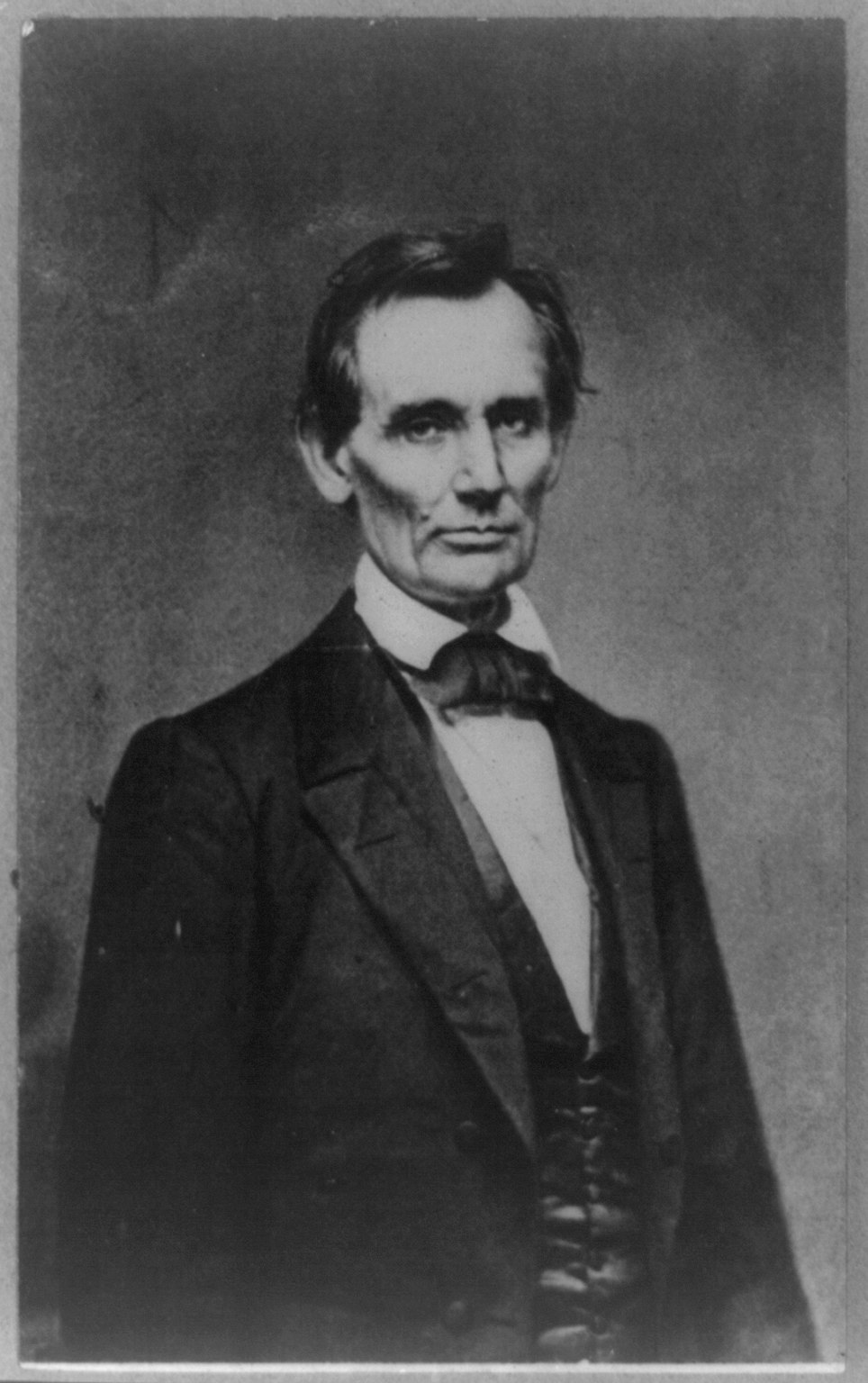
Abraham Lincoln, Cooper Union Portrait
1860-02-27 · Wet-plate
Library of Congress
 American · 1822-1896
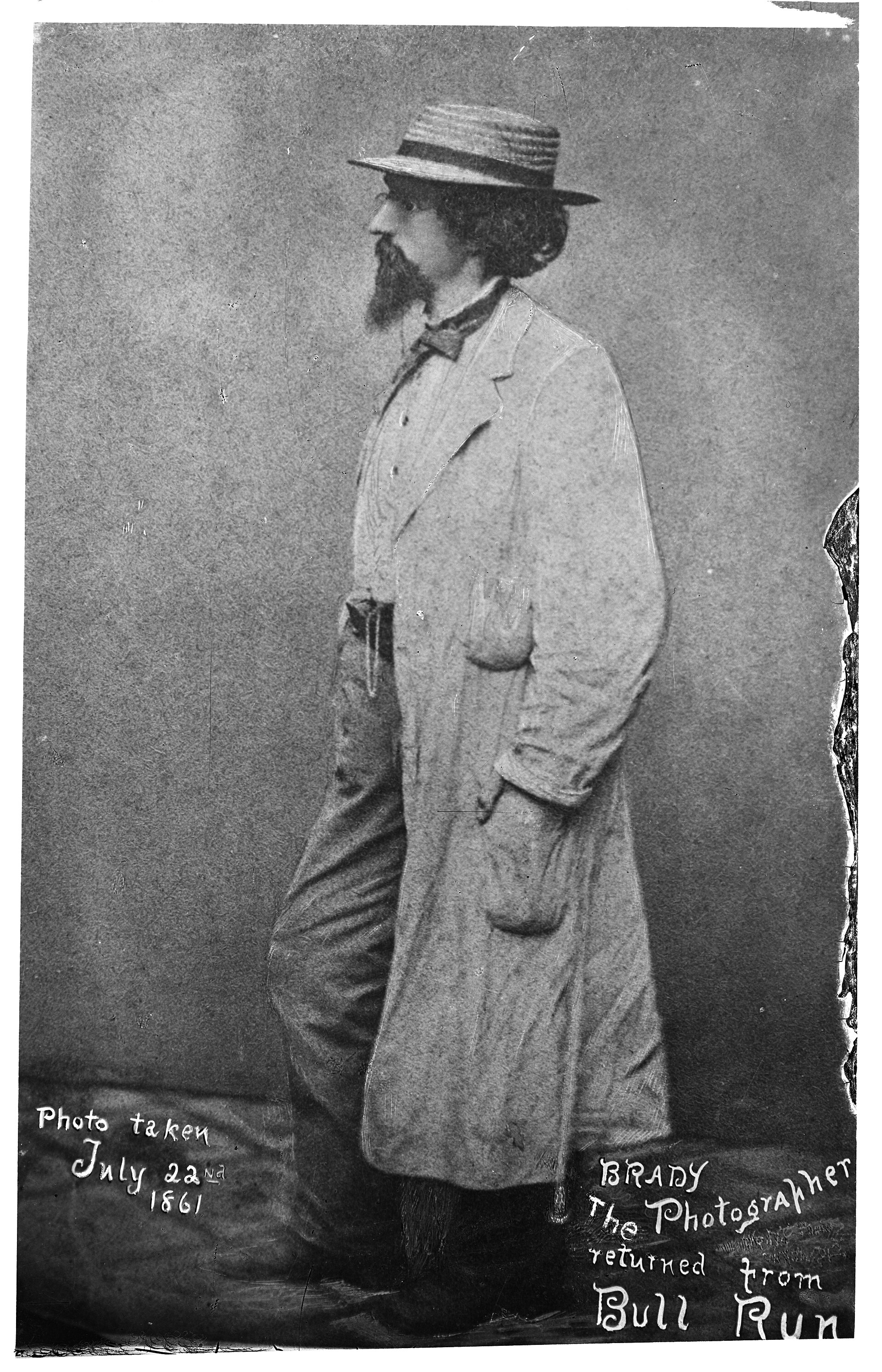
Mathew Brady photographed at his own studio on 22 July 1861, the day after he was separated from his equipment in the Union retreat from the First Battle of Bull Run, wearing a sword given to him for his protection by soldiers of a New York Fire Zouave regiment. The operator is not named in the sources consulted; the image is credited only to Brady's own studio, an irony the rest of this page tries to take seriously. Library of Congress digital ID ds.13129, via The Photographic History of the Civil War (1911).
Library of Congress, Prints and Photographs Division| Full name | Mathew Benjamin Brady |
|---|---|
| Worked as | Photographer, Gallery proprietor, Publisher |
| Born | c. 1822 (day and even year disputed · Warren County, New York |
| Died | 15 January 1896 · New York City (Presbyterian Hospital charity ward) |
| Nationality | American |
| Movement | American Civil War documentary photography |
| In this archive | 1 artwork |
| Sources | 27 cited |
| Last verified |
About this page 1 artwork in the archive · Last verified · 27 sources cited
Brady's name sits on more Civil War photographs than any other American's, and a large share of them were not taken by his own hand. By the time the war began, his eyesight had failed badly enough that he rarely if ever operated a camera himself; he built and financed a field operation of roughly twenty employed photographers instead, and every plate that came back from the front, whoever exposed it, went out under a single printed line: Photographed by Brady. Two of his most gifted operators, Alexander Gardner and Timothy H. O'Sullivan, broke from his studio in 1862-63 at least partly over exactly that practice, and Gardner's own 1866 album named its photographers individually as a direct correction of it. Reading a photograph credited to Brady, from this distance, means reading past the credit line to ask who actually stood behind the camera - and often the sources cannot tell you.
He built the largest, most publicized photographic enterprise in the United States from nothing: a daguerreotype gallery on Broadway in 1844, then studios he named, without irony, National - a stated ambition to build a portrait gallery of American greatness that survives as a documented intention rather than a later metaphor. He personally financed a large share of the Civil War coverage that bears his name, spent more than he ever recovered, and expected the federal government to buy the result at a price that would have made him whole. It did not. Congress eventually paid a fraction of what the collection was said to be worth, his creditors took the rest, and he died in the charity ward of a New York hospital in 1896, buried at the expense of the veterans who remembered what his studio had shown them.
What he actually made, as against what his studio's imprint claims, is the subject of this page.
Born in Warren County, New York, to Irish immigrant parents Andrew and Julia Brady; exact date disputed across sources.111
Opens the Daguerreian Miniature Gallery at Broadway and Fulton Street, New York.1
Produces The Gallery of Illustrious Americans with journalist Charles Edwards Lester and lithographer Francis D'Avignon; only twelve of twenty-four planned parts are issued before the project is abandoned as a financial failure.1
Opens a Washington, D.C. studio.1
Marries Juliet Handy in Washington, D.C.11
Opens Brady's National Photographic Art Gallery at 350-352 Pennsylvania Avenue, Washington, D.C.; Alexander Gardner is made manager of the Washington gallery.418
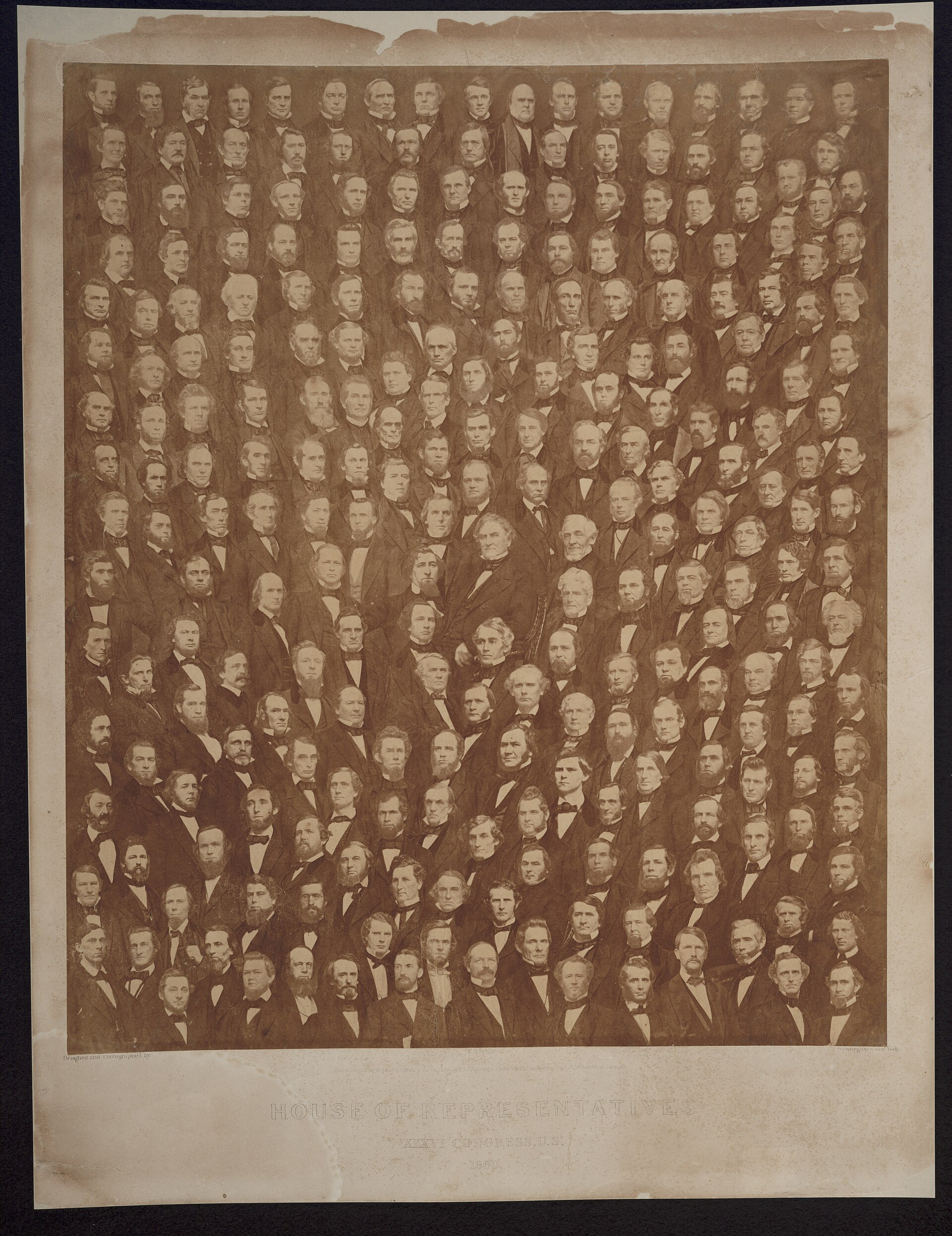
New York studio operating as Brady's National Portrait Gallery (a name carried until 1894); photographs the House of Representatives of the XXXVI Congress.21
21-22 July: present at the First Battle of Bull Run; is separated from his equipment in the retreat and is photographed the following day at his own studio wearing a sword given to him by New York Fire Zouaves.19
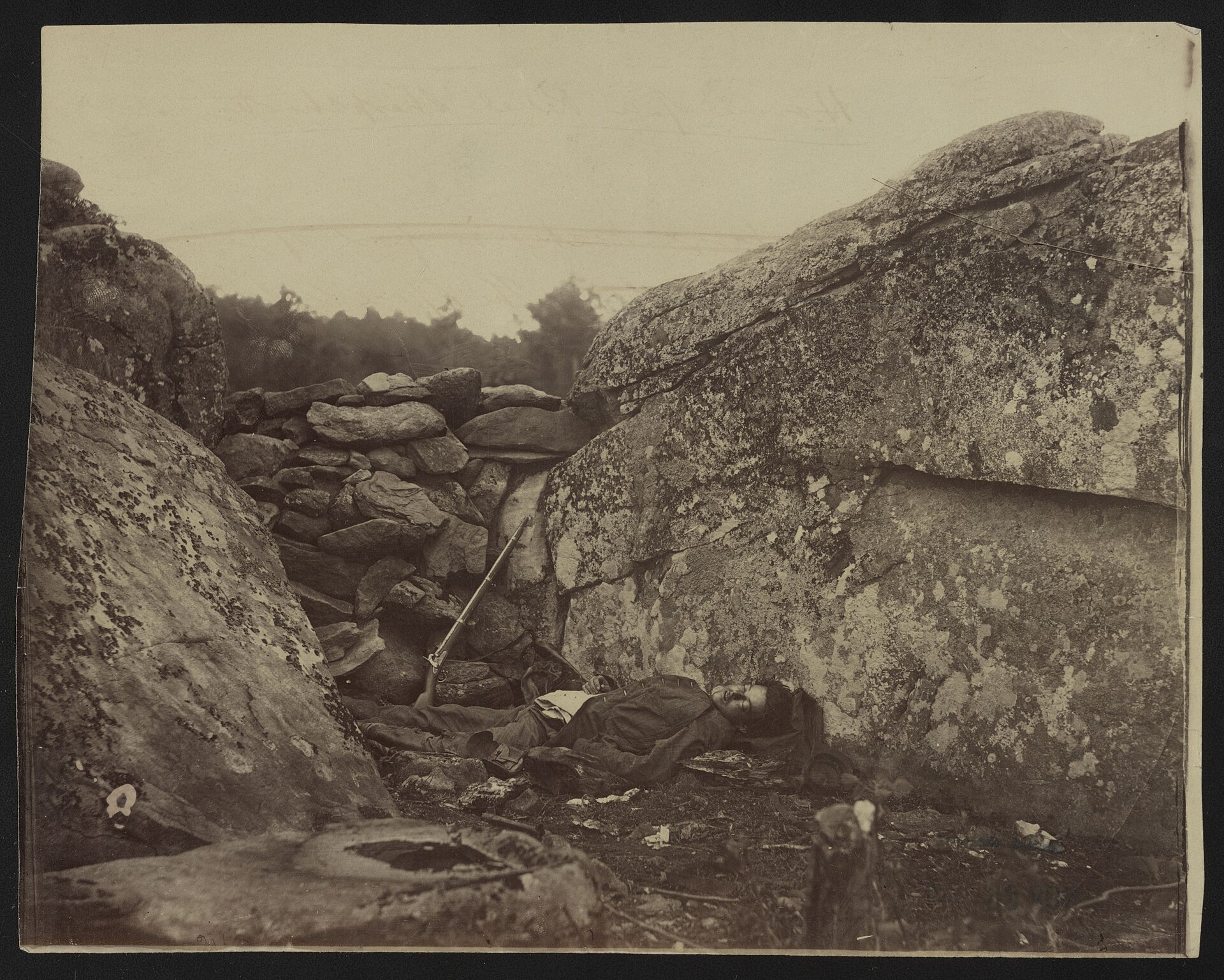
19 September, two days after Antietam: Gardner and James Gibson photograph the battlefield dead; the following month Brady's New York gallery exhibits the images as The Dead of Antietam, and the New York Times review of 20 October credits Brady alone.18
Around November, Gardner leaves Brady's employ, reportedly over the studio's practice of crediting all staff work to Brady.418
May, Gardner opens his own Washington gallery with his brother James, hiring several former Brady staff including Timothy H. O'Sullivan.418
9 February: Brady's studio employee Anthony Berger, not Brady personally, photographs Lincoln at several poses at the Washington gallery, a sitting documented on this site's own Cooper Union portrait record.17
Gardner publishes Photographic Sketch Book of the War in two volumes, naming eleven individual photographers plate by plate, a direct correction of Brady's blanket-credit practice.18
The Panic of 1873 forces the sale of Brady's New York studio and his bankruptcy, after a prior attempt to sell his collection to the New York Historical Society had already failed.111
July: Secretary of War William Belknap purchases part of Brady's negative stock at public auction for $2,500, because Brady could no longer pay storage costs. A separate National Archives account (Prologue magazine) gives $2,840 for a larger group of roughly 6,000 negatives; whether this describes the same purchase, an overlapping one, or an error is not resolved in the sources consulted.587
19 February: Belknap writes to Representative James Garfield about the negatives still held by the War Department. April: Congress, under authorization secured by Representative Benjamin Butler, appropriates $25,000 for the direct purchase from Brady of 3,735 glass plates, against a collection Butler valued at $150,000; Brady's creditors take the proceeds.57
Juliet Brady dies.11
Brady is seriously injured in a streetcar accident.11
15 January: dies in the charity ward of Presbyterian Hospital, New York; his funeral is financed by veterans of the 7th New York Infantry; buried at Congressional Cemetery, Washington, D.C.311
The Army Signal Corps takes custody of the War Department's Brady negatives to make copies available to the public.8
The National Archives accessions the Brady collection held by the government since 1875.8
The Library of Congress purchases the Civil War Glass Negatives collection, roughly 7,500 original and 2,500 copy negatives covering Brady, Gardner and other photographers combined, from the Phelps Publishing Company of Springfield, Massachusetts.18
The Library of Congress purchases the Brady-Handy collection, roughly 10,000 negatives, from the family of Levin C. Handy.17
April: Sotheby's, New York, sells Brady's 1849 whole-plate daguerreotype of John C. Calhoun for $338,500, a record for the artist, against a $30,000-$50,000 estimate.1213
Rare-book dealer Stephan Loewentheil gives the Calhoun daguerreotype to the National Portrait Gallery, Smithsonian Institution.14
The strongest documented Brady market result is not a print but a daguerreotype: his 1849 whole-plate portrait of Senator John C. Calhoun, the last photograph made of Calhoun before his death in 1850, sold at Sotheby's, New York, in April 2011 for $338,500 against a $30,000-$50,000 estimate, a recorded auction house against which two bidders, the dealer Stephan Loewentheil and the collector Michael Mattis, competed before Loewentheil prevailed; the source reporting the figure labels it a hammer price and does not separately confirm whether buyer's premium is included. Loewentheil gave the daguerreotype to the National Portrait Gallery in 2023, so the object that set Brady's auction record is no longer on the market at all.
Lower down the market, and closer to the imprint problem this page is built around, is a Brady-credited albumen photograph of Lincoln with his son Tad, made 9 February 1864 and signed in ink by Lincoln: one of only three known copies of this particular pose. RR Auction sold one copy on 18 February 2021 for $135,473 including buyer's premium against a $75,000-plus estimate; another copy is reported, within that same auction listing rather than independently verified here, to have sold for $325,000 in 2002 as part of the Forbes Collection. What neither figure discloses on its own is that the 9 February 1864 sitting is now documented as the work of Brady's employee Anthony Berger operating Brady's camera, not Brady himself - so a buyer paying six figures for 'a Brady' in this instance is, on the current attribution, paying for Berger's work under Brady's name.
| Date | Sale | Work | Result | Note |
|---|---|---|---|---|
| 2011-04 | Sotheby's | John C. Calhoun, whole-plate daguerreotype, 1849 | Hammer not separately stated in the sources consulted With premium $338,500 total realized price (the cited source states this as the final price achieved and does not itself use the term hammer price; not independently confirmed against Sotheby's own price-realized data) USD | Estimate $30,000-$50,000; more than five times the high estimate; a recognized auction record for the artist. Bought by dealer Stephan Loewentheil over collector Michael Mattis; gifted to the National Portrait Gallery in 2023. |
| 18 February 2021 | RR Auction | Abraham Lincoln with son Tad, albumen photograph, 9 February 1864, signed 'A. Lincoln' | Hammer not separately stated With premium $135,473 (price realized, premium included per the auction house's own reporting) USD | Estimate $75,000-plus; one of three known copies of this pose. The camera was operated by Brady's employee Anthony Berger, not Brady personally. |
| 2002 | not identified in the source consulted | Abraham Lincoln with son Tad, albumen photograph, 9 February 1864 (a different copy of the same pose) | Hammer not stated With premium $325,000 (as reported) USD | Reported only within the 2021 RR Auction lot listing for a different copy, as part of the 'Forbes Collection'; not independently verified against a primary auction catalog in the sources consulted. |
Hammer is the price at which the bidding stopped; with premium adds the fee the house charges the buyer on top. Hammer price and buyer's premium in the glossary.
| Institution | City | Holdings | Note |
|---|---|---|---|
| Library of Congress, Prints and Photographs Division | Washington, D.C. | Two separate Brady-related acquisitions: the Civil War Glass Negatives collection (purchased 1943, roughly 7,500 original and 2,500 copy negatives covering Brady, Gardner and others combined) and the Brady-Handy collection (purchased 1954 from Levin C. Handy's family, roughly 10,000 negatives, chiefly studio portraits of presidents, members of Congress, military and naval officers and Supreme Court justices). | |
| National Archives and Records Administration, Still Picture Branch | College Park, Maryland | The government-purchased plates from the 1874 auction and the 1875 Congressional purchase (3,735 plates), transferred to Army Signal Corps custody in 1921 and accessioned by the National Archives in 1940; at least 12,000 Civil War-era images credited to Brady and his associates together. | |
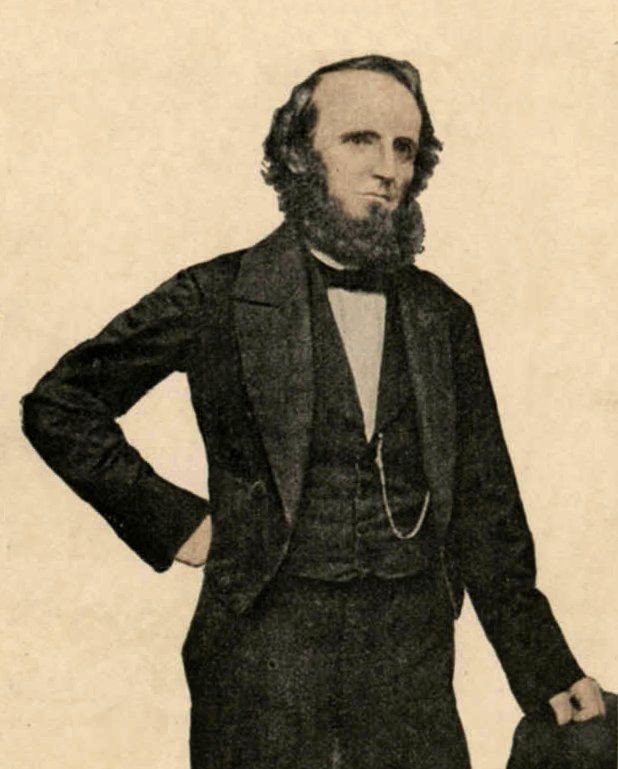
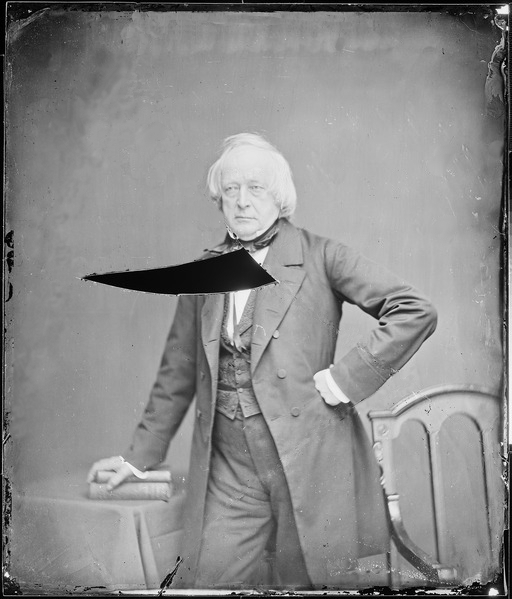
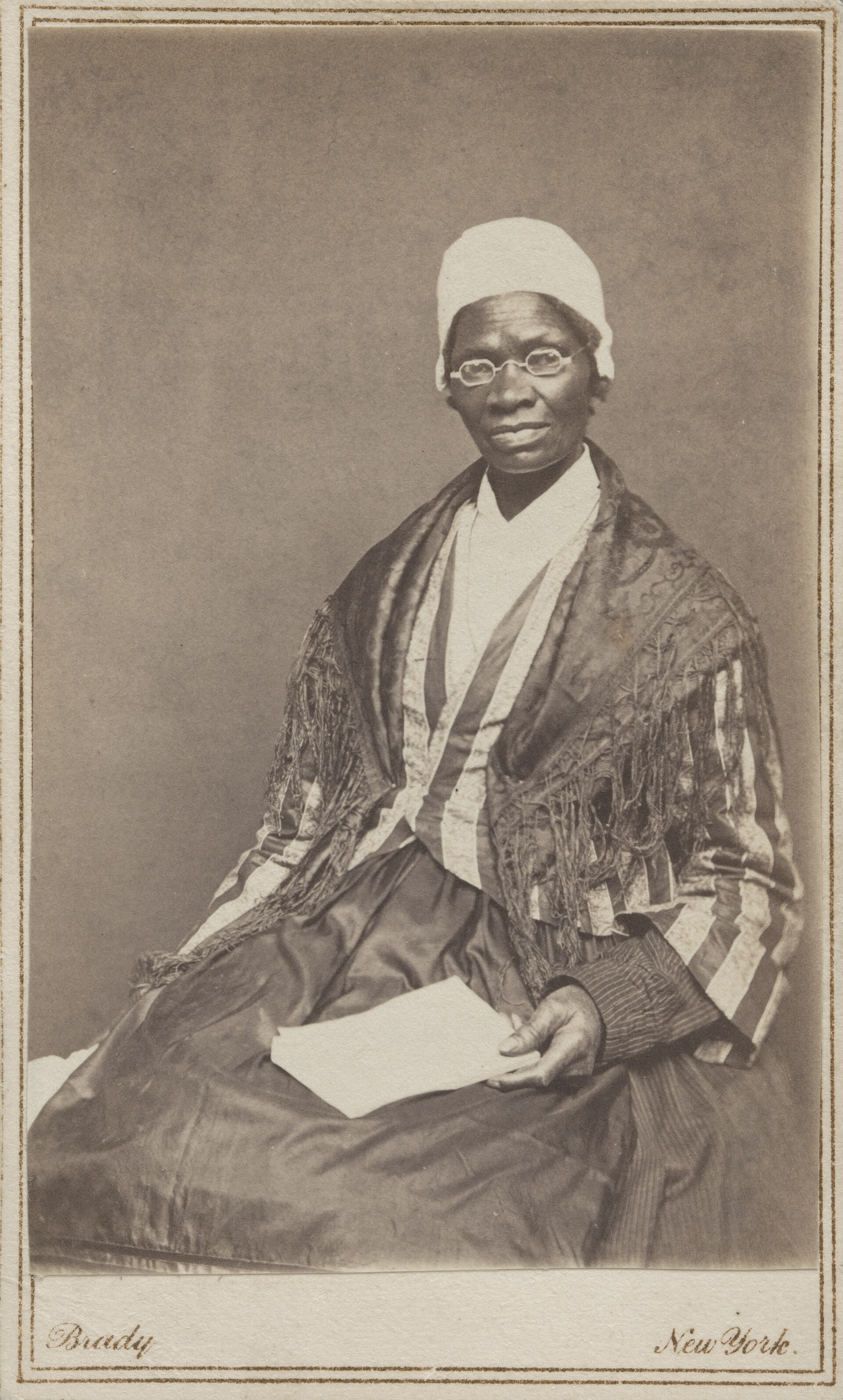
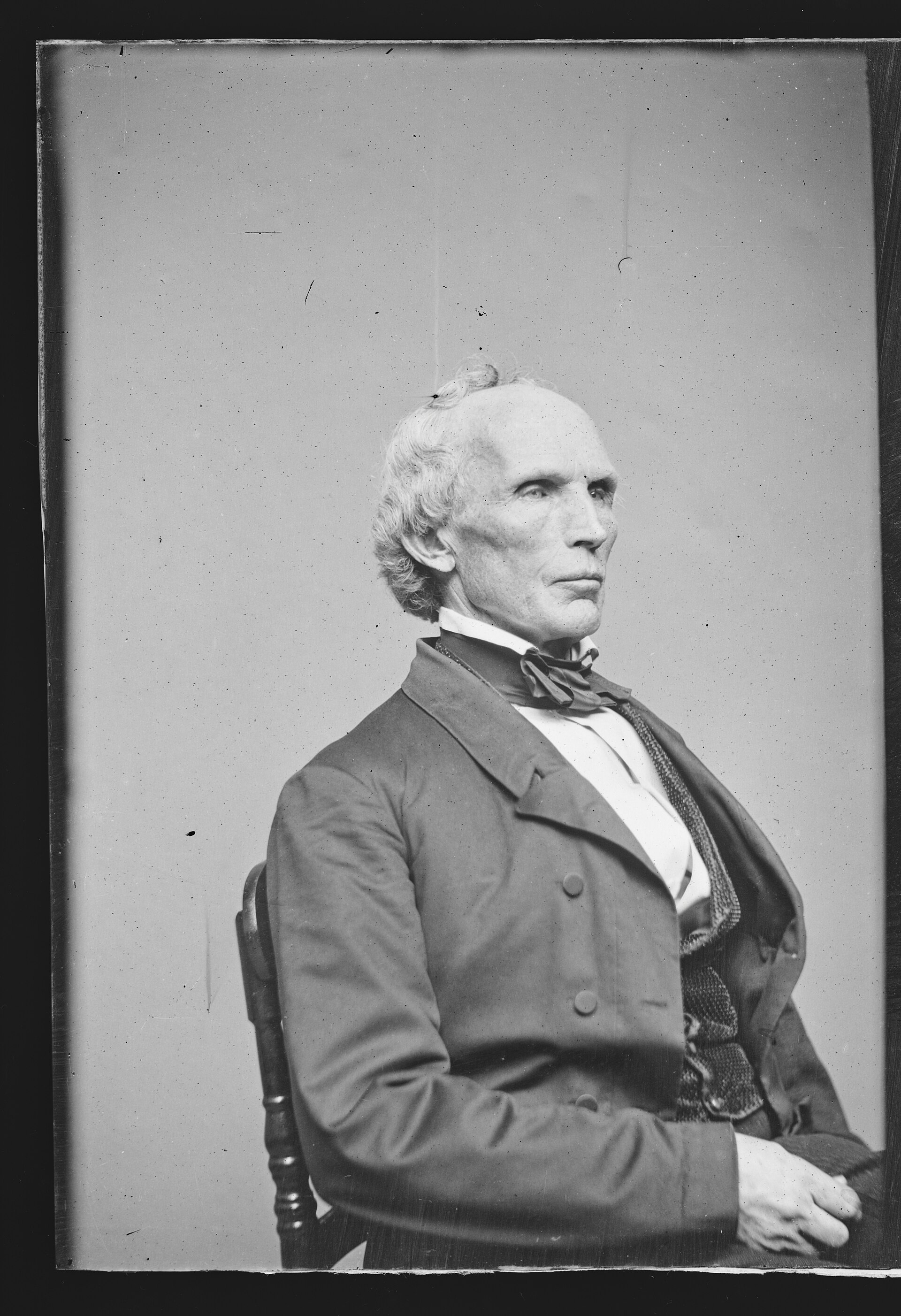
| National Portrait Gallery, Smithsonian Institution | Washington, D.C. | The 1849 Calhoun daguerreotype (gift of Stephan Loewentheil, 2023), the Sojourner Truth and Garrett Davis studio prints illustrated on this page, and material from the Frederick Hill Meserve / Dorothy Meserve Kunhardt collection. | |
| Smithsonian National Museum of American History | Washington, D.C. | A Mathew Brady and Brady Studio photographic history collection of approximately 366 items dating from 1851 to 1921. | |
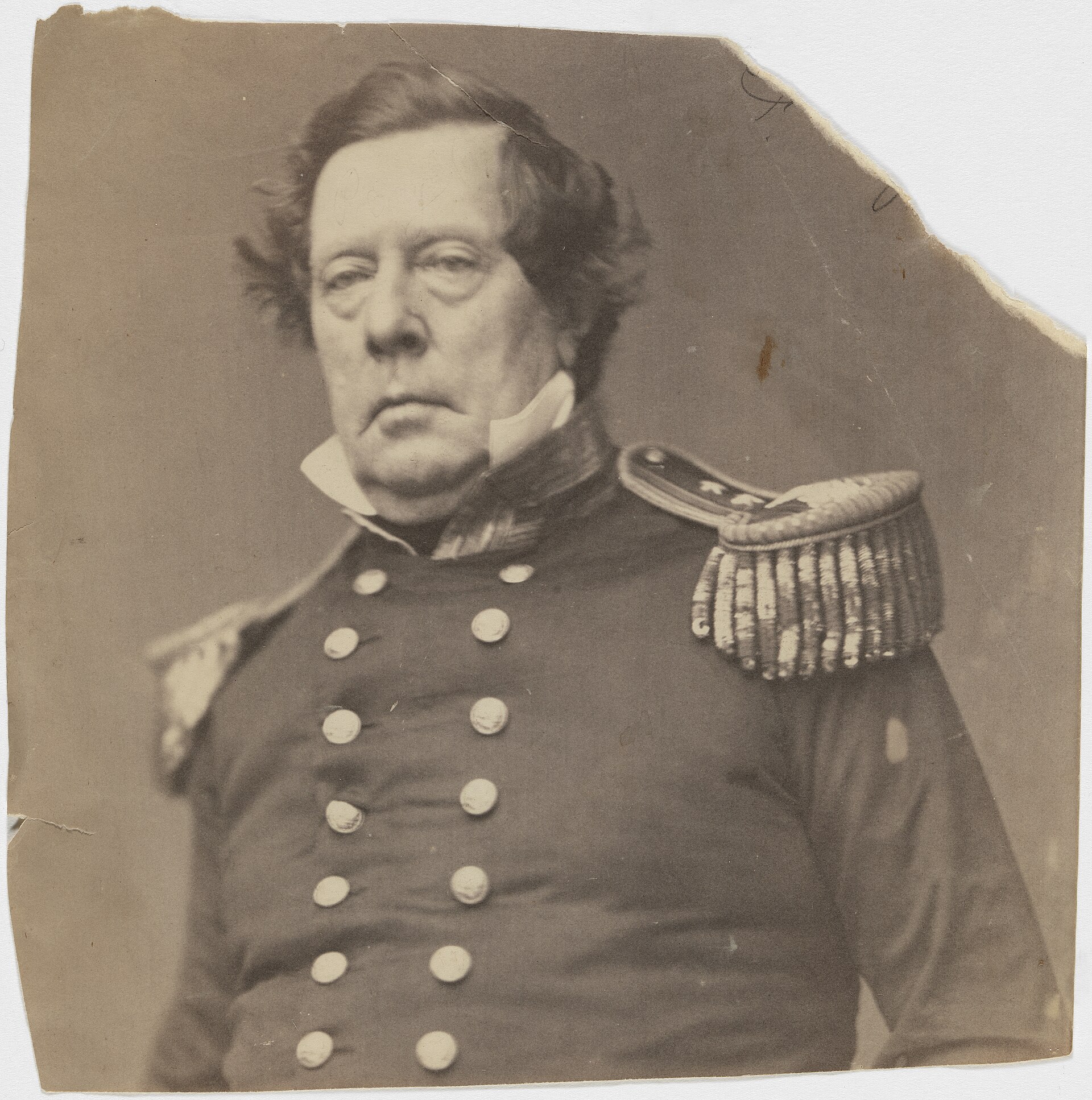
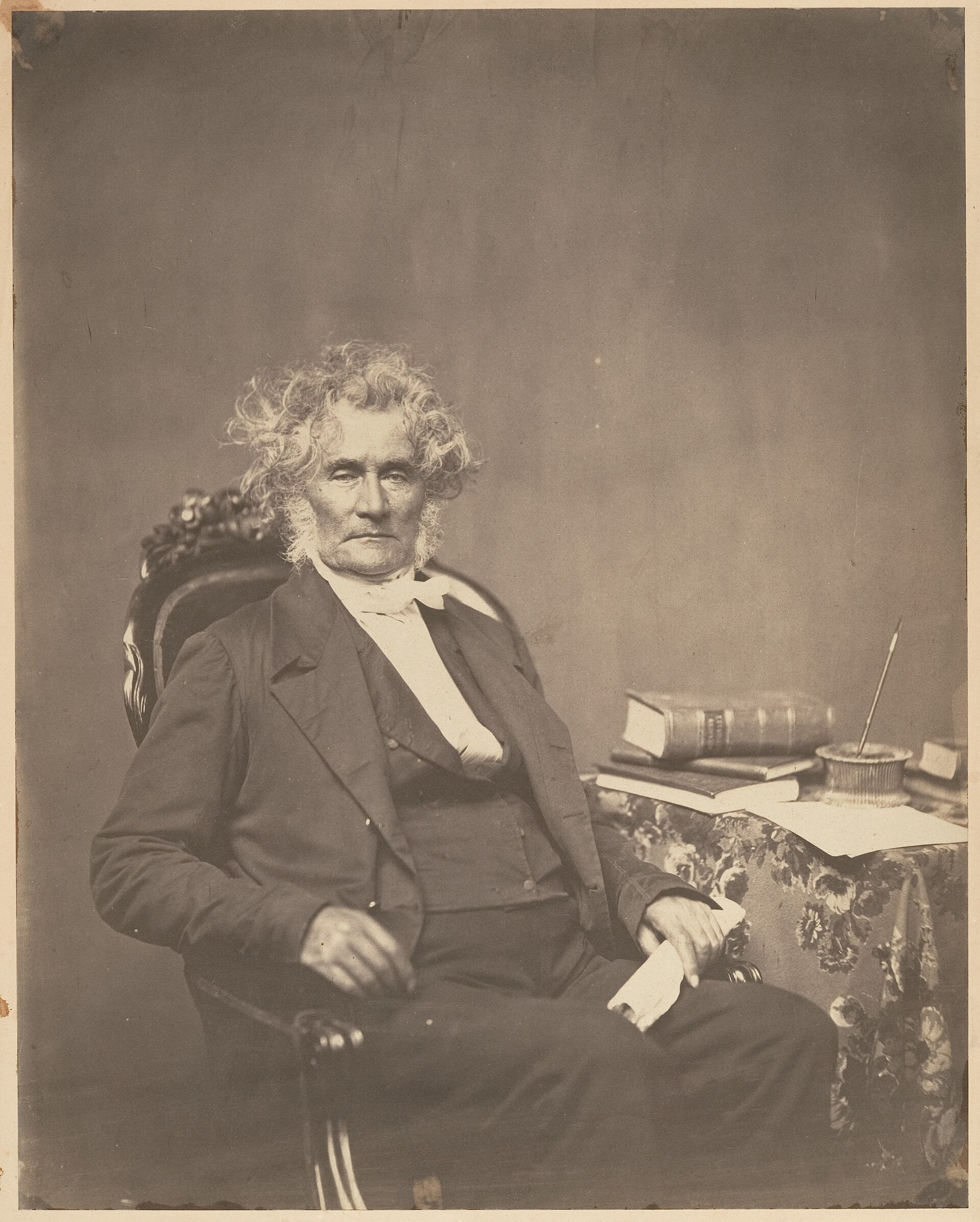
| Metropolitan Museum of Art | New York | Studio portraiture including the salted paper print of Peter Force illustrated on this page. | |
| Yale University, Beinecke Rare Book and Manuscript Library | New Haven, Connecticut | A portion of the Meserve / Kunhardt Brady-era holdings. | |
| Massachusetts Historical Society | Boston, Massachusetts | Studio portraiture including the 1857 photograph of Gamaliel Bailey illustrated on this page. |
Brady was born to Irish immigrant parents, Andrew and Julia Brady, in Warren County, New York, in a year the sources themselves cannot agree on.
Brady was born to Irish immigrant parents, Andrew and Julia Brady, in Warren County, New York, in a year the sources themselves cannot agree on. As a teenager he reportedly travelled to the Saratoga and Albany area seeking treatment for an eye inflammation, and it was there, according to the American Battlefield Trust's biographical account, that he probably met the portrait painter William Page. Page's own connections in New York, that same source states, likely led Brady to Samuel F. B. Morse, the artist and telegraph inventor then teaching at New York University, who had brought the daguerreotype process back from Paris after meeting Louis Daguerre himself and was among the first Americans to teach it.
The detail is worth holding onto for what it foreshadows rather than for its own sake: a career built entirely on an optical medium that most likely began with a trip to treat failing eyes, and that would end, decades later, with Brady's own eyesight ruined and his hand almost entirely absent from the cameras that made his name.
Brady opened the Daguerreian Miniature Gallery at Broadway and Fulton Street in New York in 1844, and won top awards at the American Institute's annual fair that year and again in 1845, 1846, 1849...
Brady opened the Daguerreian Miniature Gallery at Broadway and Fulton Street in New York in 1844, and won top awards at the American Institute's annual fair that year and again in 1845, 1846, 1849 and 1857, photographing figures including Edgar Allan Poe and James Fenimore Cooper. In 1849 he opened a second studio in Washington, D.C., and the following year he married Juliet Handy there - a marriage that, decades later, would put a share of his negatives into the hands of her family rather than his own.
Between about 1845 and 1850 Brady, the journalist Charles Edwards Lester and the lithographer Francis D'Avignon produced The Gallery of Illustrious Americans, a portfolio explicitly titled as containing the portraits of the most eminent citizens of the American Republic since the death of Washington: a stated, documented ambition to build a national visual record of American greatness, not a meaning read into the project afterward. It was sold by subscription at one dollar a part or twenty dollars for the full run of twenty-four planned parts, and it failed. Only twelve parts were ever issued; Brady could not recoup the roughly one hundred dollars per lithographic stone he owed D'Avignon, and the project was abandoned. The ambition did not die with it. Brady's Washington studio, opened at 350-352 Pennsylvania Avenue in 1858, traded as the National Photographic Art Gallery, and his New York operation was rebranded Brady's National Portrait Gallery, a name it carried from 1860 until 1894. The word National on Brady's own shingle is the whole of the symbolic programme this record can document: an explicit, financially punishing, and entirely ordinary civic ambition to be the country's visual memory of its own eminent men, stated in his own advertising rather than argued for by a later critic.
Brady's eyesight deteriorated through the 1850s.
Brady's eyesight deteriorated through the 1850s. By the time the Civil War began he employed, by the most consistent count in the sources consulted, more than a score of photographers in the field, among them Alexander Gardner, Timothy H. O'Sullivan, James Gardner, William Pywell, George N. Barnard and Thomas C. Roche. He financed and organized the operation, and the National Park Service's own account states plainly that his failing vision meant he mostly coordinated from Washington rather than exposing plates himself.
Every image his employees made, whoever stood behind the camera, was published under Brady's own name. The practice is documented, not disputed: Brady's catalog albums of war photographs carried no credit for individual staff, and a reader in 1862 had no way to know that a photograph marked Photographed by Brady had very possibly never been touched by Brady's own hands.
Brady went to the field in person for the First Battle of Bull Run on 21 July 1861, one of a small number of occasions the sources document him actually present at the front rather than directing...
Brady went to the field in person for the First Battle of Bull Run on 21 July 1861, one of a small number of occasions the sources document him actually present at the front rather than directing operators from a gallery. The Union defeat and the chaotic retreat that followed scattered his party and separated him from his equipment. By the time he reached Washington and then New York, his own studio's account has him without his gear and wearing a sword given to him, for his protection, by men of a New York Fire Zouave regiment.
A photograph made in his own studio on 22 July 1861, the day after the battle, shows him in exactly that state: a linen duster, a straw hat, the borrowed sword buckled on beneath the coat. It is a photograph of the war correspondent as a subject of the war he had gone to record, and it is among the clearest surviving evidence that Brady himself, and not only his employees, went to a battlefield.
On 19 September 1862, two days after the Battle of Antietam, Alexander Gardner and James Gibson photographed the battlefield dead before burial parties had finished their work, the first time an...
On 19 September 1862, two days after the Battle of Antietam, Alexander Gardner and James Gibson photographed the battlefield dead before burial parties had finished their work, the first time an American battlefield had been photographed this way. A selection went on display the following month at Brady's New York gallery under the sign The Dead of Antietam. The New York Times reviewed the exhibition on 20 October 1862 and credited Brady by name; it did not mention Gardner or Gibson, the two men who had actually exposed the negatives. This site's own record for Alexander Gardner documents the review and the exhibition in full; it is reused here rather than re-researched, since it bears directly on the same imprint practice.
The omission was not unusual for 1862. It is unusual only in hindsight, once the men actually holding the cameras are known.
Gardner left Brady's employ around November 1862, reportedly over the credit practice described above.
Gardner left Brady's employ around November 1862, reportedly over the credit practice described above. In May 1863 he opened his own Washington gallery with his brother James, hiring several former Brady staff including O'Sullivan. Gardner's two-volume Photographic Sketch Book of the War, published in 1865-66, named eleven individual photographers across its hundred plates, crediting negative-maker and print-maker separately for each - a direct and deliberate departure from Brady's practice, and the clearest documented evidence that at least one of Brady's own former employees regarded the blanket imprint as a problem worth correcting in print. O'Sullivan contributed the largest number of plates of any single photographer in Gardner's book.
Brady never adopted the correction himself. His studio's imprint practice continued through the rest of the war and into his postwar catalogues, and it is the reason a photograph credited to Brady today so often needs a second look before the credit can be trusted at face value.
Brady spent more than one hundred thousand dollars of his own money organizing and financing Civil War photography, on the expectation that the federal government would purchase the results after the...
Brady spent more than one hundred thousand dollars of his own money organizing and financing Civil War photography, on the expectation that the federal government would purchase the results after the war at a price that would recover his investment. It did not, at least not at that scale. The Panic of 1873 forced him to sell his New York studio and declare bankruptcy; an attempt to sell his collection to the New York Historical Society had already failed.
What happened next is documented in two distinct, and only partly reconciled, stages. In July 1874, Secretary of War William Belknap purchased part of Brady's negative stock at public auction because Brady could no longer pay to store them; the sources consulted give the price as either $2,500 for roughly 2,250 plates or $2,840 for a larger group closer to 6,000 plates, a discrepancy this record has not been able to resolve and states as a gap rather than an average. On 19 February 1875 Belknap wrote to Representative James Garfield about the remaining collection still in the War Department's hands. In April 1875, under Congressional authorization secured by Representative Benjamin Butler of Massachusetts, the War Department purchased 3,735 glass plates directly from Brady for $25,000 - a figure Butler himself considered modest against a collection he put at $150,000 in value. Brady's creditors took the money. He never recovered financially.
Brady's negative stock did not survive as one archive.
Brady's negative stock did not survive as one archive. Before the 1874 and 1875 government purchases, Brady had already given a duplicate set of war negatives to the supply firm E. and H. T. Anthony and Company against an unpaid bill; that set, and a further group later acquired from the family of Levin C. Handy, Brady's nephew by marriage and a former assistant who continued operating a Washington studio after Brady's death, together became the Brady-Handy collection, purchased by the Library of Congress in 1954: roughly ten thousand negatives, chiefly portraits of presidents, members of Congress, military and naval officers and Supreme Court justices.
The government's own purchased plates followed a separate custodial line: transferred to the Army Signal Corps in 1921 for copying, accessioned by the National Archives in 1940, and held there since in the Still Picture Branch. A third, related but distinct body of material, the roughly 7,500 original and 2,500 copy negatives now called the Civil War Glass Negatives collection, covering Brady, Gardner and other photographers combined and impossible now to fully disentangle by hand, was purchased by the Library of Congress in 1943 from the Phelps Publishing Company of Springfield, Massachusetts, after passing through several earlier owners. A fourth line runs through the private collector Frederick Hill Meserve, who assembled Brady-era material across the early twentieth century; his holdings passed to his daughter, Dorothy Meserve Kunhardt, and from her to the National Portrait Gallery and to Yale University's Beinecke Library. No single institution holds what could honestly be called the Brady archive, and the sources consulted do not offer a reconciled total across all four lines.
Juliet Brady died in 1884. Brady himself was seriously injured in a streetcar accident in 1894, and complications from it contributed to his death on 15 January 1896, in the charity ward of...
Juliet Brady died in 1884. Brady himself was seriously injured in a streetcar accident in 1894, and complications from it contributed to his death on 15 January 1896, in the charity ward of Presbyterian Hospital in New York. Veterans of the 7th New York Infantry financed his funeral. He is buried at Congressional Cemetery in Washington, D.C., beside his wife, in the city where he had built and lost the studios he had insisted on calling National.
No catalogue raisonne exists for Brady's output, and no authenticating board rules on it.
No catalogue raisonne exists for Brady's output, and no authenticating board rules on it. What decides an attribution instead is the printed imprint on a period mount, which names the publisher rather than necessarily the operator; institutional custody records; and, in a small number of well-researched cases, direct archival identification of the actual employee behind the camera, as with the 9 February 1864 Lincoln sittings now credited to the operator Anthony Berger rather than to Brady. The Smithsonian's own prints of Sojourner Truth and of Senator Garrett Davis, both illustrated on this page, are catalogued as Mathew Brady Studio rather than attributed to Brady personally, for the same reason.
That is the honest state of the record. Brady financed, organized and gave his name to one of the largest documentary photography operations the nineteenth century produced, went bankrupt doing it, and left behind an output so large and so uniformly signed that separating his own hand from his employees' is, for most individual images, no longer possible. The imprint problem is not a footnote to Brady's career. It is the most accurate thing that can be said about it.
Photographer; Gallery proprietor; Publisher. c. 1822-1896.
Born c. 1822 (day and even year disputed; see facts below), Warren County, New York; died 15 January 1896, New York City (Presbyterian Hospital charity ward).
Library of Congress, Prints and Photographs Division (Washington, D.C.); National Archives and Records Administration, Still Picture Branch (College Park, Maryland); National Portrait Gallery, Smithsonian Institution (Washington, D.C.); Smithsonian National Museum of American History (Washington, D.C.); Metropolitan Museum of Art (New York); Yale University, Beinecke Rare Book and Manuscript Library (New Haven, Connecticut).
The strongest documented Brady market result is not a print but a daguerreotype: his 1849 whole-plate portrait of Senator John C. Calhoun, the last photograph made of Calhoun before his death in 1850, sold at Sotheby's, New York, in April 2011 for $338,500 against a $30,000-$50,000 estimate, a recorded auction house against which two bidders, the dealer Stephan Loewentheil and the collector Michael Mattis, competed before Loewentheil prevailed; the source reporting the figure labels it a hammer price and does not separately confirm whether buyer's premium is included.
Brady's exact birth date is unresolved: sources give 18 May 1822, 'approximately 1823' and 1824 without agreeing.
Last verified
One artwork and its story every Tuesday, with the picture: who owned it, what it made, and what closes soon in the exhibition calendar. No promotion, and nothing we cannot cite.
We send one email to confirm the address and keep nothing else. Every letter carries a one-click unsubscribe. How we handle your data.