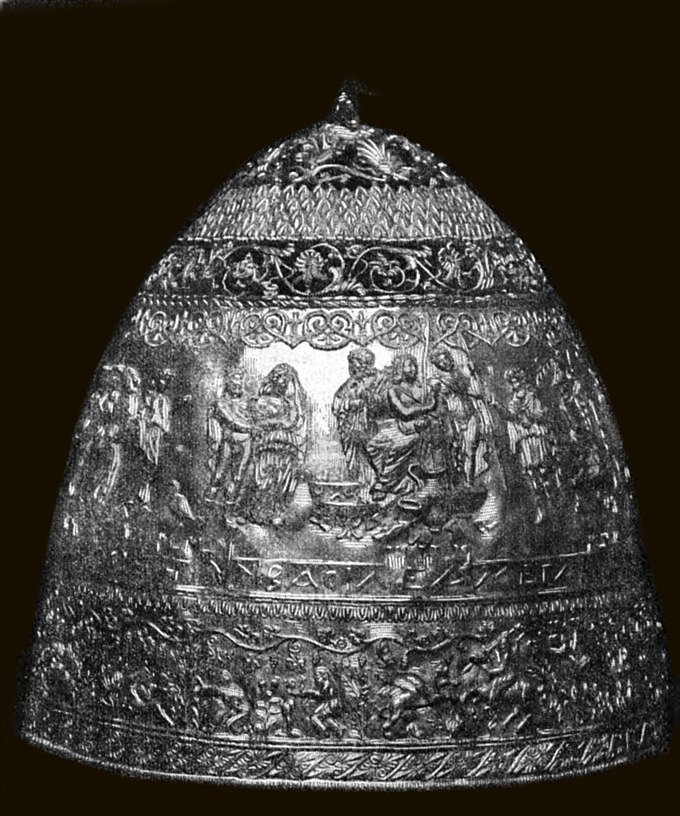
Tiara of Saitapharnes
1894 to 1895 · Gold sheet
Musee du Louvre, Paris
 1860-1934
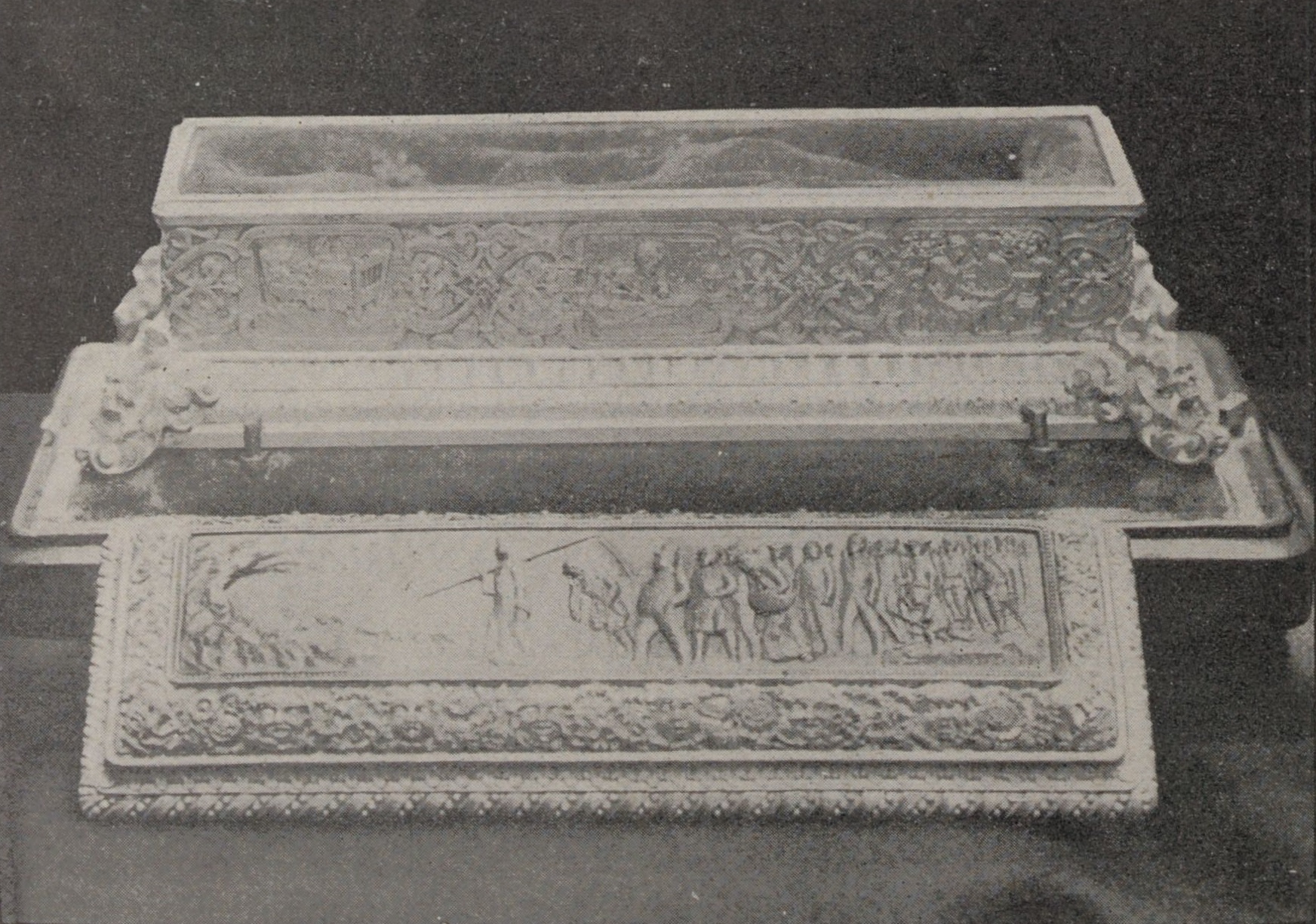
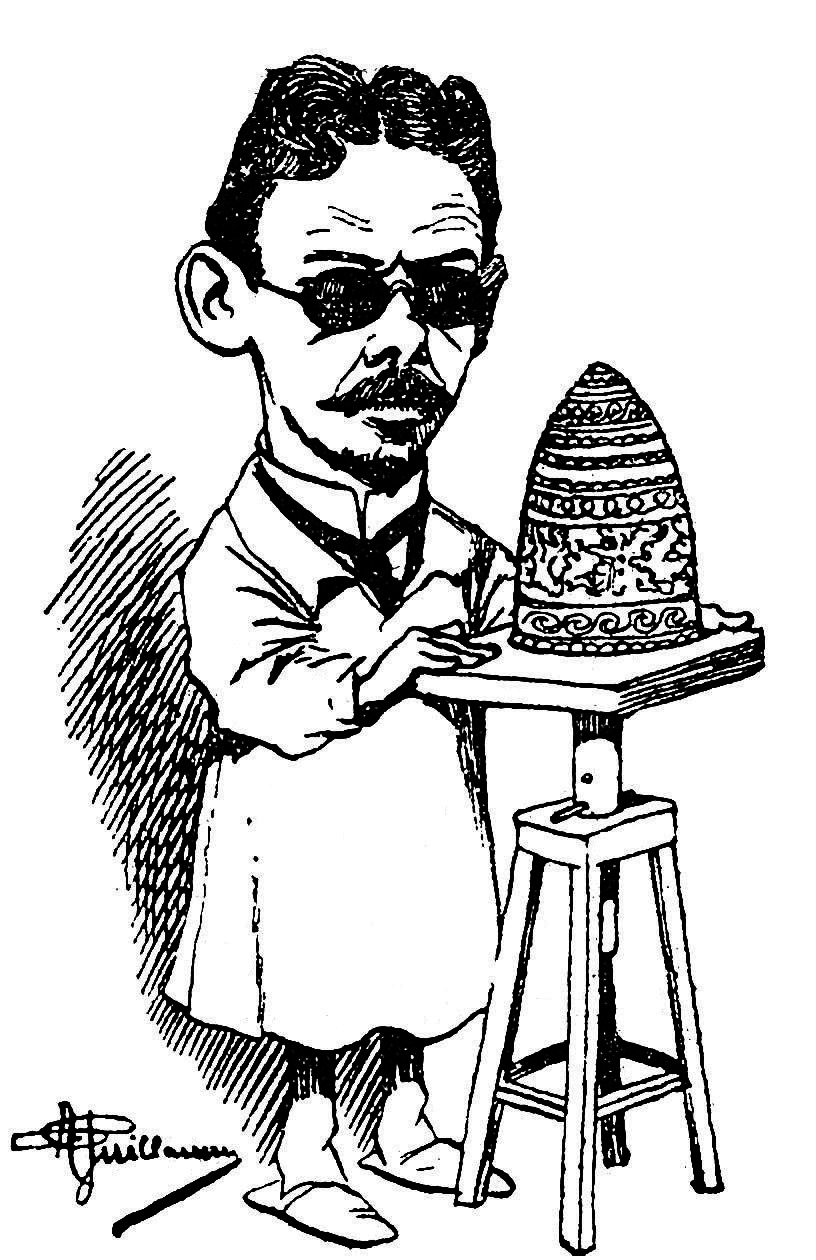
The silver-gilt sarcophagus, by Rouchomovsky Reproduced in Le Monde illustre on 23 May 1903, captioned as the silver sarcophagus shown at the 1903 Salon des Artistes Francais. Almost certainly the sarcophagus that houses his fully articulated gold skeleton, later sold at Christie's Amsterdam in 1998 and Sotheby's New York in 2013. No verified portrait. No securely identified likeness of this maker is available under a free licence. We do not publish a face we cannot verify.
Le Monde illustre, 1903, via Gallica; public domain| Full name | Israel Rouchomovsky, also written Rouchomowsky, Rouchomowski, Roukhomovsky and Rukhomovsky (transliterated from the... |
|---|---|
| Worked as | Goldsmith, Silversmith, Chaser |
| Born | 1860. Wikidata gives the specific date 2 October 1860, a... · Mozyr, Minsk Governorate, Russian Empire (now Mazyr... |
| Died | 1934, per the Musee du Louvre's own catalogue entry for the... · France. Wikidata gives Boulogne-Billancourt, with burial at... |
| Nationality | Born a subject of the Russian Empire in Mozyr, then Odessa |
| Movement | Independent workshop practice, trained outside any academy, working in the revived... |
| In this archive | 1 artwork |
| Sources | 16 cited |
| Last verified |
About this page 1 artwork in the archive · Last verified · 16 sources cited
Israel Rouchomovsky is catalogued by the Musee du Louvre as the maker of an object the museum spent seven years insisting was not his: the Tiara of Saitapharnes, a gold headdress he made to order in Odessa in the mid 1890s and that the Louvre bought in 1896 as a third or second century BCE Scythian antiquity. He proved his authorship in Paris in 1903 by reproducing a section of the piece in front of the men who had refused to believe him. That story is well told and this site tells it in full elsewhere, under the object's own record.
What is harder to find, and what this page exists to answer, is the question a reader asks next. If Rouchomovsky could fake a Greek antiquity well enough to fool the Louvre's own department of antiquities, what did he make that nobody disputes is his, made under his own name, for people who knew exactly what they were buying. The answer is a small, signed, exhibited and partly auctioned corpus: a gold skeleton with 167 or so moving parts inside a silver-gilt sarcophagus, a rhyton, a gorget, a gold group of Minerva and Achilles, and, strangest of all, a plaque he chased himself mocking the very scandal that made him famous.
Almost none of this reached the standard museum literature that covers the tiara. It survives instead in a Salon catalogue, in the plates of an illustrated newspaper, in an auction house's own research for a 2013 sale, and in a Yiddish memoir that, so far as this record could establish, has never been translated into English or French. A goldsmith who has been written about for more than a century as a forger has almost no biography written about him as a goldsmith.
Obtains a work permit and moves to Odessa; collaborates on an early gold skeleton prototype, later held by the Museum of Historical Treasures of Ukraine, Kyiv.510
Makes his second, fully articulated gold skeleton, inscribed Mozyr 1892 and Odessa 1896 and signed Rouchomovsky.5
The dealers Schapschelle and Leiba Hochman commission a Greek gold tiara from him for 1,800 roubles, telling him it is a gift for an archaeologist friend.523
The Musee du Louvre buys the finished tiara from the dealer Hochmann for 200,000 gold French francs.12
Adolf Furtwaengler and a scholar identified only as Professor Vesselovsky condemn the tiara in print within months of the purchase.23
Completes the silver-gilt sarcophagus for the gold skeleton, in Odessa.5
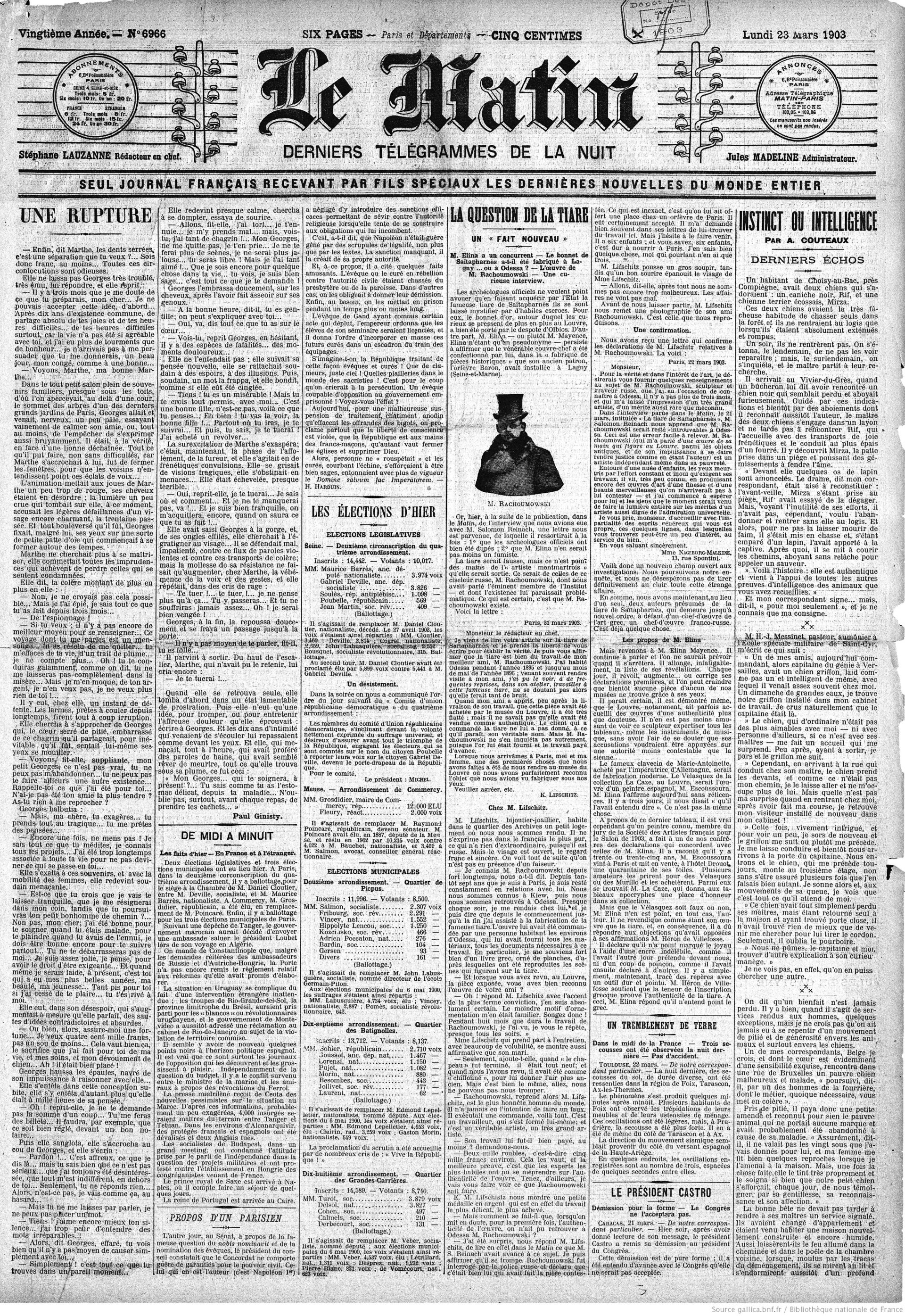
Le Matin publishes the jeweller Lifschitz's account of having watched Rouchomovsky make the tiara.24
Rouchomovsky travels to Paris, reproduces a section of the tiara for the examiners, and is believed.25
A caricature of Rouchomovsky by Albert Guillaume appears in Le Matin.4
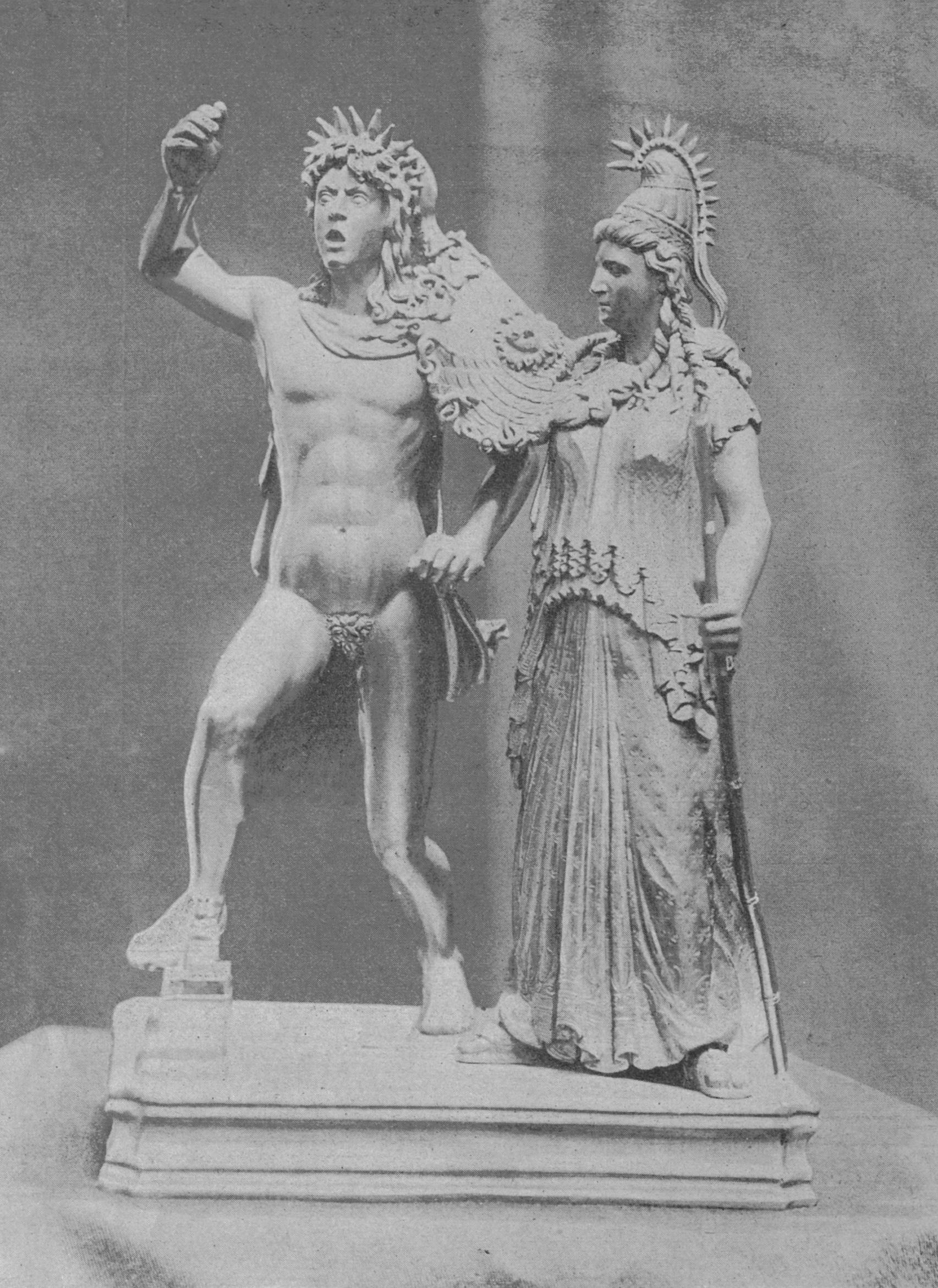
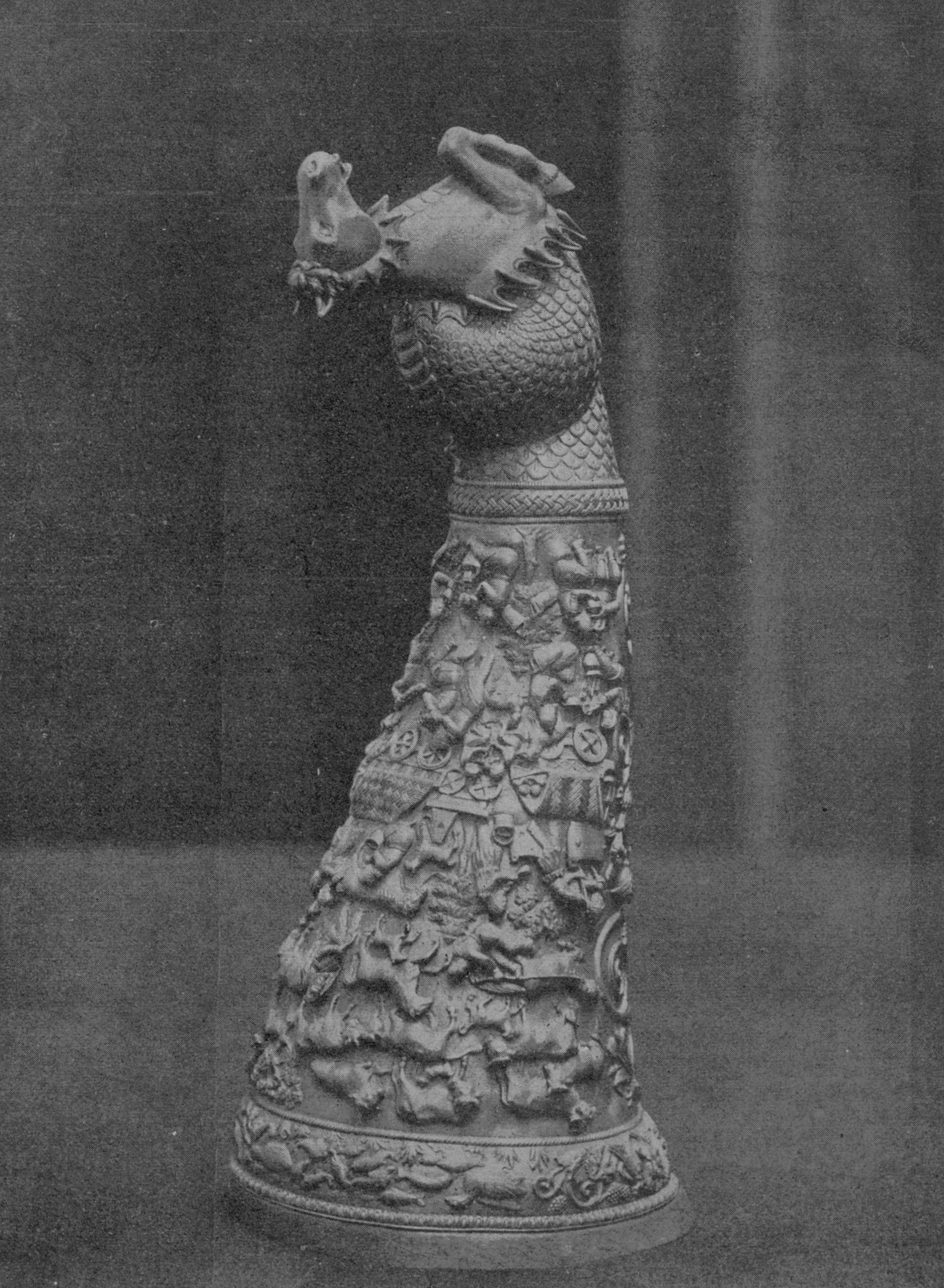
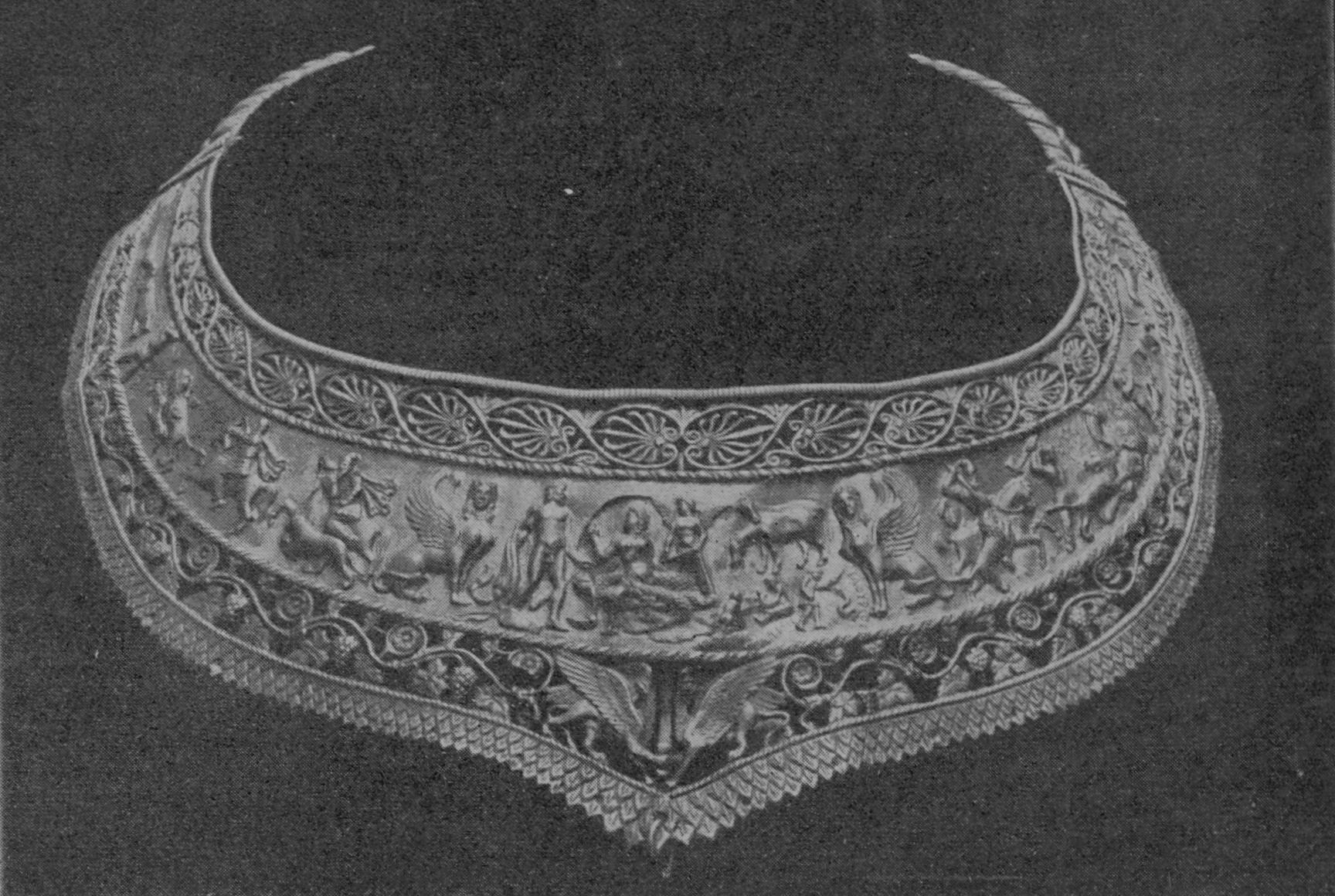
Exhibits a gold rhyton, a gold gorget, the skeleton and sarcophagus, and a gold Minerva and Achilles group at the Salon des Artistes Francais; wins a gold medal.45
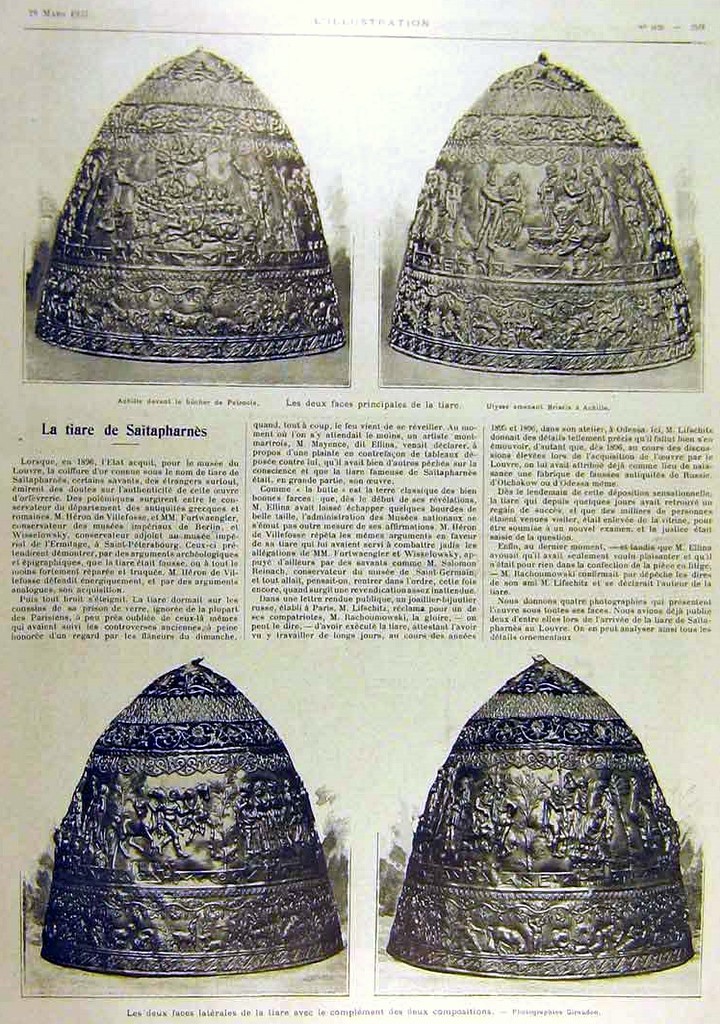
Le Monde illustre reproduces four of his own signed works alongside coverage of the tiara affair.4
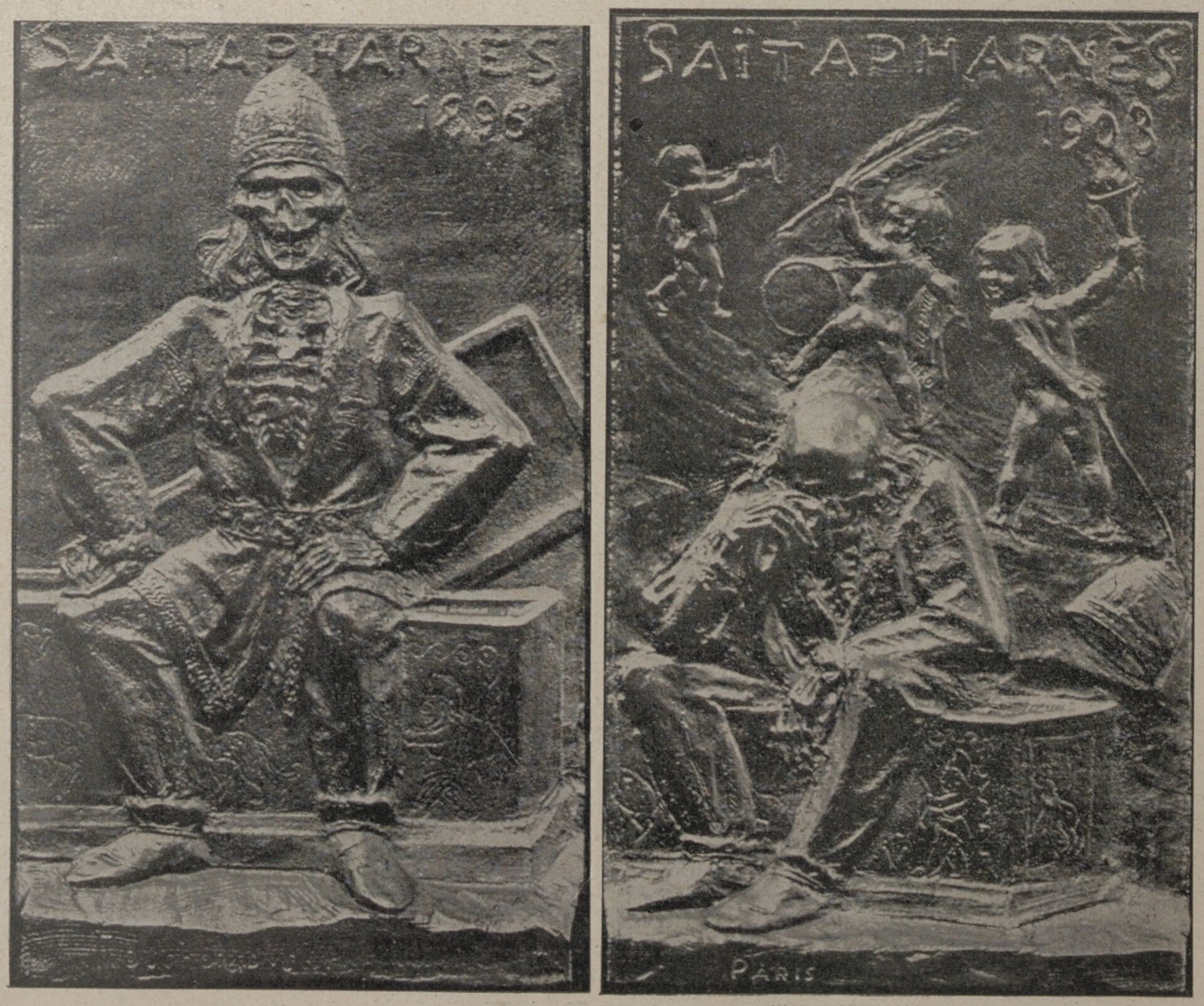
Le Monde illustre reproduces a satirical plaque by Rouchomovsky on the adventures of his own tiara.4
The Odessa pogrom of 18 to 22 October, with several hundred to over a thousand Jewish dead by varying counts, forces him from the city; his memoir records a Torah ark commissioned during the unrest and lost in the rioting.95
Shows again at the Paris Salon.5
Moves his family permanently to Paris.5
Publishes his Yiddish memoir, Mein Leben un Mein Arbet, in Paris. Some tertiary sources give 1928 instead.510
Dies, per the Louvre's own catalogue entry and the Sotheby's catalogue note. Wikidata gives 17 March 1936 instead.158
The tiara is shown at the Louvre's Salon of Fakes.2
The Israel Museum, Jerusalem, borrows the tiara for an exhibition on Rouchomovsky. No source consulted gives the exhibition a title or exact dates.213
The skeleton and sarcophagus sell at Christie's Amsterdam.5
The skeleton and sarcophagus sell at Sotheby's New York, from the Michael and Judy Steinhardt Judaica collection, for 365,000 US dollars against a high estimate of 250,000.56
A memorial plaque is unveiled on the wall of his former workshop in Odessa.13
The tiara itself has never been sold at public auction. The Louvre bought it by private treaty from the dealer Hochmann in 1896, and it has not returned to the market since. Anyone looking for what a Rouchomovsky actually sells for has to look at his own-name work instead, and there is very little of it on record.
Two sales are traceable. The gold skeleton and its silver-gilt sarcophagus, exhibited at the 1903 Salon, sold at Christie's Amsterdam in 1998 and again at Sotheby's New York in 2013, from the Michael and Judy Steinhardt Judaica collection, for 365,000 US dollars against a high estimate of 250,000; the source reporting that figure does not separate a hammer price from a total with premium. A gold Achille et Minerve group sold through a French regional house, Lombrail-Teucquam, now Varenne Encheres, for a hammer price of 32,000 euros against a 20,000 to 30,000 euro estimate; unlike the Sotheby's figure, the auction house's own listing explicitly labels this a fee-exclusive result. Neither sale is enough to describe a market with any depth. Both together are enough to show that his own-name work, when it does appear, draws real competitive bidding rather than passing unsold.
| Date | Sale | Work | Result | Note |
|---|---|---|---|---|
| 29 April 2013 | Sotheby's, New York | The Rouchomovsky Skeleton: a Russian gold articulated skeleton in silver-gilt sarcophagus | With premium USD 365,000 (total price reported; hammer not published separately from premium in the source consulted) USD | Reported total price 365,000 US dollars against a high estimate of 250,000 (low estimate 150,000). The source does not state whether this figure is hammer alone or hammer plus buyer's premium. |
| Lombrail-Teucquam / Varenne Encheres | Achille et Minerve, sale 3506, lot 13 | Hammer EUR 32,000 EUR | Estimate EUR 20,000 to 30,000. Exact sale date not established from the listing consulted; the auction house rebranded from Lombrail-Teucquam to Varenne Encheres in 2023. Whether this is the same object shown at the 1903 Salon under the same title is not established. |
Hammer is the price at which the bidding stopped; with premium adds the fee the house charges the buyer on top. Hammer price and buyer's premium in the glossary.
| Institution | City | Holdings | Note |
|---|---|---|---|
| Musee du Louvre | Paris | The Tiara of Saitapharnes, catalogued under Rouchomovsky's name as a nineteenth-century work | Currently listed by the museum as not on display. See the object's own record on this site for the full history. |
| Museum of Historical Treasures of Ukraine | Kyiv | An early gold skeleton prototype, made shortly after his 1892 arrival in Odessa | The clearest case in this record of an institution holding a Rouchomovsky object as his own authenticated work, not as a corrected forgery. This record could not access the museum's own catalogue entry directly and relies on the Sotheby's 2013 research. |
| British Museum | London | A recorded copy of the Tiara of Saitapharnes | A copy, not an autograph work; recorded here as a version-safety hazard, matching the tiara's own record. |
| Tel Aviv Museum of Art | Tel Aviv | A recorded copy of the Tiara of Saitapharnes | As above. |
| Private collection | Unpublished | The 1903 gold skeleton and silver-gilt sarcophagus | Last recorded location is the buyer at Sotheby's New York, 29 April 2013; the buyer's identity was not published in the sources consulted. |
The Tiara of Saitapharnes has a documented maker, a documented commission and a documented exposure.
The Tiara of Saitapharnes has a documented maker, a documented commission and a documented exposure. It does not have, in the literature this record found, a documented body of other work standing next to it. Every account of the tiara treats Rouchomovsky as a function of the object: the man who made the forgery, the man who confessed. Almost none of them ask what else came out of his workshop.
That gap is not a minor omission. This is one of the only cases in the history of art forgery where the maker lived to be believed, was rewarded rather than prosecuted, kept working under his own name for another three decades, and left a corpus that a specialist auction house has since researched and sold at public sale. A forger with an afterlife as a legitimate artist is rare. A forger whose legitimate work has an auction record is rarer still, and it is the part of this story that a reader cannot get from the object record alone.
Rouchomovsky was born in 1860 in Mozyr, a market town in the Minsk Governorate with a large Jewish population, in a family that by several tertiary accounts hoped he would become a rabbi.
Rouchomovsky was born in 1860 in Mozyr, a market town in the Minsk Governorate with a large Jewish population, in a family that by several tertiary accounts hoped he would become a rabbi. He became a silversmith instead, largely self-taught. Getting a work permit that would let a Jewish craftsman relocate and practice in Odessa took effort in its own right under the residency restrictions of the time; he obtained one and arrived in the city in 1892.
Almost everything known about this part of his life comes from one place: his own Yiddish memoir, published decades later in Paris, which several sources describe as recounting his childhood and his early struggle to establish a workshop with sympathy and humor. No English or French translation of the memoir is identified in the sources consulted, which means the fullest account of his own early life exists in a language this record could not read directly. That is stated here as a limitation, not filled in with paraphrase from secondary tellings that cannot be checked against the original.
The Hochman brothers, Odessa dealers, ordered a Greek gold tiara from Rouchomovsky in 1894, supplied him with details drawn from recent Black Sea excavations, and told him it was intended as a gift...
The Hochman brothers, Odessa dealers, ordered a Greek gold tiara from Rouchomovsky in 1894, supplied him with details drawn from recent Black Sea excavations, and told him it was intended as a gift for an archaeologist friend. He was paid 1,800 roubles for it, a figure given in the Sotheby's research on his other major work and equivalent, by that source's own conversion, to roughly 1,500 French francs.
Set that beside the number that matters: the Louvre paid the Hochmans 200,000 gold francs for the finished object in 1896. The maker's fee was on the order of one part in 130 of the sale price. Nothing in the sources consulted establishes what Rouchomovsky knew about that gap at the time, but the gap itself is the clearest available measure of how completely the value of the object was manufactured by the dealers' story about it, and not by the goldsmith's hour of labor.
The exposure itself belongs to the tiara's own record: the Russian jeweller Lifschitz wrote to the Paris daily Le Matin, whose front page of 23 March 1903 carried the disclosure that Rouchomovsky had...
The exposure itself belongs to the tiara's own record: the Russian jeweller Lifschitz wrote to the Paris daily Le Matin, whose front page of 23 March 1903 carried the disclosure that Rouchomovsky had made the object; Adolf Furtwaengler and a scholar identified in the sources only as Professor Vesselovsky had already condemned the piece in print in 1896, years before anyone knew who had made it. What belongs on this page is what happened to the man once the story moved from the tiara to him.
Rouchomovsky traveled from Odessa to Paris in the spring of 1903 and told the examiners how he had built the piece, in three parts, soldered together. They did not take his word for it. He was handed a sheet of gold and asked to reproduce a section of his own work, and did. Within weeks he was a subject in the Paris illustrated press in his own right: a caricature by Albert Guillaume ran in Le Matin on 30 April 1903, and by 23 May 1903 Le Monde illustre was reproducing his other pieces, signed and captioned with his own name, beside the story of the forgery he had unknowingly supplied. No named individual examiner beyond Furtwaengler, writing from Germany in 1896 rather than present at the 1903 test, is identified in the sources consulted for who actually watched him reproduce the gold section in Paris; that is recorded here as an open question rather than papered over with an invented committee.
The corpus that is actually, uncontestedly his own work is small enough to list.
The corpus that is actually, uncontestedly his own work is small enough to list. At the Salon des Artistes Francais of 1903, alongside the scandal, Rouchomovsky exhibited a gold rhyton, a gold gorget, a silver-gilt sarcophagus containing a fully articulated gold skeleton, and a gold group of Minerva and Achilles. All four were reproduced in Le Monde illustre on 23 May 1903, captioned with his name and the fact of their exhibition at the Salon. None of them pretends to be ancient. All of them are in the same Hellenistic-revival idiom that made the tiara convincing, worked by the same hand, displayed under a name rather than an inscription claiming a Scythian king.
A gold group answering to the same subject, Achille et Minerve, appeared much later at a French auction house, Lombrail-Teucquam, now trading as Varenne Encheres, described as a rare finely chased gold goldsmith's work with a base bearing Greek inscriptions, 18.4 centimetres high and weighing 654 grams, with a hammer price of 32,000 euros against an estimate of 20,000 to 30,000 euros. Whether this is the same object shown in 1903 or a related, separately made piece is not established in the sources consulted, and the exact date of that sale is not given on the auction house's own listing as consulted. Both are recorded here as open questions rather than resolved by assumption.
Nothing in this small corpus is contested in the way an attribution to an old master is contested. Nobody disputes that these pieces are his; he signed and exhibited them himself. The difficulty is completeness, not authenticity. No institution or scholar maintains a checklist of everything that left his workshop under his own name, and this record does not claim to supply one.
The most fully documented single object in his own-name corpus is a fully articulated gold human skeleton, about 9 centimetres long, housed in a silver-gilt sarcophagus about 11 centimetres long.
The most fully documented single object in his own-name corpus is a fully articulated gold human skeleton, about 9 centimetres long, housed in a silver-gilt sarcophagus about 11 centimetres long. Rouchomovsky had made an earlier, unsatisfactory prototype of the idea not long after arriving in Odessa in 1892, working with a colleague; that first attempt survives today in the Museum of Historical Treasures of Ukraine, in Kyiv, on the evidence of the Sotheby's research into the later piece. It is, on the sources available to this record, the clearest case of an institution holding a Rouchomovsky object as his own authenticated work rather than as a corrected forgery.
Dissatisfied with the prototype, he built a second, far more ambitious version, inscribed in Cyrillic with the place and year markers Mozyr 1892 and Odessa 1896, and signed Rouchomovsky. Sources differ on the exact part count, giving either about 167 or 176 moving components; both figures are reported here rather than averaged into a false precision. He built the joints, in his own words as quoted in the Sotheby's catalogue note, with the help of minute ball bearings so that every limb could move, and gave the skull a hinged lower jaw that could open and close. The sarcophagus took roughly as long again and was finished in Odessa in 1901, chased, in his own description, in massive silver with ornaments and miniature figures; its lid carries the Angel of Death bordered by alternating faces of laughing and crying infants, and its sides carry reliefs of a life's progression from birth to death. Of the whole decade of work he wrote, in the line the auction house preserved, that although it had taken very long he could say it was one of his best works.
The piece was exhibited at the 1903 Salon, where it won a gold medal, and again in 1906. Its later ownership is recorded from the artist's own collection, into the Jack and Nina Hardoff collection in Florida by 1997, sold at Christie's Amsterdam on 24 November 1998, into the Michael and Judy Steinhardt Judaica collection, and sold again at Sotheby's New York on 29 April 2013, where it made 365,000 US dollars against a high estimate of 250,000. The source reporting that figure does not state whether it is the hammer price alone or the price with buyer's premium included, and this record does not guess which.
The single strangest object in the corpus is dated to 1904 and was reproduced in Le Monde illustre on 12 March that year: a small chased plaque, captioned in the original French as a humorous piece...
The single strangest object in the corpus is dated to 1904 and was reproduced in Le Monde illustre on 12 March that year: a small chased plaque, captioned in the original French as a humorous piece on the adventures of the Tiara of Saitapharnes, made by Roukhomowski, the author of the false tiara. He had, in other words, taken up his own scandal as a subject and made a satirical object about it, a year after proving his authorship in front of the Louvre's examiners.
No other case in this record's experience shows a forger converting his own exposure into a signed, exhibited artwork commenting on itself. It is a small piece and this record has not located a full description of what it actually depicts beyond the caption. But the fact of it says something the tiara's own record cannot: Rouchomovsky did not simply survive the scandal and move on. He treated it, at least once, as material.
His new fame brought a serious patron. The Sotheby's catalogue note for the skeleton names Baron James de Rothschild among the prestigious patrons who engaged Rouchomovsky's services after 1903, and...
His new fame brought a serious patron. The Sotheby's catalogue note for the skeleton names Baron James de Rothschild among the prestigious patrons who engaged Rouchomovsky's services after 1903, and he returned to Odessa, according to that source, with substantial commissions rather than settling in Paris at once.
That return placed him in Odessa in October 1905, when the city suffered the worst anti-Jewish pogrom in its history. Wikipedia's own account, drawing on the historians Weinberg and Lambroza, puts the violence at 18 to 22 October 1905 with official figures of over 400 Jewish dead and modern estimates running higher, over 800 by some counts and over 1,000 by others, alongside more than 1,600 Jewish properties destroyed. The Sotheby's note gives the same order of figure, 800 reported dead, and states plainly that the violence exposed the limits of what Odessa could offer him even at the height of his reputation. His own memoir, on the auction house's reading of it, records a Torah ark he had been commissioned to make during the unrest, lost in the rioting before it could be completed or delivered. That is a documented fact about what he was making and for whom in the middle of the affair that made him famous elsewhere: not another Scythian fantasy for a Paris salon, but an ordinary piece of synagogue furniture for his own community, destroyed before it existed long enough to be photographed.
He showed again at the Salon in 1906 and finally moved his family to Paris for good in 1910.
He showed again at the Salon in 1906 and finally moved his family to Paris for good in 1910. What is documented of his Paris years is thin but specific. He is recorded as having corresponded with Boris Schatz, the founder of the Bezalel School of Arts and Crafts in Jerusalem, the institution most associated with the attempt to build a modern Jewish national art out of biblical subject matter and traditional craft technique. Nothing in the sources consulted shows Rouchomovsky supplying work to Bezalel or adopting its program; the correspondence is recorded as a documented contact, not evidence of a shared project, and this record does not inflate it into one.
He is also recorded as having taught his trade to his sons in Paris, though what became of their own careers as goldsmiths is not established in any source consulted here. A man whose name is permanently attached to one spectacular deception spent three decades afterward running an ordinary family workshop, and almost nothing about that ordinary workshop survives in the literature this record could locate.
Rouchomovsky published a Yiddish memoir in Paris, titled in translation My Life and My Work.
Rouchomovsky published a Yiddish memoir in Paris, titled in translation My Life and My Work. The Sotheby's catalogue note dates its publication to 1927; other, weaker sources give 1928. Both dates are recorded here rather than resolved, since neither source consulted supplies a citable bibliographic record such as a library catalogue entry.
The memoir is, on the evidence of what other sources quote from it, the direct source for several of the most specific facts in this record: the ball-bearing joints, the description of the sarcophagus as one of his best works, the Torah ark lost in the 1905 pogrom, the epitaph he composed for himself. All of those quotations reach this record at second hand, through an auction house's own research rather than through the book itself. A full account of Rouchomovsky, done properly, would read the memoir directly. This record could not, and says so rather than presenting second-hand quotation as if it had.
He died in 1934, on the evidence of both the Louvre's own catalogue entry for the tiara and the Sotheby's catalogue note for the skeleton, two independent institutions with no reason to agree by...
He died in 1934, on the evidence of both the Louvre's own catalogue entry for the tiara and the Sotheby's catalogue note for the skeleton, two independent institutions with no reason to agree by accident. Wikidata alone gives 17 March 1936, in Boulogne-Billancourt, with burial at the Cimetiere parisien de Bagneux. This record has not been able to resolve the two-year discrepancy and states both rather than silently preferring one.
Before his death he made, by the same account that preserves so much else of his own words, a miniature gold tombstone carrying an inscription of his own composition: a happy man was I in life. A goldsmith whose public reputation rests on having deceived, however unknowingly, the Musee du Louvre chose, for the one epitaph he controlled, to call his own life a happy one. Nothing in the record contradicts him.
The tiara's own afterlife is told fully in its own record: withdrawal from display, the 1954 Salon of Fakes, a loan in 1997 to the Israel Museum in Jerusalem for an exhibition on Rouchomovsky...
The tiara's own afterlife is told fully in its own record: withdrawal from display, the 1954 Salon of Fakes, a loan in 1997 to the Israel Museum in Jerusalem for an exhibition on Rouchomovsky himself, and a memorial plaque unveiled in 2014 on the wall of his former Odessa workshop. What that sequence shows, read as a whole, is a reputation that moved from fraud to scholarship to civic memory over just over a century, with the Israel Museum's own framing, an early work of Rouchomovsky, doing the same work of correction the Louvre's catalogue entry does: crediting the man properly for having made a real thing, even if the thing was sold as something it was not.
The market for his own-name work, where it exists at all, is thin and recent rather than deep. The tiara itself has never been sold at public auction; the Louvre's 1896 purchase was a private-treaty sale to the dealer Hochmann, and nothing since has put it back on the market. What has sold are the two pieces this record could trace: the skeleton and sarcophagus, from a private American collection to another private American collection in 2013 for 365,000 dollars, and a gold Achille et Minerve group through a regional French auction house (Lombrail-Teucquam, now Varenne Encheres) for a hammer price of 32,000 euros, a figure the auction house's own listing explicitly labels as exclusive of fees. Two data points do not make a market, and this record does not pretend otherwise. They do establish that a name attached to one of the most famous forgeries in the history of a national museum can also, on its own account, draw real bidding for real objects, which is not a common outcome for anyone in this line of work.
Goldsmith; Silversmith; Chaser. 1860-1934.
Born 1860. Wikidata gives the specific date 2 October 1860, a claim this record could not corroborate against a primary source, Mozyr, Minsk Governorate, Russian Empire (now Mazyr, Belarus); died 1934, per the Musee du Louvre's own catalogue entry for the Tiara of Saitapharnes and the Sotheby's 2013 catalogue note for his skeleton and sarcophagus. Wikidata gives 17 March 1936, a discrepancy this record leaves open, France. Wikidata gives Boulogne-Billancourt, with burial at the Cimetiere parisien de Bagneux; not corroborated elsewhere in this record.
The Tiara of Saitapharnes. Made by Rouchomovsky on commission in Odessa in 1894-95 and sold to the Musee du Louvre in 1896 as a third to second century BCE Scythian antiquity. Full narrative, provenance and technical evidence are on this site's own object record for the tiara, which this page builds on rather than repeats.
Musee du Louvre (Paris); Museum of Historical Treasures of Ukraine (Kyiv); British Museum (London); Tel Aviv Museum of Art (Tel Aviv); Private collection (Unpublished).
The tiara itself has never been sold at public auction. The Louvre bought it by private treaty from the dealer Hochmann in 1896, and it has not returned to the market since.
No consolidated checklist of Rouchomovsky's own-name work exists. This record found at minimum eight or nine objects; how many more left his Odessa and Paris workshops under his own name is unknown.
Radiocarbon put the wax of the Bode Museum's Flora bust in the Renaissance.
13 min read
Fifty-seven records here use composite, pastiche or assembled, and the words are doing three incompatible jobs.
12 min read
Last verified
One artwork and its story every Tuesday, with the picture: who owned it, what it made, and what closes soon in the exhibition calendar. No promotion, and nothing we cannot cite.
We send one email to confirm the address and keep nothing else. Every letter carries a one-click unsubscribe. How we handle your data.
