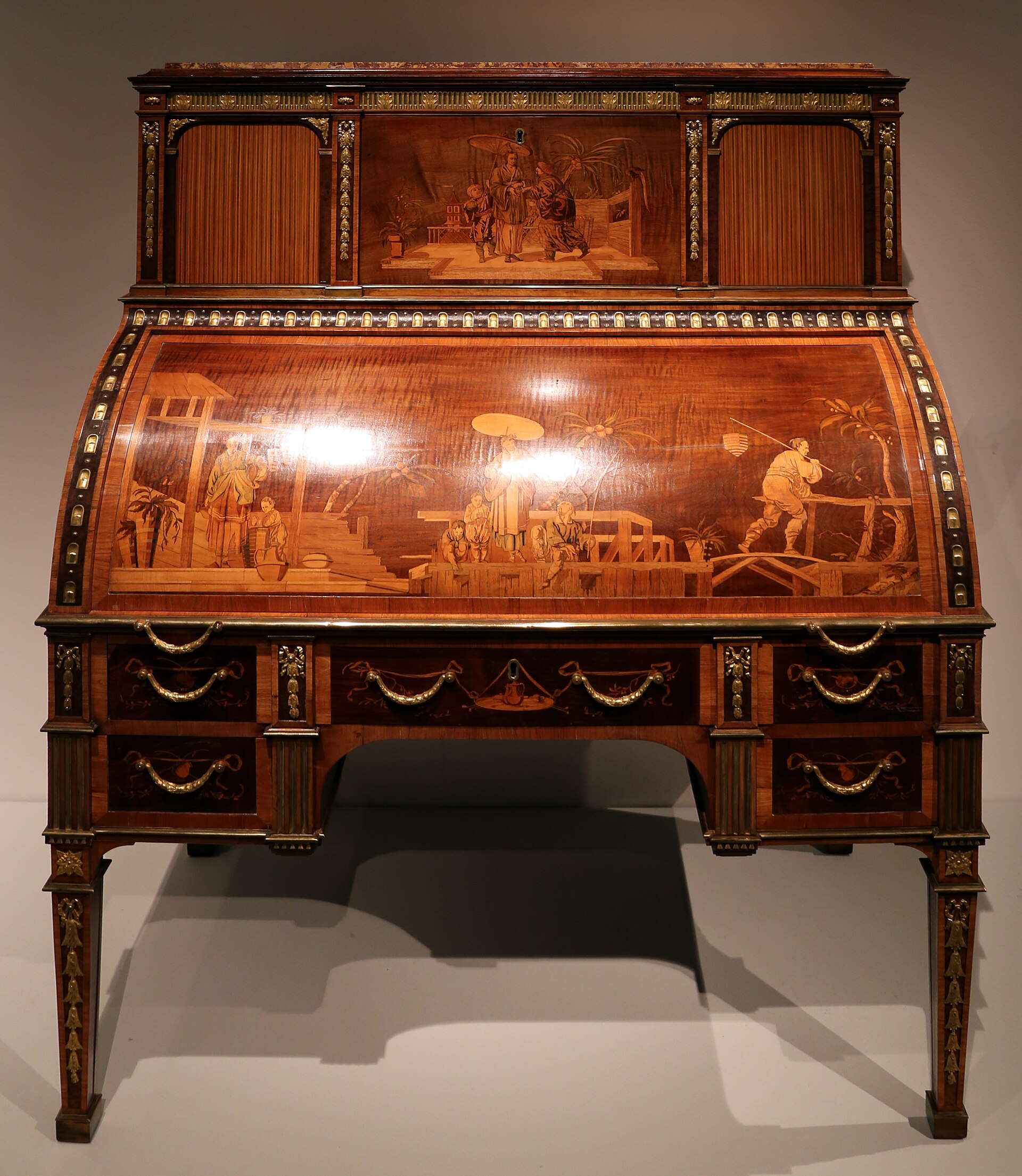
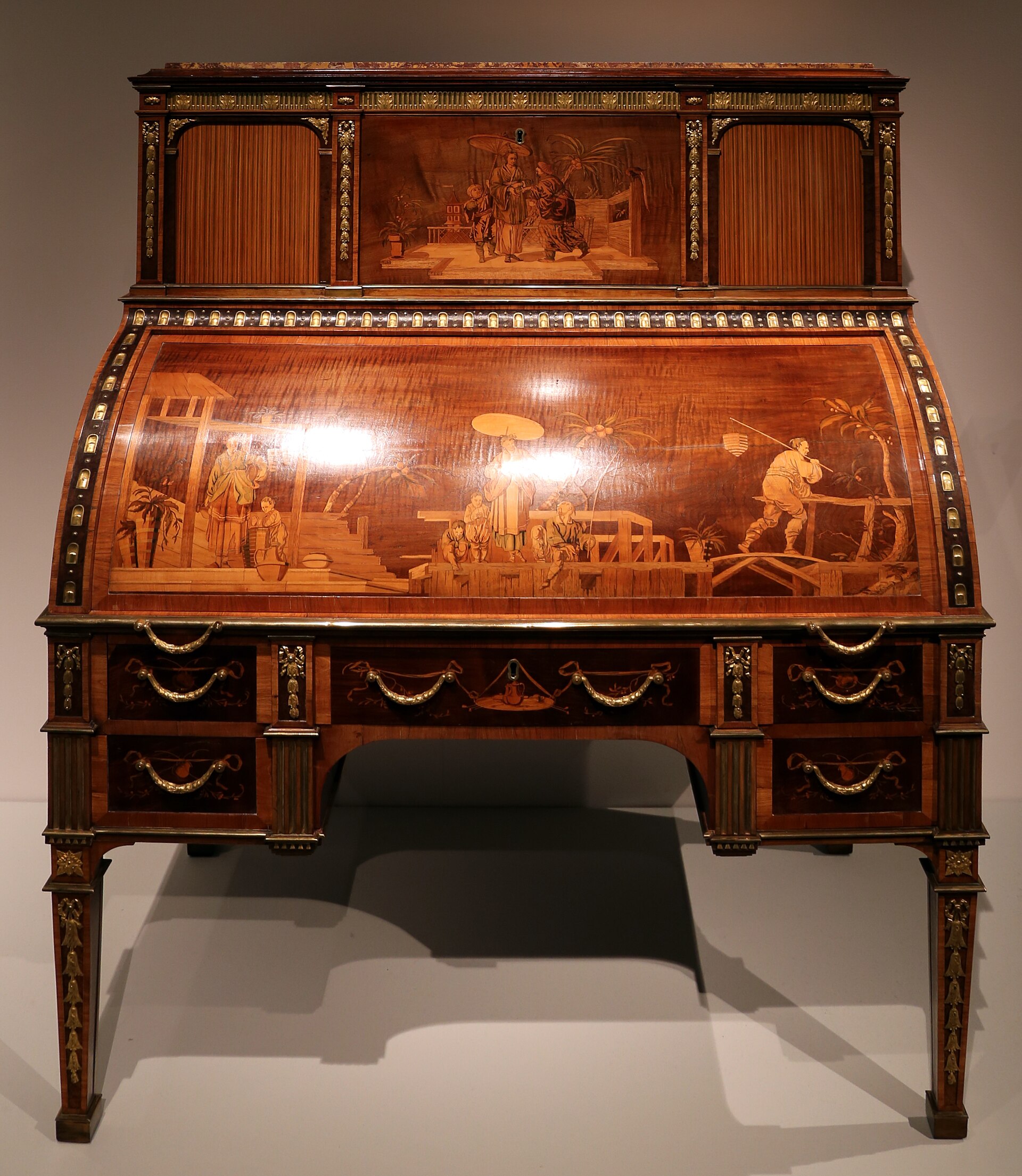
The Berlin Secretary Cabinet
1777-1779 · Curly and grained maple veneer and mahogany
Kunstgewerbemuseum
 German · 1743-1807
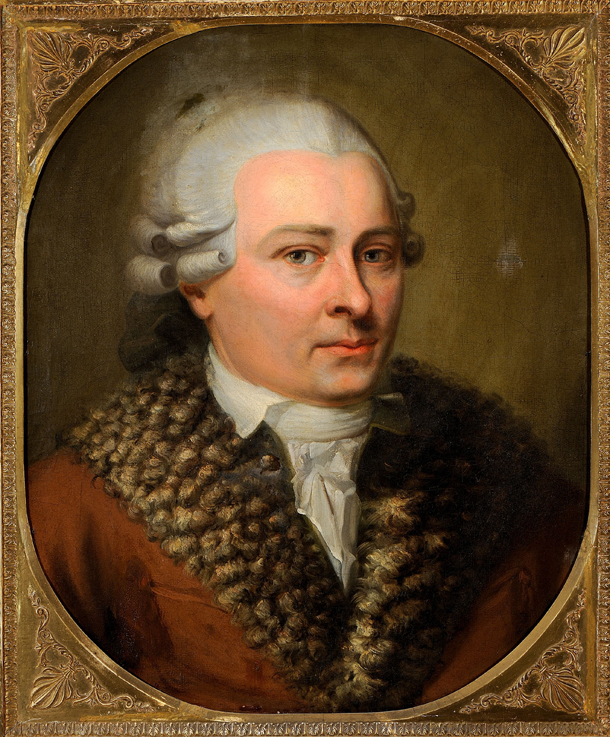
An oil portrait of David Roentgen at about age 45, painted around 1785-1790 by an unidentified painter and held by the Roentgen-Museum Neuwied, the museum dedicated to the family workshop. The sitter's identity is not disputed; the painter's is unknown, which this record states plainly rather than assigning a name on no evidence. (An earlier research brief for this page assumed a portrait by the contemporary portraitist Anton Graff; no such Graff portrait of Roentgen was located in the sources checked, and the claim is not repeated here.)
Roentgen-Museum Neuwied| Full name | Abraham David Roentgen, generally known as David Roentgen |
|---|---|
| Worked as | Cabinetmaker, Workshop proprietor and mechanician |
| Born | 11 August 1743 · Herrnhaag, Wetterau, Holy Roman Empire (present-day Hesse... |
| Died | 12 February 1807 · Wiesbaden, Germany, aged 63, while on a diplomatic mission |
| Nationality | German |
| Movement | Neoclassicism, German and Franco-German |
| In this archive | 1 artwork |
| Sources | 23 cited |
| Last verified |
About this page 1 artwork in the archive · Last verified · 23 sources cited
David Roentgen ran the largest and most technically ambitious cabinetmaking workshop in eighteenth-century Europe from a small Moravian settlement on the Rhine, and sold its furniture to Louis XVI and Marie Antoinette, to Catherine the Great, and to Frederick William II of Prussia in the same decade. The workshop's own signature was not a carving style but a mechanism: a desk that looks closed, a drawer that will not open until a hidden stud is found, a panel that slides back to raise a miniature stage of drawers on command. Almost none of it carries his name cut into the wood. Guild law required no stamp from him at Neuwied, so identifying a genuine Roentgen commission today rests on archival delivery records, on the small number of pieces with a documented royal history, and on construction evidence, not on a signature.
The single fact most readers do not know is how quickly and completely it ended. The French Revolution did not merely dent an export market; it seized Roentgen's Paris showroom outright as enemy property in 1793, and by 1801 he had closed his account books for good. Two respected sources describing his death eight years later cannot even agree on whether he died solvent or ruined, which is itself the correct way to hold everything else claimed about him: precise where the paper survives, contested where it does not.
What follows treats the name the way the evidence requires: a real, extraordinarily well-connected workshop proprietor whose furniture is now scattered across museums from Berlin to San Francisco, sold at a scale and to patrons that a signature-based account of eighteenth-century furniture routinely undersells.
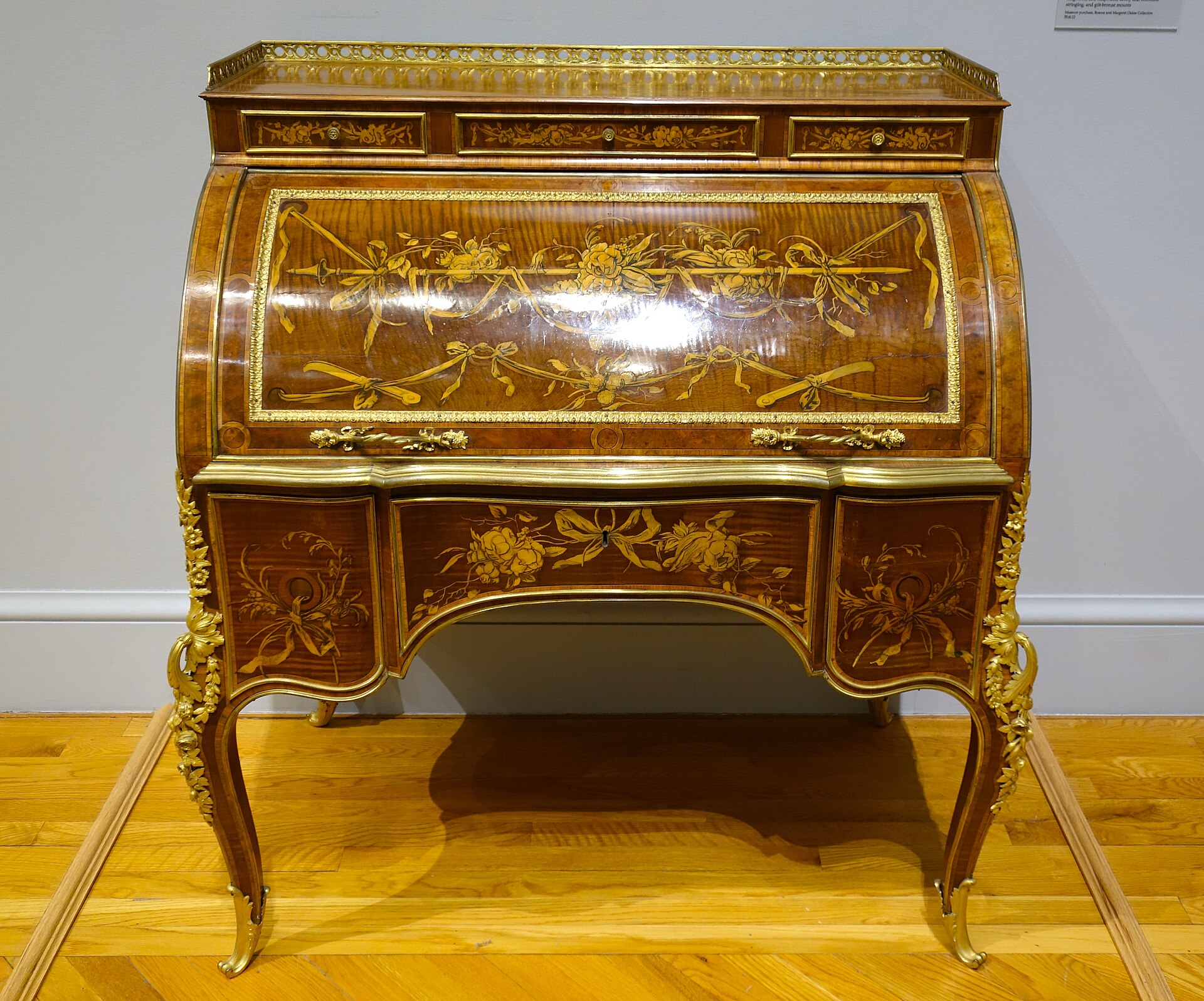
Born in Herrnhaag, in the Wetterau, on 11 August, son of the cabinetmaker Abraham Roentgen.23
The Moravian community, expelled from Herrnhaag, resettles in Neuwied on the Rhine at the invitation of the Count of Neuwied, who exempts the workshop from guild restrictions.1
The Seven Years' War forces the workshop to keep supplying its aristocratic clients at a loss, leaving it with unsold, unfashionable stock.1
Abraham and David Roentgen travel to London, exposing David directly to Robert Adam's Neoclassicism.1
David is excluded from the Moravian Brotherhood over his ambitious business plans and spending.1
A publicized furniture lottery in Hamburg clears the workshop's unsold stock and restores its finances.111
Begins his defining professional partnership with the Neuwied clockmaker Peter Kinzing.9
Formally takes over the Neuwied workshop from his father, per Wikipedia's account (a separate Lempertz house history dates the formal transfer to 1773; the Metropolitan Museum's own scholarship does not itself give a specific year).611
Travels to Paris; en route, most likely meets Charles Alexander, duke of Lorraine, in Brussels, who becomes his most important early foreign patron.1
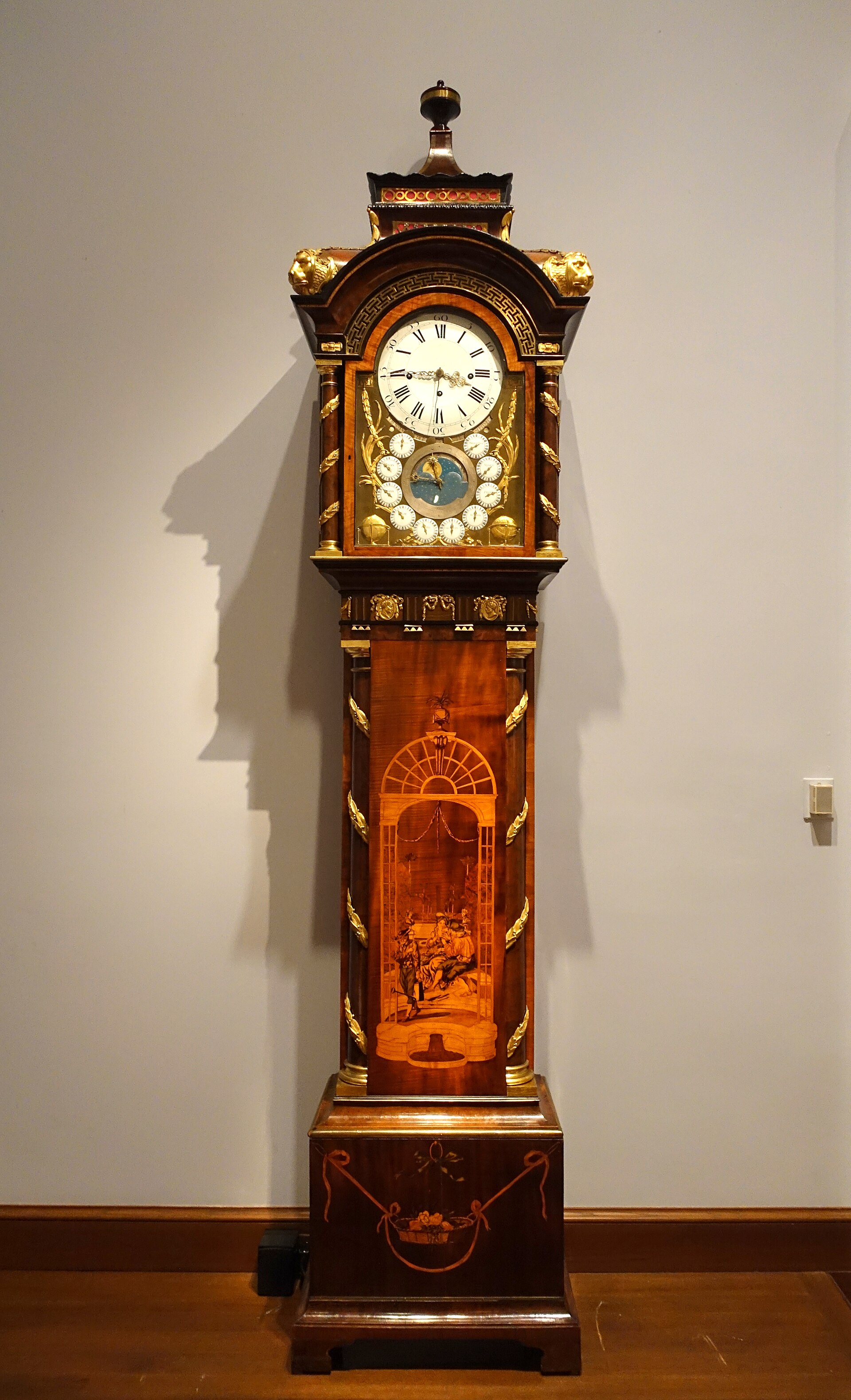
Delivers a longcase clock to the duke of Lorraine's Brussels palace, its case marquetry executed by Reusch after a design by Thomas Chippendale; later acquired by the Metropolitan Museum of Art (1975.101).1
Delivers a secretary cabinet to the duke of Lorraine's Brussels palace; the cabinet is moved to Vienna around 1794 and now stands in the MAK, Vienna (H-269).11415
Delivers a secretary cabinet to Louis XVI and Marie Antoinette at Versailles for 80,000 livres, the largest sum the French crown had ever paid for one piece of furniture; opens the Paris shop A la Ville de Neuwied.1
Delivers the third and most elaborate of the three great secretary cabinets to the Prussian heir presumptive, later Frederick William II, in Berlin.1
Builds the Apollo desk for Empress Catherine II of Russia on speculation, its hidden mechanism released by a knob modeled as her greyhound Zemire; she pays 20,000 rubles plus a 5,000-ruble bonus and a gold snuffbox.1
The French crown grants both Roentgen and Peter Kinzing court titles; Kinzing becomes horloger de la reine.9
Frederick William II, now king, is presented with the outstanding balance on the 1779 Berlin cabinet; its central marquetry panel is replaced.1
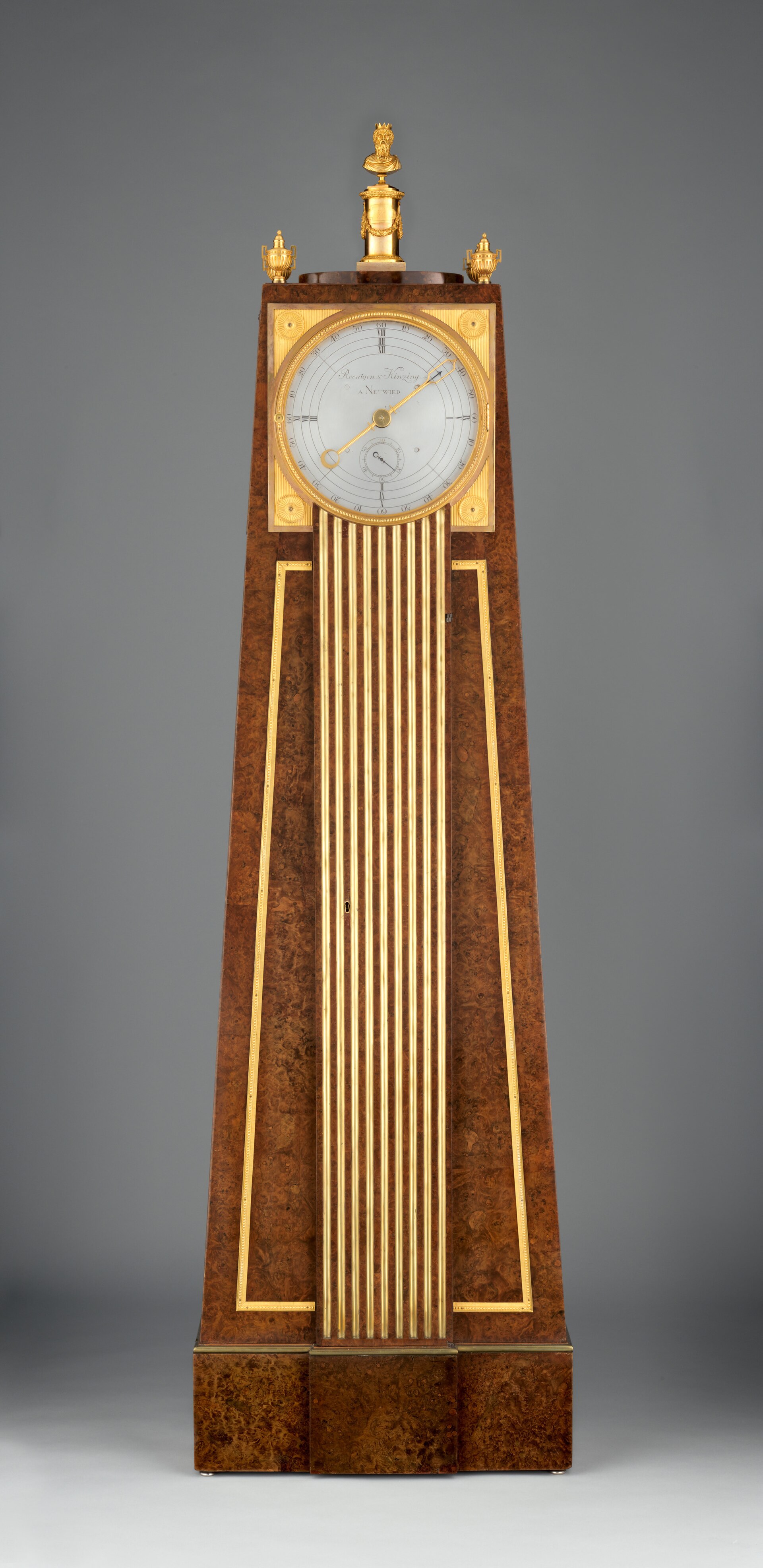
Workshop and Kinzing produce a series of Franklin-movement obelisk longcase regulators, one later acquired by the Metropolitan Museum of Art (2015.504a-d).2
Appointed Privy Councillor of Prussia, a diplomatic honor from the king.1
The French Revolutionary government declares Roentgen an emigre and seizes his Paris showroom and personal property.16
With French revolutionary troops threatening the Rhineland, Roentgen evacuates workshop stock inland to Kassel and Gotha.1
Closes his business account books in March, ending the firm.1
Dies at Wiesbaden on 12 February, on a diplomatic mission; sources disagree on whether his estate was solvent or ruined.167
Archduke Charles of Austria donates the 1776 Brussels cabinet and four further Roentgen pieces to the Vienna Polytechnikum, the collection that becomes the MAK.1415
A Roentgen and Zick writing table, formerly owned by the Princesse de Lamballe, is bought at Christie's for 420 British pounds and later enters the Victoria and Albert Museum.19
The Metropolitan Museum of Art stages Extravagant Inventions: The Princely Furniture of the Roentgens, curated by Wolfram Koeppe, showing about sixty pieces, many never before lent outside Europe.10
A commode by Roentgen's father, Abraham, sells at Lempertz, Cologne, for 21,080 euros including premium.20
Almost all firmly documented David Roentgen furniture is now in museum hands, which makes a fully disclosed open-market result for a piece securely by him hard to find; this record states that plainly rather than filling the gap with an estimate dressed up as a result. Sotheby's has offered a rolltop desk of about 1785 (estimate USD 250,000-350,000, New York, 2013) and a writing table of about 1785-1790 (estimate GBP 15,000-20,000), the latter's catalogue note citing comparable examples at Pavlovsk Palace, in the Stadtisches Museum, Glauchau, and in the Keck and Hubert Guerrand-Hermes collections; none of these lots' hammer prices or premiums were accessible in the sources consulted without a subscriber login. The one fully disclosed price found in this research concerns Roentgen's father, Abraham, not David, and is recorded here only as comparanda for the wider family workshop.
| Date | Sale | Work | Result | Note |
|---|---|---|---|---|
| 17 November 2017 | Lempertz | Commode by Abraham Roentgen (David Roentgen's father), Neuwied, c. 1755-1760 | With premium EUR 21,080 (price realized including premium; hammer not separately published) EUR | Estimate EUR 20,000-25,000. A workshop-founder result, not a David Roentgen result; recorded here only as family-workshop comparanda. |
| 1874 | Christie's | Writing table by David Roentgen after a design by Januarius Zick | With premium GBP 420 (price achieved) GBP | Historical result, not a modern market indicator; later entered the Victoria and Albert Museum (museum no. 381-1874). Provenance from the Barker Collection; earlier reportedly owned by the Princesse de Lamballe. |
Hammer is the price at which the bidding stopped; with premium adds the fee the house charges the buyer on top. Hammer price and buyer's premium in the glossary.
| Institution | City | Holdings | Note |
|---|---|---|---|
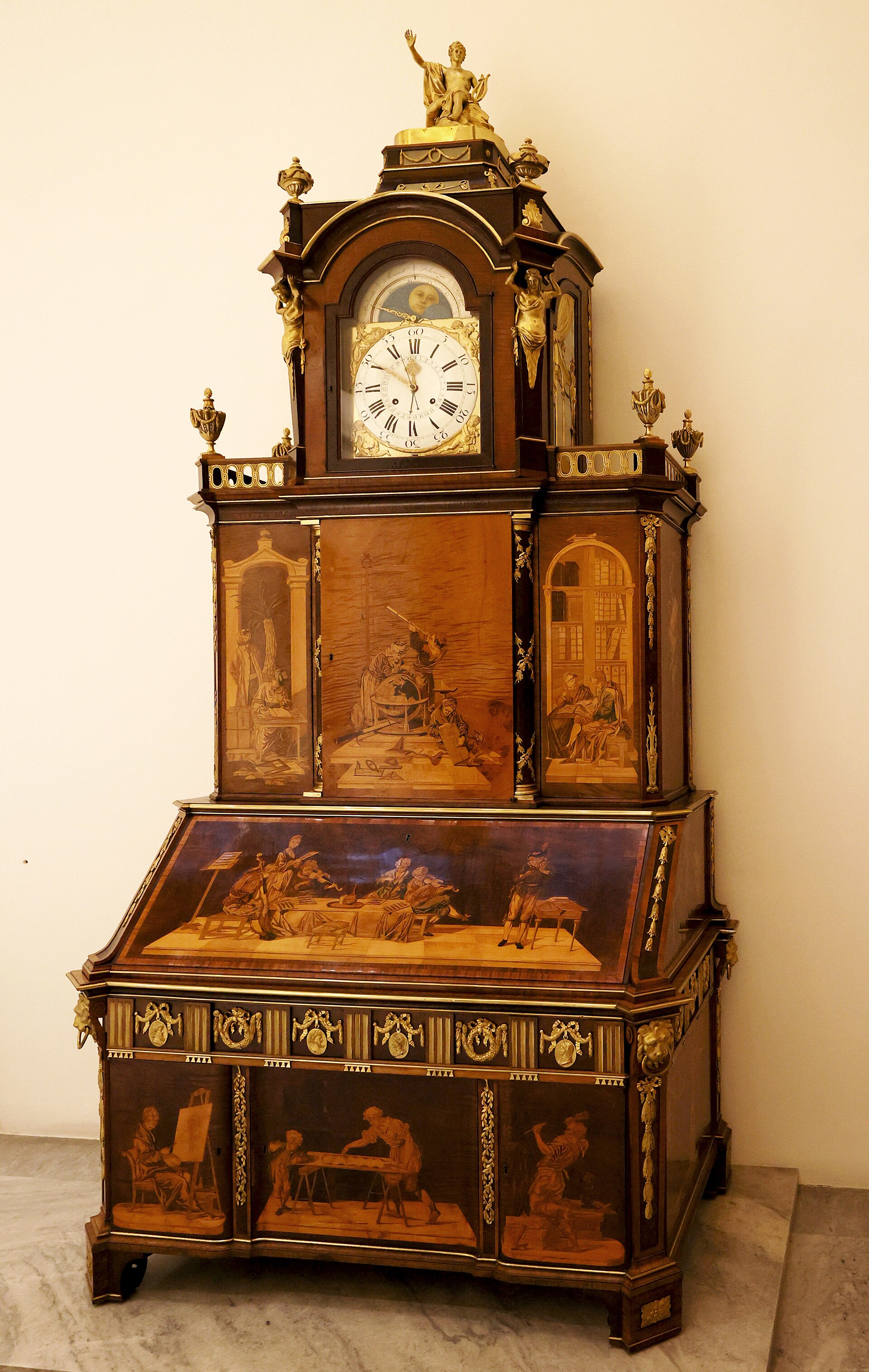
| Kunstgewerbemuseum, Staatliche Museen zu Berlin | Berlin | The 1779 Berlin secretary cabinet, delivered to the future Frederick William II of Prussia, already published on this site as its own record. | Described by the Metropolitan Museum's own scholarship as possibly the most expensive piece of furniture ever made, based on its original commission price. |
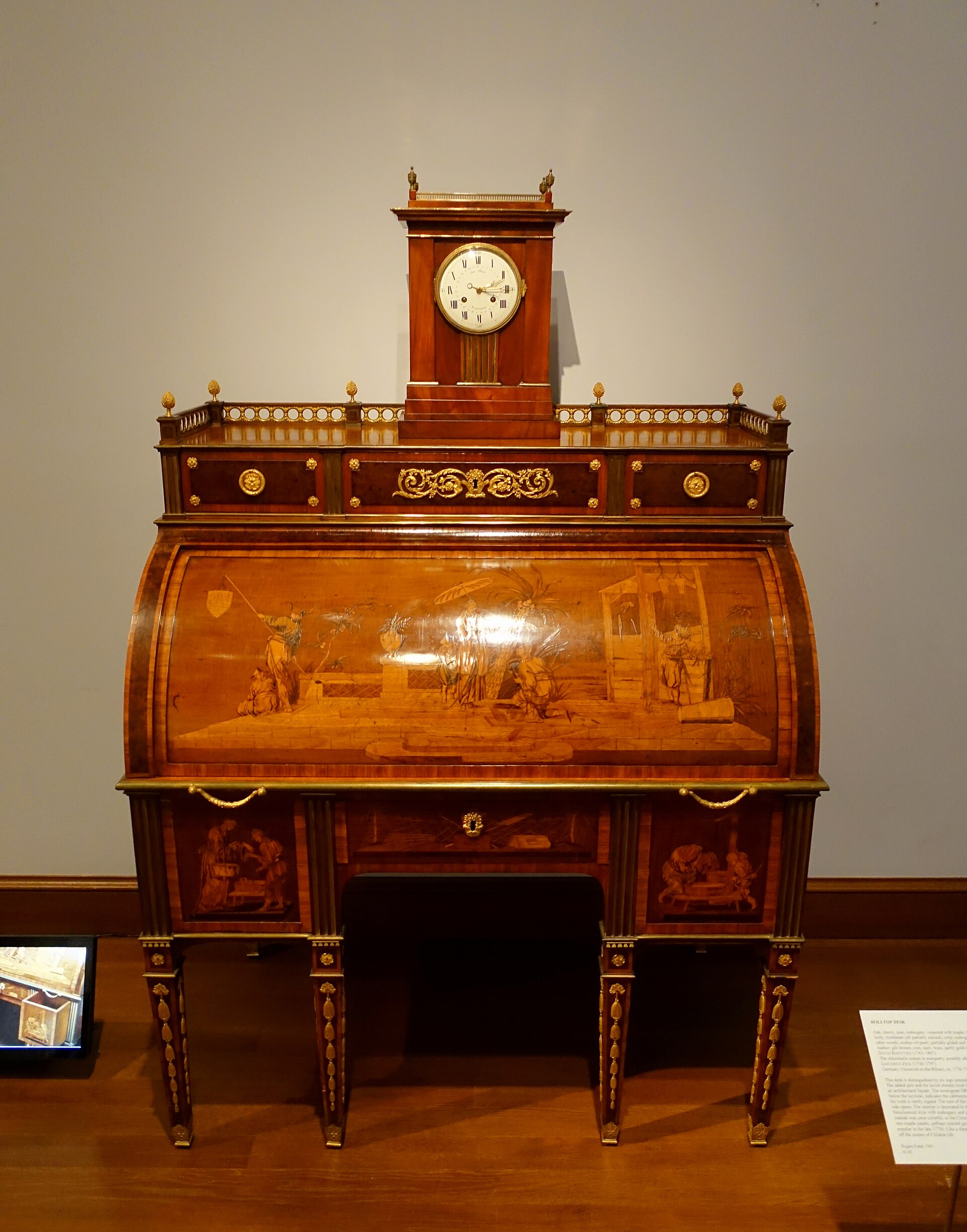
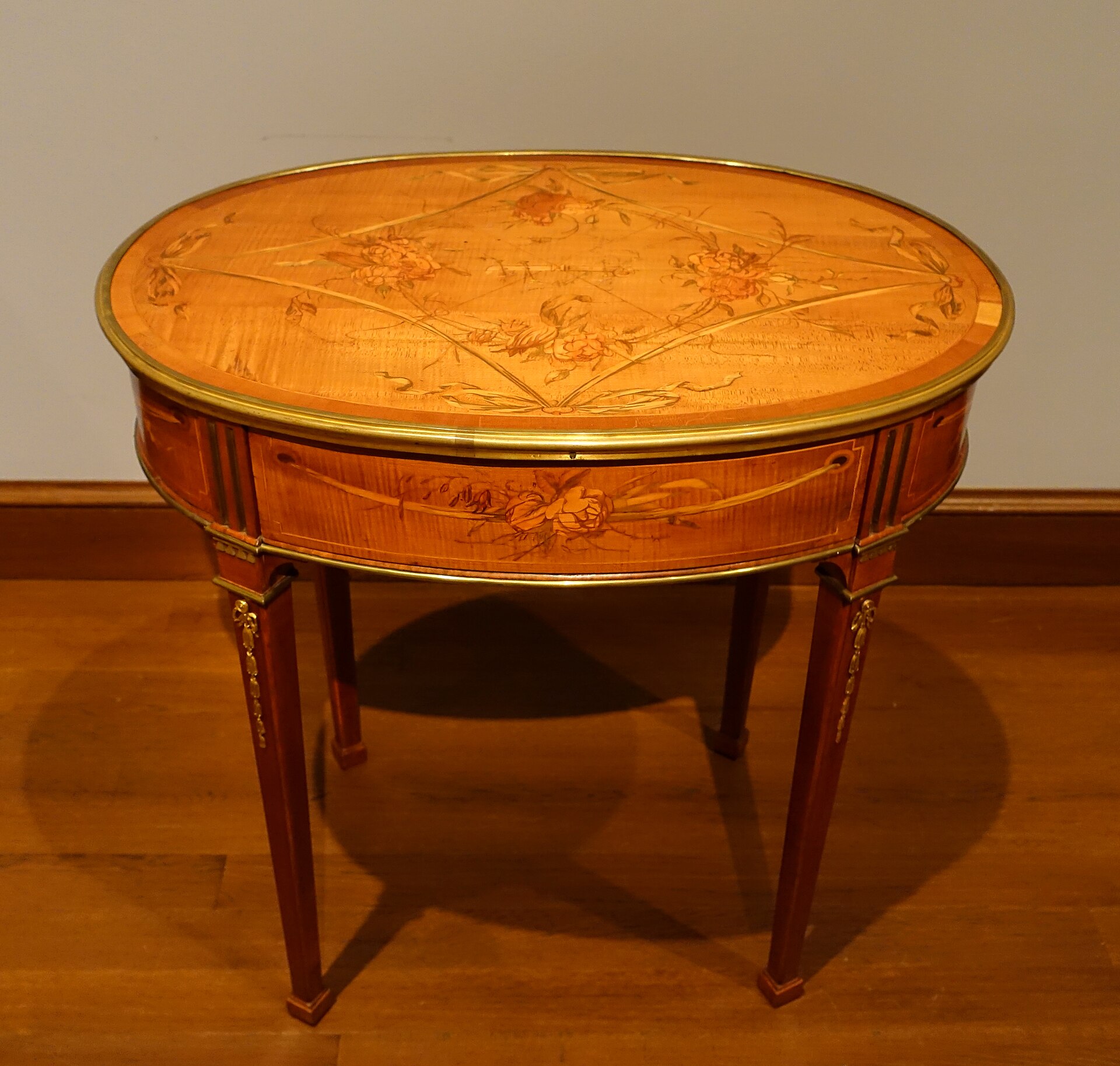
| Metropolitan Museum of Art | New York | Multiple pieces including a rolltop desk (41.82), an oval table (58.75.39, attributed), a longcase clock (1975.101) from the duke of Lorraine's Brussels ensemble, and a Franklin-movement obelisk clock built with Peter Kinzing (2015.504a-d). | Open-access CC0 photography available for its Roentgen holdings; hosted the 2012-2013 Koeppe exhibition. |
| MAK, Museum of Applied Arts | Vienna | The 1776 secretary cabinet (H-269) from the duke of Lorraine's Brussels ensemble, with an integrated Kinzing-built musical automaton, plus two Roentgen game tables and two marquetry wall panels from the same original commission. | Entered the collection via the Vienna Polytechnikum in 1872, after an 1823 donation by Archduke Charles of Austria. |
| Musee du Louvre | Paris | A cylinder secretary, OA 6865, attributed to the Roentgen workshop, about 1780. | |
| Victoria and Albert Museum | London | A writing table (museum no. 381-1874) with marquetry after a painting by Januarius Zick, formerly owned by the Princesse de Lamballe. | Currently on loan to Cliffe Castle Museum, Keighley. |
| National Gallery of Art | Washington, D.C. | A writing table (1942.9.416, Widener Collection) combining a genuine Roentgen marquetry panel, salvaged from the dismantled 1779 Louis XVI secretary cabinet, with a nineteenth-century table built around it by unrelated hands. | Catalogued under four separate maker attributions rather than one. |
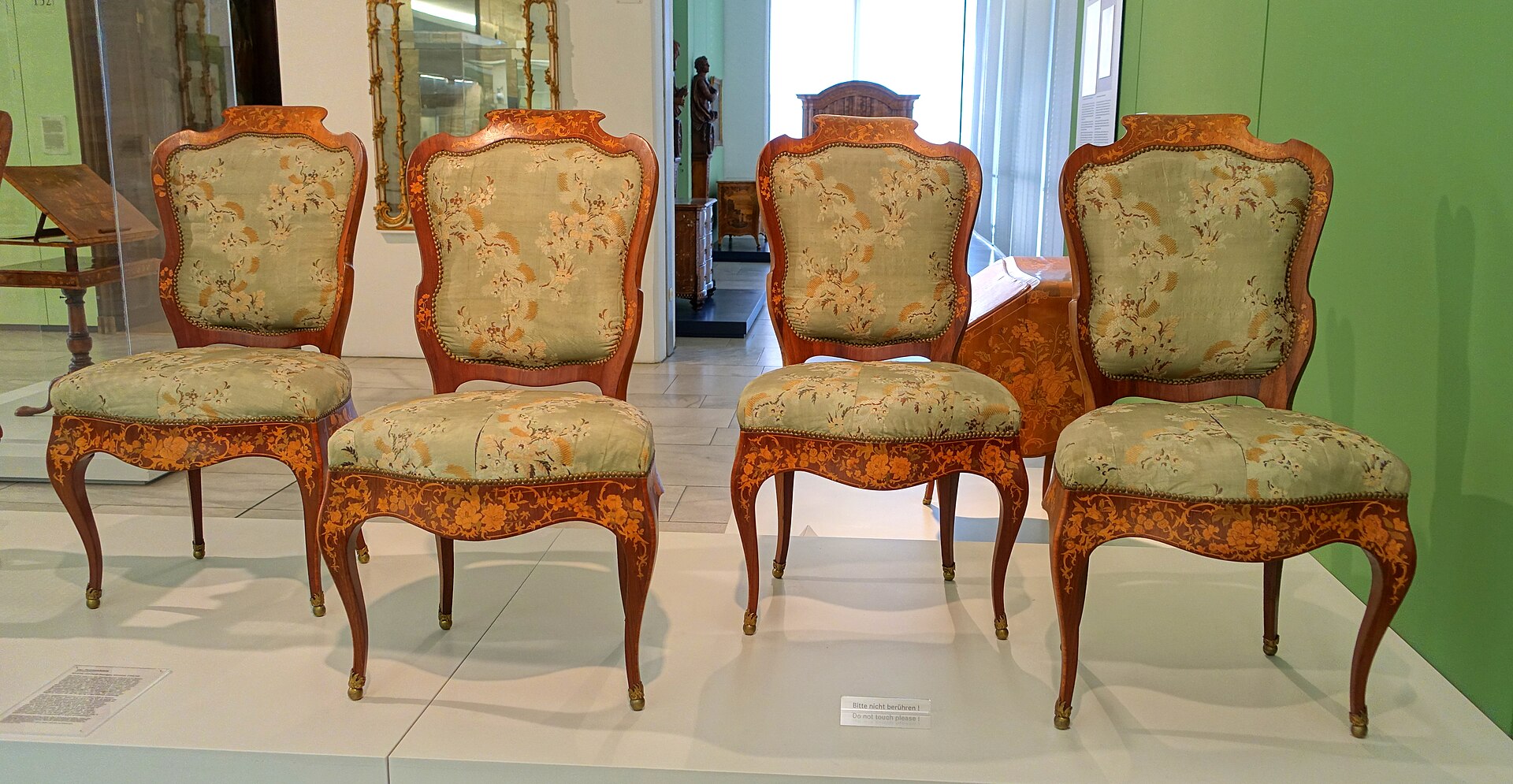
| Germanisches Nationalmuseum | Nuremberg | Early joint Abraham-and-David Roentgen furniture including upholstered chairs of 1765-1768, plus later rolltop desks under David's own workshop. | |
| Chatsworth House, Devonshire Collections | Derbyshire, England | A rolltop desk of about 1780, recorded in the 5th Duke of Devonshire's household inventory of 1811. | No acquisition record is given for how or when it entered the collection. |
| California Palace of the Legion of Honor | San Francisco | A roll-top desk of about 1780, catalogued as attributed to David Roentgen. |
Roentgen was born in Herrnhaag on 11 August 1743, the son of Abraham Roentgen, a cabinetmaker who had worked in London before joining the Moravian Church, the Herrnhuter Brotherhood, in 1737.
Roentgen was born in Herrnhaag on 11 August 1743, the son of Abraham Roentgen, a cabinetmaker who had worked in London before joining the Moravian Church, the Herrnhuter Brotherhood, in 1737. Abraham founded a small workshop at Herrnhaag in 1742. When the Moravians were expelled from Herrnhaag around 1750, the Count of Neuwied, on the Rhine near Coblenz, invited the community to settle in his territory, granting them religious freedom, partial tax exemption and, critically for the family business, freedom from the guild regulations that elsewhere capped how many employees a master cabinetmaker could hire.
That last grant is the reason a Rhineland workshop, not a Paris one, could grow into the largest cabinetmaking enterprise on the Continent. Guild law in Paris limited the size of a master's shop and required a registered stamp on every finished piece; Neuwied had neither restriction, which let David Roentgen build a workforce and a production line no French competitor's guild membership allowed, and also explains why so much of his furniture left the workshop unsigned.
Central Europe's Seven Years' War, from 1756 to 1763, forced the Roentgen workshop to keep making furniture for its remaining aristocratic clients at a loss, and by the mid-1760s its warehouse was...
Central Europe's Seven Years' War, from 1756 to 1763, forced the Roentgen workshop to keep making furniture for its remaining aristocratic clients at a loss, and by the mid-1760s its warehouse was full of unsold, increasingly unfashionable stock. Father and son traveled to London in 1765 to weigh relocating the business there; the trip exposed David directly to English Neoclassicism in the manner of Robert Adam, a style the Roentgen workshop would go on to fuse with French-inspired outlines and its own marquetry and mechanisms.
The ambition and the spending that came with it alarmed the Moravian congregation, whose religious life was organized around communal restraint rather than personal profit, and David was excluded from the Brotherhood around 1767 as a result. Abraham formally handed the business to his son in the early 1770s (Wikipedia's account gives 1772; a Lempertz house history gives 1773, describing the two operations as running side by side in Neuwied for a period before the transfer was complete; the Metropolitan Museum's own scholarship does not itself state a specific handover year). Both figures agree on the substance: David inherited a firm in financial difficulty and had to make an aggressive, unorthodox decision to save it.
Against the spirit of his own faith, which frowned on gambling, David Roentgen resolved the warehouse crisis with a furniture lottery: buyers purchased a numbered ticket for a chance at the...
Against the spirit of his own faith, which frowned on gambling, David Roentgen resolved the warehouse crisis with a furniture lottery: buyers purchased a numbered ticket for a chance at the workshop's finest unsold pieces, rather than paying full price outright, which let the firm convert dead stock into cash quickly. Roentgen toured major German cities with a publicized selection of pieces to promote the scheme. Accounts of the terms differ in their particulars: the Metropolitan Museum's curator Wolfram Koeppe describes the 1769 Hamburg lottery as selling out at roughly eighteen guilders a ticket, worth about six weeks of a journeyman artisan's pay, with the top prize a marquetry desk and cabinet fitted with a chiming clock and a hidden clavichord; a decorative-arts history published by the auction house Lempertz instead describes seven hundred lots at three ducats each. Both sources agree the lottery worked and put the business back on a sound footing.
The eighteen-guilders-for-six-weeks'-wages figure is one of the few places in Roentgen's career where a price can be read against an ordinary person's income rather than a monarch's; it is worth holding on to for exactly that reason, since almost every other price attached to his name is a royal one.
Descriptions of the Neuwied workshop's size vary by source and by which years are being counted, and the variation is itself informative about how loosely quantified even a famous eighteenth-century...
Descriptions of the Neuwied workshop's size vary by source and by which years are being counted, and the variation is itself informative about how loosely quantified even a famous eighteenth-century manufactory can be. A trade-press review of the Metropolitan Museum's own 2012 exhibition on the firm cites a peak workforce of more than one hundred and thirty specialists, producing at a rate comparable to the Meissen porcelain manufactory; Wolfram Koeppe's Metropolitan Museum scholarship discusses the workshop's scale and organization without itself giving a headline employee count. A Lempertz house history estimates total lifetime production at around two thousand pieces across the workshop's roughly fifty-year existence, nearly all of it destined for the European aristocracy.
What is not disputed is the organizational principle behind the number, whatever it was: a division of labor by specialist trade: marquetry cutters, mechanism-makers, chasers and gilders working to a design rather than a single craftsman executing a piece start to finish. This is what let David Roentgen use the phrase Neuwieder Arbeit, Neuwied work, as a luxury brand rather than a signature. Wolfram Koeppe himself calls the idea that Roentgen furniture was made single-handedly a romantic misnomer.
Around 1770 Roentgen began his defining professional partnership, with the Neuwied clockmaker Peter Kinzing (1745-1816), reportedly a prodigy who built his first pendulum clock at the age of ten.
Around 1770 Roentgen began his defining professional partnership, with the Neuwied clockmaker Peter Kinzing (1745-1816), reportedly a prodigy who built his first pendulum clock at the age of ten. The division of labor between the two men was exact and consistent across decades: Roentgen's workshop built the case, the marquetry and the concealment mechanism; Kinzing built the movement, the automatic musical works, and the more ambitious pieces' organs and dulcimers. In 1785 the French crown granted both men titles, Kinzing's being horloger de la reine, clockmaker to the queen.
Their most technically distinctive joint invention, from around 1785, was a series of longcase regulator clocks built to a design Kinzing and Roentgen most likely encountered through Benjamin Franklin during their time in Paris: a simplified movement of only three wheels, a four-hour spiral-ring dial and a single hand, housed in an obelisk-shaped case whose form exists specifically to clear the pendulum's swing. The obelisk finial doubles as the clock's own winding key, an example of the same principle that runs through the whole Roentgen-Kinzing partnership: ornament that is also a working part, never applied on top of the mechanism as decoration alone. A cabinet Roentgen's workshop built in 1776 for Charles Alexander, duke of Lorraine, carried a Kinzing-built musical automaton, a cylinder mechanism driving either a forty-pipe organ or a dulcimer-like instrument through four melodies, and remains among the most complete surviving demonstrations of what the partnership could do inside a single piece of furniture.
Roentgen's marquetry panels were frequently not his own compositions but adaptations of existing paintings and prints, engraved onto a working pattern and then executed in dyed veneers.
Roentgen's marquetry panels were frequently not his own compositions but adaptations of existing paintings and prints, engraved onto a working pattern and then executed in dyed veneers. A rolltop desk of about 1776 to 1779, now in the Metropolitan Museum, carries drawer pulls copied after a design by the English cabinetmaker Thomas Chippendale and a marquetry panel copied after a design by the German painter Januarius Zick, a direct instance of Roentgen's workshop drawing on an English competitor's ornament and a German painter's composition inside the same object.
A writing table of about 1775 to 1780, now in the Victoria and Albert Museum, makes the same point even more precisely: its oval top reproduces, in marquetry, a scene of Aeneas fleeing burning Troy carrying his father and leading his son, adapted from a painting by Januarius Zick as engraved by Elie Gervais. The table's own construction shows the same standardizing logic as its imagery: the legs unscrew for transport, an early flat-pack solution that let a heavy showpiece travel across Europe in a manageable crate. According to the Victoria and Albert Museum's own provenance record, the table was later owned by the Princesse de Lamballe, Marie Antoinette's superintendent of the household, before passing through the Barker Collection and being bought at Christie's in 1874 for 420 British pounds, a rare instance of an ordinary nineteenth-century resale price surviving for a piece with this specific a court connection.
In the mid-1770s Roentgen's most important early foreign patron was Charles Alexander, duke of Lorraine, the Austrian governor of the Netherlands and an uncle of Marie Antoinette, whom Roentgen most...
In the mid-1770s Roentgen's most important early foreign patron was Charles Alexander, duke of Lorraine, the Austrian governor of the Netherlands and an uncle of Marie Antoinette, whom Roentgen most likely met in Brussels on his way to Paris in 1774. The duke bought an entire furnishing ensemble for his Brussels palace: a longcase clock delivered around 1774 to 1775, whose case carries a marquetry panel executed by an artisan named Reusch after a design by Thomas Chippendale, together with two large marquetry wall panels, arranged around a secretary cabinet the duke purchased in 1776.
The pieces did not stay together. The clock was later acquired by the Metropolitan Museum of Art as a gift in 1975 and remains in New York. The cabinet took a different route entirely: when Charles's nephew Archduke Charles became the last Austrian governor of the Netherlands, he most likely brought the cabinet to Vienna around 1794, and in 1823 he donated it, together with two Roentgen game tables and the two marquetry wall panels from the same Brussels ensemble, to the Vienna Polytechnikum, the institution whose collection passed in 1872 to what is now the MAK, the Museum of Applied Arts, Vienna, where the cabinet (MAK inventory H-269) remains one of the collection's most valuable furniture holdings. A single commission for one Habsburg patron's palace in Brussels is now divided between an American and an Austrian national museum, each holding only part of what was once one room's furnishings.
The Vienna cabinet is not simply on display and left alone. The MAK's own conservation department had already completed a multi-year physical restoration of the cabinet, covered in an earlier series of posts on the museum's own blog, addressing both the marquetry surfaces and Peter Kinzing's integrated musical automaton, whose cylinder mechanism had to be brought back to playing condition rather than preserved only as a static object; a separate 3D-scanning and digitization project, reported by the museum in June 2024, was still under way at the time of that report rather than a completed 2024 project in its own right.
Charles of Lorraine's patronage was a useful introduction.
Charles of Lorraine's patronage was a useful introduction. In late 1778 Roentgen arrived in Paris with an even larger version of the Brussels secretary cabinet, and the royal couple bought it for 80,000 livres, described in the Metropolitan Museum's own scholarship as the largest amount the French royal household had ever paid for a single piece of furniture. Marie Antoinette, not Louis XVI, is credited with pressing for the purchase, and she had a miniature of her own portrait set into the cabinet's central marquetry panel in place of the original composition, a personalization Wolfram Koeppe reads as Roentgen recognizing, correctly, that letting a buyer identify herself literally inside a showpiece was a way to close a sale at this scale.
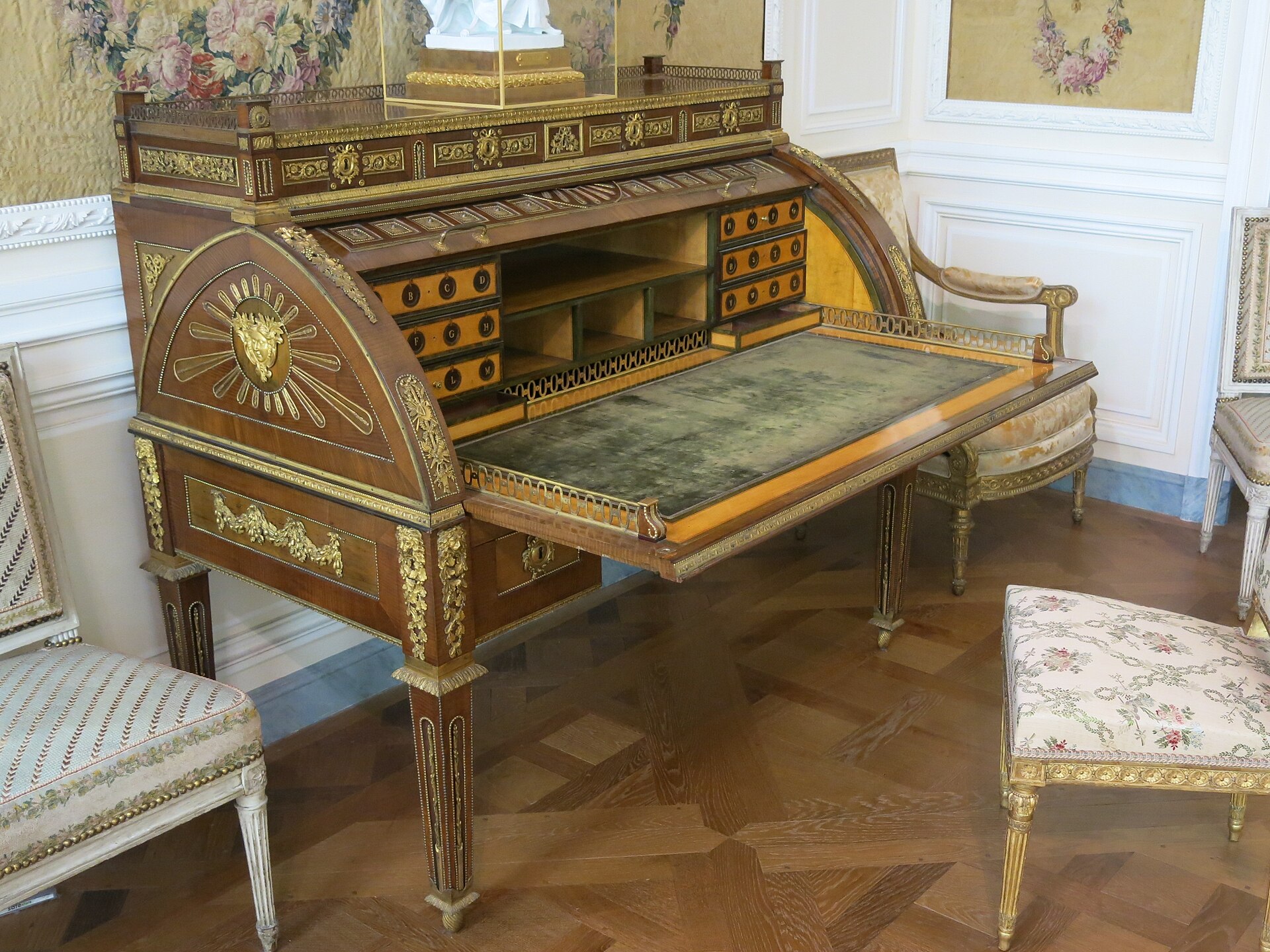
The sale made Roentgen's Paris reputation overnight. Courtiers rushed to order Neuwied work of their own, Louis XVI bought further furniture from him, and Roentgen opened a dedicated Paris shop, A la Ville de Neuwied, to serve the resulting demand. Among the workshop's most popular resulting designs were the rolltop writing desk and the portable oval writing table, both of which became standing trademark models the firm built repeatedly for different clients rather than one-off commissions, which is itself the reason a stylistic resemblance between two surviving rolltop desks proves far less about authorship than it would for a maker who built each piece only once.
The third and most elaborate of the three great secretary cabinets in this design family arrived in Berlin in 1779, bought by the Prussian heir presumptive, later crowned Frederick William II in...
The third and most elaborate of the three great secretary cabinets in this design family arrived in Berlin in 1779, bought by the Prussian heir presumptive, later crowned Frederick William II in 1786, who paid only part of the price on delivery and remained in debt to the workshop for years afterward. Wolfram Koeppe's Metropolitan Museum scholarship states plainly that this cabinet, now in the Kunstgewerbemuseum, Staatliche Museen zu Berlin, represents not only the Roentgen workshop's greatest single achievement but quite possibly the most expensive piece of furniture ever made. This is a claim resting on the original commission price rather than any modern sale, since the object has never been sold at auction. The cabinet's own institutional record, already documented on this site under its own object entry, shows its central marquetry panel was replaced in 1786 once Frederick William, by then king, was finally presented with the outstanding balance still owed.
Whatever the correct ranking among the three sibling cabinets, the pattern across all three commissions is the same: a spectacular showpiece delivered against partial payment, sold on reputation and repeat improvisation rather than an established price list, to a buyer whose own political position made the debt itself a form of flattery Roentgen could not really enforce.
Roentgen's most consequential single patron was, by his own later account, Empress Catherine II of Russia.
Roentgen's most consequential single patron was, by his own later account, Empress Catherine II of Russia. Having succeeded in western Europe, he built a desk for her on speculation rather than commission, judging her taste correctly from a distance: an Apollo desk, its cupola crowned with a statue of the sun god on Mount Parnassus rather than marquetry, its slanted writing surface flanked by sphinxes (an ancient emblem of female wisdom), and its hidden compartments released by a small bronze knob modeled, deliberately, as a portrait of Zemire, the empress's favorite Italian greyhound.
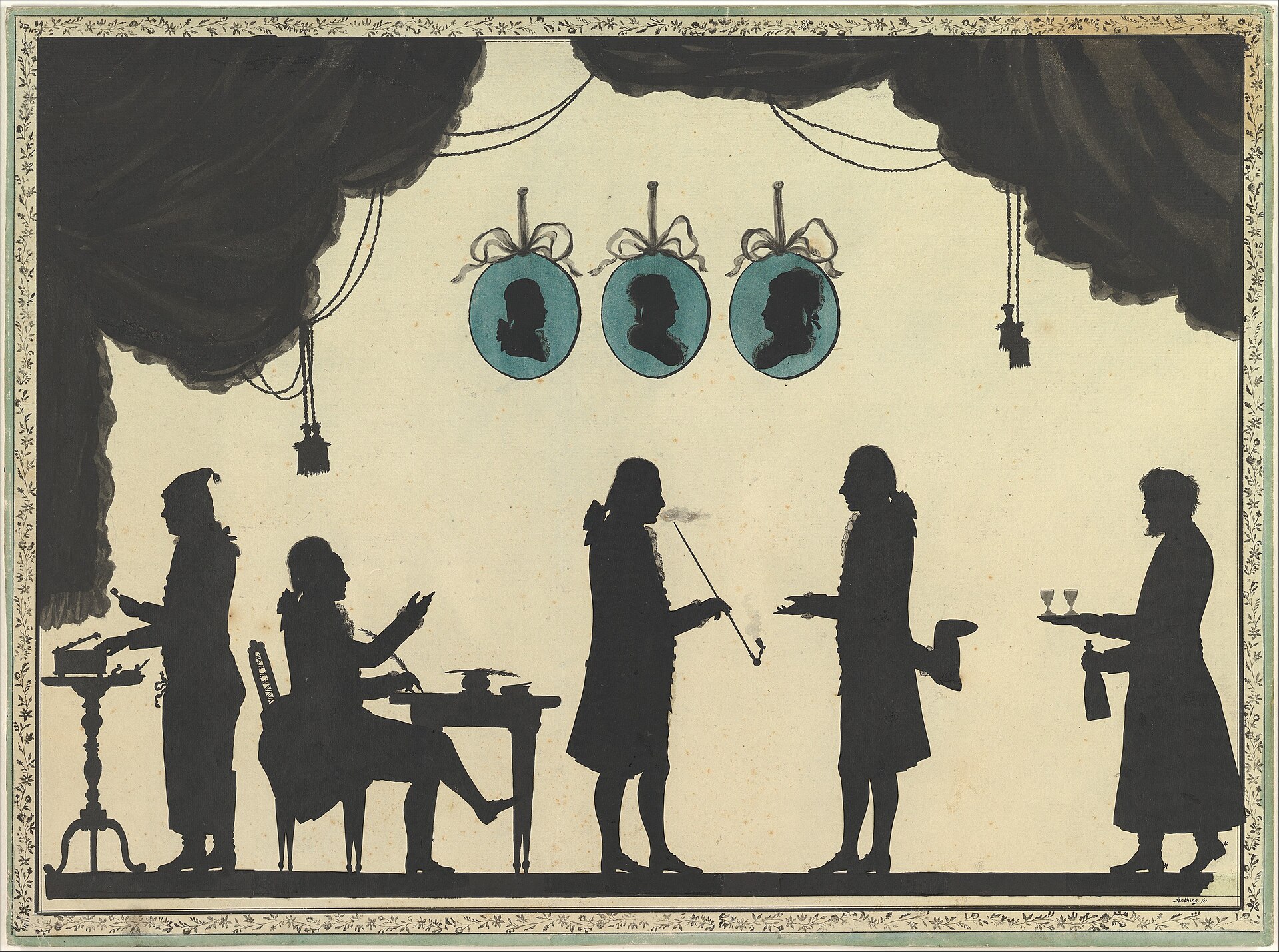
Catherine paid the full asking price of 20,000 rubles (by Wolfram Koeppe's own comparison, a sum comparable to a country estate) and added a gold snuffbox and a further 5,000 rubles as a personal token of appreciation, at a time when other artisans were reduced to writing repeated reminder letters to noble clients who simply did not pay. The gesture worked as advertising: by 1789 the empress and the wider Russian nobility had bought hundreds of pieces of Roentgen furniture, most in a restrained neoclassical style using fine-grained mahogany or a pale timber then called bois jaune (yellow wood) rather than the elaborate pictorial marquetry of the Berlin and Versailles cabinets. A silhouette of the period, cut by the artist Johann Friedrich Anthing around 1784 to 1786 and now in the Metropolitan Museum, depicts David Roentgen and Company's actual commercial presence at the Russian court, a rare image of the business itself, rather than of an object it made.
Because so little Roentgen furniture is signed, and because trademark models like the rolltop desk and the oval writing table were built to the same design for different buyers over a period of...
Because so little Roentgen furniture is signed, and because trademark models like the rolltop desk and the oval writing table were built to the same design for different buyers over a period of years, museums holding Roentgen furniture routinely qualify their own attributions rather than stating them flatly. The Metropolitan Museum catalogues its oval table as Attributed to David Roentgen; the California Palace of the Legion of Honor in San Francisco holds a roll-top desk of about 1780 catalogued the same cautious way. The workshop's own standardization, prized commercially because it let Roentgen build and ship a proven design faster than a bespoke commission, is precisely what makes a later, unrelated example of the same model difficult to rule in or out on style alone.
The clearest documented case of the problem is not a forgery in the deliberate sense but a composite: a writing table now in the National Gallery of Art, Washington (accession 1942.9.416, from the Widener Collection), whose top panel of illusionistic pictorial marquetry (cut and arranged to resemble a painting of young musicians) almost certainly once decorated the front of the tall secretary cabinet Louis XVI and Marie Antoinette bought from Roentgen in 1779. When that cabinet was dismantled after the French Revolution, its dispersed panels were reused: an unknown French or German craftsman of the nineteenth century built an entirely new table carcase around the genuine eighteenth-century Roentgen panel. The National Gallery catalogues the object under four associated names at once: David Roentgen, an unnamed anonymous artist, an anonymous nineteenth-century French cabinetmaker, and an anonymous nineteenth-century German cabinetmaker. This is the museum's own honest way of saying that a real Roentgen panel and a later, unrelated hand are both genuinely present in the same object, and that no amount of connoisseurship changes which parts are which. No source consulted for this record documents an outright deliberate forgery sold as an intact Roentgen original; the composite-construction problem the Louis XVI cabinet's panel illustrates is the one this material actually presents.
The French Revolutionary government classified Roentgen, a foreign national doing business in Paris, as an emigre and seized the contents of his Paris showroom along with his personal belongings in...
The French Revolutionary government classified Roentgen, a foreign national doing business in Paris, as an emigre and seized the contents of his Paris showroom along with his personal belongings in 1793, ending his French business at a stroke. When French revolutionary troops threatened the Rhineland in 1795, Roentgen evacuated what stock he could of his Neuwied workshop further inland, to Kassel and Gotha, crating up furniture built for palace cabinets and shipping it ahead of an advancing front rather than a paying customer. Despite a Prussian diplomatic appointment in 1791 as Privy Councillor, the business never recovered its former scale; David Roentgen formally closed his account books in March 1801.
What happened to him personally afterward is where the sources this record consulted genuinely disagree, and neither side is dismissed here in favor of the other. Wolfram Koeppe's Metropolitan Museum scholarship, published in 2013, states that Roentgen died a man of means on a diplomatic mission to Wiesbaden in 1807. The English-language Wikipedia article, whose biographical text substantially reproduces the 1911 Encyclopaedia Britannica's entry on Roentgen, instead states that he died half ruined at Wiesbaden on the same date. Both accounts agree on the date, the place, and the diplomatic context of his final journey; they flatly contradict each other on his financial condition at the end, and no source consulted here resolves which is correct.
Almost all firmly documented Roentgen furniture is now held by museums rather than private collectors, which is exactly why an open, publicly disclosed auction result for a piece securely by David...
Almost all firmly documented Roentgen furniture is now held by museums rather than private collectors, which is exactly why an open, publicly disclosed auction result for a piece securely by David Roentgen himself is hard to find. Sotheby's has offered a rolltop desk of about 1785 with an estimate of 250,000 to 350,000 US dollars (New York, 2013) and a writing table of about 1785 to 1790 with an estimate of 15,000 to 20,000 British pounds, the latter's own catalogue note citing near-identical examples recorded at Pavlovsk Palace and in the Stadtisches Museum, Glauchau, and further comparable examples sold from the Keck collection (Sotheby's, New York, 5-6 December 1991) and the Hubert Guerrand-Hermes collection (Sotheby's, Paris, 14 December 2023); neither lot's hammer price or price with premium was published in the source consulted without a subscriber login, and this record says so rather than inventing a figure. A comparable commode by Roentgen's father, Abraham, sold at Lempertz in Cologne on 17 November 2017 for 21,080 euros including premium, against an estimate of 20,000 to 25,000 euros. It is useful only as comparanda for the family workshop's earlier, less mechanically ambitious output, not as a David Roentgen result.
Where a Roentgen piece changes hands today it is far more often by private treaty between institutions and estates, or simply stays where a nineteenth-century English or Scottish collector put it. The Devonshire family's rolltop desk at Chatsworth House, made about 1780, already appears in a household inventory of 1811, in the bedroom of the 5th Duke of Devonshire, with no auction or purchase record given for how it entered the collection, a long, quiet, undocumented ownership of exactly the kind more visible sales at Versailles and Berlin do not have the luxury of.
No single catalogue totals David Roentgen's surviving output the way a signed painter's oeuvre can be totaled.
No single catalogue totals David Roentgen's surviving output the way a signed painter's oeuvre can be totaled. The nearest thing to one, Josef Maria Greber's two-volume Abraham und David Roentgen: Mobel fur Europa (1980), is the standard reference cited in the bibliography of major holding institutions including the National Gallery of Art, Washington, but this record was not able to consult it directly; it is flagged here as the authoritative source still to be checked against Wolfram Koeppe's 2012 exhibition catalogue, Extravagant Inventions: The Princely Furniture of the Roentgens, which remains the modern standard and the one source this record could read and cite directly. There is no standing authentication board for Roentgen attributions; museums resolve the question case by case, using archival delivery records where they survive and construction evidence where they do not, exactly as the Metropolitan Museum, the National Gallery of Art and the California Palace of the Legion of Honor each do in their own qualified attributions cited above.
Cabinetmaker; Workshop proprietor and mechanician. 1743-1807.
Born 11 August 1743, Herrnhaag, Wetterau, Holy Roman Empire (present-day Hesse, Germany); died 12 February 1807, Wiesbaden, Germany, aged 63, while on a diplomatic mission.
The National Gallery of Art's composite writing table, accession 1942.9.416. The table's top marquetry panel, an illusionistic pictorial scene of young musicians, almost certainly once decorated the front of the tall secretary cabinet Louis XVI and Marie Antoinette bought from Roentgen in 1779. After that cabinet was dismantled following the French Revolution, an unidentified French or German craftsman of the nineteenth century built an entirely new table carcase around the salvaged genuine panel.
Kunstgewerbemuseum, Staatliche Museen zu Berlin (Berlin); Metropolitan Museum of Art (New York); MAK, Museum of Applied Arts (Vienna); Musee du Louvre (Paris); Victoria and Albert Museum (London); National Gallery of Art (Washington, D.C.).
Almost all firmly documented David Roentgen furniture is now in museum hands, which makes a fully disclosed open-market result for a piece securely by him hard to find; this record states that plainly rather than filling the gap with an estimate dressed up as a result. Sotheby's has offered a rolltop desk of about 1785 (estimate USD 250,000-350,000, New York, 2013) and a writing table of about 1785-1790 (estimate GBP 15,000-20,000), the latter's catalogue note citing comparable examples at Pavlovsk Palace, in the Stadtisches Museum, Glauchau, and in the Keck and Hubert Guerrand-Hermes collections; none of these lots' hammer prices or premiums were accessible in the sources consulted without a subscriber login.
How many pieces from the Neuwied workshop's estimated lifetime production of around two thousand survive today, in what condition, and how many carry a documented as against a merely stylistic attribution to David Roentgen personally. No source consulted gives a running total.
Last verified
One artwork and its story every Tuesday, with the picture: who owned it, what it made, and what closes soon in the exhibition calendar. No promotion, and nothing we cannot cite.
We send one email to confirm the address and keep nothing else. Every letter carries a one-click unsubscribe. How we handle your data.