Portrait of Wally Neuzil
Egon Schiele · 1912
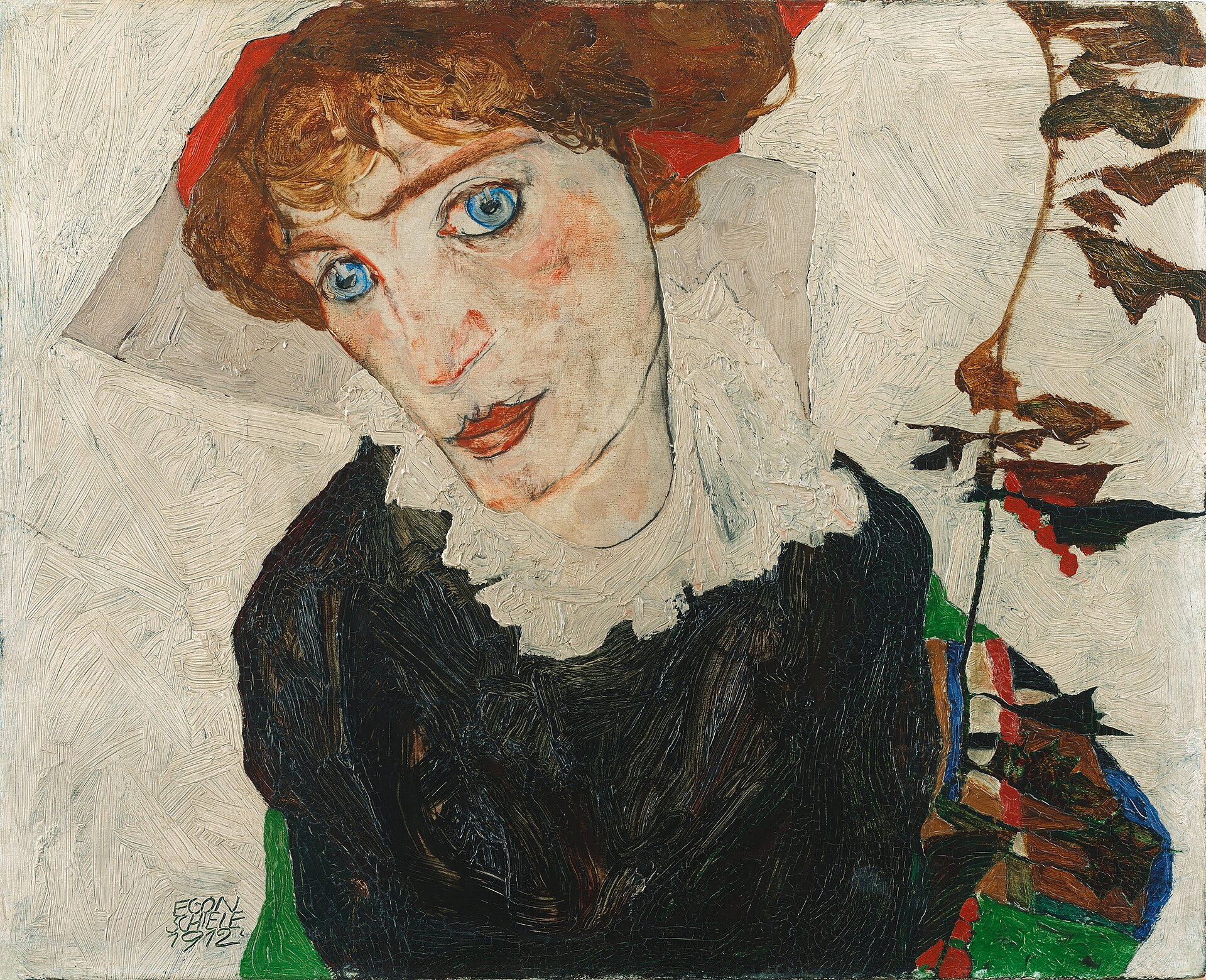
The record subject. Oil on wood, 32.7 x 39.8 cm, signed and dated EGON SCHIELE, 1912. Leopold Museum, Vienna, Inv. 453. The defendant in rem in United States v. Portrait of Wally.
| Artist | Egon Schiele |
|---|---|
| Date | 1912 |
| Medium | Oil on wood panel |
| Dimensions | 32.7 x 39.8 cm |
| Where it is now | Leopold Museum, Vienna. Owned by the Leopold Museum Privatstiftung, a private foundation, not by the Republic of Austria.last confirmed 4 August 2026 |
| Inventory number | Inv. 453 |
| Attribution | AcceptedSigned and dated by the artist. Full note |
| Object type | Painting |
| Period | Austrian, twentieth century |
| Cases | Seized, looted or confiscated · Restituted or repatriated |
| Inscriptions | Signed and dated lower left: EGON SCHIELE, 1912 |
| Owners on record | 13 links12 documented, 1 disputed |
| Sources | 11 cited |
About this record Last verified 3 September 2026 · 11 sources cited · Change log
On this page 11 sections
ContentsClose
A panel a little over thirty centimetres high that a United States court found to have been stolen from a Jewish dealer in Vienna in 1939, that passed through an American restitution office, an Austrian federal monuments authority, the wrong family, a national gallery and a private collector without any of them recording the theft, and that is today owned outright by the museum which was sued over it. The Leopold Museum paid the estate of Lea Bondi Jaray nineteen million dollars in July 2010. The painting did not move. It hangs in Vienna with a label the settlement obliges the museum to keep.
This is the object that produced Austria's Art Restitution Act of 1998, and the object that act does not cover. It is also the clearest demonstration in the corpus that a restitution claim can be won on every finding of fact and still end with the claimant holding money rather than a picture.
Provenance
Each link is graded. Documented: a cited source supports it. Disputed: the identification is argued but not established. Unknown: no owner for that span, and the gap is not smoothed into a narrative. The grades in the glossary.
- 1912 -Egon Schieledocumented
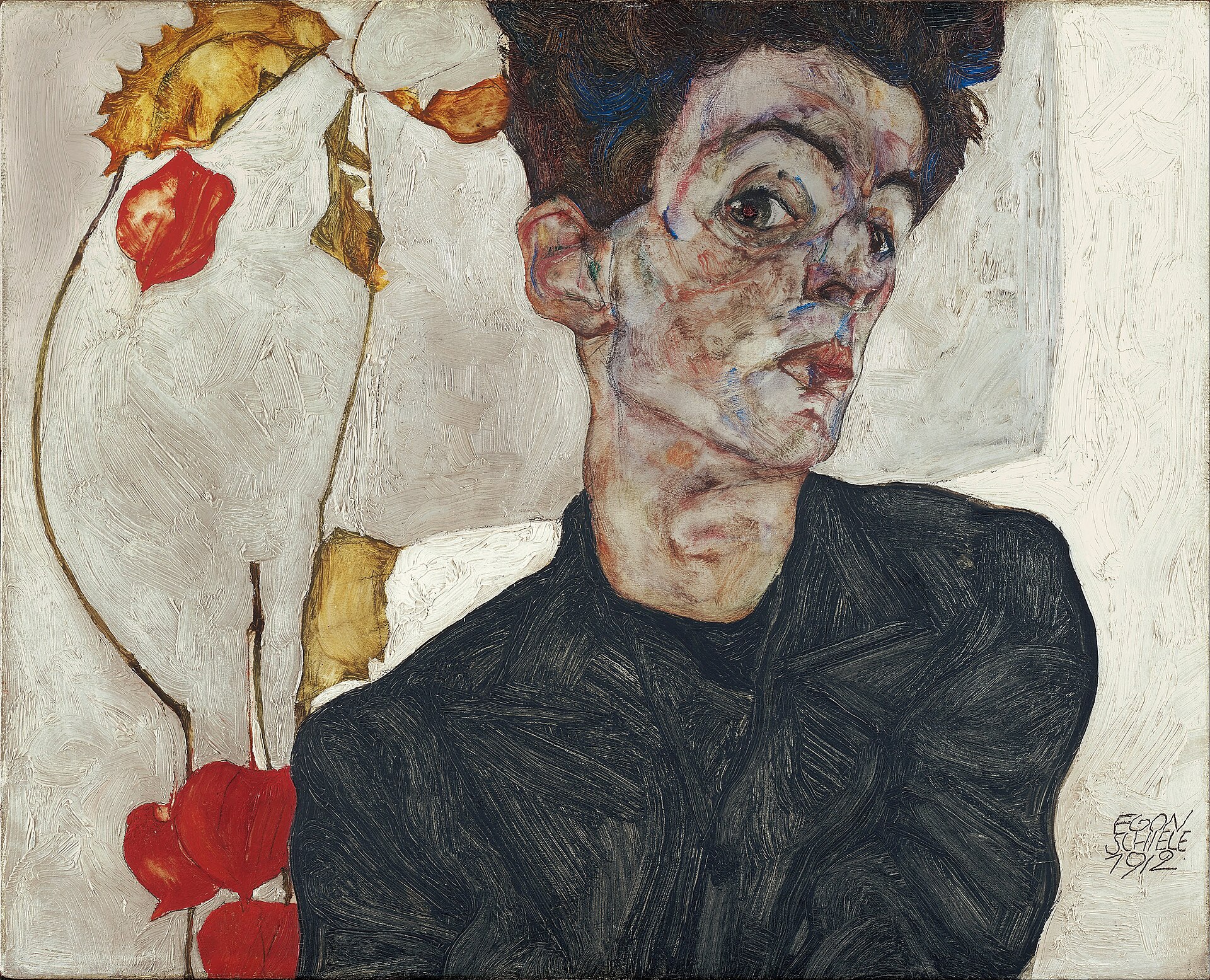
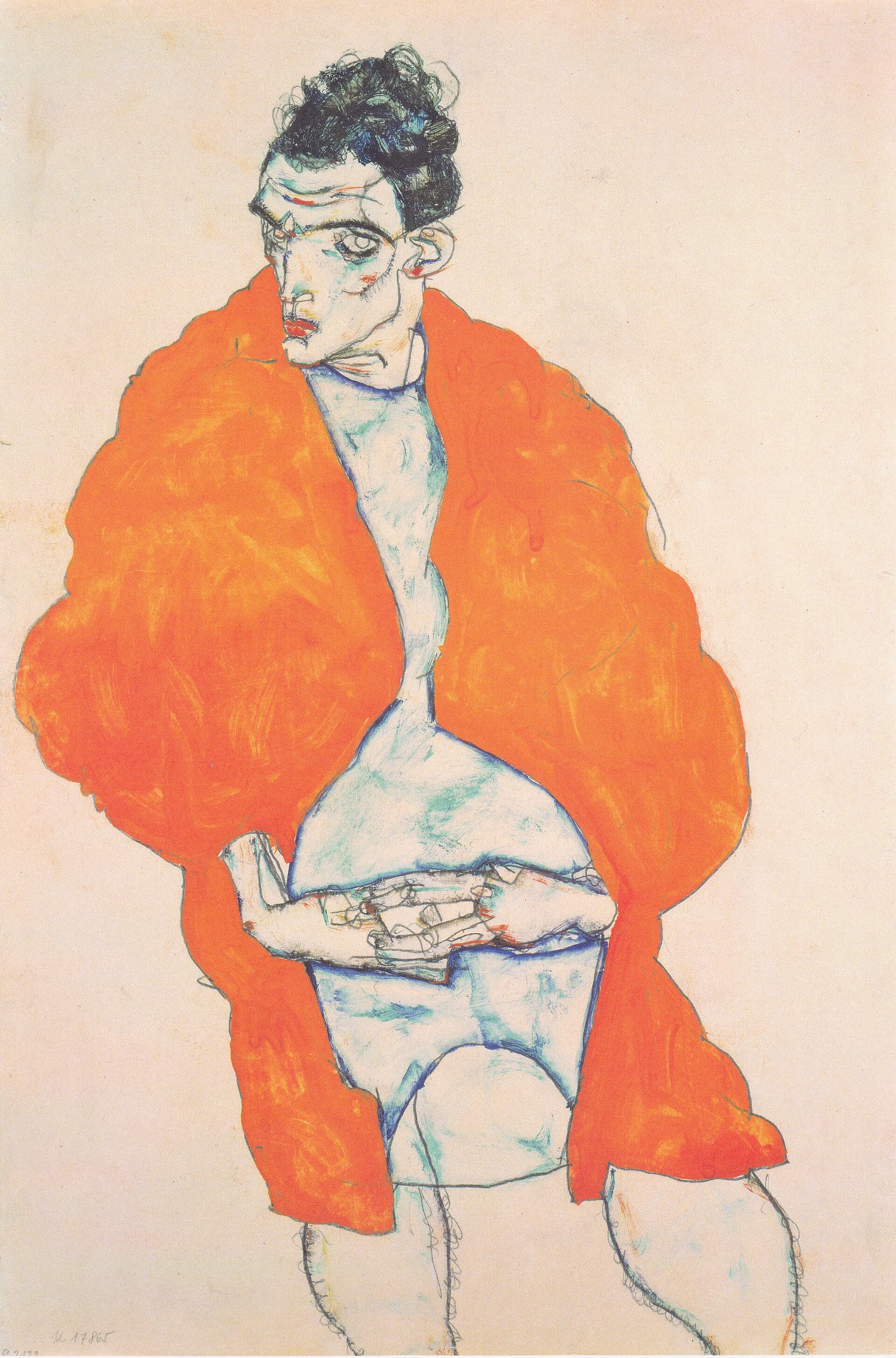
Painted in 1912 and inscribed EGON SCHIELE, 1912. One of a pendant pair with the Self-Portrait with Chinese Lantern Plant.1
- Emil Toepfer, Viennadocumented
First owner in the provenance printed by Otto Kallir in his 1966 catalogue raisonne and the only early owner retained in Rudolf Leopold's 1972 book. No dates are published for his tenure.1
- Richard Lanyi, Viennadocumented
Second owner in the 1966 Kallir provenance. Dropped from Leopold's 1972 printed chain and restored in the museum's 1995 catalogue. No dates are published.1
- by 1925 - 1938 or 1939Lea Bondi Jaray, Viennadocumented
Acquired some time before 1925 and named as owner in Otto Kallir's 1930 catalogue. The court found it was her personal property, kept in her apartment and not stock of the Wurthle Gallery. She emigrated to England in April 1939.1
- 1938 or 1939 - 1945Friedrich Welz, Salzburgdisputed
The Government and the Estate contended that Welz, a Nazi party member who had Aryanised the Wurthle Gallery, came to Bondi's apartment in 1939 on the eve of her escape, demanded the picture and paid nothing. The Leopold Museum contended that she had sold it to him with the gallery in 1938 for 200 Reichsmarks. The court found no genuine dispute that the painting was stolen and remained stolen. The competing accounts were never tried.12
- 1945 - 1947United States forces in Austriadocumented
United States forces occupied Austria in May 1945, arrested Welz, held him about two years and seized his property, including works taken from Bondi and works acquired from the collection of Dr Heinrich Rieger, who died at Theresienstadt in about 1942.1
- 1947 - 1950Bundesdenkmalamt, Vienna, as custodiandocumented
Released with thirteen other paintings on or about 4 December 1947 under a receipt in which the BDA agreed to hold them as custodians pending determination of the lawful owners. The schedule names three Schieles, all described as bought by Welz from the Rieger collection; this painting is on none of them by an identifying name. An American officer flagged the discrepancy in writing in June 1948 and no correction followed.1
- 1950 - 1950Heirs of Dr Heinrich Riegerdocumented
The Austrian Ministry of Finance consented on 10 May 1950 to restitution of paintings including 'Portrait of His Wife' to the Rieger heirs, whose agent collected them on 7 July 1950. This panel went with them without being named. It had never belonged to Rieger, and the Rieger family has stated that it never did.1
- 1950 - 1954Osterreichische Galerie Belvedere, Viennadocumented
Bought from the Rieger heirs under a contract of 27 December 1950 covering eleven pictures. The painting is not named in the contract or in the ministerial approval, but the gallery's own inspection notes of 30 November 1950 identify item three as Vally Neuzil aus Wien and Vally aus Krumau. From that date the Belvedere's staff knew in writing which picture it was.1
- 1954 - 1994Dr Rudolf Leopold, Viennadocumented
Acquired 1 September 1954 by exchange, giving the Belvedere his Schiele known as Rainerbub. Approved by the Belvedere's exchange commission on 12 July 1954 and by the Ministry of Education. He had met Bondi in London in 1953, had been asked by her to recover the picture, and did not tell her he had acquired it. He sought no documentation of the earlier restitution. The court held he never acquired title, by purchase in good faith or by prescription, because his investigation was negligent at best.12
- 1994 - presentLeopold Museum Privatstiftung, Viennadocumented
Rudolf Leopold sold his collection to the newly created private foundation on 8 August 1994, becoming its museological director for life with the right to appoint half the board. The foundation received 2.2 billion schillings of Austrian public money for the collection. Because it is a private foundation, the Austrian Art Restitution Act of 4 December 1998 does not apply to its holdings.14
- 1999 - 2010United States government custody, title unresolveddocumented
Seized in New York on a federal warrant in September 1999 and held for eleven years while United States v. Portrait of Wally proceeded. Title was never adjudicated; the case ended in settlement on 19 July 2010.12
- 2010 - presentLeopold Museum Privatstiftung, Vienna, title confirmeddocumented
The foundation paid the Estate of Lea Bondi Jaray USD 19 million; the Estate released its claim and the forfeiture action was dismissed with prejudice. This is a purchase of a claim, not a restitution: the object never left the museum's possession except for a short exhibition in New York on the way home. The foundation is bound to display a permanent label recording the court's findings.2310
Prices realised
This painting has never been offered at public auction and is not for sale. The two prices attached to it are a litigation valuation of more than USD 2 million in 2002 and the USD 19 million paid in 2010 for the release of a claim, which is the price of a title and not of a picture. The row below is a DIFFERENT painting, included because it is how the settlement was financed.
| Date | Sale | Estimate | Result | Note |
|---|---|---|---|---|
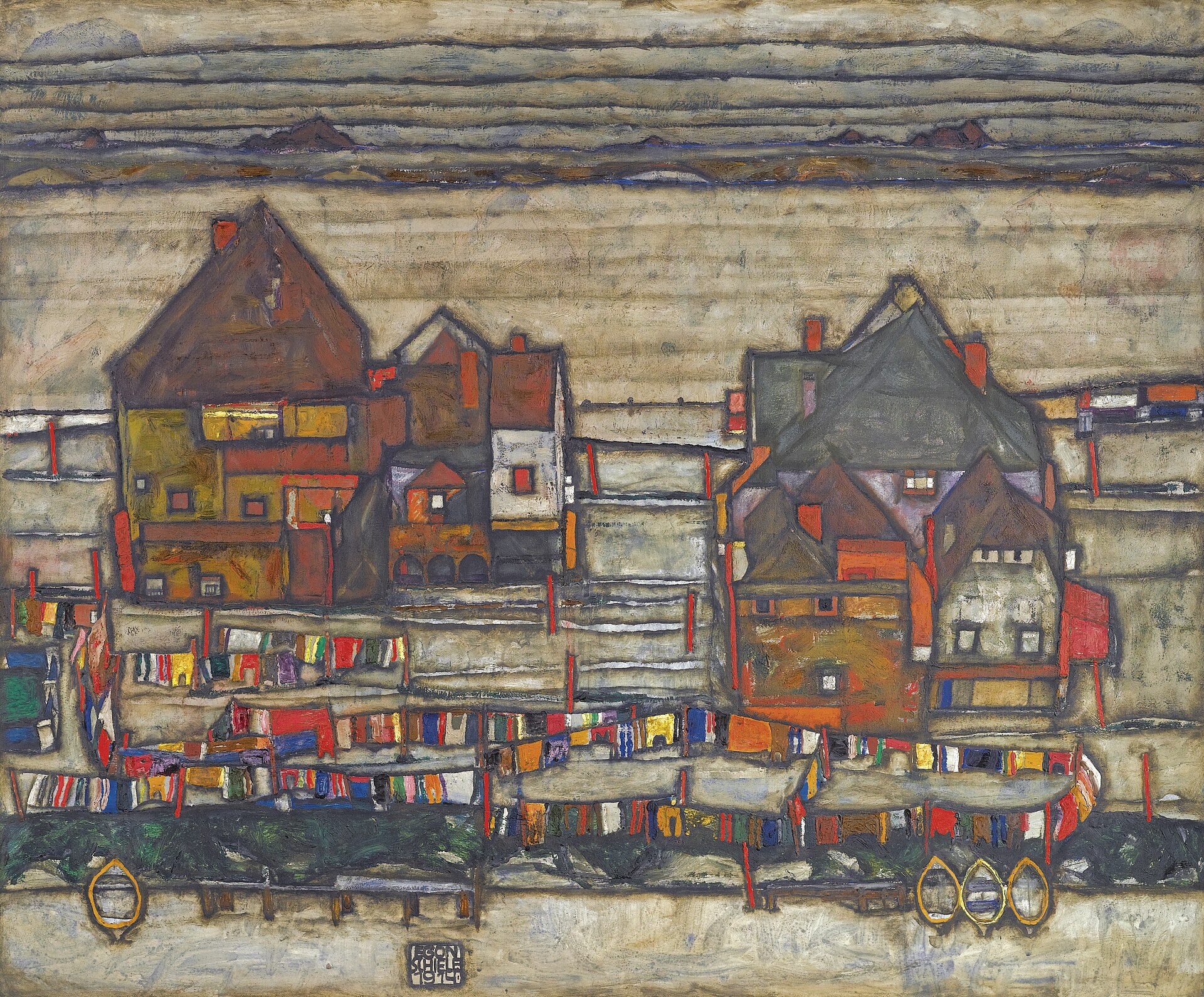
| 22 June 2011 | Sotheby's, London Impressionist and Modern Art Evening Sale | GBP 22,000,000 - 30,000,000 (hammer basis, fees excluded) | Hammer Not separately published. DERIVED at approximately GBP 22.0 m from the premium-inclusive total on the United Kingdom buyer's premium scale then in force; treat as derived, not reported. With premium GBP 24.7 m with fees, about USD 39.8 m GBP | NOT THIS PAINTING. This is Schiele's Hauser mit bunter Waesche (Vorstadt II) of 1914, sold by the Leopold Museum to clear the borrowing it took on to pay the Wally settlement. An auction record for the artist. Sotheby's publishes results inclusive of the buyer's premium and estimates exclusive of it, so the result and the estimate are not on the same basis. |
Hammer is the price at which the bidding stopped; with premium adds the fee the house charges the buyer on top. Hammer price and buyer's premium in the glossary.
Technical evidence
| Attribution note | Signed and dated by the artist. The United States District Court recorded the inscription as 'EGON SCHIELE, 1912' and nothing else. The picture is in every catalogue raisonne of Schiele from Otto Kallir's of 1930 onward and has never been questioned as autograph. What was contested in this object's history was ownership, not authorship. |
|---|---|
| Support | Wood panel. The court's agreed statement of facts describes the work as oil-on-wood.1 |
| Medium | Oil.1 |
| Dimensions | 32.7 x 39.8 cm. Wider than it is tall. Note that several published accounts round this to 32 x 39.8 cm; the figure above is the one in the parties' joint statement of undisputed facts.112 |
| Inscription | The artist inscribed only EGON SCHIELE, 1912 on the work, lower left. No title, dedication or owner's mark is on the panel.112 |
| Format | One of a pendant pair with the Self-Portrait with Chinese Lantern Plant of the same year and the same size, also in the Leopold Museum. The pairing is confirmed by Rudolf Leopold's own 1957 statement that he wanted this panel because he expected to acquire its counterpart.1 |
| Inventory | Leopold Museum, Vienna, Inv. 453.12 |
| Recorded valuation | In excess of USD 2 million in 2002, per the parties' joint statement in the forfeiture action. The 2010 settlement figure of USD 19 million is the price of a disputed title, not a market valuation of the panel.12 |
| Display condition | The 2010 settlement obliges the Leopold Museum Privatstiftung to display a permanent sign beside the painting recording the court's 2009 findings, at its own premises and at any venue to which it lends the work.310 |
| Catalogue references | In Otto Kallir's Schiele catalogue of 1930 and his catalogue raisonne of 1966, in Rudolf Leopold's 1972 monograph and in Jane Kallir's catalogue raisonne of 1990. The provenance printed differs in each; see the catalogue history section.111 |
Images
The record in full
Chapter 1A small panel that rewrote Austrian law and was not covered by it
Egon Schiele painted this picture in 1912.
Egon Schiele painted this picture in 1912. It is oil on wood, 32.7 by 39.8 centimetres, and it shows Valerie Neuzil, his model and his companion from about 1911 until he married Edith Harms in 1915. In 2002, in the middle of the litigation, it was valued in excess of two million dollars. Eight years later a museum paid nineteen million to keep it.
The reason it matters out of all proportion to its size is what happened when it left Austria. Two Schiele paintings from the Leopold Museum were seized in New York in January 1998 while on loan to the Museum of Modern Art. The seizure caused an international incident. Within eleven months the Austrian National Council had passed the Federal Act on the Restitution of Art Objects from Austrian Federal Museums and Collections, on 4 December 1998. The Leopold Museum, whose pictures had triggered the whole affair, is a private foundation rather than a federal body, and the act does not apply to it, notwithstanding that its holdings, its building and its operating costs were and are financed with public money.
That is the shape of the case. A privately held object forced a public statute into existence and then stood outside it.
Chapter 2What it is, physically
A panel picture, not a canvas. Schiele painted a group of small works on wood in 1912, and this is one of them.
A panel picture, not a canvas. Schiele painted a group of small works on wood in 1912, and this is one of them. The support is thin, the format nearly square but wider than it is tall, and the head is set well over to the left of centre, which is the compositional fact that matters for what follows.
The sitter looks out of the picture and slightly to her right. The ground is a flat blue-grey. The artist inscribed the panel once, lower left, with his name and the year, and nothing else. There is no title on it, no dedication and no inventory mark of any owner; every one of the eight names this record attaches to the object comes from a document elsewhere, which is precisely why the chain broke.
Chapter 3It is half of a pair, and the other half explains the 1954 exchange
In the same year and to the same dimensions Schiele painted a self-portrait with the orange lanterns of the physalis plant, now also in the Leopold Museum.
In the same year and to the same dimensions Schiele painted a self-portrait with the orange lanterns of the physalis plant, now also in the Leopold Museum. The two heads turn toward one another. They were conceived as a pendant pair.
This is not a piece of connoisseurship added later. It is in the litigation record in Rudolf Leopold's own words. Explaining in a letter of 1957 why he had wanted this particular picture badly enough to give up another from his collection to get it, Leopold said he desired it because he anticipated acquiring the counterpart self-portrait Schiele had painted the same year. A collector who knew the two panels belonged together set out to reunite them, and the route he took to the female half of the pair is the reason a United States Attorney seized it forty-five years later.
Chapter 4Who Wally Neuzil was
Valerie Neuzil, always called Wally, met Schiele in 1911, when he was twenty-one and she was seventeen.
Valerie Neuzil, always called Wally, met Schiele in 1911, when he was twenty-one and she was seventeen. She had modelled for Gustav Klimt. She lived with Schiele in Vienna, then in Krumau in southern Bohemia and then at Neulengbach, and she appears in a substantial part of his output of those years.
In April 1912, at Neulengbach, Schiele was arrested on suspicion of abducting and seducing a girl of thirteen. Police took away more than a hundred drawings as pornographic. The abduction charge was dropped. He was convicted of exhibiting indecent drawings where children could see them, and a judge burned one of the drawings over a candle flame in the courtroom. He had already spent twenty-one days in custody; three more were added. This panel was painted in the year of that arrest.
The relationship ended in 1915 when Schiele married Edith Harms. By the account in the standard biography Wally left him at once and never saw him again. She died in 1917 in Dalmatia while serving as a nurse. Neither the museum's title to her portrait nor the ninety years of argument about it has anything to do with her.
Chapter 5Lea Bondi Jaray and the Wurthle Gallery
Lea Bondi Jaray was an Austrian Jew and the owner of the Wurthle Gallery in Vienna.
Lea Bondi Jaray was an Austrian Jew and the owner of the Wurthle Gallery in Vienna. She acquired this painting some time before 1925. The court found that although she occasionally lent it to exhibitions she kept it hanging in her own apartment: it was her private property and not gallery stock, and that distinction is the hinge of the entire case.
In 1937, because of financial difficulties, she began negotiating the sale of the gallery to Friedrich Welz. No agreement was reached. In March 1938 German troops occupied Austria. Under the Aryanisation laws the Wurthle Gallery was designated non-Aryan and became subject to confiscation, and on or about 13 March 1938 Bondi reopened the negotiation with Welz. She sold him the gallery for 13,550 Reichsmarks. Welz became a member of the National Socialist party shortly afterwards and obtained formal permission to Aryanise the gallery on 15 March 1939. The following month Bondi and her husband emigrated to England.
Chapter 6Two accounts of how Welz got the picture, and the difference between them
The court described the circumstances of the transfer as hotly contested, and set out both versions.The Government's account, supported by the estate: in 1939, on the eve of Bondi's escape, Welz came...
The court described the circumstances of the transfer as hotly contested, and set out both versions.
The Government's account, supported by the estate: in 1939, on the eve of Bondi's escape, Welz came to her apartment to discuss the gallery, saw the painting on the wall and demanded it. She refused, explaining that it was part of her private collection and had never been part of the gallery. She gave way at her husband's urging, because they intended to flee and Welz could stop them. Welz paid her nothing.
The Museum's account: Bondi sold the painting to Welz in 1938 as part of the gallery, more than a year before she left, for 200 Reichsmarks.
Judge Preska found no genuine dispute that the painting was, and remained, stolen. But note what the Museum's own version concedes. On its telling the picture went to an Aryanising purchaser during the confiscation of a Jewish business for two hundred Reichsmarks, at a moment when the seller was preparing to flee the country. The two accounts differ on whether this was theft or a forced sale at a nominal price. They do not differ on the fact that a Jewish owner parted with a picture to a Nazi in Vienna in the year of the Anschluss.
Chapter 7How the theft was laundered by a clerical error
United States forces occupied Austria in May 1945, arrested Welz, held him for about two years and seized his property, which included both works taken from Bondi and works Welz had acquired from the...
United States forces occupied Austria in May 1945, arrested Welz, held him for about two years and seized his property, which included both works taken from Bondi and works Welz had acquired from the collection of Dr Heinrich Rieger. Rieger was a Viennese dentist and a major collector of Schiele who had approached Welz in 1938 to sell his collection in order to finance his emigration. He and his wife Berta did not get out. They died at Theresienstadt in about 1942.
The Reparations, Deliveries and Restitution Division of the United States forces was charged with returning seized art to the governments of the countries it came from. On or about 4 December 1947 it released fourteen paintings taken from Welz to the Bundesdenkmalamt, the Austrian federal monuments office, under a receipt in which the BDA agreed to hold them as custodians pending determination of the lawful owners. The schedule attached to that receipt lists three Schieles: Embrace, Cardinal and Nun, and His Wife's Portrait. All three are described as bought by Welz from the confiscated collection of Dr Rieger.
This painting went across with them. It is not on the schedule under any name that identifies it.
Two weeks later, on 19 December 1947, the head of the restitution division circulated a list of paintings confiscated from Welz cleared for release, and at number 573 the picture appears with the parenthetical remark that it is a portrait of a woman named Vally. By then it had already gone to the BDA in the Rieger consignment.
On 8 June 1948 an American officer, Lieutenant Colonel McKee, wrote out the problem in as many words. Against the entry for His Wife's Portrait he noted that the painting had been released to the BDA on 4 December 1947 but was not under control unless it was identical with Wally from Krumau, that Welz's records did not state that it had been acquired from Rieger, and that Welz said the woman was not the artist's wife. His covering letter said that inquiry would be made of the BDA as to whether Vally from Krumau was Schiele's wife. The BDA received it around 14 June 1948. A handwritten note on the office copy carries the name of its director.
No correction followed. On 10 May 1950 the Austrian Ministry of Finance consented to restitution of the paintings, including His Wife's Portrait, to the Rieger heirs, and an agent of the heirs collected them on 7 July 1950. This picture went with them, unnamed. It had never belonged to Rieger.
Chapter 8The Belvedere buys it, and calls it by the right name
In late 1950 the Rieger heirs negotiated the sale of works from the Rieger collection to the Osterreichische Galerie Belvedere, the state-owned national gallery.
In late 1950 the Rieger heirs negotiated the sale of works from the Rieger collection to the Osterreichische Galerie Belvedere, the state-owned national gallery. Its director Karl Garzarolli, his deputy Fritz Novotny and a lecturer named Balke inspected the pictures on 30 November 1950. Garzarolli's list of the next day gives item three as Frauenbildnis, portrait of a woman, with a handwritten note beside it reading Vally Neuzil aus Wien. A handwritten list from the gallery's own 1950 files, signed by Balke, drops the generic title altogether and gives item three as E. Schiele, Vally aus Krumau.
The Ministry of Education approved the purchase of eleven pictures in December 1950. The contract of sale is dated 27 December 1950. Neither document names this painting; it went across in the transaction anyway.
The significance of the two handwritten notes is that from November 1950 the Belvedere's own staff knew, in writing, that the picture they were buying was the portrait of Wally Neuzil and not a portrait of Schiele's wife. That is the point at which the paperwork stopped being an American error and started being an Austrian one.
Chapter 9The 1948 commission that ordered the gallery returned and called Welz honest
Bondi did not stay silent after the war.
Bondi did not stay silent after the war. Her Viennese lawyer Emerich Hunna brought a proceeding against Welz before an Austrian Restitution Commission. In a partial decision of March 1948 the Commission ordered Welz to return the Wurthle Gallery, recording that the evidence disclosed no facts showing she would have sold it absent National Socialist persecution.
In the same decision the Commission wrote that Welz had not always conducted himself in a fair and generous manner, for example when he demanded a Biedermeier table and a Schiele from her. It then wrote that on the evidence to date it had not come to the conclusion that he conducted himself improperly or failed to adhere to the rules of honest dealings, one ground being that he caused her no difficulties when he easily could have done.
The record of a Nazi party member demanding a Schiele from a Jewish woman preparing to flee is in an Austrian restitution file from 1948, in the same paragraph as a finding that he observed the rules of honest dealing. Welz used that finding in his appeal. Bondi replied that he had beaten down even the low price she asked and had demanded objects from her private assets whose handover had never been discussed. The parties settled in August 1949 on undisclosed terms approved by the Commission; she got the gallery back and all mutual claims were treated as executed. She never got the picture.
Chapter 10London 1953, and the exchange of 1 September 1954
Rudolf Leopold, born in Vienna in March 1925, qualified in medicine in 1953 and spent the 1950s assembling what became the largest Schiele collection in the world.
Rudolf Leopold, born in Vienna in March 1925, qualified in medicine in 1953 and spent the 1950s assembling what became the largest Schiele collection in the world. In 1953 a collector named Arthur Stemmer gave him Lea Bondi's address in London. Leopold went to see her and bought several works. He knew who she was: the Jewish owner of the Wurthle Gallery, driven out by persecution, to whom the gallery had been restituted.
During that visit Bondi asked him where her Schiele was. He knew she had owned it, because Otto Kallir's catalogue of 1930 listed her as the owner. He told her it was at the Belvedere. On his own deposition testimony of 2006 she answered that it was hers, and asked him to go to the Belvedere, get the painting and ship it to her.
In June 1954 Leopold and Garzarolli discussed how he might acquire two pictures from the Belvedere in exchange for others. He proposed trading his Schiele known as Rainerbub for this one. The correspondence about the trade repeatedly cited the 1930 Kallir catalogue, the catalogue that names Bondi as the last owner. On 12 July 1954 the Belvedere's exchange commission approved the trade; its minutes call the picture Vally aus Krumau. The Ministry of Education approved. The approval appears to have been hurried because a picture owner threatened to withdraw his offer if the exchange were delayed further. Leopold acquired the painting on 1 September 1954.
He did not tell Bondi that he intended to acquire it, or that he had. He did not ask the Belvedere for any document showing that it had genuinely been restituted to the Rieger heirs.
Hunna wrote to him on Bondi's behalf in October 1957, recalling the London meeting and asking whether he had acquired the picture on her instructions and simply not told her. Leopold answered that the letter concealed many important facts, that he had advised her to claim it herself, that Garzarolli had assured him it had been properly restored to the Rieger heirs, and that because it was clear she no longer had an ownership right he had taken the unpleasant route of giving up something important from his collection to get it. Hunna replied in November 1957 that Bondi had by no means waived her ownership right, that the picture had been included in the Rieger collection by mistake, and asked for its return. Garzarolli answered on Leopold's behalf in December 1957 that the Belvedere had acquired it lawfully. After that the correspondence stopped.
Bondi told her own advisers why she would not sue. It was very hard, she wrote, to bring proceedings in Vienna against a Viennese doctor, because the judges always take the side of the Viennese resident, and if she lost she would lose the picture forever. She died in 1969.
Chapter 11The provenance as printed, 1930 to 1995
Four published provenances for one panel, and the sequence is the argument.1930, Otto Kallir.
Four published provenances for one panel, and the sequence is the argument.
1930, Otto Kallir. Lea Bondi named as the owner.
1966, Kallir's catalogue raisonne. Emil Toepfer, Vienna; Richard Lanyi, Vienna; Lea Bondi, Vienna; Dr Rudolph Leopold, Vienna. Bondi is there; the theft, the American custody, the BDA, the Rieger heirs and the Belvedere are not.
1972, Leopold's own book on Schiele. Emil Toepfer, then private collection, Vienna, meaning himself. Bondi has gone. Leopold's stated editorial rule for that book was to give only the first and last owners of works already in the 1966 catalogue unless the information needed correcting or substantial supplement.
1990, Jane Kallir's catalogue raisonne. No mention of the Rieger heirs.
1995, the Leopold Museum's German exhibition catalogue. An assistant proposed listing every interim possessor. The expanded chain, written by Leopold himself, reads: Emil Toepfer; Richard Lanyi; Lea Bondi Jaray, Vienna later London; Heinrich Rieger, Vienna; Rieger Jr., London; Osterreichische Galerie, Vienna; Rudolf Leopold, Vienna.
That 1995 entry is the first printed statement that Heinrich Rieger ever owned the picture. No document from 1938 to 1950 says so. The Rieger family has stated that it was never part of their collection. The provenance was not merely thin; at the point where it was expanded it acquired a link that the underlying paperwork does not support, and that link is the one which makes the 1950 restitution look regular.
Chapter 12Seizure: a subpoena, a state statute and a federal warrant
In 1997 the Leopold Museum lent part of its Schiele collection to the Museum of Modern Art in New York.
In 1997 the Leopold Museum lent part of its Schiele collection to the Museum of Modern Art in New York. The loan agreement was signed for the museum by Rudolf Leopold and by its commercial director. The pictures were shipped in September 1997 and shown from 8 October 1997 to 4 January 1998. On 24 December 1997, while the exhibition was still open, a report in the New York Times raised the provenance of works in it.
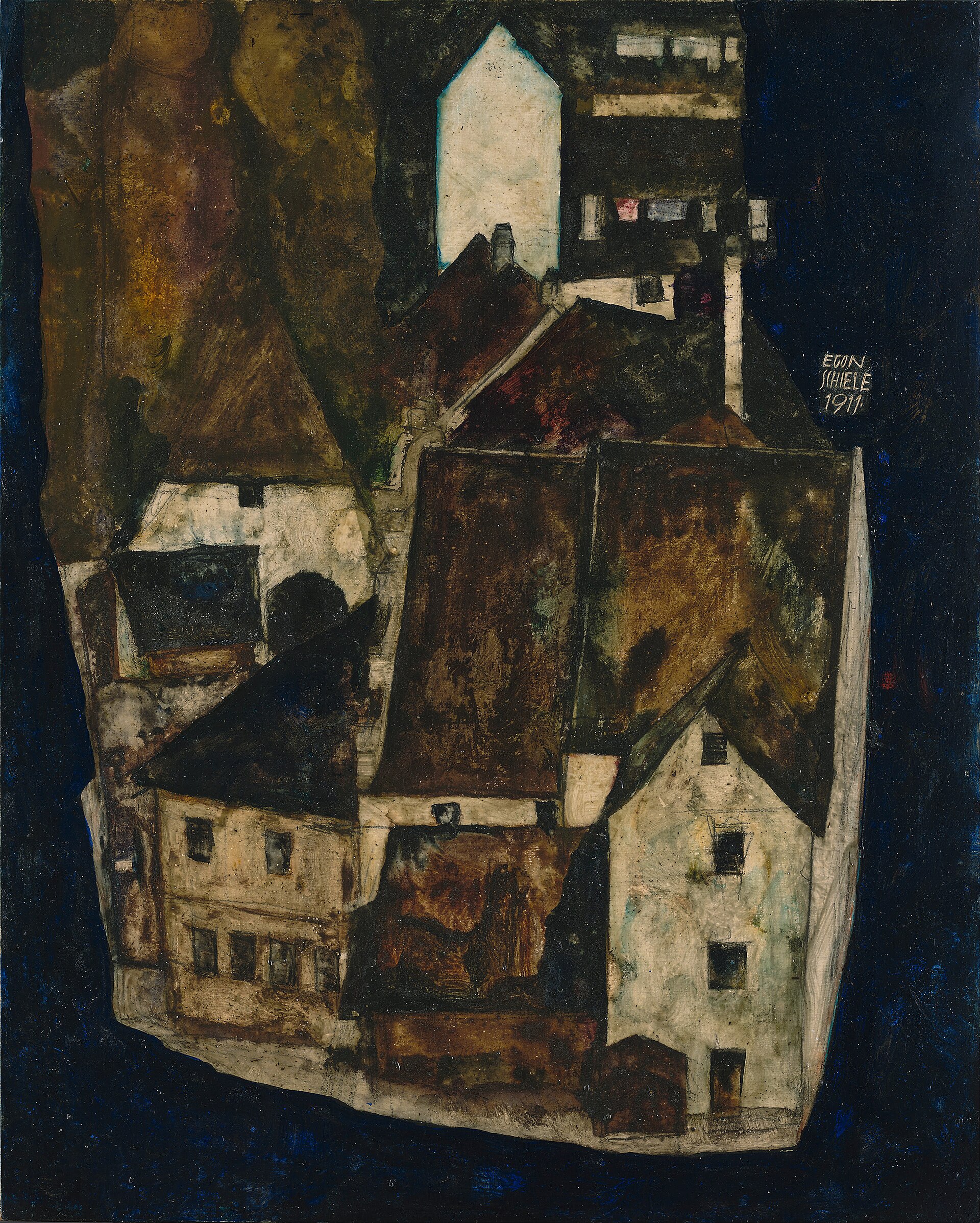
Three days after the show closed the New York District Attorney's office issued a grand jury subpoena for this painting and for Dead City III. New York has a statute, section 12.03 of the Arts and Cultural Affairs Law, which protects art on loan to a museum in the state from seizure. On 21 September 1999 the New York Court of Appeals quashed the subpoena as issued in violation of it.
The federal government moved the same week. A United States magistrate judge issued a seizure warrant, the Customs Service seized the painting, and on 22 September 1999 the United States commenced a civil forfeiture action in the Southern District of New York, alleging that the picture was stolen property knowingly imported into and about to be exported from the country contrary to the National Stolen Property Act. The case is captioned United States of America v. Portrait of Wally, a Painting by Egon Schiele, Defendant In Rem. The painting is the defendant.
Dead City III was not federally seized and went home. This one stayed in New York for eleven years.
Chapter 13What the court decided in 2009, and what it left open
The litigation ran through three judges' worth of motions.
The litigation ran through three judges' worth of motions. In July 2000 Judge Mukasey dismissed the complaint on the federal recovery doctrine; in December 2000 he refused reconsideration but allowed the Government to replead, saying he was loath to decide a case of this kind without all facts and theories considered; in April 2002 he denied motions to dismiss the third amended complaint and held that under Austrian law Bondi's ownership claim survived.
On 30 September 2009 Chief Judge Loretta A. Preska issued a 109-page opinion on cross-motions for summary judgment. She rejected the museum's arguments for abstention on the act of state doctrine and on international comity. She rejected its laches defence, noting that the United States is not subject to laches in enforcing its rights. She rejected its due process argument. And she held that there was no genuine dispute that the painting was, and remains, stolen.
She then denied both motions. The reason is precise and is routinely misreported: forfeiture under the National Stolen Property Act required the Government to prove that the importer knew the property was stolen, and whether Rudolf Leopold knew was a question for a jury. The court found the Government had shown probable cause on that point, and found Leopold's investigation of the ownership negligent at best, observing that even after Bondi's lawyer wrote to him he sought no documentation, never contacted the Rieger heirs and never asked how Bondi had parted with the picture. Negligence in acquisition defeats the good-faith presumption that Austrian law requires for title by prescription, which is why he never acquired good title; but negligence is not knowledge, and knowledge was what the statute demanded.
One issue was left for trial. It was set down for 26 July 2010.
Chapter 14The settlement, and what a settlement is not
Rudolf Leopold died on 29 June 2010, four weeks before the trial at which his state of mind was to be the only question.On 20 July 2010 the United States Attorney for the Southern District of New...
Rudolf Leopold died on 29 June 2010, four weeks before the trial at which his state of mind was to be the only question.
On 20 July 2010 the United States Attorney for the Southern District of New York announced a settlement. The Leopold Museum Privatstiftung would pay the Estate of Lea Bondi Jaray nineteen million dollars in exchange for the painting. The Estate released its claim, the Government dismissed the forfeiture action with prejudice, and the picture was publicly exhibited at the Museum of Jewish Heritage in New York before going back to Vienna. The foundation also undertook to display a permanent sign beside the painting, at its own premises and anywhere else it allows the work to travel, recording that on the evidence presented the United States District Court concluded in 2009 that the painting was the personal property of Lea Bondi Jaray and was stolen from her in Vienna in the late 1930s by Friedrich Welz, a member and collaborator of the Nazi party.
Read the disposition carefully, because the vocabulary matters. This was not a restitution. It was not a return. It was a purchase of the claim. The heirs of a woman whom a federal court found had been robbed received money; the institution that had been sued kept the object, kept it on the same wall, and acquired for the first time a title nobody can now attack. The German press description of the transaction as a Rueckkauf, a buy-back, is the accurate one. Public reporting that called it a restitution was wrong, and the museum's own permanent label is the reason a visitor can tell.
Chapter 15Where the nineteen million came from
The foundation borrowed to make the payment and then sold to clear the debt.
The foundation borrowed to make the payment and then sold to clear the debt. On 22 June 2011 Sotheby's in London offered Schiele's Hauser mit bunter Waesche (Vorstadt II) of 1914, from the Leopold Museum, against an estimate of 22 to 30 million pounds. It made 24.7 million pounds with fees, about 39.8 million dollars, an auction record for the artist. Auction estimates are quoted on a hammer basis and results are quoted with the buyer's premium included, so the two figures are not comparable and the hammer was not separately published.
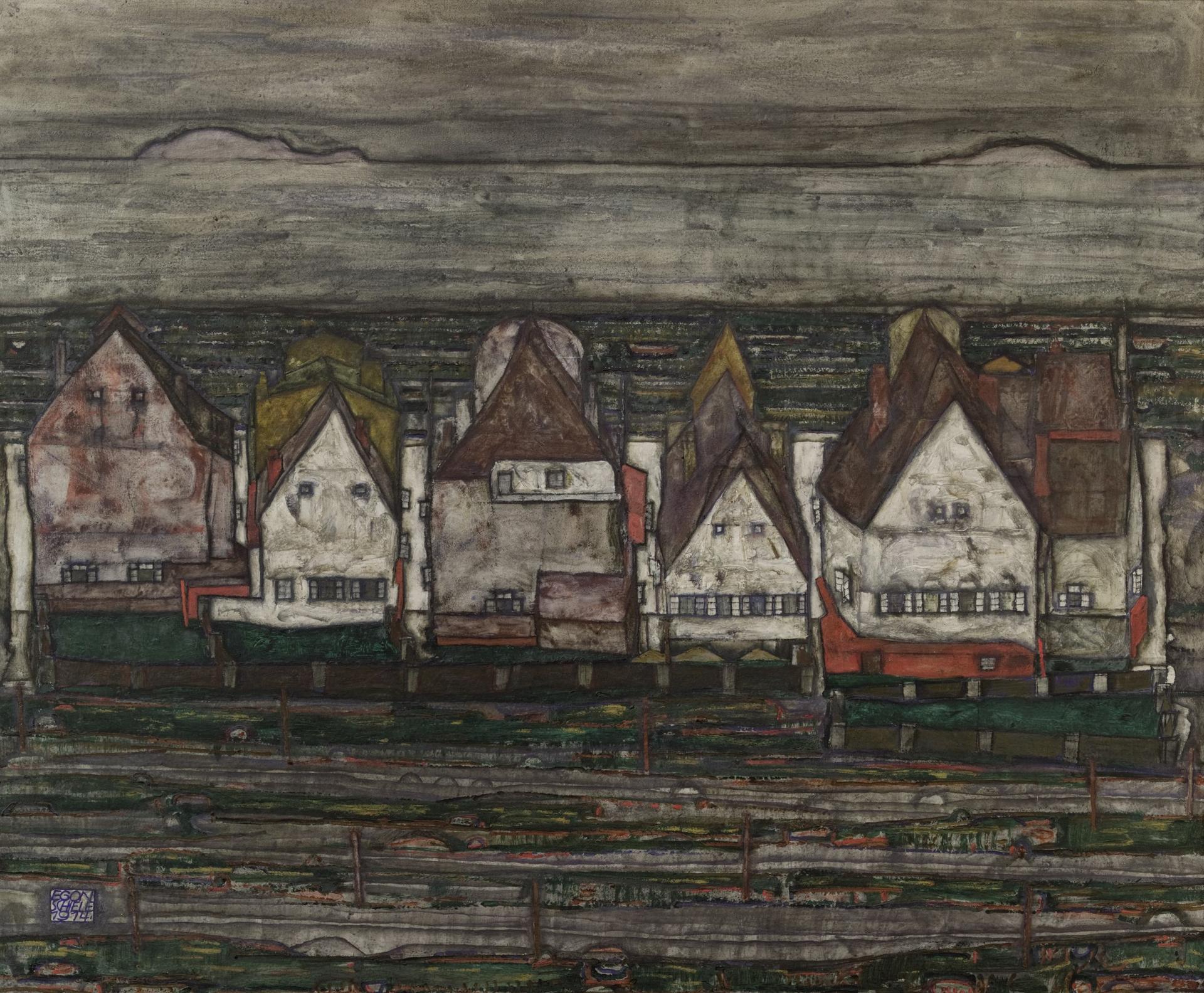
What happened around that sale is the part worth having. In July 2010, days after the Wally settlement, an independent expert committee chaired by a former Austrian federal minister identified four works in the foundation's holdings as Nazi loot, among them Schiele's Hauser am Meer of 1914, claimed by the heirs of Jenny Steiner. A member of the foundation's board proposed auctioning that picture and dividing the proceeds between the Steiner heirs and the foundation, the foundation's share to finance the buy-back of this one.
The Jewish Community of Vienna rejected the proposal in public and in blunt terms, comparing it to a fox caught in the henhouse offering to sell one of the chickens, and stating that restitution means giving works back without payment, not doing deals. The foundation reached agreement with Jenny Steiner's surviving granddaughter in May 2011 and with the heirs of Daisy Hellmann and Klara Mertens in June 2012. Hauser am Meer stayed in Vienna in the museum's permanent collection with an explanatory text beside it, on the same model as this painting. The foundation's own announcement records that a residual sum from the sale of Hauser mit bunter Waesche was available towards the Wally agreement and was not enough.
Three Schiele pictures, three Jewish owners dispossessed between 1938 and 1940, and three outcomes in which the works remain in the same museum and the families hold cash and a wall label.
Chapter 16What this object proves about the machinery
The 1998 Washington Principles asked participating states to build mechanisms.
The 1998 Washington Principles asked participating states to build mechanisms. Austria built one within a year, under the direct pressure of this seizure, and built it around federal museums and collections. This picture was in none of them. It sat in a private foundation created in 1994 out of one man's collection with 2.2 billion schillings of public money, whose founder held the post of museological director for life with the power to appoint half the board.
So the claim could not be taken to the Austrian advisory board as of right. It was resolved instead by an American forfeiture statute that had nothing to do with restitution, in a case where the claimant was the United States and the defendant was a painting, and it resolved only because the object had physically crossed a border. Had the Leopold Museum never lent to New York, there is no forum in which the estate could have compelled anything.
That is the lesson a diligence file should take from this record, and it is not a lesson about Austria. Ask which body holds the object, not which country. A national restitution statute binds the institutions it names and no others, and the gap between a state's declared policy and its enforceable reach is where objects like this one sit.
The artist
Egon Leo Adolf Ludwig Schiele
Schiele was twenty-eight when he died and had been working for about a decade. That compression is the fact that governs his market and his provenance problems alike: a small, finite output, made almost entirely in Vienna and Bohemia between about 1908 and 1918, that was collected in the 1920s and 1930s by exactly the Viennese Jewish professional class the Nazi state dispossessed after March 1938. There is no way to write the ownership history of a major Schiele without writing the history of Aryanisation. The works in this artist's corpus that carry a clean pre-war chain are the exception.
Exhibited
- 1997-1998Egon Schiele: The Leopold Collection, ViennaMuseum of Modern Art, New York
- 2010Portrait of Wally, shown before its return to Vienna under the settlementMuseum of Jewish Heritage, New York
Related works
| Work | Relation | Where it is |
|---|---|---|
| Self-Portrait with Chinese Lantern Plant Egon Schiele | Pendant. Same year, same size, heads turned toward each other Rudolf Leopold stated in 1957 that he wanted the portrait of Wally because he expected to acquire this counterpart. The two are now in the same museum. | Leopold Museum, Vienna |
| Rainerbub (Portrait of Herbert Rainer) Egon Schiele | The picture given up to obtain this one Traded by Rudolf Leopold to the Belvedere in the exchange approved on 12 July 1954 and completed on 1 September 1954. | Osterreichische Galerie Belvedere, Vienna |
| Dead City III (City on the Blue River III) Egon Schiele | The other painting subpoenaed in New York in January 1998 Not federally seized. It returned to Vienna while this panel stayed in the United States for eleven years. | Leopold Museum, Vienna |
| Hauser mit bunter Waesche (Vorstadt II) Egon Schiele | Sold by the Leopold Museum to clear the debt taken on to pay the settlement Sotheby's London, 22 June 2011. GBP 24.7 m with fees, a record for the artist. | Private collection |
| Hauser am Meer Egon Schiele | Identified as Nazi loot by the same 2010 expert committee; settled, not returned Claimed by the heirs of Jenny Steiner. Settlements in May 2011 and June 2012. The picture stayed in the museum with an explanatory text, the same disposition as this one. | Leopold Museum, Vienna |
| Landscape with Smokestacks Edgar Degas | Comparable disposition in the United States: claim settled, object retained The Gutmann heirs' claim ended with the museum acquiring the half-interest it did not hold. Named in this archive's article on the 1933-1945 gap as the other principal example of a settlement in which the work does not move. | Art Institute of Chicago |
Open questions
- Did Welz take the painting from Bondi's apartment in 1939 without payment, or buy it with the gallery in 1938 for 200 Reichsmarks? The court found it stolen either way, but the two accounts were never tested at trial and the settlement means they never will be.
- Which Schiele work was the 'Portrait of His Wife' that the American restitution division believed it was releasing to the Bundesdenkmalamt on 4 December 1947? The Government argued it was a drawing rather than a painting and did not identify it; the Museum argued it was this panel. Neither side produced the object.
- What did the Bundesdenkmalamt do with Lieutenant Colonel McKee's letter of June 1948 asking whether Vally from Krumau was Schiele's wife? The office copy carries a handwritten note naming its director. No answer is in the record.
- On what evidence did Rudolf Leopold insert Heinrich Rieger into the printed provenance in 1995? No document between 1938 and 1950 places the painting in the Rieger collection and the Rieger family has stated it never was.
- What did the Bondi estate's nineteen million dollars amount to after eleven years of litigation costs, and how was it distributed among the nine individual claimants named in the caption? Neither figure has been published.
- Would a jury have found that Leopold knew? The single question left for trial was never answered, and the man whose state of mind it concerned died four weeks before it was to be tried.
Questions about this object
What is Portrait of Wally Neuzil?
Portrait of Wally Neuzil is a painting, dated 1912. Medium: Oil on wood panel.
Who made Portrait of Wally Neuzil, and is the attribution settled?
The attribution to Egon Schiele is recorded here as accepted. Signed and dated by the artist. The United States District Court recorded the inscription as 'EGON SCHIELE, 1912' and nothing else. The picture is in every catalogue raisonne of Schiele from Otto Kallir's of 1930 onward and has never been questioned as autograph. What was contested in this object's history was ownership, not authorship.
Where is Portrait of Wally Neuzil now?
Leopold Museum, Vienna. Owned by the Leopold Museum Privatstiftung, a private foundation, not by the Republic of Austria. Inventory number Inv. 453. Last confirmed 4 August 2026. Title confirmed to the foundation by the settlement of 19 July 2010, under which it paid the Estate of Lea Bondi Jaray USD 19 million and the Estate released its claim. The foundation is bound by that agreement to display a permanent label recording the 2009 findings of the United States District Court.
What is still unknown about Portrait of Wally Neuzil?
Did Welz take the painting from Bondi's apartment in 1939 without payment, or buy it with the gallery in 1938 for 200 Reichsmarks? The court found it stolen either way, but the two accounts were never tested at trial and the settlement means they never will be.
Sources
- 1United States v. Portrait of Wally, a Painting by Egon Schiele, 663 F. Supp. 2d 232 (S.D.N.Y. 30 September 2009), No. 99 Civ. 9940 (LAP), Preska C.J. Full opinion text, including the parties' joint statement of undisputed facts, the 1947-1950 restitution correspondence, the 1954 exchange papers and the 1957 Hunna correspondence. PRIMARY. courtlistener.com/opinion/...
- 2United States Attorney for the Southern District of New York and US Immigration and Customs Enforcement, press release 10-223, 'United States Announces $19 Million Settlement in Case of Painting Stolen by Nazi', 20 July 2010. PRIMARY. justice.gov/archive/...
- 3ArThemis case file, Art-Law Centre, University of Geneva, 'Portrait of Wally - United States and Estate of Lea Bondi and Leopold Museum', with the chronology, the statutory basis and the settlement terms including the permanent label. plone.unige.ch/art-adr/...
- 4Lexikon der oesterreichischen Provenienzforschung, entry 'Leopold Museum', on the 1994 foundation, the sum paid, the museum's status as a private foundation and the inapplicability of the 1998 Art Restitution Act to its holdings. lexikon-provenienzforschung.org/en/...
- 5Israelitische Kultusgemeinde Wien, press statement 'Leopold Museum-Privatstiftung und Restitution', 23 July 2010, distributed by OTS. Names the four works identified as Nazi loot by the independent expert committee and rejects the proposal to auction Hauser am Meer and split the proceeds. PRIMARY. ots.at/presseaussendung/...
- 6Leopold Museum, press release 'Abschluss der Vergleichsverhandlungen im Fall Jenny Steiner', 14 June 2012, on the settlements of May 2011 and June 2012 and the residual proceeds of the Hauser mit bunter Waesche sale. PRIMARY. leopoldmuseum.org/de/...
- 7Kunstdatenbank, 'The Art Restitution Law of 1998', on the January 1998 New York confiscations and the passage of the Federal Act on the Restitution of Art Objects on 4 December 1998. kunstdatenbank.at/the-art-restitution-law-of-1998
- 9The Art Newspaper, 'Egon Schiele: a buyer's guide', 27 March 2019, for the record price of Hauser mit bunter Waesche (Vorstadt II) at GBP 24.7 m against an estimate of GBP 22-30 m, and for the statement that pre-sale estimates exclude fees while results include them. theartnewspaper.com/2019/...
- 10Commission for Looted Art in Europe, news report 'Portrait of Wally case settled for $19m', on the settlement terms, the release of the claim, the Museum of Jewish Heritage exhibition and the permanent signage obligation. lootedart.com/news.php
- 11Wikipedia, 'Egon Schiele', TERTIARY, used only for the biography: dates, the Klimt relationship, the Neulengbach arrest, the marriage, the 1918 Secession and the catalogues raisonnes. Flagged for replacement with Jane Kallir, Egon Schiele: The Complete Works (1990). en.wikipedia.org/wiki/...
- 12Wikipedia, 'Portrait of Wally', TERTIARY, used only for the inventory number and the published dimensions, which differ slightly from the court record. Flagged for replacement with the Leopold Museum catalogue entry. en.wikipedia.org/wiki/...
Last verified 3 September 2026 · Published 4 August 2026
Change log
4 August 2026 - Record created at the house standard: researched narrative, technical evidence, maker dossier, graded provenance chain, prices with hammer and premium separated, related works, open questions and sources.
3 September 2026 - Re-verified 2026-09-03: searched for developments since the 2010 settlement. Found only a 2015 Leopold Museum exhibition press release (Wally Neuzil, Her Life with Egon Schiele, dated 2015-03-02, dedicated to Rudolf Leopolds 90th birthday) which predates this records last_verified date and contains no ownership or provenance content - not used. No new litigation, scholarship, or challenge to the 2010 settlement or its open questions (the Welz-theft-or-purchase question, the unidentified 1947 restitution-division panel) found. courtlistener.com and leopoldmuseum.org sources spot-checked, resolve 200/202. No substantive change; last_verified bumped as a finding in itself.