The Widow Who Left the Khalil Collection to Egypt, Under Four Spellings
Four spellings of her name, a deed of 1947 and a will of 1954: what the sources say about the Frenchwoman whose will gave Cairo its Khalil museum, and what they do not.
Records in this piece: Vase with Viscaria, The Concert
On this page 5 sections
ContentsClose
In short
- The woman behind the Khalil museum is named Emiline Lock on Wikipedia, Emelin Hector by Arab News, Emilienne Luce by The Art Newspaper and Emilienne Hector Luce by Raseef22 and Samir Raafat. Our own form, Emiline Hector Lock, matches none of them.
- Samir Raafat reports a deed giving her the house on 3 April 1947, her husband's death on 27 December 1953 and her own notarised will of 30 June 1954 leaving house and contents to the state. Every one of those documents is known to us only through his 1995 article.
- The sources disagree on whose wish the museum was. Arab News gives both his will and hers, the Art Newspaper and Raseef22 call it his gift to her that she passed on, and Raafat says he died not knowing and that she made the museum. His reason, a scorned wife's fury, is his own reading.
- No source we read ties her to the purchase of the Van Gogh. The one credit for her eye is an extract from her husband's memoirs, seen only in Arab News, that has her buying a Renoir in 1903.
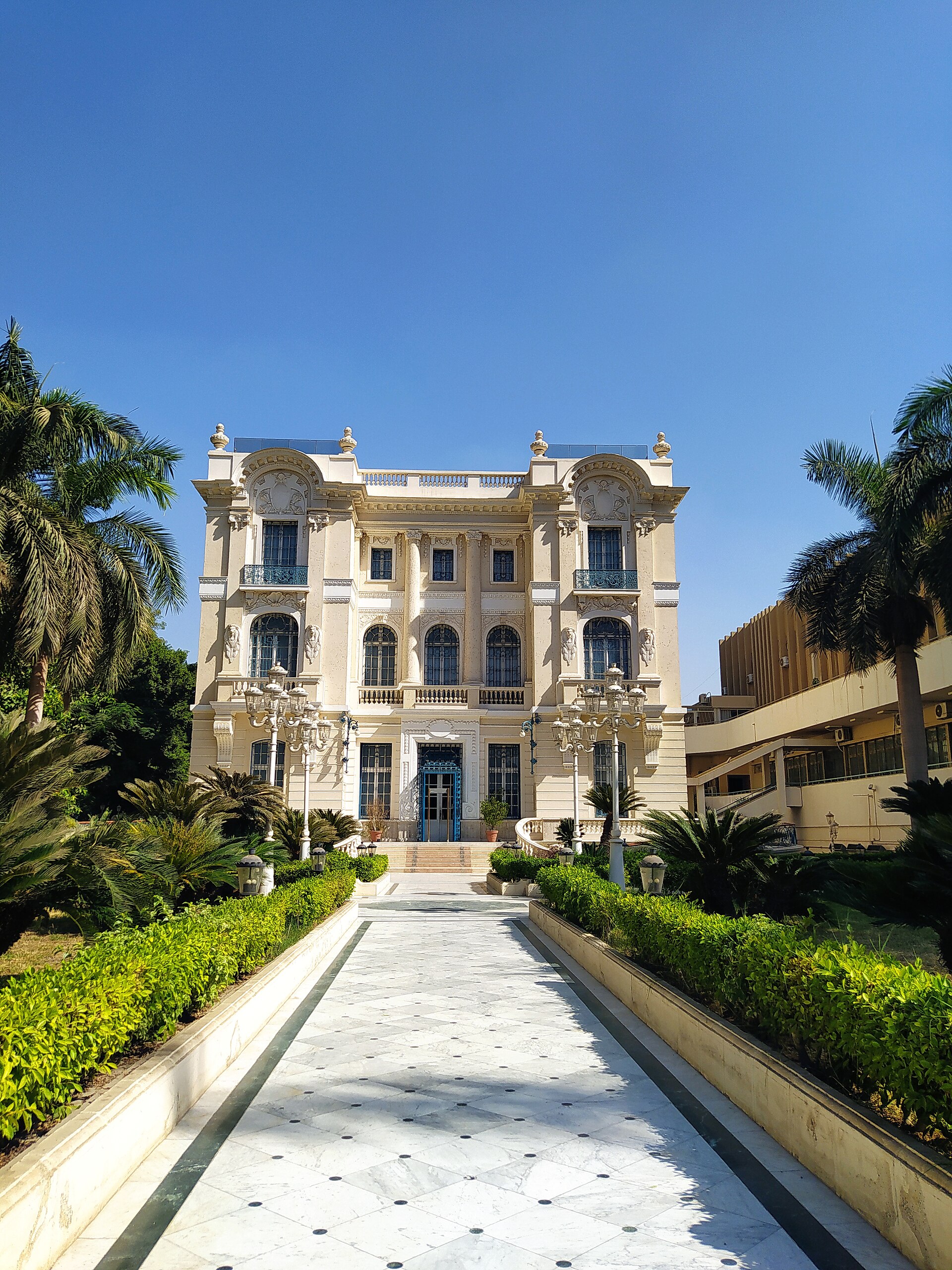
- Three sources agree the collection was moved to a palace in Zamalek after 1971 and Wikipedia places the Van Gogh's first theft at that temporary location, away from the house she had willed to the state.
Five sources give her name four ways
Our own provenance line for the Van Gogh calls the collector's wife Emiline Hector Lock, and no source we read prints that form. The sources spell her name differently, and the table sets out what each one says.
| Source | Form of the name | What it adds |
|---|---|---|
| Wikipedia, museum page (current text) | Emiline Lock | The museum was dedicated to the memory of Khalil and his wife |
| Arab News, 23 July 2005 | Emelin Hector | Met while Khalil studied law at the Sorbonne; she studied music; married 1903 |
| Raseef22, 25 June 2021 | Emilienne Hector Luce, 1881 to 1960 | A French artist studying music at the Conservatoire; married the year they met, 1903 |
| Art Newspaper news report, 12 April 2021 | Emilienne Luce, 1881 to 1960 | Same author and near-identical text as Raseef22 |
| Samir Raafat, Egyptian Mail, 6 May 1995 (egy.com) | Emilienne Hector Luce, born Emilienne Luce | Formerly of the French theatre; married 1901; died 19 March 1960 |
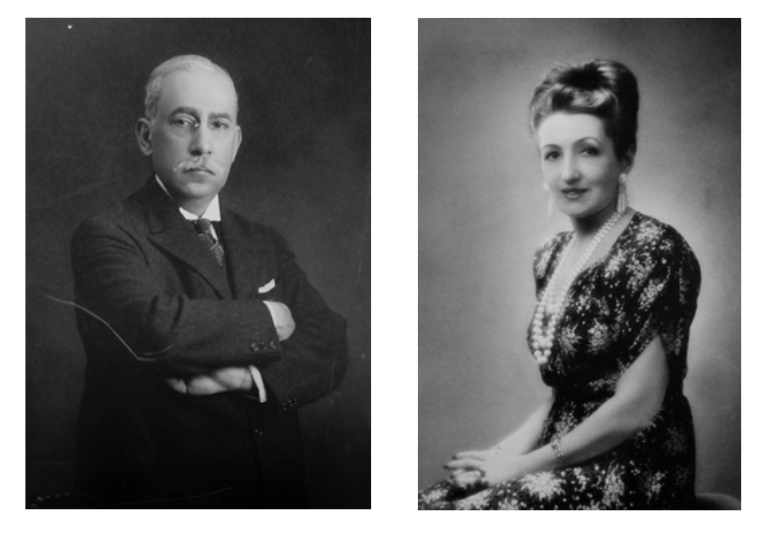
Hector appears in three of the five forms and Luce in three, and only Raseef22 and Raafat have both. Arab News gives Hector with no Luce and The Art Newspaper gives Luce with no Hector. We use Emilienne throughout because three of the five sources use that first name. Lock appears only on Wikipedia, and we have no source that says it is a variant or a mistake. Raafat is the one who says she was born Luce. A Wikimedia Commons file of two portraits, uploaded from a 2017 book by Nadia Radwan, is described by its uploader as showing Emilienne Hector nee Luce, so that reading also has a printed source behind it, though we have not seen the book.
The marriage date is split too. Arab News and Raseef22 put it in 1903, the year Khalil met her in Paris. Raafat writes that the couple had collected since they married in 1901, and prints a 1901 notice from a Nantes paper praising a performer of twenty. Raseef22's birth year of 1881 fits that notice, which Raafat's caption says praises Emilienne Luce, though he does not print a birth year himself. We give her death as 19 March 1960, which Raafat dates and Arab News and Raseef22 place in 1960.
Her husband deeded her the house in 1947 and she willed it to the state in 1954
In Samir Raafat's account the house at No. 1 Kafour Street was in Emilienne's own name six years before her husband died. Every date in the table except the opening comes from that one article, and the two death years are only echoed elsewhere, and we have not seen a deed, an agreement or a will.
| Date | Step | Reported by |
|---|---|---|
| 3 April 1947 | Khalil confers the house on Emilienne by deed, notarial stamp of 9 May 1947, serial 4135 | Raafat only |
| 20 December 1953 | Khalil signs an agreement leaving her one third of his estate, which Raafat says includes the art collection | Raafat only |
| 27 December 1953 | Khalil dies in Paris | Raafat gives the day; Arab News and Raseef22 give 1953 |
| 30 June 1954 | Emilienne's will, notarised at Giza as No. 42/1954, leaves house, garden, annexes and contents to the state | Raafat only |
| 19 March 1960 | Emilienne dies | Raafat gives the day; Arab News and Raseef22 give 1960 |
| 14 July 1962 | Handover to the state, per a photograph caption on the egy.com page | Raafat only |
| 23 July 1962 | The museum opens | Wikipedia; Arab News gives 1962 |
Raafat himself says the 1947 deed already covered the mansion and all it contained, so his account has the collection passing to her twice.
The house itself has no agreed purchase date. Wikipedia says Khalil bought it in 1918. Raafat quotes the memory of Victor Mansour Semeika, a friend of the couple, that the Khalils bought it from Prince Omar Halim in 1928, and says the house was built about 1905 for the banker Raphael Suares. Arab News says Khalil bought it in the early 1940s. These cannot all be right, and none of the three cites a deed.
Khalil's offices are also stated differently from the way the Wikipedia museum page states them. Raseef22, the Art Newspaper report, Arab News and Raafat all call him a minister of agriculture and a president of the Senate (Arab News words the second as a council of Congress), and none calls him prime minister. The museum page says he was twice prime minister, with dates that match the terms of a different politician, Mohamed Mahmoud Pasha, whose own Wikipedia page gives his death as 1 February 1941.
The sources agree she made the museum and disagree on whose wish it was
The sources agree that Emilienne's will, and not any act of the state, put the Khalil house and collection into public hands, and they disagree about whose wish that expressed.
Arab News in 2005 gives both versions in one article. It says Khalil asked in his will that the palace and the contents that belonged to him and his wife become a museum, and in the next paragraph says that in her will she asked that the palace be dedicated to the state. The Art Newspaper report and Raseef22 say the house was Khalil's gift to his wife, who bestowed palace and possessions on the Egyptian government after her death. Raafat goes furthest. He writes that Khalil died never knowing the house would become a museum, and that the museum came from his widow's decision.
Raafat also gives a reason, and it is his interpretation. He says a claim on the estate was made after Khalil died, and that Emilienne wrote her will to keep the house and contents from any claimant. His closing sentence says it was a scorned woman's fury and not Khalil's generosity that gave Egypt the museum. We read that as an argument built from the sequence of dates. Nothing he reports shows what she said or wrote about her motive. Raseef22 describes the same dispute differently, as a claim by a woman who said she was Khalil's second wife and held a private marriage contract, and says Emilienne kept her bequest. We name neither party and say nothing about any child.
One later fact shows that a will with terms was on the table in 1971. Raseef22 relays the account of Emad Abou Ghazi, who says his father Badr El-Din Abou Ghazi, then minister of culture, objected to emptying the museum because the museum existed through the owners' will and the will required the palace to stay as the Khalils left it. That is a son's recollection of a father's reading. It is the only place we saw a term of the will described, and it speaks of the owners, in the plural.
What the sources let us say about her eye
No document we read shows Emilienne choosing a particular picture, though several sources credit her with the impulse to collect.
Arab News quotes what it calls an extract from the memoirs of Mohamed Mahmoud Khalil: Emelin bought a Renoir in Paris in February 1903 for 400 pounds, and said she thought the buyers were the ones benefiting from the deal. The same article then calls the Renoir his first painting. We have not seen the memoirs, and Arab News is the only source we have for the extract. Raseef22 says his passion for her became a passion for art. Raafat says that, egged on by his wife, Khalil became a compulsive collector, and says Cairo's social calendar set aside the first day of each month for her at-home. All three are secondary and none cites a purchase record.
The totals do not agree either. Arab News counts 208 paintings and 40 statues. Raseef22 quotes a ministry official for 304 paintings by 143 artists and about 50 sculptures by 14 artists. Raafat says everything was listed in a 1933 inventory, which we have not seen. Wikipedia says the collection was mainly assembled before 1928, citing a 1994 Musee d'Orsay catalogue we have not read.
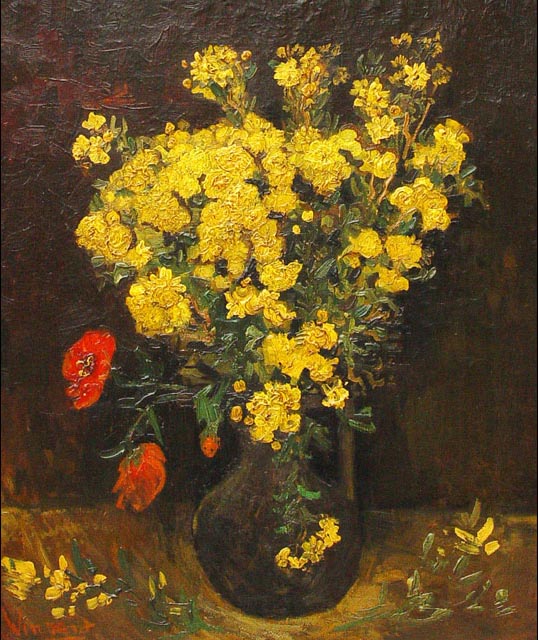
For the Van Gogh these sources give her nothing. Raafat names "Van Gogh's Fleurs collection" among what the house held and writes in the next paragraph that all these treasures were listed in the 1933 inventory. He does not say the Van Gogh is on it. No source we read says who bought it, when or from whom, and our own record keeps the gap from 1886 to the 1920s open. Wording like the collector's wife helped choose it has no support in what we read.
The house she willed was emptied in 1971 and the Van Gogh was stolen twice
The state moved the Khalil collection out of the house in 1971, and two of the sources describe that move as a departure from her will.
Raafat says the museum was expropriated to house the staff of President Anwar Sadat, who lived opposite, and that the collection went to No. 16 Gezira Street in Zamalek, a confiscated palace, for twenty or so years. Raseef22 says the minister was asked to evacuate it and that the works went to Prince Amr Ibrahim's palace. Arab News names the Amr Ibrahim palace in Zamalek as well. All three put the collection in a Zamalek palace. Raseef22 and Arab News name it as Prince Amr Ibrahim's, while Raafat gives only an address and a former dynasty member, so the three do not yet name one house, and that only partly answers the question our Van Gogh record leaves open. The sources date the return to the house three ways. Raseef22 says the museum reopened in 1986. Arab News and Wikipedia say 1995. Raafat says the president inaugurated the restored museum about twelve years after Sadat died in October 1981.
The first theft of the Van Gogh falls inside those years. Wikipedia (current text) places it at the museum's temporary location, in 1978, and the sources split on the date and the length of the gap. The second theft, on 21 August 2010, took place in the house she had willed to the state, as our record sets out. No source we read says what her will said about security.
The comparison our Vermeer record draws is with another founder's will. Isabella Stewart Gardner's will of 1924, as our record of the Vermeer stolen from her museum describes it, forbids the trustees to change the arrangement of the museum, and the record reports the empty frame still on the wall. The owners' will, as Raseef22 relays it through a minister's son, asked for the house to be kept as the Khalils left it, and a government moved the collection nine years after the museum opened. A will binds a museum only as far as the people who hold it decide to be bound, and here the terms rest on one recollection.
Questions
The sources we read give Emilienne Hector Luce (Raseef22 and Samir Raafat), Emelin Hector (Arab News), Emilienne Luce (The Art Newspaper) and Emiline Lock (Wikipedia). Raafat says she was born Emilienne Luce. Her dates are given as 1881 to 1960 by Raseef22, and Raafat dates her death to 19 March 1960.
The sources agree the transfer came through a will of Emilienne, Khalil's widow. Samir Raafat dates her notarised will to 30 June 1954. Arab News also says Khalil's own will asked for a museum, and Raafat says he died never knowing it would become one.
It opened on 23 July 1962, according to Wikipedia, and Arab News also gives 1962. The collection was moved out in 1971 for presidential offices and returned in a restored house, which Raseef22 dates to 1986 and Arab News and Wikipedia date to 1995.
No source we read says so. No source we read names who bought the painting, when or from whom. Raafat mentions Van Gogh's Fleurs in a list of what the house held, without a purchase record.
Sources
- 1Samir Raafat, 'The House of Mohammed Mahmoud Khalil and How It Became a National Museum' (also titled 'House of a Woman Scorned'), Egyptian Mail, 6 May 1995, and Cairo Times, 30 April 1998; read in full in the in-app browser. Used for her name and birth surname, the 1947 deed, the 20 December 1953 agreement, the 30 June 1954 will, her death on 19 March 1960, the 14 July 1962 handover caption, the house history and the 1971 move. Journalistic, with a friend of the couple quoted from memory; no deed or will printed. egy.com/giza/...
- 2Muna Salahedein, 'Life & Death', Arab News (from Asharq Al-Awsat), 23 July 2005; read in full in the in-app browser. Used for the name Emelin Hector, the 1903 marriage, the memoir extract about the Renoir, both wills, the collection counts, the Amr Ibrahim palace and the 1995 reopening. arabnews.com/archive/...
- 3Nadine Nour el Din, "Egypt's Mohamed Mahmoud Khalil Museum Reopens After A Decade of Closure", Raseef22, 25 June 2021; read in full in the in-app browser. Used for Emilienne Hector Luce 1881 to 1960, the second-wife claim, the Abou Ghazi account of 1971, the 1986 reopening and the 304 and 50 counts. raseef22.net/english/...
- 4Nadine Nour el Din, "Cairo's palatial museum full of Impressionist treasures", The Art Newspaper, 12 April 2021; read in full in the in-app browser. The text on Emilienne Luce overlaps Raseef22's and is not an independent source. theartnewspaper.com/2021/...
- 5Wikipedia, 'Mohamed Mahmoud Khalil Museum', read in the in-app browser. Used for Emiline Lock, the 1918 purchase, the 23 July 1962 opening, the 1971 and 1995 dates, the prime minister claim and the first theft from the temporary location. en.wikipedia.org/wiki/...
- 6Wikipedia, 'Mohamed Mahmoud Pasha', read in the in-app browser. Used only for the two terms as prime minister, 1928 to 1929 and 1937 to 1939, and his death on 1 February 1941. en.wikipedia.org/wiki/...
- 7Wikimedia Commons file page, 'Mohamed Mahmoud Khalil and Emilienne Luce his wife 1920s.png', wikitext read through the Commons API. Used for the description Emilienne Hector nee Luce, the Radwan 2017 source and the licence. commons.wikimedia.org/wiki/...
- 8Wikimedia Commons file page, 'Mohamed Mahmoud Khalil Museum Facade.jpg', wikitext read through the Commons API. Used for the author, the CC BY-SA 4.0 licence and the Cultural Heritage Egypt identifier. commons.wikimedia.org/wiki/...


More in The Women Behind the Art
The partThe Headline That Named Clara Driscoll Beside a Pay She Never Drew
A 1904 article that named Tiffany designer Clara Driscoll ran under a $10,000 headline. Her pay was about $1,820.
The Lady in the Unicorn Tapestries: A Sitter Nobody Has Named
No document names the Lady of the Cluny tapestries. What the arms, the museum and the scholars say, which readings fit the dates, and which names...
The Sitter Who Shaped How She Was Seen
According to her own museum, Isabella Stewart Gardner commissioned Sargent, argued through the sittings, kept a Zorn etching back and dodged cameras.