The Price That Was Never Tested
In 1988 Hereford Cathedral moved to sell the Mappa Mundi at Sotheby's. Several figures were argued over in public and not one of them was a price, because the sale that would have settled it never happened.
Records in this piece: Hereford Mappa Mundi, The Crosby Garrett Helmet
On this page 8 sections
ContentsClose
In short
- The Dean and Chapter of Hereford could sell the Mappa Mundi without anyone's permission. Lord Blake told the House of Lords on 21 December 1988 that cathedral chapters are completely autonomous and stand exactly like private owners in the disposal of possessions, unlike a parish church, which needs a consistory court.
- The financial advice that started it was for an endowment, not a valuation of the map. The Mappa Mundi Trust's own history records that a London firm advised the Chapter to establish an endowment of at least GBP 6,000,000 and to sell possessions to raise it, and that the map was picked as the single item that would realise the sum.
- By 5 December 1988 the chairman of the National Heritage Memorial Fund and the chairman of Sotheby's had met informally with the Dean of Hereford. The prospective public buyer and the auctioneer were in the same room before any saleroom tested anything.
- The Trust's own account concedes that the threat made the object famous. Before the sale was announced the map was viewed as a rare curiosity of local interest in a glazed case in the north choir aisle, and the international attention that followed advanced its status.
- Where a comparable object did reach a saleroom, the public purse lost. The Crosby Garrett helmet was estimated at GBP 200,000 to 300,000 and sold at Christie's on 7 October 2010 for a hammer price of GBP 2,000,000, after the Tullie House consortium withdrew at GBP 1,700,000 with two bidders still active.
An object can be argued about for months without ever acquiring a price
A price is what a saleroom produces when two people who want a thing bid against each other. Everything else that gets called a price is something narrower: an estimate, an ask, a target, an offer, a valuation for a particular statutory purpose. The distinction is usually academic, because most objects are eventually sold. For the small number of objects a country decides it cannot lose, it is the whole story, because preventing the sale is precisely what everyone involved is trying to do.
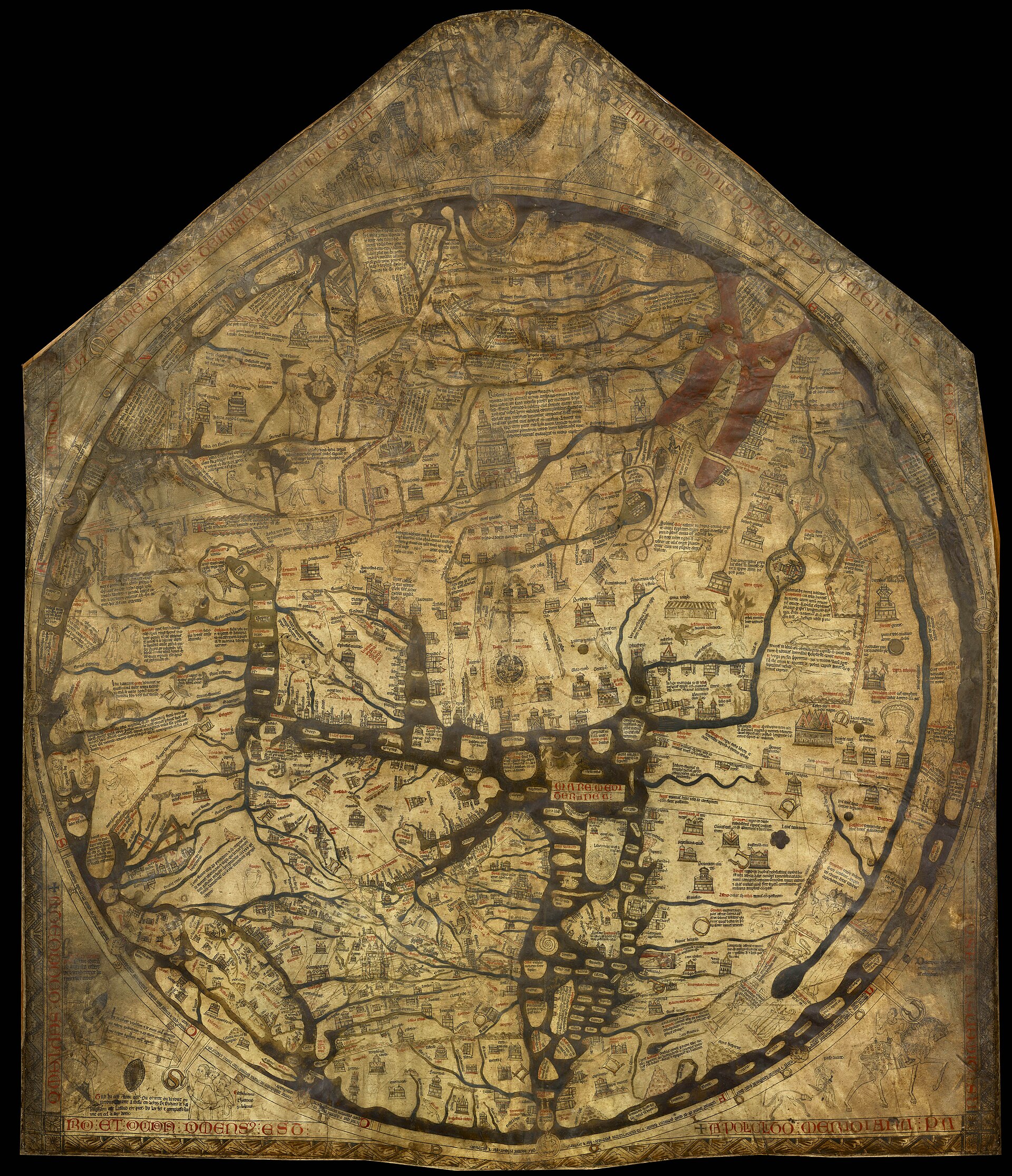
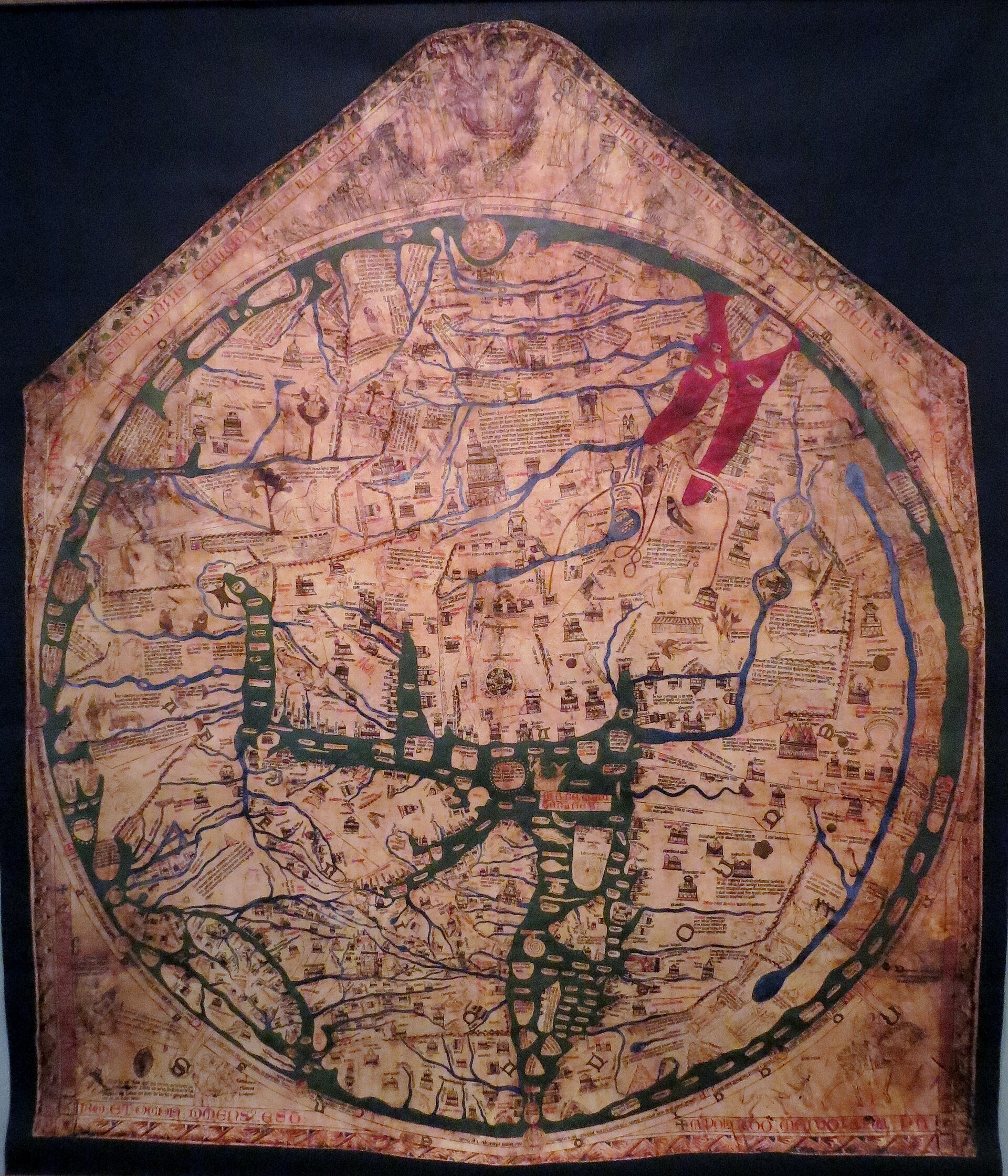
The Hereford Mappa Mundi is the clearest case in this archive. Between November 1988 and the spring of 1989 the map was the subject of questions in the Commons, a full debate in the Lords, a national appeal and a rescue package, and several substantial sums were discussed in public. Not one of them was a price for the map. The auction that would have produced one was called off, which was the point of the entire exercise.
What follows is not an argument that the map should have been sold. It is an argument about what the surviving numbers actually are, because a record that reports them as though they were valuations is reporting something that never existed.
The Chapter needed no permission from anyone to sell it
A cathedral chapter in 1988 could dispose of its treasures on its own authority, and that fact is the reason the episode happened at all. Opening the Lords debate on 21 December 1988, Lord Blake set out the position: corporate bodies such as cathedral chapters are completely autonomous and are exactly like private owners as concerns the disposal of their possessions, at any rate possessions that do not directly assist the purpose for which the body exists. He noted that the Charity Commissioners have some say over objects directly relevant to a cathedral's purposes, and that the Mappa Mundi was clearly not in that category.
The contrast he drew was with parish churches, where a vicar and churchwardens cannot dispose of possessions without permission from a diocesan consistory court, and where such permission is often withheld. There was, he said, no such external authority for a cathedral chapter, which is sole judge in its own right. Reform was in progress but had not arrived: the Care of Cathedrals Measure, which would require a Cathedrals Fabric Commission to approve disposals of certain moveables, had received only its First Reading in October 1988.
Lord Blake, who was chairman of the Royal Commission on Historical Manuscripts, added that his own body had never been consulted, and that he had suggested in a letter to The Times that the Chapter reconsider a private treaty sale to a British public collection. The most obvious alternative route to a number was raised, in public, by the person best placed to raise it, and it was not taken.
The first number was an endowment target, not a valuation of the map
The figure that set the whole affair in motion described the Chapter's deficit, not the object. The Mappa Mundi Trust's own history records that a London firm of financial advisers examined the Chapter's deficits and assets in the late 1980s and advised that the way forward was an endowment of at least GBP 6,000,000, the income from which would let the Chapter pay its way. The advisers recommended selling possessions to raise it.
The map was then selected to fit that number. The Trust's account is candid about the reasoning: the Mappa Mundi was identified as the single, stand-alone item that would realise the sum needed, on the view that selling one item was better than compromising the integrity of the Chained Library by selling a selection of its treasures. The sequence runs from a deficit to a target to an object, and at no point does it run through an assessment of what the map was worth.
This archive's record for the map notes a further figure of seven million pounds as the Chapter's stated aim, against the advisers' recommendation of at least six million. It also records, after searching, that no published Sotheby's valuation of the map has been located. Two targets exist and no valuation does.
The buyer and the auctioneer met before the saleroom did anything
By early December 1988 the parties who would have been on opposite sides of a sale were negotiating together. Answering a question from Simon Hughes in the Commons on 5 December 1988, the Minister for the Arts, Mr Luce, reported that Patrick Cormack, as chairman of the all-party heritage committee, had held an informal meeting with the Dean of Hereford, Lord Charteris as chairman of the National Heritage Memorial Fund, Lord Gowrie as chairman of Sotheby's, and Colin Shepherd, the member for Hereford.
The Minister's own framing of the solution is worth quoting for what it takes for granted. He told the House that the chairman of the National Heritage Memorial Fund had said he would be prepared, having taxpayers' money at his disposal, to consider playing a role on behalf of the taxpayer, and that all past experience in the sector showed the most sensible basis for a solution to be an effective partnership between the public and private sectors that is acceptable to all parties. Acceptable to all parties is a description of a negotiated settlement. It is the opposite of a discovered price.
Simon Hughes, pressing from the other direction, told the House that the Government must ensure the heritage of cathedrals is not sold off through auction rooms to the highest bidders wherever they might be. Both sides of that exchange treat the auction as the failure mode rather than the mechanism.
Where the price was tested, the public purse lost
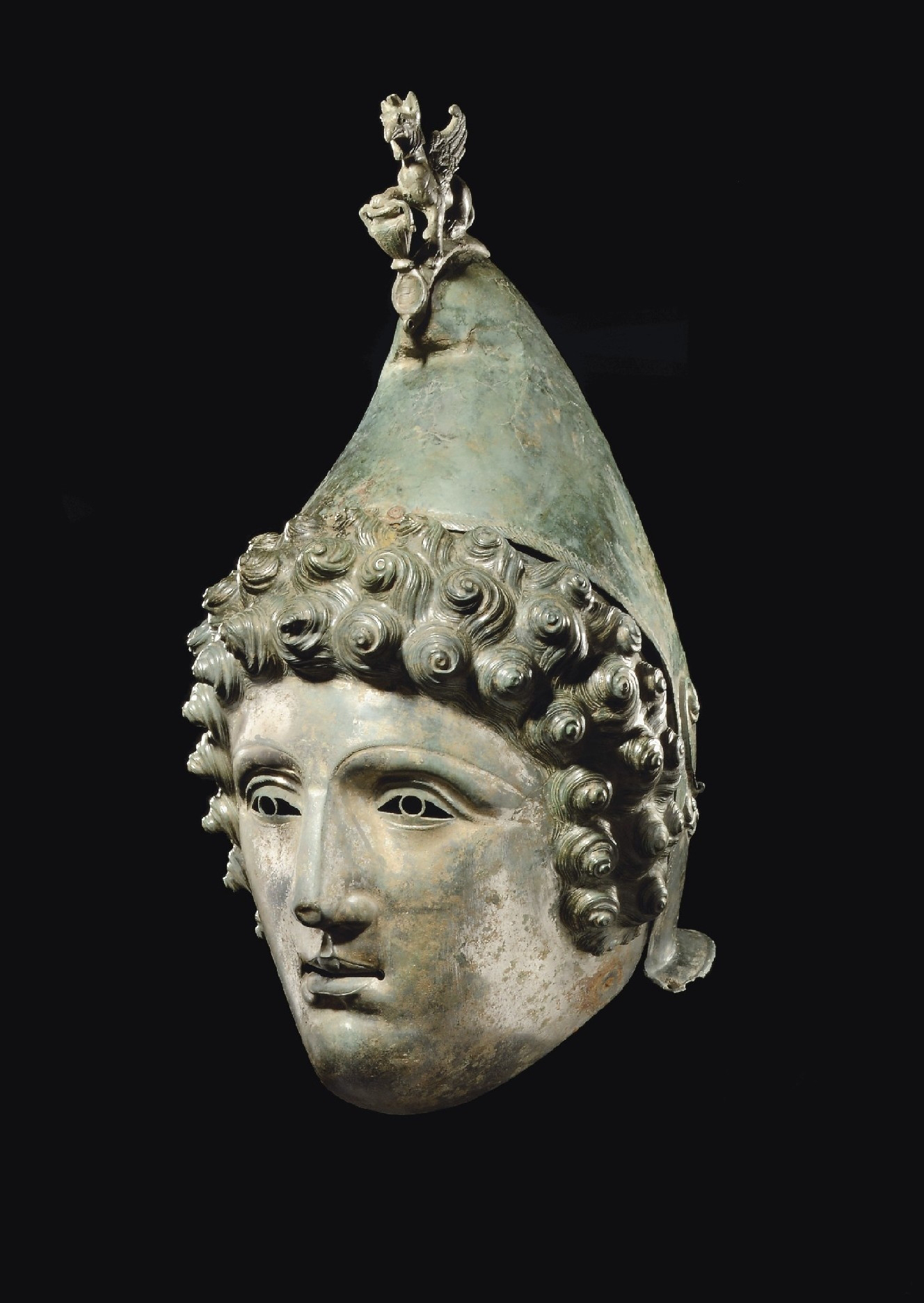
The counter-case in this archive shows what happens when a comparable object actually reaches a saleroom. The Crosby Garrett helmet, a Roman copper-alloy cavalry parade helmet found in a Cumbrian field in May 2010, contained no gold or silver and therefore fell outside the Treasure Act, so the finder and landowner were free to sell it. It went to Christie's in London on 7 October 2010.
The numbers are unambiguous, and they run the wrong way for the public. Six bidders competed. The Tullie House Museum consortium in Carlisle, which had raised roughly GBP 1,700,000, withdrew at that figure with two bidders still active, and the helmet sold to an anonymous telephone bidder for a hammer price of GBP 2,000,000, reported at approximately GBP 2,330,468.75 in total once buyer's premium and the VAT then chargeable on it were added.
| Figure | Hereford Mappa Mundi, 1988-89 | Crosby Garrett helmet, 2010 |
|---|---|---|
| Pre-sale estimate | None published | GBP 200,000 to 300,000 |
| Target or ask | GBP 6,000,000 advised as an endowment; GBP 7,000,000 stated by the Chapter | Not applicable |
| Public campaign ceiling | Not published as a single figure | GBP 1,700,000, the point at which the consortium withdrew |
| Hammer | No sale took place | GBP 2,000,000 |
| Total paid | No sale took place | Approximately GBP 2,330,468.75 with premium and VAT |
| Where the object is now | Hereford, on permanent public display | Private hands, no public appearance documented since 2017 |
The helmet beat the top of its own estimate by more than six times. That is the risk a negotiated rescue is designed to avoid, and it is why the parties at Hereford preferred a room to a saleroom.
The threat itself changed what the object was worth
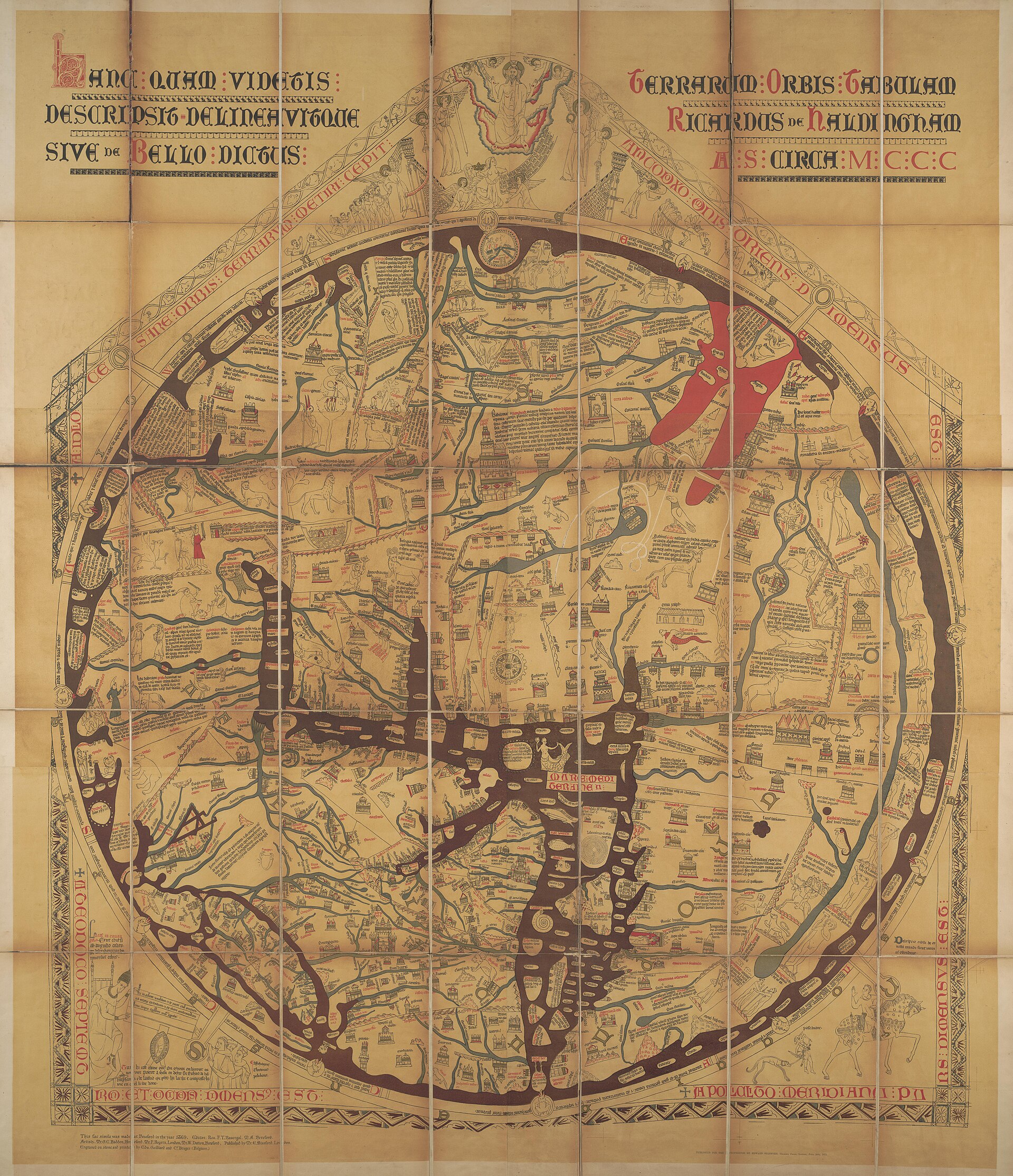
The most striking admission in the Hereford story comes from the Trust that exists because of it. Its own history records that at the time of the proposed sale scholarship around the Mappa Mundi was not advanced, that the map was viewed more as a rare curiosity of local interest, modestly displayed in a glazed case in the north choir aisle, and that its significance as a world-class artefact was yet to be understood. The international spotlight and media interest that followed the announcement, the Trust says, helped greatly to advance its status across the world.
That produces a genuine circularity, and it is not a criticism of anyone. A price discovered in a saleroom in early 1989 would have been a price for an object whose reputation the sale process was in the act of transforming. The map that would have been sold in February was a different proposition from the map that had been quietly on show the previous autumn, and the difference was created by the sale announcement.
It also means the counterfactual cannot be recovered. Nobody can now say what the Mappa Mundi would have fetched at Sotheby's in 1989, and the reason is not merely that the sale was cancelled. The conditions that would have set the price were themselves produced by the attempt.
How to read a number attached to an object that never sold
When a record reports a sum for an object that was withdrawn, rescued or never offered, the first question is which of five different things the number is. It may be a pre-sale estimate, which is a marketing instrument. It may be an ask or a target set by the owner's needs, as at Hereford, where the figure described a cathedral's deficit. It may be a grant or a gift, which is capped by a fund's rules rather than by the object. It may be a valuation made for a statutory purpose such as a treasure inquest or an export deferral. Or it may be a hammer price, which is the only one of the five that two independent parties competed to set.
Three habits follow, and this archive tries to keep to them. Say which kind of number it is in the same sentence as the number. Name who produced it and on what date, because an endowment target from a firm of accountants and a valuation from a saleroom are not comparable quantities. And where no valuation was published, record that as a finding rather than reaching for the nearest available figure to fill the space.
The Hereford record does the last of these explicitly: it states that no published Sotheby's valuation has been located, and it does not substitute the six or seven million pound targets in its place. That is a smaller claim than a price, and it is the true one.
Why this archive is free to read
We do this for everyone who loves art. The people who have studied it for years, and the people who just stopped to look. Iconotheca exists so that what we learn belongs to all of them.
Nobody pays us for this. No ads, no sponsors, no commercial interest. These works belong to all of us, and we would rather share them with as many people as we can than keep them to ourselves.
If it gave you something today, tell us to keep going. Follow us, leave a like, or write a positive comment. We read every one, and they are what keeps us going.
Questions
To fund an endowment. The Mappa Mundi Trust's history records that a London firm of financial advisers examined the Chapter's finances in the late 1980s and advised establishing an endowment of at least GBP 6,000,000, recommending the sale of possessions to raise it. The map was chosen as the single item that would realise the sum.
No published Sotheby's valuation of the map has been located for this archive's record. The figures that circulated in 1988 and 1989 were an endowment target of at least six million pounds, a stated Chapter aim of seven million, and the contributions offered towards the rescue.
Yes. Lord Blake told the House of Lords on 21 December 1988 that cathedral chapters were completely autonomous and stood exactly like private owners over the disposal of possessions not directly serving the body's purpose. The Care of Cathedrals Measure, which would change this, had only had its First Reading in October 1988.
It sold at Christie's in London on 7 October 2010 for a hammer price of GBP 2,000,000, about GBP 2,330,468.75 in total with premium and VAT, to an anonymous telephone bidder. The Tullie House Museum consortium had withdrawn at GBP 1,700,000 with two bidders still active.
Because it contained no gold or silver, so it fell outside the Treasure Act, and the finder and landowner were free to sell it. That is the difference between an object whose price is set by a valuation committee and one whose price is set at auction.
Sources
- 1Mappa Mundi (Hansard, 5 December 1988), HC Deb 05 December 1988 vol 143 cc13-5, for the informal meeting between the Dean of Hereford, Lord Charteris of the National Heritage Memorial Fund, Lord Gowrie of Sotheby's and others, and for Mr Luce's statement on public and private partnership. api.parliament.uk/historic-hansard/...
- 2Historic Buildings and Treasures (Hansard, 21 December 1988), HL Deb 21 December 1988 vol 502 cc1364-428, Lord Blake, for the autonomy of cathedral chapters over disposals, the contrast with parish churches and the consistory court, the First Reading of the Care of Cathedrals Measure in October 1988, and his proposal of a private treaty sale to a British public collection. api.parliament.uk/historic-hansard/...
- 3Hereford Cathedral Mappa Mundi Trust, 'Mappa Mundi Trust: History of the Collection', for the advisers' recommendation of an endowment of at least GBP 6,000,000, the selection of the map as the single stand-alone item, its previous display as a curiosity of local interest in the north choir aisle, and the effect of international attention on its status. themappamundi.co.uk/about-the-trust.php
- 4The Mappa Mundi, Hereford Cathedral, the Trust's public presentation of the map and its current display. themappamundi.co.uk
More in The Market
The partThe hammer is the one number most auction houses do not print
Of 232 auction results in this archive, 53 carry no hammer price published by the house that sold the object.
The Objects Whose Price Was Set by a Tax Bill and Not a Buyer
The Louvre did not buy the most famous Vermeer in France. It accepted it against a death duty, and the acquisition price is not withheld, it does not...
The House That Cannot Be Asked: Who Keeps the Price After the Sale
Half this archive's sale record sits with two firms you can still write to. The other half sits with houses that shut, and with bodies that were...