The Patron Who Left No Invoices
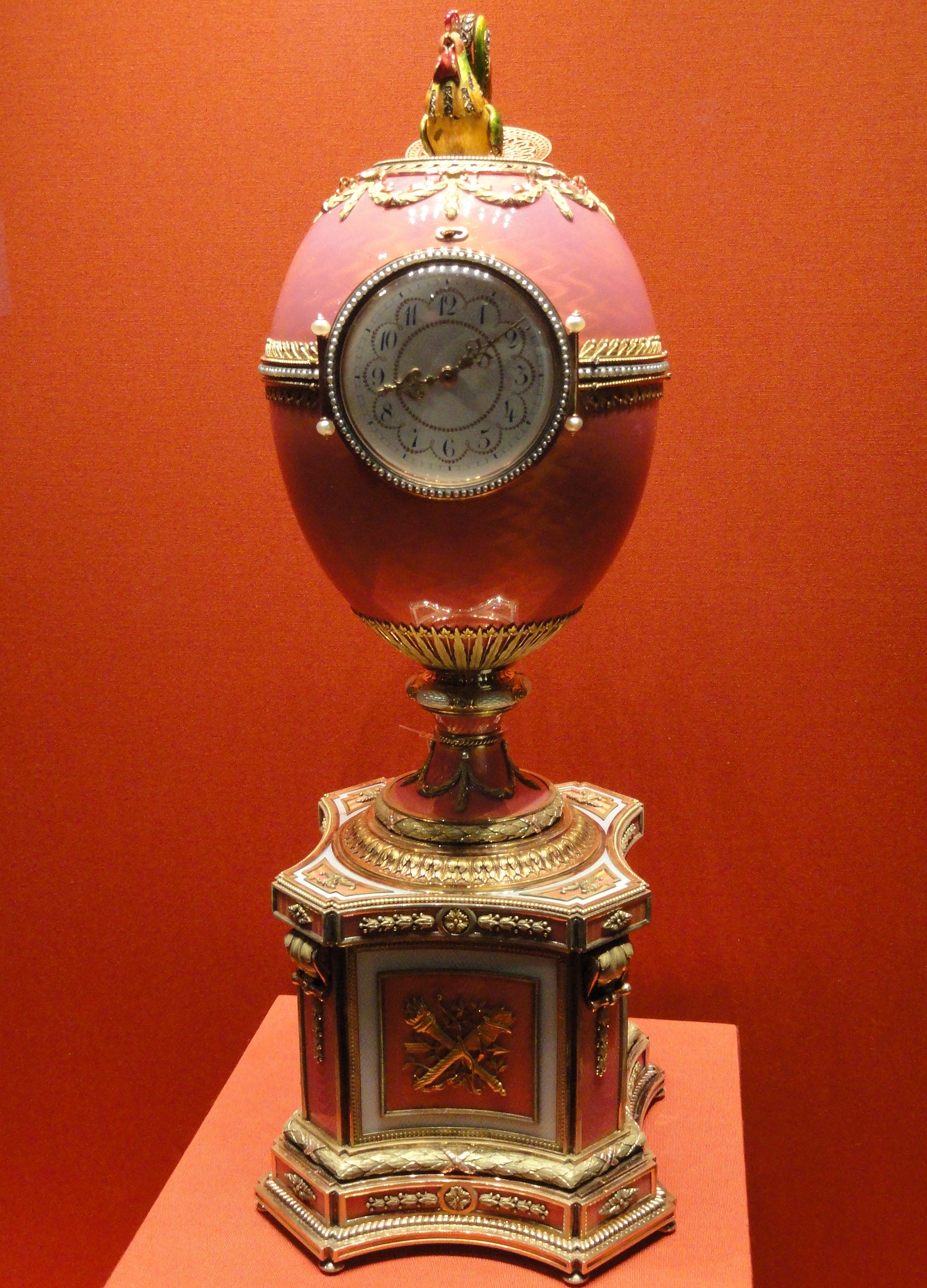
Christie's states that no document records the order for the Rothschild Faberge egg. The Academie des Beaux-Arts and the Rothschild Archive say the same of Beatrice Ephrussi de Rothschild's other 5,000 objects.
Records in this piece: The Rothschild Faberge Egg, Third Imperial Easter Egg
On this page 9 sections
ContentsClose
In short
- Christie's own 2007 catalogue states that there is no surviving documentary evidence recording an order for the Rothschild egg, and that this is true of all private Faberge commissions from the Saint Petersburg workshops.
- The only document behind the story is a codicil of 22 March 1958 to the will of the woman who received the egg, written 53 years after the engagement it marked. It records the gift and the giver. It says nothing about who placed the order.
- Christie's own press release of 4 October 2007 suggested her husband Maurice Ephrussi may have ordered it, which is not the same claim as hers. Our own record stated flatly that she ordered it, and that is corrected in this push.
- The Third Imperial egg in this archive has what hers does not: a letter of 4 May 1887 in the old style, a named intermediary, an invoice and a price of 2,160 roubles. The state kept accounts and the private client did not.
- The Academie des Beaux-Arts writes of her acquisitions that unfortunately the sources are missing, and the Rothschild Archive's own study says the origin of the greatest part of the furniture remains a mystery because the archival sources are lacking. The undocumented egg is not an anomaly but her normal condition.
- What is fully documented is the giving away. Her will bequeathed the Villa Ile-de-France and its contents to the Institut de France for the Academie des Beaux-Arts, and the Academie was notified on 11 April 1934, the day of her burial, and accepted on 20 April.
The selling house says there is no order for this egg
Christie's 2007 catalogue for the Rothschild Faberge egg states that no document recording an order for it survives, and that the same is true of every private commission the Faberge workshops carried out in Saint Petersburg.
The sentence is an auction house saying the least commercially useful thing available to it: as is the case of all private commissions executed by the Faberge workshops in St. Petersburg, there is no surviving documentary evidence recording an order for this newly discovered Rothschild Egg. No commission date, no price, no ledger entry naming anybody.
That is a problem this archive is built to take seriously. The object is in the Hermitage, signed, dated and measurable, and the person usually named as the reason it exists is attached to it by inference rather than by paper.
The one document is a codicil written fifty-three years later
The evidence that Beatrice Ephrussi de Rothschild gave the egg is a codicil of 22 March 1958 to the will of Germaine de Rothschild, the woman who received it.
Christie's prints its own English translation of the clause, in which the testator calls the object my Faberge clock in pink enamel, which was given to me as an engagement present by Beatrix. The engagement was to Beatrice's younger brother Edouard, and the couple married in 1905. So the document is a dated legal instrument rather than family hearsay, which is better than most provenance gets, and it is still a recollection set down more than half a century after the event by the recipient. The French text the translation is working from does not appear on the live catalogue page at all, where eight empty line breaks sit in its place, so what is quotable is Christie's English and not the codicil's words.
Read the catalogue's own provenance line and the distinction is already there. It runs from Charlotte Beatrice Ephrussi, nee de Rothschild, gift to Germaine de Rothschild, nee Halphen. It says gift to. It does not say commissioned by.
Christie's went further in the other direction. Its press release of 4 October 2007 proposed that it is possible that Maurice ordered the egg whilst in St. Petersburg, or during one of Faberge's selling trips to Paris at the turn of the 20th century, Maurice Ephrussi being her husband, an Odessa-born banker who had worked for the family's oil interests in Baku. The house that sold the object did not assert that she ordered it. Our own record did, and it should not have.
The Imperial egg has a letter, an intermediary and an invoice
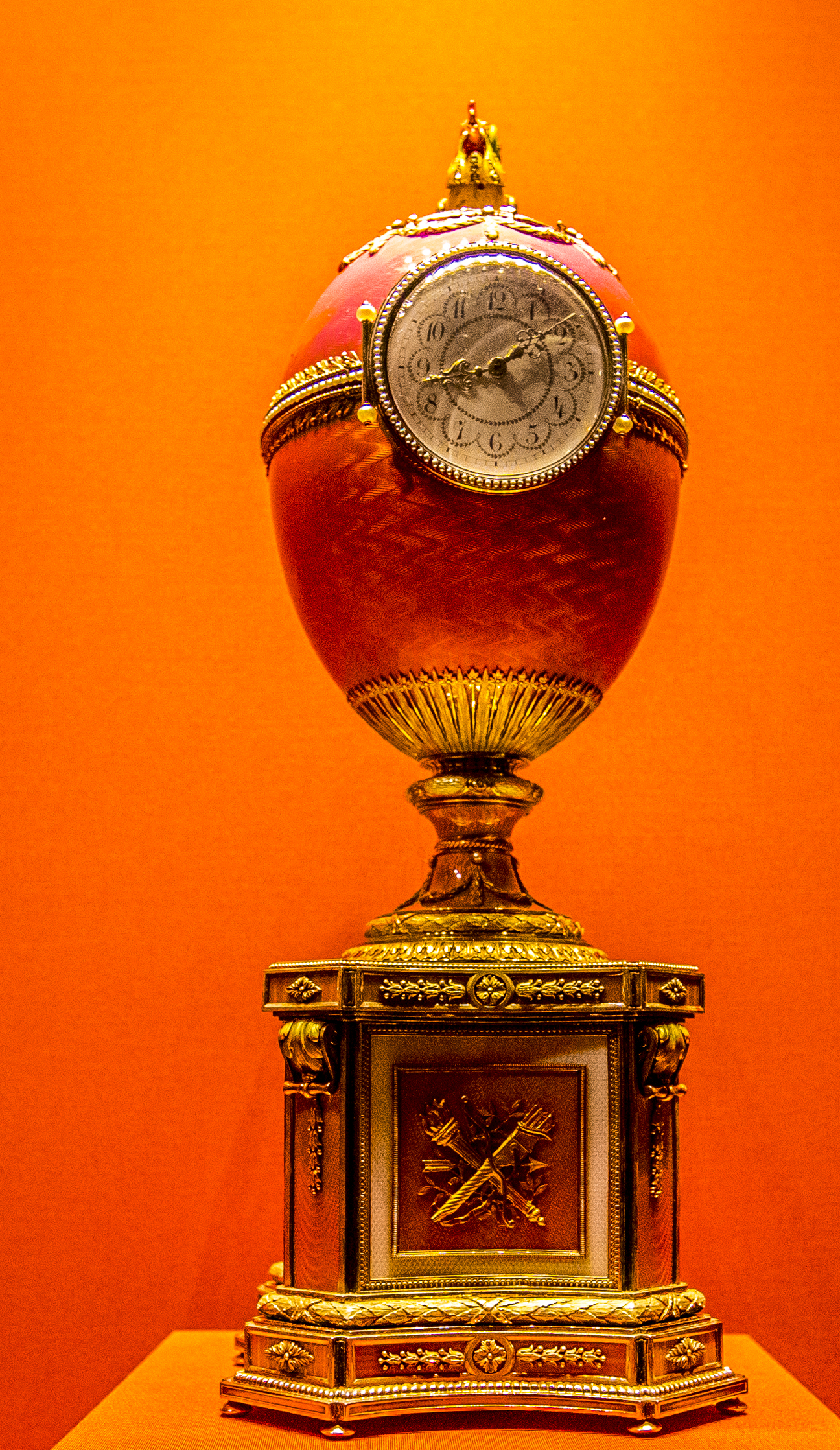
The comparison this archive can make, because it holds both objects, is with the Third Imperial egg of 1887, whose commission is documented down to the invoice.
A letter of 4 May 1887 in the old style, from Modest Solovyev of the Office of Grand Duke Vladimir's Court to Nikolai Petrov, the Head of Cabinet of Alexander III, records that an Easter egg with a clock and a stand in the style of Louis XVI was commissioned to the jeweller Faberge, that it was finished and delivered to the Emperor, and that Faberge had sent an invoice of 2,160 roubles. Our record for that egg carries the same figure from the delivery side.
One detail in it should stop anyone drawing too neat a moral. The Imperial egg was not ordered by the Tsar in person either. The letter says it was commissioned by order of Grand Duke Vladimir Alexandrovich. What separates the two objects is not that an emperor signed for one and a woman for the other. It is that one order passed through an office that kept its correspondence and its invoices, and the other did not pass through any office at all.
| Rothschild egg, 1902 | Third Imperial egg, 1887 |
|---|---|
| No surviving order, per Christie's | Letter of 4 May 1887, old style, naming the commission |
| No recorded price for the commission | Invoice of 2,160 roubles |
| Giver known from a codicil of 22 March 1958 | Commissioner named in the letter itself |
| Dated by a workshop photograph and an engraved date | Dated by delivery to the Imperial Cabinet |
| Recipient Germaine Halphen, on her engagement | Recipient Empress Maria Feodorovna, at Easter |
Even the dating of the private egg runs through an Imperial document. Christie's dates it from a workshop photograph in Wartski's collection showing it made beside a silver cigar box shaped as a medieval helmet, and what fixes the year is that the box was delivered to the Imperial Cabinet at 1,500 roubles and presented to Kaiser Wilhelm II on 19 July 1902. Kieran McCarthy of Wartski argued the identification from the count of garlands above the pedestal, against the near-identical Kelch Chanticleer egg of 1904. Christie's calls that proof beyond doubt; it is an argument from the absence of a third egg with the same mounts, which is a different thing.
The museum that owns it credits two makers and no patron
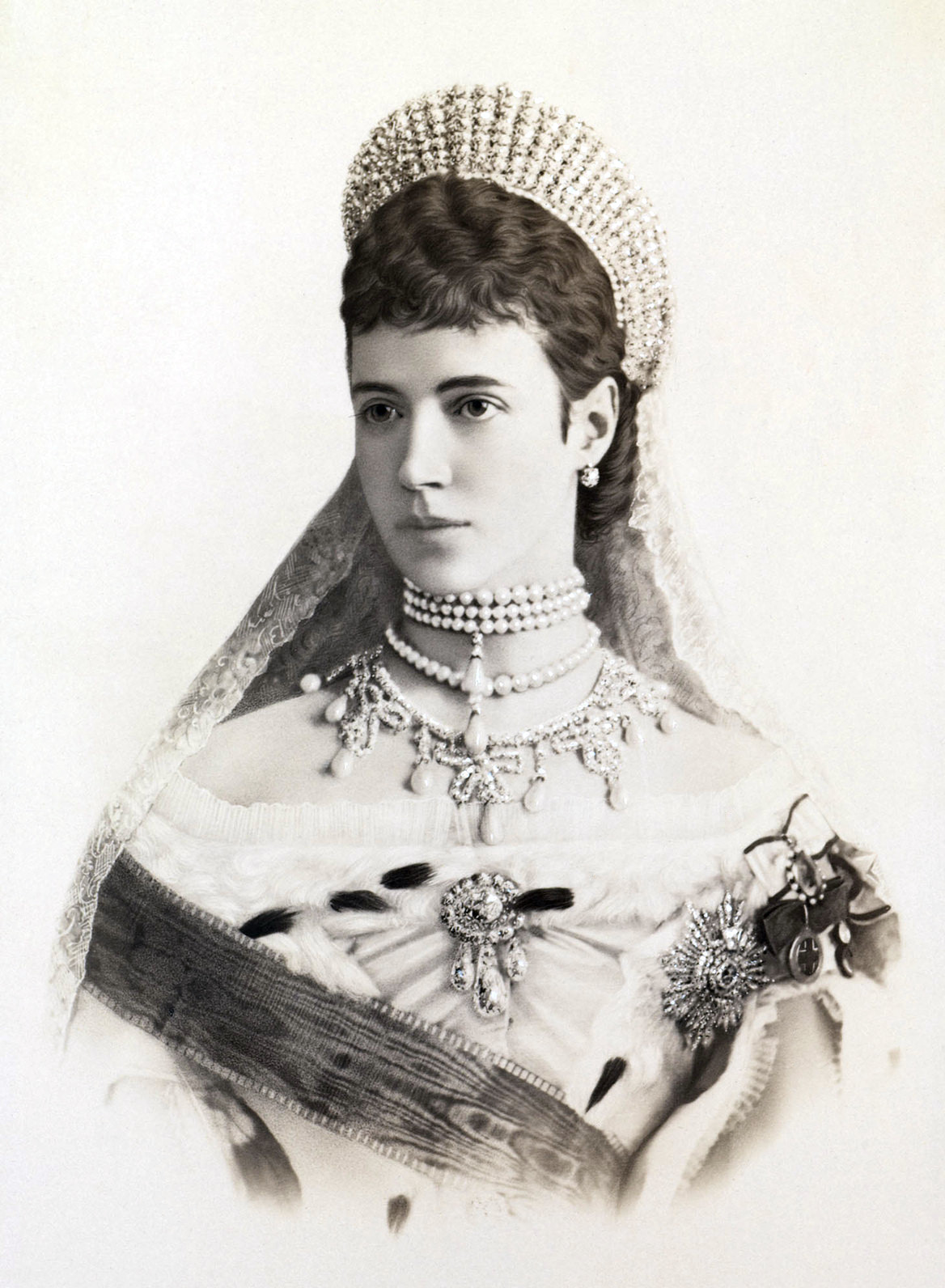
The Hermitage's own catalogue record for the object names the workmaster and the clockmaker and does not mention Beatrice Ephrussi de Rothschild at all.
It gives the author as Perkhin, Michael, 1860 to 1903, as master, and Rode, Nikolay, active early twentieth century, as clockmaker; the organisation as the House of Faberge; the title as Rothschild Clock Egg; the date as 1902; the museum number as E-18382, the E being Cyrillic; and the acquisition as entered the Hermitage Museum in 2015 as the Gift from the President of the Russian Federation Vladimir Putin. The handover ceremony was held on 8 December 2014, at the museum's 250th anniversary, and the accession is recorded in the following year, which are two different facts and should be given as two.
The route there is documented mainly by the buyer talking to newspapers. Alexander Ivanov bought the egg at Christie's in 2007 and confirmed to Moskovsky Komsomolets in December 2014 that the egg the president presented was the one he had bought. A specialist site that tracks these objects writes that as far as its author knows it was not made public how the Russian State came into possession of them. So the object's twenty-first century provenance has the same shape as its first: a gift whose paperwork nobody has produced.
Specialists say it is a clock, and that it had been published before
Two of the claims that carried the 2007 sale are contested by the specialist reference site for Faberge.
The Faberge Research Site records that scholars do not agree the object should be called an egg, suggesting a clock made in the shape of one, and that it was not presented at Easter. The Hermitage catalogues it as the Rothschild Clock Egg. The second claim is larger: Christie's called it previously unrecorded and its press release said it had never been published, while the same specialist site states that a photograph of the clock has been found in Rheims, Maurice, L'Objet 1900, 1964. We have not seen that plate and report it as the site's claim, but it contradicts the line the publicity was built on.
The money should be stated the way the house stated it. Christie's published an estimate of 6,000,000 to 9,000,000 pounds and a price realised of 8,980,500 pounds, premium-inclusive, and no hammer figure at all; the lot also carried VAT at 5 per cent on the hammer price and 15 per cent on the buyer's premium. Any hammer in circulation for this object is somebody's reconstruction, not a Christie's number.
Two institutions with custody of her things say the paperwork is gone
The missing Faberge order is not a gap in an otherwise documented collector. It is the ordinary state of the record for everything she bought.
The Academie des Beaux-Arts, writing about the collection it owns, interrupts its own sentence about a Weisweiler table to say, in our translation of its French, that unfortunately the sources are missing. Ulrich Leben, writing in the Rothschild Archive's own Review of the Year for 2008 to 2009, says that the origin of the greatest part of this furniture remains a mystery, as the archival sources are lacking, and that there is a lack of archival evidence related to the acquisition, payment, or remittances, of work and objects, which limits considerably the possibility of carrying out a detailed analysis. He also warns that many stories exist of purchases which cannot be substantiated, giving as an example Hector Lefuel's claim that she bought the panelling from Josephine Bonaparte's mirror room. That is why no construction cost for the villa has ever been published: the payment records are not in the family archive.
What the same study does establish is that she acted on her own judgement. Leben records that she was a keen auction enthusiast, which was unusual for a Rothschild, that she bought at public auction and returned to the saleroom to renew her collections, and that by the 1934 inventories most of what she had inherited from her father was gone, the antique and Dutch paintings among it. The cleanest documented commission of her own is not the egg at all: for a set of chairs stamped by Parmentier, a joiner of Lyon, she had a silk specially woven at Prelle to a pattern from her own textile collection, and orders to the lacquer artist Jean Dunand are documented in the Fond Laprade.
What is fully documented is the giving away
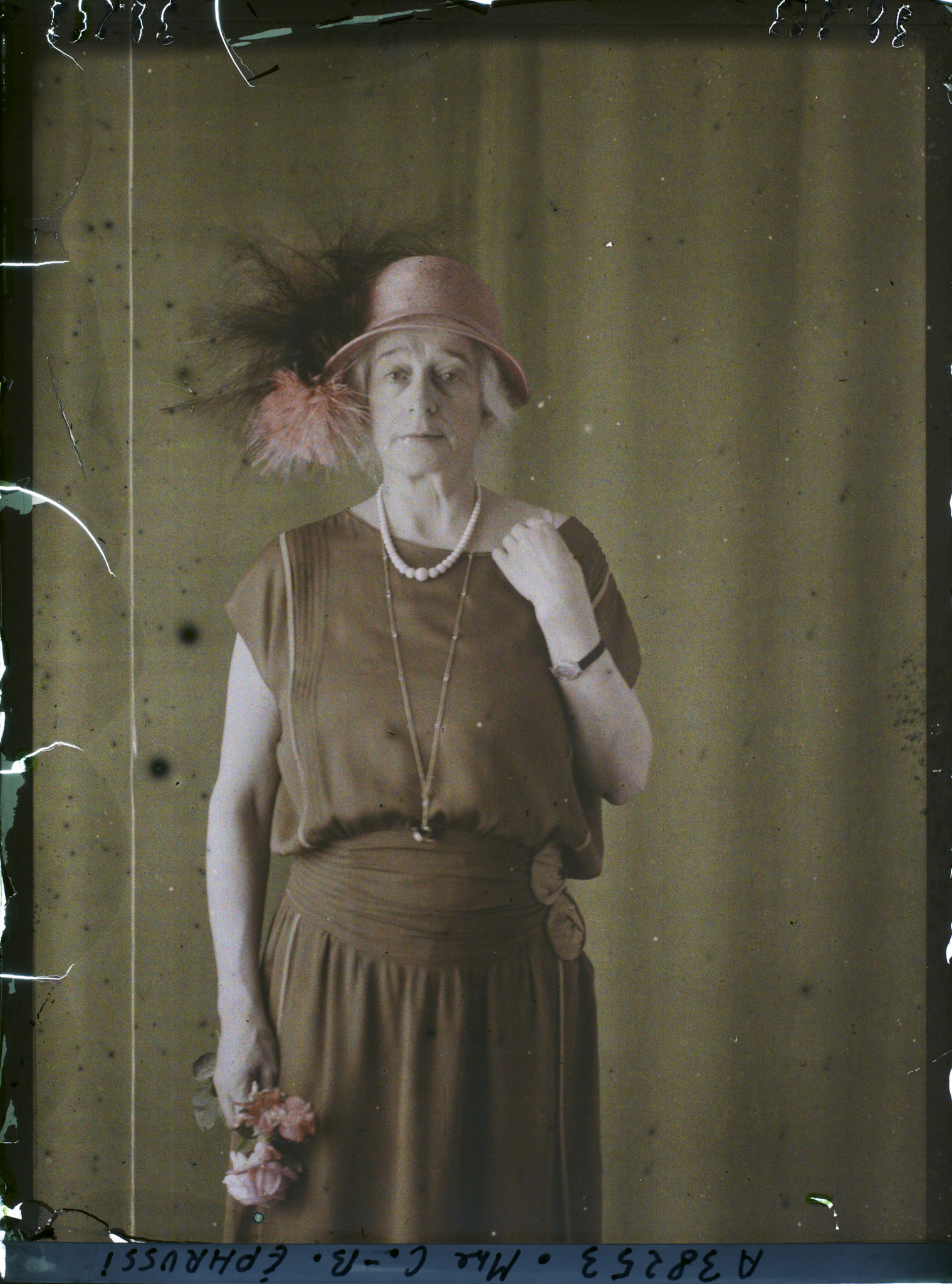
Her bequest is recorded day by day, which is the exact inverse of her buying.
Leben prints the clause: she bequeathed to the Institut de France, for the Academie des Beaux-Arts, the Villa Ile de France at Saint Jean Cap Ferrat with all the works of art and furniture and the gardens, for the purposes of creating a museum, adding everything in the Paris house at 19 avenue Foch and in the two Monte Carlo villas, and directing that as much as possible the museum keeps its current appearance as a salon and that the valuable pieces are kept behind glass. The legatee is the Institut de France acting for the Academie, a precision most accounts drop.
Then the dates. She died at the Hotel d'Angleterre in Davos in April 1934; Leben's study prints her age at death as 70, although she was born on 14 September 1864 and was therefore 69. On 11 April, the day of her burial at Pere Lachaise, the notary sent word to the Academie; on 15 April the Institut was informed; on 20 April Widor wrote to Edouard de Rothschild that the Academie had accepted and had appointed Albert Tournaire curator, and the coffers were opened and the inventory taken. A note on a letter from the Academie's permanent secretary Charles Widor shows she had made her intentions clear four years earlier, and that when Widor called at the Faubourg Saint-Honore to tell her uncle and aunt, they had not been aware of their niece's generosity.
| Date | Step |
|---|---|
| About 1930 | Her intentions made clear to the Academie, per a note on Widor's letter |
| 1933 | The will written, a year before her death |
| April 1934 | She dies at the Hotel d'Angleterre, Davos, aged 69 |
| 11 April 1934 | Burial at Pere Lachaise; the notary notifies the Academie the same day |
| 15 April 1934 | The Institut de France is informed |
| 20 April 1934 | Widor writes that the Academie has accepted and appointed Albert Tournaire curator |
The size of it is given as not fewer than 5,000 works of art by both the Academie and the villa's own history, and as more than 5,300 pieces by French Wikipedia, which cites nothing for the higher figure. A Paris newspaper, L'Intransigeant of 16 April 1934, reported that a capital of six million francs went with the villa; the will clause as quoted does not mention money, so that figure rests on one press report.
The building itself keeps the pattern. Leben names eight architects consulted and has Auburtin drawing the plans and Messiah then changing everything; the Academie says she exhausted four; the villa's own history does not name Messiah at all and English Wikipedia credits him alone. Nobody has published what any of it cost, because the payment records are not there.
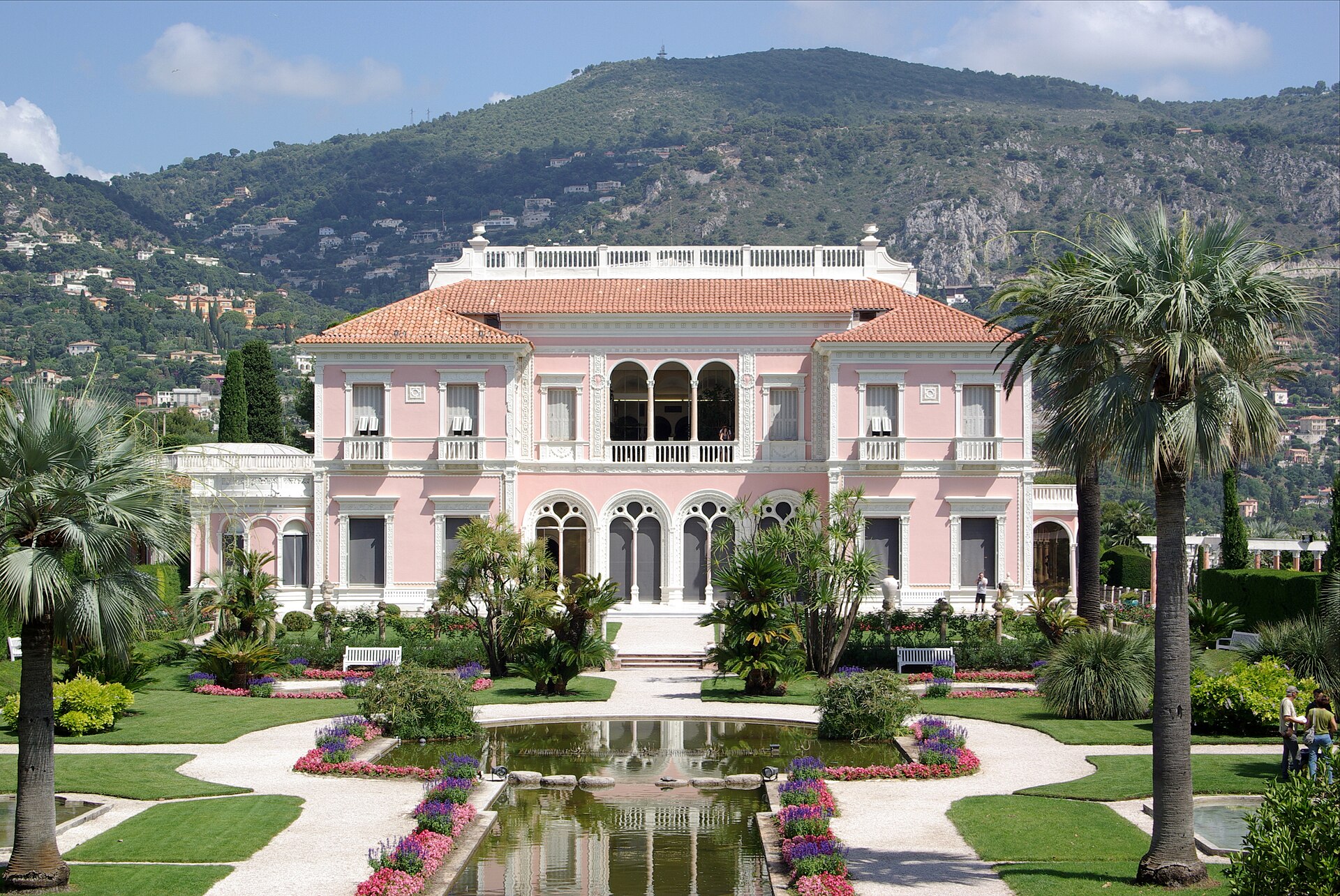
Her name is on the object and not in its record
The object is called the Rothschild egg by the trade, by the press and by the museum, and the Rothschild Archive's own study of the family's Faberge dealings does not contain her name.
Kieran McCarthy's article for that archive identifies twenty-five members of the family as Faberge customers and states they purchased exclusively from the firm's London branch, which opened in 1903. A search of its text returns no occurrence of Ephrussi and none of Beatrice. The same article names a second route for the French branch, purchases made on the firm's regular sales trips to Paris, and Christie's catalogue restricts the word exclusively to the English Rothschilds. So a 1902 date does not put the egg outside the documented channels, and the Paris selling trip Christie's reaches for is one McCarthy himself records. The absence that stands is her name, not the date.
So the naming runs the wrong way round. A family name attached to the object has become its title, while the woman who gave it is absent from the museum's record of it, absent from the archive's study of the family's purchases from that firm, and present in the sale catalogue as the first line of a provenance and as the giver named in somebody else's will. She is in this archive because she gave things away and because an institution wrote down what it received. That is how a woman's patronage usually survives, and it is worth knowing that it is the receiving end that does the recording.
Why this archive is free to read
We do this for everyone who loves art. The people who have studied it for years, and the people who just stopped to look. Iconotheca exists so that what we learn belongs to all of them.
Nobody pays us for this. No ads, no sponsors, no commercial interest. These works belong to all of us, and we would rather share them with as many people as we can than keep them to ourselves.
If it gave you something today, tell us to keep going. Follow us, leave a like, or write a positive comment. We read every one, and they are what keeps us going.
Questions
Nobody knows, and Christie's says so. Its 2007 catalogue states that no surviving documentary evidence records an order for the egg, as is the case for all private commissions by the Faberge workshops in Saint Petersburg. Beatrice Ephrussi de Rothschild is documented as the giver, by a codicil of 22 March 1958 to the recipient's will. Christie's own press release suggested her husband Maurice may have placed the order.
Charlotte Beatrice de Rothschild, 1864 to 1934, was a French collector and builder, the daughter of Alphonse de Rothschild and the wife of the banker Maurice Ephrussi. She inherited on her father's death in 1905, bought seven hectares at Saint-Jean-Cap-Ferrat that year and built the Villa Ile-de-France, and bequeathed the villa, its gardens and her collections to the Institut de France for the Academie des Beaux-Arts.
The Academie des Beaux-Arts and the villa's own history both say not fewer than 5,000 works of art, drawn from the villa, her Paris house at 19 avenue Foch and her two Monte Carlo villas. French Wikipedia gives more than 5,300 pieces and cites nothing for it. The categories include soft and hard paste porcelain, eighteenth-century furniture, paintings, sculpture and drawings, fifteenth and sixteenth-century Italian and Spanish works on stone and wood, Savonnerie carpets and Gobelins tapestries, and painted silks and lacquer from Asia.
Christie's sold it in London on 28 November 2007 against an estimate of 6,000,000 to 9,000,000 pounds for a price realised of 8,980,500 pounds, which includes the buyer's premium. Christie's published no hammer price for the lot, and the lot carried import VAT at 5 per cent on the hammer and 15 per cent on the premium, so any hammer figure quoted elsewhere is a reconstruction.
The Faberge Research Site records that Faberge scholars do not agree that it should be called an egg and suggest it is a clock made in the shape of an egg, and notes that it was not presented at Easter. The Hermitage, which has owned it since 2015, catalogues it as the Rothschild Clock Egg and credits the clockmaker Nikolay Rode alongside the workmaster Michael Perkhin.
It is in the State Hermitage Museum in Saint Petersburg, museum number E-18382, recorded as having entered in 2015 as a gift from the President of the Russian Federation, with the handover ceremony held on 8 December 2014 at the museum's 250th anniversary. Alexander Ivanov, who bought it at Christie's in 2007, confirmed to the newspaper Moskovsky Komsomolets in December 2014 that it was the egg he had bought. The specialist site that tracks these objects writes that as far as its author knows it has not been made public how the Russian state came to hold it.
Sources
- 1Christie's, lot 55 in auction 7461 (lot page id 5002399), "A JEWELLED VARI-COLOURED GOLD-MOUNTED AND ENAMELLED EGG ON PLINTH, INCORPORATING A CLOCK AND AN AUTOMATON", Russian Works of Art Including The Rothschild Faberge Egg, London, 28 November 2007, for the statement that no documentary evidence records an order for the egg or for any private Faberge commission, the codicil of 22 March 1958 and its English translation, the provenance line reading gift to, the Perkhin and Rode marks and the engraved date, the Wartski workshop photograph and the 1,500 rouble helmet box delivered on 19 July 1902, the estimate of 6,000,000 to 9,000,000 pounds and the price realised of 8,980,500 pounds, the VAT at 5 per cent on hammer and 15 per cent on premium, the fifty Imperial eggs, the private clients including Consuelo Vanderbilt and the Iusupov and Kelch eggs, the inheritance of 1905 and the purchase of seven hectares of which 3.5 remain, and her gambling on cruises. Read by plain fetch with a desktop User-Agent after WebFetch refused the domain. christies.com/en/...
- 2Ulrich Leben, "Beatrice Ephrussi de Rothschild: creator and collector", The Rothschild Archive, Review of the Year April 2008 to March 2009, for the quoted bequest clause to the Institut de France for the Academie des Beaux-Arts and the salon direction, the death at the Hotel d'Angleterre in Davos aged 70 and the burial at Pere Lachaise on 11 April 1934, the notary's message of the same day, the Institut informed on 15 April and the acceptance and appointment of Albert Tournaire on 20 April, Widor's call at the Faubourg Saint-Honore and the family's ignorance of the bequest, the absence of acquisition and payment records, the mystery of the furniture's origin, the unsubstantiated purchases including Lefuel on Josephine Bonaparte's mirror room, her being a keen auction enthusiast unusual for a Rothschild and a seller as well as a buyer, the disposal of her father's antique and Dutch paintings, the roll call of architects and the Auburtin and Messiah sequence, the completion of structural work in 1911, the orders to Jean Dunand in the Fond Laprade, and the six million francs reported by L'Intransigeant of 16 April 1934. rothschildarchive.org/materials/...
- 3Academie des beaux-arts, "Patrimoine de l'Academie: la Fondation Beatrice Ephrussi de Rothschild", for not fewer than 5,000 works of art in the bequest and the list of categories, the purchase of seven hectares at La Colle Blanche in 1905, the titanic works of 1907 to 1912, the exhaustion of four architects and the roles of Auburtin and Messiah, the phrase that unfortunately the sources are missing for her acquisitions, the Prelle silk woven for the Parmentier chairs, the Savonnerie carpet for the chapel at Versailles, the survival of only the terracing, the lapidary garden, some acclimatised trees and the fountains, the gardens redrawn three times since the bequest, and the classification date printed as 1993. academiedesbeauxarts.fr/patrimoine-de-lacademie-la-fondat...
- 4State Hermitage Museum, digital collection record for the Rothschild Clock Egg, for the authorship given as Perkhin as master and Nikolay Rode as clockmaker, the House of Faberge, the date 1902, the dimensions of 27 cm high, the museum number in the Cyrillic E series as 18382, and the acquisition recorded as entering the museum in 2015 as the gift from the President of the Russian Federation. Read by plain fetch with a desktop User-Agent, which returns the record in full. hermitagemuseum.org/digital-collection/...
- 5Faberge Research Site, "Eggs: Recent Discoveries", for the scholars' disagreement that the object is an egg rather than a clock in the shape of an egg and that it was not presented at Easter, for the report that a photograph of the clock was found in Maurice Rheims, L'Objet 1900, 1964, and for Kieran McCarthy's garland-count argument distinguishing the Rothschild egg from the Kelch Chanticleer egg in the Perchin workshop photograph. fabergeresearch.com/eggs-recent-discoveries
- 6Faberge Research Site, "Faberge Imperial Egg Chronology", for the letter of 4 May 1887 in the old style from Modest Solovyev to Nikolai Petrov recording the commission by order of Grand Duke Vladimir Alexandrovich, the delivery to the Emperor and the invoice of 2,160 roubles, and for the presentation to Maria Feodorovna at Easter 1887. fabergeresearch.com/eggs-faberge-imperial-egg-chronology
- 7Kieran McCarthy, "Faberge and the Rothschilds", The Rothschild Archive, Review of the Year April 2004 to March 2005, for the statement that the Rothschilds purchased Faberge exclusively from the firm's London branch, that the London branch was the only one outside Russia and opened in 1903, that twenty-five members of the family were customers to 1917, and that of the thousands of pieces the firm made only fifty were Imperial eggs. A machine search of the extracted text returns no occurrence of Ephrussi or Beatrice. rothschildarchive.org/materials/...
- 8Mieks Faberge Eggs, "1902 Rothschild Egg", reproducing in full the Christie's press release of 4 October 2007, for the statement that the egg had never been published and was recorded only in private family records, for the suggestion that it is possible that Maurice ordered the egg whilst in St. Petersburg or during a Faberge selling trip to Paris, for the figure of no more than 12 documented examples made to Imperial standards for private clients, for the presentation to the Hermitage on 8 December 2014 at the 250th anniversary, for the note that it has not been made public how the Russian State came into possession of the two Faberge works, and for Alexander Ivanov's confirmation to Moskovsky Komsomolets of 9 December 2014. The release itself is no longer on christies.com; this specialist site carries it and lists the dead original URLs. wintraecken.nl/mieks/...
- 9Villa Ephrussi de Rothschild, "Un peu d'histoire", for the garden works beginning at once and taking seven years, the villa works beginning in 1907 and her moving in in 1912, the crediting of Auburtin without naming Messiah, the themed gardens conceived by Louis Marchand in the year of her death, the bequest dated 1933 with some 5,000 works of art and seven hectares, and the Academie resuming direct management in 2023. villa-ephrussi.com/un-peu-dhistoire
- 10Galerie Georges Petit, Objets d'art, sale catalogue, Paris, 19 May 1913, 222 pages, Lugt 72771, copy in the Metropolitan Museum of Art libraries, catalogued under the topic Madame Ephrussi. Cited for the existence of a dated Madame Ephrussi sale of works of art in Paris in 1913; the identification with Beatrice is inference, since the period named her Madame Maurice Ephrussi, and the catalogue's 222 pages were not read. archive.org/details/...
More in The Women Behind the Art
The partWhat the Opera Paid Marie van Goethem
The model for Degas's Little Dancer is documented in a payroll and two lines of his handwriting.
The Publisher Was the Sitter
Truth sold her own cartes de visite, registered the copyright in her own name and left the photographer unnamed.
The Half That Was Not Sold
Vera Salomons inherited 57 of her father's Breguet watches. Her mother got the other seventy and they were auctioned.