The Jewels Isabella Pawned, and the Offer She Made for Columbus
Isabella pawned jewels at Valencia in 1489 for the Granada war. The Columbus offer is conditional in Hernando Colon and Las Casas, and Santangel's 1,140,000 maravedis paid.
Records in this piece: Epistola Christofori Colom (A Letter of Christopher Columbus), Plannck's corrected Latin edition, Carta Universal de Juan de la Cosa
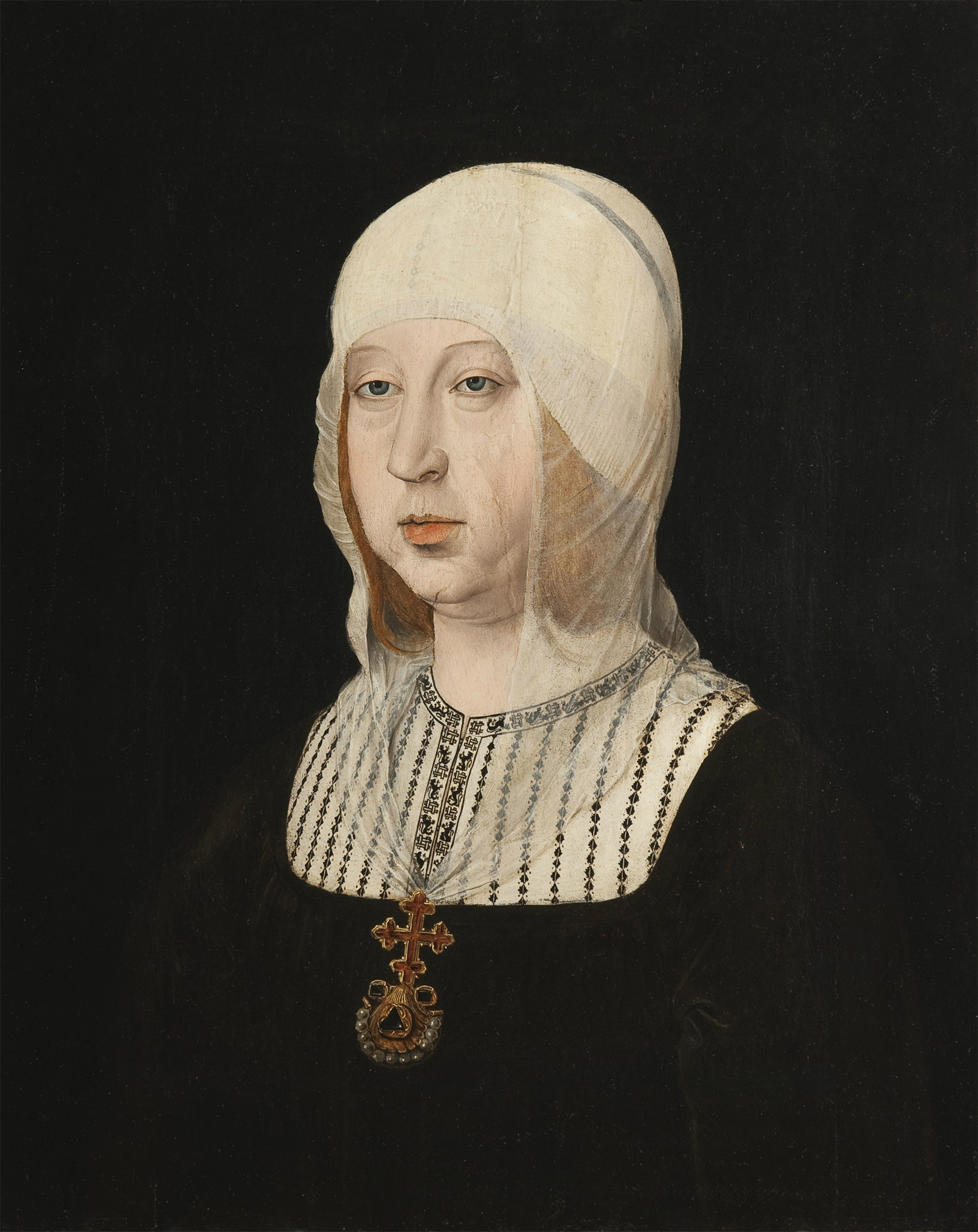
On this page 6 sections
ContentsClose
In short
- The one figure the accounts fix is 1,140,000 maravedis advanced by Luis de Santangel. Zalama (2012), Kayserling (1894) and Gonzalez Cruz all give it, and the first two cite Spanish account books, so we count it as one figure seen three times, not three independent counts.
- Isabella did pawn jewels, but for the Granada war: Prescott and Gomez-Chacon both report a Valencia pledge, which Gomez-Chacon dates to 1489 and describes as the Rich Crown with the collar of arrows.
- The offer to borrow on her jewels for Columbus is in Hernando Colon and Las Casas as a conditional one that Santangel declined, so the story is sixteenth-century. Irving's History of 1828, in the 1829 printing we read, turns it into an exclamation.
- The three-way split of the roughly 2,000,000 maravedis, 360,000 from Palos, 1,140,000 from Santangel and 500,000 from Columbus, is the traditional reckoning as Gonzalez Cruz reports it. The sources name different lenders for Columbus's share and disagree on the origin of Santangel's cash.
The documents show Ferdinand and Isabella commissioning the voyage
The documents that survive show Isabella and Ferdinand granting Columbus his titles and commanding the voyage. They do not show her paying for it with her jewels.
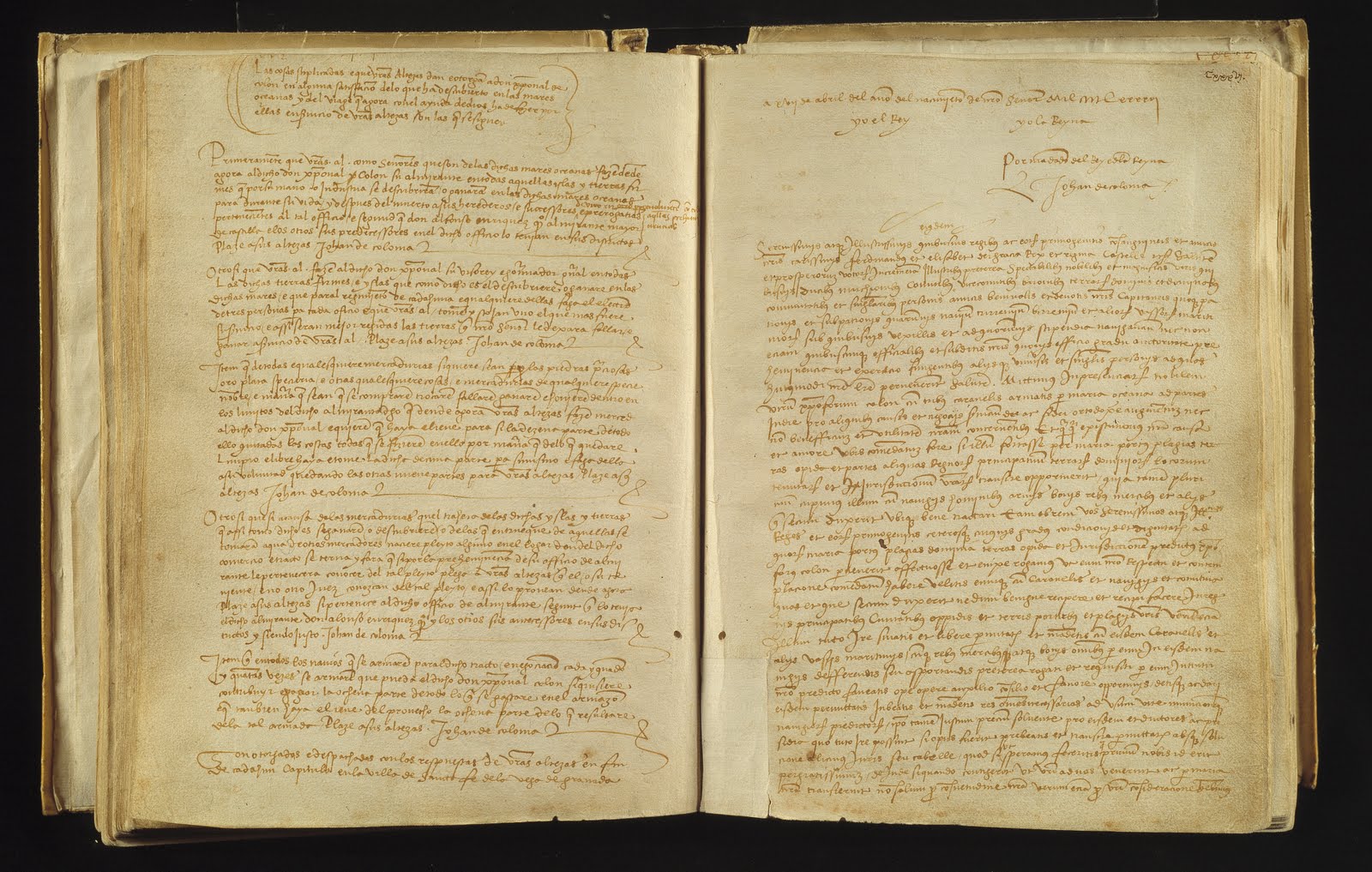
The agreement of 17 April 1492 at Santa Fe is known to us through William Prescott's summary of it, built on Navarrete's collection of documents. Ferdinand and Isabella, as lords of the ocean seas, made Columbus their admiral, viceroy and governor-general of whatever he discovered. He was to have a tenth of the products and profits within the limits of his discoveries, and an additional eighth if he contributed one eighth of the expense. We have not read the text of the capitulations. We have Prescott's summary and a photograph of the register that holds them.
The royal privilege of 30 April 1492, given at Granada, is the document where the monarchs speak in their own voice. We read it in an old English translation. It addresses Columbus as one "going by our command, with some of our vessels and men" and ends "I, THE KING, I, THE QUEEN", with the secretary Juan de Coloma's name beneath. It is a joint grant that describes the voyage as made by their command, and it is one of the clearest things the documents say about her role.
Prescott adds that Aragon "was not considered as adventuring in the expedition, the charges and emoluments of which were reserved exclusively for Castile." He gives no document for that sentence, only a footnote to Herrera, Munoz, Hernando Colon and Gomara. If it is right, the enterprise was the Castilian crown's own.
The ledgers give 1,140,000 maravedis, advanced by Santangel
The one figure the accounts fix is 1,140,000 maravedis, advanced by Luis de Santangel for the fleet and for Columbus.
Miguel Angel Zalama, writing in the Revista de Estudios Colombinos in 2012, states that the sum Columbus received, lent by Santangel, was 1,140,000 maravedis, and cites the Archivo General de Simancas, Contaduria Mayor de Cuentas, first series, bundle 134. Meyer Kayserling in 1894 quotes an item of the same size credited to Santangel in the account book that Santangel kept with the treasurer Francisco Pinelo for 1491 to 1493, and a payment order of 5 May 1492 that splits 2,640,000 maravedis into 1,500,000 owed to Isaac Abravanel and 1,140,000 owed to Santangel for money advanced to equip the caravels. David Gonzalez Cruz gives the same figure and reports the traditional view that it was advanced to Queen Isabel. Zalama cites Simancas; Kayserling cites account books that he says were once at Simancas and are now in Seville. The figure is the same and we have seen none of the books, so these are one figure seen three times, not three independent counts. Kayserling adds that on 20 May 1493 the king ordered 30,000 florins paid to Santangel, which he thinks included the rest of the loan, and that the queen's necklace was already pledged from the late war.
| Share | Maravedis | Who gives it | What stands behind it |
|---|---|---|---|
| Two caravels from Palos | 360,000 | Traditional reckoning, reported by Gonzalez Cruz | Two caravels demanded of the town by the crown; he gives no document for the sum |
| Santangel's advance | 1,140,000 | Zalama; Kayserling; Gonzalez Cruz | Account books cited at Simancas and Seville, quoted second hand |
| Columbus's eighth | 500,000 | Traditional reckoning, reported by Gonzalez Cruz | Las Casas (book 1, chapter 34) says half a cuento, shown by accounts before a notary at Palos, and thinks Martin Alonso Pinzon or the Pinzon brothers lent it; Manzano and Varela, cited by Gonzalez Cruz, name the Florentine Berardi |
| Total | about 2,000,000 | Traditional reckoning, reported by Gonzalez Cruz | The three lines above add to it exactly |
The sources disagree on whose cash it was. Las Casas has Santangel offer "the cuento of my house", a round million, which differs from the ledger's 1,140,000. Irving says the funds came from the coffers of Aragon. Kayserling says it was Santangel's own money and calls that proved by the account books. Gonzalez Cruz reports the traditional view that it was an advance to the queen. Prescott puts the whole charge of the crown at 17,000 florins, and Kayserling uses the same 17,000 florins elsewhere but calls them nearly five million maravedis, which cannot be squared with his own 1,140,000. The quotient of 1,140,000 by 17,000 is about 67 maravedis a florin, but we found no source for that rate, so we do not claim the two sums are the same.
One lead we could not close is the Santa Hermandad. Wikipedia says Santangel and Pinelo managed that brotherhood's funds in Castile, and the claim that the loan came from its box circulates widely, but no document we opened says so. Alonso de Quintanilla appears in Irving as the man who went with Santangel to the queen. We read no account kept by him.
Her jewels were already in pawn for the Granada war
Isabella did pawn jewels in the 1480s, to lenders in Valencia and Barcelona, to pay for the war on Granada.
Prescott writes that as a last resource the queen "pawned the crown jewels and her own personal ornaments to the merchants of Barcelona and Valencia". His footnote, citing Pulgar and Simancas by way of the Madrid Academy of History, says the city of Valencia lent 35,000 florins on the crown and 20,000 on a collar of rubies. It adds that they were not wholly redeemed until 1495 (the printing we first read garbles the year; two other printings read 1495). Diana Gomez-Chacon, in Cuadernos del CEMyR in 2023, gives a date for the same event: the queen pawned the Rich Crown together with a collar called the collar of arrows at Valencia in 1489, to meet the costs of the Granada war. She adds that the pair was pawned again in 1503, for 46,000 gold florins, to fight France, and that by 1508 they lay in a Burgos monastery as security for a loan to Ferdinand.
The two accounts describe the second piece differently, rubies in one and arrows in the other. Gomez-Chacon names a third piece, the collar of the balas rubies, as pawned at Zaragoza in 1482, Cordoba in 1487 and Valencia in 1489. That is probably Prescott's collar of rubies and it is not the collar of arrows, though neither author says so. The pledge itself is a fact in both. Zalama, in the 2012 article, reports that historians have long pictured a court of austerity, the queen supposedly having had to pawn her jewels for Columbus, and says the scheme fell through because Santangel lent the money. A queen whose crown stood in Valencia in 1489 and was not wholly redeemed until 1495 could not easily have handed it over in 1492. That is our inference.
The Columbus offer is conditional in the sixteenth-century tellings
The offer to pledge jewels for Columbus is in the two sixteenth-century narratives we read, and in both it is conditional.
Hernando Colon, Columbus's son, tells it in chapter 14 of his life of his father. We read the Italian translation of 1571, through a noisy scan, so we paraphrase and do not quote. The queen thanks Santangel, accepts his advice and puts the business off until the war is over. She adds that if Columbus will not wait, money may be borrowed on the jewels of her chamber. Santangel answers that no pledge is needed because he will lend his own. Bartolome de las Casas has the same scene in book 1, chapter 32 of his Historia de las Indias. In our rendering of his Spanish she says that if Santangel still thinks Columbus cannot bear the delay, she would see it as good to borrow the money on the jewels of her chamber, and Santangel kneels, kisses her hands and says there is no need to pawn them.
| Telling | What the queen says about the jewels | Santangel's answer |
|---|---|---|
| Hernando Colon, Italian edition of 1571 | Money may be borrowed on her chamber jewels if Columbus cannot wait | No need; he lends his own |
| Las Casas, Historia de las Indias, book 1 | The same offer, put as a possibility if Columbus cannot wait | No need; he lends the cuento of his house |
| Irving, first published 1828 (we read the 1829 Paris printing) | "I undertake the enterprise for my own crown of Castile, and will pledge my jewels to raise the necessary funds." | No need; he will advance the funds |
| Prescott, first published 1837 (we read an 1854 printing) | She will assume it "for my own crown of Castile, and am ready to pawn my jewels to defray the expenses of it, if the funds in the treasury shall be found inadequate." | He advances the sums from the Aragonese revenues |
The nineteenth-century change is in the delivery. In the printing we read, Irving introduces the sentence as an exclamation made with enthusiasm worthy of herself and calls it the proudest moment in her life. The quoted words appear in neither sixteenth-century text we read, and the condition Hernando and Las Casas carry is gone from his sentence. Prescott restores the condition and keeps the quotation marks. In all four, Santangel advances the money, so no jewels were pledged for the voyage. Gonzalez Cruz calls the legend of her trying to pawn them a fiction passed down in the Historia del Almirante, and Kayserling in 1894 already called it a story invented to glorify the queen. We did not trace who first wrote that she did pawn them, and we did not check Lamartine.
Plannck's corrected letter added her name in 1493
Within the year of the voyage a Roman printer reprinted the Latin letter with Isabella's name added.
Our record of the Library of Congress copy describes two Roman printings of the Latin letter. In the first, the opening credits Ferdinand of Aragon alone. In the second, corrected within the year, it credits Ferdinand and Isabel together. We take this from the record, which cites E. D. Church and the Gesamtkatalog der Wiegendrucke. We did not reopen those two, and the record notes that the Library of Congress page blocked direct requests, so we have not read the Latin lines ourselves. The record also notes that a diplomatic complaint from Castilian representatives in Rome is the usual explanation and that no document of the complaint turns up.
The picture here is the Library's copy in its red leather cover. The text where her name was added is not pictured, and we say so because the photograph is easy to take for a page. What the printing offers is a name added to a heading, with no sum beside it. It shows who the 1493 readers were told had sent the ships. It says nothing about who paid.

What is unread, and the ship Juan de la Cosa owned
The open questions can be put as three sets of papers that we did not open.
The first is the Simancas bundle Zalama cites, the Contaduria Mayor de Cuentas leg. 134, where the 1,140,000 sits. The second is the Santangel and Pinelo ledger and the Abravanel payment order that Kayserling quotes, which would show whose box the money left. The third is the Valencia pledge contracts, which would fix what was in pawn in April 1492. We did not search the Archivo General de Simancas through PARES, and the three claims above that depend on them are marked as second hand.
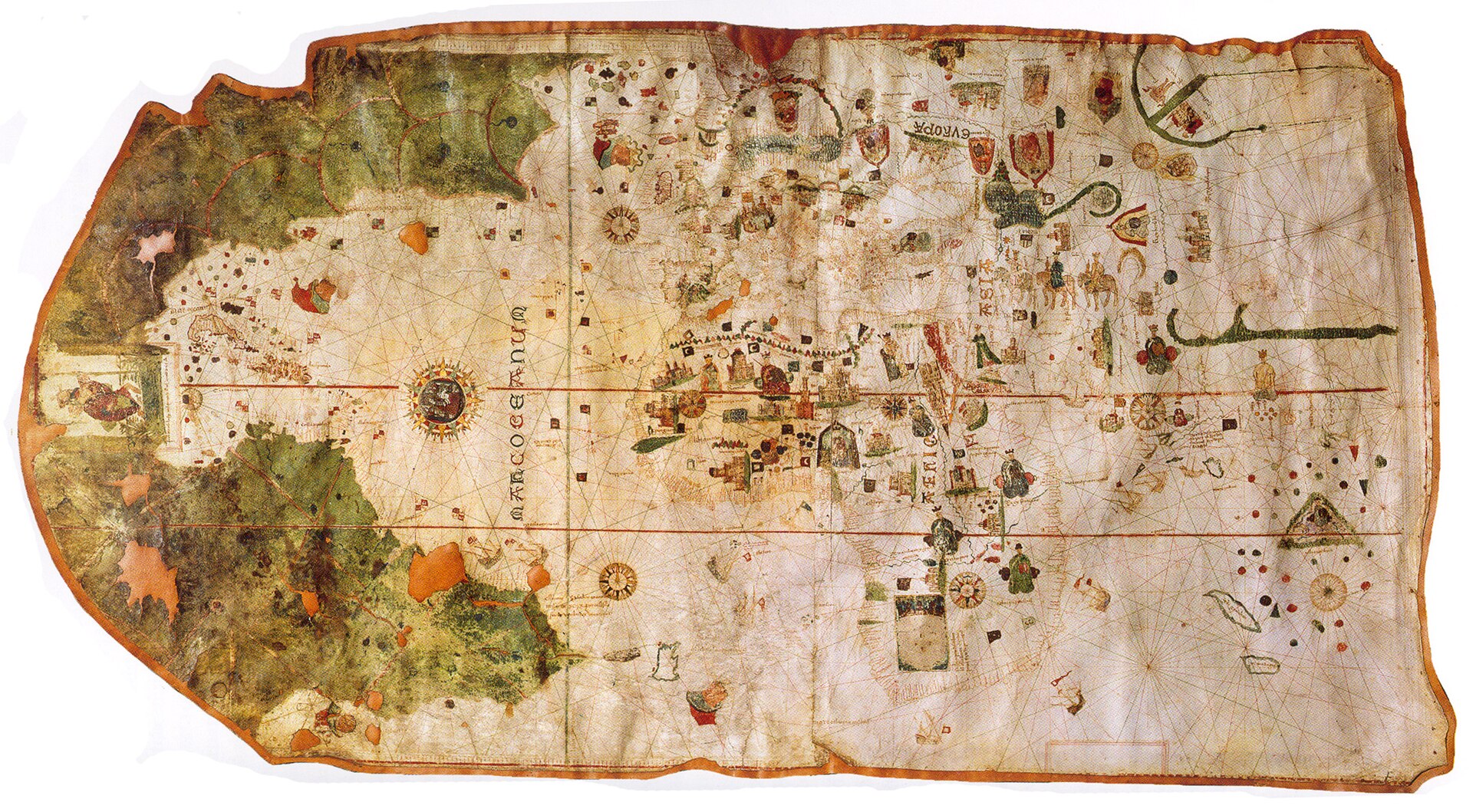
The lighter link is to the ship. Our record of the Juan de la Cosa chart says he owned and was master of the Santa Maria on the first voyage and presented two charts of the Indies to Ferdinand and Isabella at Segovia in 1503, though it says it is not established that this sheet was one of them. If the record is right that the ship was his, the loan did not buy it. We rely on that record and did not check it against its sources.
Questions
No document we read says she did. Hernando Colon, Las Casas, Irving and Prescott all have her offer. In the first three Santangel answers that a pledge is unnecessary and lends the money; in Prescott he simply advances the sums.
Yes, for the Granada war. Prescott reports that the city of Valencia lent 35,000 florins on a crown and 20,000 on a collar, and Gomez-Chacon says the Rich Crown and the collar of arrows were pawned at Valencia in 1489 and, on her account alone, again in 1503.
The account books, as quoted by Zalama and Kayserling, give 1,140,000 maravedis. Las Casas gives a cuento, a round million, and Prescott and Irving give 17,000 florins, which we cannot convert with a sourced rate.
The earliest tellings we read are Hernando Colon's life of his father, which we read in a 1571 Italian translation, and Las Casas's Historia de las Indias. We did not establish which is earlier or whether either copied the other.
Sources
- 1Bartolome de las Casas, Historia de las Indias, vol. 1 (Madrid, 1875), book 1 chapters 32 and 34: the scene with Santangel, the conditional offer on the jewels of her chamber and the loan of a cuento in chapter 32, then Columbus's half cuento for the eighth and Las Casas's guess at the lender in chapter 34. Read as raw OCR text of the Internet Archive copy. archive.org/details/...
- 2Hernando Colon, Historie del S.D. Fernando Colombo (Venice, 1571), Italian translation of his life of Columbus, chapter 14: the same scene. Read as raw OCR, paraphrased only. archive.org/details/...
- 3Washington Irving, A History of the Life and Voyages of Christopher Columbus (first ed. 1828; read the 1829 Paris printing), vol. 1, book 2 chapter 7: the quoted pledge, Quintanilla at the audience, the 17,000 florins. Raw OCR. archive.org/details/...
- 4William H. Prescott, History of the Reign of Ferdinand and Isabella the Catholic, vol. 2 (first ed. 1837; read an 1854 printing): the Valencia pledge and its footnote, the conditional quotation, the capitulations of 17 April 1492, the 17,000 florins. Raw OCR. archive.org/details/...
- 5Miguel Angel Zalama, 'Oro, perlas, brocados: La ostentacion en el vestir en la corte de los Reyes Catolicos', Revista de Estudios Colombinos 8 (June 2012), pp. 13-22, note 32 (1,140,000 maravedis, AGS, CMC 1a epoca, leg. 134). Read from the Dialnet PDF. dialnet.unirioja.es/descarga/...
- 6David Gonzalez Cruz, 'Una nueva perspectiva en torno a la financiacion andaluza del primer viaje de Cristobal Colon al Nuevo Mundo', Encrucijada de mundos, Universidad de Sevilla: the 360,000 / 1,140,000 / 500,000 split of about 2,000,000 maravedis. Read as the raw page. grupo.us.es/encrucijada/...
- 7Meyer Kayserling, Christopher Columbus and the Participation of the Jews in the Spanish and Portuguese Discoveries, chapter on Columbus at the Spanish court: the Santangel and Pinelo account book, the order of 5 May 1492 and the 17,000 florins. Read on the Heritage History page. heritage-history.com/index.php
- 8Diana Lucia Gomez-Chacon, 'Metafora, lujo y aderezo en la corte de los Reyes Catolicos: los animales en las joyas de Isabel I de Castilla', Cuadernos del CEMyR 31 (2023), pp. 165-191: the Rich Crown and collar of arrows pawned at Valencia in 1489 and 1503. Read from the PDF. ull.es/revistas/...
- 9Avalon Project, Yale Law School, 'Privileges and Prerogatives Granted by Their Catholic Majesties to Christopher Columbus, 1492': the Granada privilege of 30 April 1492 in an old English translation. avalon.law.yale.edu/15th_century/...
- 10Wikimedia Commons, File:Capitulacionsori.jpg, file page and licence (public domain; register of the Capitulations of Santa Fe, Archivo de la Corona de Aragon). commons.wikimedia.org/wiki/...

More in The Women Behind the Art
The partWho Stitched the Bayeux Tapestry? What the Documents Say About English Women's Embroidery
No document names who stitched the Bayeux Tapestry. What Domesday, the 1476 inventory and the Queen Matilda story show about English women's...
The Two Women in the Oseberg Ship, and the Queen Nobody Named
Two women lay in the Oseberg ship in 834. What the bones, isotopes and DNA show, and how a queen and a servant were read into a grave that no text...
The Name on the Rim: What Documents Say About Projecta
The Projecta Casket names its bride in one line of Latin. What the British Museum, Dalton 1901, an epitaph and Parliament say about her, and what is...