Epistola Christofori Colom (A Letter of Christopher Columbus), Plannck's corrected Latin edition
Stephan Plannck · After 29 April 1493
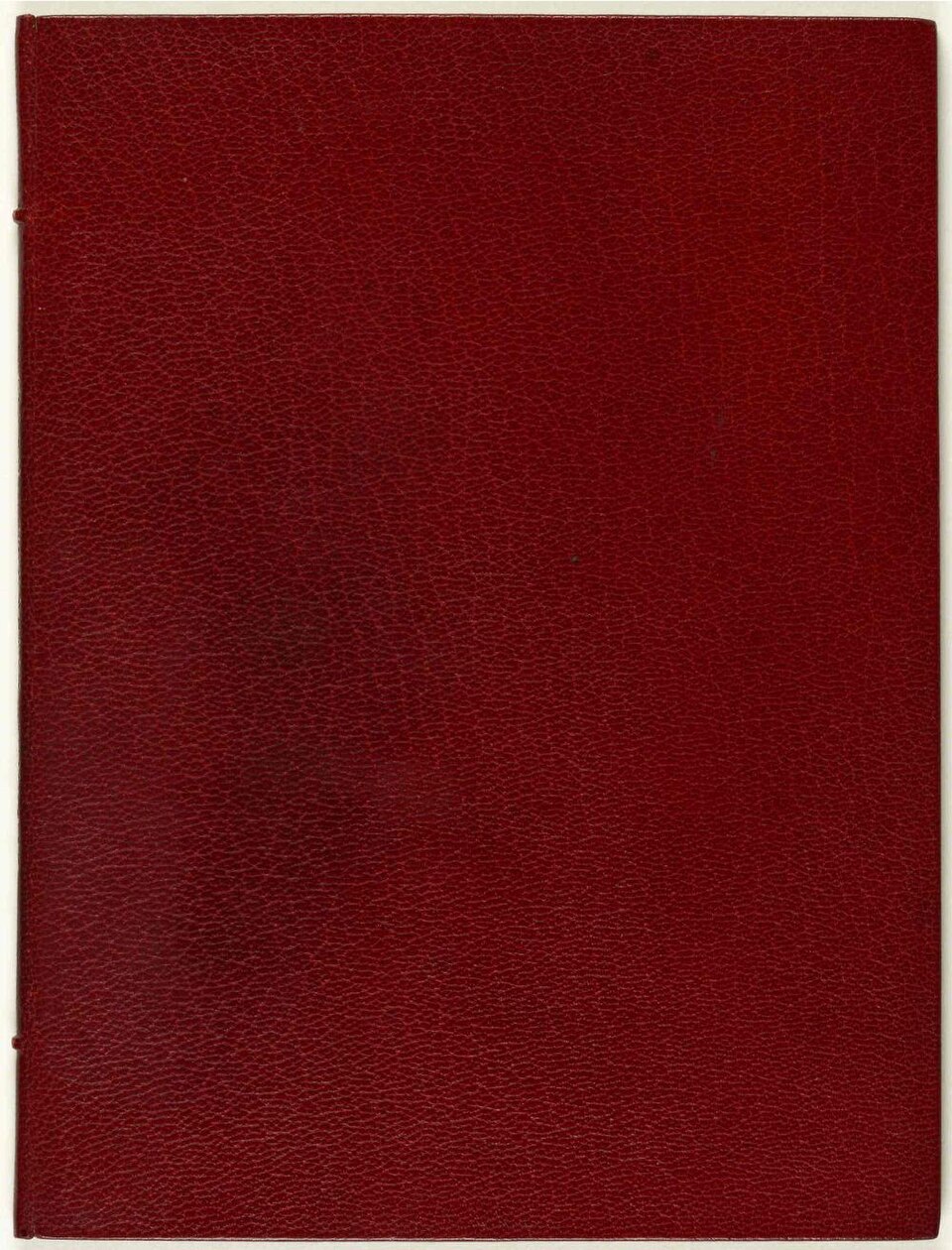
The Library of Congress's own copy of Plannck's corrected Latin edition, call number Incun. 1493 .C6, digitized as World Digital Library item 90. This is the object described in this record, acquired by the Library in 1946 and distinct from the Riccardiana Library's stolen-and-returned copy of the same edition discussed in the narrative.
| Artist | Stephan Plannck |
|---|---|
| Date | After 29 April 1493 |
| Medium | Letterpress print on paper; unillustrated quarto pamphlet |
| Dimensions | [8] pages; 20 cm (4to); one gathering, signed [1] superscript 4 |
| Where it is now | Library of Congress, Rare Book and Special Collections Division, Washington DClast confirmed |
| Inventory number | Call number Incun. 1493 .C6; Library of Congress Control Number 46031077 |
| Attribution | AcceptedThe imprint is given by the printer's own text tradition and confirmed by every standard incunabula census consulted: the Gesamtkatalog der Wiegendrucke (GW 7177), the Incunabula Short Title Catalogue (ic00758000), Goff's Incunabula in American Libraries (C-758) and E.D. Full note |
| Object type | Printed book |
| Period | Italian Renaissance, fifteenth century (incunabula period) |
| Cases | Has a provenance gap |
| Inscriptions | Title taken from the caption on leaf [1]1, beginning 'Epistola Christofori Colom, cui etas nostra multu[m] debet...'; no colophon. The Library of Congress copy carries a signed binding by Riviere & Son and an internal acquisition number, 1035E1, dated 25 January 1946. |
| Owners on record | 3 links2 documented, 1 unknown |
| Sources | 18 cited |
About this record Last verified · 18 sources cited · Change log
On this page 9 sections
ContentsClose
A plain, unillustrated eight-page pamphlet, printed in Rome by Stephan Plannck within weeks of Columbus's return to Spain in 1493, in the corrected Latin state that credits Queen Isabel alongside Ferdinand of Aragon. This copy has belonged to the Library of Congress since 25 January 1946 and is the exemplar the Library digitized as World Digital Library item 90.
It is not the copy of this same edition that was stolen from Florence's Biblioteca Riccardiana, passed through a Swiss collector and a 1992 Christie's sale, sat undetected in the Library of Congress from 2004 to 2016, and was then forensically exposed and returned to Italy. That is a different physical copy of the identical Plannck printing, and its story belongs to that copy, now back in Florence, not to this one.
The distinction matters because this exact edition has been targeted for theft and forgery at least four times in half a century, at four different libraries on two continents. Establishing which specific object a digitized plate depicts is not a formality here; it is the whole problem.
Provenance
Each link is graded. Documented: a cited source supports it. Disputed: the identification is argued but not established. Unknown: no owner for that span, and the gap is not smoothed into a narrative. The grades in the glossary.
- 1493 -Printed by Stephan Plannck, Romedocumented
Corrected Latin state of the Rome printing of Columbus's letter, produced after 29 April 1493, translated by Leandro di Cosco from the Spanish original printed weeks earlier in Barcelona.1459
- - 1946Unrecordedunknown
No owner, dealer or collection is named for this specific copy between its 1493 printing and its 1946 accession by the Library of Congress. The binding, signed by Riviere & Son, was presumably added at some point in this interval but is not dated in the catalog record.1
- 1946-01-25 - presentLibrary of Congress, Rare Book and Special Collections Division, Washington DCdocumented
Acquired under accession no. 1035E1, per the Library's own catalog note. Digitized as World Digital Library item 90. This accession date, thirteen years before the earliest documented date (1990) in the separate, unrelated Riccardiana theft chain, is the primary evidence that this copy is not the stolen-and-returned Riccardiana exemplar.13
Technical evidence
| Attribution note | The imprint is given by the printer's own text tradition and confirmed by every standard incunabula census consulted: the Gesamtkatalog der Wiegendrucke (GW 7177), the Incunabula Short Title Catalogue (ic00758000), Goff's Incunabula in American Libraries (C-758) and E.D. Church's Catalogue of books relating to the discovery and early history of North and South America (no. 5). All identify this as Stephan Plannck's Rome printing of the Latin Columbus letter, in its second, corrected state, produced after 29 April 1493. Church's own catalogue description is the source of the phrase 'Plannck's second or corrected edition' used to distinguish this state from Plannck's first Latin printing of the same letter. |
|---|---|
| Collation | [8] pages, quarto (20 cm); single gathering signed [1] superscript 4.1 |
| Text state | Corrected ('second') state of Plannck's Latin translation: dedication credits both Ferdinand and Isabel ('Helisabet'); addressee corrected to Gabriel Sanchez; translator corrected to Leandro di Cosco. Distinguished from Plannck's first Latin state, which names only Ferdinand and misspells the addressee and translator.145 |
| Binding | Signed binding by Riviere & Son, London, a commercial fine bindery; not an original 1493 binding.1 |
| Bound with | An 1816 English-language reprint of the letter's Spanish original, taken from the Edinburgh Review, printed on wove paper and probably excised from a larger unidentified publication; catalogued separately by the Library of Congress (LCCN 2018657915) but physically bound into the same volume as the Plannck letter.2 |
| Call number / control number | Incun. 1493 .C6; Library of Congress Control Number 46031077.1 |
| Acquisition record | Library of Congress accession no. 1035E1, dated 25 January 1946. No earlier owner, dealer or collection is named in the catalog description consulted.1 |
| Digitization | Digitized and issued as World Digital Library item 90 (hdl.loc.gov/loc.wdl/dlc.90, redirecting to loc.gov/item/46031077); reproduction hosted on Wikimedia Commons under a PD-Art public-domain licence.13 |
| Bibliographic citations | Gesamtkatalog der Wiegendrucke 7177; Incunabula Short Title Catalogue ic00758000; Goff, Incunabula in American Libraries, C-758; Hain, Repertorium bibliographicum, 5489; Copinger, Supplement to Hain, 5489; Harrisse, Bibliotheca Americana Vetustissima, 4; Church, Catalogue of books relating to the discovery and early history of North and South America, 5; Sabin, Dictionary of books relating to America, 14630; Catalogue of books printed in the XVth century now in the British Museum, vol. 4, p. 97 (IA. 18551).14 |
Images
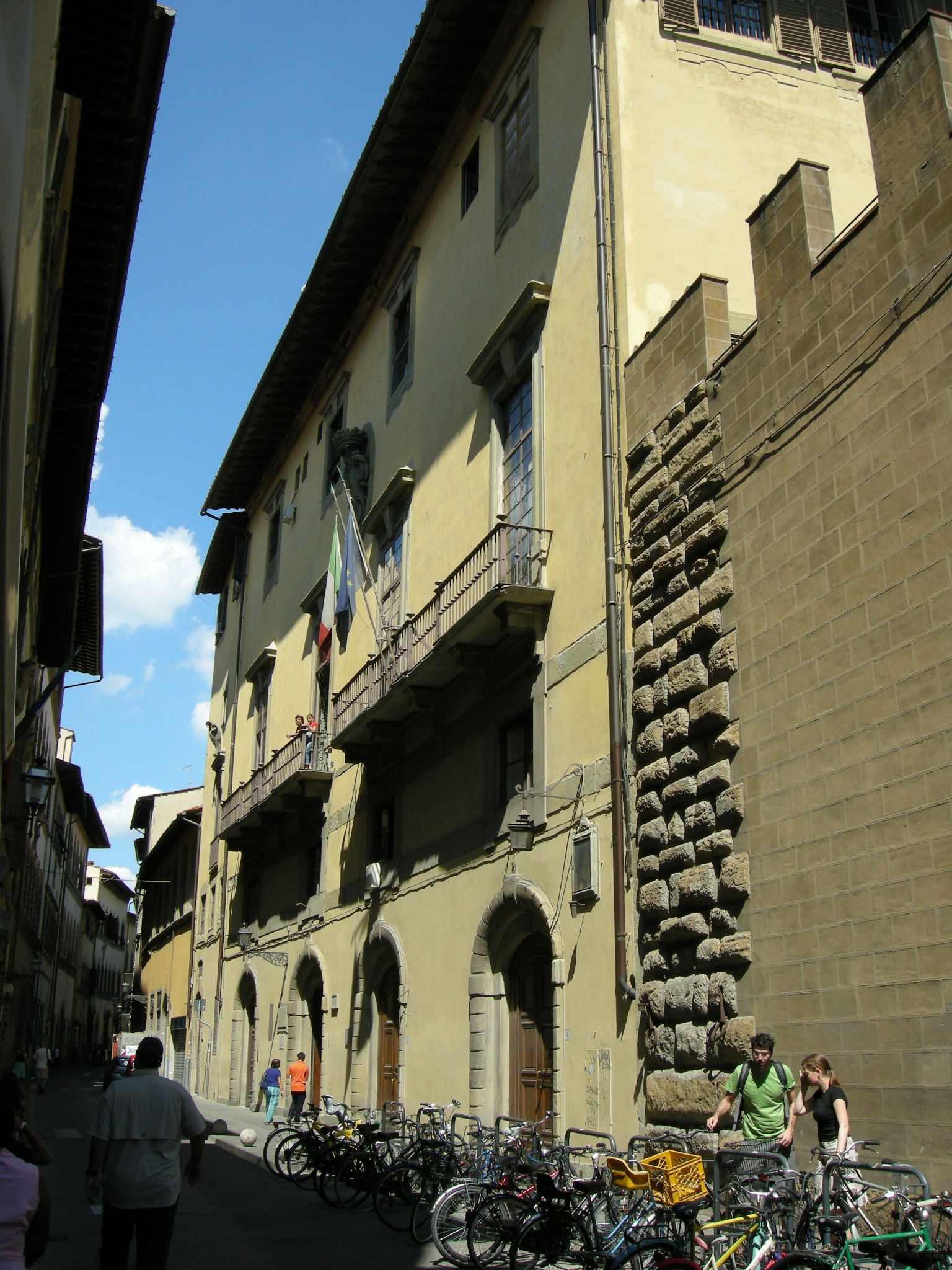
The record in full
Chapter 1What the object physically is
Eight pages, twenty centimetres tall, a single signed gathering, no woodcuts, no decorated initials, no colophon naming printer or date.
Eight pages, twenty centimetres tall, a single signed gathering, no woodcuts, no decorated initials, no colophon naming printer or date. The title is taken from the caption at the head of the first leaf: Epistola Christofori Colom, cui etas nostra multum debet, de Insulis Indie supra Gangem nuper inventis, addressed to the royal treasurer Gabriel Sanchez. It is a commercial news pamphlet, set and printed as fast as Stephan Plannck's Rome shop could manage, and it looks like one.
The Library of Congress's copy, call number Incun. 1493 .C6, carries a later fine binding signed by the London bindery Riviere & Son, and is bound together with a nineteenth-century companion piece: an 1816 English translation of the same letter, reprinted from the Edinburgh Review, probably removed from a larger unidentified publication and added to the volume at some later point. The two pieces now share one binding and one Library of Congress catalog entry for the bound volume, though they are catalogued individually as well.
Chapter 2How the news reached Rome, in Latin, within a month
Columbus's Spanish letter announcing his discoveries was first printed in Barcelona by Pedro Posa, dated to soon after 4 March 1493.
Columbus's Spanish letter announcing his discoveries was first printed in Barcelona by Pedro Posa, dated to soon after 4 March 1493. A Latin translation, made by an Aragonese cleric resident in Rome, Leandro di Cosco, followed within weeks: Plannck's Rome printing is dated by every standard incunabula reference to after 29 April 1493, the date embedded in the text itself rather than a printed colophon. Di Cosco is reported to have translated the letter at the request of Bishop Bernardino Carvajal, the Spanish crown's ambassador in Rome, which makes the translation itself an act of diplomatic publicity rather than a private literary exercise.
Plannck's Latin version is the edition that actually carried the news across the rest of Europe. Within the same year, further Latin printings followed in Basel (Michael Furter, for Johann Bergmann, with woodcut illustrations added), Paris (Guy Marchant) and Antwerp (Thierry Martens), alongside a further Rome printing by Plannck's remaining local rival, Eucharius Silber. All are catalogued by the Gesamtkatalog der Wiegendrucke as printed 'after 29 April 1493', which is a bibliographical inference from the text, not four independently dated imprints; it records how quickly the letter moved, not the exact day each city set type.
Chapter 3The correction: an omission and its fix
Plannck actually printed the Latin letter twice.
Plannck actually printed the Latin letter twice. In the first Roman printing, the dedicatory opening credits the expedition to Ferdinand of Aragon alone; it misnames the treasurer 'Raphael Sanxis' and the translator 'Aliander de Cosco'. In a second setting, corrected within the same year, the opening now credits both Ferdinand and Isabel, the treasurer's name is corrected to 'Gabriel Sanchis' and the translator to 'Leander de Cosco'. This Library of Congress copy is the corrected state: E.D. Church's catalogue calls it in so many words 'Plannck's second or corrected edition', and the title as transcribed in the Library's own record already carries 'Helisabet' alongside 'Fernandi' in the dedication.
One proposed explanation for the correction is diplomatic complaint from Castilian representatives in Rome, unhappy at seeing Isabel dropped from the announcement of an expedition she had personally sponsored. That explanation is plausible and repeated in more than one secondary account, but no source consulted for this record produces a document recording the complaint itself; it is inference from the fact of the correction, not a documented event, and this record treats it as such.
Chapter 4This copy's own history at the Library of Congress
The Library of Congress's catalog record for this exact copy carries one specific, dated note: 'LC copy has acquisition no.
The Library of Congress's catalog record for this exact copy carries one specific, dated note: 'LC copy has acquisition no. 1035E1 dated 1-25-[19]46.' That is 25 January 1946. The record also notes the binding is signed by Riviere & Son, a London bindery. Beyond the accession number, the record gives no earlier owner, dealer or collection name for this particular copy; its history before 1946 is not stated in the catalog description consulted.
The pamphlet sits within the Library's Incunabula Collection and its Rare Book and Special Collections Division, and is grouped online under the Library's 'Rare Book Selections' and its 'Parallel Histories: Spain, the United States, and the American Frontier' presentation. It was digitized and issued as World Digital Library item 90, the file now hosted on Wikimedia Commons as a public-domain photographic reproduction.
Chapter 5Establishing which copy this is, and which it is not
The Library of Congress's Rare Book and Special Collections Division is known to hold more than one Columbus-letter item, and at least one Columbus-letter copy has passed through Library of Congress...
The Library of Congress's Rare Book and Special Collections Division is known to hold more than one Columbus-letter item, and at least one Columbus-letter copy has passed through Library of Congress custody under circumstances that had nothing to do with an ordinary 1946 accession: a copy of this identical Plannck corrected edition was stolen from Florence's Biblioteca Riccardiana, surfaced through a Swiss collector in 1990, was sold at Christie's New York in 1992, was donated to the Library of Congress in 2004, and was identified as stolen and forensically confirmed in 2012, then formally returned to Italy in May 2016 (detailed below).
The dates rule out a mix-up. This copy's own Library of Congress catalog note places its accession fourteen years before Columbus scholarship even had electronic incunabula censuses, in January 1946, a full fifty-eight years before the Riccardiana copy's 2004 donation and seventy years before that copy's 2016 repatriation. A copy the Library has held continuously since 1946 cannot be the same physical object that only entered Library custody in 2004 and left again in 2016. On that basis this record treats World Digital Library item 90 as the Library's own, ordinarily acquired copy, not the returned Riccardiana exemplar, and states its current custodian as the Library of Congress rather than the Biblioteca Riccardiana.
Chapter 6The Riccardiana Library's copy: theft, forgery and detection
This section concerns a different physical copy of the same Plannck corrected edition, not the object catalogued above, and is included as context for how vulnerable this print run has proven to...
This section concerns a different physical copy of the same Plannck corrected edition, not the object catalogued above, and is included as context for how vulnerable this print run has proven to theft.
The Riccardiana Library in Florence held its copy of the letter bound into a volume together with 42 other incunabula. At some undetermined date the genuine leaves were removed and replaced with a forgery good enough to go undetected on the library's own shelves for years. The Riccardiana's then director floated a theory that the theft occurred around 1950 or 1951; the forensic evidence developed later pointed to different, and disputed, conclusions, and no source consulted resolves the true date. The forged substitute was printed from a photographic plate onto paper that laboratory analysis found to be roughly a century younger than 1493, with the library's ownership stamp removed using bleach and the surrounding text retouched to disguise the erasure; the stitching and page dimensions of the forged gathering also did not match the genuine pattern.
The genuine, stolen leaves reached a Swiss collector by 1990, were consigned to Christie's in New York and sold there in 1992 for $330,000, and were donated to the Library of Congress in 2004 by a collector whose identity the US ambassador to Italy declined to disclose while the investigation was still active; no source consulted for this record names that donor. Homeland Security Investigations received a tip in 2012 that the Riccardiana's own copy was a forgery, and an eight-year joint investigation followed, run out of HSI's Wilmington, Delaware field office with Assistant US Attorney Jamie McCall, HSI special agent Mark Olexa, the Carabinieri's cultural-heritage squad under Captain Giovanni Prisco, and outside experts including Princeton's Paul Needham and the rare-book dealer Jay Dillon, who first spotted the match: 'you can't have two books with the same random brown spots in the margins. It's just impossible,' he told CBS News, describing how identical foxing marks on the forged Riccardiana leaves and the leaves then sitting in the Library of Congress gave away that they were the same physical sheets, forged and genuine halves of one theft. Smithsonian Institution specialists carried out further authentication work. The genuine letter was formally repatriated at a ceremony at the Biblioteca Angelica in Rome on 18 May 2016; Italy's culture minister, Dario Franceschini, remarked on the letter having made 'the same trip back and forth from America' as Columbus himself, five centuries on. Franceschini stated the letter would return specifically to the Biblioteca Riccardiana in Florence, its original home. Days later, Maria Paola Profumo, director of the Galata Sea Museum in Columbus's native Genoa, wrote to Franceschini asking that her museum be given custody instead, to display the letter rather than return it to storage; no source consulted records the outcome of that request. No individual has been named or charged, in any source consulted, with the original theft or the manufacture of the forgery.
Chapter 7Not an isolated case: the same print run, targeted repeatedly
The Riccardiana theft was one of at least four thefts of Columbus-letter copies identified by the same joint US-Italian investigation.
The Riccardiana theft was one of at least four thefts of Columbus-letter copies identified by the same joint US-Italian investigation. A copy of this identical Plannck corrected edition was stolen from the Vatican Apostolic Library at an unknown date before 2007 and replaced with a substitute; it had been bought in 2004 for $875,000 by the Atlanta collector David Parsons, whose widow relinquished her claim after his 2014 death, and it was returned to the Vatican on 14 June 2018. A copy from Spain's National Library of Catalonia in Barcelona was likewise stolen, forged and eventually returned to Spain. A copy of Plannck's earlier, uncorrected first edition, missing from Venice's Biblioteca Nazionale Marciana since an inventory check placed its disappearance between 1985 and 1988, was traced to a US private collection and recovered in 2023, the fourth recovery in the series. Genuine, undisputed copies of Plannck's edition of this letter also continue to change hands on the open market: a copy that had spent close to a century in a private Swiss library sold at Christie's in October 2023 for $3,922,000, against a $950,000 estimate, roughly twelve times the hammer price the stolen Riccardiana copy made at Christie's in 1992, a gap that reflects three decades of market appreciation for the material as much as any difference in the two copies themselves.
Bibliographies place the number of surviving copies of Plannck's Latin printings, across both the first and corrected states, at roughly thirty institutional copies plus a small number in private hands, with the Spanish Barcelona original rarer still: only one Spanish-language copy of the letter to Santangel is recorded, at the New York Public Library. Against that population, four confirmed thefts and forgeries of this specific print run is a strikingly high proportion, and is the reason this record treats copy-identity as a load-bearing question rather than a footnote.
Chapter 8A commercial pamphlet, not a devotional or symbolic object
Nothing in the sources consulted suggests the letter's material form carried religious, ceremonial or symbolic freight beyond its function as a news report.
Nothing in the sources consulted suggests the letter's material form carried religious, ceremonial or symbolic freight beyond its function as a news report. It was set in plain roman type on ordinary paper, without illustration in Plannck's Rome printing (the Basel edition of the same year did add woodcuts, a different publisher's choice for a different market), and its purpose was explicitly promotional: to announce a discovery and secure backing for a second voyage, addressed to a royal treasurer rather than a devotional patron. The absence of an iconographic or devotional programme is itself the honest finding here, not an omission; this is a fifteenth-century newsletter, and its later value is a function of what it reports, not of any meaning invested in the object by its makers.
What has since been invested in it is entirely modern: the pamphlet has become one of the most fought-over classes of printed object in the antiquities and rare-book trade specifically because it is the first printed announcement of the European encounter with the Americas, a status assigned retrospectively by the very market and law-enforcement history recounted above.
Chapter 9What remains unresolved
Two separate, real objects sit behind this record's subject matter: the Library of Congress's own copy, which is what this record describes and what the accompanying digitized image shows, and the...
Two separate, real objects sit behind this record's subject matter: the Library of Congress's own copy, which is what this record describes and what the accompanying digitized image shows, and the Riccardiana Library's copy, whose theft and repatriation supply the case's notoriety but which is a different physical exemplar now returned to Florence. Several factual gaps remain on both sides of that division, listed below, and none of them are bridged with a guess in this record.
The artist
Stephan Plannck
Stephan Plannck is not an artist in the ordinary sense of this publication; he is the printer whose Rome workshop produced the object described here, and his output is identified and dated the way a printing house's output always is: by type, format and imprint evidence rather than by a signed hand. He was, for the last decade of his working life, one of only two printers still operating in Rome at all, and it was his shop, not a scriptorium or a court atelier, that put the news of Columbus's first voyage into Latin circulation.
Related works
| Work | Relation | Where it is |
|---|---|---|
| Epistola Christofori Colom (first Latin state) Stephan Plannck | Plannck's first Rome printing of the same letter, credited to 'Raphael Sanxis' and omitting Queen Isabel; superseded within 1493 by the corrected state described in this record Distinguishing the two Plannck states is the printing-history question this record turns on; they are textually and bibliographically distinct despite sharing printer, city and year. | Multiple institutional copies (GW 7173 / ISTC ic00757800 group) |
| Epistola de insulis nuper inventis (Spanish original) Pedro Posa, Barcelona | The Spanish-language original from which Plannck's Latin translation, via Leandro di Cosco, derives Printed after 4 March 1493, roughly two months before Plannck's Rome Latin printing. | Surviving copies include the Biblioteca de Catalunya, Barcelona |
| Copy of Plannck's corrected edition, ex-Biblioteca Riccardiana Stephan Plannck | A different physical copy of the identical corrected edition described in this record; stolen from Florence, forged in its place, recovered at the Library of Congress and repatriated This is NOT the object described in this record. It is a separate exemplar of the same printing, now back in Florence; see narrative for the full account and the basis for distinguishing the two copies. | Biblioteca Riccardiana, Florence (returned May 2016) |
| Copy of Plannck's corrected edition, ex-Vatican Apostolic Library Stephan Plannck | A third physical copy of the same edition, stolen from the Vatican, held unknowingly by an Atlanta collector, David Parsons, and returned to the Vatican in 2018 Cited here as comparanda establishing the pattern of theft affecting this print run; unrelated to this record's copy beyond sharing the same printer and edition. | Biblioteca Apostolica Vaticana, Vatican City |
| Copy of Plannck's first edition, ex-Biblioteca Marciana Stephan Plannck | A copy of Plannck's uncorrected first state, missing from Venice since 1985-88 and recovered from a US private collection in 2023 Fourth and most recent recovery in the same joint US-Italian investigation that identified the Riccardiana, Vatican and Barcelona thefts. | Biblioteca Nazionale Marciana, Venice |
| Epistola de insulis nuper inventis (Basel Latin edition, illustrated) Michael Furter, for Johann Bergmann, Basel | A separate 1493 Latin printing of the same letter, illustrated with woodcuts, unlike either Plannck Rome printing Included to prevent any confusion between this plain, unillustrated Rome pamphlet and the visually distinct illustrated Basel edition of the same text. | Multiple institutional copies (GW 7174) |
| A letter of Christopher Columbus (Edinburgh Review reprint, 1816) Unidentified English translator/printer | Nineteenth-century English translation bound together with this record's copy in the same Library of Congress volume A later companion piece physically bound with the object, not a separate edition of the incunable itself. | Library of Congress, Washington DC (LCCN 2018657915) |
Open questions
- Exactly when was the Riccardiana Library's copy of this edition stolen and replaced with a forgery? The library's own former director proposed around 1950-51; forensic findings reported elsewhere suggest a different, unresolved timeframe.
- Who donated the Riccardiana copy to the Library of Congress in 2004? The US ambassador to Italy declined to name the donor while the federal investigation was active, and no source consulted names them since.
- Was anyone ever criminally charged with the original theft from the Riccardiana Library or with manufacturing the forged replacement? No source consulted names a suspect or reports a prosecution.
- Did the Galata Sea Museum in Genoa succeed in its 2016 request to take custody of the returned Riccardiana letter for public display, rather than see it return to the Riccardiana's holdings? The outcome is not recorded in the sources consulted.
- What is this Library of Congress copy's own provenance before its 25 January 1946 accession? The catalog record gives an accession number and date but no earlier owner, dealer or collection.
- How many genuine copies of Plannck's corrected ('second') edition specifically survive, as distinct from his first edition and the other 1493 Latin printings? Published totals in secondary sources (approximately 30, or 'about 80' across all editions) are not consistently broken out by state.
Questions about this object
What is Epistola Christofori Colom (A Letter of Christopher Columbus), Plannck's corrected Latin edition?
Epistola Christofori Colom (A Letter of Christopher Columbus), Plannck's corrected Latin edition is a printed book, dated after 29 April 1493. Medium: Letterpress print on paper; unillustrated quarto pamphlet.
Who made Epistola Christofori Colom (A Letter of Christopher Columbus), Plannck's corrected Latin edition, and is the attribution settled?
The attribution to Stephan Plannck is recorded here as accepted. The imprint is given by the printer's own text tradition and confirmed by every standard incunabula census consulted: the Gesamtkatalog der Wiegendrucke (GW 7177), the Incunabula Short Title Catalogue (ic00758000), Goff's Incunabula in American Libraries (C-758) and E.D. Church's Catalogue of books relating to the discovery and early history of North and South America (no. 5). All identify this as Stephan Plannck's Rome printing of the Latin Columbus letter, in its second, corrected state, produced after 29 April 1493. Church's own catalogue description is the source of the phrase 'Plannck's second or corrected edition' used to distinguish this state from Plannck's first Latin printing of the same letter.
Where is Epistola Christofori Colom (A Letter of Christopher Columbus), Plannck's corrected Latin edition now?
Library of Congress, Rare Book and Special Collections Division, Washington DC. Inventory number Call number Incun. 1493 .C6; Library of Congress Control Number 46031077. Last confirmed 7 September 2026. Library of Congress catalog record for LCCN 46031077 (World Digital Library item 90), consulted via the Internet Archive Wayback Machine capture of loc.gov/item/46031077 after the live page returned a bot-detection block. The record's own acquisition note dates this copy's entry into the Library to 25 January 1946 (accession no. 1035E1), which is a separate and much earlier acquisition than the Library's other, unrelated Columbus-letter provenance case discussed in this record's narrative (see notes_for_editor).
What is still unknown about Epistola Christofori Colom (A Letter of Christopher Columbus), Plannck's corrected Latin edition?
Exactly when was the Riccardiana Library's copy of this edition stolen and replaced with a forgery? The library's own former director proposed around 1950-51; forensic findings reported elsewhere suggest a different, unresolved timeframe.
Sources
- 1Library of Congress, catalog record for 'Epistola Christofori Colom...' (World Digital Library item 90, LCCN 46031077), consulted via an Internet Archive Wayback Machine capture after the live loc.gov page returned a bot-detection (Cloudflare) block to direct and header-varied requests. loc.gov/item/...
- 2Library of Congress, catalog record for 'A letter of Christopher Columbus' (LCCN 2018657915), the 1816 Edinburgh Review English reprint bound together with the object in the same volume, consulted via an Internet Archive Wayback Machine capture. loc.gov/item/...
- 3Wikimedia Commons, File:A Letter of Christopher Columbus WDL90.pdf, description and licensing page. commons.wikimedia.org/wiki/...
- 4Gesamtkatalog der Wiegendrucke, Work Catalogue 'Columbus, Christophorus' (lists GW 7171-7179, all 1493 editions of the letter with printer, place and format). gesamtkatalogderwiegendrucke.de/docs/...
- 5Gesamtkatalog der Wiegendrucke, GW07177 (census record for Plannck's corrected Rome edition). gesamtkatalogderwiegendrucke.de/docs/...
- 6US Immigration and Customs Enforcement, 'HSI repatriates rare 15th century Columbus letter to Italy' (archived press release). ice.gov/news/...
- 7The History Blog, 'US returns stolen Columbus letter to Italy', on the Riccardiana theft, forgery and May 2016 repatriation. thehistoryblog.com/archives/...
- 8Biographical and career detail on the printer Stephan Plannck (dates, Rome workshop on the Via Mercatoria, decline of Roman printing by 1490), drawn from German Wikipedia and related reference aggregation; a source, with a specialist incunabula-printing history such as Konrad Haebler's work on Roman printers. de.wikipedia.org/wiki/...
- 9On the translator Leandro di Cosco and the role of Bishop Bernardino Carvajal in commissioning the Latin translation; drawn from aggregated bibliographic and exhibition sources including Indiana University's 'Rethinking the World' digital exhibition materials. Flagged as secondary; a specialist study of the letter's translation history would strengthen this claim. liblilly.sitehost.iu.edu/etexts/...
- 10Fox News, 'Genoa maritime museum seeks possession of Columbus letter', on Maria Paola Profumo's request to Minister Franceschini and confirmation the letter would return to the Biblioteca Riccardiana. foxnews.com/world/...
- 11Rare Book Hub, 'Stolen Columbus Letter Found at the Library of Congress Returned', on the Riccardiana volume of 42 incunabula, the 1990/1992/2004 chain and the $330,000 Christie's price. rarebookhub.com/articles/...
- 12Rare Book Hub, 'The Columbus Letter, History and Forgery', on survival numbers, the October 2023 Christie's sale, and Paul Needham's sewing-hole identification method in a related case. rarebookhub.com/articles/...
- 13CBS News / 60 Minutes, 'Rare, million-dollar copies of a letter written by Christopher Columbus replaced with fakes', on the investigation team (Jay Dillon, Paul Needham, HSI special agent Mark Olexa, AUSA Jamie McCall, Carabinieri Captain Giovanni Prisco) and the foxing-match detection method. cbsnews.com/news/...
- 14The History Blog, 'Another stolen Columbus letter returned to Italy', on the Vatican copy, David Parsons, and the 2018 return. thehistoryblog.com/archives/...
- 15Archaeology Magazine, news item on the Biblioteca Marciana (Venice) Plannck first-edition copy, missing 1985-88 and recovered from a US private collection in 2023, described as the fourth such recovery. archaeology.org/news/...
- 16Smithsonian Magazine, 'Christopher Columbus Letter Describing Journey to the Americas Sells for $3.9 Million', on the October 2023 Christie's sale of a different, Swiss-held copy of the edition. smithsonianmag.com/smart-news/...
- 17Wikipedia, 'Columbus's letter on the first voyage', for general print-history background on the seventeen 1493-1497 editions and the two Plannck states. en.wikipedia.org/wiki/...
- 18Wikimedia Commons, File:Palazzo medici riccardi, facciata su via de' ginori, biblioteca riccardiana.JPG, description and licensing page. commons.wikimedia.org/wiki/...

Last verified · Published
Change log
7 September 2026 - Record created at the house standard: researched narrative, technical evidence, maker dossier, graded provenance chain, prices with hammer and premium separated, related works, open questions and sources.