The Half That Was Not Sold
Vera Salomons inherited 57 of her father's Breguet watches. Her mother got the other seventy and they were auctioned. She built a museum for her half and named it after her teacher.
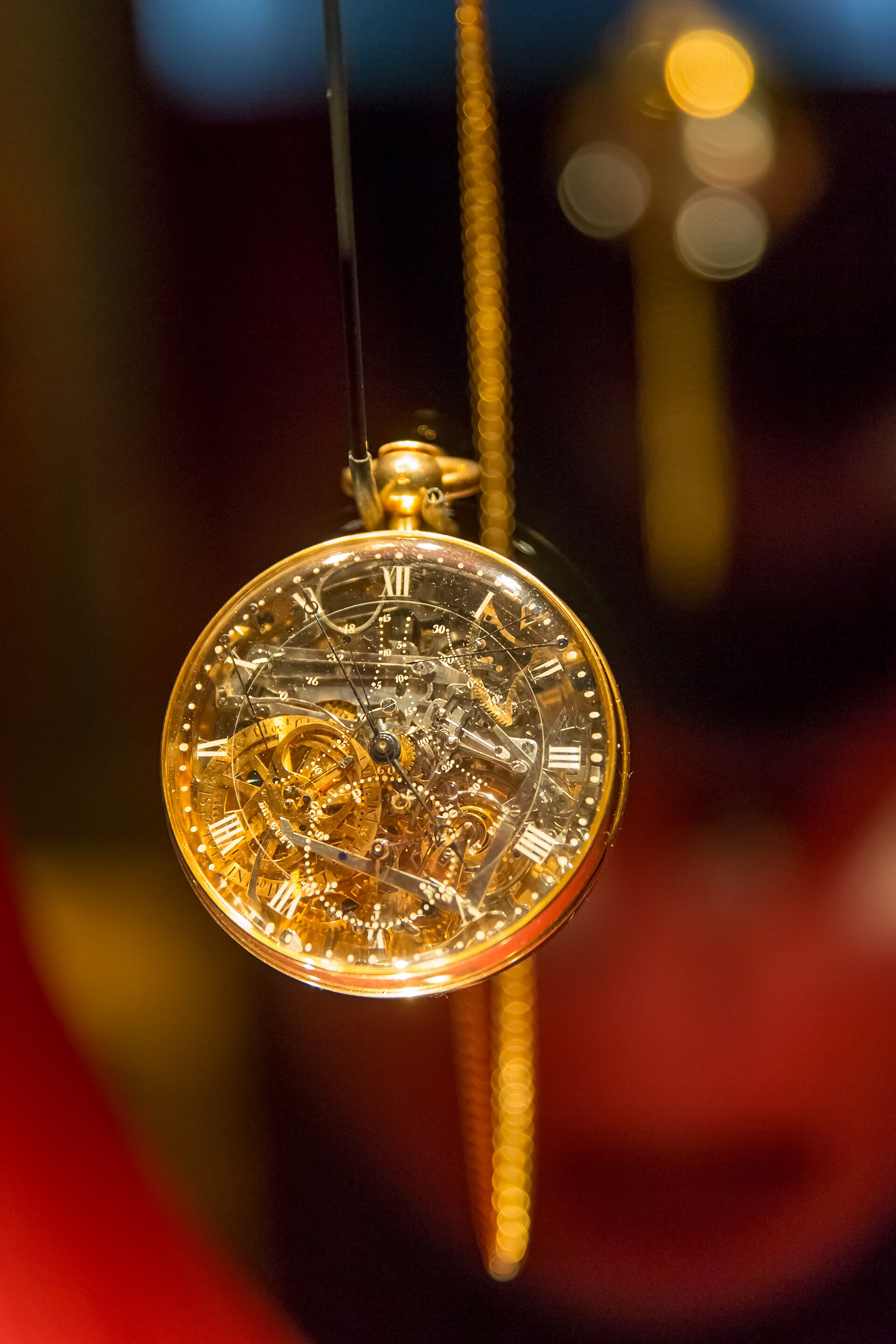
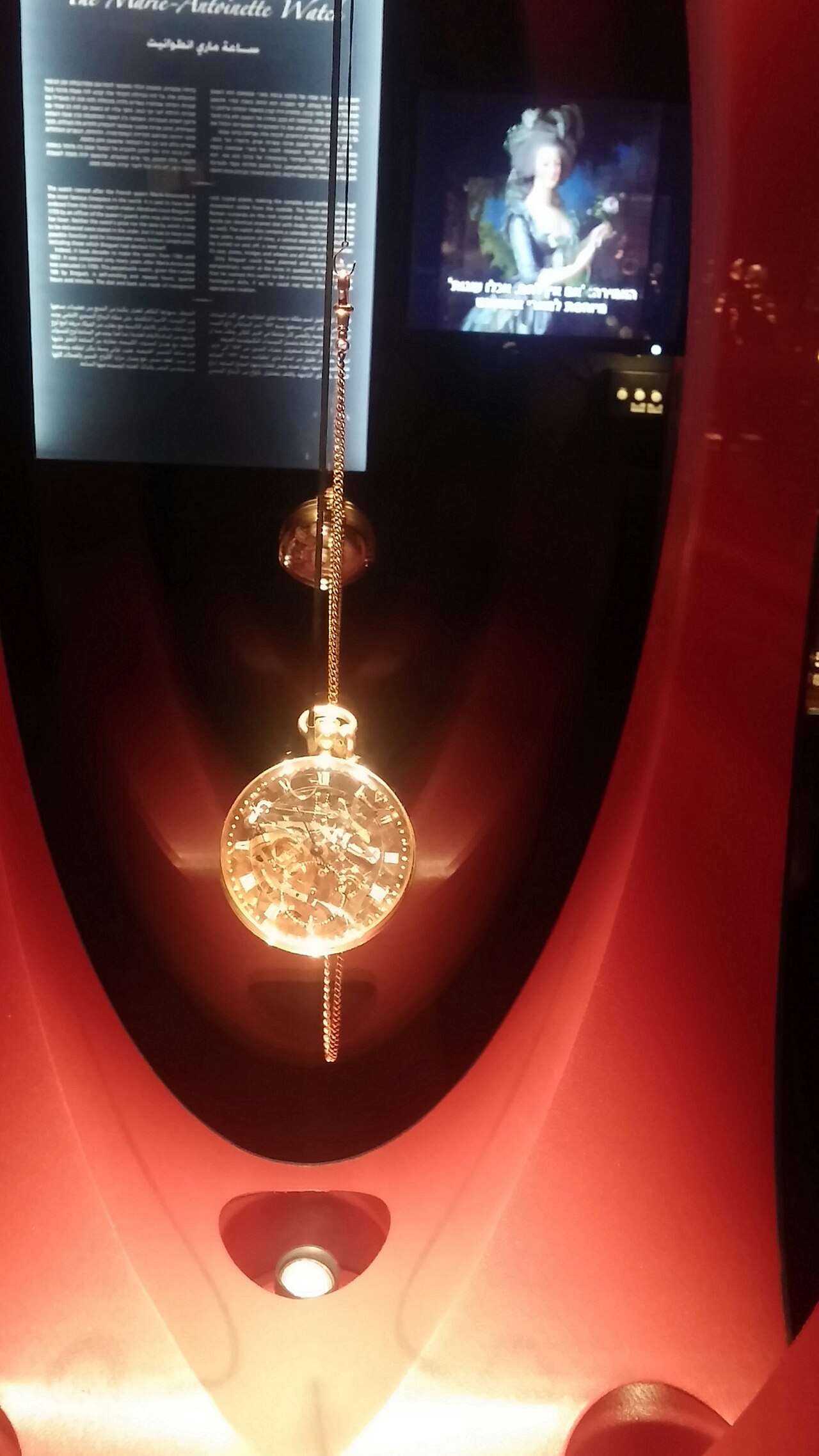
Records in this piece: Breguet No. 160, the Marie-Antoinette, Violin, the 'Lady Blunt'
On this page 5 sections
ContentsClose
In short
- She inherited about half the collection, not all of it. Of roughly 124 Breguet pieces her father assembled, 57 went to Vera Salomons including No. 160, and about seventy went to her mother Laura. The mother's share went to auction after her death, sixty-one lots of it across three Christie's sales in December 1964, June 1965 and November 1965.
- The most famous watch in the world is a survivor of a family division. It is intact and on public view because it was in the half that was not sold.
- She put her name on none of it. Her will, filed on Jersey shortly before her death, created four foundations to pay for the museum, named for her great-uncle, her mother, her maternal grandfather and her teacher. In Kent in 1937 she had already given the family house away on condition it be renamed after her father.
- She never saw the museum. Building began in 1965, she died on 12 November 1969 and it opened in 1974. Our own record had her owning the collection until 1974, five years after her death.
- What she actually gave has not been settled in public. The Hermann de Stern Foundation, which she created, told Haaretz in 2020 that the objects are not owned by the museum and never were, and that ownership was transferred to the foundation by contracts in 1993 and in 2010. The text of her will has not been made public.
- The horological establishment of the day thought she was wrong. George Daniels and Cecil Clutton are reported to have found it hard to believe the finest concentration of Breguet's work would sit far from London, Paris and Geneva. Daniels then catalogued it for her institution in 1980.
The collection was split in 1925 and half of it was auctioned
Sir David Lionel Salomons assembled roughly 124 Breguet timepieces, and when he died in 1925 they did not stay together. Fifty-seven went to his daughter Vera Frances Bryce Salomons, No. 160 among them. About seventy went to his widow, Laura Julia; the two figures together come to more than the roughly 124 usually given for the whole, which is a reminder that all three numbers are approximate and rest on one account. The two halves then had entirely different fates. Laura's share went to auction after her death, and Christie's in London sold sixty-one lots of it across three afternoons, twenty on 1 December 1964, twenty-one on 1 June 1965 and twenty on 2 November 1965.
Vera's half is the half that is now a museum. That is the whole shape of the story and it is worth stating before anything else, because the usual telling makes her a conduit. Our own record for the watch said the collection passed to his daughter on his death in 1925, which places all 124 in her hands and is wrong by more than half. It has been corrected in the same push as this article.
What she kept was the horology, and she kept it for forty-four years.
She created four foundations and named none of them for herself
The clearest evidence of intent in Vera Salomons's life is a pattern of naming, and her own name never appears in it. Shortly before her death in 1969 she made a will which was filed on the island of Jersey, and under it she established four charitable foundations to fund the museum and its acquisitions. Haaretz, which published the details in 2020, lists them and says they are named for her relatives, though Mayer was not one.
| Foundation | Named for | Relation to her |
|---|---|---|
| David Salomons Foundation | Sir David Salomons | Her great-uncle |
| Laura Julia Foundation | Laura Julia de Stern | Her mother |
| Hermann de Stern Foundation | Hermann de Stern, 1815 to 1887 | Her maternal grandfather |
| L. A. Mayer Foundation | Leo Aryeh Mayer, 1895 to 1959 | Her teacher, and the one name in the list who was not family. Haaretz calls him her lover; four institutional sources call him her teacher and friend |
This was not a single gesture at the end of a life. In Kent she had done the same thing thirty-two years earlier. By a deed of trust of 8 November 1937, made when she was living at 31 Rue Vineuse in Paris, she gave Broomhill away, and the conditions she attached were that the house be renamed David Salomons House and that two rooms be kept as a publicly accessible memorial containing the mementos relating to her father and his family. In Jerusalem she repeated the proportion exactly: her family got one hall inside a museum dedicated to somebody else, and she put her father's clocks in it.
This archive holds another object whose name belongs to a woman who owned it rather than made it, the Lady Blunt violin. Vera Salomons ran that pattern backwards: she owned, she gave, and she put other people's names on the result.
The scholarship reads it the same way. Abigail Green and Peter Bergamin, writing on her in the Journal of Modern Jewish Studies in 2022, put it plainly: in Jerusalem she chose to name the Museum for Islamic Art after her mentor rather than herself.
She died five years before it opened
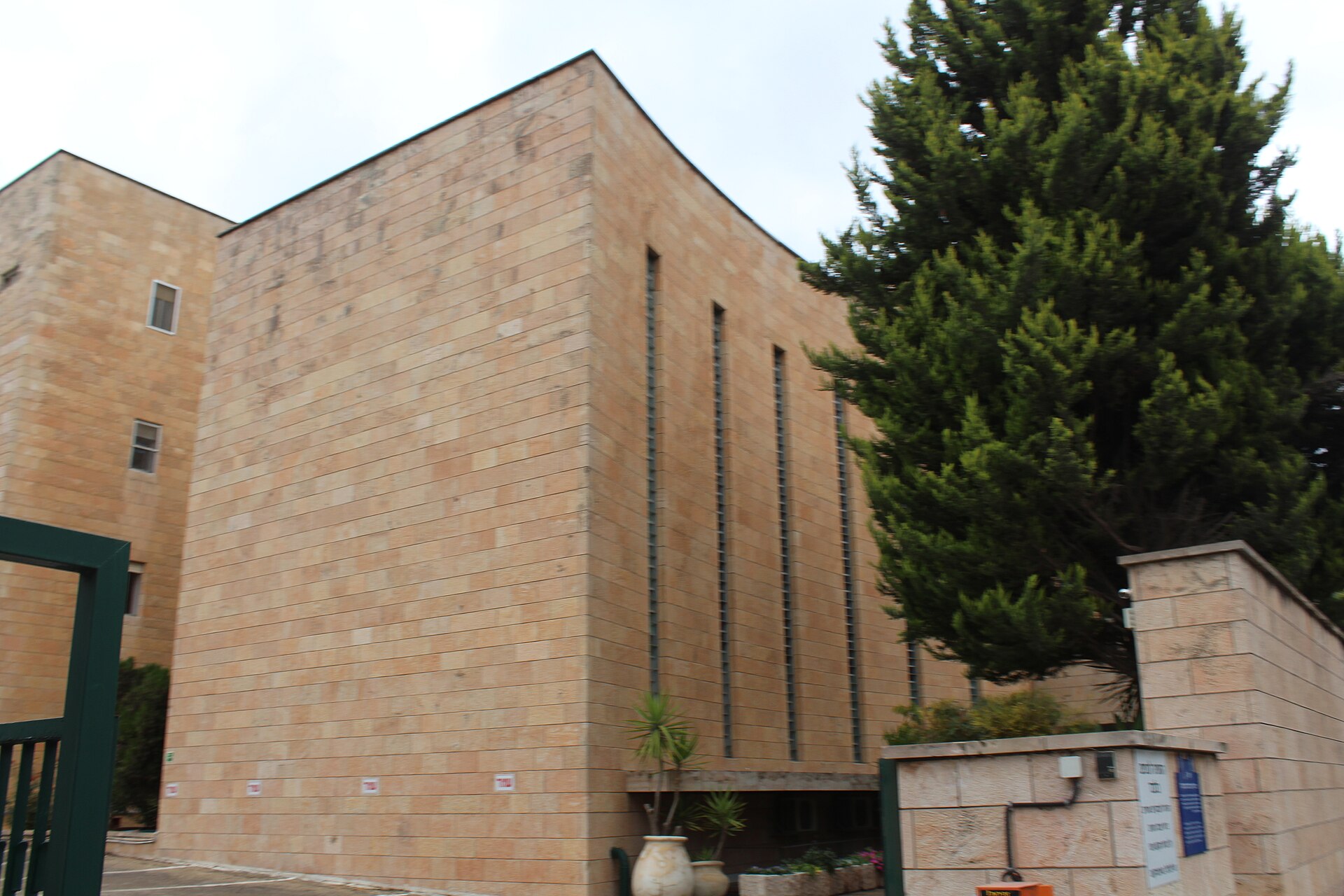
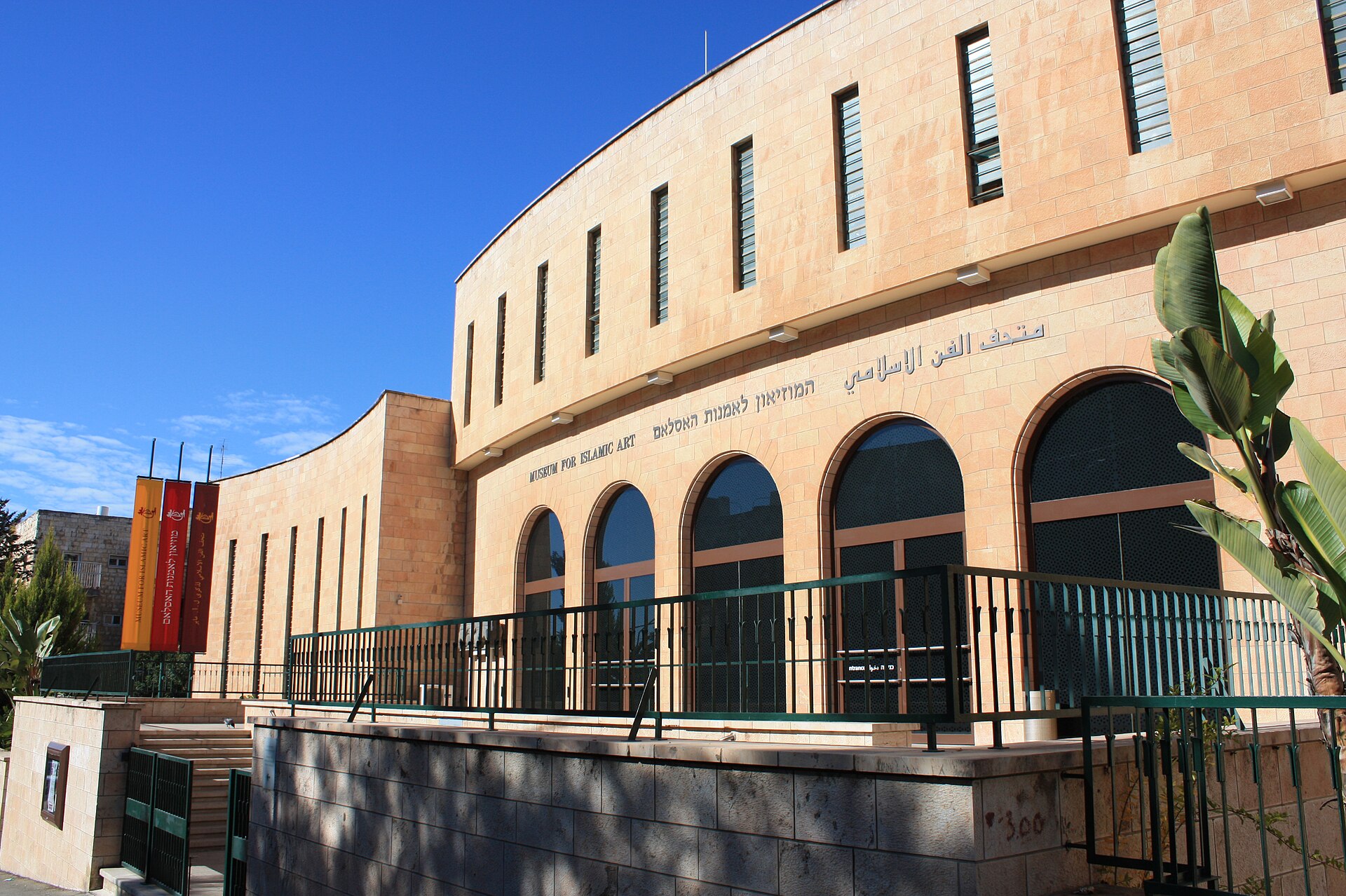
Vera Salomons never saw the museum she built. She was born in London on 31 October 1888, the fourth of five children. She died on 12 November 1969 while visiting Ireland and is buried at Adare. Construction in Jerusalem had begun in 1965, to a design by Alexander Friedman with Meir Rubin, and the building was dedicated and opened to the public in 1974. Breguet's own account of the watch dates its arrival in the museum's collections to that year.
This is the second thing our record had wrong. Its provenance table gave her as owner from 1925 to 1974, which is five years longer than she was alive, and it repeated the museum's statement that the collection was put on show in Jerusalem by his daughter Vera Bryce Salomons, without noting that she was five years dead when it happened. Both have been corrected, the second by keeping the museum's attribution and adding her death. The gap is not a technicality: the museum was completed and filled by the foundations she had created for the purpose, which is precisely why the foundations matter.
Her route to that decision is on the museum's own record. She studied Islamic art under Professor Leo Aryeh Mayer of the Hebrew University and became his friend, and after he died in 1959 she decided to create a museum to commemorate him. Our record called him an orientalist, which undersells a man who headed the university's department of Islamic art and archaeology and served as its rector, and which hides the fact that mattered, that he had been her teacher.
What she gave, and to whom, is still not settled
The legal question of what Vera Salomons actually handed over has not been resolved in public, and the text of her will has not been made public either. It became urgent in 2020, when Haaretz reported that 268 items from the museum, watches from the Salomons collection among them, had been slated for auction at Sotheby's in London. Reporting the dispute that November, the paper quoted the articles of regulation of the non-profit that ran the museum until the early 1990s, under which members of the foundation shall not have the authority to lend any item from the collection or library for display anywhere else, and items may be removed from the building for repairs only. The same report quoted Professor Amnon Lehavi of the Interdisciplinary Center Herzliya saying that whether the assets were placed with the museum or with the foundation is something that only Vera Salomons's will can reveal, and reported that documents which would clarify the basis on which the museum was established are still missing.
The Hermann de Stern Foundation, a private Liechtenstein body, answered the paper directly. Its position, as Haaretz published it, is that the items are not owned by the museum and never were, that the foundation was established by Vera Salomons and that in 1993 and 2010 ownership of all the objects of art was transferred to the foundation by legal contracts. A separate Haaretz report of 17 November 2020 is headlined, in Hebrew, that the museum's founder wanted the collection to stay in Jerusalem, on the evidence of three testimonies the paper received.
Our record said she left the collection to the museum she founded. On the account of the body that says it owns the objects, that is not what happened, and the record now says she endowed the institution through foundations instead. The honest position is that the most famous watch in the world is publicly visible because of a woman whose founding terms nobody has produced. As of the last public reporting we found, in November 2020, the question was unresolved: the sale had been halted rather than cancelled and a Supreme Court petition was pending.
She was a collector in her own right, and on one account the trade thought her mistaken
Vera Salomons bought Islamic art herself rather than only inheriting watches. Breguet's own magazine records that she donated all her collections of Islamic art to the project. The Ministry of Culture's museums portal goes further than she does: it says the core of the collection was the result of acquisitions she made to complement Mayer's private collection, with Professor Richard Ettinghausen enhancing it afterwards. The encyclopedia entry on her records that she worked with Mayer and, after his death, with Ettinghausen and Otto Kurz to build the collection, adding that less well known is a collection of paisley that she apparently formed herself.
She published, too, and early. Three illustrated catalogues of eighteenth-century French book illustrators appeared under her name, on Gravelot in 1911, Choffard in 1912 and Charles Eisen dated 1914 but issued in 1921. The illustrations in the first two were made from photographs she took of the originals herself.
Her decision about where the watches should live was not admired at the time. George Daniels and Cecil Clutton are reported to have expressed disbelief that the core of the Salomons collection, the finest concentration of Breguet's work in existence, would be housed so far from the traditional centres of horological scholarship in London, Paris and Geneva. That judgement has aged badly in an instructive way, because Daniels himself, with Ohannes Markarian, then produced the catalogue of the collection for her institution, a 318-page volume published in association with the L. A. Mayer Memorial Institute in 1980. The scholarship followed the objects to Jerusalem.
Questions
Vera Frances Bryce Salomons, 1888 to 1969, the daughter of the collector Sir David Lionel Salomons. She conceived, funded and endowed the Museum for Islamic Art in Jerusalem and named it after her teacher Leo Aryeh Mayer, who headed the department of Islamic art and archaeology at the Hebrew University and served as its rector, and who had died in 1959. Building began in 1965 and the museum opened in 1974, five years after her death.
No. Of roughly 124 pieces, 57 went to her, including No. 160, and about seventy went to her mother Laura Julia. The mother's share went to auction after her death and Christie's in London sold sixty-one lots of it on 1 December 1964, 1 June 1965 and 2 November 1965. The watch is in one building today because it was in the half that was not auctioned.
No. She died on 12 November 1969 while visiting Ireland and the museum opened in 1974. It was completed and filled by four charitable foundations she created under a will filed on the island of Jersey shortly before her death.
Mayer was her teacher in Islamic art and later her friend, and the museum's own account is that she decided to create it to commemorate him after he died in 1959. The naming is part of a pattern rather than a single gesture: the four foundations she established are named for her great-uncle, her mother, her maternal grandfather and Mayer, and in 1937 she gave the family house in Kent away on condition that it be renamed after her father. Sources differ on the closeness of the friendship, and one newspaper has described Mayer as her lover, against four institutional sources that call him her teacher and friend.
That was unresolved at the last public reporting we found, in November 2020, and no founding document has been made public. The Hermann de Stern Foundation, a private Liechtenstein body Vera Salomons created, told Haaretz in 2020 that the objects are not owned by the museum and never were, and that ownership was transferred to the foundation by contracts in 1993 and in 2010. The same report quoted Professor Amnon Lehavi saying that only her will can reveal whether the assets were placed with the museum or with the foundation.
Sources
- 1Abigail Green and Chris Jones, 'Vera Frances Salomons', Shalvi/Hyman Encyclopedia of Jewish Women, Jewish Women's Archive, updated 31 January 2022. Used for her birth on 31 October 1888 in London and death on 12 November 1969 while visiting Ireland with burial at Adare, her parents' dates, the three catalogues of French book illustrators of 1911, 1912 and 1921 which she photographed herself, her Red Cross service and 1919 marriage, her work with Mayer and afterwards with Richard Ettinghausen and Otto Kurz, the paisley collection she formed herself, the statement that she never moved to Jerusalem, and the stipulation that Broomhill be renamed David Salomons House. jwa.org/encyclopedia/...
- 2Abigail Green and Peter Bergamin, 'Vera Salomons and the Kotel: reading international Jewish history through a Jewish country house', Journal of Modern Jewish Studies 21, no. 2 (2022), 261 to 271, open access. Used for the deed of trust of 8 November 1937 and her Paris address at 31 Rue Vineuse, the use restriction and the publicly accessible memorial hall of two rooms, the 60,000 pounds raised for the Western Wall houses and the Weizmann letter of 4 December 1928, the David Salomons Charity of 1947, and the scholarly statement that in Jerusalem she chose to name the museum after her mentor rather than herself. ora.ox.ac.uk/objects/...
- 3Naama Riba, 'Inside the battle over sell-off at Israel's Museum for Islamic Art', Haaretz, 10 November 2020, read in full in an Internet Archive capture because the live page is paywalled. The only published account of her will, filed on the island of Jersey shortly before her death and creating the David Salomons, Laura Julia, Hermann de Stern and L. A. Mayer foundations; also the quoted clause of the original museum regulations forbidding loans, the statement of Professor Amnon Lehavi that only her will can reveal where the assets were placed, the report that clarifying documents are missing, and the Hermann de Stern Foundation's own statement that the items are not owned by the museum and never were and that ownership was transferred to it by contracts in 1993 and 2010. web.archive.org/web/...
- 4The Museum for Islamic Art, Jerusalem, own pages for Vera Salomons, Our Story, Key Figures at the Museum and the watch collection. Used for her being Mayer's student and then his trusted friend, for the statement that after he died she decided to create a museum to commemorate him, for the architect Alexander Friedman with Meir Rubin, for the single hall dedicated to her family. islamicart.co.il/english/...
- 5SJX Watches, 'Complicated Collectors: Sir David Salomons', March 2026, written with access granted by the curator of the Salomons Museum in Kent. Used for the 1925 division of the Breguet collection into 57 pieces to Vera including No. 160 and about seventy to her mother Laura, for the three Christie's sales of 20 lots on 1 December 1964, 21 lots on 1 June 1965 and 20 lots on 2 November 1965, and for the report that George Daniels and Cecil Clutton expressed disbelief that the collection would be housed so far from London, Paris and Geneva. watchesbysjx.com/2026/...
- 6State of Israel, Ministry of Culture and Sport, Museums in Israel portal, L. A. Mayer Museum for Islamic Art, read in an Internet Archive capture because the live page returns a bot wall. Used for work on the building commencing in 1965, the structure being dedicated in 1974 and the museum opening to the public in 1974, and for Ettinghausen's acquisitions between 1965 and 1979. Note that the same page is unreliable on horology, giving Abraham-Louis Breguet as working between 1823 and 1869 when he died in 1823. web.archive.org/web/...
- 7Montres Breguet, 'The Marie-Antoinette watch No. 160', Quai de l'Horloge magazine, edition no. 10, read in an Internet Archive capture. The manufacture's own statement that Salomons left the watch to his daughter Vera Bryce Salomons on his death in 1925, that she donated all her collections of Islamic art to the museum project and chose to include her father's clocks, and that the watch became part of the museum's collections in 1974. web.archive.org/web/...
- 8Jessica Steinberg, 'Spared the auction block for now, Islamic museum's artifacts face unclear future', The Times of Israel, 1 November 2020, read in a browser after a direct fetch was refused. Used for the Hermann de Stern Foundation being the private Liechtenstein body providing most of the museum's financial support. timesofisrael.com/spared-the-auction-block-for-now-islami...
- 9Open Library record derived from Library of Congress cataloguing for George Daniels and Ohannes Markarian, Watches and Clocks in the Sir David Salomons Collection, including scientific instruments, boxes and automata, 318 pages, published in association with the L. A. Mayer Memorial Institute for Islamic Art by Sotheby Publications, 1980, ISBN 085667074X. Used for Daniels cataloguing the collection for her institution and for the institution's formal legal style. openlibrary.org/books/...
- 10Naama Riba, Haaretz, 17 November 2020, Hebrew only, read in an Internet Archive capture because the live page is paywalled. Its headline states that the founder of the Islamic art museum wanted the collection to remain in Jerusalem, and its standfirst says three testimonies to that effect reached the paper ahead of the hearing on the petition. Note that the headline says Jerusalem and the standfirst says Israel. web.archive.org/web/...
More in The Women Behind the Art
The partWhat the Opera Paid Marie van Goethem
The model for Degas's Little Dancer is documented in a payroll and two lines of his handwriting.
The Publisher Was the Sitter
Truth sold her own cartes de visite, registered the copyright in her own name and left the photographer unnamed.
The Picture Her Father Refused
The Peacock Room is built around a portrait of Christine Spartali that her own father declined to buy.