The Demotion That Saved the Object
Seven Greek manuscripts were scraped clean in 1229 to make one prayerbook. The prayerbook is the only reason any of them survives. In this archive the longest gaps are often bridged by an object being valued as material.
Records in this piece: The Archimedes Palimpsest, Cantino planisphere
On this page 7 sections
ContentsClose
In short
- A colophon on folio 1 verso of the Archimedes Palimpsest, deciphered under ultraviolet light by John Lowden in 2002, carries the date 13 April 1229. That is almost certainly the day the prayerbook was finished, and therefore the day the mathematics underneath it stopped being readable.
- At least seven manuscripts were scraped to make that one prayerbook, and the prayerbook is the reason the Archimedes text exists at all. A book of prayers was worth keeping in a monastic library for seven centuries. A treatise on floating bodies was not.
- The under text was not found by anyone looking for Archimedes. A. Papadopoulos-Kerameus catalogued the volume in 1899 and transcribed a few lines of the erased writing without knowing what it was; those lines reached Johan Ludvig Heiberg, who recognised Sphere and Cylinder and went to see the book in 1906.
- The Cantino planisphere of 1502 spent part of the nineteenth century as furniture. Henry Harrisse, writing in 1892, records it pasted onto the folds of a screen with its top margin cut off and thrown away, and recognised in that state in a Modena shop.
- A demotion preserves the substrate and destroys the evidence. The Archimedes diagrams survived because parchment was reused rather than discarded; the Cantino's top margin, which no imaging can recover, was cut off by someone making a screen.
The commonest thing that carries an object through a long gap is a demotion
An object that survives a gap of several centuries has usually spent that gap being treated as something other than what it is. In this archive the pattern is consistent enough to be worth naming: the periods with no owner, no inventory entry and no sighting are frequently the periods when the thing was valued as material rather than as itself, and that low valuation is often exactly what preserved it.
This runs against the intuition that objects survive because somebody looked after them. Careful custody does preserve things, and this archive holds plenty of examples. But careful custody is also expensive, visible and therefore vulnerable, and it tends to be recorded. The gaps are where the record stops, and what happens in them is usually the opposite of curation. A thing that nobody thinks is valuable is not worth stealing, not worth selling, not worth melting and not worth arguing over. It sits in a wall, under a floor, inside a binding or behind a later text, and it comes out the other side.
The cost is real and it falls on the evidence rather than the object. A demotion almost always involves an alteration made for the new use, and the alteration destroys precisely the parts that would have told us most.
The erasure of the Archimedes manuscript is dated to a single day in April 1229
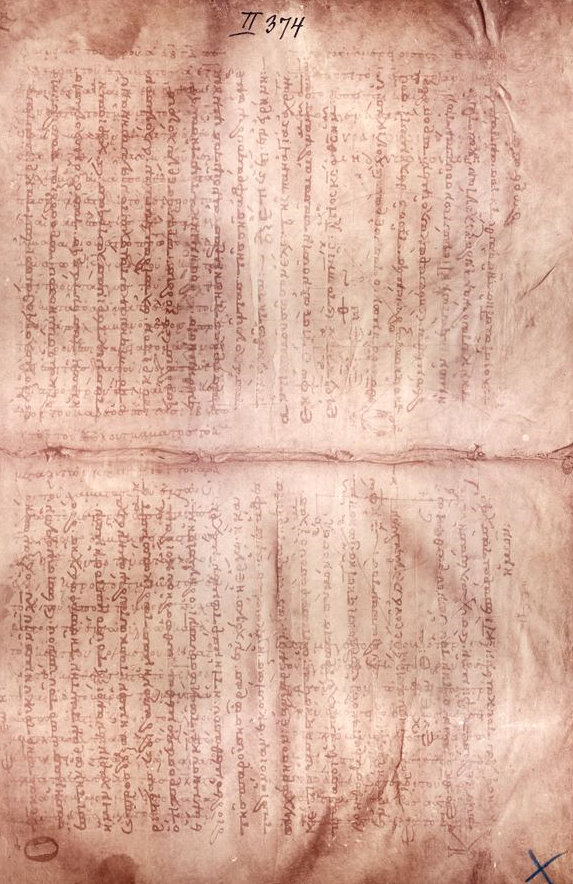
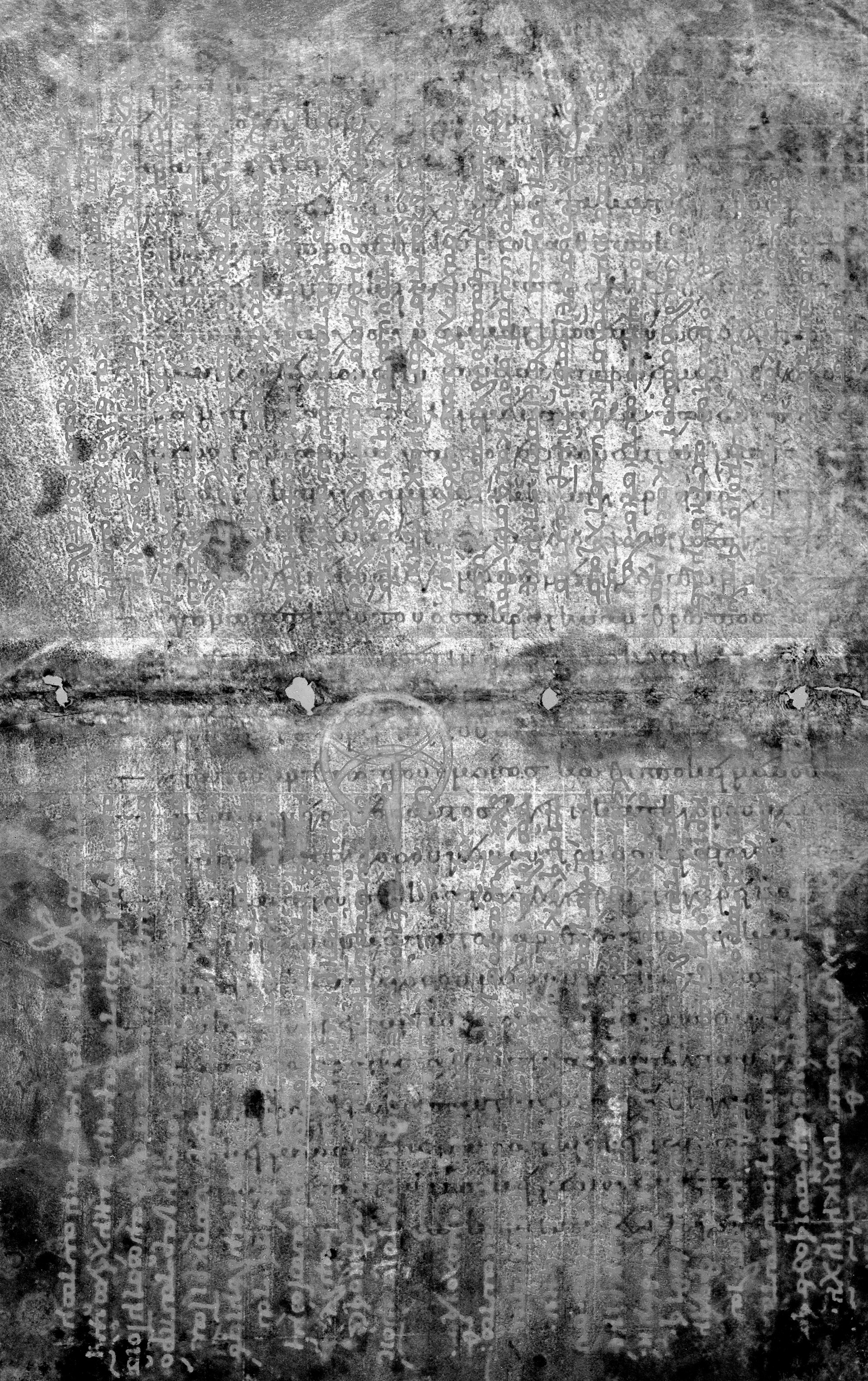
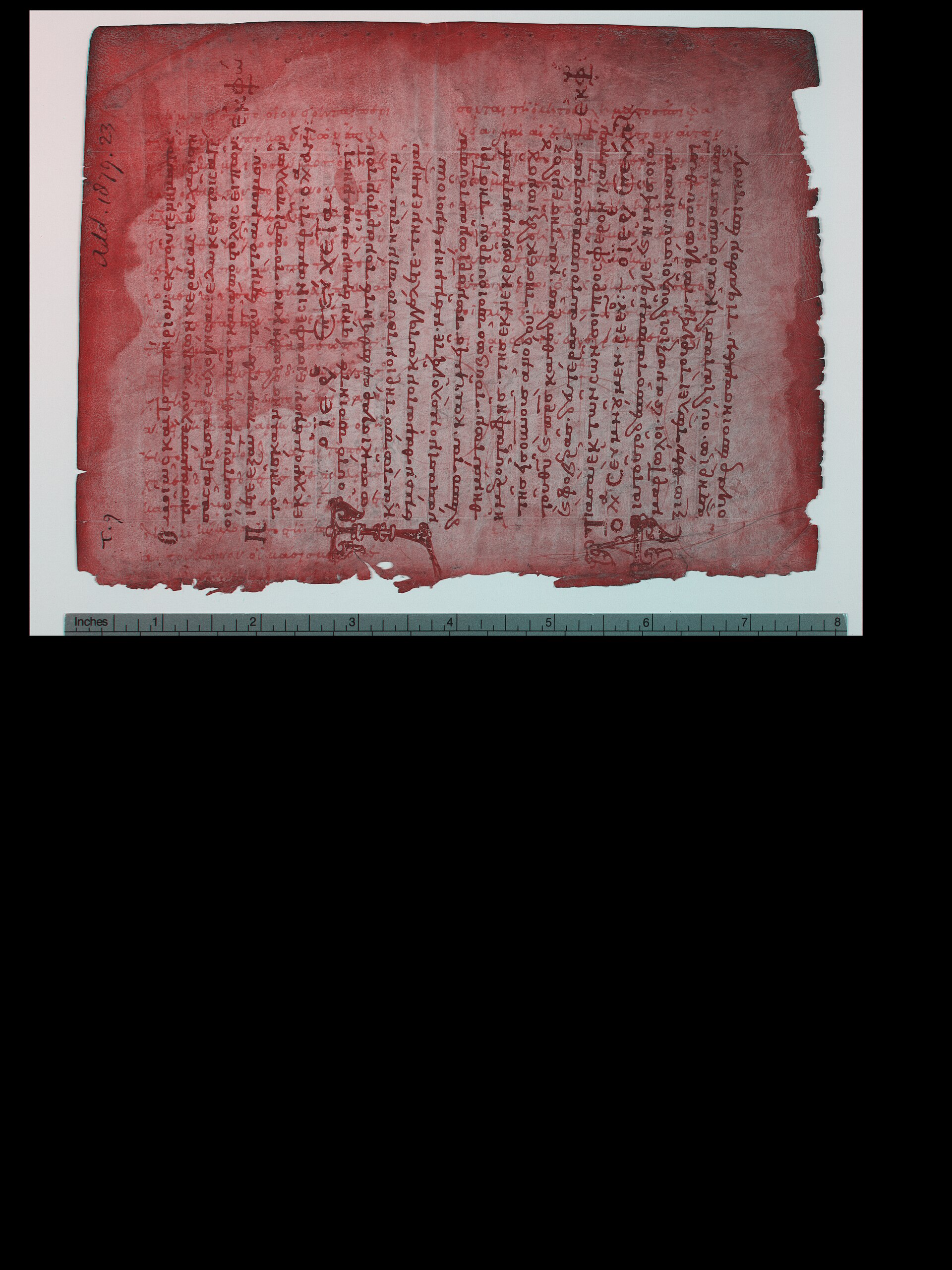
The Archimedes Palimpsest carries a colophon on folio 1 verso giving the date 13 April 1229, which the Archimedes Palimpsest project reads as the day the prayerbook was completed. The colophon was not visible to earlier readers. It was deciphered by Professor John Lowden of the Courtauld Institute in 2002, using ultraviolet light, more than a century after the volume had first been catalogued and studied.
What was destroyed to make that book is unusually well established. The project's own account is that at least seven manuscripts were palimpsested to produce the single euchologion, and that the resulting prayerbook was almost certainly made not in Constantinople but in Jerusalem, because many of its prayers are specific to the rites of the Church there. The date places the work a few weeks after Frederick II obtained the return of Jerusalem, in a period when parchment in the city may well have been scarce.
That is the whole mechanism in one sentence. A scribe in a place with no parchment and a need for a service book took the books that nobody in that place needed, and used them. The mathematics was not attacked. It was simply the least useful writing available.
What the demotion cost, and what it bought
The transaction was a bad one for the seven books and a very good one for posterity. Reused parchment stays in a library because the object it now forms has a use; discarded parchment does not stay anywhere. The Archimedes text is the earliest surviving manuscript of its author by roughly four hundred years, and it is the unique source in Greek for On Floating Bodies, and for The Method and The Stomachion in any language. None of that would exist if the parchment had been thrown away rather than scraped.
The table below sets out the states this one object has passed through, and the dates on which each is documented. Read as a provenance it is unremarkable. Read as a record of what the object was thought to be worth, it inverts twice.
| Date | What it was treated as | Evidence |
|---|---|---|
| Second half of the tenth century | A copy of Archimedes worth making | Palaeographic dating; Constantinople the only centre systematically copying ancient mathematics |
| 13 April 1229 | Blank parchment for a service book | Colophon on folio 1 verso, read under ultraviolet by John Lowden in 2002 |
| 1899 | A euchologion, catalogued as MS 355 | A. Papadopoulos-Kerameus's catalogue of the Metochion library |
| 1906 | A previously unreported Archimedes manuscript | Johan Ludvig Heiberg's visit and photographs |
| 29 October 1998 | A lot at auction, sold for USD 2,000,000 | Christie's, New York; buyer anonymous |
The 1229 row is the one that matters. Every other row records somebody deciding the book was important. That row records somebody deciding it was not, and it is the only row without which the object would not be here.
The mathematics was found by a cataloguer who did not know what he had
Nobody went looking for Archimedes in the Metochion library. A. Papadopoulos-Kerameus catalogued the volume in 1899 as MS 355, and in the course of that work transcribed a few lines of the erased under text without identifying it. Those lines were brought to the attention of Johan Ludvig Heiberg, then the leading authority on Archimedes, who recognised them as coming from Sphere and Cylinder and understood that this was a manuscript nobody had reported. He went to the Metochion in 1906, found seven treatises, photographed the book, and rebuilt his edition of Archimedes around it.
This is the ordinary shape of a rediscovery and it is worth being honest about it. The find was not a triumph of searching. It was a cataloguer doing routine work carefully enough to write down something he could not read, and a specialist who happened to see the transcription. Neither step is glamorous and both are the reason the text exists in modern scholarship.
It also sets the limit on how much of this pattern we can ever measure. We know about the Archimedes because a scholar noticed. We do not know what is under the other prayerbooks nobody has imaged, and I would not want to guess at the number.
A world chart of 1502 spent part of the nineteenth century as a screen
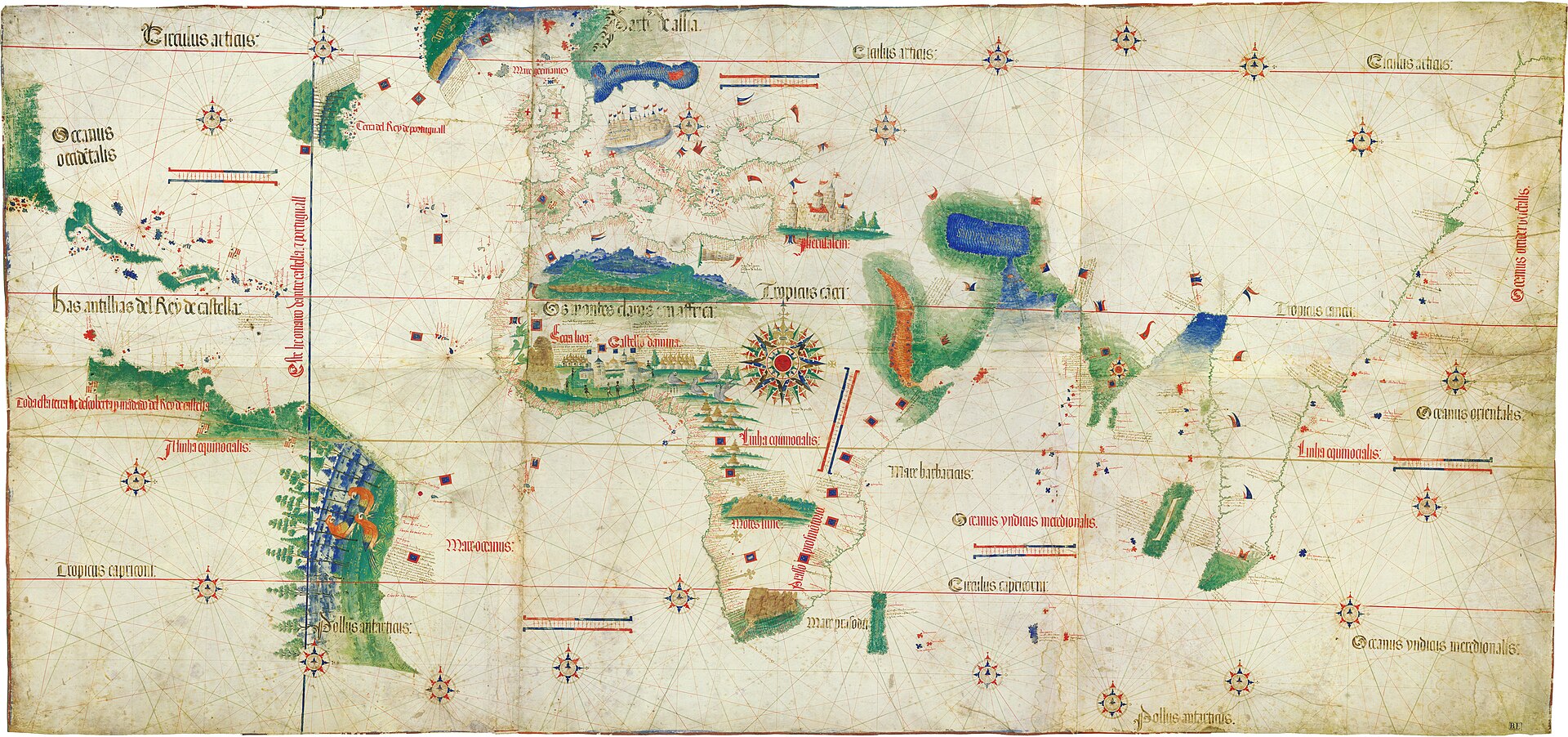
The Cantino planisphere is the earliest surviving map to show the Brazilian and Caribbean coasts, and for part of its life it was furniture. Henry Harrisse, writing in 1892, records that the chart was pasted onto the folds of a screen and its top margin cut off and thrown away, that it was stolen when the ducal palace at Modena was invaded during the upheaval of 1859, and that it was recognised some years later in the Via Farini in the shop of a pork butcher named Giusti, still serving as a screen.
The Biblioteca Estense Universitaria's own catalogue record is much drier and confirms the frame around that story. It gives the shelfmark C.G.A.2, states that the chart was acquired by Ercole I d'Este in 1502, and notes that it came to the library as the gift of Giuseppe Boni in 1870 although it had already belonged to the old Este collection. An object recovered as stolen property returns as a restitution. This one returned as a donation, because Boni had bought it.
Harrisse does not explain how a chart in a ducal collection came to be made into furniture, and he does not name the person who did it. He calls that person the last possessor and leaves it there. The gap is real and this archive does not fill it.
How to read a gap that ends in a reuse
A provenance gap that ends with the object emerging in an altered state is telling you something specific, and it is worth reading rather than smoothing over. The alteration dates the demotion, at least loosely, and the nature of the alteration tells you what the object was being used for and therefore who had it. A chart cut down to fit a screen was in a household, not a library. Parchment scraped and refolded into a service book was in a religious community that needed one.
Three practical consequences follow. First, the alteration is usually the only evidence from inside the gap, so it should be described precisely and never repaired out of the record. Second, missing parts are not necessarily lost to accident; a cut margin is a decision, and it is worth asking what would have been on it. Third, the reuse itself is a provenance event and belongs in the chain with a certainty grade, even when the person who did it is unnamed and the date is a range.
What I would resist is the tidy version of this argument, in which neglect is quietly recast as a form of care. It is not. The seven manuscripts under the Archimedes prayerbook were destroyed as texts, and six of them we still cannot read. The Cantino's top margin is gone. Survival by demotion is survival at a price, and the price is paid in exactly the evidence a record like this one exists to publish.
Why this archive is free to read
We do this for everyone who loves art. The people who have studied it for years, and the people who just stopped to look. Iconotheca exists so that what we learn belongs to all of them.
Nobody pays us for this. No ads, no sponsors, no commercial interest. These works belong to all of us, and we would rather share them with as many people as we can than keep them to ourselves.
If it gave you something today, tell us to keep going. Follow us, leave a like, or write a positive comment. We read every one, and they are what keeps us going.
Questions
A palimpsest is a manuscript whose parchment has been scraped or washed clean of its original writing and then written on again. The earlier text is usually not fully removed, and ultraviolet and multispectral imaging can often recover it.
A colophon on folio 1 verso gives 13 April 1229, which is almost certainly the day the prayerbook written over the Archimedes text was finished. It was deciphered under ultraviolet light by John Lowden in 2002.
It is the earliest surviving Archimedes manuscript by about four hundred years, and the unique source in Greek for On Floating Bodies. The Method and The Stomachion survive nowhere else in any language.
A. Papadopoulos-Kerameus catalogued the volume in 1899 and transcribed a few lines of the erased text without identifying it. Johan Ludvig Heiberg recognised those lines as Archimedes and examined the book himself at the Metochion in 1906.
Henry Harrisse, writing in 1892, records that it was pasted onto the folds of a screen with its top margin cut off, and recognised in that state in a shop in Modena. The Biblioteca Estense's catalogue confirms the surrounding chain but does not describe the screen.
Sources
- 1The Archimedes Palimpsest project, 'The History of the Archimedes Manuscript', on the tenth-century origin, the 13 April 1229 colophon read by John Lowden in 2002, the Jerusalem provenance of the prayerbook, the 1899 catalogue by A. Papadopoulos-Kerameus, Heiberg's 1906 examination, and the sale at Christie's New York on 29 October 1998 for USD 2,000,000. archimedespalimpsest.org/about/...
- 2Biblioteca Estense Universitaria, Modena, catalogue record for [Carta del Cantino], 1502, shelfmark C.G.A.2, giving the Este ownership from 1502 and the 1870 gift of Giuseppe Boni. edl.cultura.gov.it/item/...
- 3Henry Harrisse, The Discovery of North America (London and Paris, 1892), pp. 423-424, for the screen, the cut top margin, the 1859 theft from the ducal palace at Modena and the recognition of the chart in Giusti's shop in the Via Farini. archive.org/download/...
- 4The Digital Walters, The Walters Art Museum, Baltimore, the institutional home of the Archimedes Palimpsest imaging and conservation programme. thedigitalwalters.org
More in Provenance and Restitution
The partA return is a new arrangement, not a conclusion
Four contested antiquities, four different things a return turned out to be: a renaming, a rotating loan, a forfeiture nobody enforced and a broken...
When the Only Proof of Where an Object Was Is a Photograph
The Third Imperial Easter Egg was photographed once, in March 1902, and that single plate is what identified it in 2014.
Moved for Safekeeping Is a Link in the Chain
Nine evacuations in this archive: three objects never returned to the building they left, one came back unrecognised and title changed once, by a...