Hendrickje Stoffels Is in the Documents and Not in the Pictures
Hendrickje Stoffels is a censured woman, a mother and a business partner in the documents, yet no portrait of her carries her name. Saskia's will is told three ways.
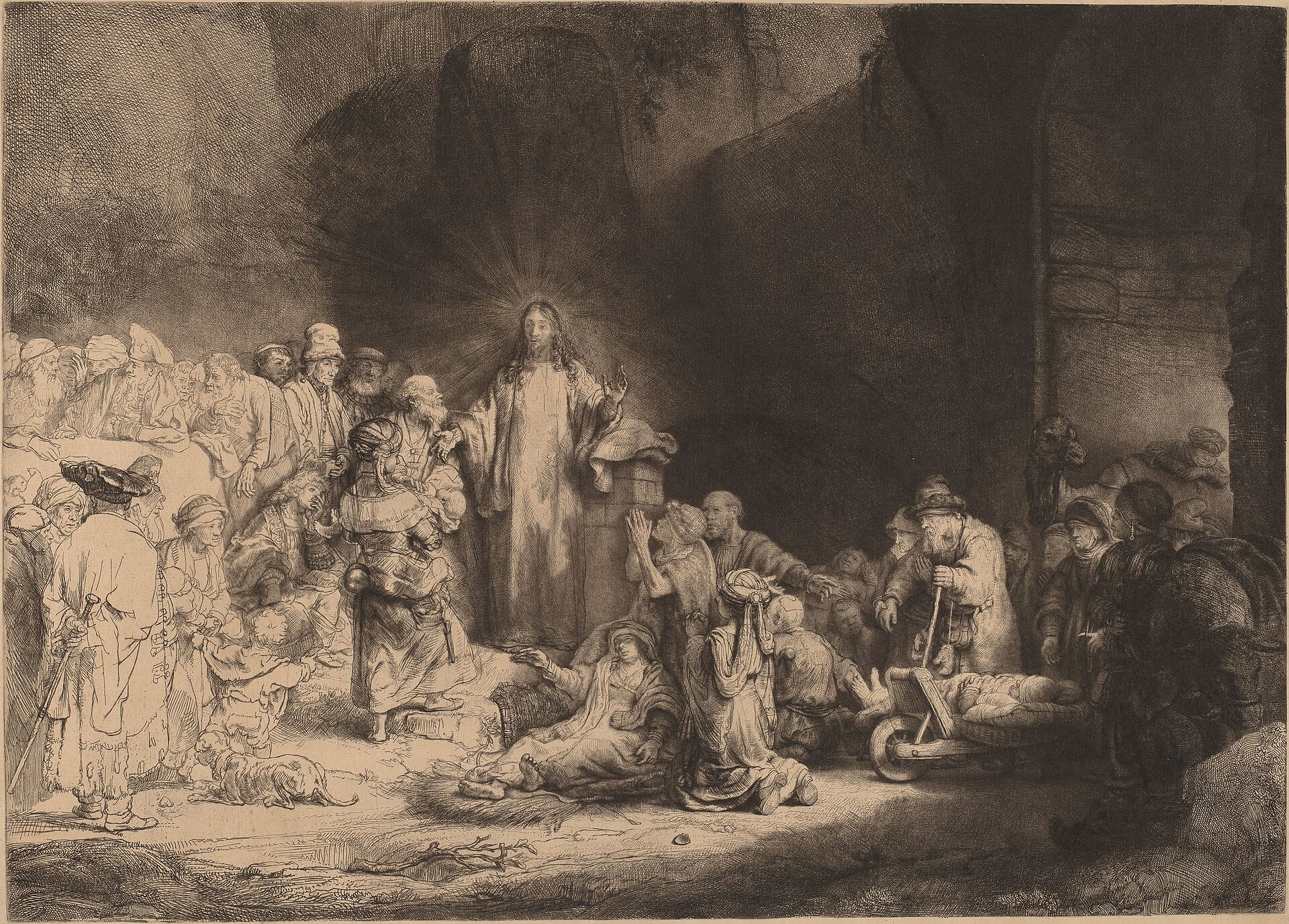
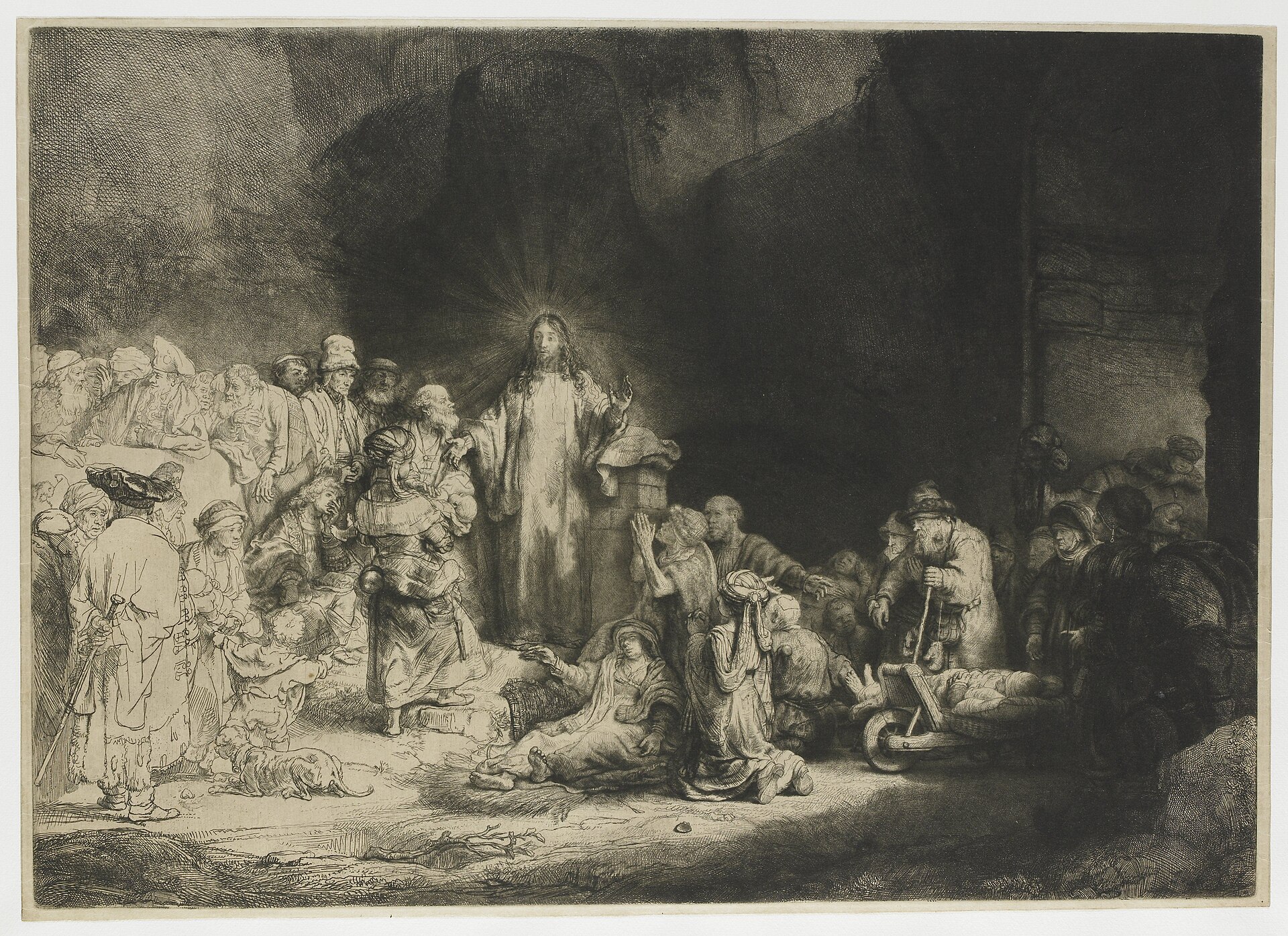
Records in this piece: Christ Preaching, Healing the Sick, and Blessing the Children ("The Hundred Guilder Print"), Portrait of a Girl
On this page 5 sections
ContentsClose
In short
- Hendrickje Stoffels is documented as a censured woman (1654), a mother (Cornelia, baptised 30 October 1654), a partner in the 1660 firm with Rembrandt's son Titus and a burial (24 July 1663). The National Gallery in London says none of the paintings usually taken for her is documented with a name.
- The 1660 contract made Titus and Hendrickje the partners and Rembrandt their lodger and aide, in Britannica's words 'in the service of his son and his common-law wife', and it was meant to protect him from his creditors.
- Saskia's will of 1642 is told three different ways by three sources we read: income from a dowry (National Gallery), a usufruct that ends on remarriage (Huygens Institute) and an estate that passes to her sister Hiskia (Wessels). We have not read the will itself.
- Saskia left a baptism record, a marriage, a will and a burial, and one drawing captioned in Rembrandt's own hand. Hendrickje has a censure, a baptism, a contract and a burial, and a face that is only an attribution.
The documents give Hendrickje Stoffels a legal life that the portraits do not give her a name for
Hendrickje Stoffels, the woman who lived in Rembrandt's household from 1649 and later shared his business, appears in the surviving documents as a person who was censured, who bore a child, who was a party to a firm and who was buried. The portraits usually said to show her carry no document that names her. That gap is the whole claim of this article, and it runs against the usual telling, in which a muse is known by her face.
The table below lists only what the sources we read give for her. Two of them disagree on the first line, and one line rests on a relative's reading of a court deed that we have not seen.
| Date | Record | What is reported |
|---|---|---|
| 1647 or 1649 | Household | The Leiden Collection says Rembrandt met her in 1647. The National Gallery says she joined the household as a 23-year-old in 1649. |
| 13 December 1653 | Bredevoort deed of sale | Hoitink, a genealogist descended from her brother Harmen Jegers, reports a deed in which she and her siblings sold their parents' house in Bredevoort. We have not seen the deed. |
| 1654 | Church council | Reprimanded for living 'in hoererij', in the Leiden Collection's translation 'in whoredom'. The National Gallery quotes a church-council condemnation, undated there: 'severely punished, admonished to repentance, and excluded from the Lord's Supper'. |
| 30 October 1654 | Baptism | Cornelia, daughter of Rembrandt and Hendrickje, baptised in Amsterdam. |
| 1660 | Contract with Titus and Rembrandt | Titus and Hendrickje form a business. Rembrandt lives with them, is exempt from rent and housekeeping and agrees to aid the partners. |
| 24 July 1663 | Burial | Buried in Amsterdam. The National Gallery says her early death was probably from the plague of 1663. |
Saskia's will is told three ways, and none of the three sources gives the will in full
The reason Rembrandt never married Hendrickje is usually given as Saskia's will, and the sources we read describe that will in three different ways. The Huygens Institute's Dutch Women lexicon, written by Ben Broos, says Saskia made her will on 5 June 1642, named her son Titus sole heir and gave Rembrandt the use of her estate on condition that he did not remarry. She died on 14 June 1642 and was buried on 19 June in the Oude Kerk.
The National Gallery in London says Rembrandt never remarried 'almost certainly because he would have lost much-needed income from the dowry she left in her will'. The Dutch insolvency-law professor Bob Wessels reads the will's key passage differently: if Rembrandt remarried, in his summary, the estate would go to Saskia's older sister Hiskia. Wessels rejects the view in the literature that Rembrandt was unable to marry again, and adds that the Orphan Chamber of Amsterdam decided on 17 December 1642 that Rembrandt could keep the entire estate without giving the guarantee the Chamber normally required.
| Source | What it says the will did | Condition |
|---|---|---|
| National Gallery, London | Left a dowry whose income Rembrandt would lose by remarrying | Income lost if he remarries |
| Huygens Institute (Broos) | Titus sole heir, Rembrandt has the use of the estate provided he does not remarry | Not barred. The use is conditional on his not remarrying. |
| Wessels | On remarriage the estate goes to Saskia's sister Hiskia | Estate passes to Hiskia if he remarries. He rejects the reading that Rembrandt was unable to marry. |
What the three share is a price on a second marriage. What they do not share is its size or its payee. A claim that the will forbade the marriage is not what any of them says. We have not read the will or the Orphan Chamber's decision ourselves, so we give no figure.
The church council punished the woman in 1654 and the sources we read record no censure of the man
The church council censured Hendrickje Stoffels in 1654 for living with Rembrandt, and the three accounts we read name only her. The Leiden Collection, the National Gallery and Hoitink's genealogy all report the censure. The Leiden Collection says that because Rembrandt did not marry her she received an official reprimand for living 'in hoererij'. The National Gallery ties the censure to her pregnancy outside marriage.
Neither text records a censure of Rembrandt. We found no minute of the council itself, so the wording above is the museums' and not the council's. The baptism of Cornelia on 30 October 1654, in the Rembrandt House's family tree, records the child's baptism in Amsterdam.
The same Leiden Collection text sets this episode beside the earlier one with Geertje Dircx, the woman hired to nurse Titus after Saskia died, who was shut in a house of correction at Gouda in 1650. It also says Rembrandt received few portrait commissions in the decade after 1649, and it treats the two affairs as ruinous for his reputation. That is the museum's judgment and we report it as such.
The 1660 contract made Hendrickje and Titus the partners and put Rembrandt in their service
A contract of 1660 between Rembrandt, his son Titus and Hendrickje Stoffels is the one document in which she acts as a business partner. Britannica says it was designed to protect Rembrandt from his creditors and to let him keep working. It quotes the agreement: Rembrandt would 'live with them, receive free board' and be exempt from housekeeping costs and rent 'on condition that he will aid the partners in every respect'.
Britannica's own reading is that Rembrandt now worked 'in the service of his son and his common-law wife'. The background is the insolvency of 1656 and the sale of his house in 1658, after which he rented on the Rozengracht. The Leiden Collection records the inventory of 1656, which it calls incomplete, listing more than 130 paintings and 70 albums of graphic art, and the auction of the house in 1658.
The sources we read do not give the month of the contract, the capital each partner put in or what share Hendrickje held. Some accounts give a precise date. We did not find it in a source we could read, so we do not print it.
The firm matters for this series because it reverses the usual picture. In 1660 the woman Rembrandt never married was, on paper, one of the two people he worked for.
No painting taken for Hendrickje carries her name, while Saskia's likeness has Rembrandt's own caption
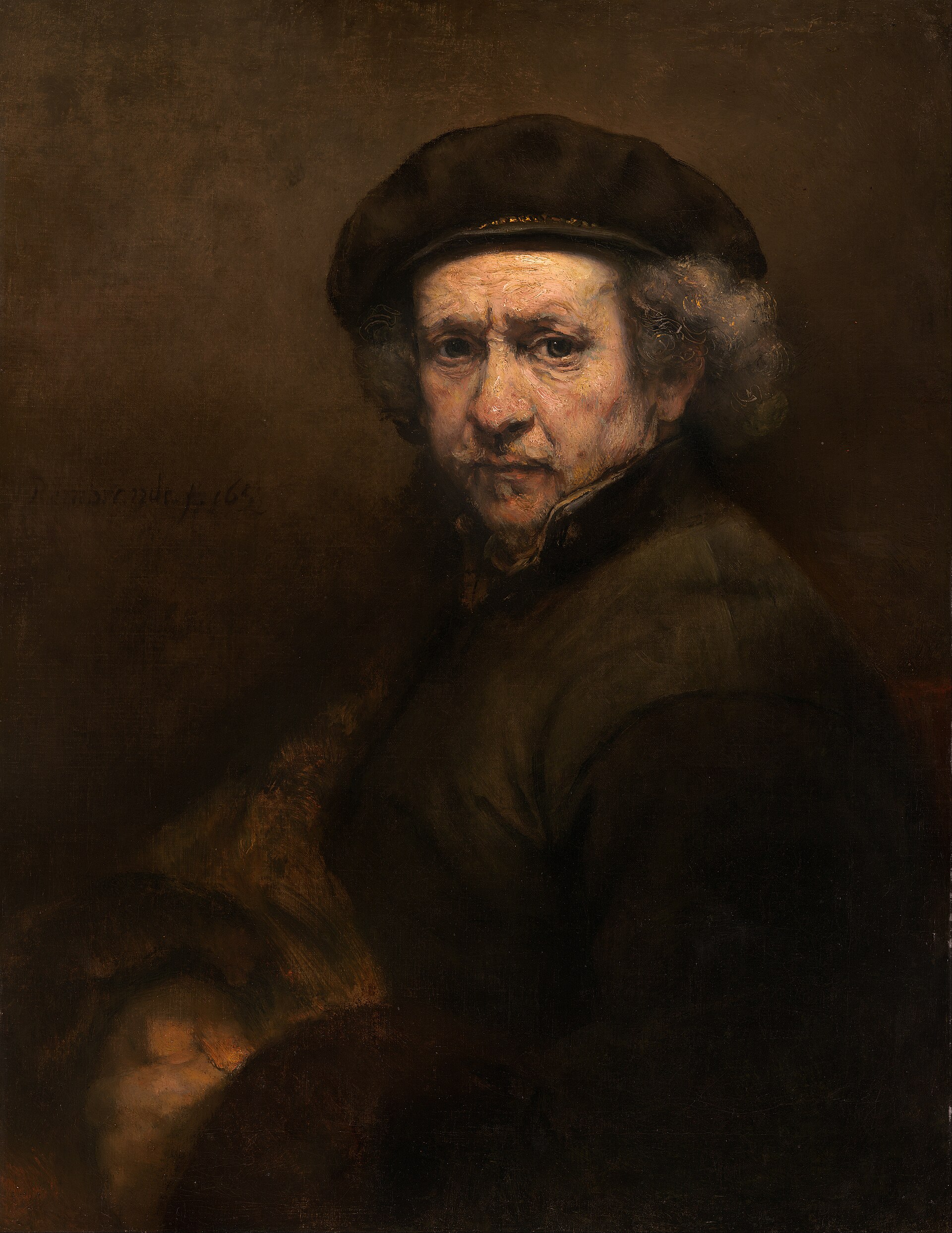
The National Gallery's text on its Portrait of Hendrickje Stoffels, probably 1654 to 1656, says that none of the canvases of the apparently same young woman is documented with a name, though most art historians accept that they show her. It adds that the date on the picture 'seems to read' 1639 or 1659, and that the date and the signature may have been added later by someone else. Her face is therefore known only through attribution.
Saskia is documented differently. The Huygens Institute says Rembrandt wrote 'my housewife' under a silverpoint drawing of her made in summer 1633, when they were engaged, and used her as a model many times, often in biblical or historical dress. It says portraits of her in everyday clothing are rare. It also says she was confused with Geertje Dircx after Rembrandt's death and was only rediscovered as a burgomaster's daughter from Leeuwarden in 1862. Her entry calls her Rembrandt's muse, which is its own reading and not a document.
So the two women are recorded in opposite ways. Saskia has a drawing captioned in Rembrandt's hand and a will that three sources describe differently. Hendrickje has a censure, a baptism, a contract and a burial, and a face that is only an attribution. We do not claim that any named picture shows either woman unless a source says so, and the National Gallery's wording is the model for that care.
Questions
Hendrickje Stoffels was born about 1626 in Bredevoort and buried in Amsterdam on 24 July 1663. She was Rembrandt's partner and the mother of his daughter Cornelia, and she shared in the business formed with his son Titus in 1660.
No. The sources we read give three accounts of why, all tied to the will of his first wife Saskia: lost dowry income, a use of her estate that depends on his not remarrying or an estate passing to her sister. Wessels rejects the view that he was unable to marry.
According to Britannica it protected Rembrandt from his creditors. Titus and Hendrickje were the partners. He lived with them, was exempt from rent and housekeeping, and agreed to aid the partners.
The National Gallery says none of the paintings thought to show her is documented with a name. Most art historians accept that they do show her.
Sources
- 1National Gallery, London, Rembrandt, 'Portrait of Hendrickje Stoffels', probably 1654-6 (NG6432), catalogue text: arrival in 1649, church council quotation, undocumented identification of the paintings, the dowry remark. nationalgallery.org.uk/paintings/...
- 2The Leiden Collection, Rembrandt van Rijn biography: Geertje Dircx, 'hoererij' of 1654, the 1656 inventory, the 1658 sale, Hendrickje's death in 1663. theleidencollection.com/artist/...
- 3Encyclopaedia Britannica, Rembrandt, 'Fourth Amsterdam period (1658-69)': the 1660 contract between Rembrandt, Titus and Hendrickje Stoffels, with quotations. britannica.com/biography/...
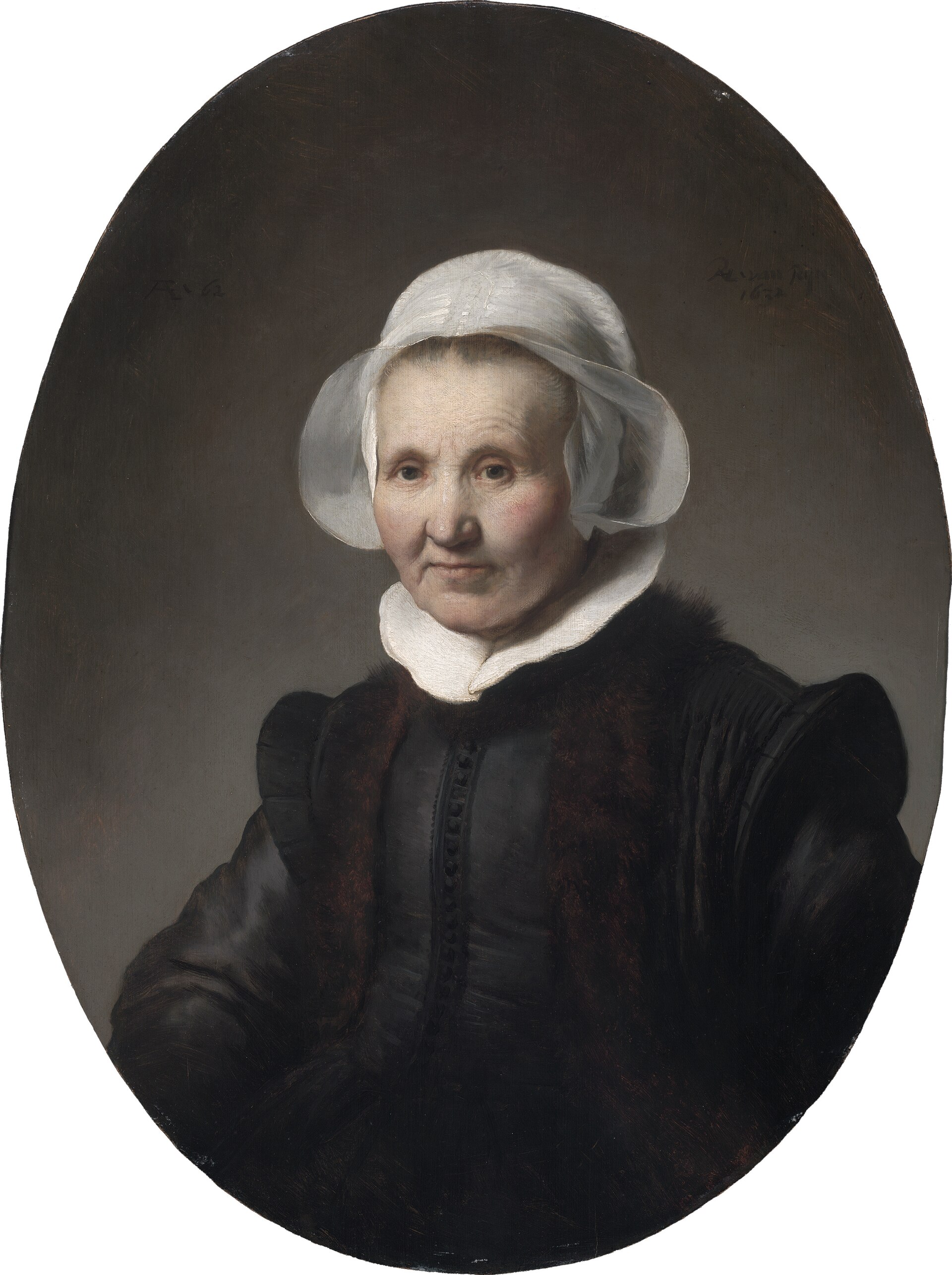
- 4Ben Broos, 'Uylenburgh, Saskia', Digitaal Vrouwenlexicon van Nederland (Huygens ING): will of 5 June 1642, death 14 June, burial 19 June, the 1633 drawing, the portrait of Aeltje Uylenburgh. resources.huygens.knaw.nl/vrouwenlexicon/...
- 5Bob Wessels, 'Rembrandt's Money (forthcoming): Titus and the Orphans Chamber', blog post of 28 September 2021: the will's key passage, the Orphan Chamber's decision of 17 December 1642. bobwessels.nl
- 6Rembrandthuis, 'Rembrandt's Genealogy' (PDF): Saskia's dates, Titus baptised 22 September 1641, Cornelia baptised 30 October 1654, Hendrickje's birth about 1626 and burial 24 July 1663. rembrandthuis.nl/wp-content/...
- 7Yvette Hoitink, 'My great-aunt Hendrickje Stoffels, partner of Rembrandt van Rijn', Dutch Genealogy: a reading of the Bredevoort deed of 13 December 1653. Genealogist descended from Hendrickje's brother Harmen Jegers; deed not seen by us. dutchgenealogy.nl/my-great-aunt-hendrickje-stoffels-partn...
More in The Women Behind the Art
The partWho Stitched the Bayeux Tapestry? What the Documents Say About English Women's Embroidery
No document names who stitched the Bayeux Tapestry. What Domesday, the 1476 inventory and the Queen Matilda story show about English women's...
The Two Women in the Oseberg Ship, and the Queen Nobody Named
Two women lay in the Oseberg ship in 834. What the bones, isotopes and DNA show, and how a queen and a servant were read into a grave that no text...
The Name on the Rim: What Documents Say About Projecta
The Projecta Casket names its bride in one line of Latin. What the British Museum, Dalton 1901, an epitaph and Parliament say about her, and what is...