An Exhibition History Is Written in the Name the Museum Had at the Time
One hundred and eighty exhibition entries in this archive use 143 different venue strings for about 112 institutions. Museums are renamed, dissolved and merged, the venue field is free text, and an exhibition history therefore cannot be counted.
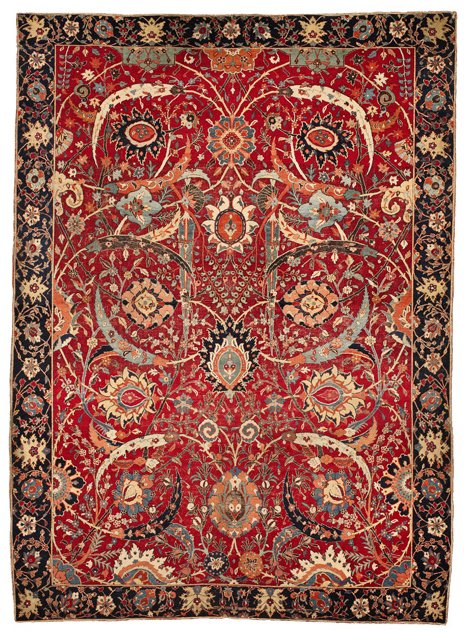
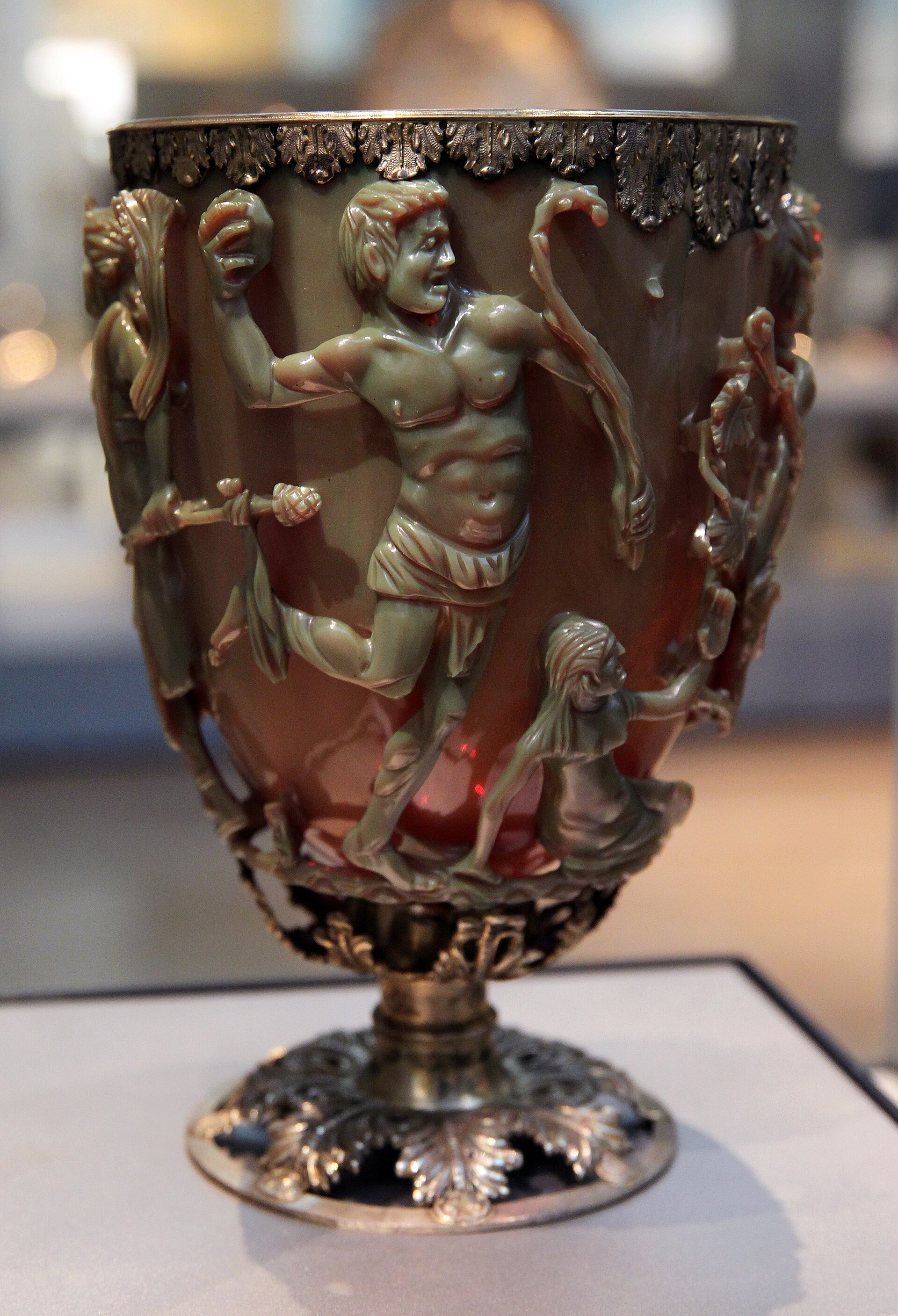
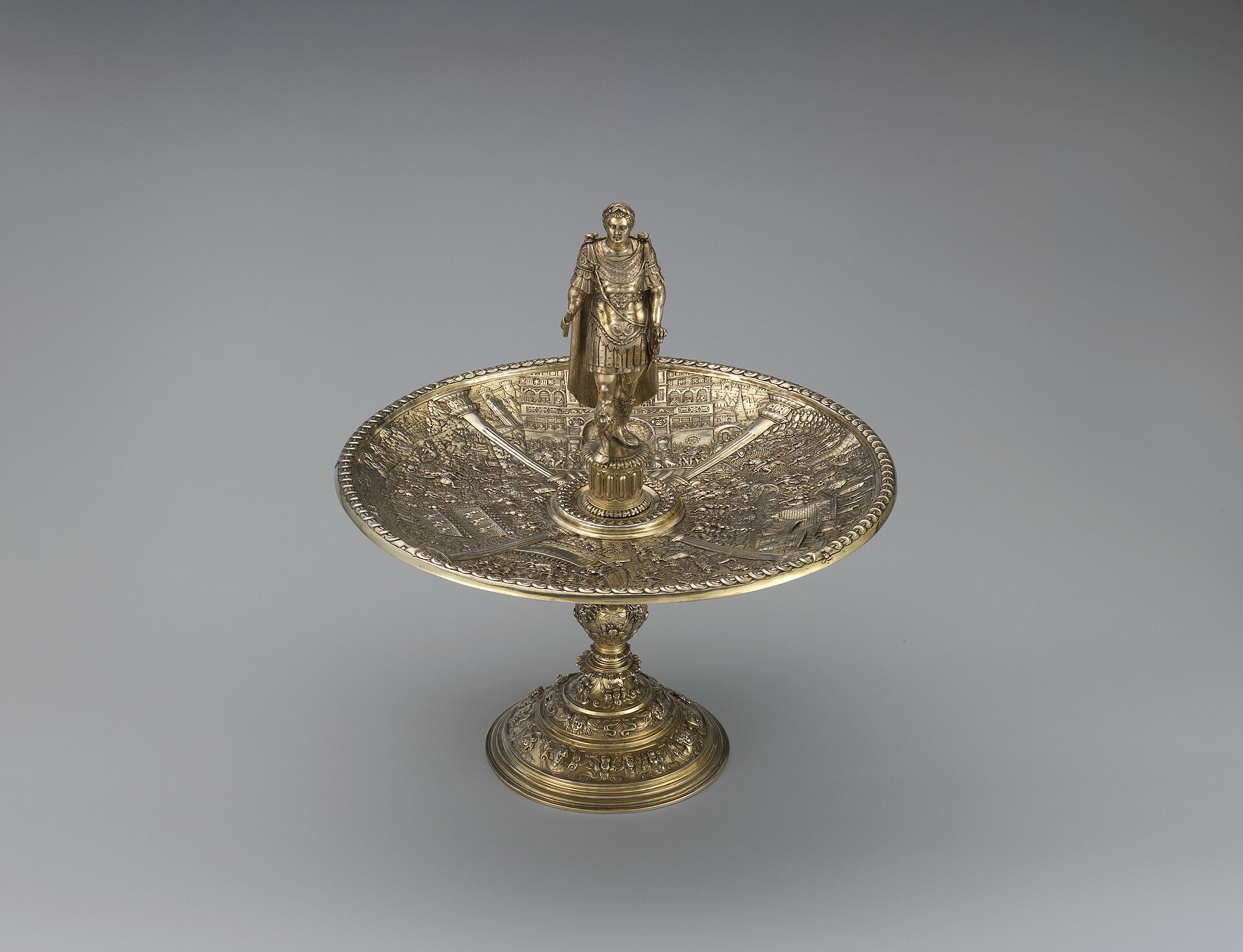
Records in this piece: The Clark Sickle-Leaf Carpet, The Lycurgus Cup, The Aldobrandini Tazze
On this page 8 sections
ContentsClose
In short
- This archive holds 180 exhibition entries across 56 of its 223 published records. Those 180 entries use 143 distinct venue strings for roughly 112 institutions, so the same museum is routinely recorded as several different places.
- The Metropolitan Museum of Art appears under six different venue strings and the Cleveland Museum of Art under seven. Neither is an error in the entries; each records what the source actually said.
- Two objects here were exhibited at the South Kensington Museum in London in 1862. The museum's own history dates its beginnings as the Museum of Manufactures to 1852 and the foundation stone of the present building to 1899, so a search under the modern name returns neither object.
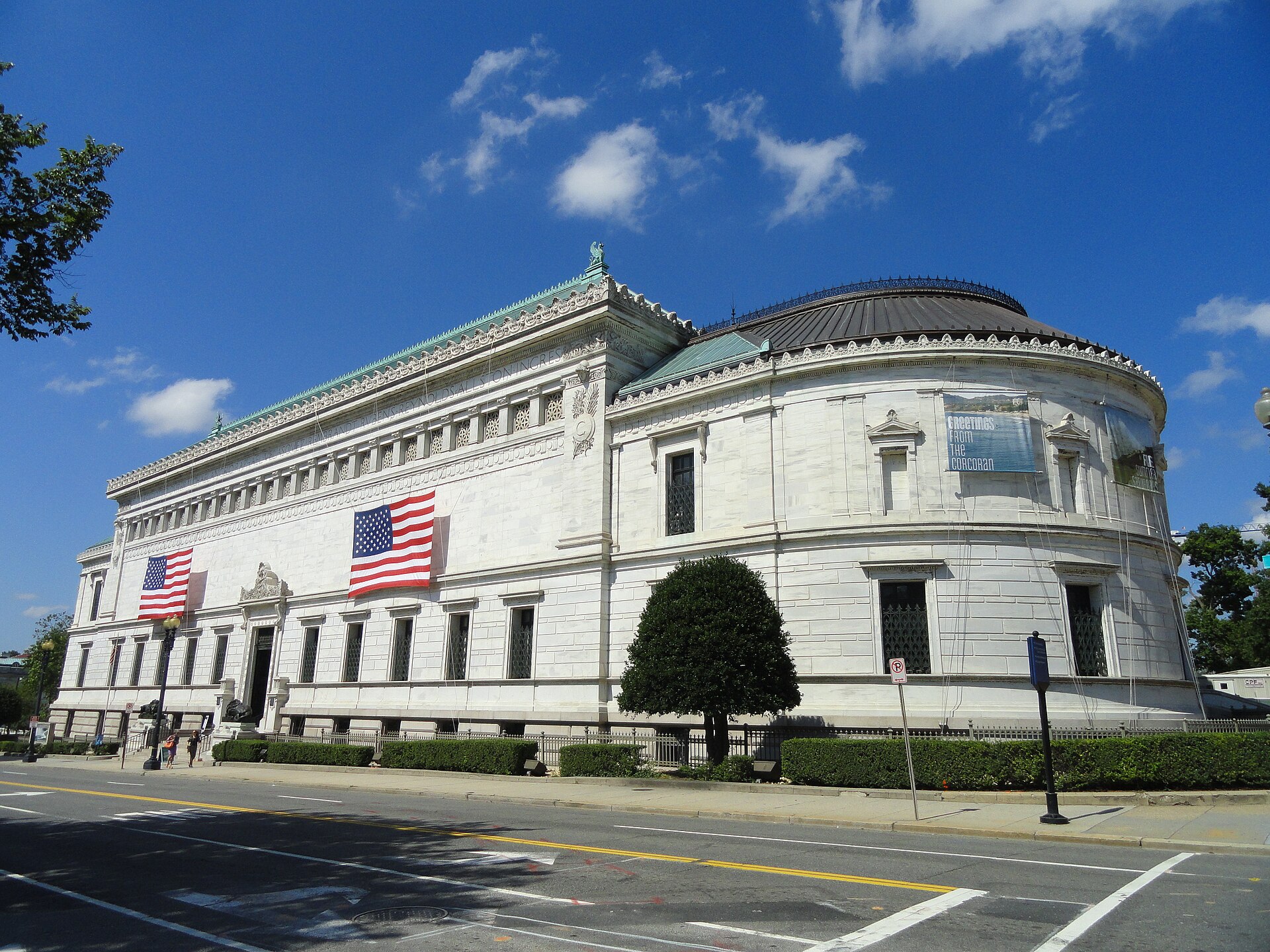
- The sickle-leaf carpet was exhibited three times by the Corcoran Gallery of Art, which ceased to exist as an independent institution in 2014, and was labelled the Corcoran Throne Rug in a 1976 show.
- Its holding museum in Doha published a curator's account of the carpet on 3 March 2026 calling it the Bacri-Clark Sickle-Leaf Throne Carpet and naming no previous institution. Sotheby's had given the whole published provenance as one line, Bacri Freres, Paris.
- The venue field also swallows tours. One entry in this corpus records three American museums and a season in a single row, so the count of exhibitions and the count of venues cannot both be right.
An exhibition history is a list of names, not a list of institutions
An exhibition history looks like structured data and behaves like prose. Each line names a place, a show and a year, and the place is written as whoever compiled the entry found it: sometimes an institution, sometimes an institution and a city, sometimes an institution and a gallery number, sometimes an entire touring itinerary with dates folded into one string.
That would be a tolerable untidiness if institutions were stable. They are not. Museums are founded under one name and renamed under another, they merge, they are absorbed by universities, they transfer their collections wholesale and they close. The venue field records the name in use on the day of the show, which is correct as history and useless as a key.
The consequence is that the most obviously countable block on an object record cannot be counted. You cannot ask how often this object has been shown at the Victoria and Albert Museum, or how many objects a given institution has borrowed, without first deciding which strings are the same body, and nothing in the data helps you decide.
One hundred and eighty entries, one hundred and forty-three names
The exhibition histories in this archive contain 180 entries spread across 56 of 223 published records, and those entries use 143 distinct venue strings. Normalising the obvious variants, dropping a leading article, taking the institution before the first comma, leaves roughly 112 institutions. The table shows where the collapsing happens.
| Institution | Distinct strings used |
|---|---|
| Cleveland Museum of Art | 7 |
| Metropolitan Museum of Art | 6 |
| Los Angeles County Museum of Art | 4 |
| Musee du Louvre | 4 |
| Art Institute of Chicago | 3 |
| Royal Academy of Arts | 3 |
| Hayward Gallery | 3 |
Not one of those strings is wrong. They differ because one entry adds a city, another adds a gallery, a third adds the run of dates, a fourth names the co-organiser, and a fifth records a definite article the museum itself uses inconsistently. The variance is a faithful record of the sources, which is exactly why cleaning it up by hand would be a falsification rather than a fix.
The South Kensington Museum is the Victoria and Albert Museum
Two objects in this archive were exhibited in London in 1862 at the South Kensington Museum: the Lycurgus Cup and the Aldobrandini Tazze. The museum's own account of its history describes beginnings as the Museum of Manufactures in 1852 and the foundation stone of the present building laid by Queen Victoria in 1899, which brackets the period in which the middle name was the right one.
The entries are correct. A researcher asking the modern institution what it has shown will not find them, because the string in the record and the string in the query describe the same body under names separated by decades. This is the ordinary condition of nineteenth-century exhibition history rather than an exceptional case, and it gets worse the further back the show sits.
The failure is silent, which is the part that matters. A search that returns nothing looks identical to a search over an institution that never showed the object, and nothing in the interface distinguishes an absence of loans from an absence of matching text.
A carpet exhibited three times by a museum that no longer exists
The sickle-leaf carpet has one of the fuller exhibition histories in this corpus and it is a catalogue of institutional mortality. Sotheby's published it as nine entries when the carpet was sold in 2013: the Corcoran Gallery of Art in 1948, the Textile Museum in 1972, Asia House Gallery in New York in 1973, the Fogg Art Museum at Harvard in 1974, the Mappin Art Gallery in Sheffield with a further showing in Birmingham in 1976, the Corcoran again in 1978, the Hayward Gallery in London in 1983, the Arthur M. Sackler Gallery in 2003 and the Corcoran once more in 2007 and 2008.
The Corcoran Gallery of Art appears three times as a venue and once more inside another museum's show title, because the 2003 Sackler exhibition was billed as a selection of carpets from the Corcoran Gallery of Art. The Corcoran ceased to exist as an independent institution in 2014, the year after it sold this carpet. Six of the nine lines therefore name, or turn on, a body that is now gone.
The 1976 Sheffield showing is the sharpest case, because the record notes the carpet was labelled there as The Corcoran Throne Rug. The lender's name had become part of the object's name on a wall label, and the lender has since been dissolved.
The object's own name moves with its owners
An object accumulates names from the people and institutions that hold it, and those names do not retire when the holder does. This carpet has been the Corcoran Throne Rug on a 1976 label, the Clark sickle-leaf carpet through the 2013 sale that made it the most expensive carpet ever sold at auction, and something else again today.
Its present holder is the Museum of Islamic Art in Doha. On 3 March 2026 the museum published an account of the carpet by Nicoletta Fazio, its Curator for Iran and Central Asia, under the heading of the Bacri-Clark Sickle-Leaf Throne Carpet. The Corcoran is not mentioned. The name has instead acquired Bacri, from the Paris dealers Bacri Freres, which is the entire published provenance Sotheby's gave for the carpet in 2013: one line, one firm, no dates.
So the object's name now records its earliest known dealer and its American collector, and has dropped the museum that showed it for sixty-five years. None of this is dishonest and all of it is ordinary. It does mean that a reader searching any one of the three names will find a different third of the story, and only somebody holding all three can see it is one carpet.
The field also swallows tours
A venue string in this corpus can contain an entire touring exhibition. One entry reads as the Los Angeles County Museum of Art, then the California Palace of the Legion of Honor in San Francisco, then the Carnegie Institute in Pittsburgh, across 1953 and 1954. Another runs the Royal Academy in London, the Martin-Gropius-Bau in Berlin and the Kunst- und Ausstellungshalle in Bonn with three separate date ranges inside one field.
That single row is simultaneously one exhibition and three showings at three institutions, and both readings are needed for different questions. A count of exhibitions wants one. A count of how many times the object travelled, or which institutions have handled it, wants three. Nothing in the field says which it is, and the same corpus contains multi-venue tours split across separate rows, so the two conventions coexist inside one dataset.
This is the honest reason a total is not published on these pages. An exhibition count that averaged over those conventions would be a number with no defensible definition behind it.
What actually fixes this, and what does not
Rewriting old venue strings into modern names does not fix it and makes the record worse. An object shown at the South Kensington Museum in 1862 was not shown at the Victoria and Albert Museum, and a catalogue that says it was has quietly asserted something false about a nineteenth-century show in exchange for a tidier search.
The fix is to keep the string exactly as the source wrote it and add an identifier beside it, so that the historical name and the persistent body are two fields rather than one contested one. That is how a loan register becomes evidence rather than decoration, and it is what would let this archive answer a question it currently cannot: which institutions have handled a given object, as opposed to which strings appear in its history.
Until an identifier is in place, the honest posture is to publish the entries, publish the variance, and refuse to publish a total. This archive holds 180 entries, 143 strings and roughly 112 institutions, and the gap between those three numbers is the finding rather than a defect to be smoothed away.
Why this archive is free to read
We do this for everyone who loves art. The people who have studied it for years, and the people who just stopped to look. Iconotheca exists so that what we learn belongs to all of them.
Nobody pays us for this. No ads, no sponsors, no commercial interest. These works belong to all of us, and we would rather share them with as many people as we can than keep them to ourselves.
If it gave you something today, tell us to keep going. Follow us, leave a like, or write a positive comment. We read every one, and they are what keeps us going.
Questions
Because the venue is free text recording the institution's name on the day of the show, and institutions are renamed, merged and dissolved. In this archive 180 exhibition entries use 143 distinct venue strings for roughly 112 institutions.
It ceased to exist as an independent institution in 2014, the year after it sold the sickle-leaf carpet. Three lines of that carpet's nine-entry exhibition history name the Corcoran as venue, and a fourth names it inside another museum's exhibition title.
They do not appear under both. Objects shown in 1862 are recorded under the name in use then, and the museum's own history dates its beginnings as the Museum of Manufactures to 1852 and the foundation stone of the present building to 1899, so a search on the modern name silently returns nothing.
No. An object exhibited at the South Kensington Museum in 1862 was not exhibited at the Victoria and Albert Museum, and rewriting the string asserts something false about the show. The correct fix is to keep the historical string and add a persistent identifier beside it.
Because names accumulate from the people and institutions that hold it. The same carpet has been labelled the Corcoran Throne Rug in 1976, sold as the Clark sickle-leaf carpet in 2013, and published by its current museum in Doha on 3 March 2026 as the Bacri-Clark Sickle-Leaf Throne Carpet.
Sources
- 1Sotheby's, ecatalogue entry for lot 12, 'A Sickle-Leaf, vine scroll and palmette Vase-technique carpet, probably Kirman, Southeast Persia', sale N09012, New York, 5 June 2013. Read 2 September 2026 for the estimate of 5,000,000 to 7,000,000 USD, the dimensions, the provenance given in full as 'Bacri Freres, Paris', and the nine-entry Exhibited list from the Corcoran in 1948 to the Corcoran in 2007-2008. sothebys.com/en/...
- 2Qatar Museums, Nicoletta Fazio, Curator for Iran and Central Asia, Museum of Islamic Art, 'A Masterpiece of Persian Grandeur: The Bacri-Clark Sickle-Leaf Throne Carpet', published 3 March 2026. Read 2 September 2026 for the name under which the holding museum now publishes the carpet, and for the absence of any reference to the Corcoran Gallery of Art. qm.org.qa/en/...
- 3Victoria and Albert Museum, 'About us'. Read 2 September 2026 for the museum's own account of its history, dating its beginnings as a Museum of Manufactures to 1852 and the foundation stone laid by Queen Victoria to 1899. vam.ac.uk/info/...
- 4Associated Press wire report, 'Carpet from 17th century sells for 33.7 million dollars at auction', 6 June 2013, as carried by the Christian Science Monitor. Cited for the sale result that made the carpet the most expensive ever sold at auction and for the Corcoran's role as consignor. csmonitor.com/Business/...
More in Museums and Exhibitions
The partThe complete object is a temporary arrangement
For a dispersed set, being complete is an event with a date and a duration. Twelve Renaissance tazze were whole and correct for two days in 2014, and...
When the Holder Is Not a Museum, the Accession Number Is Replaced by Law
Fourteen records here are held by a cathedral, a diocese, a cathedral works, a charitable trust or a monuments agency.
A Closing Date That Moves Both Ways, and Who Actually Moved It
Of 937 exhibitions tracked here, only 7 ever had a date move, and three of those flipped between the same two dates again and again.