The Toilet of Venus ('The Rokeby Venus')
Diego Rodriguez de Silva y Velazquez · 1647-51 (National Gallery); date, place and patron disputed
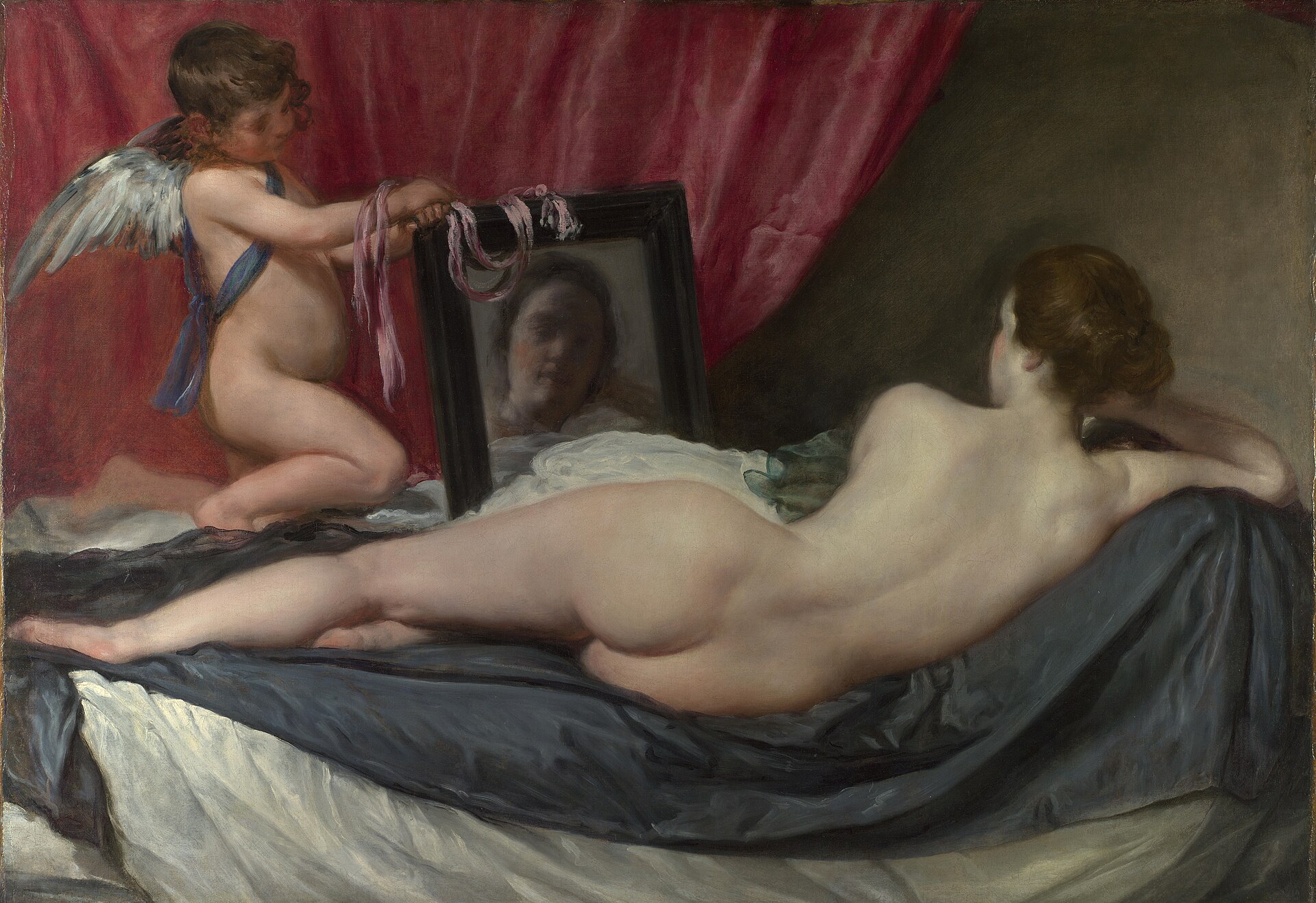
The record subject. Oil on canvas, 122.5 x 177 cm, National Gallery NG2057, dated 1647-51 by the Gallery. Photograph of the whole picture.
| Artist | Diego Rodriguez de Silva y Velazquez |
|---|---|
| Date | 1647-51 (National Gallery); date, place and patron disputed |
| Medium | Oil on canvas |
| Dimensions | 122.5 x 177 cm (National Gallery); the Art Fund gives 124.5 x 179.8 cm |
| Where it is now | The National Gallery, London (Room 19 on the Gallery's website, 8 October 2026)last confirmed |
| Inventory number | NG2057 |
| Attribution | AcceptedGiven to Velazquez by the National Gallery and by every catalogue consulted. Full note |
| Object type | Painting |
| Period | Spanish, mid-seventeenth century |
| Cases | Has a provenance gap |
| Inscriptions | None recorded in the sources consulted |
| Owners on record | 14 links10 documented, 3 disputed, 1 unknown |
| Sources | 51 cited |
About this record Last verified · 51 sources cited · Change log
On this page 10 sections
ContentsClose
A reclining Venus seen from behind, looking into a mirror held by Cupid, in which her face is a blur. It is the only surviving female nude by Velazquez, and the National Gallery dates it 1647-51. The Gallery thinks a Madrid dealer and painter, Domingo Guerra Coronel, listed it unattributed as 'a nude woman' in 1651, and its formal provenance starts with the June 1651 inventory of the collector Gaspar de Haro. It then passed through the Haro, Alba and Godoy collections, reached London through the dealer William Buchanan in 1813 and hung at Rokeby Park until 1905.
The National Gallery's archive shows how it was bought: Henry Edward Morritt sold it for 30,500 pounds to an intermediary acting for Agnew's on 11 August 1905, and the National Art Collections Fund paid 45,000 pounds for it in 1906. On 10 March 1914 Mary Richardson slashed it with a chopper or cleaver in protest at the treatment of Emmeline Pankhurst. Two sources name Helmut Ruhemann as the restorer without a date; he did not work for the Gallery until 1934, and the 1914 repairer is not named.
This record sets out the documents that disagree about when and for whom it was painted, grades each link in the chain, shows the sale prices in period terms and keeps later readings of the picture apart from what is known of its making.
Provenance
Each link is graded. Documented: a cited source supports it. Disputed: the identification is argued but not established. Unknown: no owner for that span, and the gap is not smoothed into a narrative. The grades in the glossary.
- 1647-51 - by 1651Painted by Diego Velazquez; place and patron not documenteddisputed
The Gallery dates the picture 1647-51 and says it has been placed before, during and after Velazquez's second Italian journey. Three accounts of who ordered it do not agree: a tradition in the Alba family, mentioned in the Burlington Magazine's 1906 review of Beruete's pamphlet (the reviewer, not Beruete, is the voice), that the king commissioned it for Haro; Buchanan's 1813 statement that the Duke of Alva had it painted as a companion to a Titian; and the Gallery's older artist page, which says it was painted in Italy for the Marques de Eliche. No contract or letter is known.1192038
- by 16 Nov 1651 - 1652Domingo Guerra Coronel, painter and dealer, Madriddisputed
The Gallery says the picture does seem to be the 'nude woman' in the household inventory of Coronel, who is reported to have died on 16 November 1651. The entry names no painter and values the picture at 1,000 reales. The identification rests on the description and is accepted by the Gallery as likely, not proved, and Spanish Wikipedia reports that a March 1652 seizure from his executor Miguel de Palacios describes a differently sized, vertical nude 'by the hand of Diego Belazquez'. Aterido published the first-owner finding in The Burlington Magazine in 2001.13331
- 1651 or 1652 - 1687Gaspar Mendez de Haro y Guzman, 7th Marques del Carpio and de Helichedocumented
The Gallery says Haro bought it soon after the Coronel inventory and that it first appears in his inventory of June 1651, so the date of acquisition conflicts: an inventory of 1 June 1651 precedes both Coronel's death and the reported sale of 16 September 1652 to a servant of the Marques de Heliche for 700 reales. The Gallery adds that it was apparently listed among the possessions of the Marquesa del Carpio in 1669, that it is not certain whether it was among the pictures Haro sent from Rome to Naples in 1682 and that it was paired with a Venetian nymph. Haro died in 1687.13336
- 1687 - 1802Catalina Mendez de Haro y Guzman and the Dukes of Alba (Francisco Alvarez de Toledo, 10th Duke, married 1688)documented
By inheritance from Haro and then in the Alba collection until after the death in 1802 of Maria Teresa Cayetana de Silva, Duchess of Alba. Ponz saw it in the Alba house in 1776, and Burlington's 1906 review reports two inventories of Haro's collection found among papers of a lawsuit over the pictures. The owners between the 10th Duke and the Duchess who died in 1802 are not named in the sources consulted.11921
- 1802 - 1808-13Manuel Godoy, Prince of the Peacedocumented
The Gallery says the Duchess's heirs sold it, by order of Charles IV, to the queen's favourite. Godoy hung it in a very private room with Correggio's Venus and Mercury with Cupid and Goya's two Majas. The price is not given in the sources consulted.1
- Oct 1808 - Sept 1813George Augustus Wallis, as agent for William Buchanan, dealerdocumented
The Gallery gives a window of October 1808 to September 1813 for the purchase by Wallis for Buchanan, who brought it to England in September 1813. Curtis (1883) says Wallis bought it from the Prince of the Peace in 1813.121
- 1808 - 1813Circumstances of acquisition and removal from Spainunknown
Curtis (1883) says only that Wallis bought it from the Prince of the Peace in 1813, with no document. No source consulted gives a price, a payment or the authority under which it was exported during the Peninsular War. Spanish Wikipedia says it vanished from Godoy's palace amid the art plunder of the war and names it among works foreign dealers acquired by legal operations or covert trade, without a document for this picture. The record neither confirms nor excludes a sale.132
- Oct 1813 - Jan 1814William Buchanan, dealer, Londondocumented
Buchanan's list of October 1813 offers it as item 6, Velazquez's Venus and Cupid, with Titian's Sleeping Nymph, the pair valued at 4,000 guineas (4,200 pounds), within a collection priced at 20,000 guineas in seven shares of 3,000 pounds. The words of the list are a dealer's.2021
- Jan 1814 - 1814George Yeatesdisputed
The Gallery says it was apparently in his possession in January 1814 and sold shortly afterwards to Morritt. No other source consulted mentions Yeates.1
- 1814 - 1843John Bacon Sawrey Morritt, Rokeby Park, Yorkshire (now County Durham)documented
Bought from Buchanan according to English Wikipedia and Curtis's table, although the Gallery interposes George Yeates in January 1814, reportedly for 500 pounds on the advice of Sir Thomas Lawrence (English Wikipedia) or Sir Joshua Reynolds (Curtis 1883, who died in 1792 and cannot be right). The price is a secondary figure and unconfirmed. In 2024 pounds, 500 pounds of 1814 is 42,600 to 47,200 by price measures and 510,000 to 627,000 by earnings and per-capita GDP. He hung it over the library chimney-piece and wrote to Scott about it.1212334414849
- 1843 - 11 Aug 1905The Morritt family of Rokeby, by descentdocumented
The Gallery places it in the Morritt collection at Rokeby and records it at Manchester in 1857 and the Royal Academy in 1890. The Art Newspaper says the family sold it to pay death duties. The individual owners between J. B. S. Morritt (died 1843) and Henry Edward Morritt are not named in the sources consulted; Curtis (1883) names a Robert Morrit at Rokeby Park.1152134
- 11 Aug 1905 - Nov 1905Thos. Agnew and Sons, London, through the intermediary Charles Lewis Hinddocumented
Agreement of 11 August 1905 for 30,500 pounds from Henry Edward Morritt to Hind, who is recorded as purchaser but acted for Agnew's. The file also holds a note from Lockett Agnew about a payment of 2,000 pounds to Hind, purpose not stated. In 2024 pounds, 30,500 pounds of 1905 is 4.23 to 4.42 million by price measures and 15.8 to 25.9 million by earnings and per-capita GDP. Exhibited at Agnew's, Bond Street, in November 1905.123121543
- Nov 1905 - Mar 1906National Art Collections Fund (now Art Fund), buying from Agnew'sdocumented
The Fund raised 45,000 pounds, which is 14,500 pounds above the Agnew purchase price, and presented the picture to the Gallery in March 1906. The Burlington Magazine said the nation paid two profits. The final sum is reported three ways: 8,000 pounds anonymously from Edward VII (English Wikipedia), a 5,000 pound Agnew loan guaranteed by him (The Art Newspaper) or evidence that he made the final balance (Art Fund). In 2024 pounds, 45,000 pounds of 1906 is 6.15 to 6.53 million by price measures and 23.4 to 37.1 million by earnings and per-capita GDP.1456131415193142
- Mar 1906 - presentThe National Gallery, London, NG2057documented
Presented by the Art Fund, 1906. Damaged on 10 March 1914, cleaned in 1965-66 and its glass struck on 6 November 2023. Lent to Vienna and Paris in 2014-15 and to the Walker Art Gallery, Liverpool, 10 May to 26 August 2024. Shown in Room 19 on the Gallery's website on 8 October 2026.19161745
Prices realised
| Date | Sale | Estimate | Result | Note |
|---|---|---|---|---|
| 16 September 1652 | Auction of the goods of Domingo Guerra Coronel, Madrid (sale handled by his executor Miguel de Palacios) Spanish Wikipedia, citing a document published by Aterido; entry not checked at source and the entry may not describe this canvas | Not recorded | Hammer 700 reales With premium None recorded reales | A nude woman 'by the hand of Diego Velazquez' was knocked down to a servant of the Marques de Heliche. Whether it is this picture is disputed, and the Gallery's own provenance gives Haro's inventory of June 1651 as the first appearance. No other auction is recorded; the sales from 1813 on were private and no source gives a price for the Godoy transfer. |
Hammer is the price at which the bidding stopped; with premium adds the fee the house charges the buyer on top. Hammer price and buyer's premium in the glossary.
Technical evidence
| Attribution note | Given to Velazquez by the National Gallery and by every catalogue consulted. The Gallery says the picture seems to be the 'nude woman', with no painter named, in the 1651 inventory of the Madrid dealer and painter Domingo Guerra Coronel; the inventory of Gaspar de Haro dated 1 June 1651, which the Gallery treats as the first appearance, names Velazquez, according to Spanish Wikipedia. When it reappeared in 1905-06 some critics doubted it: English Wikipedia reports that in 1910 the painter William Blake Richmond told the Royal Academy that two pigments in it did not exist in Velazquez's time, that a critic proposed Mengs and that Mazo was more seriously discussed. That account was not checked at source, and nothing consulted shows any test that supported the doubts. |
|---|---|
| Support and medium | Oil on canvas.113 |
| Dimensions | 122.5 x 177 cm (National Gallery). The Art Fund grant record gives 124.5 x 179.8 cm without saying what was measured. Curtis (1883) says only 'full length, life-size'. Coronel's 1651 inventory is reported at a vara and a half by two and a quarter and Haro's inventory at two and a half varas wide by one and a half in drop, with a black frame.113213233 |
| Date | 1647-51 (National Gallery). The Gallery says it has been dated before, during and after Velazquez's second Italian journey of 1649-51. The Gallery's artist page says it was painted in Italy; the painting page leaves place and date open. Technique gives no firm date.13831 |
| Frame | 17th-century Italian frame (National Gallery). Haro's inventory is reported to describe the picture with a black frame. Whether the present frame is the one in which the picture reached England is not stated.133 |
| Changes made during painting | Velazquez first painted Venus's head slightly more in profile so that her nose showed, then changed it (National Gallery). English Wikipedia, citing the 2006 Gallery catalogue, adds that infrared shows the figure first set more upright with the head turned to the left, and pentimenti in the raised arm, left shoulder and head.131 |
| Colour change | The satin under Venus was originally more purple than grey in tone (National Gallery); English Wikipedia says the grey sheet began as a deep mauve that has faded.131 |
| Handling | Smooth, blended, pearly handling in Venus's skin against livelier brushwork in the fabrics. Cupid's face and far leg are painted so loosely that they look unfinished, which the Gallery reads as deliberate.131 |
| Signature and inscriptions | None recorded in the Gallery's catalogue summary or in Curtis (1883). No source consulted mentions a signature, date or mark.121 |
| Companion picture | A sixteenth-century Venetian painting of a naked nymph in a landscape, seen from the front, was paired with it in Haro's collection (National Gallery). Buchanan's 1813 list pairs a Titian Sleeping Nymph with Velazquez's Venus and Cupid, and Curtis identifies the Titian with Haro's companion, which is not proved, and says the Titian was reported returned to Spain. English Wikipedia reports the companion was traced again in 1994 and that an attribution to Tintoretto has been suggested. Its present location is not given in the sources.1202131 |
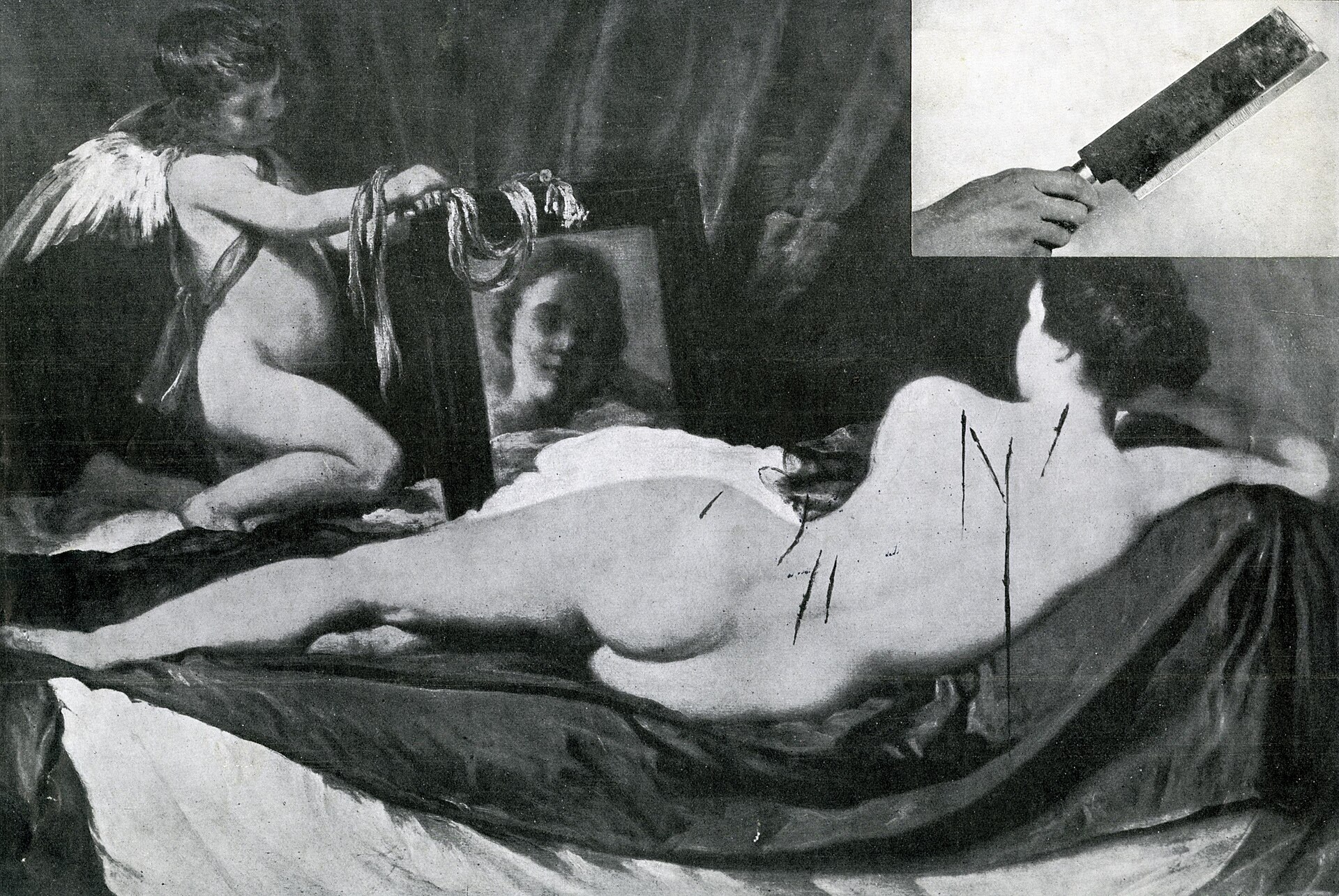
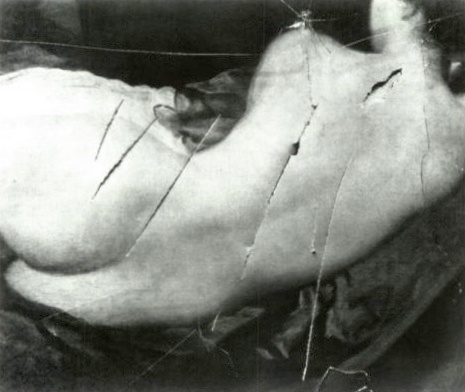
| Condition: 1914 | Struck with a chopper or cleaver on 10 March 1914. Seven injuries across the back and shoulders according to the Gallery's Keeper as relayed by Century Ireland's retelling of 1914 reports; other sources say six or eight. The weapon is called a meat chopper, a meat cleaver, a hatchet and an axe by different sources. Repaired and returned to display. The 1914 restorer is not named in any source consulted.1524283029 |
| Condition: 1965-66 | A cleaning of NG2057 is recorded in Gallery press cuttings of April to September 1966. English Wikipedia says a major cleaning and restoration of 1965-66 showed good condition and little overpaint, and that Lopez-Rey criticised it as overzealous.931 |
| Condition and glazing: 2023 | Glass struck with hammers on 6 November 2023. The Gallery reported minimal damage to the paint surface, treated it, and returned the picture to display on 1 December 2023 with new glazing.161718 |
| Inventory and exhibition numbers | National Gallery NG2057. Curtis 1883 no. 34. Manchester 1857 provisional no. 1079, definitive no. 787. Royal Academy 1890 no. 135. Agnew's 1905 no. 9. National Art-Collections Fund Exhibition 1945-46 no. 6. Arts Council 1947 no. 30. Madrid 1961 no. 76.121 |
| Technical imaging and analysis | No published pigment analysis, canvas study, X-radiograph or infrared reflectogram was found online. The Gallery's statement about the faded sheet and the head change shows that technical examination exists.1 |
Images
The record in full
Chapter 1What the surface shows
The National Gallery catalogues the picture as oil on canvas, 122.5 by 177 centimetres, inventory NG2057, dated 1647-51 and carried in a seventeenth-century Italian frame.
The National Gallery catalogues the picture as oil on canvas, 122.5 by 177 centimetres, inventory NG2057, dated 1647-51 and carried in a seventeenth-century Italian frame. The Art Fund's record of the 1906 gift gives 124.5 by 179.8 centimetres and does not say what was measured, so the two sets of figures sit side by side here without a ruling. The Gallery's title is The Toilet of Venus, with The Rokeby Venus in brackets after it.
Venus lies on a bed with her back to us, propped on her right arm. Cupid kneels at the foot of the bed and holds up a dark-framed mirror with pink ribbons knotted at the top. We see Venus's face only in the glass, and the Gallery stresses that the reflection is blurred. The Gallery's account says the satin beneath her was originally more purple than grey in tone, and English Wikipedia, citing the 2006 catalogue, says the grey sheet began as a deep mauve that has faded. The Gallery also says Velazquez first painted her head slightly more in profile, so that her nose showed, and then changed it. Cupid's face and far leg are brushed so loosely that they look unfinished, which the Gallery reads as a deliberate way of holding attention on Venus.
English Wikipedia, which is a tertiary source and which cites the Gallery's 2006 Velazquez exhibition catalogue by Dawson Carr, adds that infrared examination shows the figure was first set more upright with the head turned to the left, and that pentimenti appear in the raised arm, the left shoulder and the head. It also describes the loosely handled area from Venus's left foot to Cupid's leg as typical of Velazquez and probably intentional. That catalogue was not available for this record, so those details stay attributed to the encyclopaedia and should be replaced by the catalogue text.
No signature or inscription is mentioned in the Gallery's catalogue summary, in Charles Curtis's 1883 catalogue of Velazquez or in any other source consulted. No published pigment analysis, canvas-weave study or X-radiograph was found online. The Gallery's statement about the faded sheet shows that technical work exists, and its publication is the first thing a researcher should ask the Gallery for. In 1910, according to English Wikipedia, the painter William Blake Richmond told the Royal Academy that two pigments in the picture did not exist in Velazquez's time. No result of any test made to answer him was found, and nothing in the sources consulted supports the claim.
Chapter 2A nude in a country that policed nudes
The Gallery's text calls this the only surviving female nude by Velazquez and says the subject was rare in seventeenth-century Spain, where the Church disapproved of overtly sensual pictures.
The Gallery's text calls this the only surviving female nude by Velazquez and says the subject was rare in seventeenth-century Spain, where the Church disapproved of overtly sensual pictures. It adds that the king and wealthy collectors in his circle nonetheless owned mythological nudes by Rubens and Titian. Both statements are needed together. The picture was made inside a court that kept such images and inside a country that argued about whether they should exist.
Charles Curtis, writing in 1883 from the eighteenth-century biographer Antonio Palomino, said the Inquisition had decreed a penalty of 1,500 ducats, excommunication and a year's exile against the painter of an immodest picture. That is a nineteenth-century report of an early eighteenth-century writer and not a case file. English Wikipedia, summarising scholarship by Javier Portus and Francisco Calvo Serraller that was not consulted here, describes a 1632 pamphlet of university opinions condemning lascivious pictures, and a proposed contribution by the preacher Fray Hortensio Felix Paravicino that was never published. The same article says the court pushed back and that such pictures were usually kept in private rooms.
No source consulted reports any action by the Inquisition against this picture. What the sources do show is how its owners housed it. The Gallery says Gaspar de Haro hung it in a large room with other mythological paintings and copies of royal pictures. The Gallery adds that Manuel Godoy later kept it in what a contemporary called a gavinete interior, a very private room, beside Correggio's Venus and Mercury with Cupid and Goya's two Majas, and says it must have been one of the most remarkable cabinets of female nudes in all of Spain.
The Gallery says the picture seems to be the 'nude woman' that the 1651 inventory of the dealer and painter Domingo Guerra Coronel lists without a painter. English Wikipedia reports that Portus suggests the omission of Velazquez's name may reflect the subject, since such works were carefully supervised and their circulation considered problematic. That reading is a scholar's inference from the silence, and the same document cannot show whether the silence was caution or only the habit of an appraiser.
Chapter 3When, where and for whom: the documents do not agree
The Gallery dates the picture 1647-51 and says it has been dated before, during and after Velazquez's second Italian journey of 1649-51.
The Gallery dates the picture 1647-51 and says it has been dated before, during and after Velazquez's second Italian journey of 1649-51. Its artist page says that on that journey he had an affair that produced an illegitimate child and delayed his return to Spain, and that he painted the Venus there for the Marques de Eliche. Its painting page is more careful. The painting page says the picture seems to be the nude listed in the 1651 household inventory of Domingo Guerra Coronel, that it was bought soon afterwards by Gaspar de Haro and that the date of painting is not known. The two Gallery pages are not consistent with each other: the painting page records the Coronel inventory and the artist page does not mention it.
The Gallery's formal provenance extract, taken from the 1988 catalogue by Neil MacLaren revised by Allan Braham, says the picture first appears in the June 1651 inventory of Gaspar Mendez de Haro, Marques del Carpio and de Heliche. In 2001 Angel Aterido published in The Burlington Magazine that the first owner was Coronel. Spanish Wikipedia's article on Coronel, which cites Aterido and the 2000 Corpus Velazqueno of documents, gives the following sequence. Coronel made his will on 10 October 1651 and died on 16 November 1651. The inventory of his pictures, signed by Angelo Nardi and Juan Bautista Martinez del Mazo, lists a picture of a nude woman a vara and a half high and two and a quarter varas wide, more or less, valued at 1,000 reales with no painter named. A portrait by El Greco in the same inventory was valued at 150 reales. In March 1652 a large nude 'by the hand of Diego Belazquez' was seized from Coronel's executor Miguel de Palacios. On 16 September 1652, according to a document Aterido published, Palacios sold at the auction of Coronel's goods a nude woman by Velazquez to a servant of the Marques de Heliche for 700 reales.
That sequence sits awkwardly with Haro's own inventory. Spanish Wikipedia says it was begun on 1 June 1651 and describes a nude woman painted from behind, resting on her right arm and looking in a mirror held by a child, by Velazquez, two and a half varas wide and one and a half in drop, with a black frame. If that entry is this picture and carries its June 1651 date, Haro had it before Coronel died and before the sale. The dimensions in the three documents differ and one seizure describes a vertical canvas. The sources consulted do not reconcile these points, and they remain open questions below.
The Alba family had its own account. In 1906 The Burlington Magazine, reviewing Aureliano de Beruete's pamphlet on the picture in a review signed A. G. B. R., said that one may well believe a tradition preserved in the Alba family that the king commissioned the Venus and presented it to Haro as a token of affection. The reviewer is the voice there and not Beruete, and no document is cited for the tradition.
The model is unknown. The Gallery's audio description asks whether Velazquez painted a real woman whose identity he wished to keep hidden, and the Gallery's text suggests he may have wanted to avoid an identifiable person. English Wikipedia reports claims about a mistress in Italy, a proposal that rests on the artist's documented affair and child and on no named woman. No source consulted names a model.
Chapter 4Reading the mirror: what is documented and what is argued
The picture combines two types, and the Gallery says so directly.
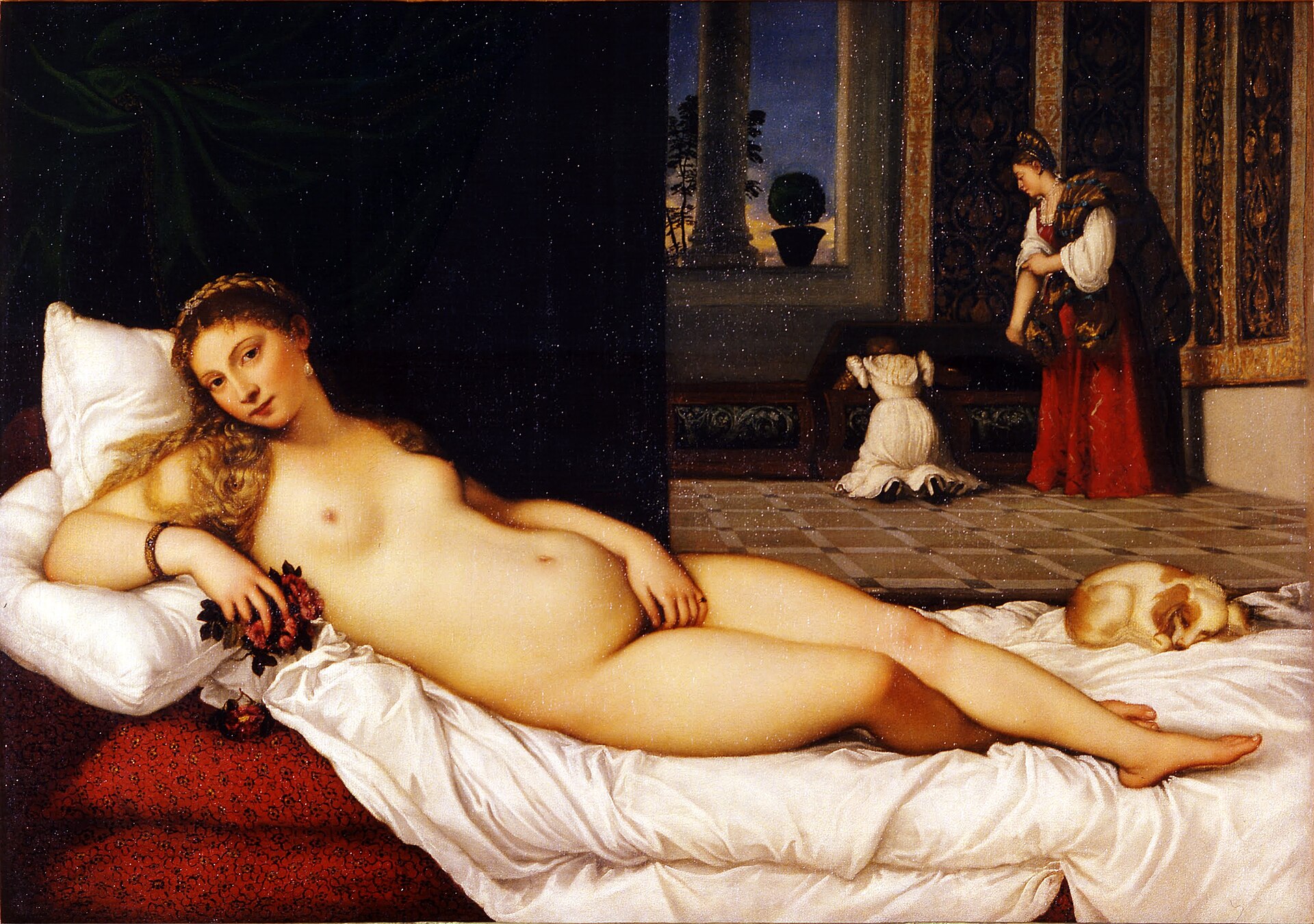
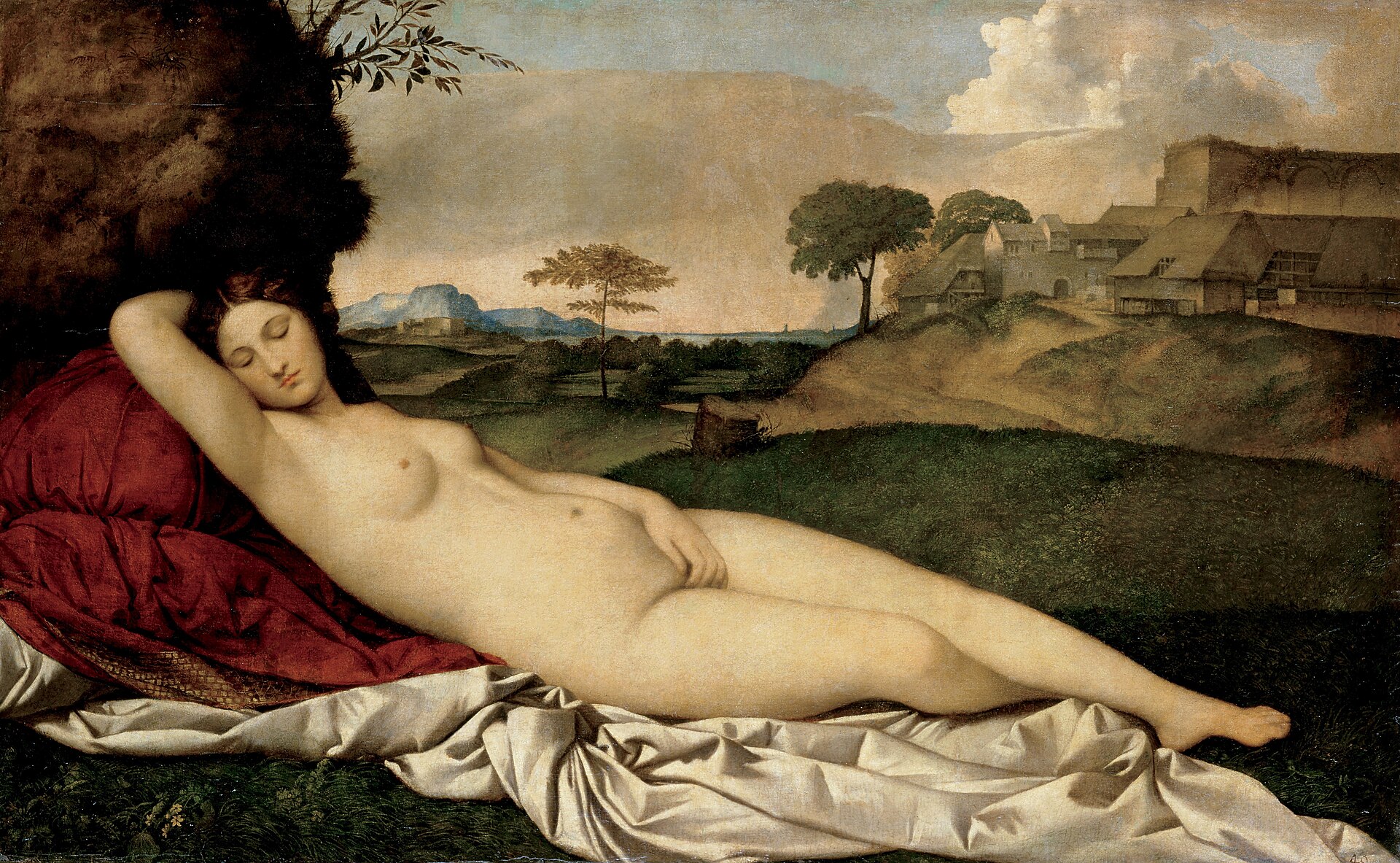
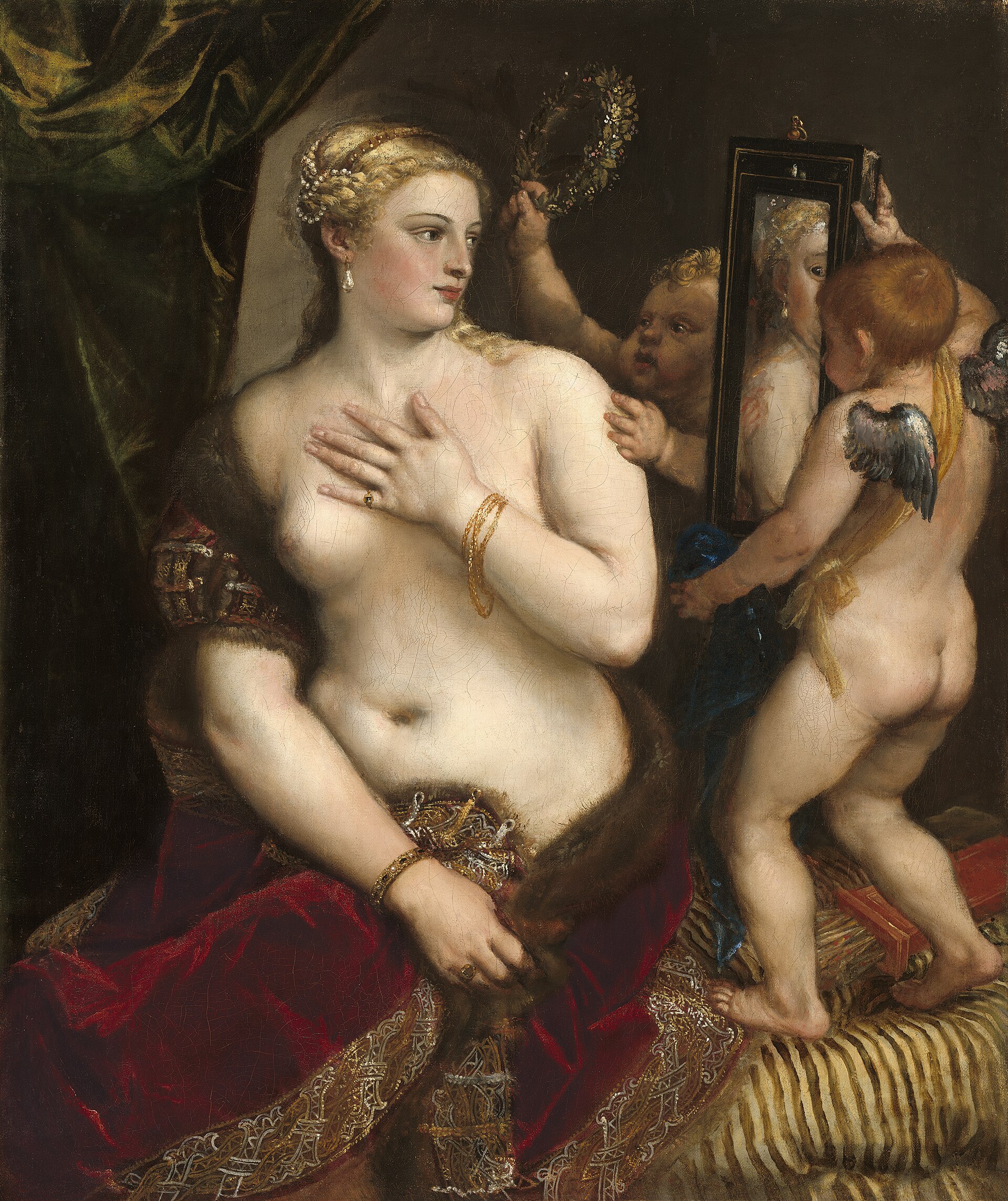
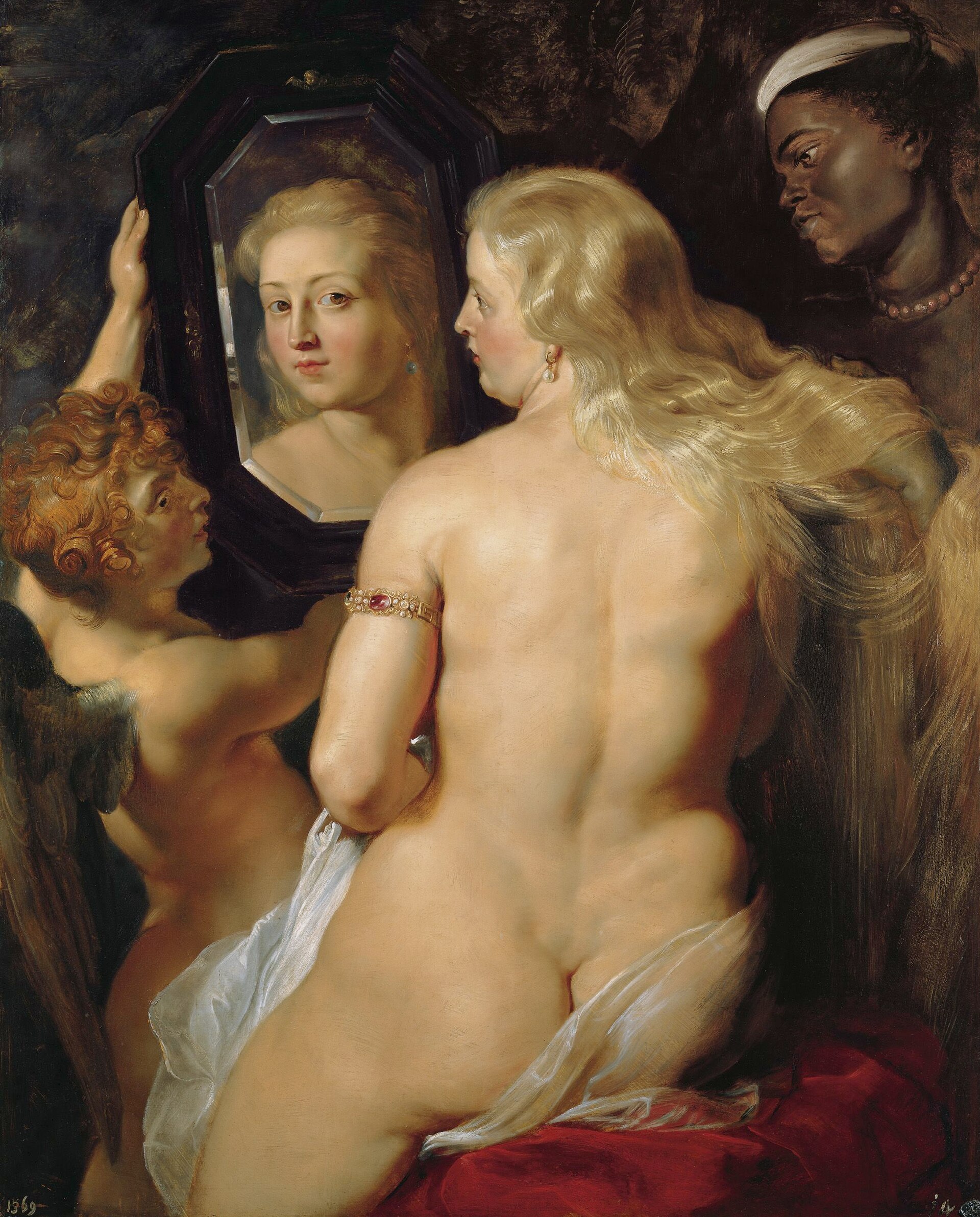
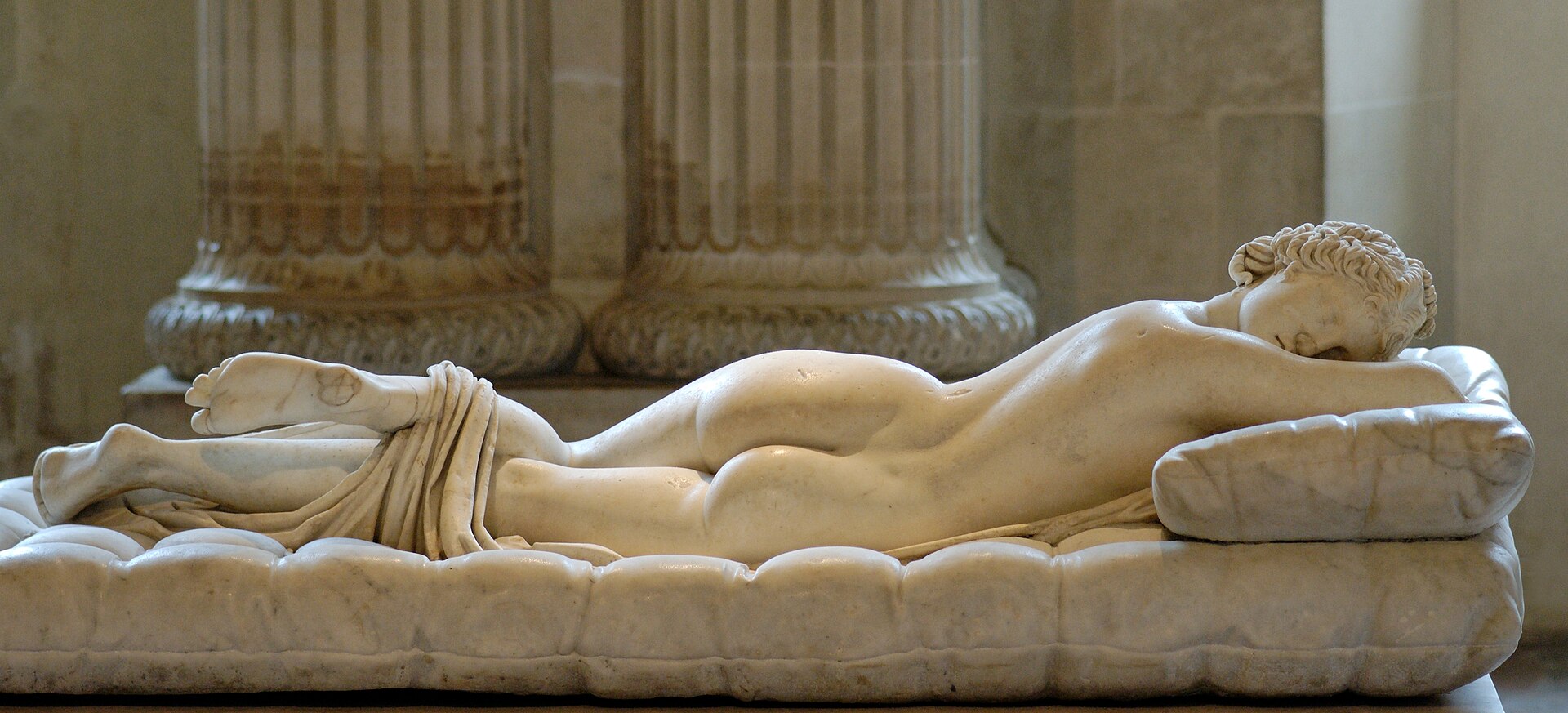
The picture combines two types, and the Gallery says so directly. One is Venus at her toilet, usually seated and looking into a mirror. The other is the reclining Venus, usually in a landscape. The Gallery adds that paintings of the naked Venus had been made popular by sixteenth-century Venetian painters, especially Giorgione and Titian. That description of the types is documented in the Gallery's text. English Wikipedia, citing Andreas Prater and others not consulted here, adds precedents that Velazquez could have known: Titian's Venus at her toilet with Cupid of about 1555, Rubens's Venus at a Mirror of about 1614-15 and the ancient Borghese Hermaphroditus, of which a cast was sent to Madrid. Those are resemblances recorded by modern scholars and not statements by Velazquez.
What the details mean is argued, and the Gallery frames its own readings as possibilities. It says the ribbons crossing Cupid's wrist may allude to his blindfold or to the shackles with which he binds lovers' hearts, and that the blur in the glass may be there so that Venus is not an identifiable person and the viewer completes her features. English Wikipedia reports other readings: the critic Julian Gallego's 1968 argument that Cupid's melancholy makes the ribbons fetters binding the god to the image of beauty, which he titled 'Amor conquered by Beauty', and Natasha Wallace's 2000 argument that the face is not meant as a particular woman or even a portrayal of Venus but as an image of self-absorbed beauty. A 2023 article in The Art Newspaper glosses the blurred features as a sign of vanity and the passing of time, a passing remark by a journalist and not a scholarly argument. The Gallery's bibliography lists essays on the mirror, including a 1994 article titled 'La Venus de Velazquez y su enganoso espejo' by Angel Campo y Frances and a study of euhemeristic mythologies by John Moffitt, but those texts were not read.
Function is the better-documented side. The Gallery says Haro's picture was paired in his collection with a sixteenth-century Venetian painting of a naked nymph in a landscape, seen from the front, and that Godoy hung it in a private cabinet with other nudes. Buchanan's 1813 dealer's list says the Duke of Alva had Velazquez paint it as a companion to Titian's sleeping nymph, which agrees with the pairing but gives a different patron from the Alba tradition, mentioned in the Burlington's 1906 review, that the king ordered it for Haro. Buchanan's claim is a sales statement made by a dealer in October 1813 and no earlier document supports it.
Nothing found records what Velazquez or any patron said the picture meant. There is no contract, letter or inventory note stating a programme, and no source consulted shows a text, a society or a teacher behind it. The absence of a documented hidden meaning is a finding. The documented facts are that the picture was a private cabinet nude, that it joined two familiar Venus types and that its maker changed the head of the goddess after starting it.
Chapter 5Haro, Alba and Godoy: a century and a half in Spanish cabinets
The Gallery names Gaspar de Haro, 7th Marques del Carpio and de Heliche, as the collector who bought the picture soon after 1651, and says he had privileged access to the royal collection because of...
The Gallery names Gaspar de Haro, 7th Marques del Carpio and de Heliche, as the collector who bought the picture soon after 1651, and says he had privileged access to the royal collection because of his close relationship with Philip IV. English Wikipedia says he died in 1687 with a collection estimated at 3,000 paintings, 1,200 of them in Spain and the rest in Naples. The Gallery says the picture was apparently listed among the possessions of the Marquesa del Carpio in 1669, and that it is not certain whether it was among the pictures Haro sent from Rome to Naples in 1682. It adds that the picture hung in a large room beside other mythological pictures and copies of works in the royal collection.
Haro died in 1687 and the picture passed to his daughter Catalina Mendez de Haro y Guzman, who married Francisco Alvarez de Toledo, 10th Duke of Alba, in 1688. It stayed in the Alba collection until after the death in 1802 of Maria Teresa Cayetana de Silva, Duchess of Alba. The Gallery says her heirs then sold it, by order of Charles IV, to the queen's favourite Manuel Godoy, Prince of the Peace. The sources consulted do not name the owners between the 10th Duke and the Duchess who died in 1802. The chain is documented at its ends and thin in the middle.
One 1776 sighting survives from that stretch. Curtis quotes Antonio Ponz's Viage de Espana as praising among Velazquez's pictures a much-admired Venus lying with her back turned whose face is seen in a mirror, then in the Alba house. Curtis also cites a 1797 mention by Conca and one by Cean Bermudez, and gives Ponz at volume 5, page 302, while the 1906 Burlington review of Beruete gives volume 5, page 333, so the reference needs checking against the original. The Burlington review adds that two separate inventories of Haro's collection, found by Angel Barcia among papers from a lawsuit over the pictures between the Duke of Berwick and the Duchess of Alba whom Goya often painted, list the picture. Barcia's 1911 catalogue of the Berwick and Alba pictures is in the Gallery's bibliography.
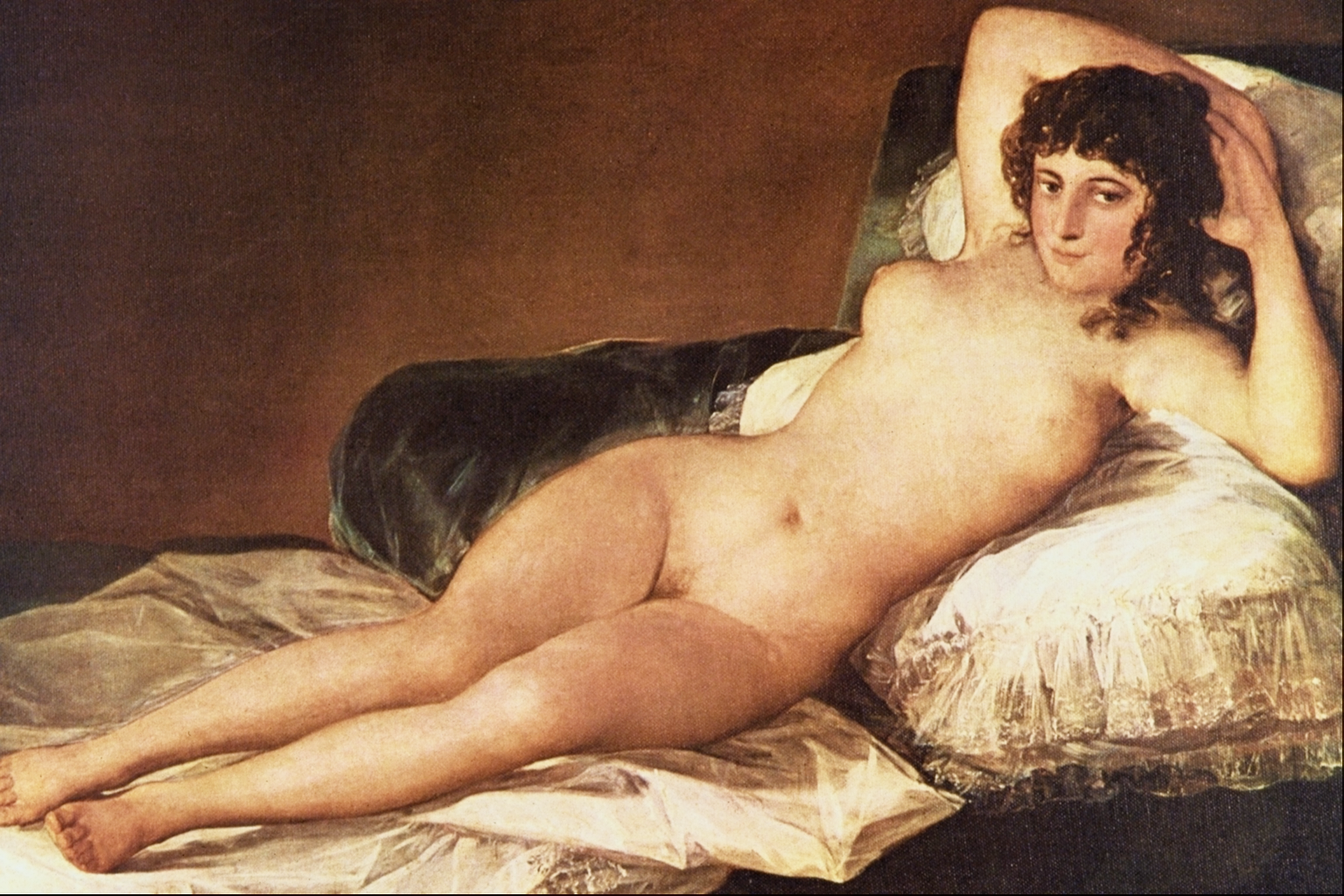
The Godoy years are the last in Spain. The Gallery says Godoy hung it in a very private room with Correggio's Venus and Mercury with Cupid and with Goya's Nude Maja and Clothed Maja, both now in the Prado. English Wikipedia reports that the Goya pair may have been commissioned by Godoy himself. At the Gallery's 1990 exhibition, according to The Art Newspaper, the Majas were hung with the Venus to test the thesis that Goya's pictures were a direct response to Velazquez's.
Chapter 61813: how a Spanish cabinet picture reached London
The Gallery's provenance says the picture was bought between October 1808 and September 1813 by G.
The Gallery's provenance says the picture was bought between October 1808 and September 1813 by G. A. Wallis for W. Buchanan and brought by Buchanan to England in September 1813. In January 1814 it was apparently in the possession of George Yeates and was sold shortly afterwards to John Bacon Sawrey Morritt. Curtis says in 1883 that it and a companion Sleeping Nymph by Titian were bought by Mr Wallis from the Prince of the Peace in 1813 and were in Mr Buchanan's hands for sale, and that the Titian is said to have been returned to Spain.
Buchanan himself left a document. His 1824 Memoirs of Painting prints a letter and a list headed October 1813. The list has 24 numbered lots, some of them sets of several small pictures, with a separate Flemish and Dutch group, drawn from Spanish palaces and from the collection of the Prince of Peace. He asked 20,000 guineas for the collection, to be sold in seven shares of 3,000 pounds each. He proposed to exhibit them in London as the Orleans pictures had been exhibited and to sell them on behalf of the shareholders, each of whom could first choose pictures at a fixed price. Item 6 on the list is Velazquez's Venus and Cupid, which he says the Duke of Alva employed the painter to make as a companion to Titian's Sleeping Nymph, both then in the Prince of Peace's collection, and he puts the pair at 4,000 guineas. A guinea was 21 shillings, so 4,000 guineas is 4,200 pounds. Buchanan priced the Raphael at 5,000 guineas and the six small Velazquez dances at 1,000 guineas together.
The words in Buchanan's list are a dealer's. The Duke of Alva commission is not supported elsewhere, and the Gallery's own text says only that the picture was in the Alba collection until 1802. Curtis says only that Wallis bought it 'from the Prince of the Peace' in 1813, and gives no document. Spanish Wikipedia says that during the Napoleonic invasion foreign dealers acquired many works by legal operations or covert trade, naming this Venus among them, and that the picture disappeared from Godoy's palace amid the art plunder of the war, but it gives no document for this picture's case. The Gallery's phrase is only that it was bought, and no source consulted gives a price, a payment or the authority under which it was exported. The record therefore states a window of five years and a pair of agents, and does not describe the exit as either a sale or a seizure.
Chapter 7Rokeby: Mr Morritt's Venus
John Bacon Sawrey Morritt of Rokeby, born about 1772 and dead in 1843, had travelled in Greece and Asia Minor in the 1790s, sat in Parliament and was a close friend of Sir Walter Scott, who dedicated...
John Bacon Sawrey Morritt of Rokeby, born about 1772 and dead in 1843, had travelled in Greece and Asia Minor in the 1790s, sat in Parliament and was a close friend of Sir Walter Scott, who dedicated his 1813 poem Rokeby to him, according to English Wikipedia. The Gallery's provenance places the picture in his collection, in Yorkshire. Rokeby Park was historically in the North Riding of Yorkshire and is now in County Durham, which is why the Gallery's pages use both.
Morritt wrote to Scott about the hanging, in a letter quoted in a 2003 newspaper column by Andrew Graham-Dixon. Modern books and sites quote the letter in slightly different words, and the wording here is Graham-Dixon's. He had spent the morning moving pictures about to make room for 'my fine picture of Venus's backside', which he had raised over the library chimney-piece, where the light was admirable and the height meant 'the ladies may avert their downcast eyes without difficulty and connoisseurs steal a glance without drawing said posterior into the company'. The letter is undated in the sources consulted, and the column does not give its archive.
The price is a secondary figure. Curtis's 1883 catalogue says Morritt bought it for 500 pounds and, in a table of the highest recorded sales of Velazquez pictures, lists the Venus and Cupid of 1813, Buchanan to Morritt, at 12,500 francs. English Wikipedia also gives 500 pounds, and says he bought on the advice of Sir Thomas Lawrence. Curtis names a different adviser, Sir Joshua Reynolds, who had died in 1792, twenty-one years before the picture reached England, so Curtis's adviser cannot be right. Lawrence lived until 1830 and is the name later writers use. The price should be treated as unconfirmed until a Morritt or Buchanan account is found. Measured by the retail price index, 500 pounds of 1814 corresponds to 47,200 pounds in 2024, by the GDP deflator to 42,600, by average earnings to 510,000 and by per-capita GDP to 627,000, according to MeasuringWorth. The gap between those measures is an order of magnitude and says that the question 'what was it worth' has no single answer.
For most of a century the picture was seen by few. The Gallery lists two exhibitions in that time, the Manchester Art Treasures show of 1857 and a Royal Academy exhibition in 1890. Curtis's 1883 catalogue records the Manchester showing and a wood engraving in the Madrid review La Ilustracion Espanola y Americana of 8 November 1874, with a long account by Pedro de Madrazo in the same issue, which makes the picture known in print well before 1905. English Wikipedia says the picture became known as the Rokeby Venus at Manchester. According to The Art Newspaper the critic Bernard Berenson visited it at Rokeby in 1896. In 1904 Auguste Breal wrote of it in his Velazquez monograph, in Madame Simon Bussy's English translation, and said the picture 'must be one of rare beauty' judging only from photographs and descriptions, so the author had evidently not seen it.
Chapter 81905-06: 30,500 pounds in, 45,000 pounds out
The sale is the best-documented moment in the picture's history, because the National Gallery now holds the Agnew firm's archive.
The sale is the best-documented moment in the picture's history, because the National Gallery now holds the Agnew firm's archive. An agreement dated 11 August 1905 records the sale of 'Venus and Cupid' by Velazquez for 30,500 pounds by Henry Edward Morritt of Rokeby to Charles Lewis Hind. The archive description says Hind is named as the buyer but was an intermediary and that the real purchaser was Thos. Agnew and Sons, from whom the National Art Collections Fund bought the picture. A note in the same file signed by Lockett Agnew concerns a payment of 2,000 pounds to Hind, and the description does not say what the payment was for. A letter of the same date from Morritt to Hind asks that a copy of the Venus be made at a cost not exceeding 200 pounds including the picture and the frame, and a copy by W. A. Menzies hangs at Rokeby today, though the sources do not say whether it is the copy that letter asked for.
The Fund paid 45,000 pounds. The difference from the Agnew purchase price is 14,500 pounds, which is 47.5 per cent more than Morritt received. That figure is the gap between the two agreed prices and not the dealer's profit, because the sources do not give the dealer's costs, the 2,000 pound payment or the 200 pound copy. The Burlington Magazine said in January 1906 that the price asked was considerably more than the owner might have accepted from a direct approach, that a well-informed syndicate had bought the picture and that 'the Nation has thus to pay two profits'. The same editorial said no one could blame the syndicate. The Art Newspaper says the Morritt family sold to pay death duties.
The picture went on show at Agnew's Bond Street gallery in November 1905 and drew large crowds. The Gallery's archive has an Agnew volume of press cuttings from 7 November 1905 to 24 January 1906. On 20 November 1905 the Fund wrote to the Gallery's Board asking whether it could rely on the Board's sympathy in an effort to secure the picture, and on 6 December it asked whether the Trustees would contribute from Gallery funds. The archive records both letters and says nothing in the item descriptions about the answers. The Fund's chairman wrote to The Times in November 1905, and the Fund announced success in January 1906 and presented the painting to the Gallery in March. The Burlington's December 1905 note said it understood the Berlin museum and an American buyer had entered the contest, and The Art Newspaper reports rumours of bids from Wilhelm Bode and the Louvre. These are rumours and no bid is documented.
The final part of the sum is reported three ways. English Wikipedia says King Edward VII anonymously provided 8,000 pounds and became patron of the Fund. The Art Newspaper says the last 5,000 pounds was a loan from Agnew's guaranteed by the King. The Art Fund says only that evidence suggests the final balance was made by the King himself. The three statements may describe different parts of the same arrangement, and none can be checked against a ledger here.
The Gallery had no director that winter, and the Burlington said so. The Prime Minister's letter appointing Sir Charles Holroyd is dated 6 June 1906. On export, the editorial compares England to eighteenth-century Italy, a country selling its treasures, and says Italy had since passed laws to stop depletion while England's treasures remained unprotected. No export licensing step is mentioned in any source consulted, and none is assumed here. In 2024 money, 45,000 pounds of 1906 is about 6.15 to 6.53 million by price indices and 23.4 to 37.1 million by earnings and per-capita GDP, and the 30,500 pounds paid to Morritt is about 4.23 to 4.42 million and 15.8 to 25.9 million by the same methods. Those are four of the five MeasuringWorth results for the UK; the fifth, a share of GDP, measures output and not worth and is left out. and the method changes the answer by a factor of about six.
In the same volume of the Burlington, in a column on independent art, the critic Bernhard Sickert wrote that in his opinion 40,000 pounds was an excessive price for any single picture. His figure of 40,000 pounds is below the 45,000 the Fund paid. The Burlington's own editorial and its December note treated the purchase as a rescue.
Chapter 910 March 1914
On the morning of 10 March 1914 Mary Richardson, a Canadian-born member of the Women's Social and Political Union, struck the Velazquez with a meat chopper in the Gallery.
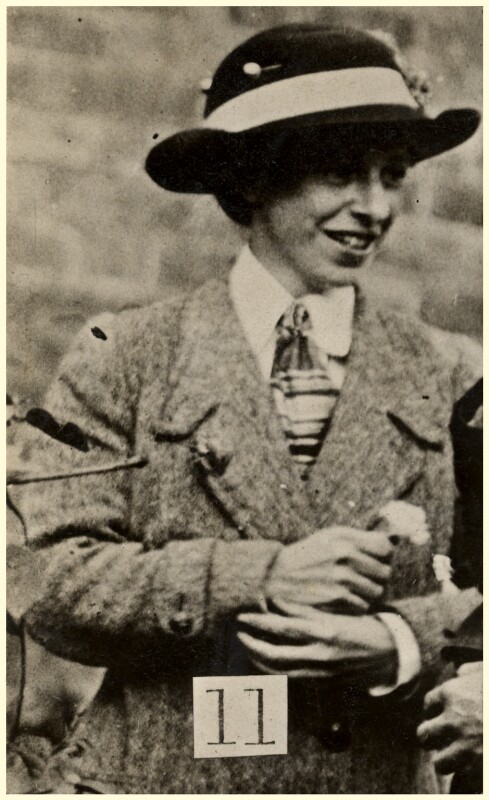
On the morning of 10 March 1914 Mary Richardson, a Canadian-born member of the Women's Social and Political Union, struck the Velazquez with a meat chopper in the Gallery. Richardson was out on licence from Holloway Prison, according to Philip McCouat, writing in the Journal of Art in Society, and Emmeline Pankhurst had been arrested the day before. The picture stood on an easel in Room 17 under glass. Century Ireland's retelling, written from 1914 press reports, says Richardson entered at about half past ten and half an hour later produced a hatchet from her clothing, broke the glass and began slashing the canvas.
Her own later account, quoted by a Birmingham suffragette project, is that she bought an axe the night of Pankhurst's arrest and pinned it up her sleeve with a chain of safety pins, that she waited for an hour in what she called utter misery and that her first blow only broke the glass. The attendant, hurrying to her, slipped on the polished floor, and she says she then got in four more blows before a detective seized her and two visitors threw guidebooks at her. She also said that she had sent a plan to Christabel Pankhurst, who replied with a message to carry it out. These are Richardson's statements, made decades later, and the Gallery's records for the day were not consulted.
The count of wounds varies. The same retelling gives the Gallery's Keeper, James Turner, as saying there were seven distinct injuries in the most important part of the work, and says five or six deep cuts crossed the back of the figure. The London Museum and English Wikipedia also say seven, the Victoria and Albert Museum's archive blog says six, McCouat says numerous and one Art Newspaper article says eight and another seven. Richardson's own recollections count one blow on the glass and four more, or five in all. The damage lay across the back and shoulders of Venus.
Her statement to The Times of 11 March 1914, as reproduced on a history blog, Monstrous Regiment of Women, read: 'I have tried to destroy the picture of the most beautiful woman in mythological history as a protest against the Government for destroying Mrs Pankhurst, who is the most beautiful character in modern history. Justice is an element of beauty as much as colour and outline on canvas.' She added that if there was an outcry, it was hypocrisy as long as people allowed Pankhurst's destruction. In a later interview quoted by McCouat she said she had not liked the way men visitors to the gallery gaped at it all day, and in an account quoted by the Birmingham project she said the picture was highly prized for its worth in cash. The Art Newspaper attributes to Christabel Pankhurst, and McCouat to the Union, the comment that the picture had acquired a new human and historic interest and would be a sign and memorial of women's determination to be free. McCouat records Richardson as convicted of malicious damage the next day and sentenced to the maximum of six months. The London Museum says she was released on 6 April with recurring appendicitis.
McCouat, following Lynda Nead, reads the press language as treating the picture as a body. He reports 'cruel wounds', 'broad lacerations' and 'ragged bruises' in the newspapers and the nickname 'Slasher Mary'. The Keeper, he says, estimated that the damage had cut the picture's value by 10,000 to 15,000 pounds. The Gallery closed to the public for two weeks and other institutions followed. The National Union of Women's Suffrage Societies condemned the act and Wyndham Lewis published an open letter telling the suffragettes to leave art alone. McCouat counts fourteen more paintings slashed and nine women arrested between March and July 1914, and the Victoria and Albert Museum's archive blog records that the Gallery was targeted again in May. McCouat's second article says Richardson joined the British Union of Fascists in 1933 and left in 1935 or 1936 for reasons that are disputed. That belongs to her biography and not to the picture's.
Chapter 10Repair, cleaning and the glass: the conservation record
The picture was repaired after 1914 and returned to display, and McCouat calls the restoration swift.
The picture was repaired after 1914 and returned to display, and McCouat calls the restoration swift. The Birmingham suffragette project says the damage is now almost invisible, with faint white marks visible to a close observer. The Art Newspaper says the cuts left the picture in need of repair, restoration and relining with a backing canvas, which describes the need and does not say what was done.
The Art Fund's page on the picture says it was attacked in 1914 and 'restored by Helmut Ruhemann', and English Wikipedia says all the cuts were repaired by him as the Gallery's chief restorer; neither gives a date for his work. The National Gallery's own archive biography of Ruhemann says he was born in 1891, worked as a freelance restorer in England including for the Gallery from 1934, was one of two restorers evacuated with the pictures in the Second World War, became Consultant Restorer in 1946 and worked for the Gallery until 1972. The Fitzwilliam Museum's Hamilton Kerr Institute archive says the same about 1934. The Gallery's archive biography has him working for the Gallery from 1934, so he cannot have made a repair carried out soon after 1914. By the Gallery's account he had intended to be a painter, studied in Karlsruhe, Munich and Paris, and did not begin restoring privately until 1921. Whether he treated the picture later is not shown. The 1914 repairer is not named in any source consulted.
The next recorded intervention is a cleaning. The Gallery's archive holds a file of press cuttings from April to September 1966 on the cleaning of pictures including NG2057. English Wikipedia says the picture was given a major cleaning and restoration in 1965-66 which showed it to be in good condition and with very little overpaint, contrary to what some earlier writers had said, including a claim that the face in the mirror had been overpainted. It adds that the Velazquez scholar Jose Lopez-Rey objected in his catalogue raisonne that the cleaning had been overzealous and had unevenly exposed some tentative contours, and that the Gallery catalogue called his description of the condition largely misleading. The dates of the two works do not obviously fit, since the Gallery's revised catalogue is of 1988 and Lopez-Rey's catalogue of 1996, and none of it was checked at source.
The latest event is the glass. On 6 November 2023, according to a statement from the Gallery quoted by The Art Newspaper, two people entered Room 30 just before 11 am and appeared to strike the picture with what looked like emergency rescue hammers. The room was cleared. The Gallery said two people were arrested, and the Metropolitan Police, as quoted by Museums and Heritage Advisor, said they were held on suspicion of criminal damage. A 17th-century Italian picture, A Dead Soldier, replaced the Velazquez in the room. The Gallery said minimal damage was sustained to the surface of the painting, which would undergo conservation treatment. The group Just Stop Oil said two of its supporters had acted to protest new oil and gas licences, and The Art Newspaper reports that one of them said women did not get the vote by voting, a reference to the 1914 attack. The Gallery said the picture returned to display on 1 December 2023 after treatment of minor damage to the paint surface and the fitting of new glazing.
Chapter 11What the picture has been made to mean since
Everything in this section is later reading, and none of it says what Velazquez or his first owners intended.The 1914 attack fixed the picture in the history of the suffrage campaign and of feminist...
Everything in this section is later reading, and none of it says what Velazquez or his first owners intended.
The 1914 attack fixed the picture in the history of the suffrage campaign and of feminist argument about the nude. The art historian Lynda Nead, quoted by English Wikipedia from her 1992 book The Female Nude, wrote that the incident had come to symbolise a particular perception of feminist attitudes to the nude and a stereotypical image of feminism in general. In a 2003 essay for the Art Fund's centenary, which The Art Newspaper quotes, Nead argued that great paintings gather history to themselves and that this one had become a reliquary of history. The same newspaper reports that Judy Chicago, in a 1999 book with Edward Lucie-Smith, said she hates the Rokeby Venus. It also records one artistic response, Tom Hunter's photograph Lexi, Ye Old Axe, shown at the Gallery in 2005.
A BBC Open University programme broadcast in 2002, 'Sexuality and pleasure: remaking the bed in women's art', lists the Rokeby Venus among its keywords and names Laura Mulvey and Lynda Nead among its contributors. The archive record page does not show what either of them said about this painting.
The most recent institutional reading was the Walker Art Gallery's 2024 loan. National Museums Liverpool's press release says the painting has become symbolic of the male gaze and has often been held up as an example of the objectification of women, and that the display set it among works by women and non-binary artists, including Ethel Walker's The Spanish Gesture and Harriet Hosmer's Puck, with photographs by Rene Matic and Zanele Muholi. The curators added that Velazquez acknowledges the woman's gaze in the picture, because Venus herself looks into the mirror. That sentence shows the Walker's argument and is not a finding about the painting.
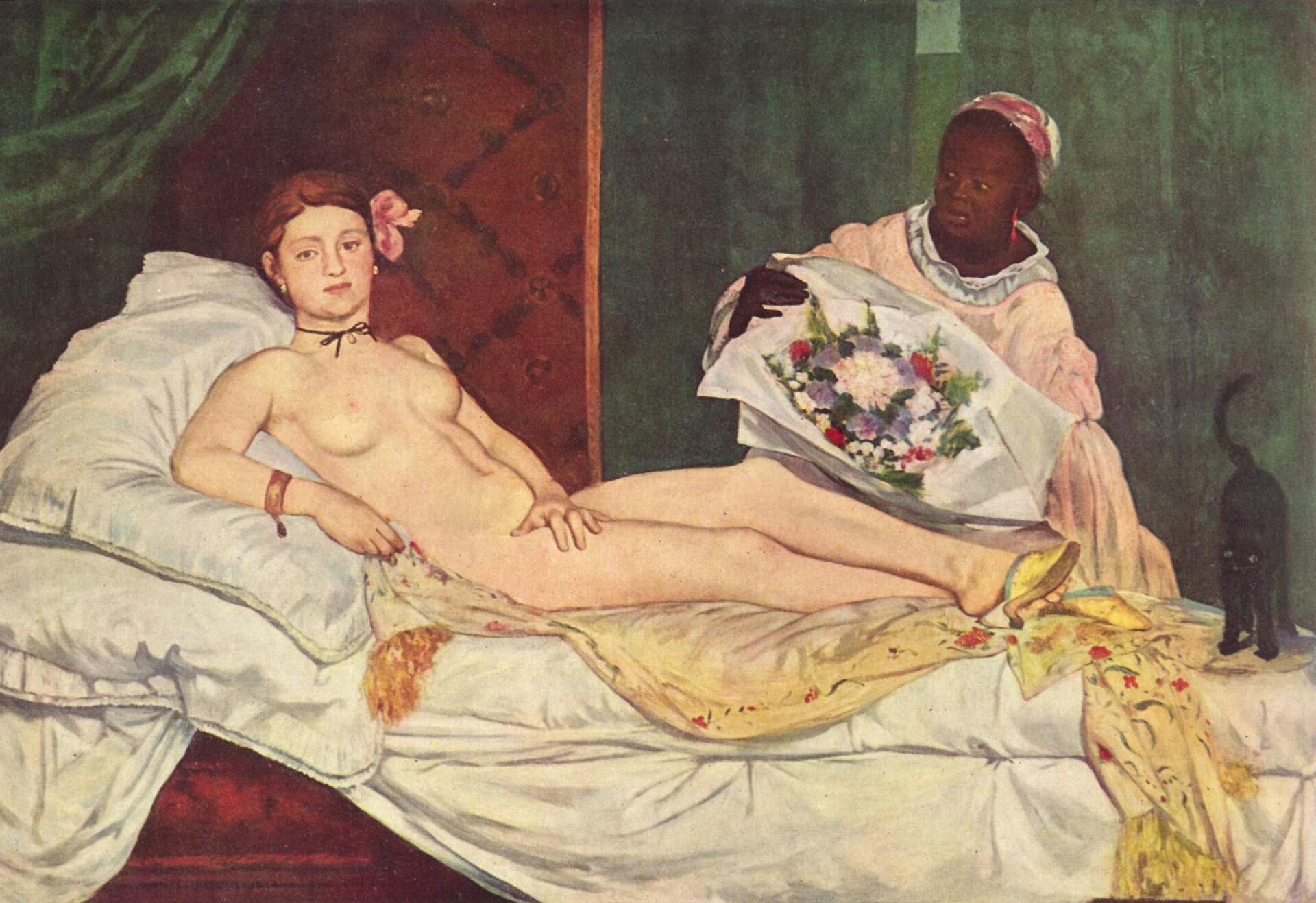
English Wikipedia says Edouard Manet's Olympia of 1863 paraphrases the Rokeby Venus in pose and in suggesting a real woman. That is a claim of influence, and the same article says the Venus does not appear to have been copied or engraved before the Manchester exhibition of 1857. The sources consulted do not say how Manet could have seen it. The Gallery's page describes the picture as inspiring artists and writers and as the subject of novels, films, documentaries, artworks and installations.
Chapter 12Names, numbers and the catalogue trail
The picture has gone by many names and the names matter, because several of them also fit other pictures.
The picture has gone by many names and the names matter, because several of them also fit other pictures. The Gallery's own title is The Toilet of Venus, with The Rokeby Venus as the popular name that, the Gallery says, comes from Rokeby Park. In Spanish it is La Venus del espejo. Buchanan's 1813 list, Curtis's 1883 catalogue and the 1905 sale agreement all call it Venus and Cupid, and the Burlington Magazine of 1905-06 calls it the Venus with the Mirror and, more often, the Rokeby Velazquez. Wikipedia lists Venus at her Mirror and Venus and Cupid as further names. In the seventeenth-century inventories it is the unattributed 'nude woman', and the Gallery's own inventory number is NG2057. The exhibition numbers the Gallery records are 1079 in the provisional and 787 in the definitive catalogue of Manchester in 1857, number 135 at the Royal Academy in 1890, number 9 at Agnew's in 1905, number 6 at the Art Fund exhibition of 1945-46, number 30 at the Arts Council show of 1947 and number 76 at Madrid in 1961. Curtis gave it number 34 in his list of Velazquez. The Art Newspaper lists loans to the Bowes Museum in County Durham in 1996, the Hayward Gallery in 2003, Naples in 2005, the Prado in 2007-08 and Vienna in 2014, and says the picture was hung with Prado loans at the Gallery's own Velazquez exhibition in 2006-07. The Gallery lists Vienna and Paris in 2014-15 and Liverpool in 2024.
The catalogue trail corrects itself in stages. Ponz saw it in the Alba house in 1776. By the 1880s the accepted view, put forward by Madrazo, Curtis, Justi and others and adopted by Beruete in 1898, made it the Psyche and Cupid that Velazquez was recorded as painting for the Alcazar's Hall of Mirrors. Curtis accepted that in 1883 and thought the picture had been saved from the Alcazar fire of 1734, and the 1904 English version of Breal repeated that it had been in the Hall of Mirrors. In 1906 Beruete, according to the Burlington's review, rejected the identification on four grounds: the Alba house stood some distance from the Alcazar, Psyche and Cupid are different subjects, the recorded measurements of the Psyche and Cupid did not match, and that picture was missing from the inventory of pictures saved from the fire, which suggests it burned. Beruete said the Venus was in Haro's collection, citing two inventories. The review also repeats the family tradition of a royal commission.
Curtis also gave details that later work does not support, which shows how an 1883 catalogue could drift. He gave the owner as Robert Morrit at Rokeby Park, named Reynolds as the adviser, called the picture the artist's latest manner and thought it painted in his last years. Whether 'Robert Morrit' was a slip or a later owner is not settled by the sources. English Wikipedia says the Haro inventory of 1651 was found in 1951, and the Gallery's bibliography lists a 1952 article by Pita Andrade on the Velazquez and Mazo pictures owned by the seventh Marques del Carpio. English Wikipedia says the picture had long been held to be one of his last works until the inventory was found. Aterido's 2001 article added Coronel, and the Gallery's current pages give 1647-51.
Dimensions also differ. The Gallery gives 122.5 by 177 centimetres, the Art Fund 124.5 by 179.8, Curtis says only 'full length, life-size', Coronel's inventory is reported at a vara and a half by two and a quarter and Haro's at two and a half varas wide by one and a half in drop with its frame. The varas are Spanish units, and none of these figures has been converted here because the sources do not say whether frames are included.
Chapter 13Frame, glass, display and the copy at Rokeby
The Gallery lists a seventeenth-century Italian frame on the picture and does not say whether it is the frame in which the picture reached England.
The Gallery lists a seventeenth-century Italian frame on the picture and does not say whether it is the frame in which the picture reached England. The Haro inventory, as Spanish Wikipedia quotes it, describes the picture with a black frame. Nothing consulted identifies the frame the picture wore at Rokeby or at Agnew's.
In 1914 it stood on an easel in Room 17 under a pane of glass, the sort of display that left it open to the attack. After 2023 the Gallery fitted new glazing. In 2023 it hung in Room 30 and in the Gallery's online record it is now in Room 19. Visitors who looked for it in the Walker Art Gallery in Liverpool between 10 May and 26 August 2024 found it as the centrepiece of a display about gaze.
A full-scale copy by W. A. Menzies hangs in the saloon at Rokeby Park, and the Rokeby Park website says so. A local-history blog dates it to 1906, and the Agnew archive file shows Morritt asking in August 1905 for a copy at a cost of no more than 200 pounds including the frame. The Menzies copy is not the Gallery's painting, and any plate or auction record for a 'Rokeby Venus' needs checking against the Gallery's dimensions of 122.5 by 177 centimetres. Curtis lists one engraving, the Madrid wood engraving of 1874, and English Wikipedia says the picture does not appear to have been copied or engraved before the 1850s. No early copy is mentioned in the sources consulted.
The Gallery's website carries a colour reproduction and an audio description. No infrared reflectogram or X-radiograph was found online, and no IIIF manifest was checked.
Chapter 14Where it is now and what is still open
As of 8 October 2026 the National Gallery's website shows the picture in Room 19 as NG2057, presented by the Art Fund in 1906.
As of 8 October 2026 the National Gallery's website shows the picture in Room 19 as NG2057, presented by the Art Fund in 1906. The Gallery lists it as lent to Vienna and Paris in 2014-15 and to the Walker Art Gallery in 2024. No later loan was found.
The questions below are still open. The first is the order of the Spanish documents: Haro's inventory is dated 1 June 1651; Coronel died on 16 November 1651; the sale to Haro's servant is dated 16 September 1652; and these cannot all describe the same moment of ownership unless the inventory carries later entries. The second is why a nude by Velazquez was in a dealer's house unattributed. The third is how the picture left Spain in 1808-13 and who was paid. The fourth is whether Morritt really paid 500 pounds. The fifth is who repaired it in 1914 and how. The sixth is what the Fund, the Gallery and Agnew's said and did between November 1905 and March 1906, including the King's part. The seventh is the picture's physical history: its pigments, its ground, its canvas, its linings and the findings of the 1965-66 cleaning. Each is dealt with in the open questions field of this record.
On the sources consulted the one auction in its history is the sale of Coronel's goods on 16 September 1652, reported by Spanish Wikipedia from Aterido at 700 reales, a price at the fall of the hammer with no premium recorded. That report is unchecked and the entry may not describe this canvas, and it appears in the auction results field with that warning. The sales from 1813 on were private: Buchanan to Morritt in 1813 or 1814, Morritt's family to Hind for Agnew's in 1905 and Agnew's to the National Art Collections Fund in 1906. No source gives a price for the Godoy transfer.
The artist
Diego Rodriguez de Silva y Velazquez
Velazquez served Philip IV of Spain from his appointment as court painter in 1623 until his death in 1660, and rose through palace offices as well as through painting. The National Gallery's research note on him records that he owned an enslaved assistant, Juan de Pareja, and signed a notarial act freeing him in 1650. For this picture the documentary record is thin where it matters most: no document consulted says who ordered the Venus, and the one nude by his hand that survives stayed in private Spanish cabinets from 1651 until it was bought for Buchanan between 1808 and 1813 and reached England in September 1813.
Related works
| Work | Relation | Where it is |
|---|---|---|
| Venus of Urbino Titian | Venetian reclining Venus of the kind the Gallery names as background; NOT the same picture The Gallery says paintings of the naked Venus were made popular by Giorgione and Titian, and English Wikipedia lists the Venus of Urbino (1538) among Velazquez's precedents (source 1, 31). Velazquez shows his Venus from behind where Titian's looks out. | Galleria degli Uffizi, Florence |
| Sleeping Venus Giorgione, completed by Titian | Early reclining nude Venus, cited as a precedent Named by the Gallery with Titian as the popularisers of the naked Venus. English Wikipedia notes that both Giorgione's Venus and Velazquez's are brunettes against the usual fair hair (source 1, 31). | Gemaldegalerie Alte Meister, Dresden |
| Venus with a Mirror Titian | Early Venus at her toilet with Cupid; the other half of Velazquez's combination Dated about 1555. The Gallery describes Velazquez as merging the toilet type, with the seated Venus, and the reclining type (source 1, 31). | National Gallery of Art, Washington |
| Venus at a Mirror Peter Paul Rubens | Rubens had painted Venus looking into a mirror; cited by English Wikipedia as a precedent About 1614-15 (source 31). Not the same picture. Rubens's Venus is fair-haired and fuller-figured. | Princely Collections of Liechtenstein, Vaduz |
| The Nude Maja and The Clothed Maja Francisco de Goya | Hung with the Velazquez in Godoy's cabinet The Gallery says Godoy hung the Rokeby Venus beside both Majas in a very private room. The Gallery's 1990 exhibition set them together to test the thesis that Goya's pictures answered Velazquez's (sources 1, 15). | Museo Nacional del Prado, Madrid |
| Reclining nude in a landscape (Venetian, sixteenth century) Venetian school; which Buchanan listed as Titian's Sleeping Nymph; the identification with Haro's companion is Curtis's and is not proved | Companion picture in Haro's collection Paired with the Velazquez in Haro's collection and in Buchanan's 1813 list. English Wikipedia reports it resurfaced in 1994 and that Tintoretto has been suggested; that report was not verified (sources 1, 20, 21, 31). | Not given in the sources consulted |
| Borghese Hermaphroditus Roman copy of a Hellenistic original | Ancient sculpture of a reclining figure seen from behind, cited as a precedent English Wikipedia says a cast of it was sent to Madrid; the cast Velazquez ordered in 1650-51 was of the Sleeping Ariadne. Resemblance recorded by modern scholars, not by the artist (source 31). | Musee du Louvre, Paris |
| Copy of the Rokeby Venus W. A. Menzies | Full-scale copy that hangs at Rokeby; NOT the National Gallery picture A local-history blog dates it to 1906; Morritt asked in August 1905 for a copy at not more than 200 pounds including frame (sources 3, 15, 37, 51). | The saloon, Rokeby Park, County Durham |
| Olympia Edouard Manet | Later picture that English Wikipedia says paraphrases the Venus; a claim of influence, not documented here 1863 (source 31). | Musee d'Orsay, Paris |
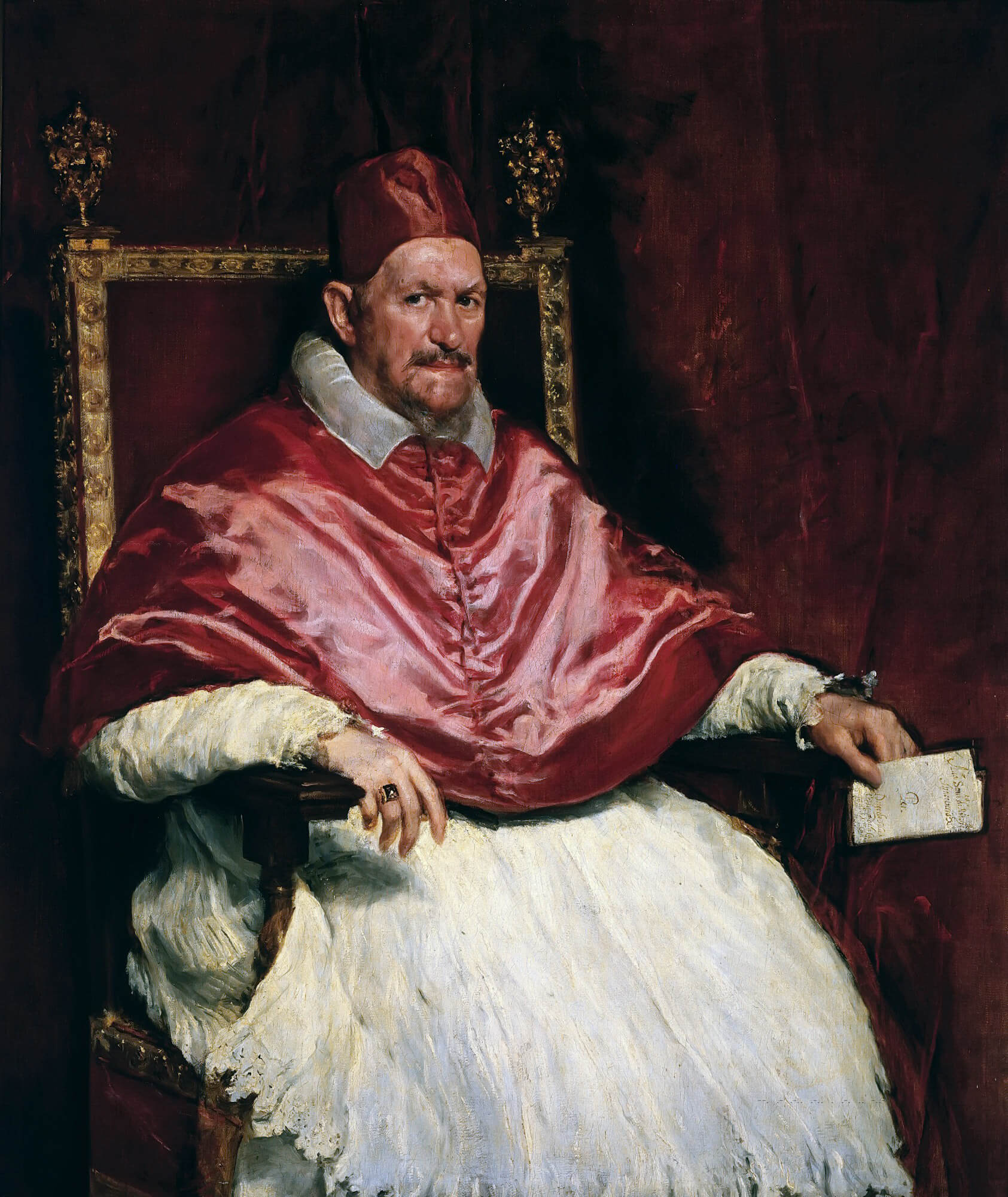
| Portrait of Innocent X Diego Velazquez | Painted in Rome during the second Italian journey in which the Venus is sometimes placed The Gallery's artist page lists the Pope's portrait among the pictures he painted on that journey, 1649-51 (source 38). Whether the Venus was painted then is open. | Galleria Doria Pamphilj, Rome |
Open questions
- Where and when was it painted? The Gallery dates it 1647-51 and says it has been placed before, during and after the second Italian journey. Coronel's 1651 inventory, Haro's inventory dated 1 June 1651, the seizure of March 1652 and the sale of 16 September 1652 cannot all describe one moment of ownership unless Haro's inventory carries later entries, and the dimensions in the three documents differ. A transcription of each document and a check of the date of Haro's inventory in the Corpus Velazqueno would settle whether they refer to this canvas.
- Who commissioned it? A tradition in the Alba family, mentioned in the Burlington Magazine's 1906 review of Beruete's pamphlet, says the king ordered it and gave it to Haro. Buchanan's 1813 list says the Duke of Alva ordered it as a companion to a Titian. The Gallery's artist page says it was painted for the Marques de Eliche. No contract or letter is known.
- Why did a dealer and painter, Domingo Guerra Coronel, own it unattributed, and how and when did he get it? Portus reads the omission of Velazquez's name as caution about a nude, according to English Wikipedia. The reading is an inference from the silence.
- Who was the model? The Gallery asks whether a real woman was hidden. English Wikipedia reports claims about a mistress in Italy, resting on the documented affair and child, and no source consulted names a woman.
- How did it leave Spain between October 1808 and September 1813? Whether Godoy himself sold it, as Curtis says without a document, who was paid, what was paid and under what authority it was exported are all undocumented in the sources consulted, and Spanish Wikipedia's statement that it vanished amid wartime plunder has no document behind it.
- Did Morritt pay 500 pounds, and on whose advice? Only Curtis (1883, naming Reynolds, who had died in 1792) and English Wikipedia (naming Lawrence) give the figure. A Morritt letter, a Buchanan account book or the Agnew stock books would confirm it, and would show where George Yeates, whom the Gallery places between Buchanan and Morritt in January 1814, fits.
- Who owned it between J. B. S. Morritt (died 1843) and Henry Edward Morritt (sold 1905)? Curtis names a Robert Morrit at Rokeby Park in 1883. Whether that is a slip for the first owner or a later owner is not settled.
- What was the real margin on the 1905 sale, and who was in the syndicate? The agreement says 30,500 pounds to Morritt, the Fund paid 45,000, and the Agnew file mentions 2,000 pounds paid to Hind. The Burlington Magazine said a syndicate bought the picture. Pezzini's 2016 Burlington article on Hind and Lockett Agnew, not accessible here, is the place to look.
- What did Edward VII do? English Wikipedia says he gave 8,000 pounds anonymously; The Art Newspaper says the last 5,000 pounds was an Agnew loan guaranteed by him; the Art Fund says only that evidence suggests he made the final balance. The Fund's ledger and the royal archive would decide it.
- How did the Gallery repair it in 1914, who did it and what did it cost? The Art Fund and Wikipedia name Ruhemann as restorer without a date, and he did not work for the Gallery until 1934. The 1914 restorer's name, the method and whether the canvas was relined are not in any source consulted.
- What do the pigments, ground, canvas and linings show, and what was done in the 1965-66 cleaning? No published analysis was found. The Gallery's 2006 catalogue and conservation files are the places to ask.
- How many cuts were there in 1914? The Keeper's 1914 count of seven as relayed by Century Ireland, the V&A's six and the eight of one Art Newspaper article against the seven of another cannot all be right, and the Gallery's own condition report would give the number.
- Did the Inquisition ever act on this or any nude by Velazquez? The 1,500 ducats penalty comes to Curtis through Palomino. No case file is cited in any source consulted.
Questions about this object
What is The Toilet of Venus ('The Rokeby Venus')?
The Toilet of Venus ('The Rokeby Venus') is a painting, dated 1647-51 (National Gallery); date, place and patron disputed. Medium: Oil on canvas.
Who made The Toilet of Venus ('The Rokeby Venus'), and is the attribution settled?
The attribution to Diego Rodriguez de Silva y Velazquez is recorded here as accepted. Given to Velazquez by the National Gallery and by every catalogue consulted. The Gallery says the picture seems to be the 'nude woman', with no painter named, in the 1651 inventory of the Madrid dealer and painter Domingo Guerra Coronel; the inventory of Gaspar de Haro dated 1 June 1651, which the Gallery treats as the first appearance, names Velazquez, according to Spanish Wikipedia. When it reappeared in 1905-06 some critics doubted it: English Wikipedia reports that in 1910 the painter William Blake Richmond told the Royal Academy that two pigments in it did not exist in Velazquez's time, that a critic proposed Mengs and that Mazo was more seriously discussed. That account was not checked at source, and nothing consulted shows any test that supported the doubts.
Where is The Toilet of Venus ('The Rokeby Venus') now?
The National Gallery, London (Room 19 on the Gallery's website, 8 October 2026). Inventory number NG2057. Last confirmed 8 October 2026. Presented by the National Art Collections Fund (now Art Fund), 1906.
What has The Toilet of Venus ('The Rokeby Venus') sold for?
Hammer 700 reales; with premium, None recorded. Auction of the goods of Domingo Guerra Coronel, Madrid (sale handled by his executor Miguel de Palacios), 1652-09-16.
What is still unknown about The Toilet of Venus ('The Rokeby Venus')?
Where and when was it painted? The Gallery dates it 1647-51 and says it has been placed before, during and after the second Italian journey. Coronel's 1651 inventory, Haro's inventory dated 1 June 1651, the seizure of March 1652 and the sale of 16 September 1652 cannot all describe one moment of ownership unless Haro's inventory carries later entries, and the dimensions in the three documents differ. A transcription of each document and a check of the date of Haro's inventory in the Corpus Velazqueno would settle whether they refer to this canvas.
Sources
- 1The National Gallery, London, 'The Toilet of Venus (The Rokeby Venus)', NG2057: overview, in-depth text, provenance extract from MacLaren and Braham 1988, exhibition history from 2009 and bibliography. nationalgallery.org.uk/paintings/...
- 2National Gallery Archive, NGA27/20/2/5/1, Agreement for the Sale and Purchase of the Rokeby 'Venus', 11 August 1905 (Thos. Agnew and Sons archive). nationalgallery.org.uk/archive/...
- 3National Gallery Archive, NGA27/20/2/5/2, Correspondence sent to Charles Lewis Hind re the Rokeby 'Venus', 11 August 1905 (Lockett Agnew note and H. E. Morritt letter). nationalgallery.org.uk/archive/...
- 4National Gallery Archive, NGA27/22/2/8, Press Cuttings, The Rokeby Venus, Velasquez, November 1905 to January 1906. nationalgallery.org.uk/archive/...
- 5National Gallery Archive, NG7/301/1, letter from the National Art-Collections Fund, 20 November 1905, on securing the Rokeby Velazquez. nationalgallery.org.uk/archive/...
- 6National Gallery Archive, NG7/302/3, letter from the National Art-Collections Fund, 6 December 1905, on a contribution from Gallery funds. nationalgallery.org.uk/archive/...
- 7National Gallery Archive, NG7/311/1, letter from the Prime Minister, 6 June 1906, on the appointment of Sir Charles Holroyd as Director. nationalgallery.org.uk/archive/...
- 8National Gallery Archive, NG24/1906/6, press cuttings 14 February to 19 May 1906, including the National Art-Collections Fund gift of the Velazquez. nationalgallery.org.uk/research/...
- 9National Gallery Archive, NG24/1966/19, press cuttings April to September 1966 on conservation and restoration, including the cleaning of NG2057. nationalgallery.org.uk/archive/...
- 10National Gallery Archive, NG29, Helmut Ruhemann Papers 1930-1979, administrative history. nationalgallery.org.uk/archive/...
- 11Hamilton Kerr Institute, Fitzwilliam Museum, Cambridge, 'Helmut Moritz Ruhemann (1891 - 1973)'. hki.fitzmuseum.cam.ac.uk/archives/...
- 12National Gallery Archive, NGA27, Thos. Agnew and Sons Ltd Archive, collection description. nationalgallery.org.uk/archive/...
- 13Art Fund, 'The Toilet of Venus (The Rokeby Venus)', Art Funded by you, grant record: 45000 pounds, 1906. artfund.org/our-purpose/...
- 14Jenny Waldman, Art Fund, 'Why Art Fund campaigns to save great works of art'. artfund.org/explore/...
- 15Louis Jebb, 'How Velazquez's Rokeby Venus became a symbol of public pride and political protest', The Art Newspaper, 8 November 2023. theartnewspaper.com/2023/...
- 16Tom Seymour, 'Climate activists attack Velazquez's Rokeby Venus at the National Gallery in London', The Art Newspaper, 6 November 2023. theartnewspaper.com/2023/...
- 17Louis Jebb, 'Rokeby Venus goes back on show at National Gallery four weeks after attack by climate activists', The Art Newspaper, 4 December 2023. theartnewspaper.com/2023/...
- 18'National Gallery painting examined by conservators after damage from protest', Museums and Heritage Advisor, 7 November 2023. museumsandheritage.com/advisor/...
- 19The Burlington Magazine for Connoisseurs, Volume VIII, October 1905 to March 1906 (London): 'The Rokeby Velazquez', p. 206; editorial 'The Lesson of the Rokeby Velasquez', pp. 224-8; Bernhard Sickert, 'Independent Art of To-day'; review of A. de Beruete, La Venus del espejo (Madrid 1906), signed A. G. B. R. Internet Archive copy, full text read. archive.org/details/...
- 20William Buchanan, Memoirs of Painting, with a Chronological History of the Importation of Pictures by the Great Masters into England since the French Revolution, vol. 2 (London 1824), pp. 238-45, list of October 1813. Internet Archive copy, full text read. archive.org/details/...
- 21Charles B. Curtis, Velazquez and Murillo: a Descriptive and Historical Catalogue (London and New York 1883), introductory sales table and no. 34. Internet Archive copy, full text read. archive.org/details/...
- 22Auguste Breal, Velazquez, translated by Madame Simon Bussy (London: Duckworth, Popular Library of Art, c. 1904). Internet Archive copy, full text read. archive.org/details/...
- 23Andrew Graham-Dixon, 'ITP 178: The Toilet of Venus (The Rokeby Venus) by Diego Velazquez', Sunday Telegraph In The Picture, 14 September 2003 (excerpt on the author's archive page; contains Morritt's letter to Scott). andrewgrahamdixon.com/archive/...
- 24Philip McCouat, 'From the Rokeby Venus to Fascism Pt 1: Why did suffragettes attack artworks?', Journal of Art in Society. artinsociety.com/from-the-rokeby-venus-to-fascism-pt-1-wh...
- 25Philip McCouat, 'From the Rokeby Venus to Fascism Pt 2: the Strange Allure of Fascism', Journal of Art in Society. artinsociety.com/from-the-rokeby-venus-to-fascism-pt-2-th...
- 26'Mary Raleigh Richardson (died 7 November 1961)', Monstrous Regiment of Women blog, reproducing 'Miss Richardson's Statement', The Times, 11 March 1914. monstrousregimentofwomen.com/2016/...
- 27'Slashing the Rokeby Venus', Fight for the Right: the Birmingham Suffragettes project blog, 19 December 2012 (quotes Richardson's later interview). birminghamsuffragettes.wordpress.com/2012/...
- 28'Famous painting mutilated by suffragette', Century Ireland (RTE and Boston College), a modern article written from 1914 news reports, dated London, 10 March 1914. centuryireland.rte.ie/centuryireland/...
- 29London Museum, object 50.82/1393, Central News photograph, Mary Richardson leaving for police court, 10 March 1914, with catalogue text. londonmuseum.org.uk/collections/...
- 30Alexandra Sullivan, 'Art Attack: the vandalism of artworks by the suffragettes, and how the V&A prepared for an anticipated attack', Victoria and Albert Museum blog, 16 September 2024. vam.ac.uk/blog/...
- 31Wikipedia (English), 'Rokeby Venus'. en.wikipedia.org/wiki/...
- 32Wikipedia (Spanish), 'La Venus del espejo'. es.wikipedia.org/wiki/...
- 33Wikipedia (Spanish), 'Domingo Guerra Coronel'. es.wikipedia.org/wiki/...
- 34Wikipedia (English), 'John Bacon Sawrey Morritt'. en.wikipedia.org/wiki/...
- 35Wikipedia (English), 'Rokeby Park'. en.wikipedia.org/wiki/...
- 36Wikipedia (English), 'Gaspar Mendez de Haro, 7th Marquess of Carpio'. en.wikipedia.org/wiki/...
- 37Rokeby Park, 'Art' page of the house website (copy of the Rokeby Venus by W. A. Menzies in the saloon). rokebypark.com/art
- 38The National Gallery, London, artist page 'Diego Velazquez 1599-1660', biography and research note on slavery connections. nationalgallery.org.uk/artists/...
- 39Wikipedia (English), 'Diego Velazquez'. en.wikipedia.org/wiki/...
- 40Wikipedia (English), 'Mary Richardson'. en.wikipedia.org/wiki/...
- 41MeasuringWorth, Five Ways to Compute the Relative Value of a UK Pound Amount: 500 pounds in 1814 expressed in 2024 pounds. measuringworth.com/calculators/...
- 42MeasuringWorth, Five Ways to Compute the Relative Value of a UK Pound Amount: 45,000 pounds in 1906 expressed in 2024 pounds. measuringworth.com/calculators/...
- 43MeasuringWorth, Five Ways to Compute the Relative Value of a UK Pound Amount: 30,500 pounds in 1905 expressed in 2024 pounds. measuringworth.com/calculators/...
- 44National Museums Liverpool press release, 'Velazquez in Liverpool: Walker Art Gallery to host 17th-century masterpiece'. liverpoolmuseums.org.uk/news/...
- 45The National Gallery, London, National Treasures partners page, Walker Art Gallery, 10 May to 26 August 2024. nationalgallery.org.uk/national-treasures-partners/...
- 46Open University Digital Archive, 'Sexuality and pleasure: remaking the bed in women's art', AA318 VCR4, BBC Open University, 2002 (record page read in the in-app browser). open.ac.uk/library/...
- 47The International Art Market Studies Association, listing of Barbara Pezzini, 'Days with Velazquez: when Charles Lewis Hind bought the Rokeby Venus for Lockett Agnew', The Burlington Magazine 158 (May 2016), pp. 358-67. Listing only; the article itself was not accessible. artmarketstudies.org/publ-barbara-pezzini-days-with-velaz...
- 48Wikipedia (English), 'Joshua Reynolds': dates 1723-1792. en.wikipedia.org/wiki/...
- 49Wikipedia (English), 'Thomas Lawrence': dates 1769-1830. en.wikipedia.org/wiki/...
- 50Wikimedia Commons file page, 'Vandalized Rokeby Venus 1914.jpg': 1914 magazine page showing the damaged canvas and the cleaver, public domain. commons.wikimedia.org/wiki/...
- 51Mike Higginbottom, 'Venus' previous home', Mike Higginbottom Interesting Times blog, 6 February 2019 (Rokeby Park visit; dates the Menzies copy 1906). mikehigginbottominterestingtimes.co.uk/2019/...

Last verified · Published
Change log
8 October 2026 - Record created at the house standard: researched narrative, technical evidence, maker dossier, graded provenance chain, prices with hammer and premium separated, related works, open questions and sources.