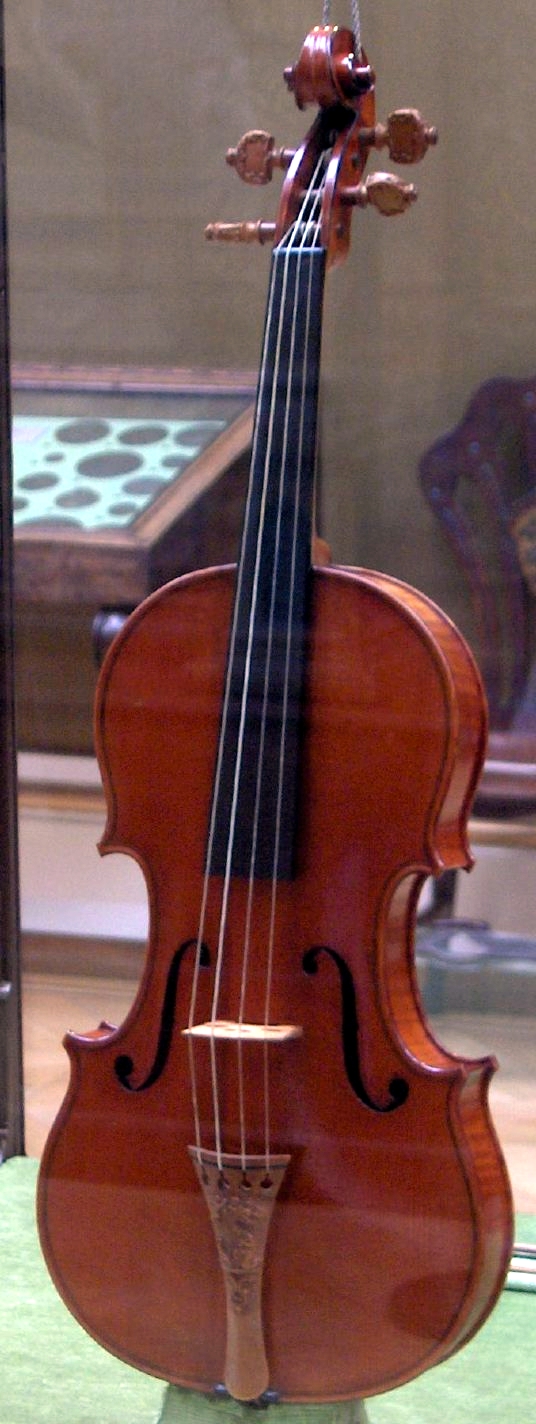
The Messiah
1716 · Spruce table
Ashmolean Museum, University of Oxford
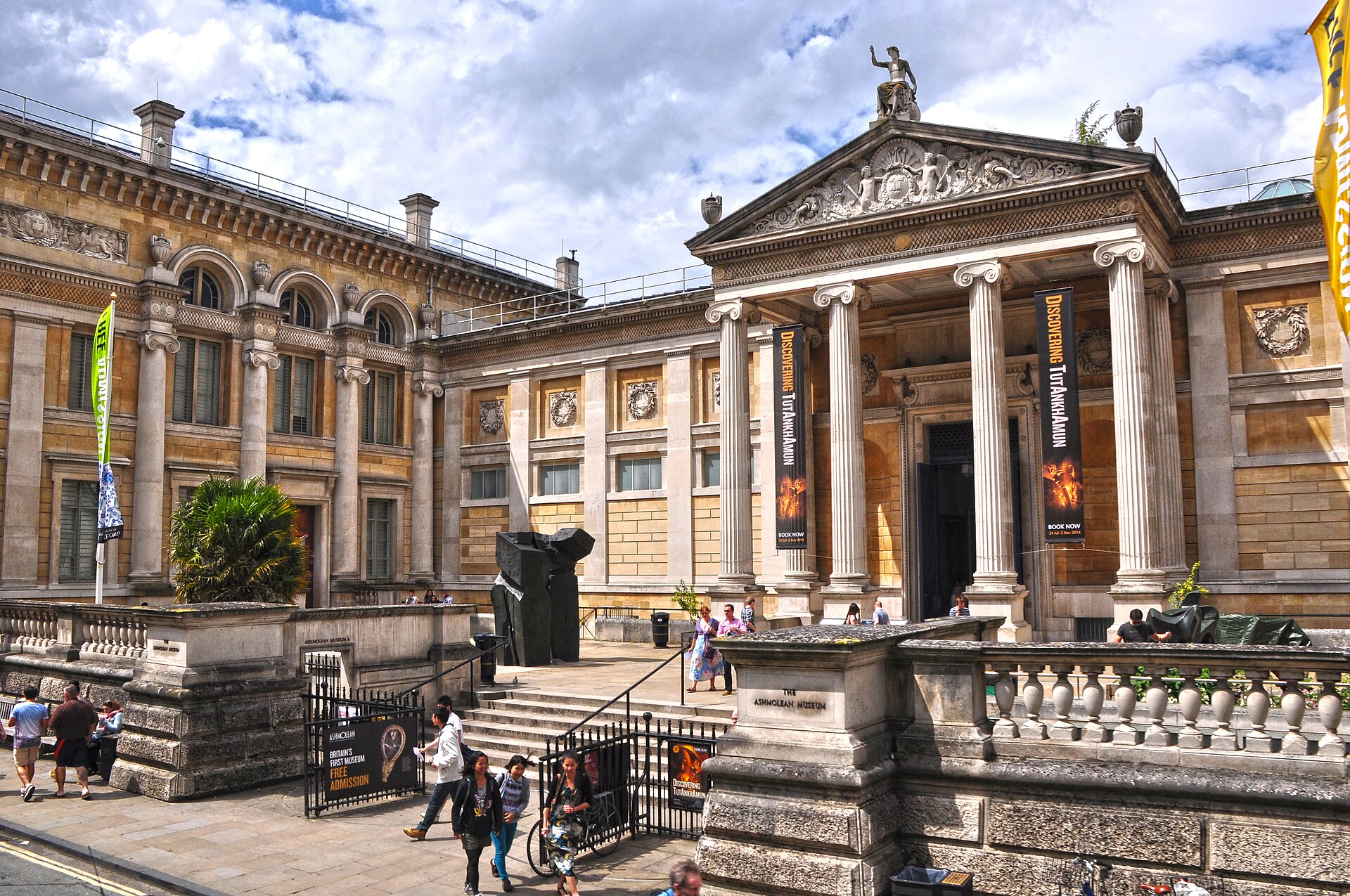
The Ashmolean Museum of Art and Archaeology on Beaumont Street, Oxford, Charles Cockerell's neoclassical facade of 1845.
Photograph by Lewis Clarke, released CC BY-SA 2.0Museum · Ashmolean Museum of Art and Archaeology · Founded 1683
Open, admission and hours confirmed 9 September 2026 · 31 sources
The Ashmolean's strength is breadth rather than a single headline masterpiece: an encyclopaedic run from prehistoric Europe and dynastic Egypt through classical antiquity, the largest Pissarro holding anywhere, an Eastern Art department the museum describes as the most representative outside London, and English silver and Anglo-Saxon goldwork strong enough to include the Alfred Jewel. Few university museums anywhere hold four full departments, antiquities, Western Art, Eastern Art and numismatics, to comparable depth inside one building.
| Local name | Ashmolean Museum of Art and Archaeology |
|---|---|
| Kind | Museum |
| Founded | 1683 |
| City and country |  Oxford, United Kingdom Oxford, United Kingdom |
| Address | Beaumont Street, Oxford OX1 2PH, United Kingdom |
| Website | ashmolean.org |
| Status | Open, confirmed |
| Record last verified |
Prices and hours change. We take them from the institution's own pages and print the day we read them, and you can check the current position at the source we used. Confirm before you travel.
The Dynastic Egypt and Sudan gallery on the ground floor runs from the Old Kingdom through Egypt's relations with its African neighbours, entered past a large red pottery lion, and includes a complete Pan-Grave burial assemblage documenting the peoples on Egypt's southern frontier. Its centrepiece is the Shrine of Taharqa, a free-standing Kushite monument of about 680 BCE from the temple complex at Kawa in ancient Sudan, dismantled and shipped back to Oxford in hundreds of crates in 1936 and rebuilt on its own deep foundation, shown alongside a life-size Ram of Amun-Re carved with a hieroglyphic inscription naming Taharqa as the god's son.
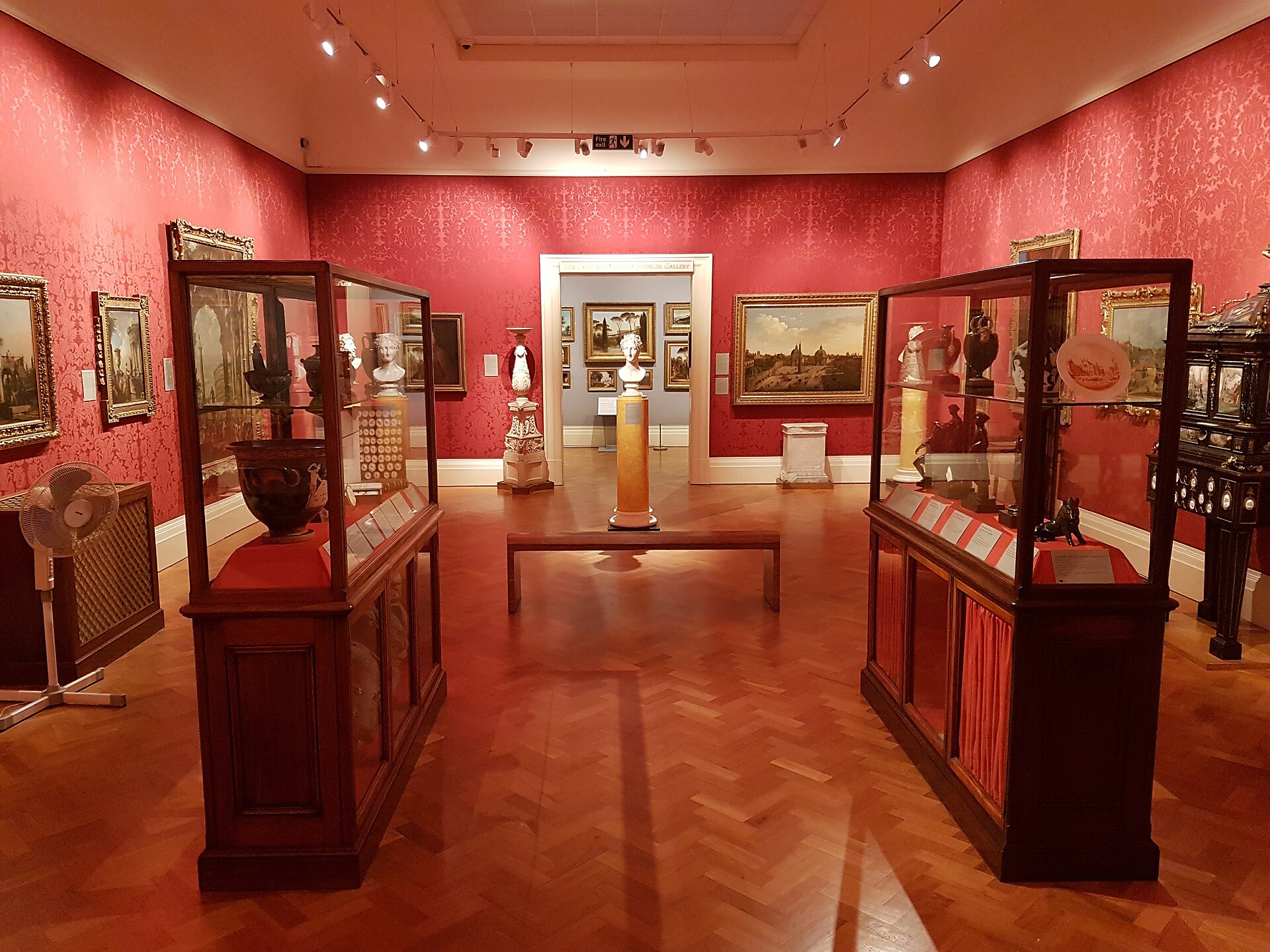
One of the country's oldest, largest and best-preserved collections of plaster casts taken from Greek and Roman sculpture and relief, more than 900 pieces reproduced at full scale from originals in sanctuaries, public squares, cemeteries and country estates across the ancient Mediterranean. Notable casts include the Laocoon group, sections of the relief spiralling up Trajan's Column, a coloured reconstruction of the Prima Porta statue of Augustus, and the Nike of Paeonius and Delphi Charioteer from Olympia and Delphi.
More than 10,500 catalogued objects from the Islamic Middle East, China, Japan, Southeast Asia, India and the Himalayas, described by the museum as the most representative collection of Asian art in Britain outside London. Holdings include a Tang-dynasty camel tomb figure, Japanese samurai armour, early Chinese Ding-ware porcelain, Islamic mosque lamps, Buddhist sculpture, Japanese export porcelain and prints, and Mughal Indian painting, built in part on the collections of Oxford's former Indian Institute.
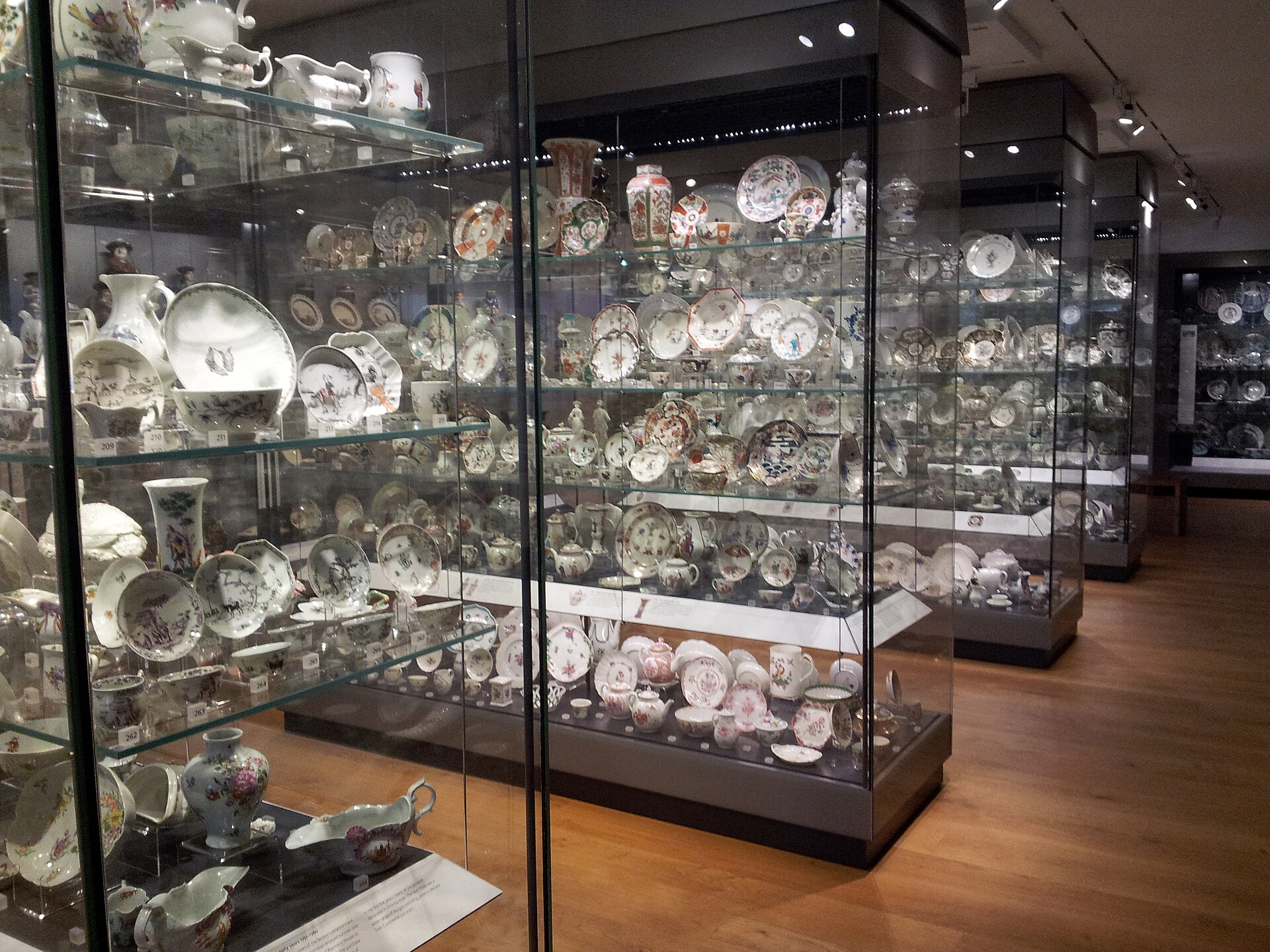
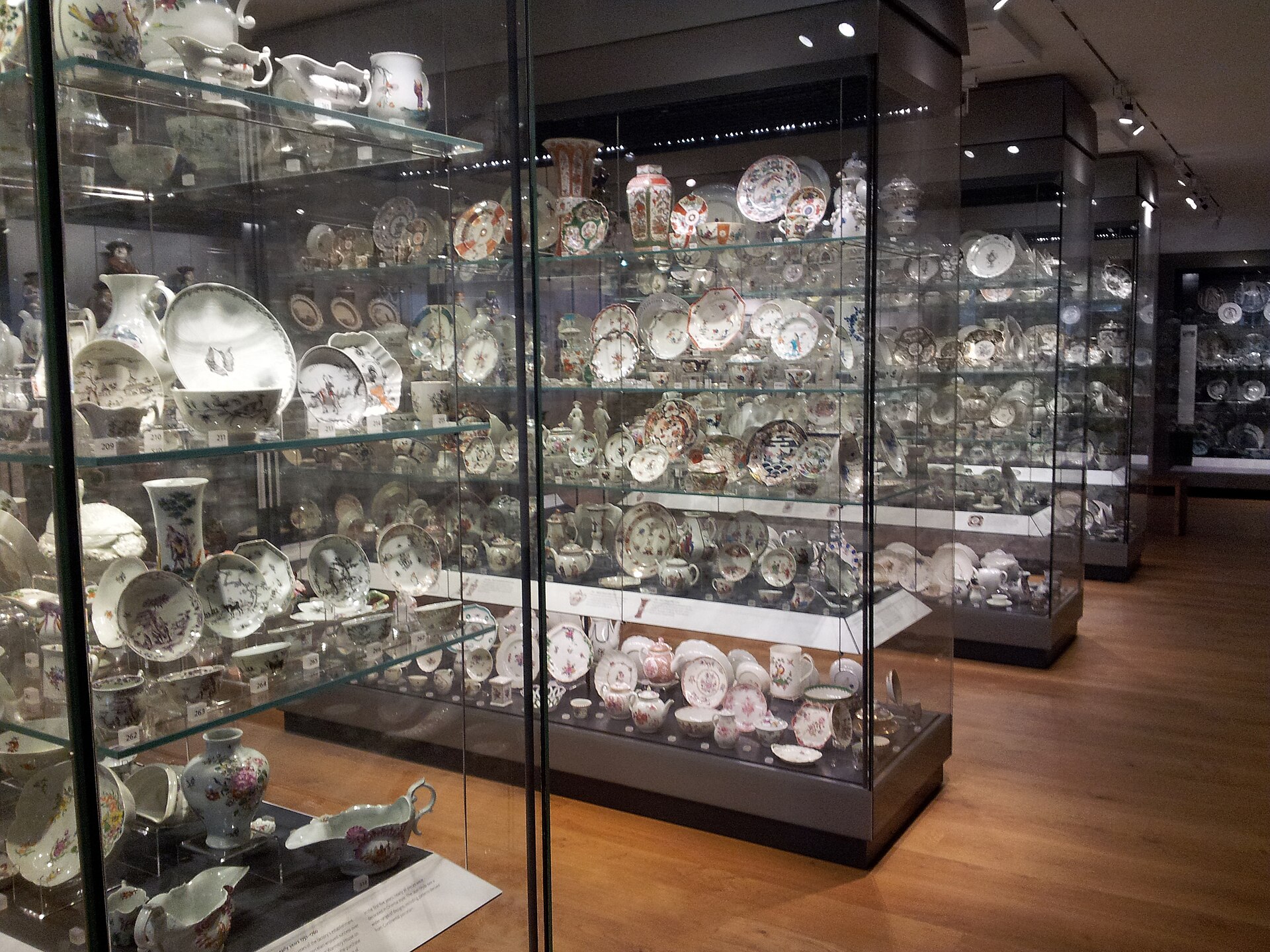
Five hundred years of European ceramic production on Level 2, from 17th-century Staffordshire slipware by Thomas Toft to 20th-century stoneware by Bernard Leach. The Marshall Collection of early coloured Worcester porcelain, more than a thousand pieces given in memory of a Second World War casualty, fills the central cases alongside a Chelsea Porcelain Factory boar's-head tureen, Vauxhall Pottery vases and early Southwark delftware. A 2025 addition, Shedding Light, recreates a 1950s-60s Caribbean living room to examine ceramics' ties to colonialism, enslavement and the sugar trade.
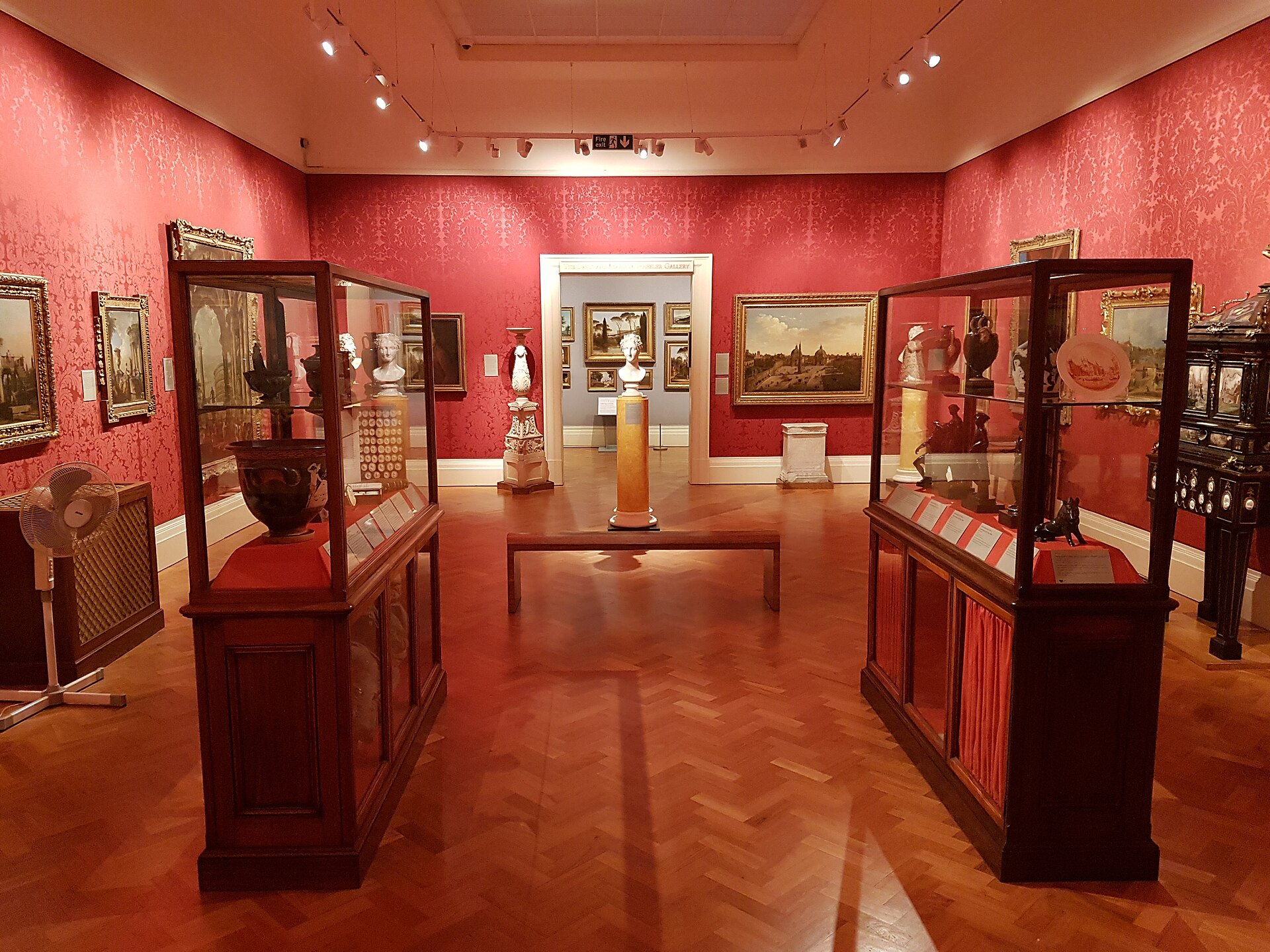
Gallery 52 on Level 2 covers British and Continental decorative art and painting from William and Mary's 1689 accession to Napoleon's defeat in 1815: gold and enamel snuff boxes and toiletry boxes as status objects, neo-classical Wedgwood pottery and Matthew Boulton metalwork, Meissen porcelain table figures, Thomas Gainsborough's portrait of his young daughter Margaret in peasant dress, and four works by Sir Joshua Reynolds, including an oil sketch of the actress Mrs Sheridan as Charity.
Gallery 55 on Level 2 holds more than 550 pieces of English silver and goldsmiths' work, most on loan from Oxford colleges, running from the Tudor period to the mid-1700s when London's silversmiths, many of them Huguenot refugees skilled in casting, embossing and soldering, rivalled Paris for craftsmanship. Highlights include the Capel Basket of 1686-87 by Pierre Harache, the first Huguenot admitted to the Goldsmiths' Company, a set of skull-shaped memento mori watches, and the 28-piece Treby Toilet Service of 1724-25.
The Level 3 Mezzanine holds the Sickert and His Contemporaries, Pissarro, Pre-Raphaelites and 19th Century Art galleries. The Pissarro holding is the largest collection of the artist's work anywhere, shown with Manet, Van Gogh and Renoir; the Pre-Raphaelite rooms, built largely on the 19th-century gift of Thomas Combe, include William Holman Hunt's The Afterglow in Egypt, John Everett Millais's portrait of John Ruskin, and two major pieces of Pre-Raphaelite furniture, the Prioress's Tale Wardrobe and the Great Bookcase. Galleries 63, 65, 66 and 67 in this group are closed for essential maintenance from 1 June to mid-October 2026.
Painted around 1465-1470 and generally called the best-known painting the Ashmolean owns, a nocturnal hunting scene built on a strict mathematical perspective grid with a vanishing point deep in the trees, originally a spalliera panel meant to be seen at shoulder height in a private room.20
A panoramic landscape of about 1505, given by the Art Fund in 1933, showing animals and a few humans fleeing a blaze rendered with unusual technical skill; a deer and a pig are given satyr heads, tying the scene to Lucretius's account of early human life that Piero returned to across several related panels.23
A gold, enamel and rock-crystal object of the late 9th century inscribed AELFRED MEC HEHT GEWYRCAN, Alfred ordered me to be made, plausibly the handle of a pointer for following text while reading; ploughed up in a Somerset field in 1693 near the abbey where King Alfred regrouped against the Vikings.18
A violin of 1716 famous less for its sound than for survival: the varnish is almost unworn and the scroll's painted edge-work is intact, a completeness so rare among 18th-century instruments that dealer Luigi Tarisio's Paris acquaintances joked it was like the Messiah, long promised and never arriving, until Jean-Baptiste Vuillaume bought it in 1855.19
Four deerhides sewn together and decorated with shell beadwork around 1600-1638, most plausibly among gifts sent by the paramount chief Wahunsenacawh, known to the English as Powhatan and father of Pocahontas, to Captain Christopher Newport for King James I in 1608; recorded in the Tradescant collection by 1638 and the single most famous object shown at the museum's 1683 opening.21
A sandstone shrine of about 680 BCE from the Nubian temple complex at Kawa, dismantled into hundreds of crates and rebuilt inside the Ashmolean in 1936, the only free-standing Kushite monument in Britain and the physical anchor of the Egypt and Nubia gallery.17
Bought in 2012 for the museum after a public fundraising campaign that raised 7.83 million pounds, an acquisition the museum treated as a landmark addition to a collection otherwise thin in French Impressionist portraiture outside the Pissarro holding.3
The Ashmolean did not begin as a building or even as a single collection. Its origin is Tradescant's Ark, the cabinet of curiosities assembled from the 1620s onward by the gardener and traveller John Tradescant the Elder and continued by his son, and displayed for a sixpence entrance fee at their house in Lambeth, London, making it the first private collection in England opened to any paying visitor regardless of rank. The antiquary Elias Ashmole acquired the Tradescant collection and, in 1677, gave it to the University of Oxford on condition that a building be built to house it and open it to the public. That building went up on Broad Street between 1678 and 1683, its authorship disputed between Sir Christopher Wren and the mason Thomas Wood, and opened to visitors on 24 May 1683 with Robert Plot as its first keeper. It was, at the time, a genuine novelty: a museum built specifically for public access rather than adapted from a private house or a royal collection room, and the reason it is now described as the world's first university museum and Britain's first purpose-built public museum.
The most famous single object at that 1683 opening was not a painting but Powhatan's Mantle, a deerhide hanging decorated with shell beadwork that had reached the Tradescants by 1638 and was already, within a generation of English settlement in Virginia, treated as a marvel worth the price of admission. The Ark's other founding-collection material, including Guy Fawkes's lantern and a portrait of Ashmole himself, is now split between the Ashmolean, the Bodleian Library, the Pitt Rivers Museum and the University Museum of Natural History, a dispersal that says something about how casually a 17th-century cabinet of curiosities could later be sorted into modern disciplinary boxes.
The Broad Street museum's natural-history holdings, dodo included, decayed badly over the 18th century, and by the 1820s the brothers John and Philip Duncan were working to rescue what could be saved. When the University opened a dedicated natural history museum on Parks Road in 1860, the Ashmolean's zoological and geological specimens moved there, leaving Broad Street a much narrower institution. Its rescue as an art and archaeology museum came from one man: Arthur Evans, appointed Keeper in 1884, who spent the next 24 years building the antiquities collection through excavation and acquisition, culminating in his own dig at Knossos in Crete. In 1894 Evans moved the collection to Beaumont Street, into the building the University's Galleries had occupied since Charles Cockerell completed it in 1845 in a severe neoclassical style, sharing the block with Cockerell's Taylor Institution next door. The two institutions under one roof were formally merged in 1908 into the Ashmolean Museum of Art and Archaeology, and Evans added a further foundation stone in 1922 by securing the Bodleian Library's coin collection, which became the basis of the Heberden Coin Room. A separate Department of Eastern Art followed in the mid-20th century, absorbing the collections of Oxford's former Indian Institute once its original colonial-training purpose had ended, and the Cast Gallery's plaster collection was organised as its own department in 1959.
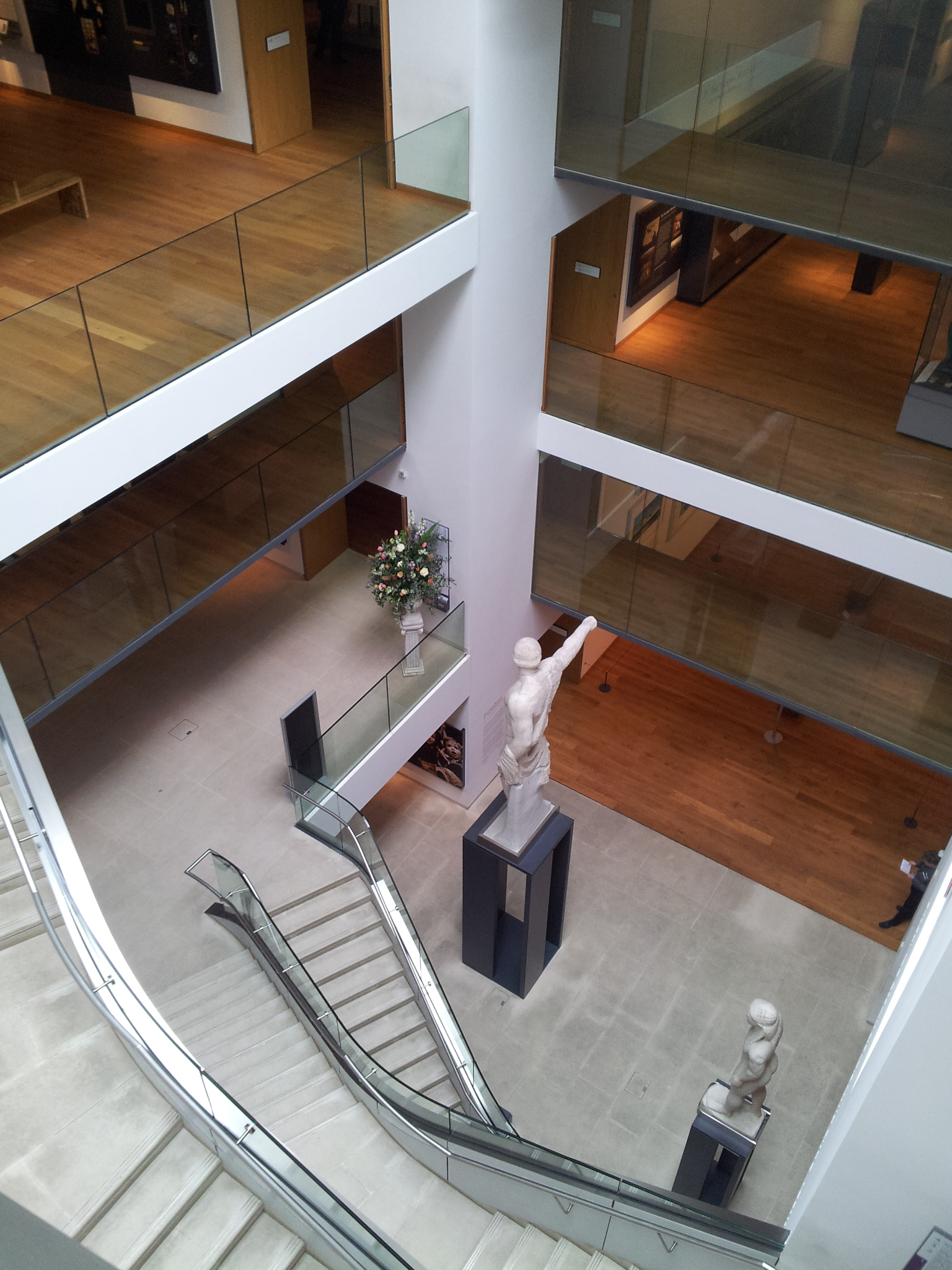
By the early 2000s Cockerell's building could no longer show what the Ashmolean actually held, and the University commissioned the architect Rick Mather for a redevelopment completed between 2006 and 2009 at a cost of 61 million pounds. Because the Beaumont Street building is Grade I listed, the terms of Listed Building Consent required that nothing of the new construction be visible from the street, which fixed the height of Mather's addition before a stone was laid. The result, organised along the two main axes Cockerell had established in 1845, is six internal storeys of new galleries roughly doubling the museum's display space, built behind and within the old facade rather than beside it. The museum reopened on 7 November 2009 to a strongly positive critical reception and won a RIBA Award the following year; new Ancient Egypt and Nubia galleries, including the reassembled Shrine of Taharqa, followed in November 2011 as the last major piece of the redevelopment.
Shortly after midnight on 1 January 2000, while fireworks marked the new millennium across Oxford, a thief broke through scaffolding erected for library building work, cut a skylight over the Hindley Smith Gallery, and dropped a smoke bomb inside to blind the guards and cameras. In under ten minutes the thief cut Paul Cezanne's View of Auvers-sur-Oise from its frame with a scalpel and left by rope, taking only that one painting from a gallery that also held work by Renoir, Rodin and Toulouse-Lautrec, evidence that the theft had been planned around this specific canvas rather than opportunistic. The Ashmolean valued the loss at around 3 million pounds. It has never been recovered, no one has been charged, and the FBI later listed it among its top ten art crimes worldwide. The case remains open a quarter of a century on, and the empty space in the gallery's catalogue is as much a part of the museum's institutional record as anything on its walls.
The museum's own published history does not soften the timing of its origins: its foundation and the growth of its early collection, the Ashmolean states on its own website, coincided with the first period of British colonial expansion and were in part a product of it. The Eastern Art department's core holdings trace back to Oxford's Indian Institute, an institution partly established between 1883 and 1896 to train British colonial administrators for India before its collections passed to the museum. The clearest live case is a set of Benin Bronzes: in August 2022 the University of Oxford, on behalf of the Ashmolean and the Pitt Rivers Museum, and the University of Cambridge together approved returning 213 objects that the universities' own return announcement describes as looted by British forces during the 1897 sacking of Benin City, to Nigeria's National Commission for Museums and Monuments, of which 97 are held between the Ashmolean and the Pitt Rivers. Because both are university museums with charitable status, the transfer of legal title requires separate authorisation from the UK Charity Commission, a step that was still working through the Commission at the time this claim was made public and has drawn criticism from restitution campaigners for the length of the delay. The museum has since committed, on its own colonialism page, to a formal process for considering repatriation and deaccession claims against Oxford's museum and library collections, and in 2025 the European Ceramics Gallery added a display, Shedding Light, examining ceramics' ties to colonialism, enslavement and the sugar trade, alongside members of Oxford's Caribbean community.
What makes the Ashmolean unusual among university museums is that it never specialised the way most of its peers did. Antiquities, Western Art, Eastern Art and the Heberden Coin Room sit inside the same five floors, so a visitor can walk from a Kushite temple shrine to the largest Pissarro collection anywhere to Islamic ceramics and English domestic silver without leaving the building. That range is a direct legacy of the 1908 merger of the old antiquities museum with the University's separate art galleries, reinforced by Arthur Evans's archaeological acquisitions and by later 20th-century additions such as the Eastern Art department built on the Indian Institute's collections. The 2009 Rick Mather redevelopment did not change that structure; it simply gave each department, for the first time since the 19th century, enough gallery space to show it properly.
Visitors consistently rate the Ashmolean among the best museums in Britain relative to its cost of admission, which is free, and single out the range of world-class collections held in one building without the crowds of London's national museums. A recurring comment is surprise at how much is packed into five floors, with many saying one visit is not enough to take it all in.
Tripadvisor: 4.6 from 6,227 ratings, read 9 September 2026
Google: 4.7 from 10,520 ratings, read 9 September 2026
A platform average is a tertiary source: it moves, it is not audited, and we quote no visitor's words.
Beaumont Street, Oxford OX1 2PH, United Kingdom.
General admission, permanent collection: free; Aphrodite: The Making of a Goddess, adult (8 Oct 2026 - 11 Apr 2027): GBP 16.8; Aphrodite: The Making of a Goddess, concession: GBP 8.4. As confirmed 9 September 2026.
Daily 10:00-17:00; Last Friday of every month 10:00-20:00. Closed: 24, 25 and 26 December. 1 January. As confirmed 9 September 2026.
Train: Oxford railway station, about a 5-10 minute walk via Hythe Bridge Street, past Worcester College, then right onto Beaumont Street; Bus: City services 2 and 6, and Park and Ride routes 300 and 500, stop on Magdalen Street; the accessible S3 service runs from the train station to Magdalen Street stop C4 every 30 minutes; Park and Ride: Nine Park and Ride sites on Oxford's ring road with regular buses into the city centre; a 5-pound congestion charge applies to cars entering central Oxford without a permit; Cycling: Racks for about ten bicycles on the museum's own forecourt, with further racks nearby.
The Hunt in the Forest (Paolo Uccello); The Forest Fire (Piero di Cosimo); The Alfred Jewel (Anglo-Saxon goldsmith, workshop unrecorded); The Messiah Stradivarius (Antonio Stradivari); Powhatan's Mantle (Algonquian-speaking maker, Powhatan Confederacy); Shrine of Taharqa (Kushite royal workshop, reign of Taharqa).
One artwork and its story every Tuesday, with the picture: who owned it, what it made, and what closes soon in the exhibition calendar. No promotion, and nothing we cannot cite.
We send one email to confirm the address and keep nothing else. Every letter carries a one-click unsubscribe. How we handle your data.
