Judith Leyster
 Dutch · 1609-1660
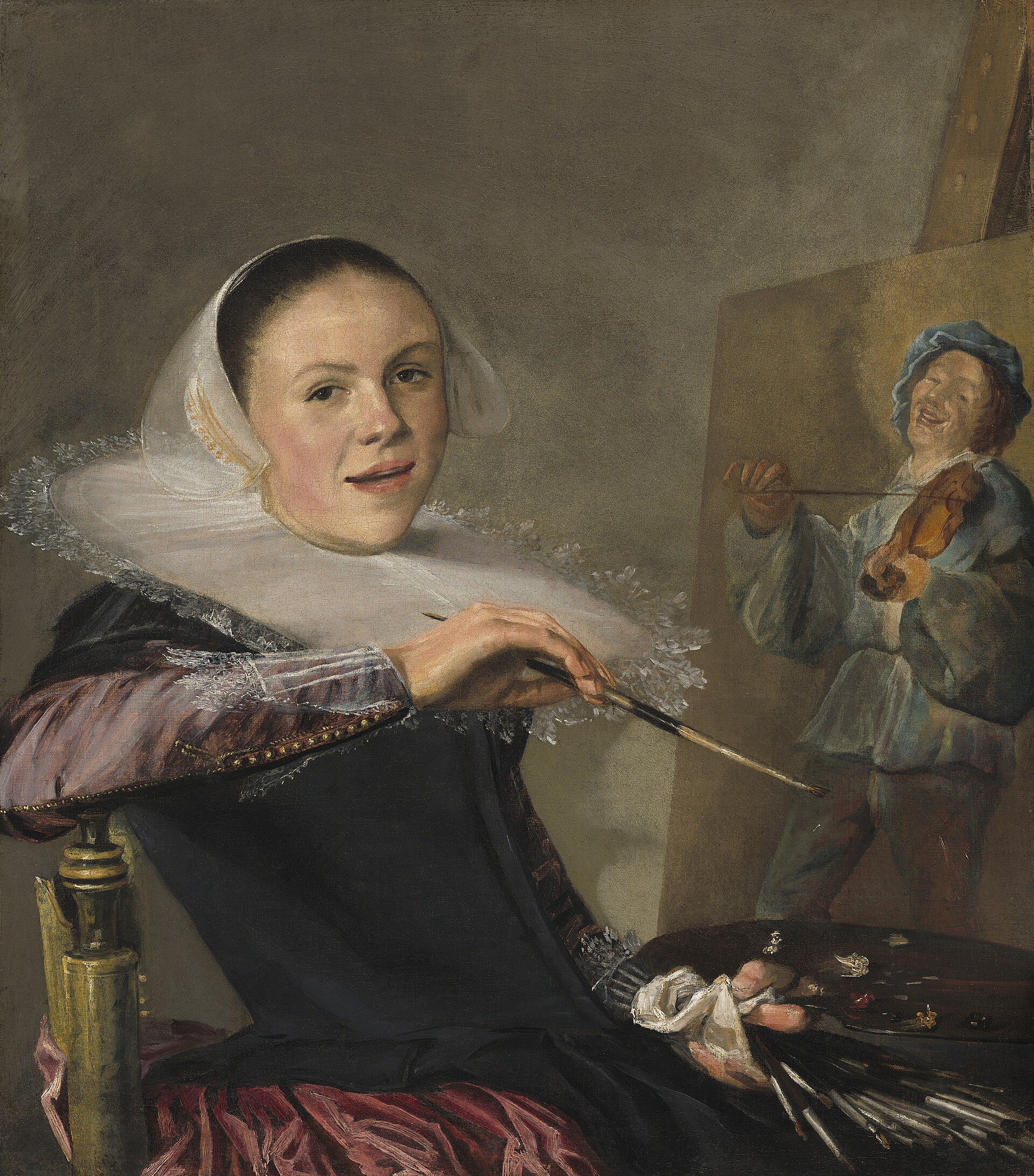
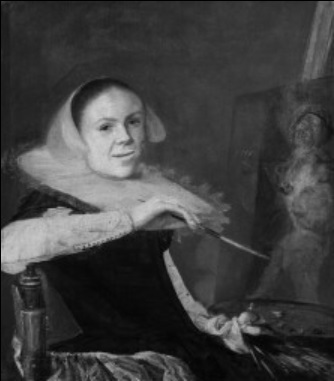
Self-portrait, oil on canvas, c. 1630, generally connected with the piece she would have presented to the Haarlem Guild of St Luke around 1633. Catalogued as a Frans Hals for an unknown span of years before the National Gallery of Art acquired and correctly attributed it in 1949. The painting on her easel, a laughing fiddler, was not her first idea for that spot; see the infrared study in the gallery below.
National Gallery of Art, Washington, DC| Full name | Judith Jans Leyster |
|---|---|
| Worked as | Painter |
| Born | 28 July 1609 (baptized · Haarlem, Dutch Republic |
| Died | 10 February 1660 · Heemstede, Dutch Republic |
| Nationality | Dutch |
| Movement | Dutch Golden Age, Haarlem school |
| Sources | 22 cited |
| Last verified |
About this page Last verified · 22 sources cited
On this page 13 sections
ContentsClose
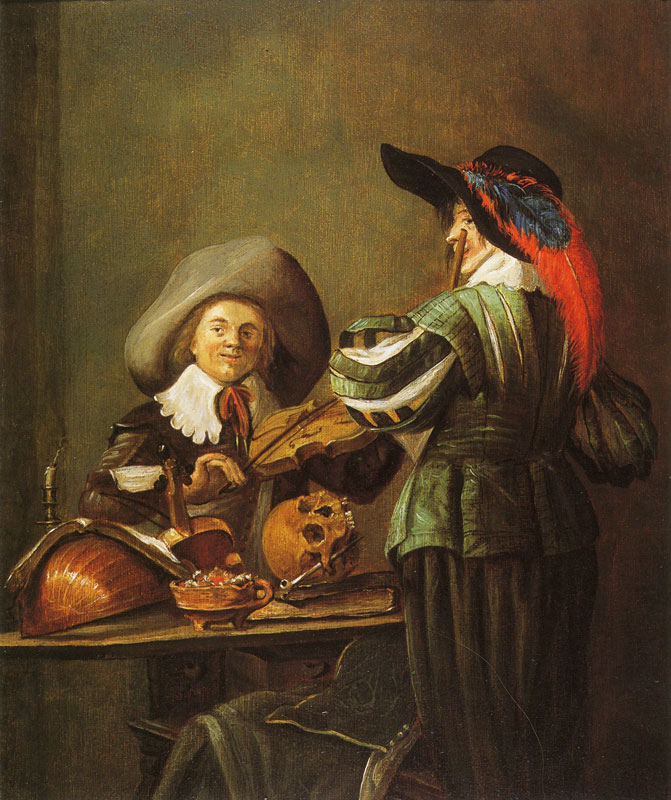
For roughly two centuries after her death, paintings Judith Leyster signed with her own mark were sold, catalogued and hung as the work of Frans Hals. The mark itself was built to be seen: a conjoined J and L struck through with a five-pointed star, a pun on the Dutch leidster, the sailor's word for the guiding star, which sounds like her surname. On at least one documented panel that monogram was found, on cleaning, underneath a signature reading Hals that had been added after the fact. The painting had been sold as a Hals for four and a half thousand pounds in 1892 before the buyer noticed the deception and sued the seller. It is one of the clearest documented cases of a woman's professional mark being physically erased from her own work, and it is the reason a Dutch art historian wrote the first article on Leyster in 1893, two hundred and thirty three years after her death.
She was a Haarlem genre and portrait painter, admitted to the city's Guild of St Luke by 1633, one of very few women to hold that standing in the Dutch Republic, with her own workshop and her own pupils. Her signed and dated output runs almost entirely from 1629 to 1635, a span of six years that produced most of what is now accepted as hers, including the single most discussed picture she made, a small panel now in the Mauritshuis that inverts the usual Dutch genre convention in which a man offers a woman money: her woman keeps sewing and does not look up. Leyster married the painter Jan Miense Molenaer in 1636, and the documented paintings all but stop. What that silence means, whether she painted less, whether she painted alongside her husband under his name, or both, is still argued.
No catalogue raisonne has replaced the 1989 monograph that reconstructed her oeuvre, and the paintings once given to Hals and to Molenaer have not all been sorted with equal confidence. A scholars' day convened by the Frans Hals Museum and the University of Amsterdam for 2027, titled to reframe her, is explicit that the oeuvre and its attributions remain open questions rather than settled fact.
Images
Chronology
- 1609
Baptized 28 July in Haarlem, eighth child of cloth maker and later brewer Jan Willemsz Leyster.1
- 1628
Haarlem historian Samuel Ampzing publishes an account of the city generally read as saying Leyster trained under Frans Pietersz de Grebber; the wording is ambiguous.1
- 1629
Earliest signed and dated works, including Serenade and the panel now called The Jolly Drinker, painted at about age twenty.15
- 1631
Paints The Proposition; a Judith Jans, probably but not certainly Leyster, recorded at the baptism of Frans Hals's daughter Maria.91
- 1633
Admitted to the Haarlem Guild of St Luke; paints her only known history subject, David with the Head of Goliath, present whereabouts unknown.111
- 1635
Apprentice Willem Woutersz leaves her workshop for Hals's without guild release; Leyster brings a guild complaint in October and is herself fined for not registering him.1
- 1636
Marries painter Jan Miense Molenaer on 1 June; her signed, dated output effectively ends.1
- 1643
Signs two botanical illustrations, silverpoint and watercolor on vellum, in a Haarlem tulip book, now in the Frans Hals Museum.1
- 1654
Signs a flower still life "Judith. molenaers"; later listed in her husband's 1668 estate inventory as a flowerpot by Mistress Molenaer.19
- 1660
Dies 10 February in Heemstede.1
- 1668
Molenaer's probate inventory, 10 October, lists household paintings under names such as Juffrouw Molenaer and Judith Molenaer, not her own professional name.1
- 1892
Charles Wertheimer buys La Joyeuse Compagnie in London as a Hals, from Lord Braybrooke, for 3,000 pounds.112
- 1893
Wertheimer sells the panel to Thomas Lawrie for 4,500 pounds; Lawrie disputes the Hals attribution and sues.112
- 1893
Lawrie and Co. v. Wertheimer heard 30 May; settled the next day, Lawrie refunded 1,000 pounds against 500 in court costs. Cornelis Hofstede de Groot publishes the first scholarly article on Leyster, reattributing seven paintings from Hals.12
- 1897
The Jolly Drinker acquired by the Rijksmuseum in January from dealer Franz Kleinberger, with support from the Vereniging Rembrandt.5
- 1914
Baron Basile de Schlichting bequeaths La Joyeuse Compagnie to the Musee du Louvre, inventoried as RF 2131.3
- 1927
Researcher Juliane Harms publishes an attribution of The Jolly Drinker to Leyster, on Wikipedia's account of the painting; the Rijksmuseum's own catalogue instead dates the monogram's discovery to 1893.65
- 1949
National Gallery of Art, Washington, acquires her self-portrait, formerly catalogued as a Hals, as a gift of Mr and Mrs Robert Woods Bliss.10
- 1959
The Jolly Drinker placed on long-term loan from the Rijksmuseum to the Frans Hals Museum, Haarlem.5
- 1989
Frima Fox Hofrichter publishes Judith Leyster: A Woman Painter in Holland's Golden Age, the standing monograph and reconstructed catalogue.20
- 1993
First monographic exhibition, Judith Leyster: A Dutch Master and Her World, opens at the Frans Halsmuseum, Haarlem, then the Worcester Art Museum.21
- 2009
A 1654 flower still life surfaces from a Belgian private collection and is authenticated by the Frans Hals Museum's curator of old masters.19
- 2016
A second self-portrait, c. 1653, previously known only from Molenaer's estate inventory, is found in an English country house and sold at Christie's London for 485,000 pounds.1617
- 2018
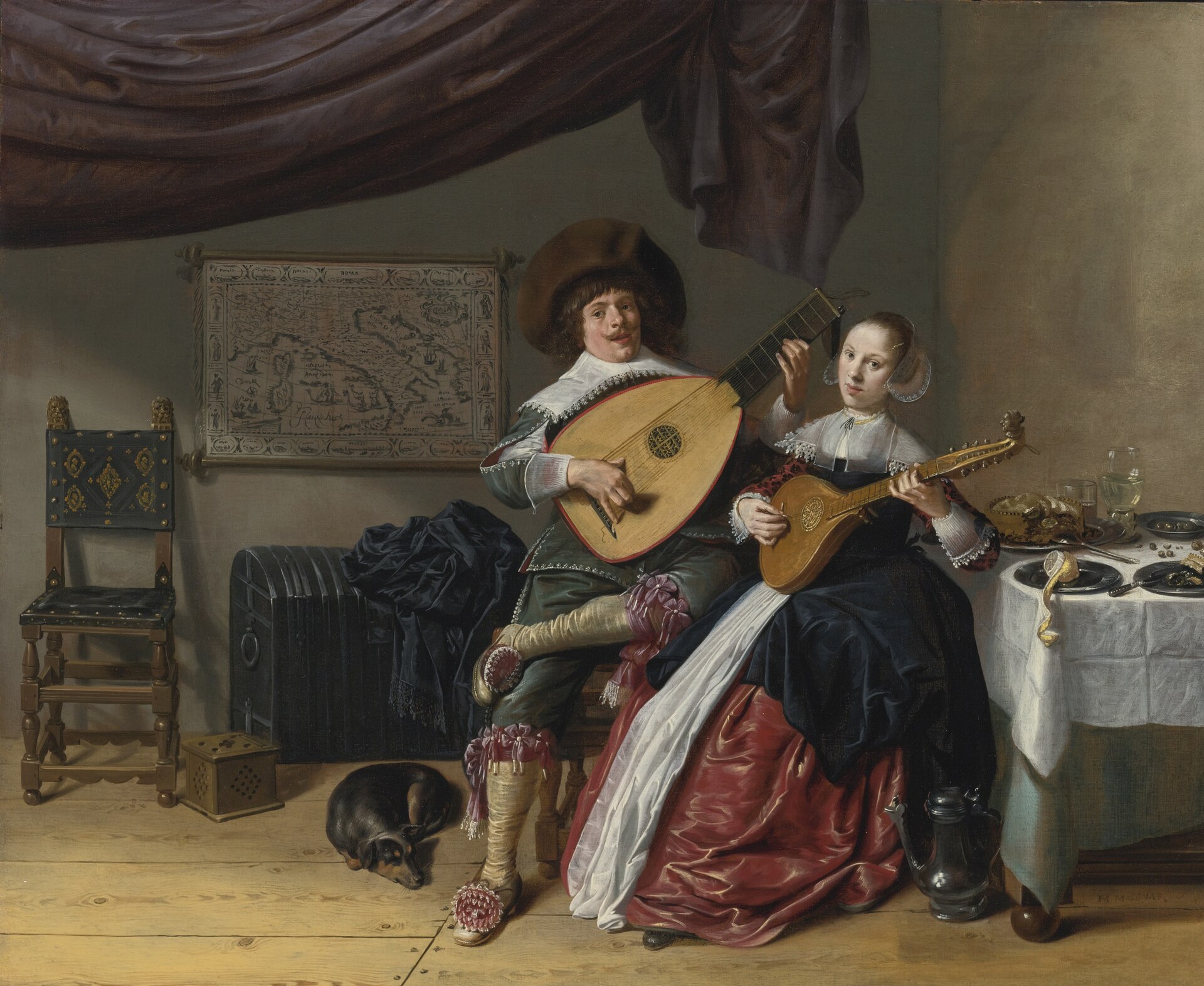
Merry Company, c. 1629, sells at Christie's London for 1,808,750 pounds with premium, a new auction record for the artist.1415
- 2021
Rijksmuseum adds her work to its Gallery of Honour in March, the first women given that placement alongside Gesina ter Borch and Rachel Ruysch.1
- 2022
A panel showing a laughing boy with grapes sells at Vanderkindere, Brussels, for 230,000 euros against an estimate of 1,800; later acquired by the Currier Museum of Art.13
- 2027
Frans Hals Museum and University of Amsterdam convene a scholars' day, "Reframing Judith Leyster", to reassess her oeuvre and attributions.18
The market
Leyster's market has moved fast in the last decade and the record itself shows how much attribution uncertainty is priced in. A rediscovered second self-portrait made 485,000 pounds at Christie's London in December 2016, against an estimate of 400,000 to 600,000 pounds. Two years later Merry Company made 1,808,750 pounds with premium at Christie's London, roughly quadrupling the previous record. In 2022 a small panel of a laughing boy, catalogued with evident doubt at a high estimate of only 1,800 euros, made 230,000 euros once bidders in the room backed the attribution, about 125 times its estimate. In each case the hammer price separate from the buyer's premium was not published in the sources consulted for this record; the figures given are the total prices realised.
| Date | Sale | Work | Result | Note |
|---|---|---|---|---|
| 1892 | Private dealer sale, London | La Joyeuse Compagnie (as Frans Hals) | Hammer not applicable, a dealer purchase rather than an auction lot With premium GBP 4,500 purchase price, later reduced by roughly one quarter to GBP 3,500 plus GBP 500 costs when the 1893 lawsuit settled GBP | Purchase by dealer Thomas Lawrie as a Hals; price cut once the attribution to Leyster could not be sustained. |
| 8 December 2016 | Christie's | Self-Portrait, c. 1653 | Hammer not published in sources consulted With premium GBP 485,000 total price realised GBP | Estimate GBP 400,000-600,000. Reported in dollars at the time as approximately USD 594,000 to 607,000 depending on conversion date. Rediscovered in an English country house; previously known only from a reference in Molenaer's 1668 estate inventory. |
| 2018-12 | Christie's | Merry Company, c. 1629 | Hammer not published in sources consulted With premium GBP 1,808,750 total price realised GBP | Sold within the Eric Albada Jelgersma collection sale; reported as approximately USD 2,310,934. New auction record for the artist. |
| 26 April 2022 | Vanderkindere | A laughing boy with grapes in his hat | Hammer not published in sources consulted With premium EUR 230,000 total price realised EUR | High estimate only EUR 1,800; sold for approximately 125 times that estimate. Subsequently acquired by the Currier Museum of Art. |
Hammer is the price at which the bidding stopped; with premium adds the fee the house charges the buyer on top. Hammer price and buyer's premium in the glossary.
Where to see the work
| Institution | City | Holdings | Note |
|---|---|---|---|
| Rijksmuseum | Amsterdam | Gallery of Honour placement since March 2021; owns The Jolly Drinker, SK-A-1685, on long-term loan to the Frans Hals Museum since 1960 | Do not confuse with the museum's Frans Hals painting The Merry Drinker, SK-A-135, a different work by a different artist. |
| Frans Hals Museum | Haarlem | Her hometown museum; holds The Jolly Drinker on long-term loan and the 1643 tulip book illustrations | Leading institutional reference point for attribution questions; host of the 2027 scholars' day on her oeuvre. |
| Mauritshuis | The Hague | The Proposition (Man Offering Money to a Young Woman), 1631 | Her most discussed single work. |
| Musee du Louvre | Paris | La Joyeuse Compagnie (The Carousing Couple), RF 2131 | The panel at the center of the 1892-93 Hals lawsuit. |
| National Gallery of Art | Washington, DC | Self-Portrait, c. 1630 | Acquired 1949 as a gift of Mr and Mrs Robert Woods Bliss; formerly catalogued as a Hals. |
| Currier Museum of Art | Manchester, New Hampshire | A laughing boy with grapes in his hat | Acquired following the 2022 Vanderkindere sale. |
Forgeries and misattributions
- A visible monogram misread as a Hals cipher, La Joyeuse Compagnie (Louvre RF 2131)
- The panel carried Leyster's own J-and-L-and-star monogram in plain sight throughout its documented ownership; it was not overpainted or hidden. It was catalogued as a Hals for over a century because the monogram went unrecognized as hers, and in the 1892-93 dispute one expert argued in court that the same visible marks could be read, from certain angles, as the letters of Hals's own name. The 1893 Lawrie v. Wertheimer lawsuit forced the question into court; Cornelis Hofstede de Groot's scholarship, published the same year, established the monogram as Leyster's own signature rather than a disguised Hals cipher.123
- Monogram altered to read FH, second version sold Brussels 1890
- A related composition sold in Brussels in 1890 carried a monogram described as crudely altered into an interlocking FH, a direct attempt to convert Leyster's mark into a Hals cipher. Noted by Cornelis Hofstede de Groot in the course of his 1893 research into Leyster's monogram.1
The essay
Chapter 1A monogram made to be found
Leyster's signature device was not a discreet cipher.
Leyster's signature device was not a discreet cipher. It is a conjoined J and L run through with a five-pointed star, placed prominently within the composition rather than hidden in a corner: above a jug, near a foot, beside a hand. The device is a pun. Leidster is the Dutch word for a guiding star, the term Dutch sailors used for the pole star, and it sounds like her surname. Contemporaries understood the joke: the Haarlem chronicler Theodorus Schrevelius, writing in 1648, called her the true leading star in the art.
A mark built to announce authorship that visibly should have made misattribution difficult. It did not. The physical evidence now on record shows the monogram removed, painted over, or altered into a different set of initials on more than one surviving panel, which means the erasure was not passive neglect but, in at least one case, active alteration carried out by someone in the trade between her death and the late nineteenth century.
Chapter 2The painting the Louvre bought as a Hals
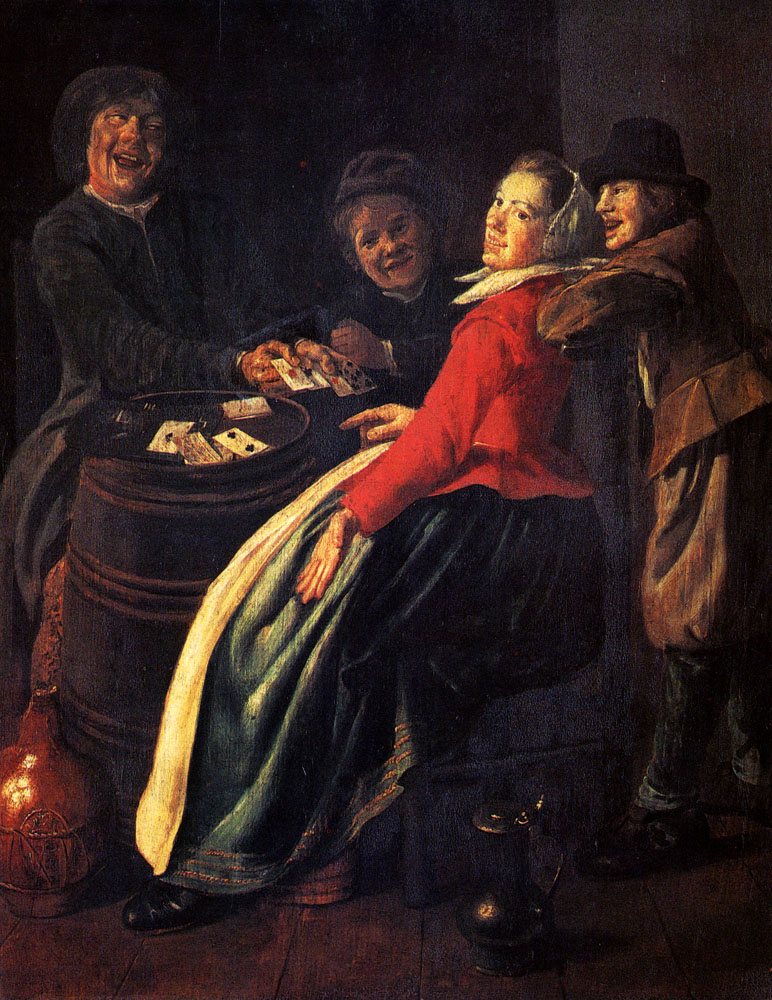
The best-documented case concerns a panel now called La Joyeuse Compagnie, in English The Carousing Couple or The Happy Couple, oil on wood according to the Louvre's own collection record, 68.5 by 57...
The best-documented case concerns a panel now called La Joyeuse Compagnie, in English The Carousing Couple or The Happy Couple, oil on wood according to the Louvre's own collection record, 68.5 by 57 centimetres, dated 1630. Its documented ownership runs from Sir Luke Schaub in London, through a sale after his death in 1758, to Lord Byron, to Sir John Griffin Griffin, first Baron Braybrooke, from 1769, always catalogued as a Hals through the nineteenth century.
In July 1892 the London dealer Charles Wertheimer bought the panel as a Hals from Lord Braybrooke for 3,000 pounds. The following year he sold it on to the dealer Thomas Lawrie for 4,500 pounds; Lawrie, on examining it, came to believe the Hals signature was false, and sued. The case, Lawrie and Co. v. Wertheimer, was heard 30 May 1893 and settled the next day: Lawrie kept the picture but was refunded 1,000 pounds, of which 500 went to court costs, so the dispute netted him only 500 pounds back on his 4,500-pound purchase, not the clean quarter-price reduction a bare before-and-after price comparison suggests. The panel later passed through the collections of Count Boniface de Castellane and Baron Basile de Schlichting in Paris, and Schlichting bequeathed it to the Louvre in 1914, where it is inventoried as RF 2131.
The monogram was not hidden and did not need cleaning to reveal it. Frima Fox Hofrichter's reconstruction of the case from the original Times court report of 31 May 1893 establishes that Leyster's J-and-L-and-star device, near the violinist's shoe, was visible on the panel throughout; the dispute in court was over how to read it, one expert arguing the same visible marks could, looked at from different angles, be made to spell out the letters of "F. Hals". That reading did not survive contact with Cornelis Hofstede de Groot's scholarship, discussed below, which recognized the mark as Leyster's own signature. A popular French account of the Louvre's history of the picture, cited elsewhere online, states instead that a fake Hals signature was cleaned off to expose the monogram underneath; that account also gets the Louvre's own acquisition date wrong by over twenty years, and this record does not follow it. The Louvre's own collection record confirms only that the panel carries a genuine signature, read as "J. Ly[star]ster 1630".
Chapter 3Hofstede de Groot's 1893 article, and how far the correction actually reached
The Dutch art historian Cornelis Hofstede de Groot published "Judith Leyster", with a collotype plate and two illustrations in the text, in the Jahrbuch der Koniglich Preussischen Kunstsammlungen...
The Dutch art historian Cornelis Hofstede de Groot published "Judith Leyster", with a collotype plate and two illustrations in the text, in the Jahrbuch der Koniglich Preussischen Kunstsammlungen, volume 14, 1893, pages 190 to 198 and 232. It is the first scholarly article devoted to her and the formal starting point of her modern rediscovery. Hofstede de Groot reattributed seven paintings from Hals to Leyster on the strength of the monogram, six of the seven actually carrying it.
Seven is the number in the 1893 article itself. It is not the number of paintings eventually returned to her. The Artips account of the Louvre investigation states that the wider process of tracing her signature across works previously credited to Hals eventually restored on the order of twenty pictures to her name, a process that continued into the twentieth century rather than concluding in 1893. Both figures are real and both are correctly sourced; they describe different moments in the same ongoing correction, and this record gives both rather than collapsing them into one.
Chapter 4A second Rijksmuseum drinker, and a date that will not resolve
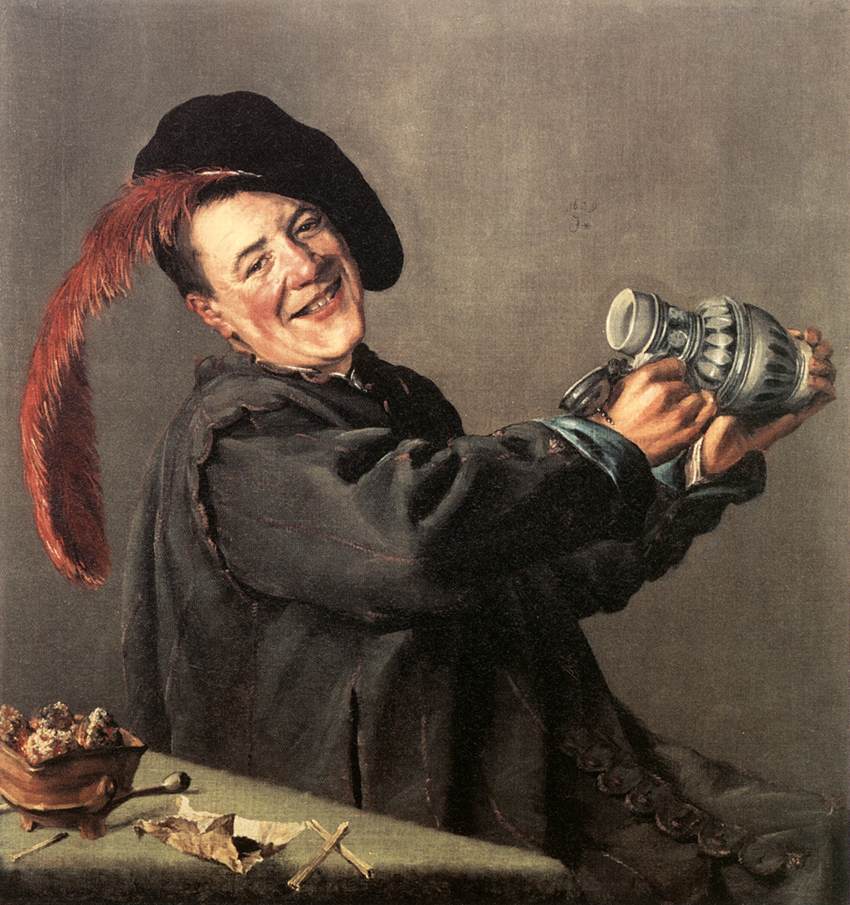
The Rijksmuseum holds a second, independent case of the same pattern: a canvas of 1629, 88.2 by 87.9 centimetres, showing a laughing man displaying an empty jug, catalogued as "A Fool Holding a Jug...
The Rijksmuseum holds a second, independent case of the same pattern: a canvas of 1629, 88.2 by 87.9 centimetres, showing a laughing man displaying an empty jug, catalogued as "A Fool Holding a Jug, known as 'The Jolly Drinker'", object number SK-A-1685, on long-term loan to the Frans Hals Museum since 1960. It was bought by the Rijksmuseum in January 1897 from the Paris dealer Franz Kleinberger, with the support of the Vereniging Rembrandt, after being sold at the Hotel Drouot in Paris in 1890 as a work by Hals or his circle.
Here the sources genuinely disagree and this record is not going to paper over it. The Rijksmuseum's own catalogue entry for the painting states plainly that it was long attributed to Hals and that Leyster's monogram, JL with a star, above the jug on the right, "was not discovered until 1893", tying this picture to the same wave of rediscovery as the Louvre panel. The Wikipedia article on the same painting, sourced independently, states that it was attributed to Leyster by the researcher Juliane Harms in 1927, thirty four years later. Both cannot be a complete account of the same event. It is possible that the monogram was physically noticed in 1893 amid the general reappraisal but that Harms's 1927 study supplied the first sustained scholarly argument for the attribution, which would let both statements stand without contradiction; no source consulted for this record makes that reconciliation explicitly, so it is offered here as a plausible reading and not as a settled fact. The discrepancy is recorded in open_questions rather than silently resolved in either direction.
Chapter 5Two paintings, one nickname, and the confusion that follows from it
A genuinely separate painting causes a different kind of confusion, and it is worth being exact about it because the two get run together constantly online.
A genuinely separate painting causes a different kind of confusion, and it is worth being exact about it because the two get run together constantly online. Frans Hals painted a half-length genre portrait of a laughing man in a black hat holding a berkemeier glass, oil on canvas, about 1628 to 1630, 81 by 66.5 centimetres, which the Rijksmuseum catalogues as "A Civic Guardsman Holding a Berkemeijer, known as 'The Merry Drinker'" and, in Dutch, De vrolijke drinker. Its object number is SK-A-135. It hangs in the museum's Gallery of Honour and is one of the most reproduced Hals paintings in existence.
Leyster's own 1629 canvas discussed immediately above, catalogued by the Rijksmuseum as "A Fool Holding a Jug, known as 'The Jolly Drinker'", object number SK-A-1685, carries in the Rijksmuseum's own database the same Dutch working title, De vrolijke drinker, and circulates in English under at least three names: The Jolly Drinker, The Jolly Toper, and A Fool Holding a Jug. Two different paintings, one by Hals and one by Leyster, sharing a Dutch nickname at the same museum, is exactly the kind of collision that scrambles search results and, on the evidence gathered for this record, has scrambled more than one secondary source into stating the wrong object number for one painting or the other. This record gives both accession numbers, SK-A-135 for the Hals and SK-A-1685 for the Leyster, precisely so a reader can check the two apart.
Chapter 6The guild, the workshop, and an unresolved training question
Leyster was admitted to the Haarlem Guild of St Luke by 1633, which let her run her own workshop and take pupils; by 1635 she had three apprentices.
Leyster was admitted to the Haarlem Guild of St Luke by 1633, which let her run her own workshop and take pupils; by 1635 she had three apprentices. That same year one of them, Willem Woutersz, left her workshop for Hals's without the guild release her contract required. Leyster brought a complaint before the guild in October 1635 and won a partial payment from the apprentice's mother; Hals was fined for taking him on, and Leyster herself was fined in the same proceeding for never having registered Woutersz with the guild in the first place. It is one of the only direct, documented interactions between Leyster and Hals as professional rivals rather than as stylistic comparisons.
Who actually trained her is not resolved. The Haarlem historian Samuel Ampzing, writing in 1628, is generally read as saying she learned her trade in the workshop of Frans Pietersz de Grebber, who ran a large Haarlem studio through the 1620s, but the wording of the passage is ambiguous enough that scholars still argue over whether it says this outright. There is no archival record of a formal apprenticeship under Hals, despite the closeness of their styles and despite a further, weaker thread of evidence: a Judith Jans recorded at the baptism of Hals's daughter Maria in 1631, whom most scholars but not all take to be Leyster, since more than one Judith Jans lived in Haarlem at the time. The claim that she trained under Hals is common in loose accounts of her life. It is not proven, and this record treats it as unproven.
Chapter 7The Proposition, and what it refuses to do
The Mauritshuis in The Hague holds a small panel, oil on panel, 31 by 24 centimetres, dated 1631, catalogued there as "Man Offering Money to a Young Woman" and known generally as The Proposition.
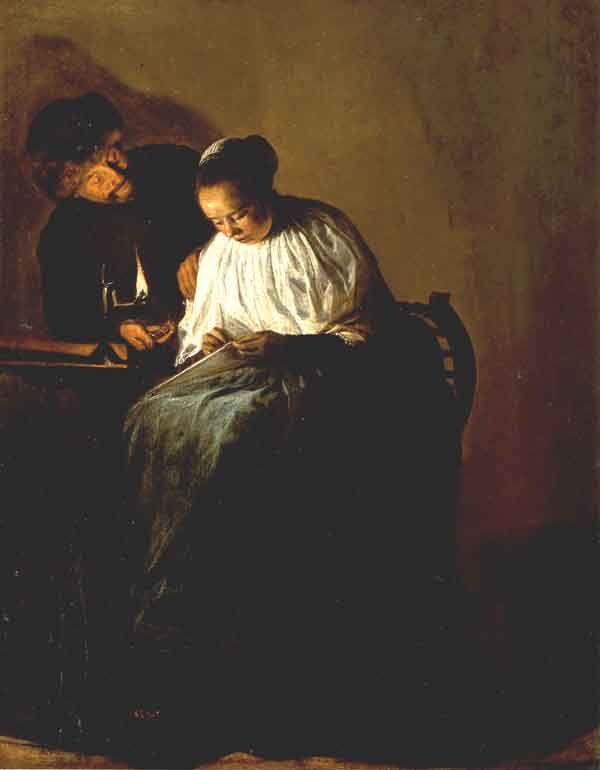
The Mauritshuis in The Hague holds a small panel, oil on panel, 31 by 24 centimetres, dated 1631, catalogued there as "Man Offering Money to a Young Woman" and known generally as The Proposition. A woman sews by candlelight; a man leans over her shoulder holding out coins. She does not look at him. She does not stop sewing. The scene sits inside a well-established Dutch and Flemish convention, the merry-company or brothel proposition scene, and it refuses almost every convention of that genre: no provocative dress, no procuress, no reciprocal glance, no ambiguity about which figure the picture asks the viewer to respect.
Art historians read the refusal differently. Frima Fox Hofrichter, writing in 1975, argued the painting shows an embarrassed woman resisting an unwanted advance, framing Leyster as deliberately subverting a genre that normally sexualised its female subjects; most later scholars think this reading is too narrow on its own. Wayne Franits has argued instead that an offer of money was, in the period, an ordinary opening move in courtship, and that the woman's absorbed, wholesome sewing was meant to read as a credential of domestic virtue rather than as victimhood. Ann Sutherland Harris likewise reads it as a scene of honest courtship, and has noted that the foot warmer visible under the woman's skirt was a period signal of a woman's married or available status, a detail worth checking directly against the object rather than taking on faith. What is not disputed is the comparison that matters: set beside the male painters working the same subject in the same decades, Leyster's woman is the one figure in the genre who is simply working, and not performing anything for the man beside her.
Chapter 8A studio practice caught changing its mind
Leyster's self-portrait, oil on canvas, 74.6 by 65.1 centimetres, now in the National Gallery of Art in Washington and generally dated to about 1630, is usually connected with the piece she would...
Leyster's self-portrait, oil on canvas, 74.6 by 65.1 centimetres, now in the National Gallery of Art in Washington and generally dated to about 1630, is usually connected with the piece she would have presented to the Haarlem guild around 1633 to establish her standing as a master. It shows her turned informally in her chair, in clothing too fine to actually paint in, eighteen brushes visible without a single mahlstick, in front of an easel bearing an unfinished picture of a laughing fiddler, a subject that recurs in her documented genre output.
Technical examination of the canvas found that the fiddler was not the first idea. Underneath the finished figure, infrared and x-ray imaging discussed by Frima Fox Hofrichter's 1989 study show the ghost of an earlier composition: a woman's face, parted red lips, very possibly Leyster's own features a second time, painted out and replaced with the fiddler she ultimately chose to display. The choice reads as deliberate rather than accidental: a self-portrait within the self-portrait was replaced with a genre subject that better advertised the range of paintings she actually sold. The number of pentimenti recorded across her surviving pictures generally, not only this one, suggests she worked her compositions out directly on the canvas rather than from preparatory drawings; no drawing by her hand survives apart from a botanical watercolor of 1643, discussed below.
The self-portrait carries its own instance of the erasure pattern that runs through this whole record. It too was catalogued as a Hals for an unknown span of years before the National Gallery of Art acquired it, as a gift of Mr and Mrs Robert Woods Bliss, in 1949, at which point it was properly attributed to Leyster. Even her most personal surviving picture did not escape the same mistake made about her genre scenes.
Chapter 9Marriage, and a disappearance that was not total
Judith Leyster married the Haarlem painter Jan Miense Molenaer on 1 June 1636.
Judith Leyster married the Haarlem painter Jan Miense Molenaer on 1 June 1636. They had five children, of whom two survived to adulthood, lived for a period in Amsterdam, and later returned to Heemstede, where husband and wife are recorded sharing a single studio. Her dated, signed output effectively stops at 1635, the year before the marriage, and the standard account of her career treats 1636 as the year she disappeared.
The disappearance was not complete, and the surviving fragments matter because each one had to be individually rediscovered. Two illustrations in a 1643 tulip book, silverpoint and watercolor on vellum, now in the Frans Hals Museum, are signed and dated to a year when Tulip Mania's inflated bulb prices were still recent memory. A portrait dated 1652, believed to show a fellow Haarlem painter, is generally treated as her last securely dated portrait subject. A second self-portrait, dated about 1653, was known to scholarship only through a passing reference in Molenaer's 1668 estate inventory until it resurfaced in an English country house and was sold at Christie's in London in December 2016; Bendor Grosvenor, writing at the time, noted it is markedly different in character from the 1630 Washington self-portrait, and is a distinct work, not a second copy of the same picture. A flower still life dated 1654, signed "Judith. molenaers", surfaced from a Belgian private collection in 2009 and was authenticated by the Frans Hals Museum's curator of old masters; the museum connects it to a "blompotje van Juffr. Molenaer", a little flowerpot by Mistress Molenaer, listed in her husband's 1668 inventory.
That last detail complicates the erasure story rather than simplifying it. The 1668 inventory lists paintings under names like "Juffrouw Molenaer", "his wife" and "Judith Molenaer", never under her professional name or monogram, and art historians generally read this as the mechanism by which her later work drained into her husband's attribution. But the 1654 still life is itself signed "Judith. molenaers", in her own hand, using her married name. Whether that late signature reflects Leyster's own choice to identify herself as Molenaer's wife professionally in her final years, or simply reflects how the household referred to her, is not resolved in the sources consulted, and how much of the couple's joint later production is hers against how much is her husband's remains an open scholarly question rather than a settled ratio.
Chapter 10The corpus, still being rebuilt
There is no completed catalogue raisonne.
There is no completed catalogue raisonne. Frima Fox Hofrichter's 1989 monograph, Judith Leyster: A Woman Painter in Holland's Golden Age, and the 1993 exhibition catalogue Judith Leyster: A Dutch Master and Her World, edited by James Welu and Pieter Biesboer for the joint Frans Halsmuseum, Haarlem, and Worcester Art Museum exhibition, are the two standing scholarly assessments of her output, and neither has been replaced by a newer catalogue as of this writing. Secondary sources summarising Hofrichter's reconstructed oeuvre give the number of accepted autograph paintings as 35 in some counts and 37 in others, depending on which borderline attributions are included; this record was not able to consult Hofrichter's or Welu and Biesboer's full catalogue entries directly, and the range itself, rather than a single confident figure, is what the evidence available here actually supports.
Against that accepted core sit the pictures still moving between hands. Seven were reattributed from Hals in the 1893 article; on the order of twenty had been returned to her by the time the process the Louvre describes had run its course; an unknown further number sit inside Molenaer's inventory under his household's names rather than hers, some now returned to her, some still argued over. A catalogue this actively contested is, on the evidence, still a live research question rather than a closed file, which is exactly the framing the 2027 Frans Hals Museum and University of Amsterdam scholars' day has adopted.
Chapter 11What the market pays for a name still being sorted out
Leyster's auction record has moved fast in the last decade, and the record itself illustrates how much attribution risk is priced into her name.
Leyster's auction record has moved fast in the last decade, and the record itself illustrates how much attribution risk is priced into her name. The rediscovered second self-portrait, sold at Christie's London on 8 December 2016 against an estimate of 400,000 to 600,000 pounds, made 485,000 pounds, reported at the time as roughly 594,000 to 607,000 dollars depending on the conversion date used; the hammer price separate from Christie's buyer's premium was not published in the sources consulted for this record. That sale stood as her auction record for two years.
It was broken in December 2018, when Merry Company, about 1629, sold at Christie's London as part of the Eric Albada Jelgersma collection sale for a total of 1,808,750 pounds with premium, reported as approximately 2,310,934 dollars, a price roughly quadruple the 2016 figure; again, the hammer price on its own was not separately published in the sources consulted here.
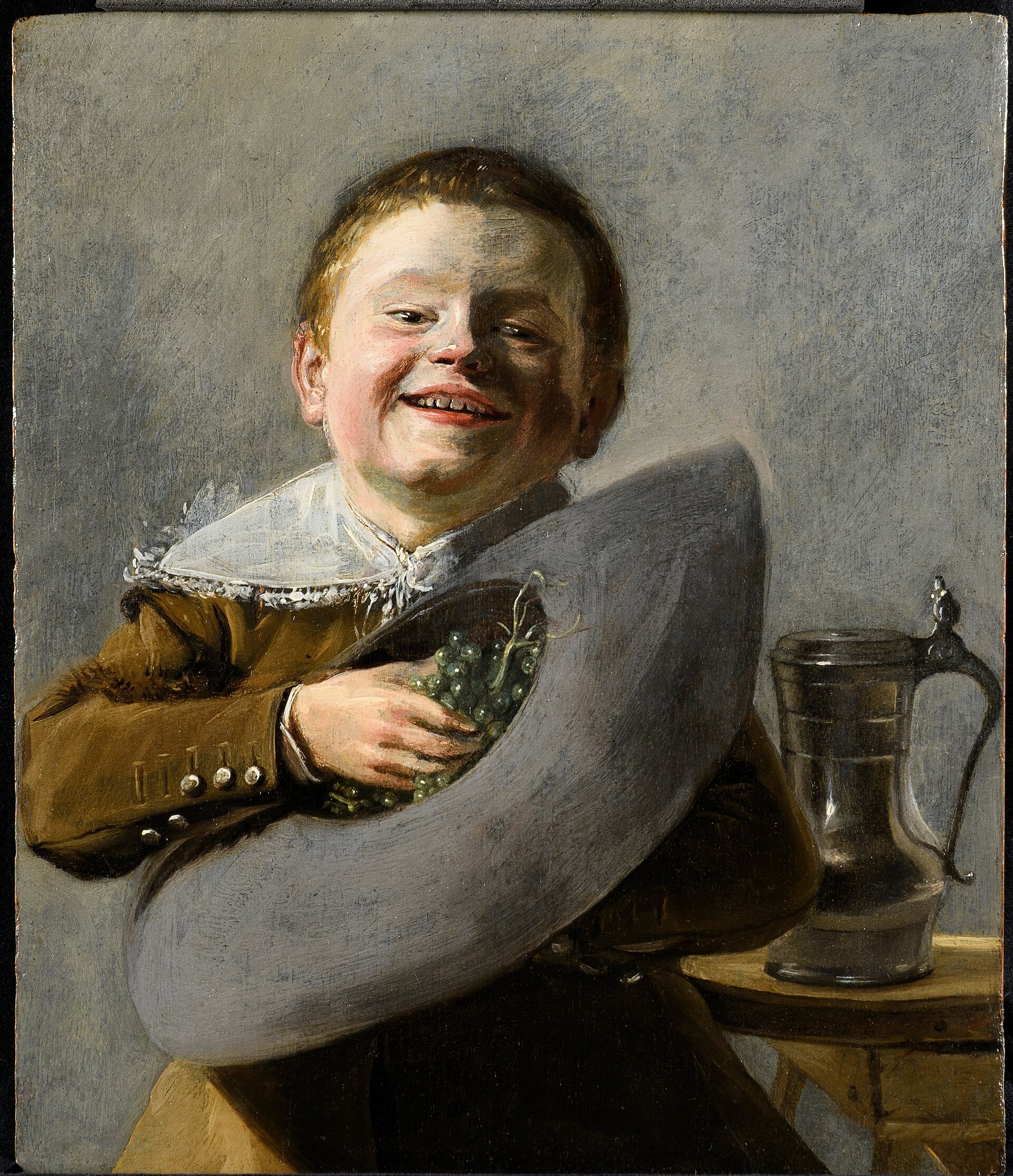
The clearest illustration of attribution risk, rather than attribution reward, is a small panel showing a laughing boy holding grapes in his hat, sold at the Brussels house Vanderkindere on 26 April 2022. It carried a high estimate of only 1,800 euros, evidently catalogued with real doubt about the attribution, and sold for 230,000 euros, about 125 times that estimate, once bidders in the room decided the Leyster attribution held. The painting was subsequently acquired by the Currier Museum of Art. A name still being sorted out cuts both ways at auction: it can suppress a low estimate to almost nothing, and it can then multiply the result once specialists in the room disagree with the catalogue.
Chapter 12A reputation revived twice
The first revival was Hofstede de Groot's in 1893, forced into being by a lawsuit rather than by scholarly initiative.
The first revival was Hofstede de Groot's in 1893, forced into being by a lawsuit rather than by scholarly initiative. It restored her name to a body of paintings but did not, on its own, restore her critical standing: well into the twentieth century she continued to be described in print chiefly as a follower or imitator of Hals rather than as an independent artist, a framing Whitney Chadwick's later scholarship specifically singled out for criticism.
The second revival was feminist art history's, beginning with Hofrichter's 1975 reading of The Proposition and running through her 1989 monograph and the joint 1993 Frans Halsmuseum and Worcester Art Museum exhibition, the first monographic exhibition of Leyster's work. That scholarship reframed her from a Hals satellite into an independent master with her own workshop, her own guild standing, and her own compositional inventions. Institutional recognition followed at a distance: the Rijksmuseum added her work to its Gallery of Honour, the room reserved for the museum's most important pictures, in March 2021, placing her alongside Gesina ter Borch and Rachel Ruysch as the first women given that position. In December 2022 Google marked her with a Doodle shown in the Netherlands, Iceland, Ireland, the United Kingdom, Singapore and the United States.
Chapter 13What is still being decided
The Frans Hals Museum and the University of Amsterdam have announced a scholars' day titled "Reframing Judith Leyster" for May 2027, with an abstract deadline of November 2026, explicitly to reassess...
The Frans Hals Museum and the University of Amsterdam have announced a scholars' day titled "Reframing Judith Leyster" for May 2027, with an abstract deadline of November 2026, explicitly to reassess her oeuvre and attributions, her materials and technique, her workshop practice, her market and social networks, and her reception history. That an active research institution is convening a day specifically to reopen these questions is the clearest available evidence that this record's open questions are the field's open questions too, not gaps particular to the sources consulted here.
What is documented
Technique
The surviving work
- What is accepted
- No completed catalogue raisonne exists. Secondary sources summarising Frima Fox Hofrichter's 1989 reconstructed oeuvre give the number of accepted autograph paintings as 35 in some counts and 37 in others, depending on which borderline works are included. This record could not consult Hofrichter's full catalogue directly and reports the range rather than a single figure.
- What is contested
- Cornelis Hofstede de Groot's 1893 article reattributed seven paintings from Hals to Leyster, six carrying her monogram. The Louvre's own account of the wider investigation describes roughly twenty paintings eventually restored to her name as the process continued into the twentieth century, including, on one account, Juliane Harms's 1927 study. An unknown further number remain folded into the output of her husband Jan Miense Molenaer, whose 1668 estate inventory lists household paintings only under names like "Juffrouw Molenaer" and "Judith Molenaer", never her own professional name or monogram.
- Who rules on attribution
- No authentication board exists. The Frans Hals Museum, Haarlem, functions as the leading institutional reference point as her hometown museum; new attributions are argued case by case by individual specialists and auction house old master departments. The 2027 Frans Hals Museum and University of Amsterdam scholars' day, convened specifically to reassess her oeuvre and attributions, is explicit evidence that the field considers the question open rather than settled.
Catalogue raisonne
- Frima Fox Hofrichter, Judith Leyster: A Woman Painter in Holland's Golden Age (Doornspijk: Davaco, 1989) The standing monograph and reconstructed oeuvre; not superseded as of this writing. Not consulted directly for this record; cited via secondary summaries and bibliographies.20
- James A. Welu and Pieter Biesboer, eds., Judith Leyster: A Dutch Master and Her World, exhibition catalogue (Frans Halsmuseum, Haarlem, and Worcester Art Museum; New Haven: Yale University Press, 1993) Catalogue for the first monographic Leyster exhibition. Not consulted directly for this record; cited via publisher and bookseller listings.21
Questions about Judith Leyster
Who was Judith Leyster?
Painter. 1609-1660.
When did Judith Leyster live?
Born 28 July 1609 (baptized; no birth record survives), Haarlem, Dutch Republic; died 10 February 1660, Heemstede, Dutch Republic.
How are fakes and misattributions of Judith Leyster detected?
A visible monogram misread as a Hals cipher, La Joyeuse Compagnie (Louvre RF 2131). The panel carried Leyster's own J-and-L-and-star monogram in plain sight throughout its documented ownership; it was not overpainted or hidden. It was catalogued as a Hals for over a century because the monogram went unrecognized as hers, and in the 1892-93 dispute one expert argued in court that the same visible marks could be read, from certain angles, as the letters of Hals's own name.
Where can you see work by Judith Leyster?
Rijksmuseum (Amsterdam); Frans Hals Museum (Haarlem); Mauritshuis (The Hague); Musee du Louvre (Paris); National Gallery of Art (Washington, DC); Currier Museum of Art (Manchester, New Hampshire).
What does the market for Judith Leyster look like?
Leyster's market has moved fast in the last decade and the record itself shows how much attribution uncertainty is priced in. A rediscovered second self-portrait made 485,000 pounds at Christie's London in December 2016, against an estimate of 400,000 to 600,000 pounds.
What is still unresolved about Judith Leyster?
When and by whom was The Jolly Drinker (Rijksmuseum SK-A-1685) actually reattributed to Leyster: the museum's own catalogue entry dates the monogram's discovery to 1893, tying it to the Hofstede de Groot wave, while a separately sourced account credits the attribution to researcher Juliane Harms in 1927. Both cannot be a complete account of the same event and no source consulted here reconciles them.
Open questions
- When and by whom was The Jolly Drinker (Rijksmuseum SK-A-1685) actually reattributed to Leyster: the museum's own catalogue entry dates the monogram's discovery to 1893, tying it to the Hofstede de Groot wave, while a separately sourced account credits the attribution to researcher Juliane Harms in 1927. Both cannot be a complete account of the same event and no source consulted here reconciles them.
- Is the Judith Jans recorded at the 1631 baptism of Frans Hals's daughter Maria actually Judith Leyster. Most scholars accept the identification but more than one Judith Jans lived in Haarlem at the time, and no source consulted proves it conclusively.
- Under whom did Leyster actually train. Samuel Ampzing's 1628 account is generally read as naming Frans Pietersz de Grebber, but the wording is ambiguous, and the widely repeated claim that she trained under Hals has no archival support.
- How much of the Leyster-Molenaer household's later joint output is hers as against her husband's. The couple shared a studio after 1636 and Molenaer's 1668 inventory does not distinguish their hands by name.
- The exact number of paintings now securely accepted as autograph Leyster. Secondary sources give 35 or 37 depending on the count, and this record could not consult Frima Fox Hofrichter's full 1989 catalogue or the 1993 Welu and Biesboer catalogue directly to resolve the discrepancy.
- The present whereabouts of David with the Head of Goliath, c. 1633, her only known history painting, are unrecorded in the sources consulted.
- The hammer prices, separate from buyer's premium, for both the 2016 self-portrait sale and the 2018 Merry Company record sale were not found in the sources consulted; only the total prices realised are recorded here.
Sources
- 1Wikipedia, 'Judith Leyster'. en.wikipedia.org/wiki/...
- 2Wikipedia, 'Cornelis Hofstede de Groot', for the exact citation of his 1893 article 'Judith Leyster', Jahrbuch der Koniglich Preussischen Kunstsammlungen, vol. 14 (1893), pp. 190-198 and 232. en.wikipedia.org/wiki/...
- 3Musee du Louvre, collections database, 'La Joyeuse Compagnie', RF 2131. collections.louvre.fr/en/...
- 4Artips, 'Frans Hals ? Non, Judith Leyster ! Une enquete du Louvre en 1893'. artips.fr/articles/...
- 5Rijksmuseum, 'A Fool Holding a Jug, known as The Jolly Drinker', object SK-A-1685, catalogue entry. rijksmuseum.nl/en/...
- 6Wikipedia, 'Jolly Toper', for the 1927 Juliane Harms attribution claim. en.wikipedia.org/wiki/...
- 7Rijksmuseum, 'A Civic Guardsman Holding a Berkemeijer, known as The Merry Drinker', object SK-A-135, Frans Hals. rijksmuseum.nl/en/...
- 8Wikidata, 'The Jolly Toper' (Q17324463). wikidata.org/wiki/...
- 9Wikipedia, 'The Proposition (Leyster)', for scholarly interpretations by Wayne Franits, Ann Sutherland Harris and Frima Fox Hofrichter. en.wikipedia.org/wiki/...
- 10Wikipedia, 'Self-portrait by Judith Leyster', for provenance, the 1949 acquisition, and the infrared/x-ray pentimento findings discussed via Frima Fox Hofrichter's 1989 study. en.wikipedia.org/wiki/...
- 11Wikipedia, 'List of paintings by Judith Leyster', for the David with the Head of Goliath entry and the accepted-works count drawn from the Hofrichter catalogue. en.wikipedia.org/wiki/...
- 12Web Gallery of Art, 'Carousing Couple', Judith Leyster. wga.hu/html_m/...
- 13Artnet News, 'A Painting Some Experts Believe Is by a Little-Known Female Old Master Just Sold for 125 Times Its High Estimate'. news.artnet.com/market/...
- 14Artnet News / auction market reporting on Merry Company, Christie's London, December 2018, Eric Albada Jelgersma collection sale. news.artnet.com/art-world/...
- 15The Art Newspaper, 'Jump-bidding for Rembrandt's fingerprints and a tale of two Van Dycks: dispatches from London's Old Master auctions'. theartnewspaper.com/2018/...
- 16Artnet News, 'Long-Lost Self-Portrait by Dutch Master Judith Leyster Discovered in English Estate'. news.artnet.com/art-world/...
- 17Bendor Grosvenor, Art History News, 'Judith Leyster self-portrait at Christie's', 6 December 2016. arthistorynews.com/articles/...
- 18Bendor Grosvenor, Art History News, 'Call for Papers: Reframing Judith Leyster'. arthistorynews.com/articles/...
- 19CODART, 'Unique painting by Judith Leyster rediscovered, to be shown in the upcoming exhibition', on the 2009 rediscovery of the 1654 flower still life. codart.nl/museums/...
- 20Frima Fox Hofrichter, Judith Leyster: A Woman Painter in Holland's Golden Age (Doornspijk: Davaco, 1989). Not consulted directly; cited via secondary summaries, Wikipedia bibliographies, and bookseller listings. abebooks.co.uk/book-search/...
- 21James A. Welu and Pieter Biesboer, eds., Judith Leyster: A Dutch Master and Her World, exhibition catalogue (Frans Halsmuseum, Haarlem, and Worcester Art Museum; New Haven: Yale University Press, 1993). Not consulted directly; cited via bookseller and publisher listings. mullenbooks.com/pages/...
- 22Artory registry record, 'Merry Company' by Judith Leyster, Christie's. artory.com/records/...
Last verified