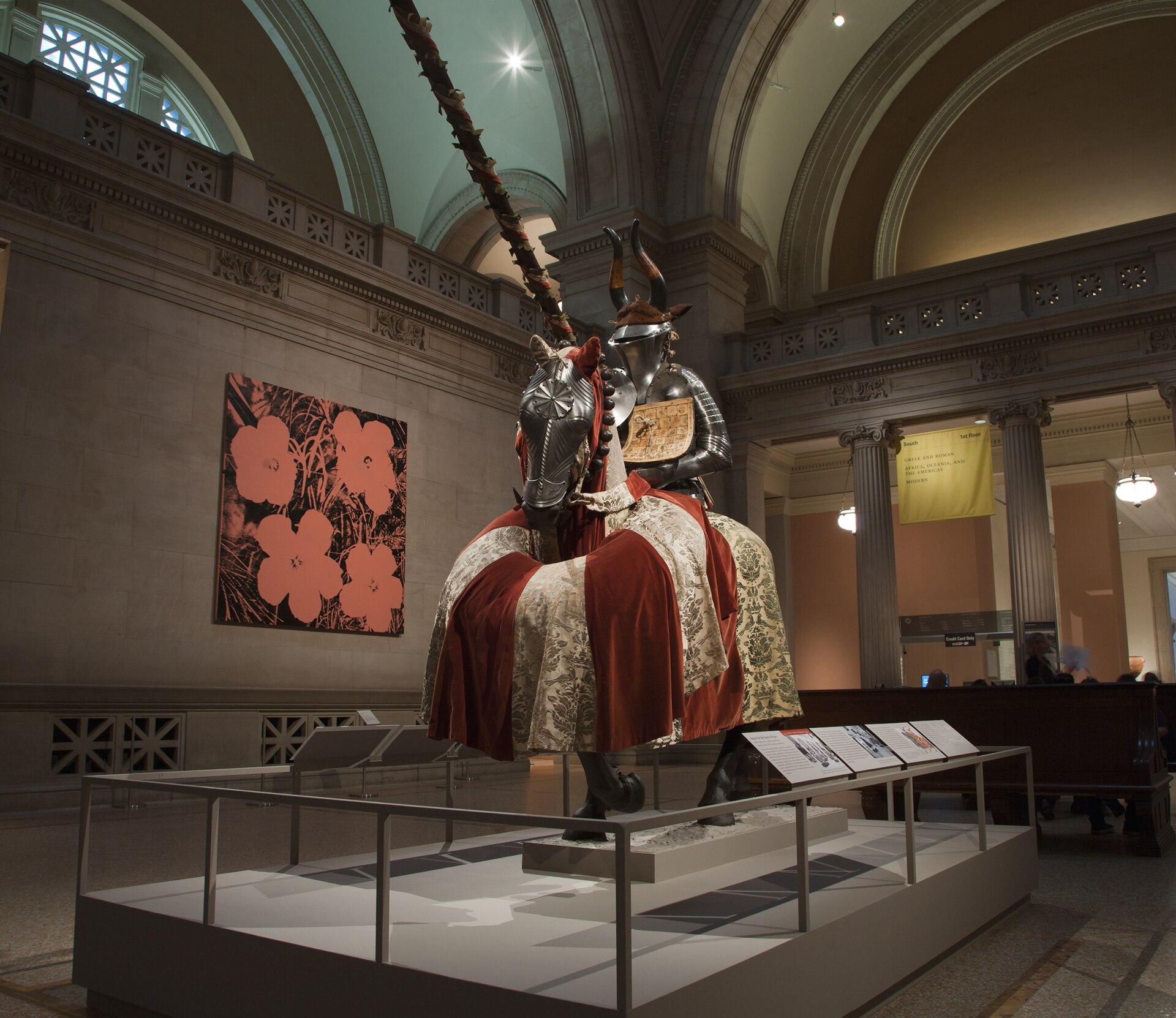
Armor for the Joust of Peace
Late 15th century · Steel
The Metropolitan Museum of Art, New York
 French · 1857-1928
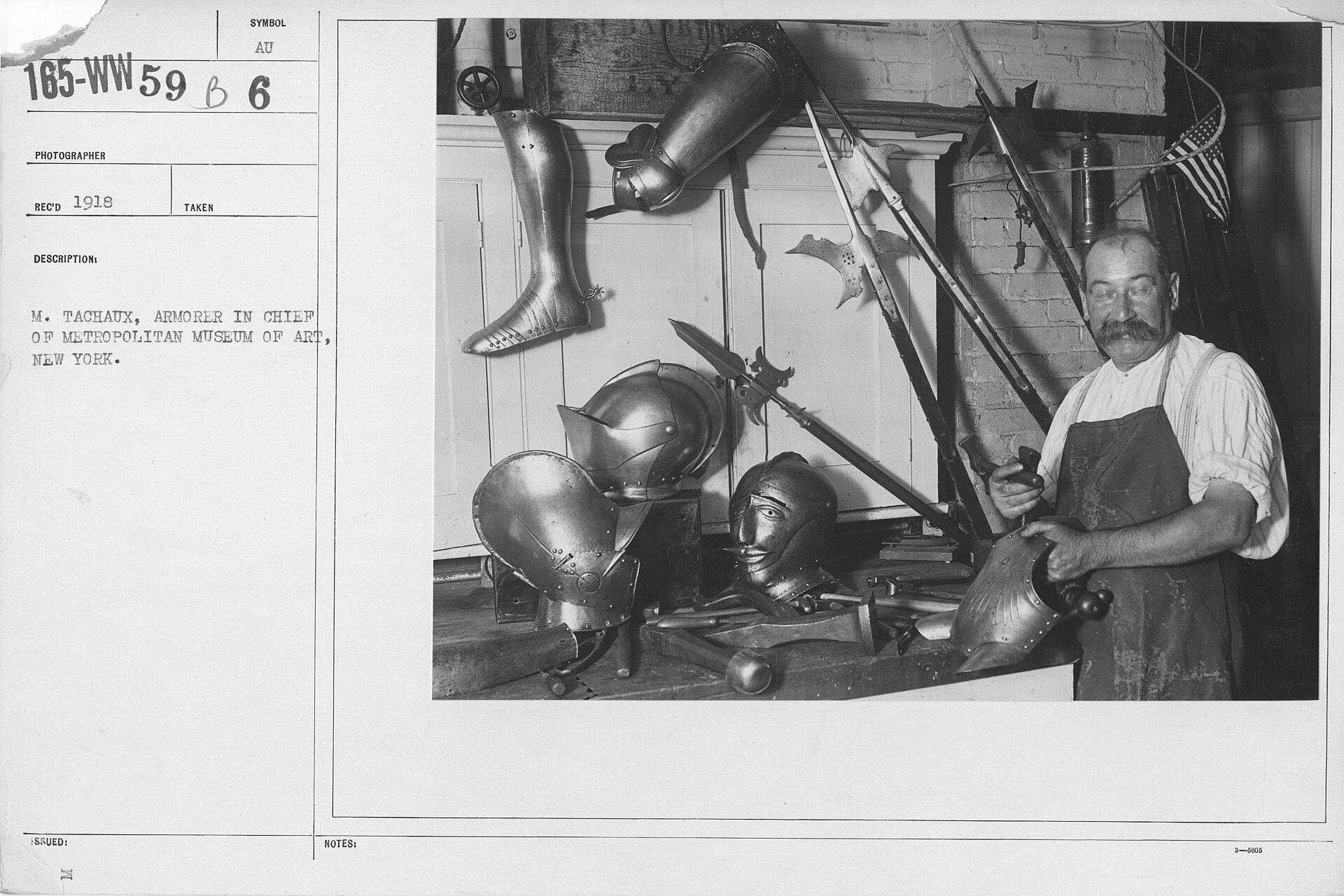
A War Department photograph of 1917-1918 (record 165-WW-59B-6) captioned 'M. Tachaux, armorer in chief of Metropolitan Museum of Art, New York': a moustached man in an apron at a workshop bench holding a hammer, with helmets, a leg defence and polearms around him. The identification rests on the original caption; no other portrait of him was found, and nothing contradicts it.
U.S. National Archives and Records Administration, Record Group 165; Public domain| Worked as | Armorer, Restorer, Museum conservator |
|---|---|
| Born | 1857 (year only · Not established |
| Died | 1928 (reported in The New York Times, 18 March 1928, p. 33 · Not established in the sources read |
| Nationality | French |
| Movement | Late nineteenth and early twentieth century armour restoration and reconstruction |
| In this archive | 1 artwork |
| Sources | 13 cited |
| Last verified |
About this page 1 artwork in the archive · Last verified · 13 sources cited
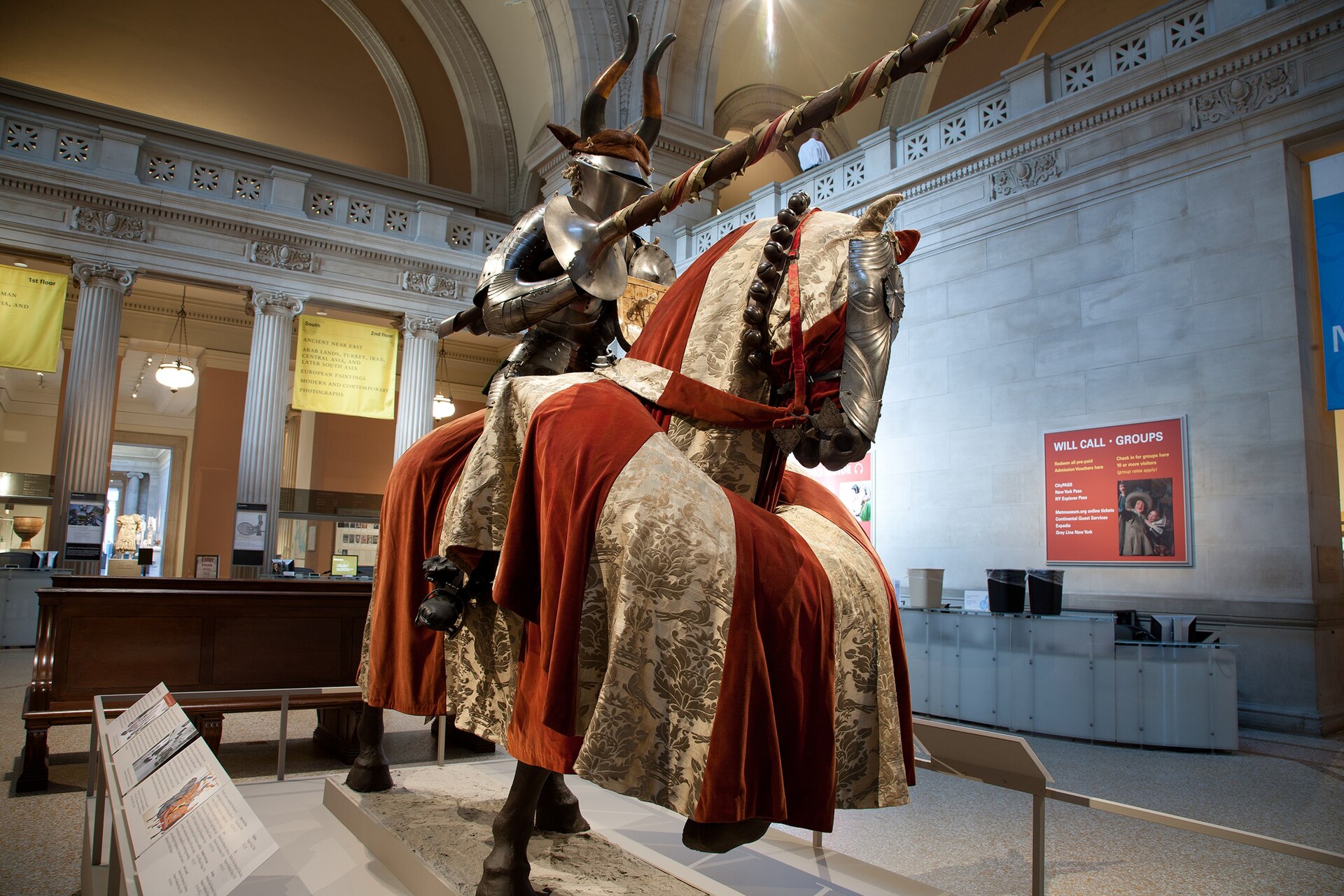
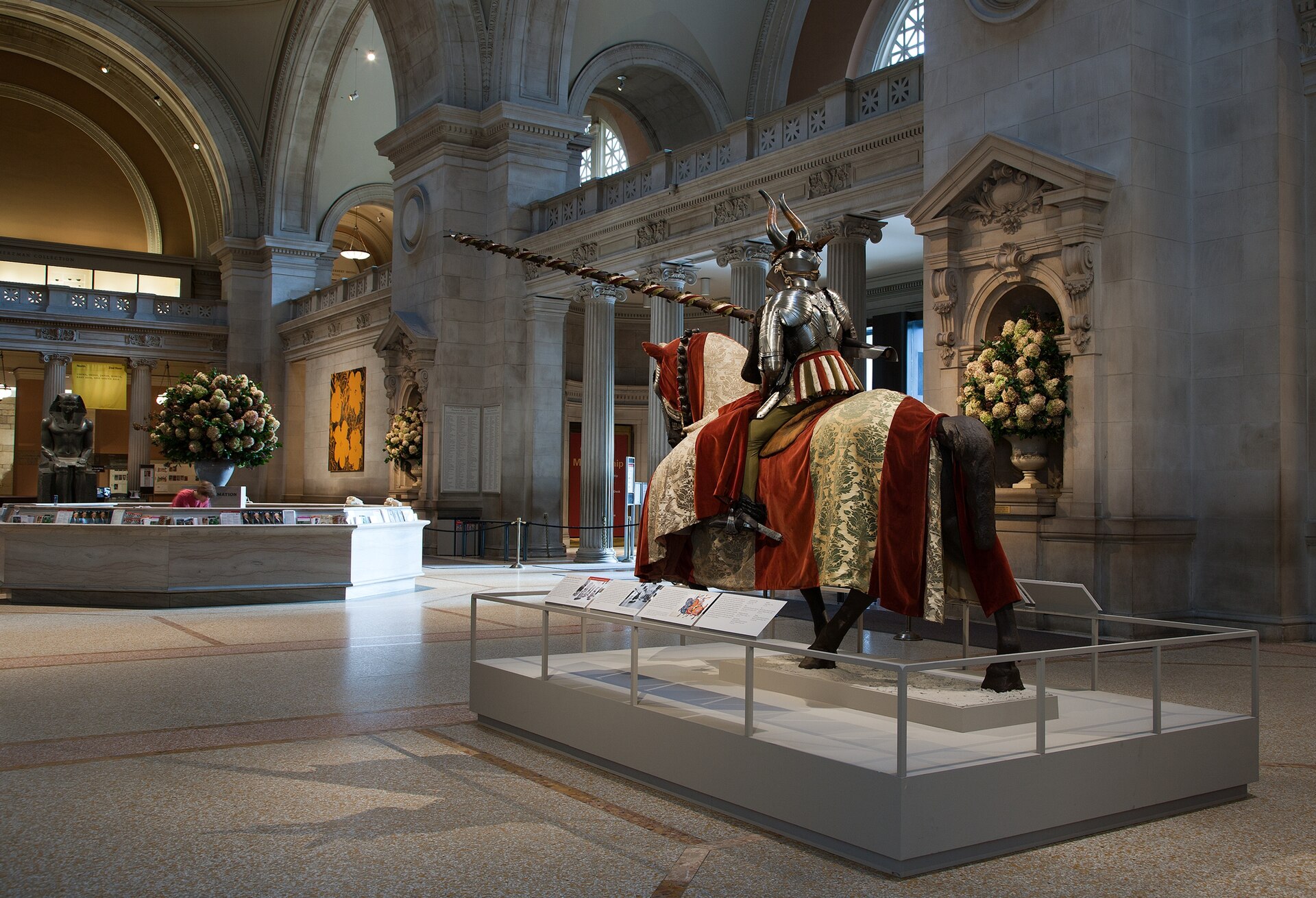
Daniel Tachaux was a Paris armorer who made one thing the Metropolitan Museum of Art did not know it owned and then spent ten years working on the rest of its armour. In 1891 he forged the helm of a composite German jousting armour for the collector Costantino Ressman. That armour was bought as a fifteenth-century antiquity with the Duc de Dino collection in 1904, and the Museum's own founding curator, Bashford Dean, called the helm entirely modern within a year. Dean hired the man who made it in 1909.
The name carries more than the 1891 helm. Between 1913 and 1915 Tachaux rebuilt the two Scudamore armours the Museum had bought as wrecks from Holme Lacy, and the Museum's database now credits him by name for the missing pieces. In 1917 he hand-forged the first prototypes of Dean's American helmets for the war. The Metropolitan lists him as armorer on a small, closed group of objects.
What a reader probably does not know is how little else exists. There is no catalogue raisonne, no authentication board, no auction record for any piece he made, no maker's mark documented in the sources read, and not even a birthplace. Even the dates of his own teacher are given three different ways by three sources. This page records what the evidence holds and where it stops.
Daniel Tachaux is born; no place or date is given in the Museum's records.18
Ressman has the Paris restorer Negre make a horn-plated jousting shield for his composite armour; the same article elsewhere dates the helm to 1889 in a footnote.8
Ressman commissions the Paris armorer Alexandre Lebon to complete and mount the armour; Lebon employs Tachaux for the helm. The Museum dates the helm to 1891.48
The Metropolitan Museum buys the armour with the Duc de Dino collection (Rogers Fund).48
Dean's handbook calls the helm entirely modern and guesses Viennese workmanship.8
Dean hires Tachaux as the Museum's armorer; the Scudamore armours are found at Holme Lacy the same year.289
The Museum buys Tachaux's 644-piece tool set; the Department of Arms and Armor is founded.79
Tachaux makes the dated cuisse and poleyn for Sir John Scudamore's armour.1
The Scudamore armours are restored and completed by Tachaux.23
Dean designs Helmet Model No. 2 in June; Tachaux makes the prototypes and adds pieces to the Italian infantry armour.5610
The War Department photographs Tachaux at his bench in the Museum workshop; Ford produces Model 2 helmets in the autumn.1112
The original Scudamore cuisse reappears at auction and replaces Tachaux's copy.113
Death; The New York Times obituary appears on 18 March.9
Pyhrr's article names Tachaux as the maker of the Dino helm, in a note, and draws the make-up of the armour from Ressman's papers.8
The Museum buys the Model No. 2 prototype of 1917.5
No public sale of any work by Tachaux is recorded in the sources read. The only auction connected with his work is the 1922 sale at which the original right thigh and knee defence of the Scudamore armour appeared; no house, date or price for it was found. Every object credited to him that was found is in the Museum's own collection.
| Institution | City | Holdings | Note |
|---|---|---|---|
| The Metropolitan Museum of Art, Department of Arms and Armor | New York | The Scudamore armours (11.128.1 and 11.128.2), on view in Gallery 371 according to the Museum's entries; the joust armour with his helm, the 1913 cuisse, the 1917 prototype and the infantry armour, each marked not on view in the entries read; and the 644-piece tool set. | Gallery status read from the Museum's own pages on 15 November 2026. |
| National Archives and Records Administration | College Park, Maryland | Two War Department photographs of 1918 naming him as armorer in chief at the Museum (identifiers 20807060 and 20807062). | Series: American Unofficial Collection of World War I Photographs, Record Group 165. |
| Royal Armouries Library | Leeds | The de Cosson papers, which include Ressman's inventory, correspondence and receipts from which Pyhrr drew the make-up of the joust armour in 2012. | Not his work. The location 'Leeds' is taken from this archive's own record of the joust armour and was not independently checked. |
Tachaux appears in the Metropolitan's records in two roles that look opposed.
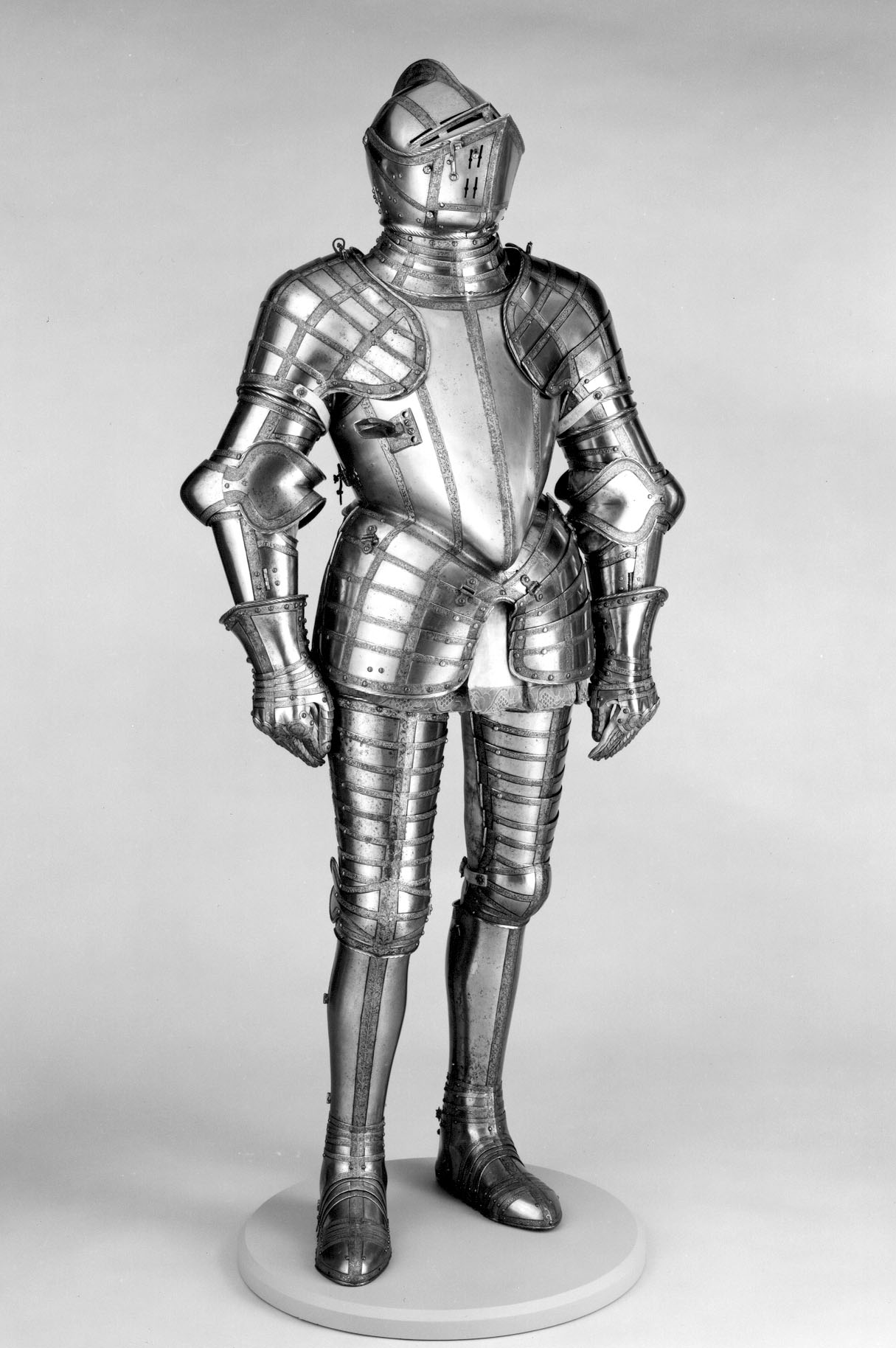
Tachaux appears in the Metropolitan's records in two roles that look opposed. In October 1891 the Paris armorer Alexandre Lebon, commissioned by Ressman to complete and mount a composite jousting armour, employed Tachaux for what Stuart Pyhrr calls the most challenging part of the job, the fabrication of a helm of appropriate type. The finished armour cost Ressman 7,950 francs in all and he sold it to the Duc de Dino for 30,000 francs (Pyhrr 2012, text and note 78). In 1904 the Museum bought it, with the rest of the Dino collection, as a late fifteenth-century jousting armour.
In 1909 Dean, according to Pyhrr's note, was so impressed by that work that he hired the maker as the Museum's armorer. The Museum's label for a later piece of his calls him the most talented armorer working in Paris at the time. That is a museum's own judgment of its own employee and is recorded here as such. Pyhrr's account is of a commissioned completion. It does not say the helm was made to deceive anyone, and the sources read do not say who first described the armour as wholly period.
The Museum's label for his tool set says Tachaux trained in Paris under the German armorer Ludwig Klein, whom it dates to about 1830-1882, and inherited his teacher's tools.
The Museum's label for his tool set says Tachaux trained in Paris under the German armorer Ludwig Klein, whom it dates to about 1830-1882, and inherited his teacher's tools. Lawrence Becker and Deborah Schorsch, in their history of conservation at the Museum, give Klein as 1825-1888 and describe him as armorer to Napoleon III. Dean, who knew Tachaux and wrote in 1920, calls Klein the Dresden armorer (1825-1882) who was himself trained in the armory of the Dukes of Saxony.
These cannot all be right and the sources do not reconcile them. The birth year 1825 is shared by two of them; the death year is 1882 in two and 1888 in a third; the Napoleon III service appears in only one. Dean's account has the particular value of being first-hand: he says the stages of making a helmet photographed for his book were demonstrated by Tachaux, who had them from Klein. A Paris armorer trained by a Dresden master who worked for the Second Empire is plausible but the link from Dresden to Paris is not documented in anything read.
Pyhrr's article gives two dates for the helm.
Pyhrr's article gives two dates for the helm. The main text places Ressman's commission to Lebon in October 1891; a footnote, noting that Dean in 1905 had judged the helm modern, says it was in fact the work of Tachaux in Paris in 1889. The Museum's catalogue entry says 1891. Ressman's shield, by a restorer named Negre, is dated November 1889 in the same article, so the footnote's 1889 is the year of the shield and the main text's 1891 is two years later, and the sources read do not decide between them.
The Museum's current entry lists the helmet, shield and tassets of the armour as restorations, but credits Tachaux only with the helmet. The shield and the new tassets have their own named makers in Pyhrr's account: Negre, and the dealer Bachereau, who had them made in 1887. A reader citing Tachaux for the whole composite would be wrong. He made one element, the one the display turns on.
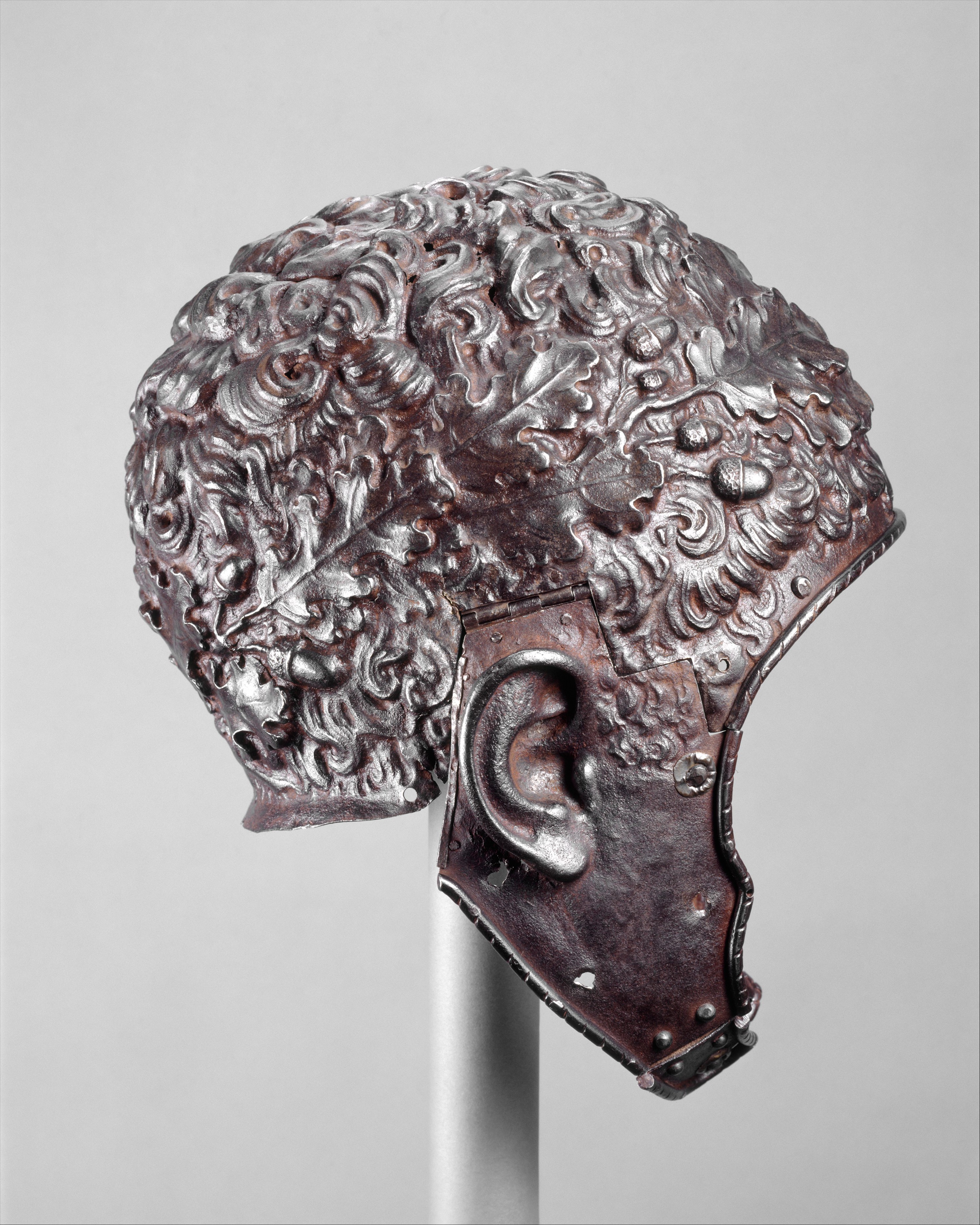
In the Museum's 1905 handbook Dean wrote that the armour had probably suffered a number of adaptations and that the helm was entirely modern, possibly of Viennese workmanship.
In the Museum's 1905 handbook Dean wrote that the armour had probably suffered a number of adaptations and that the helm was entirely modern, possibly of Viennese workmanship. He saw the modernity and guessed the wrong city.
Pyhrr's 2012 article draws the make-up of the armour from Ressman's own inventory, correspondence and receipts among the de Cosson papers, held in the library of the Royal Armouries (note 77), and names Tachaux as the maker in the next note (note 78). That note cites no document for the name itself, and it does not say that 2012 was the first time the maker was named. The attribution in the sources read therefore rests on a collector's papers and Dean's own act of hiring the man, not on a mark struck in the steel, and no technical examination of the helm is published in the sources read.
Becker and Schorsch place Tachaux's hiring in 1909 and say that he remained at the Museum until 1919, working part-time for the Department of Arms and Armor, founded in 1912, and part-time for Dean...
Becker and Schorsch place Tachaux's hiring in 1909 and say that he remained at the Museum until 1919, working part-time for the Department of Arms and Armor, founded in 1912, and part-time for Dean and other collectors in Dean's private armory attached to his home. The Museum's label says he brought a set of 644 tools from Paris, hammers and stakes of many sizes, which combined his own with those he inherited from Klein. The set was bought by the Museum in 1912 (Rogers Fund) at Dean's request.
Dean's 1920 book lists the people who labored early and late in the Armor Workshop as Tachaux, Bartel, Tinsley and Merkert. Raymond Bartel, a second Frenchman, had been brought to New York in 1914. The Museum had been maintaining its armour with Jacob Merkert since 1894, so Tachaux did not introduce armour care to the Museum. The Museum's current entry says Dean hired him to establish an armor conservation workshop, and that the workshop is still active.
The remains of two Greenwich-made armours of the Scudamore family were found badly damaged and incomplete in 1909 at Holme Lacy, the family house, and the Museum acquired them in 1911 (Frederick C.
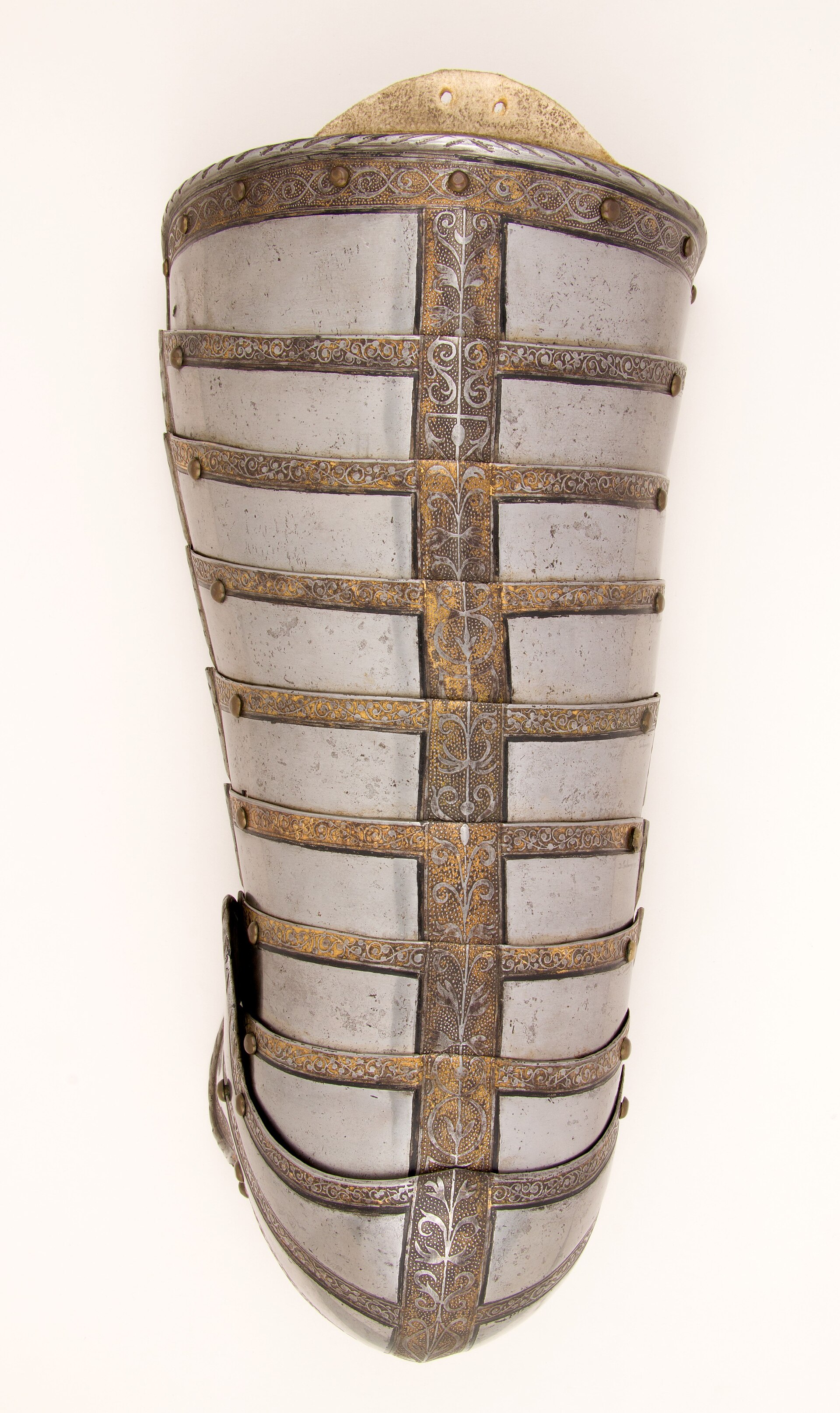
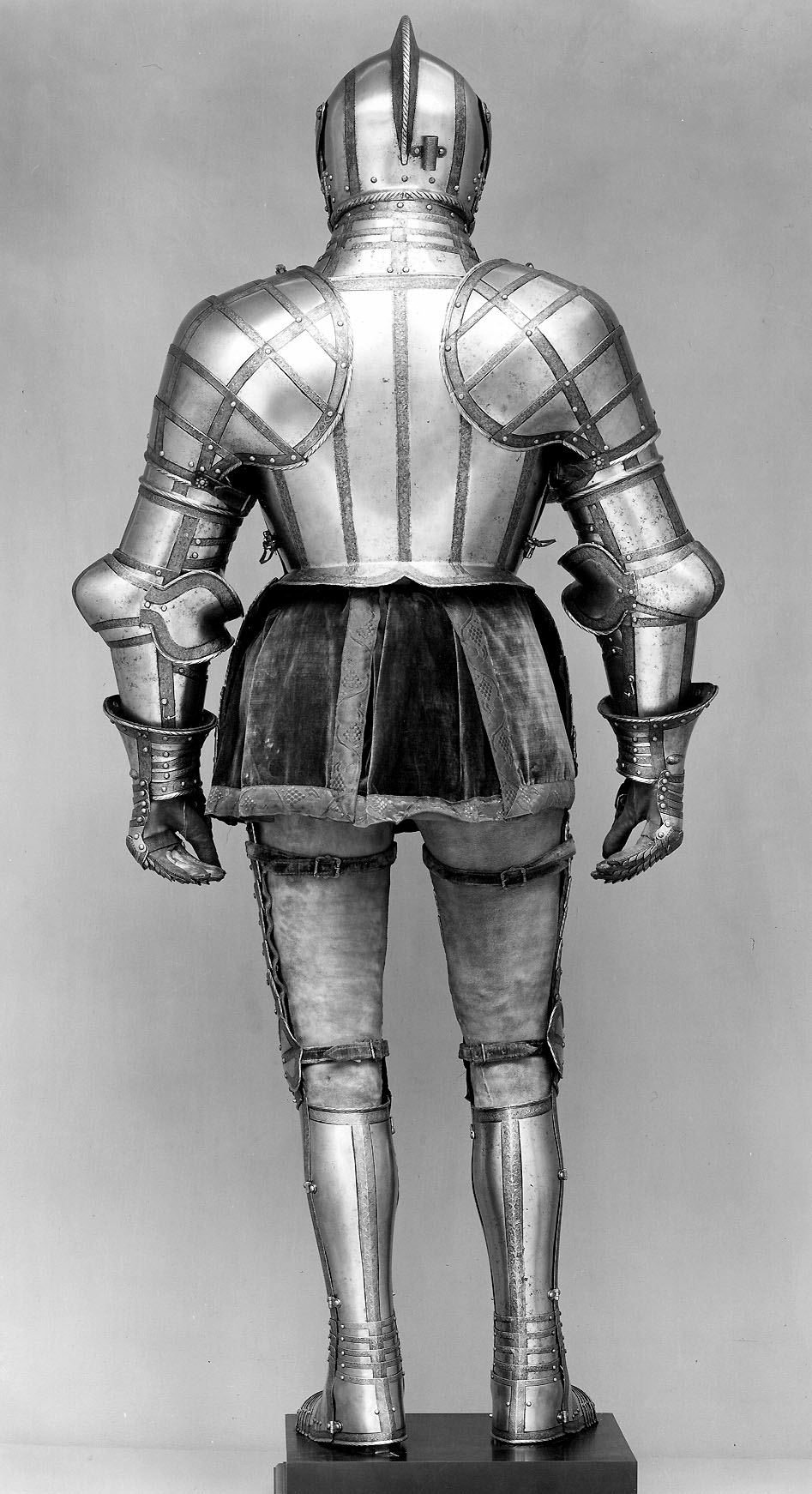
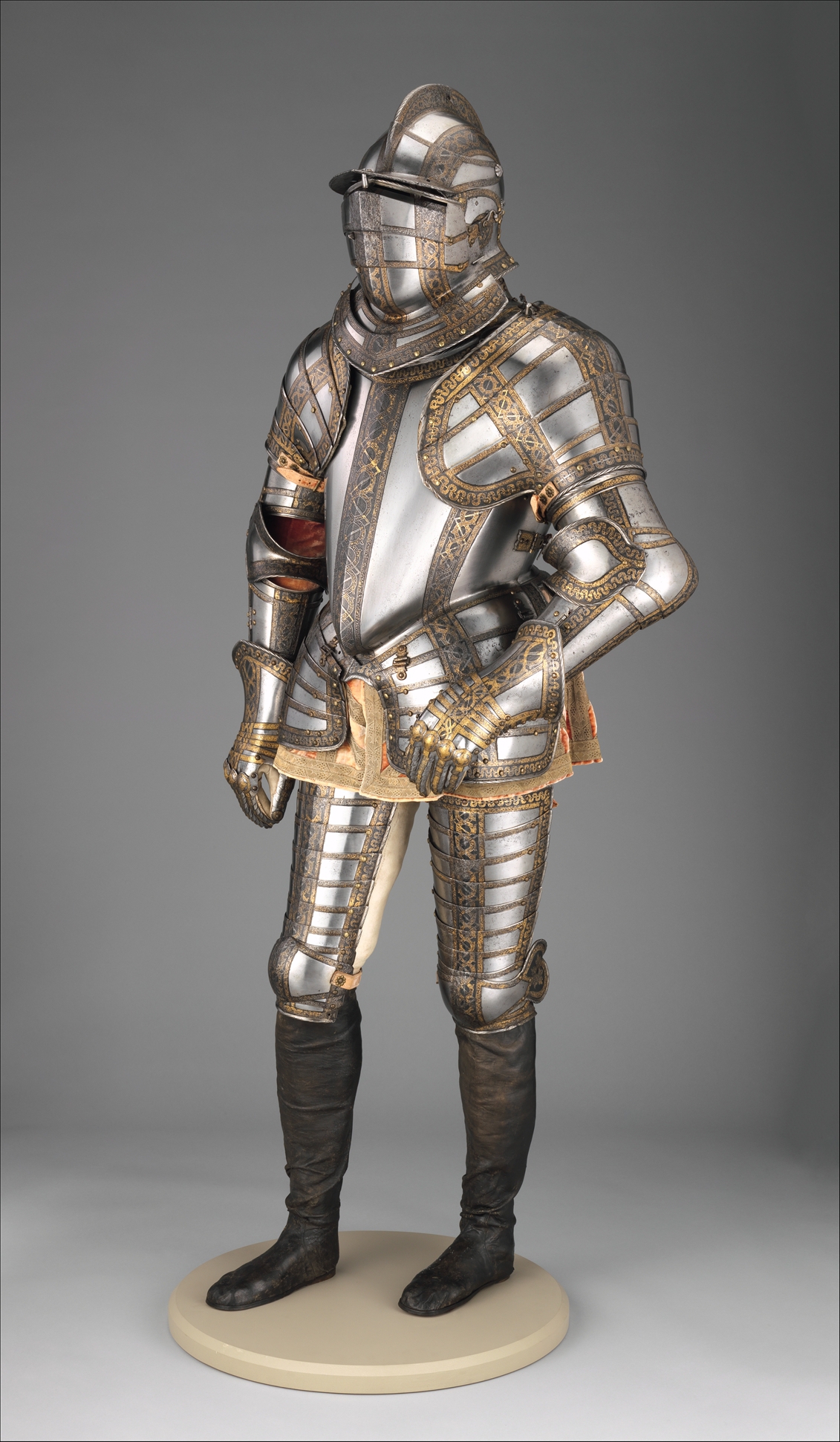
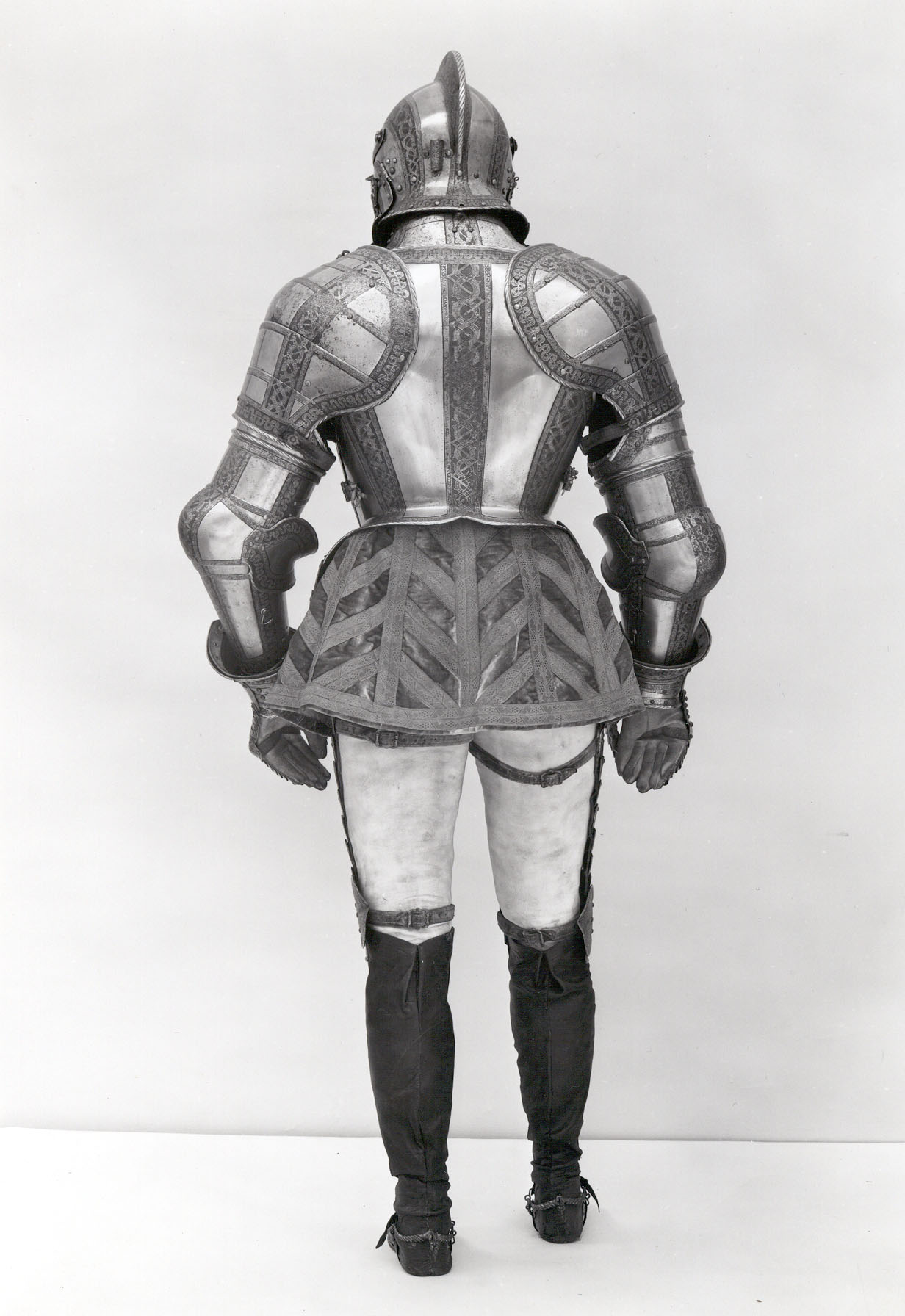
The remains of two Greenwich-made armours of the Scudamore family were found badly damaged and incomplete in 1909 at Holme Lacy, the family house, and the Museum acquired them in 1911 (Frederick C. Hewitt Fund). Dean gave Tachaux the assignment of restoring them to their original appearance. He cleaned, repaired and reassembled the surviving parts and made missing pieces. The Museum lists among them, for the armour probably of Sir John Scudamore, the helmet, left pauldron, gauntlets and right sabaton; for that of Sir James Scudamore, the breastplate, backplate and gauntlets; the cuisse and poleyn below is a further piece of his. The Museum dates the work 1915.
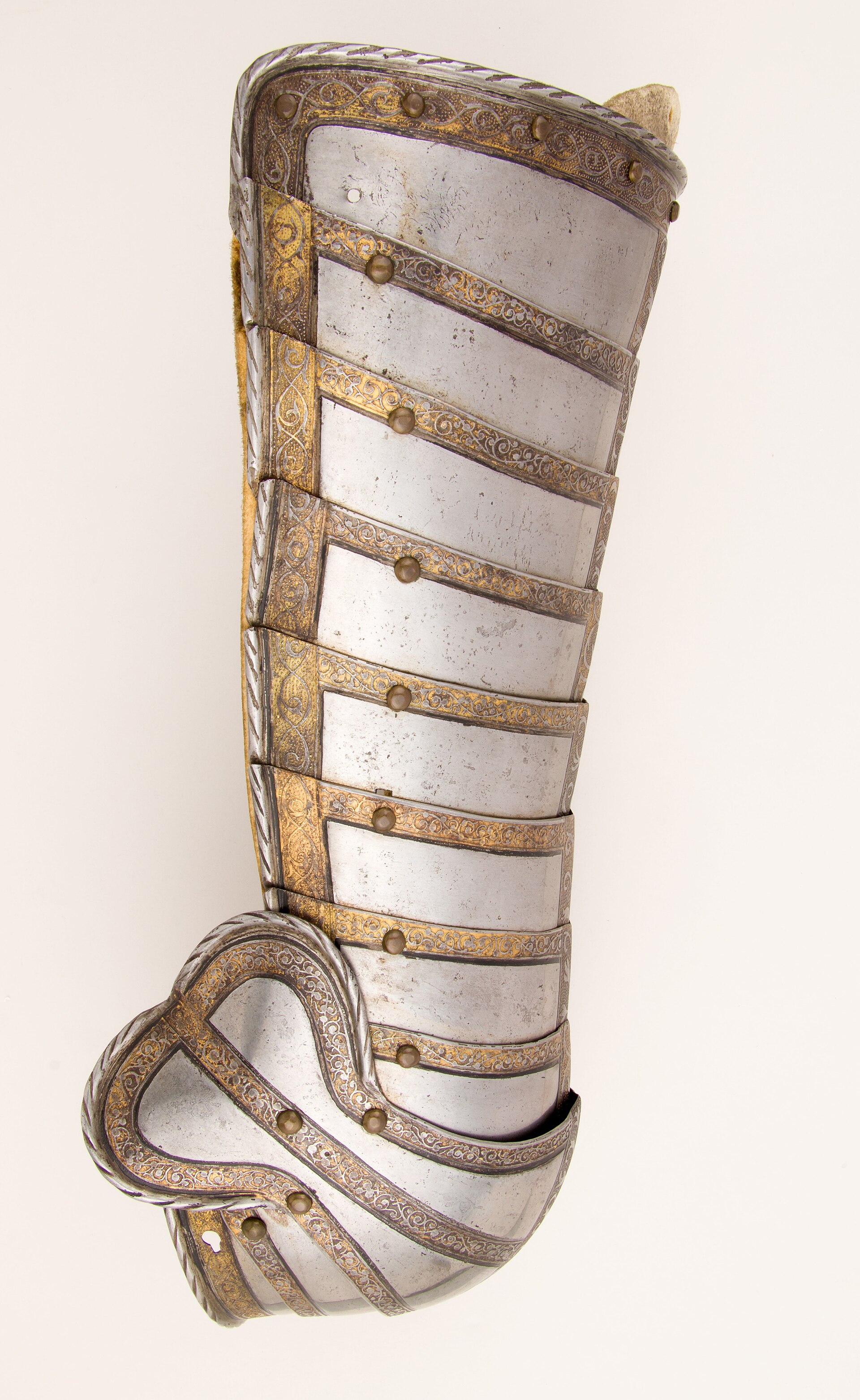
One piece survives with a date on it. The right thigh and knee defence, a cuisse and poleyn, is dated 1913 and the Museum calls it a superb example of hammerwork, etching and gilding. In 1922 the original piece reappeared at auction and was reunited with the armour, replacing Tachaux's accurate recreation, which is catalogued as an object in its own right. The two pieces are in the same collection, which makes them a direct test of the maker against the original he copied; no published comparison was found.
The Museum's Italian infantry armour, bought in 1916 (Rogers Fund), is dated 1571.
The Museum's Italian infantry armour, bought in 1916 (Rogers Fund), is dated 1571. The Museum credits Tachaux with the upper plate of the gorget, the skirt lames and the cheek pieces, dated 1917. These are modern completions of a period armour, made in the same workshop and in the same year as the first helmet prototypes.
The Museum's entry gives no technical account of how the new pieces differ from the old, and none was found elsewhere.
After the United States entered the war in April 1917, Dean was commissioned a major of ordnance and designed helmets and body armour with the Museum's armorer.
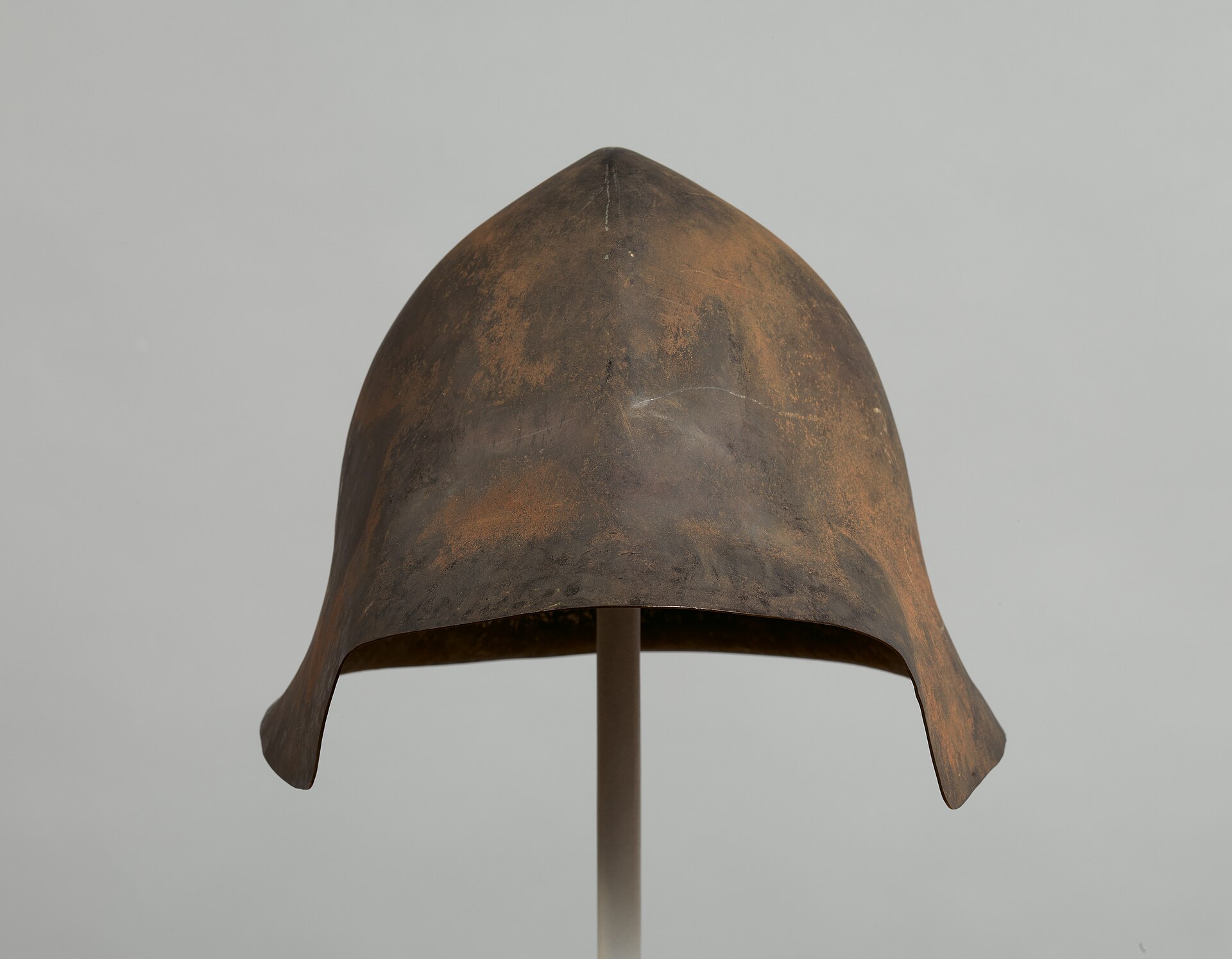
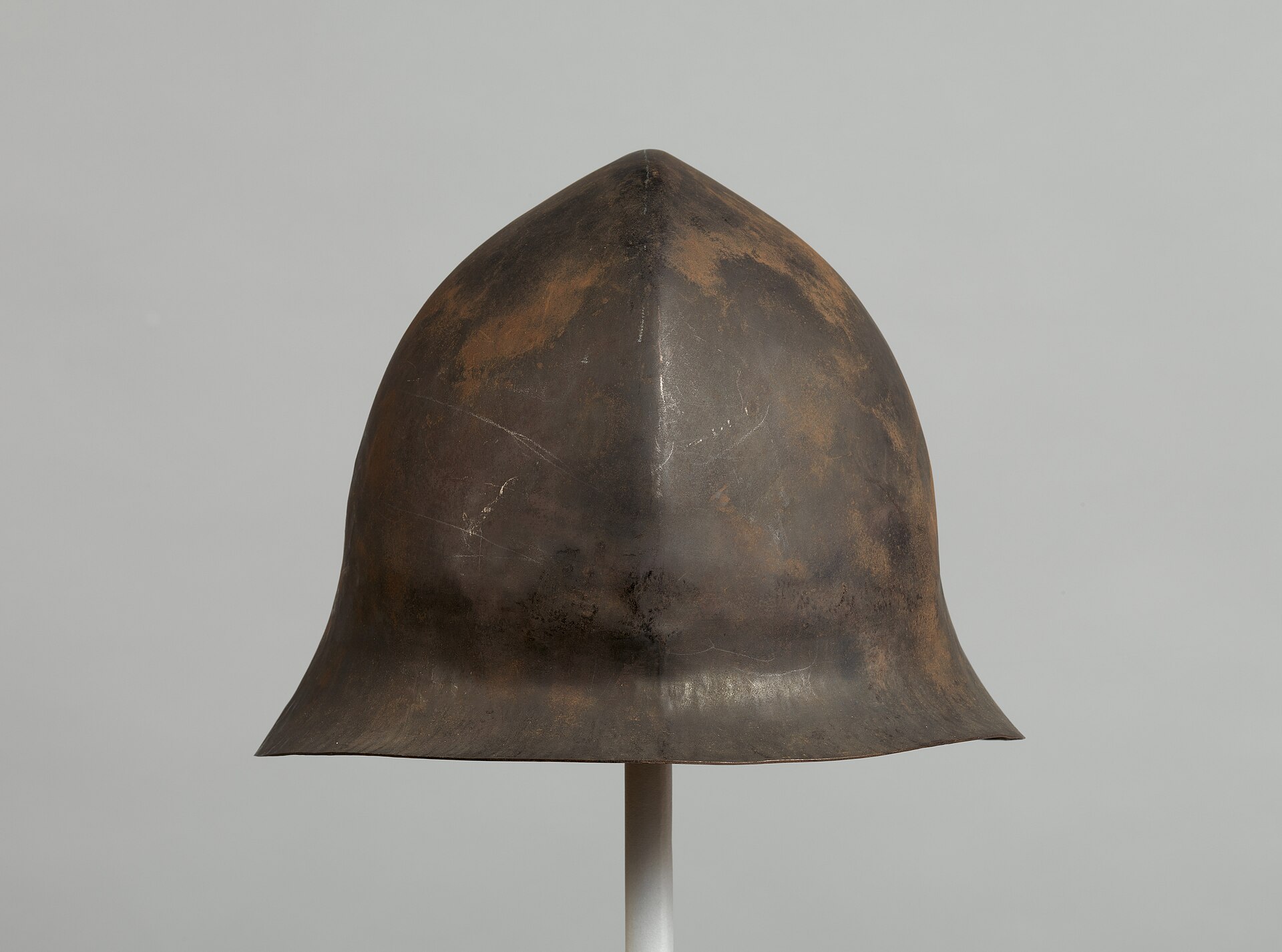
After the United States entered the war in April 1917, Dean was commissioned a major of ordnance and designed helmets and body armour with the Museum's armorer. Dean's own book says that American Helmet Model No. 2, designed in June 1917 and nicknamed the deep salade, was prepared in non-ballistic specimens by Tachaux, that Model No. 4 was made in non-ballistic metal by Tachaux during the summer of 1917, and that Model No. 6, with a tilting dome that could be rotated forward over the face, was devised by him. The same book says Tachaux designed a scaled body defence of plates riveted to a leather lining, under the Ordnance Department's supervision. Ford made about 2,000 Model 2 helmets in the autumn of 1918, according to Donald La Rocca of the Museum.
The Museum's Model No. 2 prototype of 1917, bought in 2013, is one of only a few surviving hand-forged, non-ballistic prototypes made as models for manufacturers, and the clearest piece of his work from this period. In 1918 the War Department photographed him twice in the workshop; those are the only photographs of Tachaux found.
Pyhrr's note says Tachaux left the Museum in 1919 to work for the armour collector Clarence Mackay.
Pyhrr's note says Tachaux left the Museum in 1919 to work for the armour collector Clarence Mackay. Dean's 1920 book had named Mackay as a member of the armour committee that oversaw the American helmet work, so the two men were already in contact over the same designs. The New York Times obituary of 18 March 1928, cited by Becker and Schorsch under the headline that calls him the curator for Mackay and the last of a long line of French experts, is the only record of his death found. It was not read.
What he made for Mackay, and where it is, is not documented in anything read. The same is true of his own life before 1891: nothing on his family, his Paris workshop or his clients before the Ressman job turned up.
No maker's mark by Tachaux is documented in the sources read, and the Museum's records for his pieces do not list one.
No maker's mark by Tachaux is documented in the sources read, and the Museum's records for his pieces do not list one. No letters, no contract with Lebon and no fee for the helm survive in the published literature; Pyhrr gives only Ressman's total outlay on the armour. No books he owned, society he joined or confession he held is recorded, and the objects he made were completions and prototypes with no iconographic programme of their own: a Stechzeug is a safety device for a sport, and the Scudamore pieces were made to look like what they replaced. There is nothing hidden in them and none is claimed.
His market is equally empty. None of his pieces has appeared at public auction in anything checked, and every piece credited to him that was found is in the Museum's collection.
Armorer; Restorer; Museum conservator. 1857-1928.
Born 1857 (year only; no day, month or place found in any source read), Not established; trained and working in Paris by 1891; died 1928 (reported in The New York Times, 18 March 1928, p. 33; the obituary itself was not read), Not established in the sources read.
The helm sold as period. The helm of the Dino joust armour was made in Paris about 1891 and passed with the armour as a late fifteenth-century piece until Dean wrote in 1905 that it was entirely modern. The sources read show a commissioned completion, not an intended fraud.
The Metropolitan Museum of Art, Department of Arms and Armor (New York); National Archives and Records Administration (College Park, Maryland); Royal Armouries Library (Leeds).
No public sale of any work by Tachaux is recorded in the sources read. The only auction connected with his work is the 1922 sale at which the original right thigh and knee defence of the Scudamore armour appeared; no house, date or price for it was found.
Where and when was Tachaux born, and where did he die? The Museum gives only 1857 and 1928, and the New York Times obituary of 18 March 1928 was not read.
The Metropolitan bought nearly 500 pieces of arms and armour sight unseen in April 1904 for just over $250,000.
12 min read
In this archive the person who authenticated, acquired or won back an object is repeatedly the person who owned it, named it or...
8 min read
Seventeen of the 72 Metropolitan Museum objects in the archive name the Rogers Fund in their credit line, from an Etruscan...
5 min read
Last verified
One artwork and its story every Tuesday, with the picture: who owned it, what it made, and what closes soon in the exhibition calendar. No promotion, and nothing we cannot cite.
We send one email to confirm the address and keep nothing else. Every letter carries a one-click unsubscribe. How we handle your data.
