The Sevres Ships That Carry Pompadour's Name, and the One That Does Not
About ten Sevres ship vases survive. Museum records tie two to Madame de Pompadour by name and a prince bought a third. The Baltimore ship was marked in the year she died.
Records in this piece: Potpourri Vase (Vase potpourri a vaisseau)
On this page 7 sections
ContentsClose
In short
- Two of the about ten surviving Sevres ship vases (the Met's count) can be tied to Madame de Pompadour by name in the museum records I read: the Royal Collection's, bought at the Versailles year-end sale of 1759 for 960 livres, and the Louvre's, delivered to her on 30 May 1760.
- The Met and the Royal Collection Trust make different claims about her count. The Met says she owned at least two boat-shaped vases. The Trust says she owned three of its own largest model, and the sources I read document only one of those and name none of the other two.
- The Metropolitan Museum dates its own ship to a purchase by the prince de Conde in December 1758, before the Royal Collection's 1759 sale, at 4,320 livres for a garniture of five vases.
- The Walters ship carries the date letter L, which the museum reads as 1764. Britannica gives her death as 15 April 1764. No source I read links that vase to her, and its chain starts with a 1927 catalogue entry by the Paris collector Edwin Marriott Hodgkins.
- The Louvre's page gives no price for the 1760 delivery, so the only price I found tied to her for a ship is the 960 livres of 1759.
Two ship vases can be traced to Madame de Pompadour by name
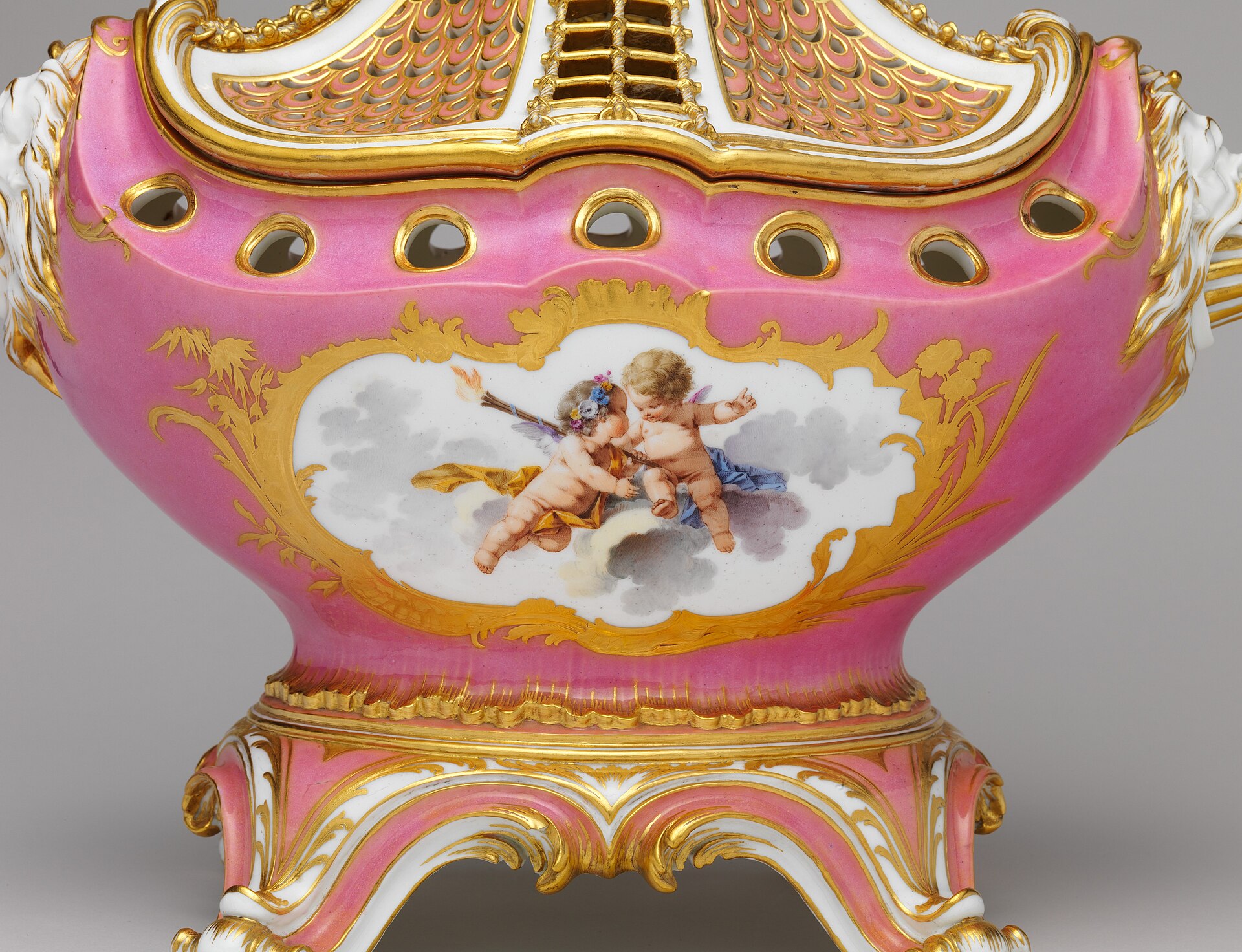
The Royal Collection and the Louvre each hold a Sevres ship vase that their own records tie to Madame de Pompadour. The Royal Collection Trust says its vase was bought in 1759 at the end-of-year sale at Versailles by Madame de Pompadour for 960 livres. It reads the date letter as F for 1758 or 1759, and lists the vase as acquired by George IV. It gives no chain between her purchase and George IV. It measures 55.1 cm, the largest of the three models.
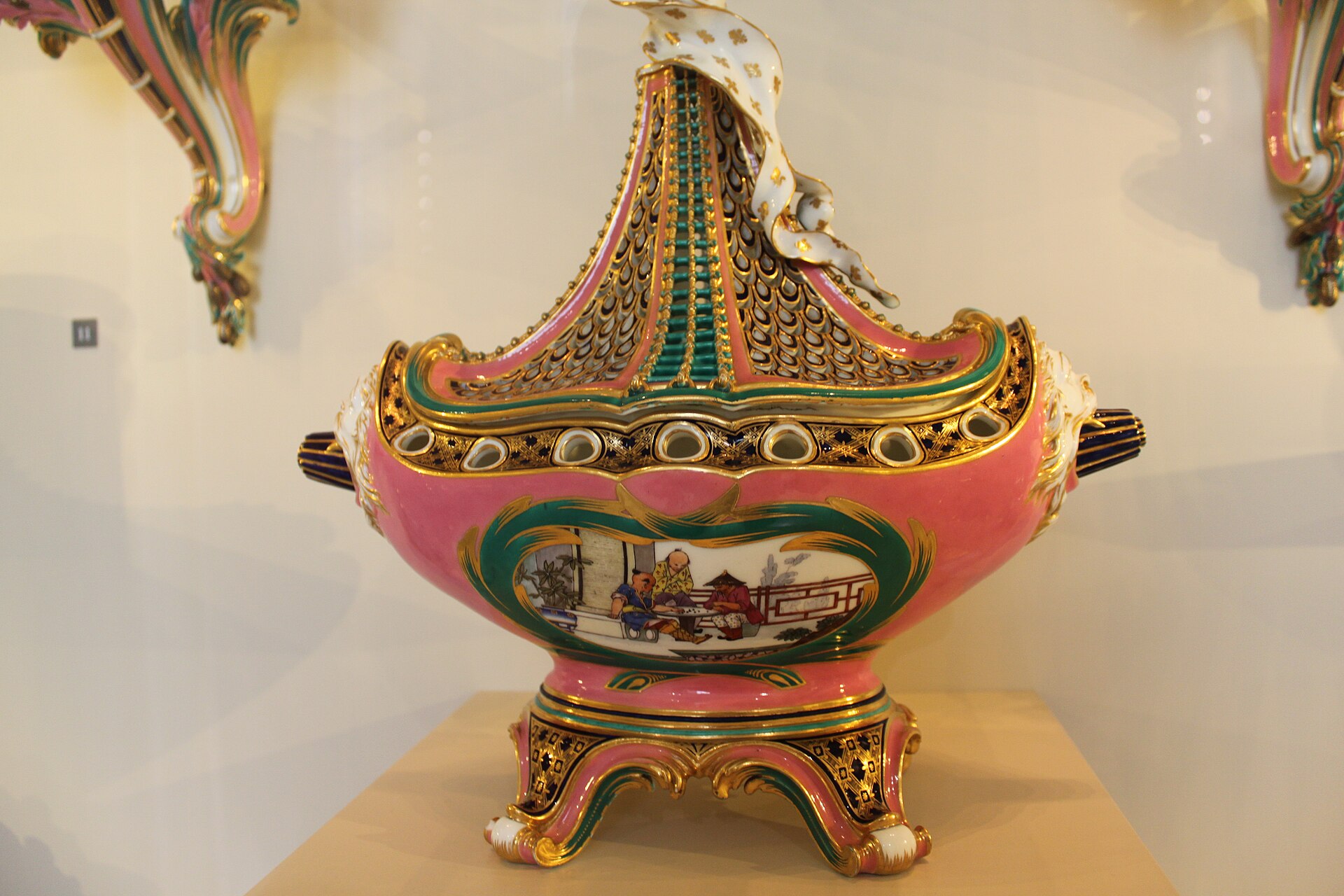
The Louvre's entry says its vase was the centrepiece of a five-piece garniture with a pink ground, delivered to Madame de Pompadour for her bedroom at the Hotel d'Evreux in Paris on 30 May 1760. Its provenance runs from her to the Legere sale in Paris on 15 to 17 December 1784, lot 152, then Lord Crewe, Baron Alphonse de Rothschild and the Grog family, before the Louvre bought it in 1984. The page names no price and no date letter. The twenty years between her death and the 1784 sale are not accounted for there, and the Louvre's records trace the vase back to her collection.
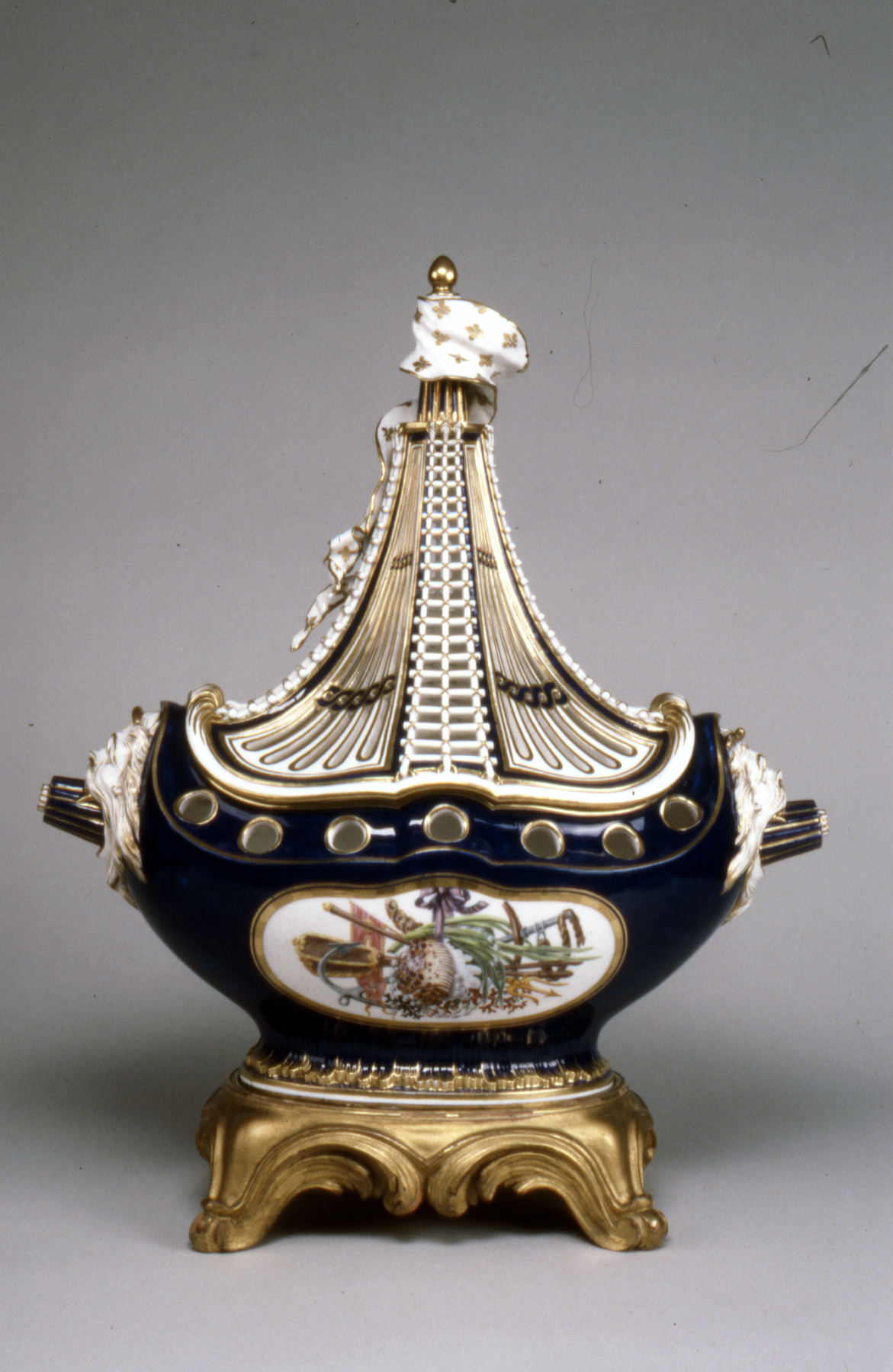
The Louvre describes its vase as a hull on a four-footed scrolled base with a pierced cover that imitates a mast. The hull is almost entirely pink, picked out in blue and green, with a Chinese-inspired scene on the front of three seated figures who are probably playing go. The back carries oriental flowering branches. Fourteen round holes pierce the top of the hull, and four rope ladders meet at the masthead beside a white flag scattered with gold fleurs-de-lis.
Those are the only two ships I could tie to her with a museum entry. Everything else said about her and the form rests on them.
The Met and the Royal Collection Trust give different counts
The Metropolitan Museum and the Royal Collection Trust make two different claims about how many ship vases Madame de Pompadour owned. The Met says she was an avid buyer of both the boat-shaped vase and the elephant-head vase, owning at least two of the boat-shaped ones. The Royal Collection Trust says she is known to have owned three examples of this model, and that they were important components of her sumptuously appointed apartments.
The Trust's sentence is about its own model, the largest of the three sizes made at Sevres, and its vase measures 55.1 cm. The Louvre's ship is a third-size vase of about 37 cm, so it is not one of the Trust's three. For that largest size, only the Royal Collection's own vase is documented in the sources I read, and none of them names the other two. The Met's two are a separate count that the Met does not itemise. I did not find a record that settles either number.
A prince bought a ship from the same factory before her 1759 purchase
The Metropolitan Museum says its own ship vase was part of a garniture bought by Louis-Joseph de Bourbon, prince de Conde, in December 1758. Its text rests on an inventory of 1779. The garniture was five vases: the ship, two elephant-head vases now in New York and two others now in the Louvre. The Met gives the price as 4,320 livres for all five, and says the prince kept them in the Palais de Bourbon.
That is a different vase from the Louvre's ship, which the Louvre's records trace back to her collection. Set against the Royal Collection's 1759 date, the Met's December 1758 purchase is the earlier dated sale among the ships I could date. The records I read do not say who bought first from the factory, and I do not claim it. They do show that someone other than her bought a ship from the factory in 1758.
Four ships set side by side show who the records name as first buyer
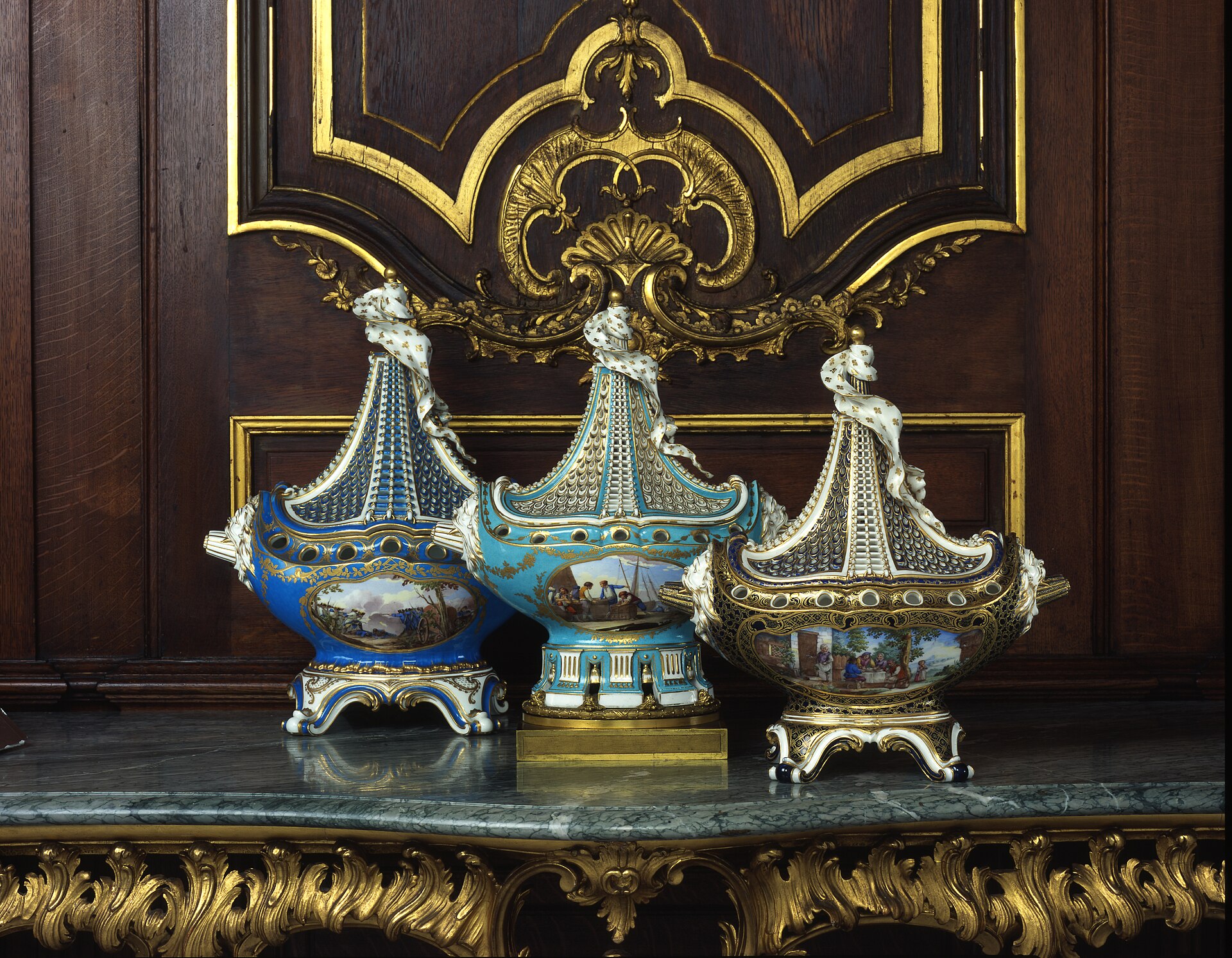
The Met counts about ten surviving ship vases. Four of them can be set side by side by what their own museum records say about the first buyer, the date and the price.
| Vase | Date or mark | First buyer named | Price |
|---|---|---|---|
| Royal Collection, RCIN 2360 | Date letter F, 1758 or 1759 | Madame de Pompadour, 1759 year-end sale at Versailles | 960 livres |
| Louvre, OA 10965 | About 1760, no date letter | Madame de Pompadour, delivered 30 May 1760 | Not given |
| Metropolitan Museum, 58.75.89a, b | 1758 | Prince de Conde, December 1758 | 4,320 livres for five vases |
| Walters, 48.559 | Date letter L, read as 1764 | None recorded | None recorded |
The 960 livres and the 4,320 livres are not comparable per vase. One is a single vase and the other is a garniture of five, and the Met does not split the sum.
She stands behind the factory, which is a wider claim than the ships
Britannica names Madame de Pompadour as a major reason for the Sevres factory's success. It says the move from Vincennes to Sevres, where she had a chateau, came through her influence, as did the involvement of Francois Boucher and the sculptor Etienne-Maurice Falconet. It adds that the colour rose Pompadour was named after her in 1757.
Britannica's biography calls her a notable patron of the arts and says she and Louis XV patronised all forms of decorative art: painters, sculptors, cabinetmakers and craftsmen. That is patronage of a house, a style and a staff. It is not the same claim as owning a given ship, and the ship records show the difference. In the museum records I read, her name attaches to the form twice by name, and a prince's name attaches to another.
The Baltimore ship was marked in the year she died
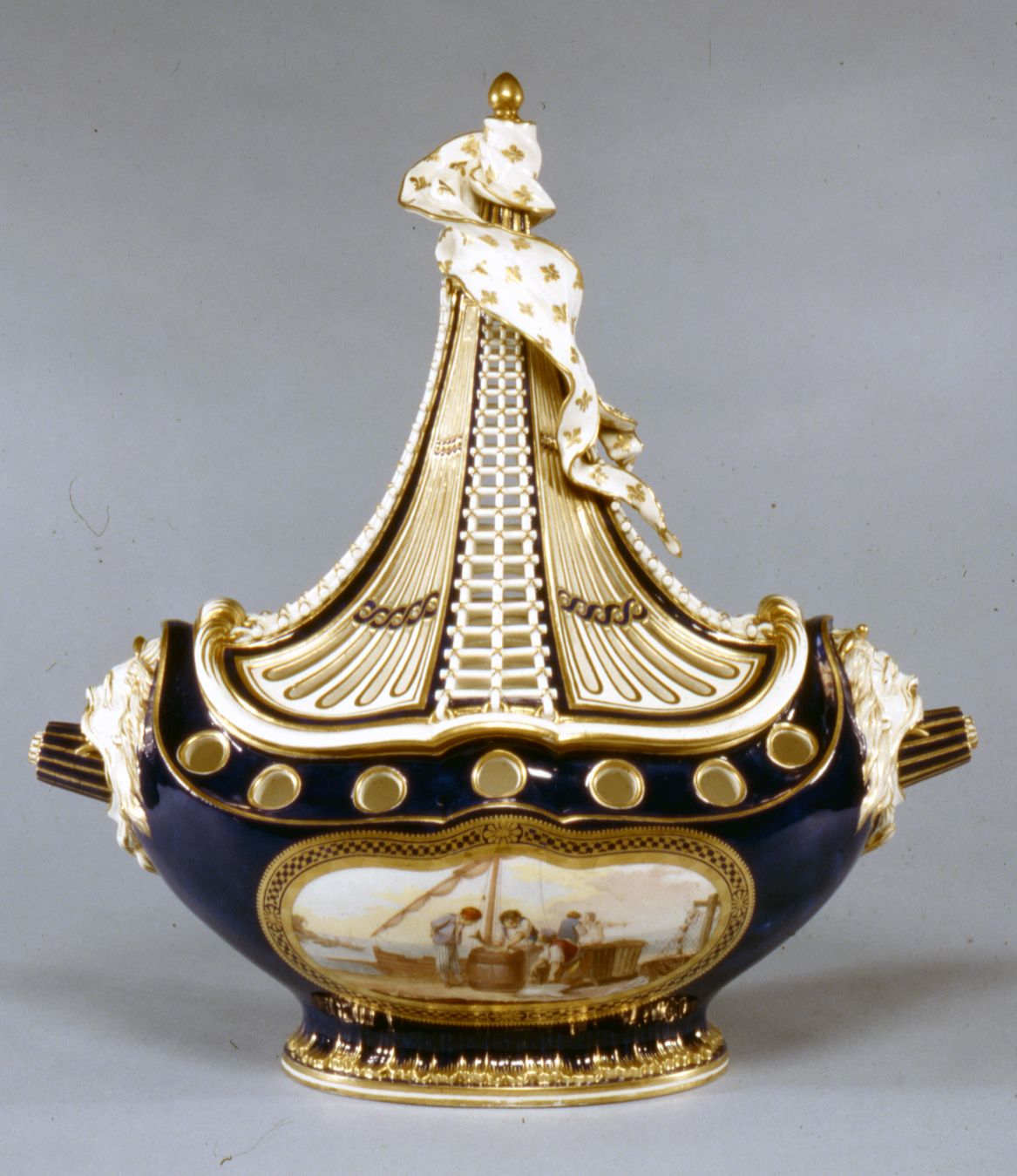
The Walters Art Museum reads the date letter on its ship vase as L for 1764, the year Madame de Pompadour died. Britannica gives her death as 15 April 1764 at Versailles. The Walters entry says the factory mark and the date mark are painted in blue under the base, and the painter's mark M is for Jean-Louis Morin. It credits Jean-Claude Duplessis le Pere with the form, with a query.
Nothing in the Walters entry names her. Its provenance begins with Sir Anthony Nathan de Rothschild, with the date and mode of acquisition unknown, and then Edwin Marriott Hodgkins in Paris by 1927, a Paris collector. A note says the Rothschild link is not confirmed and comes from number 30 in Hodgkins's 1927 catalogue, which reads in part that the vase was formerly in the collection of Sir Anthony de Rothschild. A date letter alone does not say whether a vase was made before or after a death in April, and I do not claim it either way. What the record shows is that the museum calls it a vase of Louis XV's reign and does not call it hers.
What no source I read can say about her ships
Several basic facts about Madame de Pompadour's ships are missing from the museum records I read. The Louvre gives no price for the delivery of 30 May 1760. The Royal Collection Trust gives no chain from her 1759 purchase to George IV, and neither it nor the Met names the other ships it counts as hers. No page I read explains how the Louvre's vase passed from her collection to the Legere sale of 1784. The Walters does not say whether its vase was commissioned or sold from the factory's stock.
The factory's own sales registers would answer some of this, and I did not read them. The Louvre cites a 2024 article on the dealer Clement Legere and the Versailles exhibition catalogue Madame de Pompadour et les arts for its entry, and I have not seen either among the works it lists.
Questions
The Met says at least two boat-shaped vases. The Royal Collection Trust says three of its own largest model, and I found documents for only one of those. The Royal Collection's and the Louvre's ships are the two I could tie to her by name.
No record I read says so. The Walters reads its date letter as 1764, the year she died on 15 April, and its provenance starts with a Rothschild owner, with the date and mode of acquisition unknown.
The Royal Collection Trust says its vase was bought by her at the Versailles year-end sale of 1759 for 960 livres. The Louvre's page gives no price for the vase delivered to her on 30 May 1760.
The Met says the prince de Conde bought it in December 1758 as part of a garniture of five vases for 4,320 livres. Its text rests on an inventory of 1779.
Sources
- 1Musee du Louvre, collections online, Pot-pourri a vaisseau, OA 10965: provenance from Madame de Pompadour (delivered 30 May 1760) to the Legere sale of 1784, Lord Crewe, Alphonse de Rothschild, the Grog family and the purchase of 1984. collections.louvre.fr/en/...
- 2Royal Collection Trust, Sevres porcelain factory, pot-pourri vase and cover (pot-pourri a vaisseau), RCIN 2360: bought in 1759 at the end-of-year sale at Versailles by Madame de Pompadour for 960 livres; she is known to have owned three examples. rct.uk/collection/...
- 3The Metropolitan Museum of Art, Potpourri vase (pot-pourri a vaisseau), 58.75.89a, b: bought by the prince de Conde in December 1758 for 4,320 livres as one of five vases; Madame de Pompadour owned at least two boat-shaped vases. metmuseum.org/art/...
- 4Encyclopaedia Britannica, Jeanne-Antoinette Poisson, marquise de Pompadour: born 29 December 1721, died 15 April 1764; patron of the arts. britannica.com/biography/...
- 5Encyclopaedia Britannica, Sevres porcelain: her patronage, the move from Vincennes, Boucher and Falconet and rose Pompadour named in 1757. britannica.com/art/...
- 6The Walters Art Museum, Potpourri Vase (Vase potpourri a vaisseau), 48.559: date letter L for 1764, painter's mark M, provenance and the note quoting Hodgkins's 1927 catalogue number 30. art.thewalters.org/object/...
More in The Women Behind the Art
The partWho Stitched the Bayeux Tapestry? What the Documents Say About English Women's Embroidery
No document names who stitched the Bayeux Tapestry. What Domesday, the 1476 inventory and the Queen Matilda story show about English women's...
The Two Women in the Oseberg Ship, and the Queen Nobody Named
Two women lay in the Oseberg ship in 834. What the bones, isotopes and DNA show, and how a queen and a servant were read into a grave that no text...
The Name on the Rim: What Documents Say About Projecta
The Projecta Casket names its bride in one line of Latin. What the British Museum, Dalton 1901, an epitaph and Parliament say about her, and what is...