Who Gave the Woman in Gold Its Title, and What Is Documented of Adele Bloch-Bauer
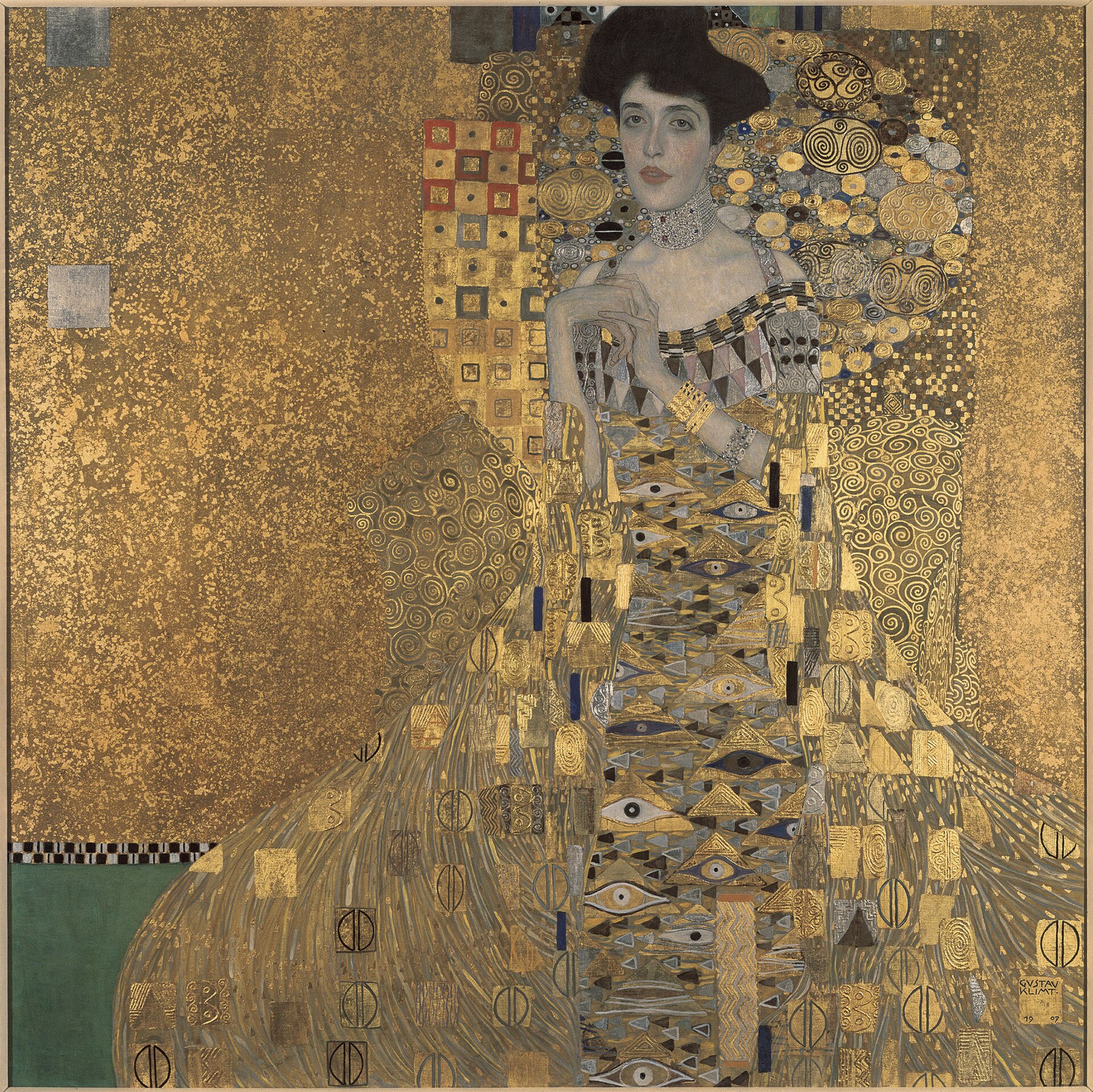
Klimt's gold portrait of Adele Bloch-Bauer carried the title Dame in Gold in 1942, with her name left off. The documents show what is known and what is rumour.
Records in this piece: Portrait of Adele Bloch-Bauer I
On this page 6 sections
ContentsClose
In short
- The earliest document we found with the title Dame in Gold is Emil Pirchan's 1942 Klimt book, as reported by Jonathan Petropoulos in 2005. It omits Adele's name. No source read shows the Belvedere itself choosing the title.
- The Gallery's inventory label, 'Dedication, Adele Bloch-Bauer' per the 2006 arbitration award, is undated and says how the picture was acquired. It is not a title, and Petropoulos calls the label wrong because the picture came by exchange.
- Her handwritten will of 19 January 1923 names Gustav Bloch-Bauer, her brother-in-law, as executor, leaves 50,000 Czechoslovak crowns each to two Vienna societies and asks Ferdinand to divide her jewellery among nephews and nieces.
- The story that she was Klimt's lover has no letter behind it in the sources read. Petropoulos says it defies scholars and Czernin dismissed it. Dean (1996) and Mueller and Tatzkow (2010) are reported on opposite sides.
The title Dame in Gold is on record in 1942, and no document we read says who chose it
The earliest document we found that gives Klimt's portrait the title Dame in Gold is a book by Emil Pirchan, published in Vienna in 1942, and it leaves the sitter's name out. We have not seen the book or the 1943 catalogue. The historian Jonathan Petropoulos describes it in a report dated 14 July 2005, written for the Altmann arbitration: Pirchan's text on the picture, on page 65, does not mention Adele, and the plate (number 105) carries only the title Dame in Gold. Petropoulos writes that the name was presumably left out to avoid drawing attention to the Jewish subject. That is his inference, and the report does not say who made the choice.
The second document is the catalogue of a 1943 Klimt exhibition organised by the Reichsstatthalter of Vienna, with the main text by Fritz Novotny. Petropoulos says it also omitted her name, and that both the Pirchan book and the catalogue listed the portrait as property of the Oesterreichische Galerie. He quotes Hubertus Czernin's book Die Faelschung (page 213) calling the picture an entjudete painting, a painting stripped of its Jewish identity. The Neue Galerie's timeline adds a 1943 title, Portrait of a Lady with Gold Background. The pages of the report we read give no title for the catalogue, so that detail rests on the timeline alone.
The popular story says the Belvedere renamed it. The sources we read tell that story five ways, and two of them name a book or catalogue.
| Source | Who is named | Title given | Document cited |
|---|---|---|---|
| Neue Galerie timeline | Belvedere implied, 1941 | Woman in Gold | A Belvedere book, not named |
| Neue Galerie website | Vienna, unnamed | Woman in Gold | None |
| Lisa Silverman, for the Leo Baeck Institute | The Nazis | Die Frau in Gold | None |
| Wikipedia, citing Anne-Marie O'Connor | The gallery | Dame in Gold | A book, pages 151 to 152 |
| Petropoulos report, 2005 | Not stated | Dame in Gold, 1942 | Pirchan book and 1943 catalogue |
Nobody in that table has shown us a Belvedere catalogue card, a label or an inventory line with the new title on it. The 1941 book the timeline mentions is described by a quotation about a shimmering crust of gold and is not named. We also have not found who first used the English words Woman in Gold.
The gallery's inventory called the painting a dedication by Adele, which says how it came in and not what it was called
The Oesterreichische Galerie's inventory list carried an acquisition label that names Adele. The 2006 arbitration award, which says its judges looked at that list, reports the entry for the first portrait as "Dedication, Adele Bloch-Bauer". The award does not date the entry. Today the Belvedere's own provenance page lists the painting as Adele Bloch-Bauer I, 1907, inventory number 3830, among the five Klimts the Advisory Board advised against returning in 1999 and which were later restituted.
The 1999 decision itself says little here. The Art Restitution Advisory Board's text of 28 June 1999 lists drawings and porcelain item by item and refers to the Klimt paintings only as a group. It names no title for the portrait.
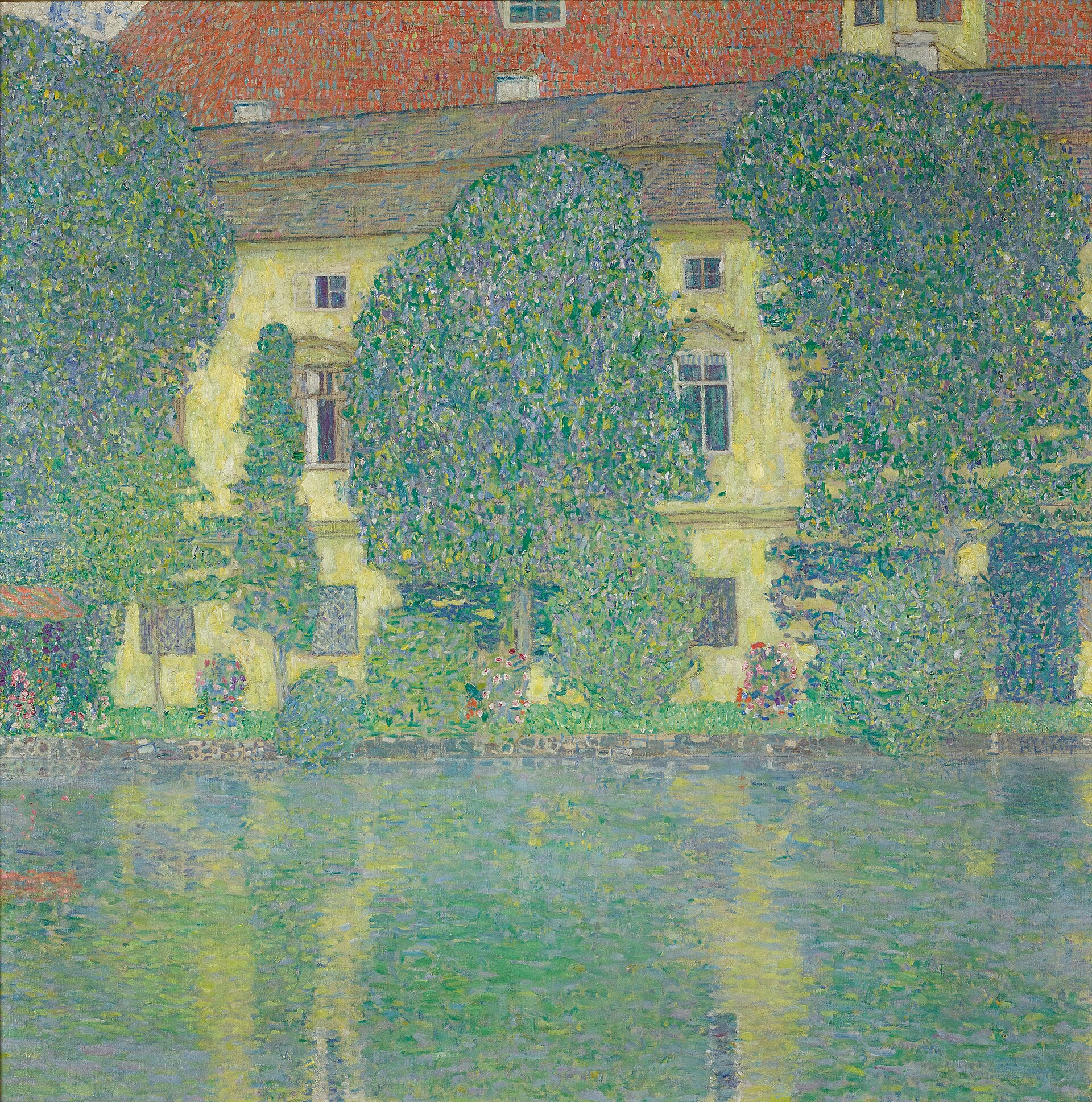
What the Gallery's later books got wrong was the date, which is a different kind of omission. Petropoulos reports that Novotny and Johannes Dobai's 1967 Klimt catalogue gave 1936 as the year the painting entered the Gallery, and that Gerbert Frodl repeated it in 1995. The real route, on Petropoulos's account, was a letter of 3 October 1941 from the lawyer Erich Fuehrer to the director Bruno Grimschitz, ending Heil Hitler, and an exchange in which Fuehrer received the landscape Schloss Kammer am Attersee III that Ferdinand Bloch-Bauer had given in 1936. Wikipedia puts the handover in December 1941, so the month is open. Petropoulos suggests the 1936 date may have been an effort to hide a Nazi-era acquisition. The Neue Galerie's timeline puts a falsification of the provenance records in the entry where Novotny becomes director in 1960, and does not say who did it. We have not seen those records.
The inventory entry is undated and says how the picture was acquired. It is not a title, and Petropoulos says the label was wrong, because the picture came in by exchange. We cannot say the gallery kept her name. The books of 1942 and 1943 left it off, and the printed catalogue date put the acquisition before the Nazi period.
Her own documents show a woman who read, gave money and asked where the pictures should go
Adele Bloch-Bauer's handwritten will of 19 January 1923 is the one document of hers we could read whole. It names her husband Ferdinand her universal heir and her brother-in-law Gustav Bloch-Bauer, a lawyer, as executor. It leaves 50,000 Czechoslovak crowns each to the Vienna workers' association Kinderfreunde and to the society Die Bereitschaft, and it asks that her libraries in Vienna and at Jungfernbreschan go to the Vienna People's and Workers' Library, with leave to keep the books or sell them. It asks Ferdinand to divide her jewellery among her nephews Karl, Robert and Leopold Bloch-Bauer and her nieces Luise and Maria-Victoria Bloch-Bauer and Mira and Bettina Bauer. The same article asks him to leave her two portraits and four Klimt landscapes to the state gallery. Her request about the paintings is argued over in the case article on this site, and this page leaves it there.
Two earlier papers carry her voice. On 22 August 1903 she wrote from Elbekosteletz to Julius Bauer, in a letter now in the Austrian National Library, that her husband had decided to have her painted by Klimt, who could only begin the coming winter. In 1919 she wrote to the Gallery's director Franz Martin Haberditzl. Petropoulos quotes the German through an article by Stephan Koja and Andreas Kugler in the Frankfurter Allgemeine Zeitung of 9 May 2003. In our translation she says she wished to be obliged, for the memory of her faithful friend Klimt, to make a work of his hand available to the public. Petropoulos notes that Haberditzl was courting her as a donor at the time.
The rest comes from other people. The Klimt Foundation's database says the couple kept a salon where Gustav Mahler, Arthur Schnitzler, Stefan Zweig and Richard Strauss were guests, and that Adele supported Social Democrats with money. Petropoulos adds, with a footnote to Salomon Grimberg in Art and Antiques in 1986, that she followed a disciplined course of self-education, reading the classics each morning, and that she knew the Social Democratic leader Karl Renner and the health reformer Julius Tandler. Grimberg is a magazine writer reported at second hand, and we did not see the article. Maria Altmann, Adele's niece, was nine when her aunt died and remembered a sickly woman who smoked constantly. Lisa Silverman reports that memory without a second witness for it.
Klimt began her portrait in 1903 and made more than a hundred studies for it
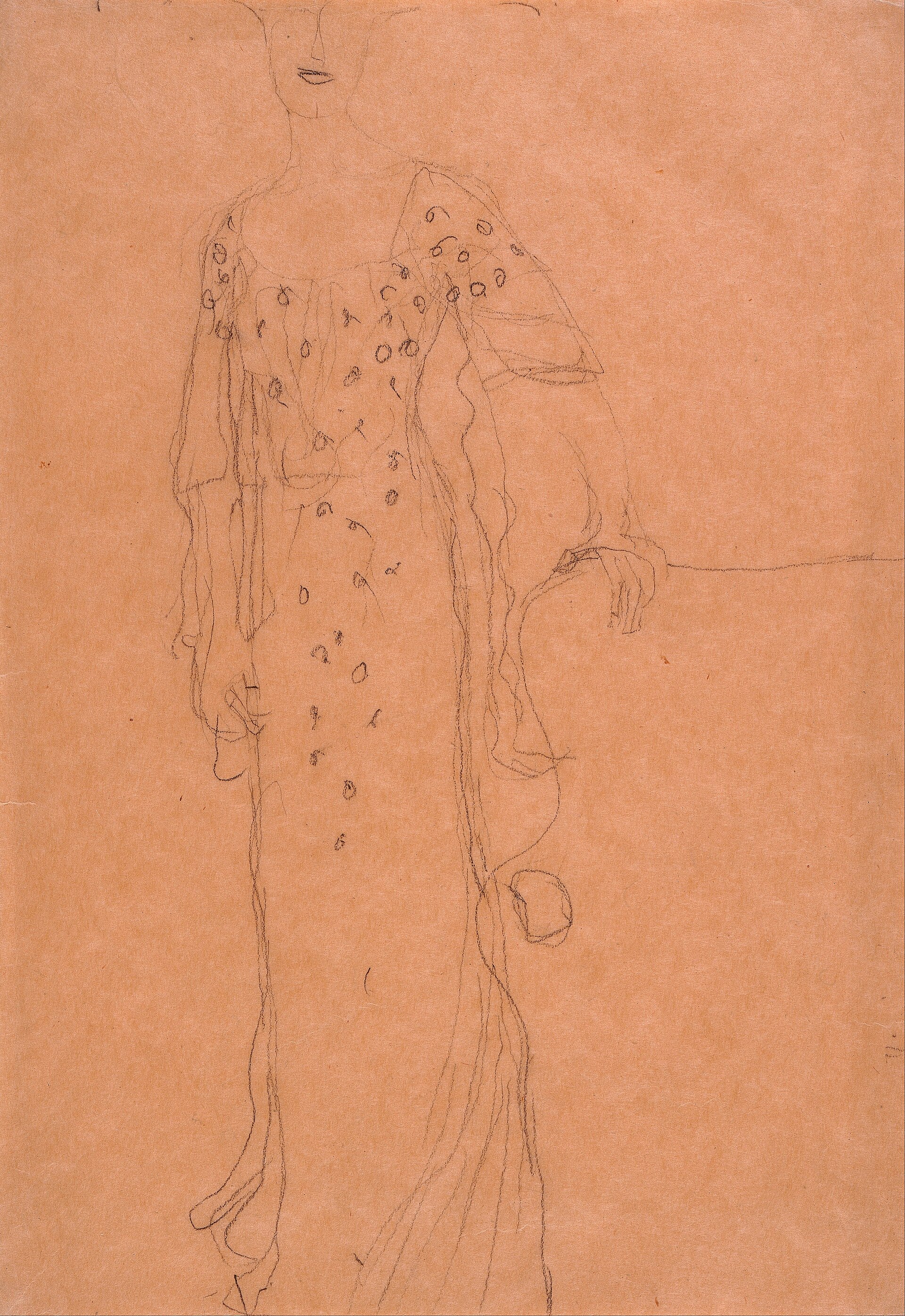
Klimt started work on the first portrait in the winter of 1903 and finished it in 1907, and art historians count over one hundred preparatory drawings and studies for it. That count comes from Tobias Natter and Gerbert Frodl, quoted by Petropoulos, and we did not see the drawings. One survives in The Jewish Museum in New York, listed on Wikimedia Commons as a charcoal study of 1903. Another set was bought on the market: the Klimt Foundation cites a Galerie Miethke filing card, number 355, of 17 July 1906 for the sale of sixteen sketches to the couple. Petropoulos says she appears to have led it and that some of the pencil sketches relate to the first painting.
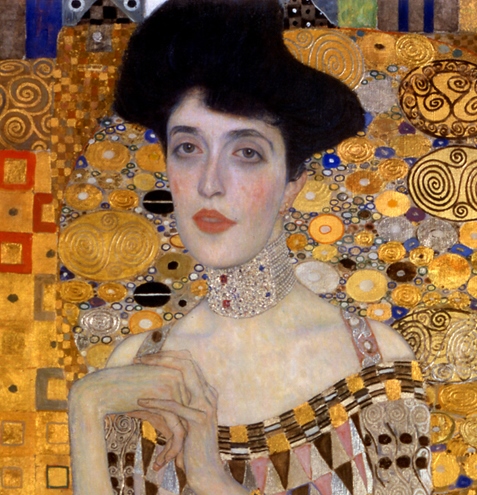
The Klimt Foundation says the portrait was first meant as a wedding anniversary gift for Adele's parents and that it is unclear why the family waited so much longer. It went to Mannheim in 1907, where the catalogue listed three mosaic pictures by Klimt, and to the Vienna Kunstschau in 1908, where it faced the portrait of Fritza Riedler on a long wall. A photograph of Adele by Friedrich Viktor Spitzer, taken in 1906, appeared in a photographic journal in 1908 beside portraits of Klimt, Hermann Bahr and Sonja Knips.
She sat to him again. The Klimt Foundation dates the second portrait to 1912 and describes it as looking very different, with floral colour and Asian ornament. Natter, via Petropoulos, calls her the only person Klimt painted twice. The Neue Galerie says the same of full-length portraits. The Fritza Riedler portrait and others hung with the first Adele picture in the Kunstschau, so the claim is about her and not about the room.
The affair with Klimt is claimed and denied, and the sources read cite no letter for either side
Whether Adele Bloch-Bauer was Klimt's lover is not settled by any document we read. The Neue Galerie has said the affair was long speculated about. Petropoulos says some observers suggest it, citing Salomon Grimberg in 1986, that there is some evidence (certain renderings of her are erotic) and that the matter defies scholars. He adds that Czernin, whom he calls the leading authority on her, dismisses it (Die Faelschung, page 57). The Klimt Foundation's entries on the family do not raise the question at all.
Wikipedia reports two printed positions. The artist Catherine Dean, in 1996, thought Adele the one society lady Klimt painted who was known for certain to be his mistress. Melissa Mueller and Monika Tatzkow, in 2010, wrote that no evidence had ever been produced that the two were more than friends. We have only Wikipedia's account of both, so we carry them as reported and settle neither.
What the documents show is a friendship in her words: in 1919 she called him her faithful friend, and the Klimt Foundation records his visits to the family in 1911 and 1912. On the marriage, Petropoulos passes on through Natter Maria Altmann's view of it. She was nine when Adele died. Czernin, via Petropoulos, reports a baby who died after two days, while the Klimt Database says the couple had no children. We do not know. Nobody in the sources read has put a letter on the table for the affair.
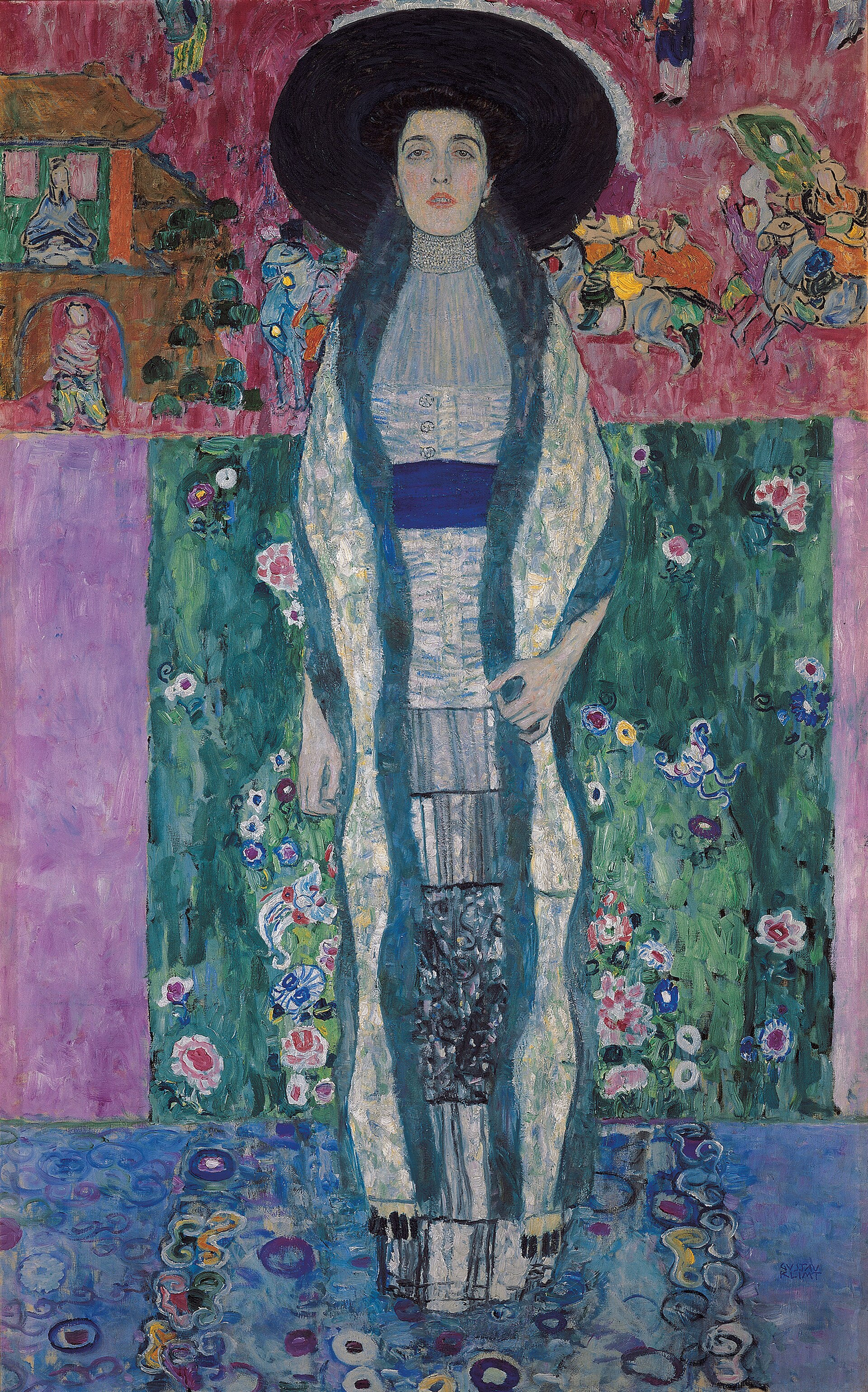
She died in January 1925 and her room became a memorial
Adele Bloch-Bauer died of meningitis in January 1925, aged 43, and the sources disagree on the day. The Klimt Foundation gives 24 January and says she was buried at the urn cemetery in Vienna-Simmering. Petropoulos gives 25 January. The award gives 24 January in the claimants' summary and 25 January in a letter it quotes, so the discrepancy is in the case papers as well. The Neue Galerie's timeline says she slipped into a coma. We do not have the death register.
After her death Ferdinand kept her room as a memorial. Petropoulos, citing Natter, says it was left unchanged and held the six Klimt pictures named in her will. The Klimt Foundation calls the room the Klimt Room and says it was where the paintings returned in early 1920 after a loan to the Gallery. Petropoulos dates that loan from 1919 to 1922, so the end of it is another place where two sources differ.
The gold portrait hung in that house until 1938. It reached the Gallery in 1941, and the number the Gallery gave it was 3830. The Gallery's list describes it as a dedication by her, which is a record of how it came in and not of what it was called.
Questions
No document we read says. Jonathan Petropoulos reports in a 2005 expert report that Emil Pirchan's 1942 Klimt book used the title Dame in Gold on its plate and left out Adele's name. Wikipedia says the gallery chose it, the Neue Galerie says Vienna did and Lisa Silverman says the Nazis did. None of them names a catalogue card or label.
We cannot say. The 2006 arbitration award reports an undated inventory label, 'Dedication, Adele Bloch-Bauer', which says how the picture was acquired and is not a title. Petropoulos calls the label wrong because the picture came by exchange. The books of 1942 and 1943 he reports left her name out.
The sources read do not settle it and cite no letter. Petropoulos says the matter defies scholars and that Hubertus Czernin dismissed it. Wikipedia reports Catherine Dean taking the opposite view in 1996 and Melissa Mueller and Monika Tatzkow finding no evidence in 2010.
In January 1925, of meningitis, at 43. The Klimt Foundation says 24 January and Petropoulos says 25 January. The award gives 24 January in the claimants' summary and 25 January in a letter it quotes.
Sources
- 1Report of Professor Jonathan Petropoulos, Claremont McKenna College, 14 July 2005 (history of the seven Klimt paintings; Pirchan 1942, the 1943 exhibition catalogue, inventory numbers, Adele's biography and the Czernin references). bslaw.com/altmann/...
- 2Adele Bloch-Bauer, handwritten will, Vienna, 19 January 1923 (German transcript; owner given as Wiener Stadt- und Landesarchiv), ArThemis, University of Geneva. plone.unige.ch/art-adr/...
- 3Arbitral award in the matter of Maria V. Altmann and others against the Republic of Austria, 15 January 2006 (inventory-list designations; the 24 and 25 January dates), ArThemis. plone.unige.ch/art-adr/...
- 4Beschluss des Kunstrueckgabebeirats, Ferdinand Bloch-Bauer, 28 June 1999. provenienzforschung.gv.at/beiratsbeschluesse/...
- 5Klimt Database (Klimt Foundation, Vienna), 'The Bloch-Bauer Family' (salon, death date, burial, loan of 1919, family collection). klimt-database.com/en/...
- 6Klimt Database (Klimt Foundation, Vienna), 'Gustav Klimt at His Zenith' (letter of 22 August 1903, Mannheim 1907, Kunstschau 1908, Spitzer photograph). klimt-database.com/en/...
- 7Neue Galerie New York, 'The Woman in Gold: Historical Timeline' (Internet Archive copy of 11 May 2016). web.archive.org/web/...
- 8Neue Galerie New York, 'Portrait of Adele Bloch Bauer I (1907)', the museum's Woman in Gold page. neuegalerie.org/womaningold
- 9Lisa Silverman, 'Gustav Klimt, Adele Bloch-Bauer I', Shared History project, Leo Baeck Institute, German Federal Agency for Civic Education. bpb.de/themen/...
- 10Belvedere, Vienna, 'Provenance Research' (restitution list with inventory number 3830). belvedere.at/en/...
- 11Wikipedia, 'Portrait of Adele Bloch-Bauer I' ( source, used only to report claims it attributes to named writers). en.wikipedia.org/wiki/...
More in The Women Behind the Art
The partWho Stitched the Bayeux Tapestry? What the Documents Say About English Women's Embroidery
No document names who stitched the Bayeux Tapestry. What Domesday, the 1476 inventory and the Queen Matilda story show about English women's...
The Two Women in the Oseberg Ship, and the Queen Nobody Named
Two women lay in the Oseberg ship in 834. What the bones, isotopes and DNA show, and how a queen and a servant were read into a grave that no text...
The Name on the Rim: What Documents Say About Projecta
The Projecta Casket names its bride in one line of Latin. What the British Museum, Dalton 1901, an epitaph and Parliament say about her, and what is...