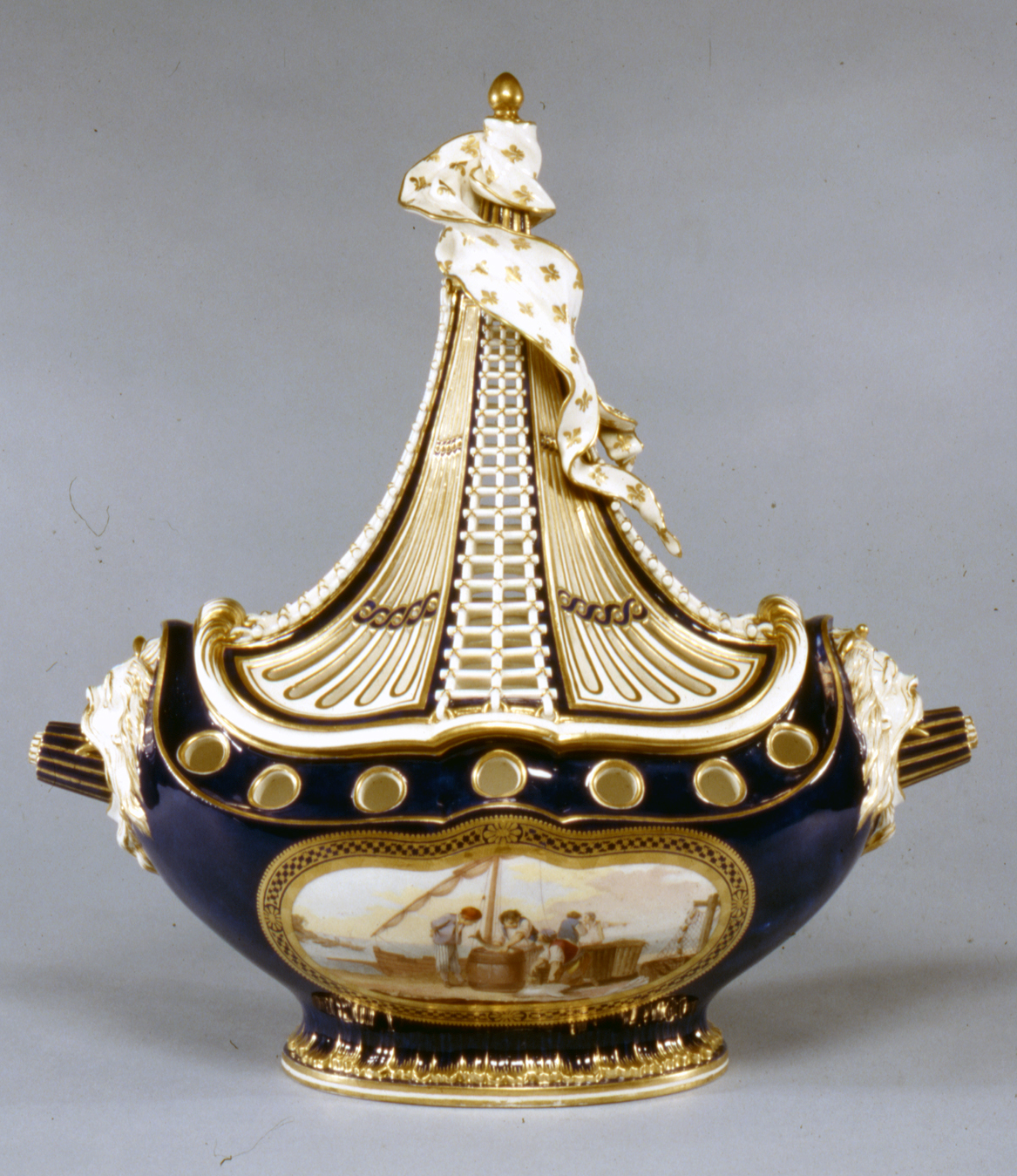
Potpourri Vase (Vase potpourri a vaisseau)
1764 · Soft-paste porcelain
The Walters Art Museum, Baltimore, Maryland
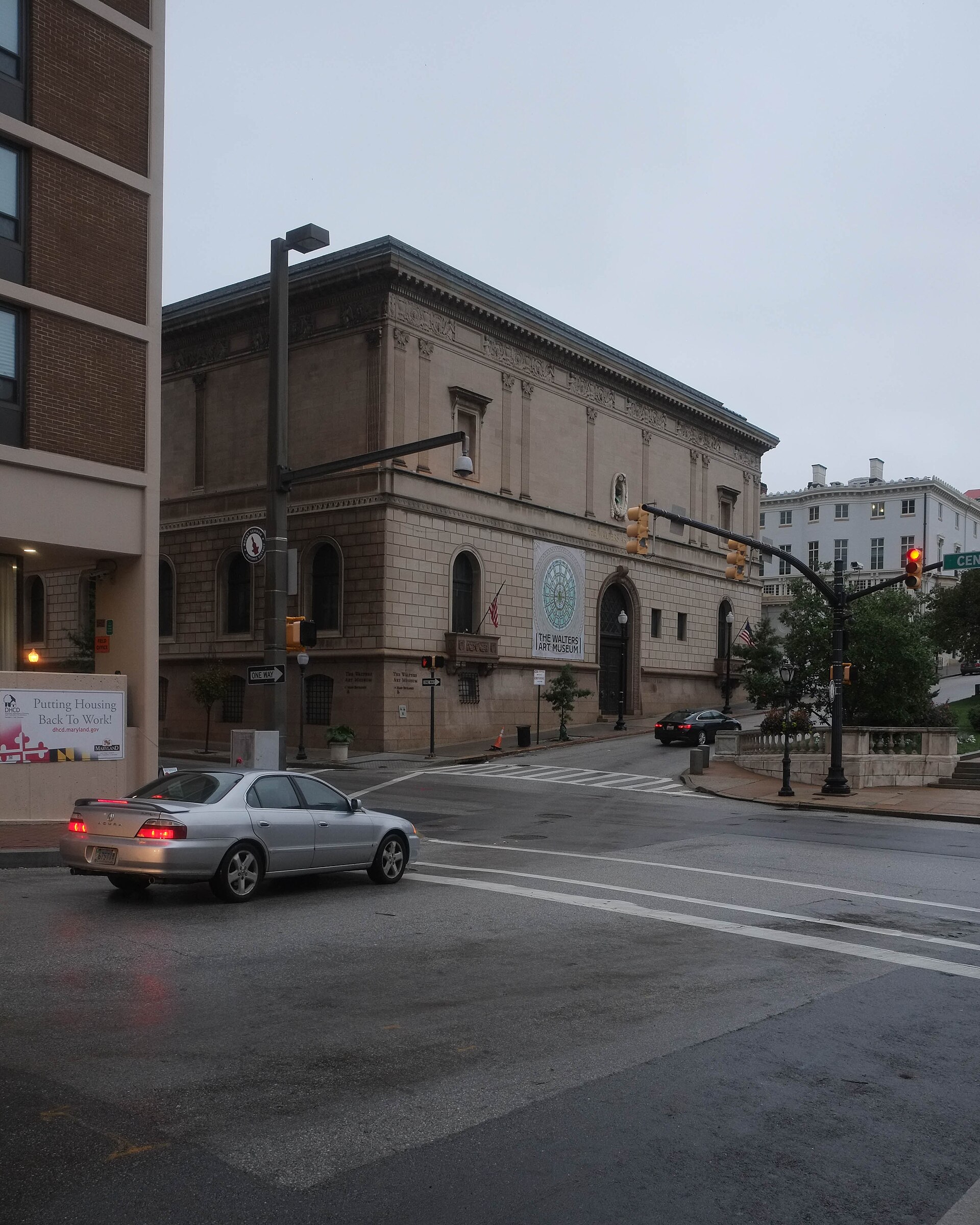
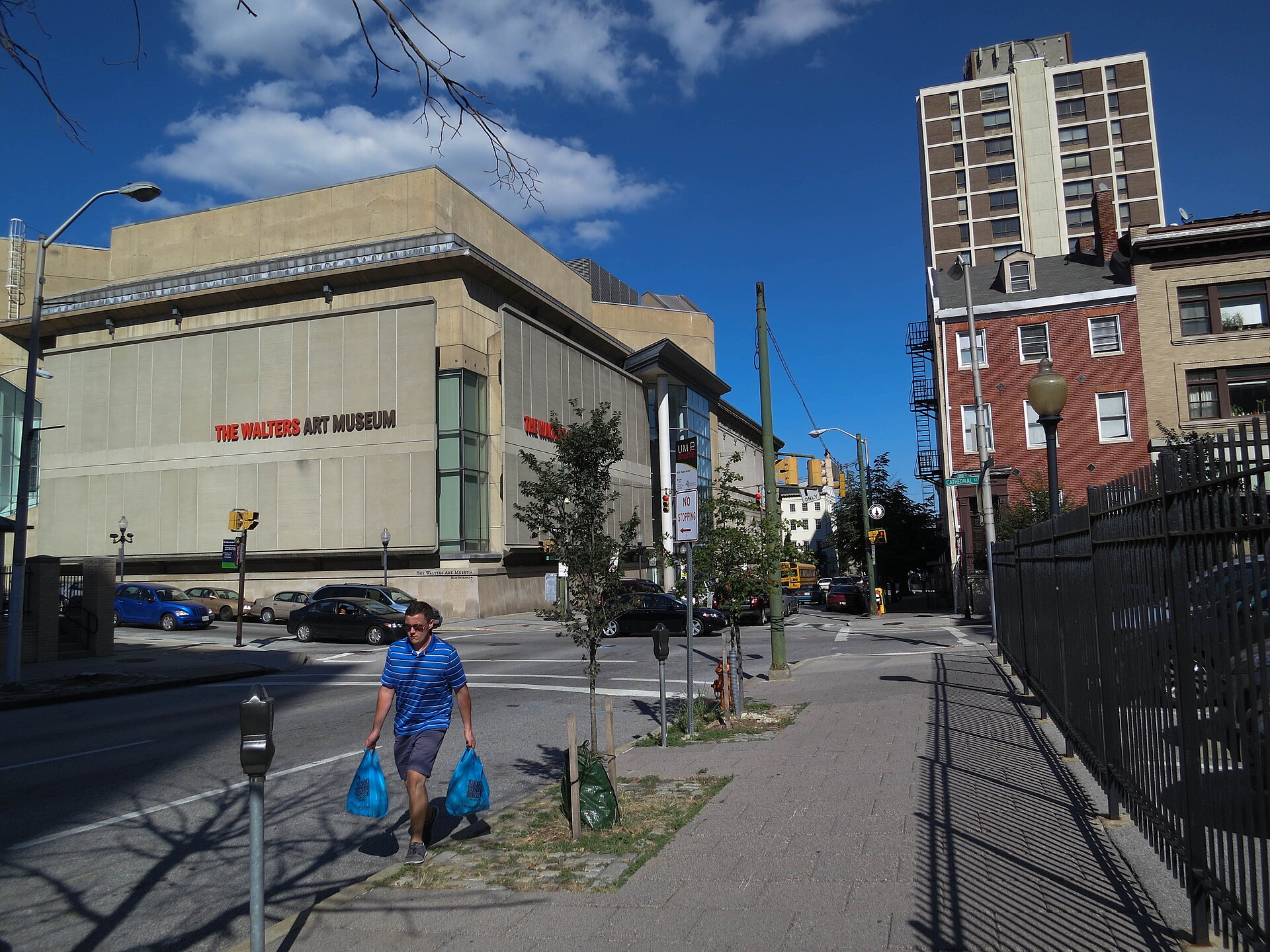
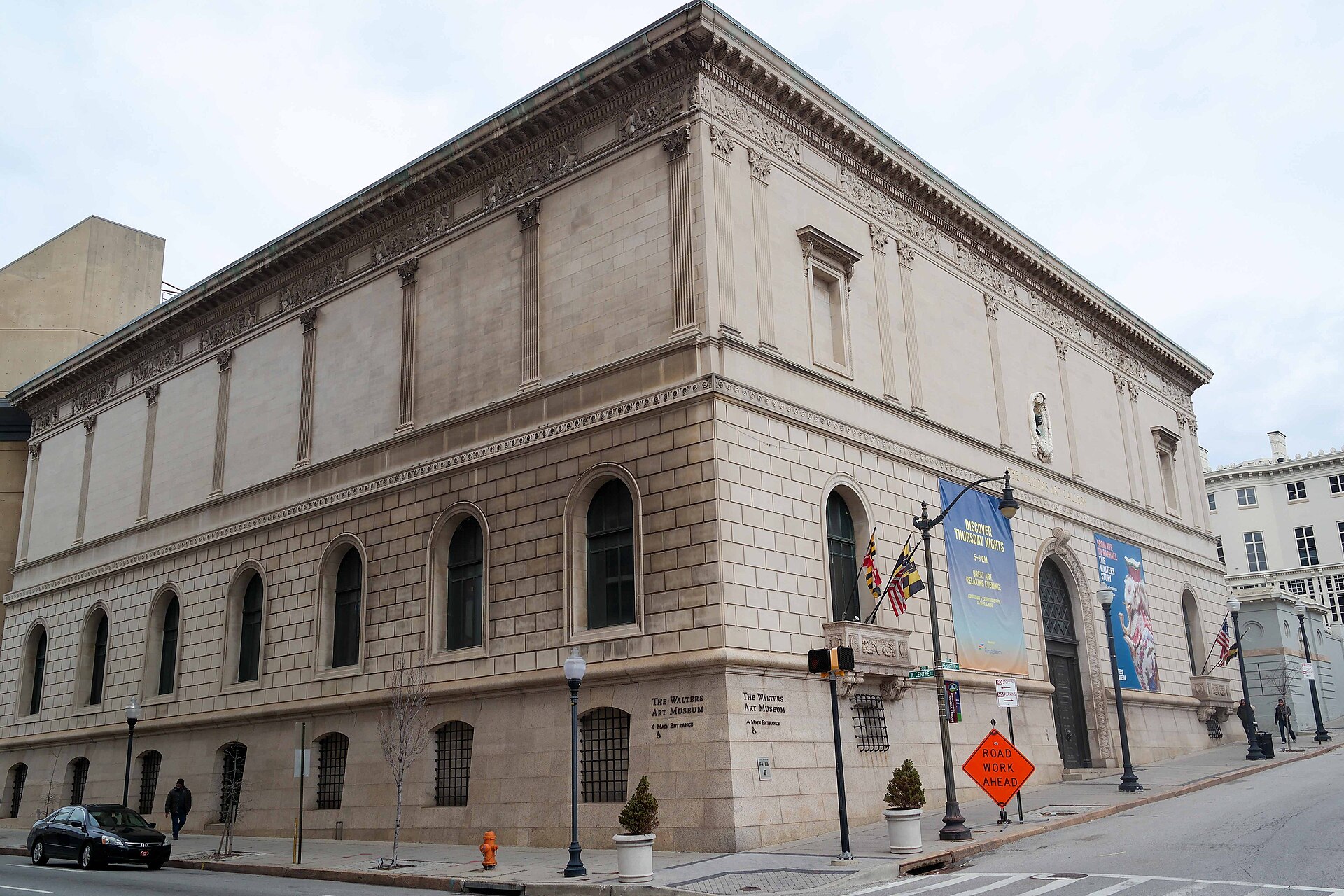
The 1909 Delano-designed palazzo building on North Charles Street, with the museum's sign visible on the facade.
Paul Sableman, CC BY 2.0, via Wikimedia Commons · Photograph by Paul Sableman from St. Louis, MOMuseum · Founded 1934
Open, admission and hours confirmed 27 September 2026 · 12 sources
The Walters' distinction among American encyclopedic museums is less any single masterpiece than the range packed into a relatively small campus: ancient Egyptian, Greek and Roman antiquities; Byzantine and medieval ivories, enamels and icons; one of the country's deeper manuscript collections, over half digitized and open online; an Ethiopian icon and cross collection regarded as among the strongest outside Ethiopia; Renaissance and Baroque European painting; French eighteenth- and nineteenth-century painting and decorative arts; Asian ceramics, netsuke and sculpture; arms and armor; and Belle Epoque luxury objects including Faberge and Lalique. Almost none of it is behind a paywall, which is unusual at this level of depth in an American museum.
| Kind | Museum |
|---|---|
| Founded | 1934 (opened to the public 3 November 1934, as the Walters Art Gallery; renamed the Walters Art Museum in 2000) |
| City and country |  Baltimore, United States Baltimore, United States |
| Address | 600 N. Charles Street, Baltimore, MD 21201, United States |
| Website | thewalters.org |
| Status | Open, confirmed |
| Record last verified |
Prices and hours change. We take them from the institution's own pages and print the day we read them, and you can check the current position at the source we used. Confirm before you travel.
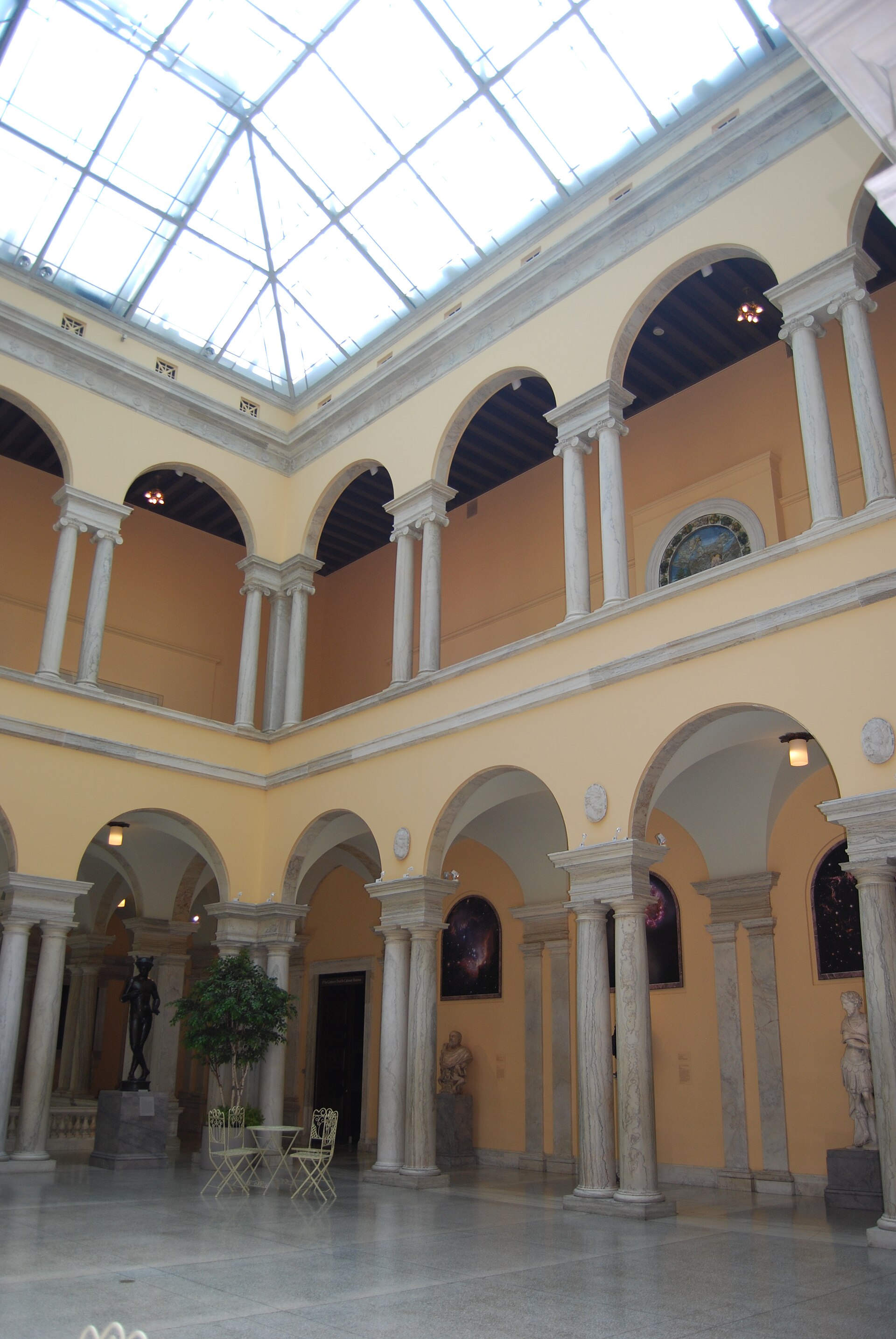
William Adams Delano's original building, styled after a seventeenth-century Genoese palace and centered on a sky-lit, colonnaded courtyard. Its floors hold the ancient Egyptian, Greek and Roman collections, Byzantine and medieval ivories, enamels and icons, and the Renaissance and Baroque European paintings and sculpture that Henry Walters bought to fill it.
A Brutalist, raw-concrete addition by Shepley, Bulfinch, Richardson and Abbott, built to give the museum the exhibition, education and conservation space the 1909 palazzo could not. It holds the eighteenth- and nineteenth-century French paintings and decorative arts, the arms and armor collection, and the museum's rotating special exhibitions.
An 1850s Mount Vernon mansion, connected to the main campus and reopened in 2018 after a multi-year renovation, that now holds the Asian art collection in the John and Berthe Ford Gallery and the Carriage House: Chinese ceramics, Japanese netsuke, and Buddhist sculpture from across the continent, under a restored marble staircase and Tiffany glass ceiling.
Close to a thousand manuscripts from Europe, Byzantium, Armenia, South Asia and Ethiopia, among them illuminated Qur'ans, French and Flemish books of hours, and deluxe Gospel books; more than half have been digitized and are viewable online through the museum's own manuscripts project.
A collection of Ethiopian icons, processional crosses and liturgical manuscripts that the museum and outside scholars describe as among the most complete outside Ethiopia itself, built up through decades of targeted acquisition rather than as an afterthought to the European holdings.
Carved from a single piece of agate for a Byzantine emperor, it survived the 1204 sack of Constantinople, passed through the Dukes of Anjou and King Charles V of France, was bought by Peter Paul Rubens in 1619, and reached the Walters in 1941 - a single object carrying sixteen centuries of ownership. Spot-checked live on the museum's own online catalogue on 27 September 2026: still catalogued at accession no. 42.562, still described as in the collection.5
Close to a thousand manuscripts, more than half digitized and free to view online, make this one of the deepest manuscript holdings open to the American public outside a national library.6
A collection built specifically and over decades rather than acquired incidentally, giving Baltimore one of the strongest public holdings of Ethiopian Christian art anywhere outside Ethiopia.2
A complete, high-status Renaissance field armor from one of Spain's great noble households, anchoring an arms and armor collection built for study as much as display.6
Faberge's hardstone animal carvings and jeweled objects sit alongside Rene Lalique jewelry in the decorative arts galleries, giving the Centre Street building a run of Belle Epoque luxury goods rarely assembled outside a national collection.6
Chinese ceramics, Japanese netsuke and Buddhist sculpture, rehoused in 2018 in a restored nineteenth-century mansion whose marble stair and Tiffany glass ceiling are themselves worth the walk from the main building.6
Portraits and panels bought by Henry Walters specifically to give his father's collection the European painting depth it lacked, hung in the palazzo galleries Delano designed to receive them.6
Cartonnage mummy masks and carved Roman sarcophagi form the core of the ground-floor ancient galleries, the collecting area where the museum's own provenance research has been most publicly tested.10
1764 · Soft-paste porcelain
The Walters Art Museum, Baltimore, Maryland
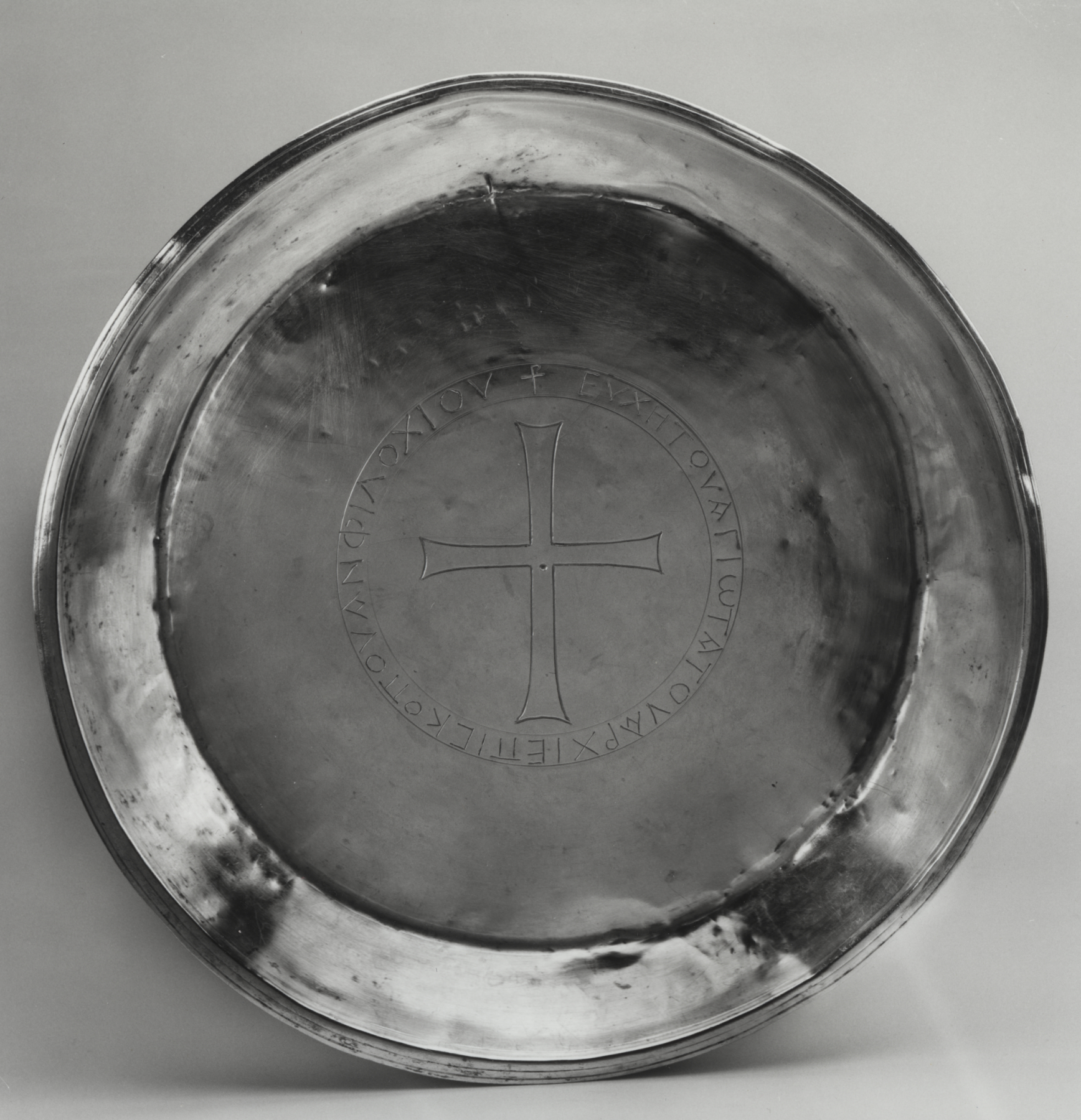
6th century · Silver
The Walters Art Museum, Baltimore, Maryland
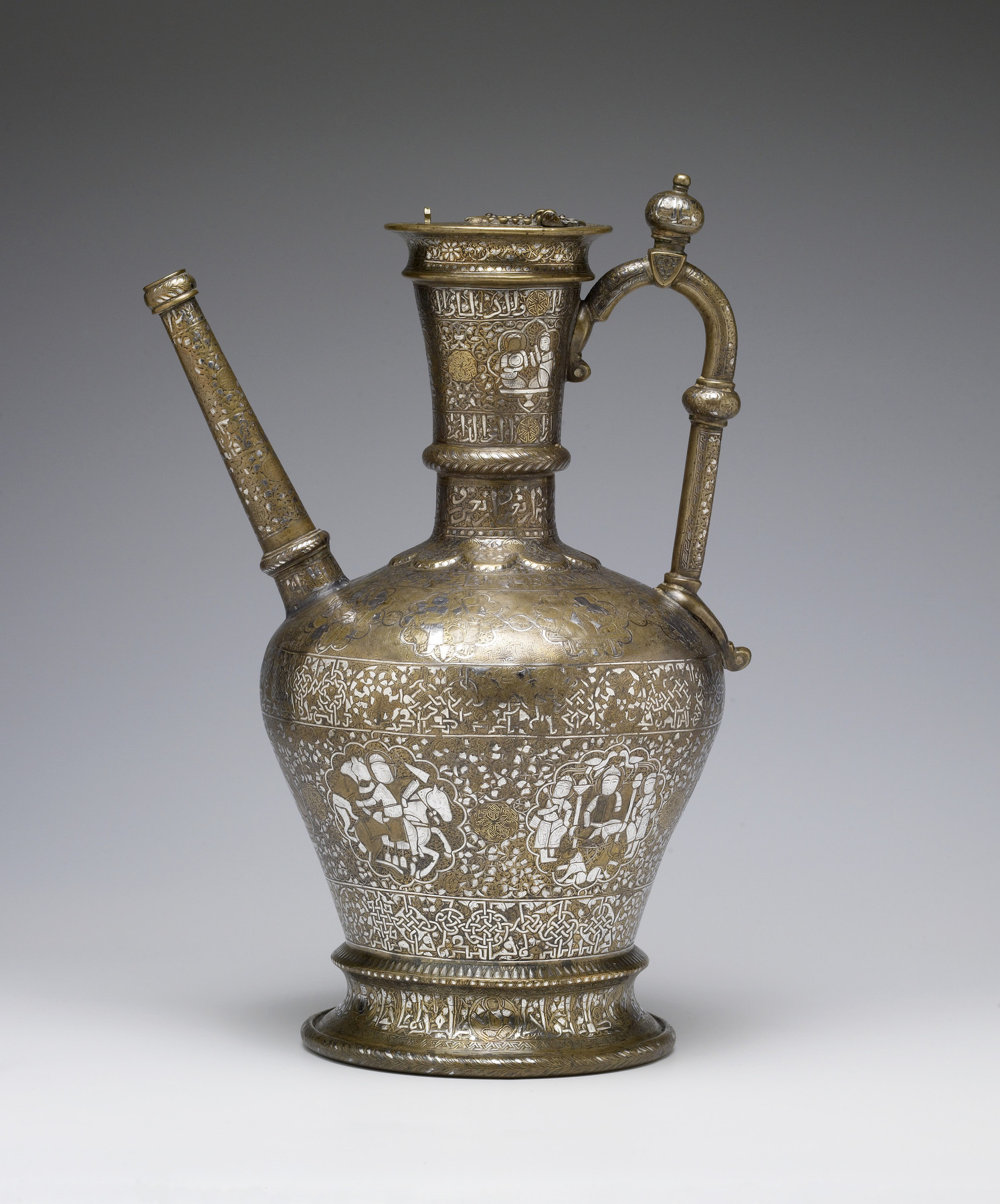
644 AH / 1246-47 CE · Brass
The Walters Art Museum, Baltimore
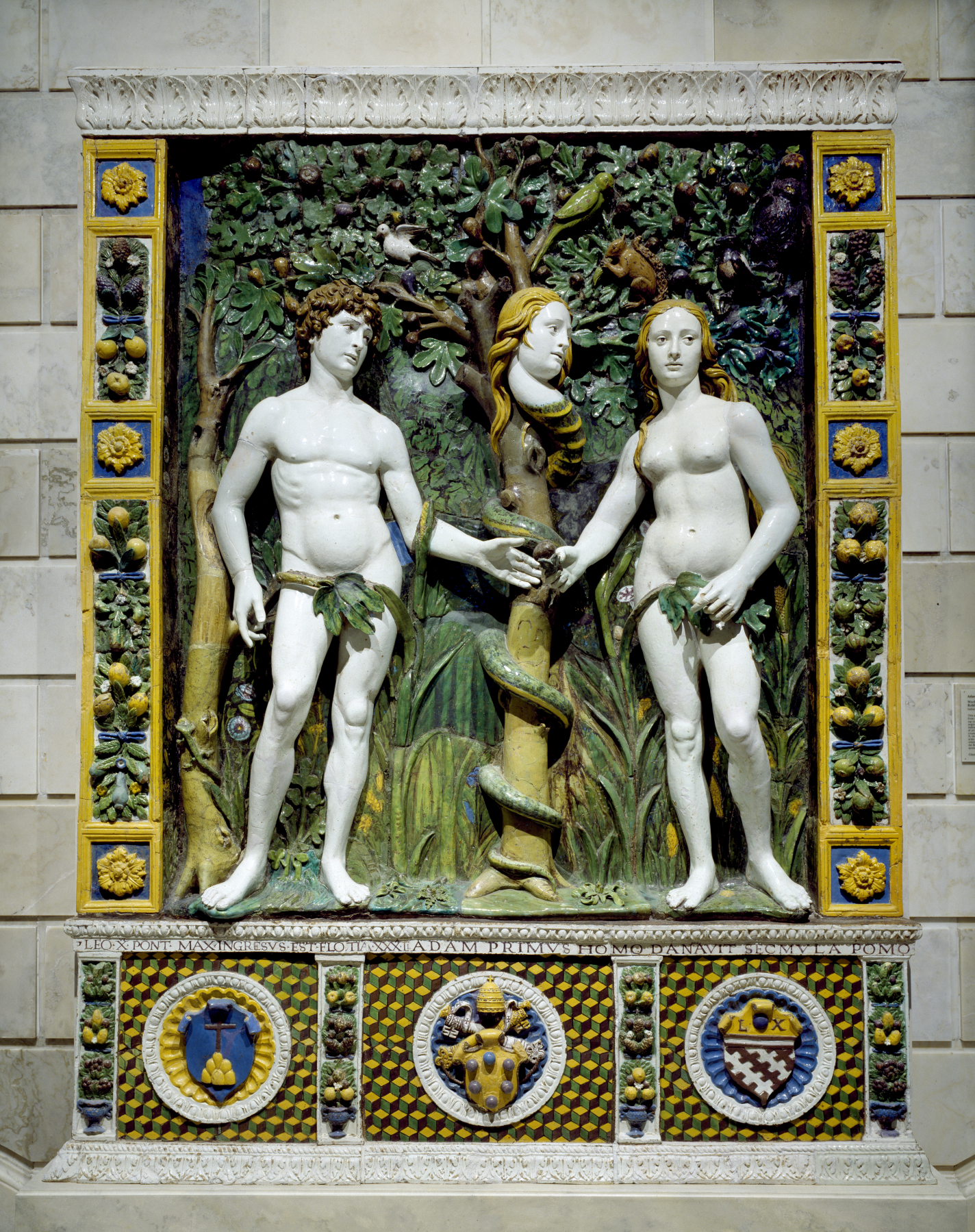
c. 1515 · Glazed terracotta
The Walters Art Museum, Baltimore, Maryland
The building at 600 N. Charles Street was designed by the architect William Adams Delano and completed in 1909, styled deliberately after a seventeenth-century Genoese palace, with an exterior echoing the Hotel Pourtales in Paris and an interior modeled on the sky-lit courtyard of Genoa's Collegio dei Gesuiti. Henry Walters commissioned it not as a public museum in the modern sense but as a purpose-built home for a private collection he intended, eventually, to give away. The galleries were arranged around that colonnaded, sky-lit court so that visitors would move through a sequence of rooms the way a guest might move through an actual Genoese townhouse, rather than through the long, single-loaded corridors more typical of American museum buildings of the same decade. For most of Henry Walters' lifetime the building opened to the paying public only a few weeks a year, with the proceeds given to local charities; it was not until his death that the collection and the building holding it stopped being, in any legal sense, one man's property.
The collection begins with William T. Walters, a Baltimore merchant who made his fortune in liquor wholesaling, railroads and banking, businesses whose profitability through the 1850s and 1860s depended on the slavery-based Southern economy the city sat inside. Walters was an open Confederate sympathizer: he helped finance a public salute to the Confederate victory at Fort Sumter, backed opposition to Union troops moving through Baltimore, and later commissioned a Baltimore monument to Chief Justice Roger B. Taney, author of the Dred Scott decision. He began collecting art seriously in the 1850s and continued after the war, building a collection strong in nineteenth-century French and American painting. His son Henry, who trained as a businessman before turning to collecting full time, took the holdings in a different direction entirely, buying ancient, medieval, Asian and Islamic material on a scale his father never had, and commissioning the Charles Street building to hold it all. When Henry Walters died in 1931 he left the city his house, his museum building, his collection and an endowment; the gift opened to the public as the Walters Art Gallery on 3 November 1934, and the institution took its current name, the Walters Art Museum, in 2000.
The museum today occupies five historic buildings in Baltimore's Mount Vernon neighborhood, of which three, along with the founding collection, remain owned by the City of Baltimore rather than by the museum itself, a governance arrangement that traces directly back to Henry Walters' 1934 bequest. Alongside Delano's 1909 palazzo sits a 1974 addition on Centre Street by the firm Shepley, Bulfinch, Richardson and Abbott, a deliberately contrasting Brutalist building in raw poured concrete that gave the museum the special-exhibition, education and conservation space the original palazzo was never designed to hold. A short walk away, 1 West Mount Vernon Place, an 1850s mansion long known as Hackerman House, reopened in 2018 after a multi-year, 10.4-million-dollar renovation and now houses the museum's Asian art collection in a restored setting that keeps its original marble staircase and Tiffany glass ceiling on view alongside the objects. Together the campus reads less like a single museum than like a small district, three centuries of Baltimore building history pressed into a few contiguous blocks.
The collection runs to roughly 36,000 objects across seven millennia, and its real distinction is breadth rather than any single blockbuster canon. The ground floor of the palazzo holds ancient Egyptian, Greek and Roman material, including cartonnage mummy masks and carved Roman sarcophagi; upper floors carry Byzantine and medieval ivories, enamels, icons and reliquaries, and Renaissance and Baroque European painting and sculpture bought specifically to round out what William Walters had assembled. Centre Street adds eighteenth- and nineteenth-century French painting and decorative arts, an arms and armor collection anchored by a complete Spanish field armor from around 1590, and a run of Belle Epoque luxury objects that includes Faberge hardstone carvings and Rene Lalique jewelry. The manuscripts department holds close to a thousand volumes from Europe, Byzantium, Armenia, South Asia and Ethiopia, more than half of them digitized and free to view online, and the Ethiopian collection of icons and processional crosses is regarded, inside and outside the museum, as one of the strongest held anywhere outside Ethiopia itself. Asian art, moved into 1 West Mount Vernon Place in 2018, spans Chinese ceramics, Japanese netsuke and Buddhist sculpture from across the continent.
The Walters has not treated its founders' history as settled. In 2021, as part of a wider diversity and equity initiative, the museum publicly rewrote the biographical account of William T. and Henry Walters to name their Confederate sympathies and connect the family fortune directly to Southern, slavery-linked businesses, a change reported at the time by The Art Newspaper. A decade earlier, the investigative outlet Chasing Aphrodite had raised a separate and more specific concern: that individual antiquities in the collection, including a 1999 griffin purchase, were bought from dealers later tied to the Italian and Greek antiquities black market, and that the museum's own director had overlooked warning signs a more skeptical buyer would have caught. Neither episode has been resolved by a single statement or a single restitution; both sit alongside a stated museum policy of returning objects when new ownership evidence emerges, a policy the museum says it has acted on before. A reader planning a visit does not need to resolve either question before going, but a museum whose entire founding collection began as one family's private acquisition is, by definition, a party to its own provenance, and the Walters' free admission and open manuscript archive sit next to that history rather than replacing it.
Visitors consistently single out that a collection of this range and quality costs nothing to see, and reviewers on Tripadvisor return to that point more than any other. They also praise the sheer density of the encyclopedic holdings for a museum this size - ancient Egypt, Greek and Roman antiquities, European painting, Asian art and arms and armor within a compact Mount Vernon footprint - and the staff's readiness to help. The most repeated complaint is wayfinding: with the collection spread across a 1909 palazzo, a 1974 addition and a separate mansion connected by a covered link, several reviewers say the printed map does not make it obvious how to get from one wing to another or back out to a chosen exit, and that finding a staff member is the fastest way to reorient.
Tripadvisor: 4.8 from 1,498 ratings, read 13 August 2026
A platform average is a tertiary source: it moves, it is not audited, and we quote no visitor's words.
600 N. Charles Street, Baltimore, MD 21201, United States.
General admission, all visitors, all galleries and special exhibitions: free. As confirmed 27 September 2026.
Wednesday 10:00-17:00; Thursday 13:00-20:00; Friday-Sunday 10:00-17:00; Monday-Tuesday closed. Closed: New Year's Day. Juneteenth. As confirmed 27 September 2026.
Charm City Circulator: The free Purple Line bus stops directly outside the museum (stop 307); it runs the length of Charles Street through downtown Baltimore; MTA Light Rail: The Centre Street stop is a few minutes' walk east of the museum entrance; MTA bus: Multiple Maryland Transit Administration bus lines serve the Mount Vernon neighborhood within a block or two of the museum; Car and parking: A visitor lot at 600 Cathedral Street can be reserved and paid online in advance; metered street parking and several nearby garages are also available, and the ride-share pickup point is 10 W. Centre Street.
The Rubens Vase (Byzantine imperial workshop, about 400 CE); The manuscripts collection (Various scribes and workshops, Europe, Byzantium, Armenia, South Asia, Ethiopia); Ethiopian icons and processional crosses (Ethiopian workshops, medieval to modern); Duke of Medina Sidonia armor (Spanish armorers, about 1590); The House of Faberge hippopotamus and related Faberge holdings (House of Faberge, Imperial Russia); Asian art at 1 West Mount Vernon Place (Chinese, Japanese and other Asian workshops).
One artwork and its story every Tuesday, with the picture: who owned it, what it made, and what closes soon in the exhibition calendar. No promotion, and nothing we cannot cite.
We send one email to confirm the address and keep nothing else. Every letter carries a one-click unsubscribe. How we handle your data.