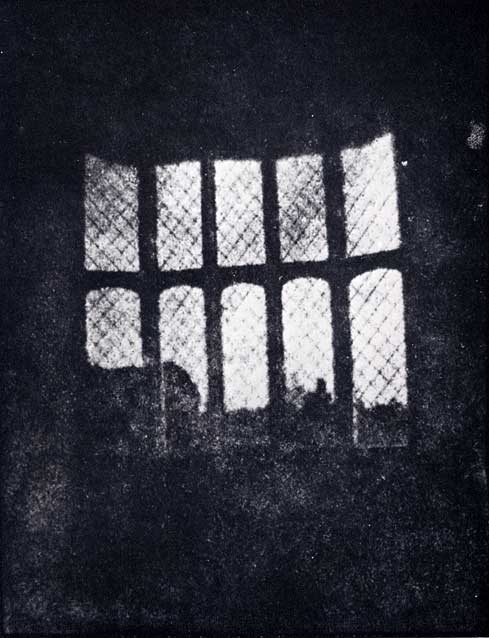
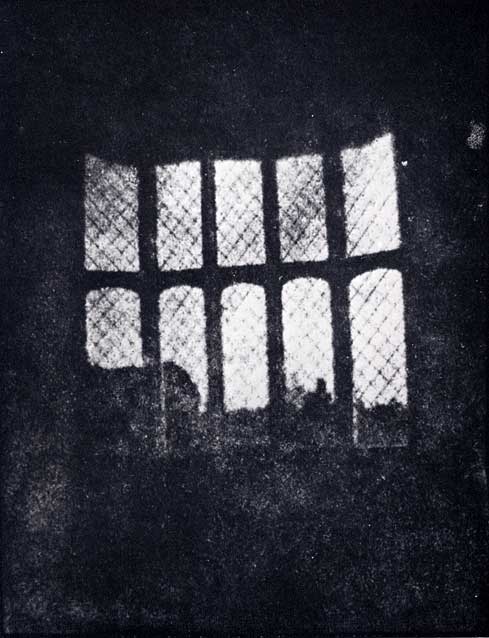
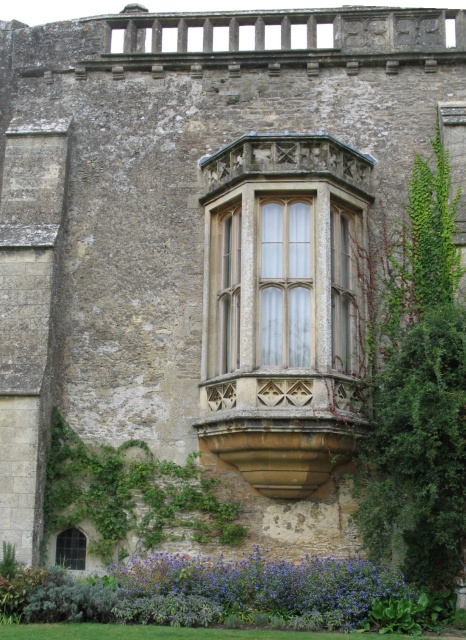
Latticed Window at Lacock Abbey
August 1835 · Photogenic drawing negative
National Science and Media Museum, Bradford
 British · 1800-1877
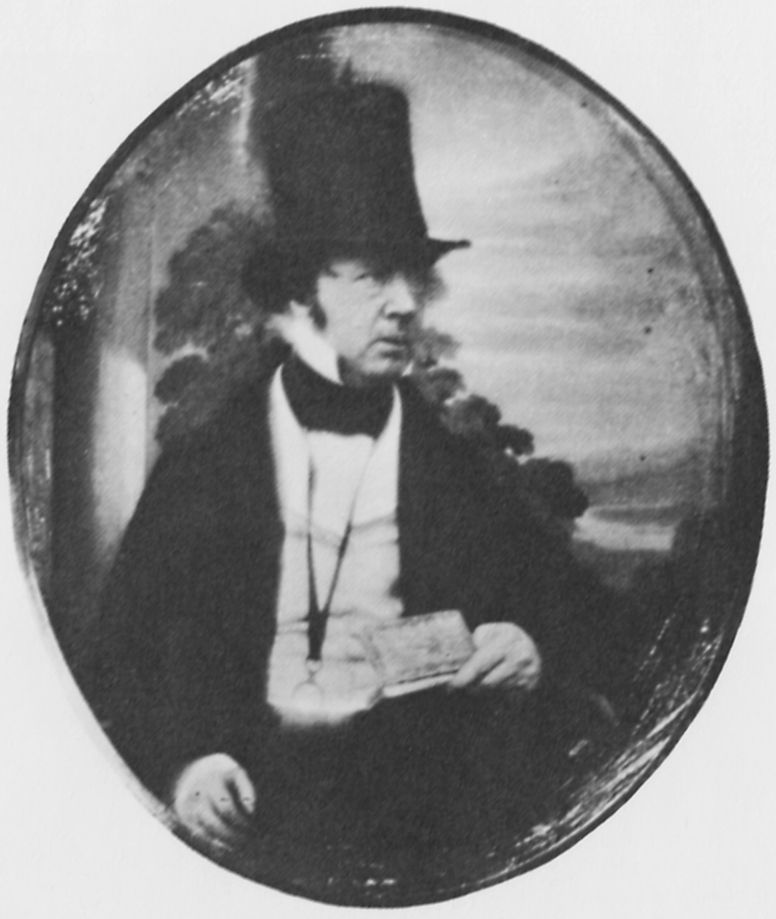
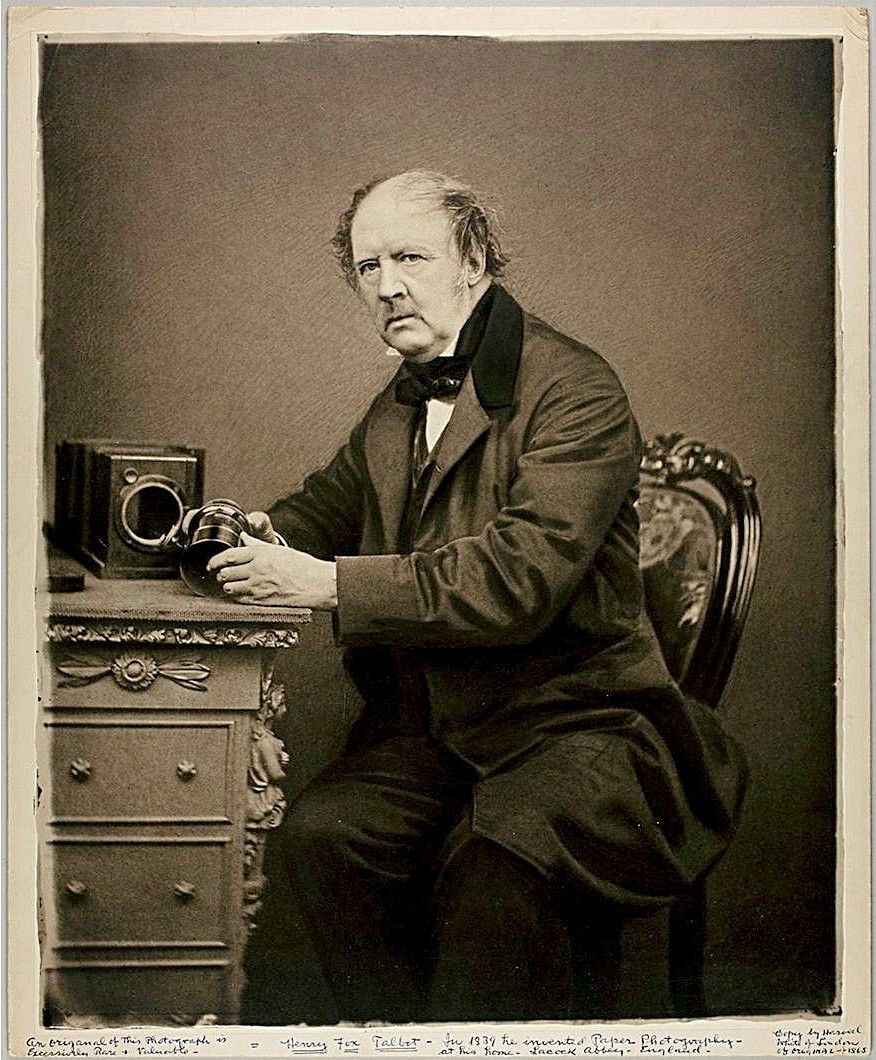
Daguerreotype portrait of Talbot made in London by Antoine Claudet, 1844 to 1845, a few years after the priority dispute. Claudet ran one of London's leading daguerreotype studios, considered Talbot's paper process inferior for portraiture, and was nonetheless a friend and brief 1844 business partner; the sitting is documented in Bodleian and Victoria and Albert Museum records and the identification is not in dispute.
Via Zeno.org and Wikimedia Commons| Worked as | Inventor, Photographer, Mathematician, Philologist |
|---|---|
| Born | 11 February 1800 · Melbury House, Dorset, England |
| Died | 17 September 1877 · Lacock Abbey, Wiltshire, England |
| Nationality | British |
| Movement | No artistic movement |
| In this archive | 1 artwork |
| Sources | 25 cited |
| Last verified |
About this page 1 artwork in the archive · Last verified · 25 sources cited
Talbot invented the thing modern photography actually descends from and is remembered, when he is remembered at all outside specialist circles, as the man who lost the argument in January 1839. Louis Daguerre announced a photographic process in Paris and the French state bought it and gave it away free; nineteen days later, Talbot rushed his own five-year-old negatives to the Royal Institution in London to prove he had gotten there first with something different. The daguerreotype that made Daguerre famous was a unique silvered plate with no negative and no way to make a second print. Talbot's calotype, patented in 1841, exposed a negative from which any number of positive prints could be made on paper, which is the principle every photograph made on film followed for the next century and a half. The daguerreotype died with the wet-plate era. Talbot's principle did not.
He was, before any of it, a working mathematician: twelfth wrangler at Cambridge, a Fellow of the Royal Society at thirty-one for work on elliptic integrals, with an optical effect named after him from 1836 that had nothing to do with photography. He remained a serious philologist and, in his sixties, one of four scholars whose independent translations confirmed the decipherment of Akkadian cuneiform. Photography was a sideline he pursued with a mathematician's patience for twenty years and then, largely, set down.
The single hardest fact to pin down, and the one most worth knowing, is not about the invention but about the patent. Talbot's licensing of the calotype after 1841, up to 300 pounds a year for a professional, made him genuinely unpopular with English photographers, and the 1854 court case that broke his control of the field found him the true inventor while ruling that the newer collodion process fell outside his patent anyway. Historians still do not agree on how much of the theory that his patent set English photography back a decade against a French trade Daguerre's own government had released royalty-free actually holds up, and this page gives both readings rather than choosing one.
Born 11 February at Melbury House, Dorset, the only child of William Davenport Talbot and Lady Elisabeth Fox Strangways.22
Enters Trinity College, Cambridge.6
Graduates twelfth wrangler after winning the Porson prize for Greek verse.6
Elected a Fellow of the Royal Society for his mathematical work, before making a photograph.6
Marries Constance Mundy of Markeaton, Derbyshire.22
Begins experimenting with light-sensitive paper at Lacock Abbey.1
Makes the Latticed Window negative in August, the earliest surviving photographic negative.1
Describes the self-imaging diffraction phenomenon later named the Talbot effect.19
Arago announces Daguerre's process in Paris on 6 January; Talbot exhibits his own photogenic drawings at the Royal Institution on 25 January and reads his priority paper to the Royal Society on 31 January.4
Discovers latent-image development with gallic acid in September, the basis of the calotype.6
Patents the calotype process on 8 February.8
The Pencil of Nature begins publication in June, printed at Henneman's new Reading Establishment.35
The Pencil of Nature ends publication in April after six parts and twenty-four plates, short of its planned length.3
Talbot v Laroche is heard at Guildhall in December; the jury names Talbot the true inventor of the calotype but frees the newer collodion process from his patent.8
Talbot's sealed translation of a Tiglath-Pileser I inscription is judged, on 29 May, consistent with three independent scholars' work, confirming the decipherment of cuneiform.18
Dies of heart disease at Lacock Abbey on 17 September.22
Talbot's granddaughter Matilda Talbot gives Lacock Abbey to the National Trust.23
The Fox Talbot Museum opens at Lacock, established by Talbot's Burnett-Brown descendants.11
Talbot material trades in two markets that barely resemble each other. A single period print without distinguished provenance sells for a few thousand dollars when one surfaces outside institutional collections. A family archive with unbroken provenance from Talbot's own household behaves completely differently, and the only such group to reach auction in the twenty-first century set the standing record for any Talbot lot. The gap is a function of provenance and completeness, not of any single image being more historically important than another.
| Date | Sale | Work | Result | Note |
|---|---|---|---|---|
| 7 November 2007 | Bonhams | The Fruit Sellers, Lacock Abbey, England (salt print from a calotype negative, 1842) | With premium US$1,680 USD | San Francisco sale. Hammer price not separately published in the sources consulted; only the combined price with premium is listed on the lot page. A modest period salt print with no distinguished provenance; the image itself is a case of contested joint authorship, see open questions. |
| 4 April 2017 | Phillips | Eve | With premium US$15,000 USD | New York, The Odyssey of Collecting: Photographs from the Joy of Giving Something Foundation, Part 2. Estimate US$20,000 to 30,000; sold below estimate. Hammer price not separately published in the sources consulted. |
| 21 April 2021 | Sotheby's | William Henry Fox Talbot's Gifts to his Sister: Horatia Gaisford's Collection of Photographs and Ephemera | Hammer approx. US$1.6 million (rounded, as reported in the press) With premium US$1,956,000 USD | New York, 50 Masterworks to Celebrate 50 Years of Sotheby's Photographs. Estimate US$300,000 to 500,000; six online bidders competed. An archive of loose photographs, personal albums, Pencil of Nature fascicles and a complete copy of Sun Pictures in Scotland, held in the family of Talbot's half-sister Henrietta Horatia Maria Gaisford for more than 170 years. Auction record for Talbot. |
Hammer is the price at which the bidding stopped; with premium adds the fee the house charges the buyer on top. Hammer price and buyer's premium in the glossary.
| Institution | City | Holdings | Note |
|---|---|---|---|
| National Science and Media Museum | Bradford, England | The bulk of Talbot's working negatives, notebooks and cameras, including the Latticed Window negative and three complete copies of The Pencil of Nature. | Part of the Science Museum Group. |
| British Library | London, England | Talbot's correspondence archive and a major photograph collection, received from the Burnett-Brown family in stages between 2005 and 2008. | The primary archive for Talbot's papers and letters. |
| Fox Talbot Museum, Lacock Abbey | Lacock, Wiltshire, England | Notebooks, early cameras and lenses, salt prints, and a changing programme of photography exhibitions, on the site of the 1835 Latticed Window negative. | Opened 1975; a National Trust property. |
| J. Paul Getty Museum | Los Angeles, United States | 342 works by Talbot, per the Bodleian catalogue raisonne. | |
| Bodleian Libraries, University of Oxford | Oxford, England | Home of the William Henry Fox Talbot Catalogue Raisonne project and related archival material. | The scholarly reference point for the whole surviving corpus. |
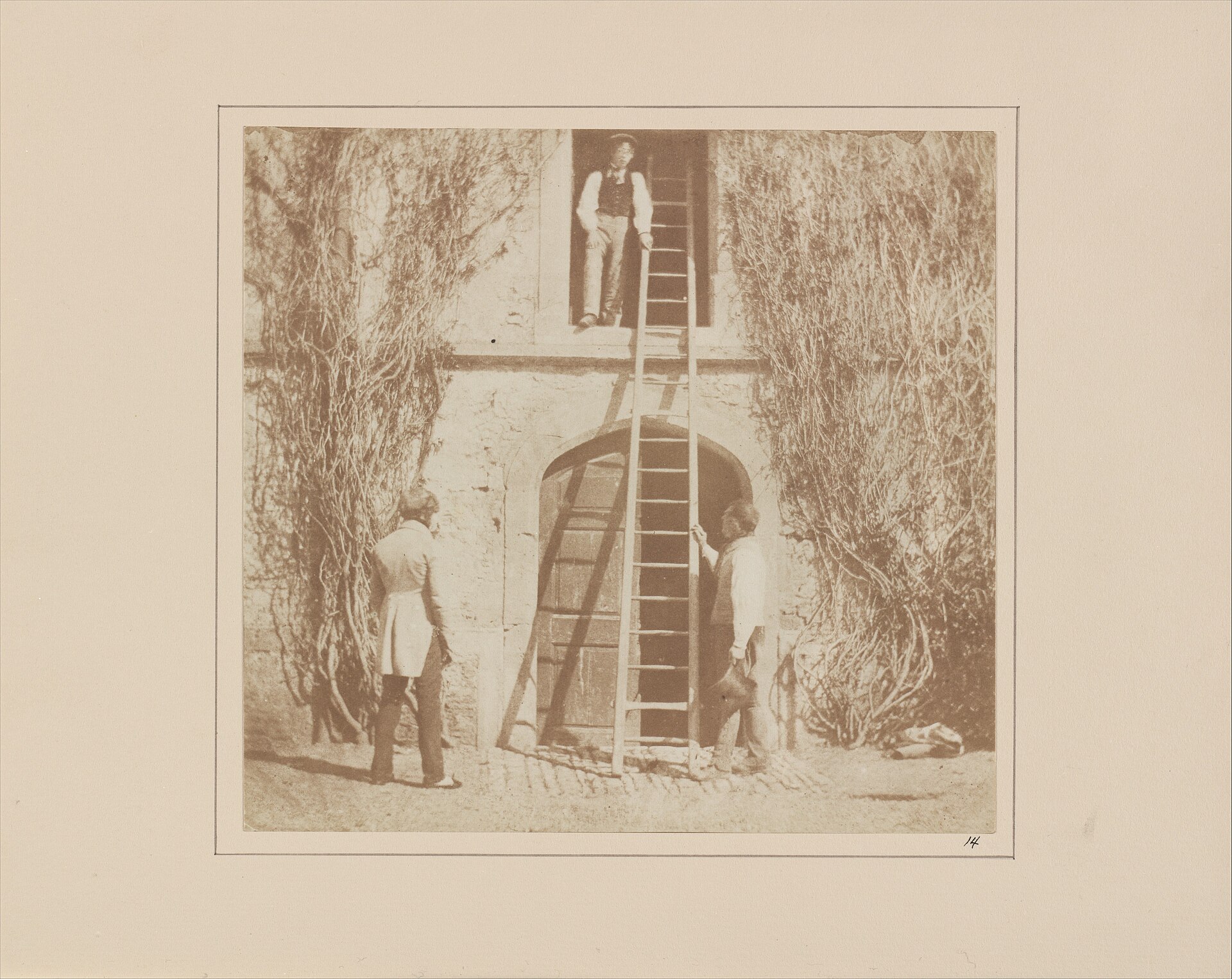
| Metropolitan Museum of Art | New York, United States | Pencil of Nature plates and individual prints including The Ladder and The Fruit Sellers. |
Talbot entered Trinity College, Cambridge in 1817, won the Porson prize for Greek verse, and graduated in 1821 as twelfth wrangler, a formal ranking among the year's first-class mathematics students.
Talbot entered Trinity College, Cambridge in 1817, won the Porson prize for Greek verse, and graduated in 1821 as twelfth wrangler, a formal ranking among the year's first-class mathematics students. He kept working. Between 1822 and the mid-1830s he sent nearly sixty mathematical and scientific papers to the Royal Society, mostly on elliptic integrals building on Euler, Legendre, Jacobi and Abel, and was elected a Fellow of the Royal Society in 1831 for that work alone, eight years before anyone had heard of photogenic drawing. He delivered the Society's Bakerian Lecture in 1837, on the optical phenomena of crystals, and received its Royal Medal in 1838 and its Rumford Medal in 1842.
In 1836, three years before the public announcement of photography, Talbot described a diffraction phenomenon in a short paper: a periodic grating lit by coherent light reproduces its own image at regular distances behind it, a self-imaging effect now called the Talbot effect. It went unremarked for nearly fifty years until Lord Rayleigh explained the physics behind it in 1881; it is used today in optical metrology and photolithography, mathematics named for a man most people know only as a photography footnote.
Talbot began experimenting with light-sensitive paper in 1834, frustrated, by his own later account, at his inability to sketch accurately with a camera lucida on a trip to Lake Como.
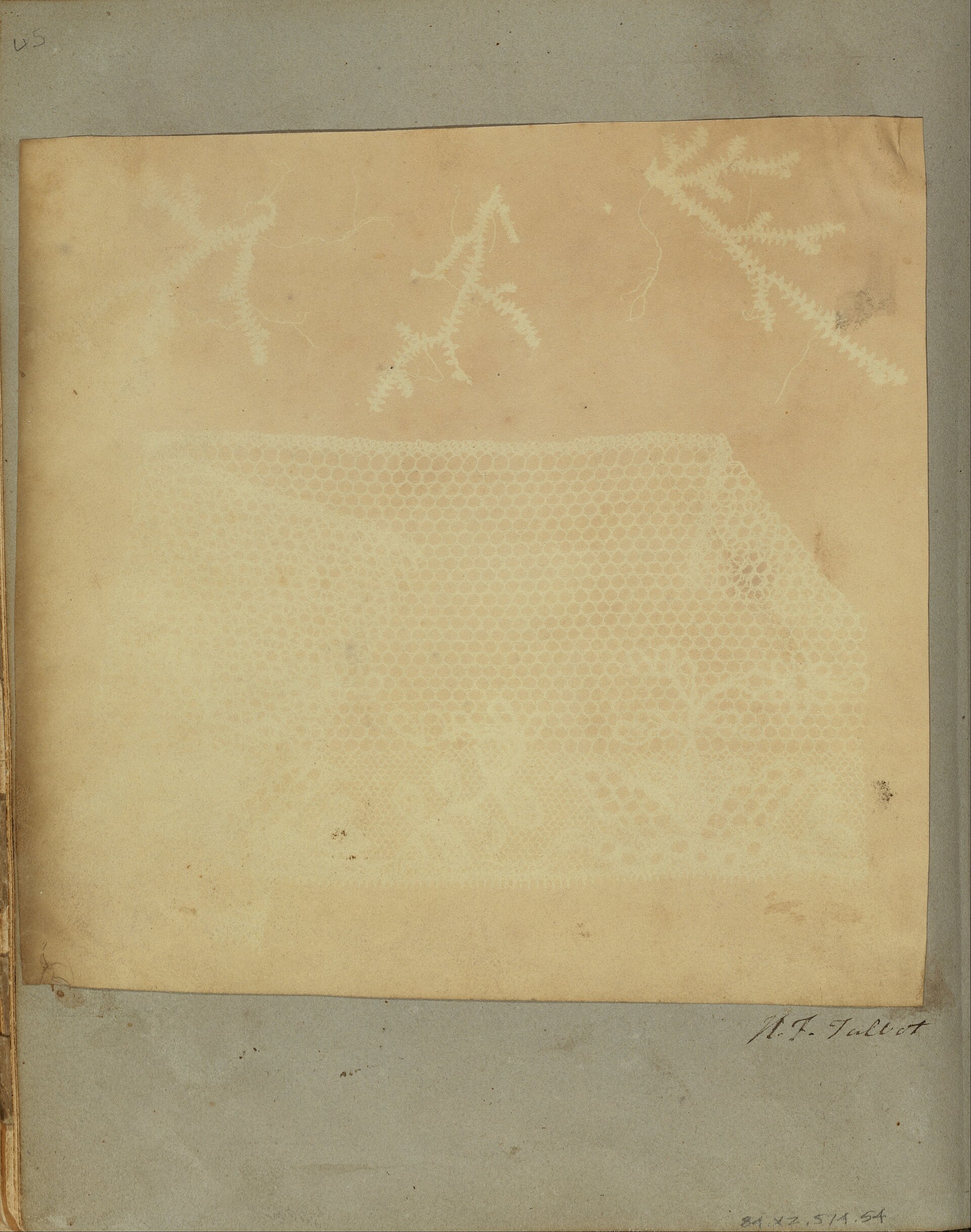
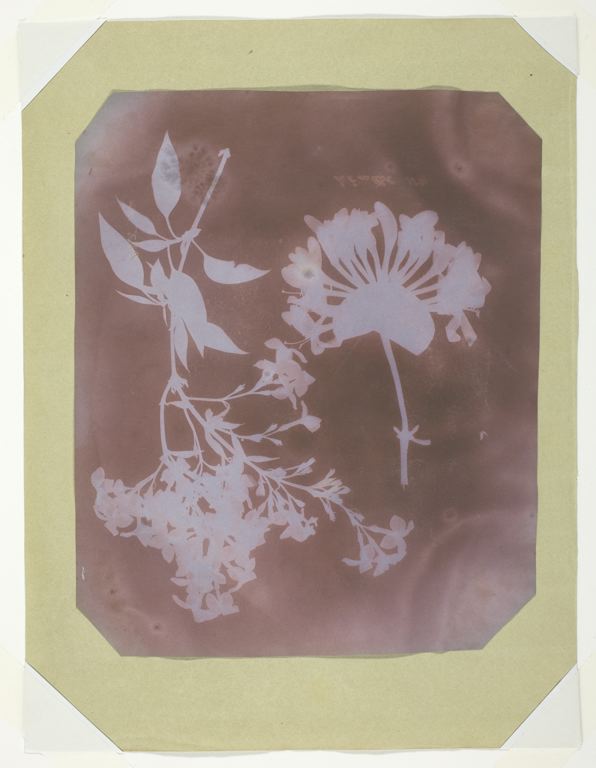
Talbot began experimenting with light-sensitive paper in 1834, frustrated, by his own later account, at his inability to sketch accurately with a camera lucida on a trip to Lake Como. The first process, which he called photogenic drawing, needed no camera at all: writing paper brushed with silver chloride, with a leaf, a piece of lace or a fern laid directly on top under glass and set in the sun, printed a silhouette straight onto the paper as the exposed silver darkened. There was no development step. The image simply appeared, and had to be stopped from darkening further by washing it in a strong salt solution once it looked right.
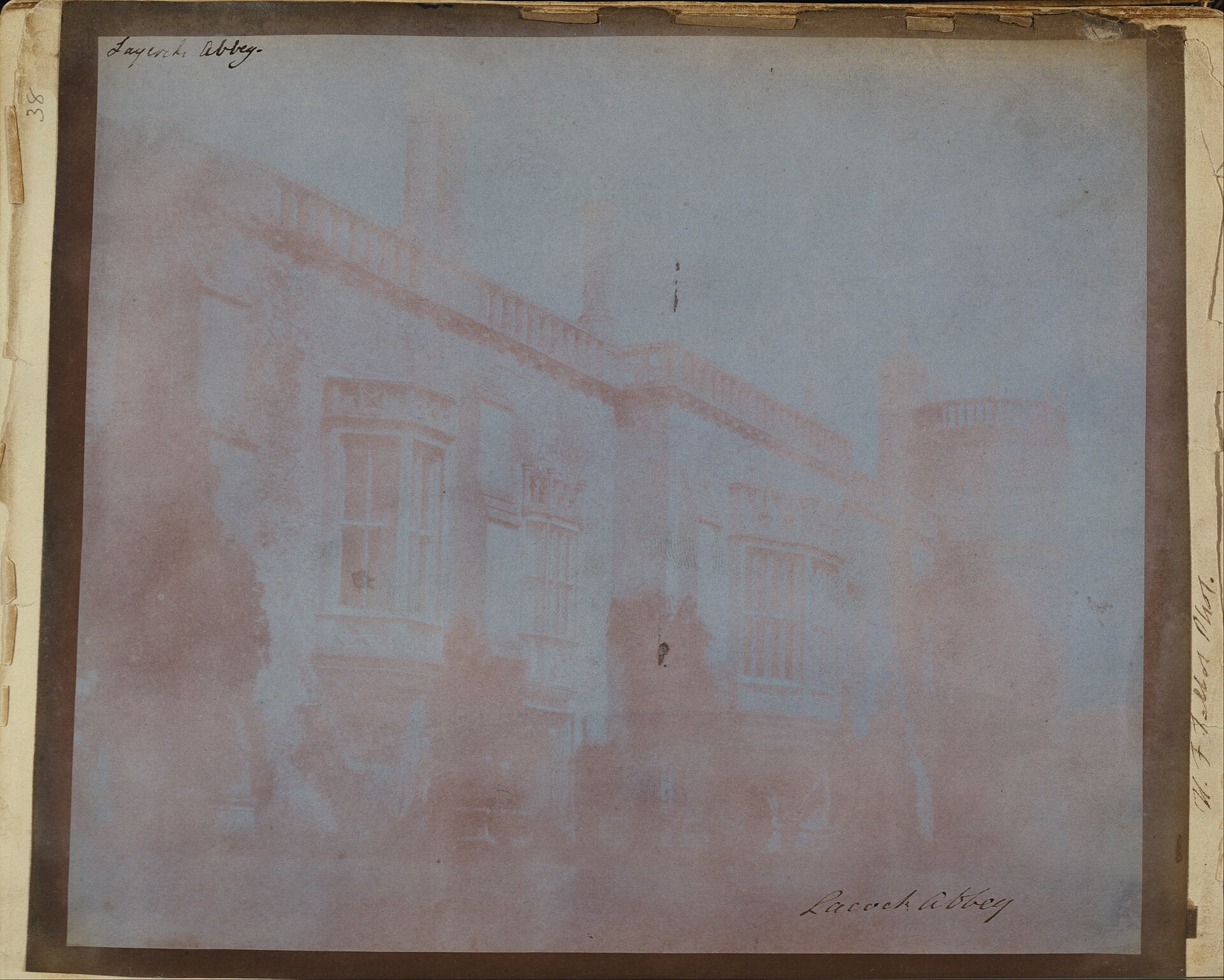
From 1835 he began putting the same sensitised paper inside small cameras of his own and his carpenter's making, which his wife Constance nicknamed mousetraps for their size. In August 1835 one of them, aimed at a leaded window in the South Gallery of Talbot's home, Lacock Abbey in Wiltshire, produced what is now recognised as the earliest surviving photographic negative, an exposure that likely ran to an hour or more. It survives at the National Science and Media Museum in Bradford, which holds the bulk of Talbot's working archive.
On 6 January 1839 Francois Arago, secretary of the French Academy of Sciences, publicly announced Louis Daguerre's photographic process in Paris, without disclosing its method.
On 6 January 1839 Francois Arago, secretary of the French Academy of Sciences, publicly announced Louis Daguerre's photographic process in Paris, without disclosing its method. Word did not reach English newspapers until 19 January, a thirteen-day gap explained by rail and boat rather than telegraph. Talbot later described his own reaction in a phrase that has survived the century and a half since: he was placed in an unusual dilemma, scarcely to be paralleled in the annals of science.
He moved fast. On 25 January his photogenic drawings, including examples he could date to 1835, were shown at the Royal Institution in London, with Michael Faraday presenting them, specifically to establish that Talbot's own work predated any knowledge of what Daguerre had done. On 31 January he read a paper, Some Account of the Art of Photogenic Drawing, to the Royal Society, laying out his method in enough detail to claim independent priority. Daguerre's own process was not disclosed in full until August 1839, seven months later, and when it was, the two processes turned out to have nothing in common beyond both using light and silver salts.
The daguerreotype produced a single, highly detailed positive image directly on a silvered copper plate, sharper than anything Talbot's paper process could manage in 1839 and quicker, needing minutes rather than the half hour or more Talbot's earliest process required in good light. It had no negative and could not be copied; every daguerreotype in existence is a unique object. Talbot's process, still crude in January 1839, produced a negative from which any number of identical positive prints could later be made, a difference in kind rather than degree, and the one that determined which principle photography actually followed once film replaced plate.
In September 1840 Talbot found that a much shorter camera exposure, too brief to leave any visible image, still left a latent image on paper sensitised with silver iodide that could be brought out...
In September 1840 Talbot found that a much shorter camera exposure, too brief to leave any visible image, still left a latent image on paper sensitised with silver iodide that could be brought out afterward by washing it in a mixture of silver nitrate and gallic acid, gallo-nitrate of silver, then fixed in hyposulphite of soda, hypo, the fixer John Herschel had identified a year earlier and given to Talbot's circle. That latent-image development step, not the earlier printing-out method of photogenic drawing, is what separated the calotype from everything before it and is what the patent Talbot filed on 8 February 1841 actually protects. Exposure times fell from the better part of an hour to about a minute.
Talbot himself sometimes waxed a finished calotype negative after processing to make it more translucent for printing. That is a different technique from the waxed-paper negative process Gustave Le Gray published a decade later, in 1851, which waxed the paper before it was sensitised, and the two should not be confused; Le Gray's improvement belongs to the next photographic generation, not to Talbot's own practice.
Talbot licensed the calotype patent at up to 20 pounds, later reduced to 4 pounds and eventually waived outright for amateurs, while professional photographers were charged as much as 300 pounds a...
Talbot licensed the calotype patent at up to 20 pounds, later reduced to 4 pounds and eventually waived outright for amateurs, while professional photographers were charged as much as 300 pounds a year. Much of the English photographic trade regarded the structure as an obstruction rather than a fair return on invention, and by the early 1850s a working consensus among historians of photography holds that Talbot's enforcement discouraged the calotype's adoption in England at exactly the period when Daguerre's rival process, bought outright by the French state and released to the world royalty-free, was spreading fastest across France.
The dispute came to court in Talbot v Laroche, heard 18 to 20 December 1854 at Guildhall before Chief Justice Sir John Jervis. Talbot sought 5,000 pounds in damages from the photographer Martin Laroche, arguing that Laroche's use of Frederick Scott Archer's newer wet collodion process still infringed the calotype patent. The jury found Talbot the first and true inventor of the calotype process but ruled that collodion was different enough that Laroche had not infringed it, a verdict that effectively ended Talbot's ability to control photographic practice in England for the single remaining year before the calotype patent itself expired in 1855.
Both readings of this episode have defenders. One holds Talbot responsible, fairly or not, for slowing British photography's development relative to France during the crucial 1840s. The other points out that Talbot had genuinely invented the underlying negative-positive principle, had sunk years of his own unpaid research into it, and was doing only what any patent holder of the period was entitled to do; on this reading the resentment was real but the blame was misplaced, since Archer himself, who published the collodion process without patenting it at all, could have charged nothing and still have out-competed a licensing structure built for an older process. This page states both positions rather than choosing between them, because the sources consulted do not settle it either.
In late 1843 Nicolaas Henneman, who had come to Lacock Abbey as Talbot's valet and learned the calotype process there, left Talbot's personal service to open a dedicated photographic printing...
In late 1843 Nicolaas Henneman, who had come to Lacock Abbey as Talbot's valet and learned the calotype process there, left Talbot's personal service to open a dedicated photographic printing business in Reading, roughly halfway between Lacock and London. It began production in early 1844 as what is generally described as the first commercial photographic printing establishment, and its largest client by far remained Talbot himself: the prints mounted by hand into every fascicle of The Pencil of Nature were made at Henneman's Reading Establishment, not by Talbot personally. Henneman intended the business to serve outside photographers too, but the record of its finances centres on the Talbot contract.
The book that made Talbot's name accordingly carries almost no trace, on its title page or in its plates, of the workshop that physically produced the six thousand or so individual prints needed to fill the surviving copies. Henneman's name appears in the specialist literature and in institutional catalogue entries, not on the object a general reader encounters.
Issued in six parts between June 1844 and April 1846, The Pencil of Nature was the first commercially published book illustrated with photographs, each print pasted in by hand at Henneman's Reading...
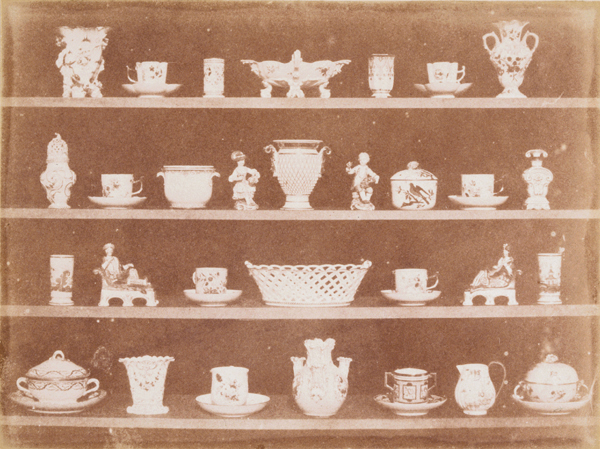
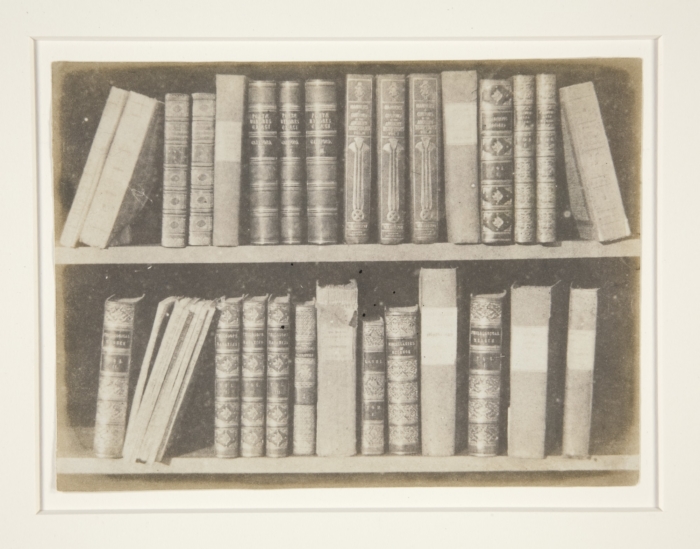
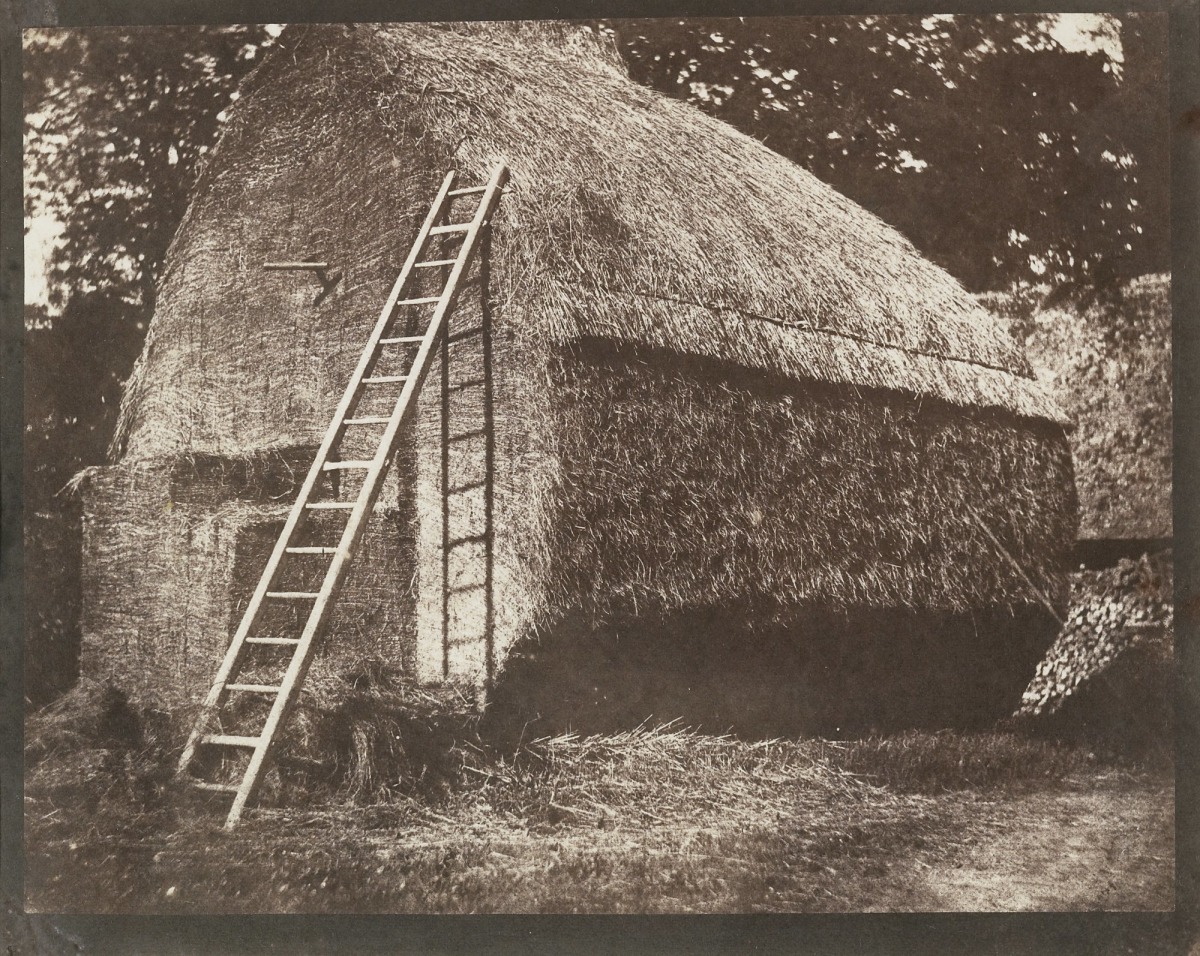
Issued in six parts between June 1844 and April 1846, The Pencil of Nature was the first commercially published book illustrated with photographs, each print pasted in by hand at Henneman's Reading Establishment rather than printed with the text. It ran to twenty-four plates in total, well short of the ten to twelve parts Talbot originally planned. Print runs fell sharply as subscribers dropped away: nearly three hundred copies were produced of the first fascicle and fewer than one hundred of the last, and Talbot abandoned the project before a planned seventh part was issued, a commercial failure by any measure taken at the time.
Fewer than fifty complete or substantially complete copies are believed to survive today; the National Science and Media Museum alone holds three. A complete copy sold at Sotheby's in 2018 for 275,000 US dollars, at the time treated by dealers as evidence the book had become rarer in the market than a Gutenberg Bible, a comparison used often enough in the photography trade to be worth recording as a claim about scarcity rather than repeating as settled fact.
More than 25,000 surviving prints and negatives are now catalogued as Talbot's work or his immediate circle's, cross-referenced across more than 100 public and private collections by the William...
More than 25,000 surviving prints and negatives are now catalogued as Talbot's work or his immediate circle's, cross-referenced across more than 100 public and private collections by the William Henry Fox Talbot Catalogue Raisonne, a Bodleian Libraries project directed by Larry J. Schaaf, who has examined nearly all of Talbot's known surviving originals over some four decades of research. The catalogue groups that total into roughly 4,500 distinct image ideas, since a single popular negative could be reprinted many times over Talbot's lifetime and after it. The project launched in February 2017 with about 1,000 images online and has been built out toward the full total since.
The two largest working holdings are institutional rather than at Lacock itself: the National Science and Media Museum in Bradford holds the bulk of the negatives and working notebooks, and the British Library in London holds the correspondence archive and a major photograph collection, received from the Talbot family's Burnett-Brown descendants in stages between 2005 and 2008. The J. Paul Getty Museum in Los Angeles separately holds 342 works by Talbot's own count in the catalogue raisonne, and the Metropolitan Museum of Art, the Bodleian itself and smaller archives as far afield as Estonia, South Africa and Russia hold further material.
No attribution board or foundation exists for Talbot's work in the way one might for a painter's studio. The catalogue raisonne functions as the working reference for scholars, but it records competing museum attributions on individual disputed images rather than adjudicating between them; the overall count of 25,000 is a matter of finding and cross-referencing surviving material, not of winnowing a larger claimed total down the way a connoisseurship-based corpus is built and pruned.
Photography was never Talbot's only serious intellectual pursuit, and in his own lifetime it may not even have been the one that impressed his peers most.
Photography was never Talbot's only serious intellectual pursuit, and in his own lifetime it may not even have been the one that impressed his peers most. He was a working philologist and, from the 1850s, one of a small number of scholars racing to confirm the decipherment of cuneiform. In 1857 the Royal Asiatic Society tested the claim by giving a newly found, previously unpublished inscription of the Assyrian king Tiglath-Pileser I to four scholars working independently and under seal: Talbot in England, Henry Rawlinson in England, Edward Hincks in Ireland and Jules Oppert in France. On 29 May 1857 a jury of distinguished scientists compared the four translations, found Rawlinson's and Hincks's the closest to each other and Talbot's broadly consistent with both, and declared the decipherment of Akkadian cuneiform an accomplished fact, ending years of public doubt driven largely by open disagreement between Rawlinson and Hincks themselves.
A reader who knows Talbot only as a photography pioneer is missing the fact that his own century would have listed the cuneiform test, the Royal Society fellowship and the mathematics papers well ahead of a paper-negative patent in describing who he was.
Talbot's wife Constance, nee Mundy, whom he married in 1832, experimented with photogenic drawing herself from as early as May 1839; his own letters record her labouring hard at the photographs...
Talbot's wife Constance, nee Mundy, whom he married in 1832, experimented with photogenic drawing herself from as early as May 1839; his own letters record her labouring hard at the photographs without much luck. Only one image is securely attributed to her today, a photogenic drawing transcribing lines from a Thomas Moore poem, Tis the Last Rose of Summer, which she describes making in an 1843 letter to her husband. A second, similar transcription of another Moore poem has sometimes been attributed to her as well, on weaker evidence. That makes Constance Talbot one of the first women to make a photograph and, at the same time, one of the hardest early photographers to credit with an actual body of work, since almost nothing beyond the one secure sheet survives to attach her name to.
A comparable uncertainty attaches to one of Talbot's own best-known images. The Fruit Sellers, made in the cloisters of Lacock Abbey around September 1845, shows a staged market scene that Talbot's friend and photographic disciple, the Reverend Calvert Richard Jones, appears to have arranged, and in which Jones himself appears as one of the figures. The Metropolitan Museum catalogues the image as possibly by Talbot; the Museum of Modern Art credits it jointly to Talbot and Jones; the Victoria and Albert Museum lists both names. No source consulted for this page resolves which of the two actually operated the camera, and the honest answer, on the institutional record, is that nobody currently knows.
Talbot material trades in two markets that barely resemble each other.
Talbot material trades in two markets that barely resemble each other. A single period salt print without distinguished provenance, when one surfaces, sells for a few thousand dollars: a salt print of The Fruit Sellers itself, the same contested image discussed above, sold for 1,680 dollars with premium at a Bonhams sale in San Francisco on 7 November 2007, with no hammer price separately published in the sources consulted. A decade later, Eve, offered at Phillips in New York on 4 April 2017 against a 20,000 to 30,000 dollar estimate, sold for 15,000 dollars with premium, below estimate and with no hammer price separately published in the sources consulted.
Family archives with unbroken provenance from Talbot's own household behave completely differently. On 21 April 2021 Sotheby's in New York sold William Henry Fox Talbot's Gifts to his Sister, an archive of loose photographs, personal albums, fascicles of The Pencil of Nature and a complete copy of Sun Pictures in Scotland that had descended in the family of Talbot's half-sister Henrietta Horatia Maria Gaisford for more than 170 years. Against an estimate of 300,000 to 500,000 dollars, six online bidders pushed the price to a hammer reported in the press at approximately 1.6 million dollars and a final price with premium of 1,956,000 dollars, an auction record for Talbot. The gap between the two markets is a function of provenance and completeness, not of any one image being intrinsically more important than another.
Talbot died of heart disease at Lacock Abbey on 17 September 1877 and is buried there.
Talbot died of heart disease at Lacock Abbey on 17 September 1877 and is buried there. Neither his own photographic archive nor his collection of early Italian pictures stayed at the Abbey after his death; both left the house in stages over the following century, which is why the working Talbot archive now sits at the National Science and Media Museum and the British Library rather than at Lacock itself. The Abbey and its estate passed down through the family until Talbot's granddaughter, Matilda Talbot, gave Lacock Abbey and its grounds to the National Trust in 1944, retaining a life interest in the house.
The Fox Talbot Museum opened at the gates of Lacock Abbey in 1975, established by Talbot descendants Katharine, Anthony and Janet Burnett-Brown as National Trust tenants of the estate; it now holds notebooks, early cameras and lenses, salt prints and a changing programme of photography exhibitions on the site where the earliest surviving negative was made. The Burnett-Brown family separately placed the correspondence and photograph archive that had remained with them into the British Library's keeping between 2005 and 2008, the last major movement of Talbot's own papers out of family hands.
Inventor; Photographer; Mathematician; Philologist. 1800-1877.
Born 11 February 1800, Melbury House, Dorset, England; died 17 September 1877, Lacock Abbey, Wiltshire, England.
National Science and Media Museum (Bradford, England); British Library (London, England); Fox Talbot Museum, Lacock Abbey (Lacock, Wiltshire, England); J. Paul Getty Museum (Los Angeles, United States); Bodleian Libraries, University of Oxford (Oxford, England); Metropolitan Museum of Art (New York, United States).
Talbot material trades in two markets that barely resemble each other. A single period print without distinguished provenance sells for a few thousand dollars when one surfaces outside institutional collections.
Who actually operated the camera for The Fruit Sellers, Talbot or Calvert Richard Jones, who staged the scene and appears in it. The Metropolitan Museum, the Museum of Modern Art and the Victoria and Albert Museum currently give three different answers.
Last verified
One artwork and its story every Tuesday, with the picture: who owned it, what it made, and what closes soon in the exhibition calendar. No promotion, and nothing we cannot cite.
We send one email to confirm the address and keep nothing else. Every letter carries a one-click unsubscribe. How we handle your data.

