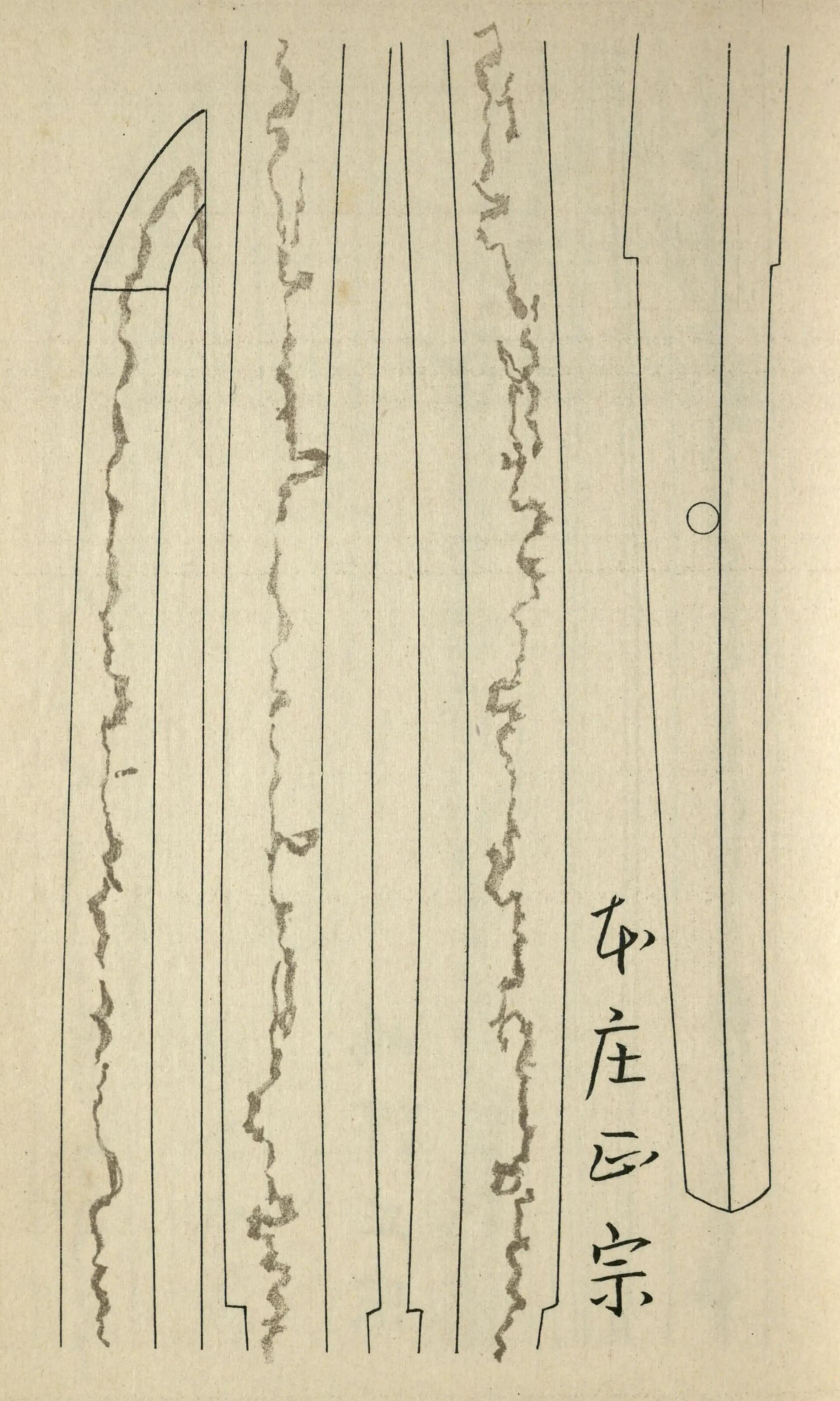
The Honjo Masamune
First half of the fourteenth century · Forged and folded steel
Unlocated since January 1946.
 Japanese · 1264-1343
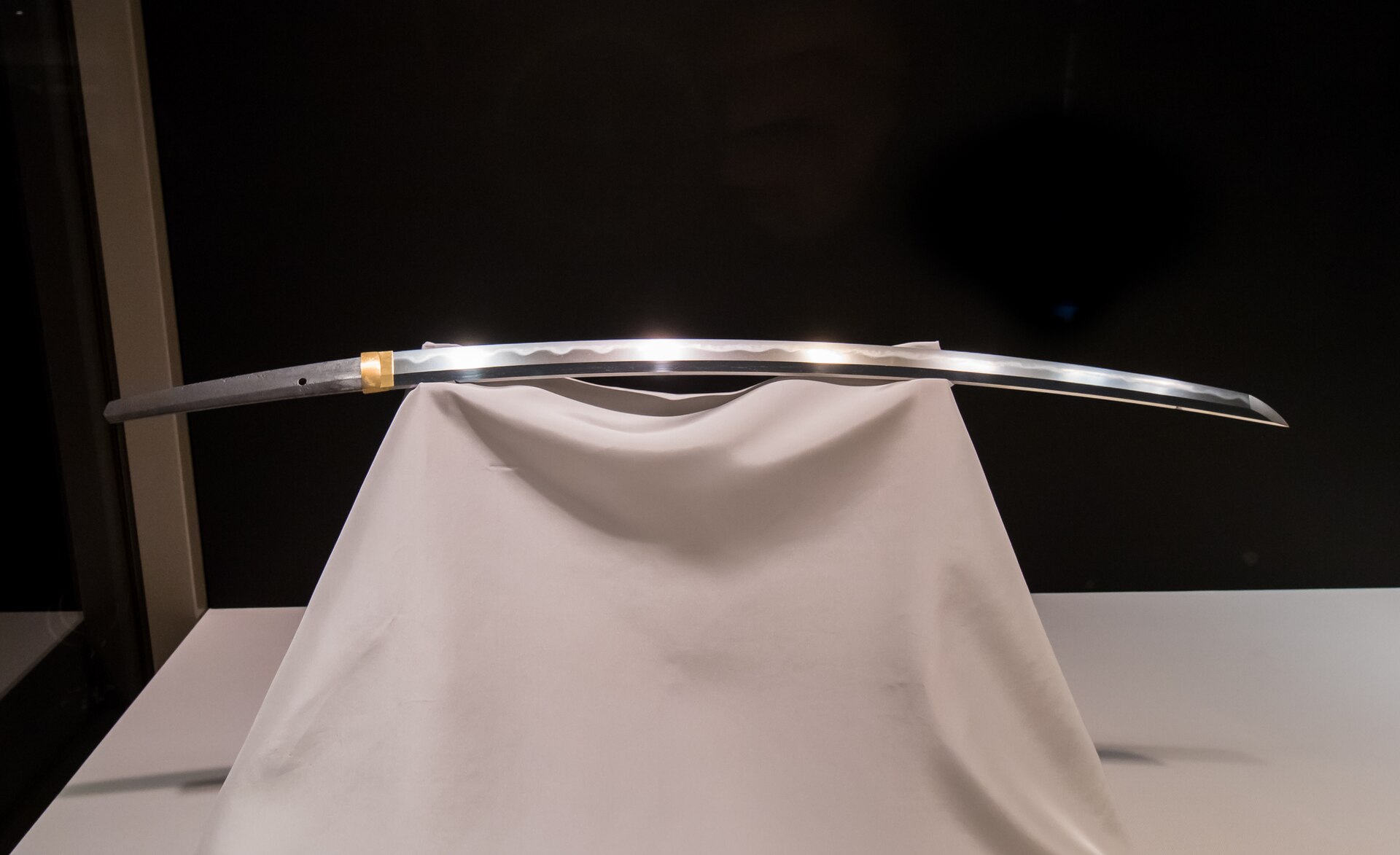
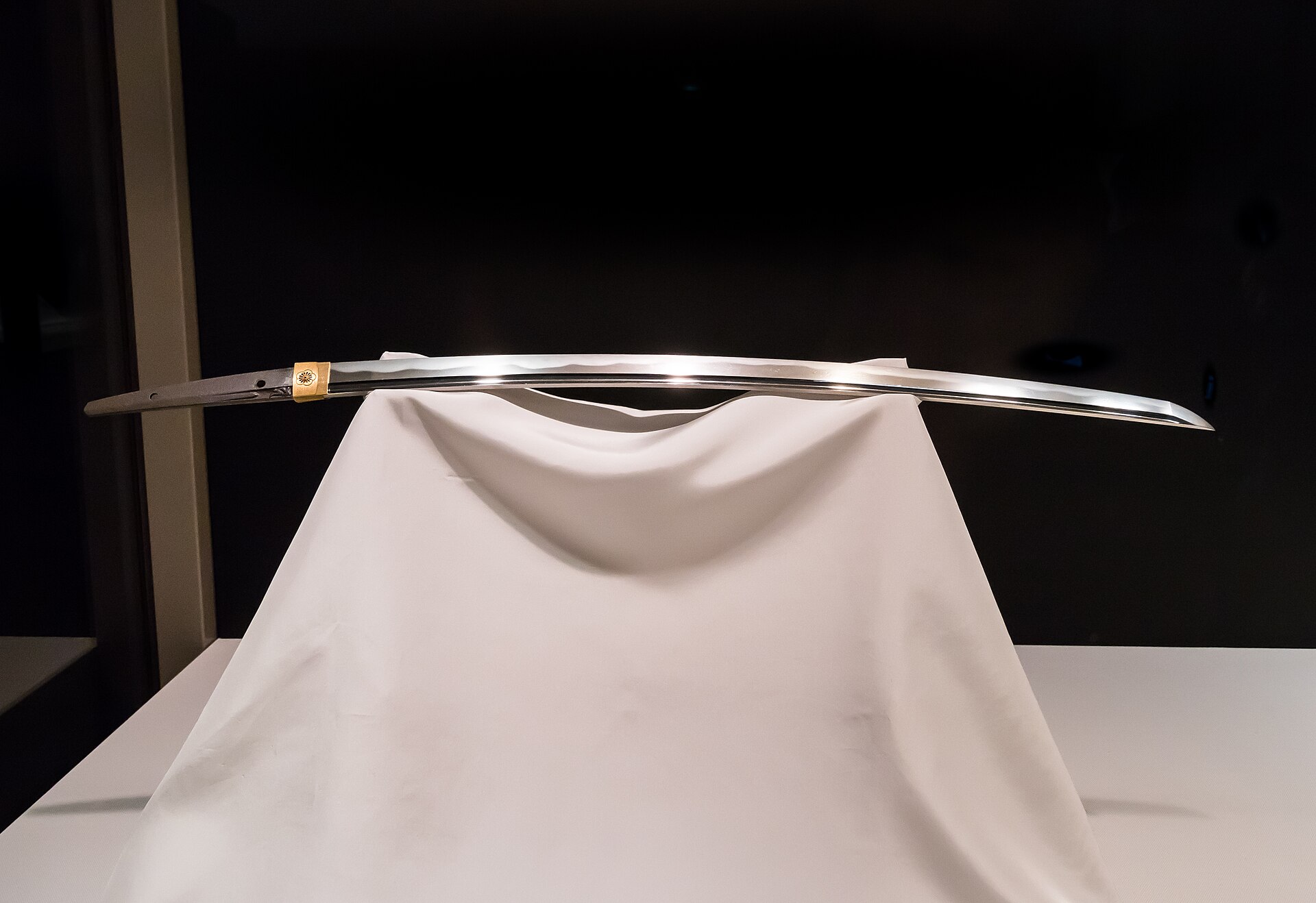
The Ishida Masamune Unsigned katana, Important Cultural Property, Kamakura period, 14th century. Known also as the Ishida Kirikomi Masamune for the slash damage across its blade. Carried by Ishida Mitsunari; the blade Homma Junji compared directly to the Honjo Masamune's own shape and section. Tokyo National Museum. No verified portrait. No securely identified likeness of this maker is known under a free licence. We do not publish a face we cannot verify.
Photograph by Kakidai, via Wikimedia Commons, CC BY-SA 4.0| Full name | Goro Nyudo Masamune (Priest Goro Masamune). Personal name possibly Okazaki Goro or of the Okajima family |
|---|---|
| Worked as | Swordsmith |
| Born | c. 1264 (Bun'ei 1), by tradition · Sagami province, in what is now Kanagawa prefecture... |
| Died | c. 1343 (Koei 2), by tradition, aged about 81 in the source... · Sagami province |
| Nationality | Japanese |
| Movement | Soshu tradition (Sagami school) |
| In this archive | 1 artwork |
| Sources | 24 cited |
| Last verified |
About this page 1 artwork in the archive · Last verified · 24 sources cited
No blade universally accepted by every scholar carries an unambiguous, uncontested signature reading Masamune. That sentence, not a list of masterpieces, is the honest way to open a page about the man conventionally named the greatest swordsmith in Japanese history. Almost the whole reputation rests on unsigned, shortened blades judged by connoisseurship rather than on an autograph body of work, and in 1896 a sword expert who had personally examined some of the finest attributed pieces argued in a national newspaper that the smith, as popularly imagined, had never existed at all.
The reason this matters beyond antiquarian interest is that Masamune's name is also the most commercially valuable three characters that could be added to a Japanese sword, which is exactly why it has been added, fraudulently, to blades that are not his, by named forgers working across four centuries, and why a hereditary authenticating family with a direct financial interest in the answer built most of the corpus that survives. His most famous single object, the Honjo Masamune, disappeared into an American occupation soldier's hands in January 1946 and has never been seen since; it is catalogued separately on this site. This page is about the smith behind it: what can actually be shown to be his, who decided that, what they were paid to decide it, and what has been faked in his name.
None of that is a case against Masamune. A documented smith of extraordinary skill worked in Sagami province in the first decades of the fourteenth century, trained other documented masters, and left behind, at minimum, three securely signed blades that nobody seriously disputes. The rest of the reputation is real too, but it is a different kind of real: built by six centuries of appraisal, mistake, correction and money, and legible only if that machinery is described rather than assumed away.

Traditional birth date, Bun'ei 1, given by the Kotoh Meizukushi Taizen.3
The working period generally accepted for Masamune's active career in Sagami province, trained by Shintogo Kunimitsu.13
The Kamakura shogunate falls; the Soshu masters, including most of Masamune's traditional ten disciples, disperse to their home provinces within a generation of his death.3
Traditional death date, Koei 2, by the same source that gives the 1264 birth year.3
Date of the Ryuzoji Bon Mei Zukushi, identified only in 2017 as the earliest known document to use the name Masamune, eight years after his traditional death.3
Lifetime of the courtier Ichijo Kaneyoshi, whose Sekiso Orai carries an early literary reference to the name.3
Oda Nobunaga shortens the future Kotegiri Masamune and presents it to Otsu Denjuro Nagamasa, cutting away whatever tang inscription the blade carried before.9
Toyotomi Hideyoshi appoints Honami Kotoku to the office of token kiwamedokoro and grants him the hon seal, founding the origami certification system under which most Masamune attributions were later made.3
The Hyuga Masamune tanto is taken as war booty at the battle of Sekigahara by Mizuno Katsushige, having been given away by Ishida Mitsunari shortly before.11
The Maeda family presents the Kotegiri Masamune, by then re-attributed away from Yukimitsu, to the Meiji Emperor; it enters the imperial collection.9
Imamura Choga publishes his case that Masamune, as popularly understood, did not exist, opening a public dispute with Honami Tadataka.34
The Victoria and Albert Museum in London acquires, from the dealer Alfred Dobree, a katana carrying a gold-inlaid Masamune signature and a Honami attribution cipher.17
Uchida Soten publishes Dai Nihon Token Shinko, a genealogical study of the Soshu school that partially credits Imamura Choga's doubts about the Masamune corpus.3
The Honjo Masamune is designated a National Treasure on 29 May, the same pre-war process that ranked the wider Masamune corpus.1516
The Honjo Masamune is surrendered under occupation order and disappears on 18 January after being handed to an American serviceman; it has never resurfaced.15
Junji Homma and Kan'ichi Sato found the Nihon Bijutsu Token Hozon Kyokai on 24 February to preserve Japanese swords during the occupation's confiscation campaign; it becomes the modern authority on Masamune attributions.26
The NBTHK's old certification system is found to have issued fake blades papers under the Tokubetsu Kicho Token grade; the chairman and directors resign and the present four-tier grading replaces it.2
Christie's New York disperses Dr. Walter Compton's Japanese sword collection; its top lot, an unattributed 13th-century Kamakura blade, sells for 418,000 dollars, then a world record for a Japanese sword sale.18
Bonhams sells, openly catalogued as spurious, a jitte carrying a false Goro Nyudo Masamune signature and a false early date, on 27 November.7
Diet members raise conflict-of-interest concerns about NBTHK shinsa practice; more than 344 regulatory violations dated from 2006 are documented and oversight is tightened.2
Scholarship identifies the 1351 Ryuzoji Bon Mei Zukushi as the earliest surviving document to use the name Masamune.3
No lot at Christie's, Sotheby's or Bonhams was found in the sources consulted catalogued as a genuine, NBTHK-graded Masamune attribution; every Masamune-named lot located at a major Western house was explicitly catalogued as after Masamune, a later copy in his style, or, in one case, an openly flagged forgery. Where an attributed Masamune has entered a Western collection at all it has done so through private purchase from a dealer rather than at auction, and even then under a museum's own published doubt about the attribution. The nearest real price ceiling this record could establish for the wider class of top-tier Kamakura-period Japanese blade at a Western auction is the 418,000 dollars paid in 1992 for an unattributed sword from the Compton collection, and the clearest modern figure for what this tier of object commands at all is a Japanese public subscription, not a hammer price. Widely repeated online claims of a 1.35 million dollar Masamune sale in 2020 could not be traced to any auction house, lot number or date and are not adopted here.
| Institution | City | Holdings | Note |
|---|---|---|---|
| Tokyo National Museum | Tokyo | The Ishida Masamune, the Kanze Masamune, the Nakatsukasa Masamune, the Tsugaru Masamune and the Kotegiri Masamune | The largest single concentration of confirmed Masamune-attributed blades on public view anywhere. |
| Mitsui Memorial Museum | Tokyo | The Hyuga Masamune, an unsigned National Treasure tanto | Provenance runs through Ishida Mitsunari and the battle of Sekigahara. |
| Tokugawa Art Museum | Nagoya | The Fudo Masamune, a signed tanto carrying a carved image of Fudo Myoo | One of only three blades whose signature is accepted without serious dispute. |
| Imperial Household Agency | Tokyo | The Kyogoku Masamune, a signed katana presented to the Meiji Emperor by the Kyogoku family | Not on general public view; held within the imperial collection. |
| Victoria and Albert Museum | London | A katana and scabbard carrying a gold-inlaid Masamune signature and a Honami attribution cipher, accessioned 1912 | The museum's own catalogue entry states that the authenticity of the attribution must remain subject to question, while noting current opinion favours a genuine Masamune. |
Signed works by Masamune are exceptionally rare.
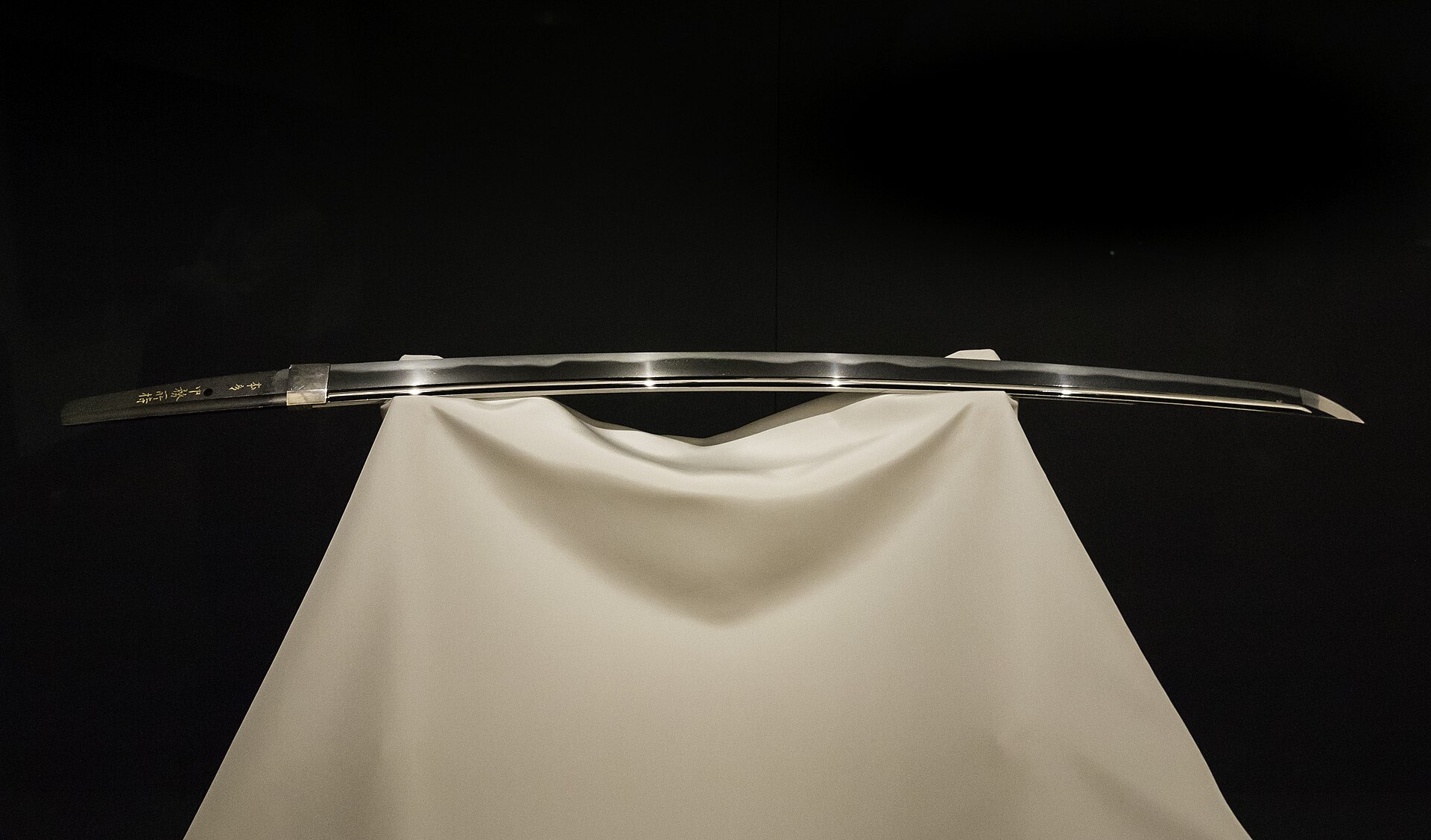
Signed works by Masamune are exceptionally rare. Three are conventionally accepted without serious dispute: the Fudo Masamune, a tanto carved with an image of the Buddhist deity Fudo Myoo, held by the Tokugawa Art Museum in Nagoya; the Kyogoku Masamune, a katana that descended in the Kyogoku family of the Marugame domain before being presented to the Meiji Emperor and entering the Imperial Household Agency's own collection; and the Daikoku Masamune. Everything else given to him, the great majority of the corpus, is mumei, unsigned, or carries a later inscription added by an appraiser rather than by the smith's own hand.
The scale of that corpus is nevertheless real and countable. The NBTHK's own records, as tallied in a 2019 study of the Soshu school, place 81 works by Masamune at Juyo Token grade or above: 32 at Juyo Token, 20 at Tokubetsu Juyo, 10 designated Juyo Bijutsuhin, 10 designated Juyo Bunkazai, and 9 designated Kokuho, National Treasure. Roughly half of that total, about 39 blades, carries its attribution not from the smith but from a Honami-family gold-inlaid inscription, a later paper attribution, or an origami certificate. An attribution to Masamune, in other words, is very often an attribution to a family of hereditary appraisers reading a blade centuries after it was made, and this record treats that distinction as load-bearing throughout.
In 1896 Imamura Choga, a sword expert who had served the Imperial Household and inspected some of the most celebrated attributed blades in Japan including, in 1880, the Honjo Masamune itself...
In 1896 Imamura Choga, a sword expert who had served the Imperial Household and inspected some of the most celebrated attributed blades in Japan including, in 1880, the Honjo Masamune itself, proposed that the smith did not exist in the form popularly understood. His argument ran through the Meiji-era press and into a serious dispute with Honami Tadataka, head of a branch of the very family whose certificates had built the reputation Imamura was questioning. Uchida Soten, writing his own genealogical study of the Soshu school in 1939, agreed with parts of the theory rather than dismissing it outright.
The strongest version of the argument is not that no such smith worked, but that more than one smith may have worked under the same name and been collapsed into a single legendary figure by later connoisseurship. The Kokon Kaji Biko, an old register of smiths, records as many as eight Koto-period makers called Masamune. One reconstruction proposes an earlier Yagoro Masamune, a son of Saburo Kunimune working in an older niji-mei signature style, distinct from the later, far more celebrated Masamune generally given as Yukimitsu's son or adopted heir. When accurate information about two or more same-named masters was unavailable to later appraisers, the study argues, the simpler course was to treat them as one person.
The earliest surviving document to use the name Masamune at all was identified only in 2017: the Ryuzoji Bon Mei Zukushi, a register dated 1351, eight years after the smith's traditional death date. An earlier literary mention appears in the Sekiso Orai, written by the courtier Ichijo Kaneyoshi sometime in his lifetime of 1402 to 1481, more than half a century further on again. Modern scholarship has not revived Imamura's theory in its strongest form, but it has also not closed the gap he pointed at: the documentary record naming Masamune begins generations after the work attributed to him was made, and it begins in a register compiled by exactly the trade that stood to profit from the name.
Masamune trained under Shintogo Kunimitsu, generally credited as the founder of the distinct Soshu tradition centred on Kamakura, and probably also studied under Saburo Kunimune.
Masamune trained under Shintogo Kunimitsu, generally credited as the founder of the distinct Soshu tradition centred on Kamakura, and probably also studied under Saburo Kunimune. What made the Soshu school unusual among Japanese sword lineages is that it was not a closed, hereditary workshop. It drew accomplished smiths in from other provinces on merit, which is the likeliest reason the tradition developed as fast and as distinctively as it did; a school that recruits only its own sons cannot absorb outside technique at the same rate.
He is conventionally styled Goro Nyudo Masamune, and the Nyudo is not decoration. It records that he took lay Buddhist vows later in life, a documented and fairly common step for craftsmen of his era seeking a settled religious status without formally entering a monastery. It is a plain biographical fact about what he did, not a claim about what the swords mean, and this record keeps the two separate.
The school's later history undercuts any suggestion that its openness was permanent policy rather than a phase. Through the Muromachi period the Soshu tradition hardened into something closer to the closed, eldest-son inheritance pattern it had first escaped, and the fresh talent that had built it stopped arriving. The 1333 collapse of the Kamakura shogunate did the rest.
Masamune is credited with training the Masamune juttetsu, conventionally ten disciples, though the exact roster has never been fixed and modern Japanese scholarship treats the traditional list with...
Masamune is credited with training the Masamune juttetsu, conventionally ten disciples, though the exact roster has never been fixed and modern Japanese scholarship treats the traditional list with real caution: several of the named masters have working periods that do not overlap cleanly with a single teacher's active decades, which is the signature of a group assembled by later reputation rather than by a school register. The names most consistently given are Go Yoshihiro, Saeki Norishige, Kanemitsu, Chogi, Hasebe Kunishige, Naotsuna, Samonji, Rai Kunitsugu, Shizu Saburo Kaneuji and Kinju, alongside his own probable son or adopted heir Sadamune.
The fall of the Kamakura shogunate in 1333 and the transfer of political weight toward Kyoto scattered the group in a way that is itself a documented historical event rather than legend. Norishige and Go Yoshihiro returned to Etchu. Samonji went to Kyushu. Rai Kunitsugu and Hasebe Kunishige moved to Kyoto. Kaneuji and Kinju settled in Mino, carrying Soshu technique into what would become one of the five classical sword-making traditions in its own right. Chogi and Kanemitsu went home to Bizen. Only Hiromitsu and Akihiro stayed on in Kamakura, and Hiromitsu is recorded as working in reduced circumstances. A school built on drawing outside talent toward one city ended by sending that talent back out across the country within a single generation of its founder's traditional death date.
The family that did more than any other to build and to police the Masamune corpus was the Honami, hereditary sword polishers and appraisers descended from Honami Myohon, an attendant in the circle...
The family that did more than any other to build and to police the Masamune corpus was the Honami, hereditary sword polishers and appraisers descended from Honami Myohon, an attendant in the circle of the Ashikaga shogun Takauji in the fourteenth century. In 1596 or 1597 Toyotomi Hideyoshi appointed the ninth head, Honami Kotoku, to the office of token kiwamedokoro, sword authentication, and granted him a seal reading hon with authority to appraise a blade and write its value on a folded paper. That document is the origin of the word origami, and of a certification economy that ran the Japanese sword trade for the next two and a half centuries.
An origami named the smith, stated a finding of authenticity, gave the blade's measurements, carried the appraiser's cipher and seal, and above all gave the daitsuke, a cash valuation in gold. The Honami fee was ten mai of silver for every hundred mai of gold the blade was valued at. The appraiser therefore earned a direct percentage of the number he himself assigned, on a scale running from a handful of gold mai for a modest blade to seven hundred kan for the grandest. The system produced its own vocabulary for its own failures: Tanuma origami for the devalued mass-issued certificates of the 1770s and 1780s, and awase origami for the deliberate practice of attaching a more valuable blade's certificate to a lesser one. A trade that names its own species of fraud is a trade that has seen enough of it to need the words.
The clearest single number in the record is this: Honami Kotoku himself was known for his integrity and for refusing to judge doubtful blades submitted by powerful people, but his successors issued roughly three thousand origami and fuda naming Masamune as the maker. No swordsmith, however prolific, forged three thousand blades in a working life measured in decades. The family that authenticated the fourteenth century's greatest swordsmith also manufactured, through ordinary commercial pressure rather than conspiracy, most of the false Masamune attributions that later scholarship has had to unpick one blade at a time.
The Honami monopoly did not survive the Meiji settlement.
The Honami monopoly did not survive the Meiji settlement. The main line's nineteenth head pawned the family's official seal, and its last head became a shoemaker. What replaced it, founded on 24 February 1948 by the researcher Junji Homma and the Tokyo National Museum's Kan'ichi Sato specifically to keep Japanese swords from being destroyed while the American occupation was confiscating them, was the Nihon Bijutsu Token Hozon Kyokai, the NBTHK. It now issues four grades in ascending order: Hozon, Tokubetsu Hozon, Juyo Token and Tokubetsu Juyo Token, and it is, in every functional sense, the Honami office reconstituted as a public-interest foundation, with the deliberate change that its papers certify authenticity and do not state a monetary value.
Its authority today is close to exclusive. Answering a Diet question on 12 February 2008, the Minister of Education, Culture, Sports, Science and Technology, Bunmei Ibuki, described the NBTHK as the only body of its kind, and a 2019 scholarly survey of the Soshu corpus states plainly that appraisal today is almost monopolized by the organisation. An older body, the NTHK, later reorganised as the NTHK-NPO, still certifies swords and holds its own examinations more frequently and outside Japan as well as within it, but its papers carry less weight among serious collectors and at auction than an NBTHK certificate.
That near-monopoly has had its own bad decade, twice. In 1981 it emerged that large numbers of certificates issued under the old pre-1982 grading system, particularly the Tokubetsu Kicho Token grade, had been given to fakes. The chairman and every director resigned that September, the judges responsible were removed, and the present four-tier system replaced the old one in 1982; papers issued before that date are not treated as authoritative today. Between 2006 and 2012 a different problem surfaced in the Diet: members of the organisation's own board were found submitting relatives' and non-members' blades for judging in breach of its rules, more than 344 recorded violations dated from 2006 were documented, and the Agency for Cultural Affairs imposed tighter oversight. A single authenticating body for an entire national art form does not fail differently the second time; it fails for the same structural reason, which is that the people close enough to the trade to judge it well are also close enough to have an interest in the answer.
Separate from the mumei-and-shumei attribution problem above is a different, plainer species of fraud: a false signature, a gimei, physically cut into a blade's tang to claim a smith's name that the...
Separate from the mumei-and-shumei attribution problem above is a different, plainer species of fraud: a false signature, a gimei, physically cut into a blade's tang to claim a smith's name that the blade never earned. Masamune's name has been one of the two or three most heavily targeted in the whole trade for exactly the reason his reputation exists in the first place, and specific forgers who worked it are documented rather than rumoured.
Gassan Sadakazu, a swordsmith who lived from 1836 to 1918 and later received Japan's Imperial Artist title, made a documented number of gimei blades signed Masamune and Sadamune in the years after the 1876 ban on wearing swords destroyed the ordinary market for a working smith's own name. That later imperial honour was awarded without the forgeries counting against him, which says as much about how the trade absorbed this practice as any individual case could.
A plainer, dateable example survives in a Western saleroom's own catalogue rather than in scholarly reconstruction. On 27 November 2003 Bonhams sold, as lot 14 of sale 10395, a jitte, an iron truncheon rather than a sword, inscribed along its blade with the signature Goro Nyudo Masamune tsukuru kore, Goro Nyudo Masamune made this, and given a false early date. The house's own cataloguing called the inscription and date spurious and placed the object's real manufacture in the Edo period, centuries after Masamune's traditional lifetime. It sold anyway, for 164.50 pounds including premium, openly catalogued as carrying a false Masamune signature: proof that a fake this specific still finds a buyer once its status is disclosed, which is a different and in its way more interesting fact than a fake that fools one.
The clearest single documented case of a Masamune attribution changing to fit its owner rather than the metal is the Kotegiri Masamune, now in the Imperial Household's own collection at the Tokyo...
The clearest single documented case of a Masamune attribution changing to fit its owner rather than the metal is the Kotegiri Masamune, now in the Imperial Household's own collection at the Tokyo National Museum. Originally an Asakura family sword, it was shortened by Oda Nobunaga in the twelfth month of 1575 and presented to Otsu Denjuro Nagamasa, whose tang inscription records exactly that. It passed after Denjuro's death in 1579 to Sano Nobuyoshi, daimyo of Sano in Shimotsuke province, and while it was his it carried an attribution to Yukimitsu, Masamune's traditional father, and was known as the Sano Yukimitsu.
After Nobuyoshi's death the blade passed to the Maeda family, and Maeda Toshitsune, the second Kaga daimyo, had it freshly appraised by a member of the Honami family, who attributed it to Masamune instead. The Maeda presented it to the Meiji Emperor in 1882, and it has carried the imperial provenance, and the Masamune name, ever since. The specialist Markus Sesko has argued in print that neither attribution withstands the blade's own shape: its oversized, Nanbokucho-period proportions and extended point read to him as ruling out both Yukimitsu and Masamune, with the smith Sadamune the likelier hand. Nobody adjudicates that dispute today with the blade itself sitting in an active imperial collection rather than an open shinsa room, and this record states both positions rather than choosing between them.
The nickname Kotegiri, arm-guard cutter, in fact predates the Masamune attribution entirely: it descends from an older story that the same blade, then attributed to Sadamune and called Yugakegiri, severed an opponent's bow-glove-guarded arm around 1355 in the hands of Asakura Ujikage. When Nobunaga shortened the tang in 1575 the original signature, whoever it named, was cut away along with the old nickname. Everything the sword has been called since rests on inscriptions added after that cut, exactly the o-suriage problem that recurs across this smith's whole corpus.
Beyond the three signed blades, a working census of what is confidently identified and photographed today includes several katana and one tanto that this record has verified against their own museum...
Beyond the three signed blades, a working census of what is confidently identified and photographed today includes several katana and one tanto that this record has verified against their own museum or Commons documentation rather than against a secondhand list. The Ishida Masamune, an unsigned katana designated Important Cultural Property and held by the Tokyo National Museum, carries slash damage across its blade and is also known as the Ishida Kirikomi Masamune; it was the sword Ishida Mitsunari carried as his own, and it is the blade Homma Junji, who ran the pre-war National Treasure survey, compared directly to the Honjo Masamune's shape and section when the two were last examined side by side.
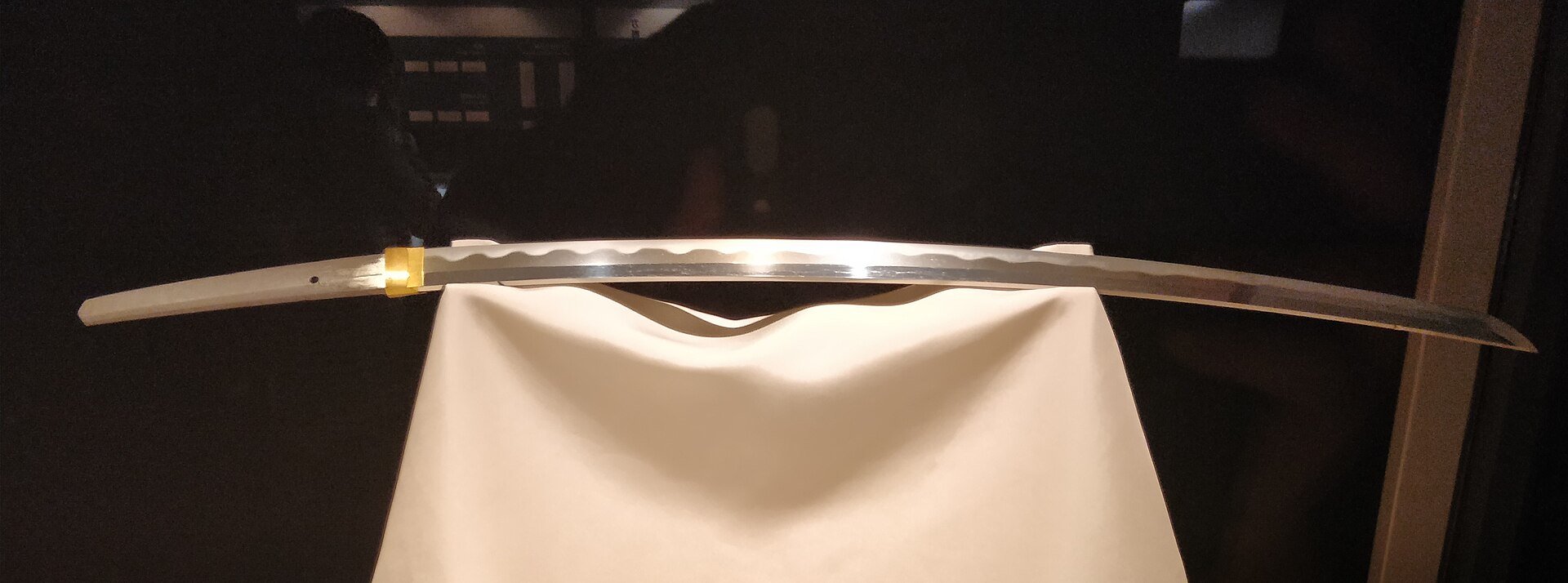
The Kanze Masamune and the Nakatsukasa Masamune are both unsigned katana at National Treasure rank, both held by the Tokyo National Museum. The Nakatsukasa carries a gold-inlaid inscription recording Honda Tadakatsu's ownership together with the Masamune attribution and Honami Kotoku's own cipher, cut into the tang rather than resting on a separate paper, which is as close to a durable authentication as this corpus gets anywhere. The Tsugaru Masamune, also a National Treasure and also at the Tokyo National Museum, carries a gold-inlaid inscription naming Jo Izumi-no-kami as an owner and giving Masamune as the maker under a Honami cipher reading hon'a.
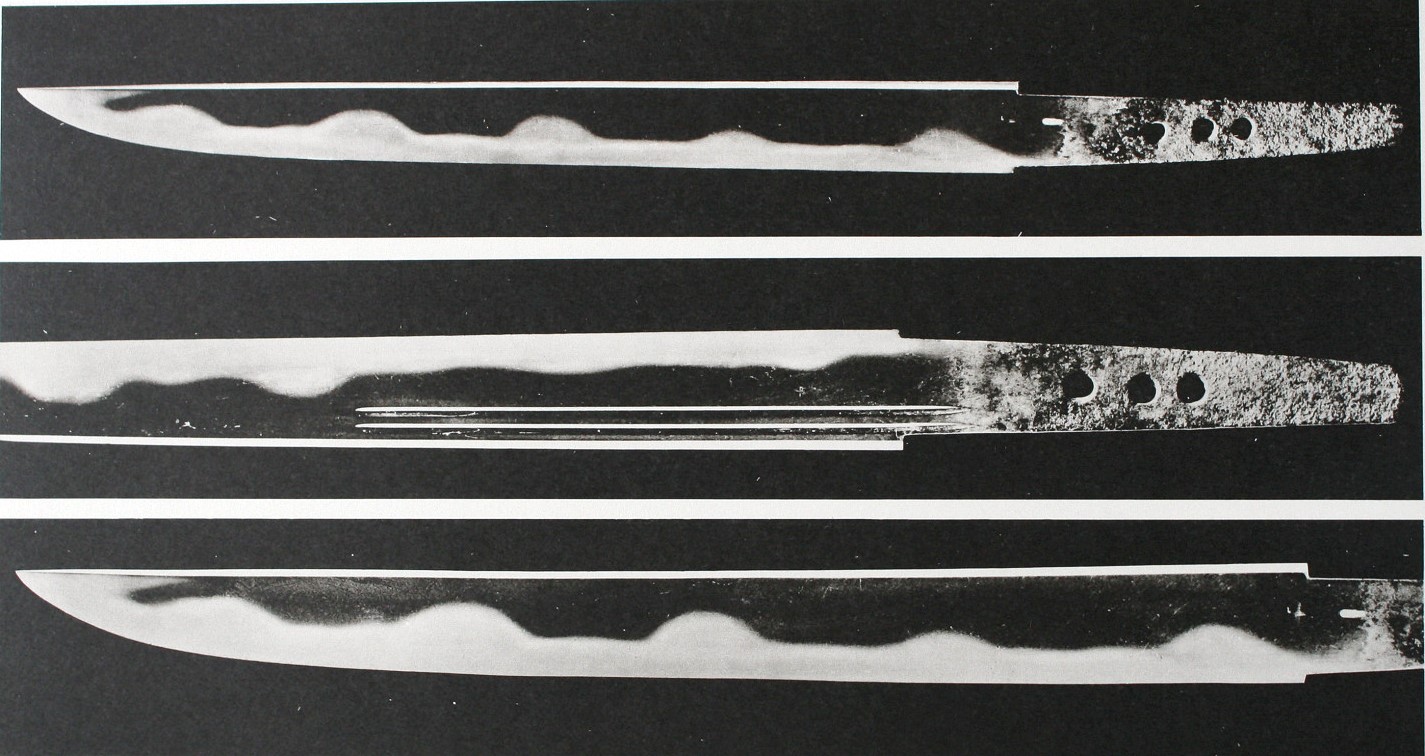
The Hyuga Masamune, a 24.8 centimetre unsigned tanto now a National Treasure at the Mitsui Memorial Museum in Tokyo, has its own provenance story worth telling in full: Ishida Mitsunari gave it to his younger sister's husband, and it was taken as war booty during the battle of Sekigahara in 1600 by Mizuno Katsushige, governor of Hyuga province, whose branch's ownership gave the blade its name. Two men on opposite sides of the same battle therefore each have their name permanently attached to the same dagger, one as its giver and one as its taker.
The single most famous object bearing this smith's name is catalogued separately on this site as an object in its own right, and this record does not repeat its full provenance chain.
The single most famous object bearing this smith's name is catalogued separately on this site as an object in its own right, and this record does not repeat its full provenance chain. In outline: an unsigned, shortened katana traditionally linked to Masamune, designated a National Treasure on 29 May 1939, that stood as an object of the Tokugawa shogunate before being surrendered under occupation order to the Mejiro police station in Tokyo in December 1945 and handed to an American serviceman on 18 January 1946. It has not been seen since, and the Japanese state's own register of missing designated cultural properties lists it only as entry 63, katana, unsigned, attributed to Masamune, without ever using the Honjo name itself.
What belongs on this page rather than that one is what the loss did to the corpus as evidence. Two of the specific people best placed to judge the blade's quality, Imamura Choga in 1880 and Honami Koson in 1943, both examined it in person and both found it artistically unremarkable for a Masamune, whatever its historical weight. Imamura is the same critic who, sixteen years after handling the Honjo blade, argued in print that the smith it was said to be by did not exist as popularly understood. The single most famous Masamune in the world was doubted, by name, by the one scholar most associated with doubting Masamune altogether, and neither doubt can now be tested against the object itself.
Search a genuinely Masamune-attributed blade against the public sale records of Christie's, Sotheby's or Bonhams and the pattern is consistent and, on its own terms, informative.
Search a genuinely Masamune-attributed blade against the public sale records of Christie's, Sotheby's or Bonhams and the pattern is consistent and, on its own terms, informative. Bonhams' own catalogued Masamune-adjacent lots are explicitly not attributed originals: a shin-shinto katana blade catalogued as after Masamune, Edo period, sold 10 November 2016 from the Sir Frank Bowden collection; a shin-shinto o-tanto blade likewise catalogued as after Masamune, probably 19th century, sold 9 November 2010 for 720 pounds including premium; and the gimei jitte described above, openly flagged as spurious. This record found no lot at a major Western house catalogued as a genuine, NBTHK-graded Masamune attribution, and it does not assert one exists; the absence, checked rather than assumed, is itself the finding.
Where an attributed Masamune has changed hands in the West at all, it has done so privately rather than at auction. The Victoria and Albert Museum's own katana, accessioned in 1912 from the London dealer Alfred Dobree, carries a gold-inlaid Masamune signature on one side of its tang and a Honami family cipher endorsing it on the other, and the museum's own current catalogue entry states plainly that the authenticity of the blade and the correct reading of that inlaid attribution must remain subject to question, while noting that current opinion favours a genuine Masamune. A national museum's own published doubt about its own attributed holding is a more honest data point than any auction estimate would be.
The nearest checkable price ceiling for this entire class of object in the West is not a Masamune sale at all. When Dr. Walter Compton's collection of Japanese swords was dispersed at Christie's New York beginning 31 March 1992, the top lot of the opening sale, an unnamed thirteenth-century Kamakura-period blade, brought 418,000 dollars, a sum reported at the time as a new world record for a Japanese sword. The same press coverage records a separate fact about the same collection, and it does not belong to the auction itself: Compton's own finest sword, a thirteenth-century blade signed by Kunimune the Elder, never went under the hammer at all. He had bought it decades earlier from a Midwestern gun dealer, later established that it was a Japanese National Treasure stolen from a shrine by an American soldier during the postwar occupation, and returned it to Japan himself; Emperor Hirohito awarded him the Order of the Rising Sun for it. Several promotional web pages, none from an auction house and none naming a lot, sale or buyer, claim a Masamune-attributed blade sold for 1.35 million dollars in 2020; this record could not trace that figure to any primary source and does not adopt it. The clearest real modern figure for what this tier of Japanese sword commands is not a Western auction price at all but a public subscription: in a campaign that raised 513,090,000 yen toward the unsigned National Treasure tachi Yamatorige, a blade of the same rank as the finest Masamune attributions, the city of Setouchi in Okayama reached its target on 26 January and kept accepting donations through 31 March 2020, with more than seventeen thousand donors contributing in total to keep the blade from leaving the region where it was made. The city's own portal does not give a year for the 26 January date, and published accounts of the campaign differ between January 2019 and January 2020; this record does not pick one over the other.
Swordsmith. c. 1264-1343.
Born c. 1264 (Bun'ei 1), by tradition, Sagami province, in what is now Kanagawa prefecture, probably Kamakura; died c. 1343 (Koei 2), by tradition, aged about 81 in the source that gives both dates, Sagami province.
A jitte sold at Bonhams, 27 November 2003. An iron jitte, not a sword, inscribed along its blade with the signature Goro Nyudo Masamune tsukuru kore and given a false early date. Lot 14 of sale 10395; sold for 164.50 pounds including premium.
Tokyo National Museum (Tokyo); Mitsui Memorial Museum (Tokyo); Tokugawa Art Museum (Nagoya); Imperial Household Agency (Tokyo); Victoria and Albert Museum (London).
No lot at Christie's, Sotheby's or Bonhams was found in the sources consulted catalogued as a genuine, NBTHK-graded Masamune attribution; every Masamune-named lot located at a major Western house was explicitly catalogued as after Masamune, a later copy in his style, or, in one case, an openly flagged forgery. Where an attributed Masamune has entered a Western collection at all it has done so through private purchase from a dealer rather than at auction, and even then under a museum's own published doubt about the attribution.
Did a single smith named Masamune produce the whole attributed corpus, or does the name, as the Kokon Kaji Biko's count of eight Koto-period Masamunes suggests, cover at least two distinct masters later collapsed into one legendary figure? No reconstruction consulted resolves this beyond a proposed, disputed genealogy.
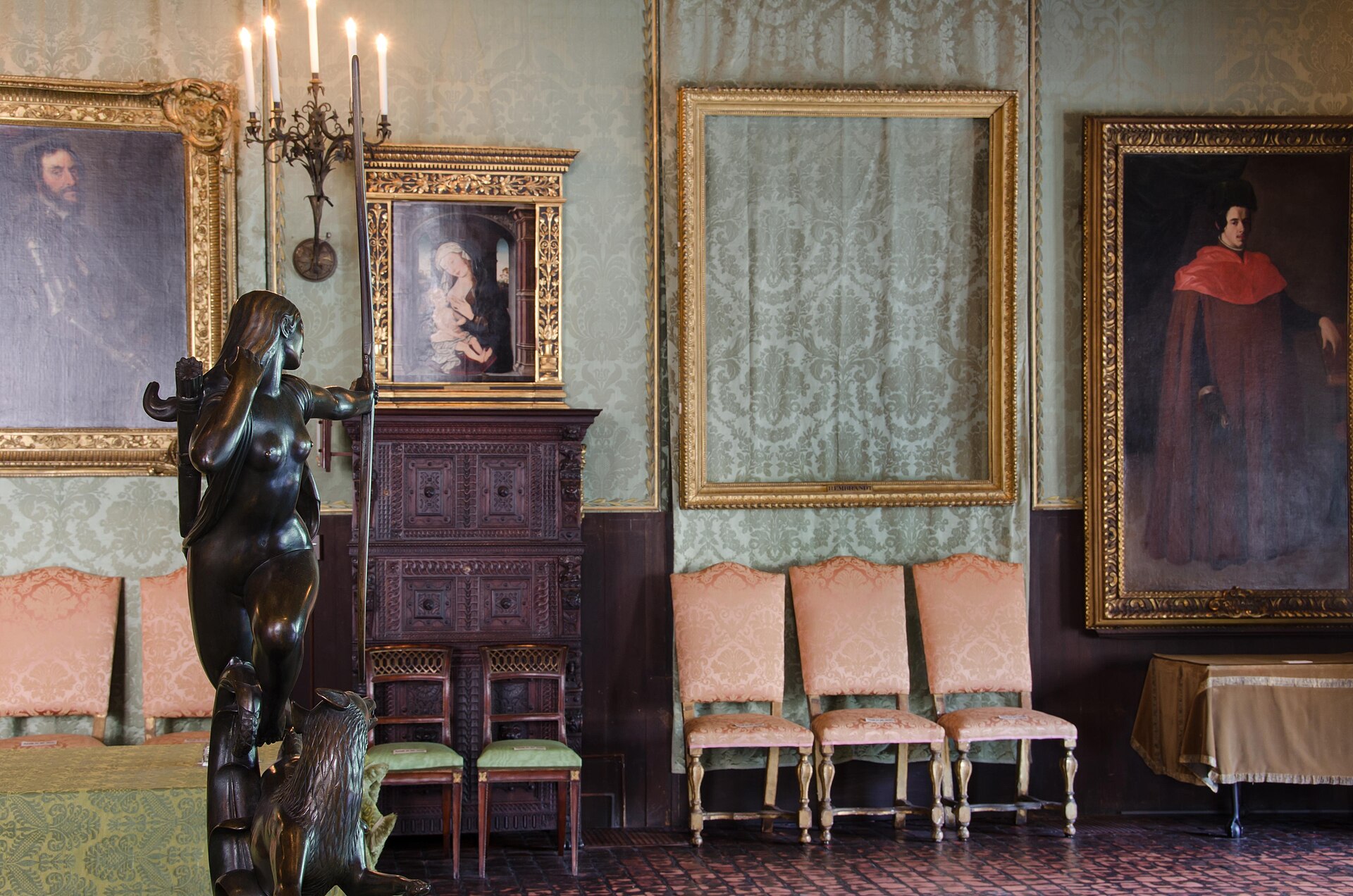
Four objects in this archive are unlocated. Every one still carries a live institutional record, and one of them still carries a...
10 min read
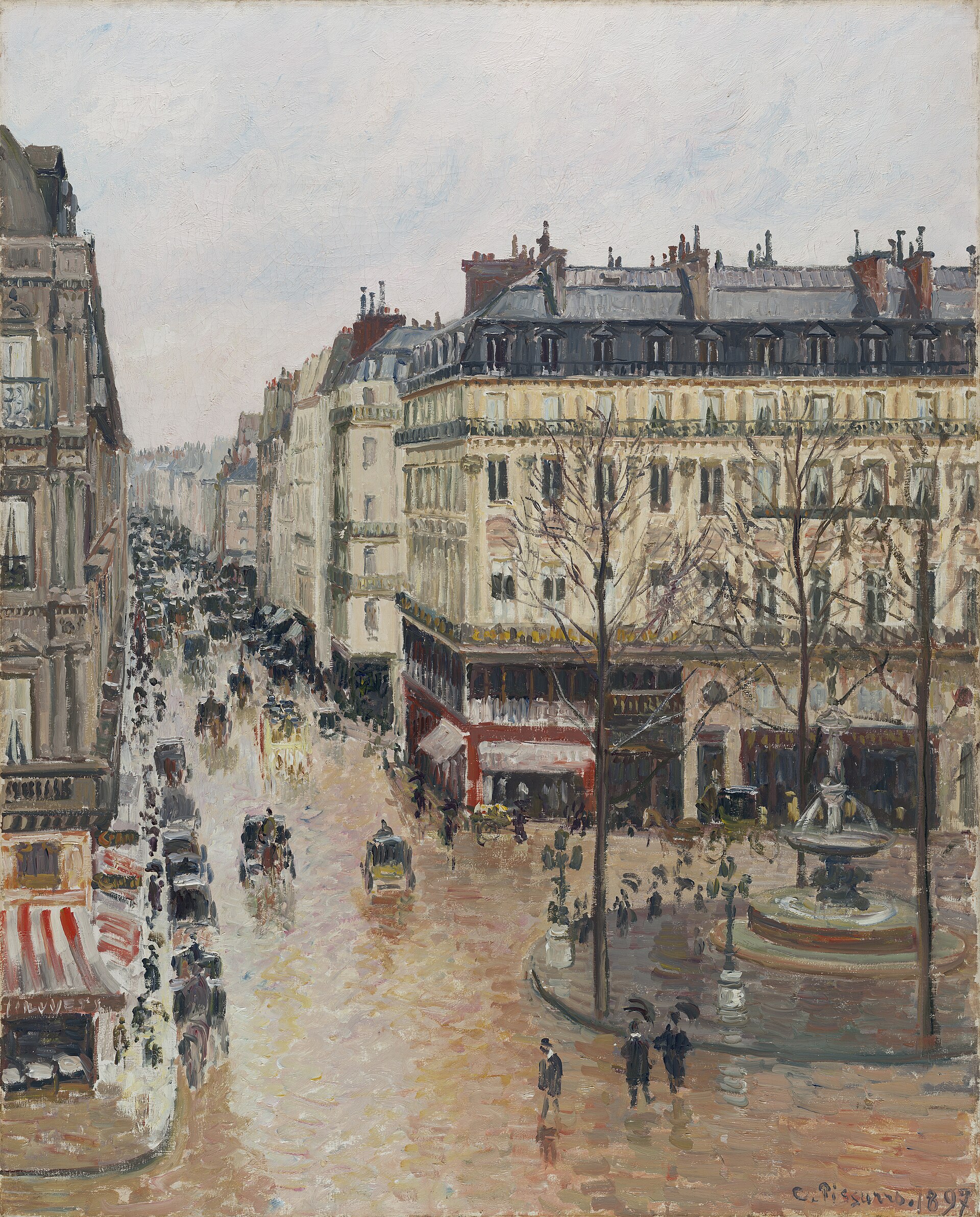
Documentation in a provenance chain rises from 63 per cent at the earliest links to 96 per cent at the most recent.
10 min read
Last verified
One artwork and its story every Tuesday, with the picture: who owned it, what it made, and what closes soon in the exhibition calendar. No promotion, and nothing we cannot cite.
We send one email to confirm the address and keep nothing else. Every letter carries a one-click unsubscribe. How we handle your data.


