Emile-Jacques Ruhlmann
 French · 1879-1933
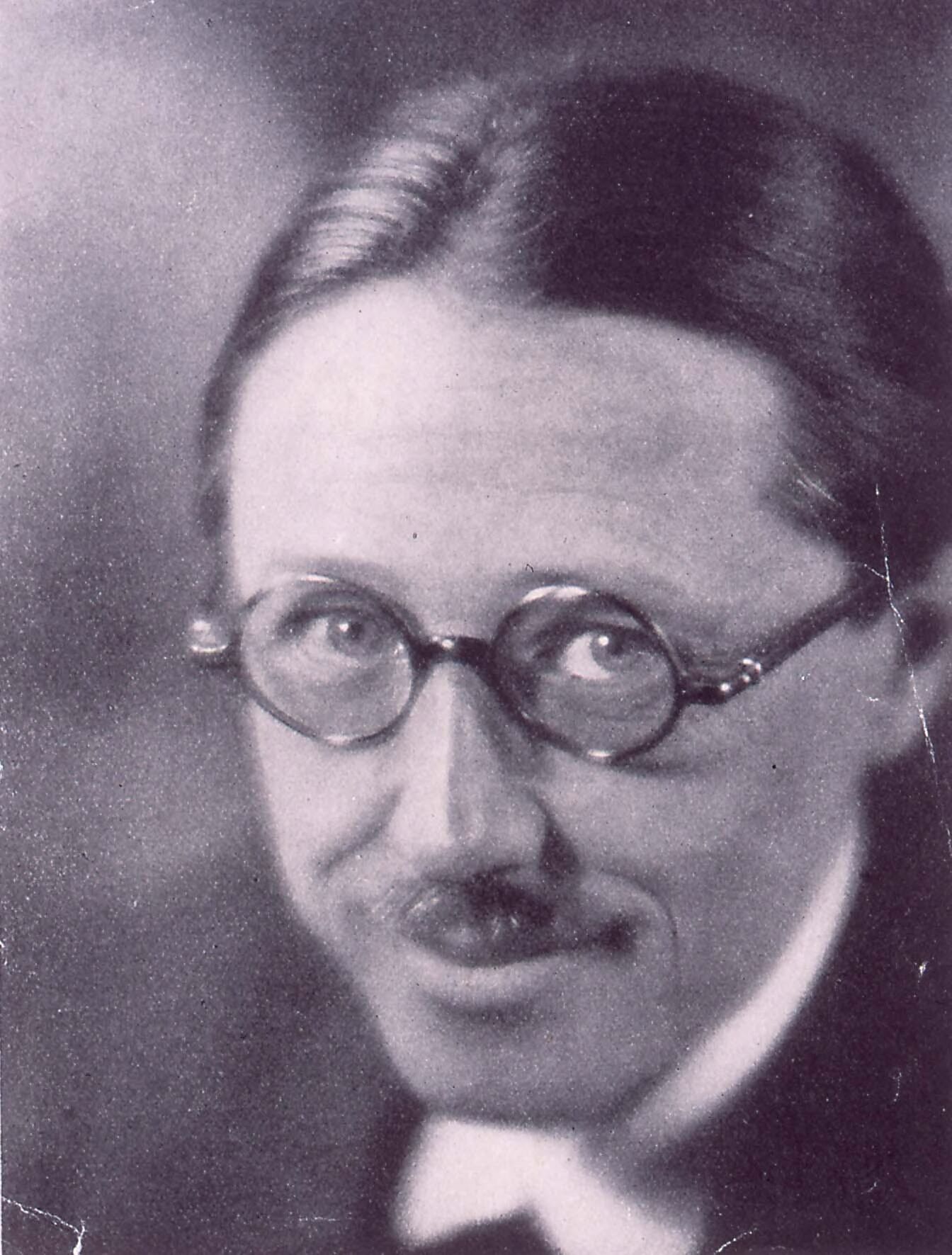
Photographic bust portrait of Ruhlmann, undated, from the Bibliotheque nationale de France's Gallica collection via the Bibliotheque nationale et universitaire de Strasbourg. The BnF's own catalogue subject heading names the sitter as Ruhlmann, Emile Jacques; no photographer is credited on the file page.
Bibliotheque nationale de France, via Gallica| Worked as | Furniture designer, Ensemblier, Interior decorator |
|---|---|
| Born | 1879-08-28 · Paris, France |
| Died | 1933-11-15 · Paris, France |
| Nationality | French |
| Movement | Art Deco |
| Sources | 24 cited |
| Last verified | 17 September 2026 |
About this page Last verified 17 September 2026 · 24 sources cited
On this page 12 sections
ContentsClose
Emile-Jacques Ruhlmann never trained as a cabinetmaker. He inherited a Paris house-painting and wallpapering business from his father in 1907, taught himself interior design by designing furniture for his own apartment, and within two decades had become the maker whose name is now used, more than any other, as shorthand for the luxury end of French Art Deco. His workshop built for the very rich, in macassar ebony and amboyna veneers set with ivory, and he said so in public rather than apologising for it: style, he argued, is made by the elite and only later copied downward, so a designer who wants to move fashion has to work for people who can pay for the experiment.
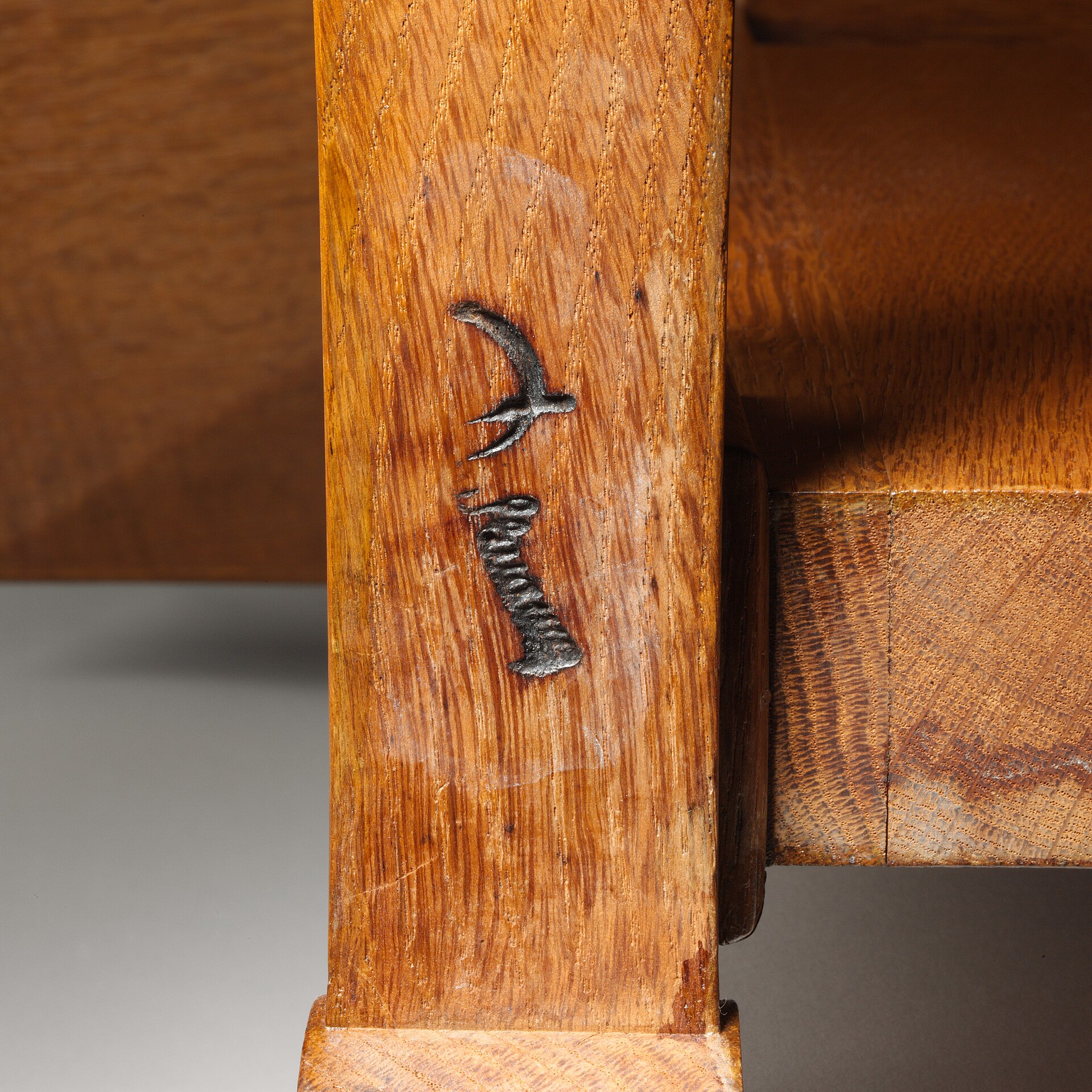
The single thing most readers do not know is how completely he controlled his own name after death. Learning in 1933 that his illness was terminal, he ordered his own firm dissolved the moment he died, and permitted his nephew Alfred Porteneuve to keep producing a short list of his models afterward only if each piece was branded as a Porteneuve edition of a Ruhlmann design, never as an unqualified Ruhlmann. That branding line, insisted on by the maker himself before his death, is the reason a stamped, dated, documented Ruhlmann commission and an undocumented piece in his manner are two different classes of object in the market today, and it is the single fact against which every claim on this page should be checked.
Images
Chronology
- 1879
Born in Paris on 28 August, son of an Alsace-born construction, painting and wallpapering contractor.1312
- 1907
His father dies; Ruhlmann takes over the family decorating and construction business, with no formal training in furniture design.1311
- 1910
Designs furniture for his own apartment for the first time, work later described as his first public design activity.13
- 1916
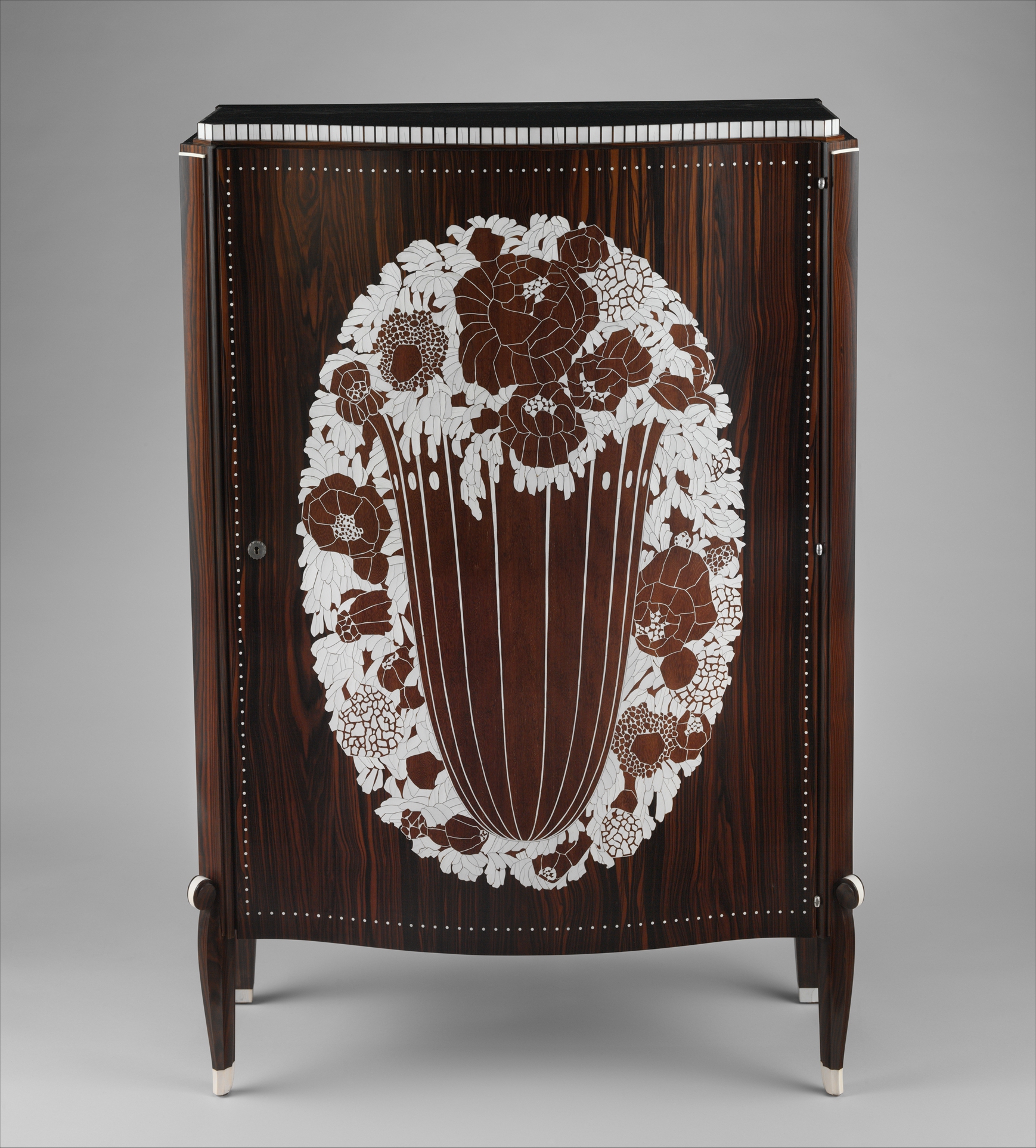
Designs the Etat d'angle, a corner cabinet with a vase-of-flowers motif in ivory and ebony marquetry, his first widely noted veneered cabinet, made during the war.12
- 1919
Co-founds Etablissements Ruhlmann et Laurent with Pierre Laurent, an interior design house covering furniture and wallpaper, based at 27 rue de Lisbonne.1311
- 1922
Designs the Etat rectangle cabinet model, first exhibited that year at the Salon d'Automne; the name Etat (State) was applied only after the French state bought an example in 1925.122
- 1923
Opens his own cabinetmaking workshop on the rue d'Ouessant in the 15th arrondissement, staffed by Ecole Boulle-trained craftsmen; tells a journalist his furniture costs 20 to 25 per cent more to make than he charges for it.1112
- 1924
Redecorates the restaurant Drouant in Paris, adding the staircase in walnut and travertine from which the Prix Goncourt, and from 1926 the Prix Renaudot, are announced each year.17
- 1925
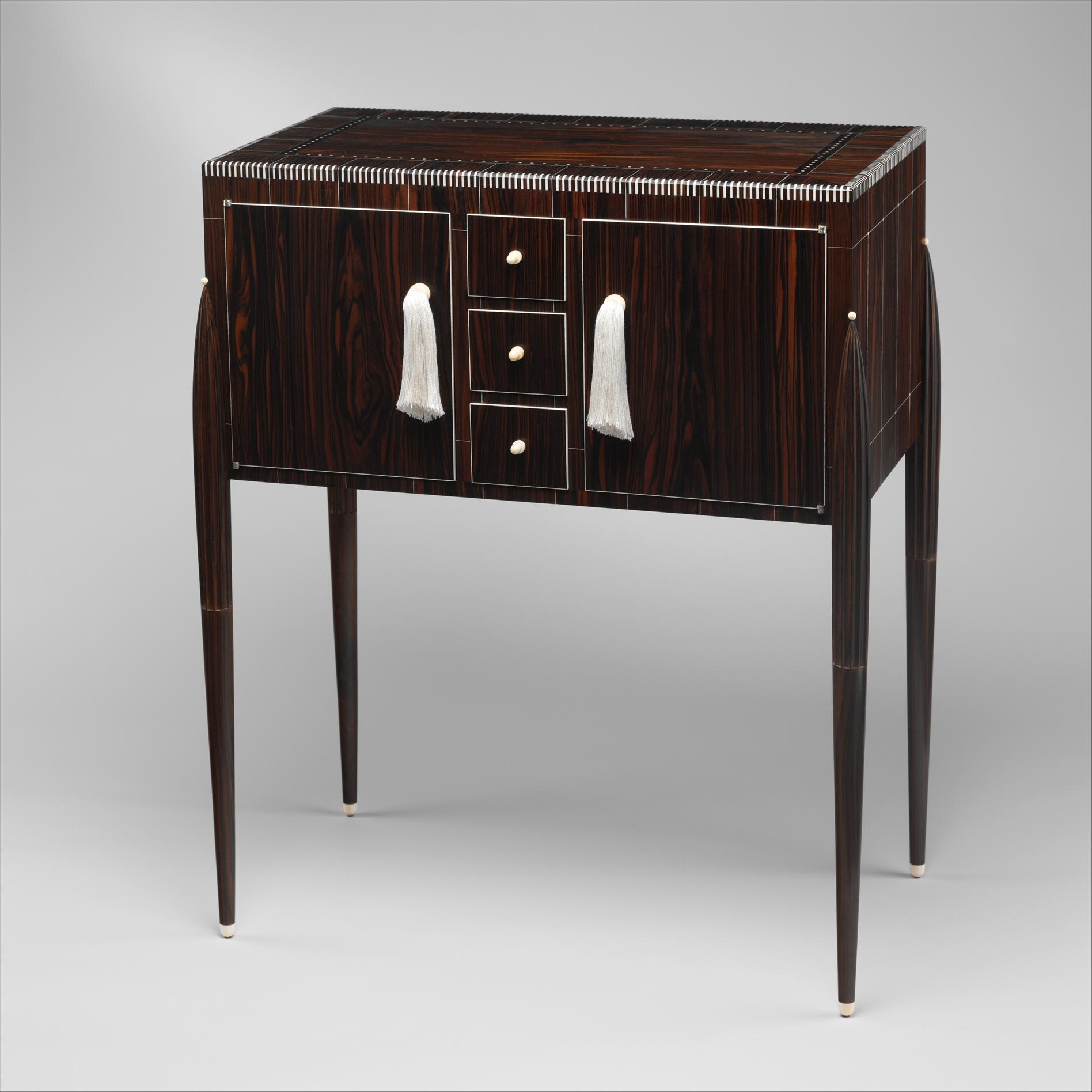
His pavilion, the Hotel du Collectionneur, is the star attraction of the Exposition Internationale des Arts Decoratifs et Industriels Modernes; the Metropolitan Museum of Art commissions the Etat and Fuseaux cabinets directly from his workshop the same year; he is made a Chevalier of the Legion d'honneur.121218
- 1927
His atelier has grown to more than seventy employees, including twenty-five draughtsmen and twenty-seven master cabinetmakers.12
- 1928
Promoted to Officier of the Legion d'honneur.18
- 1929
Exhibits a black-lacquered suite at the Salon des Artistes Decorateurs designed for the unnamed heir to Indore, including the Chaise Longue aux Skis; the Maharaja buys only a bookcase, desk and chair from the presentation.1415
- 1933
Learns his illness is terminal; designs his own funeral monument; dies in Paris on 15 November, aged 54, having ordered his firm dissolved on his death and authorised his nephew Alfred Porteneuve to complete outstanding orders and issue a limited, separately branded posthumous edition of some models.13
- 2013
The Chaise Longue aux Skis, held as a French national treasure, is finally granted an export passport in December, after years barred from leaving France.14
The market
Ruhlmann's market runs on two scales at once: documented, exhibited, client-named lifetime pieces reach seven figures, while undocumented pieces in his style, including honest later editions, sell for a small fraction of that. Published press figures routinely fail to state whether they are the hammer price or the total including the buyer's premium, and this page records that gap rather than guessing across it.
| Date | Sale | Work | Result | Note |
|---|---|---|---|---|
| 5 March 2026 | Christie's | Pair of "Drouant" side chairs, 1924 | Hammer Not published in the source consulted With premium 203,200 USD | Sale: Modern Collector, New York. Led the sale; published low estimate was USD 10,000, so the price with premium is reported at just over twenty times the low estimate. |
Hammer is the price at which the bidding stopped; with premium adds the fee the house charges the buyer on top. Hammer price and buyer's premium in the glossary.
Recorded without a public price
- 11 December 2019 · Chaise Longue "aux Skis" (Model 472NR), designed 1929 for the unnamed heir to Indore · Sotheby's · Not published in the source consulted Sale: Modern Masters: Chefs-d'oeuvre d'une Collection Privee, New York, lot 26. Pre-sale estimate USD 1,500,000-2,000,000 is the only figure this page can confirm directly from Sotheby's own listing.
Where to see the work
| Institution | City | Holdings | Note |
|---|---|---|---|
| Metropolitan Museum of Art | New York | The Etat cabinet (25.231.1) and Fuseaux cabinet (25.231.2), both commissioned directly from Ruhlmann's workshop in 1925; the Tibattant desk (1923); the Lasalle commode; the Cla-Cla table; the Drouant side chair; the Duval cabinet; the Retombante stool; an early amboyna and ivory cabinet of about 1918-19; and a photographic portrait of Ruhlmann by Laure Albin-Guillot. | The Etat cabinet's own object page currently states the image cannot be enlarged or downloaded, a tighter position than the Museum's 2017 open-access release, which is the release this page's Commons-hosted plates of these objects were made under. |
| Musee des Arts Decoratifs | Paris | An Etat rectangle cabinet (inventory 42786), from the estate of the textile industrialist Edouard Rasson, given by his daughters in 1969; extensive holdings of Ruhlmann furniture and archives. | Publishes its own census of known Etat cabinet examples across institutions. |
| Mobilier National | Paris | An Etat rectangle cabinet. | |
| Art Institute of Chicago | Chicago | An Etat rectangle cabinet. | |
| Brooklyn Museum | New York | An Etat d'angle corner cabinet. | |
| Virginia Museum of Fine Arts | Richmond | An Etat d'angle corner cabinet. | |
| Musee des Annees 30 | Boulogne-Billancourt | Furniture from the house of the sculptor Joseph Bernard, Ruhlmann's collaborator on the Hotel du Collectionneur, among other pieces. | |
| Cleveland Museum of Art | Cleveland | A corner cabinet and the Tibattant desk model, among other pieces. |
The essay
Chapter 1A house-painter's son who never trained as a cabinetmaker
Ruhlmann was born in Paris on 28 August 1879.
Ruhlmann was born in Paris on 28 August 1879. His father, from Alsace, ran a construction, painting and wallpapering business serving Paris apartments and houses, and Ruhlmann worked alongside the firm's painters and paper-hangers from his youth. When his father died in 1907 he took over the business outright. He had no formal training in furniture design or cabinetmaking; everything he later knew about the trade he learned by directing craftsmen rather than by working wood himself.
His first furniture was made for his own household: designs for his own apartment that, on the dating usually given, date to 1910. A 2025 profile of his career states he married in 1907, the year he took over his father's business, to a woman named as Marguerite Seabrook, and that the furniture he built for their first home is what first drew outside attention; no source consulted for this page corroborates the wife's name independently of that profile, and it is given here with that qualification. On when he first showed publicly, sources disagree outright: a Paris gallery specialising in his work dates his first appearance at the Salon d'Automne to 1910, in step with the furniture-for-himself story, while a 2025 design-press profile instead dates his first exhibited work at the same Salon to 1913. This page has not been able to resolve the discrepancy from a primary source and records it rather than picking a side.
Chapter 2Ruhlmann et Laurent, and a workshop of his own
In 1919 Ruhlmann founded Etablissements Ruhlmann et Laurent with the designer Pierre Laurent, an interior-design house covering furniture, wallpaper and related decoration, with showrooms at 27 rue...
In 1919 Ruhlmann founded Etablissements Ruhlmann et Laurent with the designer Pierre Laurent, an interior-design house covering furniture, wallpaper and related decoration, with showrooms at 27 rue de Lisbonne. For his first years in the trade he had pieces built by outside Paris furniture workshops rather than his own craftsmen; in 1923 he opened a dedicated cabinetmaking workshop on the rue d'Ouessant in the 15th arrondissement, staffed by cabinetmakers trained at the Ecole Boulle, the Paris school that has supplied the French furniture trade with skilled labour since the nineteenth century, working at times alongside outside ateliers. Growth after 1925 was fast: by 1927 his atelier employed more than seventy people, including twenty-five draughtsmen and twenty-seven master cabinetmakers, a design-and-production bureau on a scale no rival luxury furniture maker of the period matched.
Chapter 3The ensemblier's method: a sketch, then three drawings, then the piece
The Metropolitan Museum's own catalogue entry for one of Ruhlmann's cabinets describes him as an ensemblier, a term with no exact English equivalent: not merely a furniture designer but someone who...
The Metropolitan Museum's own catalogue entry for one of Ruhlmann's cabinets describes him as an ensemblier, a term with no exact English equivalent: not merely a furniture designer but someone who could furnish and finish an entire interior, designing or commissioning everything in a room, down to the door handles, so that nothing in it would read as inconsistent with anything else. That is a materially different practice from a modern interior decorator assembling existing pieces from different makers; an ensemblier both designed and had made everything a room needed.
Every Ruhlmann design began as his own sketch. He is described as carrying a sketchbook at all times and drawing constantly. A design bureau of about twenty-five architects and draughtsmen then worked the idea up through a formal sequence: a drawing at one-hundredth of finished scale, then one at one-tenth, then a full-scale blueprint from which the workshop built the piece. Staff were required to execute Ruhlmann's own ideas precisely rather than introduce their own; authorship of the design stayed with him even on pieces he never touched with a tool.
Chapter 4The vocabulary: macassar ebony, ivory, and a named model for every form
Ruhlmann's furniture is identifiable at a glance by its materials before it is identifiable by any single silhouette: macassar ebony and amboyna burl veneers, chosen for their figure rather than for...
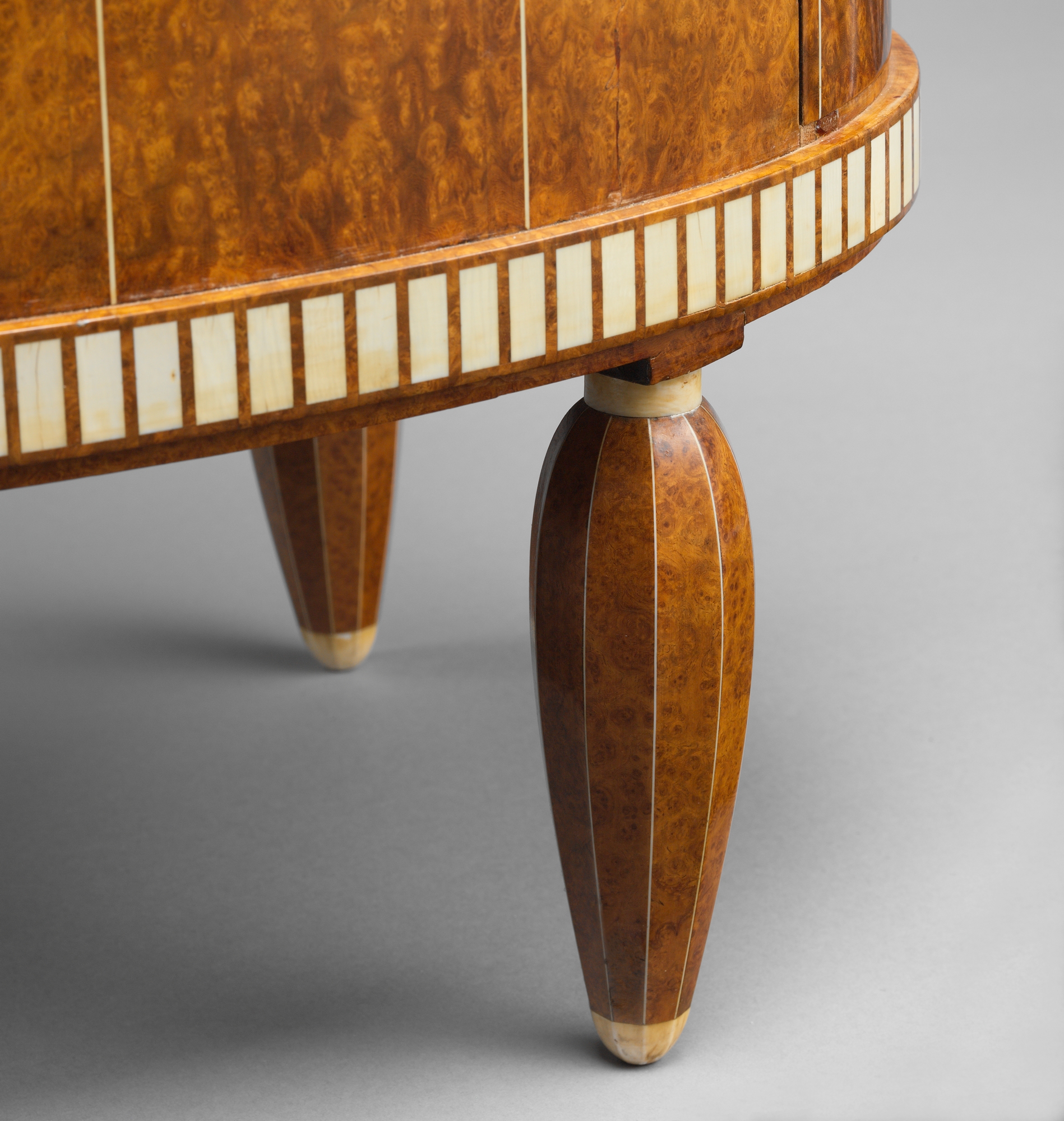
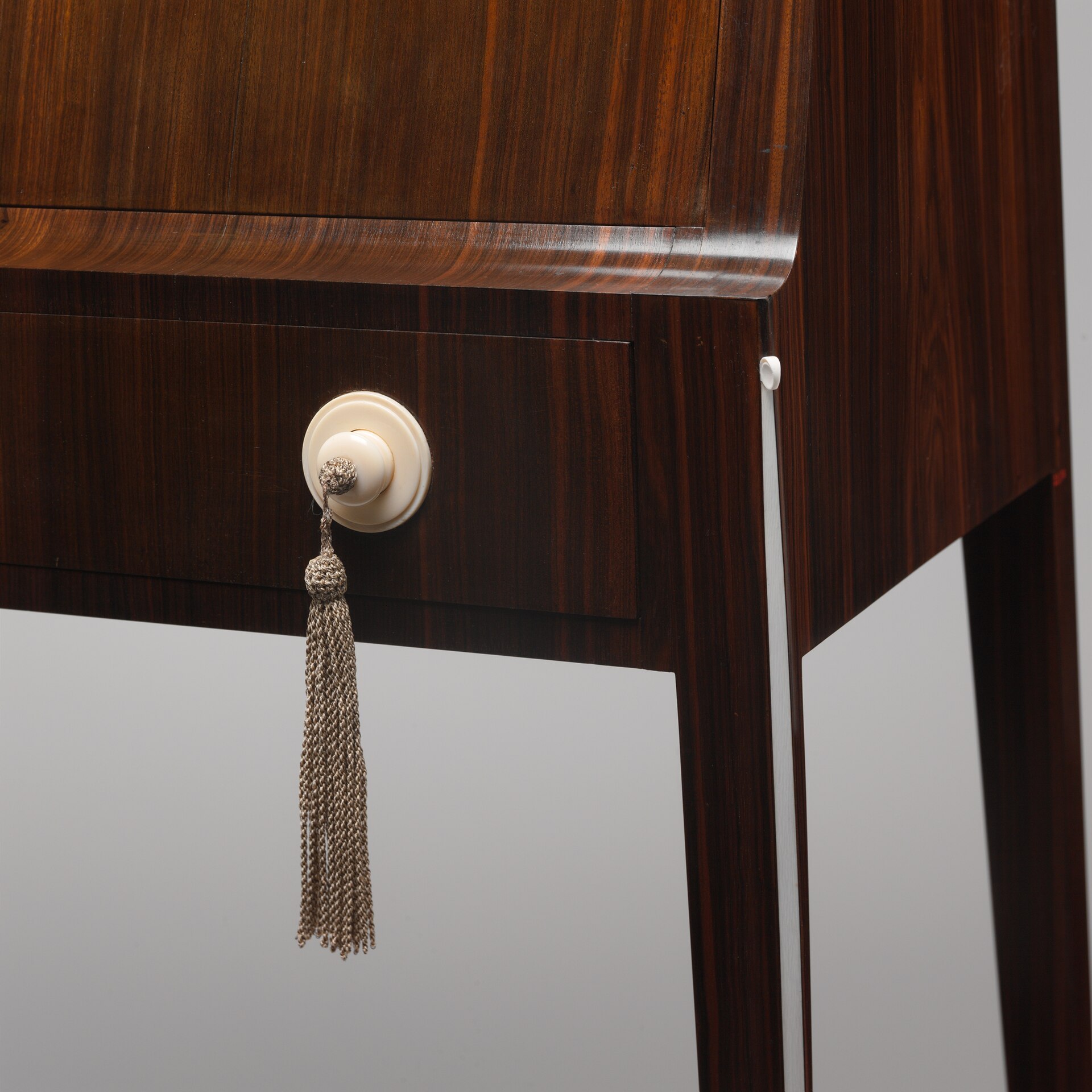
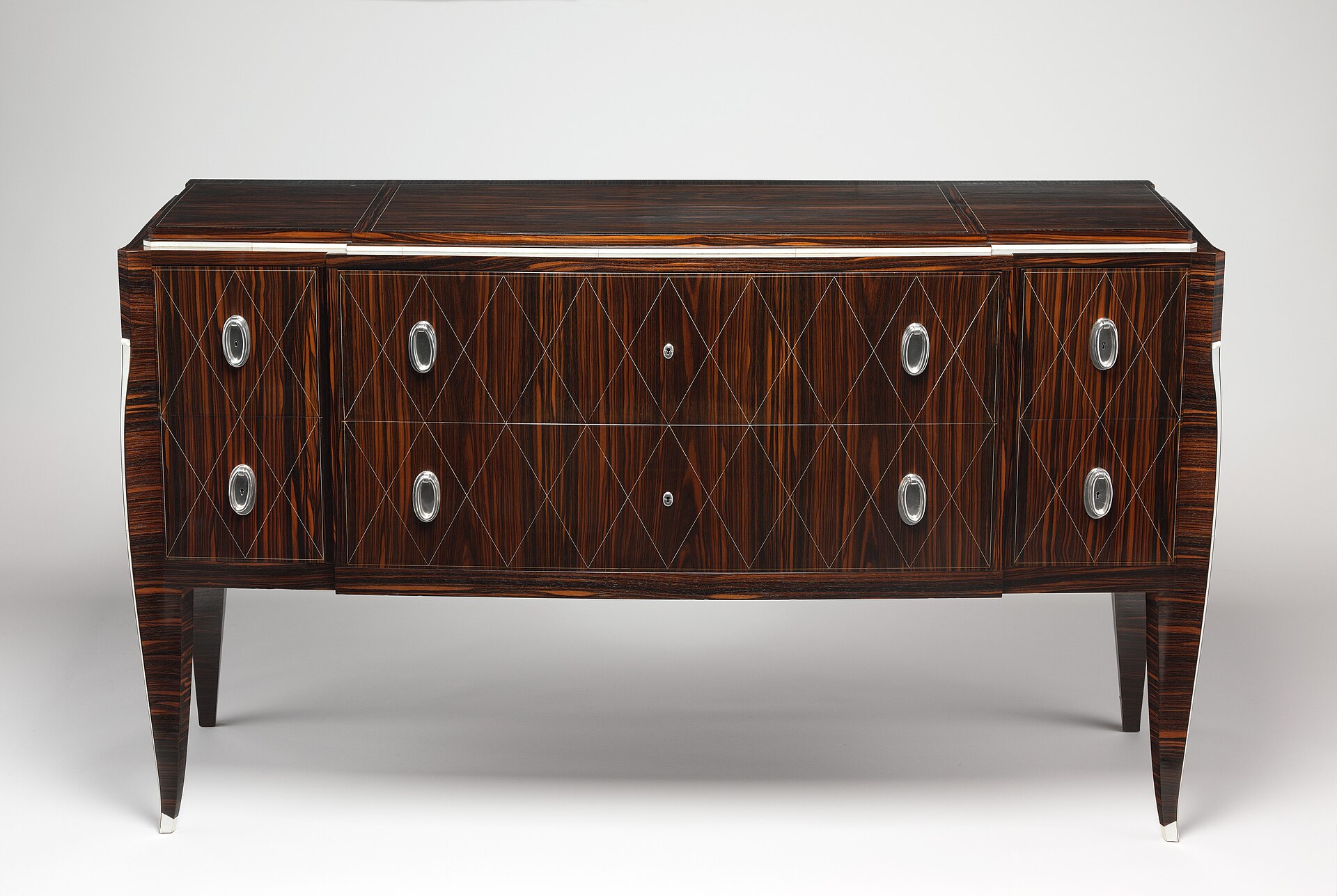
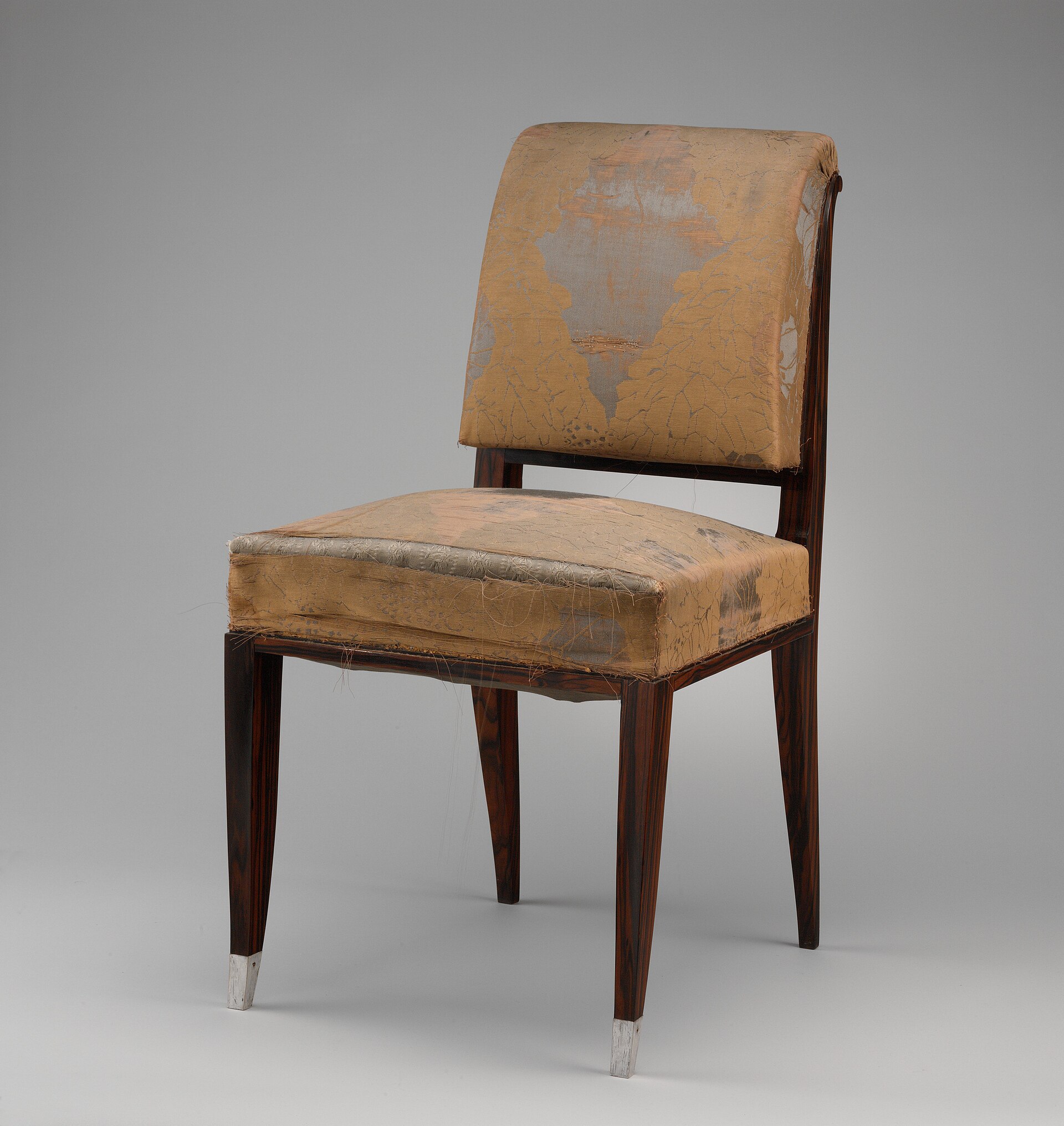
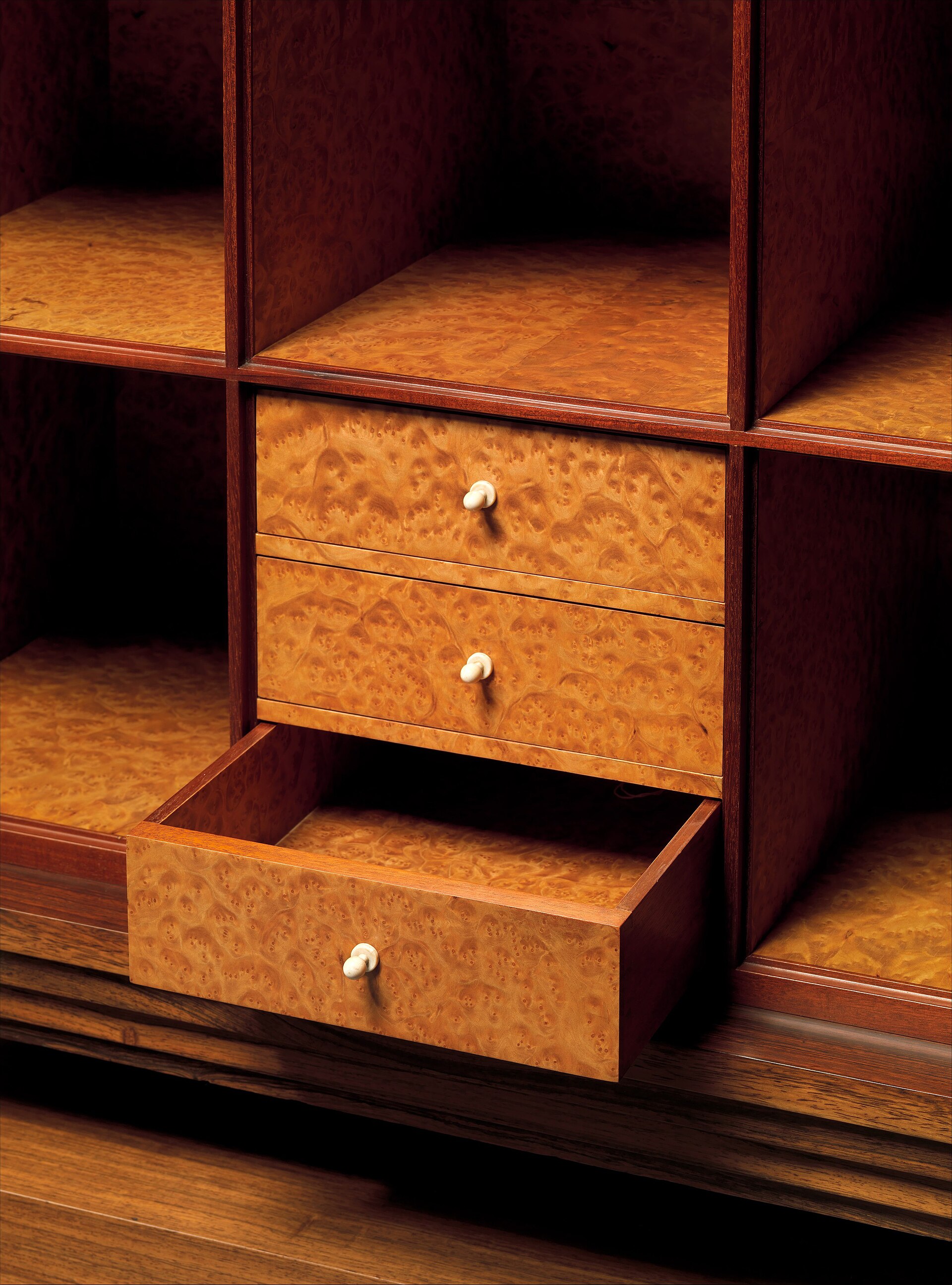
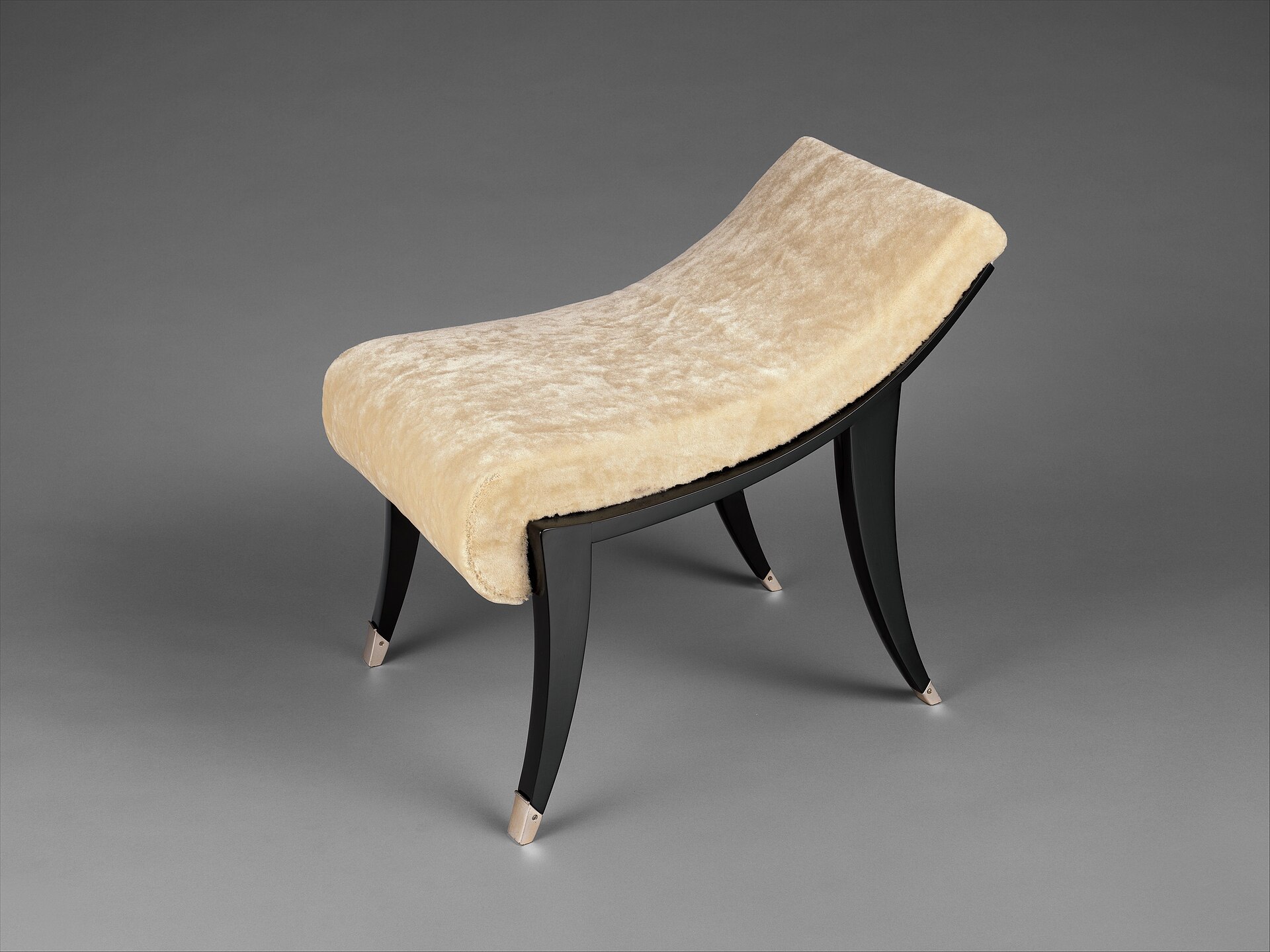
Ruhlmann's furniture is identifiable at a glance by its materials before it is identifiable by any single silhouette: macassar ebony and amboyna burl veneers, chosen for their figure rather than for uniform colour, set off with ivory used as inlay, handles and edge-banding, and finished with silvered bronze or brass fittings rather than gilt. Individual models carried their own names rather than model numbers alone, though a parallel numbering system (an AR or NR code) also tracked variants for the workshop's own records: the Etat cabinet, the Fuseaux cabinet, the Lasalle commode, the Tibattant desk, the Cla-Cla table, the Drouant side chair, the Duval cabinet, the Retombante stool. An Araignee, or spider, table of 1918 to 1920 in macassar ebony, silvered bronze, ivory and ivorine takes its name from the splayed, insect-like stance of its legs, an early instance of the tapered, faceted leg form that recurs across his output and functions as a diagnostic detail for identifying an unmarked piece.
His first widely noticed veneered cabinet, the corner-form Etat d'angle, was designed in 1916, during the war, its front built from a vase-of-flowers motif in contrasting ivory and ebony marquetry. A related sideboard usually called the Meuble au Char, showing a chariot drawn by a horse after a drawing by Maurice Pico worked in the same ivory-and-ebony technique, was named the outstanding piece of a Salon by at least one contemporary critic; Ruhlmann's friend and frequent collaborator, the architect Pierre Patout, called it the complete expression of his art. Sources disagree on the year: a design-press profile dates its unveiling to 1919, while a museum's own published caption for the piece dates it 1922. Both cannot be the completion date of the same object, and this page has not resolved which is correct.
Chapter 5Luxury as a stated position, not an accident of price
Ruhlmann did not treat the cost of his furniture as a regrettable side effect of quality.
Ruhlmann did not treat the cost of his furniture as a regrettable side effect of quality. He argued the position openly and it is recorded in his own words, quoted in the catalogue of a 1979 London exhibition marking his centenary: "We are forced to work for the rich because the rich never imitate the middle-classes. It is the elite which launches fashion and determines its direction. Let us produce, therefore, for them." He added, in the same source, that it would be preferable to educate the broader public but that doing so was not, in practice, how fashion actually moved.
The position had a real cost to him personally. In 1923 he told a journalist that his furniture typically cost twenty to twenty-five per cent more to produce than he charged for it, even at his prices, and said that his own faith in the future, not present profit, was what kept him building. Wikipedia's own summary of his career states plainly that his work provoked a reaction from other designers and architects, naming Le Corbusier, who called instead for simpler, functional furniture built for ordinary means rather than aristocratic commission. The two positions were exact opposites and both were current at the same 1925 exposition that made Ruhlmann's reputation: his own pavilion staged furnished, palatial rooms for an imagined private collector, while Le Corbusier's Pavillon de l'Esprit Nouveau argued for standardised, mass-producible interiors on the same exhibition grounds. This page has not located a documented direct exchange between the two men and does not assert one; the opposition is a structural fact about the exposition and the decade, not a personal feud established by any source consulted here.
Chapter 6The Hotel du Collectionneur, 1925
Ruhlmann's pavilion at the Exposition Internationale des Arts Decoratifs et Industriels Modernes, the Paris exhibition that gave Art Deco its name, was called the Hotel du Collectionneur, the house...
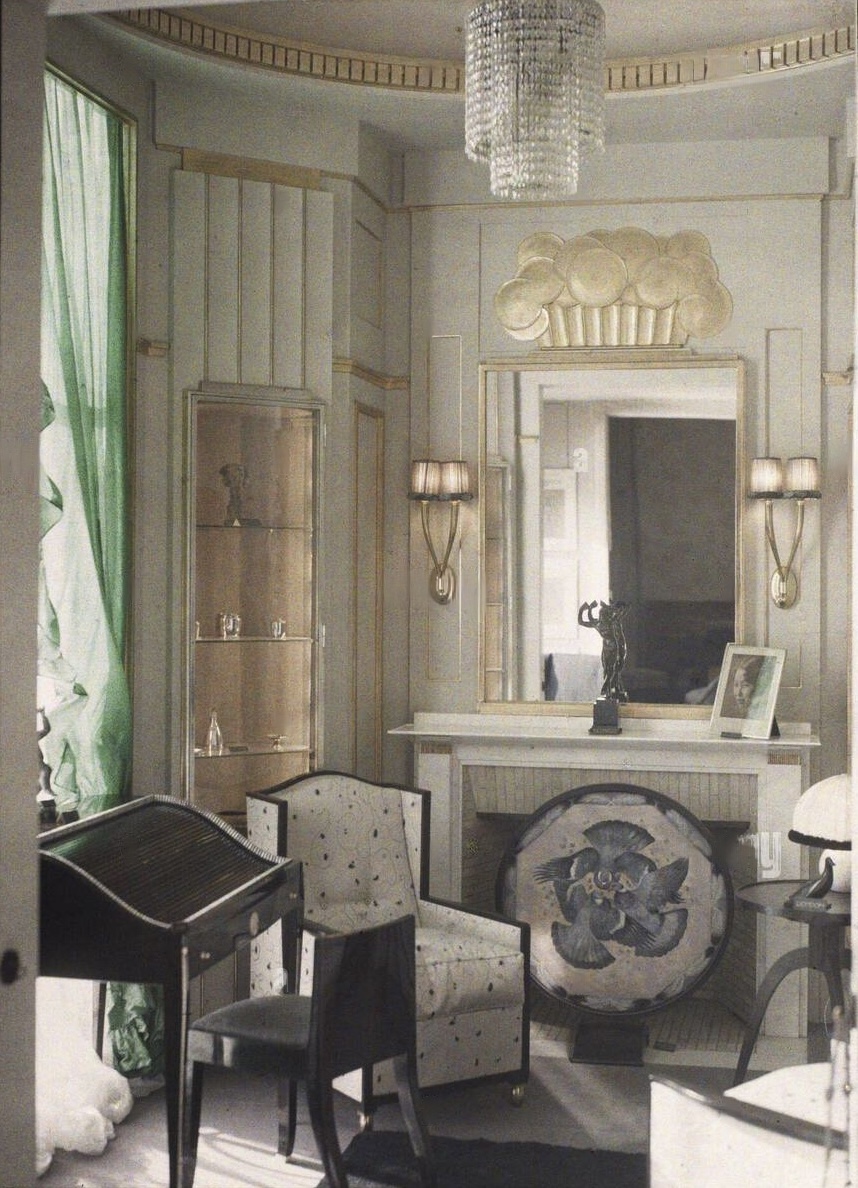
Ruhlmann's pavilion at the Exposition Internationale des Arts Decoratifs et Industriels Modernes, the Paris exhibition that gave Art Deco its name, was called the Hotel du Collectionneur, the house of a collector: an imagined private mansion for a wealthy, tasteful owner, built and furnished as a complete, habitable interior rather than as a trade stand. Designed with the architect Pierre Patout, with the sculptor Joseph Bernard and around forty other artists and craftsmen coordinated under Ruhlmann's own direction, including the ironworker Edgar Brandt and the painter Jean Dupas, it centred on an oval grand salon with an eight-metre domed ceiling, a monumental chandelier built from an estimated twenty thousand beads, a marble fireplace, a Dupas painting and sculpture on pedestals, around a vestibule, dining room, study, bedroom, dressing room and bathroom, every item in every room, down to the carpets, textiles and wall coverings, designed by Ruhlmann himself.
The pavilion was the exposition's star attraction, drawing what period accounts describe as hundreds of thousands of visitors over the six months it stood beside the Seine, and it converted directly into clients: the Rothschild and Worms banking families, Eugene Schueller, the founder of L'Oreal, the aircraft and automobile constructor Gabriel Voisin, the fashion designer Jeanne Paquin, the writer Colette and the playwright Paul Geraldy, who went on to commission Ruhlmann to design stage sets for his plays. Ruhlmann was made a Chevalier of the Legion d'honneur that year and promoted to Officier in 1928.
Chapter 7The clients, named: a state councillor's desk, a Citroen explorer's table, a restaurant staircase
Individual commissions from these years are documented well enough to name both patron and object.
Individual commissions from these years are documented well enough to name both patron and object. For Andre Tardieu, president of the French Conseil d'Etat, Ruhlmann built a monumental black-lacquer desk, then made a second version for himself in macassar ebony fitted with a pivoting lamp and a telephone support. For Georges-Marie Haardt, director of the Citroen automobile company and leader of several publicised expeditions, he built a rolling table for presenting drawings, produced in several versions in lacquered rosewood, oak, mahogany and linden.
In 1924 he redecorated the restaurant Drouant, on the Place Gaillon in Paris, adding a staircase in walnut woodwork with a travertine mosaic floor and oak armchairs. Drouant had already been the meeting place of the Academie Goncourt since 1914, and when the Prix Renaudot joined it there in 1926, Ruhlmann's staircase became the physical stage from which both of France's most watched literary prizes have been announced every year since; the restaurant's own published history still credits the room to him. A side chair model Ruhlmann built for the same commission carries the name Drouant to this day.
Late in his career Ruhlmann's firm also supplied furniture for the Grand Salon of the ocean liner Normandie, one of a large team of Art Deco names the Compagnie Generale Transatlantique commissioned for the ship's interiors alongside Jean Dunand, Jean-Michel Frank and Rene Lalique; the ship's maiden voyage was on 29 May 1935, after Ruhlmann's death in November 1933, so any furniture credited to him there was designed before his death and completed as the firm wound down its outstanding orders.
Chapter 8A chaise longue that never reached the Maharaja it was designed for
In 1929 Ruhlmann exhibited a suite at the Salon des Artistes Decorateurs under the deliberately vague title studio-chambre pour un prince heritier, a studio-bedroom for a prince's heir.
In 1929 Ruhlmann exhibited a suite at the Salon des Artistes Decorateurs under the deliberately vague title studio-chambre pour un prince heritier, a studio-bedroom for a prince's heir. The prince was, without being named in the catalogue, Yeshwant Rao Holkar II, the heir to the princely state of Indore, then touring Europe and buying modern design for a new palace, Manik Bagh, that the German architect Eckart Muthesius was building for him with an interior largely of Muthesius's own design. Sotheby's own catalogue note for the surviving suite piece states plainly that the chaise itself, the Chaise Longue aux Skis, was not used in the palace: from Ruhlmann's 1929 presentation the future Maharaja bought only a bookcase and a monumental black-lacquered desk and chair, and the chaise stayed with Ruhlmann's own circle. Only two examples of the model are known to have been made; the whereabouts of the second is unrecorded, so the surviving example, black-lacquered wood on chromium-plated skis with a heated footrest and an integrated reading light, is the only known example of the model today.
The piece was classified a Tresor National, a French national treasure, barring its export for years until a passport was finally issued for it in December 2013. The pattern is worth stating plainly because it complicates a popular shorthand: Ruhlmann furniture is regularly captioned as having been made for the Maharaja of Indore's Manik Bagh palace when a specific piece in fact never went there. What can be said without qualification is that the Maharaja did buy Ruhlmann furniture, that Ruhlmann's 1929 suite for him is one of his most modernist late works, built in black lacquer with chromium-plated steel skis as table and chair legs, and that it marks a documented late-career attempt by Ruhlmann to answer the machine-age vocabulary of designers like Le Corbusier and Charlotte Perriand, from whom Holkar separately bought a reclining chair first shown at the 1929 Salon d'Automne, on his own luxury terms rather than theirs.
Chapter 9After 1925: the machine age reaches even the luxury workshop
Ruhlmann did not stay still after his own style had been named and copied.
Ruhlmann did not stay still after his own style had been named and copied. After 1925, and more markedly after the 1929 Depression cut into his clientele, his workshop began using metal frames and spray-applied cellulose lacquer finishes alongside its traditional veneered woodwork, and later pieces show a more geometric, less applied-ornament vocabulary than the ivory-marquetry cabinets that made his name. How far that shift would have gone is unrecorded: he learned his illness was terminal in 1933 and died before any longer transition could play out.
Chapter 10Death, a firm dissolved on purpose, and a nephew bound by a branding rule
Ruhlmann learned his illness was terminal in 1933.
Ruhlmann learned his illness was terminal in 1933. Before he died, on 15 November that year at the age of fifty-four, he designed his own funeral monument and ordered that his company be dissolved and closed on his death rather than continue under different direction. He is buried in Passy Cemetery in Paris.
He made one narrow exception to the closure. His nephew Alfred Porteneuve, who had joined the firm in 1927 to manage its exhibition work, was authorised to complete outstanding commissions and then to keep producing a limited list of Ruhlmann's own models afterward, on condition that each was branded separately as a model designed by Ruhlmann but issued by Porteneuve, recorded in the trade as modele de Ruhlmann edite par Porteneuve, rather than sold as an unqualified Ruhlmann. That branding condition, set by the maker himself while he was still alive to set it, is the origin of the authenticity distinction that now governs every Ruhlmann sale: a lifetime piece, built and delivered before November 1933 under Ruhlmann's own supervision, is one class of object; a Porteneuve-branded posthumous edition of the same model is a second, clearly documented class; and pieces described only as after Ruhlmann or in the manner of Ruhlmann, with neither a lifetime commission date nor a Porteneuve mark, are a third, and the one that requires the most caution.
Chapter 11Attribution today: a catalogue built model by model, not a single accepted total
There is no catalogue raisonne of Ruhlmann in the sense a painter's corpus gets counted and re-counted; a furniture workshop's output does not reduce to a single accepted number the way an oeuvre of...
There is no catalogue raisonne of Ruhlmann in the sense a painter's corpus gets counted and re-counted; a furniture workshop's output does not reduce to a single accepted number the way an oeuvre of unique panels does, because the same model was legitimately built more than once, in different woods, for different clients, at different sizes. The standard reference used by museums, dealers and auction houses to identify and date individual pieces against Ruhlmann's documented output is Florence Camard's monograph, first published in 1984 and issued in an expanded French edition around 2009 and an English edition through Rizzoli in 2011 with an accompanying CD-ROM catalogue of illustrated pieces; Camard, who helped curate the Metropolitan Museum's own 2004 Ruhlmann exhibition, is treated in the trade as the primary authority for authenticating and dating work attributed to the workshop. No formal authentication board or committee for Ruhlmann's output is documented in the sources consulted for this page; attribution rests with Camard's own published research, the model numbers (an AR or NR code) the workshop itself assigned, and the branding rule Ruhlmann set for the Porteneuve years.
The Etat cabinet is a useful worked example of how the workshop actually operated, because the model was never a fixed edition. The Musee des Arts Decoratifs in Paris, which holds one example acquired from the estate of the textile industrialist Edouard Rasson, publishes its own count of known survivors: the corner-form Etat d'angle, first shown in 1916, is held at the Brooklyn Museum and the Virginia Museum of Fine Arts; the later rectangular Etat rectangle, first exhibited at the 1922 Salon d'Automne, survives in at least four examples, at the Musee des Arts Decoratifs itself, the Mobilier National in Paris, the Metropolitan Museum of Art in New York and the Art Institute of Chicago, each built in a different wood and to slightly different dimensions. Two objects sharing a model name are not interchangeable evidence for one another; each has to be identified and dated on its own file.
Chapter 12Materials, empire, and a trade this page cannot fully trace to Ruhlmann's own suppliers
The two materials that define Ruhlmann's work at a glance, macassar ebony and ivory, both travelled to Paris through colonial trade networks that predate his career by centuries and intensified...
The two materials that define Ruhlmann's work at a glance, macassar ebony and ivory, both travelled to Paris through colonial trade networks that predate his career by centuries and intensified sharply in his own lifetime. Macassar ebony, Diospyros celebica, grows only on the island of Sulawesi, then part of the Dutch East Indies; it was known to European cabinetmakers for generations before the 1920s but reached its widest use precisely in the Art Deco period, when designers wanted its striped figure for exactly the graphic, high-contrast effect it gives against pale inlay. Ivory reaching Paris workshops in this period came overwhelmingly from the African elephant-ivory trade, which by the early twentieth century ran through colonial ports and trading hubs on the African coast built up over the previous century of European hunting and export. France's own colonial administration in this decade actively encouraged designers to draw on materials and labour from French colonial territories in Asia and Africa, part of a broader promotion of colonial produce that Art Deco design absorbed as raw material rather than as subject matter.
What this page cannot do, and states plainly rather than papering over, is name the specific merchants, ports or contracts that supplied Ruhlmann's own workshop with its ebony and ivory. The trade context above is documented at the level of the material and the period; no source consulted for this page identifies Ruhlmann's personal suppliers, and this is recorded as an open question rather than filled with an inference the sources do not support.
Chapter 13What the market pays, and what the numbers do not show
Ruhlmann's market runs on two very different scales at once.
Ruhlmann's market runs on two very different scales at once. Documented, named, lifetime pieces with an exhibition or client history behind them, like the Chaise Longue aux Skis, reach seven figures; ordinary, undocumented pieces in his style, including honest later editions, sell for a small fraction of that. Almost every published price in the general press states a single figure without saying whether it is the hammer price or the total with the buyer's premium added, and this page has not always been able to recover the missing half: Sotheby's own online listing for the Chaise Longue aux Skis states only the pre-sale estimate, 1,500,000 to 2,000,000 US dollars, because the actual price realised at the 11 December 2019 New York sale sits behind a login wall this research could not pass; syndicated market reports of the result disagree with each other, one converting to a US dollar figure and another reporting a euro figure for what is stated to be the same lot, and neither has been checked against Sotheby's own price-realised record. The estimate is recorded here as the only figure this page can stand behind for that sale.
A more recent, better-documented result: a pair of Ruhlmann's Drouant side chairs, 1924, sold at Christie's New York in the house's Modern Collector sale closing 5 March 2026, led that sale and made 203,200 US dollars including buyer's premium against a published low estimate of only 10,000 dollars, a result reported at just over twenty times the low estimate. The hammer price alone was not separately published in the source consulted.
What is documented
Technique
The surviving work
- What is accepted
- There is no single accepted total in the sense a painter's catalogue raisonne provides. A furniture workshop legitimately built the same named model more than once, in different woods and dimensions for different clients, so the relevant count is per model, not per artist. The Etat cabinet alone survives in at least six institutionally documented examples across two related but distinct forms (the corner Etat d'angle and the rectangular Etat rectangle), each independently identified by the holding institution.
- What is contested
- The contested territory is less about how many objects survive than about which class of object each one belongs to: a lifetime piece built and delivered before Ruhlmann's death in November 1933 under his own supervision; a posthumous Porteneuve edition of the same model, branded as such under the condition Ruhlmann himself set; or an undocumented later piece described only as after Ruhlmann or in the manner of Ruhlmann, with neither a lifetime commission date nor a Porteneuve mark.
- Who rules on attribution
- No formal authentication board or committee for Ruhlmann's output is documented in the sources consulted. Attribution in practice rests on Camard's published research, the workshop's own AR/NR model-reference numbers, and, for the period after 1933, the branding distinction between an unqualified Ruhlmann and a marked Porteneuve edition that Ruhlmann set as a condition before his death.
Catalogue raisonne
- Florence Camard, Ruhlmann, Paris, 1984; expanded French edition c. 2009; English edition, Rizzoli, New York, 2011, with an accompanying CD-ROM illustrated catalogue. The standard reference used by museums, dealers and auction houses to identify and date individual Ruhlmann pieces. Camard helped curate the Metropolitan Museum's 2004 Ruhlmann exhibition. This page cites the book via its publisher's own description and via auction-house literature citations rather than from a direct reading of the volume, and flags it for replacement with a first-hand citation.1914
Questions about Emile-Jacques Ruhlmann
Who was Emile-Jacques Ruhlmann?
Furniture designer; Ensemblier; Interior decorator. 1879-1933.
When did Emile-Jacques Ruhlmann live?
Born 1879-08-28, Paris, France; died 1933-11-15, Paris, France.
Where can you see work by Emile-Jacques Ruhlmann?
Metropolitan Museum of Art (New York); Musee des Arts Decoratifs (Paris); Mobilier National (Paris); Art Institute of Chicago (Chicago); Brooklyn Museum (New York); Virginia Museum of Fine Arts (Richmond).
What does the market for Emile-Jacques Ruhlmann look like?
Ruhlmann's market runs on two scales at once: documented, exhibited, client-named lifetime pieces reach seven figures, while undocumented pieces in his style, including honest later editions, sell for a small fraction of that. Published press figures routinely fail to state whether they are the hammer price or the total including the buyer's premium, and this page records that gap rather than guessing across it.
What is still unresolved about Emile-Jacques Ruhlmann?
Sources disagree on Ruhlmann's first public exhibition: a Paris gallery dealing in his work dates it to the 1910 Salon d'Automne, a 2025 design-press profile dates it to 1913. Not resolved from a primary source.
Open questions
- Sources disagree on Ruhlmann's first public exhibition: a Paris gallery dealing in his work dates it to the 1910 Salon d'Automne, a 2025 design-press profile dates it to 1913. Not resolved from a primary source.
- Sources disagree on the completion date of the Meuble au Char sideboard: one profile states 1919, a museum's own published caption for the piece states 1922.
- The exact price realised for the Chaise Longue aux Skis at Sotheby's New York on 11 December 2019 is not confirmed. Sotheby's own listing shows only the estimate (USD 1,500,000-2,000,000); syndicated market reports give conflicting figures in two different currencies for what is stated to be the same lot.
- The specific merchants, ports or contracts that supplied Ruhlmann's workshop with macassar ebony and ivory are not identified in the sources consulted; only the general period trade in these materials is documented.
- The exact commission date and full scope of Ruhlmann's contribution to the Grand Salon of the ocean liner Normandie, which entered service in 1935 after his death, has not been established from the sources consulted.
- The name given for Ruhlmann's wife, Marguerite Seabrook, appears in only one source consulted for this page and is not independently corroborated.
Sources
- 1Metropolitan Museum of Art, collection record for the "Etat" Cabinet by Emile-Jacques Ruhlmann, accession 25.231.1, object 487424. metmuseum.org/art/...
- 2Metropolitan Museum of Art, collection record for the "Fuseaux" Cabinet, accession 25.231.2, object 487425. metmuseum.org/art/...
- 3Metropolitan Museum of Art, collection record for the "Tibattant" Desk, accession 23.174a-d, object 487299. metmuseum.org/art/...
- 4Metropolitan Museum of Art, collection record for the "Lasalle" Commode, accession 1984.186, object 483037. metmuseum.org/art/...
- 5Metropolitan Museum of Art, collection record for the "Cla-Cla" Table, accession 1986.399.2, object 484553. metmuseum.org/art/...
- 6Metropolitan Museum of Art, collection record for the "Drouant" Side Chair, accession 25.231.3a-c, object 487426. metmuseum.org/art/...
- 7Metropolitan Museum of Art, collection record for a cabinet in amboyna and ivory, circa 1918-19, accession 1973.154.3, object 481130. metmuseum.org/art/...
- 8Metropolitan Museum of Art, collection record for the "Duval" Cabinet, accession 2012.576.2a-i, object 499635. metmuseum.org/art/...
- 9Metropolitan Museum of Art, collection record for the "Retombante" Stool, accession 1986.399.4, object 484555. metmuseum.org/art/...
- 10Metropolitan Museum of Art, collection record for the photographic portrait of Ruhlmann by Laure Albin-Guillot, object 483865. metmuseum.org/art/...
- 11Palais de la Porte Doree, Paris, biographical note on Jacques-Emile Ruhlmann, covering his training, cabinetmaking method, the Ecole Boulle workshops and the Hotel du Collectionneur. monument.palais-portedoree.fr/en/...
- 12Dezeen, "Emile-Jacques Ruhlmann created the creme de la creme of art deco design," Art Deco Centenary series, 28 March 2025. dezeen.com/2025/...
- 13Wikipedia, "Emile-Jacques Ruhlmann." Tertiary source; flagged for replacement with Florence Camard's monograph or another primary scholarly source. en.wikipedia.org/wiki/...
- 14Sotheby's, lot 26, "Emile-Jacques Ruhlmann, An Important Chaise Longue 'aux Skis'," Modern Masters: Chefs-d'oeuvre d'une Collection Privee, New York, 11 December 2019. sothebys.com/en/...
- 15Sotheby's, "Two Modernist Masterpieces for the Maharaja of Indore," 20th Century Design. sothebys.com/en/...
- 16Heni, "Jacques Emile Ruhlmann Leads Christie's $2.25m Modern Collector Auction," report on Christie's Modern Collector sale, New York, closing 5 March 2026. heni.com/news/...
- 17Sortiraparis.com, "A brief history of the great restaurants of Paris: Drouant, literary temple of the Prix Goncourt." sortiraparis.com/en/...
- 18Galerie Marcilhac, Paris, biography of Jacques-Emile Ruhlmann. marcilhacgalerie.com/artists/...
- 19Rizzoli, publisher's page for Florence Camard, "Ruhlmann," English edition, 2011. rizzoliusa.com/book/...
- 20MutualArt, lot record for Ruhlmann's Araignee Table, 1918-1920. mutualart.com/Artwork/...
- 21Wikimedia Commons, file page for the Bibliotheque nationale de France photographic portrait of Ruhlmann, sourced via Gallica and the Bibliotheque nationale et universitaire de Strasbourg. commons.wikimedia.org/wiki/...
- 22Musee des Arts Decoratifs, Paris, collection page for the "Etat rectangle" cabinet, inventory 42786, giving the Rasson/Wattinne provenance and the census of known examples of both the Etat d'angle and Etat rectangle models. madparis.fr/etat-rectangle-cabinet
- 23Freshfords, "Macassar Ebony," antique woods reference, on the origin, botany and trade history of Diospyros celebica. freshfords.com/encyclopedia/...
- 24Wikipedia, "SS Normandie," for the ship's construction and service dates. Tertiary source. en.wikipedia.org/wiki/...

Last verified 17 September 2026