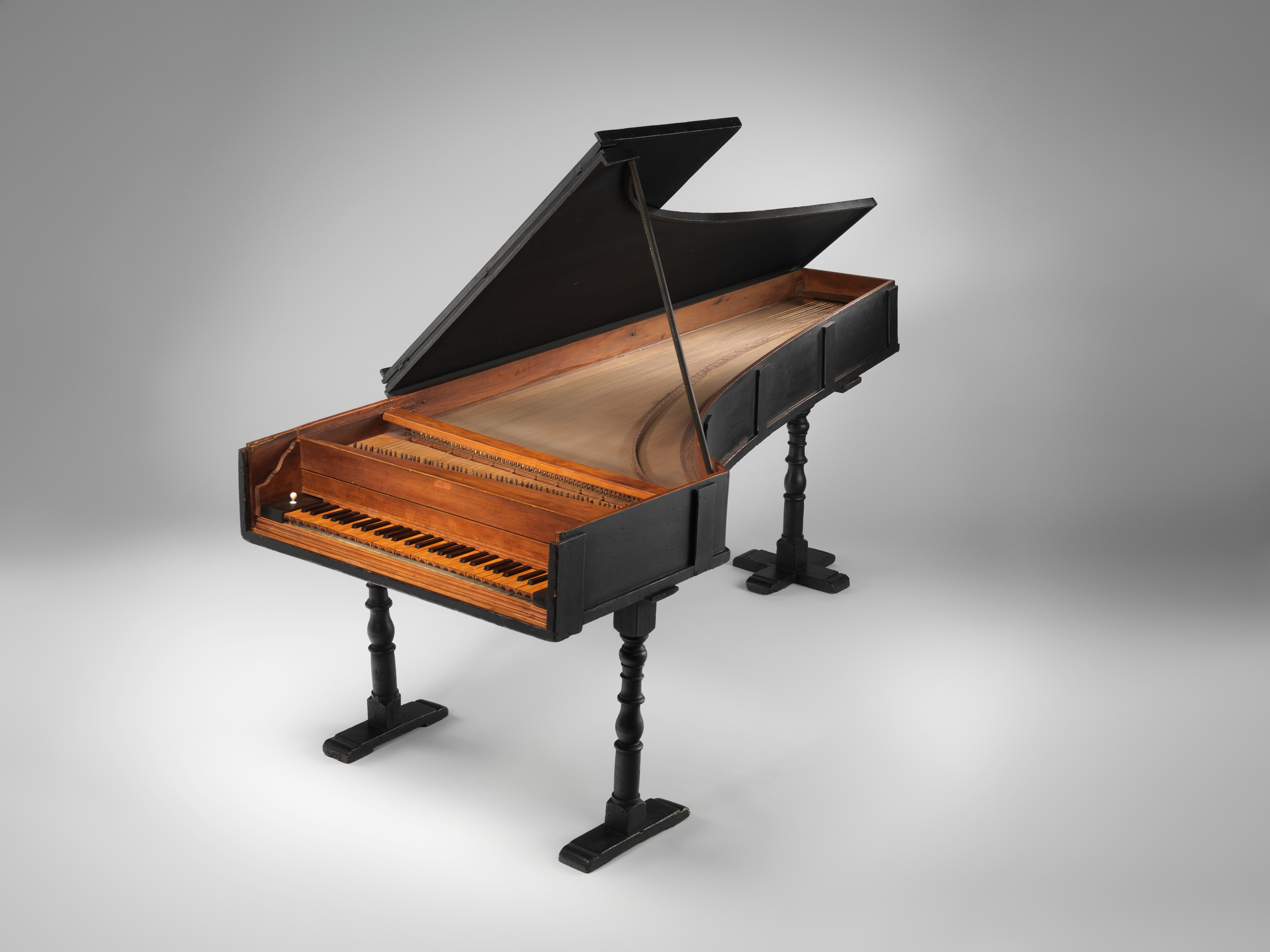
Grand Piano
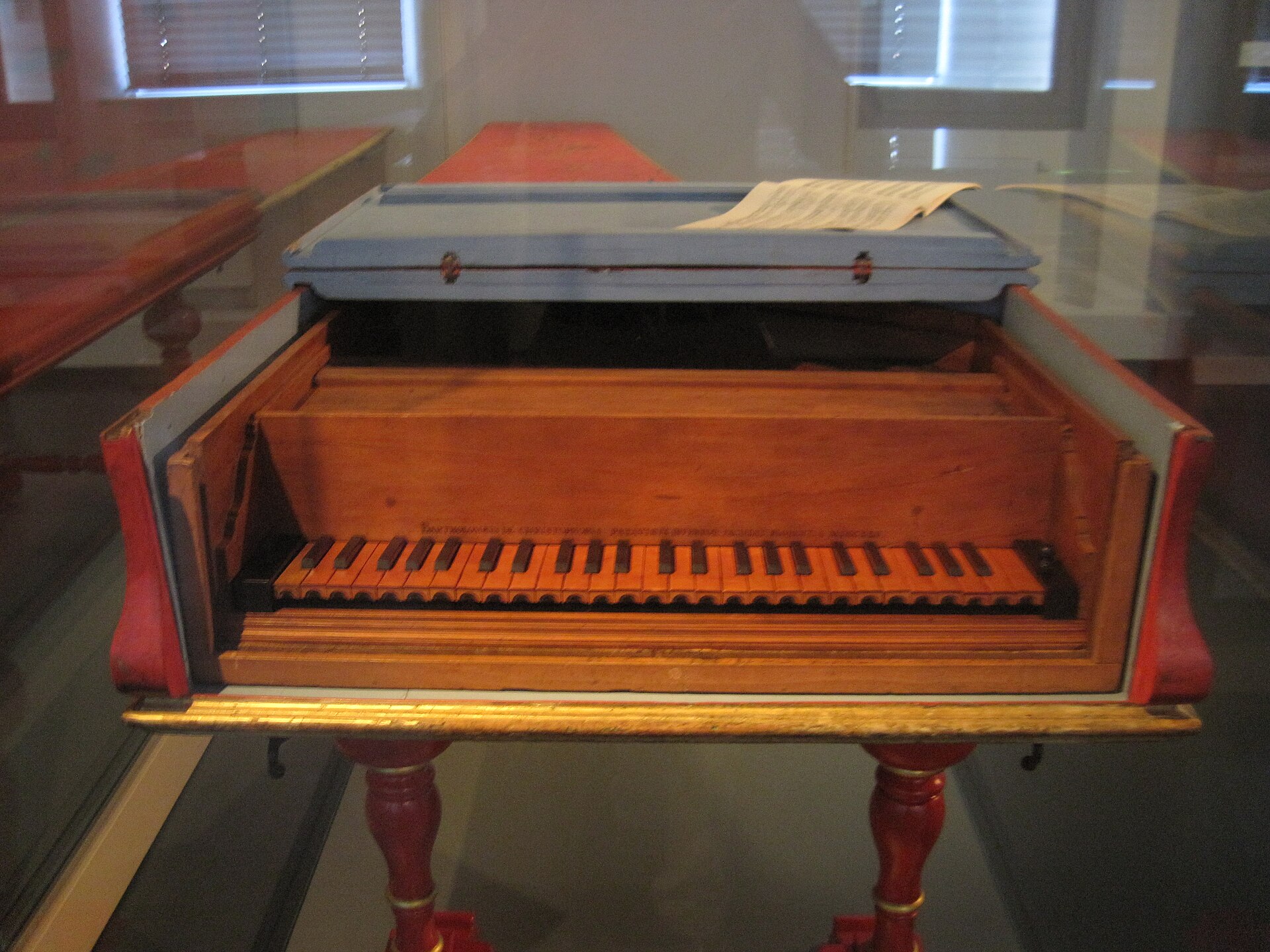
1720 · Cypress
Metropolitan Museum of Art, New York
 1655-1731
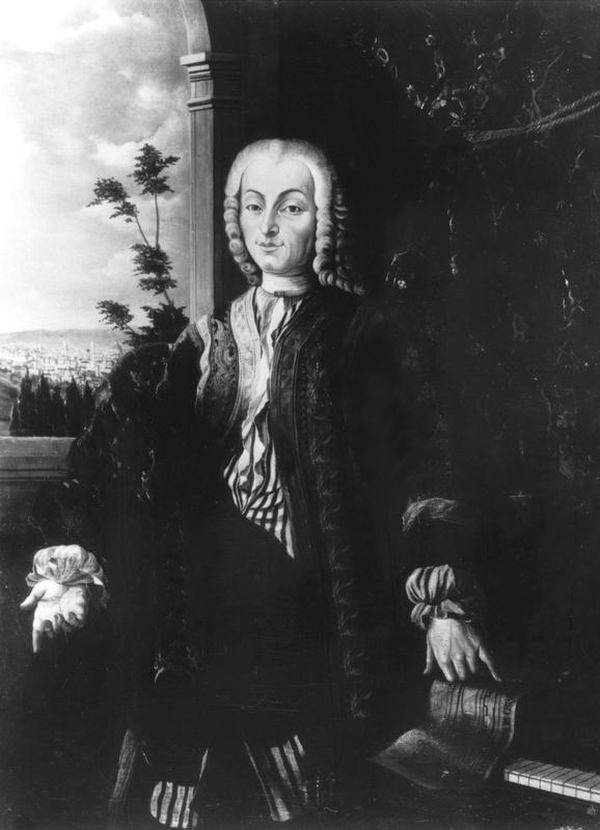
The only portrait conventionally identified as Cristofori, dated 1726, five years before his death. It shows a standing man beside what is generally read as a piano, holding a paper often described as an action diagram. The painter is unrecorded and the original painting is lost, reported destroyed during the Second World War; what survives, and what is reproduced here, is an early photograph of the lost original. Multiple independent specialist sources, including the dealer-scholar Jason Price and the general literature on the piano's history, converge on this identification, but the original cannot now be re-examined to confirm it.
Photographer and painter both unrecorded; the image was first published via the German Wikipedia project| Full name | Bartolomeo Cristofori di Francesco |
|---|---|
| Worked as | Instrument maker, Inventor of the piano, Custodian of the Medici instrument collection |
| Born | 4 May 1655 · Padua, Republic of Venice |
| Died | 27 January 1731 · Florence |
| Nationality | Italian, Paduan by birth, working in Florence for the Medici court |
| In this archive | 1 artwork |
| Sources | 25 cited |
| Last verified |
About this page 1 artwork in the archive · Last verified · 25 sources cited
Cristofori is the rare case of an invention with one accepted author, one archival birthdate and three physical witnesses that can still be examined today. Around 1700, as the Medici court's harpsichord technician, he built a keyboard instrument on which a player could control loudness by touch, and he solved at a single attempt most of the mechanical problems the trade would spend the next seventy-five years rediscovering one at a time. Three of his pianos survive: in New York, in Rome and in Leipzig.
What most accounts leave out is that the piano is only part of his surviving corpus, and the least contested part of it. The instrument collections that hold his pianos also hold, under his name, a signed oval spinet, an unsigned spinettone identified only by workmanship, and a harpsichord of unusual design. A separate and much less certain group carries his name for a different reason entirely: four cellos, a violin and a double bass, none of them supported by a single surviving document showing that Cristofori ever built or repaired a bowed string instrument. One of those cellos sold at auction in London in 2023 for more than three hundred thousand pounds. No piano by Cristofori has ever been sold at all.
The two surviving accounts closest to his own lifetime, a Medici household inventory and a journalist's interview, are also where the record runs out. No bill, no contract and no named first owner survives for any of his three pianos, and the two institutions that hold two of the three cannot even agree, in their own published catalogues, on which instrument is in the better condition.
Born 4 May in Padua, then part of the Republic of Venice. Nothing is documented of his early life or training.4
Recruited at age thirty-three by Ferdinando de' Medici, Grand Prince of Tuscany, to care for the Medici court's harpsichords and eventually its whole instrument collection.34
Builds the first of two oval spinets for Ferdinando de' Medici, a design Leipzig's own museum catalogue records as presumably lost. A separate 1690 oval virginal, discussed by the conservator Grant O'Brien as a surviving object in Florence, may or may not be this same instrument.810
Builds the second, signed oval spinet for Ferdinando de' Medici, now in the Musikinstrumenten-Museum of Leipzig University, inscribed and dated in ink inside the case.8
A Medici household inventory records the first unambiguous description of the piano, an arpicembalo of new invention that makes the soft and the loud. The court musician Federigo Meccoli separately dates the first example to this same year.134
Scipione Maffei publishes his account of the instrument, naming it gravicembalo col piano, e forte, and reports that Cristofori has by then built three, one given to Cardinal Ottoboni in Rome and two sold in Florence.34
Ferdinando de' Medici dies, ending Cristofori's original patronage arrangement.4
Cosimo III appoints Cristofori custode of the Medici instrument collection. Cristofori's own signature this year, on a Medici inventory, is the only securely dated sample of his handwriting; a cello later sold as his work also carries a label dated this year.411
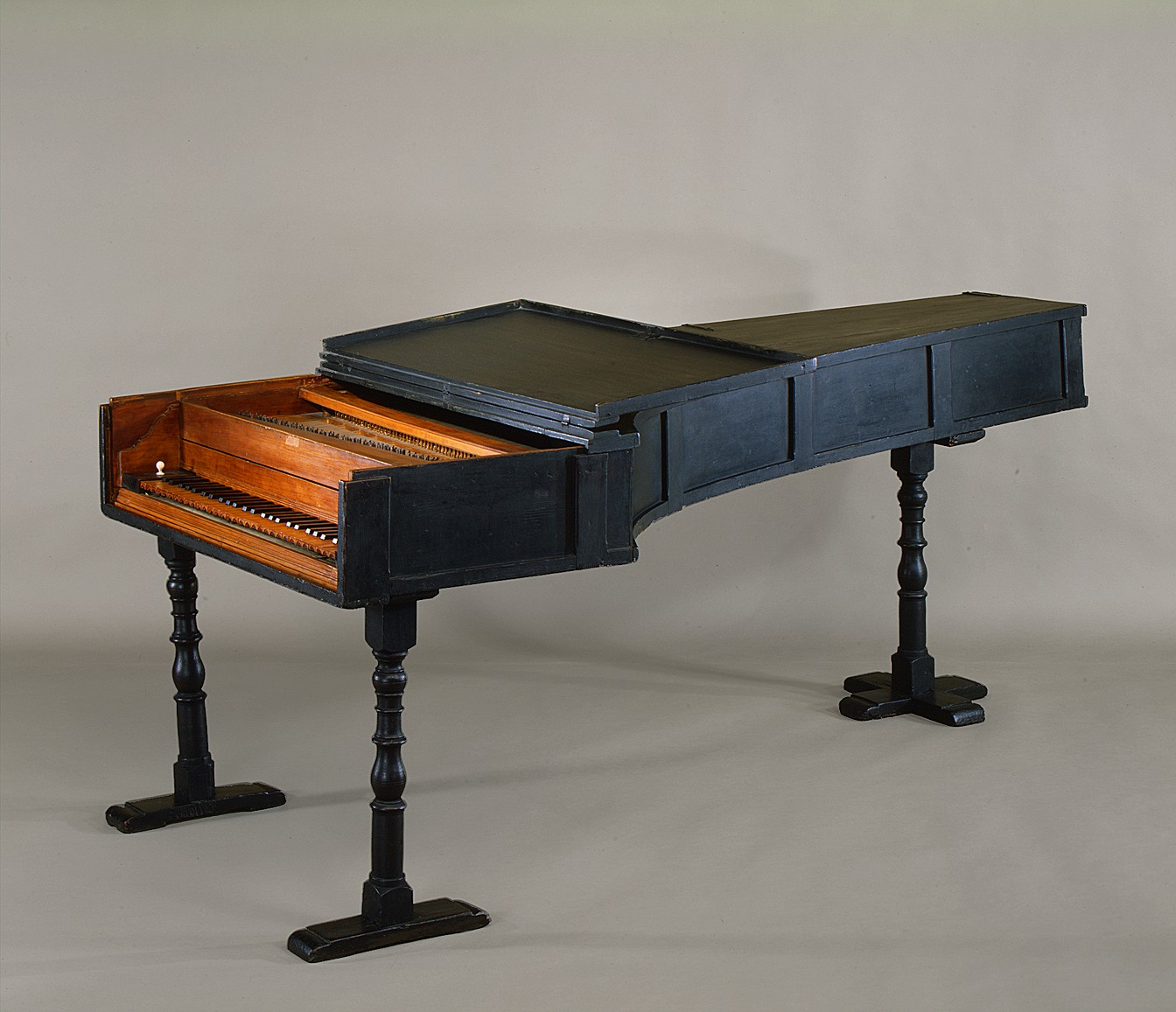
Builds the piano now in the Metropolitan Museum of Art, New York, the oldest of the three surviving examples.1
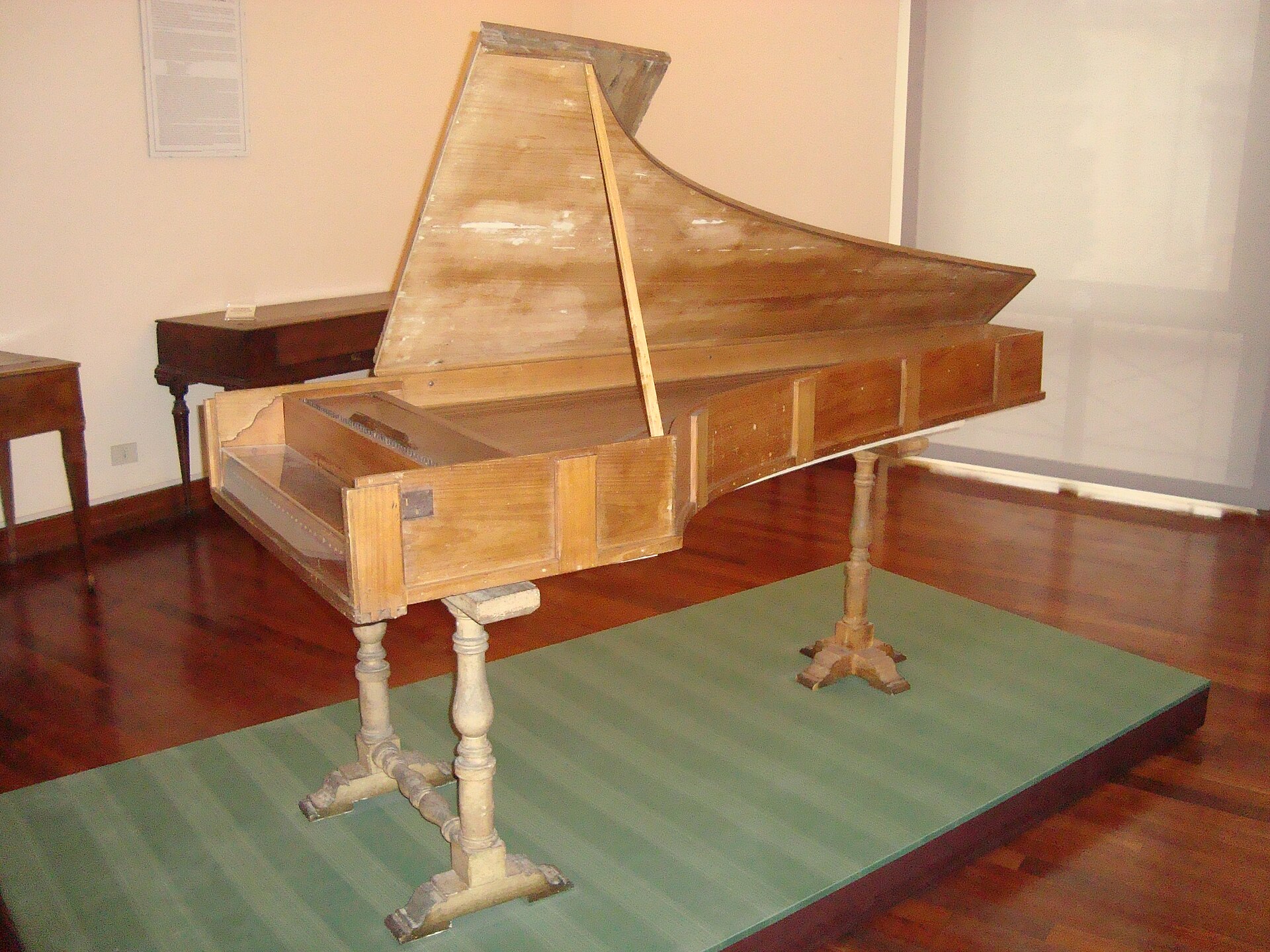
Builds the piano now in the Museo Nazionale degli Strumenti Musicali, Rome.15
Johann Mattheson republishes a German translation of Maffei's account, with its diagram of the action, in his Critica musica, the route by which the design is thought to have reached Gottfried Silbermann.4
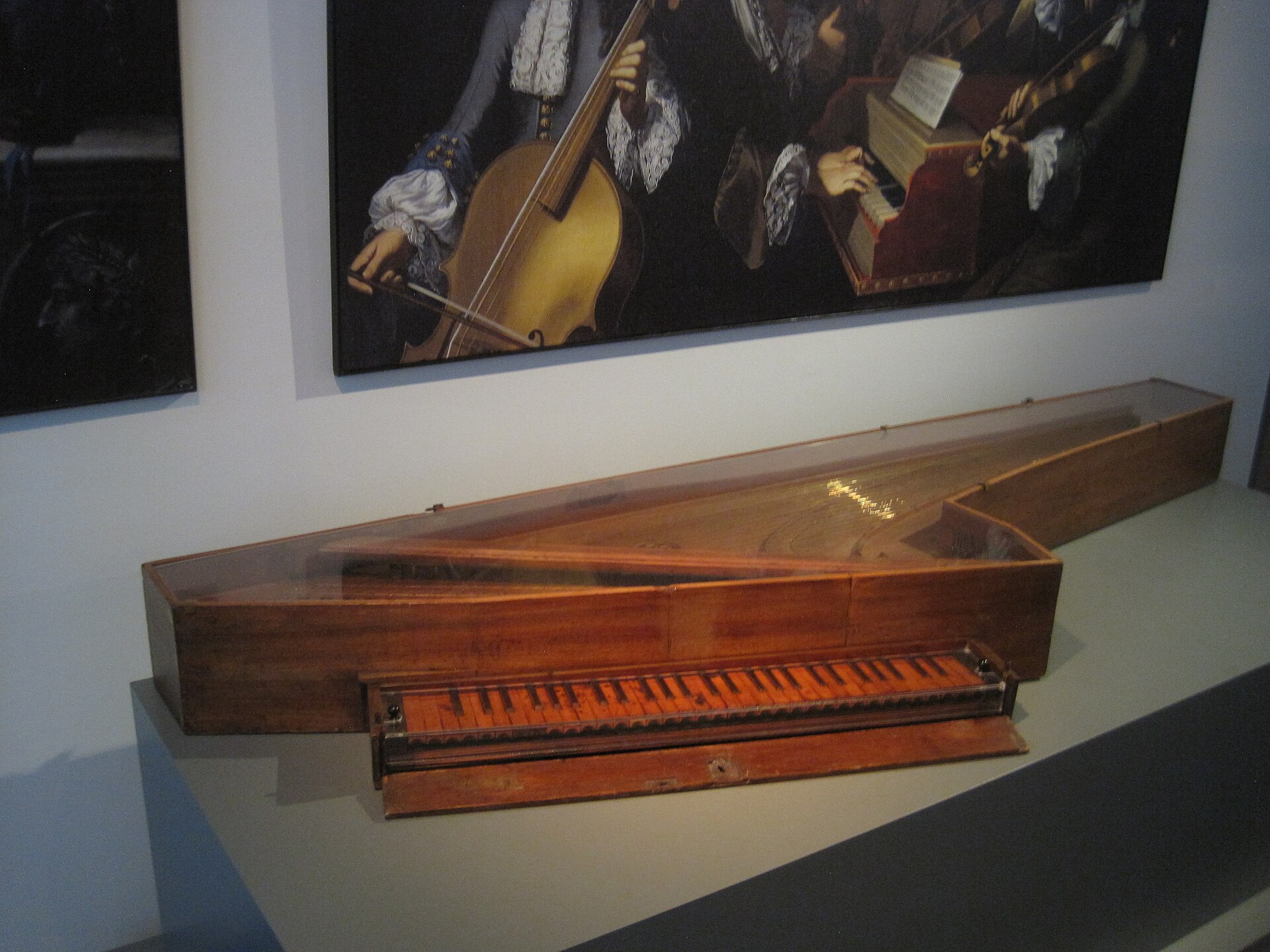
Builds the piano now in the Musikinstrumenten-Museum, Leipzig University. The only known portrait of Cristofori is painted this year.416
Makes two wills within two months, the first leaving his tools to his assistant Giovanni Ferrini, the second substantially reducing Ferrini's share in favor of the women recorded only as the Dal Mela sisters.4
Dies 27 January in Florence, aged seventy-five.4
Lodovico Giustini publishes twelve sonatas explicitly for the piano, the earliest music known to have been written and printed for the instrument.3
The scholar Leo Puliti restores Cristofori's priority as inventor in print in 1874; the Metropolitan's 1720 piano is restored in Florence by Cesare Ponsicchi in 1875; Ponsicchi publishes the first Italian history of the piano in 1876.4
A cello labeled Bartolomeo Cristofori in Firenze 1716 sells at Tarisio's London auction for 383,500 pounds, the only substantial sale recorded anywhere for an instrument carrying his name.111214
No source consulted here records any of the three surviving pianos ever being offered at public auction; all three left Cristofori's hands and reached their present institutions by gift, bequest or purchase outside the saleroom. The market that does exist belongs entirely to the six stringed instruments attributed to him on stylistic grounds. Tarisio's own price-history note counts only four auction results across nearly seventy years for anything carrying Cristofori's name, from a modest 726 dollars in November 1956 to 383,500 pounds for a cello in October 2023. That is not a market in any normal sense. It is four data points, for objects whose authorship this same record's corpus section shows to be genuinely uncertain.
| Date | Sale | Work | Result | Note |
|---|---|---|---|---|
| 2023-10 | Tarisio | Cello labeled Bartolomeo Cristofori in Firenze 1716 | Hammer not published separately With premium GBP 383,500 total, fees included GBP | The sources consulted, including a subscriber-gated Strad auction report, give only this total figure and do not separate the hammer price from the buyer's premium. Provenance runs from an anonymous owner before 1909 through W. E. Hill and Sons, Col. John Hopton, David Ffrangcon Thomas from 1937, John and Arthur Beare in 1987, and two further anonymous owners before the 2023 sale. |
Hammer is the price at which the bidding stopped; with premium adds the fee the house charges the buyer on top. Hammer price and buyer's premium in the glossary.
| Institution | City | Holdings | Note |
|---|---|---|---|
| Metropolitan Museum of Art | New York | The 1720 grand piano, the oldest surviving example, accession 89.4.1219a-c | The only one of the three surviving pianos that is currently playable; recordings have been made on it. The Museum's own account holds it to be the most heavily rebuilt of the three, with a replaced soundboard and a shifted compass. |
| Museo Nazionale degli Strumenti Musicali | Rome | The 1722 grand piano | The museum's own catalogue describes this instrument as the best-preserved of the three siblings, directly contradicting the account published elsewhere of the same object as damaged and unplayable. |
| Musikinstrumenten-Museum, Leipzig University | Leipzig | The 1726 grand piano, a signed 1693 oval spinet, an unsigned spinettone of about 1720, and a harpsichord of unusual disposition, all attributed to Cristofori | By number of objects, the largest single collection of instruments attributed to Cristofori anywhere, though only the piano and the oval spinet carry his inscription. |
| Galleria dell'Accademia (Museo degli Strumenti Musicali) | Florence | An oval virginal dated 1690, discussed in print by the conservator Grant O'Brien as a physically present object | Also holds the 1690 Stradivari 'Medici' cello that appears to have served as the model for the string instruments attributed to Cristofori. Whether this virginal is the same 1690 instrument that Leipzig's own catalogue describes as lost is unresolved. |
Almost nothing is documented about Cristofori before 1688, the year Ferdinando de' Medici, Grand Prince of Tuscany, brought him to Florence at the age of thirty-three on a salary of twelve scudi a...
Almost nothing is documented about Cristofori before 1688, the year Ferdinando de' Medici, Grand Prince of Tuscany, brought him to Florence at the age of thirty-three on a salary of twelve scudi a month, an apartment and an expense budget. Qualified instrument technicians already worked in Florence at the time, and the prince passed them over for a thirty-three-year-old outsider from Padua. A contemporary source has Cristofori telling the prince he did not want the post, and the prince answering that he would make him want it.
For decades the standard account filled the gap with a myth: that Cristofori had apprenticed under Nicolo Amati in Cremona. The claim traces to a single coincidence, a thirteen-year-old boy named Cristoforo Bartolomei recorded in the 1680 Amati household census. Bartolomeo Cristofori was nearly twenty-five in 1680, decades too old to be a live-in apprentice, and the nineteenth-century musicologist Giovanni de Piccolellis, who first noticed the name match, said as much himself even as later writers kept repeating the connection. The two men are not the same person, and no document of any kind ties Cristofori to violin or cello training. What made him attractive to Ferdinando in 1688 remains unrecorded.
A harpsichord plucks its strings with a quill.
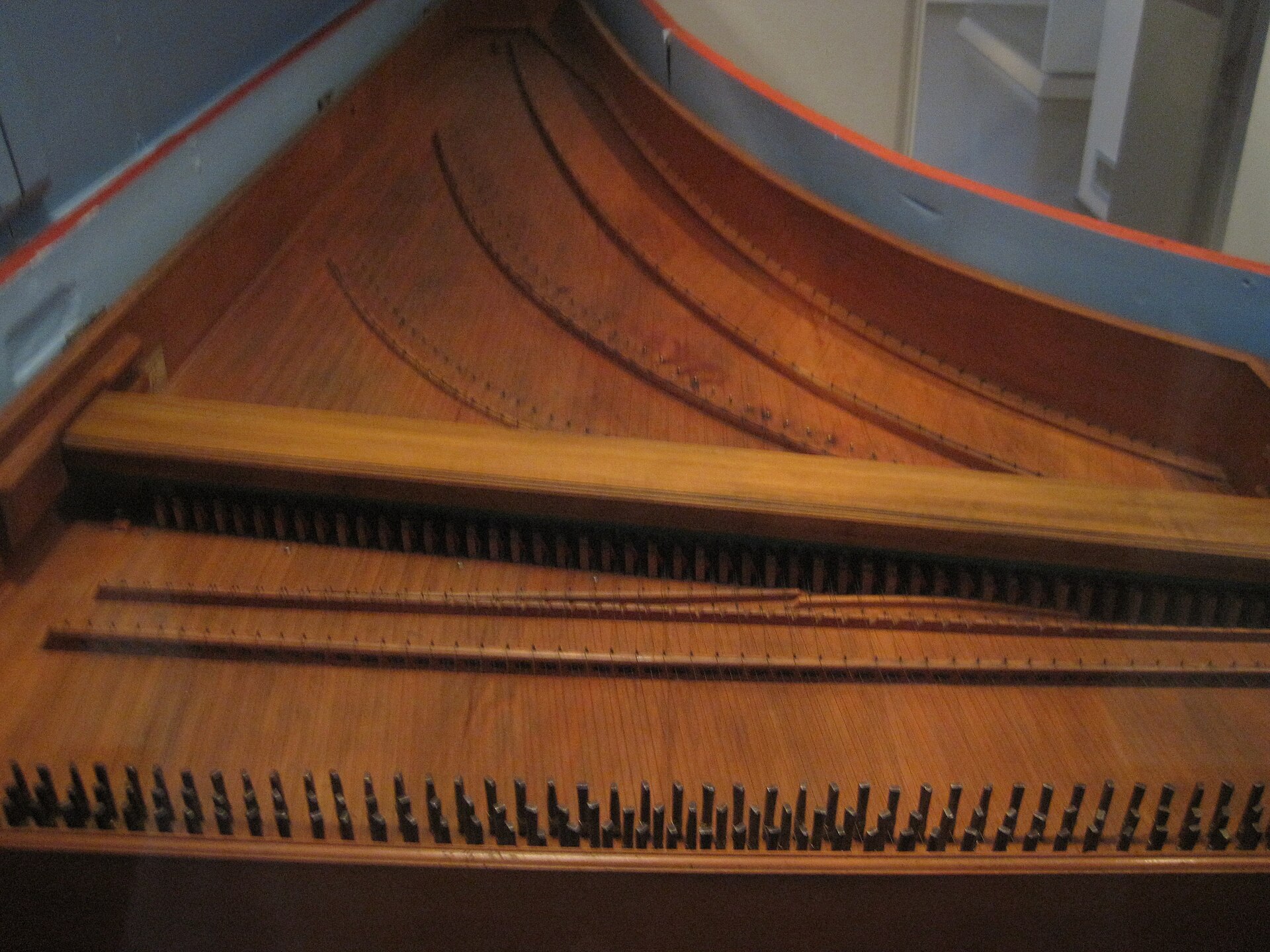
A harpsichord plucks its strings with a quill. The quill takes the same bite of string regardless of how hard or soft the key is struck, so a harpsichord cannot get louder or softer under the hand. A clavichord can, but it is too quiet to be heard a few feet away. Cristofori's instrument struck the string with a hammer instead, and a struck string immediately raises a harder problem than a plucked one: the hammer has to get out of the way the instant it strikes, or it will damp the very string it just sounded, and it has to be stopped from bouncing back up to strike a second time.
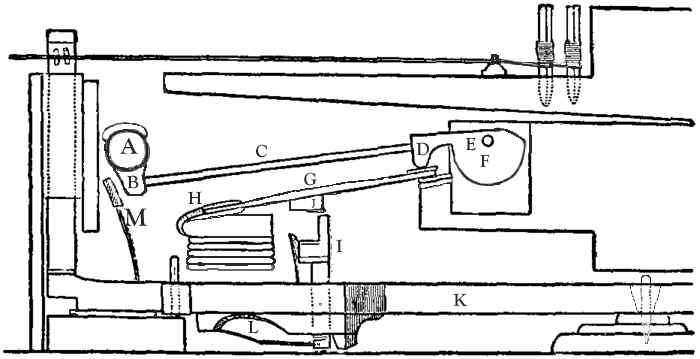
Cristofori's solution was an escapement, a hopper that releases the hammer just before impact so the hammer flies free under its own momentum, paired with a check that catches it on the rebound before it can re-strike. A jack-mounted damper silences the string the instant the key is released, and the soundboard is isolated from the tension-bearing structure of the case so it can vibrate without being pulled out of shape by the strings above it. He also strung the instrument with thicker wire at higher tension than a harpsichord would carry, to give the hammer something worth striking. Nothing of comparable sophistication was built by another maker for roughly seventy-five years, and the action of the modern piano descends from this one, though later eighteenth-century makers dropped several of its features to cut cost and had to reinvent them piecemeal.
The first unambiguous documentary trace of the instrument is a Medici household inventory of 1700, describing an arpicembalo by Bartolomeo Cristofori of new invention that makes the soft and the loud.
The first unambiguous documentary trace of the instrument is a Medici household inventory of 1700, describing an arpicembalo by Bartolomeo Cristofori of new invention that makes the soft and the loud. A separate note by the court musician Federigo Meccoli dates the first example to that same year, which is as precise a birthdate as any early modern invention gets.
In 1711 the poet and journalist Scipione Maffei published an account of the instrument, based on an interview with Cristofori, in the Giornale de' letterati d'Italia. Maffei called it a gravicembalo col piano, e forte, the name the instrument still carries in Italian and in the abbreviation everyone now uses, and by his account Cristofori had by then built three: one given by the Medici to Cardinal Pietro Ottoboni in Rome, and two sold in Florence. Ottoboni was the most prominent private patron of music in Rome, the man behind Arcangelo Corelli's academy and a sponsor of Alessandro Scarlatti and, briefly, the young Handel, so the gift placed one of the only three pianos then in existence inside the most consequential musical household in Italy outside the Medici's own.
Maffei also recorded that the reception among professional musicians was not warm. Some found the tone too soft and too dull next to a good harpsichord, which was louder and more brilliant, if incapable of responding to the player's touch. It took most of a century for the trade to decide that touch mattered more than volume.
Three of Cristofori's pianos are known to survive: 1720 at the Metropolitan Museum in New York, 1722 at the Museo Nazionale degli Strumenti Musicali in Rome, and 1726 at the Musikinstrumenten-Museum...
Three of Cristofori's pianos are known to survive: 1720 at the Metropolitan Museum in New York, 1722 at the Museo Nazionale degli Strumenti Musicali in Rome, and 1726 at the Musikinstrumenten-Museum of Leipzig University. All three carry a version of the same Latin inscription naming Cristofori as inventor. The New York instrument is the plainest of the three, a single keyboard with no stops in the style of an Italian harpsichord of its day; the Rome and Leipzig instruments both have a shifting keyboard, una corda, that lets only one of each pitch's two strings be struck.
The Metropolitan's own object page and collection record make no condition assessment at all. The detailed one in wide circulation, repeated on Wikipedia, is not the Museum's own: it is the instrument-maker and scholar Denzil Wraight's, who records that the soundboard was replaced in 1938, that the fifty-four-note compass was shifted by roughly half an octave, and who judges that the instrument's original condition has been irretrievably lost. The same secondary account describes the Rome piano as damaged by woodworm and unplayable, the worst-preserved of the three.
The Museo Nazionale's own published catalogue entry for that same 1722 piano says the opposite in plain terms: that of the three sibling instruments, held respectively in New York, Leipzig and Rome, the Rome example is in the best condition. No source consulted here reconciles the two claims, and this record does not pick a side. What can be said is that the institution that holds the Rome piano, and the secondary literature describing it, have published opposite verdicts on how much of it survives intact.
The three-piano count is true only if the word piano is read narrowly.
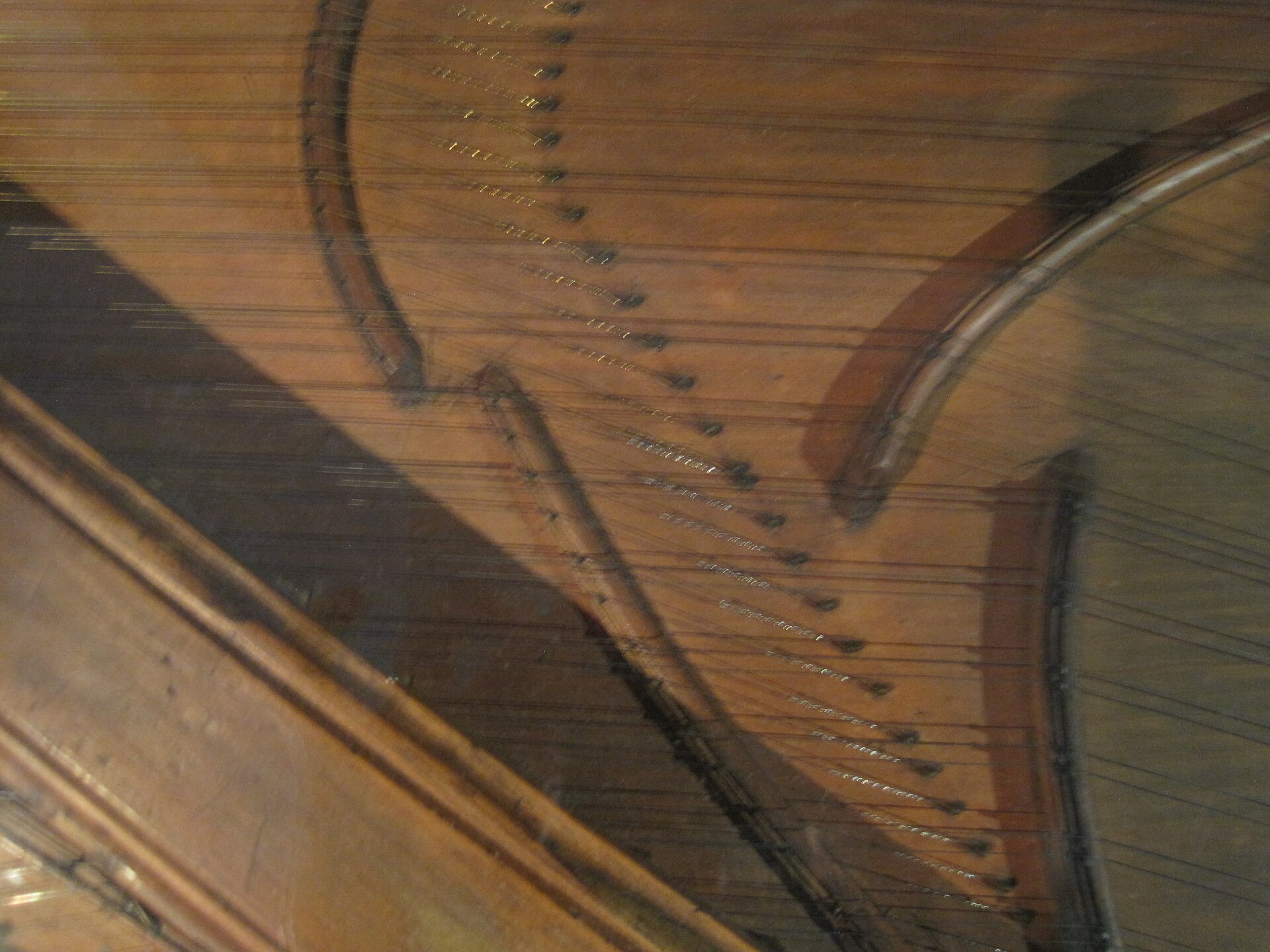
The three-piano count is true only if the word piano is read narrowly. Leipzig's museum holds a fourth Cristofori keyboard instrument beyond its 1726 piano: an oval spinet dated 1693 and signed in ink inside its case, Bartholomaeus Cristophori Patavinus, faciebat Florentiae, MDCXCIII. The museum's own catalogue records that Cristofori built only two instruments to this design, this one and an earlier example of 1690, both for Ferdinando de' Medici and both recorded in the princely inventory; of the 1690 instrument, the catalogue states plainly that no modern record of it survives and it is presumed lost.
Leipzig also holds an unsigned spinettone of about 1720, identified as Cristofori's work not by any inscription but by a body of workmanship evidence: the placement of jack markings on the underside of the case, the construction of the bridges and jack rack, and a match to the keyboard dimensions and numbering handwriting of his signed instruments. The museum's catalogue calls this identification reliable precisely because it can explain why a genuine Cristofori instrument would carry no signature at all: it has no nameboard, and the one component that could have carried a signature is missing. By the museum's own count, only three instruments of this particular type survive anywhere: this one, a second unsigned example now in the National Museum of American History in Washington that is attributed to Cristofori with high probability on the same grounds, and a third built in 1731 by his pupil Giovanni Ferrini, now in private hands. Leipzig further holds a harpsichord attributed to Cristofori with an unusual three-choir disposition of eight-foot, four-foot and two-foot strings, used on Wikipedia's own page for him and captioned there by name, though this record could not locate its inventory number or a fuller catalogue history.
A separate keyboard instrument, an oval virginal dated 1690, is treated as a physically present object at the Galleria dell'Accademia in Florence by the keyboard-instrument conservator Grant O'Brien, who has argued in print that it should never be restored, cleaned or even dusted, on the grounds that its documentary link to the Medici archive is more complete than almost any other surviving early keyboard instrument. Whether this is the same 1690 instrument that the Leipzig catalogue, discussing its own sister object of 1693, describes as unrecorded in modern times and presumably not preserved, is not resolved by any source consulted here, and the two claims cannot both be correct about a single object.
Every document placing Cristofori at the Medici court concerns keyboard instruments.
Every document placing Cristofori at the Medici court concerns keyboard instruments. There is no bill, receipt or inventory line for any bowed string instrument passing through his hands. Against that documentary silence stands a small group of surviving cellos, a violin and a double bass that specialists in the string trade attribute to him on stylistic grounds alone. The dealer and scholar Jason Price, writing for the auction house Tarisio, has examined six such instruments, four cellos, a violin and a double bass, and finds them consistent enough in wood choice, varnish, edge work, sound holes and construction detail, down to the use of maple in the purfling's middle strand, to conclude they were made by the same hand. He deliberately labels the group's best example 'made by the maker known as Bartolomeo Cristofori' rather than attributing it to Cristofori outright, a hedge that states the uncertainty rather than hiding it.
The best-documented of the six is a large-model cello bearing a label reading Bartolomeo Cristofori in Firenze 1716, on a strip of parchment glued inside the back, its script apparently overwritten at some later date to keep it legible. The instrument was sold and certified as genuine by the London dealers W. E. Hill and Sons in 1937 and again by John and Arthur Beare in 1987, and its proportions closely track those of the 1690 Stradivari cello that had entered the Medici collection six years after Cristofori arrived in Florence and that was, by Price's account, plainly the model the cellist-maker worked from. Cristofori's own 1716 signature survives independently, on an inventory of the Medici collection he compiled that year, giving at least one point of comparison between the label's handwriting and a document known to be his.
The cello sold at Tarisio's London auction in October 2023 for 383,500 pounds, a total that the sources consulted here report without separating hammer price from buyer's premium. The same firm's own price-history note for the maker records only four auction results in total for instruments carrying his name, the earliest a modest 726 dollars in November 1956. No comparable sale exists for any piano: no source consulted here, including the Metropolitan's own object page and the Wikipedia account of the three survivors, records an auction appearance for the New York, Rome or Leipzig instrument. The market for objects bearing Cristofori's name, such as it is, belongs entirely to the contested string instruments.
Maffei's account, translated into German with its diagram of the action, was reprinted in Johann Mattheson's Critica musica in 1725.
Maffei's account, translated into German with its diagram of the action, was reprinted in Johann Mattheson's Critica musica in 1725. The Metropolitan Museum's own published account holds that the Saxon organ builder Gottfried Silbermann probably read it there and began building his own pianos on Cristofori's design in the 1730s, that an early Silbermann instrument was rejected by Johann Sebastian Bach as too heavy in touch and too weak in the treble, and that Silbermann's later, improved pianos won Bach's approval and were bought in numbers by Frederick the Great, with Bach eventually acting as a sales agent for them. The Museo Nazionale in Rome publishes a different chronology for the same connection, stating that the design reached Germany, probably through Venice, as early as 1726, and that Silbermann showed his resulting instrument to Bach directly. The two accounts agree on the outcome and disagree on the timeline; this record does not resolve which is correct.
What both agree on is the consequence: within a generation, French writers were crediting the piano's invention to Silbermann outright, even though Silbermann's action depended almost entirely on Cristofori's design. The correction came from Florence itself, where the scholar Leo Puliti restored Cristofori's priority in print in 1874. The following year the Metropolitan's own 1720 piano was restored in Florence by Cesare Ponsicchi, who signed and dated his work in ink beside Cristofori's own inscription, and in 1876 Ponsicchi published the first Italian history of the piano. The scholarship correcting the record, the restoration of the one surviving example then in Florentine hands, and the first Italian book on the subject all happened within about three years of each other, in the same city, with the restorer among the authors putting the record straight.
Cristofori made two wills within two months of each other in 1729, and the difference between them is the clearest surviving evidence of who he actually trusted at the end of his life.
Cristofori made two wills within two months of each other in 1729, and the difference between them is the clearest surviving evidence of who he actually trusted at the end of his life. The first, dated 24 January, left his tools to his assistant Giovanni Ferrini, the pupil who would go on to build pianos on his master's design. The second, dated 23 March, substantially revised the arrangement: the bulk of what he owned went instead to the women identified only as the Dal Mela sisters, in gratitude for their continued care of him, and Ferrini's share was cut to five scudi.
Five scudi is not nothing, and the sources consulted here read it as a token of continued regard rather than a falling-out, but it is a small fraction of what a favored apprentice might expect from the estate of a master with no recorded family of his own. One of the Dal Mela family, a P. Domenico Dal Mela, is separately credited as a possible assistant to Cristofori and as the builder of the first known upright piano in 1739, which would make the household that inherited Cristofori's estate the same household that carried his invention forward in an entirely new form.
The Museo Nazionale's own catalogue entry for its 1722 piano preserves a phrase attributed to Ferdinando de' Medici describing what he wanted from an instrument: to render in sound the speech of the...
The Museo Nazionale's own catalogue entry for its 1722 piano preserves a phrase attributed to Ferdinando de' Medici describing what he wanted from an instrument: to render in sound the speech of the heart, now with the delicate touch of an angel, now with the violent eruption of passions. Whatever the exact circumstances of the remark, it names precisely the gap a plucked harpsichord could not close and a struck, escapement-fitted string could: an instrument answerable to the player's touch rather than only to the player's choice of stop. A Venetian document of the period, now held in Venice's Museo Correr, calls the same class of instrument a cembalo incomparabile, an incomparable harpsichord, which is as close to a contemporary review as the invention received outside Maffei's more measured account.
Ferdinando's court was itself a node in a wider network of musical patronage that ran through Rome by way of Cardinal Ottoboni's academy and through Naples and Spain by way of Domenico Scarlatti, whose pupil and patron Maria Barbara de Braganza bought five pianos built by Cristofori or by his pupil Ferrini. Hundreds of Scarlatti's five-hundred-odd keyboard sonatas may have been intended for one of Cristofori's instruments rather than for the harpsichord long assumed, and the earliest music unambiguously composed for the piano, Lodovico Giustini's twelve sonatas of 1732, was dedicated to Don Antonio of Portugal, Maria Barbara's uncle and himself a Scarlatti pupil. An invention built to satisfy one Medici prince's taste for expressive touch ended up, within a single generation, threaded through the ruling houses of three courts and the compositional habits of the leading keyboard composer of the age.
Instrument maker; Inventor of the piano; Custodian of the Medici instrument collection. 1655-1731.
Born 4 May 1655, Padua, Republic of Venice; died 27 January 1731, Florence.
Double bass, Metropolitan Museum of Art, accession 1980.112. Bought by the Museum in 1980 as the work of Bartolomeo Cristofori, on the strength of a label reading Io Bartolomeo Cristofari fecit in Firenze 1717, or 1707.
Metropolitan Museum of Art (New York); Museo Nazionale degli Strumenti Musicali (Rome); Musikinstrumenten-Museum, Leipzig University (Leipzig); Galleria dell'Accademia (Museo degli Strumenti Musicali) (Florence).
No source consulted here records any of the three surviving pianos ever being offered at public auction; all three left Cristofori's hands and reached their present institutions by gift, bequest or purchase outside the saleroom. The market that does exist belongs entirely to the six stringed instruments attributed to him on stylistic grounds.
Is the 1722 piano in Rome the worst-preserved of the three survivors, as Wikipedia and other general reference sources hold, or the best-preserved, as the Museo Nazionale's own published catalogue entry for the same object states? No source consulted reconciles the two claims.
Last verified
One artwork and its story every Tuesday, with the picture: who owned it, what it made, and what closes soon in the exhibition calendar. No promotion, and nothing we cannot cite.
We send one email to confirm the address and keep nothing else. Every letter carries a one-click unsubscribe. How we handle your data.


