How Paintings Are Authenticated
Three investigations have to agree, and the scientific one can only exclude. The lead scholar of the largest technical project ever run on one artist says connoisseurship decided every case.
On this page 6 sections
ContentsClose
In short
- The Bosch Research and Conservation Project states that connoisseurship played a part in every single attribution to Bosch as matters stand today.
- The accepted Rembrandt corpus has been counted at 611, 420, 280 and 340 works by four authorities between 1935 and 2014.
- The Andy Warhol authentication board was dissolved on 19 October 2011 after legal costs its president put at millions of dollars.
- A New York bill to protect authenticators passed the State Senate twice and has died in Assembly committee every session since.
Three investigations, and none of them is sufficient
An authentication runs on three tracks. The documentary track asks what the paper record says: inventories, wills, sale catalogues, exhibition records, dealer ledgers, photographs. The physical track asks what the object is made of, how it was built, and when those materials and methods became available. The connoisseurial track asks whether the picture behaves like the artist's other work.
None of the three closes the question alone. A flawless provenance can be attached to the wrong object, since a line of text and a panel are joined only by an act of identification. Period-appropriate materials can be assembled deliberately, and have been. A single expert eye, however good, is one opinion until it is corroborated against securely documented work.
Jane Kallir put the asymmetry between the tracks in one sentence in The Art Newspaper in 2018: the identification of pigments unknown during an artist's lifetime may be used to expose a forgery, but the presence of historically appropriate materials does not necessarily prove authenticity. That is the whole logical structure of the field, and most public discussion of authentication ignores it.
Science excludes, and the exclusion is where forgers fail
Technical analysis is powerful in one direction. A material that did not exist at the claimed date ends the discussion, subject only to questions about later restoration. Titanium dioxide white is the standard example: the pigment was discovered in 1821, commercial production began in 1916 at the Titanium Pigment Corporation in Niagara Falls and the Titan Company in Norway, and a titanium white oil colour suitable for artistic purposes was not introduced by an American manufacturer until 1921.
That date convicted the most successful forger of the modern German market. Wolfgang Beltracchi's Rotes Bild mit Pferden was presented as a 1914 work by Heinrich Campendonk and sold through Lempertz in Cologne in November 2006 for EUR 2.88 million. Analysis, conducted by Nicholas Eastaugh, found titanium white, which was not available in 1914. Beltracchi was tried in 2011 and admitted fourteen paintings; the civil consequence followed separately, with the Landgericht Koeln holding Lempertz liable to hold the buyer harmless for a purchase price in the order of EUR 2.9 million, on forensic evidence that the paint used did not exist in the 1910s.
The same test run the other way produces almost nothing. A picture containing only period-appropriate pigments has been shown to be consistent with its claim, which is a far smaller statement than proof. Matthijs Ilsink of the Bosch Research and Conservation Project put the boundary on the strongest of the dating techniques bluntly: dendrochronology can only reject paintings, and then only if they are on oak or another wood for which there are chronologies.
The eye still decides, and the largest technical project says so
The Bosch Research and Conservation Project examined the surviving corpus of one artist with infrared reflectography, ultra-high-resolution macro photography and microscopic study over several years, and in 2015 reattributed two long-accepted paintings to imitators. Its lead scholar's summary of what all that instrumentation established about method is the most useful sentence in the authentication literature: all the science and technology does not alter the fact that it can be said without reservation that connoisseurship has played a part in every single attribution to Bosch as matters stand today.
Ilsink then concedes the cost of that position. Connoisseurship in Bosch studies is vitally important, which also means that scholars are always on thin ice when speaking of Bosch, because connoisseurship rests on the connoisseur's eye combined with the ability to communicate what he sees. He goes further: it is more a question of a gut feeling than hard science.
This is uncomfortable and it is why the discipline defends its methods so vigorously. What separates trained connoisseurship from taste is that it makes claims about specific passages, and those claims can be tested against securely documented works, revised, and published with reasons. The physical evidence is usually consistent with several candidates, because a competent workshop assistant used the same pigments, the same panels and the same underdrawing habits as the master.
Corpora move, and the Rembrandt numbers show how far
The size of an accepted body of work is a scholarly opinion that changes, sometimes drastically. For Rembrandt the published counts run: Abraham Bredius in 1935 at 611 paintings; Horst Gerson in 1968 at 420; Christian Tuempel in 1986 at 280; and Ernst van de Wetering at 340 in 2014. The last figure is higher than the one before it because roughly sixty works previously rejected were re-attributed, not because new pictures were discovered.
The Rembrandt Research Project began in 1968 with the aim of ridding Rembrandt's oeuvre of paintings that harmed the image of the painter. Older members resigned in 1993 and Dutch research council funding ended in 1998, after which the work continued under van de Wetering alone. In early 2011 the project's board voted to terminate it by the end of that year, with approximately a quarter of the oeuvre still uninvestigated. The sixth and final Corpus volume appeared in 2014, forty-six years after the start.
One widely repeated story about that project should be corrected. The Polish Rider in the Frick Collection is often described as having been rejected by the RRP. It was not. In 1984 Josua Bruyn tentatively suggested traits of Willem Drost; the suggestion is now generally rejected, the project confirmed Rembrandt's authorship in the late 1990s with a second hand involved in completion, and the Frick still labels the picture Rembrandt. The reputational damage of a tentative remark, reported as a verdict, outlasted the remark by thirty years.
The real question is who will sign, and for how long that signature holds
For most artists with a serious market the effective authority is whoever maintains the corpus, and over the last three decades those bodies have been closing. The Pollock-Krasner Foundation stopped authenticating in 1996. The Roy Lichtenstein Foundation dissolved its committee in 2011. The Andy Warhol Art Authentication Board's dissolution was announced on 19 October 2011, and Joel Wachs of the Warhol Foundation gave the reason without euphemism: the money should be going to artists, not lawyers. The Keith Haring Foundation announced the end of its committee on 14 September 2012 and the Basquiat estate announced its intention to disband in January 2012.
The proximate cause was litigation. Joe Simon-Whelan bought a Warhol silkscreen self-portrait in 1989 for USD 195,000, submitted it to the board in 2001 and again in 2003, was denied both times and had the word DENIED stamped on the reverse, then sued in 2007 alleging restraint of trade under the Sherman Act. He abandoned the case in 2010, unable to fund it. Estimates of the Foundation's legal spend published at the time range from more than USD 6 million to at least USD 10 million, and the figure is genuinely unsettled across sources. A parallel suit against the Haring Foundation, Bilinski, was dismissed by Judge Denise Cote in March 2015.
The law has declined to fill the space. In Thome v Alexander and Louisa Calder Foundation, decided by the New York Appellate Division on 1 December 2009, the court held there is no legal obligation either to the public at large or to owners of artwork to authenticate that work. Its reasoning is the clearest statement anyone has of what a corpus actually is: whether the art world accepts a catalogue raisonne as a definitive listing is a function of the marketplace rather than of any legal directive, and courts are not equipped to deliver a meaningful declaration of authenticity. A New York bill to protect authenticators passed the State Senate in June 2015 by 61 votes to 1 and again in April 2016 by 59 to 1, and has died in Assembly committee every session since; it was reintroduced for 2025 and 2026 and remains in committee.
What consensus looks like when it fails in public
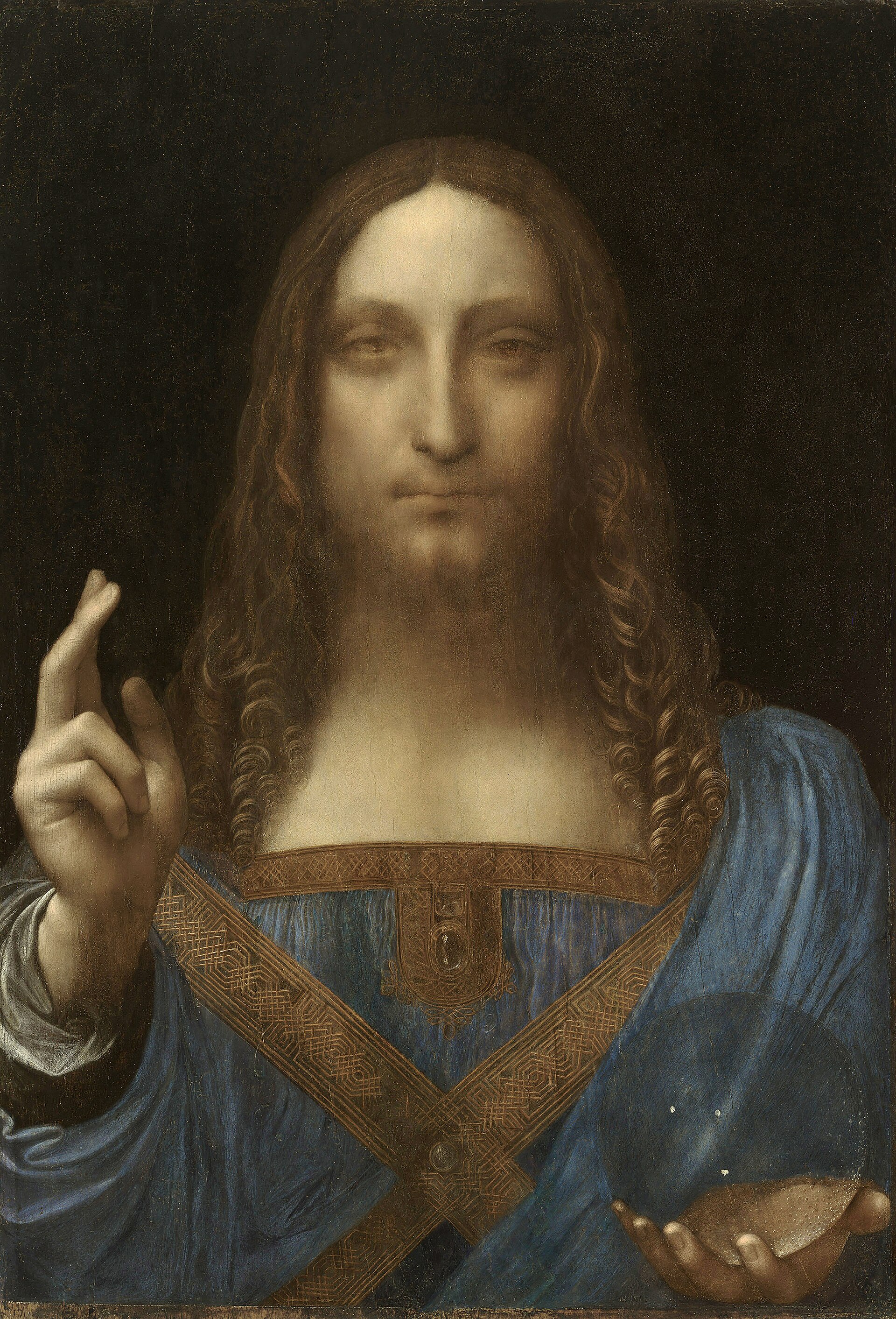
The Salvator Mundi attributed to Leonardo is the field's stress test, because every track was run and the tracks did not converge. The National Gallery in London showed it in 2011 as catalogue number 91 under the unqualified heading Leonardo da Vinci, in an exhibition whose guide used 'Leonardo da Vinci and workshop' for another entry, so the absence of a qualifier was a decision. Christie's sold it in New York on 15 November 2017 at a hammer of USD 400 million, USD 450,312,500 with premium.
The dissent is substantial and named. Carmen Bambach attributes most of the execution to Giovanni Antonio Boltraffio and has said that if her name were added to the list of supporters it would be a tacit statement that she agrees with the attribution, which she does not. Matthew Landrus proposes Bernardino Luini as primary painter with between five and twenty per cent by Leonardo. Frank Zoellner catalogues it as Leonardo da Vinci and Workshop, with a question mark, after 1507. The Prado's 2021 exhibition catalogue placed it not in its list of works by Leonardo but in a second list of attributed works, workshop, or works authorised and supervised by Leonardo.
Against that, the Louvre's own printed study, prepared with the Centre de recherche et de restauration des musees de France and withdrawn before the 2019 exhibition, states that the results of the historical and scientific study allow the attribution to Leonardo to be confirmed, and that the evidence invites the idea of a work that is entirely autograph. Vincent Delieuvin's summary of the specialists consulted describes the split precisely: some accepted a fully autograph work, others preferred a collaboration with a studio assistant, pointing to passages worthy of Leonardo alongside surprisingly weak details where they had difficulty distinguishing restoration from an assistant's intervention, and a minority rejected any intervention by Leonardo at all. That is what the three tracks look like when they refuse to agree, at the highest price ever paid.
Questions
Almost never. Tests establish that materials and structure are consistent with the claimed date and artist, and consistency is the absence of a specific disproof rather than proof. The Bosch project's own conclusion, after years of instrumentation, was that connoisseurship played a part in every attribution it made.
An anachronistic material. A pigment, ground, canvas or binder that did not exist at the claimed date ends the discussion, subject only to questions about later restoration. Titanium white, unavailable as an artists' oil colour before about 1921, is the classic example and is what exposed Beltracchi's Campendonk.
Litigation and its cost. The Warhol board dissolved in October 2011, Haring and Basquiat in 2012, Lichtenstein in 2011, Pollock-Krasner as early as 1996. In Thome v Calder Foundation the New York courts held there is no legal duty to authenticate at all, which leaves the decision voluntary and exposed.
Individual scholars, the compilers of catalogues raisonnes, and the auction house departments that must publish a heading. All three are more cautious about written opinions than they were twenty years ago, so the practical question for a buyer is who will put an opinion in writing and whether it will still be respected in ten years.
Sources
- 1Matthijs Ilsink, 'Jheronimus Bosch and Connoisseurship: Remarks Prompted by the Bosch Research and Conservation Project', CODART, December 2015. codart.nl/feature/...
- 2Jane Kallir, 'Art authentication is not an exact science', The Art Newspaper, 23 November 2018. theartnewspaper.com/2018/...
- 3WebExhibits, 'Pigments through the Ages: Titanium Dioxide Whites', on 1916 commercial production and the 1921 artists' oil colour. Tertiary reference source; should be replaced with Marilyn Laver, 'Titanium Dioxide Whites', Artists' Pigments vol. 3, Oxford University Press, 1997. webexhibits.org/pigments/...
- 4Peter Bert, 'Art Law: Auction House Liable in Sale of Fake Expressionist Painting', Dispute Resolution Germany, 28 September 2012, on the Landgericht Koeln ruling against Lempertz. disputeresolutiongermany.com/2012/...
- 5CODART, 'A Corpus of Rembrandt Paintings Volume VI presented', 8 October 2014, giving van de Wetering's count of 340 against Tuempel's 280. codart.nl/research-study/...
- 6Mariet Westermann, 'Back to Basics', Perspective 2/2011, giving the Bredius 1935 and Gerson 1968 counts. journals.openedition.org/perspective/...
- 7Noah Charney, 'Can AI shed new light on how much of The Polish Rider was painted by Rembrandt?', The Art Newspaper, 1 December 2024. theartnewspaper.com/2024/...
- 8Artforum, 'Warhol Authentication Board to Shut Down', 28 October 2011, with Joel Wachs's statement. artforum.com/news/...
- 9Center for Art Law, 'Will the real Andy Warhol please stand up: the Authentication Board to shut down', 24 October 2011. itsartlaw.org/2011/...
- 10Thome v Alexander and Louisa Calder Foundation, 70 A.D.3d 88, New York Appellate Division, First Department, 1 December 2009. caselaw.findlaw.com/court/...
- 11New York State Senate, bill S1229 (2015-2016), record of Senate passage and Assembly committee referral. nysenate.gov/legislation/...
- 12Nate Freeman, 'Leonardo da Vinci's Salvator Mundi Sells for $450.3 M. at Christie's in New York', ARTnews, 15 November 2017, separating the USD 400 million hammer from the fees. artnews.com/art-news/...
- 13Martin Bailey, 'Prado museum downgrades Leonardo's $450m Salvator Mundi in exhibition catalogue', The Art Newspaper, 11 November 2021. theartnewspaper.com/2021/...
- 14Alison Cole, 'What the Louvre's scientific examinations of the Salvator Mundi really revealed, according to the museum's own book', The Art Newspaper, 13 April 2021. theartnewspaper.com/2021/...
More in Attribution and Authenticity
The partThe Object With No Maker
Eighty-nine of the 266 objects published here name nobody as their maker. The rate runs from 71 per cent in glass and goldsmiths' work to 3 per cent...
An inscription is read on a date, not seen
Six objects in this archive carry writing that settled what they are. In every case the reading is an event with a date and a reader, and in four of...
Two Objects Here Can Prove Who Made Them
Of 257 published records, 156 carry an accepted attribution and two carry one the object itself documents.