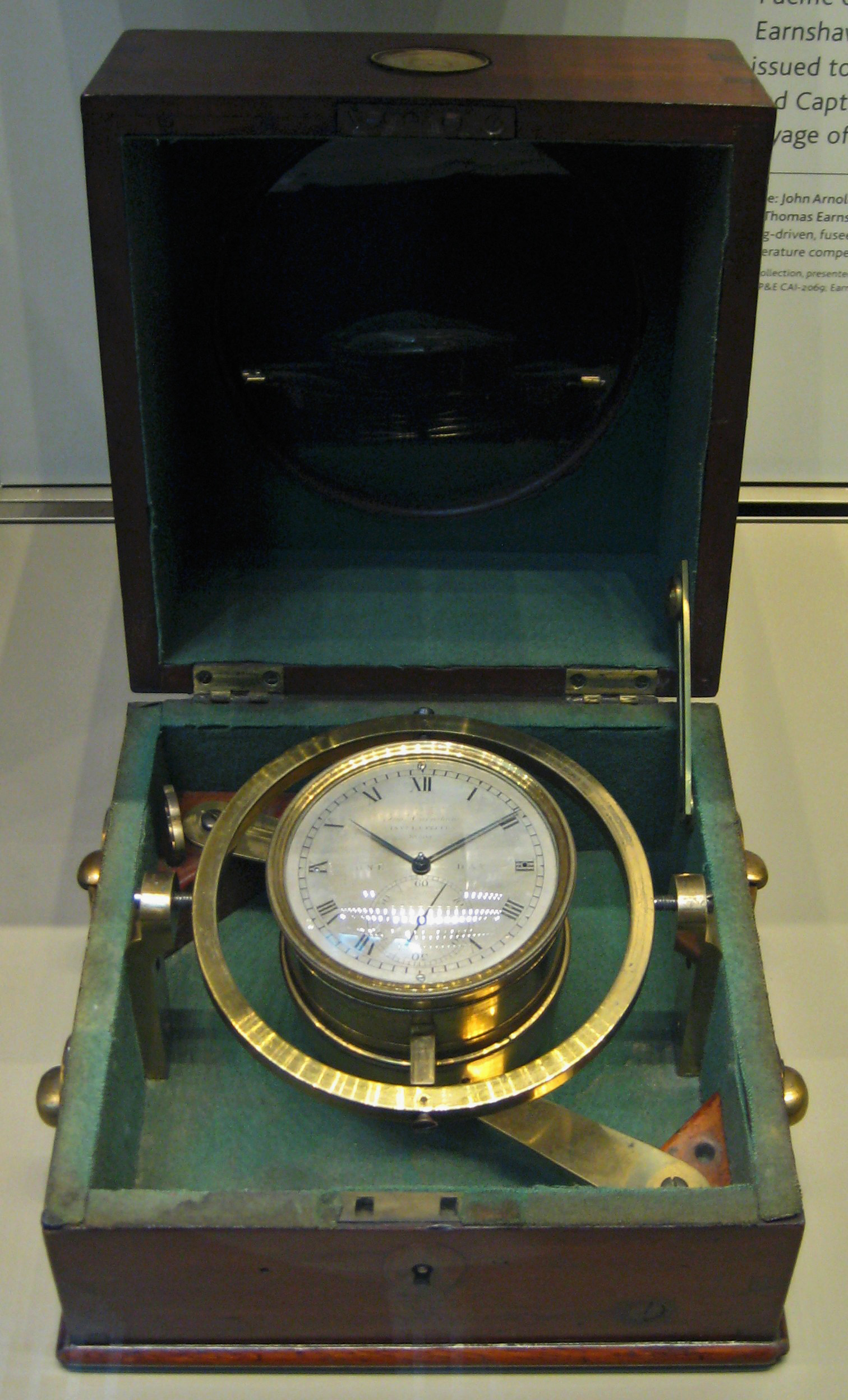
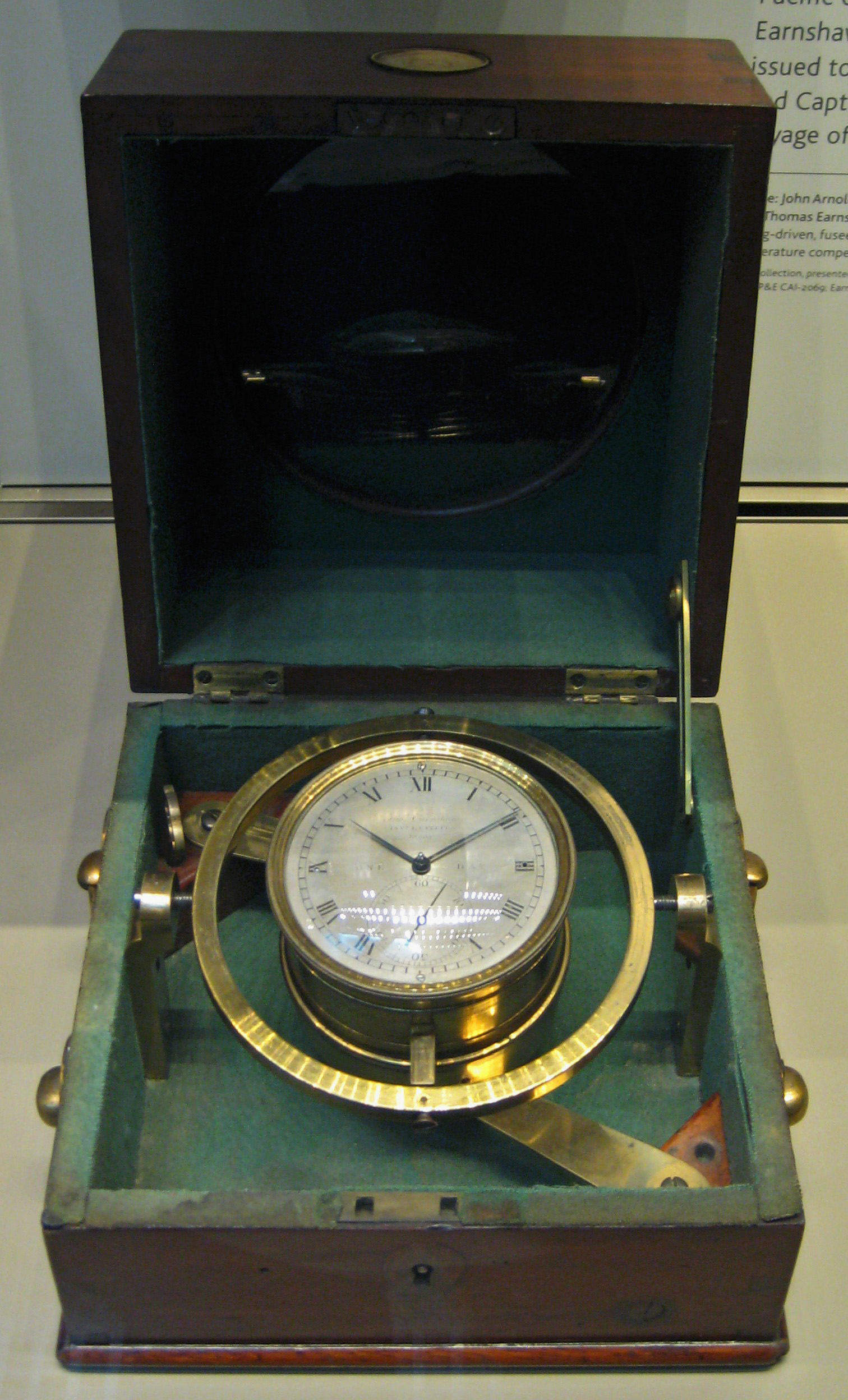
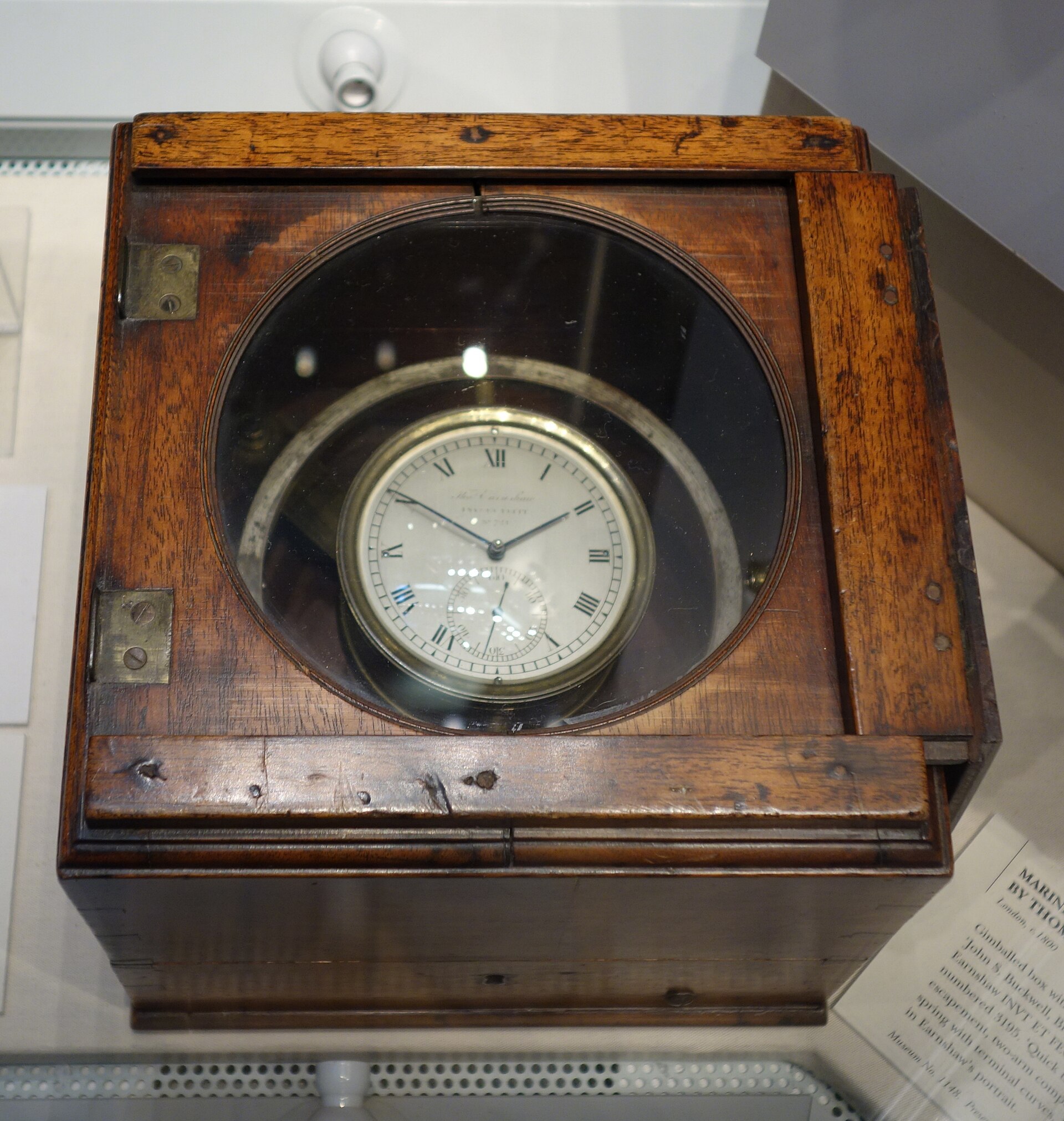
Marine Chronometer by Thomas Earnshaw
c. 1800 · Brass movement
British Museum, London
 British · 1749-1829
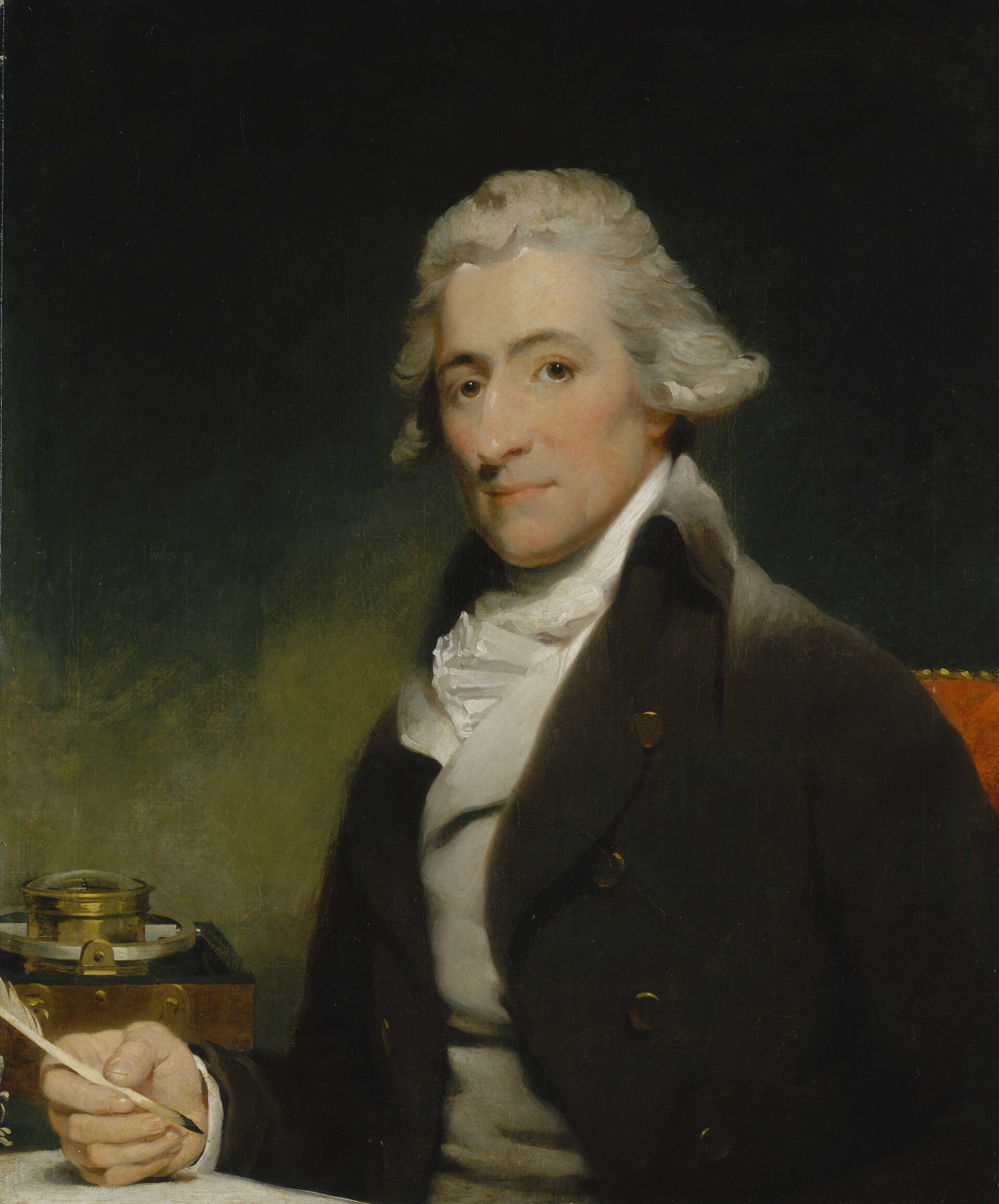
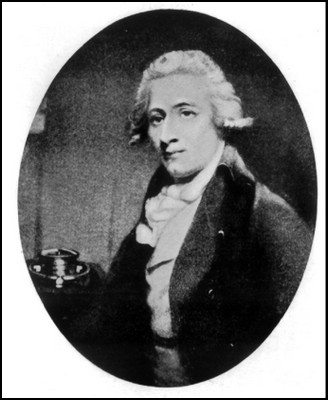
Thomas Earnshaw, oil on canvas by Martin Archer Shee, circa 1808. A half-length seated portrait, right hand resting on a table beside a standard Earnshaw-type chronometer, painted within Earnshaw's own lifetime. Held by the National Maritime Museum, Greenwich since its acquisition through the Caird Fund.
National Maritime Museum, Greenwich, London. Caird Fund| Worked as | Chronometer maker, Watchmaker |
|---|---|
| Born | 4 February 1749 · Ashton-under-Lyne, Lancashire, England |
| Died | 1 March 1829 · Chenies Street, Bedford Square, London. |
| Nationality | British |
| In this archive | 1 artwork |
| Sources | 23 cited |
| Last verified |
About this page 1 artwork in the archive · Last verified · 23 sources cited
Thomas Earnshaw did not invent the marine chronometer. John Harrison had already proved, decades before Earnshaw's own workshop existed, that a portable timekeeper could cross an ocean and still tell a captain where he was. What Earnshaw did was narrower and, in its consequences, larger: he worked out how to build that same order of accuracy into an instrument simple and cheap enough to make in quantity, and to make by dividing the labour rather than by one master's hand alone. A Kendall copy of Harrison's own design had cost the Admiralty 450 pounds. An Earnshaw box chronometer of the 1780s cost as little as 65. That gap in price, not a single invention, is why a ship like HMS Beagle could carry twenty-two chronometers in 1831 where a generation earlier a captain counted himself lucky to have one.
The standard account stops there, at the workshop's success, and skips the man who nearly did not have one. Earnshaw married before he had finished his apprenticeship, had three sons within four years, and by 1774 was facing debtors' prison. He fled to Ireland, then turned back and surrendered himself to the Fleet. He did not clear his debts and open the business that made his name until 1780, at 119 High Holborn. The same man who is credited by the Dictionary of National Biography with making precision timekeeping cheap enough for ordinary buyers spent the years just before that achievement running from his own creditors.
The single hardest thing to find on this maker is not a date or a workshop address. It is that Earnshaw's own most-discussed rival, John Arnold, had been dead for six years by the time the Board of Longitude finally split its 1805 award between Earnshaw and a man named only as "John Arnold" in the fullest surviving account of the payment - a discrepancy this record states plainly rather than smooths away, because it changes who actually collected the money Earnshaw spent the rest of his life insisting was rightfully his alone.
Apprenticed to a watchmaker at about fourteen years old, per the Dictionary of National Biography.2
Facing debtors' prison, having married before completing his apprenticeship and fathered three sons within four years; fled to Ireland, then returned and surrendered to the Fleet Prison in December, per the British Museum's own curatorial account.3
Debts cleared and a successful business established, allowing him to work on improvements to the pivoted detent escapement.3
Devises his own form of the spring detent escapement and a split-bimetallic temperature-compensation balance.13
John Arnold is granted a patent covering his own version of a spring detent escapement.13
Earnshaw's escapement receives patent protection, registered in the name of Thomas Wright, watchmaker to the King, on Earnshaw's behalf, in exchange for a 100-guinea fee and a profit share.131415
Captain William Bligh buys Earnshaw chronometer no. 1503 for 40 guineas, ahead of the second breadfruit voyage aboard HMS Providence.1
Earnshaw begins submitting timekeepers to the Board of Longitude.2
Competes again before the Board of Longitude, backed by the Astronomer Royal, Nevil Maskelyne.2
Installs the completed regulator at Armagh Observatory; purchase price 100 pounds, plus a further 100 pounds for his own travel and installation.21
The marine chronometer later numbered 509, now the subject of a separate record in this archive, is made at 119 High Holborn.3
Chronometer no. 265 outperforms a rival instrument by Josiah Emery in trial, but the Board's rating method, measured against the first month's own performance rather than an absolute standard, denies Earnshaw recognition for it.1
Matthew Flinders carries Earnshaw timekeepers E520 and E543, at 100 guineas each, on HMS Investigator's survey and circumnavigation of Australia.120
The Board of Longitude's award to Earnshaw is finally settled after prolonged argument. Two sources give 3,000 pounds to Earnshaw; a third gives 2,500 pounds to Earnshaw and 1,672 pounds to John Roger Arnold, son of the already-deceased John Arnold. The sources do not agree, and this record does not resolve the figure.1221
Publishes "Explanations of Timekeepers constructed by the Author and the late Mr. John Arnold".2
Publishes "Longitude: an Appeal to the Public, stating T. E.'s Claim to the Original Invention of the Improvements in his Timekeepers", naming the Larkins of Blackheath regulator as the best clock he ever made.2419
Chronometer no. 512, East India Company property, is issued to the Company ship Thomas Grenville and performs badly.6
On inspection of chronometer no. 512, Earnshaw states that it "cannot be depended upon"; the East India Company records its displeasure and adopts a new reporting rule for all its ships' chronometers.6
Dies at Chenies Street, Bedford Square, London, aged eighty. Buried at St Giles-in-the-Fields, Bloomsbury.222
Chronometer no. 509 serves aboard HMS Beagle's second survey voyage under Captain Robert FitzRoy, with Charles Darwin aboard; covered in detail in this archive's separate record on the object.3
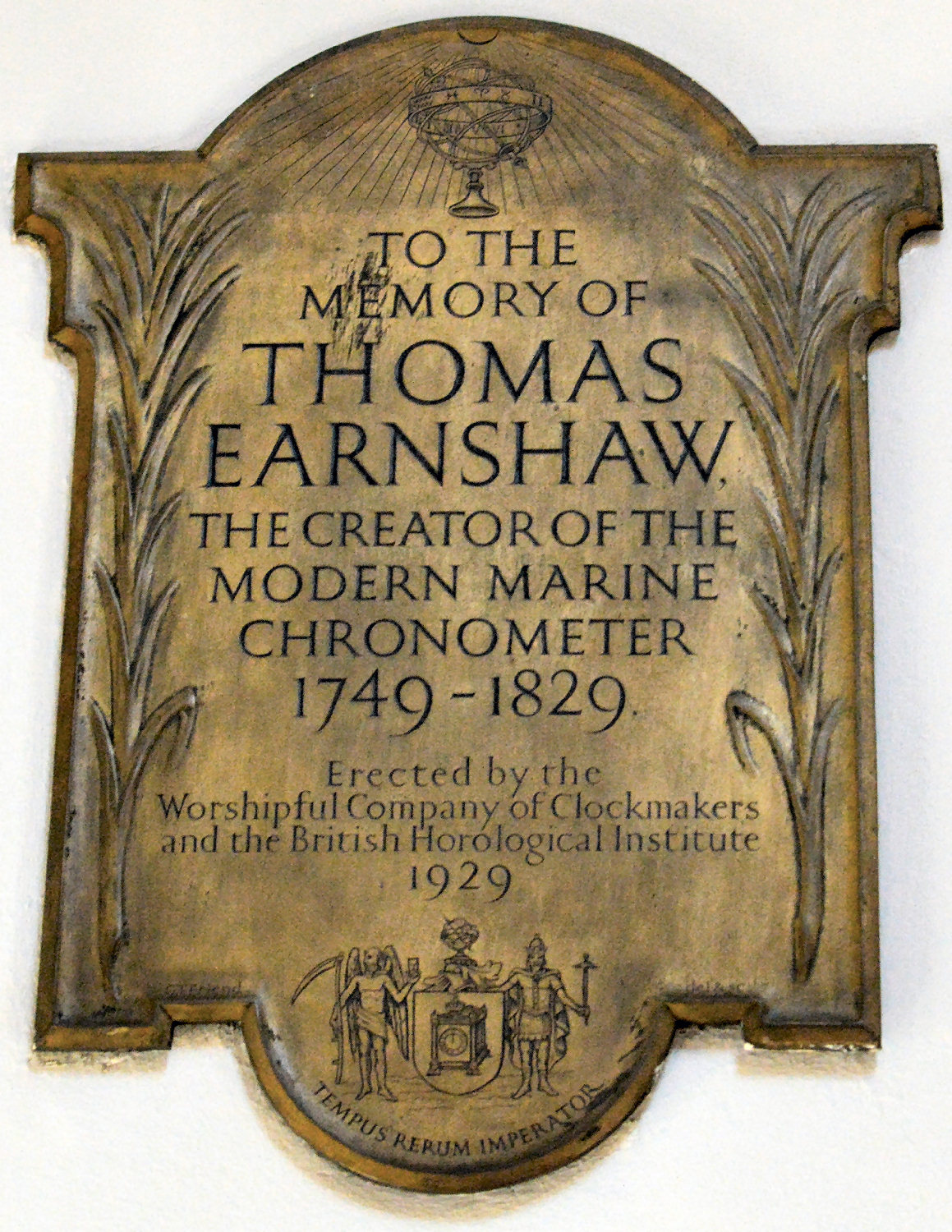
A brass memorial plaque to Earnshaw is placed at St Giles-in-the-Fields by the Worshipful Company of Clockmakers and the British Horological Institute; the exact date is given as 1929 in this record's own source list but could not be independently confirmed against the source cited.22
Chronometer no. 512 is bought by Sir James Caird from the London dealers Clowes and Jauncey for 16 pounds, its history untraceable between 1823 and this purchase.6
Chronometer E520, carried on Flinders' Investigator voyage, is bought by the Sydney Technical Museum from a private collector; its connection to the voyage is not identified until 1976.20
The British Museum acquires chronometer no. 509 with the rest of the Ilbert Collection.3
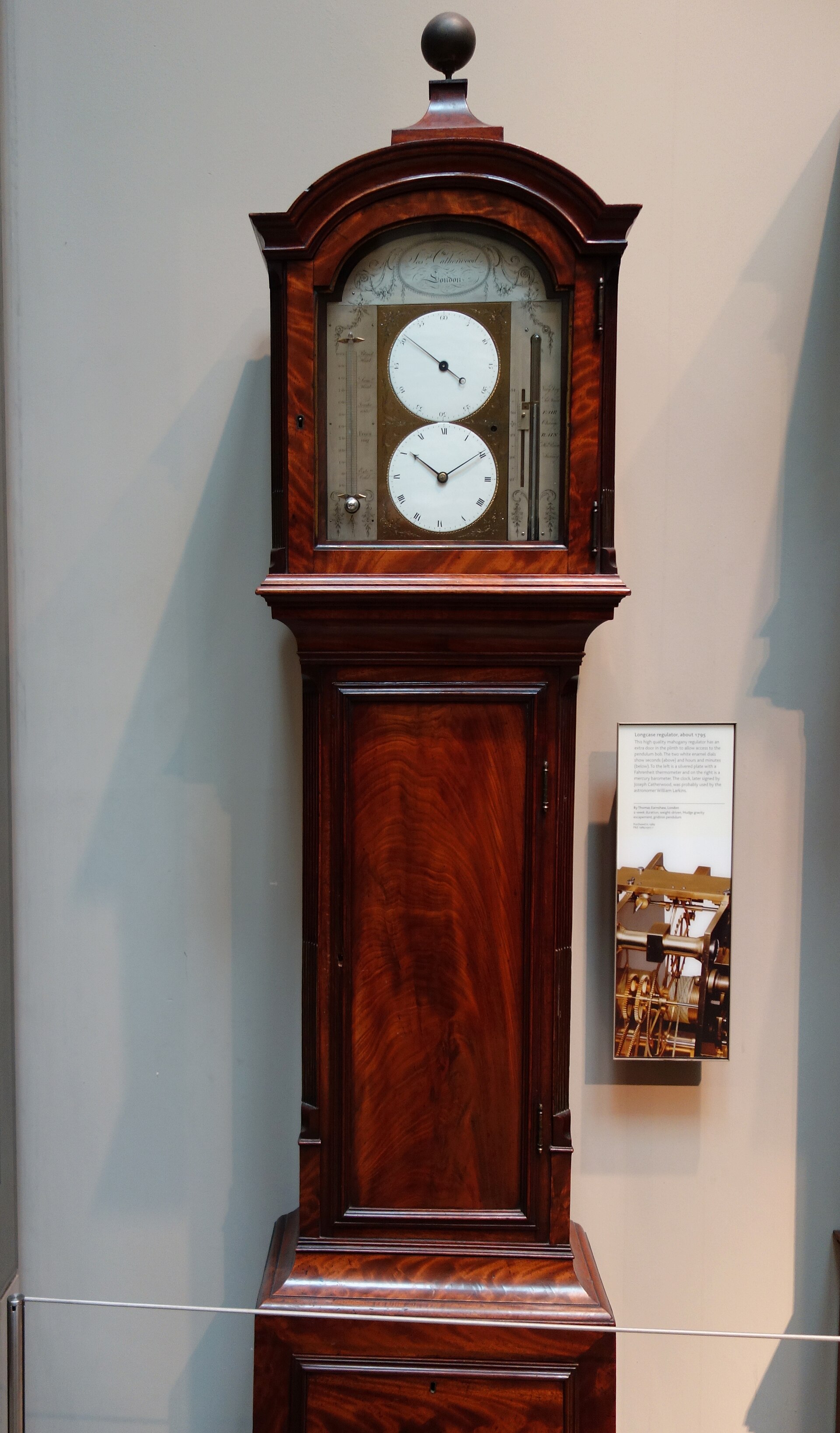
The British Museum purchases the Catherwood-signed, Earnshaw-attributed longcase regulator from the dealer Philip Whyte.4
The National Maritime Museum, Greenwich stages the exhibition "Arnold & Earnshaw, Pioneers of the Chronometer", pairing the two rivals' work.4
A surviving copy of Earnshaw's 1808 pamphlet sells at Bonhams, London, for 1,062.50 pounds including premium.19
A modern watch brand trading as Thomas Earnshaw is founded, unconnected to the historical workshop, explicitly invoking his name and reputation.23
Prices for signed Earnshaw pieces span a wide range. At the lower end of the trade, a silver-cased Earnshaw key-wind chronometer pocket watch made 2,805 pounds including premium at Bonhams in February 2023, and a lot pairing an Earnshaw movement with an unrelated Dutton movement made 2,250 pounds including premium in 2013. At the higher end, a fine gold pair-cased Earnshaw pocket chronometer from the Knowles-Brown Collection carried a Sotheby's estimate of 20,000 to 30,000 pounds in 2017, though the price it actually realized is not published in the sources consulted for this record.
Bonhams' own published results give one inclusive "sold for" figure rather than separating hammer price from buyer's premium, and this record states that plainly rather than assigning either figure to the wrong column on a guess. Documented voyage history moves value far more than signature alone: this archive's own record on chronometer no. 509 already shows a comparable Beagle-associated instrument, by a different maker, selling well into six figures once its history was established, a scale no signed Earnshaw watch examined for this record reaches on its maker's name by itself. A genuine literature item, Earnshaw's own 1808 pamphlet stating his case against Arnold, sold at Bonhams in 2011 for 1,062.50 pounds including premium, a small but real data point on how the market still prices the argument itself, not only the instruments it was fought over.
| Institution | City | Holdings | Note |
|---|---|---|---|
| British Museum | London | Marine chronometer no. 509 (the HMS Beagle chronometer, subject of a separate record in this archive) and a longcase astronomical regulator signed Catherwood but attributed to Earnshaw's own workshop. | Both on public display, Room 39, Clocks and watches. |
| Worshipful Company of Clockmakers' Museum | London | A marine chronometer of about 1800. | The Company's historic collection, now housed within the Science Museum. |
| National Maritime Museum, Royal Museums Greenwich | London | The 1808 Martin Archer Shee portrait of Earnshaw; chronometer no. 512, documenting an East India Company service failure; a model of Earnshaw's escapement. | The portrait used on this page is held here. |
| Science Museum Group | London | A gold-cased chronometer watch, no. 498, hallmarked 1807-08, and a gold-cased chronometer watch no. 728, among other Earnshaw pieces. | Collection images are licensed CC BY-NC-SA and are not reproduced in this record on that basis; described here from the Museum's own published catalogue text only. |
| Smithsonian, National Museum of American History | Washington, D.C. | A Thomas Earnshaw box chronometer. | |
| Powerhouse Museum | Sydney, Australia | Chronometer E520, carried on Matthew Flinders' Investigator voyage, 1801-1803. | Acquired 1937; its voyage history was not confirmed until 1976. |
| Armagh Observatory and Planetarium | Armagh, Northern Ireland | Two astronomical regulator clocks built by Earnshaw for the Observatory, installed 1794 and afterward. | Commissioned personally by Nevil Maskelyne. |
By the late eighteenth century the theory of the sea clock was settled.
By the late eighteenth century the theory of the sea clock was settled. John Harrison had shown, across four increasingly refined machines built between the 1730s and the 1760s, that a timekeeper could hold Greenwich time accurately enough across a long voyage for a navigator to derive longitude from the difference between local noon and the clock's reading. What Harrison had not shown was how to make a second one. His solution was a bespoke masterpiece, and Larcum Kendall's own careful copy of it, K1, cost the Admiralty 450 pounds to build.
Earnshaw's achievement was to make the same order of accuracy reproducible. By the 1780s a new, boxed Earnshaw chronometer could be had for as little as 65 pounds, and he reached that price in part by farming out the manufacture of the simpler components to other tradesmen, reserving his own and his best workers' time for the escapement, the balance and final assembly and rating. The Admiralty's own procurement habits changed to match: a scheme took hold under which a captain who bought his first chronometer privately could have the Admiralty pay for a second, on the reasoning, current by the early nineteenth century, that two chronometers barely improve on one, since a disagreement between them does not say which is wrong. Three, or in FitzRoy's case on the Beagle's second voyage, twenty-two, let a fault be found by majority disagreement instead. None of that fleet-scale redundancy was practical at Harrison's price. It was practical at Earnshaw's.
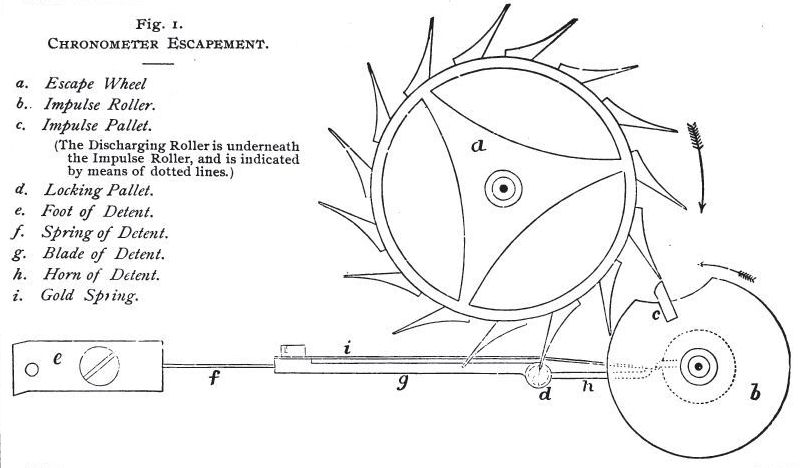
Earnshaw devised his own form of the spring detent escapement and a split-bimetallic temperature-compensation balance in the early 1780s, working to improve the pivoted detent escapement then in use.
Earnshaw devised his own form of the spring detent escapement and a split-bimetallic temperature-compensation balance in the early 1780s, working to improve the pivoted detent escapement then in use. In May 1782 John Arnold, the other leading chronometer maker of the period, was granted a patent that included his own version of a spring detent escapement. Earnshaw's escapement did not receive patent protection until February 1783, and then only in the name of Thomas Wright, watchmaker to the King, who registered the design on Earnshaw's behalf in exchange for a 100-guinea fee and a share of the profits; the punchmark recording Wright's patent was normally removed from Earnshaw's later work once his debt to Wright was repaid, and Sotheby's own specialist cataloguer records that its survival on at least one known movement is unique among catalogued examples.
Earnshaw's own account, published in 1808, is that he had shown his design to friends of Arnold's before Arnold's 1782 patent, and that Arnold's patent absorbed what he had already been shown rather than arrived at the idea independently. Arnold did not live to answer him in print: he died in 1799. Historians of horology remain divided on the underlying question. The technical distinction between the two men's escapements is real and specific: in Arnold's design the detent spring is under tension, pulling the detent away from its rest, and the full length of each escape-wheel tooth slides along the impulse pallet; in Earnshaw's, the spring is under compression, pushing the detent back to rest, and only the tip of each tooth makes contact. Earnshaw's version proved simpler to construct and to service, and it is Earnshaw's form, not Arnold's, that almost every chronometer maker had adopted as the standard by the 1830s. This record does not adjudicate who deserves the credit. It states the positions, names the men who hold them, and records that specialist opinion has not converged in the more than two centuries since.
Earnshaw submitted timekeepers to the Board of Longitude from 1791 and competed again in 1793 with the backing of the Astronomer Royal, Nevil Maskelyne.
Earnshaw submitted timekeepers to the Board of Longitude from 1791 and competed again in 1793 with the backing of the Astronomer Royal, Nevil Maskelyne. In an earlier trial, his chronometer no. 265 had outperformed a rival instrument by Josiah Emery, yet failed to win recognition because the Board's rating method measured consistency against the first month's own performance rather than absolute accuracy against a known standard. In 1805, after prolonged argument during which, by the account of the institution he had equipped, his health was nearly broken, Parliament finally granted an award. Two independent sources consulted for this record, the Dictionary of National Biography and Armagh Observatory's own institutional history, both give the figure as 3,000 pounds to Earnshaw. A separate account, in the English Wikipedia's article on Earnshaw, gives a different and unequal split: 2,500 pounds to Earnshaw and 1,672 pounds to "John Arnold's son, John Roger Arnold".
That second account matters because it names the right man. John Arnold senior had died in 1799, six years before this award, and his son John Roger Arnold had run the family firm since 1796. The Dictionary of National Biography's own wording, that the commissioners "granted him and John Arnold 3,000 pounds each", does not specify which Arnold, and Armagh Observatory's history mentions only Earnshaw's own figure without naming a co-recipient at all. This record does not resolve the amount, and does not resolve whether the DNB is using "John Arnold" loosely to mean the surviving firm. It states the disagreement and names where each figure comes from, because a maker's own dispute over money is not well served by a page that quietly picks the tidier of two numbers.
Earnshaw pressed his side of the argument in print twice.
Earnshaw pressed his side of the argument in print twice. In 1806 he published Explanations of Timekeepers constructed by the Author and the late Mr. John Arnold, a title that itself fixes a fact usually left out of the popular account: by 1806 Earnshaw was already writing of his rival in the past tense, seven years after Arnold's death, while the dispute over credit continued to be argued as though between two living competitors. In 1808 he went further, publishing Longitude: an Appeal to the Public, stating T. E.'s Claim to the Original Invention of the Improvements in his Timekeepers, a bound case, with an errata slip, for the priority of his own escapement and compensation balance over Arnold's. A copy of the 1808 pamphlet, later owned by a private collector, was sold at Bonhams in London on 22 November 2011 for 1,062.50 pounds including premium, itself a small data point on how the market still values Earnshaw's own account of the argument alongside his instruments.
The same 1808 pamphlet supplies the most human sentence Earnshaw is recorded as having written about his own work, and it is not about a chronometer at sea. Of a domestic astronomical regulator he had built for a private patron, he wrote plainly: "The best clock I ever made, was for Mr. Larkins of Blackheath."
The British Museum holds a longcase astronomical regulator, its case signed "Josph.
The British Museum holds a longcase astronomical regulator, its case signed "Josph. Catherwood London", that its own curatorial record attributes not to Catherwood but to Earnshaw. Catherwood is not known to have been anything more than a retailer, and the whole design of the movement and case, in the Museum's own words, points to Thomas Earnshaw as the maker. The dial itself carries physical evidence of the substitution: it was punched out from the back to remove an earlier name before Catherwood's was engraved in its place, and the original name can no longer be read.
A sale catalogue of 23 June 1800, listing the contents of the private observatory of the astronomer William Larkins at Blackheath, describes among its lots "an excellent transit clock, compound pendulum, barometer and thermometer within, in a handsome mahogany case, Earnshaw". The Museum's curator, David Thompson, judges it very likely, though not certain, that this is the same clock Earnshaw named in his 1808 pamphlet as the best he ever made, and that the regulator's composite dial, with its integrated thermometer and mercury barometer, is the only one of its kind known to survive. If the identification is right, the object Earnshaw himself rated as his finest work reached the British Museum carrying, for an unknown stretch of its history, a different maker's name than his own. That is a genuine instance of the trade obscuring a maker's own authorship, on this maker's own account of his best piece, and this record treats the identification exactly as cautiously as the Museum that owns the object does.
Earnshaw's chronometers equipped named Royal Navy and merchant voyages across four decades.
Earnshaw's chronometers equipped named Royal Navy and merchant voyages across four decades. Captain William Bligh bought chronometer no. 1503 for 40 guineas in July 1791, ahead of his second breadfruit expedition to the Pacific and the Caribbean aboard HMS Providence, the voyage that succeeded where his first, aboard HMS Bounty, had ended in mutiny. Matthew Flinders carried two Earnshaw timekeepers, E520 and E543, at 100 guineas each, on HMS Investigator's 1801 to 1803 survey and circumnavigation of Australia, and judged E520 in his own published account "this excellent timekeeper", the only one of his complement still working reliably by the voyage's end. After Flinders was detained by the French at Mauritius on his return, his sailing master, Captain Aken, kept custody of the chronometers and brought E520 back to England in 1805 for return to Greenwich. Its later history went dark until 1937, when the Sydney Technical Museum bought it from a private collector; the connection to Flinders' own voyage was not established until 1976. This publication's own existing record on chronometer no. 509, in the British Museum, covers its four-decade Royal Navy service in detail, including its issue to HMS Beagle in December 1831 for Robert FitzRoy's survey voyage with Charles Darwin aboard, and is not repeated here.
Not every posting ended in credit to the maker. Chronometer no. 512, now at the National Maritime Museum, Greenwich, was East India Company property, issued in 1821 to the Company ship Thomas Grenville under Captain Manning. It performed badly. On the ship's return, Manning was reprimanded for failing to report the fault, and on inspection in 1823 Earnshaw himself, examining his own instrument, stated plainly that it "...cannot be depended upon". The Company's Committee of Shipping recorded that they were "highly displeased" at the delay in reporting the problem and passed a new standing rule requiring every captain to report on his chronometers' performance at the end of each voyage. The museum that now owns the instrument preserves the admission rather than the more comfortable version of the story, and so does this record.
Earnshaw's work reached beyond the sea. He is credited with improving the transit clock at the Royal Observatory, Greenwich, the same institution that would later track chronometer no.
Earnshaw's work reached beyond the sea. He is credited with improving the transit clock at the Royal Observatory, Greenwich, the same institution that would later track chronometer no. 509 by serial number through every one of its postings. When the Astronomer Royal, Nevil Maskelyne, first asked him to build a precision astronomical regulator for the newly founded Armagh Observatory, Earnshaw is recorded as having answered that he did not even know how many wheels went into one; he was, at that point, known chiefly as a watchmaker rather than a clockmaker. He built it anyway. Earnshaw himself installed it at Armagh in 1794, for a purchase price of 100 pounds plus a further 100 pounds to cover his own travel and the installation; the source consulted for this record does not document a prior trial period at Greenwich or give a specific installation date. It incorporated his own escapement design and an airtight case built to keep out dust and draughts, and the Observatory's own director, Thomas Romney Robinson, later judged it the most accurate regulator clock in the world. The Observatory bought a second Earnshaw clock as well, run at sidereal rate alongside its equatorial telescope. Both a wristwatch maker's habitual caution and an institution's own historical record agree that Earnshaw's reputation was not built on the sea alone.
Signed, numbered Earnshaw pieces move through the trade regularly, and the figures span a wide range depending on completeness, casework and documented history.
Signed, numbered Earnshaw pieces move through the trade regularly, and the figures span a wide range depending on completeness, casework and documented history. At the modest end, Bonhams sold a silver-cased Earnshaw key-wind chronometer pocket watch, no. 3346/757, on 22 February 2023 for 2,805 pounds including premium, and a lot combining an Earnshaw chronometer movement, no. 534, with an unrelated cylinder movement by William Dutton and Sons for 2,250 pounds including premium on 11 June 2013. Sotheby's offered a fine gold pair-cased Earnshaw pocket chronometer of 1801, no. 626/3069, from the Knowles-Brown Collection in its 2017 George Daniels sale with an estimate of 20,000 to 30,000 pounds; the sources consulted for this record do not publish the price it actually made, and this record does not guess at one.
Bonhams' own published results for the lots above give a single inclusive "sold for" figure rather than a hammer price and a separate premium, and this record states that plainly rather than assigning either figure to the wrong column. Where a documented voyage or a named institution attaches to an instrument, value moves sharply: this publication's own record on chronometer no. 509 already establishes that a Beagle-associated instrument by a different maker sold well into six figures once its history was established, a scale no signed Earnshaw watch or movement examined for this record approaches on its signature alone.
No source consulted for this record documents an outright forged Earnshaw signature or a chronometer built to deceive as his work.
No source consulted for this record documents an outright forged Earnshaw signature or a chronometer built to deceive as his work. The specific, catalogued risk in the surviving corpus is a quieter one: a genuine movement rehoused, at some later date, in casework it was not made for. Sotheby's 2004 sale of the Time Museum collection catalogued exactly such a piece: a pocket chronometer movement of about 1783, carrying the Wright's patent punchmark from the same arrangement that got Earnshaw's escapement its first patent protection, housed in plain silver inner and outer cases hallmarked London 1805, twenty-two years after the movement itself was made. The cataloguer's own note observed that the punchmark survives on this example almost uniquely among known Earnshaw watches, since it was normally removed from later work once the debt to Thomas Wright was repaid. Nothing about the piece was presented as fraudulent; it was catalogued exactly as what it is, an authentic early movement in a later case. That is precisely the pattern the wider antique-chronometer trade warns buyers to check for on any instrument of this age and value, and this is the one specific, sourced instance of it found for this record.
Earnshaw died at his home in Chenies Street, Bedford Square, on 1 March 1829, aged eighty, and was buried at St Giles-in-the-Fields in Bloomsbury.
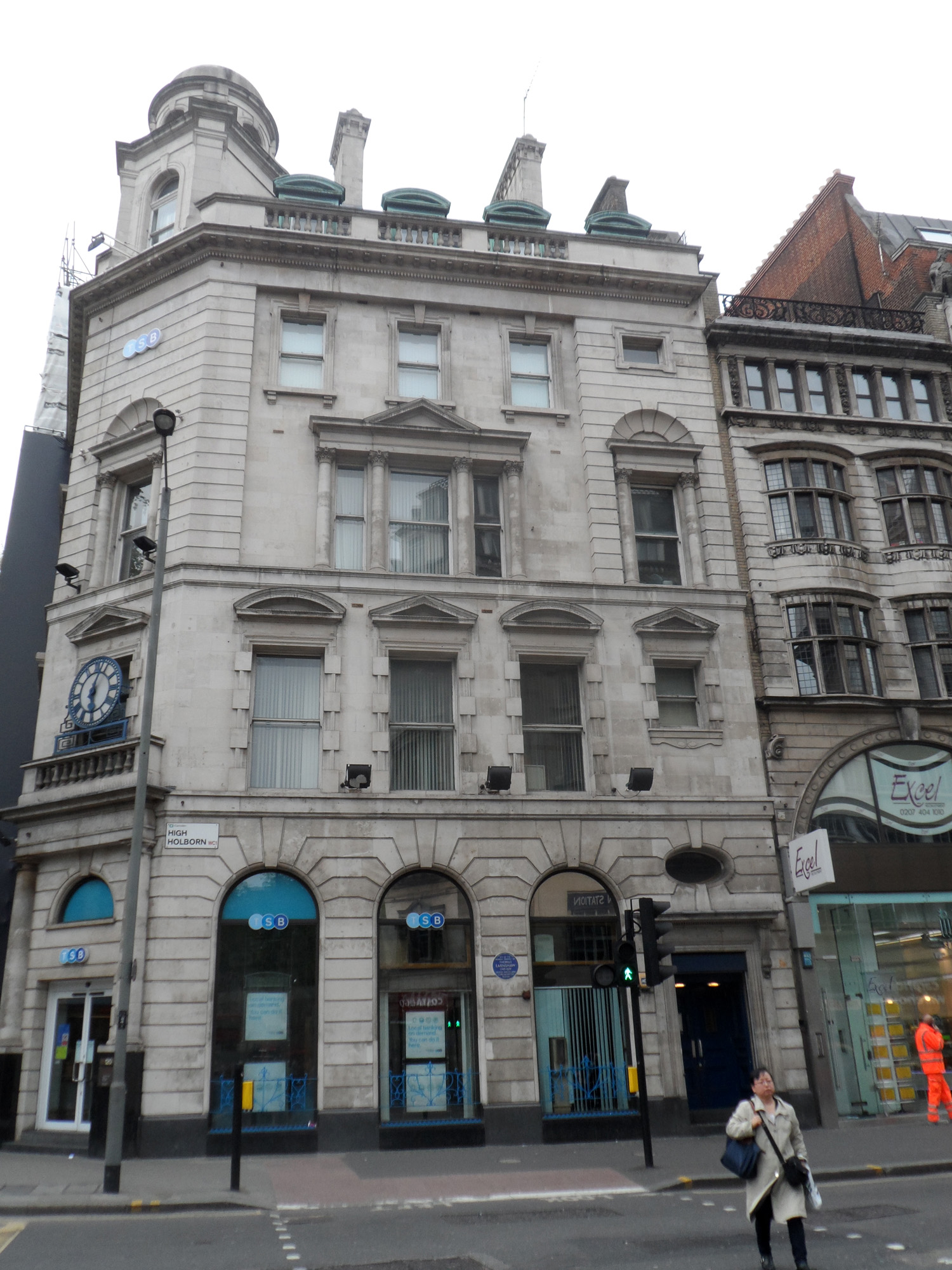
Earnshaw died at his home in Chenies Street, Bedford Square, on 1 March 1829, aged eighty, and was buried at St Giles-in-the-Fields in Bloomsbury. No source consulted for this record documents a successor firm carrying his name forward, in contrast to Arnold's business, which continued under his son as Arnold and Dent and went on servicing Navy chronometers, including no. 509 itself, for decades after both founders were dead. The Worshipful Company of Clockmakers and the British Horological Institute placed a brass memorial plaque to him at St Giles-in-the-Fields, a date of 1929 for it recorded in this record's own source list though not independently confirmed against a source documenting this specific object, and the site of his Holborn workshop, opposite the modern entrance to Holborn Underground station, is separately marked today by a London County Council plaque.
The name itself outlived any continuation of the actual business. A watch brand trading as Thomas Earnshaw, founded in 2012 and unconnected to the historical workshop or to any documented descendant of it, now sells accessible mechanical watches, describing itself on its own website as named after "the legendary watchmaker whose timepieces helped guide Charles Darwin's voyage around the world" and inspired by the "Father of the Modern Chronometer". The description is not inaccurate as a piece of marketing. It is worth separating clearly from the eighteenth-century maker's own workshop and instruments, precisely because the two are otherwise easy for a search engine, and a careless reader, to run together.
Chronometer maker; Watchmaker. 1749-1829.
Born 4 February 1749, Ashton-under-Lyne, Lancashire, England; died 1 March 1829, Chenies Street, Bedford Square, London. Buried at St Giles-in-the-Fields, Bloomsbury.
A pocket chronometer movement of about 1783, carrying the Wright's patent punchmark, rehoused in plain silver inner and outer cases hallmarked London 1805. Sold by Sotheby's in its 2004 Time Museum sale as a catalogued, honestly described example of an authentic Earnshaw movement in later casework, twenty-two years newer than the movement itself. The punchmark, from the arrangement under which Thomas Wright held Earnshaw's first patent, was normally removed from Earnshaw's later work once his debt to Wright was repaid, which the cataloguer states makes its survival on this particular movement unique among known examples.
British Museum (London); Worshipful Company of Clockmakers' Museum (London); National Maritime Museum, Royal Museums Greenwich (London); Science Museum Group (London); Smithsonian, National Museum of American History (Washington, D.C.); Powerhouse Museum (Sydney, Australia).
Prices for signed Earnshaw pieces span a wide range. At the lower end of the trade, a silver-cased Earnshaw key-wind chronometer pocket watch made 2,805 pounds including premium at Bonhams in February 2023, and a lot pairing an Earnshaw movement with an unrelated Dutton movement made 2,250 pounds including premium in 2013.
Did the Board of Longitude's 1805 award actually go to John Arnold himself, who had been dead six years, or to his son and successor John Roger Arnold? The Dictionary of National Biography and Armagh Observatory's own account both give the figure as 3,000 pounds to Earnshaw without naming a co-recipient clearly; a separate account gives Earnshaw 2,500 pounds and names John Roger Arnold as receiving 1,672 pounds.
Last verified
One artwork and its story every Tuesday, with the picture: who owned it, what it made, and what closes soon in the exhibition calendar. No promotion, and nothing we cannot cite.
We send one email to confirm the address and keep nothing else. Every letter carries a one-click unsubscribe. How we handle your data.


