The Hope Diamond
c. 1668 · Type IIb boron-bearing diamond
Smithsonian Institution
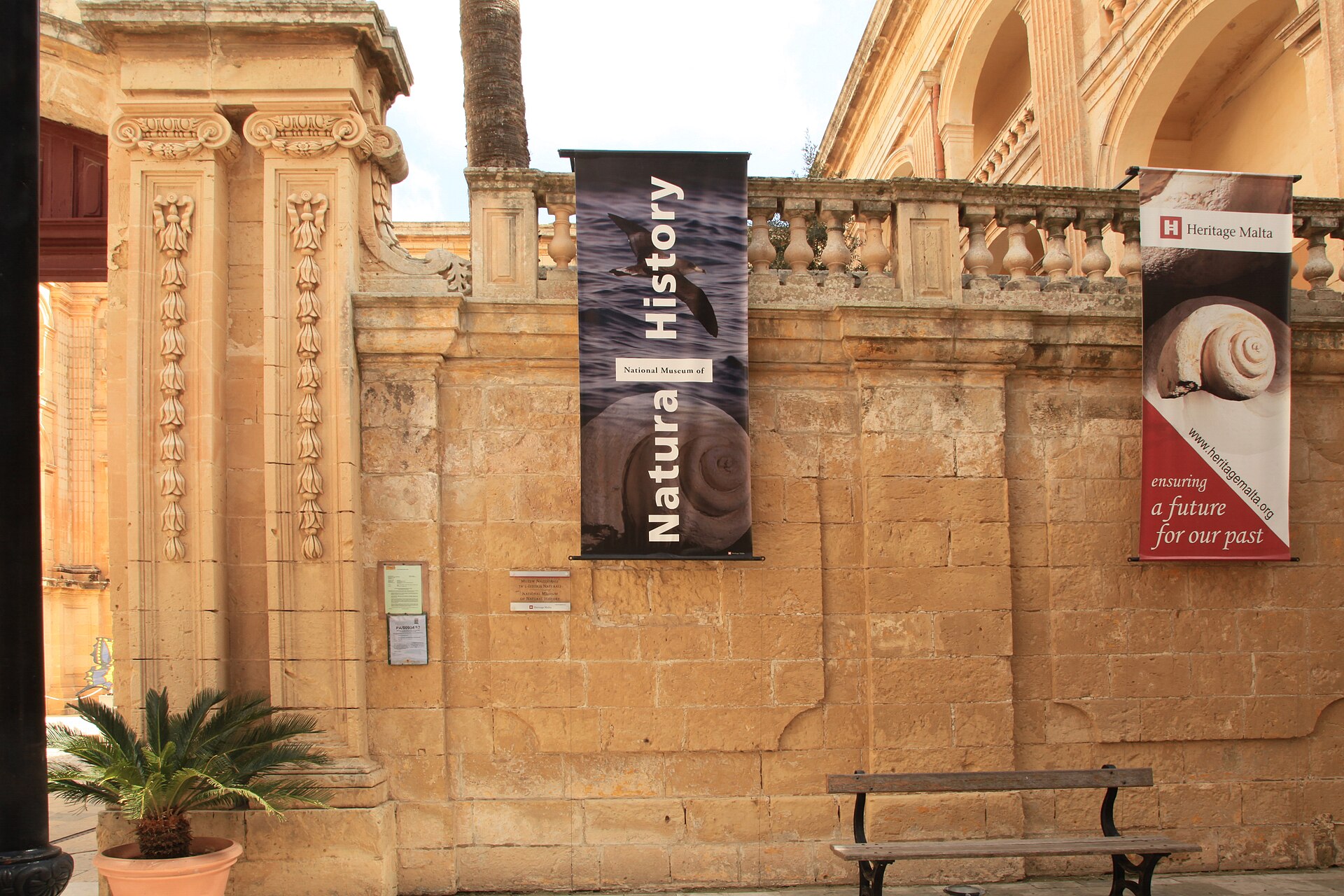
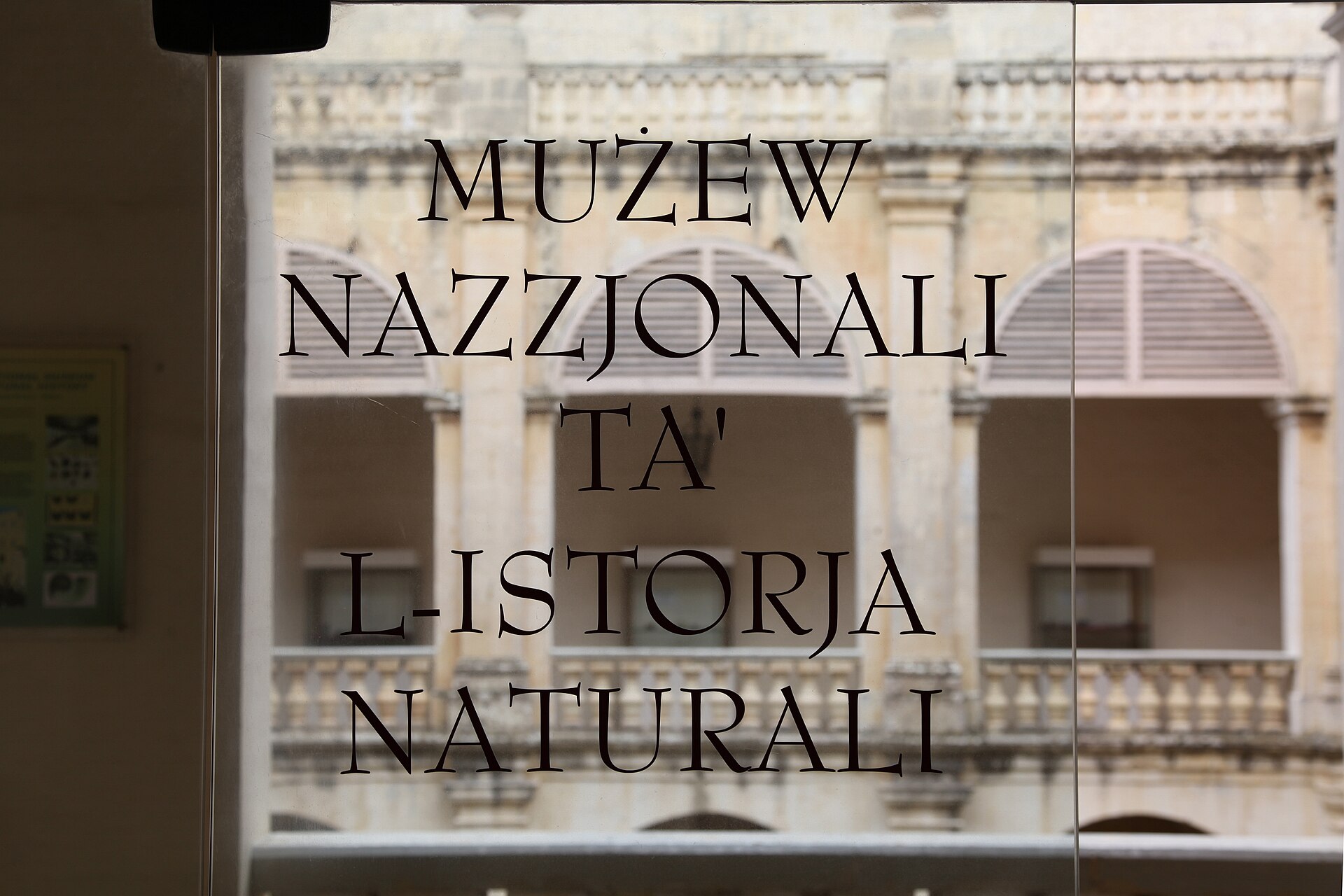
The courtyard entrance of Vilhena Palace in Mdina, home to the National Museum of Natural History since 1973, with a Heritage Malta banner reading Natural History National Museum of.
Frank Vincentz · CC BY-SA 3.0Museum · Muzew Nazzjonali tal-Istorja Naturali · Founded 1973
Open, admission and hours confirmed 1 September 2026 · 12 sources
The museum's declared strength is breadth rather than a single marquee object: more than 10,000 mineral and geological items, around 12,000 bird and mammal specimens, and hundreds of thousands of molluscs, insects and fossils, with particular depth in the endemic and indigenous flora and fauna of the Maltese archipelago and in the historic Lewis Mizzi mineral collection. Its most famous single object, an Apollo 17 goodwill moon rock, was stolen in 2004 and is no longer part of the collection.
| Local name | Muzew Nazzjonali tal-Istorja Naturali |
|---|---|
| Kind | Museum |
| Founded | 1973 |
| City and country |  Mdina, Malta Mdina, Malta |
| Address | National Museum of Natural History, St. Publius Square, Mdina, MDN1011, Malta |
| Website | heritagemalta.mt/explore/national-museum-of-natural-history |
| Status | Open, confirmed |
| Record last verified |
Prices and hours change. We take them from the institution's own pages and print the day we read them, and you can check the current position at the source we used. Confirm before you travel.
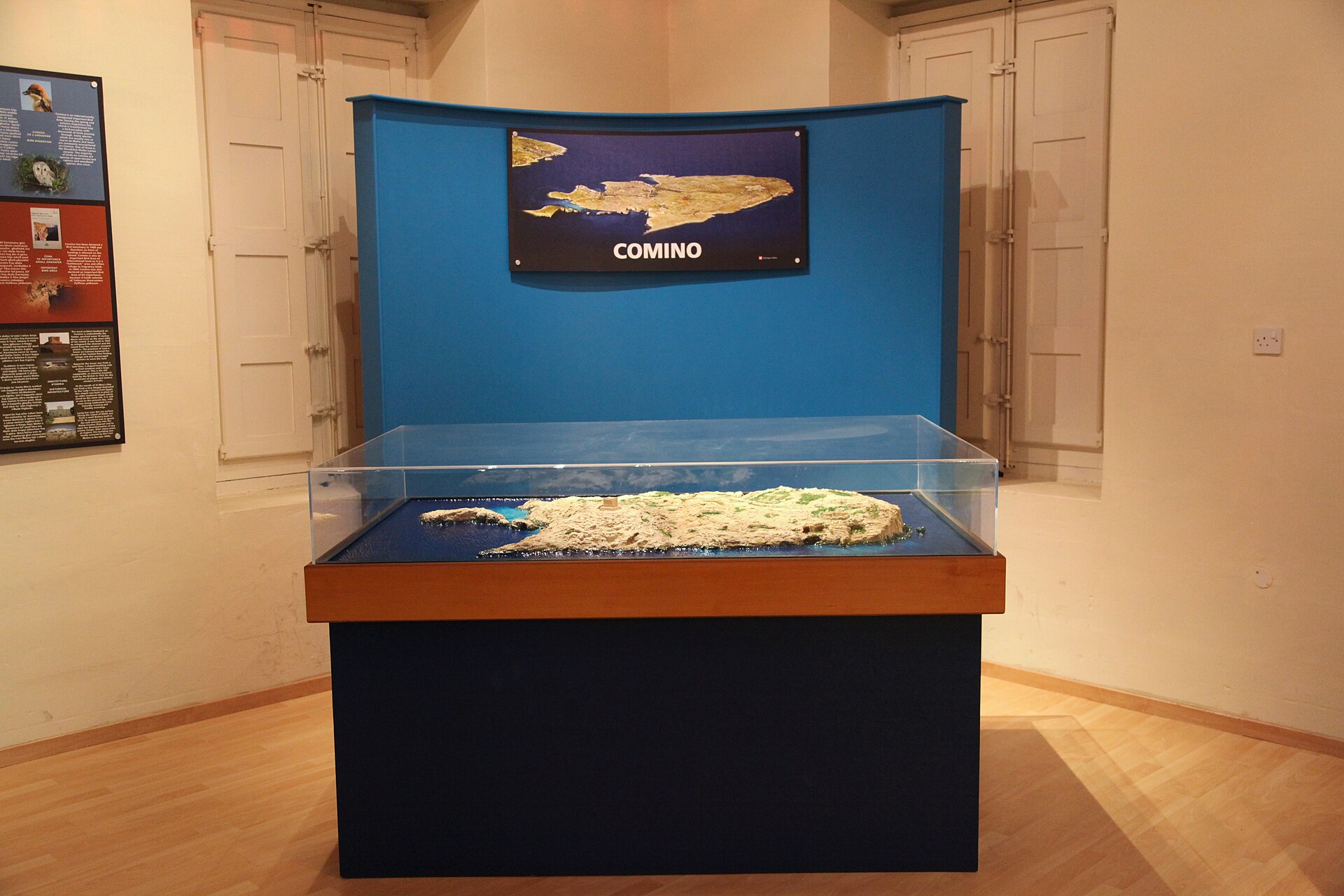
A hall named for ornithologist Joe Sultana, examining the ecology of Malta's uninhabited satellite islets: Filfla, Fungus Rock, St Paul's Islands and Comino, including scale models of the islands.
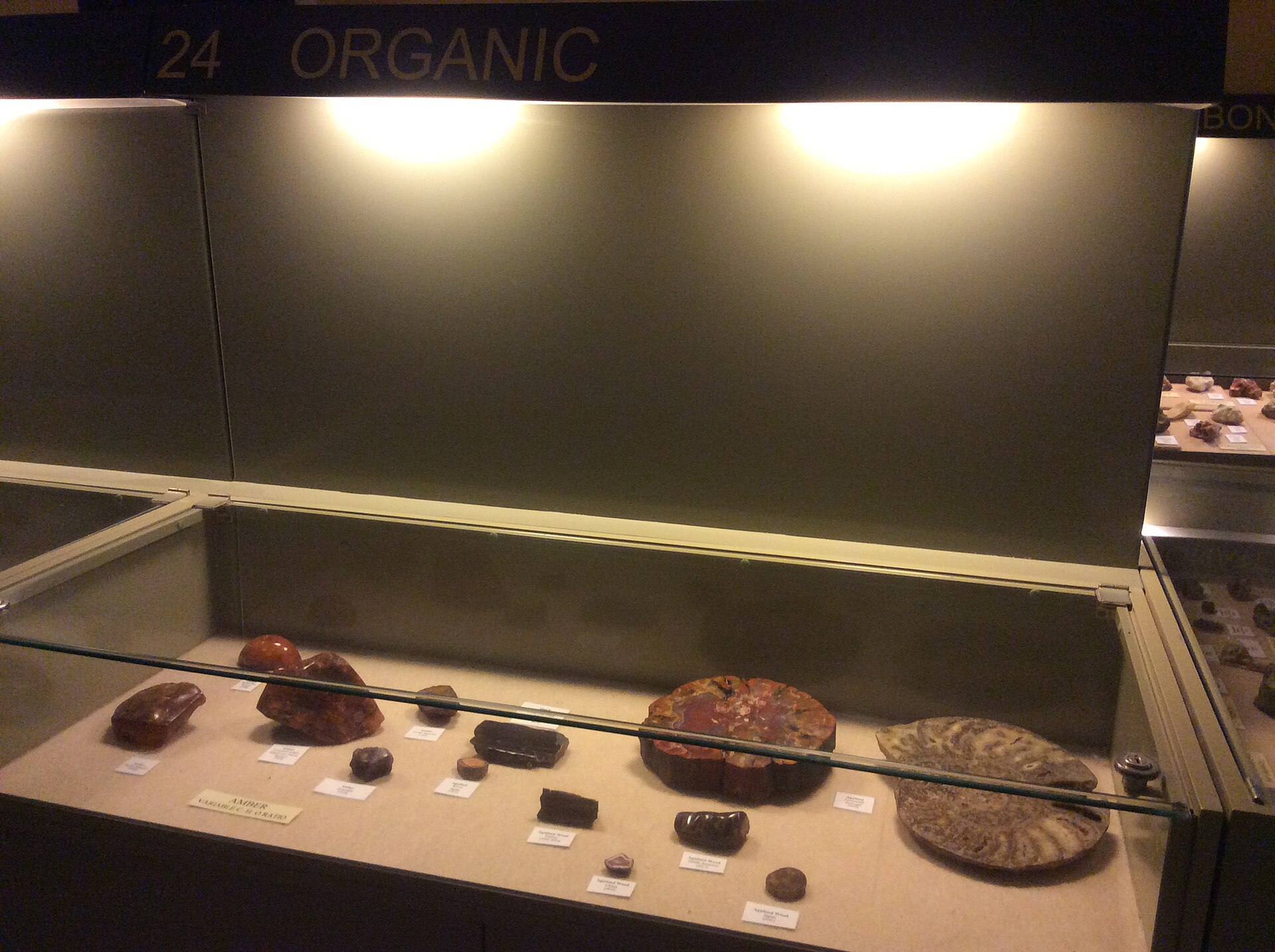
Displays on Maltese geology built in large part around the historic mineralogical collection of Lewis Mizzi, covering rock and mineral specimens, their formation and composition.
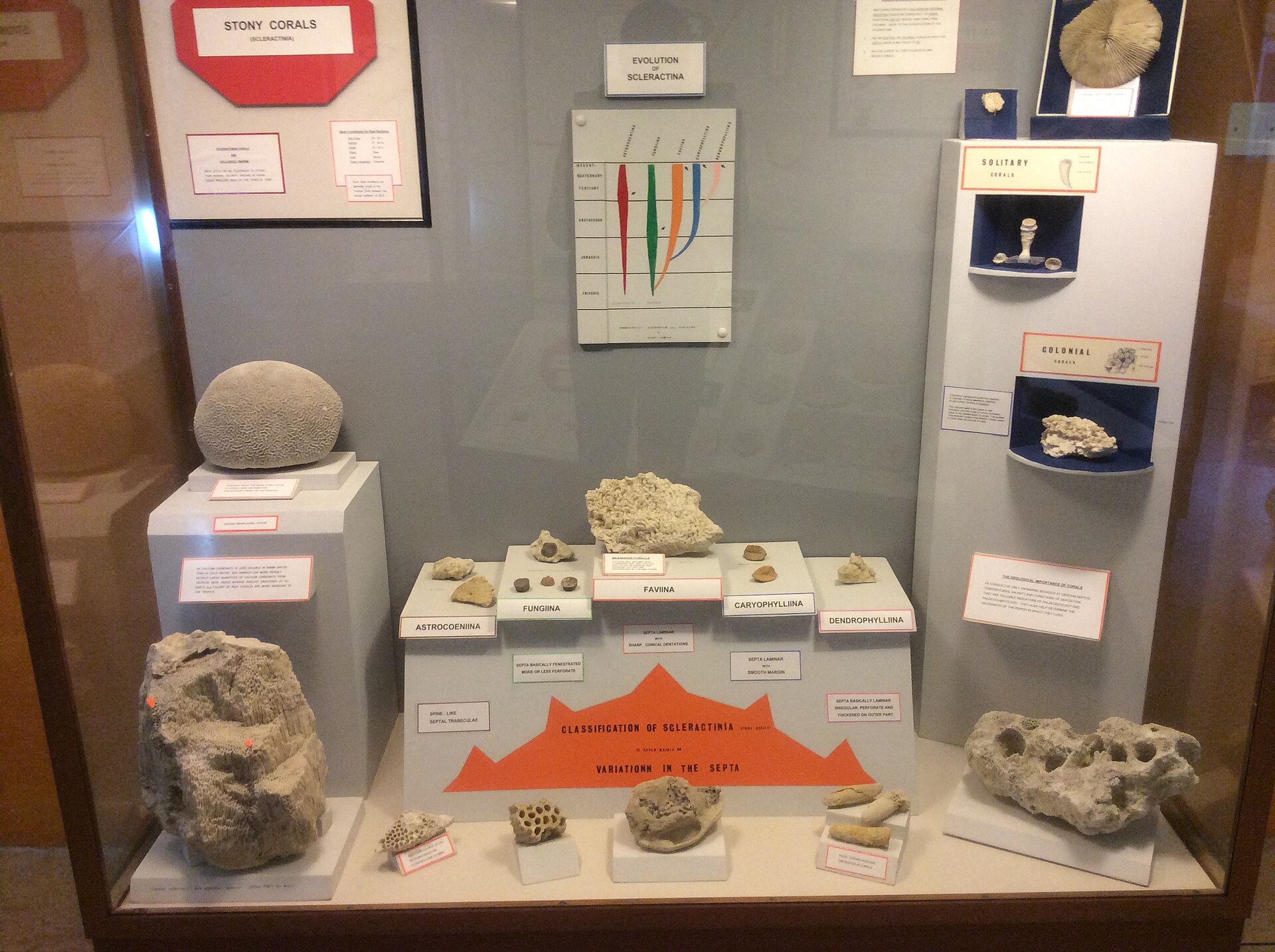
Cases of fossil material from the Maltese islands, including fossil corals and other invertebrate remains, with interpretive panels on preservation and classification.
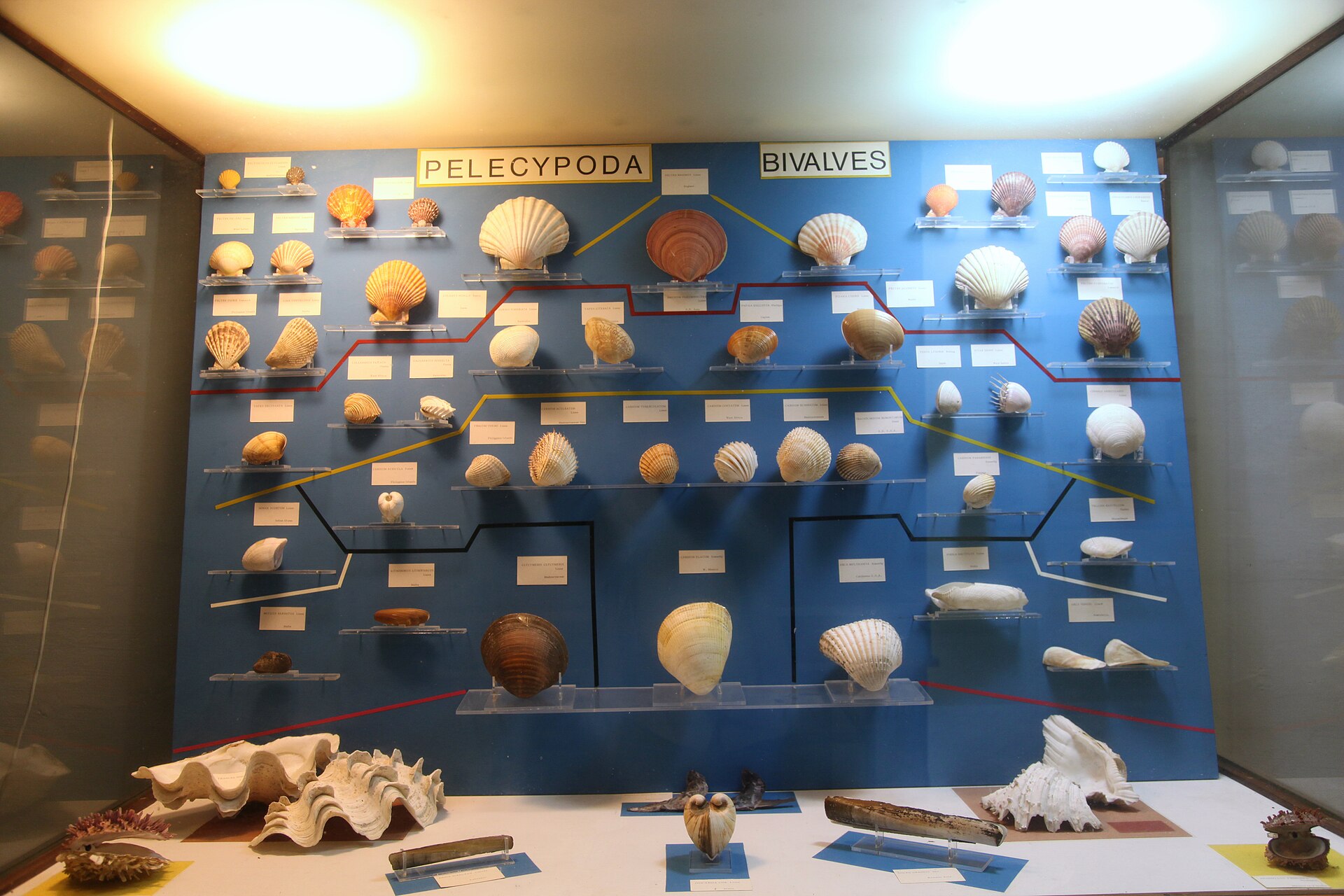
A taxonomic display of shells and bivalves (Pelecypoda), part of the museum's holdings of hundreds of thousands of mollusc specimens.
A hall named after Giuseppe Despott, the first Maltese curator of natural history, presenting global bird diversity through systematic classification alongside the museum's collection of over 12,000 bird and mammal specimens.
The core of the museum's geology and minerals hall, one of the few dedicated mineralogical displays on the Maltese islands10
Scale models and ecological displays of Malta's satellite islets Filfla, Fungus Rock, St Paul's Islands and Comino, places most visitors never set foot on2
A systematic global bird collection built on the foundational work of Malta's first native natural history curator2
A pea-sized lunar sample from the Taurus-Littrow valley, gifted as a goodwill token and stolen from its display case on 18 May 2004; it has never been recovered9
An 18th-century Baroque palace that was a cholera hospital, a British military sanatorium and a tuberculosis clinic before it became a museum2
More than 10,000 mineral and geological items, some 12,000 bird and mammal specimens, and hundreds of thousands of molluscs, insects and fossils2
A peer-reviewed, open-access journal carrying the museum's own research on Maltese biology and palaeontology, freely downloadable from the museum's site2
The National Museum of Natural History occupies Vilhena Palace, an 18th-century Baroque building at St. Publius Square in Mdina, immediately inside the city's Main Gate. Grand Master Antonio Manoel de Vilhena commissioned the palace in 1724, and it was designed by the French architect Charles Francois de Mondion in the Parisian Baroque style, a deliberate substitution of the medieval university building that had previously stood on the site.
The palace did not become a museum until long after it was built. During the 1837 cholera outbreak it served as a temporary hospital. From 1860 it was used as a sanatorium for British military personnel stationed on the island. From then until January 1956 it operated as a dedicated tuberculosis clinic. Only on 22 June 1973 was the building officially inaugurated as the National Museum of Natural History and opened to the public, a role it has held for more than fifty years under the administration of Heritage Malta, the state agency responsible for Malta's national museums and heritage sites.
That layered history is still legible in the building. The front courtyard, reached through a wide wooden gate kept open during visiting hours, leads visitors past a display on the timeline of human occupation of the Maltese Islands before they reach the reception desk, itself built with a wheelchair-height section and lit by a mixture of natural and recessed lighting.
The museum's exhibition halls sit in two parts of the building. The North Wing, facing the reception area, holds three floors of galleries connected by a 52-step staircase; the central museum building has a separate first-floor hall reached by its own 22-step staircase. The museum's stated mandate is the acquisition, curation and conservation of natural history specimens, with particular emphasis on the flora and fauna of the Maltese archipelago, and its halls are organised around that mandate rather than around a single narrative thread.
Several halls carry the names of the people who built Malta's natural history record. The Joe Sultana Hall, named for the Maltese ornithologist, is devoted to the ecology of the islands' uninhabited satellite islets: Filfla, Fungus Rock, St Paul's Islands and Comino. It uses scale models, including a detailed relief model of Comino set against a wall panel and lightbox, to put the geography of places most visitors will never land on into physical form. The ornithology hall is named after Giuseppe Despott, described by the museum as the first Maltese curator of natural history, and sets Malta's resident and migratory bird life in a global system of classification. A further hall is built substantially around the historic mineralogical collection of Lewis Mizzi, covering the rocks and minerals of the Maltese archipelago.
Beyond the named halls, the museum's cabinets cover palaeontology, with cases of fossil material including fossil corals and interpretive panels on how such specimens preserve and how they are classified; and marine life, with a wall-mounted taxonomic display of shells arranged by family, alongside separate holdings of insects, echinoderms, taxidermied birds, mammals, reptiles and fish. Heritage Malta states the collection as a whole runs to more than 10,000 mineral and geological items, around 12,000 specimens of birds and mammals, and hundreds of thousands of individual molluscs, insects and fossils, a scale that is easy to underestimate from the museum's modest footprint. A lecture hall on the ground floor of the North Wing hosts temporary exhibitions and public lectures by the museum's own curatorial staff and visiting speakers, and a children's room on the second floor of the same wing is available to groups by prior arrangement.
In 1973, the same year the museum opened, the administration of President Richard Nixon distributed fragments of lunar material collected during the Apollo missions as goodwill gifts to nations around the world; Malta's share was a pea-sized fragment from the Taurus-Littrow valley, sampled during Apollo 17, embedded in a clear acrylic ball and displayed alongside a Maltese flag that had itself travelled to the Moon with the astronauts.
On 18 May 2004, the rock was stolen. According to the Malta Independent, the display case was present and intact at a 9am inspection and empty within five hours; whoever forced the case open left the accompanying flag untouched. Pierre Cassar, then Heritage Malta's public programmes manager, told the paper that security at the museum was 'not lax but is certainly insufficient due to a shortage of resources and funds': there were no closed-circuit cameras, and although some thirty visitors had passed through that day, no visitor log had been kept. The Christian Science Monitor's reporting placed the theft in a wider pattern, quoting a retired NASA investigator's estimate that as many as half of the 135 Apollo goodwill rocks distributed worldwide may have been stolen, lost, or left vulnerable to theft in under-resourced institutions. Contemporary press estimates, citing the Associated Press, valued Malta's rock at around five million US dollars, making it one of the largest-valued thefts recorded on the islands. It has never been recovered.
The museum is not only a display space. Heritage Malta describes it as a centre of active research and public engagement, sustained through fieldwork, public lectures, temporary exhibitions and scientific outreach, and it functions as a resource for local and foreign researchers who use its specimens as study material. The museum publishes the Bulletin of the National Museum of Natural History, Malta, a peer-reviewed, open-access periodical, with several volumes freely downloadable from the museum's own website, a route by which its curatorial research on Maltese biology and palaeontology reaches the wider scientific community rather than staying in-house.
The building has also, on occasion, hosted work well outside its usual remit. In the closing months of 2018 it took part in Constellation Malta, a contemporary art programme curated by Rosa Martinez, which placed a performance piece by Marina Abramovic and a photography exhibition connected to the Malta Fancy Poultry and Pigeon Club inside a museum otherwise organised around static natural history cabinets, a juxtaposition of a 250-year-old palace, a natural history collection assembled since 1973, and work made the same year visitors walked through it.
Day to day, the museum's facilities are more modest: a reception desk staffed continuously during opening hours by multilingual personnel trained in customer care and first aid, free Wi-Fi throughout the building, and a gift shop selling books, jewellery and site-specific souvenirs alongside the museum's own guidebook, offered at a discount to ticket holders.
The museum sits immediately to the right on entering Mdina through the Main Gate, at St. Publius Square. The nearest public bus stop is about 120 metres away, a taxi stand is a short walk further, and the North Route of Malta's hop-on hop-off bus service stops near the Main Gate. Private cars cannot enter Mdina itself without a permit from the Mdina Local Council, but a free public car park sits just outside the Main Gate, with further parking in the Mdina Ditch and opposite Howard Gardens.
From March to December the museum opens Tuesday to Sunday, 09:00 to 17:00. In January and February it opens on Tuesdays and from Thursday to Sunday in the same hours, which means it is closed on Wednesdays during those two months in addition to its standing Monday closure. Like all Heritage Malta sites, it is closed on 24, 25 and 31 December, on 1 January, and on Good Friday, and last admission everywhere in the Heritage Malta network is 30 minutes before closing.
Access for visitors with mobility impairments is partial. The ground floor, including the reception, ticketing area and gift shop, has no barriers and is reached through a wide gate and a 172cm glass door, and a wheelchair-accessible toilet is available on the ground floor. The exhibition halls above it are a different matter: the North Wing's three upper floors are reached only by a 52-step staircase, and the central building's first-floor hall by a separate 22-step staircase, so a visitor who cannot climb stairs will see the ground-floor displays but not the halls above them. The museum has, however, been designated Autism Friendly, with dedicated provisions each Tuesday between 13:00 and 16:00 and a sensory map and social story available for download in advance of a visit. Service dogs are welcome; pets are not permitted anywhere on site.
Opinion on the museum splits fairly cleanly along what visitors came expecting. Those who arrive already planning a short, inexpensive stop while touring Mdina, and who are receptive to an old-fashioned cabinet-of-specimens style of museum, tend to describe it as a pleasant surprise, praising both the volume of material on display and the setting inside a genuine Baroque palace rather than a purpose-built exhibition hall. Visitors expecting a contemporary, interactive natural history experience are more often disappointed, and a recurring complaint across independent reviews is that display cases and their accompanying labels have not been substantially updated in a long time, leaving specimens with little interpretive text around them. A second recurring complaint is the building's lack of air conditioning, which visitors describe as making the upper galleries uncomfortably warm, particularly in summer.
Writing for Nomads Travel Guide, Moira and Andy characterise the museum as worth visiting for its Baroque palace setting and for what they describe as a fascinating cross-section of the natural forces that shaped the Maltese islands, while cautioning that it remains a small, low-cost, old-style museum with limited interpretation or interactive displays. Their recommendation is pitched specifically at visitors who want to balance Mdina's religious and architectural heritage with some insight into the islands' natural landscape, rather than at anyone seeking a modern museum experience for its own sake.
Visitors who come for the palace setting and for old-style specimen cabinets tend to leave satisfied, especially when the visit is combined with a walk around Mdina. Visitors expecting a modern, interactive natural history museum more often come away disappointed by display cases and interpretation that several describe as unchanged for decades.
National Museum of Natural History, St. Publius Square, Mdina, MDN1011, Malta.
Adult (18+): EUR 5; Youth (12-17): EUR 3.5; Senior citizen (60+): EUR 3.5; Concessions and students: EUR 3.5; Children (6-11): EUR 2.5. As confirmed 1 September 2026.
Tue-Sun 09:00-17:00; Tue, Thu-Sun 09:00-17:00. Closed: Monday, year-round. 24, 25 and 31 December. As confirmed 1 September 2026.
Bus: Mdina bus stop, about 120 metres from the museum entrance; Car: Free public car park just outside Mdina Main Gate; private cars are barred from entering Mdina itself without a Mdina Local Council permit; Taxi: Taxi stand a short walk from the museum, near the bus stop; Hop-on Hop-off bus: The North Route stops near Mdina Main Gate.
The Lewis Mizzi mineral collection (Assembled by Lewis Mizzi); Joe Sultana Hall island models (Museum display, Heritage Malta); Giuseppe Despott ornithology hall (Named for Giuseppe Despott, first Maltese natural history curator); The stolen Apollo 17 goodwill moon rock (Presented to Malta by the United States, 1973); The palace building itself (Charles Francois de Mondion, architect, for Grand Master Antonio Manoel de Vilhena); The natural history collections at scale (Heritage Malta).
One artwork and its story every Tuesday, with the picture: who owned it, what it made, and what closes soon in the exhibition calendar. No promotion, and nothing we cannot cite.
We send one email to confirm the address and keep nothing else. Every letter carries a one-click unsubscribe. How we handle your data.