Gwen John
Welsh, working in France from 1904 · 1876-1939
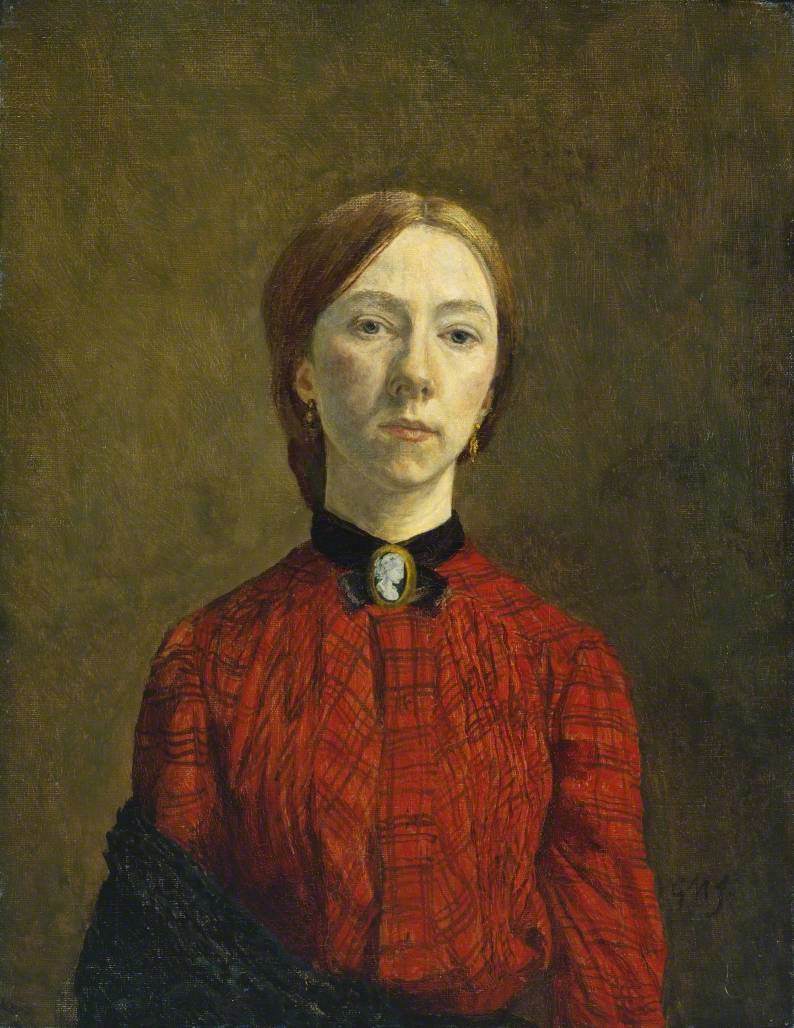
Self-Portrait, 1902, oil on canvas, 34.9 x 44.8 cm, Tate Britain N05366, purchased 1942. A self-portrait by the artist in her mid-twenties; Tate catalogues it as such. Schwartz notes she made two self-portraits by then, the other of about 1899 at the National Portrait Gallery, London, which was not found on Commons.
Tate Britain, London (public domain; Commons PD-Art)| Full name | Gwendolen Mary John |
|---|---|
| Worked as | Painter, Draughtswoman, Watercolourist, Artist's model |
| Born | 22 June 1876 · Haverfordwest, Pembrokeshire, Wales |
| Died | 18 September 1939 · Dieppe, France (Hospice de Dieppe) |
| Nationality | Welsh, working in France from 1904 |
| Movement | Intimism |
| Sources | 23 cited |
| Last verified |
About this page Last verified · 23 sources cited
On this page 13 sections
ContentsClose
Gwen John made about 150 oil paintings in her life, nearly all of them small tonal portraits of a single seated woman, and left behind a studio full of drawings that went to Cardiff only after her death and have never been fully catalogued. The standard account puts her between her brother Augustus and Auguste Rodin, whom the Dictionary of Welsh Biography names as her lover. The record that matters for anyone checking, buying or writing about her is more particular. The largest public holding of her work is not in London or Paris but at Amgueddfa Cymru in Cardiff, which took more than 900 drawings, sketchbooks and oil studies from her studio in 1976. The papers she kept, including drafts of her own letters, are not in a museum at all. They are in the National Library of Wales at Aberystwyth, which acquired them in 1985.
The second thing the biographies underplay is how narrow her market was. For most of her working life one American lawyer, John Quinn, took the great majority of what she would part with and paid her an annual allowance, and when he died in 1924 that arrangement ended. She had one solo exhibition, in London in 1926. Her auction record, set in October 2024, is GBP 403,200 for a painting that the HENI news service says had not been traded before; Christie's says it had been in one collection since about 1940. The sources read for this page record no dealer who represented her.
This page sets out what is accepted, where it is, what is disputed and what has been paid. It also records the gaps plainly. No price Quinn paid for any single picture was found, the count of her letters to Rodin is reported two ways, and the number of paintings in Cecily Langdale's 1987 catalogue was not established from a source opened for this page.
Images
Chronology
- 1876
Born in Haverfordwest on 22 June, the second of four children of Edwin William John and Augusta Smith.15
- 1884
Her mother dies and the family moves to Tenby.1
- 1895-1898
Studies at the Slade School of Art in London; Wikipedia adds the Melvill Nettleship Prize in her final year.116
- 1898
- 1902
Paints the Self-Portrait now at Tate Britain, shown at the Slade, where her professor Frederick Brown bought it according to Conway Morris.523
- 1904
Reaches Paris in February with Dorelia McNeill, works as an artist's model and begins modelling for Rodin, who became her lover according to the Dictionary of Welsh Biography.15
- 1910
Introduced to John Quinn through Augustus John, by Schwartz's account (another source says Quinn's support began in 1911).717
- 1911
- 1913
Received into the Roman Catholic Church in early 1913; her work shown in the New York Armory Show through Quinn.157
- c. 1913-1920
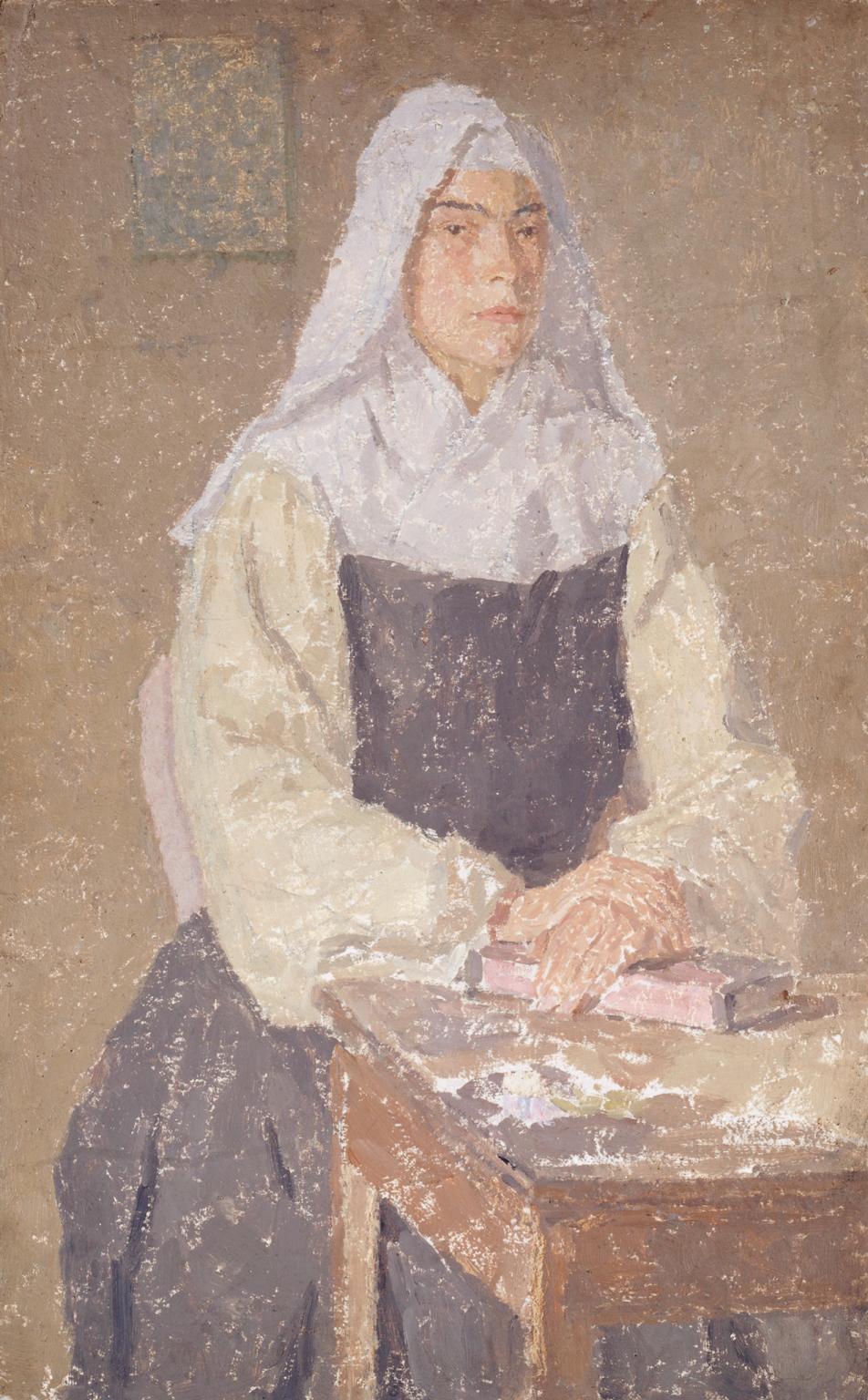
Paints portraits of the nuns of Meudon and a series of copy portraits of the order's founder Marie Poussepin; Quinn buys one from the nuns in 1920.15
- 1915-1916
Makes portrait drawings of French military figures, at least one derived from a published photograph, and sends many to Quinn, who offers to sell them in New York.1819
- 1917
- 1919
First Paris showing, at the Salon d'Automne, according to a Wikipedia summary of Langdale.16
- 1924
Quinn dies, ending the annual allowance and the standing offer to buy.159
- 1926
Only solo exhibition of her lifetime opens at the New Chenil Galleries in London in May with 44 works; the Albright Gallery buys Woman with a Cloak from Quinn's estate.56
- 1935
National Museum of Wales buys Girl in a Blue Dress for GBP 20; she writes to thank the museum on 21 November.2
- 1939
Dies in Dieppe on 18 September; her nephew Edwin John recovers paintings and drawings from Paris before the German invasion.15
- 1946
- 1952
Tate memorial exhibition with Ethel Walker and Frances Hodgkins.12
- 1968
Arts Council retrospective in London, Sheffield and Cardiff, with the first detailed account of her work.1
- 1976
National Museum of Wales acquires from Edwin John more than 900 drawings, sketchbooks and paintings from her studio, her centenary year.124
- 1985
National Library of Wales acquires the Gwen John papers with a grant from the Friends of the National Libraries.8
- 1987
Cecily Langdale's catalogue raisonne of the paintings is published by Yale University Press.1
- 2014
Dorelia by Lamplight, at Toulouse sells at Sotheby's New York on 10 November, then the artist's record.1012
- 2024
Girl in a Blue Dress sells at Christie's London on 16 October for GBP 403,200, the current record.1011
- 2026
Gwen John: Strange Beauties opens at National Museum Cardiff on 7 February, described by the museum as the most comprehensive retrospective in 40 years.45
The market
The market is small and its public record is thin. Her oil record is GBP 403,200, set in 2024 for a picture HENI says had not been traded before, and the two results before it were USD 509,000 in 2014 and USD 304,200 in 2013. The only drawing figures found are one sale at GBP 22,000 and 2026 estimates of GBP 9,000 to 20,000. The sources found give a single price per lot and none separates hammer from buyer's premium, so every row below records the premium column as not stated. Prices from before 2014 come from a news service's converted table, not from the houses' own results.
The most useful scale is not a price. The National Museum of Wales paid GBP 20 for its first picture in 1935 and now holds what it calls the world's largest public collection, including the bulk of the studio work that never went to market.
| Date | Sale | Work | Result | Note |
|---|---|---|---|---|
| 16 October 2024 | Christie's London | Girl in a Blue Dress (c. 1914), oil on canvas, evening sale | Hammer not stated in sources read With premium price realised GBP 403,200 (premium treatment not stated) GBP | Estimate GBP 120,000 to 180,000. HENI says not previously traded; Christie's says it had been in the same collection since about 1940. The HENI service gives USD 523,800 and says the result beat the previous record by 2 per cent. A different picture from the National Museum of Wales Girl in a Blue Dress. |
| 10 November 2014 | Sotheby's New York | Dorelia by Lamplight, at Toulouse (1903-4), oil on canvas, 54.5 x 32 cm, Masterworks sale (Mellon collection), lot 40 | Hammer not stated in sources read With premium USD 509,000 as reported by HENI (premium treatment not stated) USD | Estimate USD 120,000 to 180,000 on the Sotheby's lot page. Provenance on that page: Augustus John, by gift from the artist; Dorelia McNeill (gift, 1961); Romilly John; Anthony d'Offay Gallery; Paul Mellon, November 1982. The sale price is from HENI, not from Sotheby's page, which does not show results. |
| 11 July 2013 | Sotheby's London | The Convalescent | Hammer not stated in sources read With premium USD 304,200 as reported by HENI (apparently converted) USD | From HENI's record table; version and holding history not stated. The Convalescent exists in about ten versions. |
| 9 June 1988 | Christie's London | The Precious Book | Hammer not stated in sources read With premium USD 290,300 as reported by HENI (apparently converted) USD | From HENI's record table; sale currency not stated. |
| undated (before 2026) | Rogers Jones, Cardiff (Welsh Sale) | Two Hatted Women in Church | Hammer not stated (the auctioneer's page shows 'Sold GBP 22,000' without saying whether that is hammer or inclusive of premium) With premium not stated GBP | The auctioneer's page does not say whether 'Sold' includes premium and gives no date. A Rogers Jones lot page could not be opened (CAPTCHA wall). |
Hammer is the price at which the bidding stopped; with premium adds the fee the house charges the buyer on top. Hammer price and buyer's premium in the glossary.
Where to see the work
| Institution | City | Holdings | Note |
|---|---|---|---|
| Amgueddfa Cymru - National Museum Wales | Cardiff | The largest public collection: 900-plus drawings, sketchbooks and oil studies from her studio (acquired 1976), plus oils bought from 1935 (Girl in a Blue Dress), 1995 (A Corner of the Artist's Room in Paris) and by bequest in 2003 (The Little Interior). | Hosted Gwen John: Strange Beauties from 7 February to 28 June 2026; the museum calls its holding the world's largest. |
| National Library of Wales | Aberystwyth | The Gwen John papers: letters to her, drafts of her letters, Rodin's letters, notebooks and colour notes; acquired 1985. | The online catalogue pages sit behind a bot wall; the Friends of the National Libraries record is the readable description. |
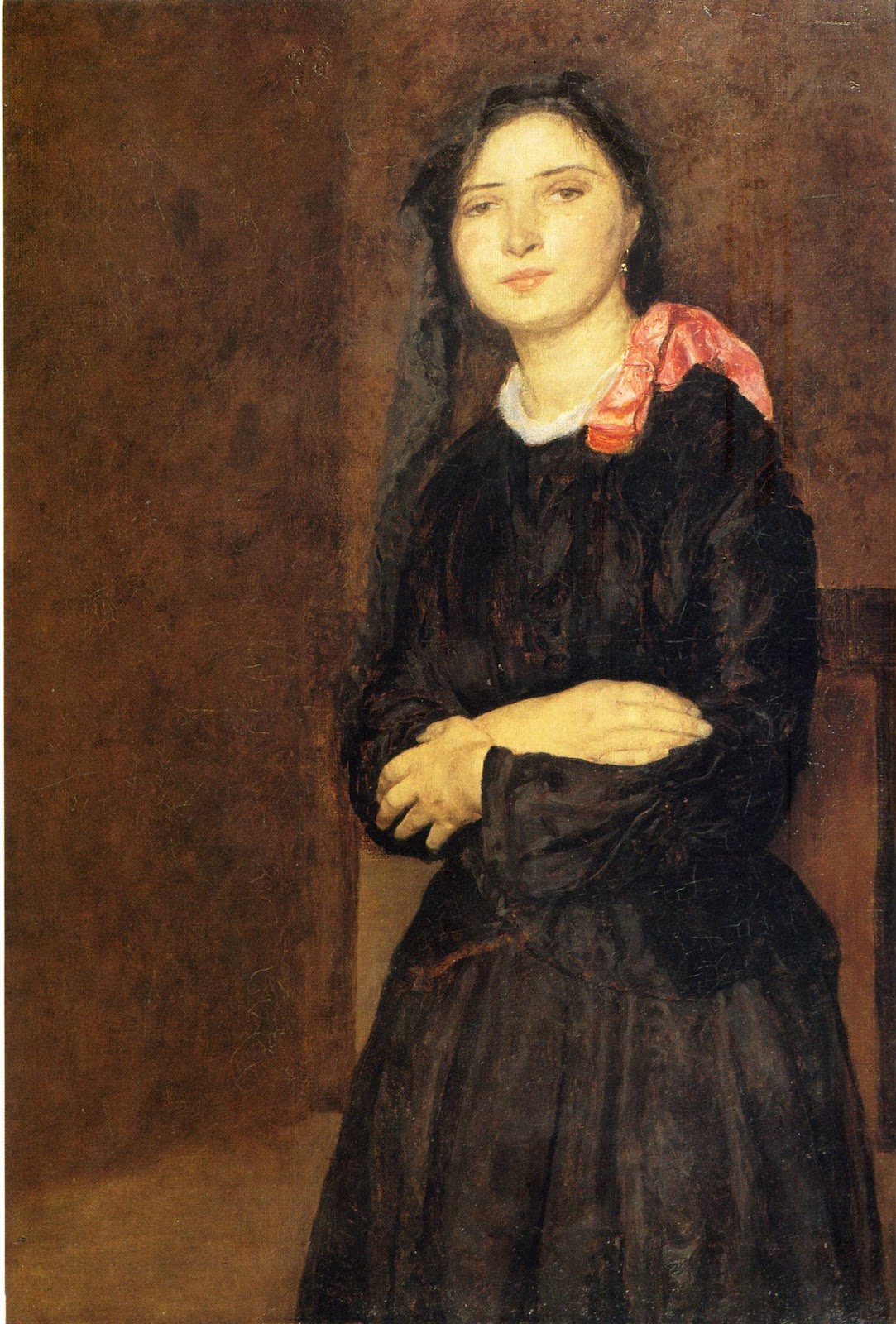
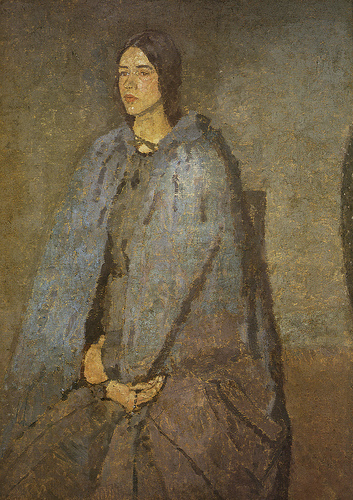
| Tate Britain | London | Self-Portrait (1902), The Convalescent (1918-19, Rhoda Symons bequest 1937), The Nun and Dorelia in a Black Dress; Tate's artist page lists 14 works. | The page offers 'See all 14'; confirm the count against Tate's live collection. |
| Yale Center for British Art | New Haven | The Pilgrim and a large group of paintings and drawings assembled by Paul Mellon; its director calls it the largest public collection outside the UK. | Second venue of the 2026 to 2027 tour, 18 February to 20 June 2027. |
| Musee Rodin | Paris | Her letters to Rodin (over a thousand per Schwartz) and a share of her work per the National Museum of Wales. | The Musee Rodin archive was not consulted for this page. |
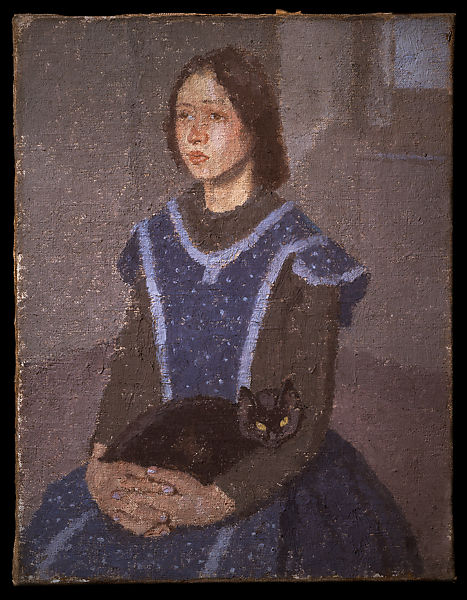
| Metropolitan Museum of Art | New York | Girl with a Cat (1918-22, Bequest of Joan Whitney Payson 1975), Mrs. Atkinson (c. 1897-98) and six 1915 war-figure drawings. | Also holds Rodin's Gwen John (Study for a Muse), 1912 gift. |
| Museums Sheffield; Barber Institute; National Galleries of Scotland; Aberdeen Art Gallery; Manchester Art Gallery; Albright-Knox | Sheffield; Birmingham; Edinburgh; Aberdeen; Manchester; Buffalo | Sheffield: the second version of A Corner of the Artist's Room in Paris. Barber: Mere Poussepin. Scotland: A Young Nun. Aberdeen: Seated Girl Holding a Piece of Sewing. Manchester: The Letter. Buffalo: Woman with a Cloak, the first Gwen John in a US public collection. | Compiled from Commons file titles and Conway Morris; confirm with each museum. |
Forgeries and misattributions
- No forgery found; a pair of title collisions
- The two oils called Girl in a Blue Dress, both of about 1914 to 1915, are different pictures: one in the National Museum of Wales (bought 1935 for GBP 20, 41.8 x 34.5 cm) and the other sold at Christie's in 2024 for GBP 403,200. The museum still owns its picture, so the Christie's work cannot be it. Dimensions of the Christie's picture were not read; the Christie's lot page could not be opened.31011
- The Convalescent and the Mere Poussepin series: versions, not copies by other hands
- The Convalescent exists in about ten near-identical versions, and the Poussepin portraits were painted in series from a prayer card. A catalogue search will return many records under one title. Each version is distinguished by its institution and accession number. Schwartz counts ten versions of The Convalescent; no catalogue number list was read.157
- War drawings: one museum dates them c. 1916 from a photograph, another 1915
- The Metropolitan Museum dates six drawings of French wartime figures to 1915; the National Museum of Wales dates its General Sarrail c. 1916 and says it is derived from a 1916 magazine cover photograph. The attribution to Gwen John is not queried in either record. The date gap is flagged here for a specialist; neither museum's record is wrong on its face, and the Met's accession page was read only through its public API record.1819
- Rodin's sculpture titled Gwen John
- The Metropolitan Museum's Gwen John (Study for a Muse) is by Rodin, modelled probably around 1904 and given by him in 1912. It is a likeness of her, not her work. The record's artist field names Rodin.19
- Confusion with Augustus John
- No documented case of a work wrongly given to Gwen or to Augustus was found in the sources read. The two were also trained together at the Slade, which makes a recorded confusion plausible. A person buying should not assume that absence of recorded cases means none exist. Not applicable.20
The essay
Chapter 1About 150 oils, thousands of drawings and no committee
Two independent summaries put her oil output at about 150.
Two independent summaries put her oil output at about 150. Sanford Schwartz, reviewing Sue Roe's biography in the New York Review of Books in 2001, wrote that she eventually made around 150 oils and that most of them she considered not good enough, leaving them to moulder in stacks. Rachel Stratton and Lucy Wood, the editors of the 2026 retrospective catalogue, call it a modest output of approximately 150 oil paintings. The authoritative list is Cecily Langdale's Gwen John, with a Catalogue Raisonne of the Paintings and a Selection of the Drawings, published by Yale University Press in 1987. Its entry count was not read for this page, so the number 150 stands as the field's working figure and not as a count of Langdale's entries.
The drawings are another matter. The Dictionary of Welsh Biography says the National Museum of Wales acquired more than one thousand of them in 1976, while the museum itself says more than 900 drawings and watercolours, plus sketchbooks and oil studies. The two figures are not reconciled in any source read. Langdale's volume prints only a selection, so for the works on paper there is no complete catalogue and no equivalent of a catalogue number to check against.
No authentication board, estate committee or foundation was found in any source read. In practice a painting is tested against Langdale and against the Amgueddfa Cymru collection records. A person trying to confirm a drawing has less to go on. The 2026 retrospective's editors describe the museum's studio drawings as largely overlooked and unpublished.
Chapter 2What a Slade girl took to Paris
She was born in Haverfordwest on 22 June 1876, the second of four children of the solicitor Edwin William John and Augusta Smith.
She was born in Haverfordwest on 22 June 1876, the second of four children of the solicitor Edwin William John and Augusta Smith. Her mother died in 1884 and the family moved to Tenby. From 1895 to 1898 she studied at the Slade School of Art in London, where, according to Wikipedia, she won the Melvill Nettleship Prize for figure composition in her final year. The Dictionary of Welsh Biography, written by A. David Fraser Jenkins, argues that the Slade's method, which separated drawing from painting and put the emphasis on drawing, was at odds with what became her style, and that she learnt more from fellow students than from her teachers.
In 1898 she spent six months in Paris at Whistler's school. The same article says Whistler's control of colour and his preferred subject of the single figure in an interior were an example to her. The National Museum's own account preserves a remark attributed to Whistler on seeing her work, relayed through her brother: "Character? What's that!? It's tone that matters." The museum introduces it with the words "is said to have replied", so it is a recorded tradition and not a verified quotation.
Chapter 3Rodin, and where the letters actually are
In late 1903 she walked through France with Dorelia McNeill, the mistress of her brother Augustus, intending to reach Rome.
In late 1903 she walked through France with Dorelia McNeill, the mistress of her brother Augustus, intending to reach Rome. They reached Paris in February 1904 instead and worked as artists' models in Montparnasse. Gwen modelled for Rodin from that year; the Dictionary of Welsh Biography and Conway Morris both describe her as becoming his lover. Roderick Conway Morris, writing in the British Art Journal in 2026, says she wrote to him several times a week between 1904 and 1917 and that he chose her as the model for a commission for a monument to Whistler. Schwartz says Rodin paid her rent. Schwartz says their closest period had passed by about 1907 yet the affair ended only with his death in 1917. Conway Morris says it was faltering by about the time she took religious instruction in Meudon and continued intermittently for a couple of years.
Her affair was not publicly known in her lifetime. The Dictionary of Welsh Biography says it was first published in Michael Holroyd's biography of Augustus in 1974 and then documented from the letters at the Musee Rodin by Susan Chitty in 1981.
The letter counts differ. Schwartz writes that there are over a thousand of her letters in the Musee Rodin. A dealer's biography compiled from published scholarship says more than two thousand, without a source for the figure. The National Library of Wales holds the other side of the exchange: a 1985 grant record from the Friends of the National Libraries lists 670 letters to Gwen John from about 50 correspondents, 400 draft letters from her and 80 letters from Rodin together with her draft replies. The Library bought the papers that year and the same record gives an item cost of 100,000, with a grant of 2,500 and no currency symbol on the page. The drafts are the nearest thing to her own copies of what she sent, which is why the Library's holding is the one a scholar should check first.
Rodin's own gift to the Metropolitan Museum of Art in 1912 is a sculpture titled Gwen John (Study for a Muse), modelled probably around 1904. It is by Rodin, not by her, and the title can be mistaken for hers in a catalogue search.
Chapter 4John Quinn: the allowance, the telegram and the numbers that disagree
Quinn was a New York lawyer and collector who was already buying Augustus John when he met Gwen's work.
Quinn was a New York lawyer and collector who was already buying Augustus John when he met Gwen's work. Schwartz dates his introduction to her to 1910, through Augustus. The Wikipedia article on Quinn says he supported her from 1911 until his death. The two years are not reconciled here. Conway Morris, the clearest source on the terms, says Quinn became her sole patron, arranged to pay her an annuity of GBP 100 a year and assured her that he would buy anything she produced, an arrangement that lasted until his death in 1924. The Dictionary of Welsh Biography says he bought as much as the reluctant artist would part with and gave her an annual allowance.
No price paid for any single picture was found. The Quinn papers at the New York Public Library were not consulted and the figure of GBP 100 a year is the only sum on record in the sources read, so a collector looking for what Quinn paid for a given drawing will have to go to those papers. For scale, the National Museum of Wales paid GBP 20 for its first Gwen John, Girl in a Blue Dress, in 1935. The two figures are from different years and different kinds of payment and should not be read as a price series.
The count of what he bought is disputed by how it is counted. The National Museum of Wales says he acquired 39 pieces in total. The Court Gallery biography quotes Cecily Langdale as saying that he ultimately acquired about a dozen paintings and scores of drawings. These need not be incompatible, since 39 could be a mixed count and a dozen the paintings alone, but no source read reconciles them.
In 1913 Quinn tried to get her work into the Armory Show in New York. Schwartz reports that he cabled "FOUR (OR THREE) GWEN JOHN" and she wired back "ONE GWEN JOHN". Conway Morris says her works appeared in the exhibition through him, and in 1920 Quinn bought one of her Mere Poussepin portraits from the nuns of Meudon with her approval. Schwartz notes that Roe wrongly calls Quinn a dealer. He was a patron, and the sources describe a relationship that was mostly by letter: they met only a few times, in Paris, before he died in 1924.
According to Conway Morris, after Quinn's death the Albright Gallery of Art in Buffalo bought Woman with a Cloak from Quinn's estate in 1926, which was the first of her works to enter a United States public collection.
Chapter 5Selling, not selling, and the missing dealer
John exhibited at the New English Art Club from 1900 and stopped in 1911.
John exhibited at the New English Art Club from 1900 and stopped in 1911. She first showed in Paris, at the Salon d'Automne, in 1919 and then regularly until the mid-1920s. These facts come from a Wikipedia summary of Langdale and are the thinnest-sourced dates on this page. Her one solo exhibition opened in May 1926 at the New Chenil Galleries in London. According to Stratton and Wood, she chose the 44 oil paintings and works on paper herself, had a hand in how they were hung, removed every description of medium from the catalogue and showed her drawings and watercolours in albums grouped by theme.
The sources read name no dealer who represented her. The request that started this page asked about Ambroise Vollard and a dealer link to Rodin, and neither appears in any source opened. A search for them returned nothing, and they are recorded here as not found. What the record does show is a gap that scholars have commented on: she sold few works and often gave them away, according to the National Museum of Wales, and Conway Morris says she would have sold more but for her own reluctance. The Court Gallery biography says, in its own words and not as a quotation, that after Quinn's death she painted less and without his encouragement was less eager to exhibit.
Chapter 6The paint: two techniques and a way of building a picture
The National Museum's conservators divide her oil technique into an early traditional method and a later dry one.
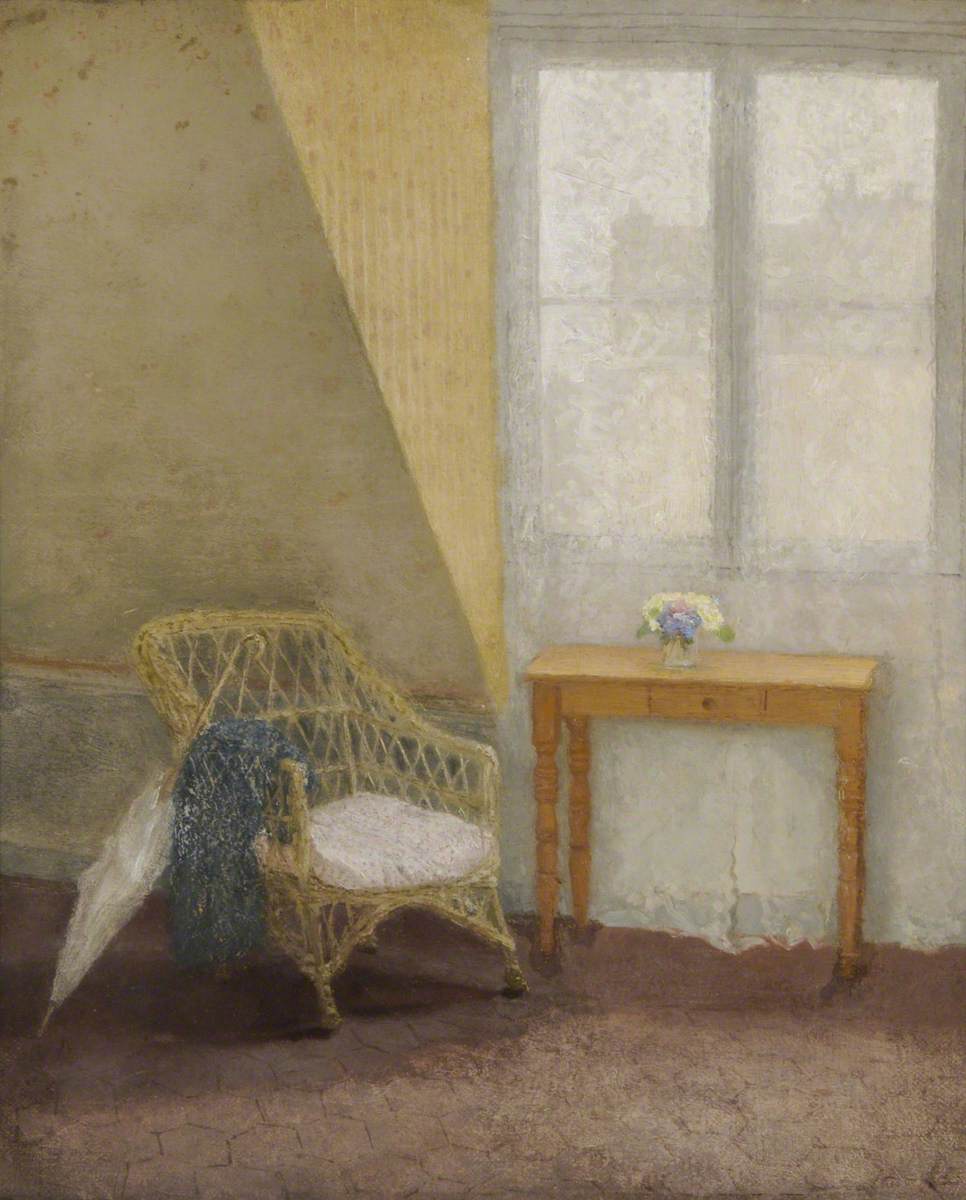
The National Museum's conservators divide her oil technique into an early traditional method and a later dry one. In the early method, seen in A Corner of the Artist's Room in Paris (1907 to 1909), fluid oil is built up in layers over a white ground, brushmarks are disguised, the surface is varnished and glossy, and a pink layer under thinner top layers gives the late-afternoon glow. Tate's own display text says the same of her thin, smoothly painted early layers finished with transparent glazes.
The dry method appears from the mid-1910s. In the museum's technical study of Girl in a Blue Dress, c. 1914 to 1915, a ground of chalk and animal glue, stirred warm and containing small bubbles, was applied unevenly, and the oil was laid on dry and thin with brushmarks left visible. The brown paint skips over the white ground and leaves much of it showing, which gives the picture its look of a fading fresco. Light shone through the back of the canvas shows how little paint is on it. Conway Morris adds that she called her quick thick strokes 'blobbing', sometimes added glue and chalk to the paint and did not varnish.
Two accounts of how she began a picture are in tension. The museum's reading of an unfinished Study of a Seated Nude Girl says she worked from the edges inwards with no preparatory sketching, painting the features last or, in that case, not at all. Its own infrared study of Girl in a Blue Dress found a small amount of preparatory sketching, and Conway Morris reports that recent infrared analysis shows she sometimes made detailed underdrawings on the canvas and sometimes painted straight on. Ultraviolet imaging of the same picture shows she returned to it with a white richer in zinc, in the slightest of touches.
The Study of a Seated Nude Girl also carries a second picture on the back of the same canvas: the same sitter, clothed and nearer completion. That is the documented case of her reusing a support, and it is the museum's evidence for how she built a painting from a corner. A museum-wide survey of reused canvases has not been published in the sources read.
Chapter 7The code: numbers, colour discs and a paint chart
She kept a system for colour that is still not decoded.
She kept a system for colour that is still not decoded. According to the National Museum, she described a complicated numbered disc recording how each colour and tone related to every other, and she devised her own notation for sketching planned compositions. Pencil and charcoal sketches of objects in her room, places and people on trains and in church were marked with numbers and colour notes so that she could later work them up in watercolour, gouache and sometimes oil. One note the museum prints reads 'April faded pansies on the sands at night'.
The Dictionary of Welsh Biography adds that many of her notes at the National Library of Wales are concerned with perfecting her range of colours and their association with flowers. The 2026 retrospective announced a study of her paint choices using a recovered historic paint chart and her letters and notations. No decoding of the numbering has been published in the sources read, and the museum calls it incredibly difficult to crack.
Chapter 8Series, versions and the habit of repeating
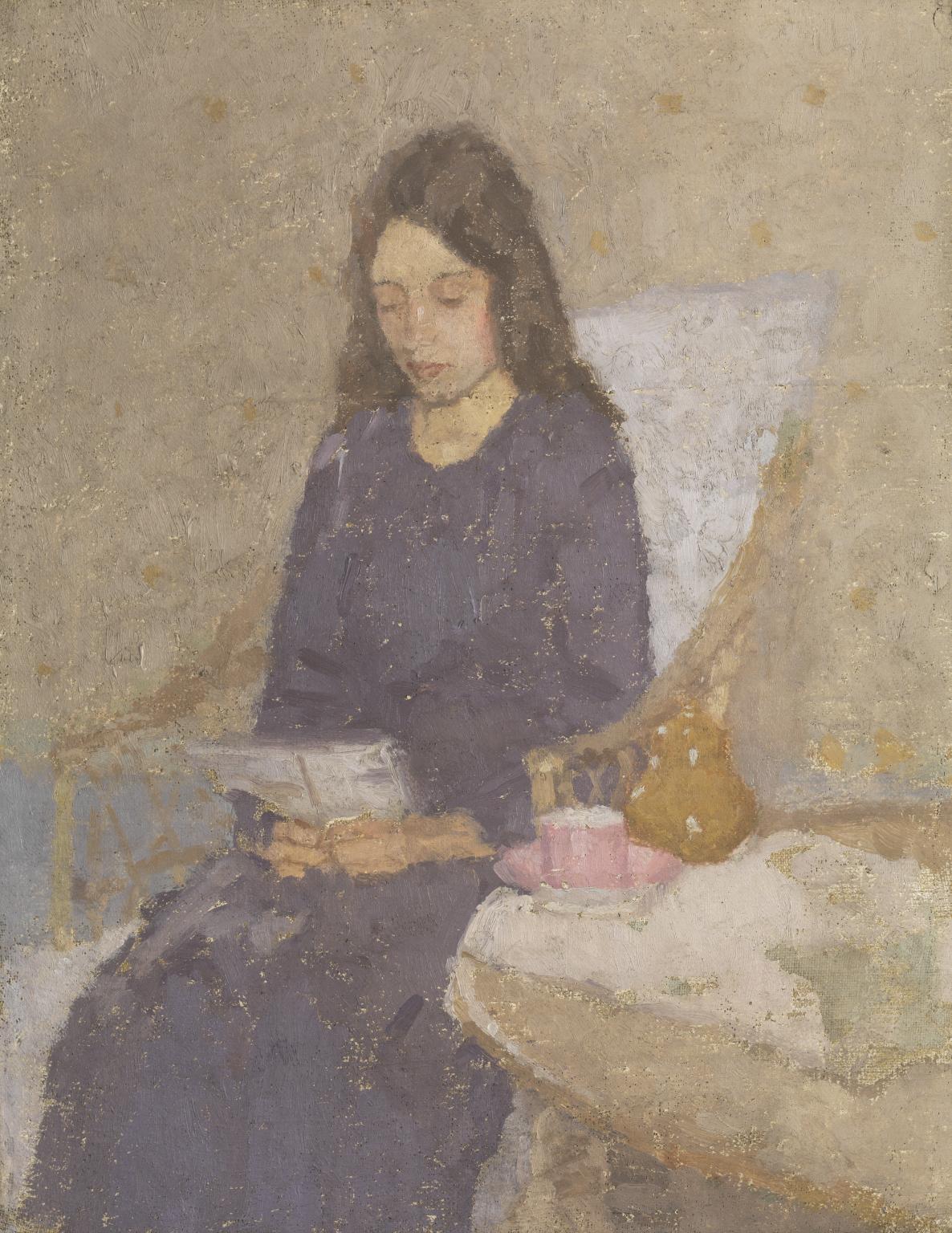
She repeated pictures on purpose. Schwartz writes that The Convalescent, a thin dark-haired girl reading, exists in some ten versions with the subtlest change from one to the next, and that Susan...
She repeated pictures on purpose. Schwartz writes that The Convalescent, a thin dark-haired girl reading, exists in some ten versions with the subtlest change from one to the next, and that Susan Chitty reports her redoing one drawing over seven hundred times on some seventy sheets. Conway Morris says that between the mid-1910s and mid-1920s she made over 60 paintings of one woman, identified only as a Meudon neighbour. The Dictionary of Welsh Biography says her small gouaches of congregations and children were painted in sets of almost identical copies, and records a series of copy portraits of the founder of the nuns' order. Stratton and Wood note that she returned repeatedly to the same subjects and called her works on paper "quite as serious" as her oils.
For identification this matters in three ways. A picture titled The Convalescent may be one of about ten, so the holding institution and number must be quoted. A Girl in a Blue Dress may be the National Museum of Wales picture of c. 1914 to 1915 or the picture that Christie's sold in 2024, which cannot be the museum's because the museum owns its picture. And a Mere Poussepin portrait is usually one of a series made from a tiny prayer card, not a portrait from life of a living sitter.
Chapter 9Belief, the nuns of Meudon and what the notes show
She moved to Meudon in 1911, where Rodin also lived, and was received into the Roman Catholic Church in early 1913, according to the Dictionary of Welsh Biography.
She moved to Meudon in 1911, where Rodin also lived, and was received into the Roman Catholic Church in early 1913, according to the Dictionary of Welsh Biography. Conway Morris says she took religious instruction from the local cure. Her portraits of the nuns of Meudon followed, and then a series of full-scale posthumous portraits, made from a prayer card, of Marie Poussepin (1653 to 1744), founder of the nuns' order. All of this is documented in the sources named. The same sources say her work in later years included many drawings of congregants seen from behind or in profile.
Her own words are on record. Conway Morris says she was styling herself by the early 1920s 'God's little artist: a seer of strange beauties, a teller of harmonies, a diligent worker', and the National Museum places the phrase 'God's little artist' from about 1913. Conway Morris adds that she was not a religious painter in the conventional sense, even though she gave some pictures titles with a religious tone such as The Pilgrim. Schwartz says she identified with the lives of young female saints and filled her notebooks with prayers and meditations. A Wikipedia summary of Langdale says she met the neo-Thomist philosopher Jacques Maritain at Meudon in December 1926 after Rilke's death. The Court Gallery biography, quoting Michael Williams, says she then wrote to Maritain's sister-in-law Vera Oumancoff weekly from January 1928 to July 1929 and that Vera ended the relationship by 1930. These last two items rest on tertiary sources and should be checked against Langdale or Roe.
What the paintings mean is a different question. Conway Morris reports that many viewers now find a latent religious feeling in the portraits. Stratton and Wood close their 2026 introduction by describing an artist grounded in close observation of the material world and in "a belief that all things are sacred". Those are readings by later writers, and no source read says the dry technique or the repeated figure was chosen for a religious reason. The documented religious facts are her conversion, the Poussepin commission and her own phrases.
Chapter 10The empty room: two readings of the interiors
The museum's own blog sets out a dispute.
The museum's own blog sets out a dispute. Many have read her interiors, notably A Corner of the Artist's Room in Paris of 1907 to 1909, as a portrait of absence made at the time her relationship with Rodin was breaking down, the empty room standing for her solitude. Alicia Foster and others have argued instead that the subject places her in the context of her Paris contemporaries, for whom the interior was a common study and the wicker chair almost a badge of the artist's studio. The blog presents the second reading as showing that she was plugged into what was happening in art and not cut off from it. Both are interpretations by later writers. No letter read says what she meant by the picture.
Chapter 11The war drawings sent to Quinn
The National Museum of Wales states that during the First World War Gwen John made a series of portrait drawings of military figures, many of which she sent in portfolios to Quinn, who offered to...
The National Museum of Wales states that during the First World War Gwen John made a series of portrait drawings of military figures, many of which she sent in portfolios to Quinn, who offered to sell them for her in New York. Its drawing of General Sarrail, NMW A 26146, bought in 2004, is dated c. 1916 and is described as derived from a photograph that appeared on the cover of L'image de la Guerre in 1916. The Metropolitan Museum of Art holds six drawings of French wartime figures, among them Generals Gouraud, Petain, Sarrail and Mangin, Admiral Boue de Lapeyrere and Monsieur Venizelos, credited to Gwen John and dated 1915, from a gift of Frederic Newlin Price in 1955. The two museums disagree by a year on the date.
These drawings have no place in the standard account and fit none of her usual subjects. The museum says of its own sheet that it was drawn from a published photograph, which suggests the series should not be read as portraits from sittings; the Met's records say nothing on the point.
Chapter 121939 and after: the studio
She died in the Hospice de Dieppe on 18 September 1939 and was buried in a municipal cemetery, according to Conway Morris, who says she made her will in hospital.
She died in the Hospice de Dieppe on 18 September 1939 and was buried in a municipal cemetery, according to Conway Morris, who says she made her will in hospital. Her nephew and heir, the watercolourist Edwin John (1905 to 1978), reached Paris before the German invasion to recover stacks of paintings and a mass of drawings, and shipped them to Britain. The Dictionary of Welsh Biography says the paintings were inherited by Edwin and that in 1976 the National Museum of Wales acquired from him the remainder of the collection, including more than one thousand drawings. The museum says the 1976 purchase, in her centenary year, was more than 900 drawings along with sketchbooks and paintings and that it comprised the bulk of the material in her studio after her death and almost the entirety of her later-career output. No acquisition price for 1976 was found.
Three things follow for anyone assessing a work. The museum's studio collection is the bulk of what was in her studio when she died, so it is where her process is documented. Pictures sold in her lifetime went largely to the United States through Quinn, which the museum gives as part of the reason her work is well represented there. And the papers went a separate way, to the National Library of Wales in 1985.
Chapter 13How the reputation moved
Conway Morris says she gained recognition in France, Britain and the United States in her lifetime.
Conway Morris says she gained recognition in France, Britain and the United States in her lifetime. The Court Gallery quotes Langdale on Quinn's introductions to artists in Paris, and Mary Chamot wrote of her in Country Life around the time of the 1926 show. The National Museum notes that even in 1959 the Penguin Dictionary of Art and Artists listed her only in an appendix to her brother. In 1952, according to Ruth Richards, John Rothenstein's Modern English Painters mentioned her and described her aims as simple.
The turn came in stages. A memorial exhibition at Matthiesen Ltd in London in 1946 is dated by the Dictionary of Welsh Biography as the start of a steady rise. A Tate memorial display with Ethel Walker and Frances Hodgkins followed in 1952, and the Arts Council's retrospective of 1968, shown at London, Sheffield and Cardiff, carried the first detailed account of her work. The Dictionary adds that feminist criticism revalued women artists at the same time. Ruth Richards, writing for the auctioneers Rogers Jones in 2026, dates the feminist reading to the 1970s and 1980s.
Augustus John's prediction runs through all of it. Schwartz says he said in the 1940s that in fifty years he would be known only as the brother of Gwen John. Rogers Jones phrases it as fifty years after his death. The two wordings differ, and the source of neither was checked. Andrew Graham-Dixon, reviewing the 2004 Tate Britain pairing of the two, argues that after Augustus died in 1961 his heirs, constrained by inheritance tax, disposed of the contents of his studio and flooded the market with inferior works, while the wheel of fortune treated Gwen more kindly. The retrospective of 2026 opened at Cardiff on 7 February with more than 200 works and is touring to Edinburgh, Yale and Washington.
Chapter 14What she has fetched
Her market is small and its public record is thin.
Her market is small and its public record is thin. Four results are documented well enough to set out here, all from reports that give a single figure without separating hammer from buyer's premium. A fifth, an undated provincial sale, is recorded too. Her oil record is GBP 403,200 for Girl in a Blue Dress at Christie's London on 16 October 2024, on an estimate of GBP 120,000 to 180,000; the HENI news service says it had not been traded before, though Christie's says it had been in the same collection since about 1940, and HENI says it beat the previous record by 2 per cent. The previous record had been USD 509,000 for Dorelia by Lamplight, at Toulouse at Sotheby's New York on 10 November 2014, according to HENI; the Sotheby's lot page gives its provenance as Augustus John, by gift from the artist, then Dorelia McNeill by gift in 1961, then Romilly John, then the Anthony d'Offay Gallery, then Mr and Mrs Paul Mellon in November 1982.
HENI's table gives two earlier results, both in United States dollars and apparently converted: The Convalescent at Sotheby's London on 11 July 2013 for USD 304,200 and The Precious Book at Christie's London on 9 June 1988 for USD 290,300. The only drawing results found are modest. A Rogers Jones page records Two Hatted Women in Church as sold for GBP 22,000 at an earlier Welsh Sale, with no date, and in April 2026 the same house offered three drawings with estimates running from GBP 9,000 to GBP 20,000 (one at 12,000 to 18,000, one at 15,000 to 20,000 and one at 9,000 to 13,000), the sale falling during the Cardiff retrospective. Its outcome was not found. No underbidder, no hammer and no premium is recorded in any source read.
The one useful comparison is the museum's own. It paid GBP 20 for Girl in a Blue Dress in 1935. The Christie's picture of 2024 is a different painting with the same title. Neither source gives a method for turning one price into the other, so no modern equivalent is offered here.
What is documented
Technique
The surviving work
- What is accepted
- About 150 oil paintings, the working figure used by Schwartz (2001) and by Stratton and Wood (2026). Langdale's own entry count was not read. The works on paper are uncounted: more than 900 or more than one thousand at Cardiff alone, and thousands overall according to a Wikipedia summary of Langdale.
- What is contested
- No attribution dispute or rejection was found in any source read, and no committee has removed works. What is contested is the arithmetic: 900-plus against 1,000-plus drawings at Cardiff, 39 against about a dozen paintings and scores of drawings owned by Quinn, and over a thousand against over two thousand letters to Rodin. Several paintings, notably The Convalescent, exist in ten versions, so the number of 'Convalescents' is a matter of counting.
- Who rules on attribution
- None found. No authentication board, estate or foundation was identified in any source read. Paintings are checked against Langdale (1987) and the Amgueddfa Cymru records; the drawings have no complete catalogue.
Catalogue raisonne
- Cecily Langdale, Gwen John, with a Catalogue Raisonne of the Paintings and a Selection of the Drawings (New Haven and London: Yale University Press, 1987). The standard catalogue of the paintings; only a selection of the drawings. Museum records cite it by entry number.19
- Cecily Langdale and David Fraser Jenkins, Gwen John: An Interior Life (Oxford 1985 per the Dictionary of Welsh Biography; Rizzoli 1986 per Wikipedia; 1989 per Court Gallery). Three different dates in three sources read; exhibition and book volume. Not a catalogue raisonne.1916
- Susan Chitty, Gwen John, 1876-1939 (London 1981). Biography that draws on the Rodin letters at the Musee Rodin.17
- Sue Roe, Gwen John: A Life (London: Chatto and Windus, 2001). Biography; Schwartz notes that it wrongly calls Quinn a dealer.7
- Alicia Foster, Gwen John: Art and Life in London and Paris (2023). Recent biography and reassessment; cited by the National Museum for the reading of the interiors.12
- Rachel Stratton and Lucy Wood (eds), Gwen John: Strange Beauties (Yale Center for British Art with Amgueddfa Cymru, 2026); and Unseen Gwen John (Amgueddfa Cymru, 2026). The retrospective catalogue with new technical research, and the museum's own account of its studio collection.456
- Ceridwen Lloyd-Morgan, Gwen John Papers at the National Library of Wales (Aberystwyth 1988). Guide to the papers at Aberystwyth.1
Questions about Gwen John
Who was Gwen John?
Painter; Draughtswoman; Watercolourist; Artist's model. 1876-1939.
When did Gwen John live?
Born 22 June 1876, Haverfordwest, Pembrokeshire, Wales; died 18 September 1939, Dieppe, France (Hospice de Dieppe).
How are fakes and misattributions of Gwen John detected?
No forgery found; a pair of title collisions. The two oils called Girl in a Blue Dress, both of about 1914 to 1915, are different pictures: one in the National Museum of Wales (bought 1935 for GBP 20, 41.8 x 34.5 cm) and the other sold at Christie's in 2024 for GBP 403,200.
Where can you see work by Gwen John?
Amgueddfa Cymru - National Museum Wales (Cardiff); National Library of Wales (Aberystwyth); Tate Britain (London); Yale Center for British Art (New Haven); Musee Rodin (Paris); Metropolitan Museum of Art (New York).
What does the market for Gwen John look like?
The market is small and its public record is thin. Her oil record is GBP 403,200, set in 2024 for a picture HENI says had not been traded before, and the two results before it were USD 509,000 in 2014 and USD 304,200 in 2013.
What is still unresolved about Gwen John?
How many entries does Langdale's 1987 catalogue raisonne contain, and how many of them have changed hands or been relocated since? The figure of about 150 oils is a field summary, not a count the desk could check.
Open questions
- How many entries does Langdale's 1987 catalogue raisonne contain, and how many of them have changed hands or been relocated since? The figure of about 150 oils is a field summary, not a count the desk could check.
- What did Quinn actually pay per picture? Only the GBP 100 annual allowance is on record in the sources read, and his total count is 39 pieces (museum) or a dozen paintings and scores of drawings (Langdale). The Quinn papers at the New York Public Library were not opened.
- Did Quinn's support begin in 1910 (Schwartz and one Wikipedia article) or in 1911 (another Wikipedia article)? Neither date was checked against his letters.
- How many letters did she send Rodin, and are the Musee Rodin papers catalogued? Schwartz says over a thousand, a dealer's page says over two thousand, and the Aberystwyth drafts to Rodin were not individually counted.
- Is the Christie's 2024 Girl in a Blue Dress a different composition from the museum's picture or a version of it? Its provenance, dimensions and hammer price are missing from the sources read.
- Why did she stop painting? Schwartz says she gave up painting in the late 1920s and that most of her work with real energy did not survive Quinn's death; Conway Morris suggests ill health and the effort a layered oil required. Wikipedia gives a last dated work of 20 March 1933. No letter read settles the cause.
- What did the National Museum of Wales pay Edwin John in 1976, and did the transfer involve tax relief? No source read gives the price or the mechanism.
- What did the three drawings at Rogers Jones's April 2026 Welsh Sale make, and did the Cardiff retrospective move prices? The estimates are published, the results were not found.
Sources
- 1A. David Fraser Jenkins, 'John, Gwendolen Mary (1876-1939), artist', Dictionary of Welsh Biography, National Library of Wales (2001). biography.wales/article/...
- 2Amgueddfa Cymru, "Gwen John: 'It's tone that matters' Part 1", museum blog, 27 May 2020. museum.wales/articles/...
- 3Amgueddfa Cymru, "Gwen John: 'It's tone that matters' Part 2", museum blog, 9 June 2020. museum.wales/articles/...
- 4Amgueddfa Cymru press release, 'Major Gwen John Retrospective to open at National Museum Cardiff', 18 November 2025. press.museum.wales/news/...
- 5Roderick Conway Morris, 'Gwen John: Strange Beauties' (review of the Cardiff exhibition), as published on the author's site; illustrated version in the British Art Journal. roderickconwaymorris.com/Articles/...
- 6Rachel Stratton and Lucy Wood, excerpt from the introduction to Gwen John: Strange Beauties, Yale University Press blog, 6 March 2026. yalebooks.yale.edu/2026/...
- 7Sanford Schwartz, 'To Be a Pilgrim' (review of Sue Roe, Gwen John: A Life), The New York Review of Books, 29 November 2001. nybooks.com/articles/...
- 8Friends of the National Libraries, grant record 'Manuscript notes, correspondence and sketches' (Gwen John papers, National Library of Wales, acquired 1985). grants.fnl.org.uk/node/...
- 9The Court Gallery, 'Gwen John - Biography' (dealer page quoting Cecily Langdale and Michael Williams). courtgallery.com/artists/...
- 10HENI News, 'Gwen John's Auction Record Increases by 2%', 17 October 2024 (record table of sales). heni.com/news/...
- 11ArtDaily, 'Christie's Modern British and Irish Art Evening Sale achieves $18,652,260', 17 October 2024 (reproducing Christie's press release). artdaily.com/news/...
- 12Sotheby's New York, Masterworks sale, 2014, lot 40, Dorelia by Lamplight, at Toulouse (lot page: estimate, provenance, exhibitions). sothebys.com/en/...
- 13Rogers Jones and Co, 'Gwen John (1876-1939) at Auction' (Welsh Sale, April 2026 estimates; earlier sale of Two Hatted Women in Church). rogersjones.co.uk/en/...
- 14Ruth Richards, 'Gwen John at a Hundred and Fifty', Rogers Jones and Co, 2026. rogersjones.co.uk/en/...
- 15Nation.Cymru, 'Rare Gwen John and Kyffin Williams works to headline major Welsh art auction', 2 April 2026. nation.cymru/culture/...
- 16Wikipedia, 'Gwen John' (raw text, accessed 17 November 2026). en.wikipedia.org/wiki/...
- 17Wikipedia, 'John Quinn (collector)'. en.wikipedia.org/wiki/...
- 18Amgueddfa Cymru Collections Online, 'General Paul Maurice Emmanuel Sarrail (1856-1929)', NMW A 26146 (curatorial text on the war drawings). museum.wales/collections/...
- 19The Metropolitan Museum of Art, open-access object records via the collection API: 481489 (Girl with a Cat), 488847 to 488852 (1915 drawings, gift of Frederic Newlin Price 1955) and 191851 (Rodin, Gwen John (Study for a Muse)). collectionapi.metmuseum.org/public/...
- 20Andrew Graham-Dixon, 'Gwen John and Augustus John, at Tate Britain', Sunday Telegraph, 3 October 2004 (opening paragraphs read; remainder behind a login). andrewgrahamdixon.com/archive/...
- 21Tate Britain, 'Gwen John - Display at Tate Britain'. tate.org.uk/visit/...
- 22Tate, 'Gwen John 1876-1939' artist page (list of 14 works). tate.org.uk/art/...
- 23Wikimedia Commons, File:Gwen John - Self-Portrait.jpg (wikitext: Tate N05366, purchased 1942, PD-Art). commons.wikimedia.org/wiki/...

Last verified