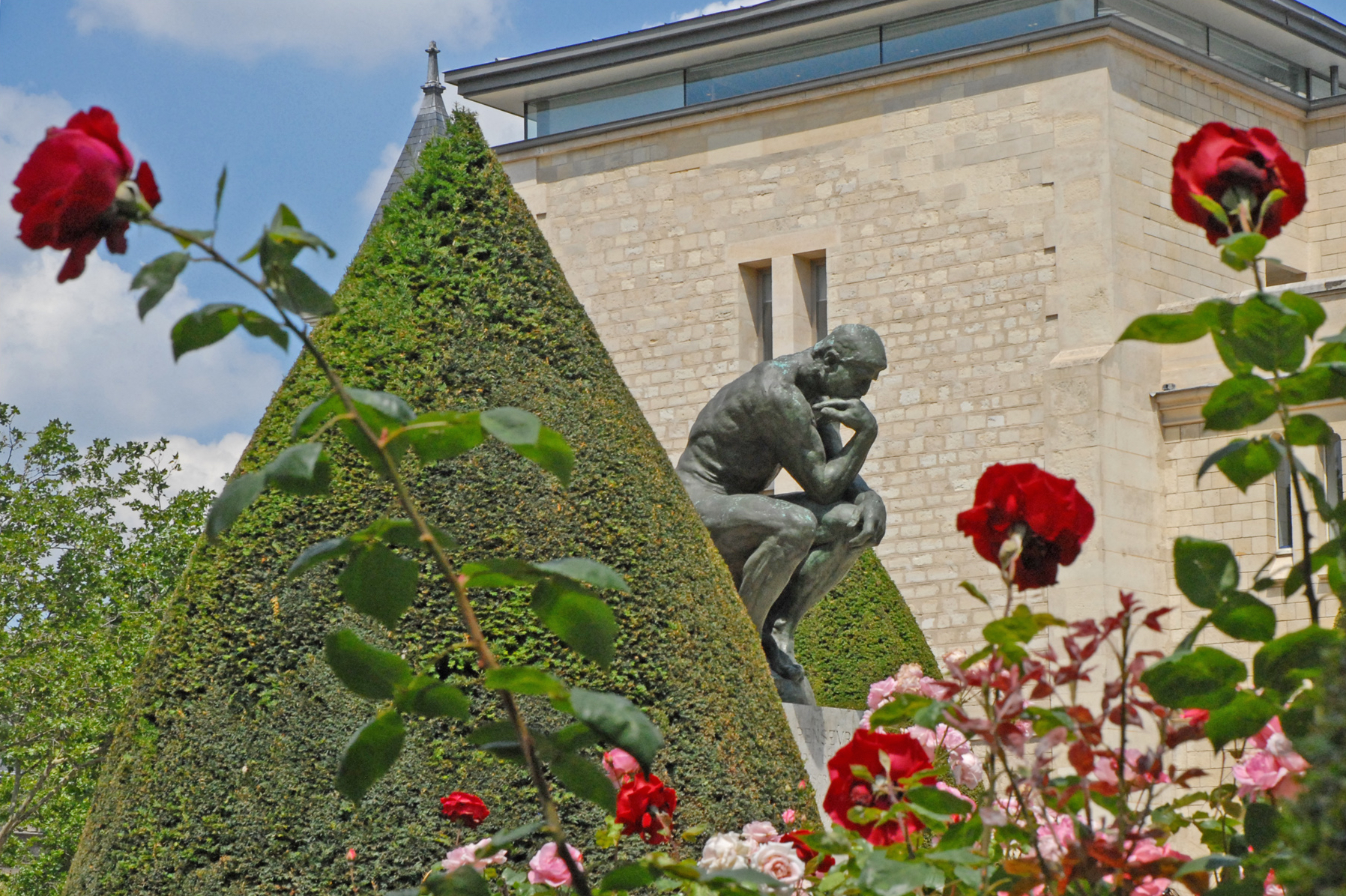
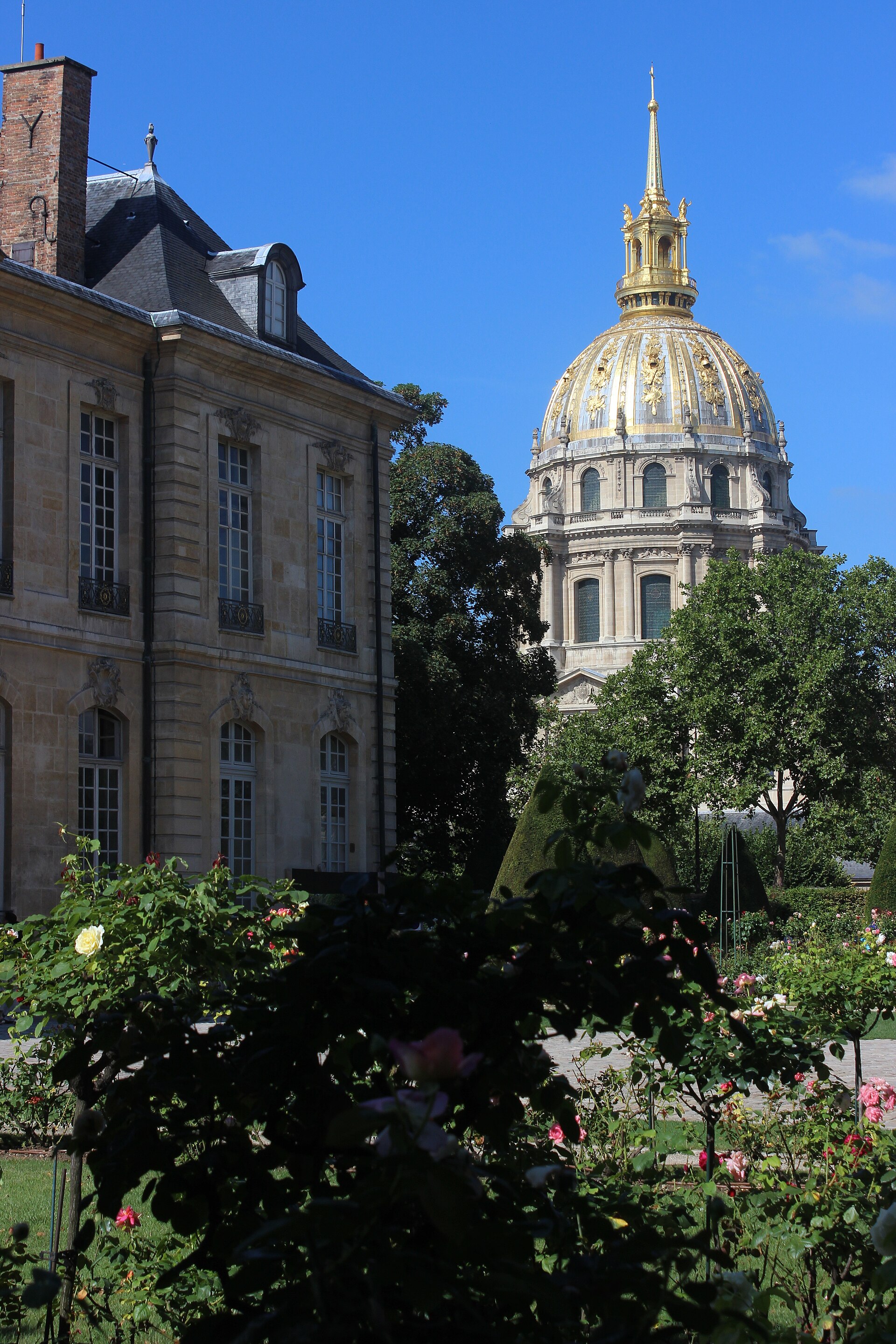
On this page 16 sectionsContentsCloseThe garden facade of the Hotel Biron, with the gilded dome of Les Invalides behind it and the museum's rose garden in the foreground.Photograph by MiguelHermoso · CC BY-SA 4.0
The Musee Rodin holds several hundred of Rodin's marbles alone, spread across some 220 subjects, plus his plasters, bronzes and drawings, and an archive of more than 60,000 manuscript documents from over 8,000 correspondents. It is not encyclopaedic: it is the estate of a single sculptor, arranged in the house he chose for it, plus the paintings and antiquities he collected personally, including one Van Gogh, and the independent work of Camille Claudel, credited under her own name. Its distinguishing asset against every other Rodin holding in the world is legal rather than art-historical: under French decree it is the only institution permitted to cast new original bronzes from Rodin's own plasters, a right that funds close to a third of its budget and has been the subject of a criminal conviction, a still-unresolved public-access dispute, and its own pandemic-era policy change.
Musee Rodin at a glance
Local name
Musée Rodin
Kind
Museum
Founded
The Hotel Biron was built 1727-1732; the National Assembly authorised the museum on Rodin's 1916 donation and it opened to the public on 4 August 1919
What it costs and when it is openConfirmed 19 August 2026
Hours
Tuesday to Sunday10:00 to 18:30Last admission 17:45. The ticket office closes one hour before the museum and visitors are asked to leave the galleries 15 minutes before closing.
MondayClosed
24 and 31 December10:00 to 17:30Early closure; last admission 16:45
Meudon site, Saturday and Sunday only10:00 to 18:00Last entry 17:15. Open only 28 March to 27 September 2026 in the current season; closed on other days and outside that window.
Closed
Every Monday. 1 January. 1 May. 25 December.
Admission
Adult - Musee Rodin (Hotel Biron permanent collection, Sculpture Garden and current temporary exhibition, one ticket)EUR 14The museum's own visit page states EUR 14. Its own official ticket shop (Tickeasy, run under the museum's branding) lists what appears to be the identical product at EUR 15 as of the date checked. We could not resolve the EUR 1 difference between the museum's own two channels, so both figures are recorded rather than one being silently preferred.
Combined - Musee Rodin and Musee d'OrsayEUR 25Sold through the museum's own ticket shop
Combined - Musee Rodin and Musee de l'ArmeeEUR 26Sold through the museum's own ticket shop
Combined - Musee Rodin and Musee du quai Branly - Jacques ChiracEUR 23Sold through the museum's own ticket shop
Group, 20 to 49 ticketsEUR 13.60Per ticket, a 10 percent reduction on the bulk-sale portal; 50 to 99 tickets is EUR 12.20 each and over 100 tickets is EUR 10.80 each, per the same portal
Musee Rodin - Meudon siteFreeFree every day it is open, self-guided, no booking required. Separate site, separate address (19 Avenue Auguste Rodin, 92190 Meudon), open weekends only, 28 March to 27 September 2026 for this season.
Free entry: First Sunday of each month, October to March, for the permanent collection: children under 18 with photo ID, and EU/EEA residents aged 18 to 25 with proof of ID. French primary and secondary teachers with a Pass Education card; Ecole du Louvre staff and students; university art students up to age 30 in relevant subjects; students of the Institut National du Patrimoine and the Ecole Nationale des Chartes. Professional artists, French and international journalists and art critics, ICOM/ICOMOS/CIMAM members, and museum and heritage professionals, each with current credentials. Jobseekers with a Pole Emploi certificate under six months old; RSA, ASS, CMU and ASPA benefit holders with current attestation. Disabled visitors and one companion, with an MDPH card or equivalent; asylum seekers and refugees with proof. Paris Museum Pass holders and Musee Rodin members. The Meudon site is free year-round for everyone
Not required for an individual visit, though the museum sells timed tickets online and recommends buying in advance at busy periods. Groups of 10 to 30 visitors must book a guided tour online in advance; the Meudon site takes no booking at all for individuals.
Metro Varenne (Line 13) or Invalides (Lines 8 and 13) RER Invalides (Line C) Bus Lines 69, 82, 87 and 92 Cycle Velib station at 9 Boulevard des Invalides; parking is available on Boulevard des Invalides
Before you go how long, access, photography, bags, eating, shop
How long to allow
The museum's own pages do not state a typical visit length; we have not published a figure we could not source to the museum itself.
Access
Free admission for eligible disabled visitors and proof of disability; toilets, a baby-changing table and a free cloakroom are provided; the museum publishes dedicated accessibility information as a separate page.
Photography
Not stated on the museum's own visit page; no photography policy is given here rather than guessed.
Bags
Suitcases of any size and large bags are not allowed inside; only small backpacks are permitted. Coats and bags can be left at the free cloakroom.
Eating
L'Augustine, in the garden, serving light meals and seasonal dishes.
Shop
Open Tuesday to Sunday, 10:00 to 18:00, and can be visited without a museum ticket.
Prices and hours change. We take them from the institution's own pages and print the day we read them, and you can check the current position at the source we used. Confirm before you travel.
What is inside
5 spaces, 4 photographed
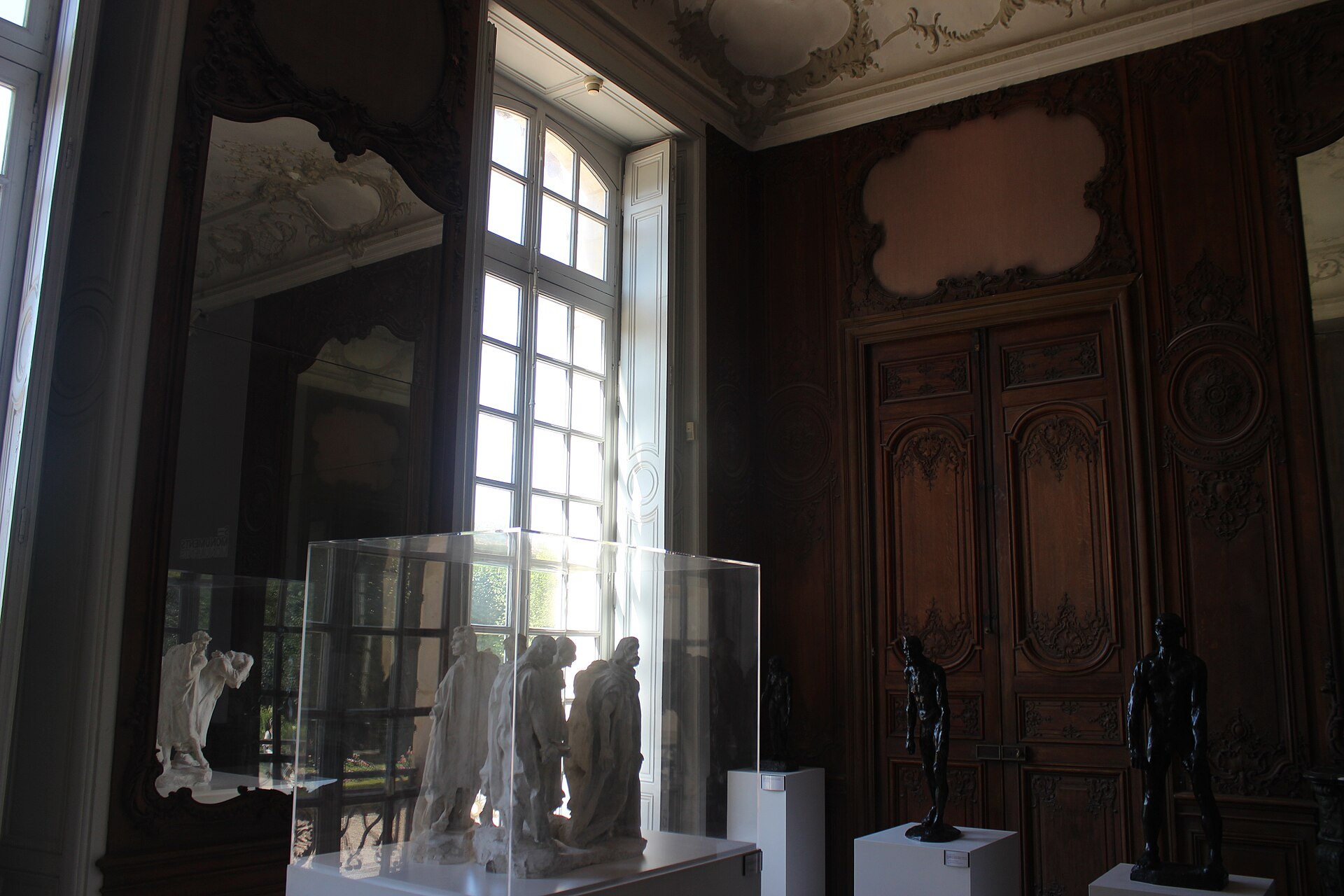
Photograph by MiguelHermoso · CC BY-SA 4.0
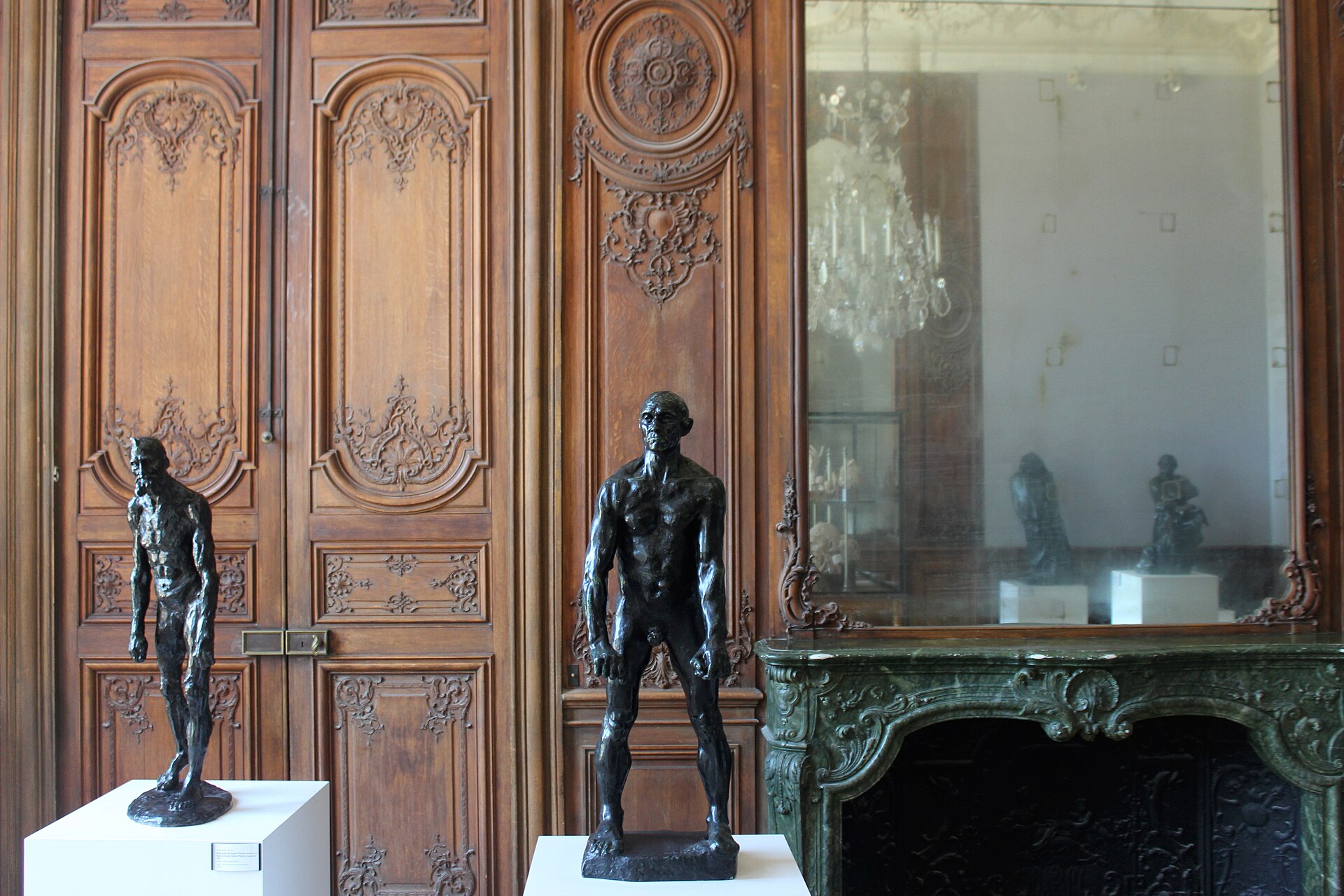
Ground floor of the Hotel Biron
Permanent-collection galleries in the panelled rooms of the historic mansion, including the rotunda that holds The Age of Bronze, Rodin's 1877 nude that provoked accusations of casting from a live model before the French state bought it. The rooms keep surviving eighteenth-century woodwork, mirrors and parquet, restored in the 2010-2015 renovation.
First floor of the Hotel Biron
Later and posthumous work, including The Walking Man, and a gallery devoted to Camille Claudel that holds The Waltz. No free-licence photograph naming this floor specifically could be confirmed on Commons, so it carries no plate; do not substitute a ground-floor photograph for it.
Photograph by Jean-Pierre Dalbéra from Paris, France · CC BY 2.0
The Sculpture Garden
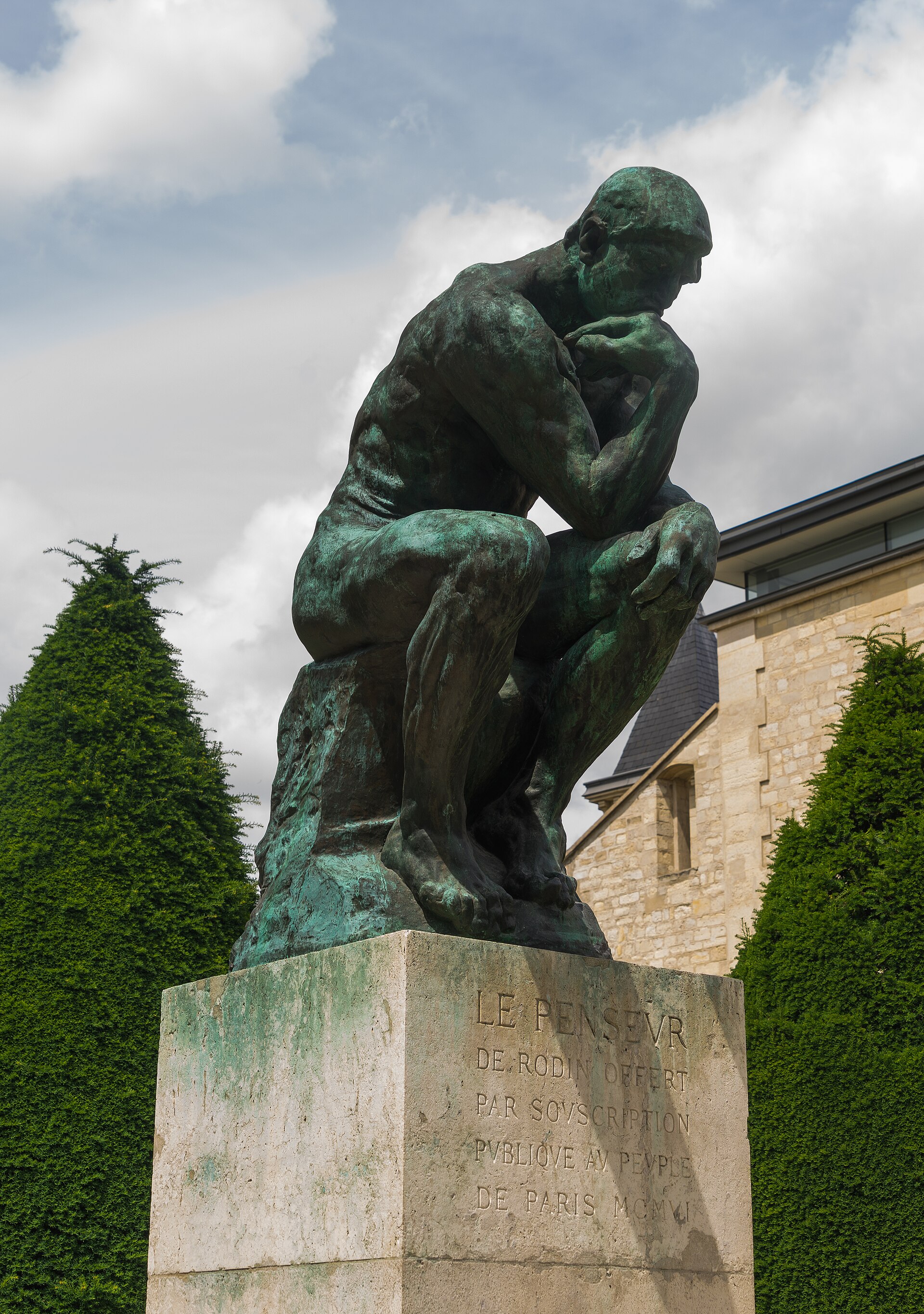
Roughly three hectares to seven acres by the museum's own two differing figures (see open_questions), enclosed and laid out with rose gardens either side of the main courtyard. The Thinker stands on a pillar among clipped box hedges facing The Gates of Hell; Monument to Balzac is positioned against the dome of Les Invalides; Monument to the Burghers of Calais is visible from Rue de Varenne; Ugolino and His Sons centres an ornamental pool; Orpheus is set among trees.
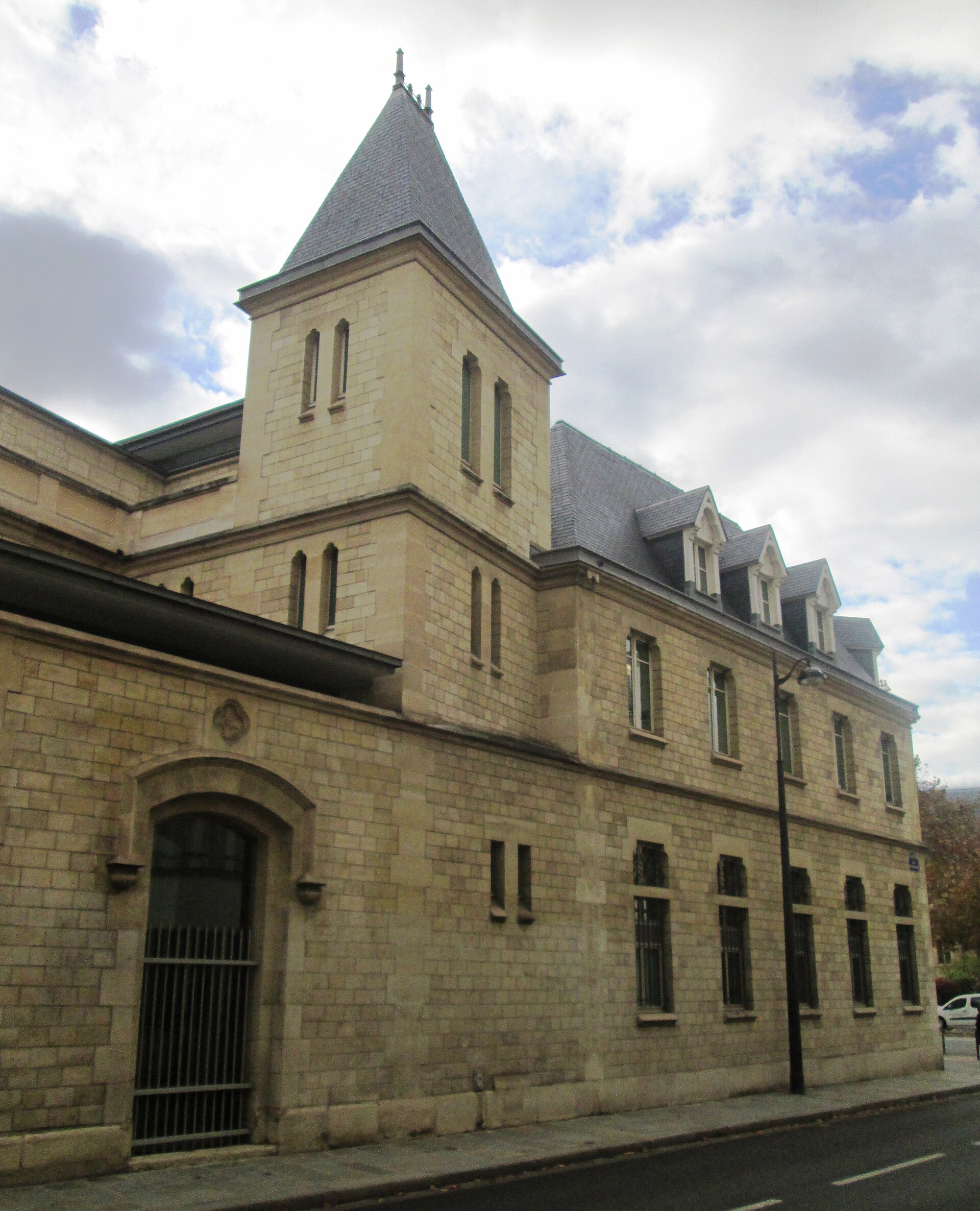
Photograph by Beyond My Ken · CC BY-SA 4.0
The Chapel (former Chapel of the Sacred Heart)
Built in 1876 for the girls' boarding school that occupied the mansion from 1820, the chapel is the one part of that convent still standing. It now holds the air-conditioned Studio Rodin display space, the one part of the site with climate control, and hosts temporary exhibitions.
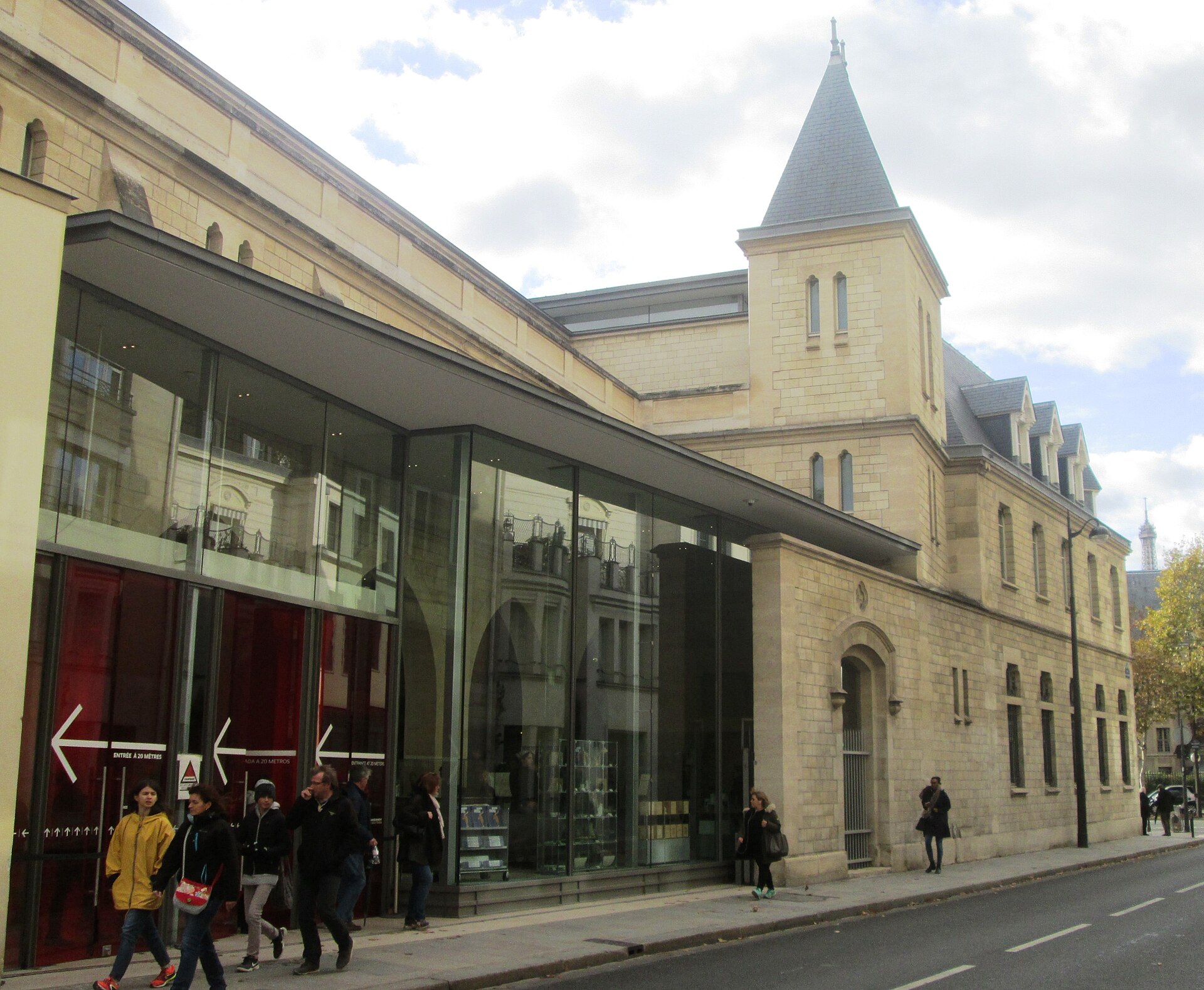
Photograph by Beyond My Ken · CC BY-SA 4.0
Entrance building and shop
A modern glass-fronted reception pavilion built into the historic gatehouse during the 2010-2015 renovation, holding the ticket desk, cloakroom and museum shop, which can be visited without a ticket.
What to see first
The Thinker
Auguste Rodin; this cast by the Fonderie Alexis Rudier, 1904
The monumental bronze standing in the garden today is the specific cast poured by Alexis Rudier in 1904, given to the city of Paris and installed outside the Pantheon in 1906, then transferred here to the Hotel Biron garden in 1922, inventory S.01295. It is a lifetime cast, made under Rodin's own authority seven years before the modern edition-numbering system this page describes was created for posthumous casts, and it is the same bronze this archive holds a full record of.13
Auguste Rodin, conceived 1880; this bronze cast by the Fonderie Alexis Rudier, 1928
Commissioned as a decorative portal illustrating Dante, worked on for a decade and never finished. Rodin died in 1917 without seeing it cast; the museum's first curator, Leonce Benedite, had it reconstructed and cast in bronze in 1928, eleven years after Rodin's death. It produced more than two hundred figures and groups, including The Thinker and The Kiss, that Rodin drew on for the rest of his career.14
The Kiss
Auguste Rodin, marble, 1888-1898
Extracted from The Gates of Hell in 1887 because its sensuality did not fit the darker project, then enlarged in marble on a state commission Rodin delivered in 1898. He exhibited it beside the far more controversial Monument to Balzac that same year, on the calculation that the accessible Kiss would help audiences accept the bolder work.15
Monument to the Burghers of Calais
Auguste Rodin, completed 1889; this bronze cast for the museum, 1926
Commissioned by the city of Calais in 1884 to commemorate six citizens who offered their own lives to end the 1346-47 siege. Rodin modelled the six as an unposed, ungrouped huddle of individual fear rather than a heroic monument, which the city itself resisted; it was unveiled in Calais only in 1895, six years after completion.16
Monument to Balzac
Auguste Rodin, completed 1897-1898; this bronze cast for the museum by the Fonderie Alexis Rudier, 1935
Rodin spent six years on a commission from the Societe des Gens de Lettres and delivered a monument so unlike a conventional portrait statue that the society rejected it outright at the 1898 Salon. Rodin never saw it cast in bronze: the version in the garden, set against the dome of Les Invalides, was poured eighteen years after his death.17
The Age of Bronze
Auguste Rodin, 1877
The sculpture that made Rodin's name by nearly ending it: shown first in Brussels and then at the Paris Salon in 1877, its anatomical exactness led critics to accuse him of having cast it directly from a living model. The French state bought it regardless, and it now stands in the ground-floor rotunda, Room 3.18
The Walking Man
Auguste Rodin, 1899-1900, enlarged 1905-1906
Assembled from studies for the torso and legs of an 1878 Saint John the Baptist, deliberately given neither head nor arms. Shown at the 1907 Salon under this title, it argued that a fragment of the body could carry as much meaning as a complete figure, a position much of the Salon audience rejected at the time. It hangs on the first floor, Room 17.19
The Waltz (or The Waltzers)
Camille Claudel, bronze, about 1893
Claudel trained under Rodin from 1884 and became his artistic collaborator and, for a period, his partner. Presented at the 1893 Salon National des Beaux-Arts, the close, spiralling embrace of the two dancing figures was judged by the period's authorities too physically frank for public display. It hangs on the first floor, Room 16, as an independent work by an artist the museum credits by name rather than only as Rodin's pupil.21
Portrait of Pere Tanguy
Vincent van Gogh, oil on canvas, 1887
Not a work by Rodin at all, but one Rodin bought: he purchased this portrait from Van Gogh in 1894 and spoke of his admiration for the painter's use of light. It is part of the personal collection of paintings and antiquities Rodin donated to France alongside his own sculpture in 1916, and it is the reason a Van Gogh hangs in a sculptor's museum.20
The mansion at 77 Rue de Varenne was built between 1727 and 1732 for the financier Abraham Peyrenc de Moras, under the architect Jean Aubert, in the rocaille style then fashionable at the edge of Paris. Peyrenc de Moras died before the interiors were finished; his widow rented the house to the Duchess of Maine and, after the duchess's death in 1753, sold it to Louis-Antoine de Gontaut-Biron, the future Marshal Biron, whose name it still carries. In 1820 the property passed to the Society of the Sacred Heart of Jesus, whose nuns stripped out the mirrors and boiseries and ran it as a boarding school for girls of aristocratic families, adding a chapel designed by Jean-Juste-Gustave Lisch and completed in 1876. The 1904 French law barring religious congregations from teaching closed the school; the sisters were evicted and the mansion, emptied and part-abandoned, went up for sale.
Auguste Rodin discovered it in 1908, brought there by his secretary Rainer Maria Rilke, and began renting four ground-floor rooms as a studio. Other tenants moved into the half-empty building alongside him, among them Henri Matisse, who taught art classes in the former chapel, the dancer Isadora Duncan, and the young Jean Cocteau. In 1911 the French state bought the mansion for a government department and evicted every tenant except Rodin, who negotiated to stay and, in his own words recorded by the museum, offered the state all his works in plaster, marble, bronze and stone on condition that they remain here as the Musee Rodin. The National Assembly approved the donation in 1916; Rodin died the following year without seeing the museum open; it opened to the public on 4 August 1919.
Twelve casts and the law behind them
A bronze signed A. Rodin is not, and was never meant to be, a unique object: Rodin modelled in clay and plaster and never touched the metal himself, so every bronze bearing his name is the product of a foundry acting under an authority that outlived him by more than a century. The Musee Rodin's own published position states plainly that it refuses to let anyone else use the moulds and plasters from Rodin's studio now in its keeping. Under Decree No. 93-163 of 2 February 1993 and Article R.122-3 of the French intellectual property code, the museum alone may produce original editions of Rodin's sculpture, capped at twelve: eight numbered casts and four artist's proofs, numbered 1/8 to 8/8 and I/IV to IV/IV, counting any earlier original editions already made. Anything cast beyond that limit is legally a reproduction and, under a separate 1981 decree, must carry the word Reproduction in a mark that is immediately legible without having to search for it.
The monumental Thinker standing in the garden today falls outside this system rather than being governed by it: it is a lifetime cast, poured by the Fonderie Alexis Rudier in 1904 under Rodin's own direction, thirteen years before his death and eighty-nine years before the decree that now caps posthumous editions of the same figure. The distinction matters in practice as much as in law, because two Thinkers of identical appearance can carry very different histories and values depending on which side of that line they fall.
When the edition became a revenue line
The twelve-cast limit is not an antiquarian rule the museum merely administers; it is also how the museum pays for itself. The Musee Rodin is the one French national museum that funds its own operating budget without a state subsidy, and in a normal year bronze sales supply close to 30 percent of its roughly EUR 11 million revenue, alongside about EUR 8 million from tickets, the shop, the restaurant and space rental. Two years before the Covid-19 pandemic the museum had already quadrupled the number of works eligible for casting under the terms of Rodin's own bequest; when the pandemic cut its income by an estimated EUR 4.4 million, its director, Catherine Chevillot, described the strategy in blunt commercial terms, as increasing the offer and the markets it could sell into. Some editions, including The Thinker, had already reached their legal maximum of twelve and could not be drawn on further.
The same system has also been the target of real fraud and real controversy that the museum itself pursued through the courts. In April 2019, after an 18-year case the museum had brought, a Paris court convicted the dealers Gary Snell and Robert Crouzet over roughly 1,700 bronzes Snell had cast in Vicenza from genuine Rodin plaster moulds he had bought from Crouzet, sold without the word reproduction the law requires and, on some pieces, carrying Rodin's own signature and the Fonderie Rudier mark rather than any indication of their true origin. Both men received suspended sentences and were ordered to pay the museum EUR 500,000 in damages. Separately, in 2021, the open-access campaigner Cosmo Wenman took the museum to a Paris administrative court after it refused to release its own 3D scans of The Thinker, The Kiss and The Gates of Hell, arguing the files were public records; France's own freedom-of-information authority, the CADA, issued a non-binding opinion in his favour, which the museum's director set aside on the grounds that releasing the files risked further forgery. Both the 2001-2019 forgery case and the 2021 access dispute turn on the same underlying fact: authenticity, for a Rodin bronze, is a question of who controlled the mould, not who could copy the shape.
Rebuilt from the parquet up, 2010 to 2015
By the time the museum decided in 2010 to close the Hotel Biron for restoration, the building had not been substantially altered since Rodin's own tenancy. The parquet had loosened across the historic rooms, wood panelling was coming away from the walls, and the load-bearing structure itself had begun to rot in places, according to the architecture press that covered the reopening. Over roughly five years and about half in full closure, the museum replaced the floors and wall coverings, retrofitted a lift into the three-hundred-year-old building, and rebuilt the plumbing, electrics and fire systems to modern code, while keeping the historic character with new colours mixed by the British firm Farrow and Ball. The work cost about EUR 16 million and the mansion reopened on 12 November 2015, timed to fall on what would have been Rodin's 175th birthday.
The collection Rodin kept for himself
Rodin's 1916 donation was not only his own work. Alongside several hundred of his marbles, plasters and bronzes, and an archive that now runs to more than 60,000 documents from over 8,000 correspondents, he gave the state the paintings and antiquities he had personally collected, including Portrait of Pere Tanguy, which he bought from Vincent van Gogh in 1894 and which still hangs here rather than in a museum devoted to painting.
Camille Claudel is the other name the museum now makes a point of crediting on its own terms. She trained under Rodin from 1884 and became his close collaborator and, for a period, his partner; the museum's own chronology and its thematic page on Claudel both date the end of that relationship to 1892, while the museum's own page for her sculpture The Waltz gives 1898 - a discrepancy in the museum's own material that this page records rather than silently resolves. Her bronze Waltz, judged too physically frank for public exhibition by the standards of 1893, hangs on the first floor as her own work, not as an appendix to Rodin's.
The garden as the third collection
The museum's own pages give two different figures for the size of the garden: seven acres on the page devoted to it, and more than three hectares, about seven and a half acres, on its page for adult group visits. Whichever figure is used, Rodin himself began the practice the museum still follows, setting sculpture among the trees and overgrown planting he found when he moved in; the museum has since formalised it, framing the mansion's main courtyard with rose gardens that bloom in May and positioning the monumental bronzes as a deliberate sequence rather than a scatter. The Thinker sits on a pillar among clipped box hedges facing The Gates of Hell across the lawn; the Monument to Balzac is placed to stand against the gilded dome of Les Invalides beyond the garden wall; the Monument to the Burghers of Calais is visible from the street; Ugolino and His Sons centres an ornamental pool; Orpheus is set back among the trees. Visitors consistently describe the garden, not the interior, as the reason to come.
What visitors say
We publish no visitor review prose and no aggregate score as fact, only as a cited platform figure below; what follows is our own reading of the pattern in the museum's own material and the tertiary aggregate. Visitors consistently single out the garden over the interior: the sculptures set among trees, hedges and roses, read against the Paris skyline, rather than the same works seen inside a case. The museum itself depends on that experience commercially as well as artistically, since bronze sales from the same plasters on display fund close to a third of its running costs in a normal year.
What is praised, what is criticised
Praised: the Sculpture Garden itself: The Thinker and The Gates of Hell set among clipped hedges, the rose garden in bloom, and the Balzac silhouetted against the dome of Les Invalides
Praised: a shorter, calmer visit than the Louvre or the Musee d'Orsay a few streets away, repeatedly described as one of the least crowded major collections in this part of Paris
Praised: the range of the collection beyond Rodin himself: Camille Claudel given her own named works rather than a footnote, and Van Gogh's Pere Tanguy from Rodin's own collecting
Criticised: the historic house is not air-conditioned; only the Studio Rodin in the former chapel has climate control, and visitors report the permanent-collection galleries becoming uncomfortably hot in summer, with standing fans not always switched on
Criticised: the garden, one of the two reasons most visitors come, is at times closed to the public for paid private hire, including for a commercial fashion event in 2026 that one visitor reported losing a planned visit to entirely
Criticised: the museum's practice of selling new bronzes cast from Rodin's own plasters, defended as lawful under a 12-cast limit set by decree, has drawn sustained scrutiny: a 2019 conviction over roughly 1,700 unmarked reproductions cast from genuine moulds bought from a dealer, a 2020 expansion of which works could be cast to offset pandemic losses, and a 2021 dispute over the museum's refusal to release its own 3D scans despite a favourable opinion from France's freedom-of-information authority
Reported the end of an 18-year case brought by the Musee Rodin: a Paris court convicted dealers Gary Snell and Robert Crouzet over roughly 1,700 bronzes cast in Vicenza from genuine Rodin plaster moulds and sold without the word reproduction required by French law, some bearing Rodin's own signature and the Fonderie Rudier mark. Snell received a one-year suspended sentence and a fine; Crouzet a four-month suspended sentence; both were ordered to pay the museum EUR 500,000 in damages.The Art Newspaper, 24 April 2019 [26]
Reported that bronze sales normally supply close to 30 percent of the museum's roughly EUR 11 million annual revenue (about EUR 8 million from tickets, shop, restaurant and rentals, EUR 3 million from bronzes), that a 2018 policy change had already quadrupled the number of works eligible for casting, that some editions including The Thinker had already reached their 12-cast legal maximum, and that the museum's director, Catherine Chevillot, described the strategy as increasing the offer to new markets to offset a pandemic shortfall of roughly EUR 4.4 million.The Art Newspaper, 8 July 2020 [27]
Reported that open-access campaigner Cosmo Wenman took the museum to Paris administrative court after it refused his request for its 3D scans of The Thinker, The Kiss and The Gates of Hell, despite a favourable opinion from France's Commission d'Acces aux Documents Administratifs (CADA) that the files were disclosable public records. Director Catherine Chevillot argued the scans should stay confidential over forgery risk and noted CADA's opinion was non-binding; the case remained before the court as of that report.The Art Newspaper, 5 March 2021 [28]
Ratings on other platforms
TripAdvisor: 4.6 from 12,862 ratings, read 7 August 2026 A platform average is a tertiary source: it moves, it is not audited, and we quote no visitor's words.
Questions about Musee Rodin
Where is Musee Rodin?
77 Rue de Varenne, 75007 Paris, France.
How much does it cost to visit?
Adult - Musee Rodin (Hotel Biron permanent collection, Sculpture Garden and current temporary exhibition, one ticket): EUR 14; Combined - Musee Rodin and Musee d'Orsay: EUR 25; Combined - Musee Rodin and Musee de l'Armee: EUR 26; Combined - Musee Rodin and Musee du quai Branly - Jacques Chirac: EUR 23; Group, 20 to 49 tickets: EUR 13.6. As confirmed 19 August 2026.
When is it open?
Tuesday to Sunday 10:00-18:30; Monday closed; 24 and 31 December 10:00-17:30; Meudon site, Saturday and Sunday only 10:00-18:00. Closed: Every Monday. 1 January. As confirmed 19 August 2026.
How do you get there?
Metro: Varenne (Line 13) or Invalides (Lines 8 and 13); RER: Invalides (Line C); Bus: Lines 69, 82, 87 and 92; Cycle: Velib station at 9 Boulevard des Invalides; parking is available on Boulevard des Invalides.
What should you see first?
The Thinker (Auguste Rodin; this cast by the Fonderie Alexis Rudier, 1904); The Gates of Hell (Auguste Rodin, conceived 1880; this bronze cast by the Fonderie Alexis Rudier, 1928); The Kiss (Auguste Rodin, marble, 1888-1898); Monument to the Burghers of Calais (Auguste Rodin, completed 1889; this bronze cast for the museum, 1926); Monument to Balzac (Auguste Rodin, completed 1897-1898; this bronze cast for the museum by the Fonderie Alexis Rudier, 1935); The Age of Bronze (Auguste Rodin, 1877).
What does this archive hold from Musee Rodin?
1 record in this archive names Musee Rodin as the current location.
What we could not confirm
The EUR 1 gap between the museum's own visit page (EUR 14) and its own ticket shop (EUR 15) for the standard adult ticket was not resolved as of the date checked; both figures are recorded above rather than one being silently chosen.
Whether a standalone garden-only ticket is sold at the desk. Third-party sources describe one at EUR 4 to 5, but no page on the museum's own domain that we could fetch confirms it, so no figure for it is published here.
When the Rodin-Claudel relationship ended: the museum's own 1840-2015 chronology and its Camille Claudel thematic page both give 1892; the museum's own page for The Waltz gives 1898. Both are recorded rather than one being chosen.
The garden's true size: seven acres on the museum's Sculpture Garden page, more than three hectares (about 7.4 acres) on its adult-groups page. Both figures are recorded.
The outcome of Cosmo Wenman's administrative-court case over release of the museum's 3D scans was not resolved in the sources checked as of the date of research.
Images
2 plates
A panelled room in the Hotel BironBronze figures on plinths against carved oak panelling and a dark marble chimneypiece, in one of the historic rooms restored in the 2010-2015 renovation.Photograph by MiguelHermoso · CC BY-SA 4.0
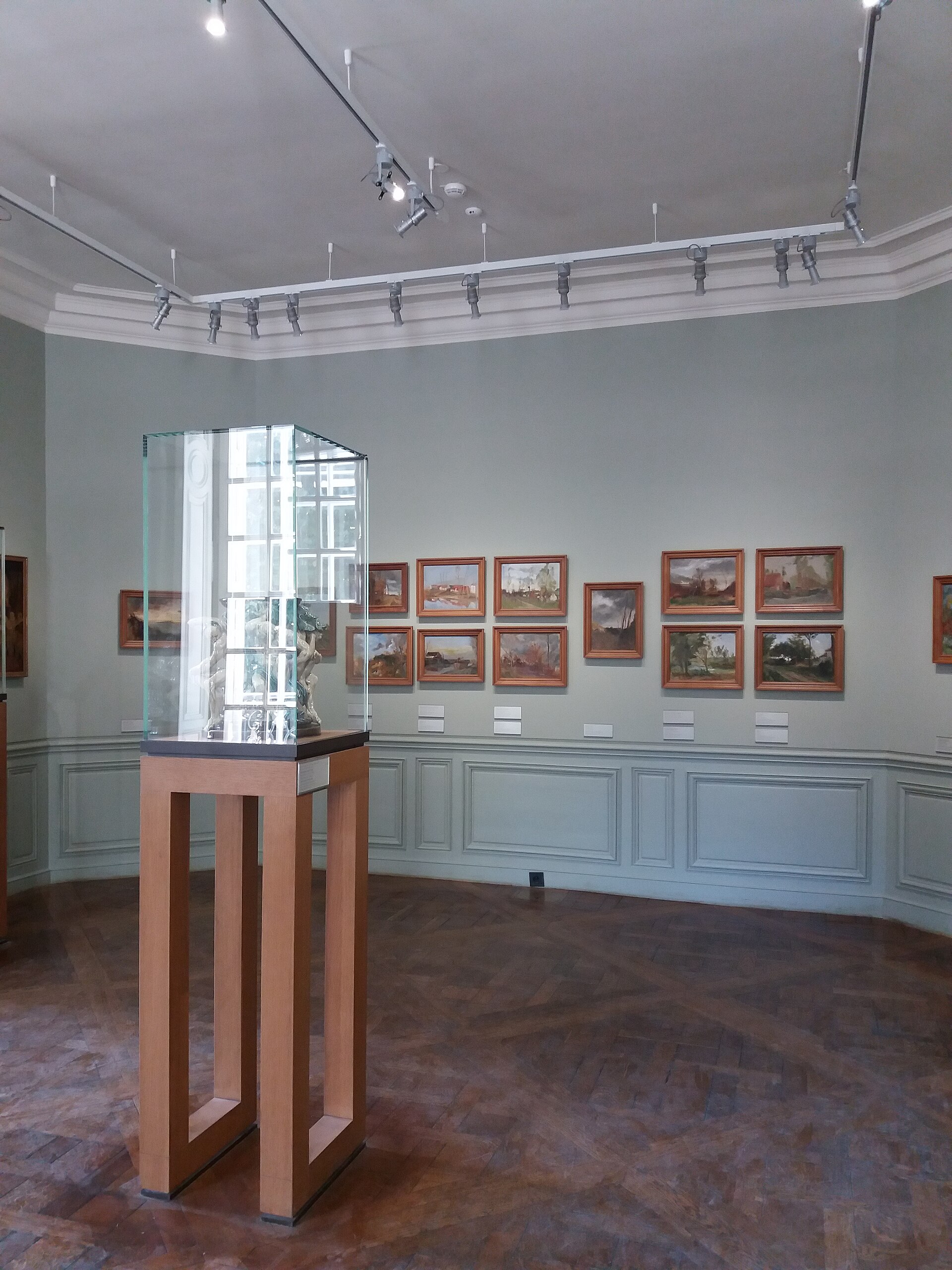
A ground-floor galleryOne of the museum's ground-floor rooms, photographed here hung with a group of landscape paintings; the museum rotates what is shown in some rooms, so this is a record of one hang rather than a fixed display.CC0
Sources
33
1Musee Rodin, homepage: current opening hours, adult price headline, and notice of the Meudon site's 2026 season. musee-rodin.fr/en
2Musee Rodin, Plan your visit: hours, closed days, address, phone, email, transport, bags policy, cafe, shop hours, and the accessibility and photography information the page does and does not give. musee-rodin.fr/en/plan-your-visit/plan-your-visit-musee-rodin
6Musee Rodin, Hotel Biron: construction by Jean Aubert 1727-1732, Rodin's discovery of the building in 1908, and the 1916 donation and 1919 opening. musee-rodin.fr/en/museum/musee-rodin/hotel-biron
8Musee Rodin, 1840-2015 chronology: 1908 discovery via Rilke, 1916 donation, 1917 death, 1919 opening, and the dated entries on the Rodin-Claudel relationship (1882, 1884, 1892). musee-rodin.fr/en/resources/rodin-life/1840-2015
9Musee Rodin, Respecting Rodin's moral right: Decree No. 93-163 of 2 February 1993, Article R.122-3 of the intellectual property code, the twelve-cast limit and its numbering, and Decree No. 81-255 on marking reproductions. musee-rodin.fr/en/professionnals/respecting-Rodins-moral-right
10Musee Rodin, The Sculpture Garden: garden size (seven acres), the rose gardens, and the stated positions of The Thinker, The Gates of Hell, the Burghers of Calais, Ugolino and His Sons, Orpheus and the Monument to Balzac. musee-rodin.fr/en/museum/musee-rodin/sculpture-garden
11Musee Rodin, self-guided tour information for adult groups: garden size given as more than three hectares, the choice between Hotel Biron and temporary-exhibition tickets, and that only the Studio Rodin in the Chapel is air-conditioned. musee-rodin.fr/en/plan-your-visit/groups/self-guided-tour/adults
13Musee Rodin, The Thinker: the 1880 conception, the 1904 enlargement and cast by the Fonderie Alexis Rudier, the 1906 Pantheon installation, the 1922 transfer to the Hotel Biron garden, inventory S.01295, and the separate cast at Rodin's tomb in Meudon. musee-rodin.fr/en/musee/collections/oeuvres/thinker
14Musee Rodin, The Gates of Hell: the 1880-1890 creation period, the 1917 reconstruction agreed with curator Leonce Benedite, and the 1928 first bronze cast for the museum. musee-rodin.fr/en/musee/collections/oeuvres/gates-hell
17Musee Rodin, Monument to Balzac: the 1891 commission, 1897 completion, the 1898 Salon rejection by the Societe des Gens de Lettres, and the 1935 posthumous cast, inventory S.01296. musee-rodin.fr/en/musee/collections/oeuvres/monument-balzac
18Musee Rodin, The Age of Bronze: the 1877 Brussels and Paris showings, the accusation of casting from a live model, and its display location, ground floor Room 3. musee-rodin.fr/en/musee/collections/oeuvres/age-bronze
21Musee Rodin, The Waltz (or The Waltzers): Camille Claudel's bronze of about 1893, its 1893 Salon presentation, its display location, first floor Room 16, and the page's own dating of the end of her relationship with Rodin to 1898. musee-rodin.fr/en/musee/collections/oeuvres/waltz-or-waltzers
24Wikidata, Musee Rodin (Q650519): label, instance of, country, located-in, coordinates and official website, used as the machine identity and cross-checked against the museum's own address. wikidata.org/wiki/Q650519
27The Art Newspaper, 'Musee Rodin in Paris casts new bronzes to offset losses from Covid-19 crisis', 8 July 2020: the roughly 30 percent revenue share from bronze sales, the EUR 11 million normal annual revenue, the 2018 quadrupling of eligible works, The Thinker's exhausted 12-cast limit, and director Catherine Chevillot's quoted strategy. theartnewspaper.com/2020/07/08/musee-rodin-in-paris-casts-new-bronzes-to-offset-losses-from-covid-19-crisis
30Wikipedia, Musee Rodin: the mansion's construction and early owners, the 1820-1904 occupation by the Society of the Sacred Heart of Jesus, the 1876 chapel by architect Jean-Juste-Gustave Lisch, the 1904 closure under the law barring religious teaching orders, and the Meudon site's separate history (Villa des Brillants, bought 1895, opened as a museum in 1948). Tertiary source, used only for these machine and background facts. en.wikipedia.org/wiki/Mus%C3%A9e_Rodin
32Wikimedia Commons, Category:Hotel Biron and Category:Musee Rodin: the plates on this page, with the licence of each verified per file at fetch time from extmetadata, and each candidate downloaded and looked at before use. commons.wikimedia.org/wiki/Category:H%C3%B4tel_Biron
One artwork and its story every Tuesday, with the picture: who owned it, what it made, and what closes soon in the exhibition calendar. No promotion, and nothing we cannot cite.
We send one email to confirm the address and keep nothing else. Every letter carries a one-click unsubscribe. How we handle your data.
 Paris, France