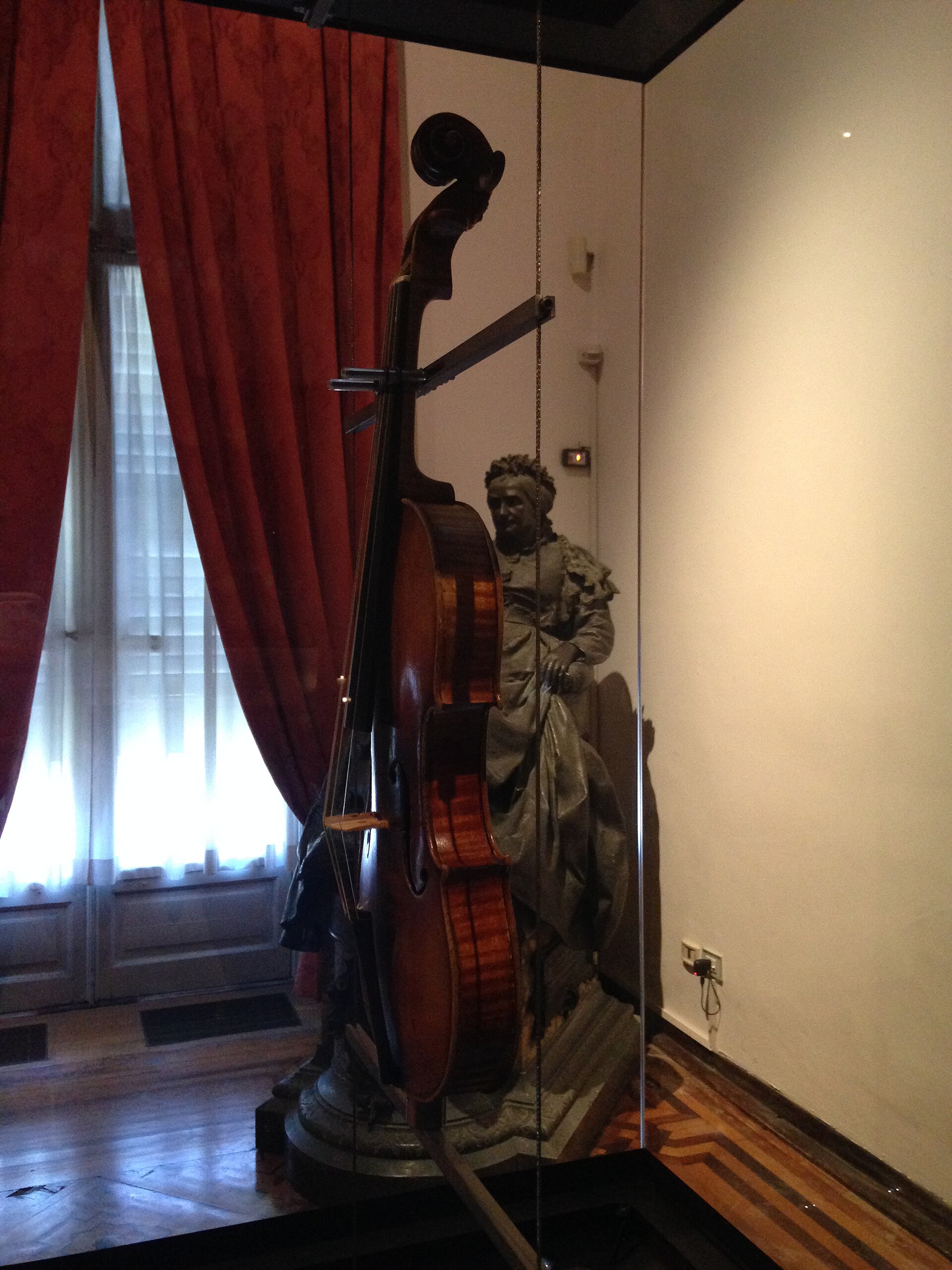
Il Cannone
1743 · Maple back
Sala Paganiniana, Palazzo Tursi
 Italian (Cremonese) · 1698-1744
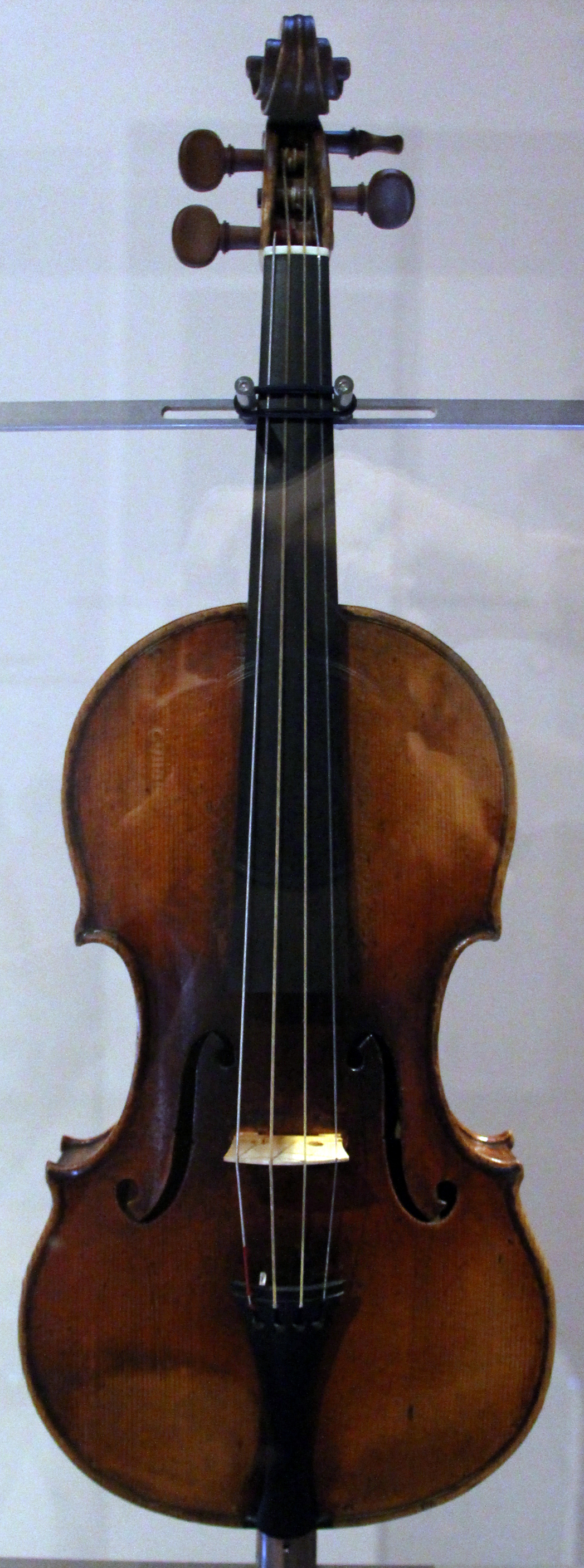
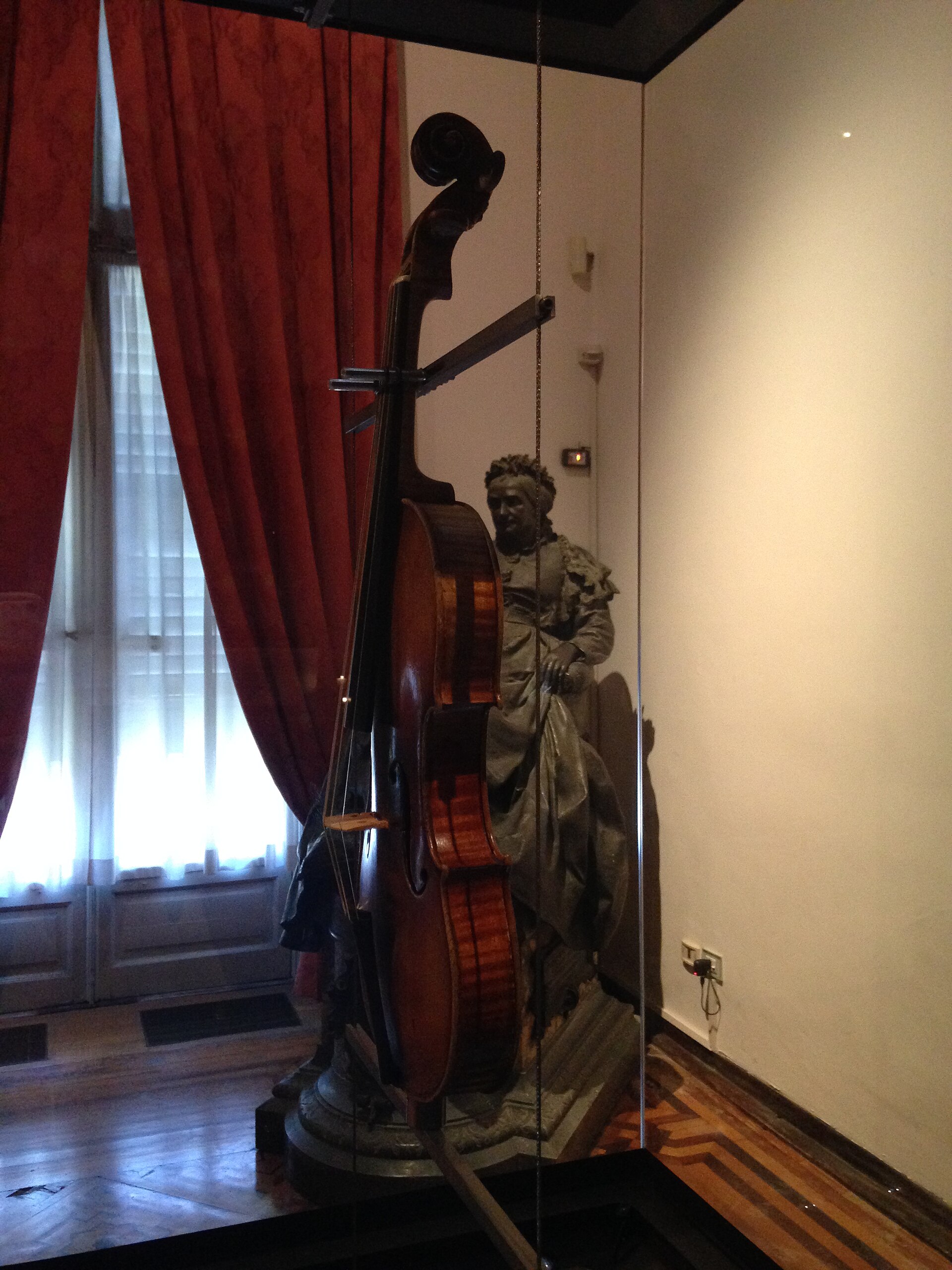
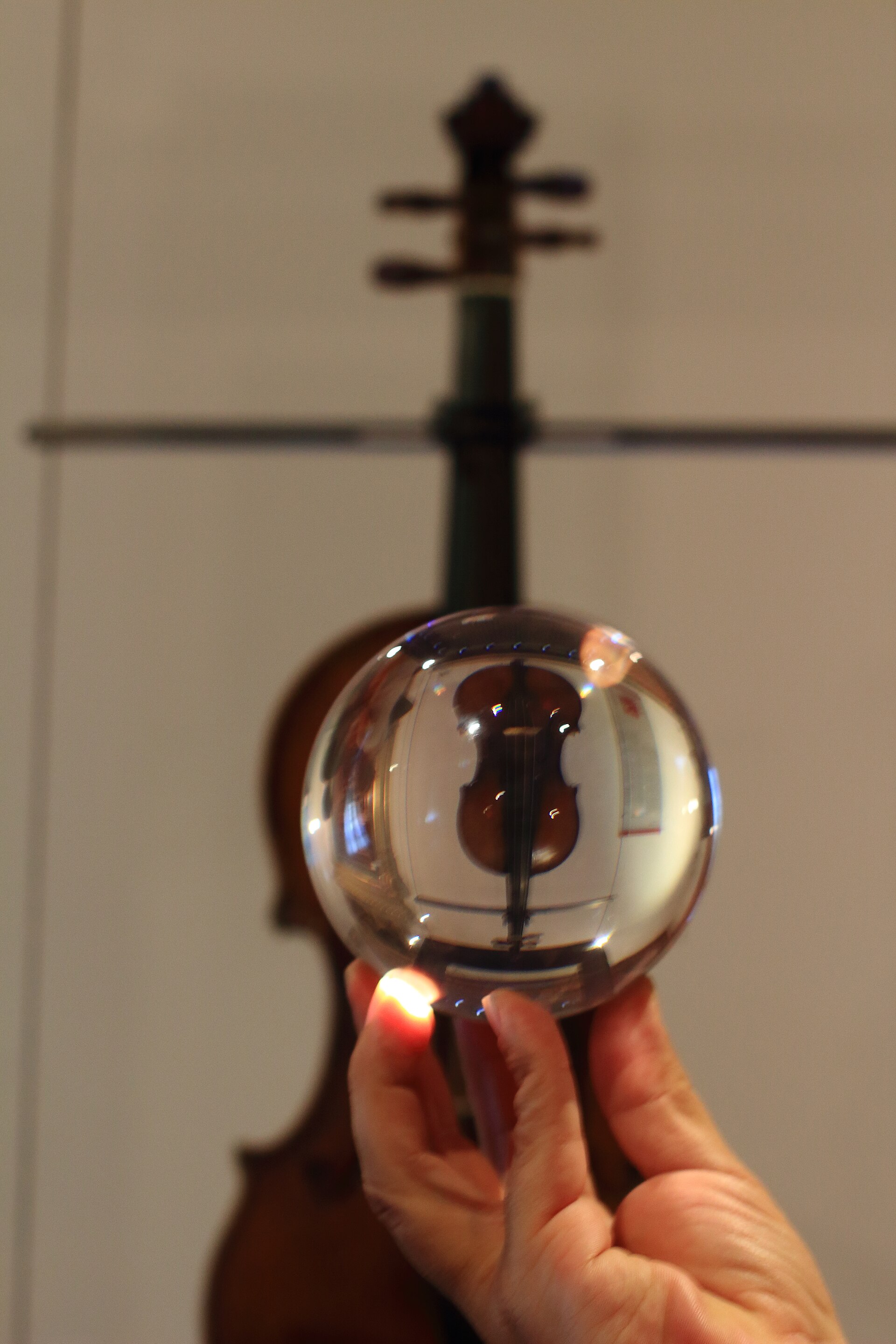
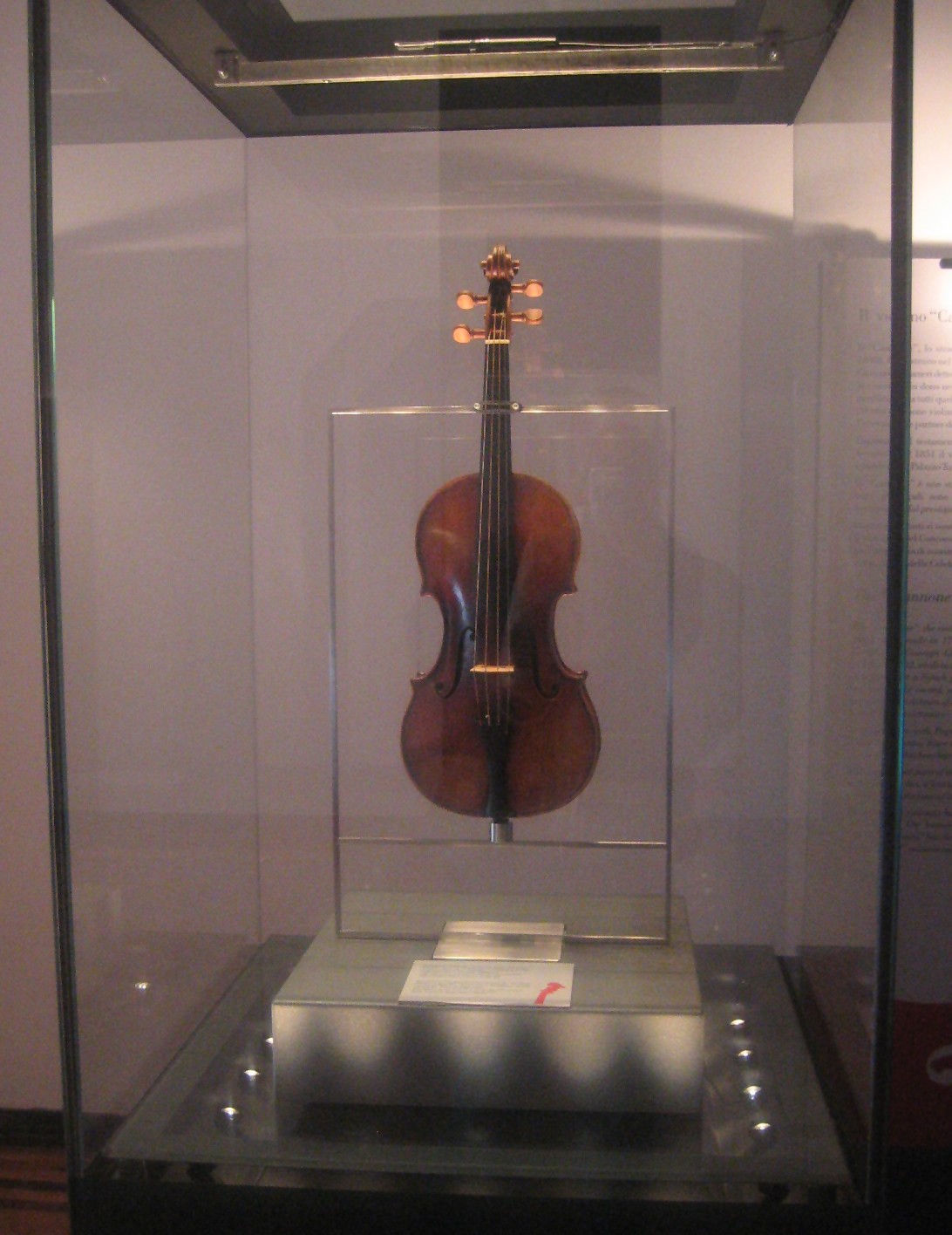
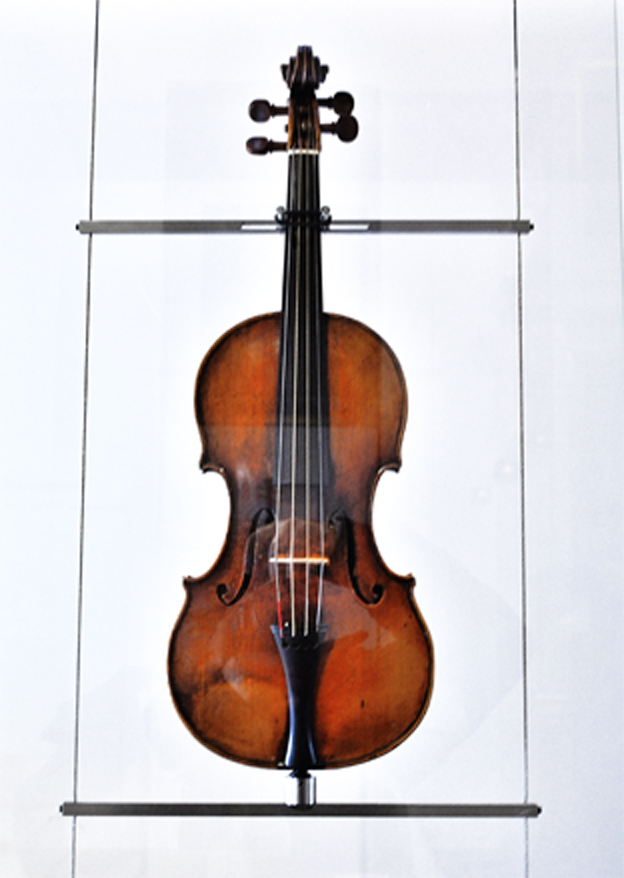
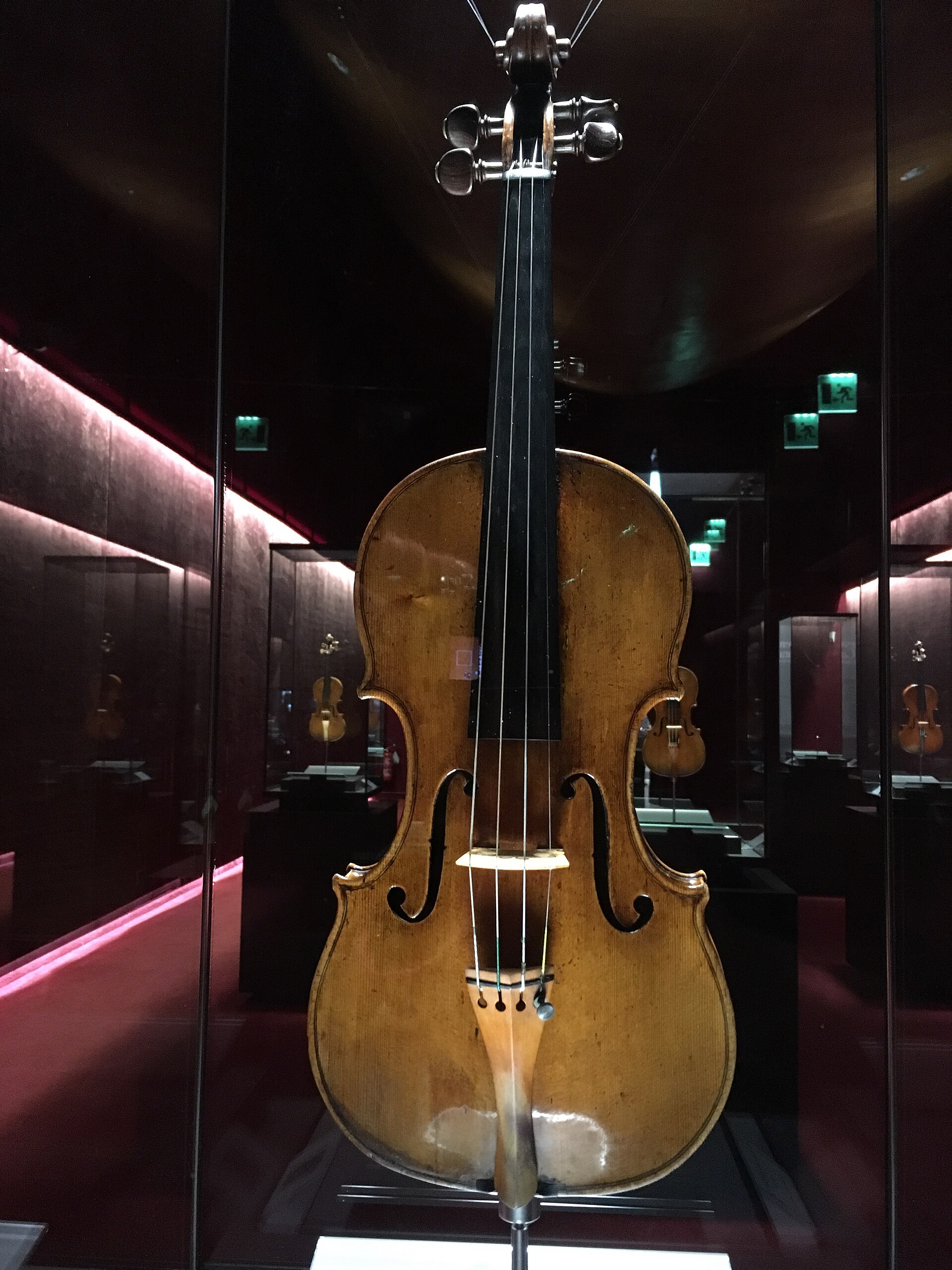
Il Cannone, on display Guarneri del Gesu's 1743 violin Il Cannone, photographed on display at Palazzo Doria-Tursi, Genoa. This maker's single best-documented surviving instrument. No verified portrait. No securely identified likeness of this maker is known under a free licence. We do not publish a face we cannot verify.
Photo Sailko, via Wikimedia Commons, CC BY-SA 3.0| Full name | Bartolomeo Giuseppe Guarneri, called del Gesu |
|---|---|
| Worked as | Luthier |
| Born | baptized 21 August 1698 (no separate birth record has been... · Cremona, Duchy of Milan (now Lombardy, Italy) |
| Died | 17 October 1744, aged 46 · Cremona |
| Nationality | Italian (Cremonese) |
| Movement | Cremonese school of violin making |
| In this archive | 1 artwork |
| Sources | 26 cited |
| Last verified |
About this page 1 artwork in the archive · Last verified · 26 sources cited
Giuseppe Guarneri worked in Cremona for less than twenty years, died at forty-six while every other maker in his family lived into old age, and left behind a body of instruments that is smaller, harder to count, and today more expensive at the top end than the far larger corpus of his townsman Antonio Stradivari. He is called del Gesu, of Jesus, for the sacred monogram IHS he began stamping on his labels around 1731, a nickname that only entered use decades after his death and that Count Cozio di Salabue was among the first to record. No document from his own lifetime uses it.
The name on the page hides a real risk of confusion. Guarneri was the family trade: his grandfather Andrea founded the workshop, his father was also a Giuseppe, and one of the two labels this maker used in his twenties describes him as Andrea's grandson rather than as an independent name in his own right. Two Cremonese makers named Giuseppe Guarneri, father and son, worked within a few streets and a few years of each other, and instruments have been sorted between them on connoisseurship for a century and a half.
No portrait of him survives that scholarship accepts. The corpus itself is disputed even in its headline number: sources consulted for this page range from roughly 150 to just under 200 surviving instruments, almost all violins, out of a working life that some estimates put at 250 to 300 made in total. That range, not a single tidy figure, is the honest starting point for everything else on this page.
Baptized Bartolomeo Giuseppe in Cremona, 21 August, youngest son of the violin maker Giuseppe Guarneri filius Andreae.17
Marries Catarina Rota, a woman of German descent.3
Sets up an independent workshop while his father is still working, an unusual step in Cremona at the time.13
Earliest surviving instrument with his first personal label, Joseph Guarnerius Andreae nepos: the violin later called the von Vecsey, the only known survivor of this label type.1
Adopts the label most associated with his name, Joseph Guarnerius fecit Cremonae, with the IHS Christogram, which later gives him the posthumous nickname del Gesu.34
His father completes a cello under his own label that some specialists believe was finished in the son's hand, the only cello sometimes associated with him.7
Called as a witness to a will by a priest in Cremona, documentary evidence of his standing as a trusted member of the community.3
Makes the violin today known as the Stauffer, now in the collection of the Museo del Violino, Cremona.24
His father dies; he appears in the record managing family debts and caring for his aging parents in this period.3
Makes the violin later called the Vieuxtemps, sold privately in 2012 for a reported price in excess of 16 million dollars.8
Makes the violin later called the Lord Wilton, owned and played by Yehudi Menuhin for two decades in the twentieth century.19
Makes the violin later called Il Cannone, given by an unnamed benefactor to the young Niccolo Paganini within the following decade.6
Dies in Cremona, 17 October, aged 46, after receiving the sacraments; his last documented instrument is recorded as made with notably poor beechwood.23
Niccolo Paganini acquires Il Cannone; the exact year is not agreed between institutional and archival sources.622
W. E. Hill and Sons publish The Violin-Makers of the Guarneri Family, 1626-1762, the founding modern catalogue of the whole family including this maker.18
W. E. Hill and Sons make a replacement facsimile label for the Baltic violin, so accurate it is later mistaken for the original.5
Fritz Kreisler donates his del Gesu violin, made around 1730, to the Library of Congress in Washington.1213
The Nippon Music Foundation is founded in Tokyo and begins acquiring Stradivari and Guarneri del Gesu instruments to lend to young professional string players.11
The collector David L. Fulton buys the Lord Wilton privately for 6 million dollars, a record for a violin at the time.19
Philip E. Margolis founds the Cozio Archive, later acquired and operated by the dealer and auction house Tarisio.1
Charles Beare retires from J and A Beare, the London dealing firm most closely associated with authenticating Stradivari and Guarneri del Gesu instruments; his sons Peter and Freddie Beare take over.19
The Baltic violin, c. 1731, sells at auction through Tarisio for 9.44 million dollars, the auction record for the maker.9
A 1727-1730 del Gesu violin sells at Artcurial, Paris, for 2,314,800 euros with premium, carrying certificates from three separate specialists plus a fresh dendrochronological reading.10
Del Gesu instruments were not highly prized in the eighteenth century, when most soloists preferred Stainer and Amati; a documented shift toward his instruments followed specifically from Paganini's use of Il Cannone in the early nineteenth century. Today his violins sell for among the highest prices of any maker, but the largest sales are mostly private and reported rather than public and verifiable. The clearest public auction result, the Baltic at 9.44 million dollars in 2023, and the largest reported private sale, the Vieuxtemps at over 16 million dollars in 2012, are of two different, not directly comparable kinds, and this page keeps them apart rather than treating them as one ranked list.
| Date | Sale | Work | Result | Note |
|---|---|---|---|---|
| 16 March 2023 | Tarisio | Violin, c. 1731, called the Baltic | Hammer not separately published With premium USD 9.44 million (GBP 7.78 million) USD | Public auction record for the maker, surpassing a previous auction record of USD 3.6 million; reported as the third highest price paid for a musical instrument at public auction. The source did not itemise hammer separately from the total including buyer's premium. |
| 16 December 2025 | Artcurial, Paris | Violin, 1727-1730 (head c. 1710, separately attributed to Giuseppe Guarneri filius Andreae) | Hammer not separately published With premium EUR 2,314,800 EUR | From the private collection of Philippe Dennery, passed by inheritance. Sold with certificates from Peter Biddulph (2020), Dmitry Gindin (2021) and J and A Beare (2023), plus dendrochronology by Versteeg (April 2025). |
| 2012 | Private sale via J and A Beare with Paolo Alberghini and Julie Reed Yeboah | Violin, 1741, called the Vieuxtemps | Hammer not applicable (private treaty sale) With premium reported in excess of USD 16 million USD | Reported by The Economist, December 2013. Not a public auction result and not independently verifiable in the way a hammer price is; buyer anonymous, placed on lifetime loan to violinist Anne Akiko Meyers. |
| 1999 | Private sale | Violin, 1742, called the Lord Wilton | Hammer not applicable (private sale) With premium reported USD 6 million USD | Bought by the collector David L. Fulton from the estate of Yehudi Menuhin; described at the time as a record price for a violin. |
Hammer is the price at which the bidding stopped; with premium adds the fee the house charges the buyer on top. Hammer price and buyer's premium in the glossary.
| Institution | City | Holdings | Note |
|---|---|---|---|
| Museo del Violino | Cremona, Italy | The 1734 violin known as the Stauffer, alongside instruments by Stradivari and the Amati family | Displayed in the city where all three families worked. |
| Comune di Genova, Palazzo Doria-Tursi | Genoa, Italy | Il Cannone, 1743, Paganini's own instrument, municipal property since 1851 | Occasionally lent for performance to named soloists rather than kept purely as a display object; see this maker's fuller record on this site for the instrument's own provenance. |
| Library of Congress | Washington, D.C., United States | The Kreisler del Gesu, c. 1730, donated by Fritz Kreisler in 1952 | Still used for performances given at the library. |
| Glinka National Museum of Musical Culture | Moscow, Russia | A 1742 violin, part of the Russian State Collection | One of the largest state-owned historical instrument collections. |
| Osterreichische Nationalbank, collection of historical string instruments | Vienna, Austria | Violins dated 1731 and 1741 | Held within the national bank's own historical instrument collection rather than a conventional museum. |
| Nippon Music Foundation | Tokyo, Japan (instruments loaned worldwide) | Part of a combined holding of 21 Stradivari and Guarneri del Gesu instruments, including the 1736 Muntz | Lent to professional string players, typically under 35, rather than kept in storage; not open to public display in the ordinary sense. |
The maker this page describes was baptized in 1698, the youngest son of another violin maker also named Giuseppe Guarneri, himself identified in his own labels as filius Andreae, son of Andrea.
The maker this page describes was baptized in 1698, the youngest son of another violin maker also named Giuseppe Guarneri, himself identified in his own labels as filius Andreae, son of Andrea. Andrea Guarneri, who trained under Nicolo Amati, founded the family workshop in the mid seventeenth century; his two sons, Pietro Giovanni Guarneri and Giuseppe filius Andreae, both made instruments, and Giuseppe filius Andreae's own two sons, Pietro Guarneri of Venice and this maker, did the same. Three generations, and across them the given name Giuseppe appears twice.
The distinguishing nickname del Gesu was not contemporary. It was applied by later experts, Cozio di Salabue among the first, specifically to separate the son's instruments from the father's, and it stuck because it was useful rather than because anyone who knew him used it. A cataloguer who is careless about which Giuseppe Guarneri a given violin belongs to is making exactly the error the nickname exists to prevent.
No apprenticeship record for him with anyone outside the family has been located; the documentary record has him working as his father's assistant for roughly fifteen years before setting up on his...
No apprenticeship record for him with anyone outside the family has been located; the documentary record has him working as his father's assistant for roughly fifteen years before setting up on his own account around 1726, at about age thirty. That was an unusual step in Cremona at the time. Before him, the sources consulted here credit only Vincenzo Rugeri with working independently while a father or master in the same trade was still active in the same city.
His earliest instruments carry a label reading Joseph Guarnerius Andreae nepos, grandson of Andrea, naming the famous grandfather rather than his own working father. Only one violin bearing this early label is known to survive today, the 1728 instrument called the von Vecsey. He married Catarina Rota, a woman of German descent, in 1722, the same period as his move toward independence.
Around 1728 to 1729 he replaced the Andreae nepos label with the one now associated with his name: Joseph Guarnerius fecit Cremonae anno, followed by the year, with the Christogram IHS beneath a...
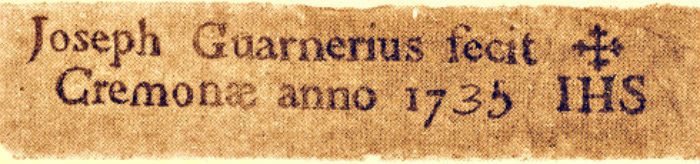
Around 1728 to 1729 he replaced the Andreae nepos label with the one now associated with his name: Joseph Guarnerius fecit Cremonae anno, followed by the year, with the Christogram IHS beneath a cross fleury. The IHS monogram was an ordinary Catholic devotional symbol in eighteenth century Cremona and still appears decoratively on building facades in the city; sources consulted here could not establish a specific reason he adopted it for his workshop mark beyond the plain religious meaning, and this page treats any more particular explanation as unresolved rather than settled.
The label itself has become one of the most argued-over objects in the string trade. Specialists describe real difficulty telling a genuine printed label from a good imitation with confidence. The trade reference consulted here on this point states that authentic labels do not spell out the Latin place-name as the two written letters Cremonae the way many reproductions do, and separately identifies a specific Vuillaume-made copy that instead uses the Italian form Cremona; the same source also records a label carrying the disputed Cremonae spelling on an old, seriously questioned instrument. This page treats the letterform as one detail worth checking rather than a single clean rule, since even the source describing it found an exception.
Specialists divide his output into an earlier and a later manner, with a transitional middle stretch between them.
Specialists divide his output into an earlier and a later manner, with a transitional middle stretch between them. Early work, roughly the years either side of 1730, keeps flatter front plates, lower arching, and soundholes cut upright and widely spaced in a manner that shows the influence of Carlo Bergonzi; the scroll is narrow, with a small and neat chamfer.
After about 1740 the model changes sharply. The upper soundhole wings turn short and truncated in 1740 and 1741; by 1743 they take on what specialists describe as a more swaggering, asymmetrical stance; by 1744, his last working year, the lower wings extend into broad paddle shapes that sweep around the lower eye of the hole. Scroll cutting in this period reverts to an earlier pattern but is worked with much greater freedom, the volutes apparently cut freehand rather than pricked out from a fixed pattern first. Varnish in these years is inconsistent, sometimes a lavish red of the kind seen on the Cannone, sometimes a thin wash closer to Amati gold, and his very last instrument is recorded as using notably poor beechwood, a falling off from the quality of material he had used earlier. This late, freer manner is the one most prized by today's market and most often meant when a player or dealer simply says a del Gesu.
Beyond the label, specialists read a genuine del Gesu from the wood, the varnish and the toolmarks together, not from any one feature alone.
Beyond the label, specialists read a genuine del Gesu from the wood, the varnish and the toolmarks together, not from any one feature alone. The scroll and pegbox are typically cut from unflamed maple; the two piece, quarter cut back carries fairly tight figure in a V pattern descending from the centre seam; and deeply cut volutes, worked with a distinctive gouge action, are treated by specialists as one of the more diagnostic marks of his own hand rather than a workshop assistant's. The varnish is usually described as a reflective, golden ground under a reddish orange brown top coat, though as the late-period instruments show, this was not applied with total consistency even within his own lifetime.
A 2009 chemical study published in PLOS ONE examined wood from instruments by both Stradivari and Guarneri and found mineral compounds including borax, not naturally present in wood, embedded in the fibres of an early Guarneri violin among the samples tested, alongside similar findings in Stradivari material. The study frames this as evidence the Cremonese makers, or the wood merchants who supplied them, treated the wood with mineral preservatives before it was carved, though the sources consulted here do not report this finding as independently replicated by a separate laboratory, and it should be read as an active, argued line of research rather than a settled explanation of tone.
How many instruments by this maker survive is not a settled question, and the range matters more than any single figure repeated without its source.
How many instruments by this maker survive is not a settled question, and the range matters more than any single figure repeated without its source. The Cozio Archive, the documentary register built by Philip E. Margolis in 2003 and now operated by the dealer and auction house Tarisio, is generally cited in trade sources as counting roughly 150 surviving instruments. A separate tertiary account gives a figure of fewer than 200. Total lifetime production, from a working career of under twenty years at an estimated rate of around ten instruments a year, is estimated in the range of 250 to 300, meaning a substantial share of everything he made is lost, destroyed or simply undocumented.
Almost the entire surviving corpus is violins. The sources consulted here found no positive documentary evidence that he made a viola. A single cello bearing a label of his father's from 1731 is sometimes described as having been completed in the son's hand, but this is a workshop attribution inside a family firm rather than a clearly independent cello of his own conception, and this page does not count it as settled either way. The contrast with Stradivari, whose surviving corpus of roughly 650 instruments includes about fifty cellos and around a dozen violas, is real and is one of the clearest structural differences between the two names.
There is no standing authentication board for violins in the way some painters' estates or foundations issue rulings.
There is no standing authentication board for violins in the way some painters' estates or foundations issue rulings. In practice, authority sits with a small number of specialist dealers and archives whose certificates the trade and the insurers accept. The foundational scholarly catalogue remains The Violin-Makers of the Guarneri Family, 1626-1762, published in 1931 by the London dealing firm W. E. Hill and Sons, itself a family of violin makers and dealers with direct access to a large share of the surviving instruments in its own trading history.
Today the London firm J and A Beare is named repeatedly in trade sources as the leading dealer in Stradivari and Guarneri del Gesu instruments, and Charles Beare, who ran the firm for decades before his sons Peter and Freddie Beare took it over after his 2012 retirement, is reported to have personally studied 57 Guarneri instruments during his training. The Cozio Archive, run by Tarisio, functions as the working documentary register the trade consults for provenance and price history rather than as a ruling authority in its own right. A instrument offered for sale today typically carries certificates from more than one of these sources rather than a single decisive one: a violin sold at the Paris house Artcurial in December 2025, for example, carried certificates from the dealer Peter Biddulph dated 2020, from the specialist Dmitry Gindin dated 2021, and from J and A Beare dated 2023, plus a dendrochronological reading commissioned in April 2025, stacked rather than substituting for each other.
The instruments now among the most expensive in the world were not particularly prized when new.
The instruments now among the most expensive in the world were not particularly prized when new. A trade account consulted for this page states plainly that most soloists working before about 1770 preferred instruments by Jacob Stainer and by the Amati family, and that an Amati violin in the early eighteenth century could be worth several times as much as a new Stradivari, let alone a new Guarneri. This is a dealer's historical account rather than a peer reviewed source and is flagged as such, but it is consistent with the broader, better documented fact that Guarneri del Gesu's reputation was transformed specifically by one player two generations later.
According to the same trade source, it was only after Niccolo Paganini's public performances on the instrument later called Il Cannone that musicians, collectors and dealers began actively searching for del Gesu's violins for their sound rather than buying them as a maker's name. The nineteenth century Paris maker and dealer Jean-Baptiste Vuillaume, who had access to many of the most important Cremonese instruments passing through his workshop for repair and appraisal, took close measurements of and made copies from both the Cannone and Stradivari's Messiah, a documented sign of how central those two specific objects had become to the trade's understanding of both makers by the mid nineteenth century.
Del Gesu instruments today trade at prices that separate them from all but a handful of other makers, and the house habit of keeping a public auction hammer apart from a privately reported figure...
Del Gesu instruments today trade at prices that separate them from all but a handful of other makers, and the house habit of keeping a public auction hammer apart from a privately reported figure matters more here than almost anywhere else on this site, because most of the largest del Gesu sales of the last fifteen years have been private.
The 1741 violin called the Vieuxtemps, previously owned by the Belgian virtuoso Henri Vieuxtemps and later played by Yehudi Menuhin, Itzhak Perlman and Pinchas Zukerman among others, was sold privately in 2012 by J and A Beare in association with the dealers Paolo Alberghini and Julie Reed Yeboah to an anonymous buyer who placed it on lifetime loan to the violinist Anne Akiko Meyers. The Economist reported in December 2013 that the price exceeded 16 million dollars; because this was a private treaty sale rather than a public auction, no hammer and premium split applies and the figure is a reported one, not an independently verifiable result, and this page treats it accordingly.
The clearest public auction result is the violin called the Baltic, made around 1731 and sold through Tarisio on 16 March 2023 for 9.44 million dollars, about 7.78 million pounds, smashing the previous auction record for a Guarneri of 3.6 million dollars and reported as the third highest price ever paid for a musical instrument at public auction. The source consulted did not separately itemise a hammer price against the total including buyer's premium, and this page flags that gap rather than inventing a split. A second, more modest recent public result: a 1727 to 1730 del Gesu violin, its head separately dated to around 1710 and attributed instead to the maker's father, sold at Artcurial in Paris on 16 December 2025 for 2,314,800 euros total including premium, again with no separate hammer figure published in the source consulted. The 1742 Lord Wilton, played for two decades by Yehudi Menuhin, was bought privately by the American collector David L. Fulton in 1999 for 6 million dollars, described at the time as a record for a violin.
The most consistently documented forgery risk around this maker's name is not a fake violin built from scratch to deceive but a genuine old Cremonese or German trade instrument carrying a false or...
The most consistently documented forgery risk around this maker's name is not a fake violin built from scratch to deceive but a genuine old Cremonese or German trade instrument carrying a false or altered label. Specialists state plainly that no one can identify with full confidence which surviving Guarneri labels are original printings and which are later copies, a level of uncertainty that sits underneath even instruments whose maker attribution itself is not in doubt.
The clearest documented case in the sources consulted is not, in the end, a story of deception. The violin called the Baltic lost or had damaged its original label at some point, and in 1939 the London dealing firm W. E. Hill and Sons made a replacement facsimile so accurate, down to imitating two short pen strokes after the printed date, that it was later mistaken for the original by researchers working from it. Dendrochronological analysis by Peter Ratcliff eventually dated the youngest growth rings on the instrument's two wood halves to 1713 on the treble side and 1711 on the bass side, work that resolved the label's status without ever putting the underlying attribution to Guarneri del Gesu in question. It is a caution about how good a well-intentioned facsimile can be, made by the very firm whose scholarship underpins the field, rather than a case of fraud.
Separately, Vuillaume is a documented maker of close copies of specific named Guarneri instruments, including the Cannone, some of which left his workshop carrying labels in imitation of the original. The Italian spelling Cremona rather than the Latin Cremonae on a purportedly period label is treated by specialists as one of the more reliable single tells of a later copy, though never as sufficient on its own against the fuller wood, varnish and toolmark evidence described above.
Very few del Gesu violins remain in the hands of the person who plays them day to day.
Very few del Gesu violins remain in the hands of the person who plays them day to day. The Nippon Music Foundation, founded in Tokyo in 1994, holds 21 instruments by Stradivari and Guarneri del Gesu combined and lends them to professional string players, typically under 35, rather than keeping them in storage; its 1736 del Gesu called the Muntz has been placed with the violinists Youjin Lee and, later, Ulisse Mazzon under this programme. The Stradivari Society, run through the Chicago dealing firm Bein and Fushi, arranges a comparable pattern of patron ownership paired with long term loan to a performing musician for both makers' instruments.
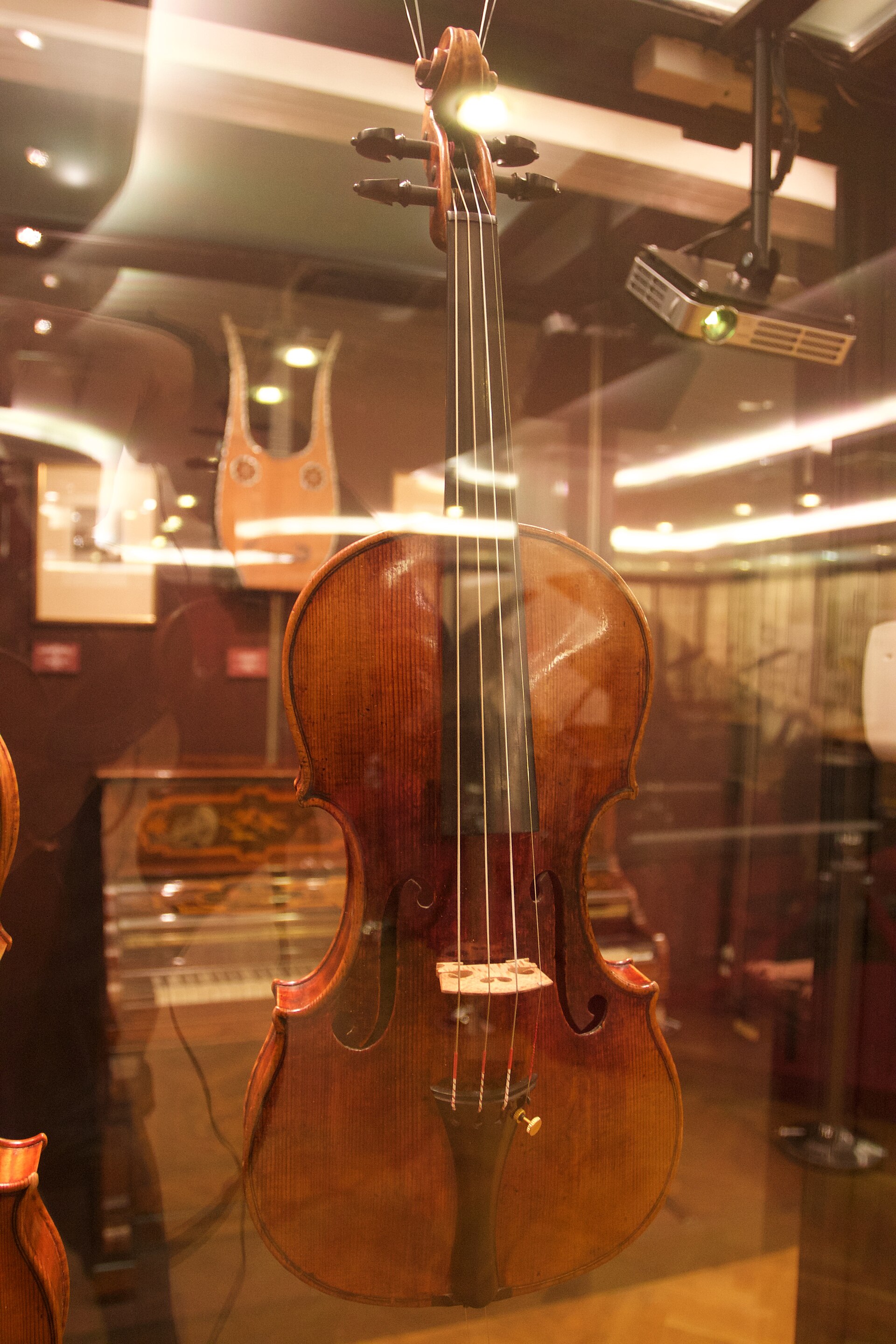
Some instruments sit in public institutions outright. Fritz Kreisler donated his own del Gesu, made around 1730 and today known by his name, to the Library of Congress in Washington in 1952; the appraiser Rembert Wurlitzer wrote at the time that it was possibly the finest concert violin in existence, and it remains in use for performances given at the library. A 1742 example is held in the Russian State Collection at the Glinka National Museum of Musical Culture in Moscow. The Osterreichische Nationalbank in Vienna holds at least two del Gesu violins, dated 1731 and 1741, within its historical instrument collection. Cremona's own Museo del Violino displays the 1734 example known as the Stauffer alongside instruments by Stradivari and the Amati family, in the city where all of them were made.
The best documented del Gesu violin on this site is Il Cannone, made in Cremona in 1743, bequeathed by Paganini and held today by the Comune di Genova at Palazzo Doria-Tursi.
The best documented del Gesu violin on this site is Il Cannone, made in Cremona in 1743, bequeathed by Paganini and held today by the Comune di Genova at Palazzo Doria-Tursi. Its own record on this site carries the fuller provenance and technical detail; in brief here, dendrochronological reading of the belly wood by Peter Klein in 1998 found a youngest growth ring of 1735, consistent with the 1743 build date after normal seasoning, and ultraviolet examination resolved an old cataloguing dispute over the label's final digit, which the Hill firm at one point read as 1742 before UV light confirmed it as a worn 3.
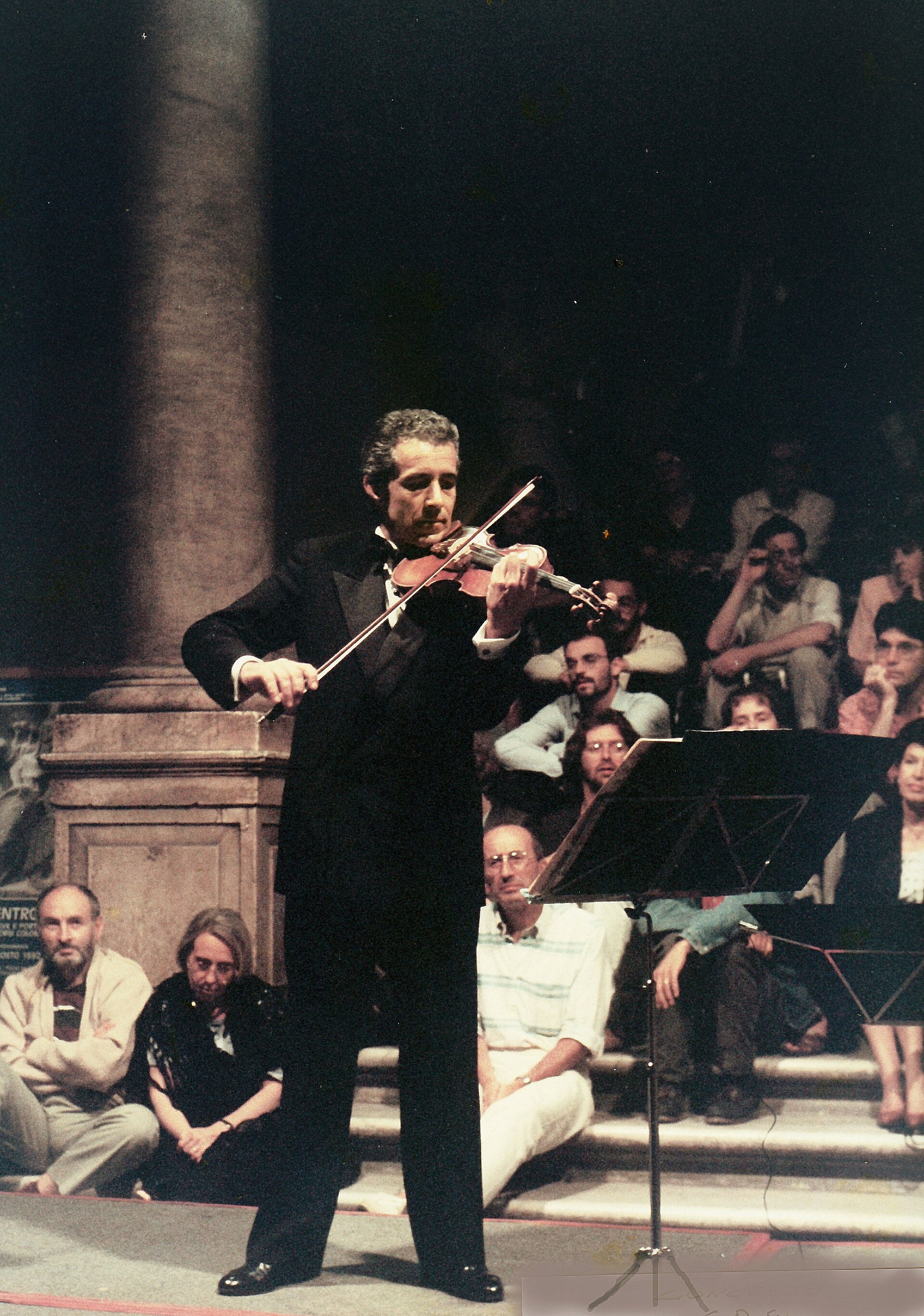
The exact year Paganini acquired the instrument is not agreed across the sources this page and the Il Cannone record both consulted: some institutional accounts place the gift in Livorno in 1802, the Cozio Archive's own provenance chain dates his ownership from 1799, and a general biography implies an even earlier date, while he was still a teenager. This page repeats the Il Cannone record's own decision not to pick one figure to smooth the story. What is well and consistently documented is Paganini's own name for it, il mio cannone violino, and the instrument's continued, carefully managed use in performance rather than purely as a museum object, including named soloists given occasional access to play it into the 2020s.
A legend attached to this maker for generations holds that he spent his final years in prison, making violins there with the help of a jailer's daughter who supplied him materials, a story sometimes...
A legend attached to this maker for generations holds that he spent his final years in prison, making violins there with the help of a jailer's daughter who supplied him materials, a story sometimes used to explain the wildness of his late style. Research summarized by Tarisio, drawing on the documentary work behind the Hill family's scholarship, states this is false: parish and financial records place him living continuously with his wife in a building in the centre of Cremona through his most productive years, receiving communion at Easter, and standing as a trusted witness to a will in 1733, the kind of role not given to a man under criminal suspicion. He also appears in the record caring for his aging parents and managing family debts after his father's death in 1740.
The persistence of the prison story despite this documentary record is itself worth noting as a fact about how his reputation was built after his death, in the same decades that gave him the del Gesu nickname: a dramatic, romantic account filling a real gap in the surviving paperwork about his last years, rather than evidence the gap could not otherwise explain.
Luthier. 1698-1744.
Born baptized 21 August 1698 (no separate birth record has been located), Cremona, Duchy of Milan (now Lombardy, Italy); died 17 October 1744, aged 46, Cremona.
The Baltic violin's 1939 replacement label. The original label was lost or damaged; W. E. Hill and Sons made a facsimile replacement in 1939 so accurate, down to two short pen strokes after the printed date, that it was later mistaken by researchers for an original period label.
Museo del Violino (Cremona, Italy); Comune di Genova, Palazzo Doria-Tursi (Genoa, Italy); Library of Congress (Washington, D.C., United States); Glinka National Museum of Musical Culture (Moscow, Russia); Osterreichische Nationalbank, collection of historical string instruments (Vienna, Austria); Nippon Music Foundation (Tokyo, Japan (instruments loaned worldwide)).
Del Gesu instruments were not highly prized in the eighteenth century, when most soloists preferred Stainer and Amati; a documented shift toward his instruments followed specifically from Paganini's use of Il Cannone in the early nineteenth century. Today his violins sell for among the highest prices of any maker, but the largest sales are mostly private and reported rather than public and verifiable.
How many instruments actually survive: cited figures range from roughly 150 (Cozio Archive, via Tarisio) to just under 200 (a separate tertiary account), against an estimated total lifetime production of 250 to 300.
Last verified
One artwork and its story every Tuesday, with the picture: who owned it, what it made, and what closes soon in the exhibition calendar. No promotion, and nothing we cannot cite.
We send one email to confirm the address and keep nothing else. Every letter carries a one-click unsubscribe. How we handle your data.