Cristina Iglesias
 Living · Spanish · born 1956 · works in Torrelodones
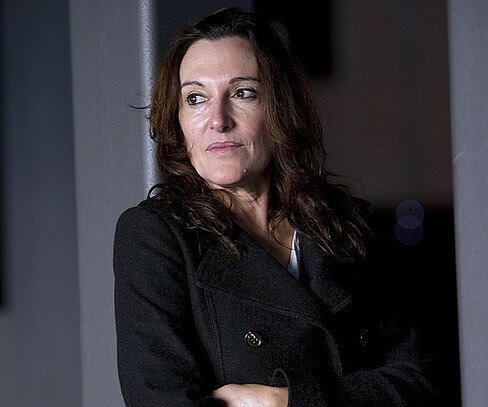
Cristina Iglesias, photographed by the Basque newspaper Berria at the announcement of her 2016 Tambor de Oro (Golden Drum), San Sebastian's principal civic honour.
Photograph by Berria, CC BY-SA 4.0.| Works as | Sculptor |
|---|---|
| Works in | Torrelodones, Spain |
| Represented by | Marian Goodman Gallery, New York and Paris; Galeria Elba Benitez, Madrid; Hauser and Wirth, London |
| Nationality | Spanish |
| Sources | 27 cited |
| Last verified |
About this page Last verified · 27 sources cited
On this page 14 sections
ContentsClose
Iglesias' fountains and doorways are not decorated surfaces built over a hidden mechanism; the mechanism is the sculpture. A work like Tres Aguas in Toledo or Deep Fountain in Antwerp runs on a timed hydraulic cycle, built with engineers, that fills a cast basin, holds a mirror of the surrounding city, and empties again on an interval measured in minutes, so the same work looks different depending on when a visitor arrives. She has said of her method that no piece is ever a copy of an enlarged model: each is modelled directly and cast individually, so two apparently similar works are never quite the same object.
Cristina Iglesias was born in San Sebastian, Spain, in 1956. She began a degree in Chemical Sciences before turning to art, studying sculpture and ceramics at Chelsea School of Art in London, where she met a fellow sculptor she later married. She now lives and works in Torrelodones, near Madrid.
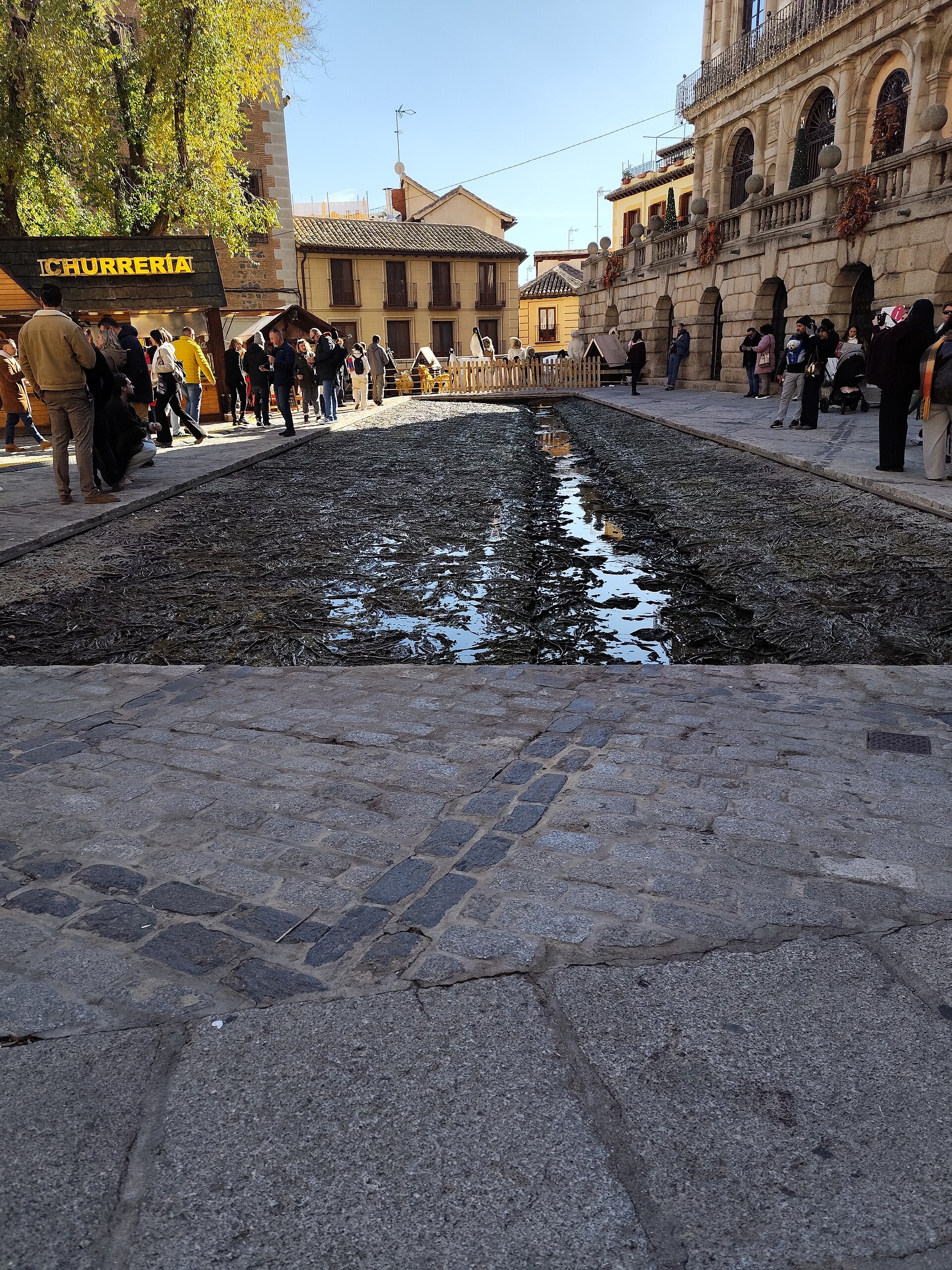
Her large-scale sculptures and site-specific installations combine hard architectural materials, cast bronze, resin, aluminum, steel and glass, with water and cast impressions of vegetation, building spaces that a visitor walks into rather than objects a visitor walks around. Since the mid 2000s this has extended to permanent public commissions built with engineers: the bronze entrance doors of the Museo del Prado's modern extension in Madrid, a tidal fountain at the entrance to the Royal Museum of Fine Arts in Antwerp, and the three-part water sculpture Tres Aguas in Toledo.
She represented Spain at the Venice Biennale in 1986 and 1993, received Spain's Premio Nacional de Artes Plasticas jointly with Pablo Palazuelo in 1999, and was given the largest retrospective of her career to date by the Museo Reina Sofia in 2013. Her work is held by museums including the Reina Sofia, the Centre Georges Pompidou, Tate, MACBA, the Guggenheim Bilbao and the Hirshhorn Museum.
The reading
Museum track Museum retrospectives and major prizes (holdings in ten or more museums, or a retrospective, or a major prize; read off the signals below on every update, never set by hand)
The record shows an artist whose permanent commissions now occupy three of Europe's more visited public spaces: the Prado's own new entrance in Madrid, the forecourt of Antwerp's Royal Museum of Fine Arts, and the main civic square of Toledo. Museum holdings recorded by Spain's own Ministry of Culture span eleven institutions across Europe and the Americas, and the Museo Reina Sofia gave her its largest retrospective to date in 2013. Two national prizes, a Berlin prize, and representation by three galleries across three countries confirm an established international position, even though almost none of that position runs through the auction houses this record could independently check. What is missing from the public record is not recognition but paperwork: no catalogue raisonne, certificate system or published inventory practice for her studio turned up in any source consulted, which is unusual at this level of institutional acceptance and is recorded here as an open question rather than smoothed over.
The signals
The evidence the reading is written from: 23 dated facts, each with its source, by kind (institutional 9, biennales and surveys 3, recognition 5, representation 2, literature 2, practice 2). A signal is something that happened and can be checked: a museum bought a work, a prize was given, a show opened, a lot sold. Nothing here is a prediction.
Show the 23 signals
| Signal | Date | What is recorded | Source |
|---|---|---|---|
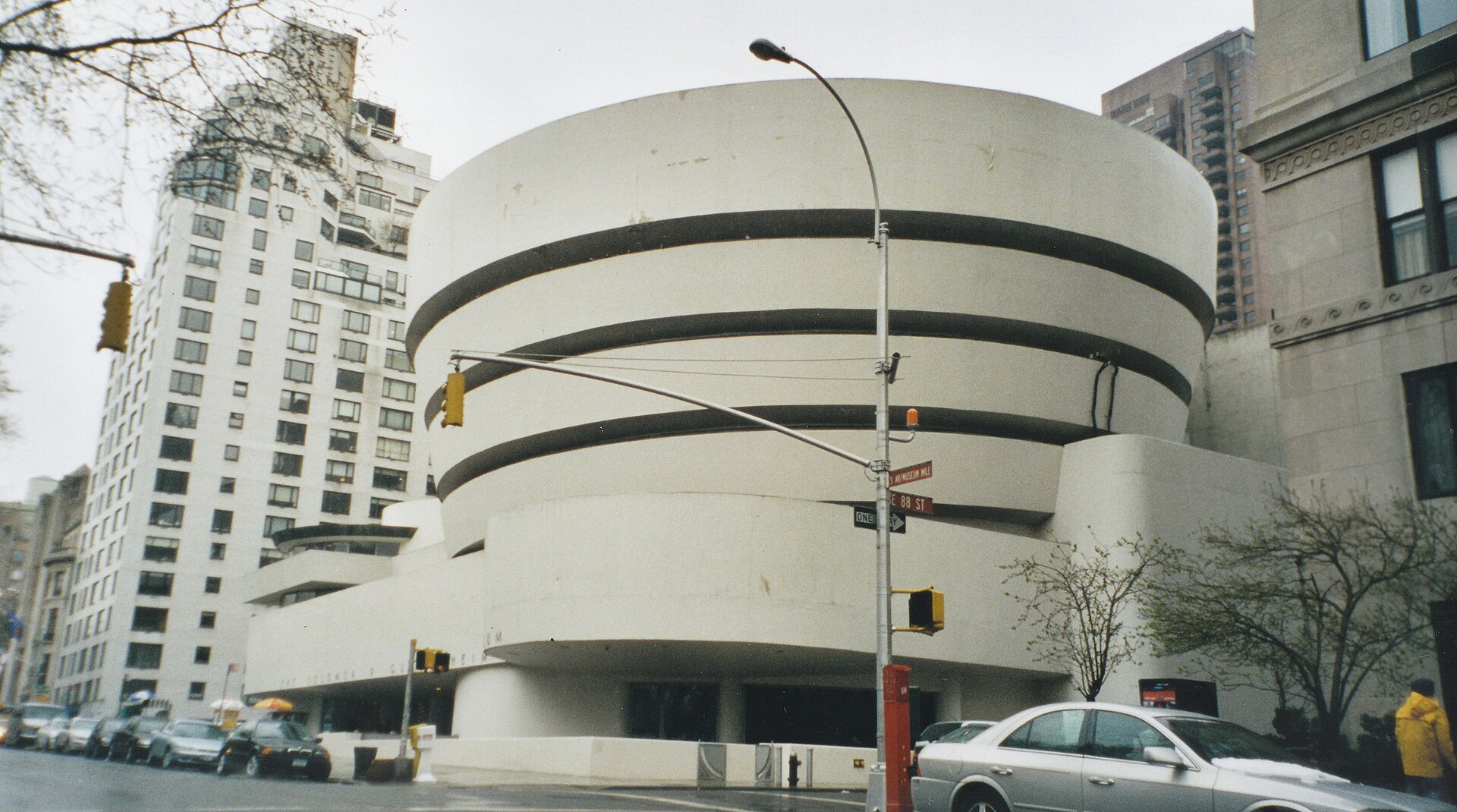
| Institutional | 18 Jun 1997 | Solomon R. Guggenheim Museum, New York, opened a solo touring exhibition of Iglesias' sculpture that later travelled to Chicago, Madrid and Bilbao. | 14 |
| Institutional | 5 Feb 1998 | The same touring exhibition opened at the Museo Nacional Centro de Arte Reina Sofia, Madrid. | 14 |
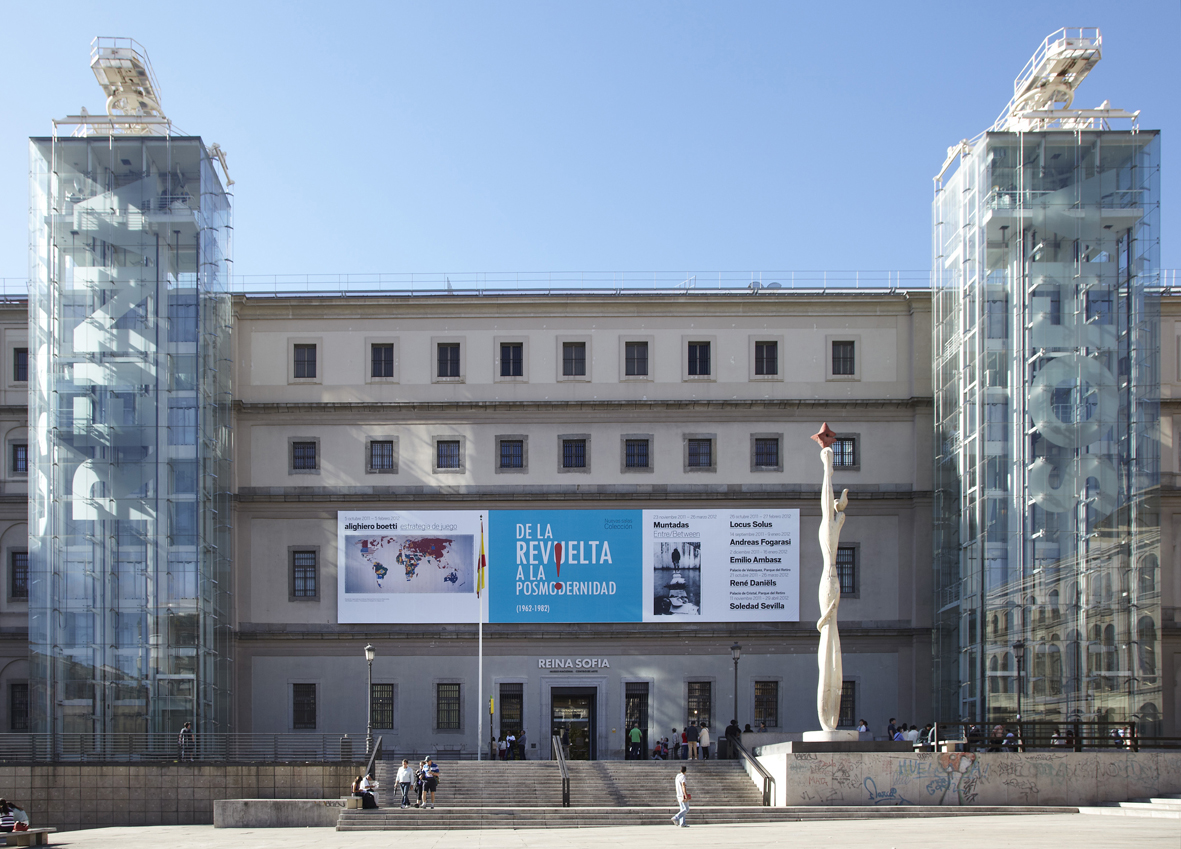
| Institutional | 6 Feb 2013 | Museo Reina Sofia opened Cristina Iglesias: Metonymy, curated by Lynne Cooke, the largest retrospective of the artist to date, with more than fifty works. | 23 |
| Institutional | 6 Oct 2018 | Centro Botin, Santander, opened Cristina Iglesias: Entrespacios, twenty-three works made between 1992 and 2018, curated by Vicente Todoli. | 16 |
| Institutional | 2007 | Porton-Pasaje, six bronze doors six metres high weighing 22 tonnes, was completed for architect Rafael Moneo's extension of the Museo Nacional del Prado, Madrid. | 7 |
| Institutional | 2006 | Deep Fountain, a permanent horizontal fountain, entered the collection of the Royal Museum of Fine Arts Antwerp at the museum's own entrance square. | 24 |
| Institutional | 26 Apr 2014 | Tres Aguas, three permanent water sculptures commissioned by Artangel and El Greco 2014, opened across Toledo and remains an ongoing installation. | 6 |
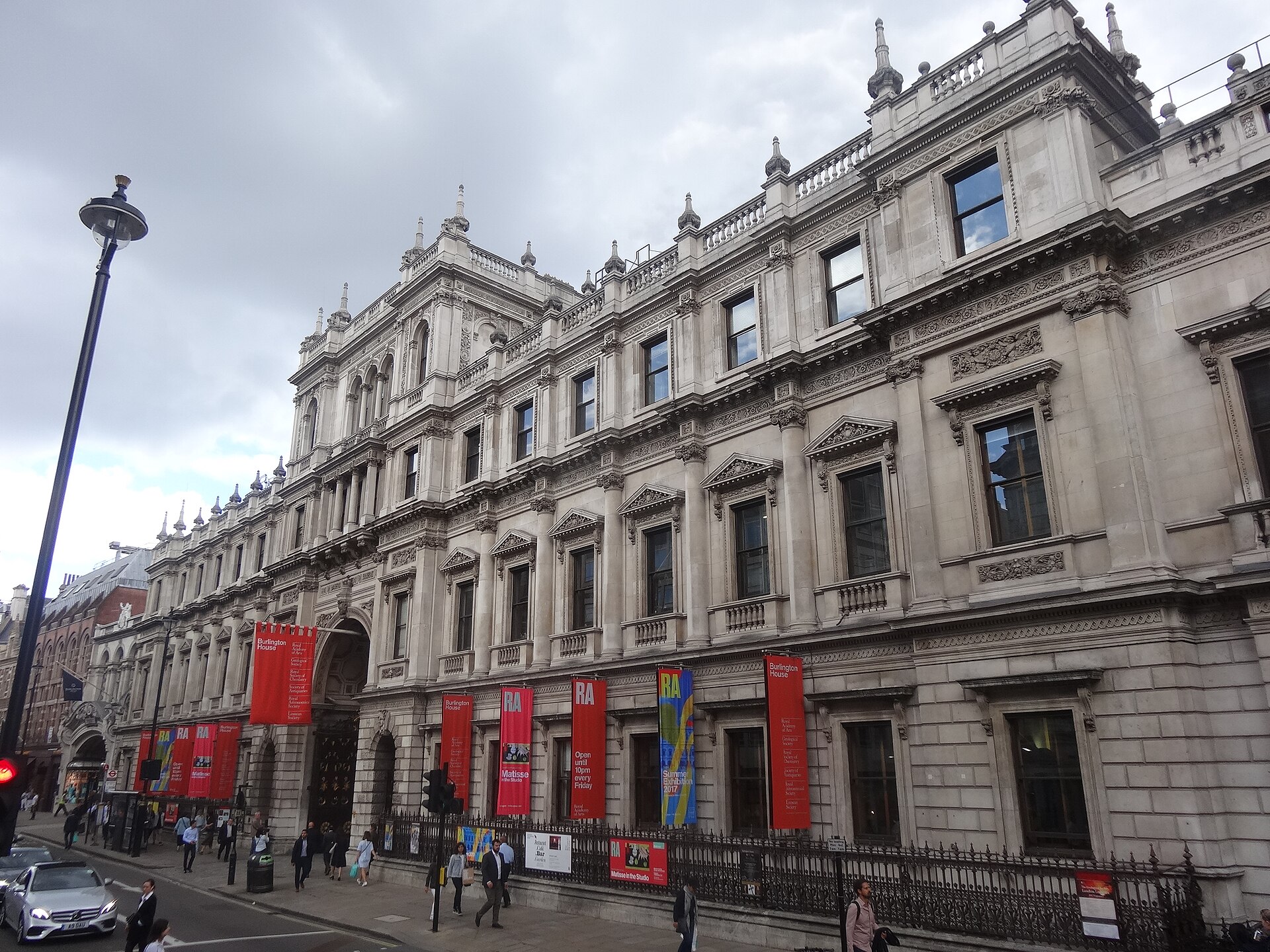
| Institutional | 21 Jun 2022 | The Royal Academy of Arts, London, presented Wet Labyrinth (with Spontaneous Landscape), a site-specific commission for its Annenberg Courtyard. | 17 |
| Institutional | 28 Apr 2023 | Frederik Meijer Gardens and Sculpture Park, Grand Rapids, presented Cristina Iglesias: Under and In Between, her first United States museum survey in more than two decades. | 18 |
| Biennales and surveys | 1986 | Iglesias represented Spain at the Venice Biennale. | 3 |
| Biennales and surveys | 13 Jun 1993 | Iglesias again represented Spain at the Venice Biennale, the same edition at which Antoni Tapies shared the Golden Lion for painting with Richard Hamilton. | 25 |
| Biennales and surveys | 27 Jun 2012 | Iglesias participated in the 18th Biennale of Sydney, all our relations. | 13 |
| Recognition | 1999 | Premio Nacional de Artes Plasticas, Spain's National Prize for Plastic Arts, awarded jointly with Pablo Palazuelo by the Ministry of Culture. | 11 |
| Recognition | 2012 | Grosser Kunstpreis Berlin (Berliner Kunstpreis). | 10 |
| Recognition | 2011 | Premio de Artes Plasticas, third edition of the Premios Observatorio D'Achtall. | 11 |
| Recognition | 2020 | Royal Academy Architecture Prize, London. | 3 |
| Recognition | 8 Jan 2016 | Named recipient of the Tambor de Oro (Golden Drum), San Sebastian's principal civic honour, as reported by Berria. | 27 |
| Representation | 7 Sep 2005 | Marian Goodman Gallery, New York, opened its first exhibition of Iglesias' work and has represented her since. | 12 |
| Representation | 14 Oct 2025 | Hauser and Wirth, London, presented The Shore, Iglesias' first exhibition with the gallery. | 19 |
| Literature | 1997 | Guggenheim Museum Publications published the exhibition catalogue Cristina Iglesias, with essays by Nancy Princenthal, Carmen Gimenez, Adrian Searle and Barbara Maria Stafford. | 14 |
| Literature | 1 Oct 2018 | Sculpture magazine published Jan Garden Castro's interview, Place as Threshold: A Conversation with Cristina Iglesias. | 21 |
| Practice | 1 Oct 2018 | Iglesias described working with a foundry in the Basque Country, modelling directly in wax and casting, so that no piece repeats an earlier one. | 21 |
| Practice | 2022 | For the underwater installation Garden in the Sea, off Baja California, she said she worked for years with marine scientists so the cast structure would encourage coral growth. | 22 |
Exhibitions
Past exhibitions 12
- ClosedCristina Iglesias: Passages9 Oct 2025 to 25 Jan 2026ConfirmedFundacio Catalunya La Pedrera · Barcelona, Spain
- ClosedCristina Iglesias: The Shore14 Oct to 20 Dec 2025ConfirmedHauser and Wirth · London, United Kingdom
- ClosedCristina Iglesias: Under and In Between28 Apr to 24 Sep 2023ConfirmedFrederik Meijer Gardens and Sculpture Park · Grand Rapids, United States
- ClosedWet Labyrinth (with Spontaneous Landscape)21 Jun to 21 Aug 2022ConfirmedRoyal Academy of Arts ·
 London, United Kingdom
 - ClosedCristina Iglesias: Entrespacios6 Oct 2018 to 3 Mar 2019ConfirmedCentro Botin · Santander, Spain
- ClosedCristina Iglesias: Metonymy6 Feb to 10 May 2013ConfirmedMuseo Nacional Centro de Arte Reina Sofia ·Madrid, Spain
- Closed18th Biennale of Sydney: all our relations27 Jun to 16 Sep 2012ConfirmedBiennale of Sydney · Sydney, Australia
- ClosedCristina Iglesias5 Feb to 20 Apr 1998ConfirmedMuseo Nacional Centro de Arte Reina Sofia ·Madrid, Spain
- ClosedCristina Iglesias1 Nov 1997 to 31 Jan 1998ConfirmedThe Renaissance Society · Chicago, United States
- ClosedCristina Iglesias18 Jun to 7 Sep 1997ConfirmedSolomon R. Guggenheim Museum ·
 New York, United States
 - ClosedCristina Iglesias29 Jun to 31 Jul 1988ConfirmedKunstverein fuer die Rheinlande und Westfalen · Dusseldorf, Germany
The work
Chronology
- 1956
- 1978
Leaves a degree in Chemical Sciences to study ceramics and drawing in Barcelona.26
- 1980
Enrols at Chelsea School of Art, London, to study sculpture; meets the sculptor Juan Munoz.326
- 1984
First exhibitions of her work, in Portugal.4
- 1986
Represents Spain at the Venice Biennale.3
- 1988
Solo exhibition at the Kunstverein fuer die Rheinlande und Westfalen, Dusseldorf.15
- 1990
Participates in the Biennale of Sydney.11
- 1991
Solo exhibition at the Kunsthalle Bern.2
- 1993
Again represents Spain at the Venice Biennale, alongside Antoni Tapies, who shares the Golden Lion for painting that year.3425
- 1995
Exhibits at the Stedelijk Van Abbemuseum, Eindhoven, and the Carnegie International, Pittsburgh; appointed Professor of Sculpture at the Akademie der Bildenden Kuenste, Munich.11
- 1997
A touring solo exhibition opens at the Solomon R. Guggenheim Museum, New York.14
- 1998
The touring exhibition continues to the Museo Nacional Centro de Arte Reina Sofia, Madrid, and to the Guggenheim Museum Bilbao.142
- 1999
Awarded the Premio Nacional de Artes Plasticas jointly with Pablo Palazuelo.11
- 2001
The fellow sculptor she married in the 1980s dies aged 48.26
- 2003
Solo exhibitions at the Whitechapel Art Gallery, London, and the Irish Museum of Modern Art, Dublin; participates in the Taipei Biennial.11
- 2005
Marian Goodman Gallery, New York, opens its first exhibition of her work.12
- 2006
Deep Fountain, a permanent fountain, enters the collection of the Royal Museum of Fine Arts Antwerp; solo exhibition at the Ludwig Museum, Cologne.2411
- 2007
Completes Porton-Pasaje, the bronze entrance doors of the Museo Nacional del Prado's Rafael Moneo extension, Madrid.7
- 2011
Awarded the Premio de Artes Plasticas at the third Premios Observatorio D'Achtall.11
- 2012
Awarded the Grosser Kunstpreis Berlin; participates in the 18th Biennale of Sydney.1013
- 2013
Cristina Iglesias: Metonymy opens at the Museo Reina Sofia, the largest retrospective of her career to date.23
- 2014
Tres Aguas, a permanent three-part water sculpture, opens in Toledo.6
- 2016
Named recipient of San Sebastian's Tambor de Oro civic honour.27
- 2018
Cristina Iglesias: Entrespacios opens at Centro Botin, Santander.16
- 2020
Awarded the Royal Academy Architecture Prize, London.3
- 2022
Wet Labyrinth (with Spontaneous Landscape), a site-specific commission, opens in the Royal Academy of Arts' Annenberg Courtyard, London.17
- 2023
Cristina Iglesias: Under and In Between opens at Frederik Meijer Gardens and Sculpture Park, Grand Rapids, her first United States museum survey in more than two decades.18
- 2025
Concurrent solo exhibitions open at Hauser and Wirth, London, and Fundacio Catalunya La Pedrera, Barcelona.1920
The market
Iglesias' primary market runs through her three galleries, none of which publishes price bands. On the secondary market her editioned prints, silkscreens on copper or silk and etchings, appear at auction more often than her unique sculptures and installations, which rarely come to market. A Sothebys online sale in March 2019 carried an estimate of 1,500 to 2,000 US dollars for one print; the hammer price was not disclosed in the listing consulted, and no source consulted for this record disclosed a hammer price with buyers premium separated for any lot of her work, so no result is recorded rather than an incomplete or estimated figure presented as a sale price.
Where to see the work
| Institution | City | Holdings | Note |
|---|---|---|---|
| Museo Nacional Centro de Arte Reina Sofia | Madrid | At least ten works | Gave the artist her largest retrospective to date, Metonymy, in 2013. |
| Museo Nacional del Prado | Madrid | Porton-Pasaje (2006-2007), permanent | The bronze entrance doors of the Jeronimos extension. |
| Royal Museum of Fine Arts Antwerp | Antwerp | Deep Fountain (2006), permanent | A tidal horizontal fountain at the museum's own entrance. |
| Tate | London | Four works, all dated 2005 | |
| Museo Guggenheim Bilbao | Bilbao | Named as a holding institution by Spain's Ministry of Culture | |
| Toledo public installations (Plaza del Ayuntamiento; access arrangements at the Convento de Santa Clara and the Torre del Agua not established from the sources consulted) | Toledo | Tres Aguas (2014), permanent | Commissioned by Artangel and El Greco 2014; the Plaza del Ayuntamiento element is freely publicly accessible. |
The essay
Chapter 1Who she is, and the training the record actually shows
Cristina Iglesias is a Basque-born sculptor, not a Madrid native by birth: she was born in San Sebastian in 1956, a fact her own government's biography states plainly, though her studio and much of...
Cristina Iglesias is a Basque-born sculptor, not a Madrid native by birth: she was born in San Sebastian in 1956, a fact her own government's biography states plainly, though her studio and much of her public reputation are anchored in Madrid, where she has lived and worked for decades. She began a degree in Chemical Sciences before turning to art, then studied sculpture and ceramics at Chelsea School of Art in London, where she met a fellow sculptor she later married, who was himself a significant sculptor of his generation whose work Tate holds and who died in 2001.
No source consulted for this record documents Iglesias training under Pablo Palazuelo or training in Germany. The two artists share only one documented connection: they were named joint recipients of Spain's Premio Nacional de Artes Plasticas in 1999, as contemporaries rather than as teacher and pupil. Her one documented connection to Germany runs the other way: in 1995 she was appointed Professor of Sculpture at the Akademie der Bildenden Kuenste in Munich, teaching rather than training there.
Chapter 2The mechanism is the sculpture: materials and fabrication
Iglesias has described working chiefly with a foundry in the Basque Country: modelling directly in wax and casting, then compositing elements by hand, a method she has compared to drawing, where a...
Iglesias has described working chiefly with a foundry in the Basque Country: modelling directly in wax and casting, then compositing elements by hand, a method she has compared to drawing, where a mark is added on top of an earlier one and the sequence cannot be repeated. She has said she treats the cast patina as a color decision made piece by piece, so surfaces are affected by exposure and vary rather than being fixed once at the foundry.
Her core materials are bronze, cast resin bonded with bronze powder, aluminum, steel and glass, combined with water and cast impressions of vegetation; more recently her large fountains use modified and polychromed cement. She has said she chose aluminum for some works because of its silver light, comparing it to water in poetry, and because it is light enough for her to move fragments by hand while composing a piece.
Chapter 3Liquid sculptures: the horizontal fountains and their engineering
From the mid 2000s Iglesias began a series of what she and her institutions call horizontal fountains or liquid sculptures: flat basins set into paving rather than raised structures.
From the mid 2000s Iglesias began a series of what she and her institutions call horizontal fountains or liquid sculptures: flat basins set into paving rather than raised structures. Deep Fountain, at the entrance to the Royal Museum of Fine Arts Antwerp, entered the museum's collection in 2006; its cast floor of vegetal forms fills with water, forms a still mirror of the museum facade and passing traffic, and empties again on an artificial tide repeating every few minutes.
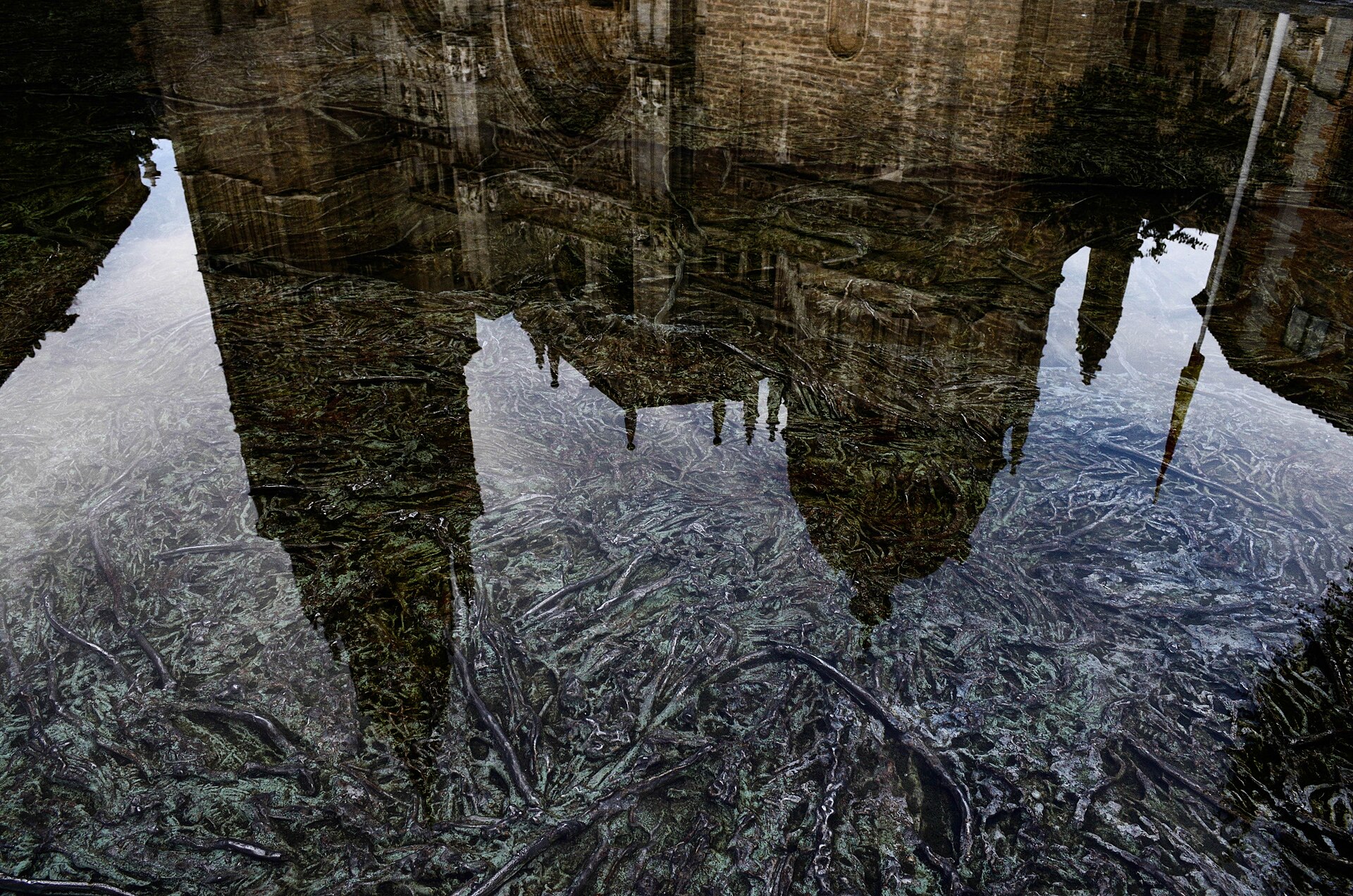
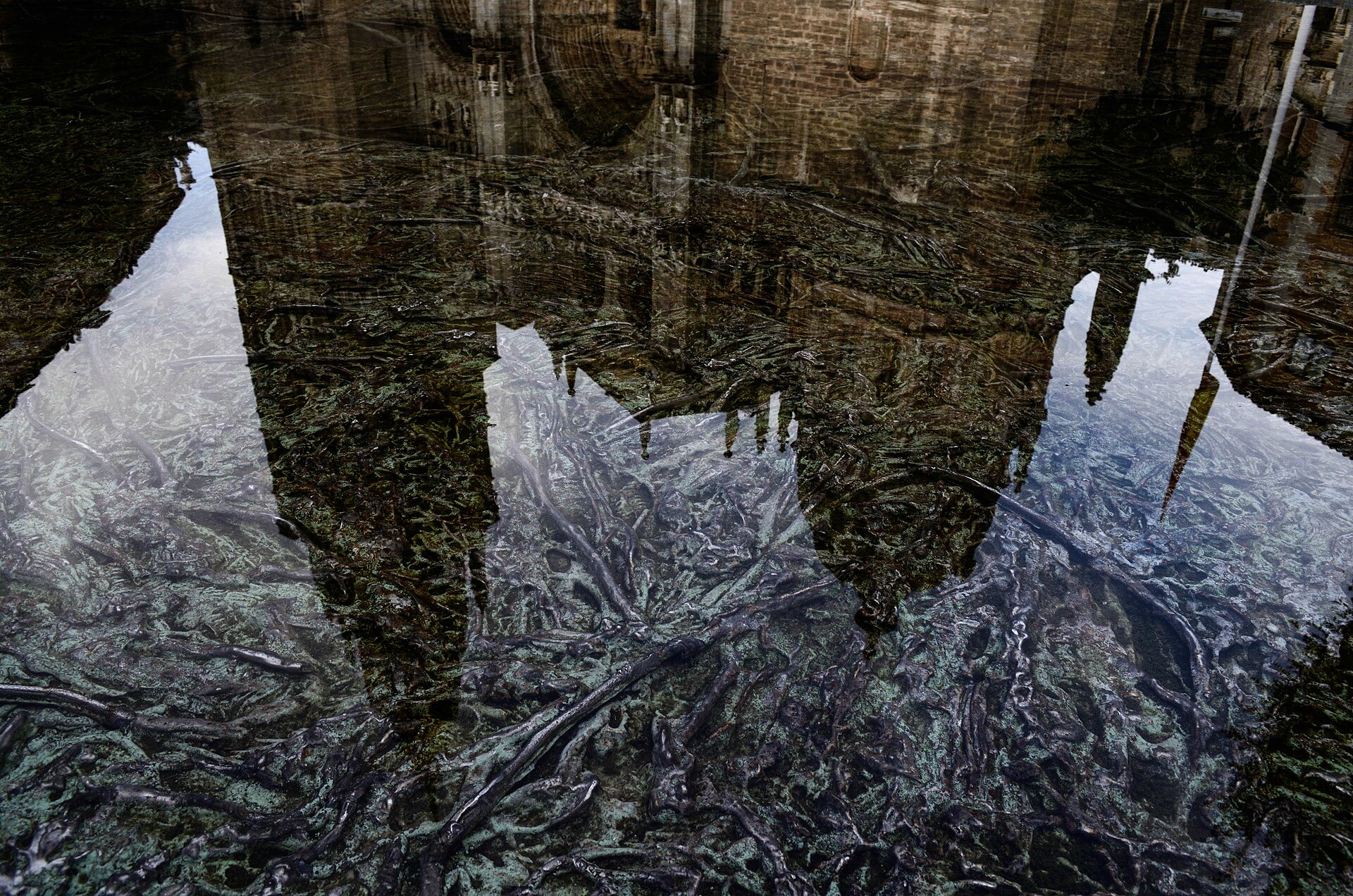
Tres Aguas, in Toledo, extends the same principle across three sites commissioned by Artangel and the El Greco 2014 foundation, opening in 2014 and continuing as a permanent installation. Its best known element, in the Plaza del Ayuntamiento, is a 25 metre bas-relief cut into the plaza floor in cast metal, through which water rises and falls on its own cycle, at times mirroring the facade of Toledo Cathedral opposite. A second element sits in a restored water tower on the former Royal Arms Factory site; a third, inside the Convento de Santa Clara, reached through its own door from the street on the nuns' agreement; Artangel's own account describes visitor access to it but not a schedule, so this record uses only the Plaza del Ayuntamiento element, whose access Artangel describes as unrestricted, for its image plates.
Chapter 4Permanent public commissions
In 2007 Iglesias completed Porton-Pasaje, the ceremonial entrance doors to the Rafael Moneo-designed extension of the Museo Nacional del Prado in Madrid: six bronze leaves, each six metres high...
In 2007 Iglesias completed Porton-Pasaje, the ceremonial entrance doors to the Rafael Moneo-designed extension of the Museo Nacional del Prado in Madrid: six bronze leaves, each six metres high, weighing 22 tonnes in total, opened by a hydraulic mechanism and cast with vegetal reliefs. The commission put a sculptor's work at the literal threshold of Spain's national picture gallery rather than inside a gallery room.
Read together with Deep Fountain in Antwerp and Tres Aguas in Toledo, the three commissions show a consistent practice: Iglesias is given the entrance, threshold or public square of an institution or a city, rather than a room inside it, and treats the commission as an engineering problem as much as a sculptural one.
Chapter 5Institutions and the record of exhibitions
Iglesias' museum history runs from a 1988 solo show at the Kunstverein fuer die Rheinlande und Westfalen in Dusseldorf and a 1991 show at the Kunsthalle Bern, through a touring survey that opened at...
Iglesias' museum history runs from a 1988 solo show at the Kunstverein fuer die Rheinlande und Westfalen in Dusseldorf and a 1991 show at the Kunsthalle Bern, through a touring survey that opened at the Solomon R. Guggenheim Museum in New York in June 1997 and moved to the Museo Reina Sofia in Madrid in February 1998, to Cristina Iglesias: Metonymy, the largest retrospective of her work to date, which the Reina Sofia opened in February 2013 with more than fifty pieces spanning her career, curated by Lynne Cooke.
More recent solo museum exhibitions include Centro Botin in Santander in 2018, a site-specific commission for the Royal Academy of Arts' Annenberg Courtyard in London in 2022, and her first United States museum survey in more than two decades, at Frederik Meijer Gardens and Sculpture Park in Grand Rapids, in 2023. In late 2025 she had concurrent solo exhibitions at Hauser and Wirth in London and at Fundacio Catalunya La Pedrera in Barcelona, her first major exhibition in that city.
Chapter 6Biennales and recognition
Iglesias represented Spain at the Venice Biennale in 1986 and again in 1993, the same edition at which Antoni Tapies shared the Golden Lion for painting.
Iglesias represented Spain at the Venice Biennale in 1986 and again in 1993, the same edition at which Antoni Tapies shared the Golden Lion for painting. She has also participated in the Biennale of Sydney twice, in 1990 and again in 2012, and, per Spain's Ministry of Culture, in the Carnegie International in Pittsburgh in 1995, the Taipei Biennial in 2003 and a biennial exhibition in Santa Fe in 2006.
Her prizes include the Premio Nacional de Artes Plasticas in 1999, shared with Pablo Palazuelo; the Grosser Kunstpreis Berlin in 2012; the Premio de Artes Plasticas at the third Premios Observatorio D'Achtall in 2011; and the Royal Academy Architecture Prize, London, in 2020. In January 2016 the Basque newspaper Berria reported that she would receive San Sebastian's Tambor de Oro, the city's principal civic honour, for a Basque-born artist who has since represented Spain on the international stage.
Chapter 7The chain from the studio: what is documented and what is not
Iglesias is represented by Marian Goodman Gallery in New York and Paris, which opened its first exhibition of her work in September 2005 and has shown her regularly since; by Galeria Elba Benitez in...
Iglesias is represented by Marian Goodman Gallery in New York and Paris, which opened its first exhibition of her work in September 2005 and has shown her regularly since; by Galeria Elba Benitez in Madrid; and, since October 2025, by Hauser and Wirth, whose London space presented The Shore as her first exhibition with the gallery.
No source consulted for this record describes a published catalogue raisonne, an authentication board, or a certificate and inventory-number system for Iglesias' studio of the kind some contemporaries operate. Her galleries and studio are, on the evidence available, the practical point of contact for a work's status and paperwork, but no public description of that process was located; this is recorded as an open question rather than assumed either way.
Chapter 8The market: primary and secondary
None of Iglesias' three galleries publishes price bands for her work.
None of Iglesias' three galleries publishes price bands for her work. On the secondary market her editioned prints, silkscreens on copper or silk and etchings, appear at auction more often than her unique sculptures and installations, which rarely if ever come to market; regional and specialist houses including Duran Arte y Subastas in Madrid and smaller UK and US rooms have sold prints in recent years.
A March 2019 Sothebys online sale listed a work titled Untitled (Room III) with an estimate of 1,500 to 2,000 US dollars; the listing consulted did not disclose a hammer price or a buyers premium, and no source consulted for this record disclosed hammer and premium figures, separated, for any lot of her work. No auction result is recorded below rather than publish an incomplete or estimated figure as if it were a sale price.
Chapter 9The threshold, the memory: what she has said her work is about
Iglesias has repeatedly described a threshold as a wider idea than a door in her own account of her work: a threshold, she has said, can be a mental one, connected to how connections form in the mind...
Iglesias has repeatedly described a threshold as a wider idea than a door in her own account of her work: a threshold, she has said, can be a mental one, connected to how connections form in the mind or in a dream, as much as a physical passage such as the Prado's own doors. She has also said that her water spaces, always sited beneath a visitor's feet, function as a metaphor for memory and for life, and that she works with space and for space, aiming to create places to be in rather than objects to look at.
These are the artist's own stated readings of her own work, given in interview, not a critic's later argument, and are reported here as exactly that: what she has said, not what her work objectively means.
Chapter 10What is still unresolved
Sources disagree on the closing date of the Guggenheim Bilbao leg of the 1997 to 1998 touring survey: the exhibition catalogue's own colophon records it only as summer 1998, while other listings...
Sources disagree on the closing date of the Guggenheim Bilbao leg of the 1997 to 1998 touring survey: the exhibition catalogue's own colophon records it only as summer 1998, while other listings encountered in research gave more specific but mutually inconsistent autumn and winter date ranges. Only the two legs of that tour for which a single source gives an exact day, month and year, New York and Madrid, are used here; no specific date range is asserted for Bilbao.
Whether a wider secondary market exists for Iglesias' unique sculptures, beyond the editioned prints found at auction, is not established by any source consulted. Nor is the practical mechanism by which a collector or institution verifies a specific work today, beyond gallery and studio paperwork; no published certificate or inventory-number system was found.
What is documented
Technique
The surviving work
- What is accepted
- No published count of accepted works was found in any source consulted. Her output combines unique large-scale commissions, fountains, doors, room-scale installations, with works produced in small series (silkscreens on copper or silk, etchings), so a single tally would not carry the same meaning it does for a historical hand with a closed body of work.
- What is contested
- No attribution dispute or rejected work was found in any source consulted.
- Who rules on attribution
- No catalogue raisonne or authentication board was found in any source consulted. On the evidence available, the working authority for a specific work's status is her studio, Cristina Iglesias Studio in Madrid, together with the galleries that represent her, Marian Goodman, Galeria Elba Benitez and, since 2025, Hauser and Wirth. No public description of a certificate or inventory-number system was located; this is recorded as an open question.
Questions about Cristina Iglesias
Who is Cristina Iglesias?
Sculptor.
Where can you see work by Cristina Iglesias?
Museo Nacional Centro de Arte Reina Sofia (Madrid); Museo Nacional del Prado (Madrid); Royal Museum of Fine Arts Antwerp (Antwerp); Tate (London); Museo Guggenheim Bilbao (Bilbao); Toledo public installations (Plaza del Ayuntamiento; access arrangements at the Convento de Santa Clara and the Torre del Agua not established from the sources consulted) (Toledo).
What does the market for Cristina Iglesias look like?
Iglesias' primary market runs through her three galleries, none of which publishes price bands. On the secondary market her editioned prints, silkscreens on copper or silk and etchings, appear at auction more often than her unique sculptures and installations, which rarely come to market.
What is still unresolved about Cristina Iglesias?
No catalogue raisonne, foundation, or published certificate and inventory-numbering system was located for Iglesias' studio; how a buyer verifies a specific work today, beyond gallery paperwork, is not documented in any source consulted.
Open questions
- No catalogue raisonne, foundation, or published certificate and inventory-numbering system was located for Iglesias' studio; how a buyer verifies a specific work today, beyond gallery paperwork, is not documented in any source consulted.
- No source consulted disclosed a hammer price with buyers premium separated for any secondary-market sale of her work; whether her unique sculptures have a meaningful auction record, as opposed to her editioned prints, is not established by the sources available.
- Sources disagree on the exact closing date of the Guggenheim Bilbao leg of the 1997 to 1998 touring survey; the exhibition catalogue's own colophon records only summer 1998, and this record does not assert a specific day, month and year for that leg.
- Whether the Convento de Santa Clara element of Tres Aguas keeps regular public hours is not established from the sources consulted; Artangel's own account describes visitor access to it but not a schedule.
Sources
- 1Museo Nacional Centro de Arte Reina Sofia, collection artist page, Iglesias, Cristina museoreinasofia.es/en/...
- 2Guggenheim Museum Bilbao, collection artist biography, Iglesias, Cristina guggenheim-bilbao.eus/en/...
- 3Marian Goodman Gallery, artist page, Cristina Iglesias mariangoodman.com/artists/...
- 4Aunamendi Eusko Entziklopedia, Iglesias, Cristina aunamendi.eusko-ikaskuntza.eus/es/...
- 5Galeria Elba Benitez, artist page, Cristina Iglesias elbabenitez.com/artist/...
- 6Artangel, project page, Tres Aguas, Cristina Iglesias artangel.org.uk/project/...
- 7Wikipedia (Spanish), Porton-Pasaje es.wikipedia.org/wiki/...
- 8Tate, artist page, Cristina Iglesias born 1956 tate.org.uk/art/...
- 9Sothebys, lot page, Cristina Iglesias, Untitled (Room III), Contemporary Art Online, 2019 sothebys.com/en/...
- 10Wikipedia (English), Berliner Kunstpreis en.wikipedia.org/wiki/...
- 11Ministerio de Cultura (Spain), Pablo Palazuelo y Cristina Iglesias, Premio Nacional de Artes Plasticas 1999 cultura.gob.es/cultura/...
- 12Marian Goodman Gallery, exhibition page, Cristina Iglesias, September 7 to October 1, 2005 mariangoodman.com/exhibitions/...
- 13Biennale of Sydney, 18th Biennale of Sydney 2012 Exhibition Report biennaleofsydney.art/wp-content/...
- 14Internet Archive, exhibition catalogue record, Cristina Iglesias (Guggenheim Museum Publications, 1997) archive.org/details/...
- 15Kunstverein fuer die Rheinlande und Westfalen, Dusseldorf, publication page, Cristina Iglesias kunstverein-duesseldorf.de/publikationen/...
- 16Art Daily, Exhibition at Centro Botin shows twenty-three works by Cristina Iglesias artdaily.com/news/...
- 17Marian Goodman Gallery, news, Cristina Iglesias, Royal Academy of Arts mariangoodman.com/news/...
- 18PRWeb, Frederik Meijer Gardens and Sculpture Park to Host Major Exhibition of Spanish Artist Cristina Iglesias prweb.com/releases/...
- 19Ocula, exhibition page, Cristina Iglesias, The Shore, Hauser and Wirth ocula.com/art-galleries/...
- 20Fundacio Catalunya La Pedrera, press release, La Pedrera becomes a poetic labyrinth with Cristina Iglesias' first major exhibition in Barcelona fundaciocatalunya-lapedrera.com/en/...
- 21Jan Garden Castro, Place as Threshold: A Conversation with Cristina Iglesias, Sculpture magazine, 1 October 2018 sculpturemagazine.art/place-as-threshold-a-conversation-w...
- 22Wallpaper*, I'm not trying to recreate nature, interview with Cristina Iglesias wallpaper.com/art/...
- 23Museo Nacional Centro de Arte Reina Sofia, exhibition page, Cristina Iglesias: Metonymy museoreinasofia.es/en/...
- 24Wikidata, Deep Fountain (Q29839220) wikidata.org/wiki/...
- 25Wikipedia (English), 45th Venice Biennale en.wikipedia.org/wiki/...
- 26Wikipedia (English), Cristina Iglesias en.wikipedia.org/wiki/...
- 27Berria, Cristina Iglesias eskultoreak jasoko du aurtengo Donostiako Urrezko Danborra, 8 January 2016 berria.eus/paperekoa/...
Last verified