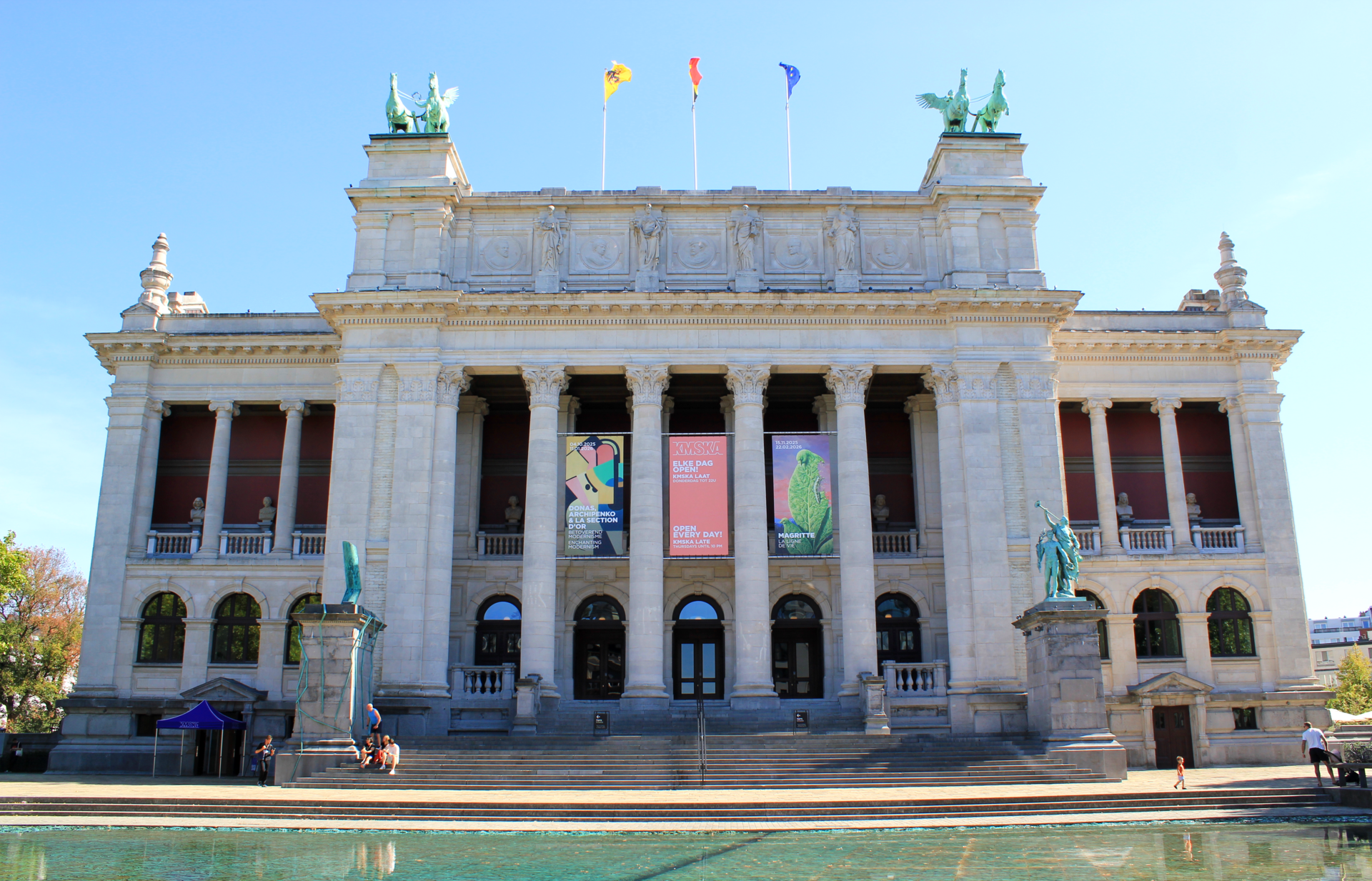
The museum's Neoclassical front facade on Leopold de Waelplaats, photographed in September 2025, three years after the September 2022 reopening, per the file's own description on Wikimedia Commons
TheGoodEndedHappily, CC BY-SA 4.0Royal Museum of Fine Arts Antwerp
Museum · Koninklijk Museum voor Schone Kunsten Antwerpen · Founded 1810
Open, admission and hours confirmed 27 August 2026 · 20 sources
On this page 15 sections
ContentsClose
KMSKA's real strength is continuity across seven centuries in one collection, not a single trophy room: Flemish Primitives such as van Eyck and the van Ertborn bequest, an altarpiece-scale run of Rubens and Van Dyck, and then, on the other side of the Ensor hinge, the world's largest holdings of both James Ensor and Rik Wouters. That last pairing is unusual for a museum built around Old Masters; because Ensor and Wouters are shown as the natural extension of the older galleries rather than a separate modern annex, the collection reads as one continuous Antwerp art history rather than two museums under one roof. The 2022 rebuild reinforced that with architecture rather than argument: the new galleries were built into the old building's own courtyards, invisible from outside.
| Local name | Koninklijk Museum voor Schone Kunsten Antwerpen |
|---|---|
| Kind | Museum |
| Founded | 1810 |
| City and country |  Antwerp, Belgium Antwerp, Belgium |
| Address | Leopold de Waelplaats 1, 2000 Antwerpen, Belgium |
| Website | kmska.be |
| Status | Open, confirmed |
| Record last verified |
Visiting
- Hours
- Mon, Tue, Wed, Fri10:00 to 17:00
- Thu10:00 to 22:00KMSKA LATE; the museum reverts to standard 10:00-17:00 hours on Thursdays during summer and Christmas school holidays
- Sat, Sun and public holidays10:00 to 18:00
- Flemish school holiday periods10:00 to 18:00
- 24 and 31 December10:00 to 16:00reduced hours
- Closed
- 25 December. 1 January.
- Admission
- AdultEUR 20
- Under 26EUR 10
- Under 18Freefree
- A-card (Antwerp resident card) holdersEUR 10per the museum's own price list; must still book a free time slot
- ICOM, Museumpass and Friends of KMSKA cardholdersFreefree, booking still required
- Visitors with disabilities and accompanying school groupsFreefree
- Tickets
- kmska.be/en/book-your-ticket The museum's own ticket page.
- Do I need to book?
- Yes. A free timed-entry slot must be reserved online or at the ticket machine, required even for visitors whose admission itself is free
- Address
- Leopold de Waelplaats 1, 2000 Antwerpen, Belgium MapTram Line 4, Museum stop, directly outside the building
Bus Lines 1 and 10, Bres stop, about 500 m from the museum
Parking Q-Park Kooldok or Steendok (Steendok also has secure bicycle parking); booking a space online in advance through Q-Park is cheaper than paying on arrival, and P+R lots on the city outskirts are offered as a cheaper alternative - Website
- kmska.be
- Telephone
- +32 3 224 73 00
- [email protected]
Before you go how long, access, photography, bags, eating, shop
- How long to allow
- Not published by the museum as a fixed duration. The museum's own account of how it presents the collection describes six distinct spaces: the restored Old Masters galleries (pre-1880), the Rubens and Van Dyck Galleries, the Salon, the James Ensor rooms that bridge old and new, the Modern galleries (post-1880), and a rotating Print Room with darkened rooms for small sculpture - enough ground that most visitors are unlikely to cover it all in under half a day
- Access
- Most halls are accessible for wheelchairs and buggies; elevators reach every floor; wheelchair-accessible restrooms and changing tables are provided
- Photography
- Photography and filming are allowed without flash, handheld devices only; tripods, monopods, gimbals, selfie sticks and drones are not permitted, and commercial photography requires prior arrangement through the museum's contact form
- Bags
- A free, unguarded cloakroom is available at reception; backpacks and bags larger than 34 x 22 cm cannot be carried into the galleries and must go into an electronic-lock locker (up to 75 x 25 x 45 cm); scooters and folding bicycles are not admitted at all, and security staff retain discretion over what else may enter
- Eating
- A restaurant and a coffee bar operate on site
- Shop
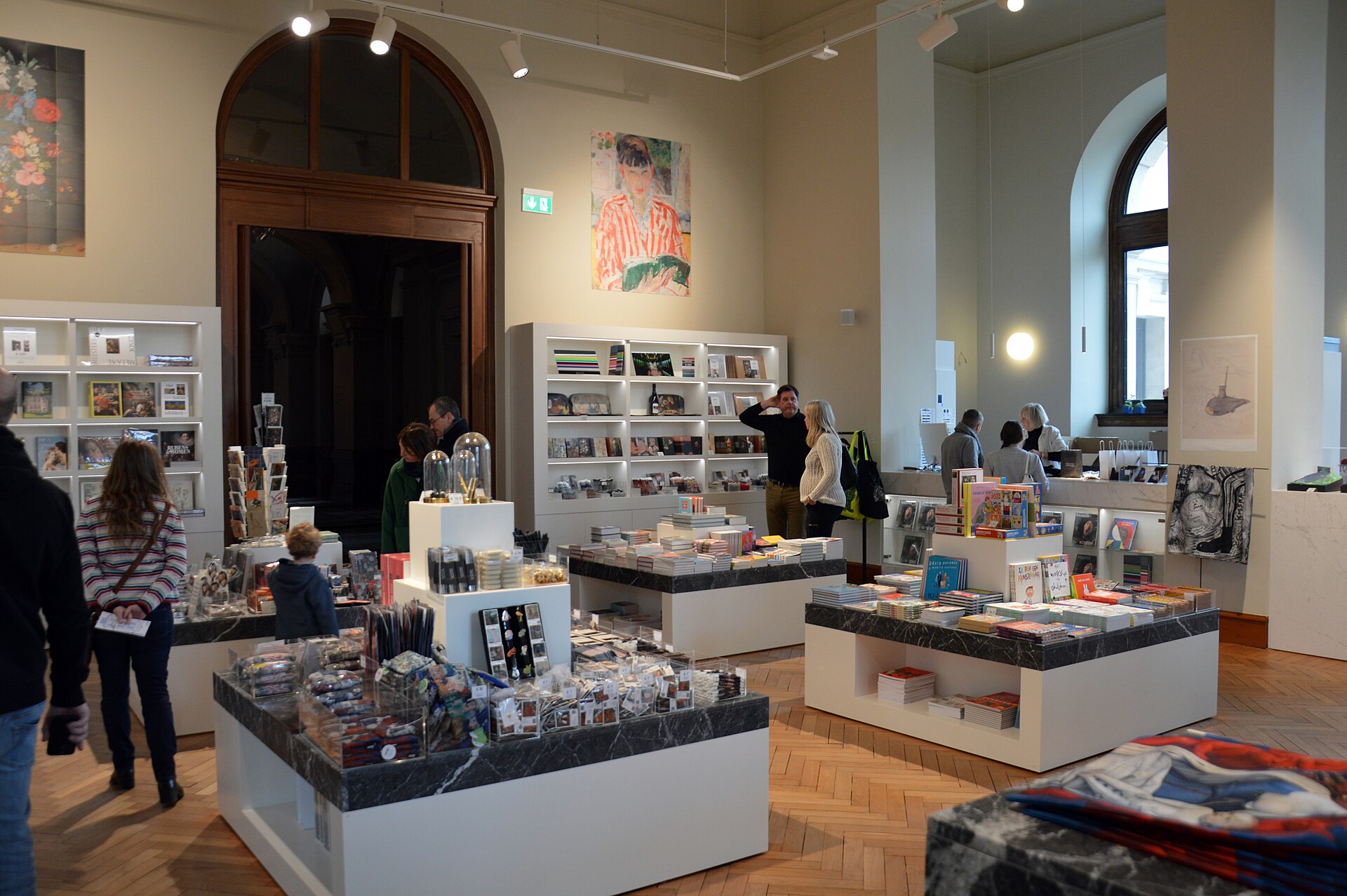
- The KMSKA Shop sells museum merchandise alongside refreshments
Prices and hours change. We take them from the institution's own pages and print the day we read them, and you can check the current position at the source we used. Confirm before you travel.
What is inside
Old Masters galleries (pre-1880)
Flemish Primitives through the 17th century, arranged in the restored 19th-century rooms through shifting thematic and chronological groupings rather than one fixed timeline, including material from the 1840 Florent van Ertborn bequest such as Jan van Eyck's Saint Barbara (1437) and Jean Fouquet's Madonna Surrounded by Seraphim and Cherubim (c. 1450)
Rubens and Van Dyck Galleries
Altarpieces and large-scale devotional works by Peter Paul Rubens and Anthony van Dyck, the museum's own name for this room, including Rubens's The Adoration of the Magi (1624-25) and The Prodigal Son (c. 1618), and Van Dyck's The Lamentation over the Dead Christ (c. 1640)
The Salon
Three consecutive galleries hung densely, floor to cornice, in the manner of the 19th-century Paris Salon exhibitions the paintings were originally made for
James Ensor rooms
What the museum describes as the world's biggest and most varied collection of James Ensor's work anywhere, including The Oyster Eater (1882); positioned by the museum as the hinge between the narrative pre-1880 galleries and the post-1880 material experiments that follow
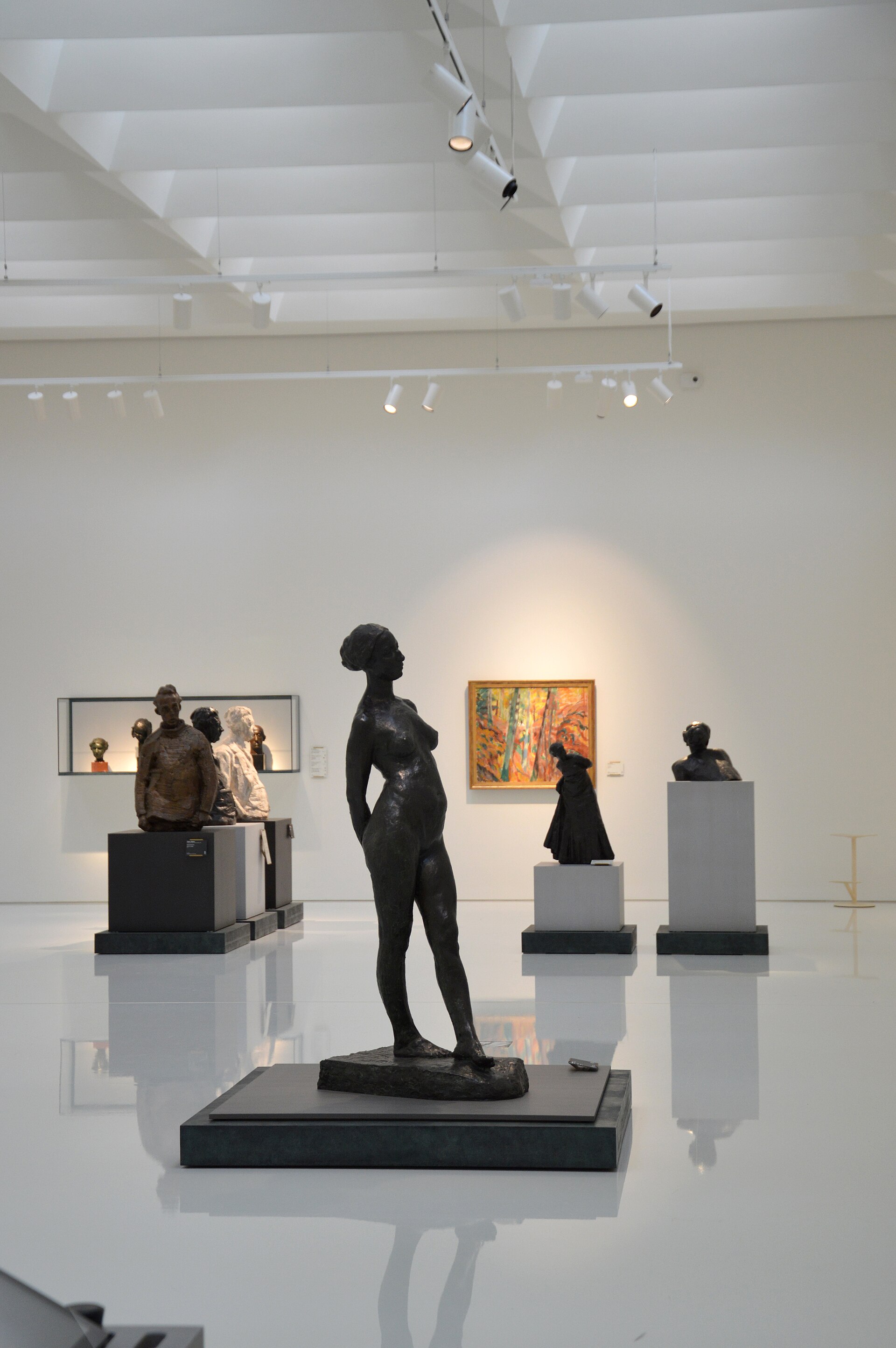
CC0 Modern galleries (post-1880)
Post-1880 painting and sculpture in the new construction inserted into the building's courtyards, organized around three themes - colour, light and form - rather than by school or chronology, including what the museum says is the world's largest collection of work by the Belgian modernist Rik Wouters, among it Woman Ironing (1912)
Print Room and small-sculpture rooms
A rotating presentation of works on paper in a dedicated Print Room, plus darkened rooms built to protect light-sensitive small sculpture and terracotta that cannot be shown under the lighting the paintings get
What to see first
Saint Barbara
Jan van EyckA 1437 panel from the Florent van Ertborn bequest of 1840, part of the medieval Flemish Primitives holding that pulled the museum's collection away from its earlier bias toward 16th- and 17th-century painting7
Madonna Surrounded by Seraphim and Cherubim
Jean FouquetA mid-15th-century Northern Renaissance panel from the same van Ertborn bequest that anchors the museum's early Netherlandish holding7
Altarpiece of the Joiners' Guild
Quinten MassijsA 1511 altarpiece that demonstrates the guild patronage traditions running through Antwerp's early painting, exhibited in the pre-1880 galleries7
The Adoration of the Magi
Peter Paul RubensA large-scale altarpiece of 1624-25 hung in the Rubens and Van Dyck Galleries, one of the works reopened critics noted was displayed alongside a much-reduced number of the Rubens paintings the room held before the 2011 closure7
The Prodigal Son
Peter Paul RubensA work of about 1618 in the same Rubens and Van Dyck Galleries7
The Lamentation over the Dead Christ
Anthony van DyckA devotional work of about 1640 shown beside Rubens's altarpieces in the museum's dedicated Rubens and Van Dyck room7
Pope Alexander VI Presenting Bishop Jacopo Pesaro to Saint Peter
TitianA Venetian work of 1503-06 that represents the museum's holdings outside its core Flemish strength7
The Oyster Eater
James EnsorPainted in 1882 and rejected by the Antwerp Salon that year and by a Brussels gallery in 1883 for colors critics called too strident; bought by Ensor's friend Emma Lambotte, who displayed it in her own drawing room, and acquired by the museum roughly twenty years later. Protected under the Flemish government's Heritage Decree and recently conserved, with a thick yellowed varnish layer removed to restore its original color10
Woman Ironing
Rik WoutersA 1912 painting in the museum's holding of Wouters's work, which the museum describes as the world's largest collection of this Belgian modernist's output7
Past exhibitions here
- Closed11 Jun to 20 Sep 2026Confirmed · check before you travel
- Closed11 Apr to 30 Aug 2026Confirmed · check before you travel
A building built to hide its own renovation
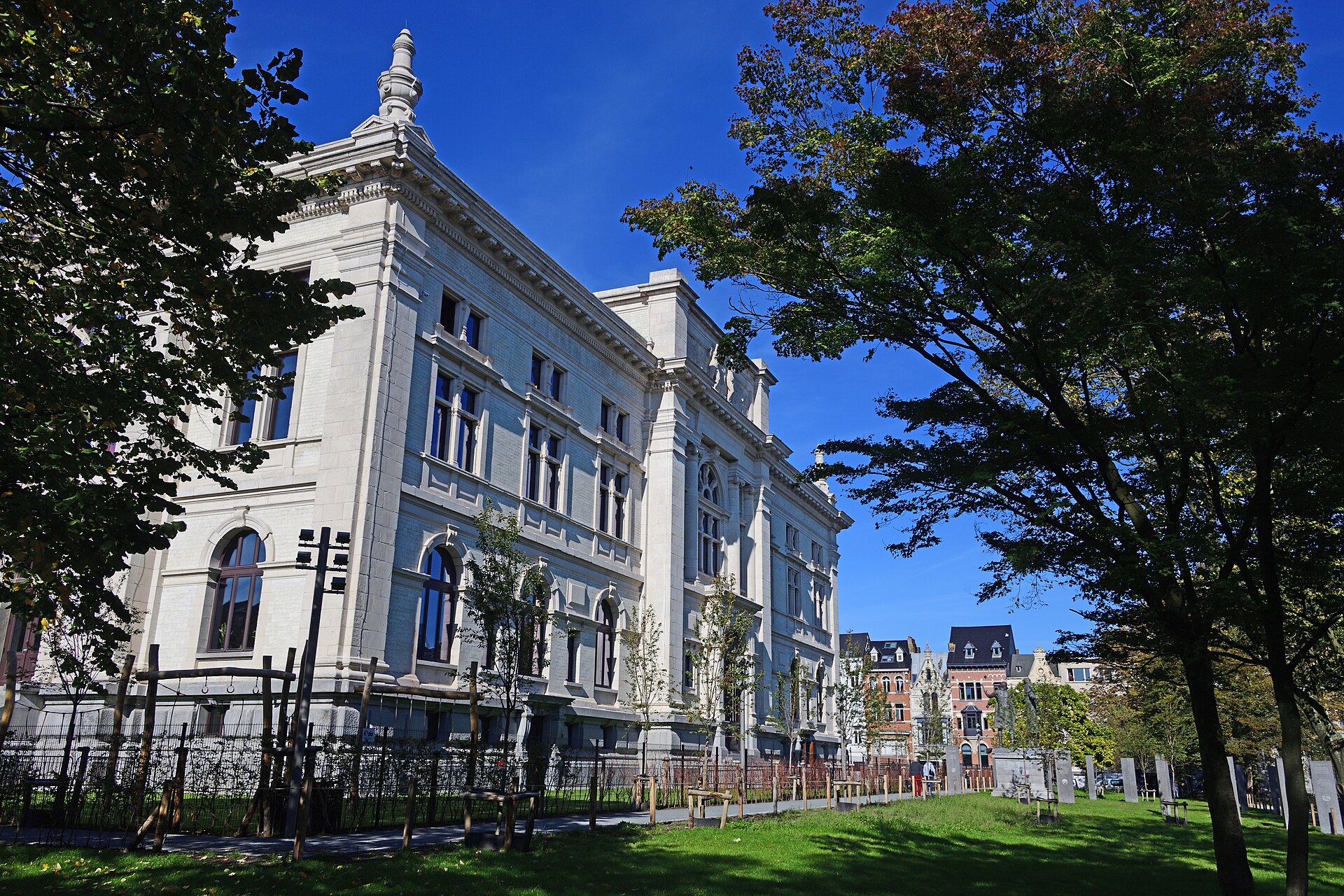
The museum that reopened in Antwerp in September 2022 looks, from the street, almost exactly like the one that closed at the end of 2011. That is the point. The Dutch firm KAAN Architecten won an international competition for the rebuild in 2004 and had a master plan in place by 2006, and its solution was to insert an entirely new set of galleries into the four internal courtyards of the 1890 building, plus a further gallery along the roofline, all of it invisible from outside the museum. The historic Neoclassical facade, with its bronze reliefs of past masters and Thomas Vincotte's sculptural chariots on the roof, was restored rather than altered.
The work took eleven years and cost more than 100 million euros, considerably longer and more than first budgeted. Unforeseen asbestos contamination inside the old structure, a full replacement of the climate-control system, and delays in political funding all pushed the reopening back repeatedly. What the extra time bought was a 40 percent increase in wall space: new white-cube galleries built into the courtyards and topped by four lightwells that bring daylight down through the building, alongside darkened rooms for the works on paper and small sculpture that cannot tolerate the light the paintings can.
From a guild's meeting room to a national museum
The museum's roots run back to 1382, when Antwerp's painters organized themselves into the Guild of Saint Luke and began decorating their own meeting chamber with members' work; Rubens and Frans Floris were both guild painters in their turn. An academy grew out of the guild in 1663 under David Teniers the Younger, and it was this academy's own holdings that Napoleon formalized into a public museum by decree on 5 May 1810, housed at first in a former Franciscan monastery. Twenty-six Rubens paintings, looted by French forces and returned to Antwerp on 5 December 1815 after Waterloo, anchored a collection that had grown to 127 catalogued items by 1817.
The collection's character changed again in 1840, when the collector Florent van Ertborn left the museum 144 paintings on his death, including work by Jan van Eyck and Rogier van der Weyden that pulled the holdings back from a bias toward 16th- and 17th-century painting toward the medieval Flemish Primitives the museum is now equally known for. By the 1870s the academy building had been outgrown, and the city commissioned the architects Jean-Jacques Winders and Frans Van Dijk to build a museum purpose-made for the collection; it opened to the public on 11 August 1890. The building has not always been safe: during both world wars, staff lowered paintings into a bomb-proof basement, and a V-bomb strike on 13 October 1944 damaged the structure badly enough to need years of repair. The 1976-77 Rubens Year exhibition, held after an earlier modernization, drew 625,000 visitors and is still cited as the moment the museum became a mass destination rather than a specialist's stop.
Old Masters and modern art under one roof
The reopened museum is organized around a single working idea: everything painted before 1880 sits in the restored 19th-century rooms, and everything after 1880 sits in the new construction, with the two halves deliberately made to feel like different buildings inside the same one. The pre-1880 rooms include the Rubens and Van Dyck Galleries, built for the museum's altarpieces, and a suite the museum itself calls the Salon: three consecutive rooms hung floor to cornice in the dense manner of the 19th-century Paris exhibitions the works were painted for. Further back are the medieval and early Netherlandish holdings, including Jan van Eyck's Saint Barbara of 1437 and the van Ertborn bequest material, arranged through shifting thematic and chronological groupings rather than one fixed timeline.
James Ensor's work is the hinge between the two halves of the building; the museum describes him as the bridge between the narrative art that came before 1880 and the material experiments that came after it, and gives him rooms the museum calls the world's biggest and most varied Ensor collection anywhere. Past that hinge, the modern galleries organize post-1880 work around three themes, colour, light and form, rather than by school or date, and hold what the museum says is the world's largest collection of work by the Belgian modernist Rik Wouters. A rotating Print Room shows works on paper a few at a time, and darkened rooms nearby hold small sculpture and terracotta that cannot take the light the paintings get.
A reopening that split the Belgian art world
Architecture critics were largely won over by the concealment trick itself: an entire new museum built inside a 132-year-old shell without disturbing its face on the square. The response from within the Belgian art world was considerably rougher. By December 2022, three months after the reopening, the collector Marnix Neerman accused the museum's administration of amateurism, arrogance and awful taste, and the French critic Didier Rykner called the reopening a sad failure in La Tribune de l'Art. Neerman's criticism was not academic: he withdrew a long-term loan of sixteen works, saying he no longer trusted the museum's leadership with his collection, and moved the pictures to the National Gallery in London and the Palazzo Ducale in Venice instead.
The specific complaints, made by museum professionals, academics and senior figures speaking both on and off the record, ran from the aesthetic to the structural. Furniture choices, including a camel-shaped seat, and white gallery floors that scuffed within days of opening drew ridicule; interactive touchscreens were dismissed by one senior figure as the infantilisation of the museum experience. More seriously, critics noted that only around 600 to 650 of the roughly 8,400 to 9,780 works the museum holds are on display despite the 40 percent increase in space, that star works by Bruegel were absent from the reopening hang, and that the museum had gone without an artistic director since the two who oversaw the reopening both left their posts in the months before it opened. The museum's reference catalogue for its own 14th- and 15th-century paintings, critics pointed out, still dated to 1985.
The museum's own case for itself
Director Carmen Willems has described the pre-2011 museum as a sleeping museum and framed the rebuild as an attempt to wake it up for a city she says the institution had stopped speaking to. The storytelling approach behind the new hang leans on volunteers as much as scholarship: a project called the Finest Hundred asked residents to help choose the museum's hundred core works, paired with a hundred more selected by museum staff, and the results shape parts of the display. Smaller, playful interventions run through the galleries too, including sculptures by Christophe Coppens tucked among the paintings that reference details in specific pictures, meant to give younger visitors something to look for without talking down to them.
That approach is exactly what critics of the reopening object to. Apollo Magazine's review of the rebuild judged the architectural solution itself a success, and credited the museum with resisting heavy-handed didactic parallels when it interspersed contemporary painters such as Luc Tuymans and Marlene Dumas among the historical galleries. But the same review noted that the thematic, non-chronological hang of the modern collection will frustrate visitors expecting an art-historical sequence, and the sharper criticism recorded above, over staffing, cataloguing and what stayed in storage, comes from people the museum itself would ordinarily count among its natural audience.
Visiting the collection today
KMSKA sits at Leopold de Waelplaats in Antwerp's Zuid district, a short tram ride from the center: line 4 stops directly outside at the Museum stop, and buses 1 and 10 stop at Bres, about 500 meters away. The museum opens daily at 10:00, closing at 17:00 on most weekdays, 22:00 on Thursdays under a program it calls KMSKA LATE (with shorter hours restored during summer and Christmas school holidays), and 18:00 on weekends, public holidays and Flemish school breaks; it closes only on 25 December and 1 January, with a shortened 10:00-16:00 day on 24 and 31 December.
Admission is 20 euros for an adult, 10 euros for visitors under 26 and for holders of Antwerp's A-card, and free for anyone under 18, for ICOM, Museumpass and Friends of KMSKA cardholders, and for visitors with disabilities and school groups. A free timed-entry slot must be booked online or at the ticket machine regardless of ticket price. The building is built to be accessible: elevators reach every floor, most halls take a wheelchair or a buggy without difficulty, and a free, unguarded cloakroom with electronic-lock lockers holds coats and bags too large for the galleries. Photography without flash is allowed throughout, handheld only; a restaurant, a coffee bar and the KMSKA Shop operate on site. The museum's own description of its ground floor calls the garden in front of the building the first museum room, and the rebuild added a new side entrance that spreads visitor flow away from the original staircase under the pediment.
What visitors say
The 2022 reopening split opinion sharply along a line between how the building was rebuilt and how it has been run since. The architectural solution itself, an entirely new set of galleries concealed inside the historic courtyards without altering the 1890 facade, was widely admired. What followed inside it drew sustained criticism from within the Belgian art world over curatorial choices, staffing and a lack of scholarly infrastructure, criticism serious enough that one major lender withdrew a long-term loan. General visitors on aggregate review platforms are considerably more positive, rating the museum well and singling out the quality of the collection on view over any of the management questions raised by critics.
What is praised, what is criticised
- Praised: the concealment of an entirely new building inside the historic courtyards, leaving the 1890 facade on Leopold de Waelplaats essentially unchanged
- Praised: the depth and concentration of the Old Masters and Rubens/Van Dyck holdings, and the world's largest collections of James Ensor and Rik Wouters
- Praised: practical amenities added or improved in the rebuild: elevators to every floor, a free cloakroom with lockers, a free companion app for self-guided tours, and a side entrance that spreads visitor flow away from the original staircase
- Praised: the decision to intersperse a small number of contemporary painters, including Luc Tuymans and Marlene Dumas, among the historical galleries without heavy-handed didactic parallels, according to Apollo Magazine's review of the rebuild
- Criticised: senior figures in the Belgian art world, including the collector Marnix Neerman and the French critic Didier Rykner, called the post-reopening administration amateurish and the reopening itself a failure; Neerman withdrew a sixteen-work loan and moved the pictures to the National Gallery in London and the Palazzo Ducale in Venice, saying he no longer trusted the museum's leadership
- Criticised: only around 600 to 650 of the museum's roughly 8,400 to 9,780 holdings are on display despite the 40 percent increase in gallery space, and reopening critics noted the absence of expected Bruegel works
- Criticised: the museum had no artistic director through the reopening, after the two directors who oversaw it both left their posts in the months beforehand, and its reference catalogue for its own 14th- and 15th-century paintings still dated to 1985 as of the criticism reported in December 2022
- Criticised: on TripAdvisor, recurring visitor complaints describe inconsistent staff friendliness, admission and restaurant prices some find steep, a lack of French-language materials, and the requirement to book a time slot on arrival even for visitors who already hold a ticket
Ratings on other platforms
TripAdvisor: 4.2 from 147 ratings, read 27 August 2026
A platform average is a tertiary source: it moves, it is not audited, and we quote no visitor's words.
Questions about Royal Museum of Fine Arts Antwerp
Where is Royal Museum of Fine Arts Antwerp?
Leopold de Waelplaats 1, 2000 Antwerpen, Belgium.
How much does it cost to visit?
Adult: EUR 20; Under 26: EUR 10; Under 18: free; A-card (Antwerp resident card) holders: EUR 10; ICOM, Museumpass and Friends of KMSKA cardholders: free. As confirmed 27 August 2026.
When is it open?
Mon, Tue, Wed, Fri 10:00-17:00; Thu 10:00-22:00; Sat, Sun and public holidays 10:00-18:00; Flemish school holiday periods 10:00-18:00; 24 and 31 December 10:00-16:00. Closed: 25 December. 1 January. As confirmed 27 August 2026.
How do you get there?
Tram: Line 4, Museum stop, directly outside the building; Bus: Lines 1 and 10, Bres stop, about 500 m from the museum; Parking: Q-Park Kooldok or Steendok (Steendok also has secure bicycle parking); booking a space online in advance through Q-Park is cheaper than paying on arrival, and P+R lots on the city outskirts are offered as a cheaper alternative.
What should you see first?
Saint Barbara (Jan van Eyck); Madonna Surrounded by Seraphim and Cherubim (Jean Fouquet); Altarpiece of the Joiners' Guild (Quinten Massijs); The Adoration of the Magi (Peter Paul Rubens); The Prodigal Son (Peter Paul Rubens); The Lamentation over the Dead Christ (Anthony van Dyck).
What we could not confirm
- Whether KMSKA has since named a permanent artistic director is not established by the sources checked for this record; both directors who oversaw the 2022 reopening left their posts in the months before it opened, and no page consulted here names a current artistic director.
- The museum's reference catalogue for its 14th- and 15th-century paintings was reported in December 2022 as still dating to 1985; no source checked here records whether a revised catalogue has since been published.
- Collector Marnix Neerman's December 2022 withdrawal of a sixteen-work loan, moved to the National Gallery in London and the Palazzo Ducale in Venice, was reported as a break over trust in the museum's leadership; whether that loan has since been renegotiated is not established by the sources checked here.
- The exact proportion of the museum's roughly 8,400 to 9,780 holdings on view at any one time, beyond the approximately 600 to 650 works cited at reopening, is not published by the museum on a rolling basis.
Images
Sources
- 1KMSKA official site, homepage kmska.be/en
- 2KMSKA official site, Opening hours and tickets kmska.be/en/opening-hours-and-tickets
- 3KMSKA official site, Contact kmska.be/en/contact
- 4KMSKA official site, Reachability kmska.be/en/reachability
- 5KMSKA official site, Plan your visit kmska.be/en/plan-your-visit
- 6KMSKA official site, House rules kmska.be/en/house-rules
- 7KMSKA official site, The Collection (overview) kmska.be/en/overview/the-collection
- 8KMSKA official site, History kmska.be/en/about-kmska/history
- 9KMSKA official site, Presenting the collection kmska.be/en/presenting-collection
- 10KMSKA official site, Six things you should know about Ensor's Oyster Eater kmska.be/en/oyster-eater
- 11The Art Newspaper, The Royal Museum of Fine Arts, Antwerp, reopens after 11-year restoration, 27 September 2022 theartnewspaper.com/2022/09/27/the-royal-museum-of-fine-arts-antwerp-reopens-after-11-year-restoration
- 12The Art Newspaper, Recently reopened museum accused of amateurism, arrogance and awful taste by Belgian art world, 2 December 2022 theartnewspaper.com/2022/12/02/recently-reopened-museum-accused-of-amateurism-arrogance-and-awful-taste-by-belgian-art-world
- 13Apollo Magazine, At Antwerp's most important museum, Old Masters and modern art now share top billing apollo-magazine.com/royal-museum-of-fine-arts-antwerp-reopening/
- 14TripAdvisor, Royal Museum of Fine Arts - Antwerp (attraction page, aggregate rating and visitor comments), read 27 August 2026 tripadvisor.com/Attraction_Review-g188636-d3167859-Reviews-Royal_Museum_Of_Fine_Arts-Antwerp_Antwerp_Province.html
- 15Wikipedia, Royal Museum of Fine Arts Antwerp (, used only for founding and building dates) en.wikipedia.org/wiki/Royal_Museum_of_Fine_Arts_Antwerp
- 16Antwerp Art, Royal Museum of Fine Arts Antwerp (location page) antwerpart.be/locations/royal-museum-of-fine-arts-antwerp
- 17Wikimedia Commons, File:Koninklijk Museum voor Schone Kunsten - voorzijde.png (licence and description) commons.wikimedia.org/wiki/File:Koninklijk_Museum_voor_Schone_Kunsten_-_voorzijde.png
- 18Wikimedia Commons, File:Antwerpen KMSKA exterior 2485.jpg (licence and description) commons.wikimedia.org/wiki/File:Antwerpen_KMSKA_exterior_2485.jpg
- 19Wikimedia Commons, File:Dromerij, Rik Wouters, and other sculptures, KMSKA, Antwerp, 2024.jpg (licence and description) commons.wikimedia.org/wiki/File:Dromerij,_Rik_Wouters,_and_other_sculptures,_KMSKA,_Antwerp,_2024.jpg
- 20Wikimedia Commons, File:KMSKA museum shop, Antwerp, 2024.jpg (licence and description) commons.wikimedia.org/wiki/File:KMSKA_museum_shop,_Antwerp,_2024.jpg


