Camille Claudel
 French · 1864-1943
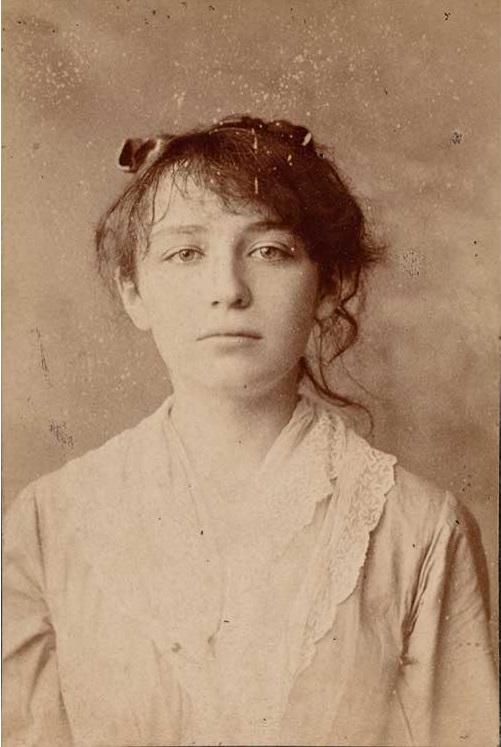
Camille Claudel, photographed by a photographer recorded only as Cesar, about 1884 (Musee Rodin, Ph. 527; Commons says before 1883). The sitter is named by the Musee Rodin, which reproduces this photograph on its Claudel page, so the identification is secure; the photographer's full name and the exact year are not established. Licence per Commons wikitext: PD-anon-70-EU.
Photograph by Cesar, Musee Rodin; public domain per Wikimedia Commons| Worked as | Sculptor, Draughtswoman, Assistant in Rodin's studio |
|---|---|
| Born | 8 December 1864 · Fere-en-Tardenois, Aisne, France |
| Died | 19 October 1943 · Montdevergues asylum, Montfavet, near Avignon, France |
| Nationality | French |
| Movement | Pupil and collaborator of Rodin |
| Sources | 25 cited |
| Last verified |
About this page Last verified · 25 sources cited
On this page 13 sections
ContentsClose
Camille Claudel is usually introduced as Rodin's pupil, lover and muse, and as a woman who spent the last thirty years of her life in an asylum. The record a collector or a student needs is more particular. No authentication board was found in the sources read; named specialists and a great-niece's certificate have both served that role. There is no agreed count of her works. One line of catalogue raisonne reaches a fifth edition by Reine-Marie Paris and Philippe Cressent (2019, 863 pages), a second line is by Anne Riviere and Bruno Gaudichon, and a critical catalogue is being edited by a Paris dealer, the Galerie Malaquais. Claudel destroyed much of her own work, according to the Musee Camille Claudel.
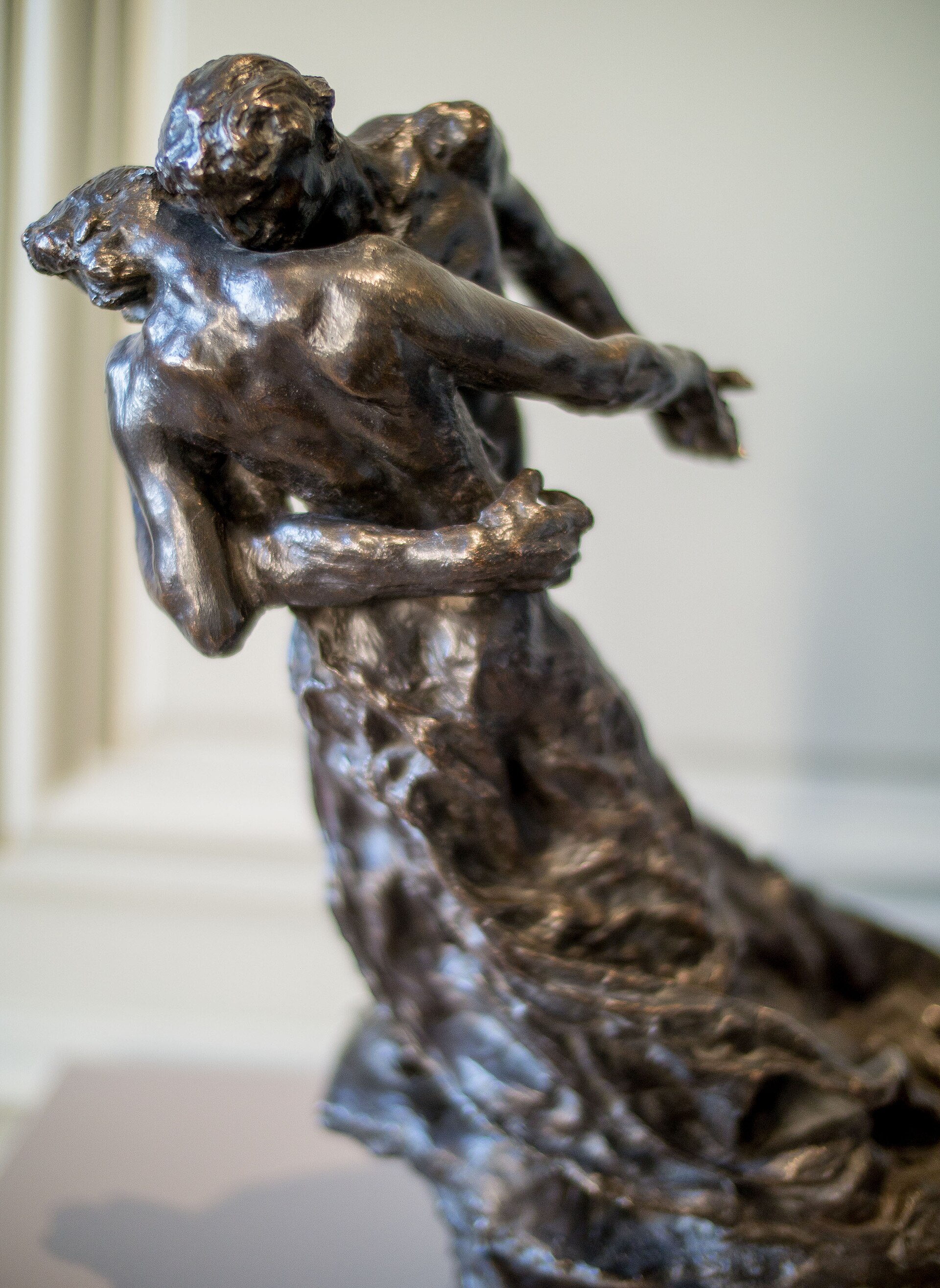
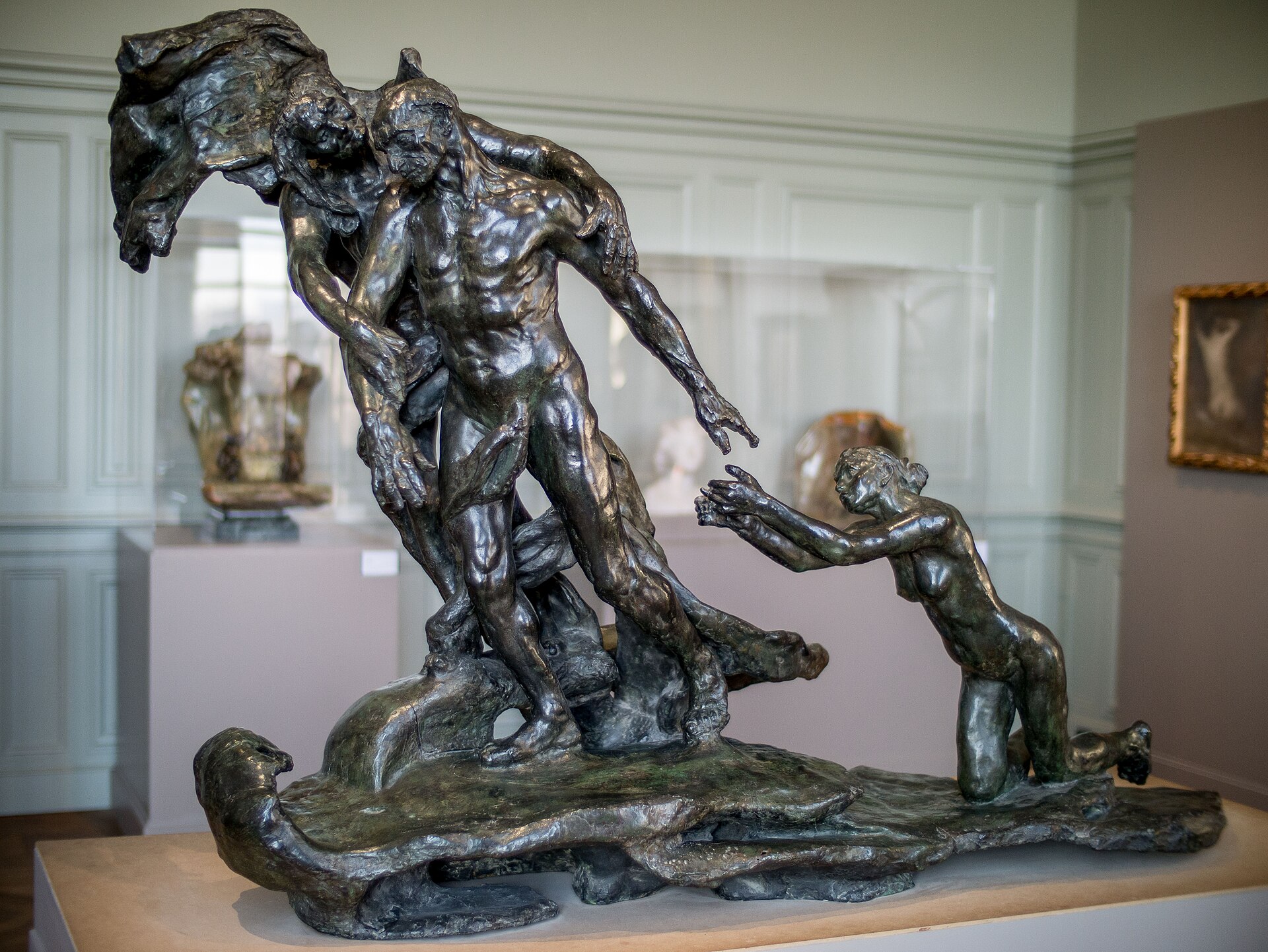
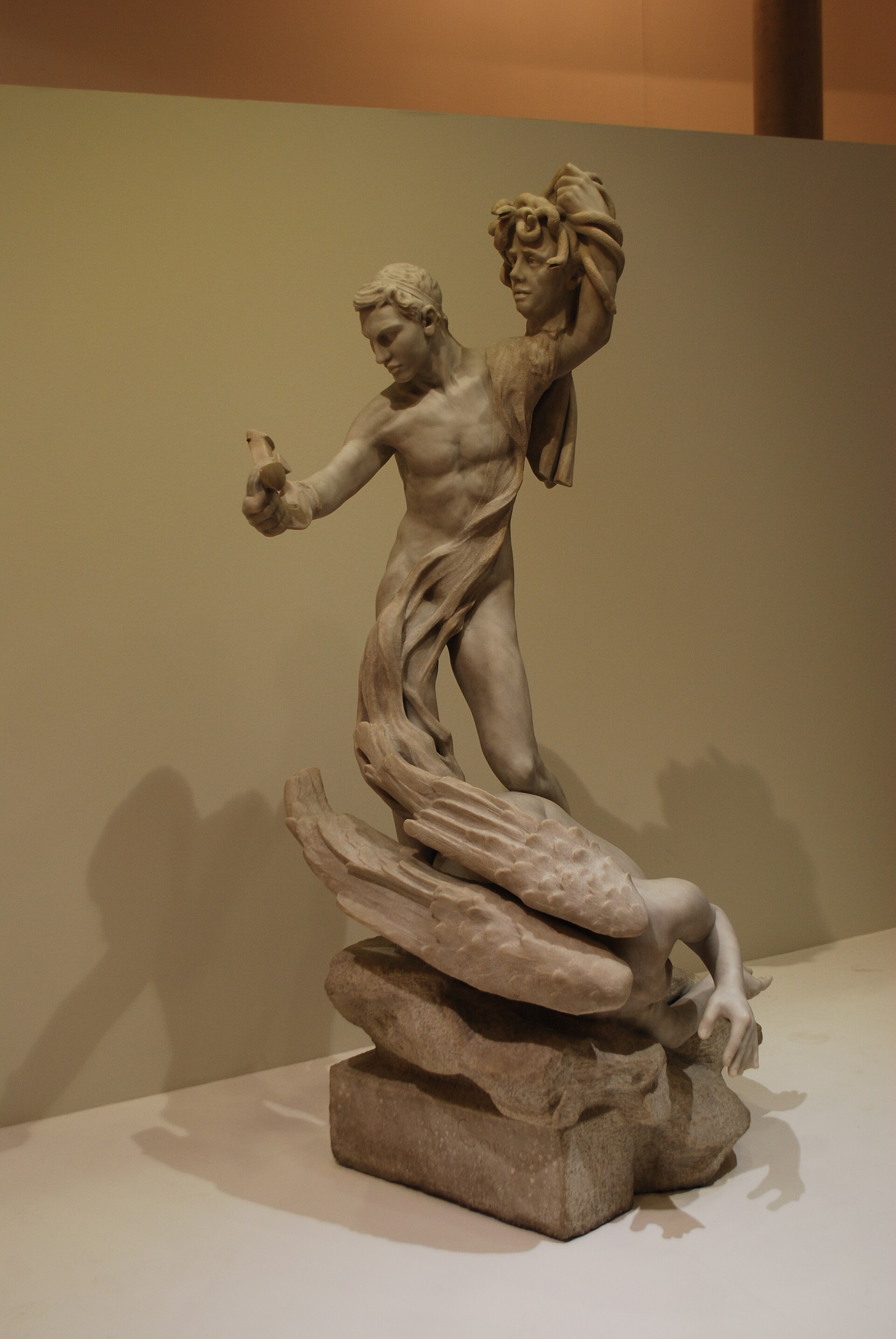
The second thing the biographies skip is who made the objects. Who carved her one large marble is itself in question: the Musee Rodin says she sculpted Perseus and the Gorgon, while the Galerie Malaquais, a dealer, reads the sculptor Francois Pompon's account book as recording a contract to execute it. In Rodin's studio the division of hands ran the other way, and the Musee Rodin now says that two heads once signed by Rodin were modelled by her. Prices recorded: GBP 5.1 million with fees for a unique first version of La Valse at Sotheby's London in 2013, and, in February 2025, a Blot-cast bronze of L'Age mur at EUR 3.1 million before fees and EUR 3.7 million with fees, according to The Art Newspaper.
This page sets out what is accepted, who decides, what each cast is, what has been paid and where the sources disagree. It also records plainly what could not be established: a total for her output, the outcome of the La Vague casting case after it was sent back for retrial, and the size of the L'Age mur edition, which two newspapers give differently.
Images
Chronology
- 1864
Born on 8 December in Fere-en-Tardenois, eldest of three children of Louis-Prosper Claudel, a collector of registry fees, and Louise-Athanaise Cervaux.1
- 1876
The family settles in Nogent-sur-Seine, where the sculptor Alfred Boucher sees her early modelling.2
- 1881
Her mother takes the three children to Paris; Camille studies at the Academie Colarossi.3
- 1882
Rents a shared studio on rue Notre-Dame-des-Champs; Boucher leaves for Italy and Rodin takes over his pupils.37
- 1884
Admitted to Rodin's studio as an assistant, according to the Musee Camille Claudel; the Musee Rodin says about 1884.37
- 1885
Shows Giganti and Old Helen at the Salon des Artistes Francais.3
- 1886
On 12 October signs a contract with Rodin; in November begins the large Sakountala group.4
- 1888
The plaster Sakountala earns an honourable mention at the Salon des Artistes Francais.47
- 1893
La Valse and Clotho are shown at the Societe Nationale des Beaux-Arts; her separation from Rodin begins.5
- 1895
Receives her first state commission, for a bronze of L'Age mur; the state later doesn't honour it.5
- 1898
Mathias Morhardt publishes the first biography in the Mercure de France; Perseus is first announced in it.512
- 1899
The commission for L'Age mur in bronze is drafted then cancelled; Pompon's account book records a commission of 23 May for the large Perseus marble, cancelled and replaced on 24 April 1900 (Galerie Malaquais, a dealer).512
- 1905
First exhibition at the Galerie Eugene Blot, 4 to 16 December, shared with Bernhard Hoetger; Blot's bronze editions begin.512
- 1913
Her father dies on 3 March; she is confined at Ville-Evrard on the family's request (10 March per the Musee Camille Claudel; July per the Musee Rodin).67
- 1914
Transferred to Montdevergues asylum on 5 to 7 September, where she stays until her death.6
- 1943
Dies on 19 October at Montdevergues; her brother had last visited on 21 September.6
- 1952
- 1990
A grey terracotta Head of a Slave signed Camille Claudel is published in Reine-Marie Paris's catalogue and begins the re-attribution of the Rodin bronze.11
- 2008
Nogent-sur-Seine buys the Claudel family house and the Paris and Cressent collection, and, per The Art Newspaper, the marble Perseus for EUR 950,000.21
- 2012
The Cour de cassation rules on 4 May on the posthumous bronze of La Vague.13
- 2013
First version of La Valse sells at Sotheby's London on 19 June for GBP 5.12 million, her auction record.16
- 2017
The Musee Camille Claudel opens on 26 March; Artcurial sells twenty works from her sister Louise's collection on 28 November.1921
- 2025
A Blot-cast L'Age mur found in a Paris flat sells at Philocale, Orleans, for EUR 3.1 million at the hammer.1718
The market
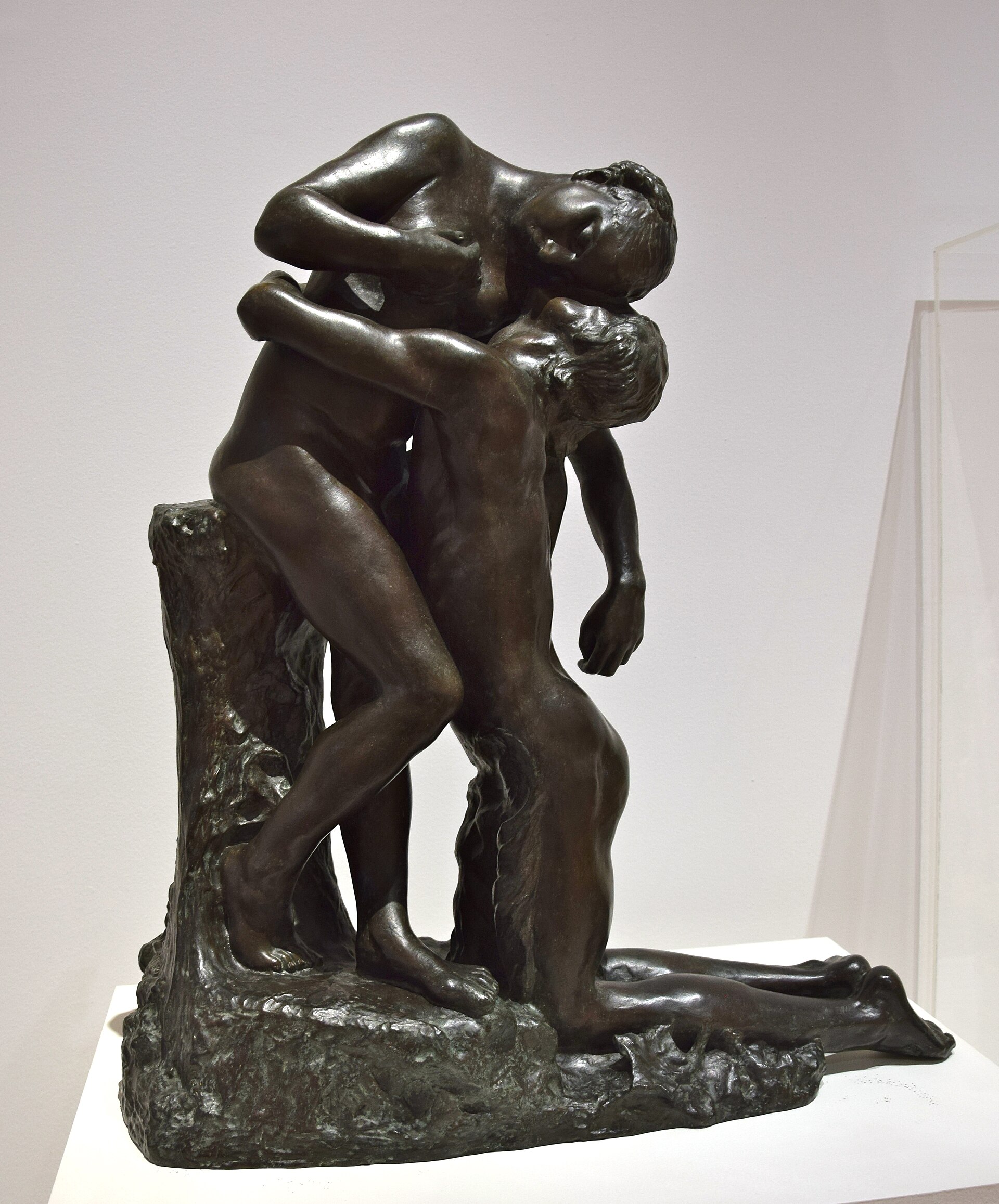
The market is small and thin. The record is GBP 5.12 million (USD 7.91 million) for a unique cast of the first version of La Valse at Sotheby's London in June 2013; The Art Newspaper gives GBP 5.1 million with fees, and HENI doesn't say how the premium was treated. Christie's reports GBP 1,112,750 for a Blot-cast grand-modele La Valse (number 12 of 25) in 2018 and GBP 831,600 for a 1905 Blot cast of L'Abandon in 2023. Matthieu Semont of Philocale told The Art Newspaper in 2025 that apart from the Sotheby's bronze the few recent works sold for around EUR 1 million; Artnet's 2025 report lists L'Aurore at USD 3.1 million in 2014 (house not stated), so his remark isn't a complete account.
Prices are recorded as each source reports them. Christie's figures come from its 2023 collecting guide, not from lot pages, and its premium treatment is as reported there; Christie's and HENI give realised prices without a hammer and premium split; only the 2025 Philocale sale is given on both bases. France's pre-emption right matters to buyers: the Musee d'Orsay pre-empted a terracotta at the 2017 Artcurial sale. For the 1980s HENI lists La Valse at USD 45,000 (Briest, Paris, 18 March 1986) and L'Abandon at USD 406,400 (Poulain and Le Fur, Paris, 31 March 1989).
| Date | Sale | Work | Result | Note |
|---|---|---|---|---|
| 19 June 2013 | Sotheby's London | La Valse, first version (plaster 1892, only bronze cast 1893, unique) | Hammer not stated in sources read With premium GBP 5.12 million / USD 7.91 million per HENI (premium treatment not stated); GBP 5.1 million with fees per The Art Newspaper GBP | Record. Beat the previous record, USD 1.86 million for the second version at Sotheby's New York on 7 May 2013, by USD 6.05 million per HENI. HENI says the bronze had been traded three times before. |
| 2014 | not stated in the source | L'Aurore (1898 to 1900) | Hammer not stated in sources read With premium USD 3.1 million as reported by Artnet (premium treatment not stated) USD | Artnet's 2025 report cites its price database; month, house and lot page not found. |
| 6 February 2013 | Christie's London | L'Abandon | Hammer not stated in sources read With premium USD 1.68 million as listed by HENI (premium treatment not stated) USD | From the HENI history table; no lot page was read. |
| 12 May 2016 | Christie's New York | La petite Chatelaine, version a la natte courbe fine (1895), unique, white marble, 32.7 cm | Hammer not stated in sources read With premium USD 1,445,000 as reported by Christie's (premium treatment not stated) USD | From Christie's 2023 collecting guide. |
| 28 November 2017 | Artcurial, Paris | L'Abandon, grand modele (about 1886), from the collection of Louise Claudel | Hammer not stated in sources read With premium EUR 1.2 million as reported by Artnet (premium treatment not stated) EUR | Twice the high estimate. Same sale: La petite Chatelaine in plaster, EUR 492,000; Study II for Sakountala, terracotta, EUR 467,800, pre-empted by the Musee d'Orsay. Twenty works made EUR 3.6 million in total. The date of the sale is inferred from Artnet's report dated 29 November 2017 saying 'last night'. |
| 20 June 2018 | Christie's London | La Valse or Les valseurs, grand modele (about 1895), bronze, Blot cast 1905, number 12 of 25 recorded casts, 46.5 cm | Hammer not stated in sources read With premium GBP 1,112,750 as reported by Christie's (premium treatment not stated) GBP | From Christie's 2023 collecting guide. |
| 4 December 2020 | Christie's New York | L'Implorante, petit modele (about 1898), bronze cast by 1920, 28.2 cm | Hammer not stated in sources read With premium USD 125,000 as reported by Christie's (premium treatment not stated) USD | The only low-end small-model result found; shows the gap between small casts and the large bronzes. |
| 3 March 2023 | Christie's London | L'Abandon (conceived 1888), bronze cast by Blot 1905, 42.8 cm | Hammer not stated in sources read With premium GBP 831,600 as reported by Christie's (premium treatment not stated) GBP | Sold in the same sale as Rodin's Kiss, second reduction, at GBP 592,200. Edition numbers on Christie's lots come from its guide's captions. |
| 16 February 2025 | Philocale, Orleans | L'Age mur (The Age of Maturity), bronze, sand-cast by Eugene Blot in 1907, from a Paris flat | Hammer EUR 3.1 million before fees (The Art Newspaper) With premium EUR 3.7 million with fees (The Art Newspaper); EUR 3.6 million including fees (Artnet) EUR | Estimate EUR 1.5 million to 2 million (Artnet). The Art Newspaper dates the sale as 'Sunday' in a report of 18 February 2025, which makes 16 February. The sources disagree on edition: numbered one of six, four lost, one at Nogent (The Art Newspaper) or first of four with the others at the Musee d'Orsay, Musee Rodin and Nogent (Artnet). |
Hammer is the price at which the bidding stopped; with premium adds the fee the house charges the buyer on top. Hammer price and buyer's premium in the glossary.
Where to see the work
| Institution | City | Holdings | Note |
|---|---|---|---|
| Musee Rodin | Paris | The Wave, Vertumnus and Pomona, both versions of L'Age mur, Clotho, The Gossips, La petite Chatelaine, the Bust of Rodin and Young Girl with a Sheaf, among others. | Says it houses the largest collection of Claudel's works in existence; much of it came with Paul Claudel's 1952 gift. |
| Musee Camille Claudel | Nogent-sur-Seine | The marble Perseus and the Gorgon (Art Newspaper: pride of place), forty-three core pieces by the director's 2017 count, the terracotta Head of a Slave (inventory 2010.1.4), the Waltz plaster and Old Helen. | Opened 26 March 2017 in the house the family lived in from 1876 to 1879; the French museum register calls its holding the largest in the world. |
| Musee d'Orsay | Paris | The Thiebaut Freres cast of L'Age mur made for Captain Tissier and, following a 2017 pre-emption, Study II for Sakountala. | The pre-emption money had to be raised within a year (Artnet, 2017). |
| La Piscine, Musee d'Art et d'Industrie Andre Diligent | Roubaix | Torso and figure studies; the museum staged the 2014 to 2015 exhibition Camille Claudel, Au miroir d'un art nouveau. | Holdings beyond the exhibition are from Commons category listings and a tertiary list; not checked against the museum. |
| Musee de Cambrai | Cambrai | Bronze L'Abandon, the cast the French state bought through Blot in 1907. | Per the Musee Camille Claudel chronology. |
| Musee Sainte-Croix | Poitiers | The Wounded Niobid in bronze, commissioned by the Department of Fine Arts in 1906. | Per the Musee Camille Claudel chronology. |
| Palais des Beaux-Arts | Lille | Giganti and the bust of Madame de Massary (Louise Claudel). | Per Commons categories and a tertiary list; not verified with the museum. |
| Rodin Museum | Philadelphia | The Call (Head of a Slave) and Head of a Laughing Man, cast in 1925 and 1926 and signed Rodin. | Among the first works by Claudel in a US public collection (1929), per the Galerie Malaquais. |
| National Museum of Western Art | Tokyo | A Blot-cast bronze of Perseus and the Gorgon, 1905 to 1906. | Acquired from the Galerie Malaquais, per the gallery's lot essay with an export certificate; the museum itself was not consulted. |
Forgeries and misattributions
- La Vague, bronze number 3/8: a posthumous cast made by surmoulage, shown for sale in 1999 as an original exemplar
- A full-bronze cast of La Vague, made after her death and shown for sale in 1999 as an original exemplar, was seized as counterfeit by one great-niece; it was not sold. The Cour de cassation held in 2012 on the law of originals: only limited-edition bronzes cast from a model made by the sculptor personally are original exemplars, and a cast obtained by surmoulage isn't one. The facts recited are the appeal court's findings. The court rejected the heirs' material-change claim and quashed only the certificate, representation-right and partial-destruction claims, sending the case to Versailles; the outcome after remand was not found. The parties are anonymised in the court's text. Seizure for counterfeiting in November 1999, followed by litigation through the Paris and Versailles courts.1314
- Head of a Slave and Head of a Laughing Man signed Rodin
- Bronzes cast in 1925 and 1926 for the Philadelphia collector Jules Mastbaum carried Rodin's signature; the Slave head was found to be Claudel's after a grey terracotta signed Camille Claudel on the neck appeared in 1990, and the Laughing Man after a plaster signed C. Claudel. This was a misattribution by the museum, not a forgery; the Galerie Malaquais says the signature was added in good faith. A signed terracotta of identical model, with a different neck cut and a head tilted back by almost 45 degrees; institutions adopted the new attribution from the 2005 exhibition.711
- Posthumous editions and signed models
- A posthumous edition of the Head of a Slave was cast at the Coubertin foundry from 1990. Blot's models passed to Leblanc-Barbedienne in 1937 and the archives show no rights paid to Claudel or her family. These are not forgeries; they are authorised or tolerated casts a buyer must know about. Read from catalogue entries and Blot transfer documents.1112
- No outright forgery of her work found
- The sources read record no case of a fabricated Claudel sold as hers; the La Vague cast above was a posthumous moulding, not a fabrication. An earlier search summary mentioning illicit casts of La Valse in the 1890s came from an auction house page that could not be opened and is not relied on. Not applicable.12
The essay
Chapter 1No agreed count; one auctioneer said barely a hundred
No source opened for this page gives an accepted number of works.
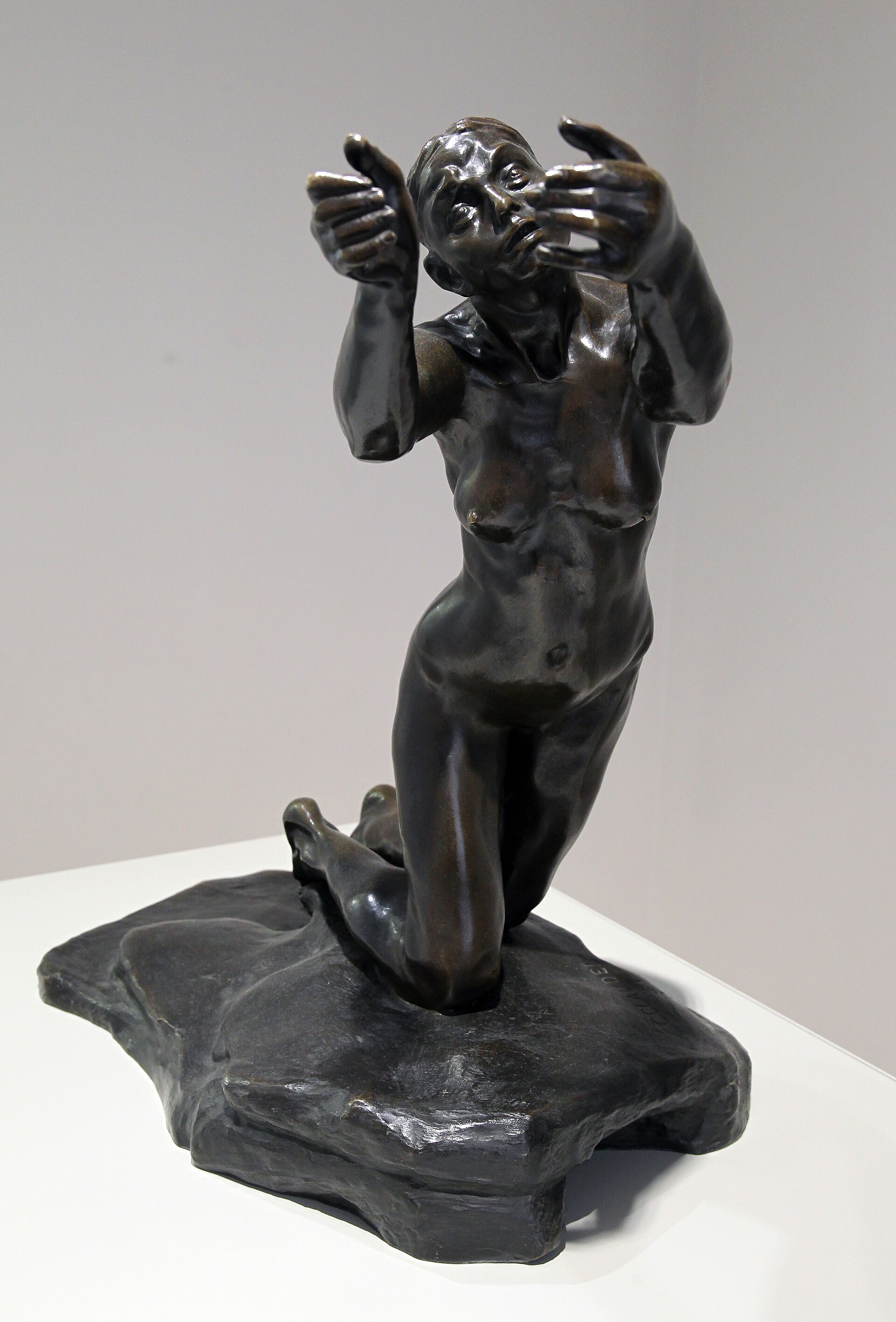
No source opened for this page gives an accepted number of works. The nearest figures are all partial. At the Artcurial sale of her sister's collection in 2017, the house's deputy director of modern art, Bruno Jaubert, said her whole production was barely a hundred pieces; that's a seller's statement made at the moment of sale. In 2017 the museum's director told The Art Newspaper that Nogent-sur-Seine had assembled 43 core pieces, including drawings, plaster casts and mixed-media sculptures. The Bibliotheque nationale's record for the 2019 catalogue says it lists the totality of her known works but gives no figure, only 863 pages and a bibliography from page 802.
The number is hard to fix for three reasons that show in the sources. Claudel burned or smashed models from about 1906 and again around 1911 to 1913; the Musee Camille Claudel quotes a letter in which she describes throwing all her wax models on a fire. Many works were given to friends and buyers who didn't keep them, as the summary of the 2019 catalogue on the national library record puts it. And the same composition exists as plaster, terracotta, stoneware, marble, onyx and bronze, so a count of works and a count of objects are different things. La Valse alone is recorded in 25 casts of its large model, according to Christie's.
Chapter 2Two lines of catalogue raisonne, a dealer's project and no committee
Claudel's attribution has never been put in the hands of a committee.
Claudel's attribution has never been put in the hands of a committee. What exists is a run of catalogues. The Galerie Malaquais's bibliography lists the 1984 exhibition catalogue by Monique Laurent, Bruno Gaudichon and Anne Riviere, then two lines of catalogue raisonne: Reine-Marie Paris and Arnaud de La Chapelle, L'oeuvre de Camille Claudel (Adam Biro and Arhis, 1990), Paris's Camille Claudel re-trouvee (2000) and the fifth edition by Paris and Philippe Cressent (Economica, 2019); and Anne Riviere and Bruno Gaudichon's catalogue raisonne, third edition, expanded (Adam Biro, 2001), whose earlier edition of 1996, with Danielle Ghanassia, is cited in the 2012 judgment discussed below. The two lines number separately, so one model carries a different number in each.
A third undertaking is under way. The Galerie Malaquais, a commercial gallery in Paris, says on its lot essays that it is editing a Catalogue critique de l'oeuvre de Camille Claudel under Eve Turbat and gives its own works numbers in it; a proof of Perseus and the Gorgon offered by the same gallery carried the number 2019-5B and has since been acquired by the National Museum of Western Art in Tokyo. The gallery is a dealer and its essays are scholarly in form, so they are used here for their footnotes and treated as trade sources.
Rights add a second layer. In French litigation over a posthumous bronze of La Vague, the Cour de cassation's 2012 judgment speaks of her heirs as holders of the moral right and refers to a protocol among heirs of 6 July 1995 that makes some uses of reproduction subject to their authorisation. A 2022 law-review account of the case by Marine Ranouil (Sorbonne) describes it as brought by one great-niece against casts made on the orders of another. The court's own text anonymises the parties.
Chapter 3The studio: who made the object in Rodin's workshop
The Musee Rodin dates her entry to his team of assistants to about 1884 and says the exact nature of her tasks remains uncertain.
The Musee Rodin dates her entry to his team of assistants to about 1884 and says the exact nature of her tasks remains uncertain. She apparently worked mostly on difficult pieces such as hands and feet for monumental commissions, notably the Gates of Hell. The Musee Camille Claudel gives 1884 as the year she was admitted as an assistant. The popular story that she modelled the hands of the Burghers of Calais appears in French Wikipedia as a legend (la legende veut); the Galerie Malaquais says Antoinette Le Normand-Romain brought to light in 2014 how much she did for the Gates, the Burghers, the Balzac and the Monument to Claude Lorrain, and that Clarisse Fava-Piz continued the work in 2023.
The Musee Rodin is specific about two heads. The Head of a Slave and the Head of a Laughing Man were signed by Rodin when they were cast in bronze, but the museum says they were modelled by Claudel. The head of Avarice in Avarice and Lust has been wrongly attributed to her. The Galerie Malaquais adds that a Head of Saint John the Baptist once given to her is now Rodin's. In its account, her style and his had fused so closely in these years that some pieces can be placed only by a signature or a document.
The sources disagree on whether anything was taken. Christie's 2023 collecting guide says Rodin never publicly acknowledged her assistance. The Musee Rodin says he recognised her as an artist in her own right. The Galerie Malaquais notes that the Rodin bronzes of the Slave head were first cast in 1925 and 1926 for the American collector Jules Mastbaum, after Rodin's death, by a museum whose director didn't know who had modelled the head, so that the Rodin signature was added in good faith. It says Reine-Marie Paris, who published the signed terracotta in 1990, argued that the bronze proved Rodin appropriated Claudel's work, and that this can't be proved.
Chapter 4Who carved the large Perseus marble
Claudel wrote to the dealer Eugene Blot in 1905 that she'd done two life-size statues in her life, Sakountala and Perseus and the Gorgon, as the Galerie Malaquais quotes the letter.
Claudel wrote to the dealer Eugene Blot in 1905 that she'd done two life-size statues in her life, Sakountala and Perseus and the Gorgon, as the Galerie Malaquais quotes the letter. The Musee Rodin says she sculpted Perseus and the Gorgon in 1899, and The Art Newspaper calls the marble her only monumental marble and says the town of Nogent bought it in 2008 for EUR 950,000 with heritage funding and corporate sponsorship. The Galerie Malaquais, which is a dealer and whose essay is treated here as a trade source, tells the story differently: it reads Francois Pompon's account book as noting on 23 May 1899 a commission to execute the large marble, with a reduction of the 246 cm plaster by one-seventh to a projected 210 cm. It says that contract was cancelled and replaced on 24 April 1900 by one for 190 cm, and that the finished marble stands 196 cm, four-fifths of the plaster. On its account the execution seems to have been in progress until early 1902 by the three-point compass method.
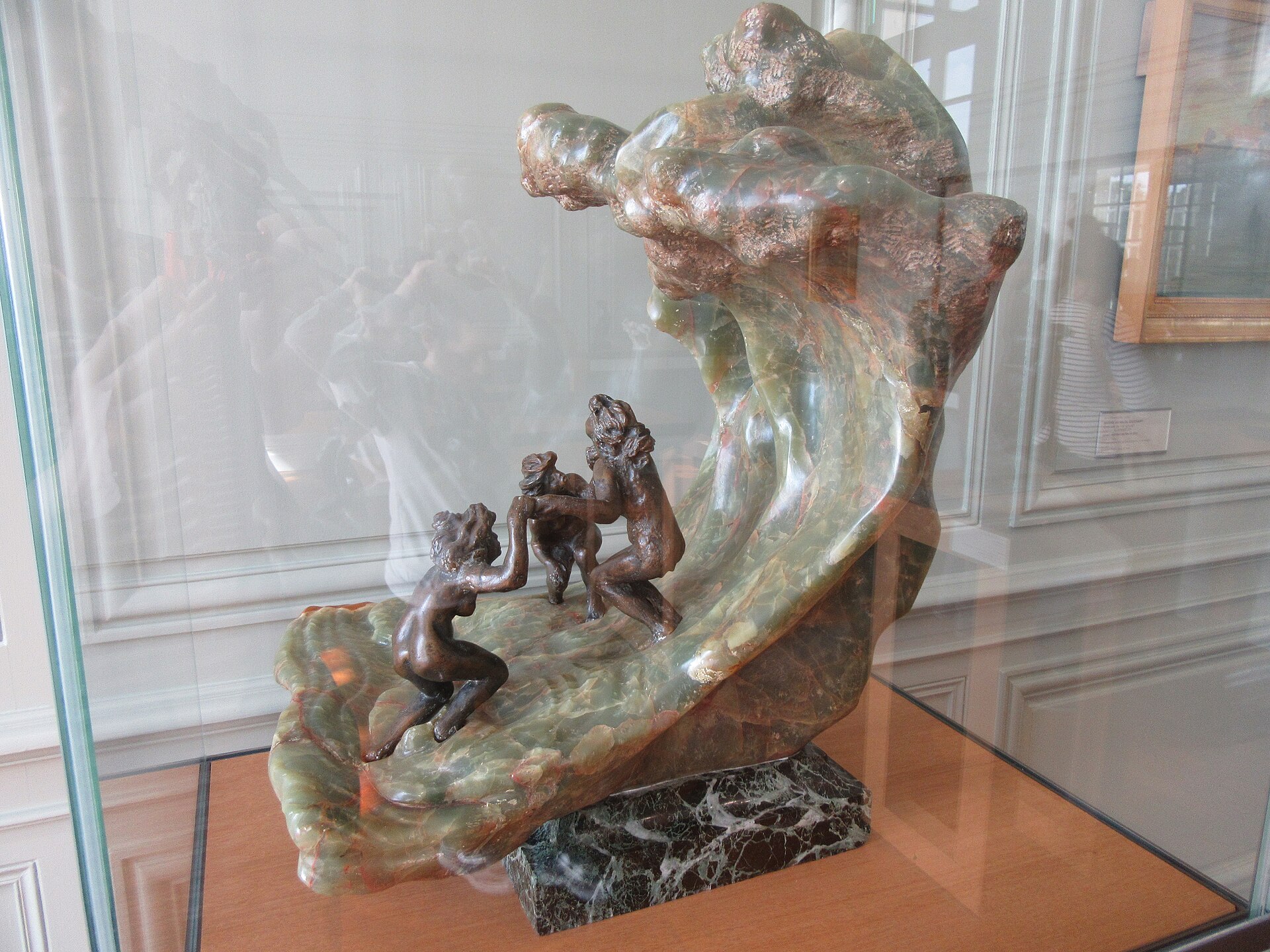
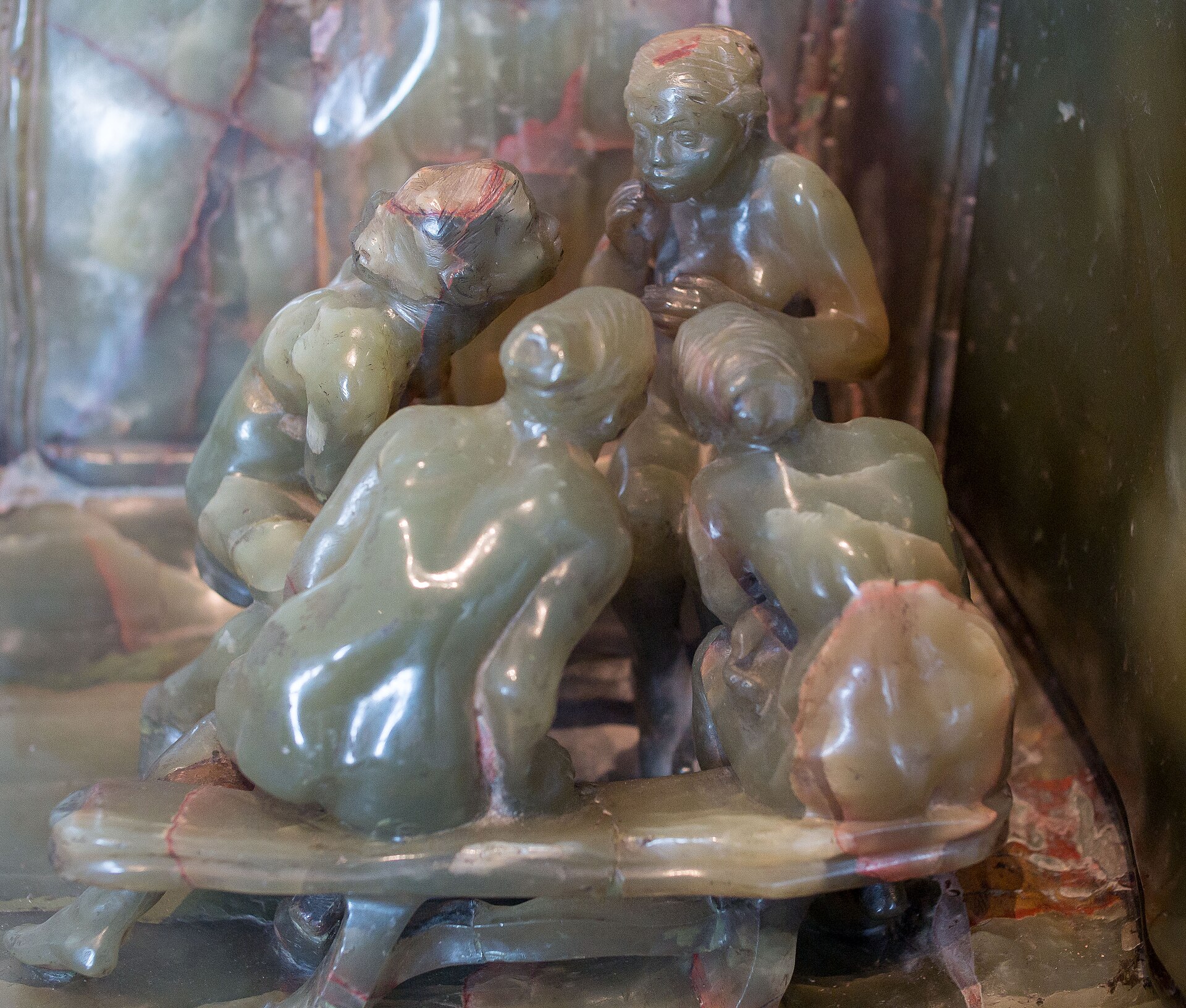
Claudel herself wrote to Leon Gauchez in May 1899, according to the same essay, that she couldn't finish the Perseus for lack of money but could do a reduction in marble. The museums' accounts and the dealer's reading are not reconciled here, and the sources read do not say how much of the carving was her own hand. The smaller onyx pieces are described differently: the Musee Rodin says La Vague, shown in plaster at the 1897 Salon, was made almost entirely by Claudel herself, like The Gossips, and its object page dates La Vague to 1897 to 1903 with a query. The Galerie Malaquais says the Countess de Maigret commissioned several marbles from her: Perseus, a bust of herself, one of her son, a version of Dream by the Fireside and the Sakountala as Vertumnus and Pomona. No register of Claudel's practitioners was found.
Chapter 5Sakountala: one composition, three titles
In November 1886 she began a large group inspired, in the Musee Camille Claudel's words, by a drama by the Hindu poet Kalidasa, Shakuntala.
In November 1886 she began a large group inspired, in the Musee Camille Claudel's words, by a drama by the Hindu poet Kalidasa, Shakuntala. The Musee Rodin describes the source as an Indian play about Sakuntala's reunion with her husband after a long separation caused by a magic spell. The plaster won an honourable mention at the 1888 Salon des Artistes Francais. After repeated requests for a state commission, the Musee Rodin says, it was carved in marble in 1905 thanks to the Countess de Maigret and entitled Vertumnus and Pomona; the bronze cast by Blot was shown the same year at the Salon d'Automne as L'Abandon. The museum's reading is that the subject moved from Hindu to Greek mythology and then to psychology or personal history.
The title changes are documented; the sources read give no statement from her on why. A modern autobiographical reading, that the abandoned woman is Claudel and the man Rodin, appears throughout the market literature; the Musee Rodin cautions that her work has often been interpreted simplistically as autobiography and prefers to speak of a process in which events in her private life took on a more universal dimension. The French state bought a bronze cast of L'Abandon through Blot in 1907 and placed it at the museum in Cambrai, according to the Musee Camille Claudel.
Chapter 6L'Age mur: the commission that went missing and the reading that came later
In July 1895 the state gave Claudel her first commission, for a bronze of L'Age mur (the Age of Maturity), and the inspector Dayot's reports follow its stages.
In July 1895 the state gave Claudel her first commission, for a bronze of L'Age mur (the Age of Maturity), and the inspector Dayot's reports follow its stages. The Musee Camille Claudel says the state never honoured the commission for reasons that remain unclear; in June 1899 the commission was drafted and then cancelled by the Director of Fine Arts, Henry Roujon. Claudel held Rodin responsible. The Musee Rodin says he has sometimes been accused of playing a part in the rejection of a work that could be read as being about him, but that he never sought to prevent it being exhibited, and that in 1895, backed by the critic Gustave Geffroy, he tried and failed to get a government commission for a marble Sakuntala.
The identification of the three figures with Claudel, Rodin and Rose Beuret is, on the Musee Rodin's account, later than the first showings: critics at first saw a symbolic image of Destiny in which the ageing man is torn away from love, youth and life. The Art Newspaper reports a specialist, Alexandre Lacroix, who says the kneeling girl has Claudel's features, the man refers to Rodin's Burghers of Calais and the old woman may represent Rose Beuret; Artnet repeats it as a suggestion by Lacroix. Those are modern readings and they are credited here to the people who make them. The bronze was cast starting with the imploring woman by Gruet in 1899 for Captain Tissier, who the Musee Camille Claudel says paid for casting despite limited means; a Thiebaut Freres cast for Tissier, now at the Musee d'Orsay, was shown at the Salon of 1902.
Chapter 7Perseus and the Gorgon: a mirror, a marble and a face
The Galerie Malaquais gives the best-documented chronology of any single work.
The Galerie Malaquais gives the best-documented chronology of any single work. On 10 June 1898 she told Leon Gauchez she was at work on a statue of Perseus looking at the head of the Gorgon in a mirror; in a letter several weeks later, undated, she said she could sell a plaster for 2,000 francs. The large plaster of 1899 was shown at the Salon, overshadowed by L'Age mur, and was probably destroyed by her around 1912. The marble was shown outdoors at the 1902 Salon, which she resented because it was made for an interior and could be damaged by weather. In a letter thought to date from 1904 she asked Blot to seek a state commission for a large bronze; none was made. A bronze edition of about 50 cm was planned for 25 proofs in 1905 and only six were cast by Blot, according to the Galerie Malaquais's reading of the 1937 transfer of Blot's models to Leblanc-Barbedienne.
The subject is the Greek story in which Perseus kills the only mortal Gorgon while looking at her reflection in Athena's polished shield. The Musee Rodin names Donatello, Cellini and Greco-Roman mythology as her sources and says the Gorgon's severed head is a self-portrait; the Galerie Malaquais is more careful, saying she seems to link the myth to her biography by giving the Gorgon her own features, and cites Anne Riviere's phrase that it is perhaps the self-portrait of the petrified artist. Paul Claudel wrote in 1951 that the bloody-haired head Perseus holds up is that of madness. Paul Claudel wrote that in 1951, after her confinement; Artnet reports she was held at her mother's and brother's behest. The sources give no statement from Camille Claudel that the Gorgon was her own face.
Chapter 8Patrons, price and the dealer who never got his money back
She sold few works and at low prices. Eugene Blot wrote to the critic Mathias Morhardt in 1935 that he was proud to edition her work, that she sold very few of her superb works and at such low...
She sold few works and at low prices. Eugene Blot wrote to the critic Mathias Morhardt in 1935 that he was proud to edition her work, that she sold very few of her superb works and at such low prices, and that he never recovered even half of his investment; the Galerie Malaquais quotes the letter. Blot met her through Gustave Geffroy, the Musee Camille Claudel says around 1900 and the Galerie Malaquais thinks more likely 1904. From 1904 he cast some fifteen bronzes of her statues and from 1905 kept twelve models in his boulevard de la Madeleine gallery; she had three exhibitions there, in 1905 (shared with Bernhard Hoetger), 1907 and 1908. The Galerie Malaquais says the archives show no rights paid to Claudel or her family, and that Blot ceded his models to the foundry Leblanc-Barbedienne in 1937.
The Musee Rodin lists her private supporters as Mathias Morhardt, Leon Gauchez, the Rothschilds, Captain Tissier and above all the Countess de Maigret, who bought her last major sculpture, Perseus and the Gorgon, and says that Rodin paid the rent of her studio in 1904. The Musee Camille Claudel adds that Rodin discreetly supported her financially. Artnet says that after seeing L'Age mur in 1899 Rodin cut her off completely; the Musee Rodin says he paid her studio rent in 1904 and sent money through Morhardt, and the two accounts aren't reconciled here.
Chapter 9What she read, saw and joined, and what isn't recorded
What the sources document is modest and specific.
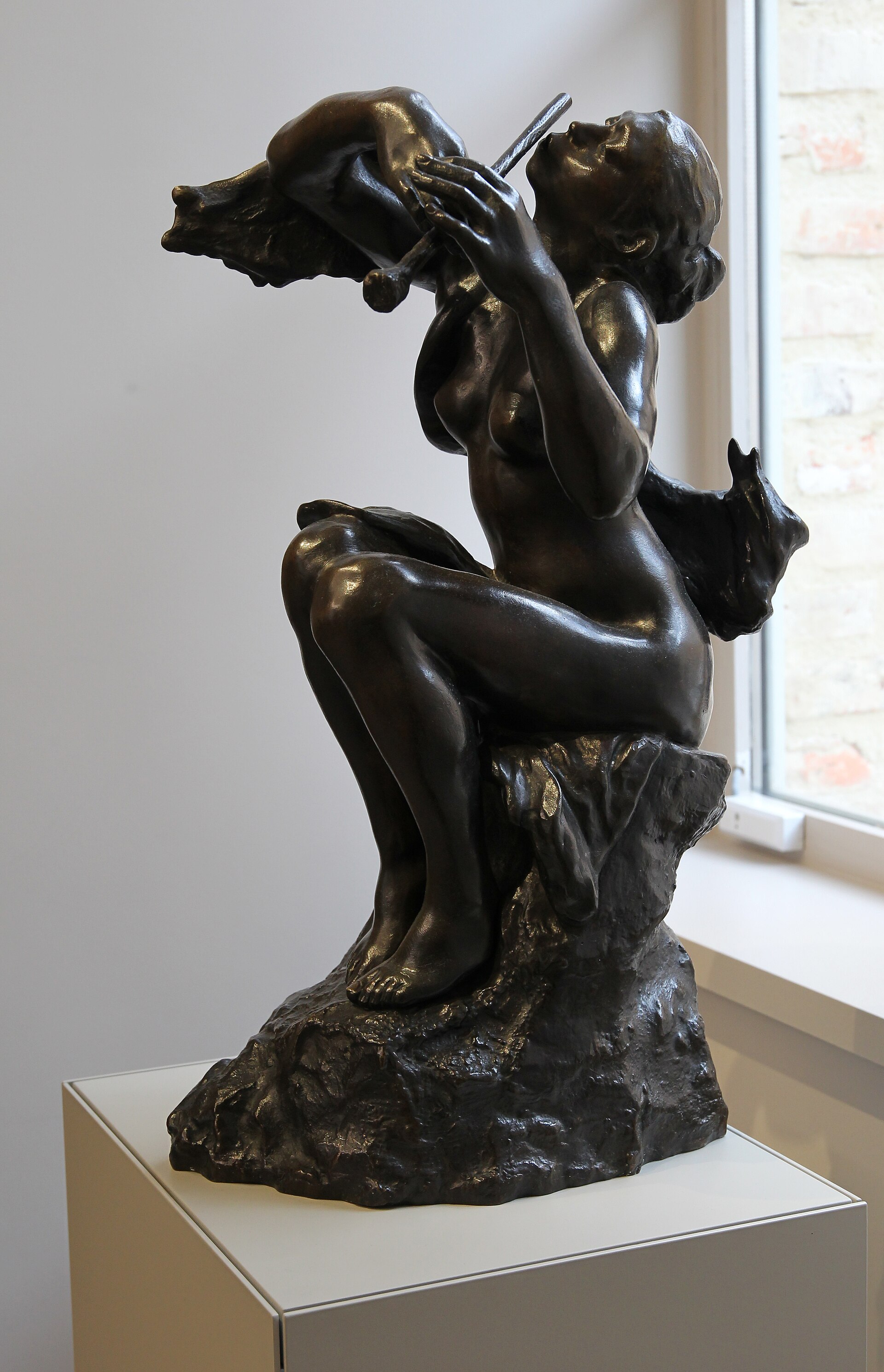
What the sources document is modest and specific. She was taught by the Sisters of the Christian Doctrine at Bar-le-Duc as a child. Her brother Paul converted to Catholicism on 25 December 1886 at Notre-Dame; her own religious practice isn't recorded in the sources read. In 1885 she and Paul attended Mallarme's Tuesday gatherings, according to the Musee Camille Claudel. In 1889 she discovered Far Eastern art at the Paris World's Fair in the company of Claude Debussy, the same museum says, and the Musee Rodin calls La Vague influenced by Japanese art and similar in colour and form to Hokusai's woodblock print. It adds that the Little Chatelaine was a work particularly admired by Debussy. These are documented encounters and a museum's reading of one work; none is a statement by her of a programme.
The sources read record no society membership, no confessor, no library and no named treatise behind her subjects. The Perseus is traditional iconography (Cellini's Perseus is the Malaquais comparison, and the Musee Rodin adds Donatello); the Sakountala rests on a named drama; Clotho, the Fate who spins the thread of life, was modelled on an old woman who also posed for Rodin, as the Musee Rodin records. Paul Claudel wrote in 1913 that sculpture, proscribed from public square and open air, withdrew into a solitary room, and that she was the first practitioner of this interior sculpture; that is her brother's description of her work, not hers. No hidden system is documented in the sources read.
Chapter 10Destruction, confinement and who decided
She began destroying works around 1906, according to the Musee Camille Claudel, and in a letter of about 1912 she wrote of putting all her wax models on a fire.
She began destroying works around 1906, according to the Musee Camille Claudel, and in a letter of about 1912 she wrote of putting all her wax models on a fire. The large plaster of Perseus was probably destroyed in about 1912 (Galerie Malaquais). Her father died on 3 March 1913, she wasn't told, and on 7 March a doctor, Michaux, drew up a certificate; on 10 March she was admitted to Ville-Evrard by the procedure the museum calls voluntary placement, requested by her mother. The Musee Rodin dates her committal to July 1913 at her family's request; the two institutions disagree and no third source read settles it. She was moved to Montdevergues in September 1914 and stayed until her death on 19 October 1943.
Artnet says she was held at her mother's and brother's behest and that there are conflicting accounts over whether this was warranted, with friends and some hospital staff insisting she should have been released. That is Artnet's summary and the sources read here don't allow a verdict. The Bibliotheque nationale's note on the 2019 catalogue says that from the date of her confinement she refused all artistic activity. Her brother last visited on 21 September 1943; she was buried first in a temporary tomb at Montfavet and then moved to the communal grave, according to the Musee Camille Claudel.
Chapter 11After 1943: the estate, a gift and the museums
The Musee Camille Claudel says Mathias Morhardt asked in 1914 for a room for her in Rodin's future museum and that Rodin agreed but Paul Claudel was categorically opposed.
The Musee Camille Claudel says Mathias Morhardt asked in 1914 for a room for her in Rodin's future museum and that Rodin agreed but Paul Claudel was categorically opposed. In 1949 Paul asked the Musee Rodin to host a retrospective and wrote the preface, My Sister Camille. In 1952 he gave the museum four major works: the first version of L'Age mur in plaster, the second in bronze, the marble L'Abandon (Vertumnus and Pomona) and a plaster of Clotho. The Musee Rodin says it recently acquired Young Girl with a Sheaf and houses the largest collection in existence; the Museofile record of the Nogent museum, also an official French source, says that museum holds the largest collection in the world. The two claims are not reconciled here.
The family trail continues. The town of Nogent bought the family house and the collection built by Reine-Marie Paris and Philippe Cressent in 2008, and the Musee Camille Claudel opened on 26 March 2017. Also in 2017 twenty works from the collection of her sister Louise, described by Artnet as the last major works in private hands, were sold by Artcurial for a combined EUR 3.6 million. French fiscal heritage law shows at the edges: Artnet reports that the Musee d'Orsay pre-empted a terracotta, Study II for Sakountala, at EUR 467,800 and has a year to raise the money, and French Wikipedia says Young Girl with a Sheaf was declared a national treasure in November 2003; that second point comes from a tertiary source and the ministry release it cites was not opened.
Chapter 12Posthumous casts and the case of La Vague
La Vague is the work around which French law has defined what a posthumous bronze is.
La Vague is the work around which French law has defined what a posthumous bronze is. A cast numbered 3/8 in full bronze, made from La Vague, which Claudel conceived with a wave of onyx and three bronze bathers on a marble base, was shown in 1999 at the Galerie Marbeau for sale as an original. Another great-niece had it seized as counterfeit. The Cour de cassation, in its decision of 4 May 2012 (no. 11-10763), held that only limited-edition bronzes cast from a model in plaster or terracotta made by the sculptor personally are original exemplars; because the cast had been obtained by surmoulage, from an existing work, the appeal court had been wrong to treat it as original, and the case was sent to the court of appeal at Versailles. The facts recited are the appeal court's findings. The Cour de cassation rejected the heirs' complaint that bronze was the wrong material, noting that a plaster of 1897 of a different make, useless for an onyx piece, suggested she had considered a bronze, and it quashed only the claims on the certificate of authenticity, on the right of representation and on the partial destruction of the cast.
Ranouil writes that, depending on the judges' decision, the price of such a cast would vary from about EUR 2 million if original to about EUR 1,000 or nothing if not; that is her estimate and not the court's. The outcome after the remand to Versailles was not found. The legal point for buyers is practical: a numbered, limited, foundry-stamped bronze after Claudel isn't necessarily an original in French law, and one made from a surmoulage is not.
What is documented
Technique
The surviving work
- What is accepted
- No accepted count was found. The working figures are all partial: Artcurial's Bruno Jaubert said in 2017 that her whole output was barely a hundred pieces (a seller's statement); the Nogent museum's director said in 2017 it had assembled 43 core pieces; the 2019 catalogue raisonne records the totality of her known works but the record seen gives no number.
- What is contested
- The disputes concern Rodin's studio and casts. The Head of a Slave and the Head of a Laughing Man moved from Rodin to Claudel; the head of Avarice and a Head of Saint John the Baptist moved the other way (Musee Rodin and Galerie Malaquais). A separate dispute concerns whether a posthumous bronze is an original. A third concerns who carved the large Perseus marble: the Musee Rodin says Claudel sculpted it, the Galerie Malaquais reads Pompon's account book as a contract for him to execute it.
- Who rules on attribution
- No authentication board or foundation was found. Attribution rests on the catalogues above, named specialists (Alexandre Lacroix and Elodie Jeannest helped authenticate the 2025 L'Age mur per Artnet), the Musee Rodin and Musee Camille Claudel as curatorial references and, for moral rights, the heirs, who in a 1995 protocol agreed that uses touching the moral right need heirs' authorisation. A certificate of authenticity issued by a great-niece figured in the La Vague case (Cour de cassation, 2012).
Catalogue raisonne
- Reine-Marie Paris and Philippe Cressent, Camille Claudel: catalogue raisonne, 5th edition, Paris, Economica, 2019, 863 pp. Latest edition of the Paris line, which began as Paris and Arnaud de La Chapelle, L'oeuvre de Camille Claudel (Adam Biro and Arhis, 1990) and Camille Claudel re-trouvee (2000). Includes lists of founders, exhibitions and museums.1215
- Anne Riviere and Bruno Gaudichon, Camille Claudel: catalogue raisonne, 3rd edition, expanded, Paris, Adam Biro, 2001. The other line of catalogue numbers (an earlier edition, with Danielle Ghanassia, appeared in 1996 per the 2012 judgment). Gives its own numbers, for example 54-6 for Perseus and the Gorgon and 18.2 for the Head of a Slave edition.111213
- Catalogue critique de l'oeuvre de Camille Claudel, Galerie Malaquais, edited under Eve Turbat (in progress). A dealer's project; its numbers, such as 2019-5B for a Perseus bronze, appear only in the gallery's own lot essays.12
Questions about Camille Claudel
Who was Camille Claudel?
Sculptor; Draughtswoman; Assistant in Rodin's studio. 1864-1943.
When did Camille Claudel live?
Born 8 December 1864, Fere-en-Tardenois, Aisne, France; died 19 October 1943, Montdevergues asylum, Montfavet, near Avignon, France.
How are fakes and misattributions of Camille Claudel detected?
La Vague, bronze number 3/8: a posthumous cast made by surmoulage, shown for sale in 1999 as an original exemplar. A full-bronze cast of La Vague, made after her death and shown for sale in 1999 as an original exemplar, was seized as counterfeit by one great-niece; it was not sold. The Cour de cassation held in 2012 on the law of originals: only limited-edition bronzes cast from a model made by the sculptor personally are original exemplars, and a cast obtained by surmoulage isn't one.
Where can you see work by Camille Claudel?
Musee Rodin (Paris); Musee Camille Claudel (Nogent-sur-Seine); Musee d'Orsay (Paris); La Piscine, Musee d'Art et d'Industrie Andre Diligent (Roubaix); Musee de Cambrai (Cambrai); Musee Sainte-Croix (Poitiers).
What does the market for Camille Claudel look like?
The market is small and thin. The record is GBP 5.12 million (USD 7.91 million) for a unique cast of the first version of La Valse at Sotheby's London in June 2013; The Art Newspaper gives GBP 5.1 million with fees, and HENI doesn't say how the premium was treated.
What is still unresolved about Camille Claudel?
How many works are accepted? No source read gives a total; the 2019 catalogue raisonne (Paris and Cressent) records all known works but the count was not seen, and the Galerie Malaquais critical catalogue is unfinished.
Open questions
- How many works are accepted? No source read gives a total; the 2019 catalogue raisonne (Paris and Cressent) records all known works but the count was not seen, and the Galerie Malaquais critical catalogue is unfinished.
- What was the outcome of the La Vague bronze 3/8 case after the Cour de cassation sent it to Versailles in May 2012? It was not found. Ranouil's footnote cites 25 February 2016 as a La Vague decision but her text places that date on a Braque case, so the reference is unreliable.
- How big was the L'Age mur bronze edition and where are the casts? The Art Newspaper says one of six, four lost and one at Nogent; Artnet says first of four, with the others at the Musee d'Orsay, the Musee Rodin and Nogent.
- Why didn't the state honour its 1895 commission for L'Age mur? The Musee Camille Claudel says the reasons are unclear; Claudel blamed Rodin, and the Musee Rodin says he never sought to prevent its exhibition.
- When exactly was she committed to Ville-Evrard? The Musee Camille Claudel gives 10 March 1913 on her mother's request; the Musee Rodin gives July 1913.
- Who made the small marble Perseus at the Musee Rodin? Reine-Marie Paris and Arnaud de La Chapelle suggested a reduction of the large marble, possibly by Pompon; the Galerie Malaquais argues for a reworking of her 1898 model without a change of dimensions.
- Who carved the large Perseus marble? The Musee Rodin says Claudel sculpted it in 1899; the Galerie Malaquais reads Pompon's account book (23 May 1899 commission, replaced 24 April 1900) as a contract for him to execute it. Neither account was checked against the archive.
- When was the L'Age mur commission made? The Musee Rodin says the state envisaged commissioning a bronze in November 1898; the Musee Camille Claudel says the commission came in July 1895.
- Was the Gorgon her self-portrait? The Musee Rodin says so; Anne Riviere says it is perhaps one; no statement by Claudel was found.
- Did Claudel give La Valse to Debussy? French Wikipedia says so and that it stayed with him; no primary or institutional source was opened to confirm it.
Sources
- 1Musee Camille Claudel, 'Camille Claudel: biography, 1864-1876: early childhood in a provincial middle-class family'. Museum of record, fetched 2026-11-18. museecamilleclaudel.fr/en/...
- 2Musee Camille Claudel, 'Camille Claudel: biography, 1876-1881: an early vocation discovered and encouraged by Alfred Boucher'. museecamilleclaudel.fr/en/...
- 3Musee Camille Claudel, 'Camille Claudel: biography, 1881-1885: her arrival in Paris and encounter with Auguste Rodin'. museecamilleclaudel.fr/en/...
- 4Musee Camille Claudel, 'Camille Claudel: biography, 1886-1893: Rodin and Camille Claudel'. museecamilleclaudel.fr/en/...
- 5Musee Camille Claudel, 'Camille Claudel: biography, 1893-1908: period of solitary creation'. museecamilleclaudel.fr/en/...
- 6Musee Camille Claudel, 'Camille Claudel: biography, 1909-1943: period of confinement'. museecamilleclaudel.fr/en/...
- 7Musee Rodin, 'Camille Claudel' (Rodin and artists resource page). musee-rodin.fr/en/...
- 8Musee Rodin, 'The Wave or The Bathers', collection object page S.06659. musee-rodin.fr/en/...
- 9Musee Rodin, 'Vertumnus and Pomona', collection object page S.01293. musee-rodin.fr/en/...
- 10Musee Rodin, 'La petite Chatelaine', collection object page S.01007. musee-rodin.fr/en/...
- 11Galerie Malaquais, lot essay 'Camille Claudel, Head of a Slave' (a dealer's scholarly essay with footnotes; trade source, replace with Rodin and Nogent museum catalogues). galerie-malaquais.com/en/...
- 12Galerie Malaquais, lot essay 'Camille Claudel, Perseus and the Gorgon' (dealer essay, bibliography and chronology; trade source; Blot, Pompon, edition and catalogue-critique statements). galerie-malaquais.com/en/...
- 13Cour de cassation, premiere chambre civile, 4 May 2012, no. 11-10763, published to the bulletin (La Vague); text as hosted by Dalloz actualite. dalloz-actualite.fr/document/...
- 14Marine Ranouil, on posthumous bronzes, Revue juridique de la Sorbonne no. 5, July 2022 (secondary legal commentary naming the parties in the La Vague case). irjs.pantheonsorbonne.fr/sites/...
- 15Bibliotheque nationale de France, catalogue record for Reine-Marie Paris and Philippe Cressent, Camille Claudel: catalogue raisonne, 5th edition, Economica, 2019. catalogue.bnf.fr/ark:/...
- 16HENI News, 'The Sculpture That Set Camille Claudel's Auction Record', 25 March 2025 (secondary market reporting; Sotheby's result page). heni.com/news/...
- 17Claudia Barbieri Childs, 'Camille Claudel bronze discovered in Paris apartment sells for EUR 3.1m', The Art Newspaper, 18 February 2025. theartnewspaper.com/2025/...
- 18Jo Lawson-Tancred, 'Lost Camille Claudel Masterpiece Sells for $3.8 Million at Auction', Artnet News, 18 February 2025. news.artnet.com/market/...
- 19Henri Neuendorf, 'Camille Claudel Sculptures Smash Auction Records in Paris', Artnet News, 29 November 2017. news.artnet.com/market/...
- 20Christie's, 'Why the pioneering sculptor Camille Claudel was declared a woman of genius', collecting guide, 8 February 2023 (auction house marketing; realised prices as reported by Christie's). christies.com.cn/en/...
- 21Claudia Barbieri Childs, 'Rodin's mistress Camille Claudel steps out of sculptor's shadow with a museum of her own', The Art Newspaper, 26 March 2017. theartnewspaper.com/2017/...
- 22French Ministry of Culture, POP, Museofile record M0301, musee Camille Claudel (last modified 19 March 2026). pop.culture.gouv.fr/notice/...
- 23French Wikipedia, 'Camille Claudel' ( source: used only for the Burghers of Calais hands legend, the national-treasure date of Young Girl with a Sheaf and the Debussy gift, each flagged in the text; replace with primary sources). fr.wikipedia.org/wiki/...
- 24Wikimedia Commons, File:Camille Claudel - photographie Cesar.jpg, wikitext and licence (PD-anon-70-EU). commons.wikimedia.org/wiki/...
- 25Wikimedia Commons, Category:Sculptures by Camille Claudel (plate files; licences read per file from and wikitext). commons.wikimedia.org/wiki/...

Last verified