Citing Objects, Lots, Archives and Databases
Auction lot URLs die after the sale and one in five scholarly articles already suffers reference rot. How to cite an object, a lot, an archive and a database so the citation survives.
On this page 5 sections
ContentsClose
In short
- Chicago's artwork citation ends with the museum's own object or accession number, and that number is the element that survives redesigns, retitling and reattribution.
- Klein and colleagues found in 2014 that one in five of close to 400,000 scholarly articles suffered reference rot, rising to seven in ten among articles that cited web resources at all.
- Christie's public results reach back only to 1998 and external access to its physical archive closed in February 2021, so a lot citation must carry the sale date and lot number rather than a link.
- Getty's CONA gives objects persistent numeric identifiers but states that its coverage is still limited and growing, so ULAN identifiers and ARKs are the more widely available handles today.
Cite the object by its number, because the number is the only stable part
Chicago's form for a work of art is straightforward: the artist, a title in italics or a description, the date of creation or completion, the medium, the dimensions, the institution and city, the museum's object or accession number, and a URL if the work was consulted online. Chicago's own worked example runs to an object number followed by a museum link, and the guidance is to use whatever term the institution itself uses, whether accession number, object number or reference number, and to omit any element you do not know rather than supplying a guess.
The accession number is the load-bearing element and students routinely drop it. Titles change, because works get retitled when a subject is reidentified or a traditional title is abandoned. Attributions change, and when a Rembrandt becomes a Studio of Rembrandt the collection page and its URL usually change with it. Collection websites are rebuilt every few years and almost never preserve their old paths. The accession number does none of these things: it is assigned when the object enters the collection, it is the key to the curatorial file, and it persists through every one of those events. A reader with the institution and the number can find the object in thirty years. A reader with a dead link cannot.
Treat the image as a separate citation from the object. Cite the object first, then the image source: the photographer or rights holder, the institution's image identifier, and, where the institution serves the International Image Interoperability Framework, the manifest URI. A IIIF manifest packages the image with the descriptive metadata for the object and is designed to be quoted and resolved by other systems, which makes it a far better thing to put in a note than a screenshot's file name.
A lot is a bibliographic object with a date, a number and a currency
The elements are the auction house, the city, the sale title where the sale is named, the sale date and the lot number. Add the Lugt number for any sale falling between 1600 and 1925, since Lugt's Repertoire is the shared identifier for historical sales. Add the holding institution if you consulted a digitised or annotated copy of the catalogue, because annotated copies of a single sale differ from one another and a reader needs to know which one you read.
Then the money, which is where most published art-historical writing goes wrong. State the figure, state the currency, and state whether it is a hammer price or a total including the buyer's premium and other charges. Press reports and aggregators conflate the two routinely, and a citation that does not distinguish them cannot be used by anybody else. If your source does not distinguish them, write that your source does not distinguish them; that is a complete and honest sentence. Any conversion into another currency is derived, depends on the date and rate you used, and should be flagged as such.
The reason not to rest on the URL is empirical rather than theoretical. Christie's publicly searchable results reach back to 1998, and in February 2021 the firm closed external access to its own archive at King Street following reductions to its archive staff, an archive holding buyer records, sale prices and auctioneer's books running back to its first sales in 1766 and generally regarded as the most comprehensive of its kind. When the institution that generated a record can withdraw access to it, a footnote that depends on that access is not a citation. Give the URL as a convenience alongside the sale data, never in place of it.
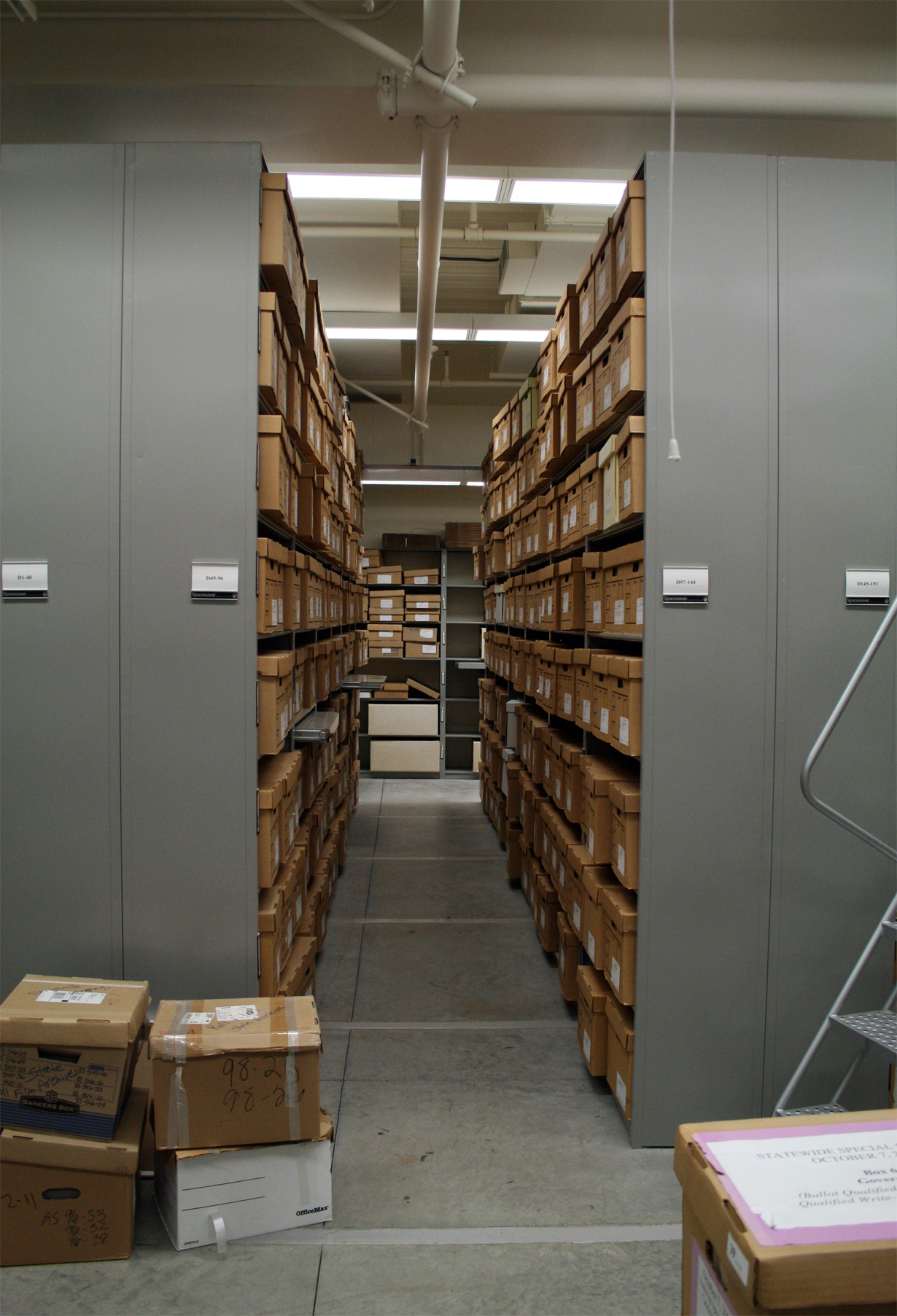
In archives, cite the box, not the finding aid
The Chicago ordering for archival material is the title or description of the item, the date, the collection number or identifier, the box number and folder number, the collection name, the repository and the repository's location, with a URL where one applies. Quotation marks go only around an actual title; a description of an untitled document is not quoted.
Add your date of consultation, which most students omit and every archivist wishes they would supply. Collections are reprocessed. Series are renumbered, boxes are recombined, folders are split, and a finding aid is revised without announcement. A citation with a consultation date lets a later reader work out which arrangement you saw and reconcile it with the present one. Without it, a changed box number looks like an error on your part.
Keep the distinction between the finding aid and the document clear in your own head. The finding aid is a description of the collection produced by an archivist, with its own date, its own author and its own assumptions about what matters. It is a secondary source about the papers. Cite it as such when you are relying on its account of provenance or arrangement, and cite the item separately when you are relying on what the item says. Where a repository assigns a persistent identifier to the collection or the item, quote it alongside the human-readable citation.
Databases and the identifier problem
A database entry is a citable unit and should be treated as one. The Getty Provenance Index holds more than 2.3 million records across distinct datasets, and a note that says only 'Getty Provenance Index' is not usable. Name the dataset, whether Sales Catalogs, Archival Inventories, Collectors Files, Payments to Artists, Public Collections or the Goupil and Knoedler stock books, and give the record identifier.
The Getty vocabularies exist to fix the identity problem underneath all of this. Each record in the Art and Architecture Thesaurus, the Thesaurus of Geographic Names, the Union List of Artist Names, the Iconography Authority and CONA carries a unique persistent numeric identifier so that consistency holds over time. ULAN solves the artist-name problem, which is larger than students expect: transliteration variants, spelling variants, workshop names, anonymous masters of convenience and outright homonyms make free-text artist names unusable at scale, and a ULAN identifier resolves all of it in one field.
CONA is the object-level authority, and the Getty is candid about its limits. It compiles titles, attributions, depicted subjects and related metadata for works of art, architecture and cultural heritage, both extant and historical, drawing from museum collections, special collections, archives, libraries and scholarly research, and it is linked to AAT, TGN, ULAN and the Iconography Authority. The Getty states that the number of records included is as yet limited and will grow through contributions over time, with data added and updated monthly. It is free to browse for limited research and cataloguing, and its linked open data releases are published under the ODC-By 1.0 licence. Use it where a record exists; do not design a project around an assumption of universal coverage.
Beyond the Getty, two general-purpose schemes dominate cultural heritage. ARKs, archival resource keys, have been minted to the extent of some 15.3 billion identifiers by more than 1,700 organisations since 2001, and the scheme is stewarded by the ARK Alliance hosted at the California Digital Library; the Smithsonian identifies its collections with ARKs resolved through the N2T resolver. DOIs are the alternative, and the Natural History Museum in London assigns them to collection datasets; DOI registration agencies offer more service and community support at more cost, while ARKs are cheaper, more flexible and less centralised. In Europeana's aggregated records, ARK and Handle are the identifiers most frequently encountered. Wikidata Q-numbers are not authoritative, but they are widely used as a crosswalk between systems and are worth recording where they help a reader move between databases.
The rule that follows is simple to apply. Quote the institution's own identifier first, a global persistent identifier second, and the URL third.
Reference rot is measured, and the remedy costs a minute
The problem has been quantified, which makes it hard to argue with. Klein and colleagues, publishing in PLOS ONE in 2014, examined over a million references across close to 400,000 scholarly articles published between 1997 and 2012. One in five of those articles suffered reference rot. Among the articles that cited web resources at all, seven in ten did. Reference rot has two components, and both matter: link rot, where the resource identified by a URI disappears, and content drift, where the resource is still there but has changed. A follow-up study published in 2016 reported that three out of four URI references led to content that had changed since citation, which is the more insidious failure because nothing appears to be broken.
Outside academia the figures are worse. More than half the cited links in United States Supreme Court opinions no longer point to the intended page, which is what prompted Harvard Law School Library's Library Innovation Lab to build Perma.cc, now used by more than 150 law journals and supported by a consortium of law school libraries together with the Internet Archive and the Digital Public Library of America. The premise is that preservation should happen at the moment of citation rather than afterwards.
Three habits, in ascending order of effort. Record the stable identifier for everything, meaning the accession number, the sale date and lot number, the Lugt number, the collection and box, the ULAN or CONA identifier, so that the citation is recoverable with no working link at all. Archive the page, through Perma.cc where your institution is a member or the Internet Archive's Wayback Machine where it is not, and cite the archived copy alongside the live one. And record the date of access on every web citation without exception, because content drift is silent and a date is the only way a reader can tell what you actually saw.
Questions
Cite the sale: house, city, sale title, date and lot number, with the Lugt number if the sale falls between 1600 and 1925. Then find the catalogue itself in a digitised run, through Heidelberg's German Sales, the Wildenstein Plattner Institute or the Getty Provenance Index, and cite that copy naming the holding institution. The printed catalogue is the primary record; the web page was always a derivative of it.
Not as authority. A Q-number is genuinely useful as a crosswalk when you are reconciling names or objects across systems, so record it alongside the underlying institutional identifier rather than instead of it. The citation that carries weight is the museum accession number, the ULAN or CONA identifier, or the archival reference.
Rarely. It is assigned when the object is accessioned and functions as the key to the curatorial file, so it is built to persist through retitling, reattribution and website rebuilds. Chicago's instruction is simply to use whatever term and number the institution itself uses, which is also the safest practice when a museum's conventions are unfamiliar.
It is run through a consortium of libraries, so check whether your university or law library is a member before assuming you need to pay. Where it is not available, the Internet Archive's Wayback Machine will archive a URL on request at no cost, and the archived snapshot can be cited alongside the live address.
Sources
- 1Mississippi State University Libraries, 'Chicago Image and Artwork Citation' (artist, title, date, medium, dimensions, institution, object number, URL; worked example with object no. 162.1934). guides.library.msstate.edu/citingimages/...
- 2Columbia College Library, 'Chicago Citation Guide (18th Edition): Images, Artwork, and Maps' (use whatever term the museum uses for the accession number; omit unknown elements). columbiacollege-ca.libguides.com/chicago/...
- 3California State University, Northridge, 'Chicago Manual of Style: Citing Archival Materials' (order of elements; box and folder; use of quotation marks). libguides.csun.edu/citing-archives/...
- 4Klein M, Van de Sompel H, Sanderson R, Shankar H, Balakireva L, Zhou K, Tobin R, 'Scholarly Context Not Found: One in Five Articles Suffers from Reference Rot', PLOS ONE 9(12): e115253 (2014). journals.plos.org/plosone/...
- 5'Scholarly Context Adrift: Three out of Four URI References Lead to Changed Content', PLOS ONE (2016), on content drift. journals.plos.org/plosone/...
- 6Perma.cc, 'About' (archiving at the moment of citation; library consortium model). perma.cc/about
- 7Harvard Library Innovation Lab, 'Perma.cc' (origins; more than 150 law journals; over half of cited links in Supreme Court opinions no longer resolve). lil.law.harvard.edu/our-work/...
- 8Harvard Law Review Forum, 'Perma: Scoping and Addressing the Problem of Link and Reference Rot in Legal Citations'. harvardlawreview.org/forum/...
- 9Getty Research Institute, 'Cultural Objects Name Authority (CONA)' (scope; persistent numeric IDs; limited but growing coverage updated monthly; links to AAT, TGN, ULAN, IA; ODC-By 1.0 for linked open data). getty.edu/research/...
- 10Getty Research Institute Library, 'Getty Provenance Index Resources Relating to Sales and Auctions' (more than 2.3 million records; constituent datasets). libguides.getty.edu/c.php
- 11ARK Alliance, home of the Archival Resource Key (some 15.3 billion ARKs by more than 1,700 organisations since 2001; stewardship at the California Digital Library). arks.org
- 12OCLC Research, Hanging Together, 'What is the value of persistent identifiers for cultural heritage objects?' (Smithsonian ARKs via N2T; Natural History Museum DOIs; ARK and Handle prevalence in Europeana). hangingtogether.org/what-is-the-value-of-persistent-ident...
- 13Courtauld Gallery Collection Online, 'What is IIIF?' (manifests as packages of image and metadata for reuse across systems). gallerycollections.courtauld.ac.uk/iiif
- 14Artnet News, 'Christie's Has Closed Off Public Access to Its 255-Year-Old Auction Archive' (February 2021; contents of the King Street archive; online results from 1998). news.artnet.com/market/...
- 15Brill, 'Lugt's Repertoire Online' (Lugt numbers as the standard reference for sales 1600-1925). brill.com/display/...
More in Research and Method
The partThe First Link Is in the Maker's Own Hand
A maker's bill, workbook or memoir is the only provenance document that fixes date, cost and first owner at once.
The date on the object dates one layer of it
Seven dated objects in this archive show that a date belongs to one layer of the thing: the parchment, the copying, the printing, the compilation.
Every Record Here Ends in Questions It Could Not Answer
The 257 published records in this archive carry 1,795 open questions between them, a median of seven each, and not one record carries none.