Art History Careers: What the Work Actually Is
A cataloguer, a provenance researcher, a conservator and an auction specialist do four different jobs. What each day involves, the qualifications each demands, and where the money is.
On this page 5 sections
ContentsClose
In short
- Conservation is the most prescriptive route: NYU requires Organic Chemistry I on the transcript at the point of application, and Buffalo State requires 16 credit hours of chemistry plus 21 semester hours of art history.
- Icon accreditation in the United Kingdom is a mid-career award, typically five years of full-time practice after a conservation degree and eight to ten years for those trained on the job.
- Junior cataloguing and sales administration roles in London auction houses were reported at 20,000 to 30,000 pounds in 2019, with specialists on base salaries of roughly 41,000 to 44,000.
- The Getty Graduate Internship pays a stipend of 52,500 dollars for twelve months, which is the exception that shows how much of the sector's entry-level work is unpaid or badly paid.
The cataloguer makes objects findable, and the standards are written down
On the museum side, this is documentation work and it is governed by a published standard. SPECTRUM, developed by the Collections Trust from 1994 and now in version 5.1 as published in September 2022, sets out 21 collections management procedures covering the whole lifecycle of an object. Cataloguing is one of the primary procedures, alongside object entry, acquisition and accessioning, location and movement control, inventory, object exit, and documentation planning. A documentation officer or collections information officer spends the working day inside those procedures and against a collections information policy.
What goes into the record is governed separately. Cataloging Cultural Objects, maintained through the Visual Resources Association, is the data content standard: it gives the rules for selecting, ordering and formatting the values that populate a record. Categories for the Description of Works of Art, from the Getty, supplies the element set and the cataloguing guidelines behind it. The terms themselves are supposed to come from controlled vocabularies rather than free text, meaning the Getty's Art and Architecture Thesaurus, Union List of Artist Names, Thesaurus of Geographic Names, Iconography Authority and CONA, or Library of Congress authorities. A student who has read CCO and CDWA and can talk about vocabulary control is already ahead of most applicants for these posts, and both are free to read this afternoon.
On the auction side, the same job has a sales calendar attached. A junior specialist or cataloguer researches authenticity, historical context, bibliography and exhibition records; produces and formats catalogue entries; carries out condition checks and writes condition reports; drafts essays for the catalogue; oversees photography; and handles sale materials, market research and vendor contact. The entry-level version is frequently a six-month contract pinned to a season.
It is also the best sustained training in looking at objects available anywhere, because the job forces you to write a defensible sentence about several hundred of them a year, with a deadline and somebody senior checking it. No accreditation exists for the role. What gets people hired is a portfolio of catalogue entries, a language, and demonstrable competence in a collections management system.
The provenance researcher works in archives, and the constraint is language
Day to day, the work is reconstructing ownership chains out of inventories, sale catalogues and their annotated copies, dealer stock books, customs and shipping records, restitution files, auction house correspondence and estate papers, and then writing findings up to a standard that can survive a claim, a due diligence review or a court. It is not detective work in the narrative sense. It is systematic record-linkage, most of it inconclusive, punctuated by the occasional match.
The formal training route in Europe runs through the German Lost Art Foundation, which supports the Freie Universitaet Berlin advanced certificate course in provenance research. It is modular, runs from September to January across Berlin and Dresden, and teaches half or all of the modules inside museums where provenance research is actively being done, with practical exercises built into each module. The stated audience is telling: collection managers, curators, museologists, volunteers from all museum sectors, employees in the art trade, freelance provenance researchers, and staff of museum associations and of corporate, private and public collections. That list is the honest description of the field. Almost nobody arrives directly; people move sideways into it from a collections or trade job.
What employers ask for is practical experience, whether in an organisation or freelance, paired with an academic foundation in the field. What they do not always advertise is the language floor. Roles are routinely posted as German-speaking, and the underlying documents for the 1933 to 1945 material are in German, with French and Dutch running through the trade records and Italian through the older material. Reading knowledge is not enough on its own; handwritten German script in twentieth-century files defeats people who read the printed language comfortably.
The daily tools are the ones that are free: the Getty Provenance Index, Heidelberg's German Sales for annotated catalogues, the Frick's collectors and dealer resources, and the national restitution databases. Learning one of them properly, to the point where you could teach it, is worth more on an application than a second master's degree.
Conservation has the most explicit entrance requirements in the field
The American Institute for Conservation sets out prerequisites that are unusually concrete for the humanities. Sciences: one full year each of general and organic chemistry with laboratory. Humanities: broad coursework in art history, anthropology and archaeology spanning a range of cultural traditions and historical periods, typically four to six courses. Studio art: formal training in drawing, painting, printmaking, book binding, photography and three-dimensional design. Reading proficiency in a language other than English is recommended. At application, candidates present a portfolio demonstrating manual dexterity and an understanding of materials, including before and after treatment photographs, treatment proposals and reports.
The individual programmes are stricter still. Buffalo State requires 16 credit hours of chemistry, specifically a two-semester introductory general chemistry lecture course with laboratory sections and a two-semester organic chemistry sequence with laboratory sections, and states that chemistry courses for non-science majors will not be accepted; it also requires 21 semester hours of art history combining broad surveys with focused study. The Conservation Center at NYU's Institute of Fine Arts requires Organic Chemistry I of all applicants, appearing on the transcript either completed or in progress at the time of application, plus a minimum of four college-level upper-level art history courses excluding introductory and survey classes; the GRE is not required. NYU also states that pre-programme conservation internship experience is not required for admission, and that it looks instead for in-depth engagement with conservation or associated fields such as collections care, registrar work, curatorial work, exhibition design, gallery management, work as an artist's assistant, professional framing or materials analysis.
The pre-programme period is the real filter, and it usually takes years rather than months. The chemistry sequence alone is two academic years for someone who arrives with an arts degree, and the hand skills cannot be acquired quickly.
Qualification is not the end of it. In the United Kingdom, Icon's ACR accreditation is explicitly a mid-career award rather than an entry-level one. Icon's own guidance is that a conservation graduate will generally need around five years of full-time experience in a conservation role to have a decent chance of success, and that someone with no academic conservation qualification who has trained on the job will probably need eight to ten years. Pathway membership exists to structure that period, with an Icon mentor experienced in the assessment process and an annual review.
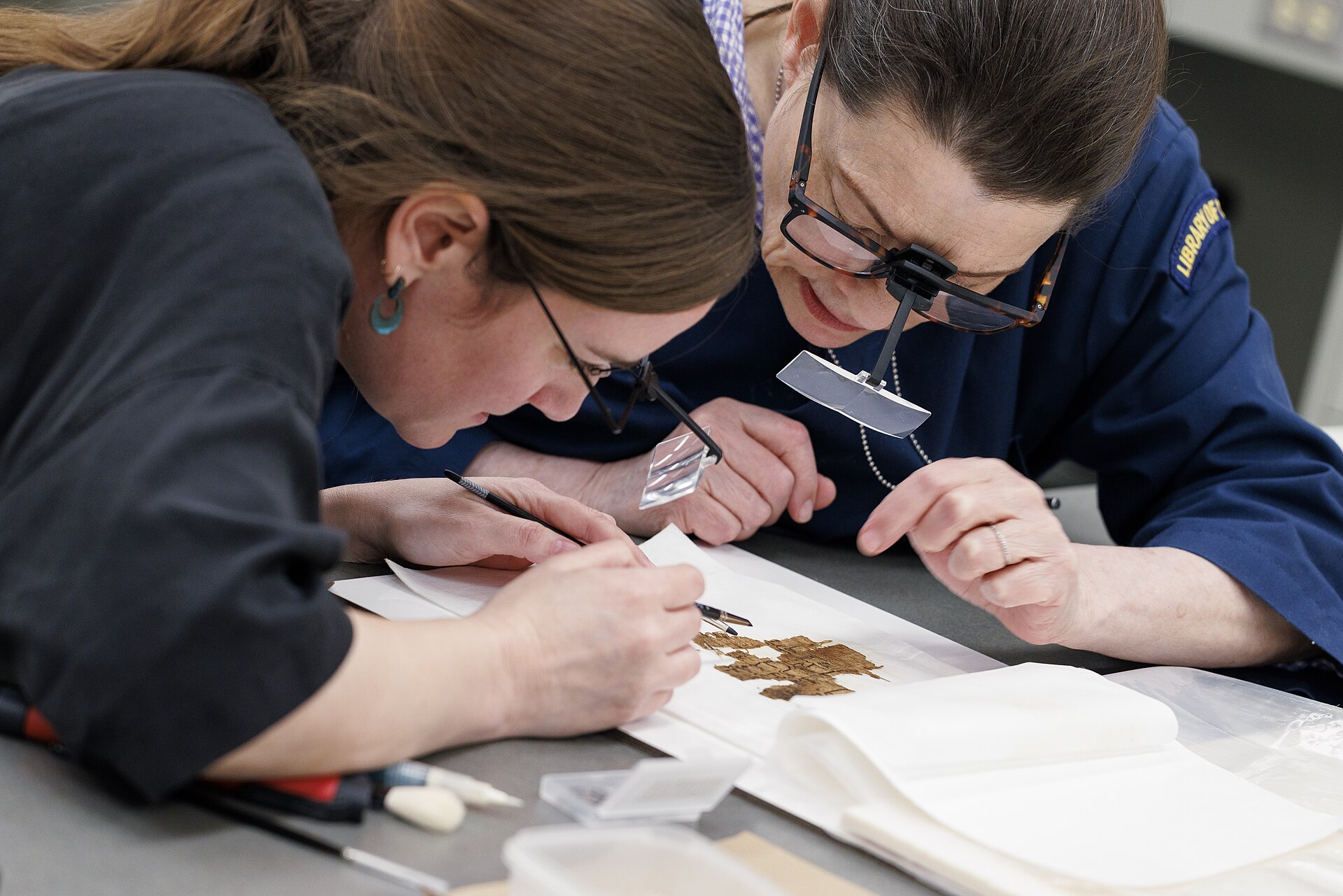
The work itself is less romantic than the training implies. Examination and documentation come first, treatment second, and preventive conservation, meaning environmental monitoring, mounting, transit, loan condition checking and reporting, occupies more of most conservators' time than treatment does.
The auction specialist is a commercial role wearing art-historical clothes
A specialist is responsible for business-getting, which means finding property to sell, for appraising it, for leading the cataloguing, and for developing and keeping clients. At the senior end the job is valuation, the negotiation of estimates and reserves, and competition with the other house for consignments. At the junior end it is cataloguing. Understanding that division before you apply saves a great deal of disappointment: the art-historical content of the role is concentrated at the bottom and thins as you rise.
Progression runs from cataloguer to specialist to senior specialist and department head. Reported London pay in 2019 put junior cataloguers, department assistants and sales administrators between 20,000 and 30,000 pounds, with specialists on base salaries of around 41,000 to 44,000. Those figures are London-specific and now several years old; treat them as an order of magnitude and check currently advertised bands, which houses increasingly publish.
The taught route is expensive and optional. Sotheby's Institute of Art, which grew out of a small connoisseurship programme begun by the auction house in 1969, runs full-time master's degrees in Art Business, Contemporary Art, Fine and Decorative Art, East Asian Art and Contemporary Design. Its New York master's is 30 taught credits across two semesters plus a 6-credit thesis or capstone in a third, at 1,878 dollars per credit, with a materials fee and field study trips typically costing 4,500 to 6,500 dollars each. Nobody at any auction house requires that degree. It buys structured access and a network, which are real, at a price that should be compared honestly against two years of paid work in a saleroom.
What actually converts an applicant is a specialism narrow enough to be useful, a relevant language, and object exposure. A department wants somebody who can look at four hundred things in a country house and identify the twelve worth the petrol.
How entry actually works, and what to do while it is not working
The paid entry points are few enough to name individually, which is itself the diagnosis. The Getty Graduate Internship runs twelve months full-time with a stipend of 52,500 dollars, 1,500 dollars towards relocation from outside Los Angeles and up to 3,000 dollars for research travel, with placements across the Getty Museum, the Getty Conservation Institute, the Getty Research Institute, the Getty Foundation, Getty Publications and Getty Digital, in curatorial, education, conservation, research, publications, digital and grantmaking roles. Applications open in the autumn. On the doctoral side, the Paul Mellon Centre's doctoral scholarship is worth 32,000 pounds a year for three years for a PhD in art history.
The unpaid entry points are the reason the field remains socially narrow, and the practical advice is to decline them where you can and take documentation, registrar, gallery assistant or collections care work instead. Those jobs pay, and they teach the systems every subsequent employer assumes you already know: the SPECTRUM procedures, a collections management system, condition reporting, loans paperwork, and how an accession number is constructed.
Three things move a curriculum vitae more reliably than another degree. A language taken to the point where you can read period documents, not tourist fluency. Deep competence in one research database, deep enough that you could run a workshop on it. And one published piece, however small, whether a catalogue entry, a note in a museum bulletin, a corrected provenance line or a short article, because it demonstrates that you can finish something to a standard and take criticism on it.
Decide early which of the four jobs you want, because the preparation diverges sharply and it diverges expensively. Two semesters of organic chemistry with laboratory are worth nothing at all to an auction specialist and are an absolute precondition for a conservator. A year spent on the wrong prerequisite is a year.
Questions
A full year each of general and organic chemistry with laboratory sections is the AIC baseline. Buffalo State specifies 16 credit hours and states that chemistry designed for non-science majors will not be accepted. NYU's Conservation Center requires Organic Chemistry I to appear on the transcript, completed or in progress, at the time of application.
Icon accreditation is a mid-career award, not an entry-level one. Icon's guidance is that conservation graduates generally need around five years of full-time conservation work to have a decent chance of success, and that those trained on the job without an academic conservation qualification need roughly eight to ten. Pathway membership provides a mentor and an annual review through that period.
No. It is a recognised and costly route: the New York master's runs to 30 taught credits at 1,878 dollars each plus a 6-credit thesis, with field trips at 4,500 to 6,500 dollars. Departments hire on demonstrated object knowledge, a language and a network, all of which can be built more cheaply inside a saleroom or a regional auction house.
Laterally, from a documentation, registrar or trade role, with a certificate course on top. The German Lost Art Foundation supports the Freie Universitaet Berlin modular certificate, taught September to January in Berlin and Dresden partly inside museums doing the work, and it is aimed explicitly at people already employed in collections, museums and the art trade.
Sources
- 1Collections Trust, 'Spectrum' (UK museum collections management standard, developed from 1994; version 5.1 published September 2022; 21 collections management procedures). collectionstrust.org.uk/spectrum
- 2Collections Trust, 'Spectrum primary procedures' (cataloguing as a primary procedure alongside object entry, acquisition and accessioning, location and movement control, inventory and object exit). collectionstrust.org.uk/accreditation/...
- 3Visual Resources Association, 'Cataloging Cultural Objects (CCO)' (data content standard; relationship to CDWA and VRA Core; use of controlled vocabularies). vraweb.org/cco
- 4Getty Research Institute, 'Categories for the Description of Works of Art: The CDWA and Other Metadata Standards'. getty.edu/publications/...
- 5American Institute for Conservation, 'Become a Conservator: Pre-Program' (one full year each of general and organic chemistry with laboratory; four to six humanities courses; studio art; language; portfolio requirements). culturalheritage.org/careers/...
- 6American Institute for Conservation, 'Become a Conservator: Graduate Programs'. culturalheritage.org/careers/...
- 7SUNY Buffalo State University, Art Conservation Department, 'Admissions Q&A' (16 credit hours of chemistry; non-science-major chemistry not accepted; 21 semester hours of art history). artconservation.multidev.buffalostate.edu/admissions-qa
- 8Institute of Fine Arts, NYU, 'MA/MS Admission Requirements' (Organic Chemistry I required on transcript at application; four upper-level art history courses; GRE not required; pre-programme internship not required). ifa.nyu.edu/study/...
- 9Institute of Conservation, 'Your Guide to Icon Accreditation: Experience, Assessment and Support' (five years for conservation graduates; eight to ten years for those trained on the job). icon.org.uk/resource/...
- 10Institute of Conservation, 'Pathway Membership' (mentoring, annual review, evidence requirements). icon.org.uk/accreditation/...
- 11German Lost Art Foundation (Deutsches Zentrum Kulturgutverluste), 'Advanced training programme on provenance research' (Freie Universitaet Berlin certificate course; September to January; Berlin and Dresden; target audience). kulturgutverluste.de/en/...
- 12The Art Newspaper, 'Lifting the lid on auction house salaries', 25 November 2019 (junior cataloguers, department assistants and sales administrators at 20,000-30,000 pounds; specialists at roughly 41,000-44,000 base). Figures are London-specific and dated; check current advertised bands. theartnewspaper.com/2019/...
- 13Sotheby's Institute of Art, master's degrees in New York: admissions and tuition (30 taught credits plus 6-credit thesis; 1,878 dollars per credit; materials fee; field study trips at 4,500-6,500 dollars). sothebysinstitute.com/admissions/...
- 14Getty, 'Graduate Internships' (twelve months full-time; 52,500 dollar stipend; 1,500 dollars relocation; up to 3,000 dollars research travel; participating programmes). getty.edu/projects/...
- 15Paul Mellon Centre for Studies in British Art, grants and fellowships programme. The doctoral scholarship is reported at 32,000 pounds a year for three years; the Centre's dedicated page for it no longer resolves, so the figure is recorded from the programme listing and should be re-checked against the Centre directly. paul-mellon-centre.ac.uk/grants-and-fellowships
More in Research and Method
The partThe First Link Is in the Maker's Own Hand
A maker's bill, workbook or memoir is the only provenance document that fixes date, cost and first owner at once.
The date on the object dates one layer of it
Seven dated objects in this archive show that a date belongs to one layer of the thing: the parchment, the copying, the printing, the compilation.
Every Record Here Ends in Questions It Could Not Answer
The 257 published records in this archive carry 1,795 open questions between them, a median of seven each, and not one record carries none.