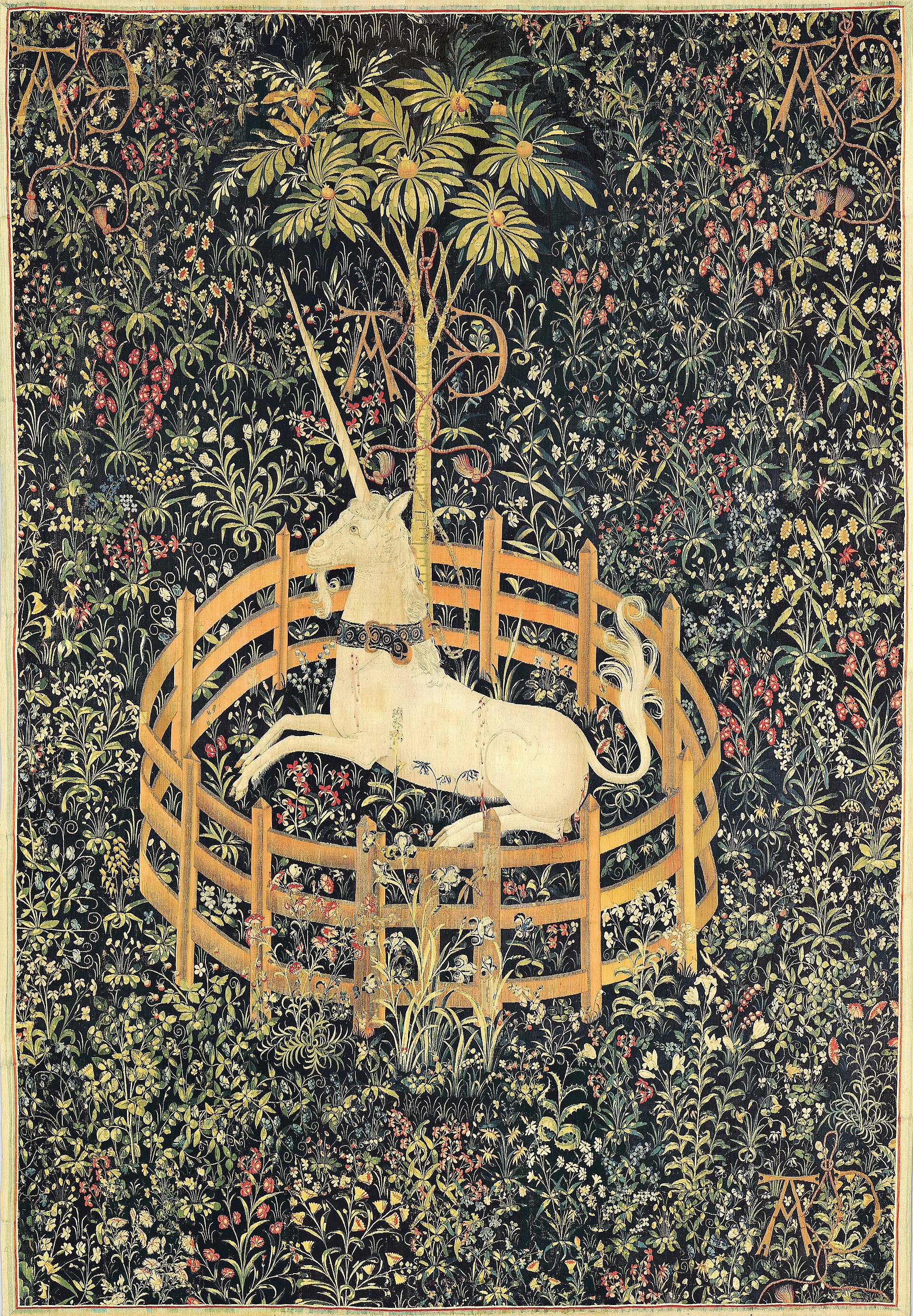
The Unicorn Tapestries
c. 1495-1505 · Wool warp with wool
The Met Cloisters, New York, Gallery 17
Museum · The Met Cloisters · Founded 1938
Open, admission and hours confirmed 31 August 2026 · 12 sources
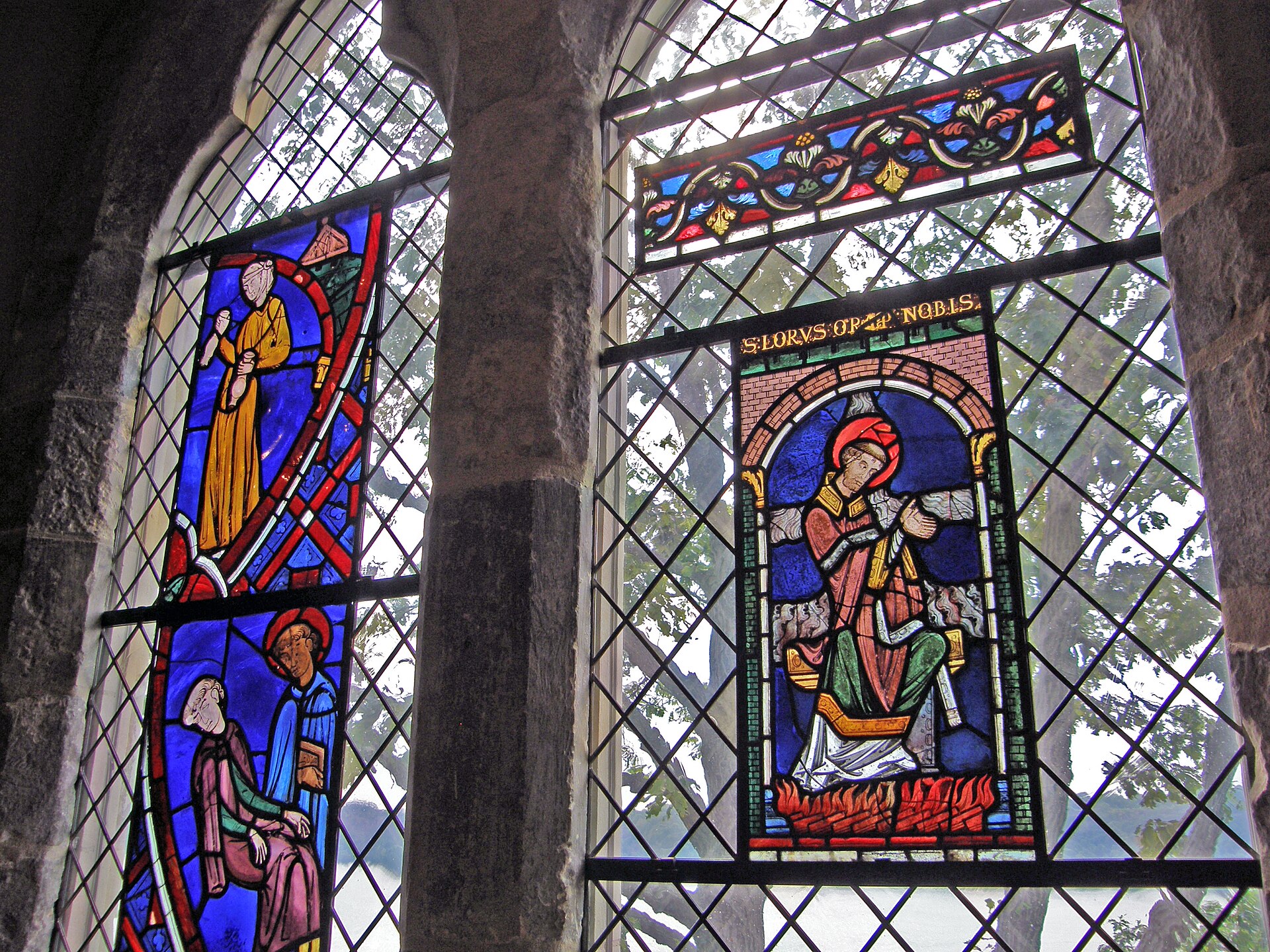
About 5,000 works, all European and almost all dating from the Byzantine period through the early Renaissance, concentrated in the 12th to 15th centuries: stone and wood sculpture, stained glass, tapestries, illuminated manuscripts, panel paintings, and liturgical metalwork in gold, silver and enamel. The Cloisters has never been built around a canon of individually famous masterpieces in the way an encyclopaedic museum is; its strength is architectural integration - objects installed inside real medieval building fragments, in room-sized settings, rather than in vitrines against a gallery wall. That makes its two most internationally famous holdings, the Unicorn Tapestries and the Merode Altarpiece, the exception rather than the rule: most of what is strong here is strong as an ensemble of chapel, cloister, garden and object together.
| Local name | The Met Cloisters |
|---|---|
| Kind | Museum |
| Founded | Opened 10 May 1938 on the present Fort Tryon Park site; the founding collection is George Grey Barnard's private Cloisters museum, sold to John D. Rockefeller Jr. in 1925 and given to the Metropolitan Museum of Art |
| City and country |  New York, United States New York, United States |
| Address | 99 Margaret Corbin Drive, Fort Tryon Park, New York, NY 10040, United States |
| Website | metmuseum.org/visit/met-cloisters |
| Status | Open, confirmed 31 August 2026 |
| Record last verified | 7 August 2026 |
Prices and hours change. We take them from the institution's own pages and print the day we read them, and you can check the current position at the source we used. Confirm before you travel.
The architectural centre of the building: pink Pyrenean marble arcades and carved Romanesque capitals from the Benedictine abbey of Saint-Michel-de-Cuxa, reassembled around a planted garden court that several of the other galleries open onto.
A complete 12th-century Romanesque apse from the church of San Martin at Fuentiduena, in Segovia province, on long-term loan from Spain since 1961 and installed with its original frescoes as a functioning chapel rather than displayed as a fragment.
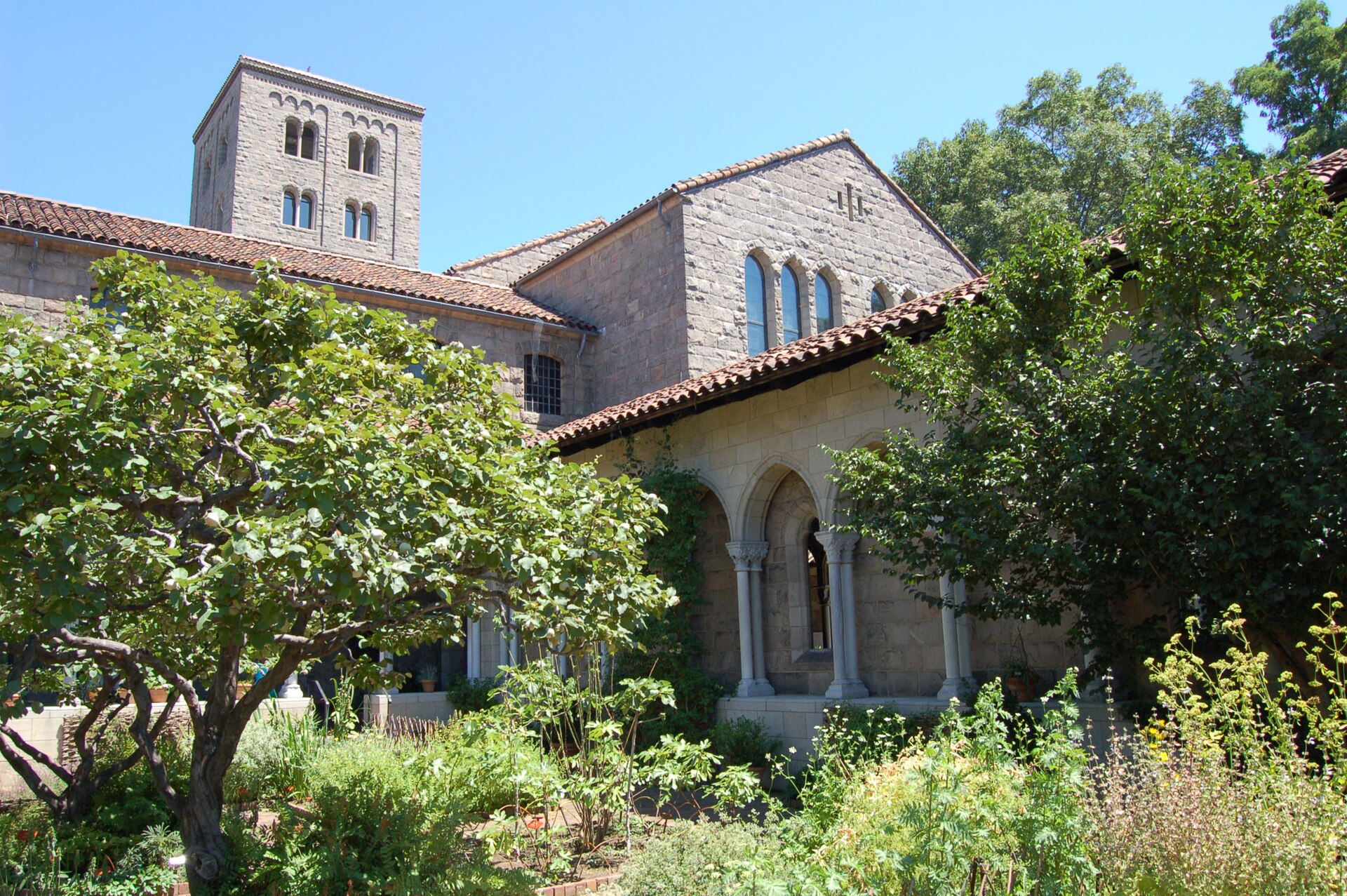
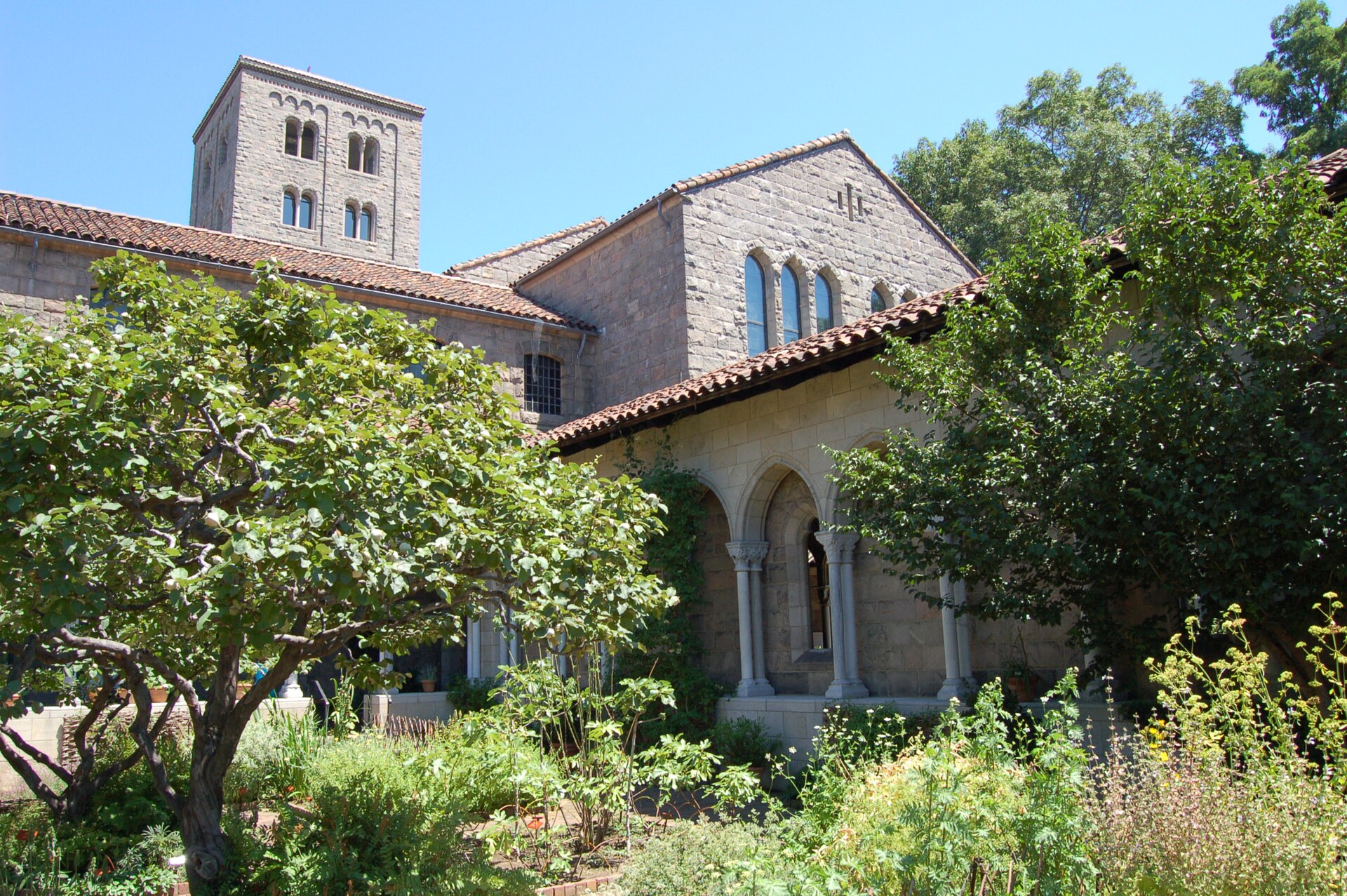
Late 13th- and 14th-century Gothic arcades from the abbeys of Bonnefont-en-Comminges and Notre-Dame-de-Pontaut, enclosing a medieval-style garden planted only with species documented in medieval texts and art - culinary, medicinal and so-called magic plants.
A tall Gothic hall built to hold tomb effigies and funerary sculpture, including the effigy of a Knight of the d'Aluye family, lit through stained glass gathered from French and Austrian churches.
Room 17, built specifically to hold the seven surviving Hunt of the Unicorn tapestries end to end. Bought by Rockefeller in 1922 and given to the Met in 1937-38, the series is the subject of this archive's own record.
A single strongroom-like gallery holding the museum's smallest and most valuable objects together: the Cloisters Cross, the illuminated Belles Heures du Duc de Berry and Hours of Jeanne d'Evreux, and metalwork including the Goldschmidt-Rothschild silver beakers - grouped here because their scale and value called for a controlled room rather than an open gallery.
A late Gothic cloister from Trie-sur-Baise, its capitals carved with grotesques and foliage, enclosing a second garden associated in choice of planting with imagery of the Virgin Mary; the Trie Cafe now opens onto it.
A foundational work of Early Netherlandish panel painting, at The Cloisters since 1956; its Rockefeller-funded purchase was described at the time as a major event in the history of American collecting.3
Seven surviving wool, silk and gilt-thread tapestries of about 1495-1505, bought by Rockefeller in 1922 and given to the Met in 1937-38. The single object this archive already holds its own record for.3
Full record in this archiveA walrus-ivory cross carved with more than 92 figures and 98 inscriptions, among the most intricate surviving pieces of English Romanesque ivory carving.3
One of the most lavishly illuminated books of hours to survive from around 1400, made for Jean, Duc de Berry, and held in the Treasury with the museum's small but exceptional manuscript group.3
A miniature Gothic book of hours of 209 folios made for the queen of France, its grisaille miniatures a landmark of early 14th-century Parisian illumination.3
A complete Romanesque apse on long-term loan from Spain since 1961, frescoed and installed as a working chapel rather than shown as a fragment - one of very few full architectural loans of its kind.3
Pink-marble arcades and carved capitals from a Pyrenean Benedictine monastery, reassembled around a planted garden and the physical centre of the building.3
Two silver beakers confiscated by the Nazis from the Frankfurt collection of Maximilian von Goldschmidt-Rothschild in 1938, later restituted to his heirs and sold in New York in 1950. The Met's own 2019 research paper traces the gap in the beakers' recorded ownership between confiscation and acquisition.5
c. 1495-1505 · Wool warp with wool
The Met Cloisters, New York, Gallery 17
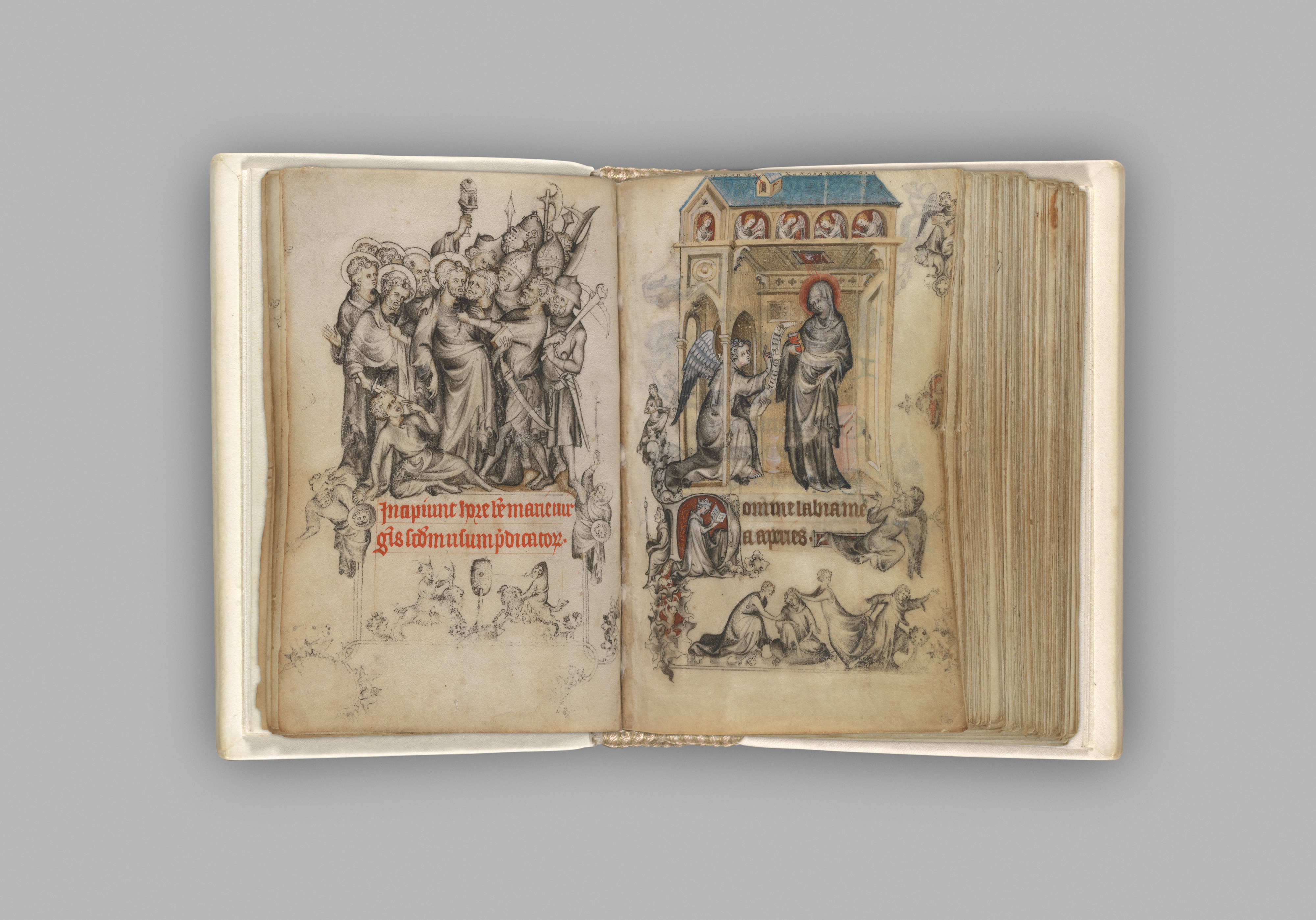
c. 1324-1328 · Grisaille
The Cloisters, The Metropolitan Museum of Art, New York
The Cloisters did not begin as a plan for a museum; it began as George Grey Barnard's business. Barnard was a sculptor who had studied in Paris and, needing money his own work could not reliably provide, spent the years between 1906 and 1913 in France buying medieval architectural fragments and carvings, mostly French and Spanish, dating from 1100 to 1500. He operated in a moment, as the Metropolitan Museum's own researchers have written, when large amounts of medieval sculpture were newly available and almost no laws regulated its export from Europe. In 1914 he opened his own Cloisters at 700 Fort Washington Avenue, half a mile from the current site, to show the collection to the public while he continued, throughout its eleven years of operation, to look for a buyer. In 1925 he found one: John D. Rockefeller Jr., who financed the Metropolitan's purchase of Barnard's entire collection and then funded a purpose-built home for it in a new park he was assembling on the rocky northern tip of Manhattan.
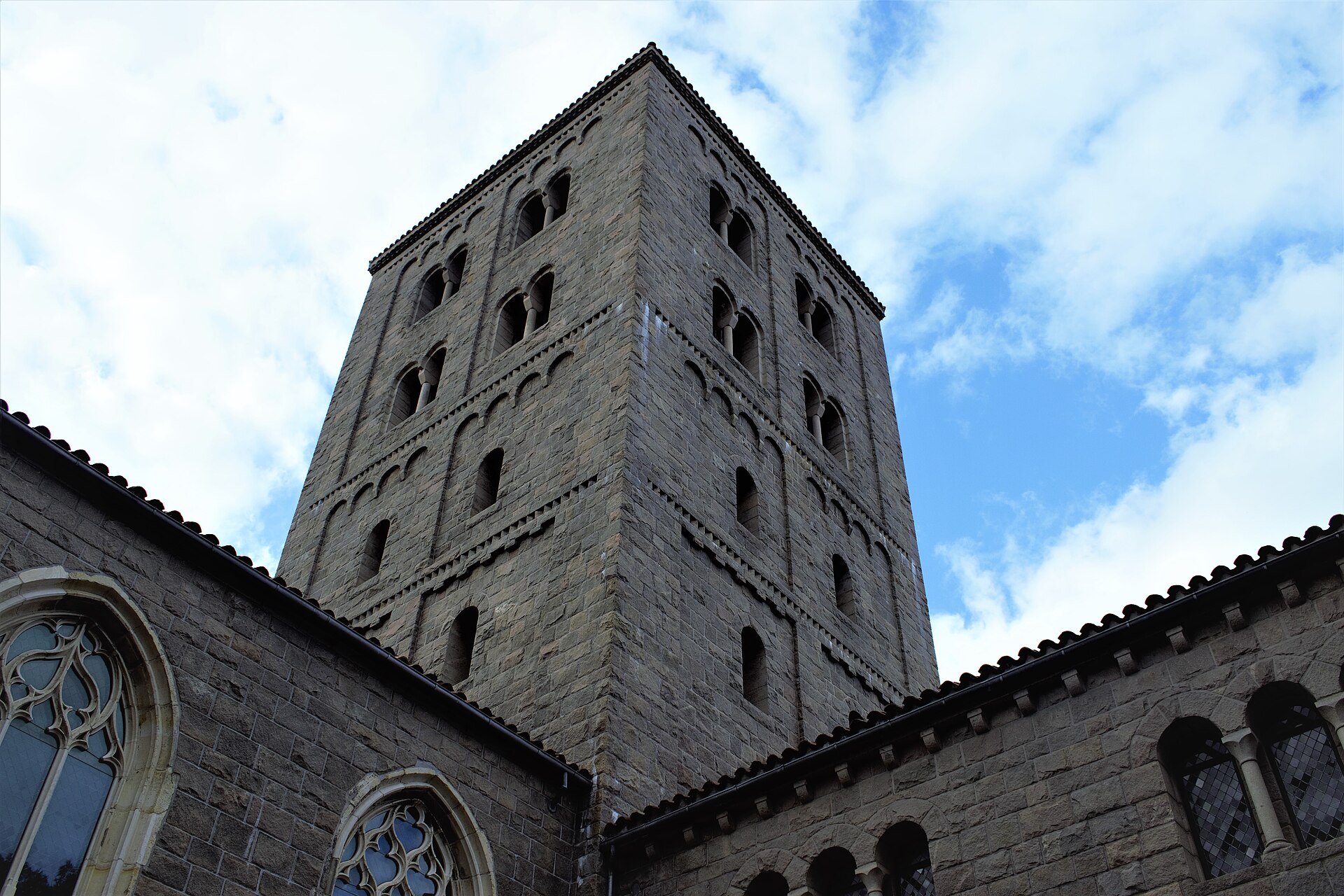
The present building, designed by the architect Charles Collens and built between 1934 and 1938, is not a replica of a medieval building; it is a new building constructed to hold real ones. Stone from five cloisters - Saint-Michel-de-Cuxa, Saint-Guilhem-le-Desert, Bonnefont-en-Comminges, Trie-sur-Baise and Froville - was disassembled abroad, shipped to New York, and reconstructed inside and around Collens's structure, along with a complete Romanesque apse from Fuentiduena in Spain, on loan since 1961 and still, formally, Spanish government property. The design deliberately mixes upper and lower levels on a steep hillside site so that a visitor moves between garden courts and enclosed chapels much as a member of a medieval religious community would have. It opened on 10 May 1938 and has been run by the Metropolitan Museum of Art, as a branch rather than an independent institution, ever since.
Barnard's architecture gave the museum its shell; the objects inside it came from elsewhere. Rockefeller personally funded many of the early individual acquisitions, including the 1956 purchase of the Merode Altarpiece, and simply donated them to the museum rather than buying on the Met's own account. J. P. Morgan, who spent decades acquiring art on what one biographer called an imperial scale, is the second major named source; his son donated a large share of that collection to the Met after Morgan's death, though the finest illuminated manuscripts stayed at the Morgan Library rather than coming to the Cloisters, which the two institutions had by then agreed would specialise in architecture, sculpture and decorative arts rather than books. A third source, less wealthy but comparably important, was the dealer Joseph Brummer: after his sudden death in 1947, curator James Rorimer bought heavily from his stock, forming the basis of the Treasury room's gold, silver and ivory holdings. None of this collection was built around a single idea of what a masterpiece should be; period specialists at the Met have written that objects were chosen to suit the atmosphere of a particular room as much as for individual importance.
The Bonnefont and Trie cloisters both enclose working gardens rather than lawns, planted only with species that appear in medieval texts, herbals or art of the period - culinary herbs, medicinal plants, and others associated in period sources with magic or with religious imagery, particularly the Virgin Mary. The Cuxa Cloister garden sits at the physical centre of the building and the galleries that circle it. The gardens are maintained as an active horticultural programme, not a fixed installation, and change with the seasons; visitors and guided tours treat them as a destination in their own right rather than as landscaping around the galleries.
The Cloisters is, on the Met's own account, a museum assembled during a period when export law for medieval European heritage barely existed and a collector's word about where an object came from was often the only record kept. Barnard himself was known, by the Met's own retrospective published for the acquisition's 2025 centenary, to be disorganised about provenance and prone to romantic embellishment; his own account of finding the tomb effigy of a Knight of the d'Aluye family face-down in use as a footbridge is treated by the Met's own historians as a story that may have been invented to justify the object's removal from France at a time when export licences were tightening. By 1913, rising friction with French authorities had led Barnard to donate part of his holdings to the French state before hurriedly shipping the remainder to New York.
Later acquisitions carry a different and better-documented kind of history. In 1950 the Met bought five medieval objects, including two fifteenth-century Ingolstadt silver beakers, from the New York dealer Rosenberg and Stiebel. A 2019 study co-written by a Met curator and a German provenance researcher, published on the museum's own site, traced those beakers back to the Frankfurt collection of Maximilian von Goldschmidt-Rothschild, a Jewish collector whose holdings were forced into a sale to the city of Frankfurt under Nazi administration in 1938 and later restored to his heirs by a postwar legal challenge. The Met's own researchers describe the museum's existing paperwork on the objects, before their study, as incomplete and duplicated rather than a clear chain of title - a finding the museum chose to publish rather than leave unexamined. It is not stated on the pages read for this record whether the same close review has since been extended to the other four objects bought from the same 1950 Rosenberg and Stiebel purchase, or to the wider run of Cloisters Collection acquisitions from Manhattan dealers in the years immediately after the war.
Nothing about reaching The Cloisters is incidental to how people describe it. It sits apart from the rest of Manhattan's museum district, reached by a subway ride to the top of the island and a walk through a park rather than a stroll down an avenue, and that distance shows up in almost every account of a visit: as effort, as scenery, or both. The museum's own size works the same way in reverse from its parent institution on Fifth Avenue - a few dozen rooms rather than several hundred - and reviewers treat that as a relief rather than a limitation, a museum that can be finished rather than merely sampled. The result is a building whose reputation rests as much on the experience of getting there and moving through its gardens as on any single object inside it, the Unicorn Tapestries included.
Visitors consistently describe The Cloisters as one of New York's most rewarding branch museums precisely because it is small: the whole building fits into a single visit, unlike the main Met's scale, and the medieval architecture and gardens are treated as the point of the trip rather than a backdrop to it. The walk through Fort Tryon Park to reach it is frequently mentioned as part of what people came for, not an inconvenience before the real visit starts.
Tripadvisor: 4.7 from 5,206 ratings, read 7 August 2026
A platform average is a tertiary source: it moves, it is not audited, and we quote no visitor's words.
99 Margaret Corbin Drive, Fort Tryon Park, New York, NY 10040, United States.
New York State residents: USD 0.01; New York, New Jersey and Connecticut students: USD 0.01; Adults: USD 30; Seniors, 65 and over: USD 22; Visitors with a disability: USD 22. As confirmed 31 August 2026.
Sunday 10:00-17:00; Monday 10:00-17:00; Tuesday 10:00-17:00; Thursday 10:00-17:00; Friday 10:00-17:00; Saturday 10:00-17:00. Closed: Closed every Wednesday. Closed Thanksgiving Day, 25 December and 1 January. As confirmed 31 August 2026.
Subway: A train to 190th Street, then a roughly 10-minute walk north through Fort Tryon Park along Margaret Corbin Drive; or transfer at 190th Street to the M4 bus for one stop; Bus: M4 and M100 serve the park directly; the Bx7 also runs nearby in the Bronx-facing approach; Car and parking: Free public parking is available in Fort Tryon Park around the building. Visitors arriving by car can be dropped off at the step-free entrance in the courtyard. Two designated spaces for disabled parking permit holders face the front of the building.
The Merode Altarpiece (Workshop of Robert Campin); The Unicorn Tapestries (The Hunt of the Unicorn) (South Netherlandish weavers, after a French design); The Cloisters Cross (English, 12th century); Belles Heures du Duc de Berry (Attributed to the Limbourg brothers); Hours of Jeanne d'Evreux (Jean Pucelle); The Fuentiduena Chapel apse (Spanish Romanesque, Segovia province, 12th century).
One artwork and its story every Tuesday, with the picture: who owned it, what it made, and what closes soon in the exhibition calendar. No promotion, and nothing we cannot cite.
We send one email to confirm the address and keep nothing else. Every letter carries a one-click unsubscribe. How we handle your data.


