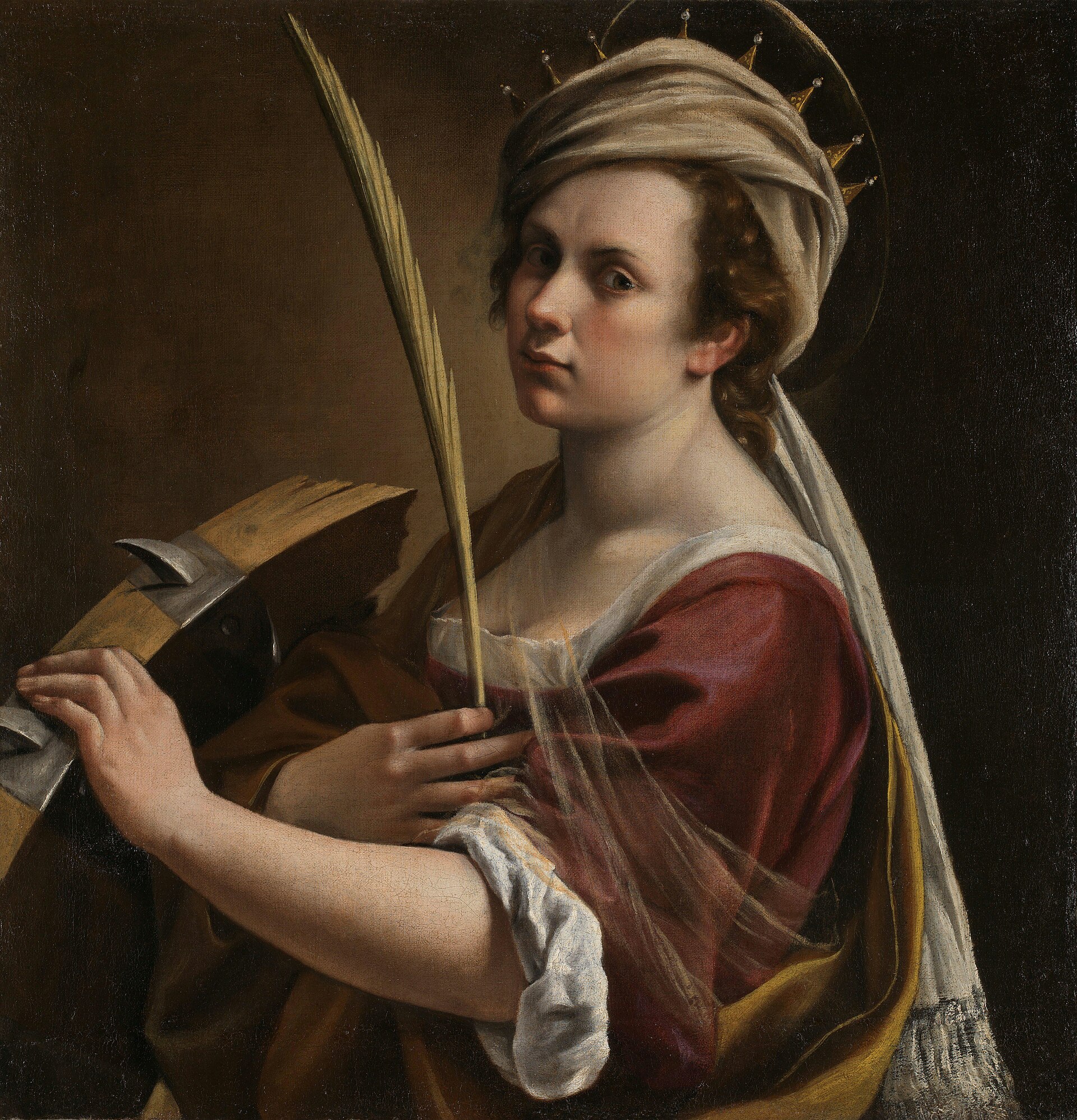
Self Portrait as Saint Catherine of Alexandria
c. 1615-17 · Oil on canvas
National Gallery, London
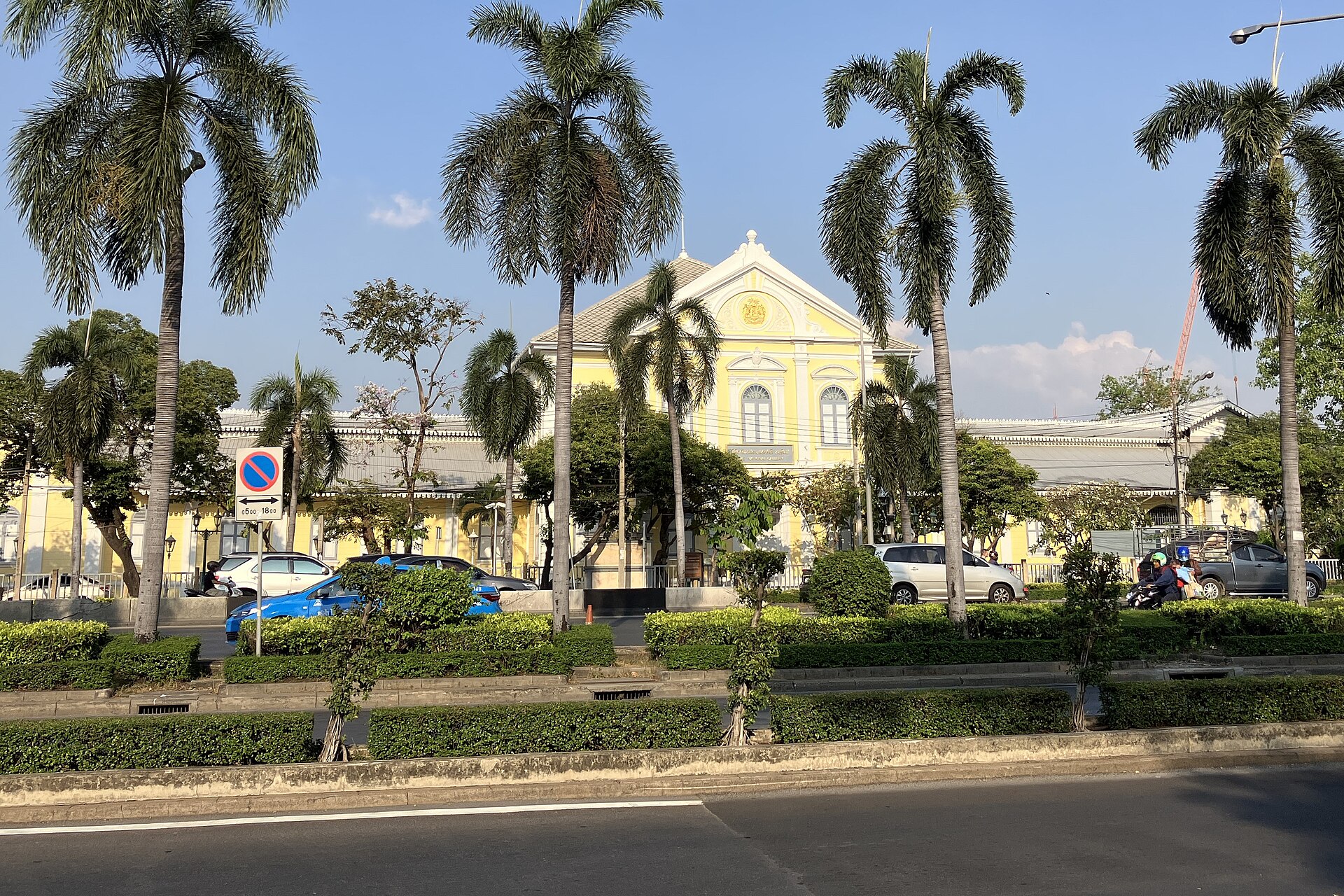
The yellow two-storey front block of the former Royal Thai Mint, with its gabled central bay and the royal arms, seen across the road through palms, February 2024.
Paul_012, CC BY-SA 4.0 · Photograph by Paul 012Museum · Phiphitthaphan Sathan Haeng Chat Ho Sin · Founded 1977
Open, admission and hours confirmed 20 November 2026 · 24 sources
The collection's strength is Thai painting and sculpture from the Ayutthaya-period banners and royal paintings through the Western-influenced court painters to the students of Silpa Bhirasri and the art of 1932 onward. It is held by the only state-run art museum in the country, and visitors should expect a collection to be shown in rotation rather than all at once: the permanent building is closed, and the temporary exhibitions carry the programme.
| Local name | Phiphitthaphan Sathan Haeng Chat Ho Sin |
|---|---|
| Kind | Museum |
| Founded | Formally opened 8 August 1977; opened to the public 5 May 1978 |
| City and country |  Bangkok, Thailand |
| Address | 4 Chao Fa Road, Chana Songkhram, Phra Nakhon, Bangkok 10200, Thailand |
| Website | finearts.go.th/museumnationalgallery |
| Status | Open, confirmed |
| Record last verified |
Prices and hours change. We take them from the institution's own pages and print the day we read them, and you can check the current position at the source we used. Confirm before you travel.
The two halls the museum says visitors can currently enter, with changing exhibitions. In November 2026 the gallery hosted ART FOR CHANGE BEYOND ABILITY (7-27 November), a show of work by artists with disabilities. The museum's own pages say two to four temporary exhibitions open each month.
The main permanent displays, closed to visitors by a notice on the museum's Facebook page with no stated reopening date. Before the closure the official pages described rooms for the Celebration of the Kings, traditional Thai painting, Western-style painting and sculpture with art from 1932 to 1967.
Paintings by King Rama VI and King Bhumibol Adulyadej (Rama IX). The museum announced that the exhibition on art in the reign of King Rama IX would close from 19 March 2025 so the permanent displays could be improved.
Buddhist and literary painting in the traditional manner, including works by Khrua In Khong and Prince Naris, and, per the Bangkok Post in 2014, a pha phra bot painted cloth banner about 500 years old and 17 of the 90 paintings of events from the Royal Chronicle.
Thai painting that blends with or follows Western models from the reign of King Mongkut onward: portraits, landscapes and still lifes in oils, including a print portrait of King Chulalongkorn by a Western artist, according to the museum's history page.
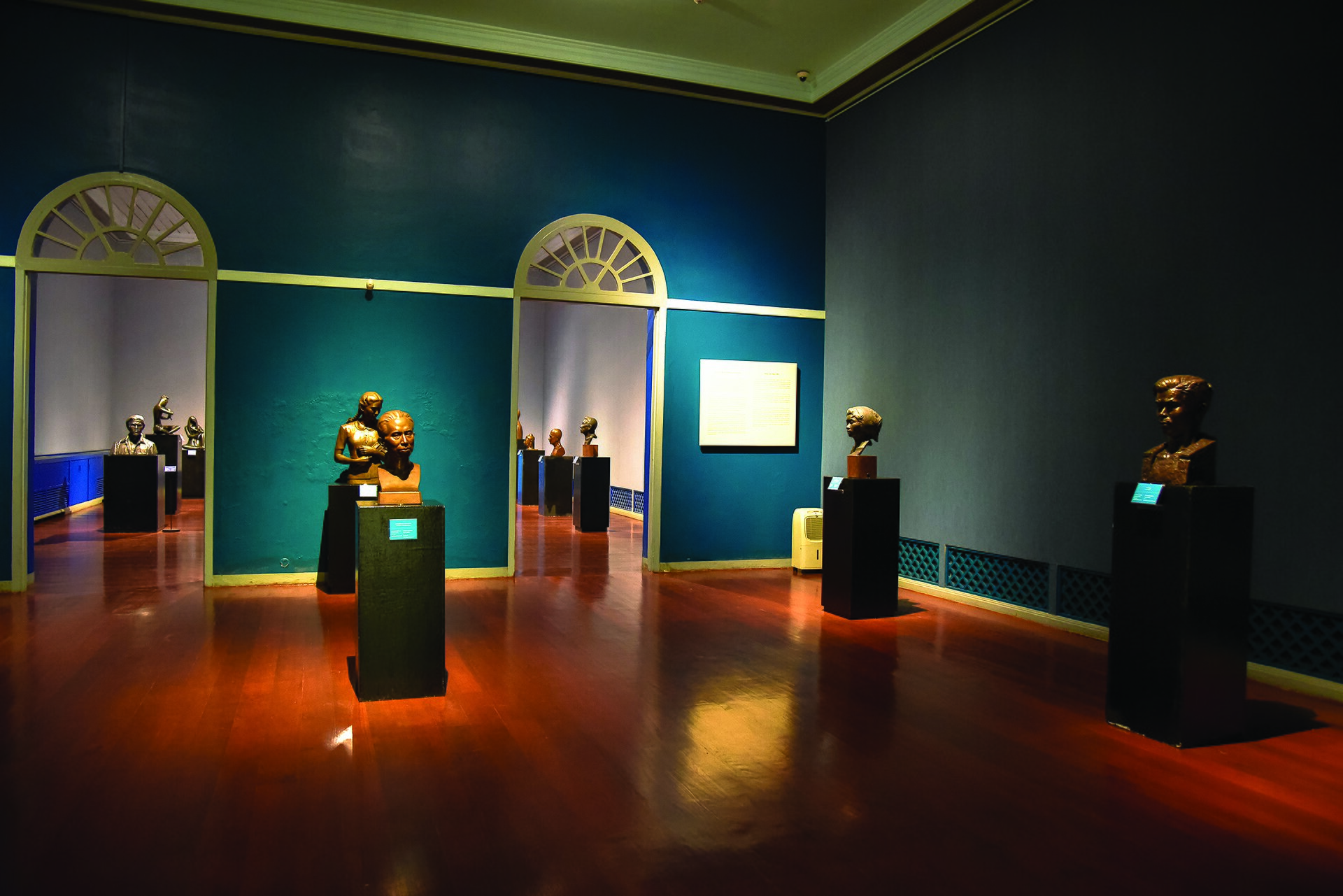
Sculpture and art after the 1932 change of government, with the work of Silpa Bhirasri and his students, such as the plaster sketch for the Rama I monument and bronze portraits. The museum says its displays after 1967 run to the present.
The open square of the former mint around a central lawn, a ticket and cloakroom counter, and a counter for books and souvenirs, per the services page. Travel sites mention weekend art markets in the courtyard from February to June.
A 30 cm plaster model for the royal monument by the Italian-born founder of Thai modern art teaching. The museum reads the monument as a statement of royal authority at a time when the monarchy was weak and challenged, and calls it one of the last official academic commissions of its kind.11
A 62 cm bronze the museum describes as an idealised sculpture, joining the sweet line of traditional art to simplified forms without muscular structure and with a smooth surface, so that line and volume flow together. The museum offers a rotating 3D view on its older site.12
A 74 cm portrait of a calm, modest young woman by one of Silpa Bhirasri's first students, who later helped him with major monuments and was named a National Artist in sculpture in 1988.13
The model for the statue at Lumphini Park, commissioned by the government of Field Marshal Plaek Phibunsongkhram in the Western academic manner that Silpa knew best, in memory of the king's gift of the land for the park.14
The Bangkok Post named it a must-see: the country's oldest painted cloth banner, unearthed from a jar in the ruins of a pagoda at Wat Dok Ngoen in Hot district, Chiang Mai. Its current display status is not confirmed because the permanent building is closed.7
The two painters the museum names as the pioneers of painting Thai ideal stories with Western technique, and as models for later craftsmen. Both are named on the official rooms page and in the newspaper's must-see list.5
The Bangkok Post counts 17 of the country's 90 paintings of events from the Royal Chronicle among the permanent highlights; the museum's history page mentions the chronicle-and-verse painting series of the reign of King Chulalongkorn.7
Named as a highlight in the Bangkok Post in 2014 and tied to the Celebration Room of royal paintings described on the museum's pages.7
c. 1615-17 · Oil on canvas
National Gallery, London
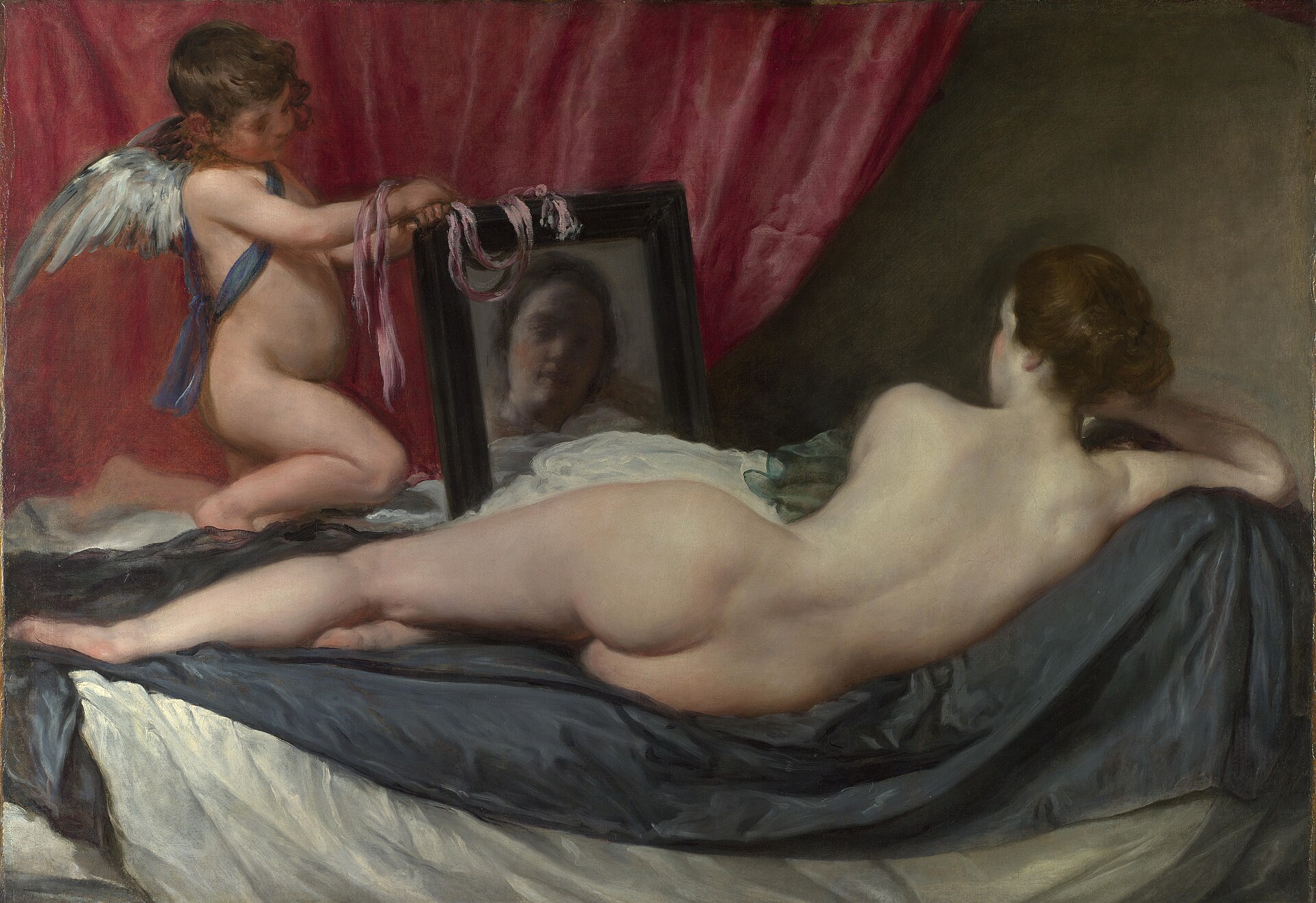
1647-51 · Oil on canvas
The National Gallery, London
The National Gallery stands at 4 Chao Fa Road in the Phra Nakhon district of Bangkok, beside the Phra Pin Klao bridge and a short walk from Khao San Road. Its Thai name is Phiphitthaphan Sathan Haeng Chat Ho Sin, the National Museum, Art Gallery, and almost everyone in the city calls it Ho Sin Chao Fa. The museum's own history page is careful about that nickname. It says the name simply follows the road, and that the road does not mean one particular prince's palace stood here: in the early Rattanakosin period the land held the residences of several princes of the Front Palace, and the road was named for the last Chao Fa who lived at Wang Pak Khlong near Wat Chana Songkhram.
The building is older than the gallery by three-quarters of a century. During the reign of King Chulalongkorn the Front Palace residences were pulled down to make room for a new, modern coin factory, which was named Rong Kasap Sitthikan, the Sitthikan Mint. The Fine Arts Department says it was designed by Carlo Allegri, the Italian architect then in Siamese royal service, who drew on a machinery factory in Birmingham, England. The plan is a Western industrial one made grand: a two-storey main block facing the road with a hipped roof of kite-shaped tiles, and from its sides single-storey wings turning at right angles to form a closed square around an open central courtyard. Lace-like carved and fretted woodwork runs along the ridges, eaves, doorways and windows, and the front is dressed with stucco relief carrying the royal arms. Production of coins began on 4 February 1902 and went on until 1968, when the Treasury Department moved to a new factory and left the mint empty.
That history is why the building is the first thing to look at. Rooms built for a coin factory have thick load-bearing masonry walls and arched windows, and the square of wings around its central lawn gives the plan a calm, enclosed feel. The Fine Arts Department registered it as a national monument by a Royal Gazette notice in 1978. Bangkok Post and the museum's own history page disagree on the day of that registration (19 September 1978 on the museum's page, 22 August 1978 in the newspaper), and this page follows the institution.
The idea came from an anniversary. In 1974, the hundredth year of Thai museums, the Fine Arts Department began a project for a museum of modern art and asked the Treasury Department for the empty mint. The Treasury handed the building over on 19 April 1974 for what was to be called the National Art Gallery. Its stated purposes, on the museum's pages, are to collect, preserve, exhibit and study visual art in both traditional Thai and contemporary forms, by Thai and foreign artists, and to serve as a centre for research and public education.
The dates after that need care because two of them are routinely confused. The gallery was opened formally on 8 August 1977 by Princess Maha Chakri Sirindhorn, on the occasion of the birthday of Queen Sirikit, who was a patron of the arts. It then closed again for improvement and was renamed to match the 1961 law on ancient monuments and national museums, becoming the Phiphitthaphan Sathan Haeng Chat Ho Sin. It opened to the general public on 5 May 1978, with a special exhibition on traditional Thai painting. English-language sources therefore give 1977 or 1978 as the opening depending on which event they count, and both are right. On 15 September 1983 the Treasury Department handed over additional buildings and land, which let the gallery extend its exhibition space and its facilities for artists and visitors.
Wikidata gives the inception as 8 August 1977 and the museum's own history gives both events; this page uses the formal 1977 opening as the founding date and the 1978 date as the opening to the public. The Fine Arts Department runs the gallery as one of its national museums, within the Office of National Museums, and it is the only state-run museum of art in the country, which is a title the Bangkok Post wrote in 2014 and which gives the place a weight its modest floor area would not suggest.
The permanent displays were laid out as a short course in the development of Thai visual art from the Ayutthaya period to the present, and the official pages describe them room by room. A Celebration Room held paintings by two Thai kings, King Vajiravudh (Rama VI) and King Bhumibol Adulyadej (Rama IX). A room of traditional Thai painting showed the conventions of Buddhist and literary subjects in flat, outlined, limited colour, with works by the monk-painter Khrua In Khong and by Prince Naris, the great craftsman of Siam, whose mix of Thai subjects with Western technique the museum calls a model for later painters. A room of Western-style painting followed the change that began in the reign of King Mongkut, when portraiture, landscape and still life arrived in oils on canvas, and when King Chulalongkorn's two journeys to Europe in 1897 and 1907 widened the court's contact with Western art. The fourth room, for sculpture and for art from 1932 to 1967, begins with the change from absolute to constitutional monarchy and with the Italian sculptor Corrado Feroci, who became the Thai citizen Silpa Bhirasri, founded the School of Fine Arts that grew into Silpakorn University and taught most of the artists in the room.
The Bangkok Post, describing the permanent displays in 2014, gave a slightly different map: Thai paintings of the sixteenth to twentieth centuries on the first floor, and on the ground floor works of 1856 to 2002 in the Western-style Paintings Room, the King's Room, a Modern Art Room and a Contemporary Art Room. It named as must-sees the oldest pha phra bot, a painted cloth banner of about 500 years old that was unearthed from a jar at Wat Dok Ngoen in Hot district, Chiang Mai, paintings by Khrua In Khong and Prince Naris, 17 of the country's 90 paintings of events from the Royal Chronicle, King Rama VI's watercolours of the Sakuntala story, and the work of Feroci's students. The room names differ because displays were rearranged between the museum's older web pages and the newspaper's visit, and neither is a promise about what hangs today (see the next section).
Alongside the permanent building the gallery has always run changing exhibitions in its other halls. The official page says two to four temporary exhibitions open each month, drawn from works selected by a panel of art professionals, by Thai and foreign artists of national reputation. The Time Out listing, written in 2016, repeats that rhythm and describes the permanent displays as Thai art from the Sukhothai period to the present.
This is the part of the page that matters most to a person planning a visit. The gallery's official Facebook page carries a pinned notice, in Thai and English, that the museum is renovating its Permanent Exhibition Building and has temporarily closed that building and the exhibition on art in the reign of King Rama IX. Visitors can still enter Temporary Exhibition Hall 4 and Temporary Exhibition Hall 6, and the notice repeats the opening days, Wednesday to Sunday from 09:00 to 16:00, and the fees of 30 baht for Thai visitors and 240 baht for foreign visitors. A separate older notice on the same page says the Rama IX exhibition was closed from 19 March 2025 so that the permanent displays could be improved and developed. We read both notices on 20 November 2026. The pinned notice carries no reopening date and none is given on the Fine Arts Department's site, so the sources do not say when the rooms described in the previous section will return.
The museum is therefore open, and this page lists it as open, but what a ticket buys today is the temporary halls only. The Fine Arts Department's older site and travel listings still describe the permanent rooms, and that is the reason some visitors arrive expecting them. A Tripadvisor reviewer who came in July 2025 wrote that only one room with a temporary exhibition was open. A reviewer who visited in December 2019 wrote that one hall was closed for works, which shows that partial closure is not new here: the Bangkok Post reported in 2014 that parts of the museum had been shut for roof repairs over the previous two years, and the director then linked that to the fall in visitors.
The museum is still in use as an exhibition venue. MGR Online reported on 12 November 2026 that the exhibition ART FOR CHANGE BEYOND ABILITY, organised by the Art No Handicap Foundation with partner organisations for artists with disabilities, was on at the National Gallery from 7 to 27 November 2026, with an opening ceremony on 11 November at which the Minister of Culture presided. The same report did not state an admission price for that show, so this page does not either.
The Fine Arts Department's services page gives the opening days as Wednesday to Sunday from 09:00 to 16:00, closed on Monday, Tuesday and national public holidays. A single ticket costs 30 baht for a Thai visitor and 240 baht for a foreign visitor. A combined ticket costs 60 baht for Thai visitors and 400 baht for foreign visitors and covers three Fine Arts Department sites: the Bangkok National Museum, the National Museum of Royal Barges and the National Gallery. Students in uniform, Buddhist monks and novices are admitted free. The foreign price was 200 baht in earlier years, which is the figure the Bangkok Post and Time Out printed, and the gallery's own pages now carry 240 baht. The rise coincides with a revised entry-fee regulation published in the Royal Gazette in May 2025, which the Bangkok Insight reported on 28 May 2025 without naming the gallery's rate, so the figure rests on the museum's own pages.
Two cautions. Tripadvisor lists the opening hours as 08:30 to 16:30, and the Fine Arts Department's own pages and its Facebook notice say 09:00 to 16:00; this page uses the museum. And older listings lag behind: Bangkok for Visitors prints 30 baht only, and Your Thai Guide's February 2026 update still gives 200 baht for foreigners. Because the permanent building is closed the fee currently buys a small part of what the museum describes, which is one reason it features among the complaints below. The Bangkok Post noted in 2014 that foreign visitors already thought 200 baht high when the same sum bought half a day at the Bangkok National Museum.
The record of public opinion is mixed and fairly consistent. Tripadvisor gives the gallery 3.4 out of 5 from 68 reviews and ranks it 447th of 929 things to do in Bangkok, with the votes split 13 excellent, 19 good, 21 average, 10 poor and 5 terrible, as read on 20 November 2026. Wanderlog relays a Google score of 4.1 from 1,111 reviews and a Tripadvisor score of 3.5 from 67, which are tertiary figures. We do not reproduce review wording; in our own words, the people who like the gallery talk about the building, the quiet, the spacious rooms and the temporary shows, and the people who do not talk about size, sparse displays and price.
The most substantial published criticism is older and is structural. Pichaya Svasti's article in the Bangkok Post of 21 April 2014, headed with a promise that the ailing gallery would be revived under a new master plan, reports that the director, Ajara Kangsarikijja, said about 100 people a day visited, roughly 3,000 a month, which she called a very small number; that the permanent displays had last been renewed in 2004 against an international standard of every five years; that staff had been cut from 12 to seven; that there were no workshops or visitor activities; and that the compound itself needed repair, with peeling paint and high humidity, a restoration estimated at 100 million baht. The director also said the whole gallery could be seen in about 45 minutes by a fast walker. Nothing we read says whether that master plan was carried out in full, but the permanent building is now shut for renovation, which suggests that some of it is under way.
A listing on Trazy says there are hardly any descriptions beside the artworks. The honest summary is that the building and the best of the historical Thai paintings and sculpture are worth the visit, that the gallery has been under-funded and under-visited for a decade or more, and that at present a foreign visitor pays 240 baht to see temporary halls only.
The museum's own directions favour the river. The Chao Phraya Express Boat stops at Phra Arthit pier (N13), from which it is a walk back along the river towards the Phra Pin Klao bridge and left onto Chao Fa Road; the cross-river ferry lands at Phra Pin Klao pier on the Phra Nakhon side. From the BTS, the directions send visitors to Saphan Taksin station, then by Express Boat and cross-river ferry to Phra Arthit. They also list bus routes along Phra Arthit and Chakkraphong roads and three driving routes, and describe the road as one-way with parking available. Your Thai Guide suggests 60 to 90 minutes for the visit and says casual photography without flash is generally allowed, though some rooms or temporary shows may restrict it. That is a tour operator's note, not the museum's own rule, so ask at the ticket desk.
The services page lists a ticket and cloakroom counter, and a counter selling books and souvenirs. Travel sites note weekend art markets in the courtyard from February to June, and say it is probably the best time to visit; the museum's own pages do not mention them, so check before relying on them. Phone 02 282 8525 (+66 2 282 8525 from abroad) or write to [email protected]. Because of the closure and the uncertainty about which halls are open, a call or a look at the Facebook page on the day is sensible. Combine the visit with the Bangkok National Museum and the Royal Barges museum if the 400 baht combined foreign ticket suits you, bearing in mind that the combined ticket is the Fine Arts Department's and that the gallery part currently covers the temporary halls.
Visitors and the press agree on the setting and disagree on the value. The old mint is liked for its quiet, spacious rooms and the temporary shows; the permanent collection is called small and sparsely labelled, and the 240 baht foreign ticket is hard to defend now that the permanent building is closed. Both main review platforms sit near the middle: Tripadvisor 3.4 from 68 reviews, Google 4.1 from 1,111 as relayed by Wanderlog.
Tripadvisor: 3.4 from 68 ratings, read 20 November 2026
Google (as relayed by Wanderlog): 4.1 from 1,111 ratings, read 20 November 2026
A platform average is a tertiary source: it moves, it is not audited, and we quote no visitor's words.
4 Chao Fa Road, Chana Songkhram, Phra Nakhon, Bangkok 10200, Thailand.
Thai visitor, single ticket: THB 30; Foreign visitor, single ticket: THB 240; Combined ticket, Thai visitor: THB 60; Combined ticket, foreign visitor: THB 400; Students in uniform, monks and novices: free. As confirmed 20 November 2026.
Wed-Sun 09:00-16:00. Closed: Closed Monday and Tuesday. Closed on national public holidays. As confirmed 20 November 2026.
River: Chao Phraya Express Boat to Phra Arthit pier (N13), then a walk back towards the Phra Pin Klao bridge and onto Chao Fa Road; or the cross-river ferry to Phra Pin Klao pier on the Phra Nakhon side; BTS and boat: BTS to Saphan Taksin station (exit 2), Chao Phraya Express Boat from Sathorn (Central Pier) to the railway-station pier, cross-river ferry to Phra Arthit pier (N13), then walk back towards the Phra Pin Klao bridge; Bus: The museum lists routes via the Phra Pin Klao bridge (30, 80, 91, 123, 507), via Phra Arthit road (6, 9, 15, 19, 32, 33, 53, 64, 65, 524) and via Chakkraphong road (3, 30, 32, 33, 43, 64, 524); the list is on the museum's older site and may have changed; Car: One-way approach roads and parking, per the museum; three driving routes are described on the contact page.
Plaster sketch for the monument to King Rama I (Silpa Bhirasri (Corrado Feroci), 1931); Khi Ma Song Mueang (bronze horse rider) (Khian Yimsiri, 1962); Bronze portrait of Mom Prim Bunnag (Piman Moolpramook, between 1927 and 1937); Model for the statue of King Rama VI (Silpa Bhirasri, 1939); The oldest pha phra bot (painted cloth banner) (Unknown Thai painter, about 500 years old); Paintings by Khrua In Khong and Prince Naris (Khrua In Khong; Prince Naris (Narisara Nuvadtivongs)).
One artwork and its story every Tuesday, with the picture: who owned it, what it made, and what closes soon in the exhibition calendar. No promotion, and nothing we cannot cite.
We send one email to confirm the address and keep nothing else. Every letter carries a one-click unsubscribe. How we handle your data.


