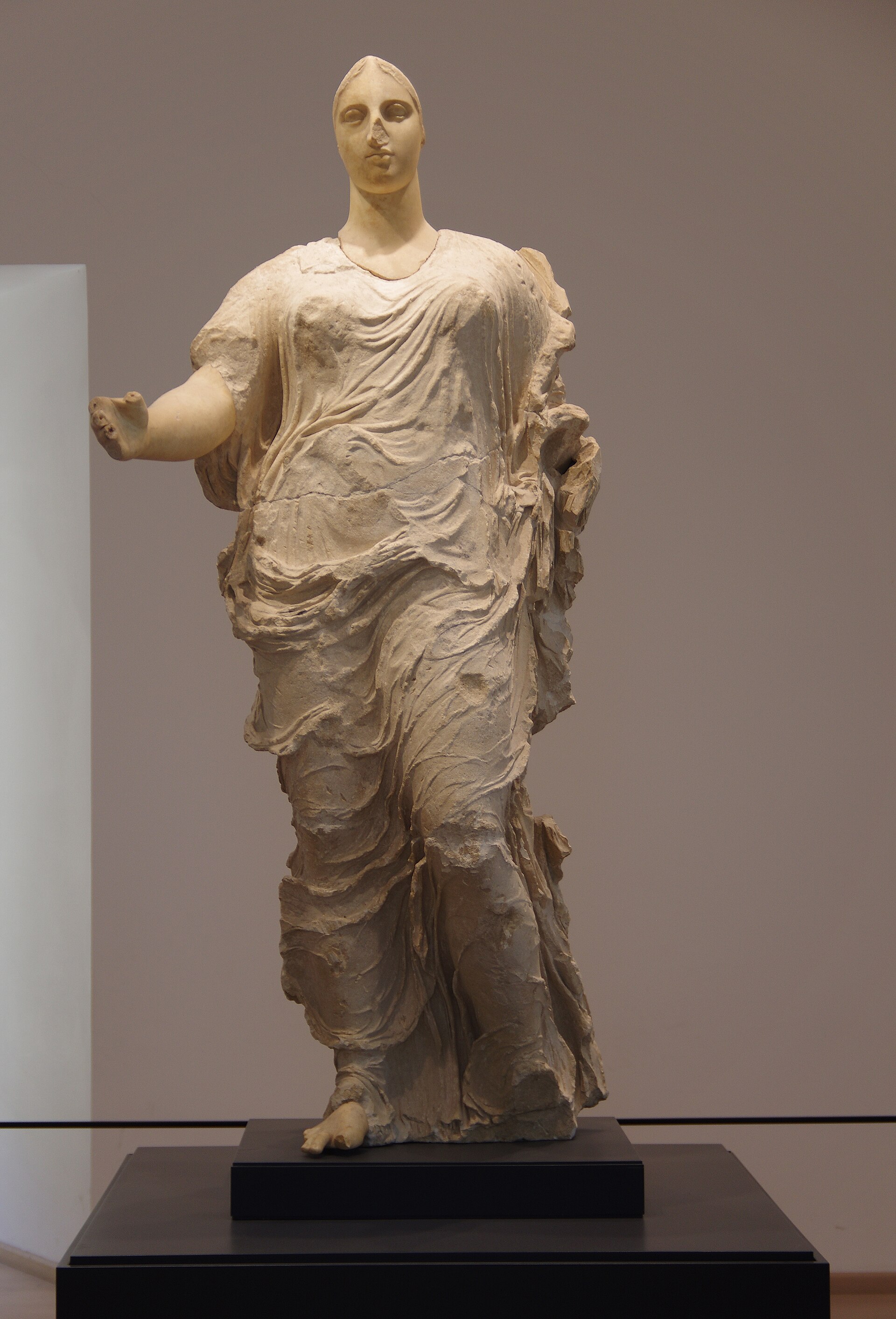
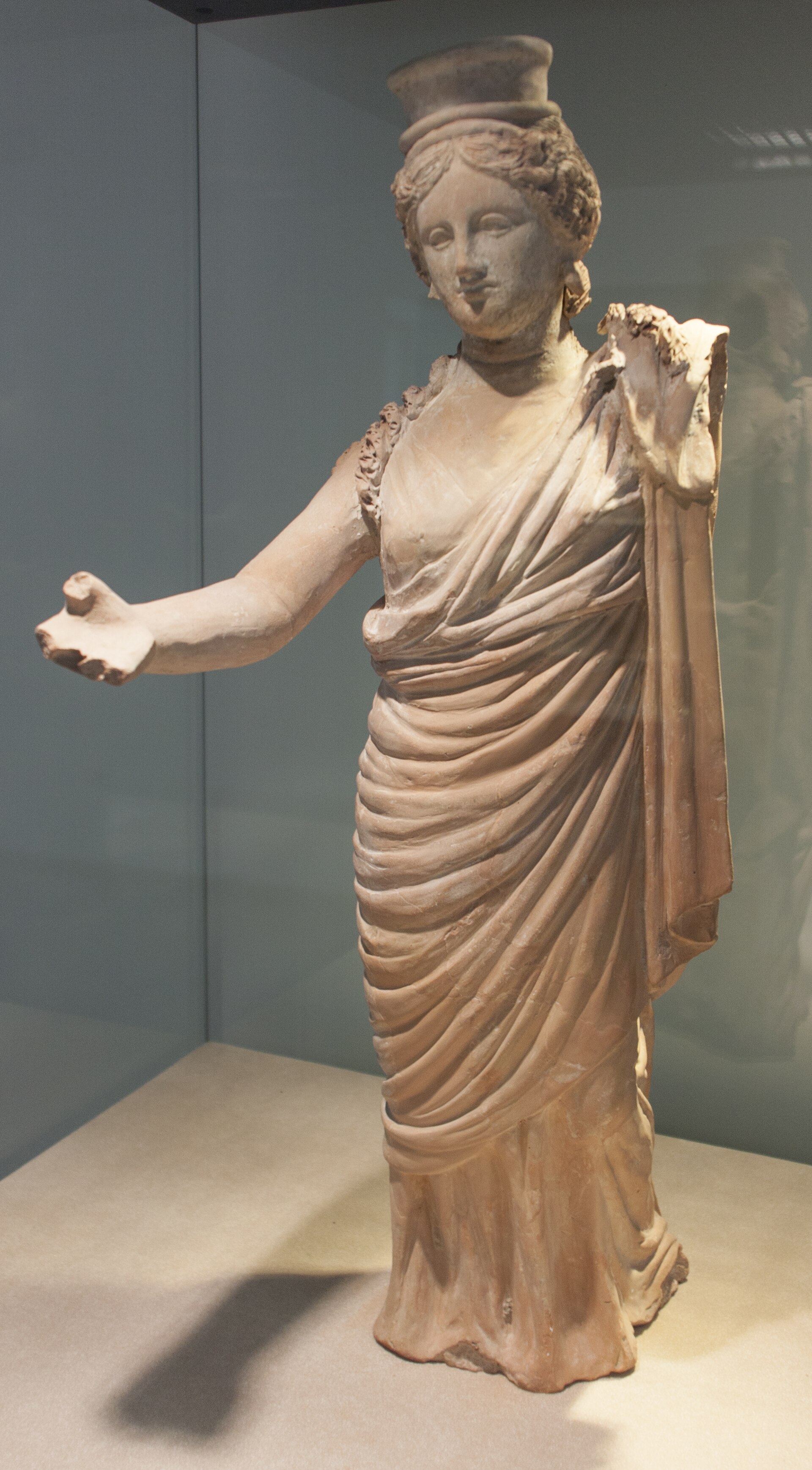
Cult Statue of a Goddess
c. 425-400 BC · Pseudo-acrolithic
Museo Archeologico Regionale di Aidone, Aidone
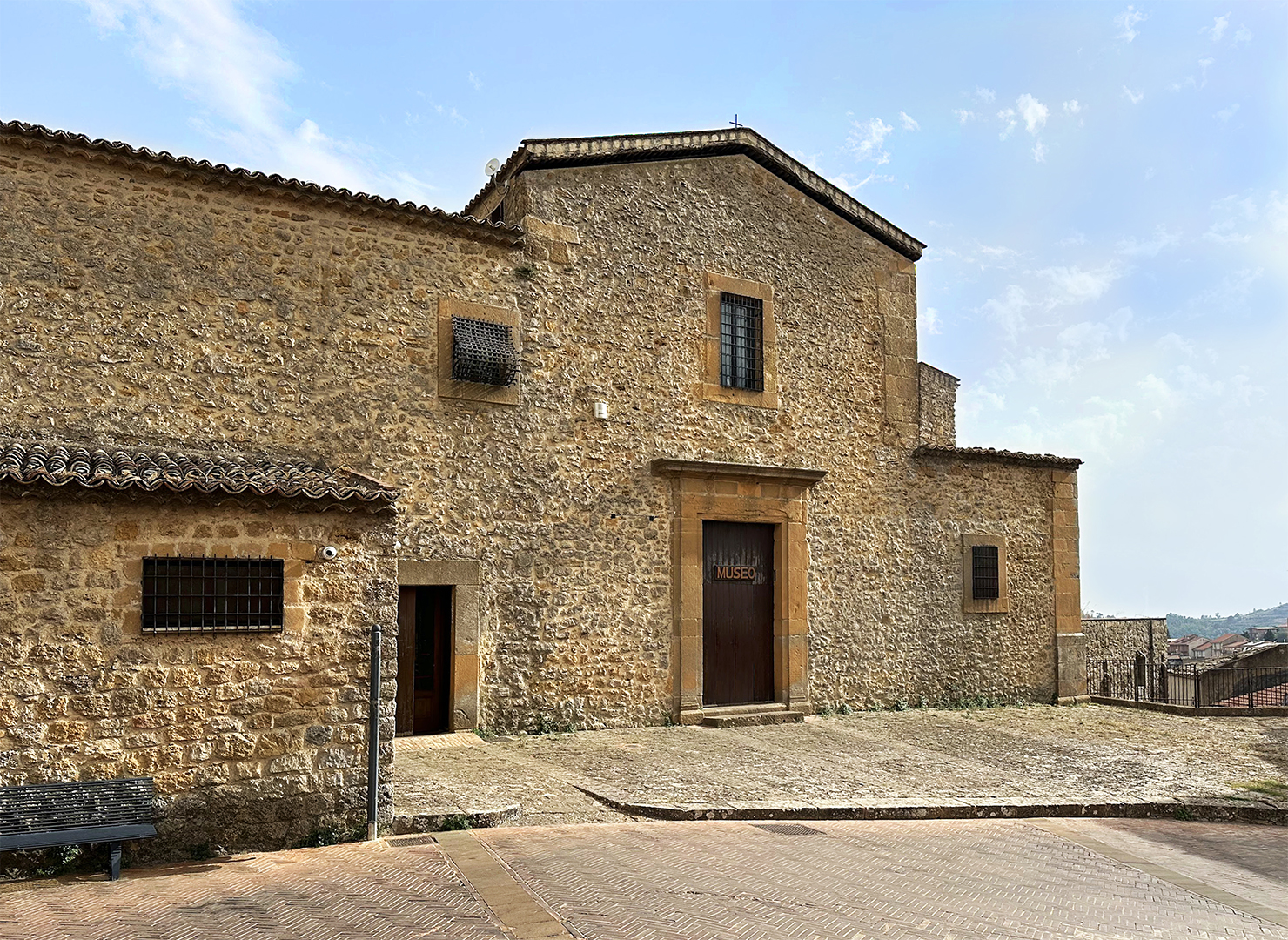
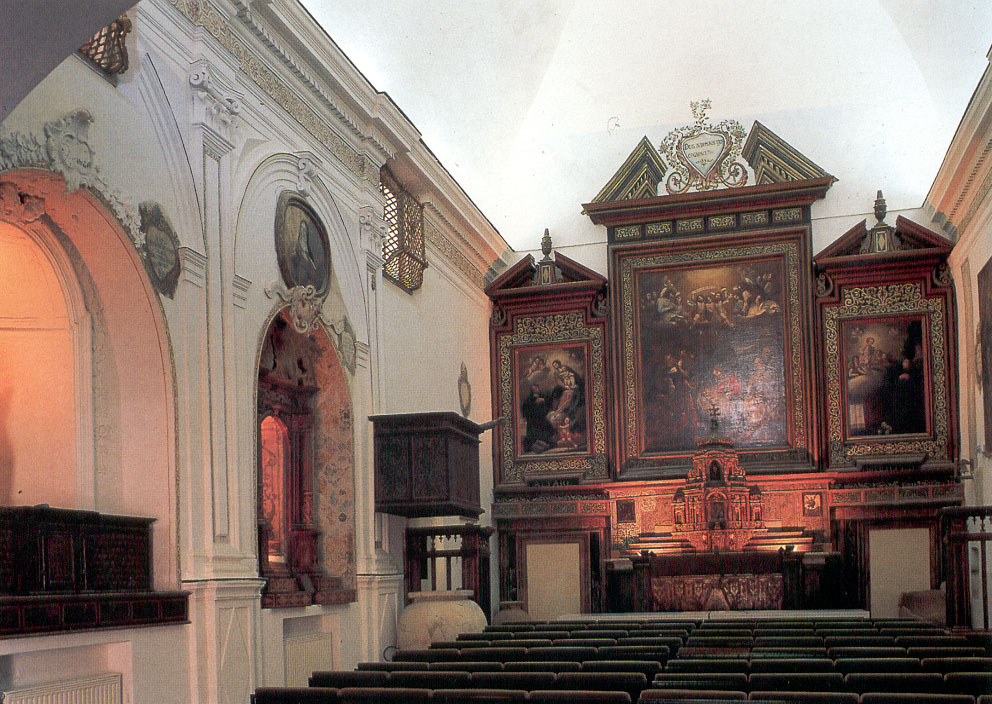
The former convent church of San Francesco d'Assisi, now the Museo Archeologico Regionale di Aidone, photographed in 2025.
AbelDionis, CC0Museum · Founded 1611
Open, admission and hours confirmed 18 August 2026 · 16 sources
Aidone's collection is small in room count and object count next to a national museum, and that is exactly its strength: everything in it comes from one site, Morgantina, and the site's excavation history is legible across the museum's rooms in a way a broader regional collection could not manage. Its two most valuable single objects, the acrolithic cult statue and the Eupolemos silver service, are also two of the clearest teaching cases anywhere for how the international antiquities trade of the 1970s and 1980s moved looted material into major American museums, and for what it took, decades later, to reverse that. A visitor who wants both the archaeology and the provenance story in one place will not find a better single stop for Hellenistic Sicily.
| Kind | Museum |
|---|---|
| Founded | Building constructed 1611-1613 as a Capuchin convent; museum inaugurated 20 October 1984 |
| City and country |  Aidone, Italy Aidone, Italy |
| Address | Largo Torres Truppia 1, 94010 Aidone EN, Italy |
| Website | parchiarcheologici.regione.sicilia.it/morgantina-villa-romana-casale |
| Status | Open, confirmed |
| Record last verified |
Prices and hours change. We take them from the institution's own pages and print the day we read them, and you can check the current position at the source we used. Confirm before you travel.
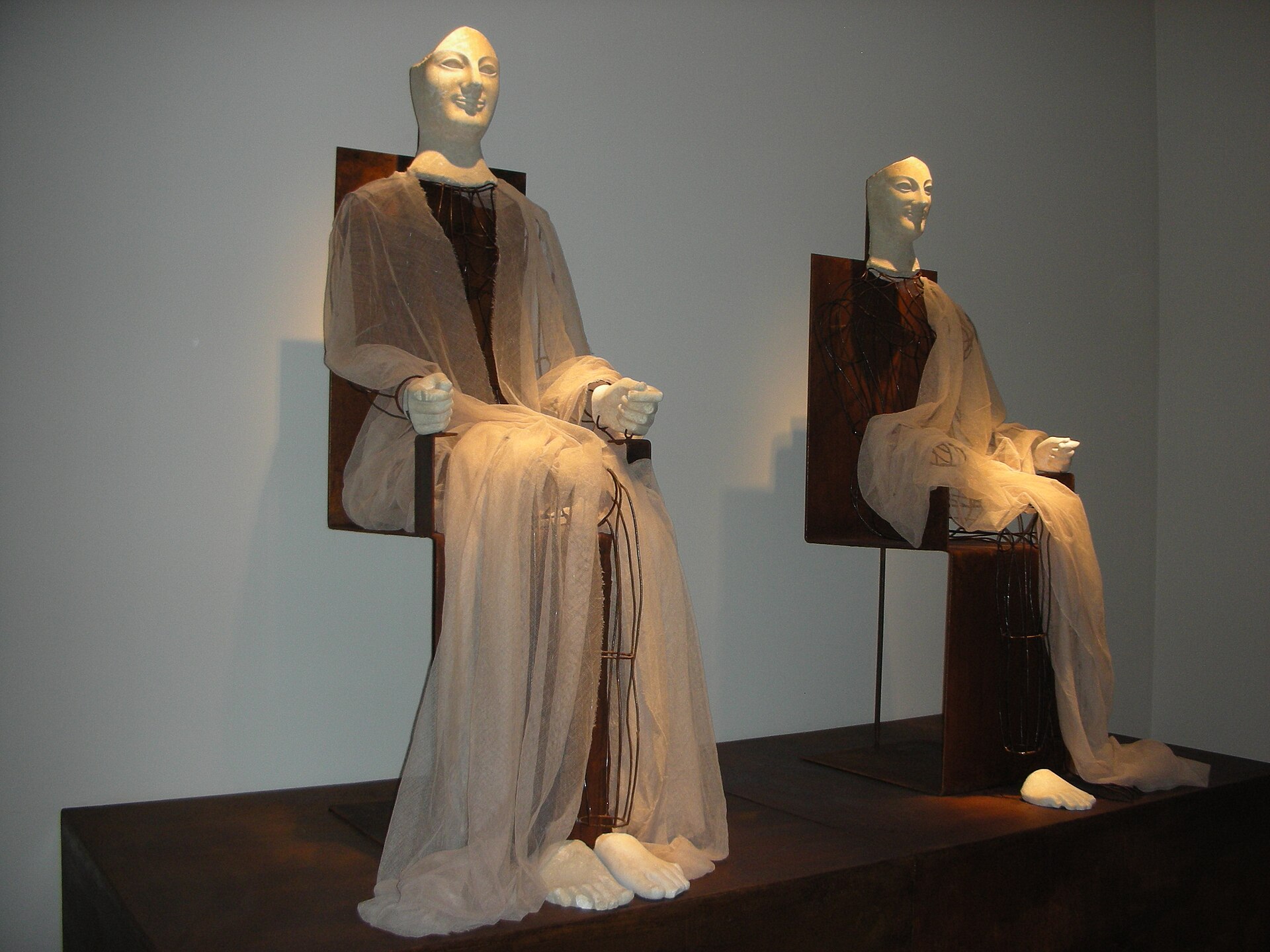
The paired acrolithic sculptures of the goddesses Demeter and Kore: heads, hands and feet carved in marble and limestone in the late sixth century BC, originally fitted to bodies of wood or another perishable material now lost. They are among the objects whose return to Italy, alongside the cult statue described below, marked the wider restitution campaign against American museums that had bought Sicilian antiquities without a documented findspot.
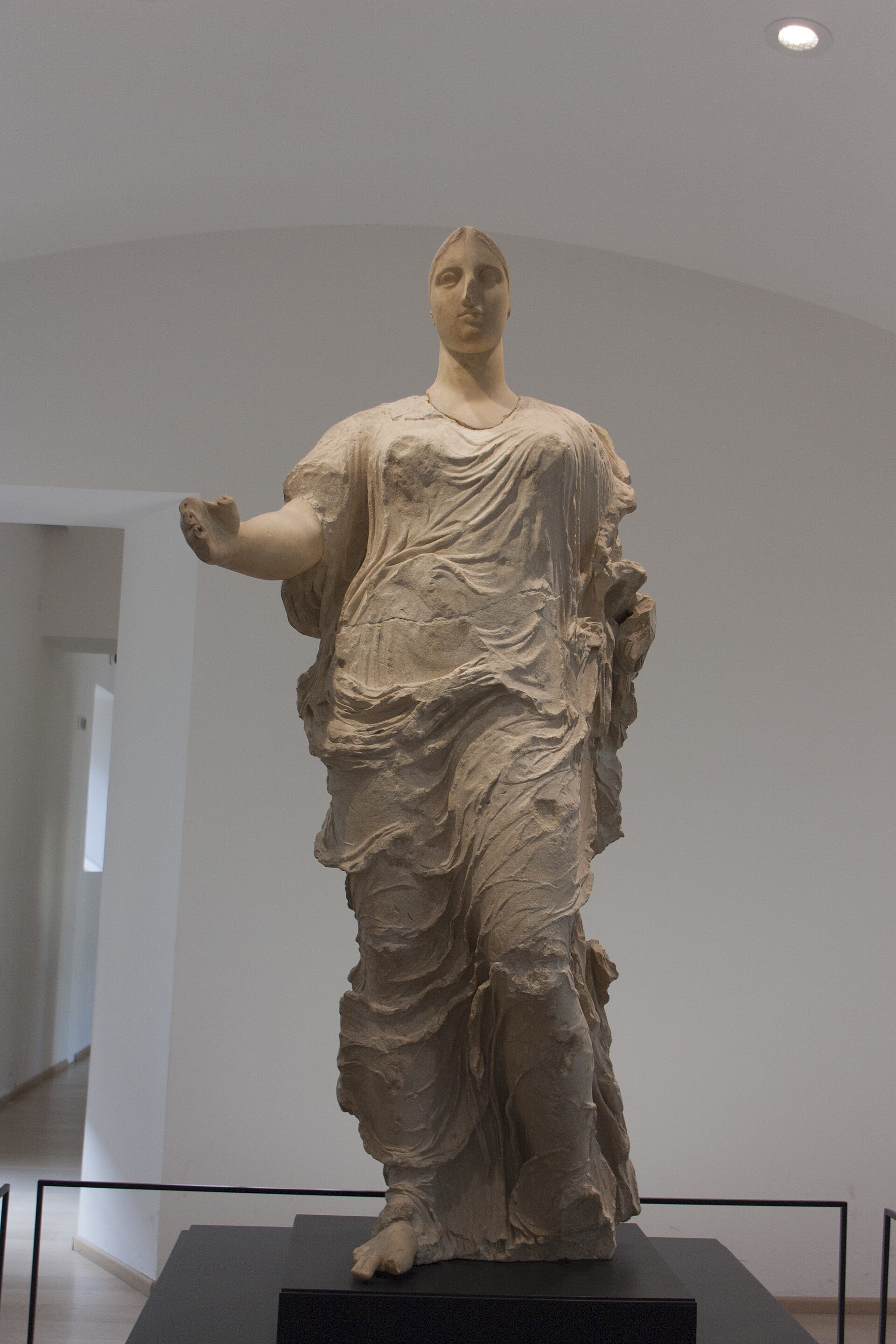
The museum's single most important object: a nearly two-and-a-half-metre acrolithic cult statue of the last quarter of the fifth century BC, its body carved from Sicilian limestone and its head, arms and feet from imported marble. Looted from a Morgantina sanctuary in 1979, it passed through the international antiquities trade to the J. Paul Getty Museum, which paid a then-record eighteen million dollars for it in 1988 and returned it to Italy in 2011. Scholars have never agreed which goddess it depicts.
A sixteen-piece Hellenistic gilt-silver banqueting service of the third century BC, inscribed with the name Eupolemos and linked by archaeologists to a specific excavated house at Morgantina. It was bought by the Metropolitan Museum of Art in New York in 1981-82 and returned to Italy under a 2006 framework agreement with the Met that provides for the pieces to rotate on loan between Aidone and New York roughly every four years, so a visitor should not assume the full service is on the wall on any given date.
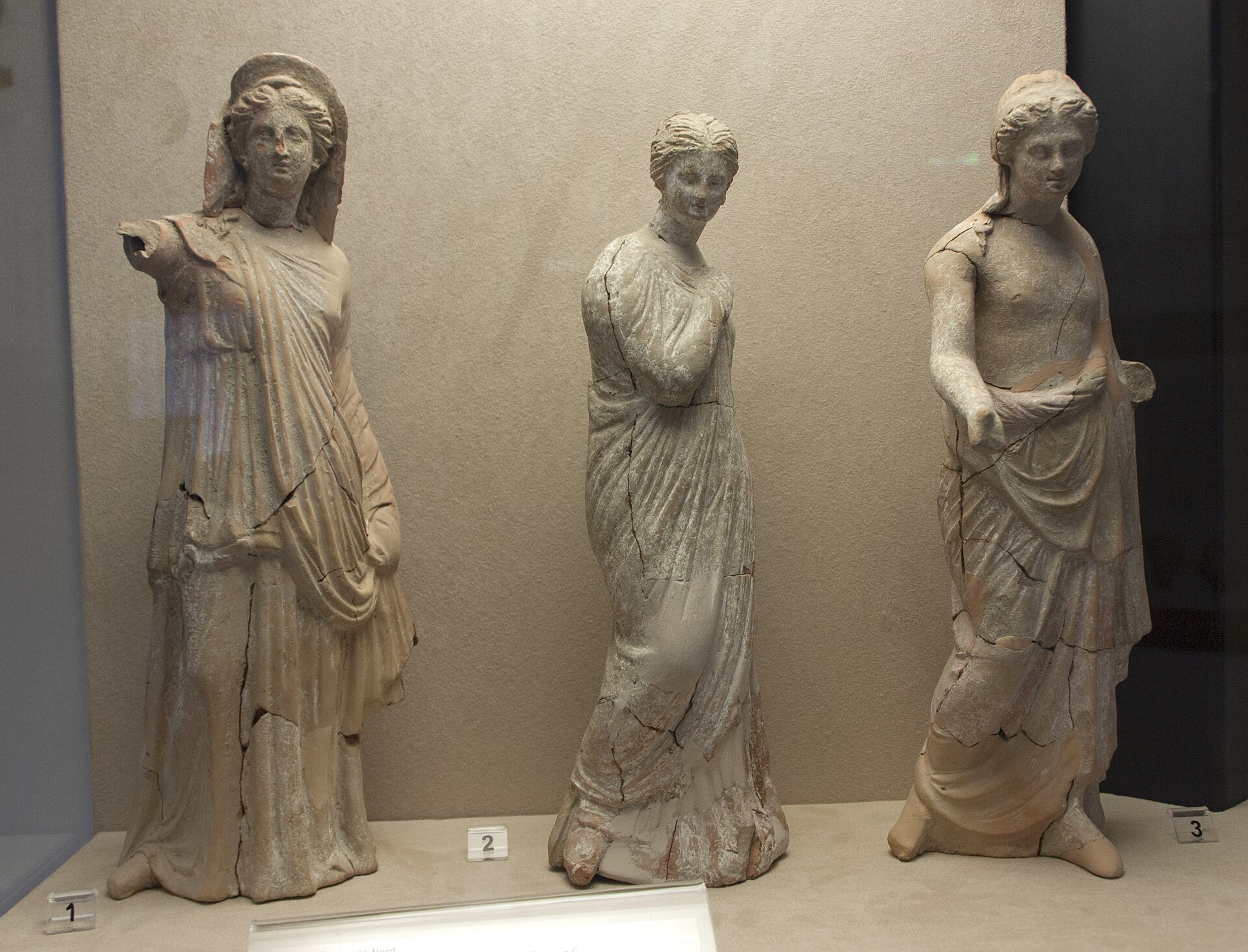
Free-standing Hellenistic-period statues and statuettes from Morgantina's sanctuaries, including a statuette of Persephone from the north sanctuary of around 300 BC and related female figures of the third century BC, displayed together as a group.
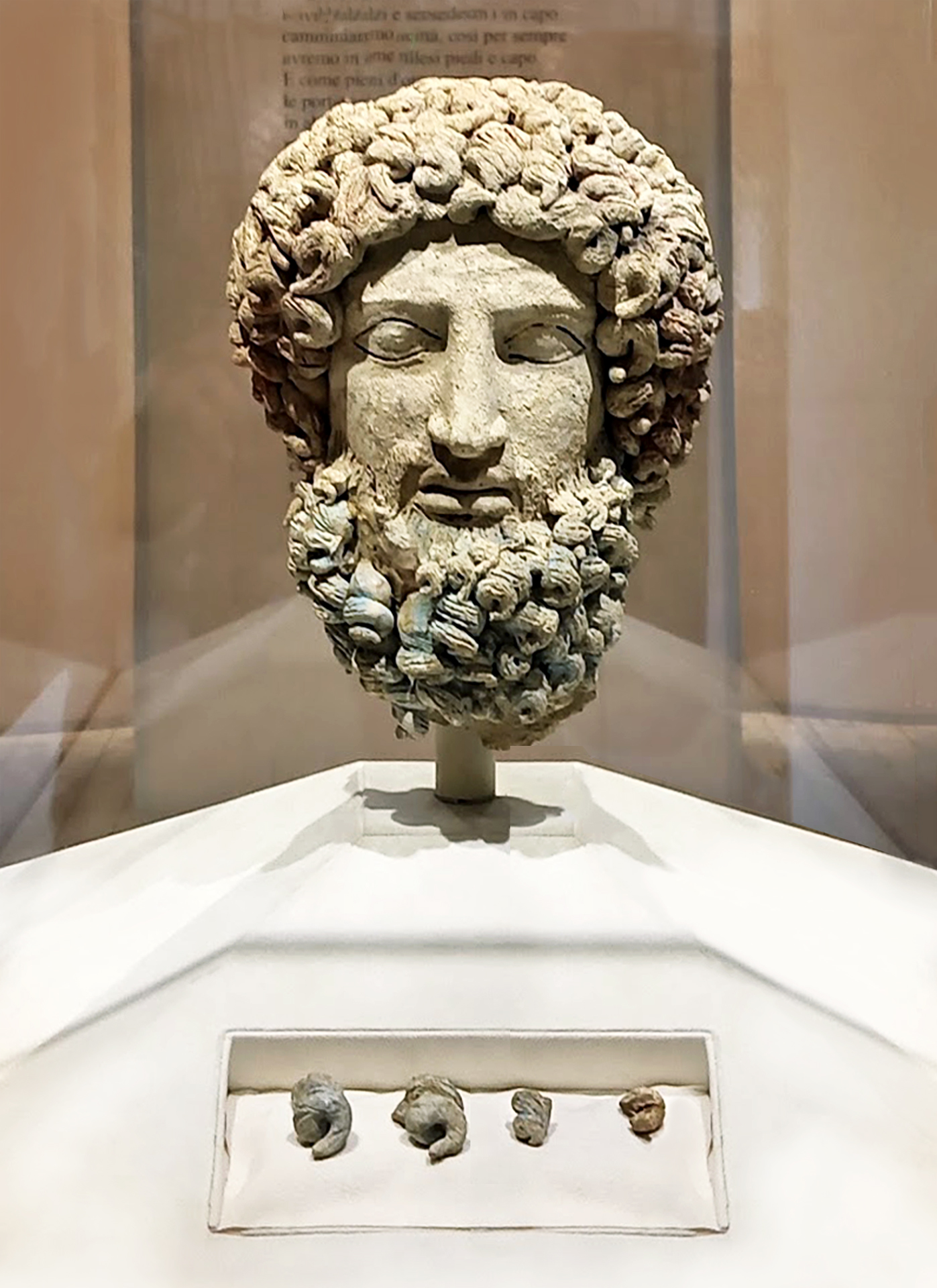
Terracotta votive and funerary material recovered from Morgantina's necropolises and its sanctuaries to Demeter and Persephone, including the painted terracotta head of Hades of the late fourth century BC that recurs as visitors' favourite single object after the cult statue, along with domestic pottery such as a three-spouted lamp and Syracusan-style tableware.
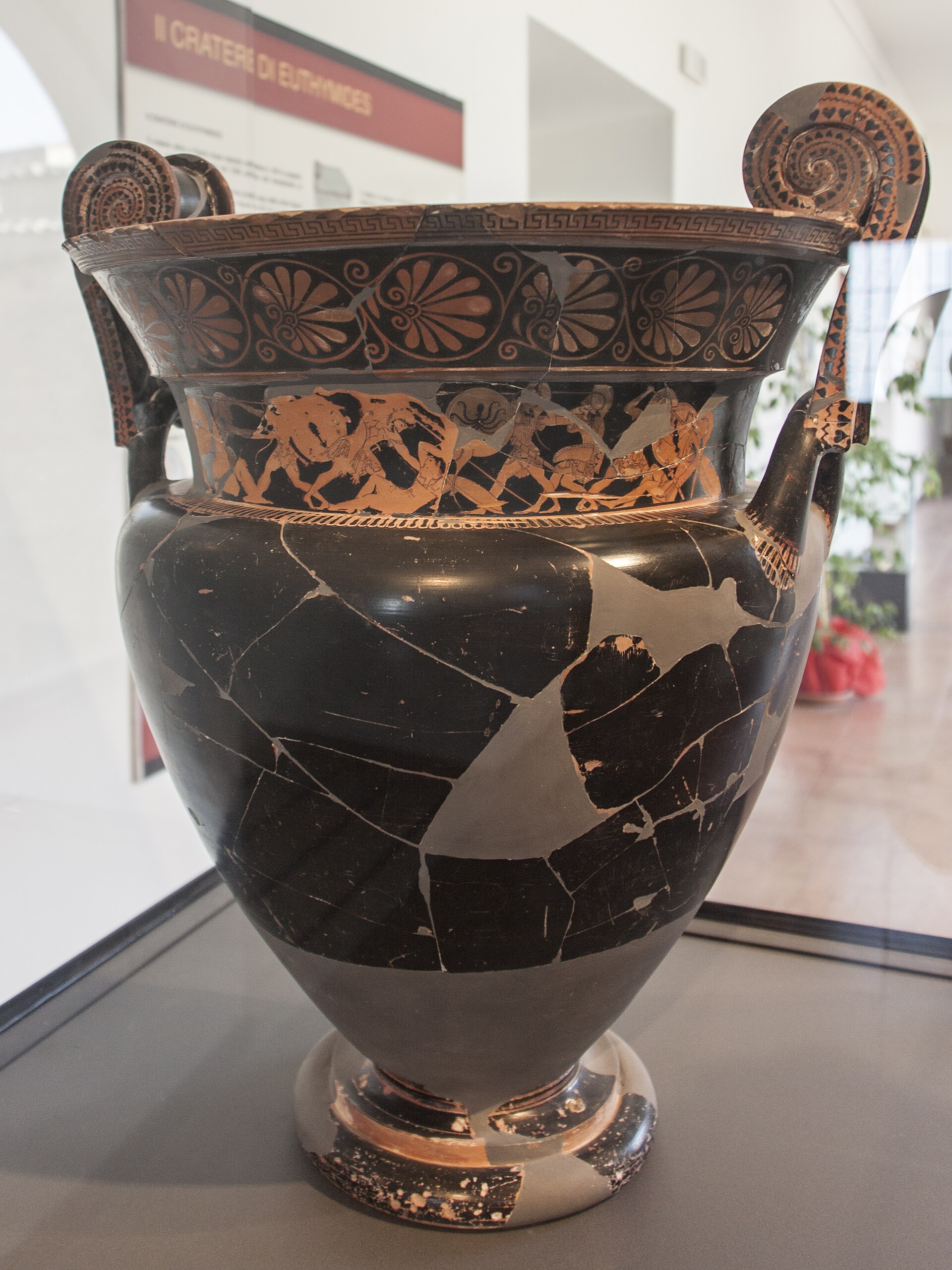
Material from the Bronze Age Castelluccio-culture village and from the later Sicel settlement at Cittadella, Morgantina's indigenous predecessor before Hellenisation: smoothed basalt axes, hand-worked pottery with linear incised decoration, and Ausonian-culture carinated ceramics of the early Iron Age. The same broadly chronological run of rooms also holds material from the ninth to fifth centuries BC, the period of Sicel and Greek coexistence at the site, including a Hellenistic-period krater attributed to the Athenian vase-painter Euthymides, decorated with a symposium scene and an Amazonomachy and thought to have been used at public banquets.
Everyday domestic, agricultural and religious objects that illustrate ordinary life at Morgantina rather than its sanctuaries or its market in stolen antiquities: kitchenware, farming tools, feminine ornaments and children's toys, shown in what was the convent's sacristy before the building's conversion to a museum.
The object the whole museum is now built around: an acrolithic limestone-and-marble cult statue looted from a Morgantina sanctuary in 1979, bought by the J. Paul Getty Museum for a then-record eighteen million dollars in 1988, and repatriated to Italy in 2011 after a case that became a landmark in the restitution campaign against American museums. It went on public display at Aidone on 17 May 2011 and remains the museum's centrepiece; which goddess it represents is still disputed among scholars.12
Full record in this archiveA rare surviving pair of Archaic acrolithic cult images, the marble heads, hands and feet that would have completed draped bodies of wood or another lost material. Their repatriation, alongside the cult statue, helped establish the documentary standard Italy now applies to every antiquity acquired without a known findspot.1
A sixteen-piece gilt-silver banqueting service inscribed with the name Eupolemos and traced to a specific house at Morgantina. The Metropolitan Museum of Art bought it in 1981-82 for a price sources give as between 2.7 and 3 million dollars; it was returned to Italy under a 2006 agreement that has the pieces rotate on loan between Aidone and New York roughly every four years, so its physical location on any given visit is not something this record can guarantee.12
A painted terracotta head of the god of the underworld, red-haired and dark-bearded, that visitors repeatedly single out as their favourite single piece after the cult statue itself; it belongs with a wider group of Morgantina terracottas dispersed among American collections before being traced back to the site.14
An Attic red-figure krater decorated with a symposium scene and a battle of Greeks and Amazons, found in a public building at Morgantina identified as the city's prytaneion and displayed in the room covering the site's Archaic Greek period; unlike most of the museum's famous objects, it reached Aidone through ordinary excavation rather than a restitution case.15
A votive statuette from Morgantina's north sanctuary, representative of the Hellenistic-period sculpture from the site's cult places that fills the museum's rooms beyond its two most famous restitution cases.1
The museum's setting is itself one of the things visitors consistently mention: a seventeenth-century Capuchin convent and its attached church, suppressed under Italian unification in 1866-67, used afterwards as an orphanage and asylum, deconsecrated as a place of worship in the 1950s, and adapted for museum use by the architect Franco Minissi ahead of the museum's inauguration on 20 October 1984.11
c. 425-400 BC · Pseudo-acrolithic
Museo Archeologico Regionale di Aidone, Aidone
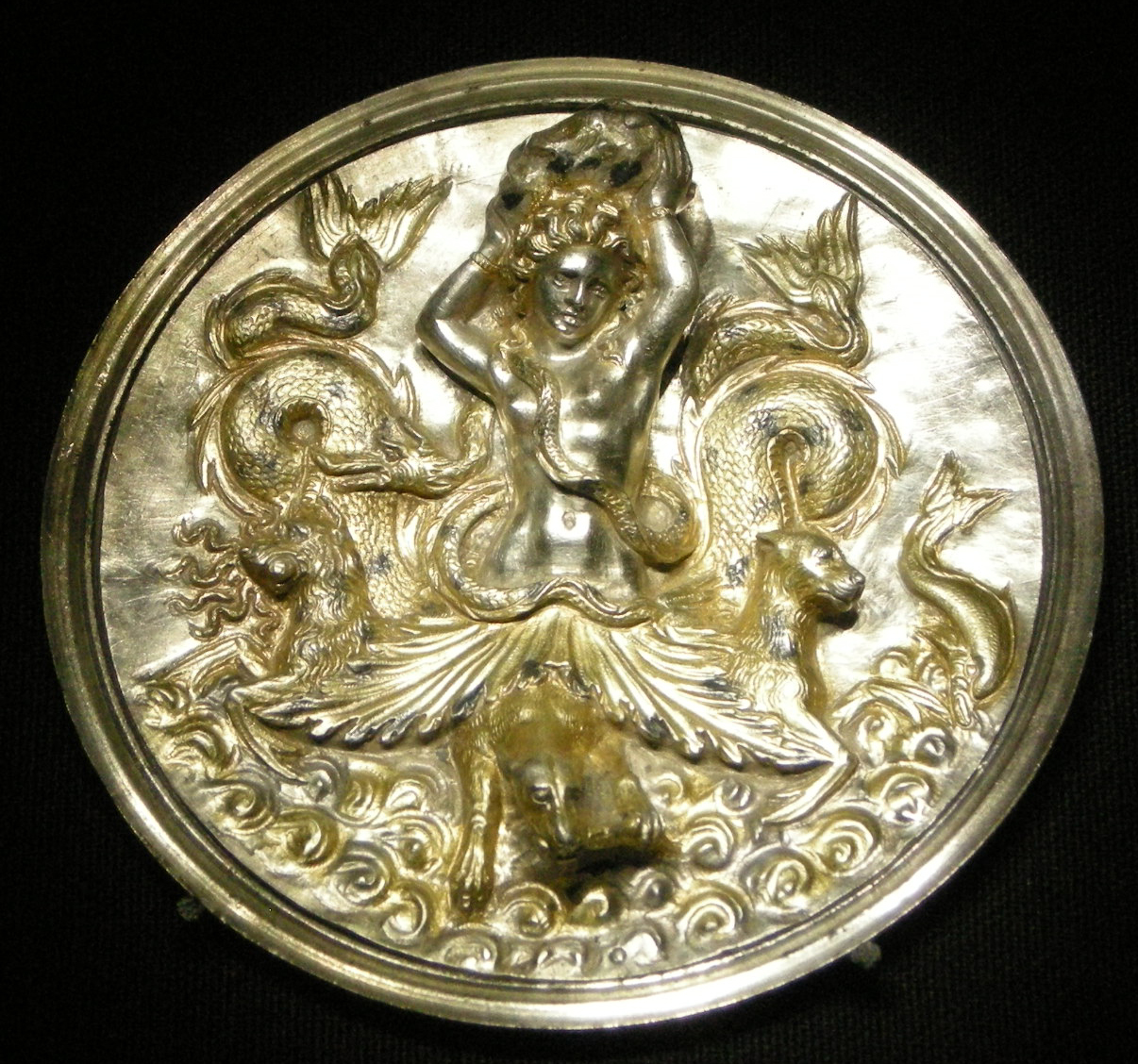
3rd century BC · Silver and silver-gilt
Museo Archeologico Regionale di Aidone, Aidone
The building the museum occupies was not built to hold antiquities. In January 1611 the Capuchin Chapter of Mineo resolved to found a house at Aidone; a cross was planted the same year and the friars settled in 1613, when the convent was enlarged and completed under its first superior, Father Gregorio da Castrogiovanni. An inscription on the central altar of the attached church, dedicated like the friary to Saint Francis of Assisi, carries the date 1612. The complex acquired baroque additions to its ceiling and side chapels around 1831, on the evidence of a further painted inscription.
Italian unification ended the convent's religious life. Laws suppressing religious houses forced the friars out in 1866-67, and the building was converted to an orphanage and an asylum; the church alone stayed open for worship into the 1950s, when it too was deconsecrated. The museum project that eventually reused the complex was designed by the architect Franco Minissi, whose intervention is remembered locally for its steel-framed internal spiral staircase set against the older stonework, and the museum opened to the public on 20 October 1984, built specifically to hold three decades of finds from the excavation of ancient Morgantina rather than any religious or civic purpose the building had previously served.
The museum's own description of its holdings groups the collection chronologically and thematically across rooms it counts at eleven, running from the Bronze Age Castelluccio-culture village and the later Sicel-Hellenised settlement at Cittadella, Morgantina's predecessor before it became a Greek city, through the ninth-to-fifth-century BC period of Sicel and Greek coexistence, to the site's Hellenistic zenith and its destruction in the Roman sack of 211 BC. Along that run sit the acrolithic images of Demeter and Kore, an Archaic red-figure krater attributed to the Athenian painter Euthymides and thought to have been used at public banquets in the city's prytaneion, terracotta votive and funerary material from Morgantina's necropolises and sanctuaries, and, in the former sacristy, the ordinary domestic and agricultural objects that rarely survive a headline-grabbing restitution case because nobody thought to steal them.
Two objects sit apart from that chronological run because of how they got to Aidone rather than what they depict: the cult statue and the silver service described below. Both left Sicily through the clandestine antiquities trade of the late 1970s and both came back only after decades of American museums first disputing, then conceding, that their own acquisition files could not survive scrutiny.
The statue was cut from the ground at the sanctuary of contrada San Francesco Bisconti, near Morgantina, in 1979, broken into pieces for easier smuggling, and sold in 1986 by a Lugano tobacconist to the London dealer Robin Symes. On 25 July 1988 the J. Paul Getty Museum bought it from Symes for eighteen million dollars, among the largest sums ever paid for an antiquity at the time. Within weeks, the former Metropolitan Museum director Thomas Hoving said publicly that he recognised it as a clandestine find from Morgantina. The Getty's own antiquities curator, Marion True, had recommended the purchase and concluded the figure represented Aphrodite; she was later charged in Italy over her role in acquiring looted antiquities, a case that lapsed under the statute of limitations in 2010 after she had already resigned from the museum in 2005. Petrographic analysis of the statue's limestone body proved decisive in tying it to the Morgantina sanctuary.
The Getty agreed in August 2007 to return the statue, kept it on view in Los Angeles until December 2010, and released it to Italy in March 2011; it went on public display in Aidone on 17 May 2011. Reported attendance at the museum jumped roughly tenfold in the following months against its typical baseline of some ten thousand visitors a year. That sudden success exposed the limits of a building never designed for crowds: contemporary reporting noted the former convent can hold only a few dozen visitors at a time, and a Sicilian archaeologist working on the site, Flavia Zisa, was quoted worrying that the statue's modern story of theft and lawsuits was starting to eclipse its ancient one. Scholars still do not agree which goddess the statue depicts; Demeter, Aphrodite and other identifications all have their advocates, and the museum's own labelling has not settled the question.
The other headline repatriation followed a slower, quieter route. Sixteen pieces of gilt Hellenistic silver, dug up at Morgantina around 1979-80 and sold through the same clandestine network that moved the cult statue, reached the Metropolitan Museum of Art in New York in two purchases in 1981 and 1982. Malcolm Bell III, an archaeologist who had spent his career excavating Morgantina, recognised the hoard on the Met's own gallery wall in 1987 and spent twelve years pressing a museum that resisted him at every stage, until his own excavation of a looted house at the site and a re-read inscription tied the silver to a specific owner, a man named Eupolemos. The Metropolitan Museum transferred title to Italy under a framework agreement signed in 2006, and the pieces reached Italy in December 2010.
What makes this record's status harder to pin down than the cult statue's is the deal's own structure: rather than a one-way return, the 2006 agreement provides for the silver to rotate on loan between Aidone and the Metropolitan roughly every four years, alongside a wider programme of loans in both directions. Reporting on where the pieces actually were sitting by the 2020s does not agree, and this record does not assert that the full service is on the wall in Aidone on any particular date; a visitor who wants to see it should confirm with the museum directly before travelling.
Aidone itself is a small hill town in the province of Enna, reached most easily by car; the museum's own address, Largo Torres Truppia 1, sits in the historic centre a short walk from the town's restaurants and cafes. There is no rail station in the town, and the direct coach from Catania's airport takes the better part of two hours, so most visitors either drive or combine the museum with a guided day trip that also covers the Villa Romana del Casale at Piazza Armerina and the Morgantina excavation itself, the last of which has no public transport of its own and needs a car regardless.
Inside, reviewers across several years describe a consistent experience: a compact, calmly lit museum that rewards an unhurried hour or two rather than a rushed pass-through, with the cult statue as the emotional centre of the visit and the rest of the collection, especially the terracotta head of Hades, earning its own attention once visitors get past the object they came for. The museum sells a combined ticket covering itself, the Villa Romana del Casale and the Morgantina archaeological area, which most visitors researching a trip to central Sicily will want given how the three sites share a single management and a single story.
Three things about this record remain open rather than settled. First, the identity of the goddess the cult statue represents has never been agreed among the scholars who have studied it, and the museum does not resolve the question on its own labelling. Second, the Morgantina Treasure's physical location rotates under its 2006 return agreement with the Metropolitan Museum, so this record describes it as part of the collection's history and importance without certifying it is on the wall at Aidone today. Third, the museum's own capacity, remarked on since 2011 as too small for the crowds the cult statue can draw, does not appear to have been resolved by any capital project documented in the sources consulted for this record; if the park authority has since expanded the building or changed its visitor management, that update has not surfaced in what was checked here.
Visitors consistently describe the museum as smaller and more intimate than its fame suggests, and consistently name the same reason for coming: the cult statue, whose presence in a modest hill-town museum rather than a major capital is repeatedly called out as remarkable in itself. The former convent setting draws its own praise, and reviewers who came for the statue alone frequently say they were surprised by the quality of the rest of the collection, particularly the terracotta head of Hades and the silver treasure. Staff and guided tours are mentioned favourably often enough to read as a genuine pattern rather than isolated goodwill. The recurring complaint is not about the museum's contents but about reaching it: Aidone is repeatedly described as out of the way, a deliberate detour rather than a stop on a standard itinerary, and effectively requiring a car.
Tripadvisor: 4.3 from 355 ratings, read 18 August 2026
A platform average is a tertiary source: it moves, it is not audited, and we quote no visitor's words.
Largo Torres Truppia 1, 94010 Aidone EN, Italy.
Full: EUR 8; Reduced: EUR 4. As confirmed 18 August 2026.
Every day 09:00-14:00. Closed: No weekly closed day is listed; the park's own hours page states the museum operates every day of the week. Occasional single-day extraordinary closures are announced individually on the park's blog, most recently 19 July 2026. As confirmed 18 August 2026.
Bus: Etna Trasporti runs a direct coach service several times a day between Catania Fontanarossa airport and Aidone (Piazza Generale Cultreri), a journey of roughly 1 hour 45 minutes; SAIS Autolinee connects Aidone with the provincial capital Enna. There is no rail station in Aidone itself; Train plus taxi: The nearest railway stop on the Catania-Palermo line is Dittaino, from which a taxi to Aidone takes roughly 20-30 minutes; this route is markedly slower and more expensive than driving or the direct coach; Car: Driving is the fastest and most flexible option, about 1 hour 10 minutes from Catania, and is effectively required for visitors who also want to see the Morgantina excavation itself, a separate site a few kilometres outside the town with no public transport of its own.
Cult Statue of a Goddess (the Goddess, or Venus, of Morgantina) (Unknown Greek-Sicilian workshop, last quarter of the 5th century BC); Acroliths of Demeter and Kore (Unknown Greek-Sicilian workshop, late 6th century BC); The Morgantina Treasure (silver of the House of Eupolemos) (Hellenistic Sicilian silversmiths, 3rd century BC); Terracotta Head of Hades (Unknown Greek-Sicilian coroplast, late 4th century BC); Krater attributed to Euthymides (Attributed to the Athenian vase-painter Euthymides); Statuette of Persephone (Unknown Greek-Sicilian workshop, c. 300 BC).
One artwork and its story every Tuesday, with the picture: who owned it, what it made, and what closes soon in the exhibition calendar. No promotion, and nothing we cannot cite.
We send one email to confirm the address and keep nothing else. Every letter carries a one-click unsubscribe. How we handle your data.