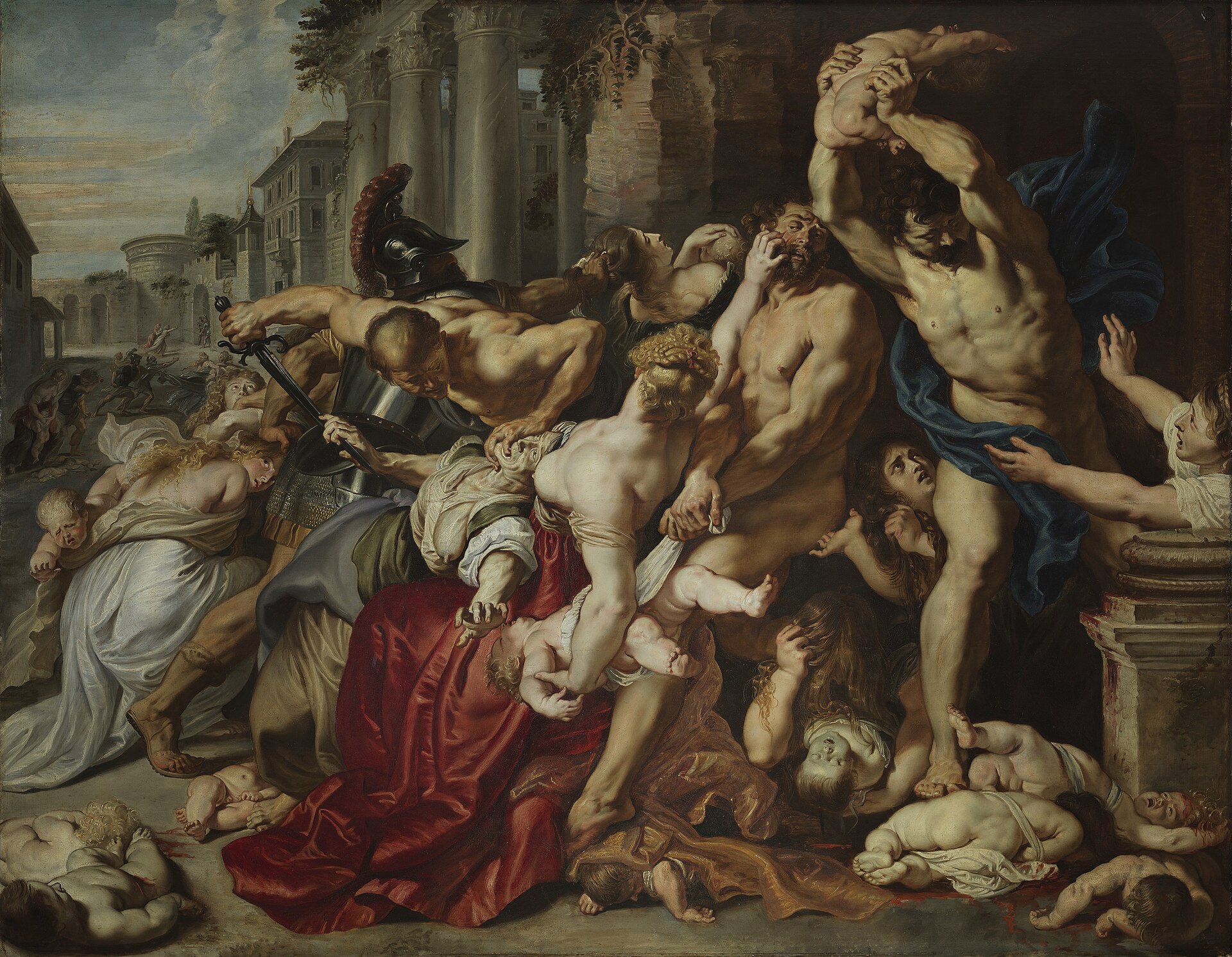
The Massacre of the Innocents
c. 1611-1612 · Oil on oak panel
Art Gallery of Ontario, Toronto. The Thomson Collection
Museum · Founded 1900
Open, admission and hours confirmed 1 September 2026 · 12 sources
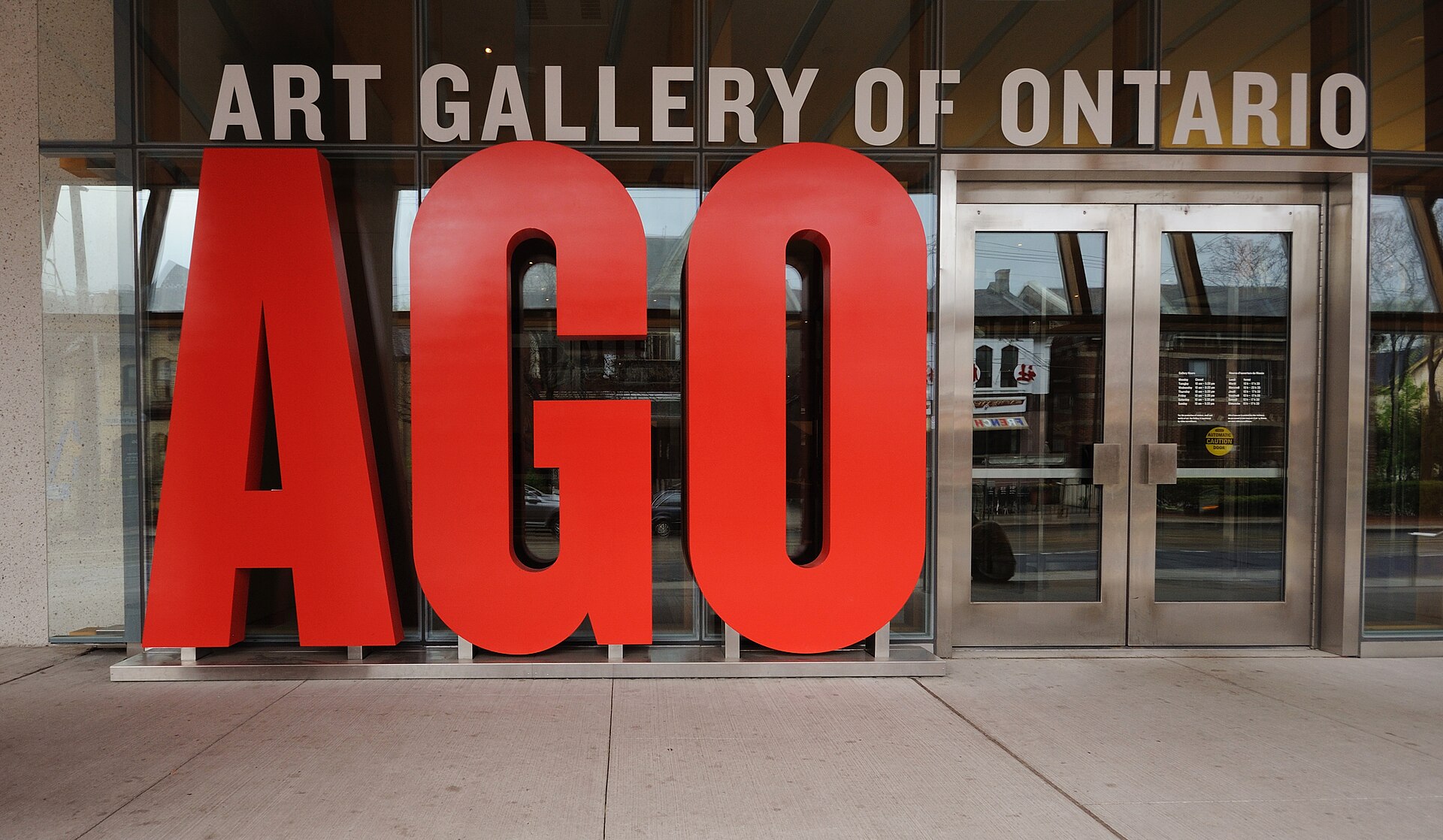
The AGO's declared strengths, in its own account of its collection, are Canadian and Indigenous art from before Confederation to the present (including one of the largest Inuit art collections in the world), the Thomson Collection of European decorative arts and Old Master and Baroque painting and sculpture, the world's largest public holding of Henry Moore's sculpture, contemporary art across all media since 1960, and a photography collection of more than 40,000 prints with particular depth in Linnaeus Tripe, Josef Sudek and Diane Arbus. Its African art collection, though comparatively small at 95 objects, is described by the gallery as the largest of its kind held by a Canadian art museum. The through-line across most of these strengths is the single 2002 gift of Kenneth Thomson, which funded the Gehry expansion and supplied a large share of the European, decorative-arts and additional Canadian material now on view.
| Kind | Museum |
|---|---|
| Founded | 1900 |
| City and country |  Toronto, Canada Toronto, Canada |
| Address | 317 Dundas Street West, Toronto, Ontario M5T 1G4, Canada |
| Website | ago.ca |
| Status | Open, confirmed 1 September 2026 |
| Record last verified | 8 August 2026 |
Prices and hours change. We take them from the institution's own pages and print the day we read them, and you can check the current position at the source we used. Confirm before you travel.
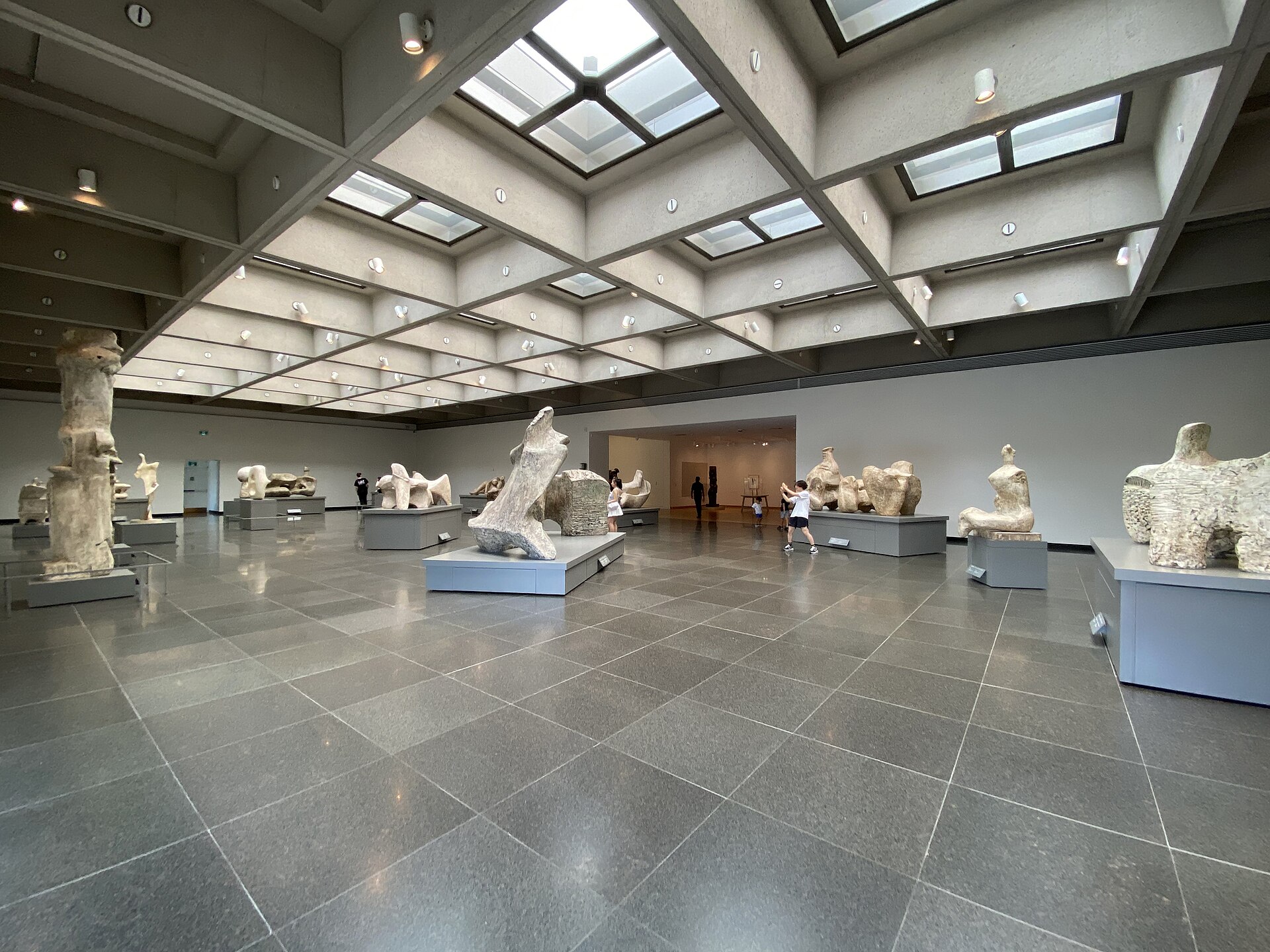
The world's largest public collection of works by British sculptor Henry Moore, who advised on the room's dimensions, colour and skylight placement when it opened in 1974; plasters, bronzes and maquettes tracing his working method from model to monument
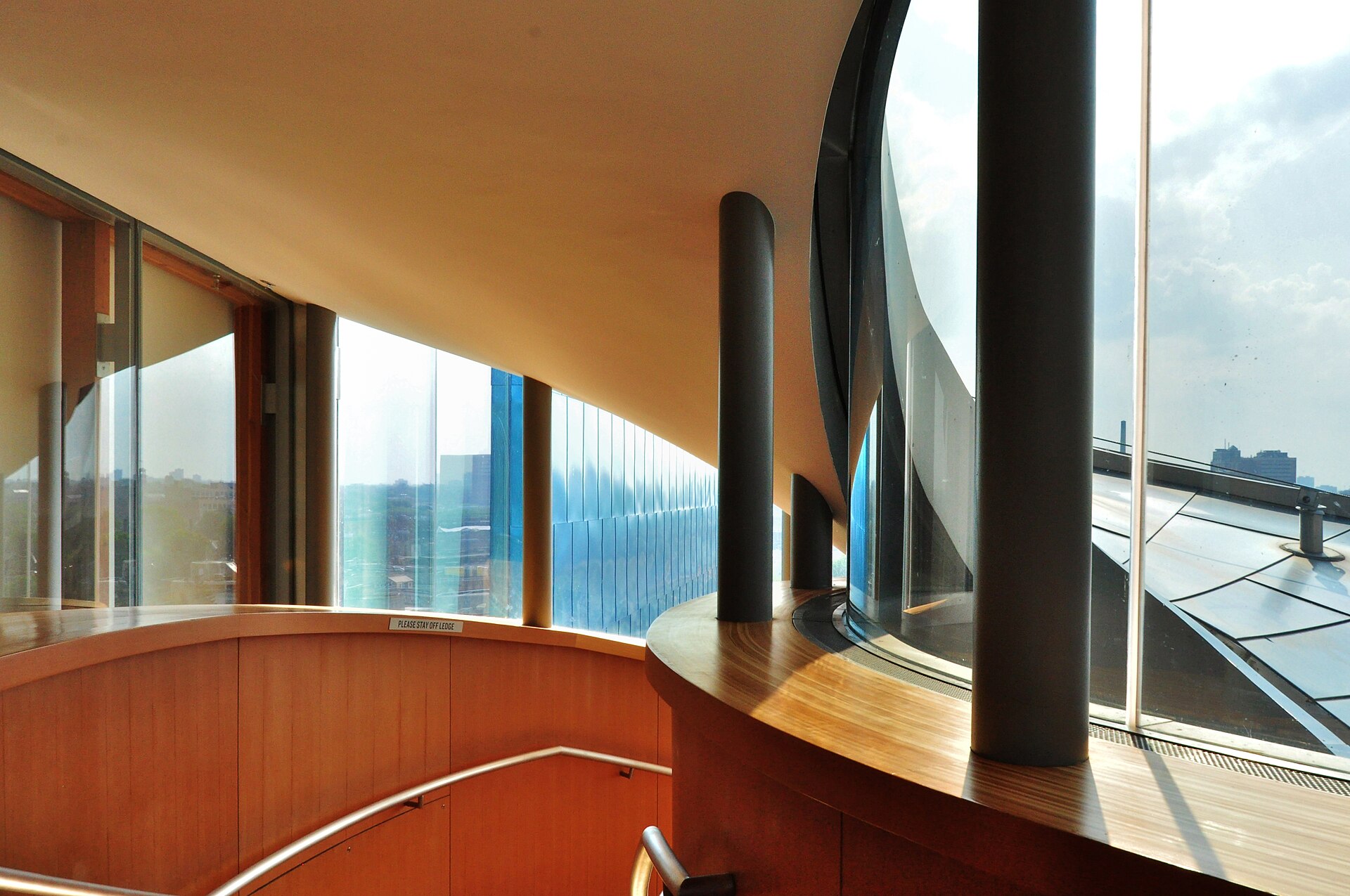
Frank Gehry's 450-foot sculpture gallery running along the north side of the building behind the glass-and-wood Dundas Street facade, and the iconic curved staircase that climbs from Walker Court to the contemporary galleries above
Roughly 900 European works from the 12th to 19th century given by Kenneth Thomson: medieval and Baroque ivories, portrait miniatures from 1550 to 1850, the 12th-century Malmesbury Chasse, Gian Lorenzo Bernini's Corpus, and the collection's centrepiece, Peter Paul Rubens's The Massacre of the Innocents
The nation's art since before Confederation: Cornelius Krieghoff, Paul Kane, Tom Thomson and the Group of Seven, Emily Carr, David Milne (with its own study centre), and one of the largest Inuit art collections in the world alongside works by contemporary Indigenous artists
Art from 1960 to the present across painting, sculpture, photography, projection and installation, with career-spanning depth in Canadian artists such as Jack Bush, Michael Snow and General Idea alongside international figures including Andy Warhol, Cindy Sherman, Richard Serra and Doris Salcedo
More than 40,000 photographs, including a group of 1850s prints by Linnaeus Tripe, one of the leading collections of Czech photographer Josef Sudek, and more than 18,000 1930s-40s press photographs from the Klinsky Press Agency, alongside the Marvin Gelber Print and Drawing Study Centre
The centrepiece of the Thomson Collection of European Art, bought at Sotheby's London in 2002 by Kenneth Thomson and given to the AGO with the Transformation AGO gift; already a published record in this archive with its own attribution and provenance history5
Full record in this archiveNamed by the AGO itself as one of the poles of its collection alongside the Rubens, an immersive infinity-mirror installation that draws long timed-entry queues whenever it is on view4
A Baroque crucifix figure given to the AGO by collector Murray Frum as part of the Transformation AGO project, a rare Bernini sculpture in a North American public collection6
A champleve enamel reliquary casket, the earliest and most important object in the Thomson Collection's decorative arts holdings of more than 500 pieces5
The world's largest public collection of Moore's work, housed in a room the sculptor helped design; the collection's core came from Moore's own 1974 gift of roughly 300 pieces5
One of the deepest public collections of the paintings that defined a national school of landscape painting, reinforced by the Thomson Collection's own Krieghoff, Kane, Harris and Borduas works5
A 2017 acquisition of 522 photographs, described by secondary sources as the largest Arbus holding outside the Metropolitan Museum of Art, added to a photography collection already strong in Sudek and Tripe9
Described by the AGO as one of the largest and finest Inuit art collections in the world, sculpture, prints and drawings shown alongside the Canadian historical galleries rather than segregated into an ethnographic wing5
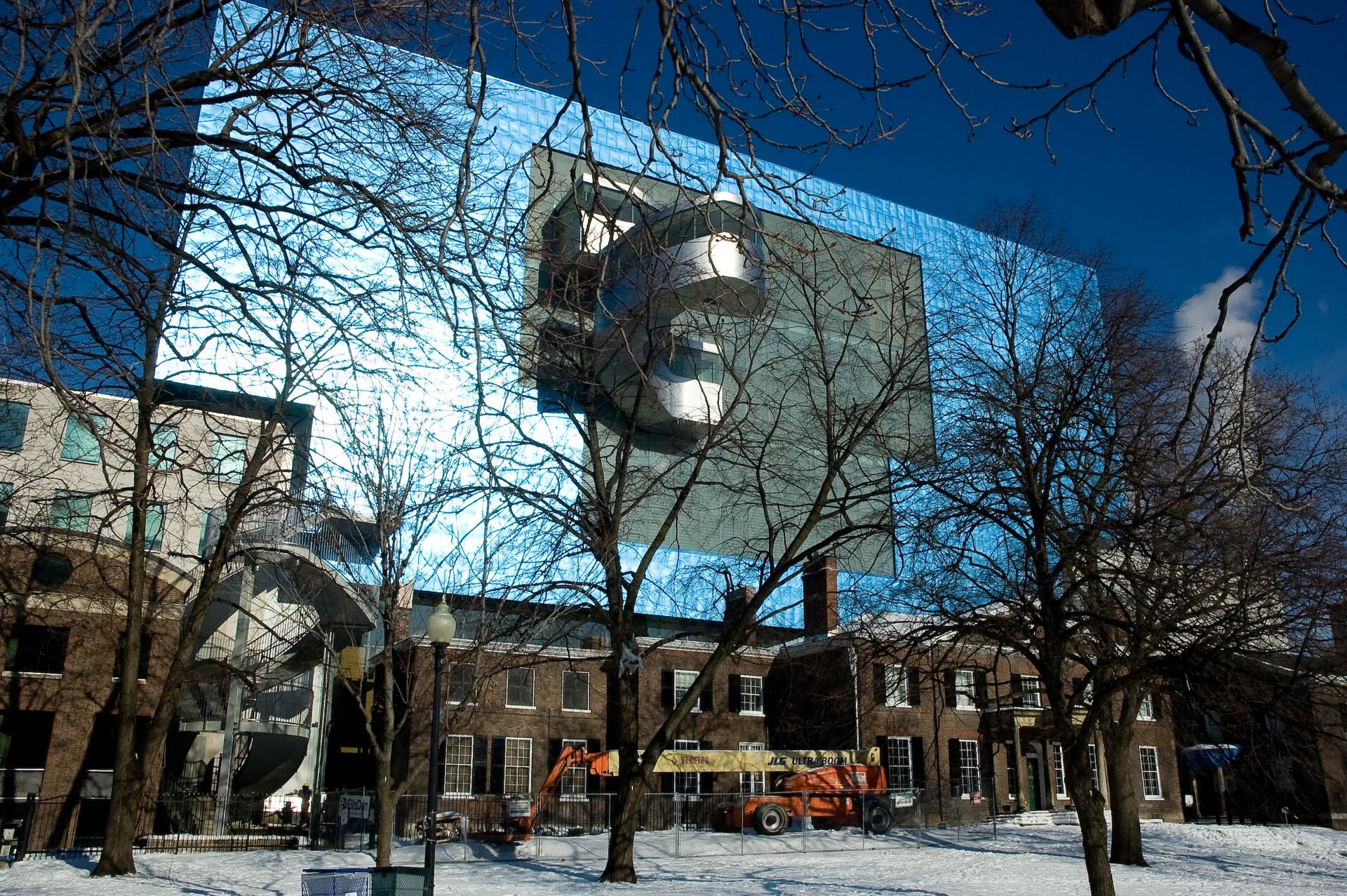
The Art Gallery of Ontario traces its founding to 1900, when a group of private citizens established the Art Museum of Toronto. It was formally incorporated in 1903, renamed the Art Gallery of Toronto in 1919, and took its present name, the Art Gallery of Ontario, in 1966. The Grange, a Georgian manor house built in 1817 as a private residence for the Boulton family, was bequeathed to the gallery on the 1909 death of Harriet Boulton Smith, transferred to the institution in 1911 and reopened as the gallery's first home in 1913; it still stands inside the modern campus, its brick facade visible through the glass of the building that grew up around it.
The gallery expanded in stages through the twentieth century, each addition designed by a different architectural firm and each still legible in the building today. Darling and Pearson built the first purpose-made painting galleries in 1918, connected to The Grange, then added Walker Court and three flanking galleries with a new Dundas Street entrance in 1926, and two further galleries with Darling, Pearson and Cleveland in 1935. John C. Parkin's Parkin Partnership added the Henry Moore Sculpture Centre and the Zacks Pavilion in 1974, then a Canadian Wing in 1977. Barton Myers and KPMB Architects added the Joey and Toby Tanenbaum Sculpture Atrium and the Marvin Gelber Print and Drawing Study Centre in a 1993 expansion. Each phase answered a specific need, mostly for gallery space, and the result by the end of the century was a building whose history could only be read in an inventory of add-ons rather than seen from the street.
In 2004 the AGO, under then-CEO Matthew Teitelbaum, embarked on Transformation AGO, an architectural expansion by Frank Gehry, the Toronto-born architect of the Guggenheim Bilbao and the Walt Disney Concert Hall, working on his first major project in his home city. Construction ran from 2005 and the rebuilt gallery reopened to the public on 14 November 2008, at a total project cost of 276 million Canadian dollars. The addition enlarged the building by roughly 20 per cent and increased art-viewing space by 47 per cent to 129,000 net square feet, with the largest proportional gains in photography galleries (up 242 per cent), prints and drawings (up 241 per cent) and the Canadian galleries (up 164 per cent).
The visible signature of the project is a 600-foot glass-and-wood facade along Dundas Street, rising 70 feet and running from McCaul Street to Beverley Street, behind which sits the Galleria Italia, a 450-foot sculpture gallery lit by curved wood-and-glass construction along the building's north side. On the south side, facing Grange Park, Gehry added a four-storey wing faced in tinted titanium and glass that houses the contemporary art galleries and Baillie Court, an event space with floor-to-ceiling views over the park. Inside, a curved Baroque-inspired staircase climbs from the second floor, through Walker Court, the gallery's historic centre, up to the contemporary galleries; it has become one of the building's most photographed features and one of the reasons visitors give for coming back. The new building also added ShopAGO, the FRANK restaurant, the Jackman Hall lecture theatre and the Young Gallery, a space for new contemporary art projects with free admission.
The Transformation project was inseparable from a gift: Kenneth Thomson, the Canadian media proprietor and collector, contributed 50 million Canadian dollars toward the renovation and a further 20 million as an endowment, and in January 2004 gave the AGO more than 2,000 works of Canadian and European art. That gift is why the building and the collection have to be told as one story rather than two: the galleries built to hold the Thomson Collection are the same galleries the Transformation project constructed.
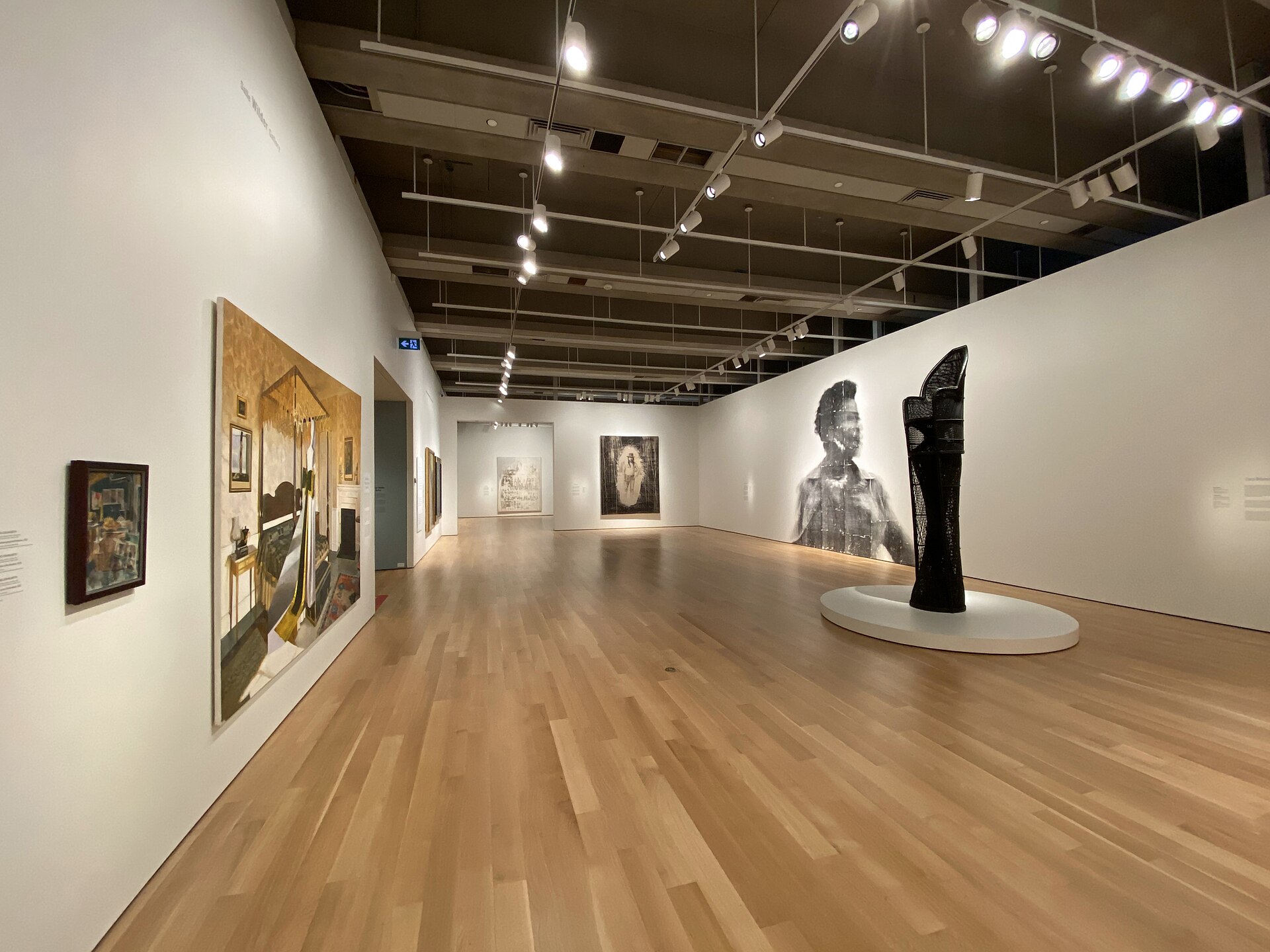
The AGO's own current fact sheet states its collection at more than 90,000 works spanning, by its own account, from around 100 AD to the present, with roughly 4,000 on public view at any time; Wikipedia cites a higher figure of over 120,000 as of March 2021, a discrepancy this record has not been able to resolve from a single authoritative count, so the museum's own current figure is used here. Its Canadian holdings are built around the paintings that came to define a national school: Cornelius Krieghoff, Lucius O'Brien, James Wilson Morrice, Tom Thomson and the Group of Seven, David Milne (who has his own dedicated study centre), Emily Carr, Paul-Emile Borduas, Joyce Wieland and Kenojuak Ashevak. Alongside the historical Canadian galleries sits one of the largest and finest collections of Inuit art in the world, shown as contemporary practice rather than folded into an ethnographic display.
The European collection includes work by Anthony van Dyck, Thomas Gainsborough, Auguste Rodin, Claude Monet, Edgar Degas, Paul Cezanne, Vincent van Gogh, Pablo Picasso and Rene Magritte, but its single most valuable holding sits inside the Thomson Collection of European Art: roughly 900 objects from the 12th to 19th century, including medieval and Baroque ivories, portrait miniatures dating from 1550 to 1850, the 12th-century Malmesbury Chasse reliquary, Gian Lorenzo Bernini's Corpus (a gift of collector Murray Frum), and, as its acknowledged centrepiece, Peter Paul Rubens's The Massacre of the Innocents.
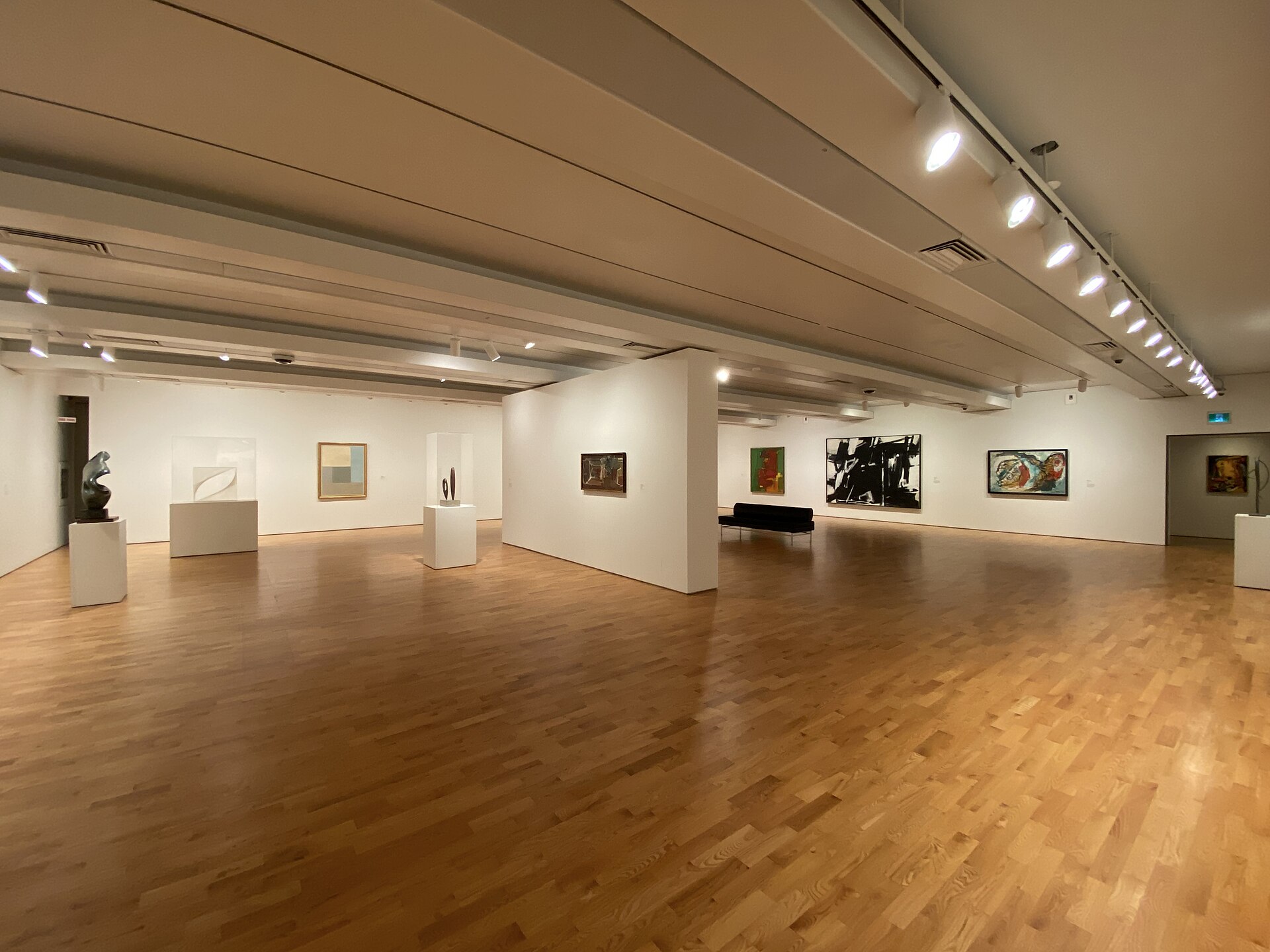
Contemporary art at the AGO runs from 1960 to the present across painting, sculpture, photography, projection and installation, anchored by deep holdings of Canadian artists including David Altmejd, Brian Jungen, Jeff Wall, Shirley Wiitasalo, Jack Bush, Michael Snow and General Idea, and punctuated by major international names: Mona Hatoum, Gerhard Richter, Doris Salcedo, Tino Sehgal, Cindy Sherman, Richard Serra, Kara Walker and Andy Warhol. Yayoi Kusama's Infinity Mirrored Room - Let's Survive Forever is, alongside the Rubens, one of the two works the museum names first when describing its own collection to visitors. The Henry Moore Sculpture Centre, opened in 1974 with Moore's own input on the room's proportions and light, holds the largest public collection of the sculptor's work anywhere, built on a 1974 gift of around 300 pieces from the artist himself. A photography collection of more than 40,000 prints includes a significant group of 1850s images by British photographer Linnaeus Tripe, one of the foremost collections of Czech photographer Josef Sudek, and more than 18,000 press photographs from the 1930s and 1940s Klinsky Press Agency archive; in 2017 the museum acquired 522 Diane Arbus photographs, giving it the largest Arbus holding outside the Metropolitan Museum of Art in New York. A collection of 95 West and Central African sculptural works, worked in materials from beeswax and copper alloy to ivory and soapstone, is described by the AGO as the largest of its kind in a Canadian art museum.
The Massacre of the Innocents entered the Thomson Collection, and so the AGO, by a specific and documented route: Kenneth Thomson bought the panel at Sotheby's in London on 10 July 2002, and it passed to the Art Gallery of Ontario with the rest of the Thomson gift when the transformed building opened in 2008. The AGO's own account of the Transformation project calls the picture a recently rediscovered early 17th-century masterpiece, a description that undersells a more tangled attribution history: the panel was catalogued in 1767 as the work of Franciscus de Neve II and by 1780, in an inventory of the princely Liechtenstein collection it had belonged to since around 1700, as a work by Jan van den Hoecke after Rubens. It was restored to Rubens only in 2001, the year before the Sotheby's sale, on the strength of its correspondence to the Samson and Delilah then hanging in the National Gallery in London, a picture that had carried the identical wrong attribution in the identical inventories. That record, already published in this archive under the slug rubens-the-massacre-of-the-innocents, carries its own account of the scholars who made the connection, the scholars who have since challenged the Samson and Delilah comparison it rests on, and a 2021 machine-learning analysis that reported a 91 per cent probability the London picture is not by Rubens at all. None of that dispute touches the Toronto panel's own attribution directly, but a reader of the AGO's collection page deserves to know that the two pictures used to authenticate each other are not equally settled.
The wider Thomson gift is also why almost every wing of the current building exists in its present form. The 2004 Transformation AGO project and the January 2004 Thomson gift of more than 2,000 works were not separate events; the expansion was built, gallery by gallery, to hold what Thomson gave along with the funding to build somewhere to put it. Only the Rubens itself has an earlier date of its own: Thomson bought the panel at Sotheby's in 2002, two years before he gave it, and the rest of his collection, to the gallery. The Canadian galleries, the ship models, the Malmesbury Chasse and the European ivories and portrait miniatures all arrived the same way. A museum that tells its own story mostly through the name of a single donor family is not unusual among North American institutions of this kind, but it is worth stating plainly rather than leaving it implicit in a list of gallery names.
The AGO maintains a Provenance, Repatriation and Restitution Committee, established in 2020 and drawn from staff across departments, which the museum describes as reviewing all collecting areas with particular attention to Indigenous and African-origin works and to European paintings and sculpture that may have passed through Europe under Nazi rule between 1933 and 1945. The gallery's own published guidance states plainly that it believes stolen or looted objects have no place in a public museum, while also noting, accurately, that an incomplete provenance record does not by itself prove an object was looted; the committee can recommend restitution where a work is found to have been confiscated or sold under duress, and can also act on repatriation requests from First Nations. One documented result of that process: the Jan van Kessel the Elder Still Life with Flowers, donated to the AGO in 1995, was restituted in 2020 to the heirs of Dagobert and Martha David after the museum's own research confirmed the family had been forced to sell the picture during the Second World War.
The AGO has also faced criticism closer to home over how it manages its own holdings. In 2019 the gallery quietly approached five other Canadian museums, offering to sell them any of 20 unspecified paintings by A.Y. Jackson before considering a public sale, on the stated rationale that the AGO holds 168 Jackson works and wanted to redirect deaccessioning proceeds toward under-represented Canadian and Indigenous artists. Coverage in The Globe and Mail reported that reader reaction was overwhelmingly negative, that the Winnipeg Art Gallery's director examined the offered paintings and declined them as adding little to his own collection, and set the episode against the National Gallery of Canada's abandoned attempt to sell a Marc Chagall painting the previous year, a comparison that framed the AGO's approach as an attempt to avoid a similar public fight rather than to avoid deaccessioning altogether. The museum's published deaccessioning policy follows the guidelines of the Association of Art Museum Directors, the Canadian Museums Association and the American Alliance of Museums, and states that proceeds from any sale are dedicated to new acquisitions; whether that satisfies critics of the 2019 episode is a live question this archive does not resolve on the museum's behalf.
The AGO is closed on Mondays and open Tuesday, Thursday, Saturday and Sunday from 10:30am, with extended hours to 9pm on Wednesday and Friday. Adult single-day admission is 30 Canadian dollars, youth aged 10 to 17 pay 15 dollars (free for Ontario residents in that age band), and children aged 9 and under are free, as is admission for all Indigenous Peoples. An Annual Pass costs 40 dollars for unlimited visits across a year and is free for Ontario residents aged 14 to 24; admission is free for everyone on the first Wednesday evening of each month between 6pm and 9pm, a program the gallery calls First Wednesday Night Free and recommends booking in advance. The main entrance sits on Dundas Street West, three blocks west of University Avenue, with St. Patrick station on the Yonge-University subway line the nearest transit stop. The gallery publishes a general information line, a membership line and a dedicated ticketing line, all reachable through the same downtown Toronto exchange, and a free physical map is available at the Welcome Desk alongside a downloadable digital one, useful given the building's size and its layered architectural history.
Visitors consistently single out the Gehry-designed building itself, especially the curved wood staircase and the light-filled Galleria Italia, as much a reason to visit as any single object inside; the Group of Seven and Inuit art galleries and the Henry Moore Sculpture Centre are repeatedly named favourites, and the free-under-25 and First Wednesday Night Free programs are cited as making the museum feel unusually open for a major North American gallery. The most common complaint is the scale of the building: the collection is large enough that visitors say they had to choose between the permanent galleries and a ticketed special exhibition rather than manage both in one visit, and some describe the layout across multiple levels as easy to get turned around in without the free map.
Tripadvisor: 4.5 from 4,406 ratings, read 5 August 2026
A platform average is a tertiary source: it moves, it is not audited, and we quote no visitor's words.
317 Dundas Street West, Toronto, Ontario M5T 1G4, Canada.
Adult (18-24): CAD 30; Adult (25+): CAD 30; Youth (10-17): CAD 15; Child (0-9): free; Indigenous Peoples: free. As confirmed 1 September 2026.
Tuesday 10:30-17:00; Wednesday 10:30-21:00; Thursday 10:30-17:00; Friday 10:30-21:00; Saturday 10:30-17:30; Sunday 10:30-17:30. Closed: Monday. As confirmed 1 September 2026.
Subway: St. Patrick station, Yonge-University line, a short walk to the Dundas Street West entrance.
The Massacre of the Innocents (Peter Paul Rubens); Infinity Mirrored Room - Let's Survive Forever (Yayoi Kusama); Corpus (Gian Lorenzo Bernini); The Malmesbury Chasse (Unknown Mosan or English workshop, 12th century); Henry Moore sculptures (Henry Moore); Group of Seven and Tom Thomson holdings (Tom Thomson and the Group of Seven).
One artwork and its story every Tuesday, with the picture: who owned it, what it made, and what closes soon in the exhibition calendar. No promotion, and nothing we cannot cite.
We send one email to confirm the address and keep nothing else. Every letter carries a one-click unsubscribe. How we handle your data.