The Impressionist Revolution: Monet to Matisse from the Dallas Museum of Art
Art Gallery of Ontario ·  Toronto, Canada · 24 Jun to 18 Oct 2026
Fifty paintings lent by the Dallas Museum of Art in five chrono-thematic sections, 1870s to 1920s. Caillebotte's The Path in the Garden of 1886 opens it, then Monet water lilies, Cezanne, Degas, Manet, Mondrian. Organised in Dallas, hung in Toronto.
Images
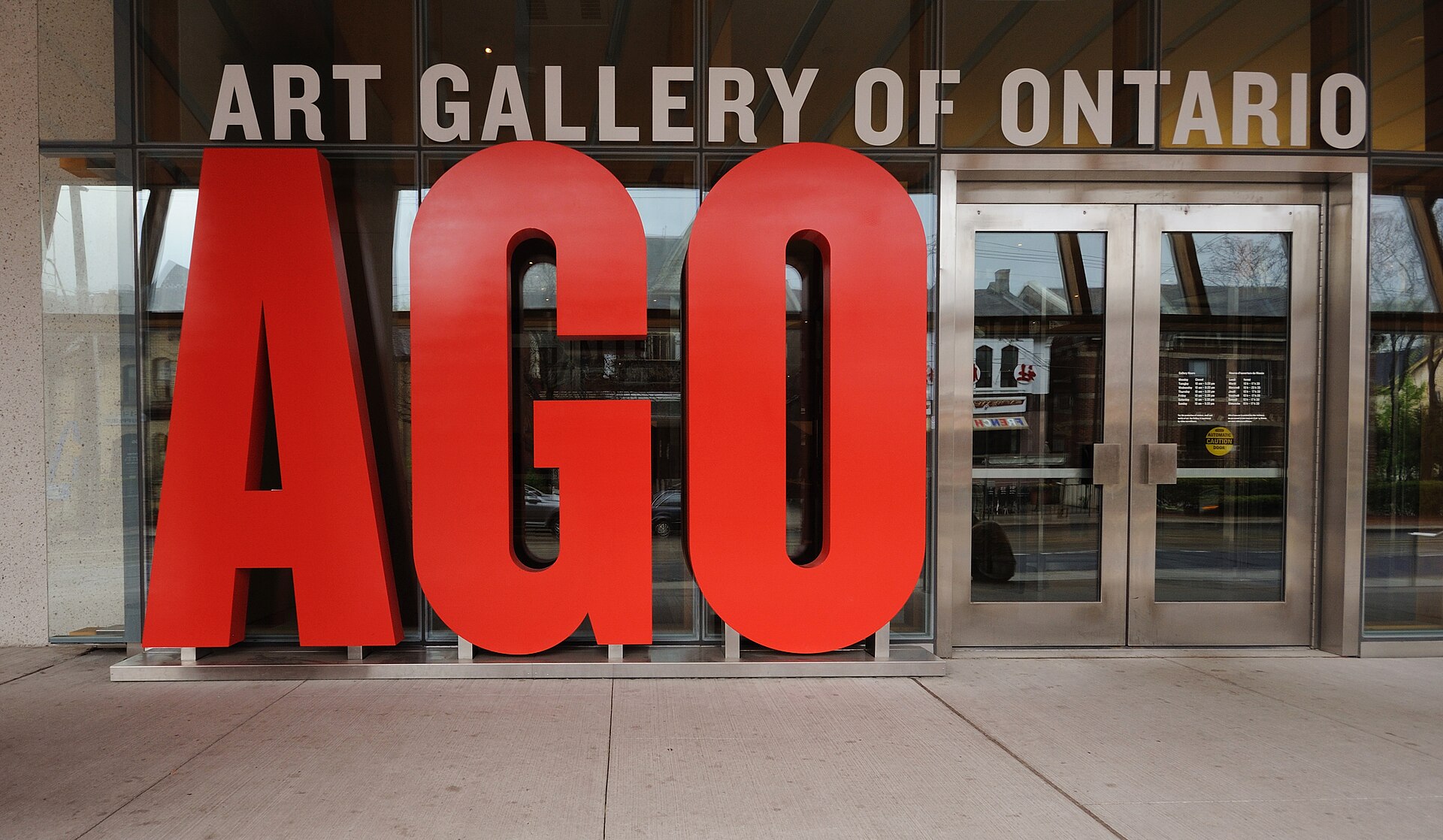 Shown: Art Gallery of Ontario - not the exhibition
Three opening dates, and only one of them is yours
The date printed on most listings for this show, 24 June 2026, is not the date the public could see it. The Art Gallery of Ontario opened it in three stages: members from 24 June, Annual Passholders from 1 July, and general visitors only from 7 July. A reader who travelled to Toronto in the last week of June on the strength of an opening date would have been turned away from Level 4 unless they held a membership.
We record the museum's own opening date because that is the date it published, and we say plainly what it meant, because this is exactly the kind of detail a listings section exists to catch. Staged access of this sort is now standard practice at large galleries and it is almost never carried into the aggregators.
A loan show, and what that means here
Nothing in this exhibition belongs to the Art Gallery of Ontario. All fifty paintings come from the Dallas Museum of Art, which organised the show and lent it; the curator of record is Nicole R. Myers, the DMA's Chief Curatorial and Research Officer and Barbara Thomas Lemmon Senior Curator of European Art. The AGO presentation is led by Caroline Shields, its own Curator of European Art. That division matters when reading the wall text: the argument was built in Texas around a Texan collection, and Toronto is hanging it.
The show is arranged in five chrono-thematic sections running from the 1870s to the 1920s. The first sets out the movement's beginnings and, unusually for an Impressionist show, its commercial method - the artists' then-novel practice of selling direct to buyers rather than through the state system. The second takes the material conditions that made the style possible: railway travel, paint in portable tubes, cropping borrowed from photography and printmaking, and brushwork left visible. A section of landscapes follows, with two of Monet's Water Lily paintings set apart in their own space. The last gathers the painters who came after and pushed towards abstraction.
The Salon that is not in the room
The exhibition's claim is that Impressionism was a rebellion. Its central historical fact is that the Academy of Fine Arts ran the annual Salon, the only prestigious venue in nineteenth-century Paris for a living artist, and that the Impressionists went around it by mounting their own exhibition in 1874 - which is the precedent every later avant-garde used.
The most serious criticism made of the show is that it argues this without showing it. The Globe and Mail's reviewer noted that there is no academic Salon painting in the exhibition for the Impressionist canvases to be radical against, so the radicalism registers only in patches; and that the thesis is in any case less novel than the framing suggests, since the fact that Impressionism began as a critic's insult and was badly received is already common knowledge among the people who buy tickets to Impressionist exhibitions. A show that asserts a rebellion without hanging the thing rebelled against is asking the visitor to take the conflict on trust.
Matisse in the title, one Matisse in the show
The exhibition is called Monet to Matisse. There are seven works by Monet in it. There is one painting by Matisse, the Still Life Bouquet and Comptoir of 1924, and the Globe and Mail's reviewer judged it undistinguished. The title is doing work the hang does not support, which is a common feature of touring shows named for the market rather than for their contents, and worth knowing before buying a ticket on the strength of the second name.
The same reviewer made a sharper point about the ending. The show closes by arguing against the reduction of these painters to decorative merchandise, and then places the visitor a few steps from a shop selling Monet water lilies printed across a set of three skateboards for nine hundred dollars. The contradiction is the gallery's, not the curator's, but it is in the building.
What is in the show
The opening painting
Gustave CaillebotteGustave Caillebotte's The Path in the Garden of 1886 opens the exhibition, chosen to introduce the movement's concern with light, nature and unconventional perspective before the historical argument begins.2
Monet, seven works, two set apart
Claude MonetSeven paintings by Claude Monet, including Poplars, Pink Effect of 1891 and Water Lilies of 1908. Two of the Water Lily canvases are hung in a space of their own rather than in the chronological sequence, which is the only point in the show where the hang breaks its own structure.2
The founding member who is usually left out
Berthe Morisot; Pierre-Auguste RenoirThe Port of Nice, painted 1881 to 1882 by Berthe Morisot, the only woman among the founding members of the movement. Also Pierre-Auguste Renoir's Roses and Peonies in a Vase of 1876, which the gallery reads as evidence of his interest in Asian floral motifs and ceramics.2
The last weeks at Auvers
Vincent van Gogh; Emile BernardVincent van Gogh's Sheaves of Wheat of 1890, a panoramic oil on canvas painted at Auvers-sur-Oise in the final weeks of his life, and Emile Bernard's Le Salon of 1890, whose flattened colour and displaced perspective belong to the Cloisonnist manner he worked out with Louis Anquetin in the late 1880s.2
The one Matisse, and a film
Henri MatisseHenri Matisse's Still Life Bouquet and Comptoir of 1924, the only work by the painter named in the exhibition's title, built out of overlapping forms rather than a single viewpoint. The show also includes film footage of Monet in his gardens at Giverny during the First World War.2
Who made it
- Curated by Nicole R. Myers, Chief Curatorial and Research Officer and Barbara Thomas Lemmon Senior Curator of European Art, Dallas Museum of Art - curator of the exhibition
- Curated by Caroline Shields, Curator, European Art, Art Gallery of Ontario - leads the Toronto presentation
- Organised by Dallas Museum of Art
- Organised by Art Gallery of Ontario
Tickets for this show
- Tickets
- Adult, 18 and over, single dayCAD 30the exhibition is free with general admission; no separate exhibition ticket. Prices exclude tax
- Youth, 10 to 17, single dayCAD 15free for Ontario residents
- Child, 0 to 9Freefree
- Ontarians under 25Freefree all year with a Free Annual Pass; 18 to 24 must show valid ID
- Indigenous PeoplesFreecomplimentary admission
- Members, Donors and Annual PassholdersFreeunlimited visits; an Annual Pass is 40 CAD, ten dollars more than one adult admission
- First Wednesday nightFreefree 6pm to 9pm on the first Wednesday of each month; book online in advance to be sure of entry
- Canada Strong Pass, visitors 18 to 24 from outside OntarioCAD 1550 per cent off general admission; under 17 free. Valid until 7 September 2026 and not available to groups
- Timed entry
- Access was staged rather than timed: AGO Members from 24 June 2026, Annual Passholders from 1 July, and the general public from 7 July. Booking online is advised, and is required to be sure of entry on the free first Wednesday evening.
- Hours
- Closed Mondays. Tuesday and Thursday 10.30am to 5pm, Wednesday and Friday 10.30am to 9pm, Saturday and Sunday 10.30am to 5.30pm. The exhibition is on Level 4. Admission prices are quoted before tax, which is unusual among the museums in this archive and means the sum charged is higher than the figure advertised.
Prices and timing change. We take them from the page we used and print the day we read it: the source we used. Confirm before you travel.
What critics said
Coverage divided sharply by kind. Listings and lifestyle outlets treated the arrival of fifty Dallas paintings as an event in itself, while the one substantial newspaper review took the exhibition's own argument seriously and found it largely unsupported by what is actually hung.
What is praised, what is criticised
- Praised: the quality of the individual paintings, and specifically that they are strong but less familiar examples of Impressionist and Post-Impressionist work rather than the usual reproductions
- Praised: the decision to give two of Monet's Water Lily canvases a space of their own
- Praised: the inclusion of the movement's commercial method, selling direct to buyers rather than through the Salon, as part of the story
- Criticised: that the show argues Impressionism was radical without hanging any of the academic Salon painting it was radical against, so the contrast never lands
- Criticised: that the thesis is presented as more original than it is, since the movement's hostile early reception is already widely known to the audience for such a show
- Criticised: that Matisse is named in the title but represented by a single painting, judged undistinguished by the reviewer
- Criticised: that it is left unclear whether the closing Post-Impressionist section is meant as a rejection of Impressionism or a continuation of it
- Criticised: that the exhibition's argument against reducing these painters to decoration is undercut by the shop a few steps away, which sells Monet water lilies printed across three skateboards for nine hundred dollars
Sources
- 1Art Gallery of Ontario, exhibition page for The Impressionist Revolution: Monet to Matisse from the Dallas Museum of Art: run dates and gallery. ago.ca/exhibitions/impressionist-revolution-monet-matisse-dallas-museum-art
- 2Art Gallery of Ontario, press release, 13 May 2026: the fifty works, the five chrono-thematic sections and what each covers, the named featured works and their dates, the curators at both institutions, the staged opening for members on 24 June, passholders on 1 July and the public on 7 July, Level 4, the summer programme, and the exhibition shop. ago.ca/press-release/beautiful-and-rare-ago-welcomes-impressionist-revolution-monet-matisse-dallas-museum
- 3Kate Taylor, 'The Impressionist Revolution at the AGO revisits the movement's radical roots', The Globe and Mail, 4 July 2026, updated 5 July 2026: the review's verdict and each of its reservations, including the absent Salon comparison, the single Matisse, the unclear final section and the shop. theglobeandmail.com/culture/art-and-architecture/article-the-impressionist-revolution-at-the-ago-revisits-the-movements-radical/
- 4Art Gallery of Ontario, Location, Hours and Admission: the admission table, the note that prices exclude tax, opening hours, the free first Wednesday evening, and the Canada Strong Pass terms and its 7 September 2026 expiry. Read 7 August 2026. ago.ca/visit