The Most Lamentable Romaine Tragedie of Titus Andronicus (the Folger quarto, 1594)
William Shakespeare · 1594
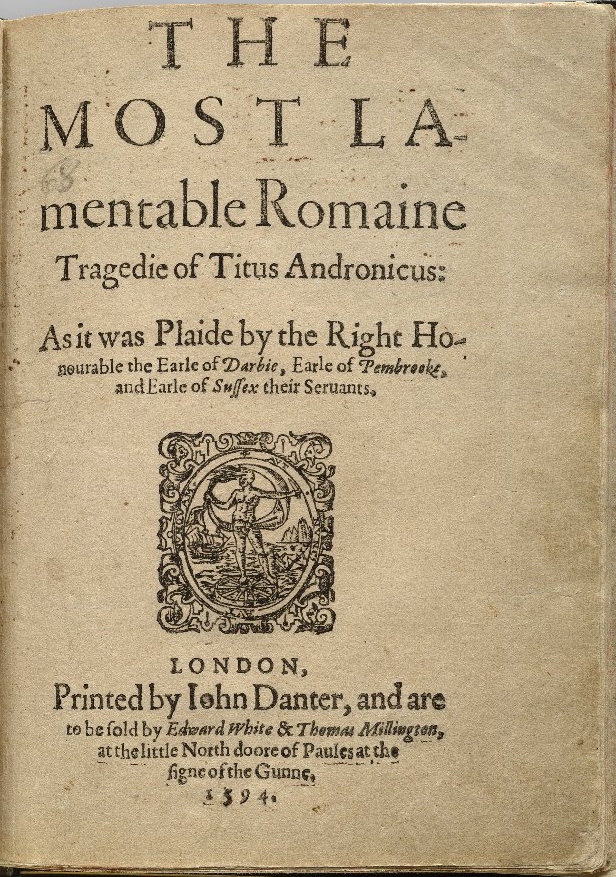
The title page of the only surviving copy of the first printed edition of Titus Andronicus, printed by John Danter, London, 1594. This is the record's own object, photographed by the Folger Shakespeare Library and released by them into the public domain.
| Artist | William Shakespeare |
|---|---|
| Date | 1594 |
| Medium | Letterpress printing on laid paper, quarto format (four leaves per sheet) |
| Dimensions | Approximately 17.0 x 12.7 cm (leaf size given as 6 11/16 by 5 inches in Bartlett's 1939 census); the first leaf, presumably blank, is wanting |
| Where it is now | Folger Shakespeare Library, Washington, D.C.last confirmed |
| Inventory number | STC 22328 |
| Attribution | DisputedThe 1594 title page credits no author, which was normal practice for a playbook of this date. Full note |
| Object type | Printed book |
| Period | Elizabethan England, sixteenth century |
| Cases | Disputed attribution |
| Inscriptions | Ownership inscriptions on the covers and back flyleaf: "Charles Robson"; a Swedish inscription dated 1845 recording the book passing to Robson's grandson P.M. Krafft; a second Swedish inscription dated 1877 recording it passing to P.M. Krafft's son, Petrus Johannes Krafft. A few manuscript notes and markings appear elsewhere in the text. |
| Owners on record | 5 links5 documented |
| Sources | 20 cited |
About this record Last verified · 20 sources cited · Change log
On this page 9 sections
ContentsClose
A cheap London pamphlet of 1594, the sole surviving copy of Shakespeare's first printed play, spent roughly a century in a private Swedish household, glued at some point to two eighteenth-century lottery handbills used as makeshift endpapers, before a postal clerk in Malmo connected a newspaper story about an expensive old Bible to the worn little book he had inherited. Henry Clay Folger bought it in January 1905 for GBP 2,000 through his regular London agents, and it has been at the Folger Shakespeare Library in Washington since the Library's founding in 1932.
Its significance goes beyond rarity. Because this quarto was believed lost, a later reprinter's invented ending, patched in after his own copy suffered damage, was read as genuine Shakespeare for roughly three centuries. This copy's rediscovery corrected that text for the first time since 1600. The play's authorship is itself unsettled: a century of scholarship argues over how much of it, if any, was written by George Peele rather than Shakespeare alone, a dispute this record states as open because named scholars on both sides remain unpersuaded by each other.
The photograph used here is the Folger Shakespeare Library's own image of this exact copy, released by the Library into the public domain; no other copy of this edition exists anywhere to confuse it with.
Provenance
Each link is graded. Documented: a cited source supports it. Disputed: the identification is argued but not established. Unknown: no owner for that span, and the gap is not smoothed into a narrative. The grades in the glossary.
- by 1794 -Charles Robson (1735-1794), of Stockholm, Swedendocumented
Established solely by Robson's name inscribed on the back flyleaf of the volume. No independent record of who he was, or how the quarto reached Sweden from London, has been traced.3
- by 1845 - 1877P.M. Krafft (fl. 1845), grandson of Robson through a daughterdocumented
A Swedish inscription dated 1845 records the transfer. The inscription is the only evidence for it; no external record corroborates the family relationship it describes.3
- 1877 - January 1905Petrus Johannes Krafft, postal clerk, Malmo, Swedendocumented
A second Swedish inscription, dated 1877, records the book passing from P.M. Krafft to his son. It remained in Petrus Johannes Krafft's possession, bound with Swedish lottery handbills of about 1770 as improvised endpapers, until its recognition in 1904 and sale in January 1905.31
- January 1905 - 1930 (Henry Folger's death) / 1936 (Emily Folger's death)Henry Clay Folger (1857-1930) and Emily Jordan Folger (1858-1936)documented
Purchased for GBP 2,000 through the London booksellers Henry Sotheran Ltd, Folger's regular agent, in a private treaty sale rather than at auction. To preserve Folger's anonymity as buyer, Sotheran's own records initially entered the purchase as stock, with no buyer named.318
- 1930/1932 - presentFolger Shakespeare Library, Washington, D.C.documented
Henry Folger died in June 1930, two years before the Library he had built opened to the public in 1932; the collection he and Emily had assembled, including this quarto, passed to the Library on its opening.8
Technical evidence
| Attribution note | The 1594 title page credits no author, which was normal practice for a playbook of this date. External evidence ties the play to Shakespeare by 1598, when Francis Meres named it among his tragedies in Palladis Tamia, and it has been printed under his name ever since. What is genuinely disputed is whether he wrote all of it. Beginning with J.M. Robertson in 1905, a line of scholars using verse tests, vocabulary counts, and stylometric analysis, most fully Brian Vickers in 2002 and MacDonald P. Jackson before him, argue that George Peele wrote Act 1, scene 2.1 and scene 4.1, with Shakespeare responsible for the rest. Other scholars, from Edward Capell in the eighteenth century to Eugene Waith and Alan Hughes in the twentieth, hold the play for Shakespeare alone and attribute its unevenness to inexperience or revision rather than a second hand. No consensus exists. This record treats the Peele attribution as argued, not established, and names both sides. |
|---|---|
| Format | Quarto (4to): full printer's sheets folded twice to make four leaves each. Collation as catalogued under STC 22328.23 |
| Printer and booksellers | Printed by John Danter; to be sold by the booksellers Edward White and Thomas Millington, London, 1594.12 |
| Leaf size | Approximately 17.0 x 12.7 cm (given as 6 11/16 by 5 inches in A.W. Pollard and W.W. Greg's 1939 census of Shakespeare quartos). The first leaf, presumably blank, is wanting.3 |
| Condition | Leaf B2 is torn at the tail corner, with two letters lost on the recto and seven on the verso; the title leaf has been silked at some point in its conservation history.3 |
| Binding | Rebound and repaired by the Folger Shakespeare Library in dark blue goatskin. The volume's earlier blue-gray paper wrappers, and printed waste used as improvised endpapers (two Swedish lottery handbills of about 1770), are preserved bound in at the end rather than discarded.31 |
| Inscriptions | Ownership inscriptions record "Charles Robson" and, in Swedish, the 1845 and 1877 transfers within the Krafft family. A few manuscript notes and markings appear elsewhere in the text.3 |
| Rarity | The only known surviving copy of this edition. The Shakespeare Census records 20 surviving copies across all three surviving quarto editions of the play (1594, 1600 and 1611) combined.310 |
| Textual authority | The copy-text for every modern scholarly edition of the play. Before its rediscovery, editors relied on the Second Quarto of 1600, whose printer silently replaced a passage lost to damage in his own exemplar with four invented lines, accepted as genuine Shakespeare for roughly three centuries.5 |
Images
The record in full
Chapter 1What it is
A small, cheaply printed quarto pamphlet of a play, made from full sheets folded twice to give four leaves each, the standard format for a text meant to be sold for a few pence rather than preserved.
A small, cheaply printed quarto pamphlet of a play, made from full sheets folded twice to give four leaves each, the standard format for a text meant to be sold for a few pence rather than preserved. The leaf measures roughly 17 by 12.7 centimetres. The first leaf, presumably a blank, is lost, and one interior leaf is torn at the corner with a few letters gone from both sides. This is the only surviving copy of the first edition, printed in London in 1594, of William Shakespeare's Titus Andronicus, and by extension the earliest surviving printed text of any Shakespeare play.
Pamphlets like this one were not built to last. They were stitched, not bound, sold unbound or in flimsy paper wrappers, read to pieces, and thrown away once a bigger collected edition made them redundant. That roughly twenty copies survive today across all three quarto printings of this one play, out of print runs that likely ran into the low thousands each, gives some sense of the ordinary loss rate for Elizabethan playbooks. That precisely one copy of the first printing survived at all is closer to an accident than an achievement.
Chapter 2How it was made
The quarto was printed by John Danter, a London stationer working out of Hosier Lane, to be sold by two booksellers, Edward White and Thomas Millington, whose names and shops appear in the imprint...
The quarto was printed by John Danter, a London stationer working out of Hosier Lane, to be sold by two booksellers, Edward White and Thomas Millington, whose names and shops appear in the imprint rather than the printer's own reputation. This division of labour, one man operating the press and setting type, others financing and retailing the finished sheets, was the ordinary structure of the Elizabethan book trade, and nothing about the physical production of this pamphlet marks it out from dozens of other cheap quartos Danter's shop turned out in the same years.
Setting a play from manuscript copy into type was mechanical work, not editorial work as a modern reader would recognise it. A compositor read a line or a phrase, memorised it, and set the type from memory, which is precisely how small verbal errors, a wrong preposition, a doubled word, a misheard vowel, entered the text at the moment of printing rather than at any later stage of transmission. Every early Shakespeare quarto carries some level of this kind of noise, and Titus Andronicus is no exception: the Folger's own textual notes to the play run for pages, recording hundreds of small emendations where later editors have judged the Quarto's spelling, punctuation or wording to need correction. None of that noise is unusual for the period. What is unusual is that, for this particular play, the corrected Quarto text is the ONLY textual record modern readers have that was not itself copied from a damaged exemplar, which is what makes this specific physical copy, rather than the play in the abstract, the object of consequence.
What makes the object exceptional is not how it was made but what happened to the only copy that survived it, and what that copy turned out to prove about a text every scholar for three centuries had read in a corrupted form. That story occupies most of this record.
Chapter 3First performed, first printed
The title page states that the play was acted by three different companies: the Right Honourable the Earl of Derby's, the Earl of Pembroke's, and the Earl of Sussex's men.
The title page states that the play was acted by three different companies: the Right Honourable the Earl of Derby's, the Earl of Pembroke's, and the Earl of Sussex's men. A play changing hands between three troupes inside a year or two is unusual enough to need an explanation, and the likeliest one is the plague closures that shut London's theatres for long stretches between 1592 and 1594, which broke up and reshuffled several acting companies and scattered their playbooks along with them. Philip Henslowe's diary records a performance by Sussex's Men at the Rose theatre on 24 January 1594, marked "ne" for new, which is generally taken as this play's first recorded outing, though whether "ne" meant newly written or merely new to that company's repertoire is itself argued over.
The play was entered anonymously in the Stationers' Register on 6 February 1594, the formal step that gave a printer the legal right to publish it, with a note that it had already been acted by the three named companies. It reached print within weeks. Shakespeare's name appears nowhere on the title page, which was standard for the period; playwrights were tradesmen supplying scripts to companies, not authors whose names sold books, and most quartos of the 1590s name no writer at all. External evidence that this was his play comes later: Francis Meres listed it among Shakespeare's tragedies in his survey of contemporary literature, Palladis Tamia, in 1598.
Chapter 4The authorship question
Whether Shakespeare wrote the whole of Titus Andronicus has been argued for over a century, and the argument has never fully settled.
Whether Shakespeare wrote the whole of Titus Andronicus has been argued for over a century, and the argument has never fully settled. J.M. Robertson opened the modern case in 1905, concluding from vocabulary and verse patterns that much of the play belonged to George Peele. T.M. Parrott in 1919 and J. Dover Wilson in 1948 refined the claim, generally pointing to Act 1, scene 2.1 and scene 4.1 as Peele's work, with Shakespeare writing or heavily revising the remainder. MacDonald P. Jackson's rare-word and stage-direction studies of 1979 and 1996 supported the same division, and Brian Vickers's 2002 book Shakespeare, Co-Author gave it its fullest statistical treatment, using polysyllabic word counts, alliteration rates and patterns of direct address. A later computational study by Hugh Craig and Arthur Kinney tested Vickers's claim against the play's five longest scenes and reported that their methods, too, separated out the same opening act as Peele's.
The case has never gone unanswered. Edward Capell defended sole Shakespearean authorship as early as 1768, arguing that the play's crudeness was a feature of the revenge-tragedy genre rather than evidence of a second pen. Arthur Sampley in 1933 and Hereward Price in 1943 argued that Act 1's structural discipline does not match Peele's known looseness. Eugene Waith in 1984 and Alan Hughes in 1994 and 2006 accounted for the play's unevenness as Shakespeare's own inexperience, with Hughes proposing that Shakespeare absorbed Peele's influence before coming to London rather than sharing the manuscript with him. E.K. Chambers's 1930 critique of Robertson's parallel-passage method is still cited as the reason Robertson's original case is no longer taken at face value, and Jonathan Bate has pointed out the structural weakness common to all such arguments: a verbal echo proves imitation exists, not who imitated whom.
A second, smaller dispute concerns when the play was written at all, whether in 1591 to 1592 or 1593 to 1594, a question David Farley-Hills reopened in a 2000 article without resolving it. This record states both disputes as open, not because the evidence is silent but because named scholars on both sides have read the same evidence and reached opposite conclusions.
Chapter 5What the play is about, and where it comes from
The story the quarto preserves is a revenge tragedy built from classical materials rather than English history or an Italian novella, Shakespeare's more usual sources.
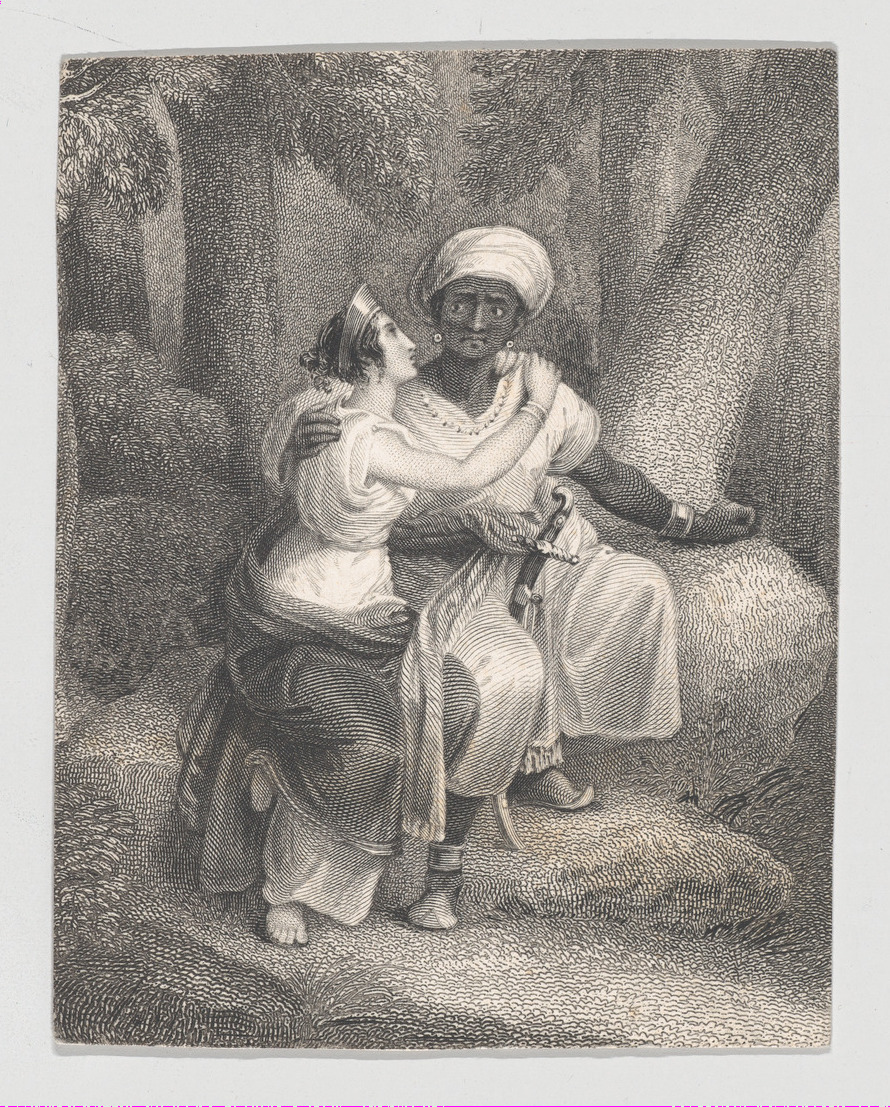
The story the quarto preserves is a revenge tragedy built from classical materials rather than English history or an Italian novella, Shakespeare's more usual sources. The two building blocks scholars point to are Ovid's Metamorphoses, source of the myth of Philomela's rape and mutilation that the play adapts directly onto the character of Lavinia, down to the detail of a woven message replacing a severed tongue, and Seneca's Roman tragedies, whose stock devices, a revenge plot driven by an outraged parent, an on-stage body count, long declamatory speeches over the dead, Titus Andronicus follows closely enough that generations of critics assumed direct imitation. T.S. Eliot's own 1927 dismissal of the play, discussed below, was delivered inside an essay specifically about how badly Elizabethan playwrights other than Shakespeare imitated Seneca, which makes his verdict on this play a case study in a wider argument about classical influence, not an isolated judgment.
None of this reflects a hidden programme or a private belief system on Shakespeare's part; it reflects the ordinary training of an Elizabethan grammar-school education, in which Ovid and Seneca were set texts, and the ordinary commercial demand of a London stage that wanted spectacular, bloody entertainment in the early 1590s, a demand Christopher Marlowe's Tamburlaine and Thomas Kyd's The Spanish Tragedy had already shown could fill a theatre. Reading the play's violence as evidence of a young writer testing how far a fashionable genre could be pushed, rather than as evidence of anything darker about its author, is the plain and sufficient explanation, and this record adopts it because the sources support nothing more elaborate.
Chapter 6A family library in Sweden
Long before any of that scholarship existed, this particular copy was already in private hands an ocean away from the argument.
Long before any of that scholarship existed, this particular copy was already in private hands an ocean away from the argument. The earliest identifiable owner is recorded only by a name inked onto the back flyleaf: Charles Robson, who lived from 1735 to 1794. Nothing beyond that inscription and those dates has been traced about who he was or how an English playbook printed in 1594 came into his possession in the first place; both are open questions this record cannot close.
A second inscription, in Swedish and dated 1845, records the book passing to a grandson of Robson's through a daughter, one P.M. Krafft. A third inscription, dated 1877, records it passing again, from P.M. Krafft to his own son, Petrus Johannes Krafft. Both transfers are known only from what the family itself wrote inside the cover; no external document corroborates either one, which means the chain of ownership between Robson's death in 1794 and 1845 rests entirely on the family's own record of itself.
By the time it reached Petrus Johannes Krafft, a postal clerk in Malmo, the quarto had been rebound at some point using two eighteenth-century Swedish lottery handbills as makeshift endpapers or wrapper material, an entirely practical and unremarkable piece of thrift that happened to leave behind, glued into an English playbook, two pieces of Swedish popular ephemera from roughly 1770. Those handbills survive today, preserved through every subsequent rebinding, and they are the only trace this record can offer of exactly when or where in Sweden the quarto was rebound.
Chapter 7A newspaper story about a Bible
The book might have stayed in the Krafft family indefinitely had Petrus Johannes Krafft not read a newspaper report, some time in 1904, about the sale of an early English Bible for a very large sum...
The book might have stayed in the Krafft family indefinitely had Petrus Johannes Krafft not read a newspaper report, some time in 1904, about the sale of an early English Bible for a very large sum of money. According to the account later given in Joseph Quincy Adams's 1936 facsimile edition, the story made Krafft think of the worn little English book he already owned, and wonder whether it might be worth something on the same terms. He had no reason to know that his was not merely an old book but the only surviving copy of anything.
The realisation, once tested, held. The quarto surfaced to scholarly attention in Sweden in 1904 and, once its significance was confirmed, was purchased by Henry Clay Folger in January 1905 for the sum of GBP 2,000, arranged through Folger's regular London agents, the booksellers Henry Sotheran Ltd. That a single undistinguished-looking pamphlet, unrecognised for a century inside a private Swedish household, turned out to be the one surviving witness to Shakespeare's first printed play is the kind of discovery story that this publication exists to record precisely, and to distinguish from the invented anecdotes that gather around famous objects once they become famous.
Chapter 8The sale and the secrecy around it
Henry Folger did not buy this way by accident.
Henry Folger did not buy this way by accident. He rarely attended auctions in person and relied on professional agents, chiefly Henry Sotheran Ltd in London and the dealer A.S.W. Rosenbach in the United States, specifically to keep his own name out of negotiations; a seller who knew a wealthy, determined American collector wanted an object would ask more for it. To preserve that anonymity here, the purchase was initially entered in Sotheran's own sales records simply as a purchase made for stock, with no buyer named.
The secrecy did not last past the point of sale. When the purchase became public at the start of 1905, it made news in three countries for three different reasons: the Swedish press was startled that one of their own countrymen had turned up so significant a find; the British press was dismayed that a piece of English literary history was leaving the country for America; and the American press was simply delighted at the acquisition. No other copy of the 1594 quarto has been found since, in Sweden or anywhere else, in the twelve decades since the sale.
No export mechanism existed to stop any of this. Britain's Waverley system of export deferral for national treasures did not exist until 1952, and in any case this quarto had left England for Sweden centuries before Folger ever saw it; the 1905 transaction moved the book a second time, from a Swedish seller to an American buyer, a transfer no contemporary law in either country regulated. The British press could be dismayed, and was, but had no legal lever to act on that dismay. That gap between public sentiment and legal power over cultural property is itself a piece of history worth recording, since it is precisely the gap that later export-control regimes, including the one Britain built after 1952, were designed to close.
Chapter 9What GBP 2,000 meant in January 1905
Placing that figure requires a comparison from inside the same market rather than a generic modern conversion, and the same collector and the same London agent supply one.
Placing that figure requires a comparison from inside the same market rather than a generic modern conversion, and the same collector and the same London agent supply one. Six years earlier, in 1899, Henry Folger had used the same firm, Henry Sotheran Ltd, represented by the same agent, A.B. Railton, to pursue what became known as the Vincent-Sibthorp copy of the Shakespeare First Folio, a complete 1623 volume discovered gathering dust in a coach house at Canwick Hall in Lincolnshire. After months of transatlantic negotiation conducted partly by telegram, the owner, Coningsby Sibthorp, accepted a final price of GBP 5,000 for that single volume, paid in instalments beginning with a first payment of GBP 2,000 in July 1899.
Two things follow from that comparison. First, the GBP 2,000 Folger paid for this quarto in 1905 was, in absolute terms, exactly the size of the first instalment he had already paid six years earlier merely to begin securing one complete First Folio, itself a small fraction of that Folio's eventual GBP 5,000 total price; a complete Shakespeare in one volume commanded roughly two and a half times what the sole surviving witness to his first printed play did. Second, the sums involved sat at the very top of what any private collector anywhere was paying for early English books in this period; Folger and Sibthorp's negotiation itself references a British Museum interest in the Sibthorp Folio at the same time, evidence that national institutions were competing in the identical market. Two thousand pounds in January 1905 was, by any standard available in that market, a very large sum indeed for a single damaged pamphlet, and everyone involved in the sale knew it.
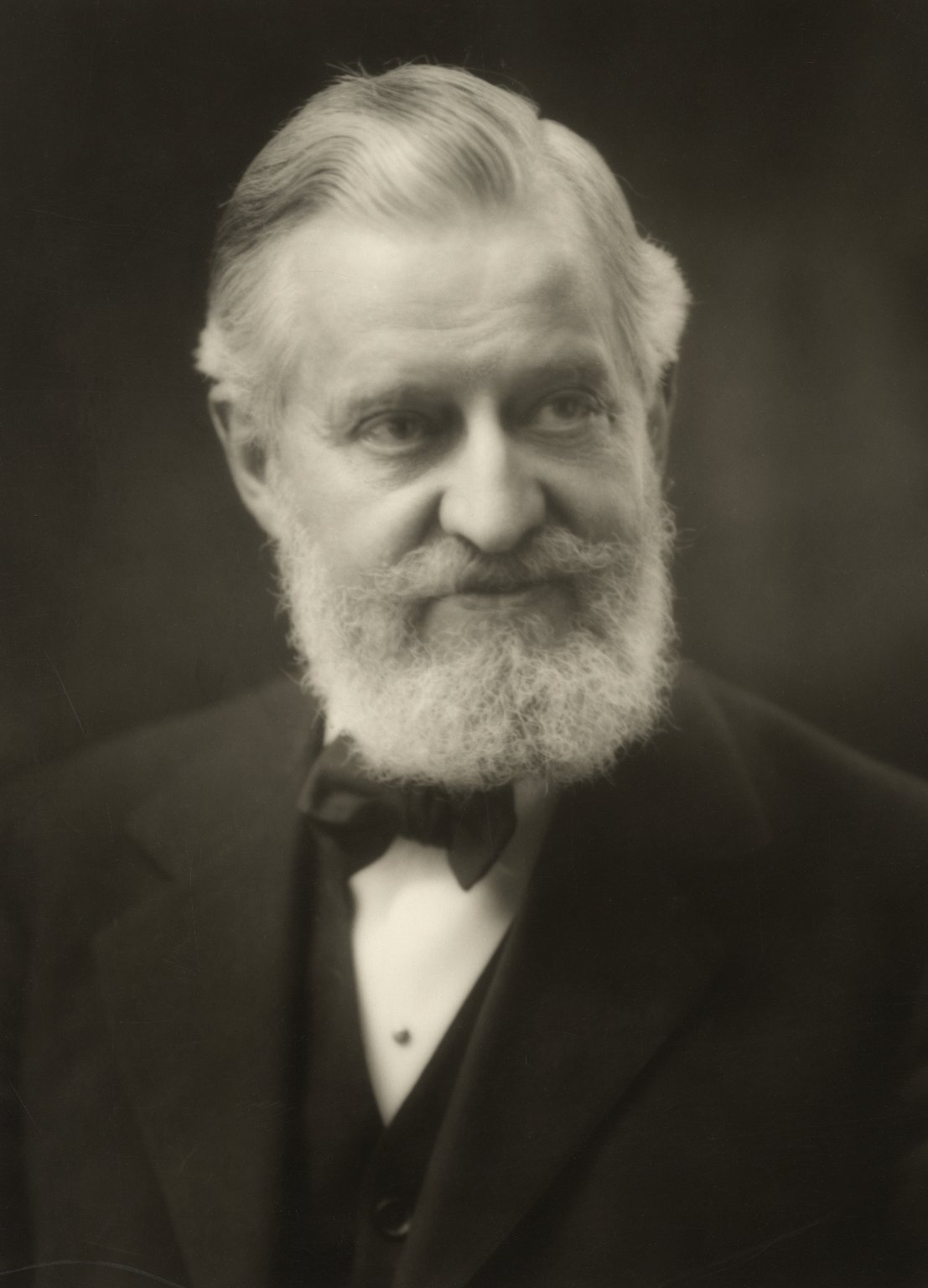
The purchase also has to be read against the scale of what Folger was doing generally. Over roughly forty-five years of collecting, he and Emily acquired 82 First Folios, the largest holding of any single collector or institution and something close to a third of the surviving copies from the entire 1623 print run, alongside a comparable quantity of early quartos, promptbooks, portraits and other Shakespeareana. A single GBP 2,000 payment, however large in isolation, was one purchase inside a decades-long campaign that eventually filled an entire purpose-built library in Washington; the significance of this object to the history of the text is not diminished by the fact that, to its buyer, it was one very good acquisition among hundreds.
Chapter 10John Danter, pirate printer
The man who printed this quarto did not live to see it become famous, or infamous.
The man who printed this quarto did not live to see it become famous, or infamous. John Danter operated his own press in London through most of the 1590s, and his name is attached to some of the more disreputable corners of the early Shakespeare printing record: three years after Titus, in 1597, his shop issued the first quarto of Romeo and Juliet, later classed for over a century as a corrupt "bad quarto" reconstructed from actors' memory rather than an authorial manuscript, though modern scholarship treats it more charitably as a typical product of the popular-pamphlet market Danter specialised in. Danter printed only the first four sheets of that book himself before handing the remainder to another printer, Edward Allde, to finish.
Later in 1597, Danter's press was raided by the authorities and his equipment seized. The trouble concerned an unrelated matter, not either Shakespeare quarto, but it has coloured his reputation ever since, and the label "notorious pirate" attached to him in some later accounts owes at least as much to that raid, and to the retrospective embarrassment of the bad-quarto theory, as it does to anything specifically fraudulent about how he ran his shop. He died within two years of the raid, in 1599, having operated as a master printer for barely a decade.
Danter's shop was never a Shakespeare specialist; it was a general jobbing press that took whatever paying work came to hand, ballads, pamphlets, and the popular prose of writers like Thomas Nashe and Robert Greene, alongside the two Shakespeare quartos that happened to survive to make his name recognisable centuries later. That ordinariness matters for how this object should be read: nothing marked Titus Andronicus out, at the point of printing, as more significant than any other cheap play-pamphlet leaving Danter's press that year. Its later importance is entirely a function of what did and did not survive, not of anything special done to it in 1594.
Chapter 11What the discovery corrected
The most consequential fact about this copy has nothing to do with drama and everything to do with textual accident.
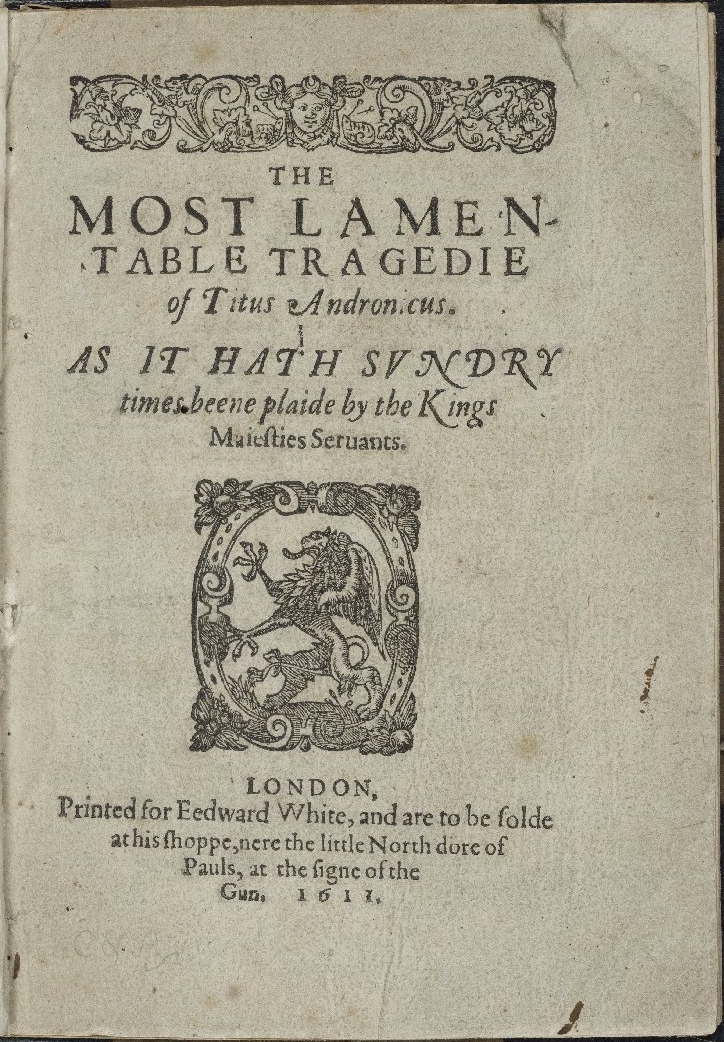
The most consequential fact about this copy has nothing to do with drama and everything to do with textual accident. When the printer of the Second Quarto, in 1600, reprinted this First Quarto, his own copy of it had been damaged at the foot of its final two leaves, with several lines lost. Rather than leave a gap, the Q2 printer composed four replacement lines of his own and set them in place of Shakespeare's original ending.
For roughly three centuries, because the First Quarto itself was believed lost, those four invented lines were, in the words of the Folger's own editors, "universally accepted as authentic" Shakespeare. Every reader, editor, and actor who ever encountered the play's ending before 1905 encountered a stranger's guess at how it went, printed with no indication that it was anything else. The rediscovery of this single copy in a Swedish household did not just add an interesting artefact to a collector's shelf; it silently corrected the received text of a Shakespeare play for the first time in three hundred years, restoring an ending no living reader had seen. Few surviving books of any kind can claim to have done that.
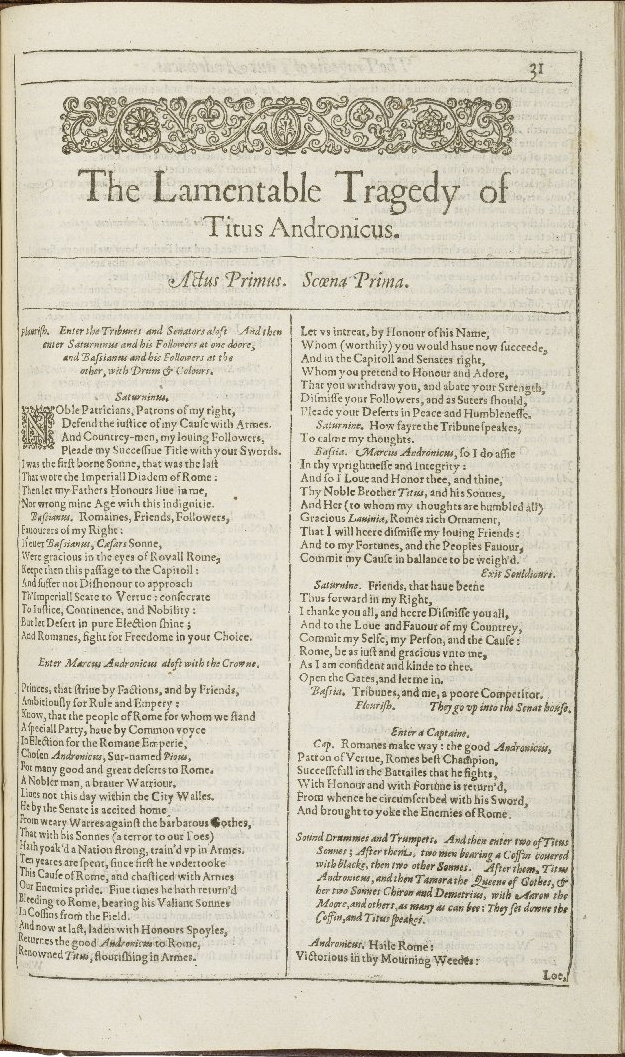
The play's transmission carries one further complication. When it was reprinted again in the 1623 First Folio, the text largely followed the Third Quarto of 1611, itself a reprint of the flawed Second Quarto, but the Folio also added an entire new scene, 3.2, the so-called fly scene, found in no quarto at all. Folger editors read the addition, along with a scatter of new stage directions elsewhere in the Folio text too precise for any printer to have invented unaided, as evidence that the Folio's printer had access to a second, probably theatrical, manuscript that does not otherwise survive. Modern editions differ on how to handle it: some print only the quarto text on principle, others, including the Folger's own edition, incorporate the Folio's added scene in brackets.
Chapter 12Condition and conservation
The copy carries the marks of its working life and its repeated rescue.
The copy carries the marks of its working life and its repeated rescue. Leaf B2 is torn at the tail corner, with a couple of letters lost from the recto and several more from the verso; the title leaf has at some point been silked, a now largely superseded conservation technique in which a fine, near-transparent tissue is laid over a fragile printed page to hold it together. The Folger Library has rebound the volume in dark blue goatskin, and in doing so preserved rather than discarded the physical evidence of its earlier life: the book's previous blue-gray paper wrappers, and the two Swedish lottery handbills used as improvised endpapers by an unknown hand in Sweden, are bound in at the end of the volume rather than removed.
That decision, to keep the ephemera rather than tidy the book up, is itself a small statement about what this kind of object is for. The lottery bills tell a reader nothing about Shakespeare, but they are irreplaceable evidence of exactly where and in what condition this specific copy sat for over a century, and their preservation is the reason the object's own physical history remains checkable rather than merely asserted.
Nothing in the published record specifies exactly when each conservation campaign took place, only that the volume has been rebound and repaired at least once since arriving at the Folger. That is a gap this record notes rather than fills: a fuller conservation history, tied to specific dates and treatments, would sit naturally in the Library's own institutional archive rather than in any source consulted for this record.
Chapter 13Where it lives now
The quarto has been at the Folger Shakespeare Library, Washington, D.C., since the collection's transfer there; Henry Folger died in June 1930, two years before the Library he had spent the previous...
The quarto has been at the Folger Shakespeare Library, Washington, D.C., since the collection's transfer there; Henry Folger died in June 1930, two years before the Library he had spent the previous decade planning and building opened to the public in 1932. It was included among the fifty manuscripts and printed books assembled for Shakespeare, Life of an Icon, a Folger exhibition curated by Heather Wolfe that ran from 20 January to 27 March 2016 as part of the Library's contribution to the four-hundredth anniversary of Shakespeare's death.
A full photographic digitisation of the copy is publicly available through the World Digital Library, a joint project of the Library of Congress and UNESCO, and individual plates from the Folger's own imaging programme circulate under a public-domain release through the Folger's Luna digital image system, which is the route this record uses for its own illustration. Joseph Quincy Adams's 1936 facsimile edition, published shortly after the quarto's rediscovery had settled into scholarly use, remains the standard printed surrogate for readers without access to the original or its digital surrogates.
Critical fortune has moved a long way from Danter's shop. T.S. Eliot dismissed the play outright in 1927 as unworthy of Shakespeare's name; Peter Brook's stylised, ribbon-for-blood 1955 Stratford production, with Laurence Olivier as Titus and Vivien Leigh as Lavinia, is generally credited with rehabilitating the play on stage, turning what one contemporary critic had expected to be an assembly of absurd horror into what reviewers called an unforgettable performance of grief. The single surviving copy of the play's first printing, meanwhile, has sat through that entire critical reversal in the same reading room in Washington, unmoved and, for most of the twentieth century, barely visited by comparison with the attention paid to the play itself.
What is happening to the object right now is, by design, less dramatic than what happened to it in 1904 and 1905. It is not on continuous public display, being a fragile paper pamphlet rather than a bound folio robust enough for permanent exhibition; it surfaces in temporary exhibitions such as Life of an Icon and is otherwise consulted, in person or through its digital surrogates, by editors and scholars working on the play's text. That is the ordinary present tense of a rare book once its moment of discovery has passed: not silence, but a steady, undramatic use by exactly the readers it was rediscovered for.
The artist
William Shakespeare
This is the first play by Shakespeare ever to reach print, and one of only three surviving quarto editions of it, only one copy of which, this one, is the first printing. No manuscript in Shakespeare's own hand survives for any play he wrote, this one included, so everything known about the text depends on what compositors set from whatever copy reached them, a fact this particular object demonstrates more starkly than almost any other early Shakespeare printing, because the received text of its ending was a stranger's invention for three centuries before this copy proved otherwise.
Related works
| Work | Relation | Where it is |
|---|---|---|
| Titus Andronicus, Second Quarto (1600) William Shakespeare (reprint; printer unnamed on the title page) | Reprint of this First Quarto, the source of the ending later shown to be a printer's invention Its printer worked from a copy of Q1 damaged at the foot of its last two leaves and supplied four invented closing lines, taken as authentic Shakespeare until the Folger's Q1 copy surfaced in 1905. | Edinburgh University Library and the Henry E. Huntington Library, the two surviving copies |
| Titus Andronicus, Third Quarto (1611) William Shakespeare (reprint of Q2) | Second reprint of the play, itself descended from Q2's invented ending Essentially a reprint of the Second Quarto, and the direct source for the Folio text of 1623. | Folger Shakespeare Library, Washington, D.C. (STC 22330), among other holdings |
| Titus Andronicus in Mr. William Shakespeares Comedies, Histories, and Tragedies (First Folio) William Shakespeare | First collected-works printing of the play, 1623; adds a scene absent from every quarto Largely reprints the Third Quarto but adds an entire scene, 3.2, the fly scene, along with stage directions Folger editors read as evidence of access to a separate, probably theatrical, manuscript that does not otherwise survive. | Folger Shakespeare Library, Washington, D.C. (STC 22273 Fo.1 no.68), one of 82 Folger First Folios |
| Romeo and Juliet, First Quarto (1597) William Shakespeare | Another early Shakespeare quarto printed in part by John Danter, this record's printer Danter printed the first four sheets before handing the remainder to the printer Edward Allde; his press was raided by the authorities later the same year, on an unrelated matter. | British Library, London (C.34.k.55), one of five known copies |
Open questions
- Who was Charles Robson beyond the name and dates (1735-1794) inscribed in the book itself? No independent biography of him has been traced.
- How and when did an English playbook printed in London in 1594 reach a private household in Sweden? Nothing documents the book's crossing or its first decades there.
- Is the family's own record of its 1845 and 1877 transfers within the Krafft line corroborated anywhere outside the book's own inscriptions? No external document has been found.
- Precisely how much of the play, if any, was written by George Peele rather than Shakespeare? Named scholars using comparable methods disagree, and the historiography runs from 1905 to the present without resolution.
- Was Titus Andronicus composed in 1591-92 or 1593-94? The composition date remains disputed; David Farley-Hills reopened the question in 2000 without settling it.
- Does the manuscript that supplied the First Folio's added fly scene (3.2) survive anywhere, unrecognised, or is it lost? Editors infer its former existence from the text alone.
Questions about this object
What is The Most Lamentable Romaine Tragedie of Titus Andronicus (the Folger quarto, 1594)?
The Most Lamentable Romaine Tragedie of Titus Andronicus (the Folger quarto, 1594) is a printed book, dated 1594. Medium: Letterpress printing on laid paper, quarto format (four leaves per sheet).
Who made The Most Lamentable Romaine Tragedie of Titus Andronicus (the Folger quarto, 1594), and is the attribution settled?
The attribution to William Shakespeare is recorded here as disputed. The 1594 title page credits no author, which was normal practice for a playbook of this date. External evidence ties the play to Shakespeare by 1598, when Francis Meres named it among his tragedies in Palladis Tamia, and it has been printed under his name ever since. What is genuinely disputed is whether he wrote all of it. Beginning with J.M. Robertson in 1905, a line of scholars using verse tests, vocabulary counts, and stylometric analysis, most fully Brian Vickers in 2002 and MacDonald P. Jackson before him, argue that George Peele wrote Act 1, scene 2.1 and scene 4.1, with Shakespeare responsible for the rest. Other scholars, from Edward Capell in the eighteenth century to Eugene Waith and Alan Hughes in the twentieth, hold the play for Shakespeare alone and attribute its unevenness to inexperience or revision rather than a second hand. No consensus exists. This record treats the Peele attribution as argued, not established, and names both sides.
Where is The Most Lamentable Romaine Tragedie of Titus Andronicus (the Folger quarto, 1594) now?
Folger Shakespeare Library, Washington, D.C. Inventory number STC 22328. Last confirmed 26 August 2026. Purchased by Henry Clay Folger in January 1905 through the London booksellers Henry Sotheran Ltd; passed to the Folger Shakespeare Library on its opening in 1932, two years after Folger's death.
What is still unknown about The Most Lamentable Romaine Tragedie of Titus Andronicus (the Folger quarto, 1594)?
Who was Charles Robson beyond the name and dates (1735-1794) inscribed in the book itself? No independent biography of him has been traced.
Sources
- 1Heather Wolfe, "Titus Andronicus, first edition: Only surviving copy of Shakespeare's first printed play," Shakespeare Documented, Folger Shakespeare Library. shakespearedocumented.folger.edu/resource/...
- 2Folgerpedia, "Titus Andronicus" (early editions and call numbers). folgerpedia.folger.edu/Titus_Andronicus
- 3Shakespeare Census, copy record SC #1523, Titus Andronicus, First Edition (1594), STC 22328, Folger Shakespeare Library. shakespearecensus.org
- 4Adam G. Hooks, "Romeo and Juliet, first edition," Shakespeare Documented, Folger Shakespeare Library. shakespearedocumented.folger.edu/resource/...
- 5Barbara Mowat and Paul Werstine, "An Introduction to This Text: Titus Andronicus," Folger Shakespeare Library editions. folger.edu/explore/...
- 6"Textual Notes: Titus Andronicus," Folger Shakespeare Library editions. folger.edu/explore/...
- 7Jackson's 1979 and 1996 studies, and Hugh Craig and Arthur F. Kinney, Shakespeare, Computers, and the Mystery of Authorship (Cambridge University Press, 2009). en.wikipedia.org/wiki/...
- 8Folgerpedia, "Henry Clay Folger" (biography, collecting practice, and the Folger Shakespeare Library's founding). folgerpedia.folger.edu/Henry_Clay_Folger
- 9Folgerpedia, "Shakespeare, Life of an Icon" (2016 exhibition record, curator and dates). folgerpedia.folger.edu/Shakespeare,_Life_of_an_Icon
- 10Shakespeare Census, copy records SC #1524 (Edinburgh University Library) and SC #1525 (Henry E. Huntington Library), Titus Andronicus, Second Edition (1600), STC 22329. shakespearecensus.org
- 11World Digital Library / Library of Congress, "Titus Andronicus," item 11291 (full digitisation of the Folger copy). hdl.loc.gov/loc.wdl/...
- 12Wikimedia Commons, File:Shakespeare Titus Andronicus Q1 1594.jpg, file description page and extended metadata. commons.wikimedia.org/wiki/...
- 13Wikimedia Commons, File:Titus Andronicus F1 (1623).jpg, file description page and extended metadata. commons.wikimedia.org/wiki/...
- 14Wikimedia Commons, File:Titus Q3 (1611).jpg, file description page and extended metadata. commons.wikimedia.org/wiki/...
- 15Wikimedia Commons, File:Henry Clay Folger.jpg, file description page and extended metadata. commons.wikimedia.org/wiki/...
- 16Wikimedia Commons, File:Aaron and Tamora (Shakespeare, Titus Andronicus, Act 2, Scene 3) MET DP870112.jpg, file description page and extended metadata. commons.wikimedia.org/wiki/...
- 17Wikimedia Commons, File:Titus Andronicus, act IV, scene II painted by T. Kirk ; engrav'd by J. Hogg.tif, file description page and extended metadata. commons.wikimedia.org/wiki/...
- 18Sara Schliep, "Acquiring the Vincent First Folio: A Bibliophilic Drama in Two Parts (Part 1)," The Collation, Folger Shakespeare Library, 21 November 2023. folger.edu/blogs/...
- 19T.S. Eliot, "Seneca in Elizabethan Translation" (1927), reprinted in Selected Essays (1932). Quoted here via secondary aggregation; flagged for verification against the primary essay text. en.wikipedia.org/wiki/...
- 20The Shakespeare Blog, "Slaughter in the streets: Shakespeare's Titus Andronicus" (on the play's critical reputation and Peter Brook's 1955 Stratford production). theshakespeareblog.com/2013/...

.jpg)
.jpg)

_MET_DP870112.jpg)
Last verified · Published
Change log
26 August 2026 - Record created at the house standard: researched narrative, technical evidence, maker dossier, graded provenance chain, prices with hammer and premium separated, related works, open questions and sources.