Cabinet
Herter Brothers · ca. 1883
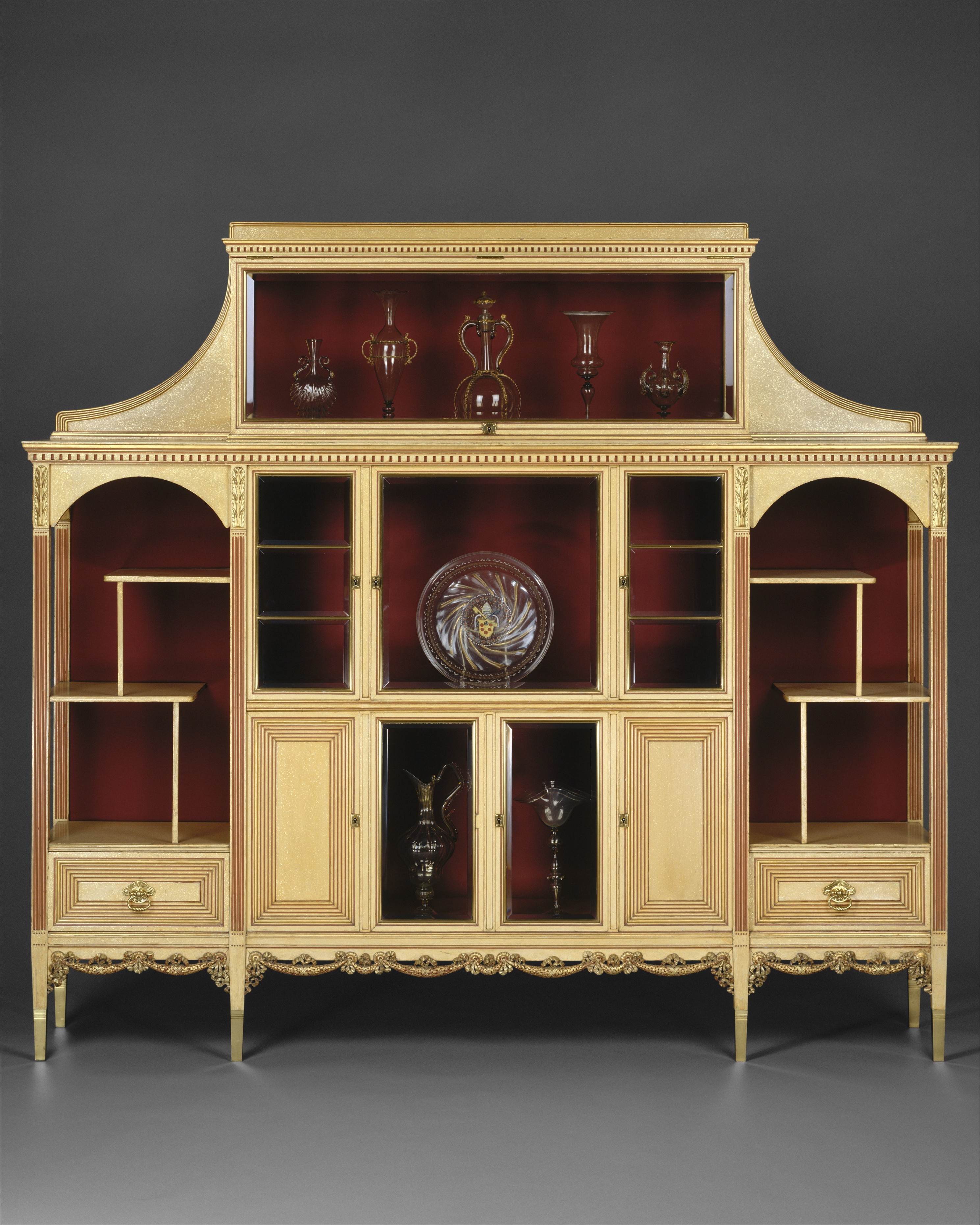
The record subject, photographed by the Metropolitan Museum of Art against its studio backdrop, with glass and silver objects arranged inside for the photograph rather than original furnishings of the piece. Maple with painted and gilded surface, bevelled glass, silk velvet and brass, 64 1/2 x 71 x 14 1/2 in.
| Artist | Herter Brothers |
|---|---|
| Date | ca. 1883 |
| Medium | Maple, with painted and gilded surface, bevelled glass, silk velvet, brass |
| Dimensions | 64 1/2 x 71 x 14 1/2 in. (163.8 x 180.3 x 36.8 cm) |
| Where it is now | Metropolitan Museum of Art, New York, The American Winglast confirmed |
| Inventory number | 1999.79 (Met object ID 16576) |
| Attribution | AcceptedThe Metropolitan Museum catalogues this cabinet as 'Attributed to Herter Brothers,' not as an unqualified Herter Brothers work. Full note |
| Object type | Furniture |
| Period | American, Gilded Age (1880s) |
| Cases | Has a provenance gap |
| Inscriptions | None recorded. The Metropolitan Museum's published catalogue entry lists no signature, stamp or label for this object. |
| Owners on record | 4 links3 documented, 1 unknown |
| Sources | 19 cited |
About this record Last verified · 19 sources cited · Change log
On this page 9 sections
ContentsClose
A large maple display cabinet, painted ivory and gilded, made about 1883 for Oliver Ames, the Massachusetts governor and shovel-fortune heir who spent the previous decade paying off his father's Credit Mobilier debts. The Metropolitan Museum's own catalogue attributes it only cautiously, 'Attributed to Herter Brothers,' because the piece carries no signature, stamp or label, and the firm's one surviving business archive does not begin until 1891, eight years after this cabinet was made and after both founding brothers had left the company (Christian Herter died the same year the cabinet is dated).
The case itself argues for the attribution more than any document does: reeded columns, dentil moldings and carved swags borrowed from eighteenth-century Neoclassicism are set against asymmetrical Japanese-inspired shelving and a gold-flecked, lacquer-imitating surface, exactly the stylistic synthesis Herter Brothers is independently documented producing for Gilded Age clients including William H. Vanderbilt and, in a pointed irony, Ames's own former courtroom adversary Jay Gould. Where the cabinet actually stood, in Ames's Boston town house or his family's country estate, and where it spent the century between his ownership and its 1999 purchase by the Museum through the New York dealer Margot Johnson, Inc., are both left honestly unresolved here rather than filled in with invented detail.
Provenance
Each link is graded. Documented: a cited source supports it. Disputed: the identification is argued but not established. Unknown: no owner for that span, and the gap is not smoothed into a narrative. The grades in the glossary.
- ca. 1883 -Oliver Ames (1831-1895), industrialist and Governor of Massachusettsdocumented
The Metropolitan Museum's own catalogue entry states the cabinet was made for Oliver Ames. Ames is independently documented as a Herter Brothers client through a room decorated by the firm in his Boston town house at 355 Commonwealth Avenue, built in 1882-1883, though the Museum's own text does not specify which of Ames's two residences held this particular cabinet.178
- ca. 1883 - by 1999Unknownunknown
No owner, sale, exhibition or publication has been located for this cabinet between its manufacture around 1883 and its appearance with the New York dealer Margot Johnson, Inc. by 1999, a gap of well over a century. The Ames family's Commonwealth Avenue house left the family's ownership in 1926, which is the most plausible but entirely undocumented point at which the cabinet could have left the household.8
- by 1999 - 1999Margot Johnson, Inc., New York, with a gift from Robert L. and Ann R. Fromerdocumented
The Metropolitan Museum's credit line records the acquisition as a purchase funded by the Robert L. and Ann R. Fromer Gift together with a gift from the dealer Margot Johnson, Inc. Margot Johnson specializes in American Gilded Age decorative arts, including Herter Brothers furniture, and is documented working directly with the Museum's curator of American decorative arts. No purchase price or division of the two gifts has been published.1217
- 1999 - presentMetropolitan Museum of Art, New Yorkdocumented
Acquired 1999 in honor of the 75th anniversary of The American Wing, which had opened to the public in 1924. Published the same year in the Museum's Bulletin, Recent Acquisitions, A Selection: 1998-1999. The cabinet is currently listed as not on view.12
Technical evidence
| Attribution note | The Metropolitan Museum catalogues this cabinet as 'Attributed to Herter Brothers,' not as an unqualified Herter Brothers work. No maker's mark, label or stamp is recorded on it in the Museum's published entry. The attribution rests on three converging but circumstantial strands: the cabinet's decorative vocabulary matches the firm's documented Anglo-Japanese and Neoclassical repertoire of the early 1880s; its first recorded owner, Oliver Ames, is independently documented as a Herter Brothers client through a surviving decorated room in his Boston house, built in exactly the years the cabinet was made; and the piece passed to the Museum through Margot Johnson, Inc., a New York dealer specializing in Herter Brothers furniture who worked directly with the Museum's own curator of American decorative arts. No bill, ledger entry or firm record naming this specific cabinet has been located, and the firm's one surviving business archive, at the Winterthur Library, only begins in 1891, eight years after this piece was made. The Museum's own 'Attributed to' line is the most honest register of that gap. |
|---|---|
| Carcase and surface | Solid and veneered maple throughout, finished with a painted ivory ground and gilded ornament rather than the ebonized surfaces the firm used in the 1870s.12 |
| Glazing | Bevelled glass panes in the upper vitrine doors, the two central case doors, and the small lower cupboard doors flanking the central niche.12 |
| Interior lining | Silk velvet lining to the display compartments, in a dark red visible behind the glazed doors.12 |
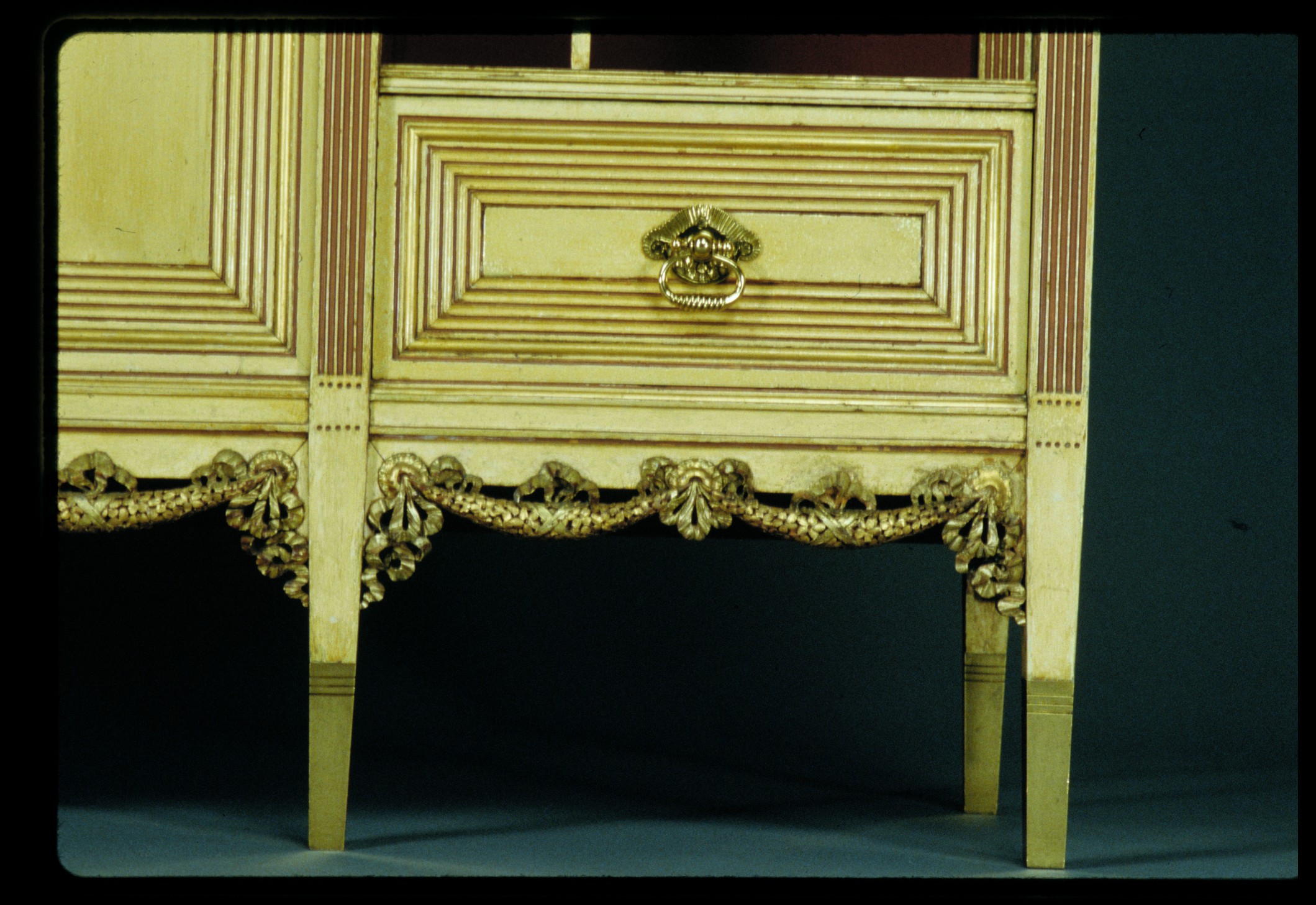
| Metal mounts | Brass hardware throughout: cast ring pulls on the two drawers, hinges, lock escutcheons, and a pierced, garlanded brass swag applied along the apron beneath the drawers.12 |
| Dimensions | 64 1/2 x 71 x 14 1/2 in. (163.8 x 180.3 x 36.8 cm).2 |
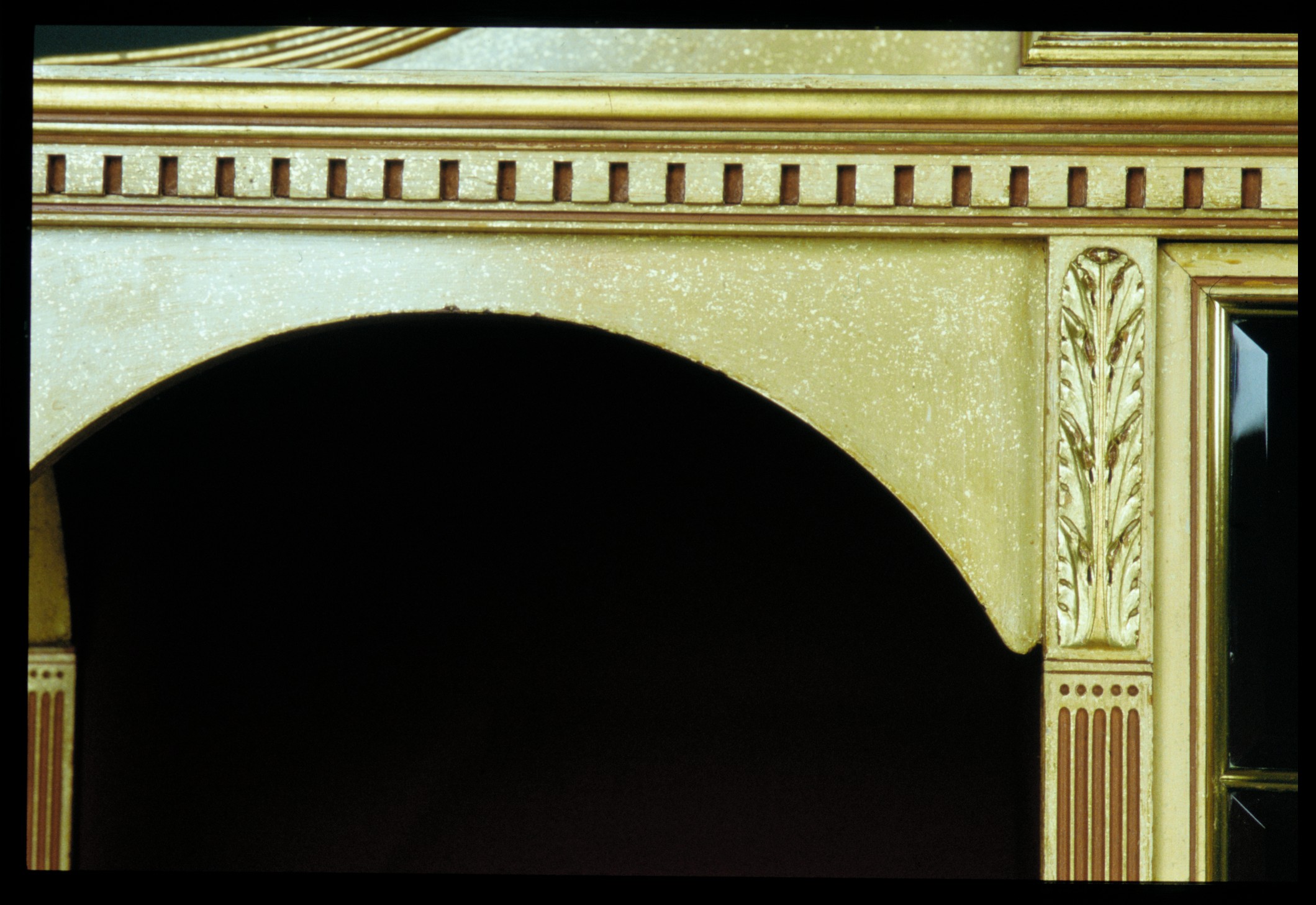
| Ornament vocabulary | Reeded columns, dentil moldings and carved swags derived from eighteenth-century Neoclassicism, combined with asymmetrical open side shelving and a gold-flecked, lacquer-inspired surface derived from contemporary Japanese decorative art.1 |
| Marks and signatures | None recorded. The Museum's published catalogue fields for signatures, inscriptions and markings return no content for this object, consistent with the firm's general practice of not marking every piece of its output.210 |
| Production context | Dated by the Museum to about 1883 (bracketed 1880-1886), a period after Gustave Herter's 1870 departure from the firm and coinciding with Christian Herter's 1881 retirement and 1883 death, meaning the workshop that built it was operating under management this record has not been able to identify.212 |
Images
The record in full
Chapter 1What it is
A large display cabinet, 64 1/2 inches high and 71 inches wide, built of maple and finished in a painted ivory ground with gilded ornament.
A large display cabinet, 64 1/2 inches high and 71 inches wide, built of maple and finished in a painted ivory ground with gilded ornament. The upper section is a glazed, arch-topped vitrine set above a wider case whose central bay carries two more glazed doors flanking a mirrored back panel, with an open, asymmetrical tiered shelf recessed into an arched niche at each end. Below, a run of solid and glazed cupboard doors sits over two working drawers, the whole raised on tapered, fluted legs. The glass is bevelled throughout, the cabinet interior is lined in dark red silk velvet, and the hardware, hinges and a garlanded apron under the drawers are cast brass.
It is not a wardrobe or a writing cabinet. Every compartment is built to be looked into: shelves for standing objects, a mirror back to double them, glazed doors to keep dust off jewel-toned porcelain or glass while still showing it. This is a cabinet for holding and displaying a household's collectible china, glass and small silver in a drawing room, a distinct and fashionable furniture type in the 1880s rather than an incidental storage piece.
Chapter 2A sophisticated amalgam of sources
The Metropolitan Museum's own description calls this 'a sophisticated amalgam of sources,' and the object bears that out on inspection.
The Metropolitan Museum's own description calls this 'a sophisticated amalgam of sources,' and the object bears that out on inspection. The architecture of the case, its reeded columns, dentil moldings and carved swags looping between rosettes, is drawn from eighteenth-century French and English Neoclassicism, the same vocabulary being revived across fashionable American interiors in the early 1880s as a lighter, more disciplined alternative to the heavy Renaissance Revival furniture of the previous generation.
Set against that Neoclassical frame are two distinctly Japanese-derived features: the asymmetrical open shelving at each end, which abandons the strict bilateral symmetry Neoclassical design would otherwise demand, and a gold-flecked painted surface conceived in imitation of Japanese lacquerware. Herter Brothers had built its reputation in the 1870s on ebonized, Anglo-Japanese furniture responding to the wave of interest in Japanese art that followed Commodore Perry's opening of Japan and the Japanese pavilion at the 1876 Centennial Exhibition in Philadelphia. By the early 1880s the firm, and the American Aesthetic Movement generally, was folding that vocabulary into a lighter ivory-and-gold palette better suited to the era's grander, more classically planned drawing rooms. This cabinet sits exactly at that hinge: a Louis XVI-revival case animated by an asymmetrical, lacquer-inspired surface. Grading that claim honestly, it is not a documented statement of anyone's intention, Herter Brothers left no design brief for this object; it is a description of what is visibly on the object itself, read against a design history that is independently well documented for the firm's other work.
Chapter 3The firm: two brothers, and a name that outlived them both
Herter Brothers was founded in New York by Gustave Herter (1830-1898) and his younger half-brother Christian Herter (1839-1883), German immigrants who had both trained as cabinetmakers under...
Herter Brothers was founded in New York by Gustave Herter (1830-1898) and his younger half-brother Christian Herter (1839-1883), German immigrants who had both trained as cabinetmakers under Christian's father. Gustave worked under his own name in New York from 1858; Christian joined him and the firm took the Herter Brothers name by 1864. Within a decade it had become one of the first American firms to offer complete interior decoration under one roof, its own workshops producing everything from carved paneling and mantels to carpets, draperies and cabinet furniture for a single commission.
Its clients were the era's wealthiest men. Between 1879 and 1882 the firm decorated William H. Vanderbilt's new Fifth Avenue mansion; at the same time it was furnishing Darius Ogden Mills's house at 634 Fifth Avenue, with bills reported at $450,000, and the adjoining Jay Gould residence at 579 Fifth Avenue. Its surviving business papers, held today at the Winterthur Library, record a client list running to Armour, Guggenheim and Cyrus McCormick, the St. Regis and Bellevue-Stratford hotels, Delmonico's restaurant, the Minnesota State Capitol and the White House, where Herter Brothers furnished the Red Room under Ulysses S. Grant and later carved the State Dining Room paneling for Theodore Roosevelt's renovation. Vanderbilt, Mills and Gould are the firm's best-documented private commissions precisely because bills, correspondence and, in Vanderbilt's case, a published photographic record of the finished rooms survive. No comparable paper trail survives for this cabinet.
Chapter 4A firm without either brother
The date usually given for this cabinet, about 1883, falls at an unsettled moment in the firm's own history.
The date usually given for this cabinet, about 1883, falls at an unsettled moment in the firm's own history. Gustave had already sold his interest to Christian and returned to Germany in 1870. Christian himself retired from the day-to-day business in 1881 and moved to Paris to paint; he returned to New York and died there in 1883, the same year this cabinet is dated. The firm continued under the Herter Brothers name into the twentieth century, closing only in 1906, but the surviving business archive at Winterthur documents the company specifically between 1891 and 1907, under its later president William Gilman Nichols, a period that begins eight years after this cabinet was made.
That leaves a real gap. Whoever supervised the workshop that built this cabinet in 1882 or 1883, in the interval between Christian's retirement and his death, is not identified in any source consulted for this record. An attribution to 'Herter Brothers' for an object of this date is necessarily an attribution to the firm's trade name and workshop practice, not to either founding brother personally, a distinction the Museum's own carefully hedged catalogue line implicitly respects.
Chapter 5The client: a governor paying off his father's scandal
The Metropolitan Museum's own label identifies the cabinet's first owner as 'Oliver Ames, industrialist and governor of Massachusetts,' for whom, it states, the piece was made.
The Metropolitan Museum's own label identifies the cabinet's first owner as 'Oliver Ames, industrialist and governor of Massachusetts,' for whom, it states, the piece was made. This is Oliver Ames (1831-1895) of Easton, Massachusetts, son of the congressman Oakes Ames, an executive of the family's Ames Shovel Company, the largest American shovel manufacturer, and a director of railroads and banks in his own right. He should not be confused with his grandfather Oliver Ames Sr. or his uncle Oliver Ames Jr., both prominent in the same family business.
Oliver Ames spent much of the 1870s managing the fallout from his father's 1873 Credit Mobilier scandal, inheriting an estate burdened with six to eight million dollars of related debt along with a bitter legal fight over Credit Mobilier's Union Pacific holdings against the financier Jay Gould, a fight that only subsided around 1880 when Gould bought out the remaining shareholders. It is a detail worth pausing on that Gould, having fought Ames to a standstill in the courts, was independently having his own Fifth Avenue house furnished by Herter Brothers at almost exactly the moment Ames commissioned this cabinet: two Gilded Age rivals decorating their drawing rooms from the same New York workshop. Ames went on to a public career of his own, elected to the Massachusetts Senate in 1881, Lieutenant Governor in 1883, and Governor in 1886, serving three one-year terms from January 1887 to January 1890. His son, Oakes Ames, became a distinguished Harvard botanist.
Chapter 6Two Ames houses, and the Museum does not say which one
Oliver Ames maintained two substantial residences, and both are documented, which makes it important to be precise about which one this cabinet is actually tied to.
Oliver Ames maintained two substantial residences, and both are documented, which makes it important to be precise about which one this cabinet is actually tied to. The family's older country seat was the Governor Oliver Ames Estate in North Easton, Massachusetts; after Oliver's death in 1895 and his widow Anna's in 1917, their children moved away and that mansion was demolished by 1909, according to the property's current owner, The Trustees of Reservations. Separately, and later, Ames built a Boston town house at 355 Commonwealth Avenue in the Back Bay, designed by the German-born architect Carl Fehmer and constructed in 1882-1883, the Ames family's building permit is dated May 13, 1882, and the house was first occupied in the 1883-84 social season. The Society of Architectural Historians' own reference work, SAH Archipedia, records that the Commonwealth Avenue house's 'palatial interior, including a room decorated by Fehmer's fellow immigrants from Germany, Herter Brothers of New York, is largely intact.'
That Boston town house, not the North Easton estate, is the documented site of an actual Herter Brothers commission for Oliver Ames, and its construction dates, 1882 through 1883, align exactly with this cabinet's own dating. The Metropolitan Museum's own wall text, however, does not specify which Ames residence the cabinet was made for; it names only the client, not the room. Treated honestly, the Commonwealth Avenue attribution is this record's own reasoned inference from the coincidence of dates and the SAH Archipedia record, not a fact stated outright by the Museum, and it is recorded in the open questions below rather than asserted as settled. The Commonwealth Avenue house itself survived long after the Ames family sold it in 1926 to the National Casket Company; it later housed Emerson College offices and gourmet food shops, and stands today as converted offices and an apartment.
Chapter 7The connoisseurship problem, stated plainly
Herter Brothers furniture is, with rare exceptions, unsigned.
Herter Brothers furniture is, with rare exceptions, unsigned. Only one Herter Brothers paper label is known to survive at all, on a center table still in the White House; the firm is otherwise understood to have relied on stamps and workshop records rather than a mark applied to every piece, and neither a stamp nor any other mark is recorded for this cabinet in the Museum's published entry. That absence is exactly why the market and scholarship built around this firm operate on stylistic analysis, documented client history and archival paper trails rather than on physical signatures, and why the name 'Herter Brothers' has been applied by dealers and auction houses, over the decades, to a body of American Aesthetic Movement furniture considerably larger than anything the firm's own surviving records can confirm it made. Writers on the wider antiques trade describe this generally as the 'attribution pit': descriptions that a piece 'looks like' or is 'in the style of' a known maker's work sliding, in a catalogue or a sales pitch, into an unqualified attribution the underlying evidence does not support.
The clearest illustration available for this specific cabinet is a comparison the Metropolitan Museum's own records make for you. A second, different Herter Brothers cabinet in the Museum's collection, accession 2014.530.2, made about 1879-82 of cherry with brass and acquired as part of a documented ensemble with two matching side chairs, is catalogued in the Museum's own database with a plain, unqualified 'Herter Brothers' maker line and no attribution caveat. This cabinet, 1999.79, by contrast, carries the explicit qualifier 'Attributed to' in the same database field. The Museum is not being inconsistent; it is registering, piece by piece, exactly how strong the documentary support is for each object it holds. For 2014.530.2, evidently, that support was strong enough to drop the hedge. For this cabinet, it was not.
The 1994 catalogue Herter Brothers: Furniture and Interiors for a Gilded Age, by Katherine S. Howe, Alice Cooney Frelinghuysen and Catherine Hoover Voorsanger, published by Harry N. Abrams with the Museum of Fine Arts, Houston, and accompanied by a 1995 exhibition that traveled to the Metropolitan Museum, remains the standard scholarly foundation for the firm. Its authors built their history not from a Herter Brothers archive, which barely survives for the founders' own years, but by, in a contemporary reviewer's words, 'mining a variety of other source material, papers of patrons; public documents such as census and credit records, insurance maps, directories, and period literature; and the artifacts themselves.' That is the method by which any confident Herter Brothers attribution is actually made, and it is a method of inference and corroboration, not of reading a signature.
Chapter 8From a Boston drawing room to a Fifth Avenue dealer
Between the cabinet's manufacture around 1883 and its appearance in the New York art market by the late 1990s, no owner, sale, exhibition or publication has been located in the sources consulted for...
Between the cabinet's manufacture around 1883 and its appearance in the New York art market by the late 1990s, no owner, sale, exhibition or publication has been located in the sources consulted for this record. That is a gap of well over a century. The Ames family's Commonwealth Avenue house remained in the family only until 1926, when it was sold to the National Casket Company and converted to commercial use; if the cabinet in fact furnished that house, it would most plausibly have left the family's possession around that sale, but no record of such a dispersal, whether an estate sale, a dealer purchase, or a direct gift, has been found.
The cabinet resurfaces in documented form only in 1999, when the Metropolitan Museum purchased it using two combined gifts: one from the collectors Robert L. and Ann R. Fromer, and one from Margot Johnson, Inc. Margot Johnson is a New York dealer specializing in American Gilded Age decorative arts generally and Herter Brothers material specifically; trade press coverage of the American antiques market describes her buying and underbidding on Aesthetic Movement furniture at major sales and working directly with Alice Cooney Frelinghuysen, the Metropolitan Museum's own curator of American decorative arts and a co-author of the standard 1994 Herter Brothers catalogue. That professional relationship is the most concrete thread connecting this specific cabinet's arrival at the Museum to the firm's leading modern specialists, though it explains how the object reached the Museum, not where it had been for the preceding eleven decades.
The Fromers, for their part, are best documented elsewhere as major collectors of French Art Nouveau and Art Deco ceramics and glass and of Tiffany Studios work, material later the subject of dedicated Sotheby's and Phillips sales; nothing in the sources consulted ties them personally to prior ownership of Herter Brothers furniture. The most likely reading of the credit line, that the Museum purchased the cabinet from Margot Johnson, Inc. using funds the Fromers donated toward the purchase, with Margot Johnson, Inc. itself contributing a further gift, likely a reduction against the dealer's own asking price, is a common structure for American museum acquisitions and is offered here as an informed inference from the credit line's wording, not as a confirmed account of the transaction. No purchase price has been published in any source consulted for this record.
Chapter 91999: a purchase for an anniversary
The Metropolitan Museum's credit line ties the acquisition to a specific institutional occasion: 'in honor of the 75th anniversary of The American Wing.' The American Wing, the Museum's department of...
The Metropolitan Museum's credit line ties the acquisition to a specific institutional occasion: 'in honor of the 75th anniversary of The American Wing.' The American Wing, the Museum's department of American painting, sculpture and decorative arts, had opened to the public in 1924, and 1999 marked its seventy-fifth year. Directing a gift-funded purchase to mark that anniversary is itself a piece of institutional history worth recording plainly: the cabinet was not a bequest that arrived on its own schedule, but an acquisition the Museum's American Wing curators actively sought out to mark the occasion, made possible by patrons willing to fund it for that reason.
The Museum published the acquisition the same year in its Bulletin, in the annual roundup Recent Acquisitions, A Selection: 1998-1999, alongside the rest of that year's notable purchases and gifts. No exhibition history beyond that initial publication has been located for the cabinet, and its own catalogue page currently records it as not on view.
Chapter 10What is not known
Set plainly against everything documented above, four things about this specific cabinet remain open.
Set plainly against everything documented above, four things about this specific cabinet remain open. No bill, ledger page or piece of Herter Brothers correspondence naming it has been located. It is not certain which of Oliver Ames's two houses it actually furnished. Its whereabouts for roughly the eleven decades between its manufacture and its appearance with a New York dealer in the 1990s are entirely undocumented. And the price the Metropolitan Museum paid for it in 1999, along with the exact division of that purchase between the Fromer gift and the Margot Johnson, Inc. gift, has not been published. None of these gaps is filled by assumption in this record; each is carried into the open questions below instead.
The artist
Herter Brothers (Gustave Herter, 1830-1898, and Christian Herter, 1839-1883)
Herter Brothers is remembered today as the leading American interior decorating and cabinetmaking firm of the Aesthetic Movement, the workshop that furnished William H. Vanderbilt, Jay Gould and the White House. It is also, for exactly the reasons that made it famous, one of the hardest firms in American decorative arts to attribute with confidence: it rarely marked its own work, its surviving business archive begins only in 1891, and its name has since been applied by the market to a great deal of furniture the firm's own records cannot confirm. This cabinet sits inside that gap, a piece the Metropolitan Museum itself catalogues with a hedge rather than a certainty.
Related works
| Work | Relation | Where it is |
|---|---|---|
| Cabinet Herter Brothers | A different, more securely documented Herter Brothers cabinet in the same Museum, useful as a direct contrast in attribution confidence Cherry with brass, ca. 1879-82, acquired as part of a documented ensemble with two matching side chairs. Catalogued by the Museum with a plain, unqualified 'Herter Brothers' maker line, unlike this cabinet's 'Attributed to' qualifier. | Metropolitan Museum of Art, New York, accession 2014.530.2 |
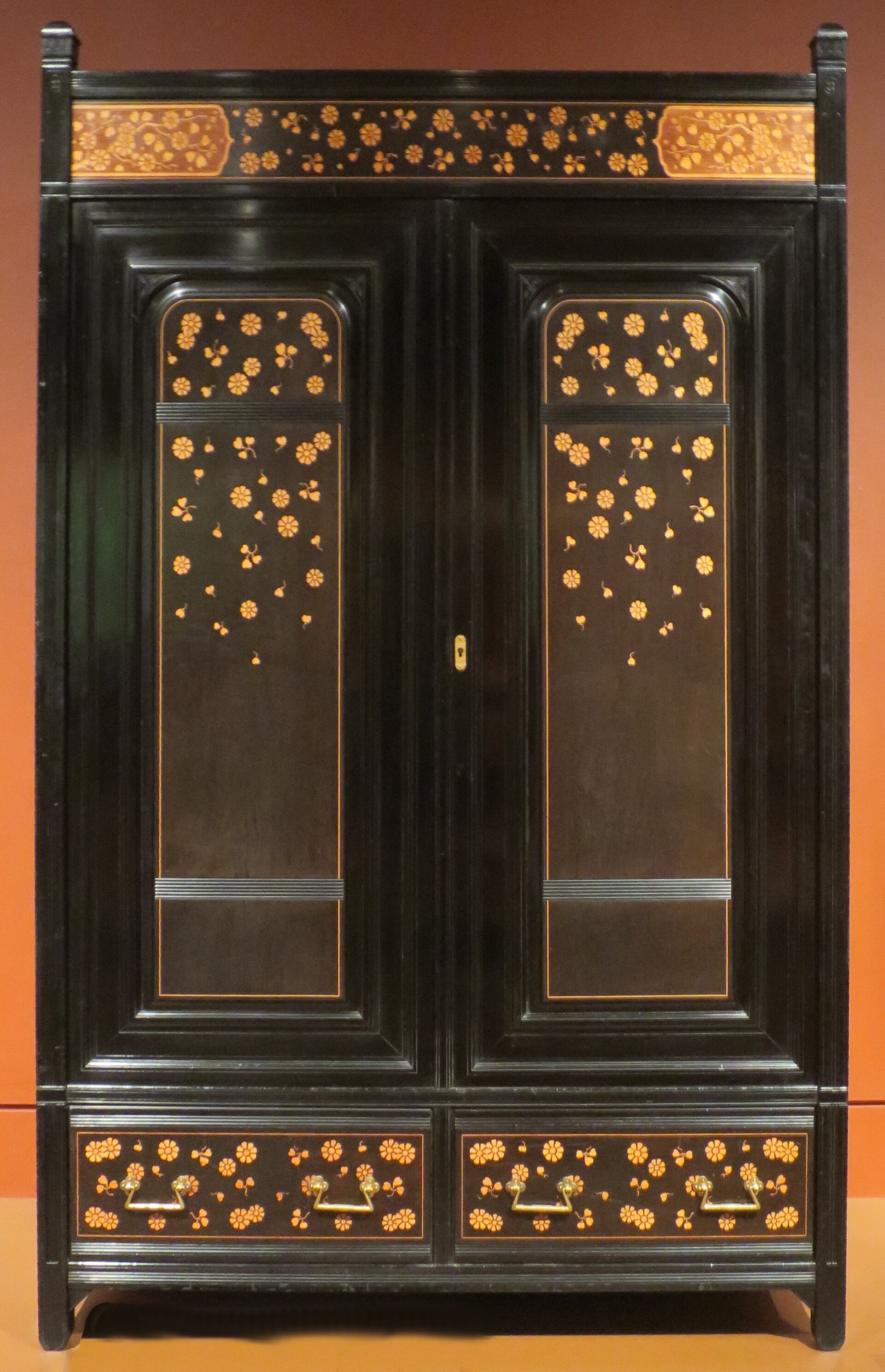
| Wardrobe Herter Brothers | Contemporary firm production in the same collection, illustrating the ebonized, marquetry-decorated mode the firm was moving away from by the time this cabinet was made Ebonized cherry with marquetry of various woods, white oak, yellow poplar and brass, dated 1875-83. | Metropolitan Museum of Art, New York, accession 69.140a, b |
| Side Chair Herter Brothers | Another Metropolitan Museum Herter Brothers attribution from the same broad period Oak with brass and reproduction leather upholstery, dated 1879-82. | Metropolitan Museum of Art, New York, accession 1994.80 |
| Armchair Herter Brothers | Acquired by the Metropolitan Museum in the same calendar year as this cabinet, though from a different gift and with no evidence of a shared prior owner Gilded wood, probably cherry, maple or ash, ca. 1875, with modern upholstery over original underupholstery materials. | Metropolitan Museum of Art, New York, accession 1999.488 |
Open questions
- What document, if any, would directly tie this cabinet to Oliver Ames's commission? No bill, ledger entry or piece of correspondence naming it has been located, and the firm's one surviving business archive only begins in 1891, after the cabinet was made.
- Which of Oliver Ames's two documented residences, the Commonwealth Avenue house in Boston (built 1882-83) or the older family estate in North Easton, actually held this cabinet? The Metropolitan Museum's own wall text names the client but not the room, and this record's preference for the Commonwealth Avenue house rests on a date coincidence, not a stated fact.
- Where was the cabinet between about 1883 and its appearance with a New York dealer in the 1990s? No owner, sale or exhibition has been identified for a gap of well over a hundred years.
- Who supervised the Herter Brothers workshop between Christian Herter's 1881 retirement and his 1883 death, the exact window in which this cabinet is dated? No source consulted names a specific manager or designer for that interval.
- What price did the Metropolitan Museum pay in 1999, and how was it divided between the Robert L. and Ann R. Fromer gift and the Margot Johnson, Inc. gift? Neither figure has been published in the sources consulted for this record.
Questions about this object
What is Cabinet?
Cabinet is a furniture, dated ca. 1883. Medium: Maple, with painted and gilded surface, bevelled glass, silk velvet, brass.
Who made Cabinet, and is the attribution settled?
The attribution to Herter Brothers is recorded here as accepted. The Metropolitan Museum catalogues this cabinet as 'Attributed to Herter Brothers,' not as an unqualified Herter Brothers work. No maker's mark, label or stamp is recorded on it in the Museum's published entry. The attribution rests on three converging but circumstantial strands: the cabinet's decorative vocabulary matches the firm's documented Anglo-Japanese and Neoclassical repertoire of the early 1880s; its first recorded owner, Oliver Ames, is independently documented as a Herter Brothers client through a surviving decorated room in his Boston house, built in exactly the years the cabinet was made; and the piece passed to the Museum through Margot Johnson, Inc., a New York dealer specializing in Herter Brothers furniture who worked directly with the Museum's own curator of American decorative arts. No bill, ledger entry or firm record naming this specific cabinet has been located, and the firm's one surviving business archive, at the Winterthur Library, only begins in 1891, eight years after this piece was made. The Museum's own 'Attributed to' line is the most honest register of that gap.
Where is Cabinet now?
Metropolitan Museum of Art, New York, The American Wing. Inventory number 1999.79 (Met object ID 16576). Last confirmed 5 September 2026. Purchase, Robert L. and Ann R. Fromer Gift and Margot Johnson, Inc. Gift, in honor of the 75th anniversary of The American Wing, 1999. As most recently recorded on the Museum's own catalogue page, the cabinet is listed 'Not on view.'.
What is still unknown about Cabinet?
What document, if any, would directly tie this cabinet to Oliver Ames's commission? No bill, ledger entry or piece of correspondence naming it has been located, and the firm's one surviving business archive only begins in 1891, after the cabinet was made.
Sources
- 1Metropolitan Museum of Art, 'Cabinet' (Attributed to Herter Brothers), object 16576, accession 1999.79, collection catalogue entry, including curatorial description and provenance/marks tabs. metmuseum.org/art/...
- 2Metropolitan Museum of Art Collection API, raw object record for object 16576 (accession 1999.79): dimensions, medium, credit line, constituent and attribution-prefix data, and image set. collectionapi.metmuseum.org/public/...
- 3Metropolitan Museum of Art Collection API, object 20608 (Cabinet, accession 2014.530.2), consulted only to compare the Museum's own attribution language across two different Herter Brothers cabinets. collectionapi.metmuseum.org/public/...
- 4Metropolitan Museum of Art Collection API, object 9724 (Wardrobe, accession 69.140a, b). collectionapi.metmuseum.org/public/...
- 5Metropolitan Museum of Art Collection API, object 5027 (Side Chair, accession 1994.80). collectionapi.metmuseum.org/public/...
- 6Metropolitan Museum of Art Collection API, object 16719 (Armchair, accession 1999.488). collectionapi.metmuseum.org/public/...
- 7Society of Architectural Historians, SAH Archipedia, 'Oliver Ames Mansion,' 355 Commonwealth Avenue, Boston, on the building's architect, construction dates and its Herter Brothers-decorated room. sah-archipedia.org/buildings/...
- 8Back Bay Houses, '355 Commonwealth,' documented history of the Oliver Ames town house from its 1882 building permit through its 1926 sale to the National Casket Company and later uses. backbayhouses.org/355-commonwealth
- 9The Trustees of Reservations, 'Governor Oliver Ames Estate History,' on the separate North Easton, Massachusetts family estate and its demolition by 1909. thetrustees.org/content/...
- 10Wikipedia, 'Herter Brothers,' for the firm's founding dates, client list and the White House paper label detail. en.wikipedia.org/wiki/...
- 11Wikipedia, 'Oliver Ames (governor),' for Ames's biography, the Credit Mobilier inheritance and the Jay Gould legal battle. en.wikipedia.org/wiki/...
- 12Winterthur Library, Joseph Downs Collection of Manuscripts and Printed Ephemera, finding aid for Herter Brothers Business Papers (Col. 93), on the archive's 1891-1907 date range and the firm's history under Gustave, Christian and William Gilman Nichols. findingaid.winterthur.org/html/...
- 13Chipstone Foundation, American Furniture 1995, review of Katherine S. Howe, Alice Cooney Frelinghuysen and Catherine Hoover Voorsanger, Herter Brothers: Furniture and Interiors for a Gilded Age (Harry N. Abrams with the Museum of Fine Arts, Houston, 1994), on the catalogue's sourcing method. chipstone.org/article.php/...
- 14Antique Trader, 'Buying or selling? Be sure you avoid the attribution pit,' on the general market dynamic of unmarked furniture acquiring unsupported maker attributions. General antiques-trade source, not specific to Herter Brothers. antiquetrader.com/furniture/...
- 15Sotheby's, 'Masterpieces by Louis Comfort Tiffany, Featuring The Ann and Robert Fromer Collection,' on the Fromers' collecting focus in Tiffany, Art Nouveau and Art Deco decorative arts. sothebys.com/en/...
- 16Phillips, 'Turning the Centuries: Works from the Ann and Robert Fromer Collection,' further background on the Fromer collection. phillips.com/article/...
- 17Maine Antique Digest, coverage of Margot Johnson's activity in the American Gilded Age furniture market and her documented work with Metropolitan Museum curator Alice Cooney Frelinghuysen. maineantiquedigest.com/events/...
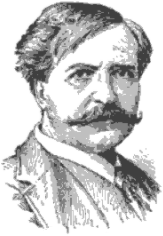
- 18Wikimedia Commons, 'File:Christian Herter (1839-1883).png,' portrait reproduced from The National Cyclopaedia of American Biography, Volume V, 1907, page 321. commons.wikimedia.org/wiki/...
- 19Wikimedia Commons, 'File:Wardrobe, Herter Brothers, 1875-83, Metropolitan Museum of Art.JPG,' photograph by Wikimedia contributor Wmpearl. commons.wikimedia.org/wiki/...
.png)

Last verified · Published
Change log
5 September 2026 - Record created at the house standard: researched narrative, technical evidence, maker dossier, graded provenance chain, prices with hammer and premium separated, related works, open questions and sources.