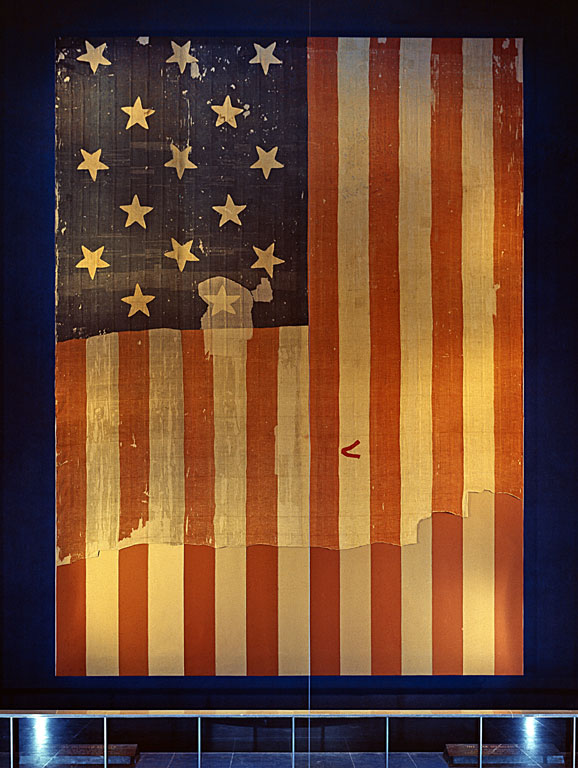
Star-Spangled Banner
1813 · Wool bunting
National Museum of American History
 American · active 1776-1857
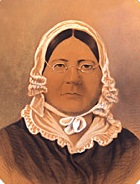
Mary Pickersgill, in a portrait made and published about 1853, when she was in her late seventies, some four years before her death. The painter is not recorded in the sources consulted for this page. The portrait is held by the Pickersgill Retirement Community, the institution descended from the charity she led from 1828 to 1851, and this reproduction is the one used by the Smithsonian's own Star-Spangled Banner Project to illustrate her.
Pickersgill Retirement Community, Towson, Maryland, via the Smithsonian's Star-Spangled Banner Project| Full name | Mary Young Pickersgill |
|---|---|
| Worked as | Flag maker, Needleworker, Businesswoman, Philanthropist |
| Born | 1776-02-12 · Philadelphia, Pennsylvania |
| Died | 1857-10-04 · Baltimore, Maryland |
| Nationality | American |
| In this archive | 1 artwork |
| Sources | 16 cited |
| Last verified |
About this page 1 artwork in the archive · Last verified · 16 sources cited
Mary Pickersgill ran a commercial flag-making business at her house on Baltimore's harbor front for half a century, one of a small number of women documented as professional flag makers in the early United States. She had learned the trade as a child from her mother, Rebecca Young, who had sewn colors for the Continental Army in Philadelphia, and by 1813 Pickersgill's own shop was established enough that the officers defending Fort McHenry came to her, not to a man, when they needed a national flag large enough to be seen from a distance. What she is known for today is one object, the garrison flag that survives at the Smithsonian, but that object was made by a household, not a hand: her thirteen-year-old daughter, two nieces, her elderly mother, and an indentured servant named Grace Wisher all worked the six or seven weeks it took, on the floor of a rented brewery malt-house because the flag was too big for any room Pickersgill owned.
The thing hardest to find about her is not the flag, which is exhaustively documented elsewhere in this archive, but the workshop that made it: who was actually in the room, what they were paid or owed, and how completely one of their names very nearly stayed out of the record. Grace Wisher's presence is now established by an indenture contract and a household census entry, not by anything she herself wrote or that anyone thought to record about her afterward; what happened to her once her indenture ended is not known. The National Park Service's own account of the flag house states that the workshop included enslaved as well as indentured African American labor, and a Flag House historian has gone further still, naming an enslaved woman as a worker on the flag itself and citing a probate document listing enslaved people in the Pickersgill household. This page follows the paper trail as far as it has been published and says plainly where it runs out.
Mary Young born in Philadelphia, 12 February, to William and Rebecca Flower Young.36
Marries Philadelphia merchant John Pickersgill, 2 October.46
John Pickersgill dies in London while working for the government's British Claims Office; Mary is widowed at 29.46
Mary moves to Baltimore with her daughter Caroline and her mother Rebecca Young, and opens a flag-making shop.14
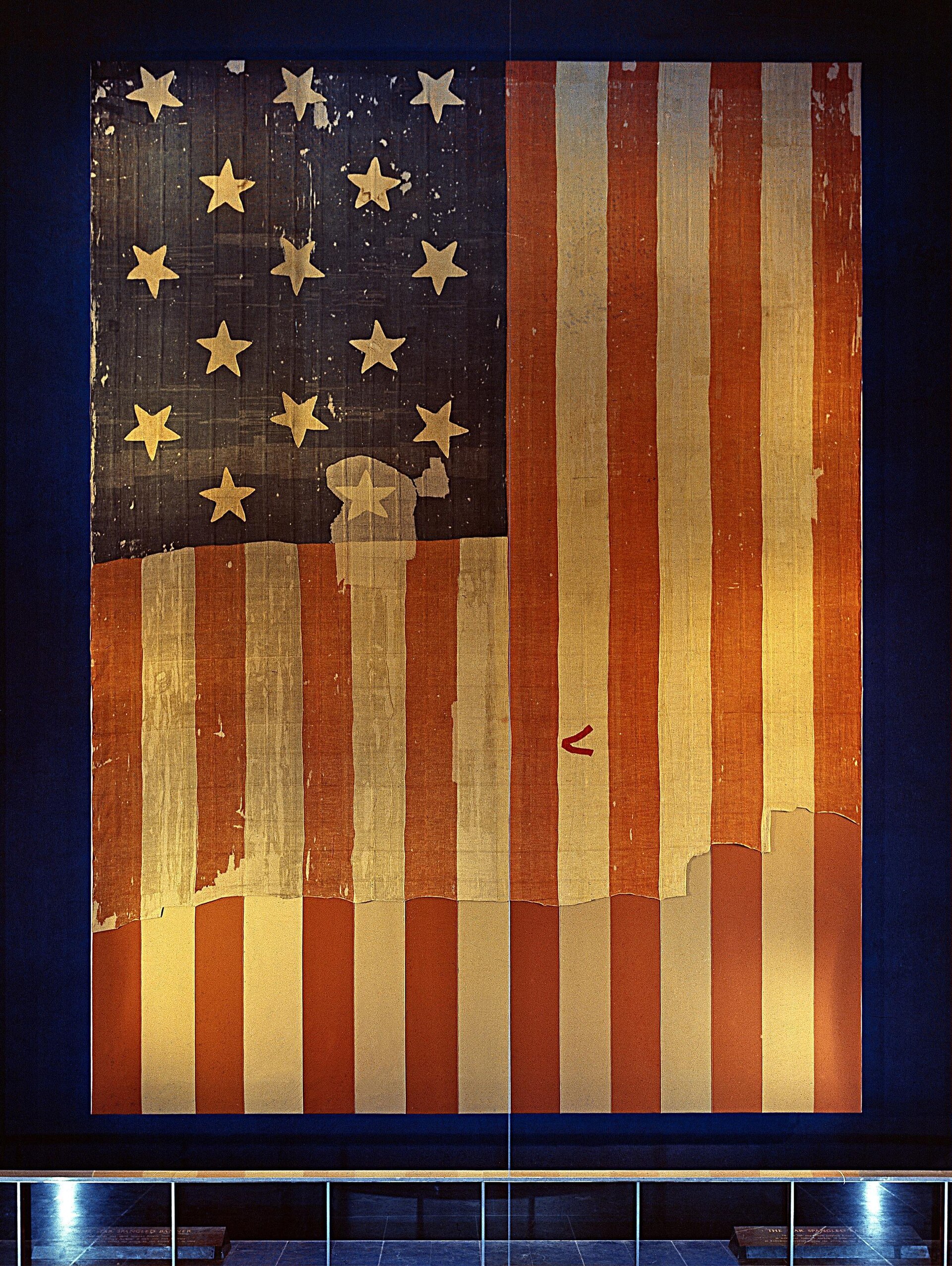
Commissioned by Major George Armistead's officers to make a garrison flag and a storm flag for Fort McHenry; both delivered 19 August, paid 27 October: $405.90 and $168.54.15
The garrison flag flies over Fort McHenry the morning after the 13-14 September bombardment; Francis Scott Key's poem, later the national anthem, describes it.15
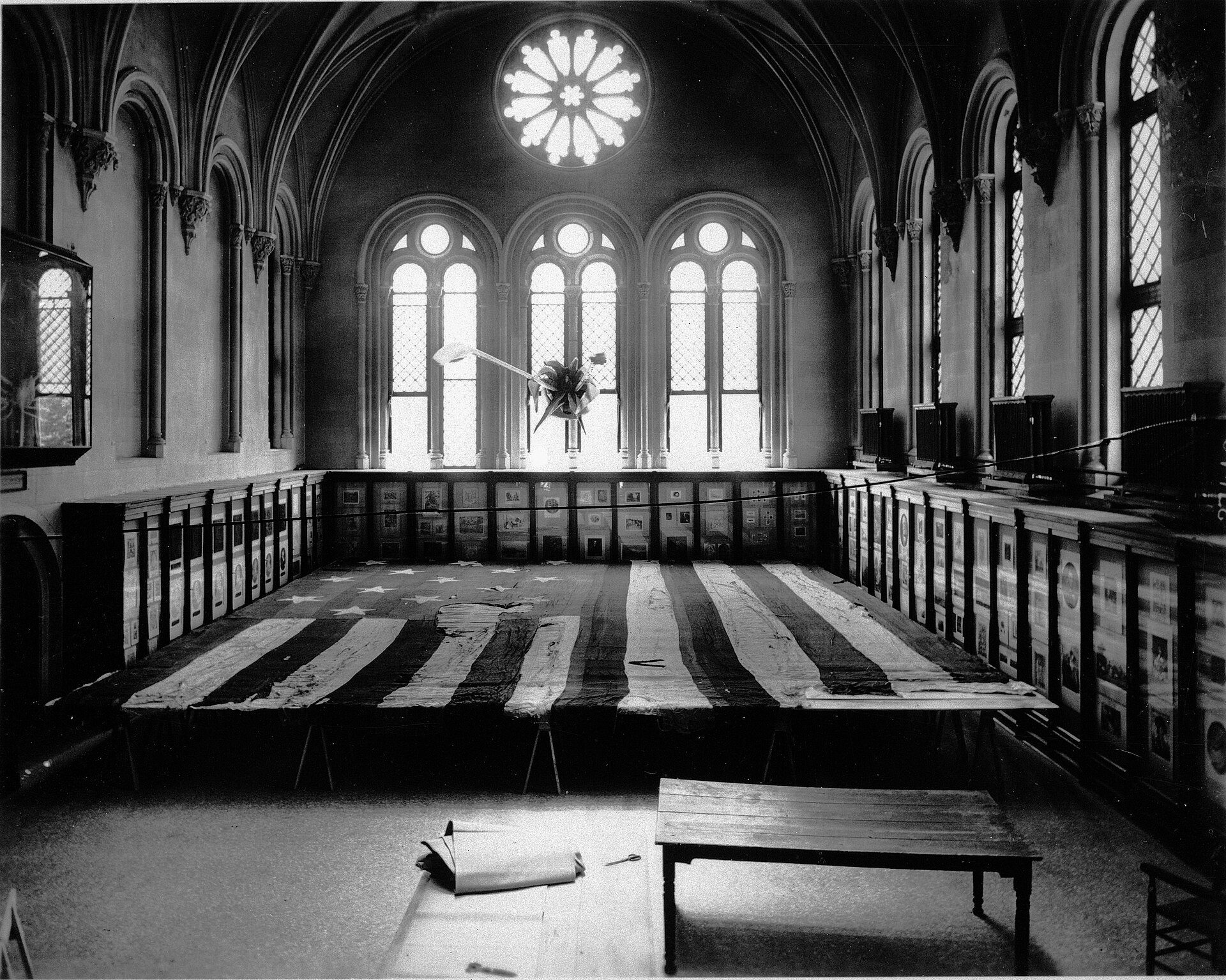
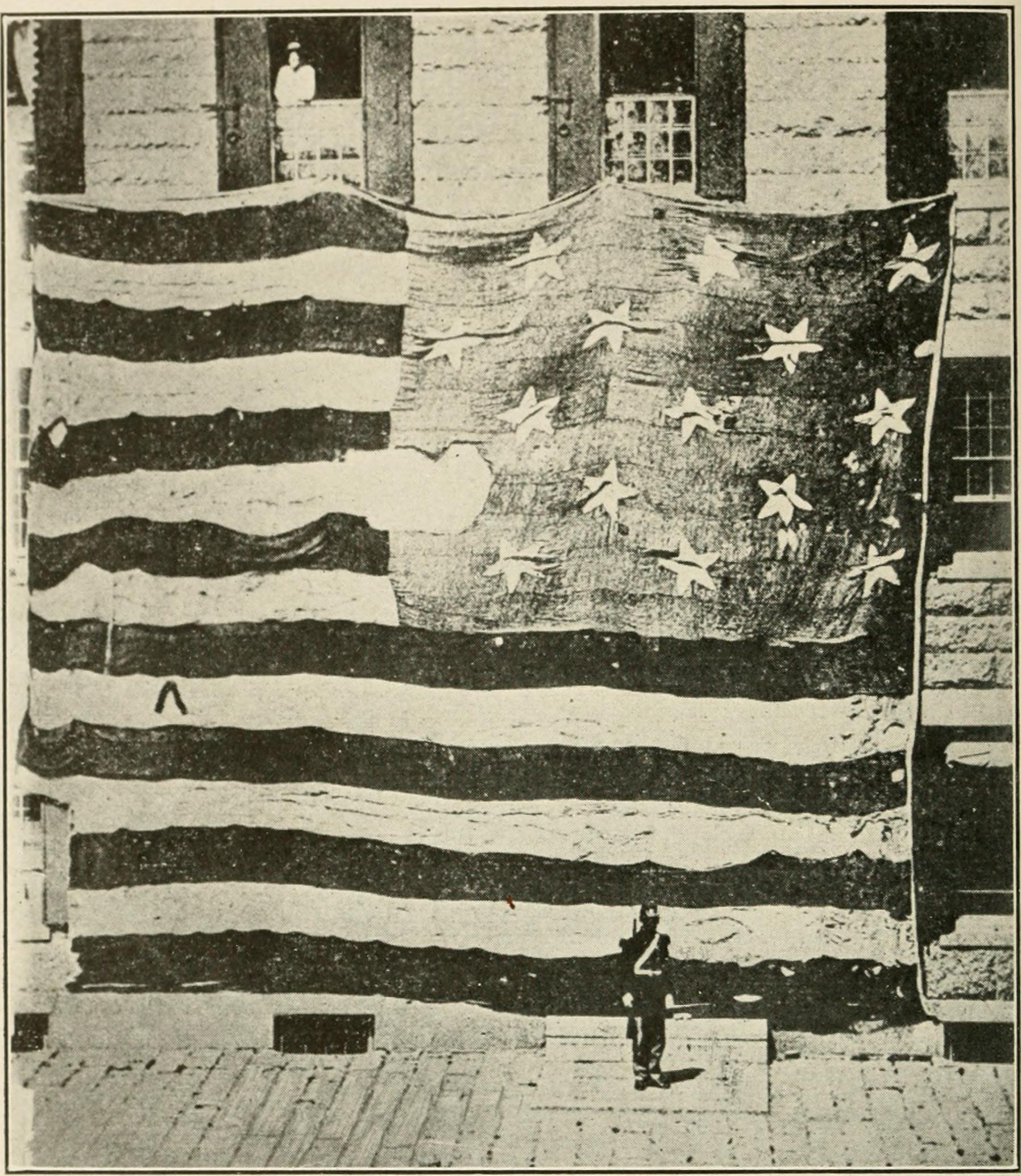
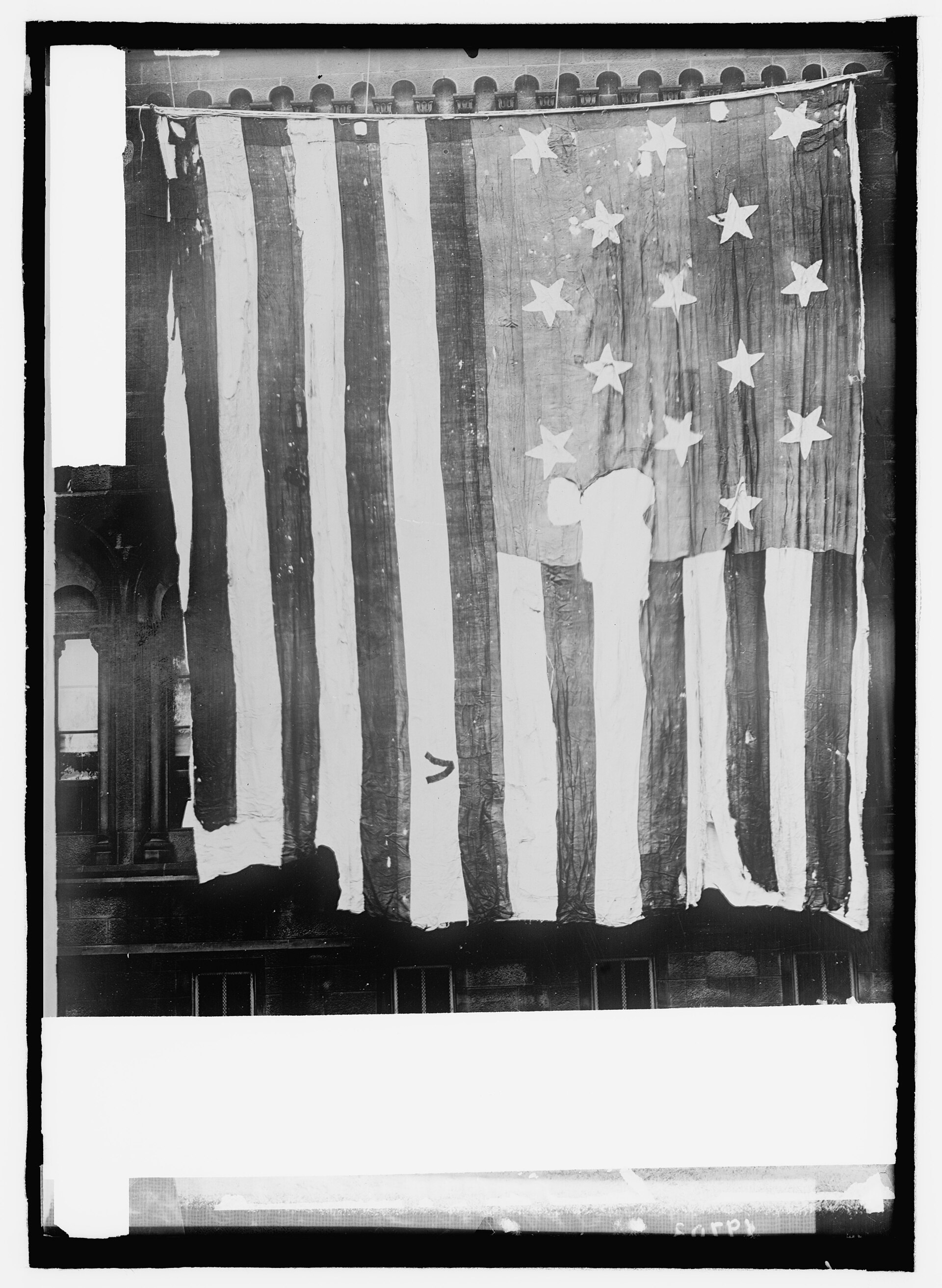
The first documented instance of a fragment being cut from the flag: a piece given to the widow of a soldier killed at the Battle of Baltimore, to be buried with her husband.11
Pickersgill buys outright the Baltimore house she had been renting, using proceeds of her flag business.16
Becomes president of the Impartial Female Humane Society, a Baltimore charity founded in 1802.18
Under her presidency, the Society opens its Aged Women's Home on West Lexington Street, Baltimore.8
Dies in Baltimore, 4 October; buried at Loudon Park Cemetery.16
Eben Appleton, Pickersgill's flag's later owner by descent, lends it to the Smithsonian Institution.5
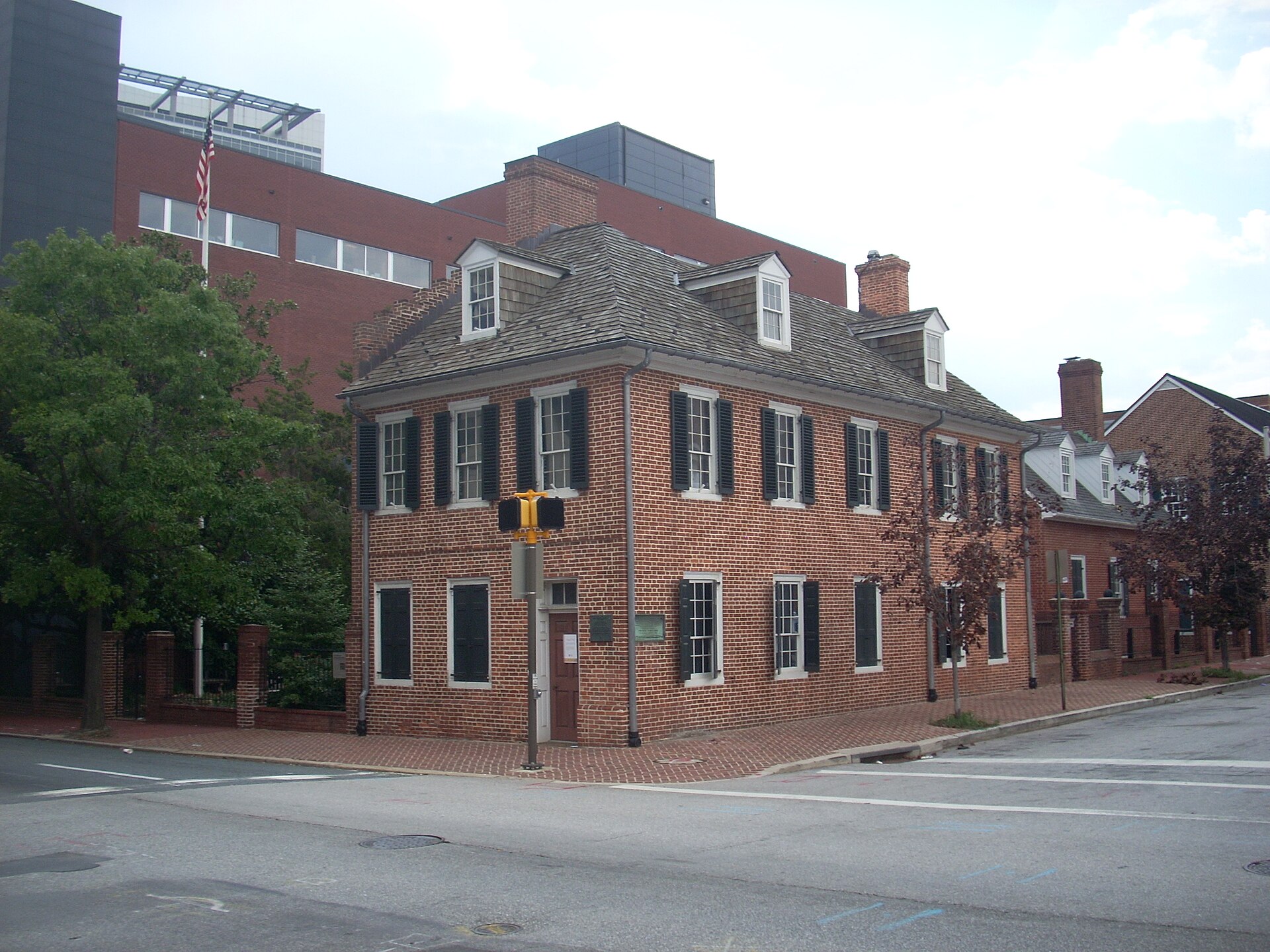
Pickersgill's Baltimore house is sold to the City of Baltimore and the newly formed Star-Spangled Banner Flag House Association; designated a historic shrine in 1928.9
The Impartial Female Humane Society, relocated to Towson, Maryland, is renamed the Pickersgill Retirement Community.8
The workshop's one famous object is not for sale and, held by the Smithsonian under federal ownership, could not be sold. What the market has instead priced, repeatedly, is fragments cut from that flag as nineteenth-century keepsakes: three separate sales are documented in the sources consulted, ranging from just over ten thousand dollars for a fingernail-sized scrap to more than a hundred and twenty thousand dollars for a pair of larger, well-provenanced pieces. None of the published results separates a hammer price from the buyer's premium except the smallest lot, so this page reports the totals as published and says plainly where the split is not available.
| Date | Sale | Work | Result | Note |
|---|---|---|---|---|
| 25 June 2011 | Heritage Auctions | Two fragments of the Star-Spangled Banner flag, provenance through the Military Order of the Loyal Legion of the United States Museum, Philadelphia | Hammer Not separately published With premium Total price $65,725, stated to include a 19.5 percent buyer's premium USD | Part of the same Arms and Militaria sale as the Saunders fragment below. |
| 25 June 2011 | Heritage Auctions | A single fragment of blue bunting, 1.25 by 0.5 inches, with a single red thread fringe, bought by William Saunders | Hammer $10,755 With premium Not separately published USD | The smallest and most precisely measured fragment sale found for this page. |
| 16 September 2014 | RR Auction | Two fabric swatches, each about 3 by 3 inches, mounted to a manuscript by the collector Isaac Winter Heysinger describing their origin | Hammer Not separately published With premium Total price $122,500, stated to include buyer's premium USD | The highest-priced fragment sale found for this page; estimated at auction as $0-plus, i.e. unreserved. |
Hammer is the price at which the bidding stopped; with premium adds the fee the house charges the buyer on top. Hammer price and buyer's premium in the glossary.
| Institution | City | Holdings | Note |
|---|---|---|---|
| National Museum of American History, Smithsonian Institution | Washington, D.C. | The Fort McHenry garrison flag itself, the workshop's one securely attributed object, on permanent display. | See the separate record for this object elsewhere in this archive for its full provenance and conservation history. |
| Star-Spangled Banner Flag House and Museum | Baltimore, Maryland | Pickersgill's own house, where the household lived and where the business was run, now a National Historic Landmark and museum. | The malt-house across the street where the flag was actually assembled does not survive as such. |
| United States Naval Academy Museum | Annapolis, Maryland | A documented fragment of the flag, traced through a chain of family ownership. | |
| Loudon Park Cemetery | Baltimore, Maryland | Pickersgill's grave, with a monument erected by her daughter Caroline and a later bronze plaque placed by the United States Daughters of 1812 and the Flag House Association. | |
| Pickersgill Retirement Community | Towson, Maryland | The institutional descendant of the Impartial Female Humane Society, which Pickersgill led from 1828 to 1851; holds the one portrait of her used on this page. | A retirement community, not a museum open for casual visits. |
Mary Young was born in Philadelphia on 12 February 1776 to William Young and Rebecca Flower Young.
Mary Young was born in Philadelphia on 12 February 1776 to William Young and Rebecca Flower Young. Her mother was widowed while Mary was still a small child and supported the family by running a flag shop on Walnut Street, sewing ensigns, garrison flags and what contemporary paperwork calls Continental Colors for Washington's army; Rebecca Young's name appears in the logs of the commissary general as early as 1781 for Continental Standards, and she advertised in the Pennsylvania Packet that year offering colors for the Army and Navy on reasonable terms. She is one of the earliest documented makers of American military flags, and it was in her shop, not a school, that her daughter learned the trade.
The line from Rebecca Young to Mary Pickersgill is a documented case of a woman's craft business passing to a daughter as a going concern, complete with clients and technique, at a moment when almost no other route into that trade existed for a woman. Mary was working alongside her mother by her teens and was already an experienced maker of ship's colors and signal flags by the time Baltimore came to depend on her.
Mary married the Philadelphia merchant John Pickersgill on 2 October 1795.
Mary married the Philadelphia merchant John Pickersgill on 2 October 1795. Of their four children only one, Caroline, survived infancy. John Pickersgill took a position with the United States government's British Claims Office and never returned from London, dying there on 14 June 1805; Mary was widowed at twenty-nine with a young daughter and, by 1807, had moved to Baltimore with Caroline and her own elderly mother, Rebecca, in tow.
In Baltimore she rented a house on Queen Street, later renumbered as 844 East Pratt Street, and opened a flag-making business advertising silk standards and cavalry and division colors of every description. Her clientele was not limited to the military: Baltimore's harbor put merchant shipping on her doorstep, and her shop filled orders for signal flags and house flags for vessels as well as for the United States Army and Navy. The business was successful enough that by 1820 Pickersgill was able to buy outright the house she had been renting.
By the summer of 1813 Baltimore expected a British attack, and Major George Armistead, newly posted to command Fort McHenry, wanted a national color large enough that an approaching enemy fleet would...
By the summer of 1813 Baltimore expected a British attack, and Major George Armistead, newly posted to command Fort McHenry, wanted a national color large enough that an approaching enemy fleet would have no difficulty seeing it. The order came to Pickersgill through the Army's ordinary quartermaster and commissary channels, from General Samuel Smith, Brigadier General John Stricker and Commodore Joshua Barney, who was Pickersgill's own brother-in-law by marriage. Two flags were ordered: a large 30 by 42 foot garrison flag and a smaller 17 by 25 foot storm flag for foul weather.
Pickersgill and her niece Eliza Young received payment on 27 October 1813 for the delivered flags: $405.90 for the large garrison flag and $168.54 for the storm flag, a combined $574.44. The larger sum alone is recorded as more than most Baltimoreans earned in a year at the time, a useful check on what the commission actually meant to a household that depended on it: this was not a token order but a substantial piece of business, priced accordingly.
The Smithsonian's own reconstruction of the workshop, drawn from the surviving procurement paperwork and family correspondence, names five people at work on the flags in the summer of 1813 besides...
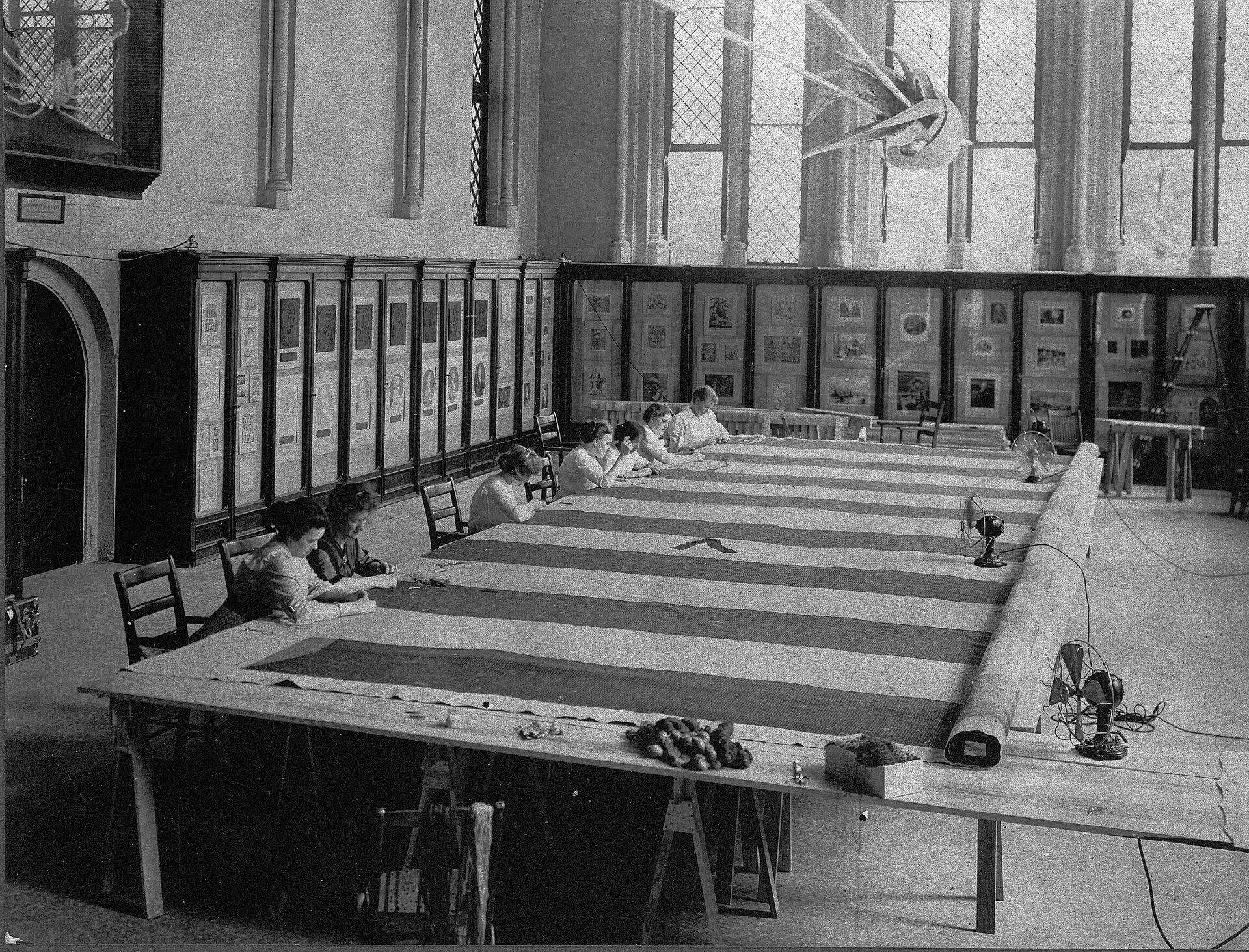
The Smithsonian's own reconstruction of the workshop, drawn from the surviving procurement paperwork and family correspondence, names five people at work on the flags in the summer of 1813 besides Pickersgill herself: her thirteen-year-old daughter Caroline; her nieces Eliza Young, aged thirteen, and Margaret Young, aged fifteen; an indentured servant, Grace Wisher, also thirteen; and Pickersgill's elderly mother Rebecca, believed to have helped though her exact role is not detailed. The garrison flag was too large to lay out inside the house, so Pickersgill obtained permission to spread it across the floor of the malt-house at the neighboring Claggett's Brewery, where her daughter Caroline later recalled seeing her mother on her knees placing the stars.
The National Park Service's own page for the Flag House describes the workshop's labor more broadly, as drawn from "indentured and enslaved African American servants" working alongside the family, without naming an enslaved individual or citing a specific source for that status. No other account consulted for this page, including the Smithsonian's own Star-Spangled Banner Project research, names an enslaved person in the household in 1813. The two accounts are not reconciled in the sources available, and this page states that plainly rather than picking one.
The bunting itself carries a wartime story of its own: it is single-ply rather than the double-ply weight typical of flags this size and period, and dye-lot variation is visible across different widths of the blue and red cloth, both consistent with a wool supply disrupted by the British blockade of the Chesapeake, which forced the workshop to piece the flag together from whatever bunting it could obtain quickly rather than from one uniform batch.
Grace Wisher was about ten years old in 1809 or 1810 when her mother, Jenny Wisher, a free Black woman, indentured her to Mary Pickersgill for a six-year term due to run to around 1815 or 1816.
Grace Wisher was about ten years old in 1809 or 1810 when her mother, Jenny Wisher, a free Black woman, indentured her to Mary Pickersgill for a six-year term due to run to around 1815 or 1816. The agreement specified that Grace would learn housework and plain sewing in exchange for food, shelter, clothing and a payment to her mother; it is a document of unfree labor, not employment in the modern sense, even though Grace herself was legally free and her mother had negotiated the terms. She was roughly five years into that indenture, at about thirteen, when she worked alongside Caroline and the Young cousins sewing the 1813 flags.
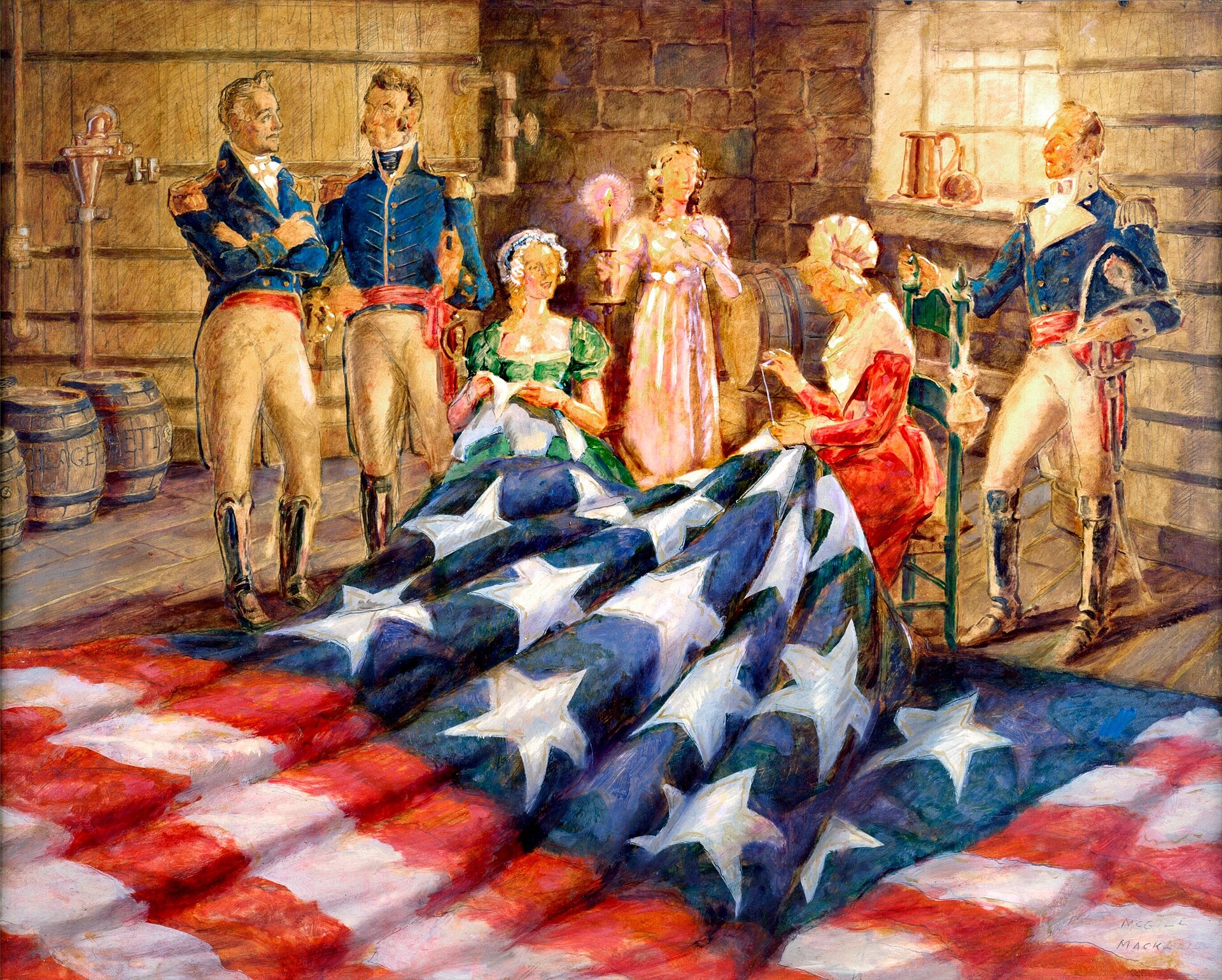
For most of the flag's public life credit went to Pickersgill alone, and later to Pickersgill together with her daughter and nieces. Grace Wisher's presence is not attested by anything she wrote; it survives in the indenture record and in household documentation identified by later researchers, including work associated with the Smithsonian's own Star-Spangled Banner Project. A 1962 commemorative oil painting of the workshop scene by the Baltimore artist Robert McGill Mackall, made for the American Bicentennial and now held by the Maryland Center for History and Culture, depicts Pickersgill with her daughter and a niece at work in the brewery malt-house; it does not depict Grace Wisher. That omission, in the single best-known visual image of the workshop, is itself part of the historiography: it shows concretely how a documented participant can be dropped from the picture people actually see, independent of anything written down. Grace Wisher's story has only been given sustained public attention in recent decades, through National Park Service and Smithsonian material that now names her alongside Pickersgill as one of the flag's makers. What became of her after her indenture ended, around 1815, is not documented in any source found for this page.
The object this workshop is known for, the garrison flag now held by the Smithsonian's National Museum of American History, is the subject of its own full record elsewhere in this archive, with its...
The object this workshop is known for, the garrison flag now held by the Smithsonian's National Museum of American History, is the subject of its own full record elsewhere in this archive, with its provenance, technical examination and conservation history set out in detail there; this page does not repeat that account. What belongs here is the fact of authorship: the flag survives with fifteen stars and fifteen stripes, reduced from its original size by roughly 240 square feet through nineteenth-century souvenir-cutting, and it is this workshop's only securely attributed object of the scale and fame that makes it a benchmark for identifying other War of 1812-era American flags. The smaller storm flag delivered alongside it, which many historians believe actually flew during the worst of the overnight bombardment on 13 to 14 September 1814, has not been traced to any known present location.
No flag from Pickersgill's workshop carries a signature or a maker's mark.
No flag from Pickersgill's workshop carries a signature or a maker's mark. Her authorship of the Fort McHenry commission rests entirely on the surviving 1813 procurement receipt naming her and her niece as the recipients of payment, and on later family correspondence, principally a letter from Caroline Pickersgill Purdy to Georgiana Armistead Appleton describing her mother at work. This is the same kind of documentary paper trail, receipts, family letters and census listings, used to attribute other War of 1812-era American flags to their makers; it is not physical evidence unique to her shop, and no forgery or attribution challenge to the Fort McHenry flag itself is documented in the sources consulted for this page.
Beyond that one object, there is no published catalogue of Pickersgill's output. Her shop is documented as having supplied silk standards, cavalry and division colors, and ship's signal flags to the United States Army, the Navy and merchant vessels over several decades of business, but no other individual flag from her workshop is identified by name or located in any source consulted here. There is no attribution authority for her work in the way a painter's catalogue raisonne functions; identification of a Pickersgill flag, where it happens at all, is done case by case against surviving paperwork, exactly as it was for the one flag that made her famous.
Pickersgill's business did not end with the Fort McHenry commission.
Pickersgill's business did not end with the Fort McHenry commission. She continued running her flag and ship-chandlery trade in Baltimore for decades afterward, and the proceeds were substantial enough to let her buy her rented house outright in 1820. Family correspondence records that after the 1814 battle, Colonel Armistead insisted that only Pickersgill herself mend the flag, and that she repaired shot damage by binding the torn edges, evidence that the professional relationship between maker and client continued past the original delivery.
Not every member of the household prospered in the long run. Caroline Pickersgill Purdy, who as a thirteen-year-old had helped sew the flag and who in later life corresponded with Georgiana Armistead Appleton supplying firsthand recollections of its making, is recorded as having become destitute; the same letters that preserve the workshop's only surviving eyewitness account were written, in part, out of that later need.
From 1828 to 1851 Pickersgill served as president of the Impartial Female Humane Society, a Baltimore charity founded in 1802 by a group of women to assist widows and deserted wives and incorporated...
From 1828 to 1851 Pickersgill served as president of the Impartial Female Humane Society, a Baltimore charity founded in 1802 by a group of women to assist widows and deserted wives and incorporated in 1811. Under her presidency the Society opened an Aged Women's Home on West Lexington Street in 1851, a purpose-built Gothic Tudor building of forty-two individual chambers with an infirmary, one of the more substantial pieces of charitable infrastructure a Baltimore women's organization had built to that date; an adjacent home for aged men followed some years later.
The organization outlived its founders. It relocated to a sixteen-acre site in Towson, Maryland in 1959 and was renamed for Pickersgill in 1962; it operates today as the Pickersgill Retirement Community, and it is this institution, not a museum, that now holds the one surviving portrait of her described below. The continuity is direct: the charity she ran for over two decades is the same organization, under the same name, still in business.
Mary Pickersgill died in Baltimore on 4 October 1857 and was buried at Loudon Park Cemetery; her daughter Caroline erected the monument, and the United States Daughters of 1812, together with the...
Mary Pickersgill died in Baltimore on 4 October 1857 and was buried at Loudon Park Cemetery; her daughter Caroline erected the monument, and the United States Daughters of 1812, together with the Star-Spangled Banner Flag House Association, later added a bronze plaque at the grave.
The house itself, at what is now 844 East Pratt Street, stayed in Pickersgill family hands until 1864 and then passed through commercial uses, including a post office, a bank, and a shipping facility, before being sold in 1927 to the City of Baltimore and a newly formed Star-Spangled Banner Flag House Association, an organization that grew out of members of the 1914 Centennial celebration committee; it was designated a historic shrine the following year. Some accounts instead date the City of Baltimore's own purchase of the property to 1929, and the sources consulted for this page do not fully reconcile the two dates. The building underwent a major restoration and expansion under Mayor Thomas D'Alesandro Jr. in 1952, funded partly by the Daughters of the American Revolution, and today operates as the Star-Spangled Banner Flag House and Museum, a National Historic Landmark standing on the ground where the flag's household once worked.
There is no market in objects made by Pickersgill's workshop as a body of work, because only one survives in a form anyone could buy or sell: cut fragments of the Fort McHenry flag itself, souvenired...
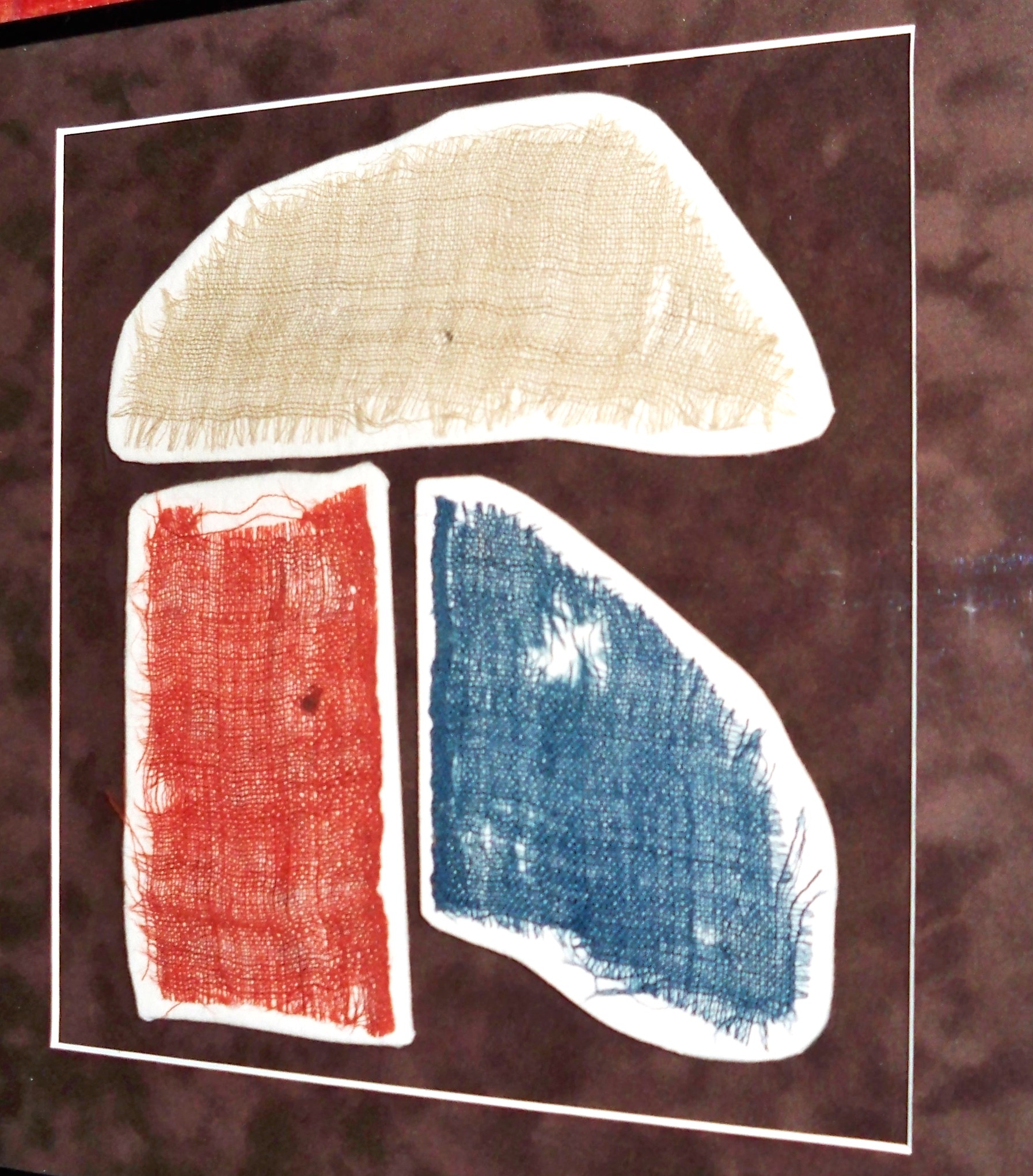
There is no market in objects made by Pickersgill's workshop as a body of work, because only one survives in a form anyone could buy or sell: cut fragments of the Fort McHenry flag itself, souvenired by the Armistead family and their circle across the nineteenth century. Two fabric swatches with a documented chain of custody through the Union officer and collector Isaac Winter Heysinger, each about three inches square and mounted to his own descriptive manuscript, sold at RR Auction on 16 September 2014 for a total of $122,500 including buyer's premium; the source consulted did not publish a hammer price separate from that total.
A pair of fragments with provenance through the Military Order of the Loyal Legion of the United States Museum in Philadelphia sold at Heritage Auctions' Arms and Militaria sale on 25 June 2011 for $65,725 including a 19.5 percent buyer's premium, again without a separately published hammer figure. At the same sale a single tiny fragment, an authenticated scrap of blue bunting 1.25 inches long and half an inch wide with a single red thread fringe, was bought by a private collector, William Saunders of the Columbus, Ohio area, with a reported hammer price of $10,755. The Smithsonian Institution itself has also secretly bought at least one fragment at auction, according to Smithsonian Magazine's own reporting; no purchase price or stated rationale for that acquisition was found in the sources consulted. None of this activity touches the flag itself, which has not been, and under its current ownership and conservation status could not be, on the market; it is fragments of Pickersgill's own workshop cloth, not the object she delivered, that occasionally change hands.
Flag maker; Needleworker; Businesswoman; Philanthropist. Mary Young Pickersgill, 1776-1857.
Born 1776-02-12, Philadelphia, Pennsylvania; died 1857-10-04, Baltimore, Maryland.
National Museum of American History, Smithsonian Institution (Washington, D.C.); Star-Spangled Banner Flag House and Museum (Baltimore, Maryland); United States Naval Academy Museum (Annapolis, Maryland); Loudon Park Cemetery (Baltimore, Maryland); Pickersgill Retirement Community (Towson, Maryland).
The workshop's one famous object is not for sale and, held by the Smithsonian under federal ownership, could not be sold. What the market has instead priced, repeatedly, is fragments cut from that flag as nineteenth-century keepsakes: three separate sales are documented in the sources consulted, ranging from just over ten thousand dollars for a fingernail-sized scrap to more than a hundred and twenty thousand dollars for a pair of larger, well-provenanced pieces.
The full extent of enslaved labor in the 1813 workshop, beyond the indentured Grace Wisher: the National Park Service's own Flag House page states the household's African American labor was indentured and enslaved, and a former Flag House executive director, Sally Johnston, has stated that an estate document lists one enslaved woman and three enslaved boys in the Pickersgill household and that an enslaved Black woman worked on the flag, without naming her. The Smithsonian's own Star-Spangled Banner Project account names five workshop members individually and does not include an enslaved person among them.
Last verified
One artwork and its story every Tuesday, with the picture: who owned it, what it made, and what closes soon in the exhibition calendar. No promotion, and nothing we cannot cite.
We send one email to confirm the address and keep nothing else. Every letter carries a one-click unsubscribe. How we handle your data.
