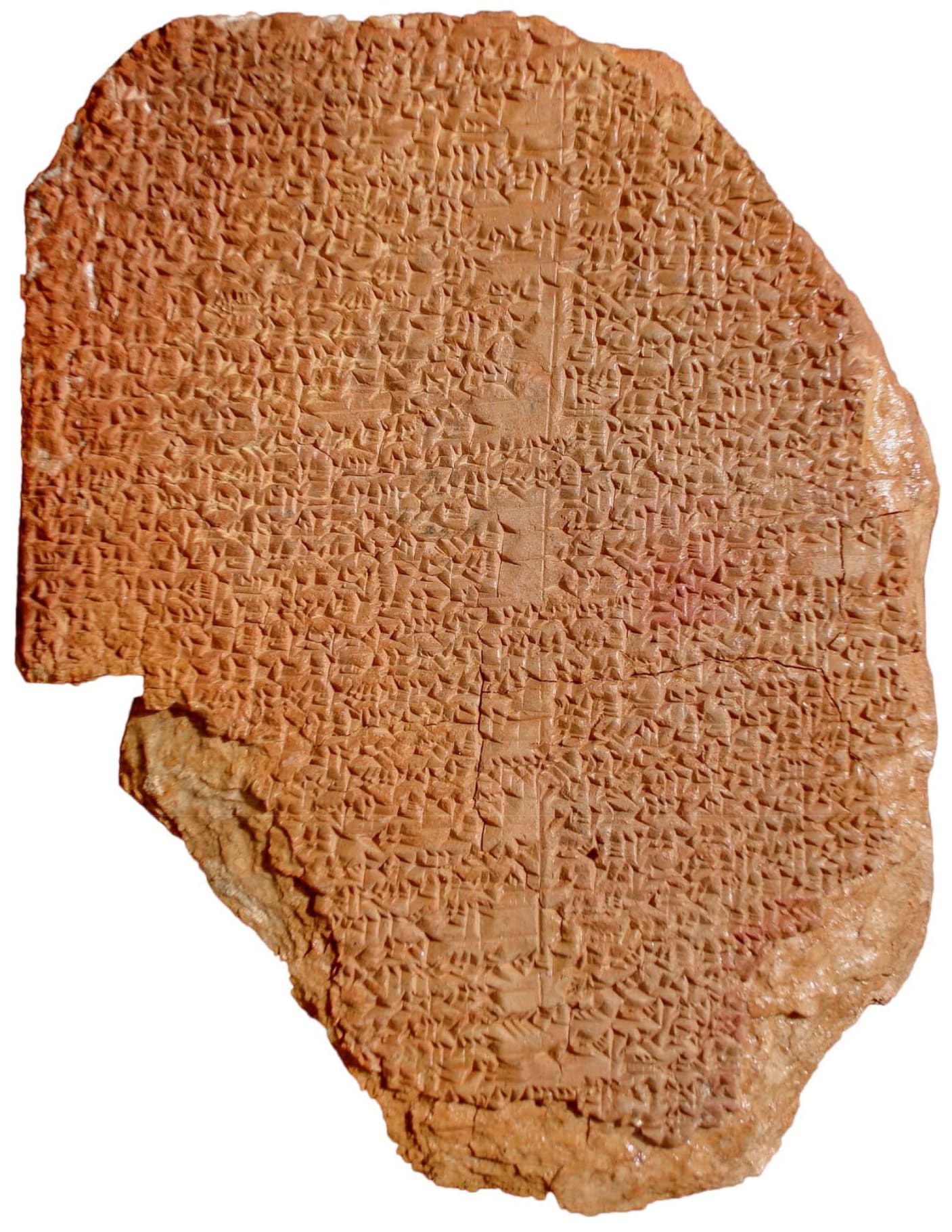
The Gilgamesh Dream Tablet
c. 1600 BC · Clay
Iraq Museum, Baghdad
Museum · Iraq Museum · Founded 1926
Closure confirmed 7 August 2026 · 22 sources
National Museum of Iraq is currently closed, on the evidence sourced below.
Expected to reopen: The State Board of Antiquities and Heritage gave a target of 'early 2026' in December 2025, with renovation reported 90 percent complete. That target has passed: on 9 February 2026 the Ministry of Culture's own Tourism Authority, speaking on the record to Iraq's state news agency, described the museum's rehabilitation (begun 10 July 2025) as heading toward reopening only 'during the coming period' (khilal al-fatra al-muqbila) -- no date. As of this check (7 August 2026), no further public reopening announcement has been found. · a target, not yet confirmed
Closure confirmed 7 August 2026 from the institution's own page. We re-check this page on a schedule and will update it, from the institution's own announcement, the moment it reopens.
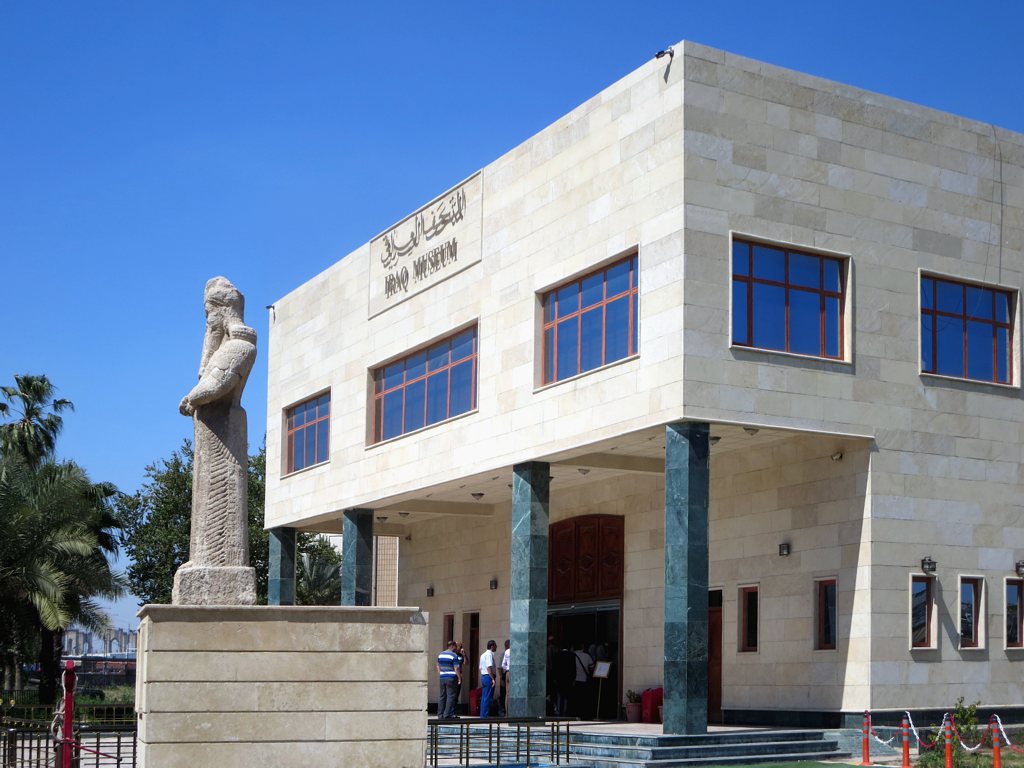
The museum's real strength is depth rather than polish: a continuous archaeological record running from the first farming villages of northern Iraq through the Abbasid caliphate, drawn overwhelmingly from documented excavations rather than the art market. Its Assyrian and Hatra holdings are judged the strongest rooms by visitors and specialists alike; its Sumerian holdings, depleted by the 2003 theft and partially restored since, still include objects -- the Warka Vase, the Mask of Warka -- that define how the earliest cities are pictured in general reference works that reproduce them. What it does not have, compared with the Mesopotamian galleries of the Louvre or the British Museum, is completeness: entire categories of material left Iraq before its own patrimony law restricted export, and some of what stayed was lost again in 2003 and has never come back.
| Local name | Iraq Museum |
|---|---|
| Kind | Museum |
| Founded | 1926 (as the Baghdad Antiquities Museum, growing out of a room of rescued antiquities Gertrude Bell began keeping in 1922; renamed the Iraq Museum on moving to its current building in 1966) |
| City and country |  Baghdad, Iraq Baghdad, Iraq |
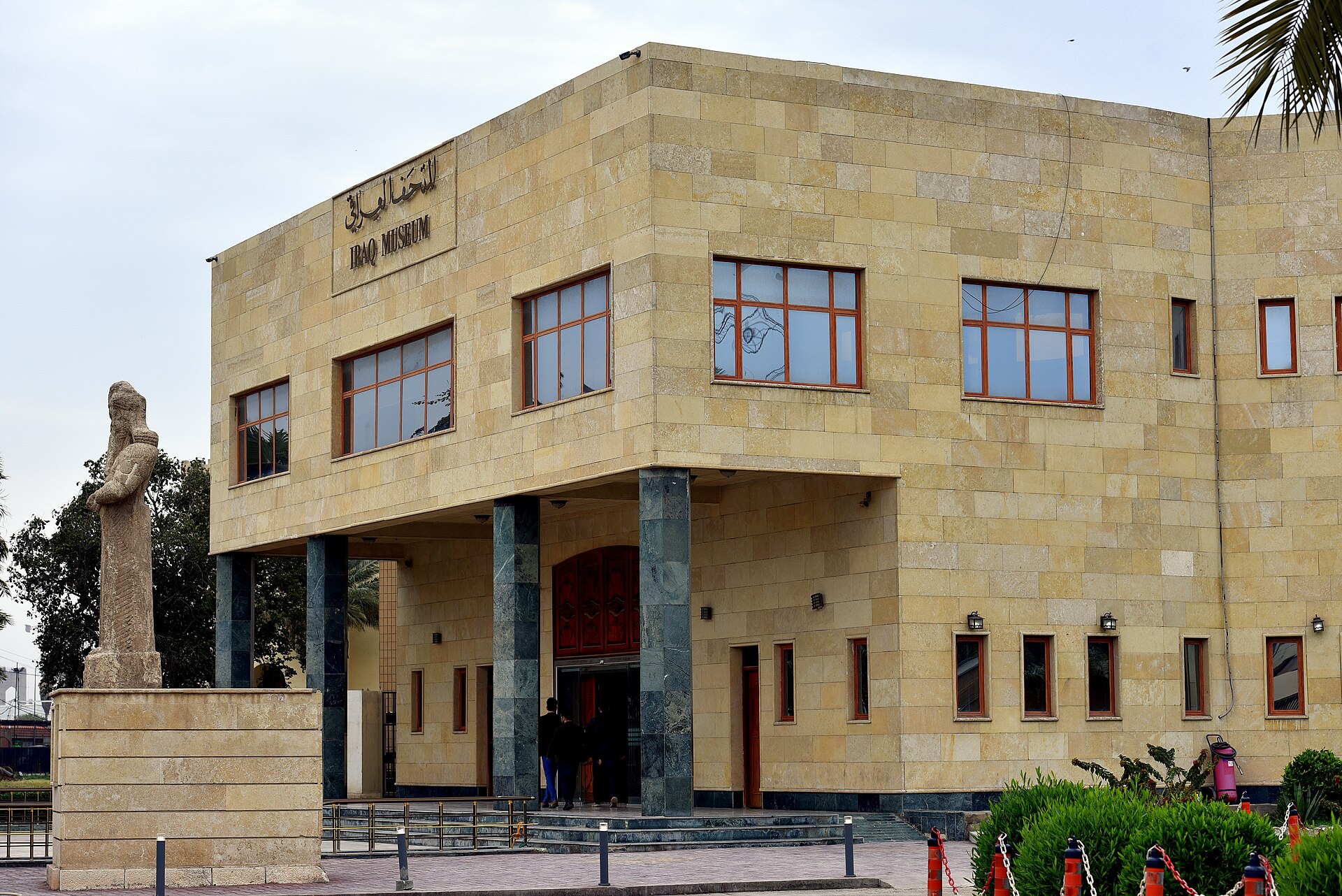
| Address | Karkh district, Baghdad, Iraq (Salihiyya/Allawi area, near the west bank of the Tigris; no confirmed street address found) |
| Website | theiraqmuseum.com |
| Status | Closed temporarily, confirmed 7 August 2026 |
| Record last verified | 7 August 2026 |
The museum is closed (see above). These are the figures published before the closure, kept here for a visitor planning ahead rather than presented as bookable today, and you can check the current position at the source we used. We will re-confirm them once it reopens.
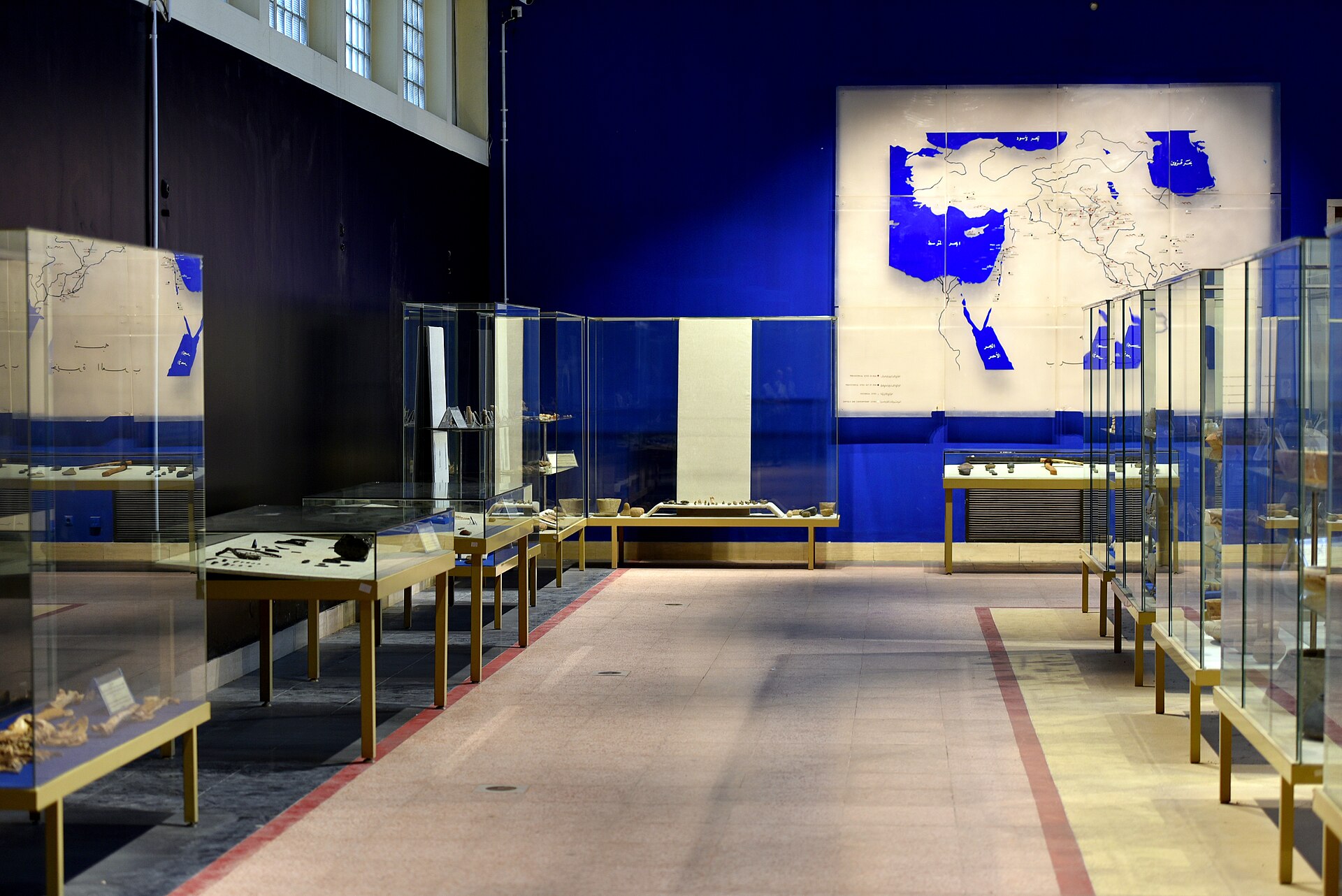
The museum's earliest material: Palaeolithic and Neolithic finds, including remains associated with the Shanidar Neanderthal skeletons, and painted pottery and burials from the early farming cultures of northern Iraq (Hassuna, Halaf, Samarra), among them the alabaster vessels and burials excavated at Tell es-Sawwan.
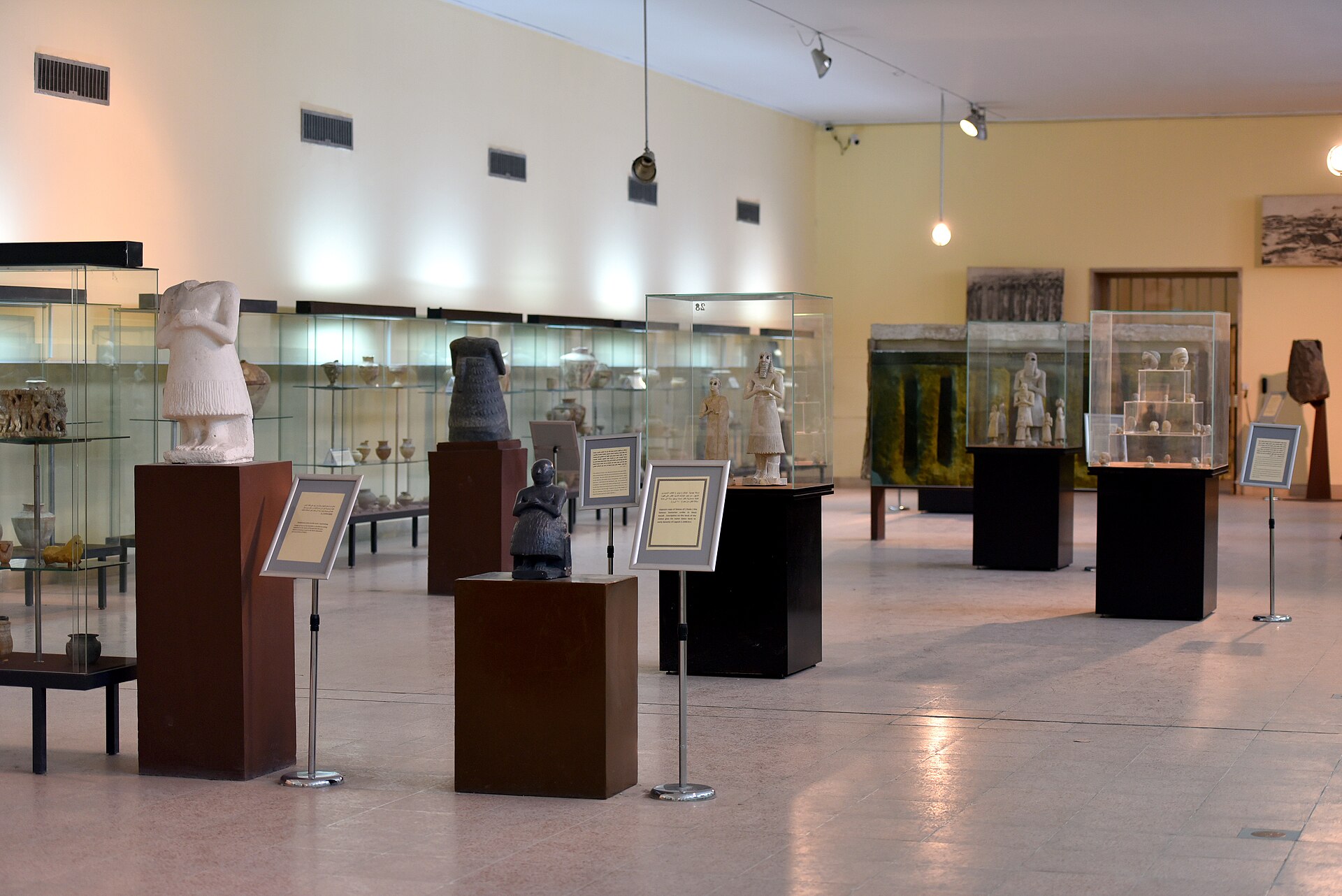
Material from Uruk, Ur and the early city-states of the south, including the Uruk vase tradition, votive statues of worshippers from the temples at Tell Asmar and Khafajah, and objects associated with the Royal Cemetery of Ur.
The Bassetki Statue, a copper figure cast for the Akkadian king Naram-Sin around 2250 BC; a cast copy of the Code of Hammurabi (the original stele is in the Louvre); and the stele of Dadusha, king of Eshnunna, around 1800 BC.
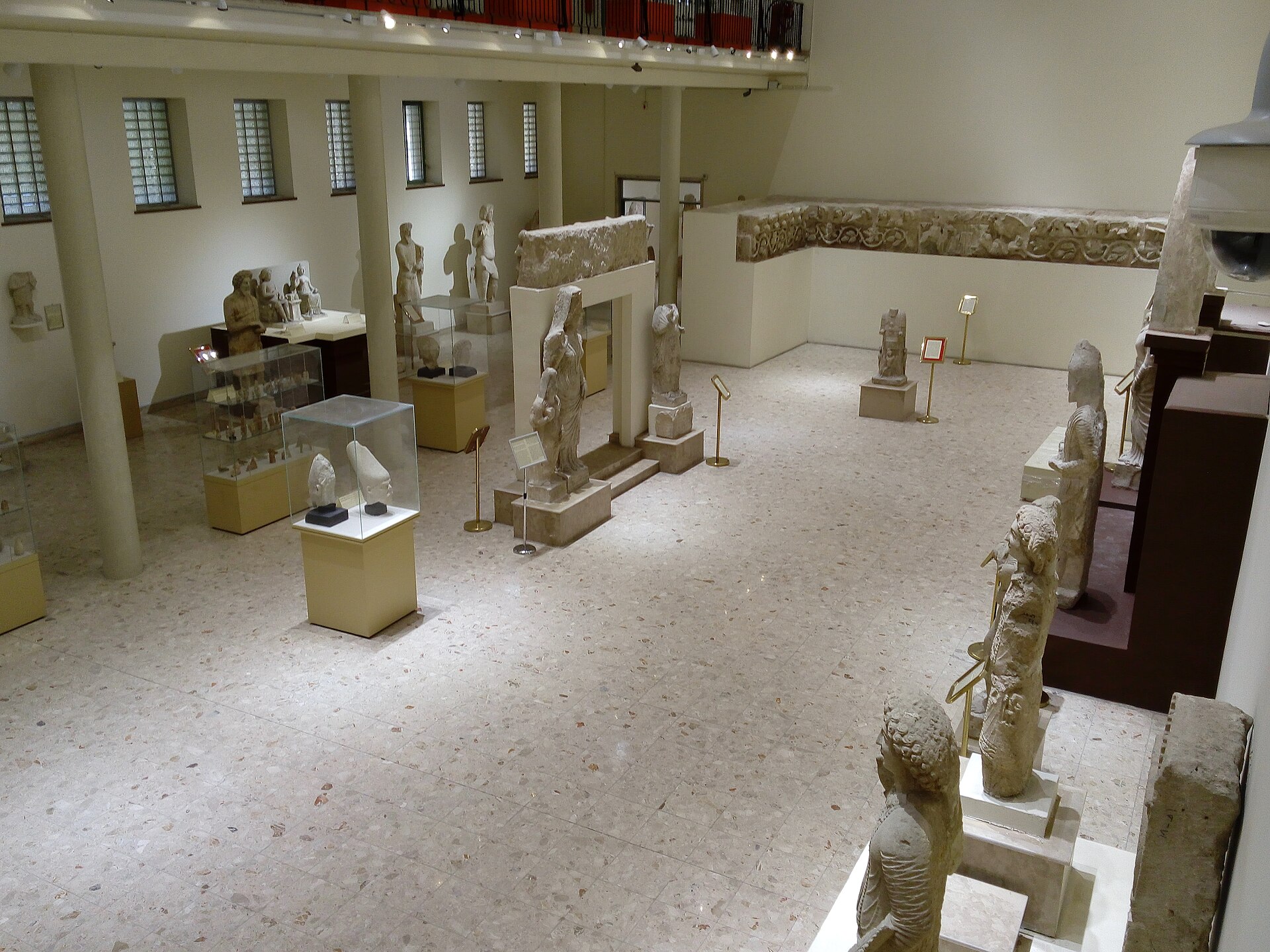
Reliefs and sculpture from the Assyrian capitals at Nimrud, Khorsabad and Nineveh, including the carved Nimrud Ivories and lamassu (winged bull-man) figures. Visitors consistently name this and the Hatra hall as the strongest rooms in the museum.
Statues and limestone friezes from Hatra, the fortified Parthian-period city in the desert west of Mosul, including deity figures and images of Hatrene royalty. Alongside the Assyrian hall, this is the room reviewers single out most often as the museum's best.
Carved stucco wall panels from Samarra (the ninth-century Abbasid capital), a carved mihrab, glazed tiles from provincial shrines, and an inscribed wooden mosque door, covering the Abbasid through late Islamic periods.
A fragment of the Gilgamesh epic looted from Iraq, smuggled into the United States in 2003, sold twice on a fabricated provenance, and bought by Hobby Lobby in 2014 for the Museum of the Bible. Seized in 2019 and forfeited by consent in 2021, it has been on display in Baghdad since 7 December 2021 as one of the highest-profile single-object antiquities repatriations of the decade. This archive holds a full separate record of its chain of ownership.16
Full record in this archiveAn alabaster ritual vessel of about 3000 BC carved with one of the oldest known narrative relief scenes. One of forty objects stolen from the public galleries in April 2003; recovered in June that year broken into fourteen pieces and since restored.9
A carved marble face, one of the earliest known naturalistic representations of the human face, dated about 3200-3000 BC and probably once fitted to a wooden cult statue, likely of the goddess Inanna. Buried by looters on a farm north of Baghdad after the April 2003 theft and recovered intact that October.13
A copper figure cast by the lost-wax method, among the earliest known examples of that technique, carrying a royal inscription of Naram-Sin. Looters coated it in grease and hid it in a cesspool after the 2003 looting; it was recovered in November 2003.15
Carved ivory furniture fittings and decorative plaques from the Assyrian palaces at Nimrud, among the finest surviving examples of Near Eastern ivory carving.9
More than 4,500 years old. The museum's director in 2003, Donny George Youkhanna, has said the lyre's gold-covered head had already been moved to the Central Bank for safekeeping before the invasion, so looters took only a bronze-headed lyre left in its place -- one of the collection's few documented escapes from the 2003 theft.12
A headless royal statue, about 4,400 years old and the heaviest single piece taken in the 2003 looting. It surfaced in the United States and was recovered by U.S. Immigration and Customs Enforcement in July 2006 with the help of a New York antiquities dealer.9
The institution began as an act of salvage rather than a building. Gertrude Bell -- traveller, archaeologist, and from 1917 the British administration's Oriental Secretary in occupied Baghdad -- started keeping antiquities from Iraqi excavations in a government room in 1922 specifically to stop them leaving the country, a collection she called the Room of the Babylonian Rocks. On 14 June 1926 the Iraqi government formally established the Baghdad Antiquities Museum with Bell as its first director; she died in Baghdad later that same year and was succeeded by the British Assyriologist Sidney Smith.
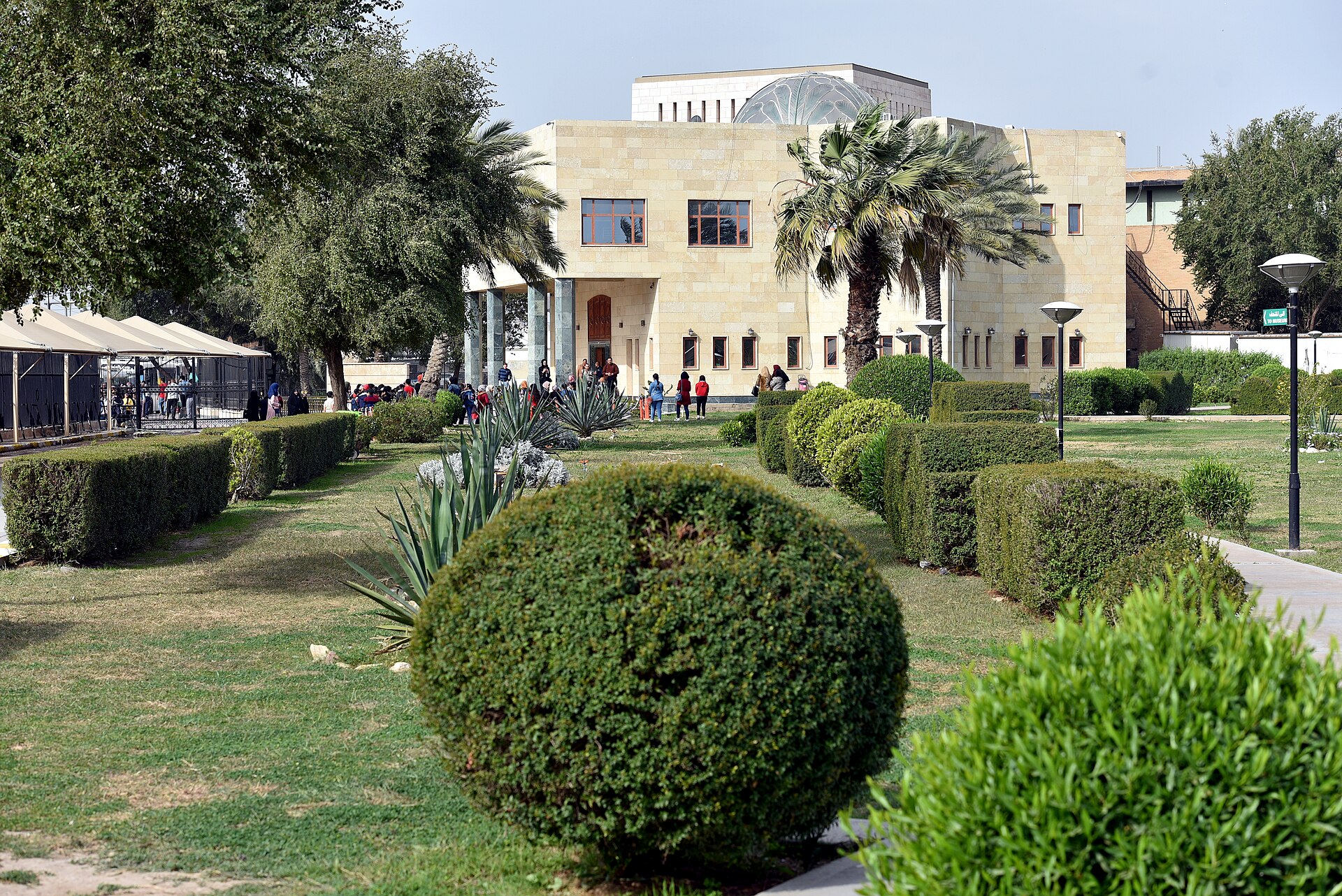
The collection outgrew that first home. King Faisal II laid the foundation stone for a purpose-built museum, designed by the German architect Werner March, in 1957. The new building, in the Salihiyya neighbourhood of the Karkh district on the west bank of the Tigris, opened to the public on 9 November 1966, and it was at that point the institution took the name it carries today: the National Museum of Iraq, known locally and to most of the world simply as the Iraq Museum.
What the museum was built to hold is close to the full archaeological record of Mesopotamia: prehistoric material from the Zagros foothills and the first farming villages of the north; the Sumerian city-states of Uruk, Ur, Lagash and Eshnunna; the Akkadian empire of Sargon and Naram-Sin; Babylon under Hammurabi and later dynasties; the Assyrian palace capitals of Nimrud, Khorsabad and Nineveh; the Parthian desert city of Hatra; and the Islamic caliphates from the Abbasid capital at Samarra onward. At its fullest the collection has been put at somewhere between 170,000 and 200,000 catalogued objects displayed and stored across roughly two dozen galleries and vaults -- a number that, as with most of this institution's statistics, has to be read against everything that happened to it after 2003.
On 9 April 2003, as Baghdad fell, museum staff left the building. Looting began the next day and continued through 12 April, carried out, in the later reconstruction by the U.S. Marine investigator who led the recovery effort, Matthew Bogdanos, by several distinct and overlapping groups: opportunistic looters who smashed whatever was in reach, thieves who went straight for specific high-value pieces in the public galleries in a manner that pointed to inside knowledge, and others who broke into storage rooms holding tens of thousands of smaller excavated finds. American forces did not secure the site until 16 April. The museum's own deputy director said afterward that a single tank and two soldiers posted at the gate would have prevented it; none were sent. Asked about the looting at a Pentagon briefing the day it ended, U.S. Defense Secretary Donald Rumsfeld told reporters that "freedom's untidy" and that "free people are free to make mistakes and commit crimes and do bad things" -- a line that became, for critics of the war, shorthand for the occupying power's failure to plan for the one building in the country whose importance archaeologists had spent months warning it about.
Early press estimates, based on the museum's full catalogue of some 170,000 inventoried lots, suggested the entire collection had been taken; the number that held up under investigation was roughly 15,000 objects missing, from three theft patterns -- forty pieces gone from the public galleries (of which the Warka Vase, the Mask of Warka and the Bassetki Statue were judged the most valuable), about 3,100 excavation pieces taken from above-ground storerooms, and roughly 10,000 smaller objects taken from plastic storage boxes underground. Donny George Youkhanna, the museum's director general at the time, returned to the building on Sunday 13 April to find more than 120 rooms ransacked, doors smashed and paperwork scattered; he has said the word "anger" does not cover what he felt.
The recovery has never been a single event. U.S. Customs recovered nearly 40,000 manuscripts and about 700 artifacts within a month, on 7 May 2003; Nimrud's gold jewellery turned up intact in a flooded vault of Iraq's Central Bank on 7 June 2003, where museum staff had hidden it before the invasion. Bogdanos's team recovered roughly 10,000 objects between 2003 and 2006, including the Warka Vase (returned broken into fourteen pieces and since restored) and the Mask of Warka (found buried and undamaged). The Bassetki Statue, hidden in a cesspool, surfaced in November 2003. The headless statue of the Sumerian ruler Entemena, the heaviest single piece stolen, was traced to the United States and recovered by ICE in July 2006 with a New York antiquities dealer's help. Further returns followed for years: 540 pieces in September 2010, the same month 638 stolen objects turned up in the office of then-Prime Minister Nouri al-Maliki; 45 relics from Germany in January 2012; 17,000 objects from the United States in August 2021 -- the largest single repatriation in the museum's history, and the batch that included the Gilgamesh Dream Tablet -- and, in March 2023, ivory and gold-leaf furniture returned by the FBI from an American museum, the first confirmed case of Iraq Museum loot surfacing in a U.S. institutional collection rather than in private hands. By 2009, independent estimates put roughly 6,000 of the original 15,000 missing objects as still unaccounted for; the FBI's own "Most Wanted" list of art crime still carries an eighth-century BC ivory plaque from the museum, the Lioness and the Nubian, as unrecovered.
For most of the period between 2003 and 2015 the museum was effectively shut to the public, opening only for brief, heavily controlled events -- a 2003 press visit, a December 2008 ceremony, a February 2009 partial reopening for special groups that Youkhanna himself called premature and politically timed. Restoration, funded substantially by the United States and Italy and including new climate control and security systems, culminated in a full public reopening on 28 February 2015 under Prime Minister Haider al-Abadi, twelve years after the building had last stood open to ordinary visitors.
The museum shut again on 10 July 2025, this time by its own choice rather than through violence, for a renovation the State Board of Antiquities and Heritage (SBAH) has framed as bringing the building up to international display standards. In December 2025 SBAH's Maintenance and Preservation Department director, Mohammed al-Bayati, told Iraq's official newspaper al-Sabah that the work was 90 percent complete and that the museum would reopen in "early 2026"; SBAH's head, Ali Obaid Shalgham, separately reported that 27,000 recovered artifacts had by then been returned to the museum's holdings. Early 2026 came and went without a reopening. On 9 February 2026, discussing a wider tourism strategy, an official spokesman for Iraq's Tourism Authority told the state news agency only that rehabilitation work, begun on 10 July, was proceeding "toward reopening during the coming period" -- language with no date attached. As of this check, on 7 August 2026, no further public announcement of a reopening has been found: the museum's own website carries nothing current on the closure at all, and every other account located, from a travel guide's April 2026 update to visitor reports through mid-2026, describes access as limited to special, guide-arranged visits rather than open walk-in admission. For a reader planning a trip to Baghdad today, the building the museum's own street address still names is there, but it is not open.
Visitors who reached the museum before the 2025 closure rate it highly and single out the Assyrian and Hatra halls as the strongest rooms in the building. The collection is repeatedly described as extensive and largely authentic -- reviewers note most objects on display are originals rather than replicas -- and worth a dedicated visit despite Baghdad's limited tourist infrastructure. The most common complaint has nothing to do with what is on display and everything to do with what is not: individual halls, especially the Sumerian and Babylonian rooms, went in and out of closure for renovation for years before the museum shut completely in 2025, so more than one visitor who came specifically to see a particular room found it shut.
TripAdvisor: 4.5 from 113 ratings, read 7 August 2026
A platform average is a tertiary source: it moves, it is not audited, and we quote no visitor's words.
Karkh district, Baghdad, Iraq (Salihiyya/Allawi area, near the west bank of the Tigris; no confirmed street address found).
Foreign visitors: IQD 25000; Iraqi citizens: IQD 3000. As confirmed 22 August 2026.
Saturday-Thursday (pre-closure) 09:00-13:30. Closed: Friday (pre-closure weekly closing day). Currently closed every day for renovation since 10 July 2025. As confirmed 22 August 2026.
Taxi: The most practical way in. The museum sits in the Karkh district near the Tigris; a short ride from central Baghdad (Tahrir Square, Rashid Street) runs roughly 3,500-10,000 IQD depending on traffic and driver. Any driver recognises 'al-mat-haf' (the museum); Walking: Within walking distance of nearby central-Baghdad landmarks, but the walk from the outer security checkpoint to the museum entrance itself can be long.
The Gilgamesh Dream Tablet (Unknown Babylonian scribe, c. 1600 BC); The Warka Vase (Uruk Vase) (Sumerian, Uruk); The Mask of Warka (Lady of Warka) (Sumerian, Uruk); The Bassetki Statue (Akkadian, for Naram-Sin of Akkad, c. 2250 BC); The Nimrud Ivories (Assyrian court workshops, with Egyptian, Phoenician and Syrian stylistic influence, 9th-7th century BC); The Golden Lyre of Ur (Sumerian, Royal Cemetery of Ur, c. 2500 BC).
One artwork and its story every Tuesday, with the picture: who owned it, what it made, and what closes soon in the exhibition calendar. No promotion, and nothing we cannot cite.
We send one email to confirm the address and keep nothing else. Every letter carries a one-click unsubscribe. How we handle your data.


