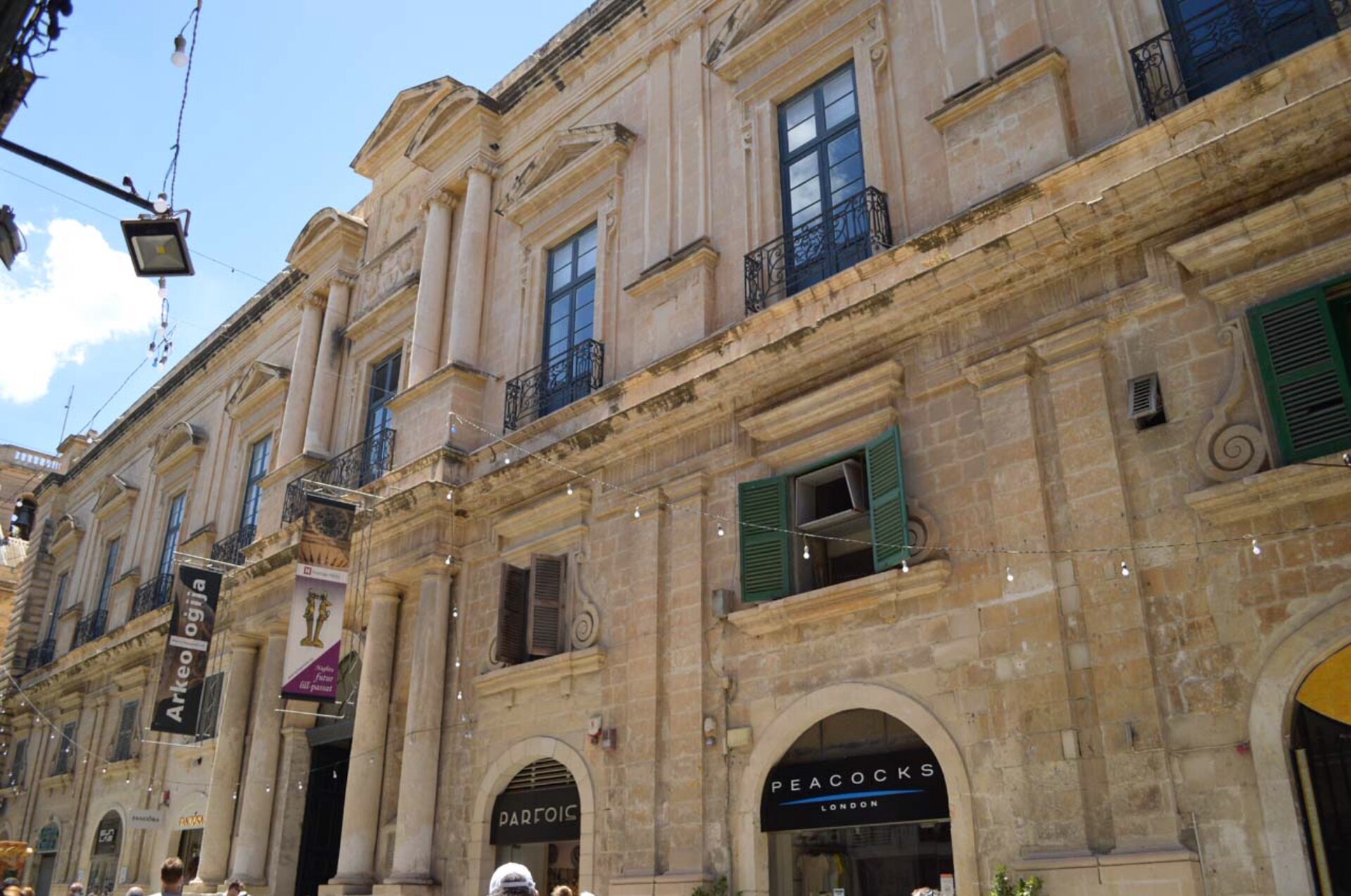
The Auberge de Provence on Republic Street, Valletta, home of the National Museum of Archaeology. The building's own Arkeologija banner and Heritage Malta signage are visible at the entrance.
Continentaleurope, CC BY-SA 4.0National Museum of Archaeology
Museum · Muzew Nazzjonali tal-Arkeologija · Founded 1958
Open, admission and hours confirmed 30 August 2026 · 12 sources
On this page 15 sections
ContentsClose
The museum's strength is Malta's Temple Period: the Neolithic culture that built the islands' megalithic temples and underground burial complexes is represented here by objects, principally the Sleeping Lady and the Venus of Malta, that cannot be seen anywhere else, because the temple sites themselves hold architecture rather than portable finds. Its Phoenician-period holdings, including the Cippus of Malta, are similarly the only substantial public display of that period in the country. The collection's acknowledged limit, raised in published criticism rather than invented here, is chronological: the fixed displays end with the Phoenicians, leaving Malta's Roman, Arab, medieval and early modern archaeology without a home in this particular museum.
| Local name | Muzew Nazzjonali tal-Arkeologija |
|---|---|
| Kind | Museum |
| Founded | 1958 |
| City and country |  Valletta, Malta Valletta, Malta |
| Address | Auberge de Provence, Republic Street, Valletta VLT 1112, Malta |
| Website | heritagemalta.mt/explore/national-museum-of-archaeology |
| Status | Open, confirmed |
| Record last verified |
Visiting
- Hours
- Daily09:00 to 19:00Last admission is 30 minutes before closing. Heritage Malta's own opening-hours page for this site currently carries no standard timetable in text (it links back to itself); these times come from the museum's own Google Business listing, read 30 August 2026. See notes_for_editor.
- Closed
- 1 January. Good Friday. 24 December. 25 December. 31 December.
- Admission
- Adults (18+)EUR 5
- Youths (12-17)EUR 3.50
- Senior Citizens (60+)EUR 3.50
- Concessions and StudentsEUR 3.50
- Children (6-11)EUR 2.50
- Infants (1-5)FreeFree
- Heritage Malta MembersFreeFree
- Heritage Malta Passport HoldersFreeFree
- Tickets
- heritagemalta.mt/store/s7 The museum's own ticket page.
- Do I need to book?
- No timed entry. Tickets bought online or at the door are valid for 30 days from purchase
- Address
- Auberge de Provence, Republic Street, Valletta VLT 1112, Malta MapBus Valletta Bus Terminus is about 400 metres away, roughly 5 minutes on foot; taxi stands sit next to the terminus
Park and Ride A shuttle runs from the Park and Ride facility in Floriana to the bus terminus in Valletta - Website
- heritagemalta.mt/explore/national-museum-of-archaeology
- Telephone
- +356 2122 1623
Before you go how long, access, photography, bags, eating, shop
- How long to allow
- Not stated by the museum. The collection fills two exhibition floors, from the Neolithic temple period through the Phoenician period, plus temporary exhibitions and the Gran Salon
- Access
- The main door has two steps or a ramp with a handrail and opens automatically. The reception area and the ground-floor Neolithic galleries are entirely step-free, with wheelchair-height desks. A lift and a wide handrailed staircase reach the upper floor. There is a unisex restroom for persons with disability, a nappy-changing restroom, and three stations of portable chairs. The children's activity room doubles as a quiet, sensory-friendly space for autistic visitors on Wednesdays from 1pm to 4pm. Panels are printed in large format in Maltese and English
- Bags
- Lockers are provided at ground floor level, and a large luggage trolley is available for visitors who wish to leave bags or luggage during their visit
- Eating
- No cafe is listed among the site's facilities in the sources examined; an indoor/outdoor seating area is listed instead
- Shop
- A gift shop in the reception area sells replicas of Neolithic statues, jewellery, children's items and books, some exclusive to Heritage Malta sites. Audio guides are available for a 1 euro fee plus a refundable deposit, in Maltese, English, French, Italian, German, Spanish, Polish, Greek, Japanese and Chinese
Prices and hours change. We take them from the institution's own pages and print the day we read them, and you can check the current position at the source we used. Confirm before you travel.
What is inside
Ground Floor: The Temple Period
The Neolithic galleries hold the earliest tools and vessels used by Malta's prehistoric farmers, excavated from the megalithic temple sites and the Hal Saflieni Hypogeum, both UNESCO World Heritage listings. This is where the Sleeping Lady and the Venus of Malta are shown, alongside the colossal statue from the Hal Tarxien Prehistoric Complex, other Neolithic figures ranging widely in size and completeness, and altar stones brought in from the temple sites for safekeeping. The floor is entirely step-free.
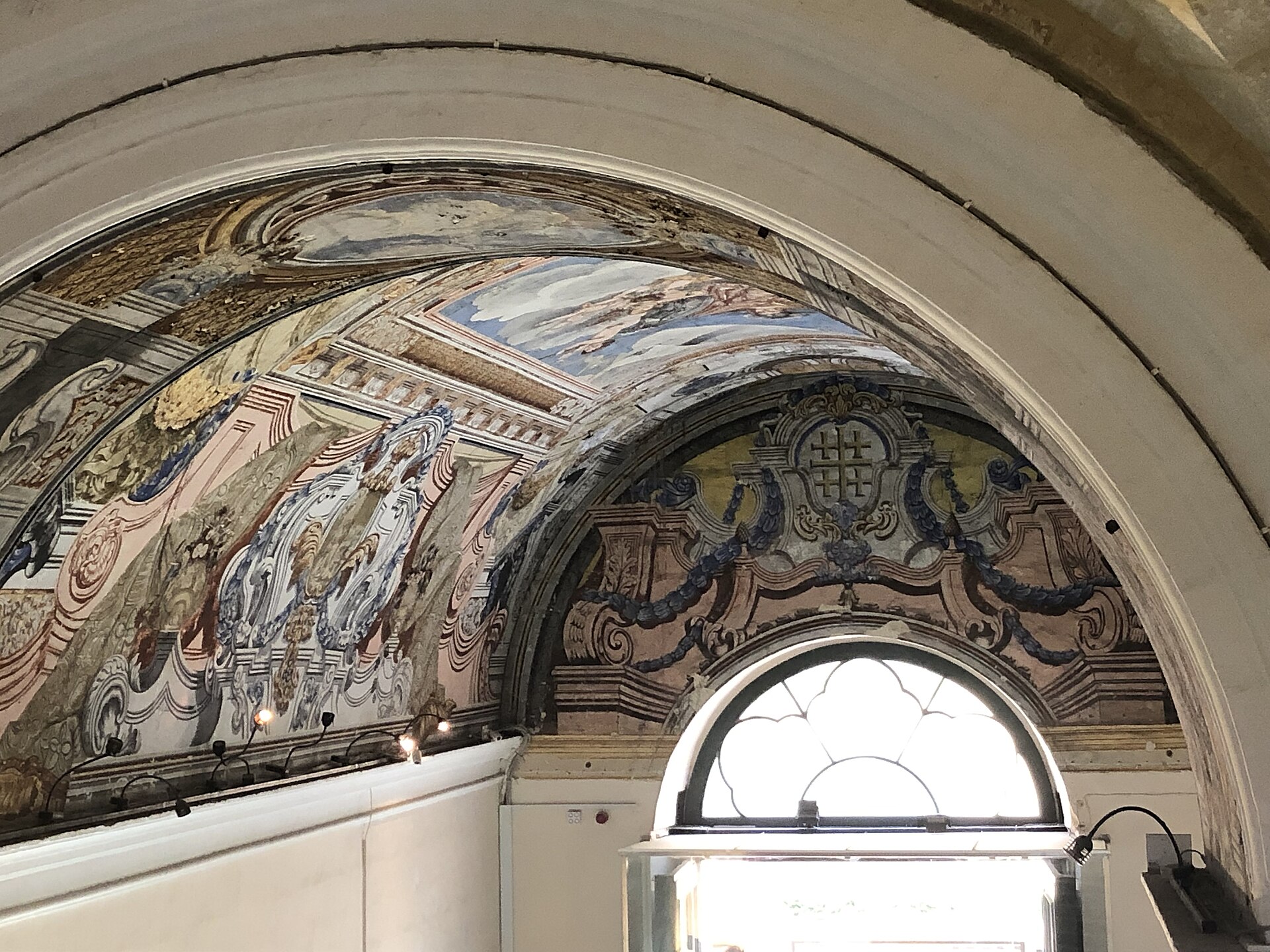
Photograph by Hispalois · CC BY-SA 4.0 Main Entrance and Reception
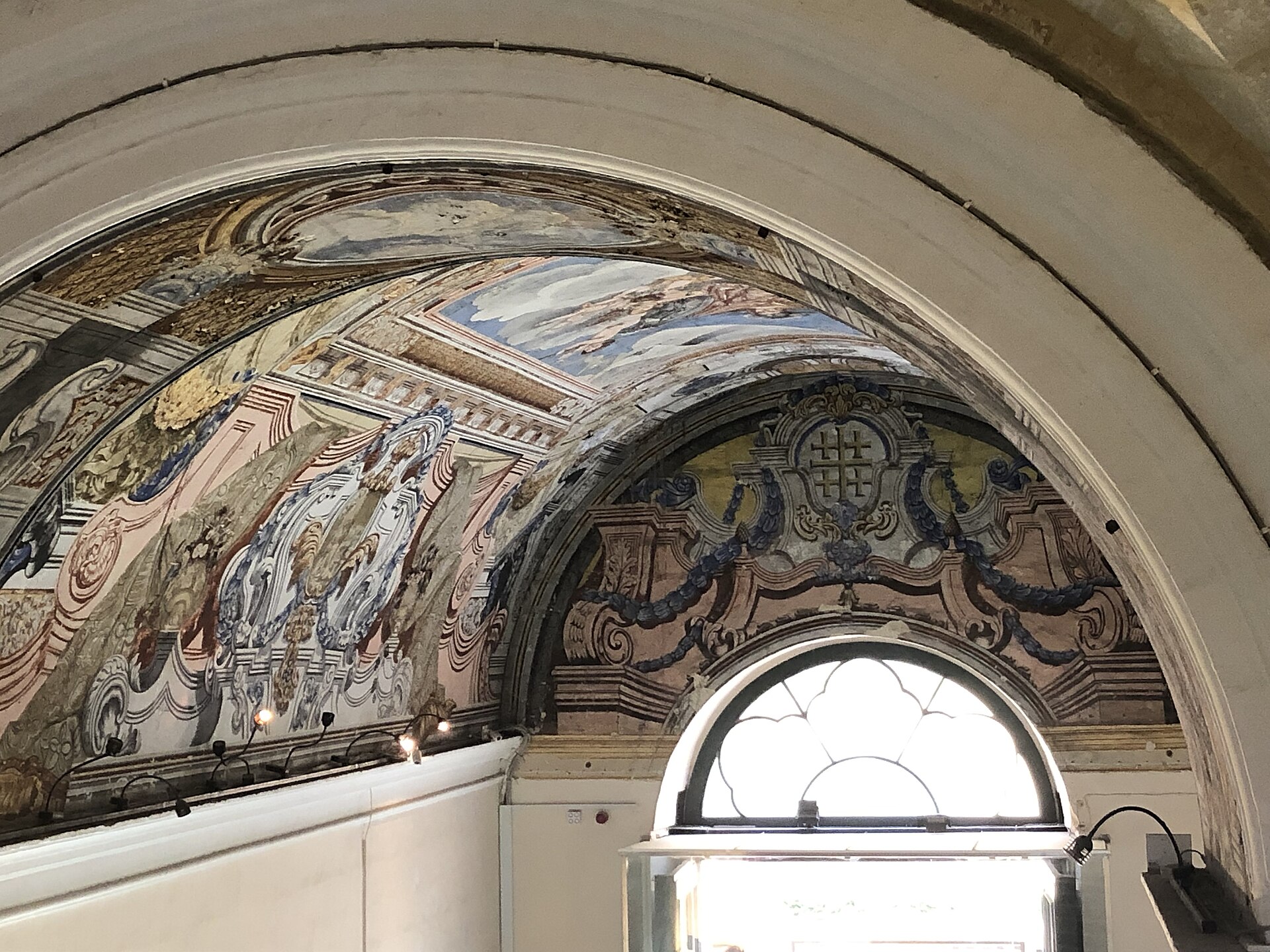
The museum occupies the ground floor of the Auberge de Provence behind an automatic glass door reached by two steps or a ramp. The reception hall, on one level, houses the ticket desks, the gift shop, and the point where an audio guide or the museum's own app can be picked up. The vaulted ceiling above this entrance space carries surviving painted decoration from the building's time as an auberge of the Knights of the Order of St John.
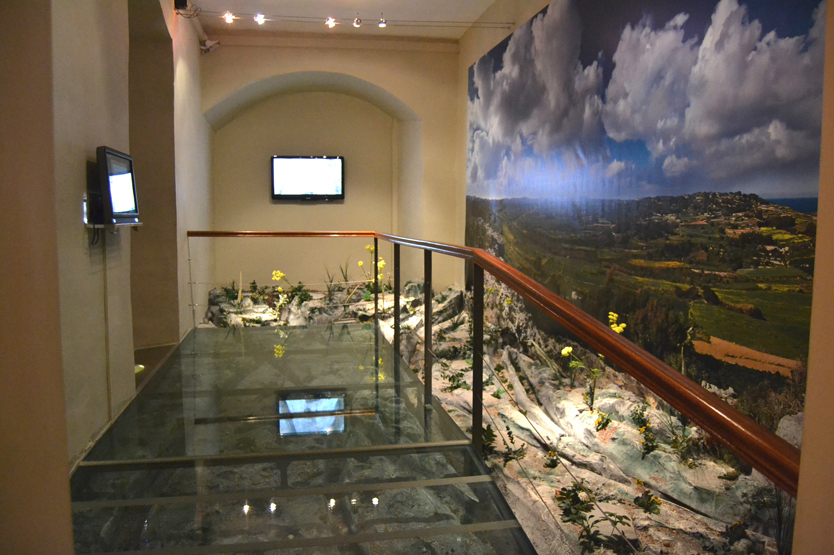
Photograph by Heritage Malta · CC BY-SA 4.0 Upper Floor: The Bronze Age and the Phoenicians
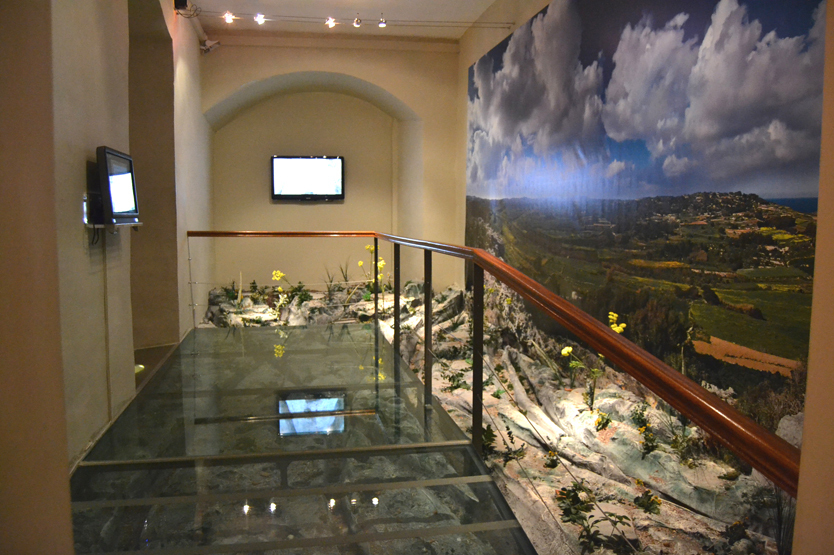
Reached by lift or a wide handrailed staircase, the upper floor moves the story on from the Temple Period to the Bronze Age people who followed it, and then to the Phoenicians. Displays include an anthropomorphic terracotta sarcophagus, Phoenician glass and gold, a papyrus carrying a Phoenician inscription, a pendant depicting Horus and Anubis, and the Cippus of Malta, the bilingual dedication that helped decipher the Phoenician alphabet, shown next to a cast of its companion piece in the Louvre. A separate display explains Malta's mysterious cart ruts, using a glass floor set over a modelled landscape.
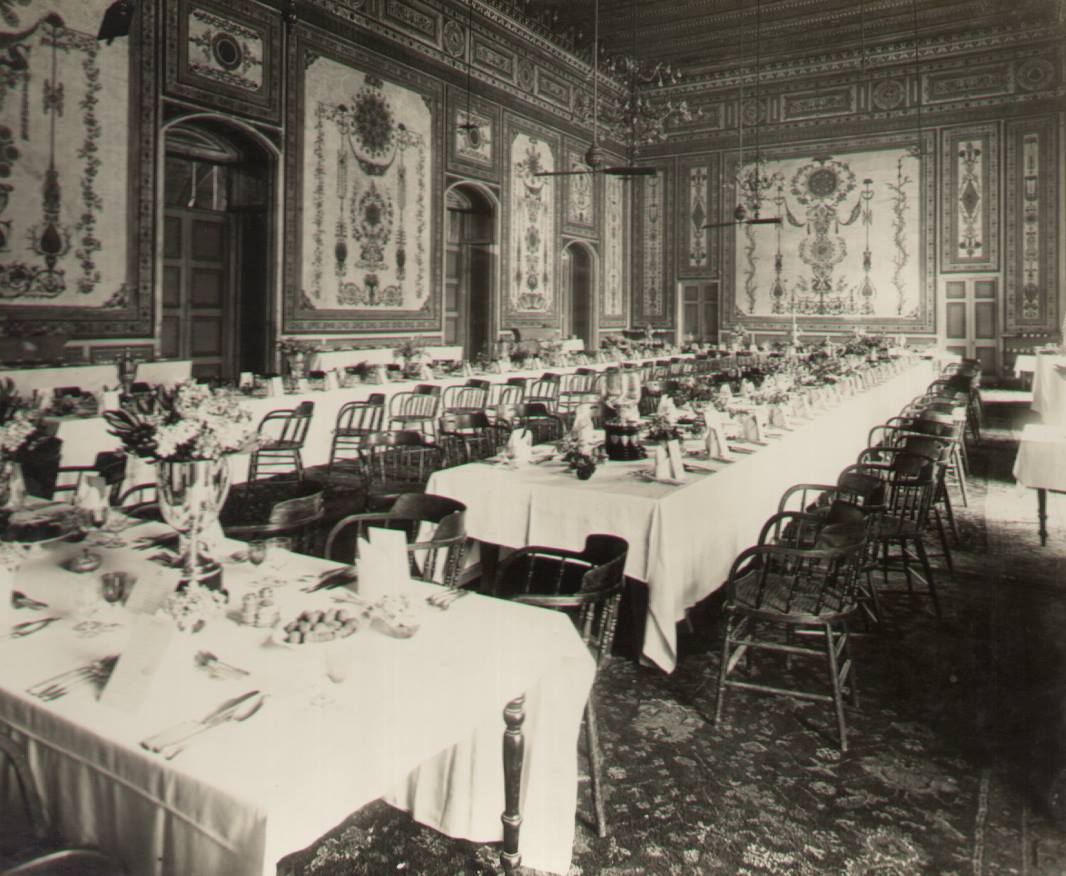
Public domain The Gran Salon
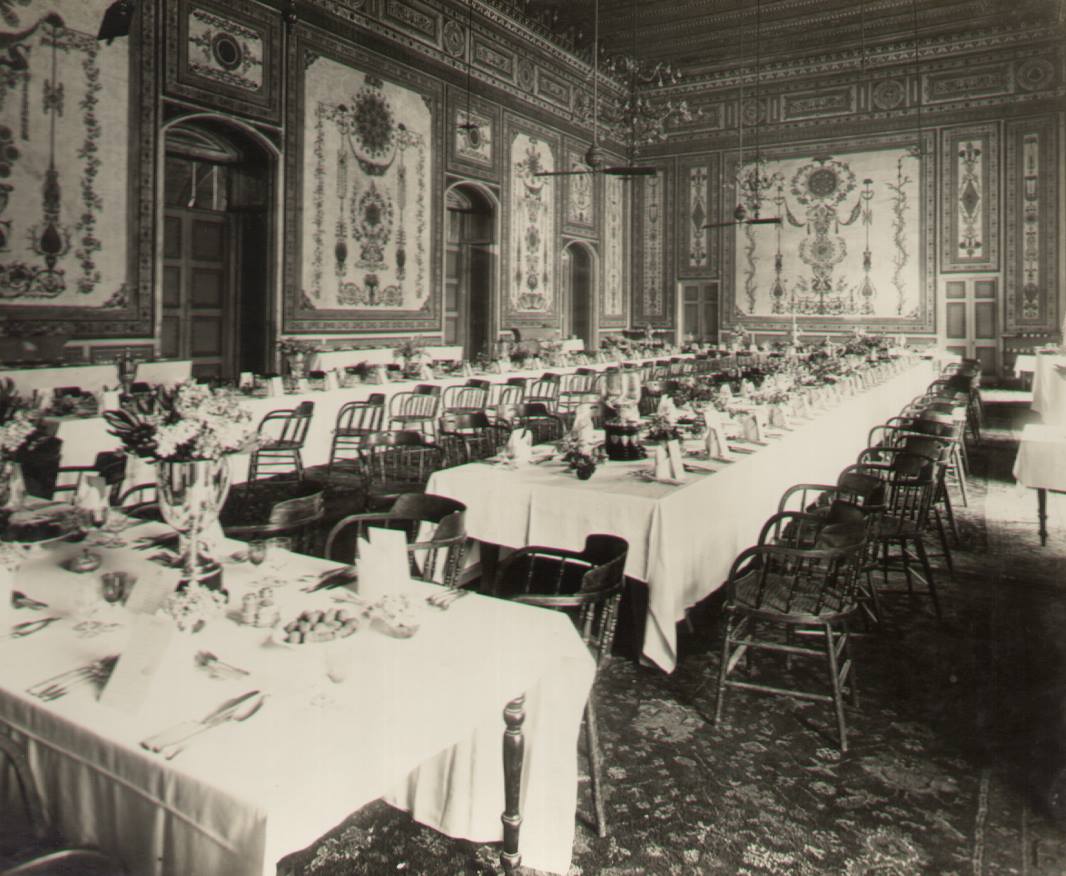
A single large hall on the upper floor with a wooden beamed ceiling and wall decoration dating to the early nineteenth century, the Gran Salon is the grandest surviving interior of the 1571 auberge. Heritage Malta uses it today for national exhibitions, conferences, fashion shows, photoshoots and television filming rather than as permanent exhibition space. As of the museum's own access statement of November 2025, restoration works were under way inside the hall, with no public completion date given.
The Hal Saflieni Hypogeum Skulls, the Numismatic Collection, and Temporary Exhibitions
A dedicated display, currently titled The Hal Saflieni Hypogeum Skulls, shows skulls excavated from the Hypogeum under Fr Emmanuel Magri and, after his death, Sir Themistocles Zammit. The skulls had not been on public view since 1995 before a first version of this exhibition, Alien Headaches? The Hypogeum Skulls Enigma, ran from December 2020 to April 2021; Zammit's own description of some skulls as of the long-headed type had spread into online claims about ancient aliens, which the museum's own exhibition text addresses directly. Beyond this, the museum holds a National Numismatic Collection of more than 16,000 coins and medals, and rotates temporary exhibitions from its reserve collection through the remaining upper-floor space, most recently a display on the Phoenician shipwreck off Xlendi, Gozo, and a centenary exhibition on Malta's 1925 Antiquities Protection Act.
What to see first
The Sleeping Lady
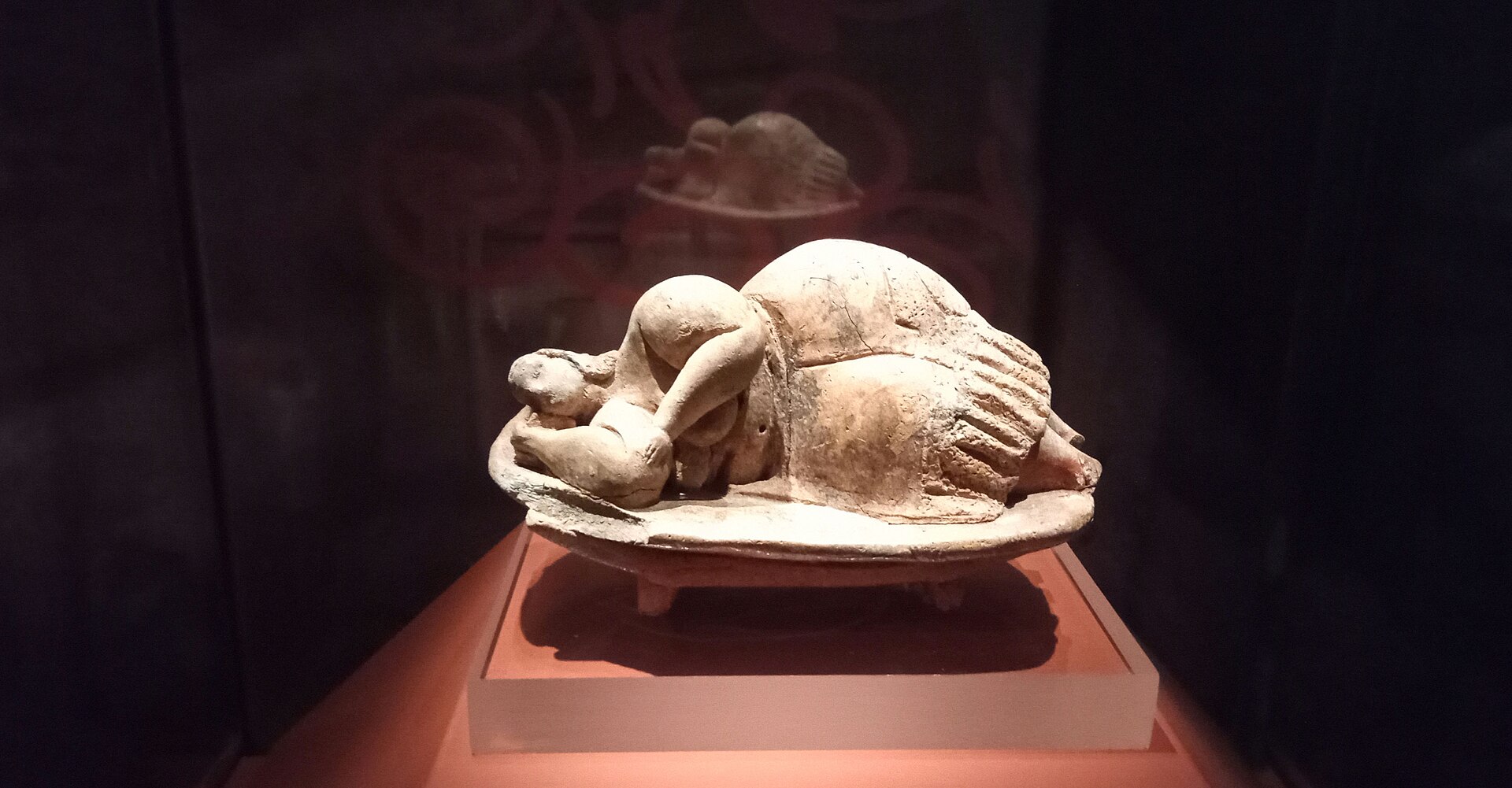
Unknown Temple Period makerA near-complete Neolithic clay figurine from the Hal Saflieni Hypogeum, unusual because most figures of its type survive only broken; a reviewer for the Salterton Arts Review wrote she would have paid the entry price to see this one object alone11
The Venus of Malta
Unknown Temple Period makerOne of the museum's two national treasures from the Neolithic fertility-figure tradition, displayed alongside the Sleeping Lady on the ground floor1
The colossal statue from the Hal Tarxien Prehistoric Complex
Unknown Temple Period makerA large-scale Neolithic figure excavated from the Tarxien temple complex, one of the ground floor's principal Temple Period pieces1
The Hal Saflieni Hypogeum skulls
N/A (human remains)Excavated from Malta's underground Neolithic burial complex and kept out of public view for decades; Sir Themistocles Zammit's description of some as long-headed fed online ancient-aliens claims that the current display sets out to correct12
The Cippus of Malta
Phoenician/Punic dedicator, unknownA bilingual Phoenician and Greek dedication whose companion piece in the Louvre helped scholars decipher the Phoenician alphabet; a cast of the Louvre piece is displayed alongside it1
The Phoenician terracotta sarcophagus
Unknown Phoenician makerA large anthropomorphic sarcophagus singled out by the museum as a centrepiece of its Phoenician-period section1
Horus and Anubis pendant
UnknownA Phoenician-period gold pendant depicting the Egyptian deities Horus and Anubis, evidence of Phoenician trade contact with Egypt1
Papyrus with a Phoenician inscription
UnknownA rare inscribed papyrus from the museum's Phoenician-period holdings1
Material from the Punic Xlendi Shipwreck, Gozo
N/A (underwater archaeological site)Amphorae and other finds from an underwater Phoenician-era wreck off Xlendi, shown in a temporary exhibition on Malta's underwater archaeology11
The National Numismatic Collection
VariousMore than 16,000 coins and medals documenting the currencies that circulated in Malta under its successive rulers9
Past exhibitions here
- Closed10 Jul to 4 Oct 2026Confirmed · check before you travel
The auberge that became a museum
The National Museum of Archaeology occupies the Auberge de Provence, a Baroque palace on Republic Street in Valletta built in 1571 to house the langue of Provence, one of the national divisions of the Knights of the Order of St John. The Knights had arrived in Malta in 1530 after being expelled from Rhodes by the Ottomans, and in their first decades on the island built or adapted auberges in Mdina, Birgu and, once Valletta rose after the Great Siege of 1565, in the new capital itself. The Auberge de Provence is one of the results: an elaborately decorated Baroque building whose grandest surviving interior, the Gran Salon, carries wall and ceiling decoration dating to the early nineteenth century.
When Napoleon expelled the Knights from Malta in 1798, the building passed out of their hands. According to Wikipedia's account of the building's history, it was later leased to the Malta Union Club before being assigned to house the national museum on 12 August 1955. The museum that moved in was not new: it had previously been based in the Xara Palace in Mdina and then in the Auberge d'Italie in Valletta, and for its first years in the Auberge de Provence it combined fine art with archaeology under one roof. It opened in its current building in January 1958, inaugurated by Agatha Barbara, then Minister of Education, with Charles G. Zammit, son of the pioneering excavator Sir Themistocles Zammit, as its first curator. In 1974 the fine art collection moved out to a new National Museum of Fine Arts in Valletta's Admiralty House, and the Auberge de Provence institution was renamed the National Museum of Archaeology, the identity it has held since.
The ground floor: Malta's Temple Period
The museum's ground floor exhibition area is entirely step-free and is given over to the culture archaeologists call the Temple Builders, who arrived in Malta from Sicily around 5500 BC as simple farmers and, from around 3600 BC, began building the free-standing megalithic temples and underground burial complexes that are now Malta's UNESCO World Heritage sites. Their society produced no writing and left no name for itself; it disappeared around 2500 BC, probably through some combination of natural disaster, famine, invasion or epidemic, and was replaced by a Bronze Age population arriving in a fresh wave of migration from Sicily.
What the Temple Builders did leave behind, in quantity, is small-scale sculpture, much of it rounded and often female, consistent with a focus on fertility. The single most admired piece is the Sleeping Lady, a clay figurine of a reclining woman that survives almost intact, with visible detail in her hair, her clothing and the sagging couch beneath her, at a period when most comparable figures were broken, in some cases apparently by ritual. She shares the ground floor with the Venus of Malta and with a colossal Temple Period statue recovered from the Hal Tarxien Prehistoric Complex, along with smaller figures of varying completeness and altar stones removed from the temple sites for safekeeping, shown with photographs of their original settings.
Upstairs: the Bronze Age, the Phoenicians, and the skulls that were kept from view
A lift or a wide, handrailed staircase carries visitors to the upper floor, where the chronology moves forward first to the Bronze Age population that replaced the Temple Builders, and then to the Phoenicians, whose trading network reached Malta by the early first millennium BC. The Phoenician-period displays include a large anthropomorphic terracotta sarcophagus, worked gold and glass, a pendant depicting the Egyptian deities Horus and Anubis, a papyrus bearing a Phoenician inscription, and the Cippus of Malta: a bilingual Phoenician and Greek dedication whose twin, held in the Louvre, was central to nineteenth-century scholars' decipherment of the Phoenician alphabet. A cast of the Louvre cippus is shown alongside the Malta original. A separate case, floored in glass over a modelled landscape, explains Malta's cart ruts, the mysterious parallel grooves cut into bedrock across the islands whose origin and date are still debated.
The same floor also holds a display, currently titled The Hal Saflieni Hypogeum Skulls, of skulls excavated from Malta's underground Neolithic burial complex under Fr Emmanuel Magri and, after his death, Sir Themistocles Zammit. The skulls had a complicated recent history on display: Heritage Malta's own account states they had not been shown publicly since 1995, before an exhibition titled Alien Headaches? The Hypogeum Skulls Enigma ran from December 2020 to April 2021, timed, in the museum's own words, to turn the closures and reduced hours of the Covid-19 pandemic into an opportunity for restoration and reinterpretation work across the building. The title played on a real problem: Zammit's original description of some skulls as being of the long-headed type had, over the following century, been picked up by television crews and online communities as evidence of ancient extra-terrestrial contact. Both that exhibition and its current successor state plainly that Zammit meant only that some skulls were longer than others, not that they were non-human, and present the material's ongoing scientific study from an archaeological, osteological and medical point of view.
The Gran Salon and the museum's temporary exhibitions
The Gran Salon is the building's set-piece interior: a single large hall with a wooden beamed ceiling and painted decoration dating to the early nineteenth century, used historically for state banquets and today by Heritage Malta for national exhibitions, conferences, fashion shows, photoshoots and television filming rather than as permanent gallery space. As of the museum's own visitor access statement, dated 17 November 2025, restoration works were under way inside the hall, with no completion date published.
Around the Gran Salon and the fixed Phoenician-period galleries, the museum rotates temporary exhibitions drawn from its reserve collection. Recent examples include a display on the Phoenician-era shipwreck found off Xlendi in Gozo, illustrated with recovered amphorae, and a centenary exhibition, running from October 2025 to January 2026, on Malta's 1925 Antiquities Protection Act, the legislation that first gave the islands' archaeological sites and finds legal protection. The museum also holds, though does not permanently display, an archive of historical documentation from the early Museums Department and a collection of photographic glass negatives, and a National Numismatic Collection of more than 16,000 coins and medals spanning Malta's successive rulers.
Visiting: admission, access and what the museum's own website leaves out
Adult admission is 5 euros, with concessions at 3.50 euros for youths aged 12 to 17, senior citizens aged 60 and over, and students, 2.50 euros for children aged 6 to 11, and free entry for infants aged 1 to 5, Heritage Malta members and Heritage Malta Passport holders. Tickets bought online or at the door are valid for 30 days from purchase rather than for a fixed date, and the museum does not use timed-entry booking. Heritage Malta states that all its sites are closed on 1 January, Good Friday, and 24, 25 and 31 December, and that last admission everywhere is 30 minutes before closing.
Physical access is good for a sixteenth-century building: the ground-floor Neolithic galleries and the reception area are entirely step-free, with wheelchair-height service desks, and a lift as well as a handrailed staircase reach the upper floor. There is a dedicated accessible restroom, a nappy-changing restroom, and three stations of portable chairs around the galleries. The children's activity room doubles on Wednesday afternoons, from 1pm to 4pm, as a quiet space for visitors on the autism spectrum. A gift shop in the reception hall sells replicas of Neolithic figures, jewellery, children's items and books, and an audio guide is available in ten languages for a nominal fee.
One gap is worth recording plainly. Heritage Malta's general opening-hours page for all its sites currently lists only exceptions and closures, and the National Museum of Archaeology's own listing on the Heritage Malta website reads, in place of a timetable, an instruction to click through to that same page for opening hours, which does not in turn state them. The hours given in this record, a daily 9am to 7pm, are drawn instead from the museum's own Google Business listing rather than from readable text on heritagemalta.mt, and should be rechecked once the museum's own site publishes a table again.
What visitors and critics say
On Google, the museum carries a rating of 4.4 from more than 4,200 reviews, a tertiary figure that nonetheless points in the same direction as the one detailed published review examined for this record. Writing for the Salterton Arts Review after an October 2025 visit, the author called the Sleeping Lady worth the entry price on its own, praised the Phoenician-period galleries as covering ground no other Maltese museum does, and recommended the museum generally to visitors preparing to see Malta's temple sites. The same review was candid about the museum's limits: the display cases are, in the reviewer's words, a little old-fashioned, with classic cases that are quite text heavy and in need of a bit of a facelift, and the fixed chronology stops after the Phoenician period, leaving, again in the reviewer's words, no place to go to see Malta's archaeological record after the Phoenicians. The review notes hearing of unpublished thoughts of expanding the museum to close that gap, though no public plan or timeline for such an expansion has been traced.
What visitors say
Visitors consistently single out the Sleeping Lady and the wider Neolithic Temple Period collection as reason enough on their own to visit, and repeatedly note that the modest admission fee undersells what is on show. The most frequent reservation, including from published criticism, is that the display style itself has dated: text-heavy panels and classic glass cases that have not been refreshed to match the quality of the objects inside them, and a chronological story that stops abruptly after the Phoenician period with nothing to carry a visitor's understanding of Malta's archaeology further forward in time.
What is praised, what is criticised
- Praised: The Sleeping Lady and the depth of the Neolithic Temple Period collection
- Praised: Good value for a modest admission fee
- Praised: A useful grounding before visiting the temple sites themselves (Hagar Qim, Mnajdra, Tarxien, the Hal Saflieni Hypogeum)
- Praised: The chance to see inside a Baroque auberge that is otherwise mostly closed to the public
- Criticised: Display cases and interpretation panels described as old-fashioned and text-heavy, in need of a refresh (Salterton Arts Review)
- Criticised: The chronological display ends after the Phoenician period, with no coverage of Malta's later archaeological record (Salterton Arts Review)
Ratings on other platforms
Google: 4.4 from 4,234 ratings, read 30 August 2026
A platform average is a tertiary source: it moves, it is not audited, and we quote no visitor's words.
Questions about National Museum of Archaeology
Where is National Museum of Archaeology?
Auberge de Provence, Republic Street, Valletta VLT 1112, Malta.
How much does it cost to visit?
Adults (18+): EUR 5; Youths (12-17): EUR 3.5; Senior Citizens (60+): EUR 3.5; Concessions and Students: EUR 3.5; Children (6-11): EUR 2.5. As confirmed 30 August 2026.
When is it open?
Daily 09:00-19:00. Closed: 1 January. Good Friday. As confirmed 30 August 2026.
How do you get there?
Bus: Valletta Bus Terminus is about 400 metres away, roughly 5 minutes on foot; taxi stands sit next to the terminus; Park and Ride: A shuttle runs from the Park and Ride facility in Floriana to the bus terminus in Valletta.
What should you see first?
The Sleeping Lady (Unknown Temple Period maker); The Venus of Malta (Unknown Temple Period maker); The colossal statue from the Hal Tarxien Prehistoric Complex (Unknown Temple Period maker); The Hal Saflieni Hypogeum skulls (N/A (human remains)); The Cippus of Malta (Phoenician/Punic dedicator, unknown); The Phoenician terracotta sarcophagus (Unknown Phoenician maker).
What we could not confirm
- Heritage Malta's own opening-hours page for this site currently reads only 'click link below for opening hours' and links back to a page that lists exceptions but no standard timetable; this record's daily 9am-7pm figure comes from the museum's Google Business listing rather than from the museum's own website text, and should be rechecked once heritagemalta.mt publishes a table again.
- The Gran Salon was under restoration as of the museum's November 2025 access statement, with no completion date published.
- A reviewer reported having heard of unpublished 'thoughts of expanding the museum' to cover Malta's archaeological record after the Phoenician period; no public plan, timeline or funding for such an expansion has been traced.
- The museum's temporary exhibition on the 1925 Antiquities Protection Act was scheduled to close in January 2026; whether it has been extended, replaced, or made permanent is unconfirmed.
Images
Sources
- 1Heritage Malta, National Museum of Archaeology (site page: description, collection, admission fees, address, phone) heritagemalta.mt/explore/national-museum-of-archaeology/
- 2Heritage Malta, Opening Hours (special notices, general closure days, last-admission rule) heritagemalta.mt/opening-hours/
- 3Heritage Malta, The National Museum of Archaeology Access Statement, 17 November 2025 (building history, floor plan, facilities, contact details) heritagemalta.mt/app/uploads/2025/11/DAB-NMA-Access-Statement-17th-November-2025.pdf
- 4Heritage Malta online store, National Museum of Archaeology ticket listing heritagemalta.mt/store/s7/
- 5Wikimedia Commons, Category:Auberge de Provence (Valletta) commons.wikimedia.org/wiki/Category:Auberge_de_Provence_(Valletta)
- 6Wikimedia Commons, Category:National Museum of Archaeology (Malta) commons.wikimedia.org/wiki/Category:National_Museum_of_Archaeology_(Malta)
- 7Wikimedia Commons, Category:Interior of Auberge de Provence (Valletta) commons.wikimedia.org/wiki/Category:Interior_of_Auberge_de_Provence_(Valletta)
- 8Wikimedia Commons, Category:Gran Salon (Auberge de Provence) commons.wikimedia.org/wiki/Category:Gran_Salon_(Auberge_de_Provence)
- 9Wikipedia, National Museum of Archaeology, Malta (: founding date, building history, numismatic collection) en.wikipedia.org/wiki/National_Museum_of_Archaeology,_Malta
- 10Google Maps, National Museum of Archaeology | Valletta (business listing: hours, rating; ) google.com/maps/search/National+Museum+of+Archaeology+Valletta
- 11Salterton Arts Review, National Museum of Archaeology (Muzew Nazzjonali tal-Arkeologija), Valletta, 26 December 2025 saltertonartsreview.com/2025/12/national-museum-of-archaeology-muzew-nazzjonali-tal-arkeologija-valletta/
- 12Heritage Malta, The Hypogeum skulls on display at the National Museum of Archaeology (press release) heritagemalta.mt/news/the-hypogeum-skulls-on-display-at-the-national-museum-of-archaeology/