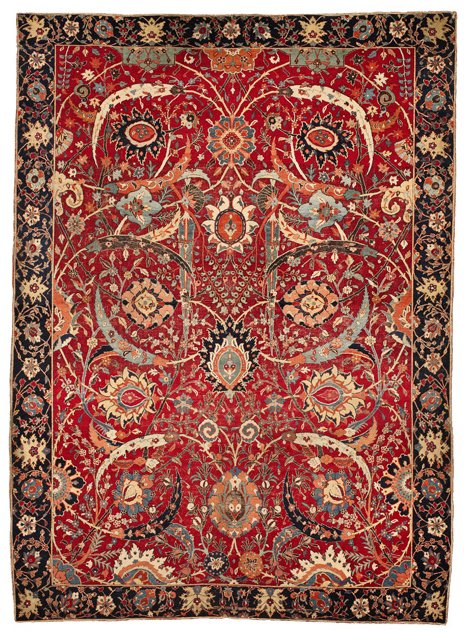
The Clark Sickle-Leaf Carpet
Seventeenth century · Knotted pile
Museum of Islamic Art
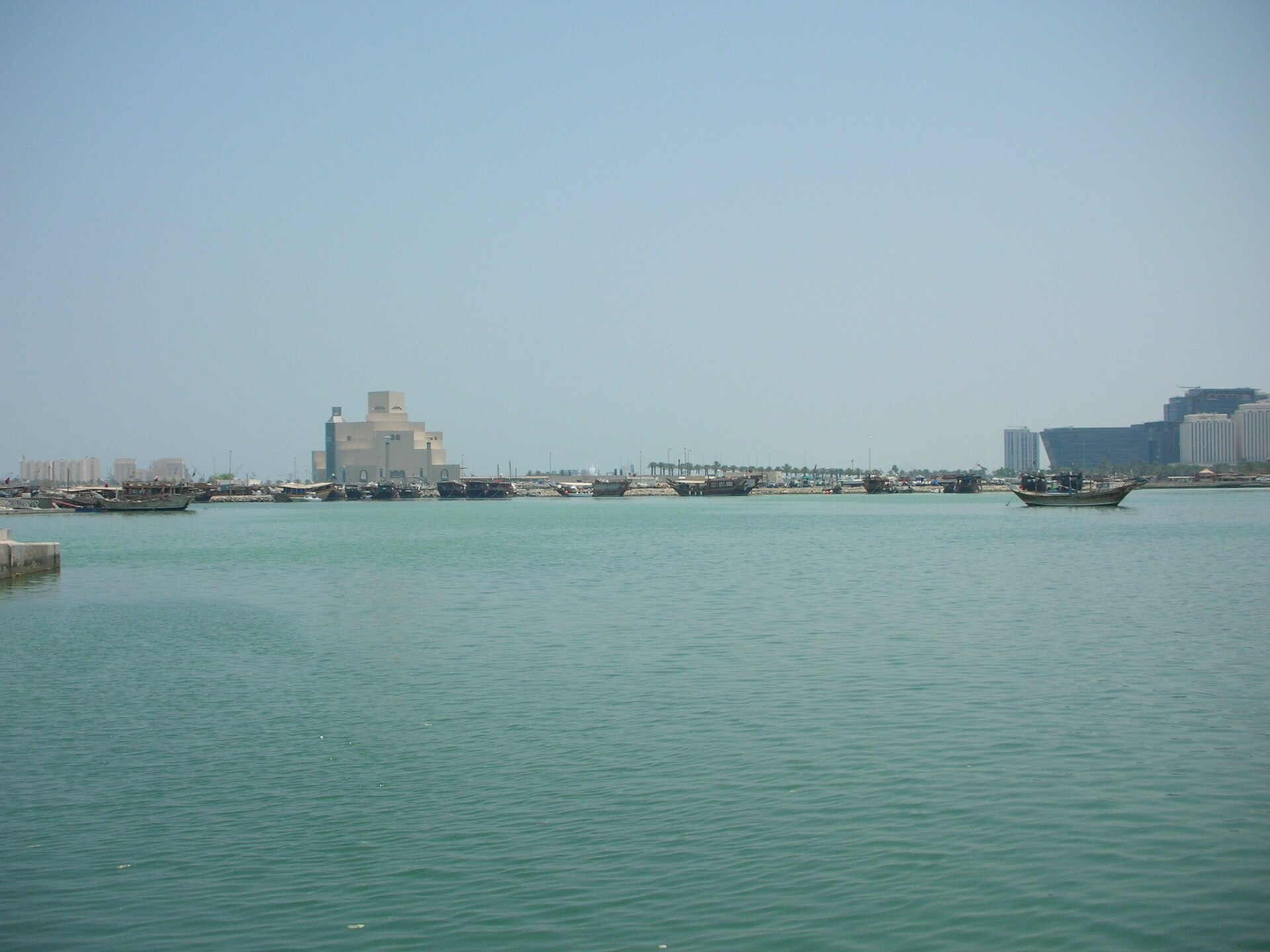
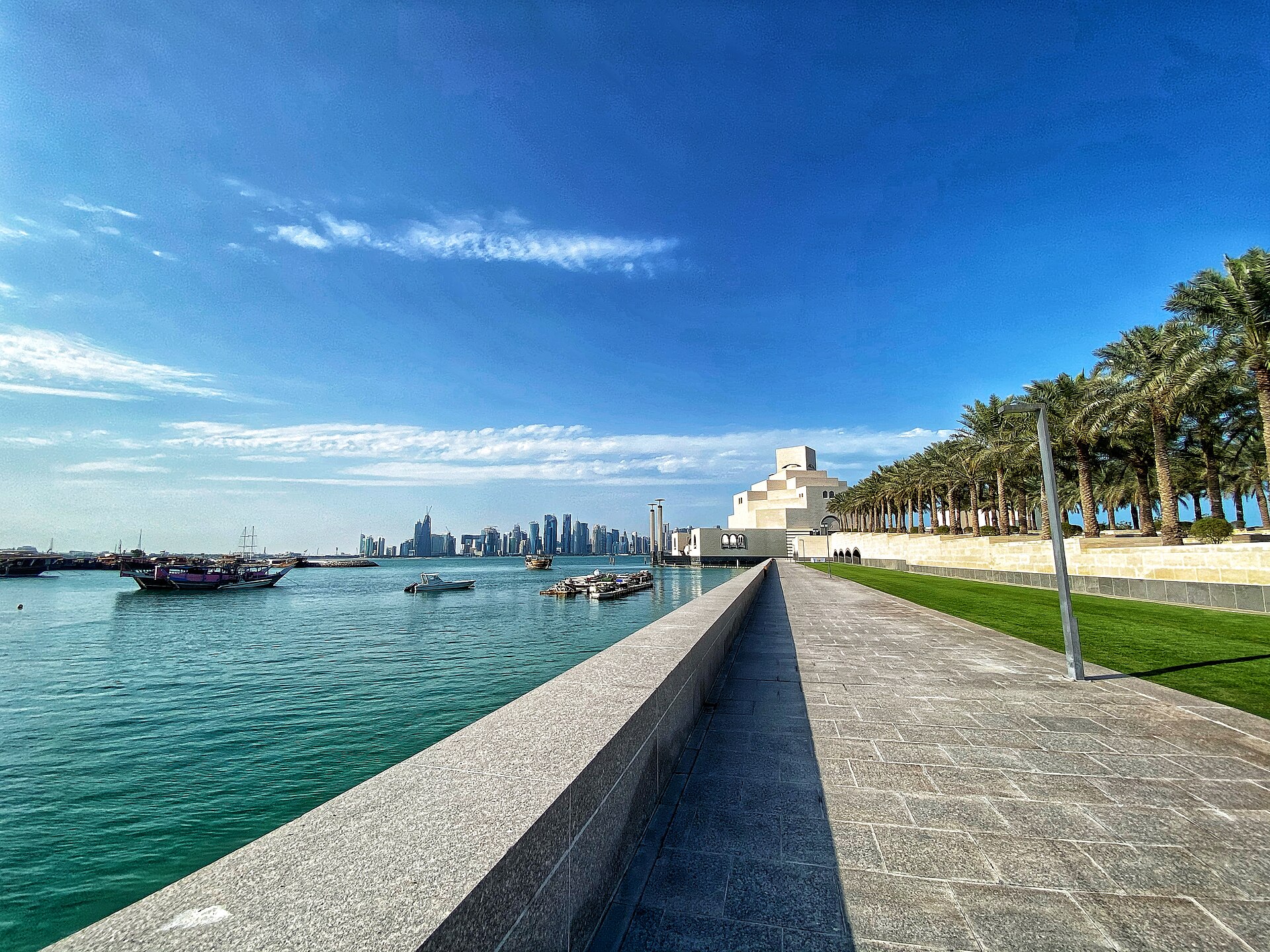
The Museum of Islamic Art on its island off the Doha Corniche, seen across the water with traditional dhows moored in front of it.
Steven Byles, CC BY-SA 2.0 · Photograph by Steven Byles from Singapore, SingaporeMuseum · Founded 2008
Open, admission and hours confirmed 19 August 2026 · 18 sources
The Museum of Islamic Art's strength is breadth assembled at speed rather than depth built up over generations: an encyclopaedic run of Islamic decorative and manuscript art from Spain to Southeast Asia, 7th to 20th century, gathered mostly in a few years around 2000 through the purchasing programme of Sheikh Saud Al-Thani. Individual holdings that stand comparison with any encyclopaedic museum of Islamic art include the Blue Qur'an folio, the Damascus Room as a complete architectural interior, a strong run of dated and signed scientific instruments, and Mughal jewellery and hardstone carving. What the collection does not carry, on the evidence of its own published record, is the same depth of published acquisition history that older Western museum Islamic-art departments (built up over a century of documented purchases, gifts and excavation shares) can offer object by object.
| Kind | Museum |
|---|---|
| Founded | 2008 |
| City and country |  Doha, Qatar Doha, Qatar |
| Address | Museum of Islamic Art, Off Al Corniche Street, Doha, Qatar |
| Website | mia.org.qa/en |
| Status | Open, confirmed |
| Record last verified |
Prices and hours change. We take them from the institution's own pages and print the day we read them, and you can check the current position at the source we used. Confirm before you travel.
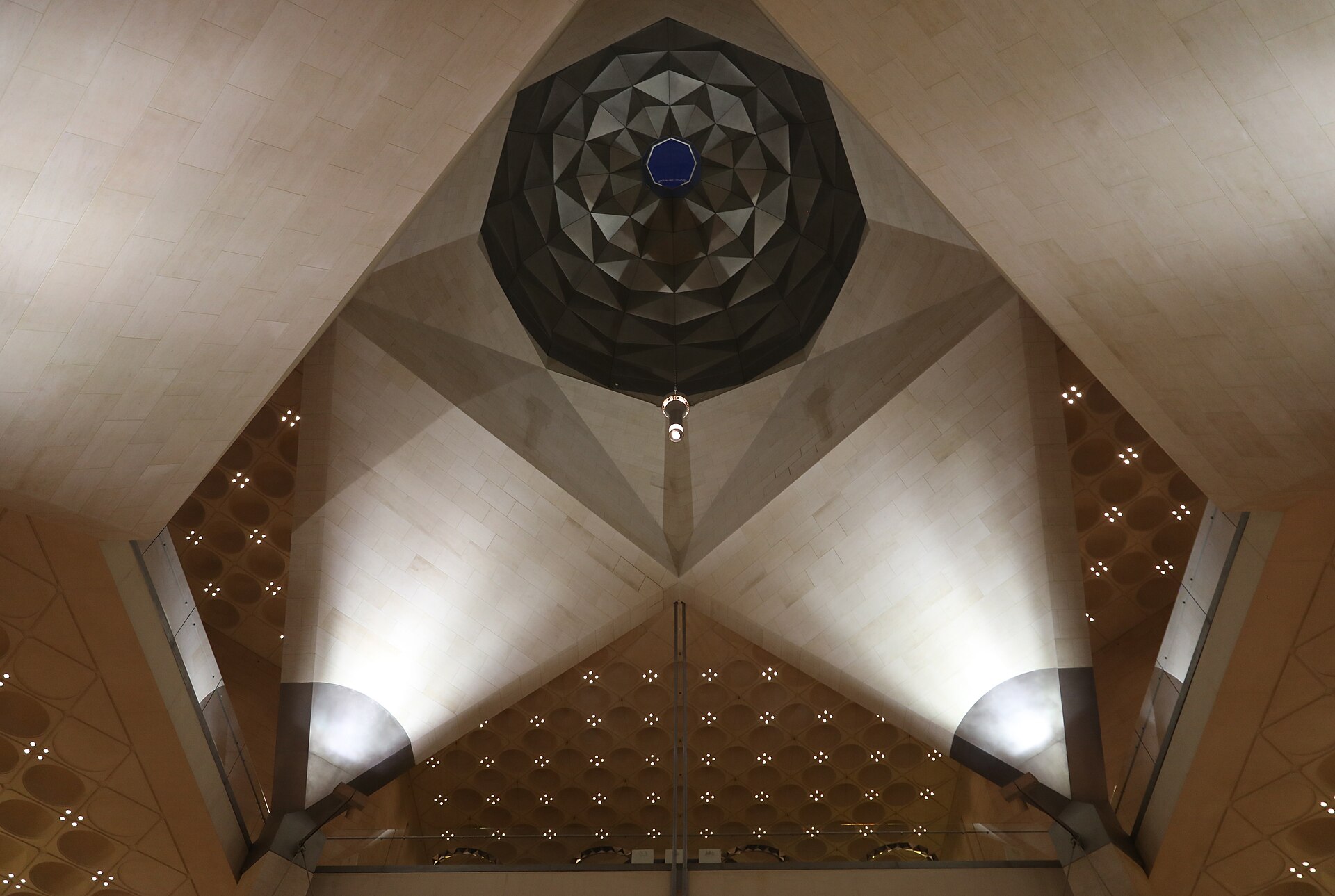
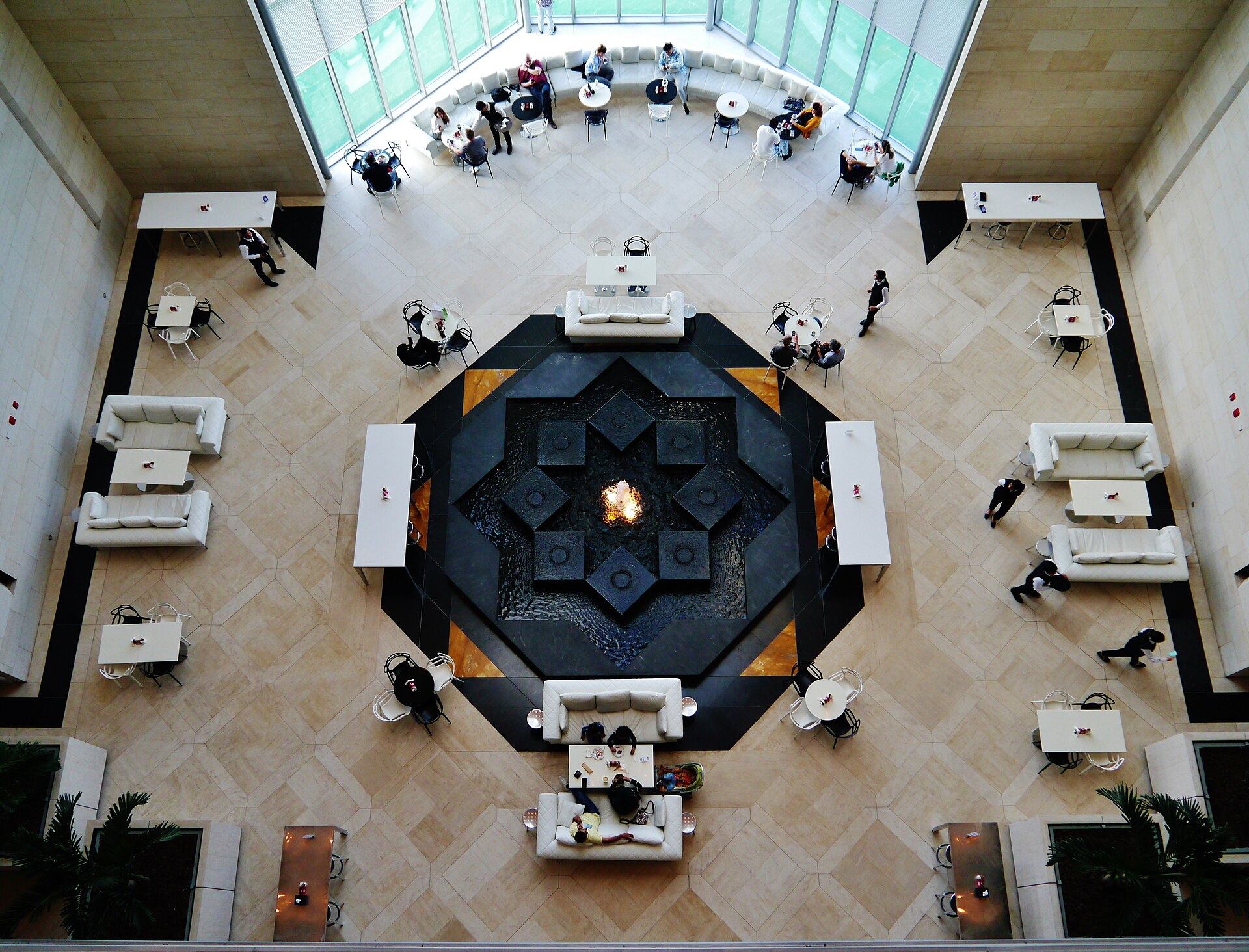
The ground floor: a five-storey central atrium under the building's stepped dome, with a fountain court, the grand staircases that lead up into the galleries, and an introductory gallery on I.M. Pei's design process, followed by Galleries 1-5 (Embarking on a Journey through the Islamic World; The Qur'an - Word and Art; Religious Life in the Islamic World, including the historic sitara door-textile of the Ka'ba; Learning in the Islamic World; and Knowledge, Science and Technology, covering astronomy, medicine and engineering)
Galleries 6-9: Umayyad and Abbasid ceramics, glass and metalwork from the early caliphate; Seljuq material from Iran and Central Asia along the Silk Road; the courtly arts of Islamic Spain and Portugal, including the Doha Hind fountainhead from Madinat al-Zahra; and the lustreware and post-1492 Islamic legacy of Al-Andalus under Christian rule
Galleries 10-13: Mediterranean pilgrimage and trade routes; Mamluk metalwork and glass from Ayyubid Syria and Mamluk Egypt of the 12th-16th centuries; the arts of Ottoman Turkey and its provinces, including Iznik tiles, textiles and the reassembled Damascus Room, a Damascene reception room of 1816-17; and Gallery 13, Arms and Armour of the Ottoman, Safavid and Mughal 'gunpowder empires', centred on Ottoman horse armour
Galleries 14-16: Safavid carpets, Persian manuscripts and Qajar-period objects; a manuscripts, painting and calligraphy gallery holding the Abbasid Blue Qur'an folio and pages of the Shahnameh; and the imperial arts of Delhi Sultanate and Mughal South Asia, including jewellery and carpets from the 8th to 18th centuries
Galleries 17-18: maritime trade networks linking the Islamic world to India, China and East Africa across the Indian Ocean, and the arts of Muslim communities in Indonesia, Malaysia and the wider Southeast Asian region
Gold Kufic calligraphy on indigo-dyed parchment, 3rd century AH / 9th century CE, from Spain or North Africa; one of the most celebrated luxury manuscripts to survive from the early Islamic world. Catalogue no. MS.8.20067
Cast copper alloy with engraved decoration, 330-400 AH / 940-1010 CE, from the caliphal palace-city near Cordoba; one of the few surviving figural bronze fountainheads of the Umayyad Al-Andalus court. Catalogue no. MW.7.19977
A complete 1816-17 reception room from a Damascus house, 427 pieces of carved and painted wood and stone reassembled after the museum found the crated components in Doha storage in 2016; conservation found earlier 17th-century paintings reused on the backs of the ceiling panels8
Cast and engraved brass, dated 374 AH / 984-985 CE, from Rayy or Baghdad; a signed and dated instrument by a named Buyid-era astronomer, rare survival of early Islamic scientific instrument-making. Catalogue no. SI.5.19997
Hammered brass inlaid with silver and gold, 8th century AH / 14th century CE, made for the Mamluk sultan al-Nasir Muhammad ibn Qala'un; a documented royal commission rather than an anonymous luxury object. Catalogue no. MW.467.20077
Carved jade, 12th century AH / 18th century CE, later inscribed for the Chinese Qianlong Emperor (1711-1799); evidence of the long overland circulation of Mughal hardstone carving into Qing China. Catalogue no. HS.37.20027
Silk embroidered with metal thread, dated 1263 AH / 1846-47 CE, made for Sultan Abdulmecid I; one of the museum's textiles tied directly to the annual pilgrimage and Ottoman patronage of the Meccan sanctuary. Catalogue no. TE.215.20117
Ink, opaque watercolour and gold on paper, dated Shawwal 725 AH / September-October 1325 CE, probably Baghdad; a large-format, named-scribe Qur'an from the Ilkhanid court workshop. Catalogue no. QM.2020.04037
Ink, opaque watercolour and gold on paper with seed pearls, painting c. 1044 AH / c. 1635 CE with borders added c. 1645; a Mughal court portrait of the emperor on the throne later carried off by Nadir Shah in 1739. Catalogue no. MS.45.20077
The Museum of Islamic Art sits on its own artificial island in Doha Bay, 195 feet from the mainland Corniche and reached by bridges across a narrow channel. That distance was a condition the architect set rather than a site he was handed: I.M. Pei, coaxed out of retirement at 91 for the commission, turned down the mainland plots Qatar first proposed because he judged that a shoreline site would eventually be hemmed in by the city growing up around it. An island could not be encroached on. Construction of the landfill began in December 2003, the concrete structure went up over the following years, and the museum opened to the public in the winter of 2008 -- an official opening by Qatar's then head of the Qatar Museums Authority on 22 November, with the public admitted from 8 December.
Pei spent six months touring mosques and Islamic sites from Cordoba to Fatehpur Sikri looking for a single architectural idea that could stand for a tradition that in fact varies enormously by region and period. He found it, by his own account, in the 13th-century ablution fountain in the courtyard of the Mosque of Ahmad Ibn Tulun in Cairo: a severe, stepped block form that comes alive in strong sunlight through its own shadows. The finished building translates that into creamy French limestone volumes stacked around a central dome and tower, blind to the desert side and opening a full glass wall north toward the Gulf and the West Bay skyline. A crescent-shaped park, connected to the museum by the same bridges, wraps the island and gives the building the setting -- palm avenue, promenade, uninterrupted view -- that a mainland plot could not have kept.
The collection the building was built to hold was assembled unusually fast. From 1997, Sheikh Saud bin Muhammad Al-Thani, then Qatar's Minister of Culture, Arts and Heritage, directed an estimated 1.5 billion US dollars of state spending on Islamic art, manuscripts, jewellery, arms and textiles bought at pace from dealers and private collections worldwide, assembling in under a decade the core of what is now the Museum of Islamic Art's holdings. In February 2005, months before the building was finished, the Qatari authorities removed Sheikh Saud from his post and placed him under investigation for misuse of public funds; The Art Newspaper reported at the time that a senior government body was alleged to have spent some 275 million US dollars improperly, and that it was not always clear, even to the Qatari state, whether objects Sheikh Saud had bought belonged to him personally or to the nation. He was never restored to the post. He died in London in November 2014, at 48. The museum's own history pages do not discuss this period of the collection's formation; what became of the 2005 investigation, and how its outcome was resolved, is not established in the sources available for this record.
Construction and the opening went ahead regardless, with the museum's founding chief curator, Dr Oliver Watson, confirming at the height of the controversy that the building projects were unaffected. What resulted, when the museum opened in November-December 2008, was an encyclopaedic survey collection -- metalwork, ceramics, glass, textiles, manuscripts, jewellery and woodwork spanning three continents and roughly 1,400 years, 7th to 20th century -- built up not by decades of institutional acquisition but by one minister's few years of purchasing on the international market at a scale few institutions have matched before or since.
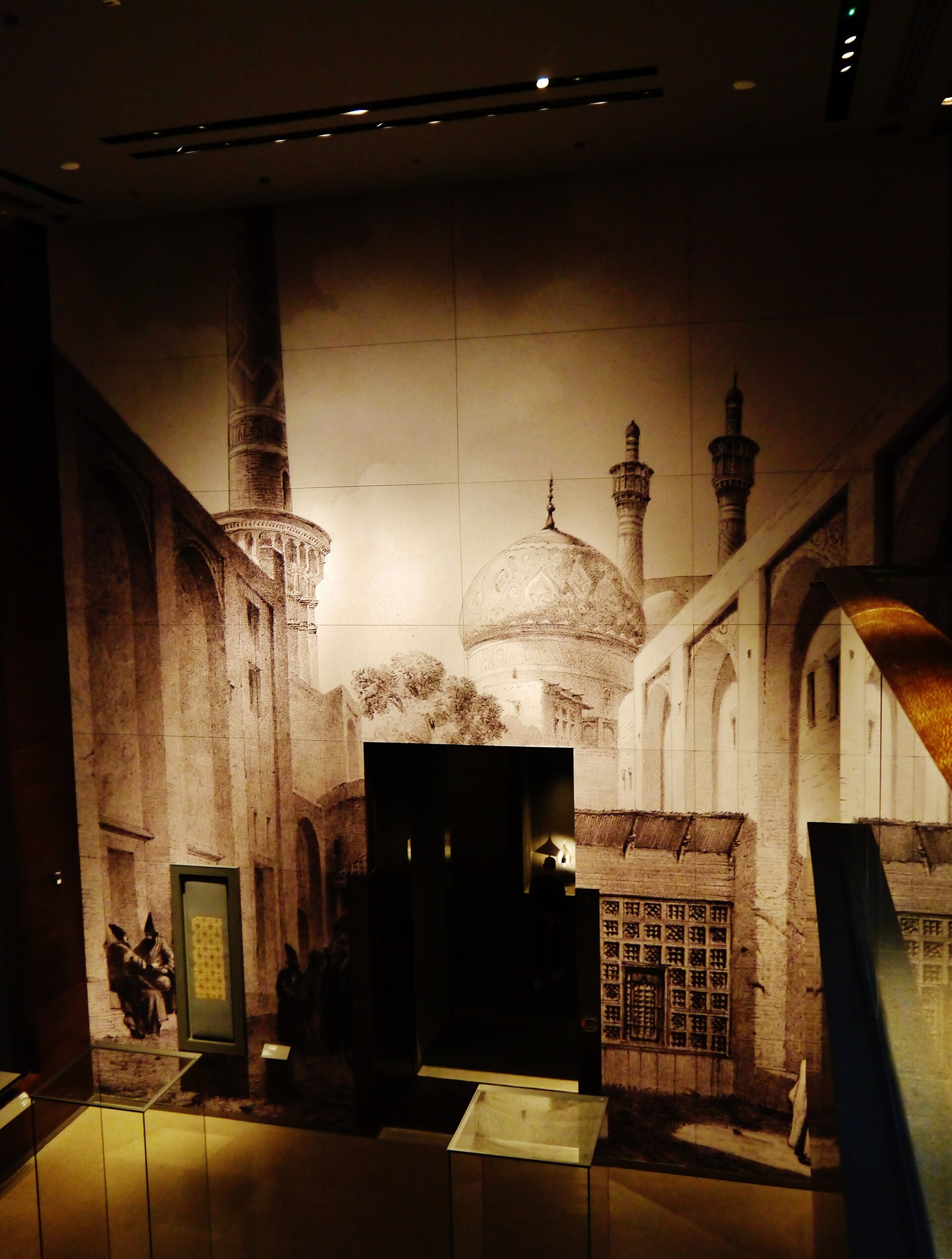
The permanent collection now occupies eighteen galleries across four floors, reorganised in the museum's 2021-22 reinstallation into two broad sequences. The first suite, on the ground floor, introduces themes that cut across the whole collection -- the Qur'an as word and object, the five pillars of religious practice, learning and the sciences under Muslim rule -- using masterpieces chosen to represent ideas rather than chronology. The upper floors then run geographically and historically: from the establishment of the Umayyad and Abbasid caliphates, through the courtly arts of Islamic Spain, the Mediterranean as a corridor of pilgrimage and trade, Mamluk Egypt and Syria, the Ottoman provinces, the Safavid and Qajar arts of Iran, the Mughal courts of South Asia, and on to the Indian Ocean trade that carried Islamic material culture into Southeast Asia. The route is meant to be walked as a journey from Cordoba to Samarkand and beyond, not as a single narrative of one culture but as a demonstration of how wide a world the term 'Islamic art' actually covers.
Materials on display range from the expected -- Iznik tile, enamelled Mamluk glass, Persian and Mughal manuscript painting, Ottoman arms and armour -- to objects whose interest is as much documentary as aesthetic: dated and signed scientific instruments, a diplomatic gift inscribed for a Qing emperor, and textiles tied directly to named patrons and to the annual Hajj. A dedicated gallery is given to arms and armour of what the museum's own gallery notes call the 'gunpowder empires' -- Ottoman, Safavid and Mughal -- built around a set of Ottoman horse armour.
The single largest and most worked-on object in the galleries is not a case piece at all but an entire room. The Damascus Room is a complete Ottoman-Syrian reception room, dated by inscription to 1232 AH (1816-17 CE), bought disassembled and then found again -- 25 crates of it -- in Doha storage in the summer of 2016, having gone untouched since acquisition. Museum conservators spent years piecing together and restoring 427 individual wooden and stone components, applying gold leaf, tinfoil, pigment, lacquer and mirror-work back onto the 'ajami-technique wood surfaces that blend Ottoman pattern with Indo-Persian and European Rococo motifs. In the course of that work, conservator Dr Anke Scharrahs found that several of the room's ceiling panels had been turned over and redecorated at some point in their history, with older 17th-century paintings surviving, hidden, on their reverse faces -- a small piece of the room's own conservation history now displayed alongside the room itself.
Other objects the museum foregrounds in its own published highlights carry similarly specific documentation: an astrolabe cast and engraved in 984-85 CE and signed by the Buyid-era instrument-maker Hamid ibn al-Khidr al-Khujandi; a Mamluk incense burner inlaid with silver and gold and made expressly for Sultan al-Nasir Muhammad ibn Qala'un; a folio from the Blue Qur'an, gold Kufic script on parchment dyed indigo, one of the most reproduced single objects in Islamic manuscript studies; and a Ka'ba door-curtain embroidered in Cairo for Sultan Abdulmecid I in 1846-47, tying the collection directly to the ritual life of Mecca rather than only to courtly patronage.
The museum closed for a ten-month facilities and gallery enhancement project starting in late 2021 and reopened on 5 October 2022 with all eighteen galleries redesigned and, the museum says, more than 1,100 objects on view, the majority of them not previously shown. The same reopening was paired with a narrower, verifiable claim: in November 2022 Qatar Museums announced that the Museum of Islamic Art had been certified carbon neutral by Det Norske Veritas Middle East against the international PAS 2060 standard, covering the operational footprint of electricity and water use, waste and visitor travel to the site for a one-year reporting period beginning in 2021. That certification, on the record available, is time-bound to that reporting period rather than an open-ended claim about the building going forward.
Architectural criticism of the building at its 2008 opening was largely admiring: Architectural Record's Paula Deitz described a design that 'married motifs of indigenous architecture to his clean monumental Modernist style' and situated it alongside Pei's late-career museums in Japan and China. A more pointed contemporary account in Bidoun, by Antonia Carver, agreed the building itself was significant -- 'perhaps the most architecturally significant public building in the area to date' -- but found the inaugural galleries thin on content, objects 'displayed...with minimal labels' and made to carry meaning through lighting and staging rather than historical explanation, and asked bluntly why Gulf states were building 'grand monuments to the arts' at all. Recent visitor reviews of the reinstalled 2022 galleries describe clear, well-translated English labelling and note the improvement without prompting; the museum's own materials do not frame the 2021-22 reinstallation as a response to that specific 2009 criticism, so the connection is an inference from before-and-after visitor accounts rather than a claim the museum makes for itself.
Visitors consistently single out I.M. Pei's building itself as the main event: the stepped limestone exterior, the five-storey central atrium with its dome and grand staircases, and the north-facing window onto Doha Bay draw as much comment as anything in the cases. The Mughal jewellery and the arms and armour gallery are the most-cited individual displays, and the free (for residents) admission and waterfront cafe are repeatedly flagged as reasons to stay longer than planned.
Tripadvisor: 4.6 from 6,595 ratings, read 19 August 2026
A platform average is a tertiary source: it moves, it is not audited, and we quote no visitor's words.
Museum of Islamic Art, Off Al Corniche Street, Doha, Qatar.
Adult, resident of Qatar (valid QID): free; Adult, non-resident: QAR 50; Student, resident of Qatar: free; Student, non-resident: QAR 25; Child, 16 and under: free. As confirmed 19 August 2026.
Sun, Mon, Tue, Sat 09:00-19:00; Thu 09:00-21:00; Fri 13:30-19:00. Closed: Wednesday. As confirmed 19 August 2026.
Car / taxi: Taxi stand inside the museum parking area; taxis can also be hailed on the Corniche outside the museum's front gate; Shuttle: Free Qatar Museums shuttle buses serve the site; Metro: Nearest Doha Metro station is Qatar National Museum on the Gold Line, roughly a 15-20 minute walk along the Corniche; Souq Waqif station on the same line is a similar distance.
Folio from the 'Blue Qur'an' (Unknown scribe, Umayyad Al-Andalus); Fountain head, 'the Doha Hind' (Umayyad workshop, Madinat al-Zahra); The Damascus Room (Damascene craftsmen, Ottoman Syria); Astrolabe signed by Hamid ibn al-Khidr al-Khujandi (Hamid ibn al-Khidr al-Khujandi (d. c. 1000 CE)); Incense burner made for Sultan al-Nasir Muhammad (Mamluk workshop, Egypt or Syria); Jade bowl inscribed with a poem of the Qianlong Emperor (Mughal workshop, India).
One artwork and its story every Tuesday, with the picture: who owned it, what it made, and what closes soon in the exhibition calendar. No promotion, and nothing we cannot cite.
We send one email to confirm the address and keep nothing else. Every letter carries a one-click unsubscribe. How we handle your data.