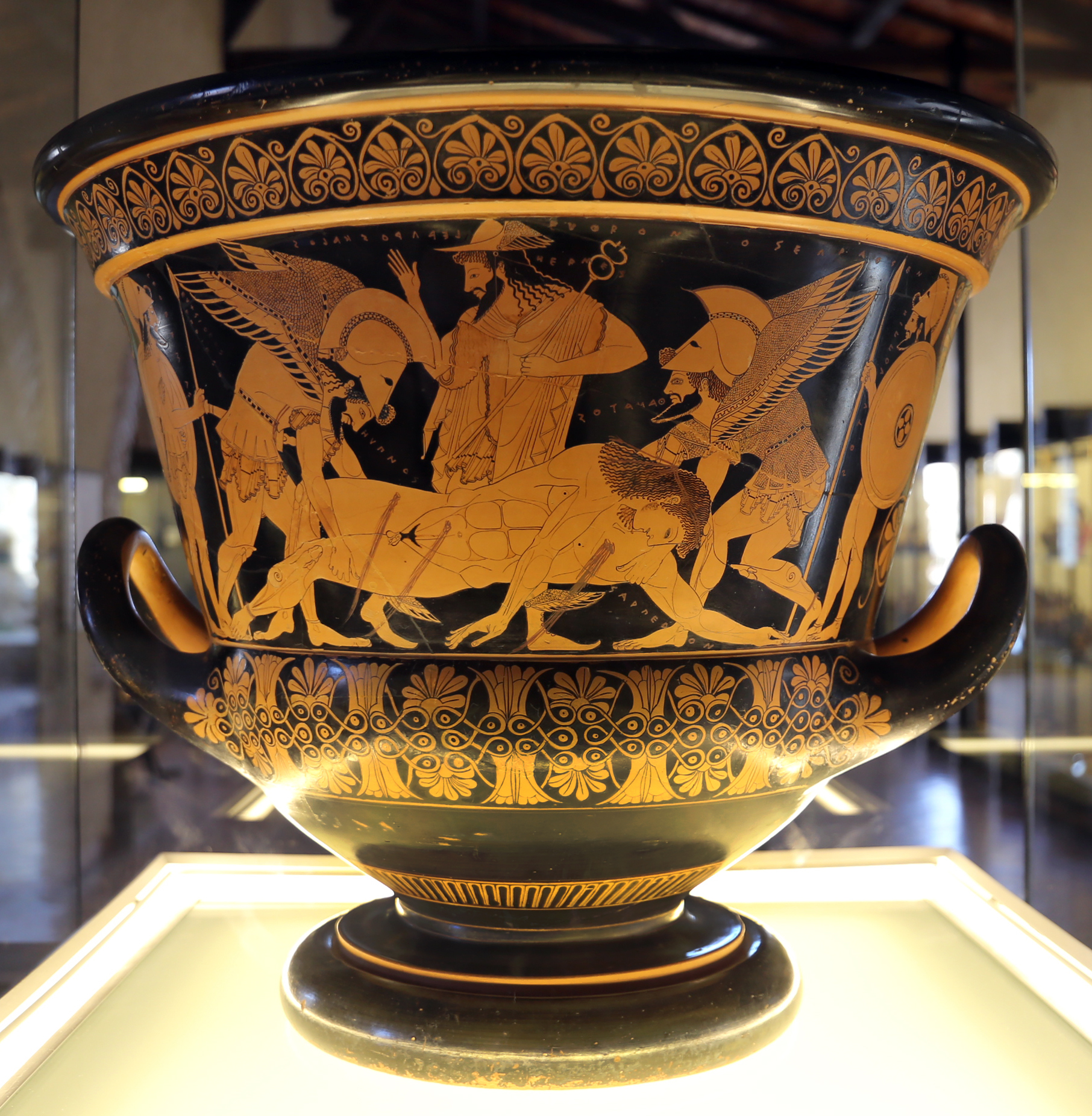
The Euphronios Krater
c. 515 BC · Terracotta
Museo Archeologico Nazionale Cerite
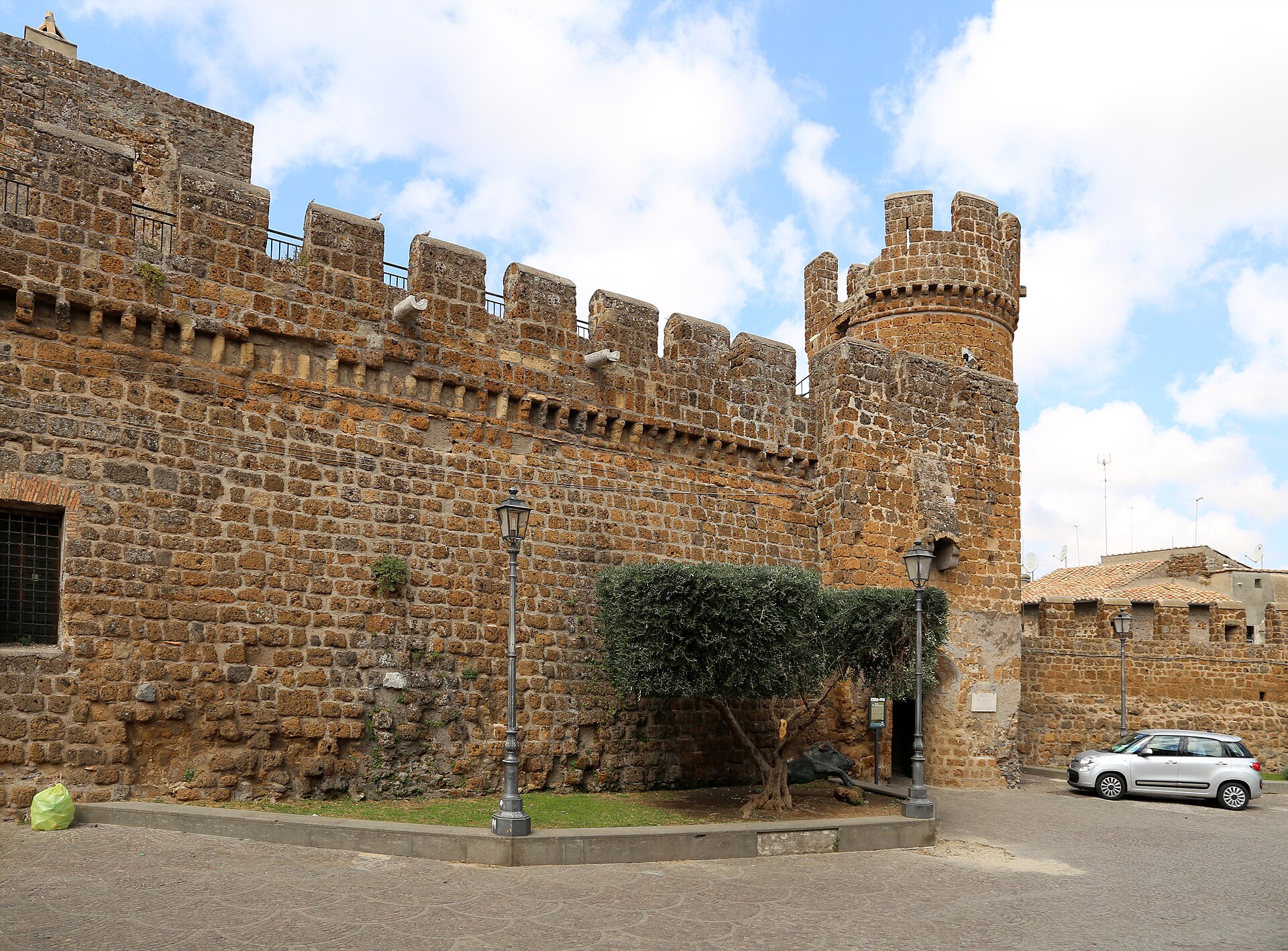
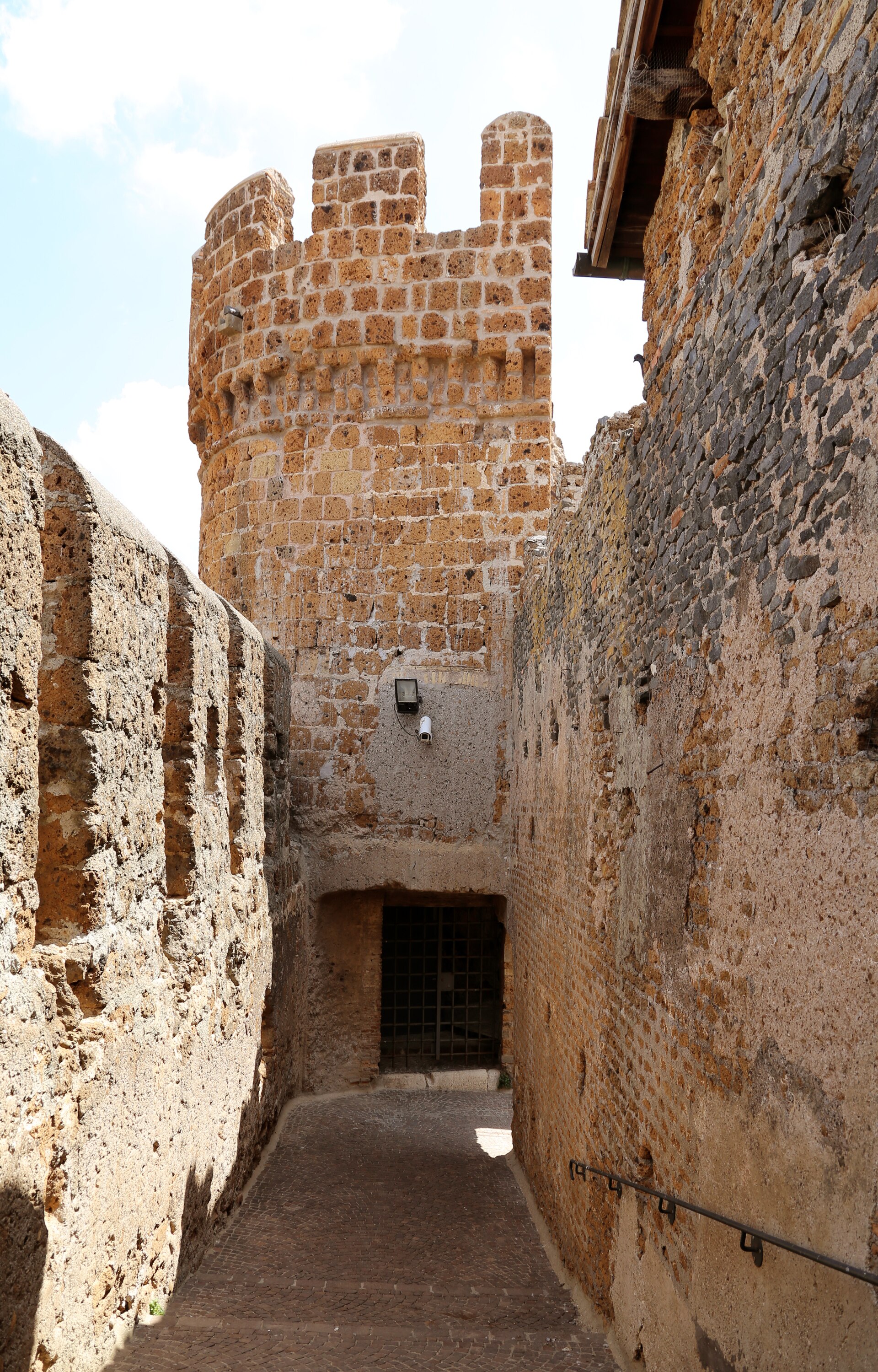
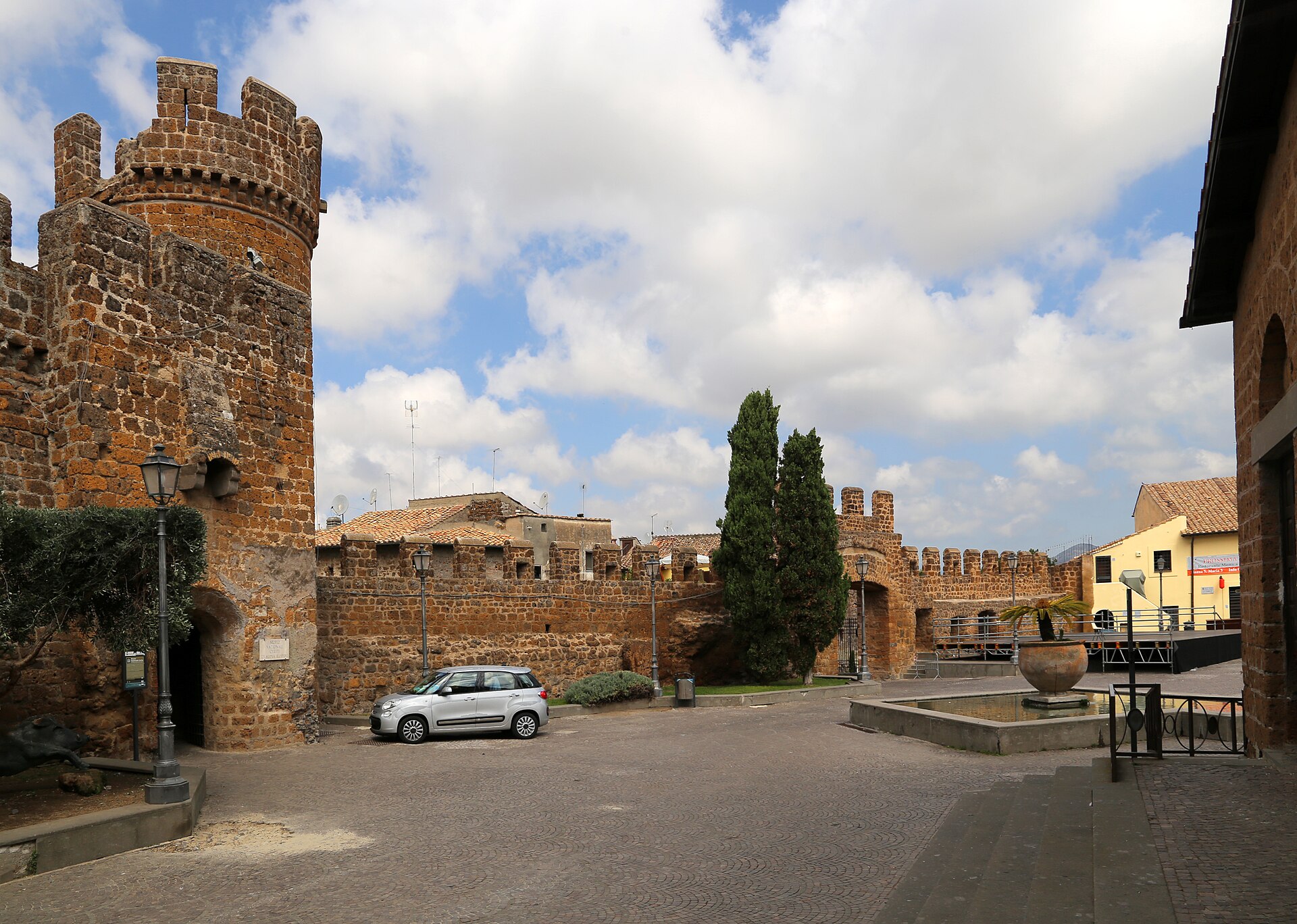
The fortified wall and tower of the Castello Ruspoli in Cerveteri, which houses the Museo Nazionale Cerite.
Sailko · CC BY 3.0Museum · Museo Archeologico Nazionale Cerite · Founded 1967
Open, admission and hours confirmed 9 September 2026 · 12 sources
The museum's strength is depth rather than breadth: everything in its cases was excavated from Cerveteri's own necropolises and sanctuaries, giving an unbroken run from Villanovan grave goods of the ninth century BC through Hellenistic sarcophagi, anchored by two of the most famous individual vessels ever repatriated to Italy, the Euphronios krater and kylix.
| Local name | Museo Archeologico Nazionale Cerite |
|---|---|
| Kind | Museum |
| Founded | 1967, in a castle first built in the 13th century |
| City and country |  Cerveteri, Italy Cerveteri, Italy |
| Address | Piazza Santa Maria 1, 00052 Cerveteri (RM), Italy |
| Website | pact.cultura.gov.it/museo-archeologico-nazionale-cerite |
| Status | Open, confirmed |
| Record last verified |
Prices and hours change. We take them from the institution's own pages and print the day we read them, and you can check the current position at the source we used. Confirm before you travel.
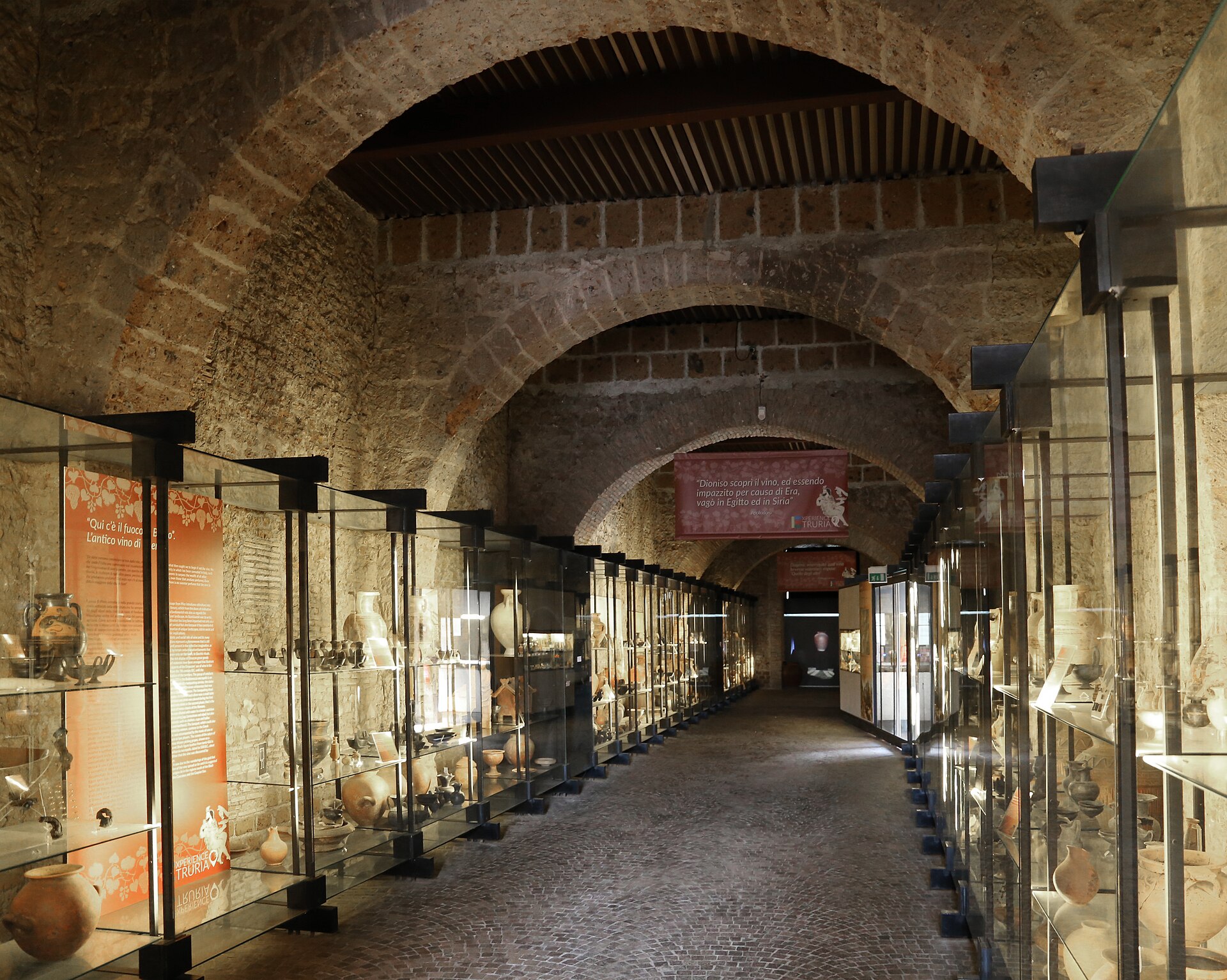
The oldest material in the museum: Villanovan-period tomb furnishings of the 9th to 7th century BC, drawn chiefly from the Sorbo necropolis, together with finds from the later, wealthier phase of the city represented by material from Banditaccia, Monte Abatone and excavations at Civita, the site of ancient Caere itself.
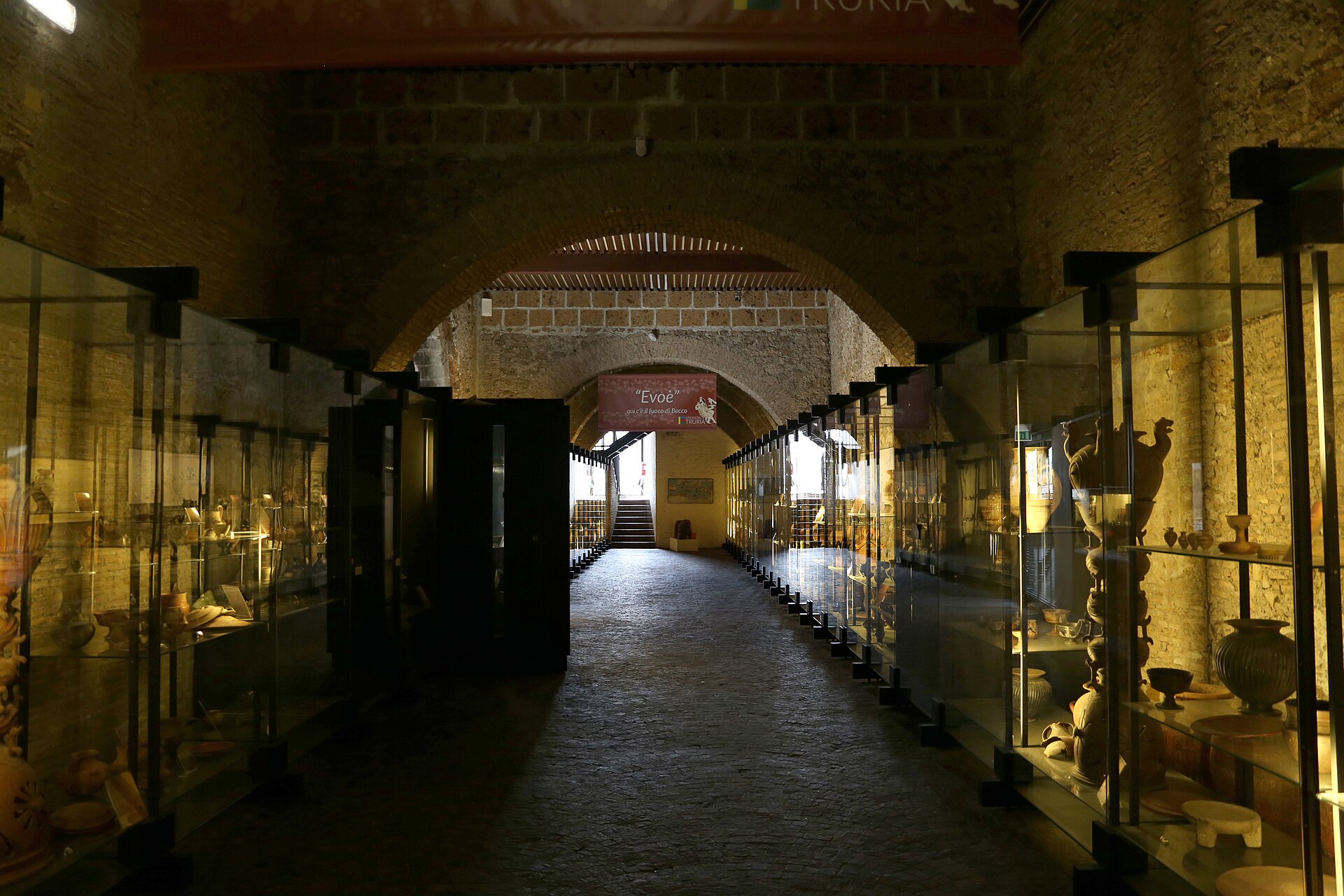
The Euphronios krater and kylix, shown together, alongside numerous figured vases of the 6th, 5th and 4th centuries BC drawn from funerary assemblages and increasingly heavy Greek imports as the city grew richer.
Hellenistic-period stone sarcophagi with figured lids from tombs outside Banditaccia, painted stone slabs recovered from a temple of Hera, and material from the settlement's sanctuaries at Vigna Parrocchiale, Vigna Marini Vitalini, Sant'Antonio and Manganello.
A reconstructed rock-cut chamber tomb complex from the Greppe Sant'Angelo necropolis, housing a stone figure of Charun, the Etruscan demon of death, described by more than one visitor as unlike anything else on display.
The object most responsible for the museum's modern reputation: Italian investigators established it was looted from a Cerveteri tomb around 1971, sold to the Metropolitan Museum of Art, returned to Italy in 2008, and permanently transferred here from the Museo Nazionale Etrusco di Villa Giulia on 7 November 2015, on the stated principle of linking recovered heritage back to the territory it came from.6
Full record in this archiveDisplayed beside the krater as the second Euphronios-connected vessel, which Italian investigators established was looted from the same Cerveteri necropolis between 1983 and 1985 and sold in fragments to the J. Paul Getty Museum, which returned it to Italy in 1999.6
A Sorbo necropolis grave good of the 9th to 7th century BC, cited as one of the most complete surviving examples of Villanovan funerary imagery in the collection.8
A stone figure of the Etruscan demon of death from the reconstructed rock-cut tomb complex of Greppe Sant'Angelo, repeatedly singled out by visitors as the most memorable single object outside the Euphronios vessels.2
A rare survival of painted architectural decoration from one of ancient Caere's sanctuaries, illustrating a side of Etruscan religious building practice that pottery and grave goods alone do not show.8
Extends the museum's chronology past the Etruscan high period into the Hellenistic and Romanization phases, showing how funerary sculpture at Cerveteri changed under later cultural influence.4
Documents Cerveteri's trade links and the city's adoption of imported Greek ceramic fashions from the 6th to 4th century BC, the material context the Euphronios vessels themselves belong to.4
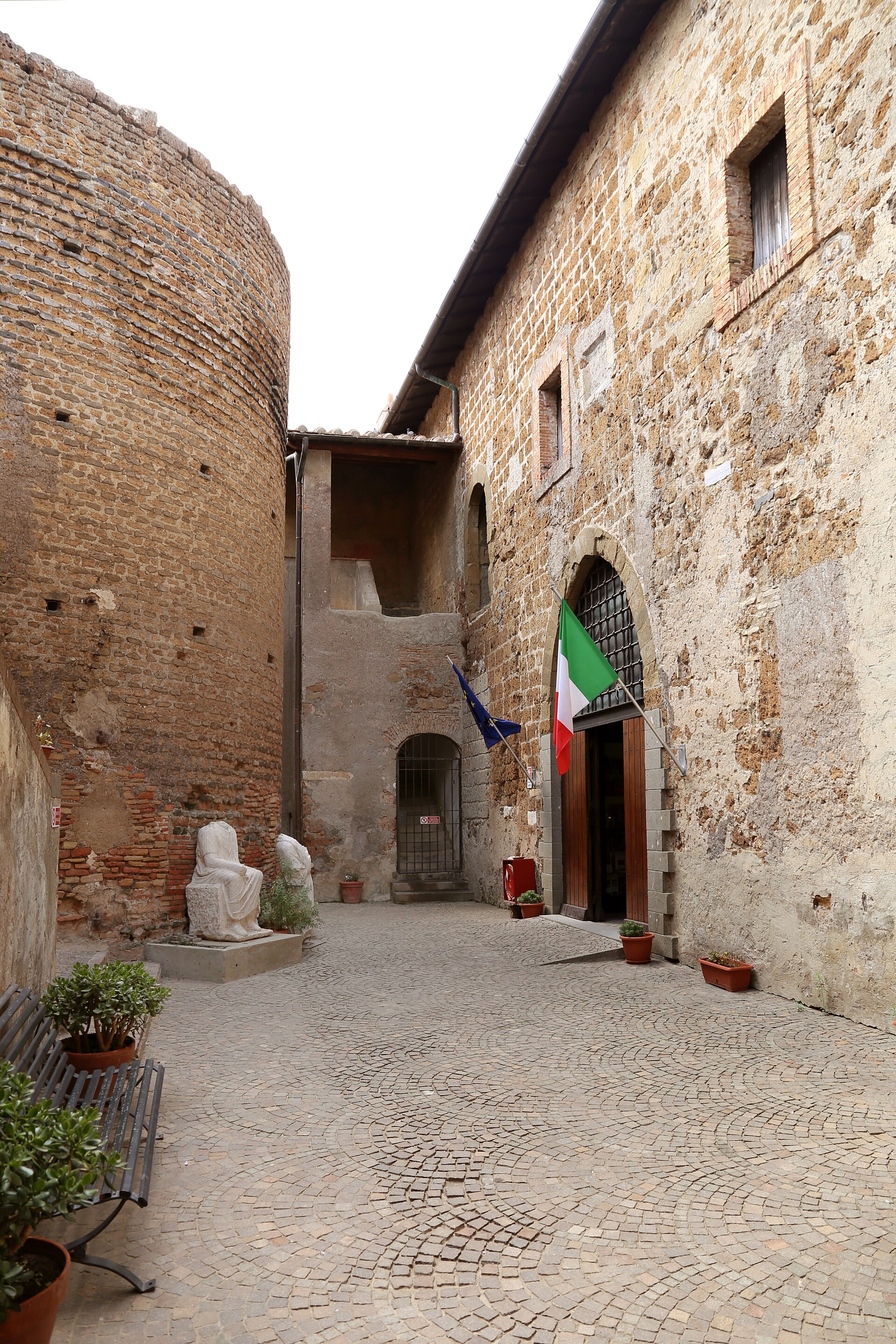
The Museo Nazionale Cerite occupies the Castello Ruspoli (the Rocca), a fortress in the heart of Cerveteri's historic center that predates the museum inside it by roughly seven centuries. Sources describe the core structure as thirteenth century, built in tufa, lava stone and brick, with a rectangular main body, multiple towers and crenellated battlements, and the whole complex incorporates stretches of Etruscan-era walling dated to the fourth century BC, so the building itself is a physical timeline before a single object is displayed. Ownership passed through the Orsini family before settling with the Ruspoli, who held the castle for generations; the museum is named for Princess Claudia Ruspoli, and its 1967 opening followed the family's transfer of the Rocca to the Italian state. The Ministry of Culture, through the Soprintendenza and now the Parco Archeologico di Cerveteri e Tarquinia, has administered it since. The building's public standing beyond archaeology is notable in its own right: it was voted into the Fondo Ambiente Italiano's 'I Luoghi del Cuore' (Places of the Heart) national list in 2018, 2020 and 2022, a recurring popular vote for Italy's most cherished heritage sites. A visitor entering today crosses the same gate photographed for generations of guidebooks, walks past a slab of Etruscan wall built into the medieval fabric, and only then reaches the display cases; the castle is not a neutral shell around the collection, it is presented as part of the story.
Inside, the collection is arranged across two levels in a straightforward chronological run rather than by object type. The ground floor holds the oldest material: rich Villanovan-period tomb furnishings from the ninth to seventh century BC, drawn above all from the Sorbo necropolis, alongside finds from the more prosperous later phase of the city represented by material from the Banditaccia and Monte Abatone necropolises and from excavations at Civita, the site of ancient Caere itself. The upper floor carries the sequence forward into the sixth to second century BC, when imports grew heavier: this is where the two Euphronios vessels are shown, alongside numerous figured vases of the sixth, fifth and fourth centuries BC drawn from funerary assemblages, Hellenistic-period stone sarcophagi with figured lids from tombs outside Banditaccia, and material from the settlement and its sanctuaries. Specific sections on the upper floor are given over to the sanctuaries of ancient Caere, including Vigna Parrocchiale, Vigna Marini Vitalini, Sant'Antonio and Manganello, and to painted stone slabs recovered from a temple of Hera. A reconstructed rock-cut tomb complex from Greppe Sant'Angelo houses a stone figure of Charun, the Etruscan demon of death, described by more than one visitor as unlike anything else in the museum. Since a 2013 rehang, both floors carry touchscreen stations narrated by the broadcaster Piero Angela, walking visitors through daily life, myth and the technical history of individual pieces, and an 'e-Archeo' installation presents a life-size figure introduced as an Etruscan businessman, Vel Apucu, in an interactive format. The two rooms are compact enough that several visitors describe finishing a visit within an hour, but the chronological logic is deliberate and continuous from one end of the museum to the other.
The single object most responsible for the museum's modern reputation is the Euphronios krater, a red-figure calyx-krater made around the end of the sixth century BC, potted by Euxitheos and painted by Euphronios with the death of the Trojan hero Sarpedon. Italian investigators later established that it was looted from an Etruscan tomb near Cerveteri around 1971 and sold, through the dealers Robert Hecht and Giacomo Medici, to the Metropolitan Museum of Art in New York for one million dollars; it remained on display there from 1972. A 2006 agreement between Italy and the Met set the terms for its return, and the krater arrived back in Italy on 18 January 2008, unveiled the same day as part of the Nostoi exhibition of recovered antiquities at the Palazzo del Quirinale. From there it moved to the Museo Nazionale Etrusco di Villa Giulia in Rome, where press coverage of the period described it as having found a permanent home. That description did not hold. In December 2014 the krater was sent to the Museo Nazionale Cerite for a temporary display marking ten years since the Banditaccia necropolis was inscribed on the UNESCO World Heritage list, and press coverage at the time reported a sharp rise in attendance at the small Cerveteri museum, with the necropolis itself said to have seen a comparable jump. On 7 November 2015 the culture minister Dario Franceschini announced that the regional museum authority for Lazio had signed the act definitively transferring the krater, together with a second Euphronios vessel, a kylix decorated with scenes from the fall of Troy, from Villa Giulia to Cerveteri. The kylix has its own recovery history: which Italian investigators established was looted from the same Cerveteri necropolis between 1983 and 1985 and sold in fragments to the J. Paul Getty Museum, which returned it to Italy in 1999. Both vessels are shown together on the upper floor, and the stated rationale for keeping them in Cerveteri rather than Rome was explicit: that the strength of Italian heritage lies in keeping museums linked to the territory that produced what they hold, rather than concentrating recovered material in the capital.
Nothing in the museum was acquired on the open market; every object comes from excavation in and around Cerveteri, ancient Caere, one of the twelve cities of the Etruscan League and, by most estimates, one of the largest and richest Etruscan settlements of its day. The necropolises that supplied the collection, above all Banditaccia and the smaller Sorbo, Monte Abatone and Casaletti di Ceri burial grounds, were inscribed on the UNESCO World Heritage list in 2004 together with the necropolis at Tarquinia, and in 2021 the state administratively joined the two cities' archaeological sites and museums into a single body, the Parco Archeologico di Cerveteri e Tarquinia. That merger is why some of the Parco's own web pages list a Tarquinia address and phone number alongside material specific to Cerveteri, a detail worth knowing before trusting a contact page at face value. For a visitor, the practical result of this arrangement is that the museum and the Banditaccia necropolis a short distance away are sold as a single combined ticket rather than as two separate destinations, and the museum functions less as a stand-alone gallery than as the finds room for the archaeological park surrounding it: walk the tumulus tombs at Banditaccia in the morning and the museum supplies the grave goods, the painted terracottas and the two Euphronios vessels that give those tombs their full context in the afternoon.
The museum's own current page states it is open Tuesday to Sunday, 9:00 to 19:30, with last admission at 18:30, and closed on Mondays, 1 January and 25 December. Entry is sold only as a combined ticket: 13 euro full price, 2 euro reduced for EU citizens aged 18 to 25, and free for anyone under 18, valid for both the museum and the Banditaccia necropolis for thirty days; a wider four-site circuit ticket covering the whole Parco Archeologico di Cerveteri e Tarquinia costs 21 euro and is valid four months. No advance booking is required, though group visits are capped at 20 people. Older tourism and aggregator sites still quote lower figures, from six to ten euro, for the same combined ticket; this record uses the figures on the museum's own current price list rather than an aggregator, per house policy, and flags the gap rather than picking a number to split the difference. On Tripadvisor the museum holds a 4.2 out of 5 rating from 320 reviews, ranked third among attractions in Cerveteri as of the date this record was researched. Visitors consistently single out the Euphronios krater and kylix as the reason to come, praise the Piero Angela touchscreen narration and the e-Archeo installation for making the material accessible to non-specialists and to children, and describe staff at the ticket desk as friendly and well informed. The recurring complaint is scale: two rooms that several reviewers say can be seen in under an hour, adding comparatively little on top of a visit to the necropolis itself. Two more recent reviews, from August 2025 and May 2026, describe arriving to find display cases empty for what one called a functional renovation, and in the second case the Euphronios krater itself away on loan to an exhibition in Greece, in both instances with no signage at the entrance warning visitors before they paid for a ticket.
Visitors consistently describe a small but rewarding museum, most often paired with a visit to the Banditaccia necropolis nearby, with the two Euphronios vessels named as the main reason to come and the multimedia stations praised for making the material accessible to non-specialists and children.
Tripadvisor: 4.2 from 320 ratings, read 9 September 2026
A platform average is a tertiary source: it moves, it is not audited, and we quote no visitor's words.
Piazza Santa Maria 1, 00052 Cerveteri (RM), Italy.
Combined ticket (museum plus Banditaccia necropolis), full: EUR 13; Combined ticket, reduced (EU citizens aged 18-25): EUR 2; Under 18: free; Parco Archeologico di Cerveteri e Tarquinia, four-site circuit ticket: EUR 21. As confirmed 9 September 2026.
Tuesday-Sunday 09:00-19:30. Closed: Monday. 1 January. As confirmed 9 September 2026.
Euphronios krater (Euxitheos, potter; Euphronios, painter); Kylix with scenes from the Ilioupersis (Euphronios, potter; Onesimos, painter); Cinerary urn with a couple at a banquet (Unattributed, Villanovan workshop); Statue of Charun (Charos) (Unattributed); Painted stone slabs from a temple of Hera (Unattributed); Hellenistic stone sarcophagi with figured lids (Unattributed).
1 record in this archive names Museo Nazionale Cerite as the current location.
One artwork and its story every Tuesday, with the picture: who owned it, what it made, and what closes soon in the exhibition calendar. No promotion, and nothing we cannot cite.
We send one email to confirm the address and keep nothing else. Every letter carries a one-click unsubscribe. How we handle your data.